You are currently viewing a new version of our website. To view the old version click .
Energies
  • Article
  • Open Access

28 November 2025

An Experimental Study on Oil–Water Emulsification Mechanism During Steam Injection Process in Heavy Oil Thermal Recovery

,
,
,
,
,
,
and
1
CNOOC China Limited Tianjin Branch, Tianjin 300459, China
2
CNOOC Key Laboratory of Offshore Heavy Oil Thermal Recovery, Tianjin 300459, China
3
The Key Laboratory of Unconventional Oil and Gas Green and Efficient Development of Chongqing Municipality, Chongqing University of Science and Technology, Chongqing 401331, China
*
Author to whom correspondence should be addressed.
This article belongs to the Special Issue New Advances in Oil, Gas and Geothermal Reservoirs—3rd Edition

Abstract

This article focuses on the oil–water emulsification problem during steam injection in heavy oil thermal recovery. Emulsions were prepared through one-dimensional flow experiments, and key parameters including the inversion point water cut and micro-morphological characteristics (particle size and distribution range) of the emulsions were systematically measured under varied conditions (temperature: 150–360 °C; salinity: 0–7500 mg/L; water cut: 10.07–72.22%). By analyzing the experimental data, the emulsification mechanism and influencing rules were revealed: under the combined conditions of high temperature (150–360 °C), high salinity (up to 7500 mg/L), and low water cut (10.07–19.35%), crude oil and formation water form oil-in-water emulsions under the shear action of porous media. During this process, active substances in crude oil react with inorganic salts in formation water to generate natural surfactants, which reduce the oil–water interfacial tension and enhance emulsion stability, enabling the emulsion to maintain stability even at a high water cut of up to 72.22%, with particle sizes ranging from 1 μm to 350 μm and distribution spans varying from 4 μm to 50 μm. The formation of such emulsions leads to a significant increase in viscosity, adversely affecting oil recovery. In production practice, it is recommended to add chemical agents during the early stage of steam huff and puff development (water cut: 10.07–37.50%). This measure aims to destroy the oil–water liquid film, promote water droplet coalescence (narrowing the particle size distribution span), and facilitate emulsion breaking and phase inversion, thereby effectively mitigating the adverse impacts of oil–water emulsions and improving heavy oil recovery efficiency.

1. Introduction

Heavy oil thermal recovery is widely recognized as a key technology for exploiting viscous heavy oil reserves, and steam huff and puff has emerged as a dominant method in this field due to its favorable economic benefits and low construction difficulty [,]. This technology relies on steam injection to reduce heavy oil viscosity and improve its mobility, thereby enhancing oil recovery. However, a critical challenge encountered during steam huff and puff operations is oil–water emulsification—a phenomenon that significantly impacts reservoir flow dynamics and production efficiency.
During steam injection, heavy oil and water (in vapor or liquid form) exist as immiscible phases. Based on the interfacial adsorption theory, two primary types of emulsions are typically formed: water-in-oil (W/O) emulsions, where water droplets (dispersed phase) are encapsulated in the oil matrix (continuous phase), and oil-in-water (O/W) emulsions, where oil droplets are dispersed in an aqueous continuous phase [,,]. Under the shear action of porous media in the reservoir, active substances in heavy oil (e.g., resins and asphaltenes) migrate to the oil–water interface, facilitating the formation of stable emulsions [,,]. Due to the lipophilic-hydrophobic properties of natural emulsifiers in heavy oil (e.g., asphaltenes and resins), W/O emulsions are the predominant type formed during heavy oil thermal recovery [,].
Extensive research has been conducted to investigate crude oil emulsions, with existing studies primarily focusing on the effects of preparation processes, operating conditions, and water cut on the rheological properties of emulsions, as well as the oil–water interfacial characteristics of W/O emulsions [,,]. Previous works have confirmed that emulsion viscosity is closely related to water cut and the particle size of the dispersed aqueous phase: higher water cuts and smaller, more uniformly distributed water droplets correlate with increased emulsion viscosity [,]. Specifically, when the water cut is low (typically below 40%), the apparent viscosity of W/O emulsions increases slowly with rising water cut; in contrast, when the water cut exceeds 40%, the apparent viscosity exhibits an almost exponential growth [,,]. This viscosity variation is accompanied by a fluid-type transition: W/O emulsions shift from Newtonian fluids at low water cuts to non-Newtonian fluids at high water cuts []. For instance, Liu Liwei et al. [] tested crude oil from the Bohai Oilfield and found that W/O emulsions behave as Newtonian fluids when the water cut is below 40%, but transition to non-Newtonian fluids at water cuts exceeding 40%. This transition is attributed to the increased number of water droplets and enhanced inter-droplet interactions at higher water cuts, which collectively elevate emulsion viscosity []. Additionally, under non-Newtonian fluid conditions, the average particle size of the dispersed phase in crude oil emulsions decreases, further contributing to viscosity growth, while Newtonian fluid emulsions exhibit shear-thinning behavior [].
Despite these insights, significant research gaps remain. First, most existing studies focus solely on emulsion viscosity, neglecting other critical rheological properties (e.g., yield stress and pour point) that also influence reservoir flow and production. Second, the emulsification process and underlying mechanism of heavy oil with water/steam in porous media under thermal injection conditions (characterized by high temperatures, high salinity, and dynamic shear forces) are not yet fully clarified. Specifically, the quantitative relationships between key operating parameters (e.g., temperature, salinity, and water cut) and emulsion micro-morphological characteristics (particle size, distribution range, and stability) have not been systematically established. Third, the specific impact of oil–water emulsification on production capacity—including flow resistance in the formation, wellbore lifting efficiency, and pipeline transportation costs—lacks quantitative validation and in-depth analysis.
The formation of W/O emulsions during oilfield development poses multiple adverse effects. First, W/O emulsions exhibit significantly reduced mobility in porous media compared to crude oil, directly leading to a decline in oil recovery. Second, the increased viscosity of emulsions complicates the lifting of produced fluids from the wellbore bottom to the surface. Third, higher viscosity increases pumping costs during pipeline transportation. Furthermore, as heavy oil reservoir development progresses, the content of resins and asphaltenes in the remaining heavy oil increases, making W/O emulsions more prone to formation, further elevating viscosity and exacerbating injected water/steam fingering in the reservoir. Field production data from multiple oilfields confirm that oil–water emulsification during steam huff and puff results in reduced oil production, difficult flowback, and other operational issues, which severely compromise the effectiveness of thermal recovery. Once W/O emulsions form, their viscosity increases significantly—this not only raises the flow resistance of heavy oil in the formation and reduces well productivity but also increases viscous resistance during heavy oil flowback, leading to difficult flowback, increased wellbore pressure loss, and elevated bottom-hole pressure, which further impairs oil well productivity.
To address these unresolved issues, this study targets the oil–water emulsification problem during steam injection in heavy oil thermal recovery. Through one-dimensional flow experiments, emulsions were prepared under controlled conditions (temperature: 150–360 °C; salinity: 0–7500 mg/L; water cut: 10.07–72.22%), and key parameters including the inversion point water cut and emulsion micro-morphological characteristics (particle size and distribution range) were systematically measured. The primary objectives of this study are as follows: (1) reveal the emulsification mechanism of heavy oil and water/steam in porous media under thermal injection conditions; (2) quantify the effects of temperature, salinity, and water cut on emulsion stability, particle size distribution, and inversion point; and (3) provide a theoretical basis for optimizing steam injection parameters and developing effective demulsification strategies to mitigate the adverse impacts of emulsification on heavy oil thermal recovery efficiency.

2. Experimental Study on Oil–Water Emulsification Mechanism During Steam Injection Process

2.1. Methodology

In this study, an optical microscope is used to observe the distribution of emulsion of heavy oil after thermal displacement, and then an Anton Paar MCR102 rheometer (Graz, Austria) is used to test the viscosity–temperature curve of heavy oil after thermal displacement, and the water content of stable emulsion of heavy oil after thermal displacement is measured. According to the viscosity–temperature curve of heavy oil after thermal displacement, the preparation conditions of water bearing crude oil emulsion are inverted. Heavy oil emulsions with different water contents post-thermal-flooding are prepared in accordance with the specified preparation conditions. Their viscosity–temperature curves are measured, and the water content corresponding to the maximum viscosity point is determined as the phase inversion point. Through analysis of the experimental results, the oil–water emulsification mechanism during the steam injection process is clarified.

2.2. Materials

The target oilfield crude oil has a viscosity of 5800 mPa s at 50 °C.

2.3. Experimental Device

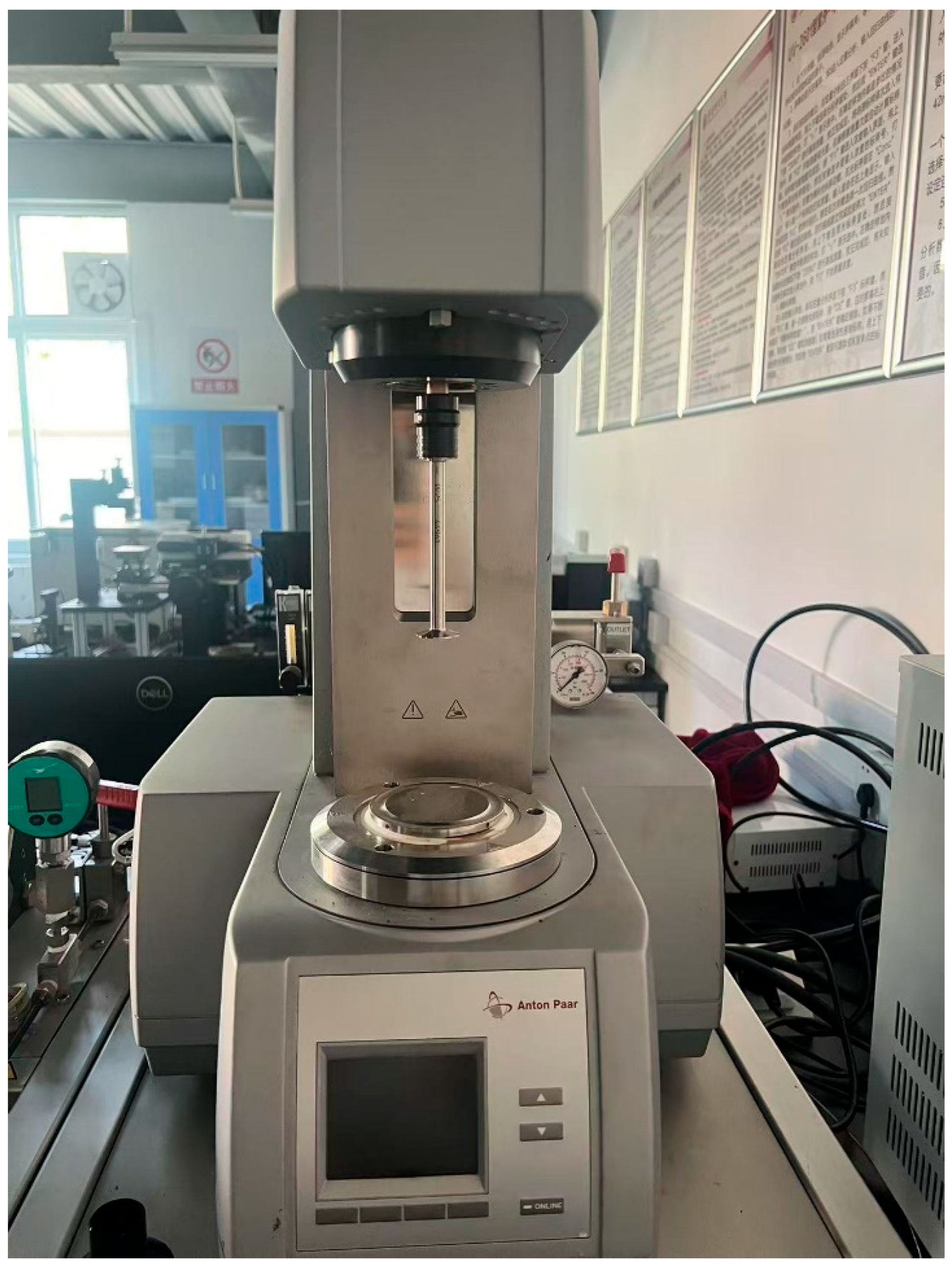
The Anton Paar MCR102 rheometer (Figure 1) consists of a host, measurement system, temperature control system, software system, and other accessories. The host is equipped with high-precision bearings, brushless DC motors, optical encoders, and capacitive sensors to ensure accurate measurement. The measurement system provides multiple measurement boards and modules, suitable for different testing needs. The temperature control system adopts Peltier technology, which can accurately control temperature and is suitable for various measurement systems. The software system includes RheoPlus and RheoManager, providing comprehensive rheological testing and analysis functions.
Figure 1. Anton Paar MCR102 rheometer.
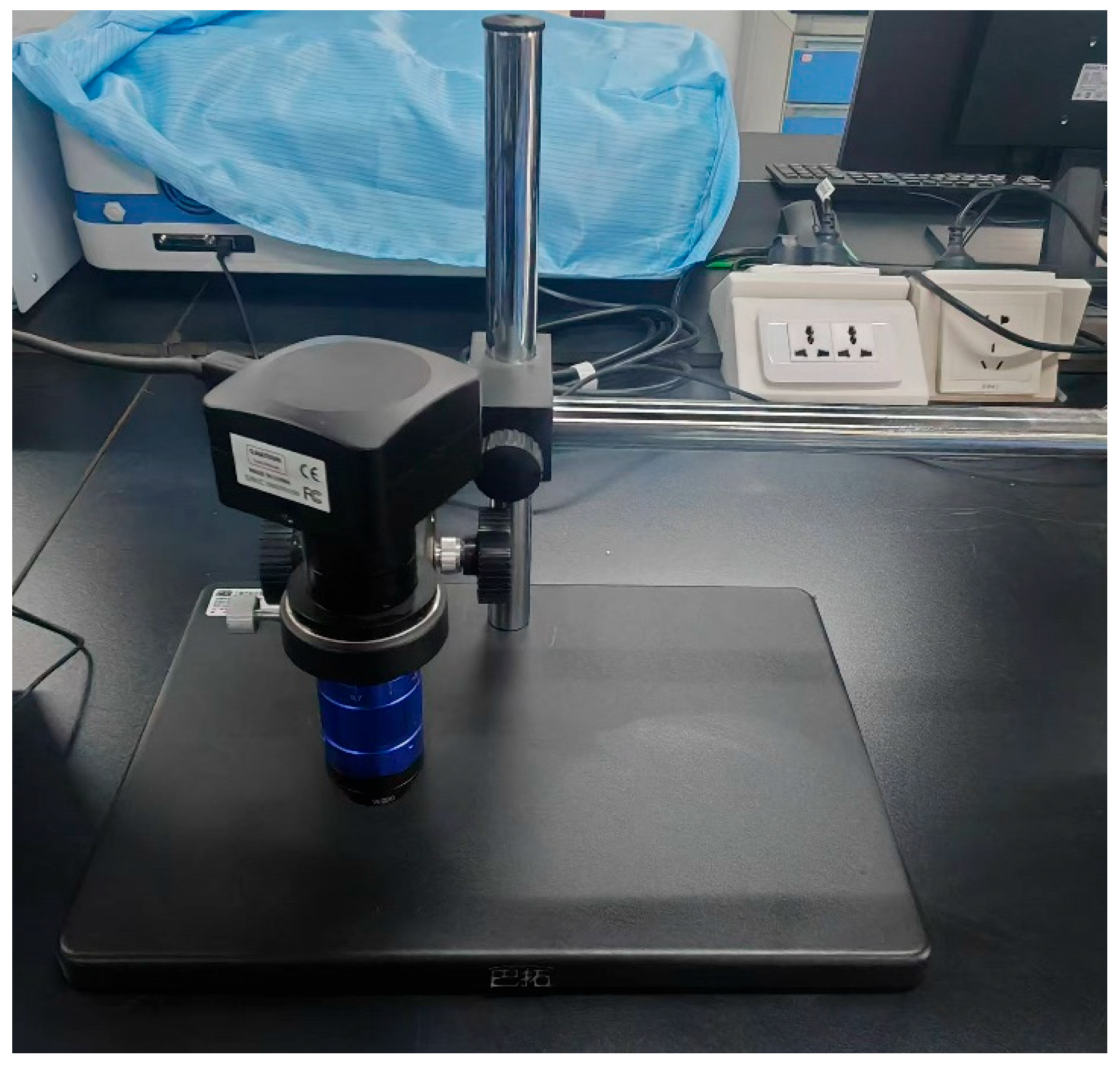
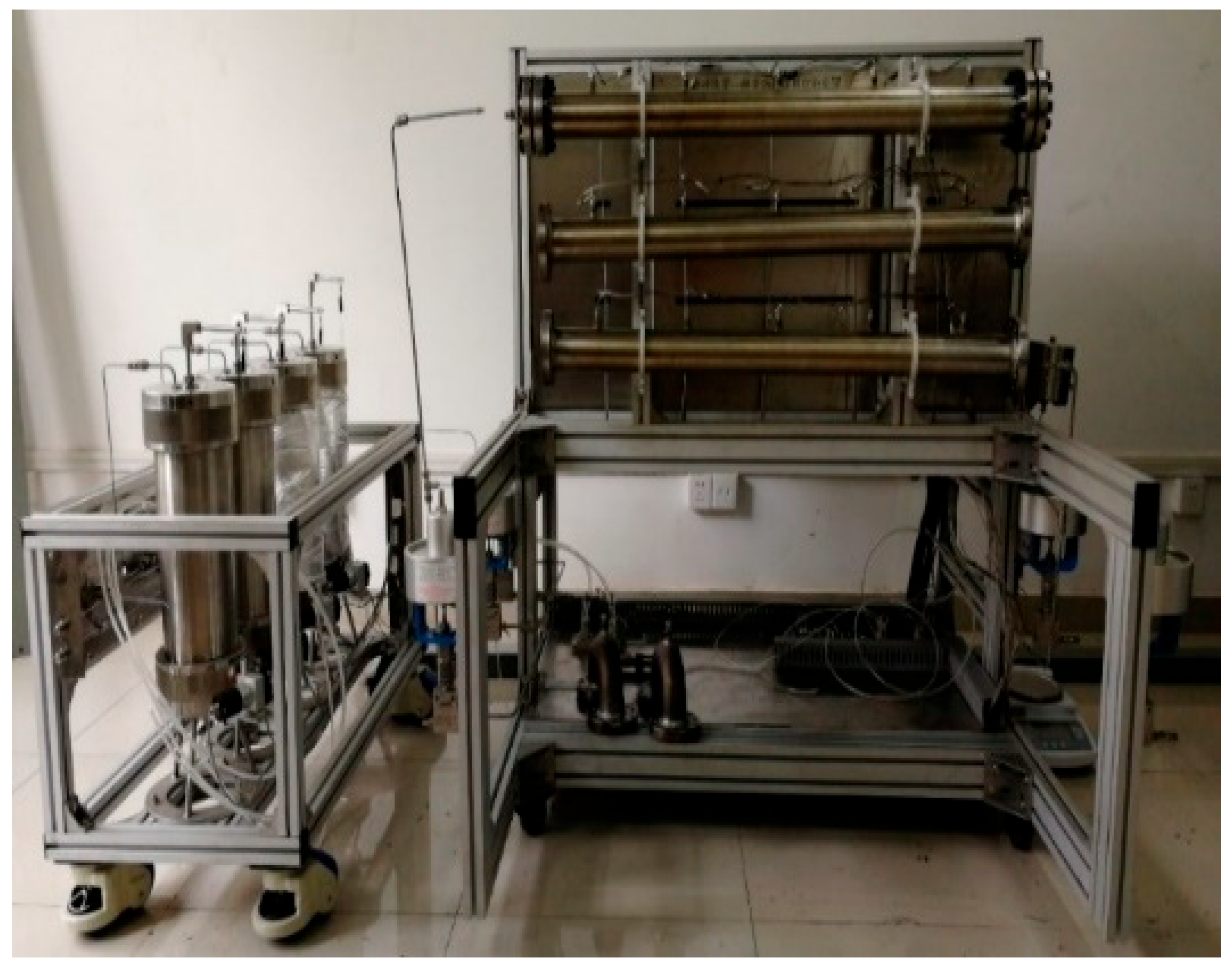
Optical microscope (Figure 2), glass slides and coverslips, and image analysis software were used. The one-dimensional physical simulation device (Figure 3) consists of a sand-filled tube, a heating jacket, and other components.
Figure 2. Optical microscope.
Figure 3. One-dimensional physical simulation device.

2.4. Experiment Approach

This experiment used 81 sets of samples, with displacement experiment pressure ranging from 0.5 MPa to 18.9 MPa, temperature ranging from 150 °C to 360 °C, and salinity ranging from 0 to 15,000. The experimental water cut is 10.07–72.22%. The experimental conditions for samples 1–9 are salinity of 0, 360 °C, and 18.9 MPa. The experimental conditions for samples 10–18 are salinity of 0, 330 °C, and 13 MPa. The experimental conditions for samples 19–27 are salinity of 0, 150 °C, and 0.5 MPa. The experimental conditions for samples 28–36 are salinity of 7500, 360 °C, and 18.9 MPa. The experimental conditions for samples 37–45 are salinity of 7500, 330 °C, and 13 MPa. The experimental conditions for samples 46–54 are salinity of 7500, 150 °C, and 0.5 MPa. The experimental conditions for samples 55–63 are salinity of 15,000 and 16.52 MPa, and the displacement pressure for samples 64–71 is salinity of 15,000 and 16.52 MPa. The experimental conditions for the samples are a displacement pressure of 12.85 MPa with a mineralization degree of 15,000, while the experimental conditions for samples 73–81 are a displacement pressure of 0.5 MPa with a mineralization degree of 15,000. The reverse phase point test of water bearing heavy oil emulsion and the microscopic observation experiment of heavy oil emulsion were carried out, respectively. The design parameters for each experimental plan are shown in the Table A1.

2.5. Experimental Procedure

2.5.1. Preparation of Crude Oil Samples

(1)
After crude oil dehydration and filtration treatment, fill the sand filling tube to the designed pore permeability (In this study, the permeability was controlled at 2 Darcy, consistent with the actual situation of the oil field), and vacuum saturate the oil–water;
(2)
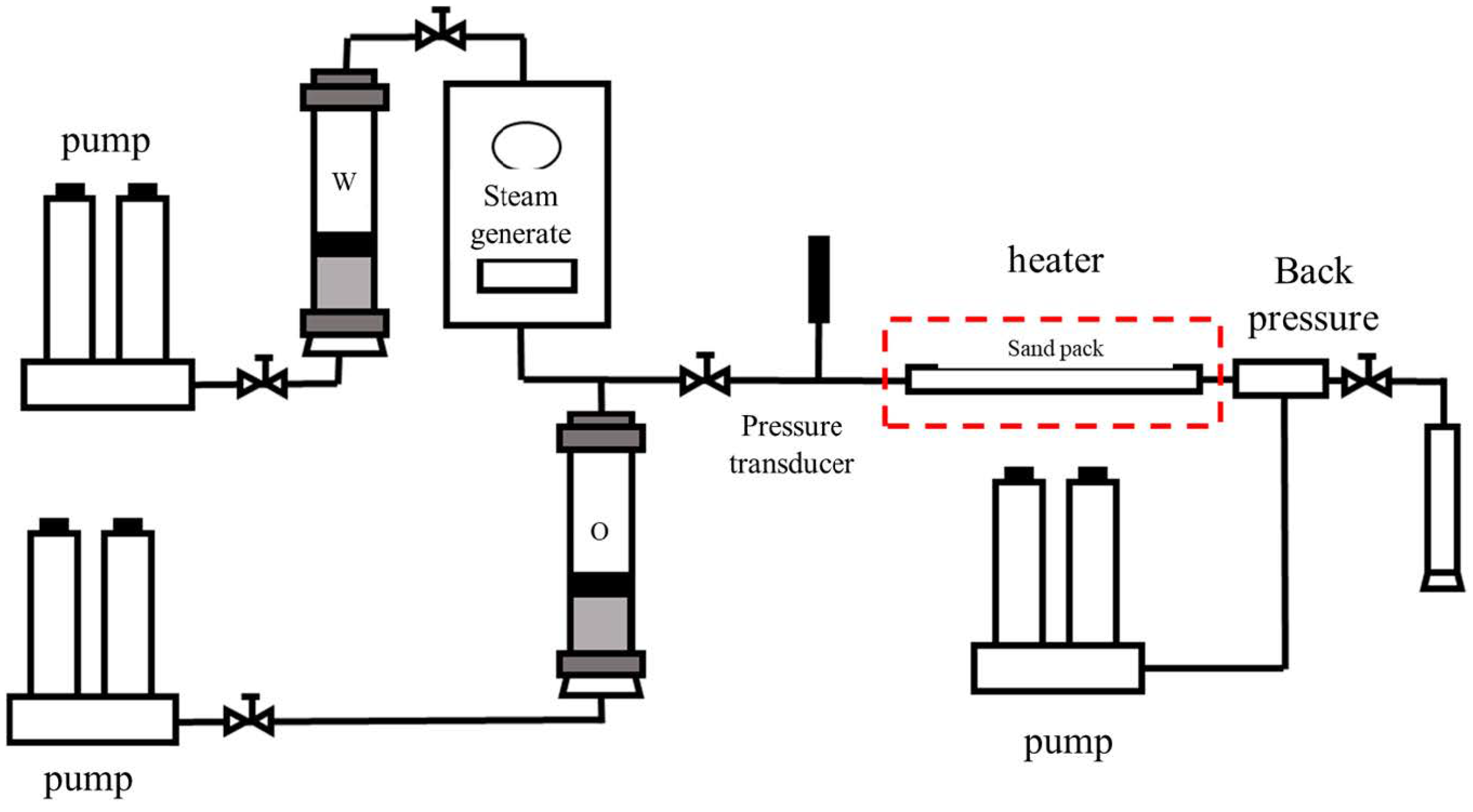
At the designed temperature and pressure, steam and crude oil are simultaneously injected into the sand filling tube according to different water contents, and injected at the laboratory scale based on the actual flow rate of the mining site (Figure 4);
Figure 4. Sample Preparation Experimental Flow Chart.
(3)
After stabilizing the pressure, maintain it for more than 30 min and collect the emulsion.

2.5.2. Reverse Phase Point Test of Water Containing Heavy Oil Emulsion

(1)
Sample preparation: Collect heavy oil samples after thermal displacement, ensuring that the samples are uniform and free of bubbles. Place the sample in a constant temperature environment to stabilize its temperature.
(2)
Equipment calibration: Turn on the air pump, open the water circulation system, turn on the Anton Paar MCR102 rheometer, and perform equipment self-test to ensure normal operation of the equipment. Calibrate the measurement system and select the CC27 measurement system to ensure measurement accuracy. Before the experimental testing begins, the rheometer is calibrated and the system error of the equipment is controlled within 5%.
(3)
Temperature control: Use a temperature control device to set the temperature range, and increase the temperature from 20 °C to 90 °C at a constant speed according to the heating method, also adjusted according to the characteristics of heavy oil. This process uses a Peltier system for temperature control to ensure smooth and accurate temperature changes.
(4)
Measurement parameter setting: Select the control shear rate mode and set the shear rate to 50 s −1. Set the temperature scanning rate to 1 °C/min to ensure uniform temperature changes.
(5)
Sample loading: Carefully load the heavy oil sample into the measurement system to reach the loading line and avoid introducing bubbles. Ensure sufficient contact between the sample and the measurement system to avoid uneven thickness of the sample.
(6)
Data collection: Start the rheometer and test according to the set heating method and shear rate. The instrument records viscosity data in real time to ensure the continuity and accuracy of the data.
(7)
Data processing: After testing is completed, export viscosity data. Use the Anton Paar MCR102 rheometer software for data processing and plot the viscosity–temperature curve. Analyze the variation in viscosity of heavy oil with temperature.

2.5.3. Microscopic Observation Test of Heavy Oil Emulsion

(1)
Sample preparation: Collect heavy oil samples after thermal displacement, ensuring that the samples are uniform and free of bubbles. Place the sample in a constant temperature environment to stabilize its temperature.
(2)
Sample preparation: Take an appropriate amount of sample and drop it onto a glass slide. Gently cover the slide to avoid introducing bubbles.
(3)
Microscope calibration: Turn on the optical microscope to perform self-inspection of the equipment to ensure its normal operation. Adjust the focal length and aperture of the microscope to ensure clear images.
(4)
Observation and shooting: observe the sample under the optical microscope, adjust the magnification, and observe the shape and distribution of emulsion. Use a high-resolution camera to capture microscopic images, ensuring clear images.
(5)
Data collection: Record observation conditions and shooting parameters to ensure data integrity and traceability.

2.6. Data Processing Methods

After using the Anton Paar MCR102 rheometer to measure the viscosity–temperature curve of heavy oil, the viscosity data obtained requires a series of data processing and analysis to obtain the required water containing a heavy oil emulsion inversion point. The specific steps are as follows:
(1)
Draw viscosity–temperature curve: in Origin software, on a semi logarithmic coordinate paper, use the vertical axis (logarithmic coordinate) as viscosity and the horizontal axis as temperature, mark the data points with viscosity values at different temperatures, and connect them with smooth curves.
(2)
Determination of Reverse Point: According to Q/HSHF ZC102-2014 Determination of Reverse Point of Water Containing Crude Oil Emulsion (Rotational Viscometer Method), with water content as the horizontal axis and viscosity as the vertical axis, draw the viscosity–temperature curve of emulsion with different water contents of experimental samples, and obtain the water content corresponding to the maximum viscosity. If the viscosity value at this point decreases significantly with the continuous increase in water content value, then the water content is the reverse point.
Microscopic observation experiment of heavy oil emulsion is carried out with an optical microscope, and the specific steps are as follows:
(1)
Image preprocessing: preprocessing the captured microscopic images, including denoising, contrast enhancement, etc., to improve image quality.
(2)
Image segmentation: use image analysis software to segment the pretreated image and extract the shape and distribution information of emulsion.

3. Experimental Results and Analysis

3.1. Experimental Results

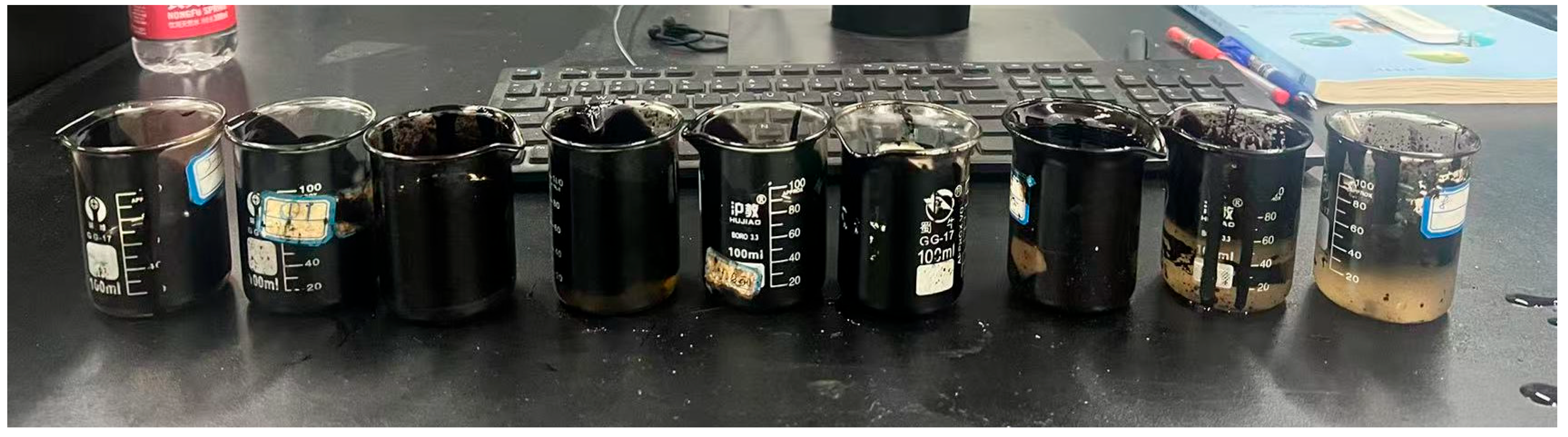
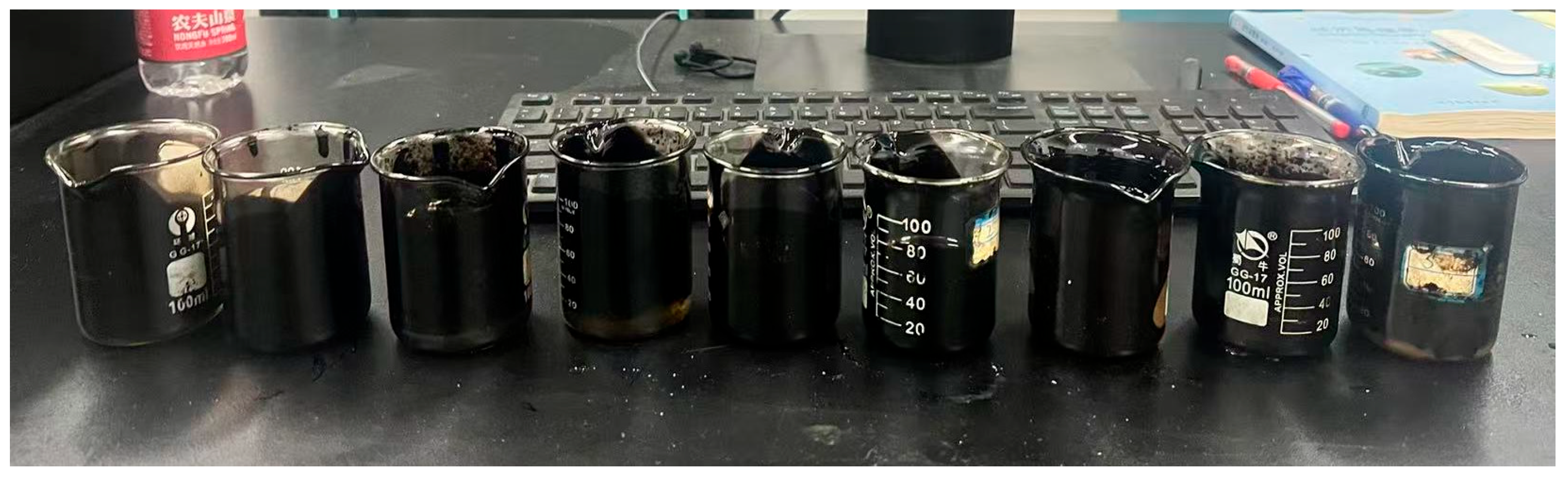
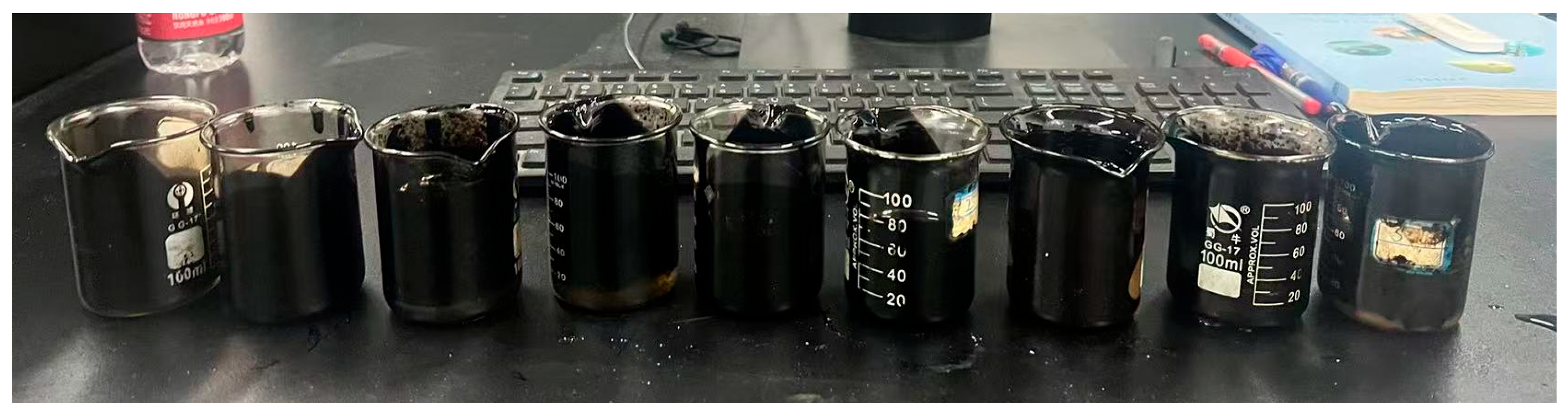
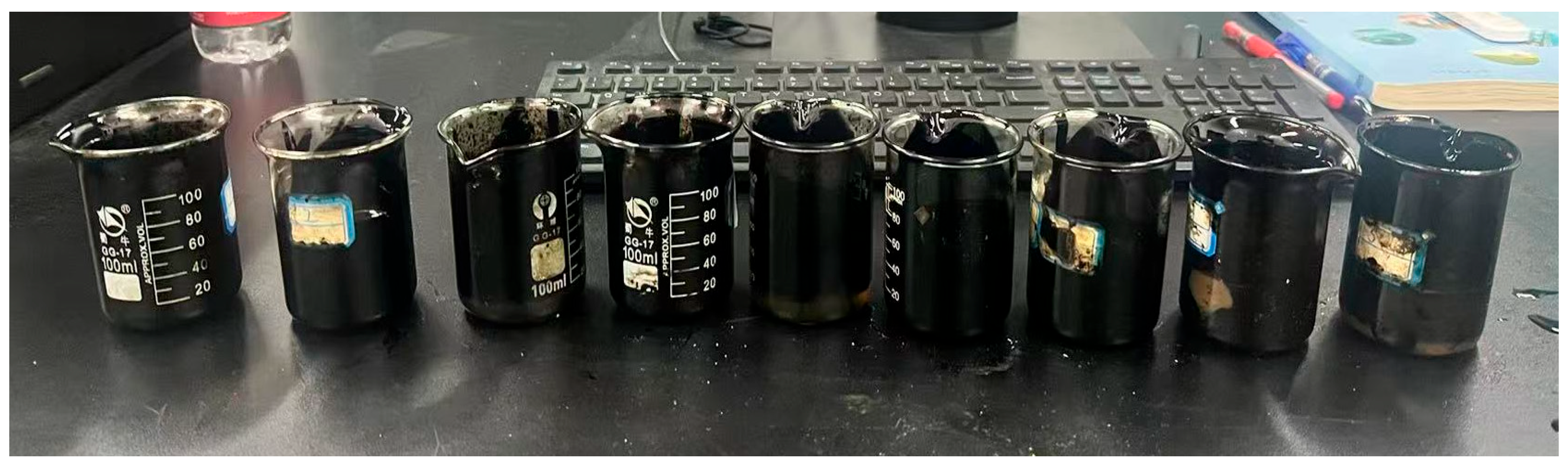
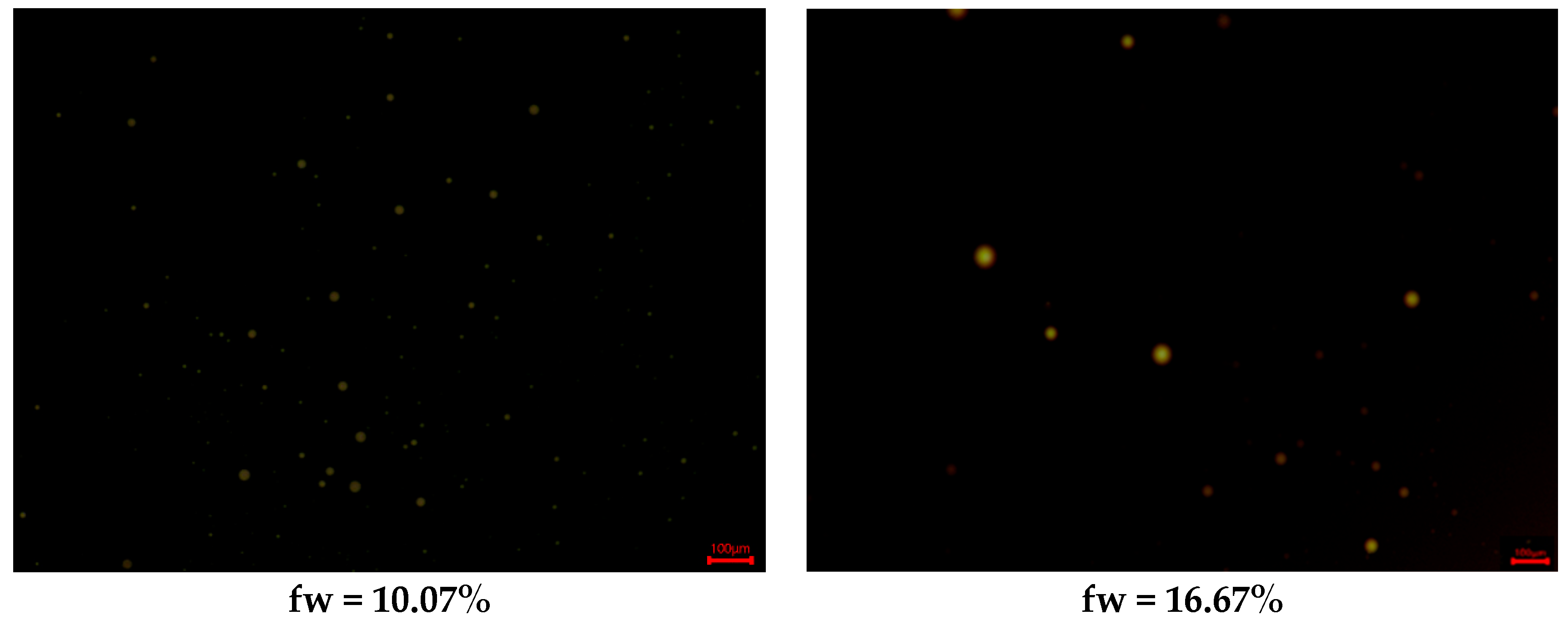
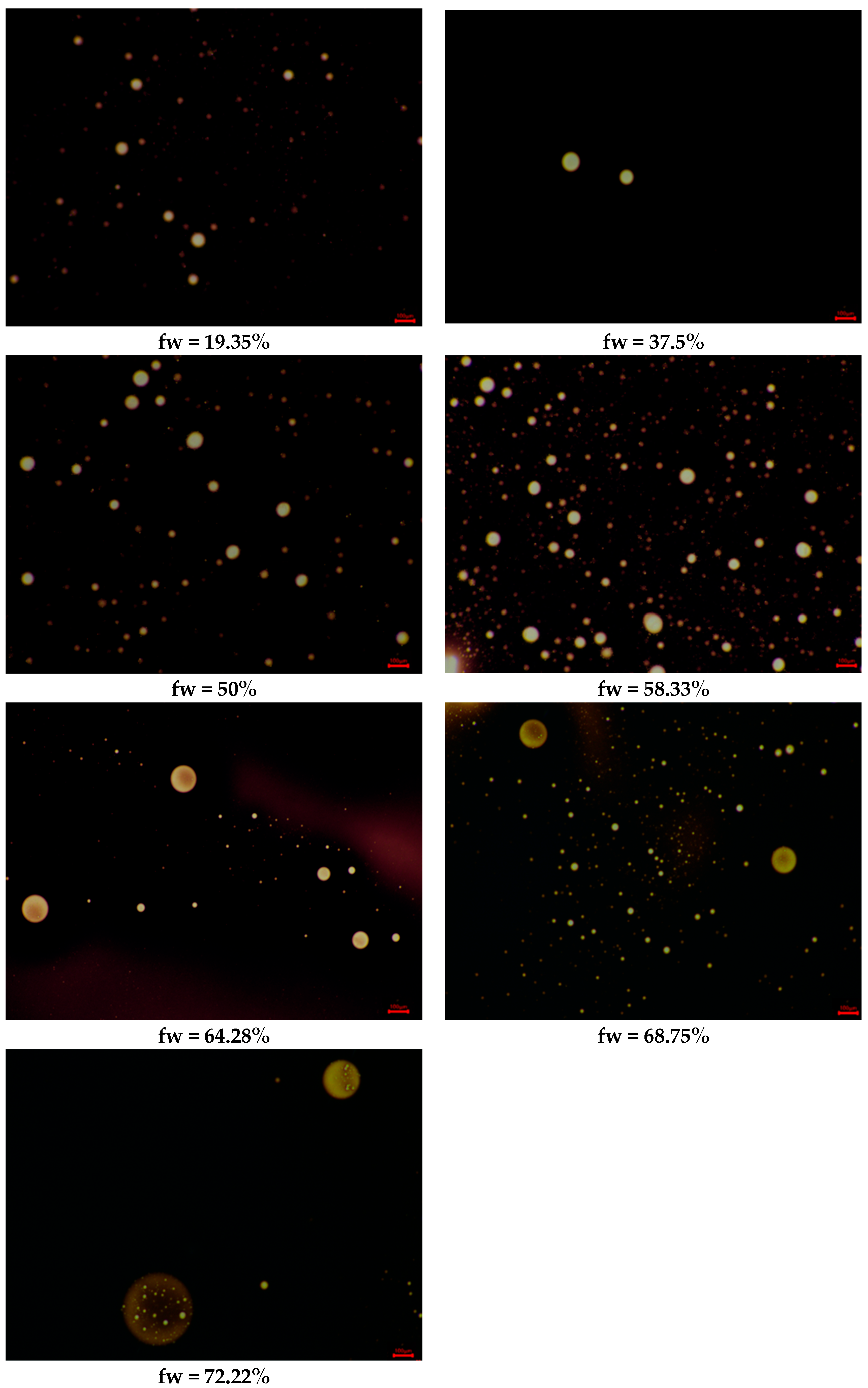
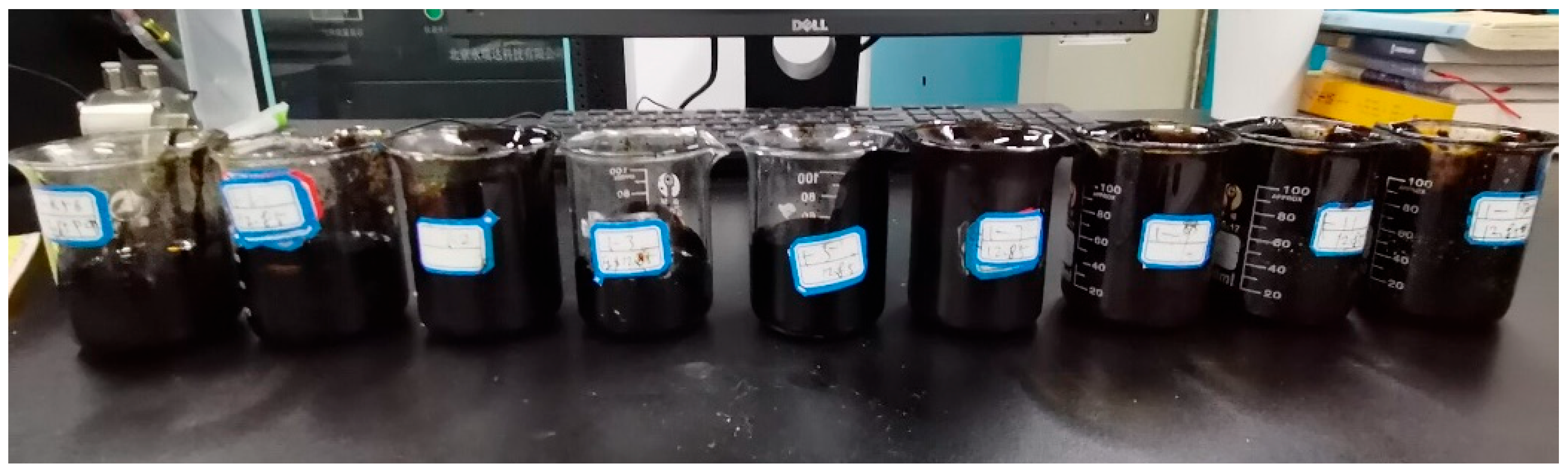
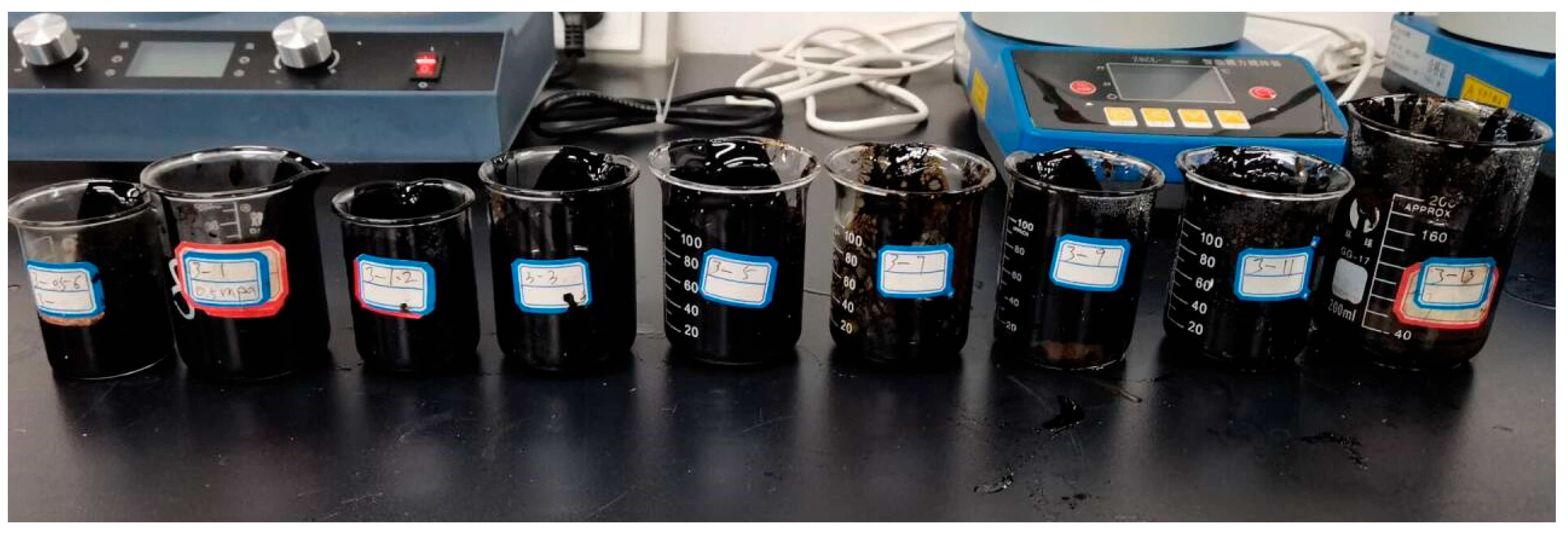
For experiments 1–9, the emulsion samples are shown as Figure A1:
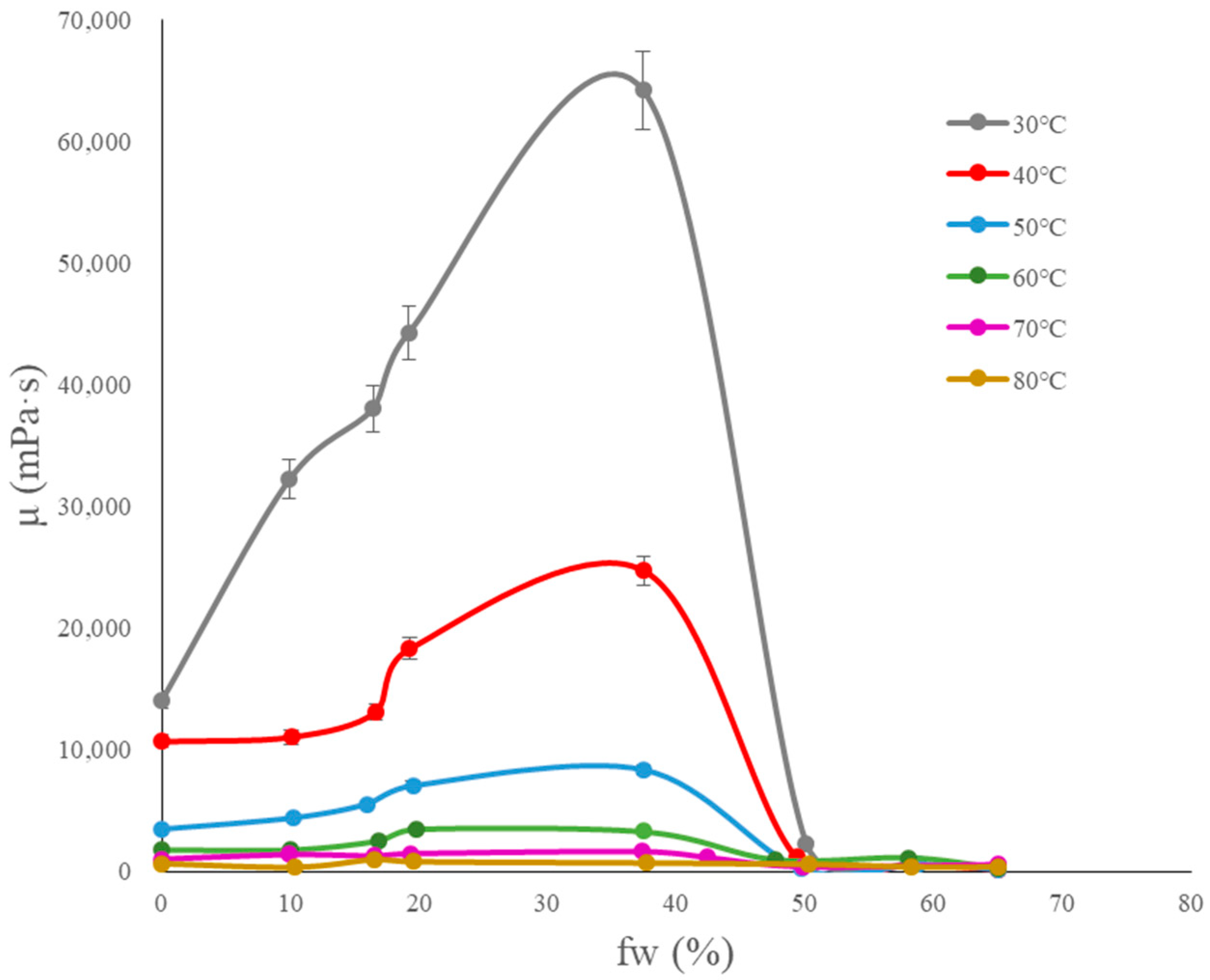
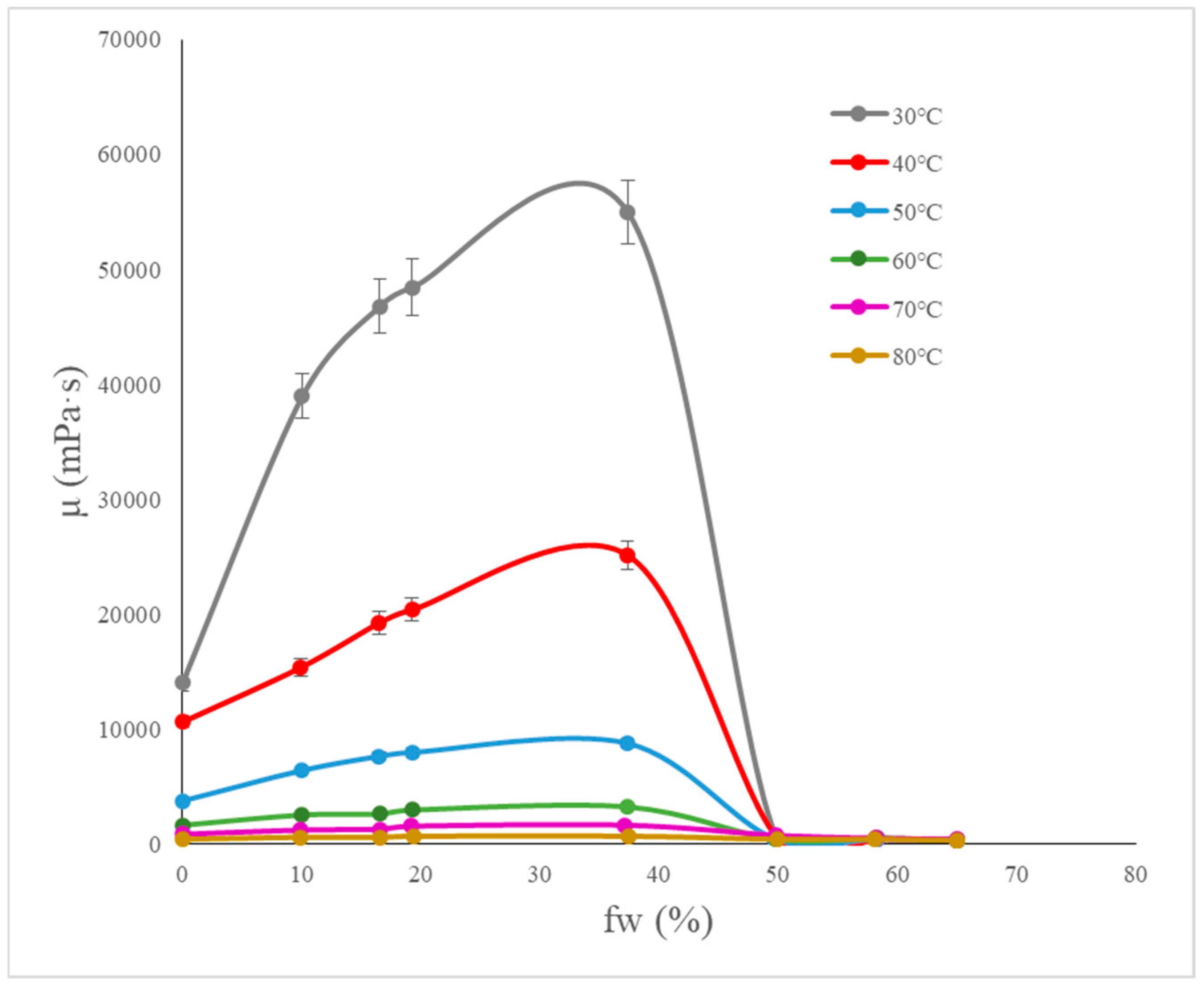
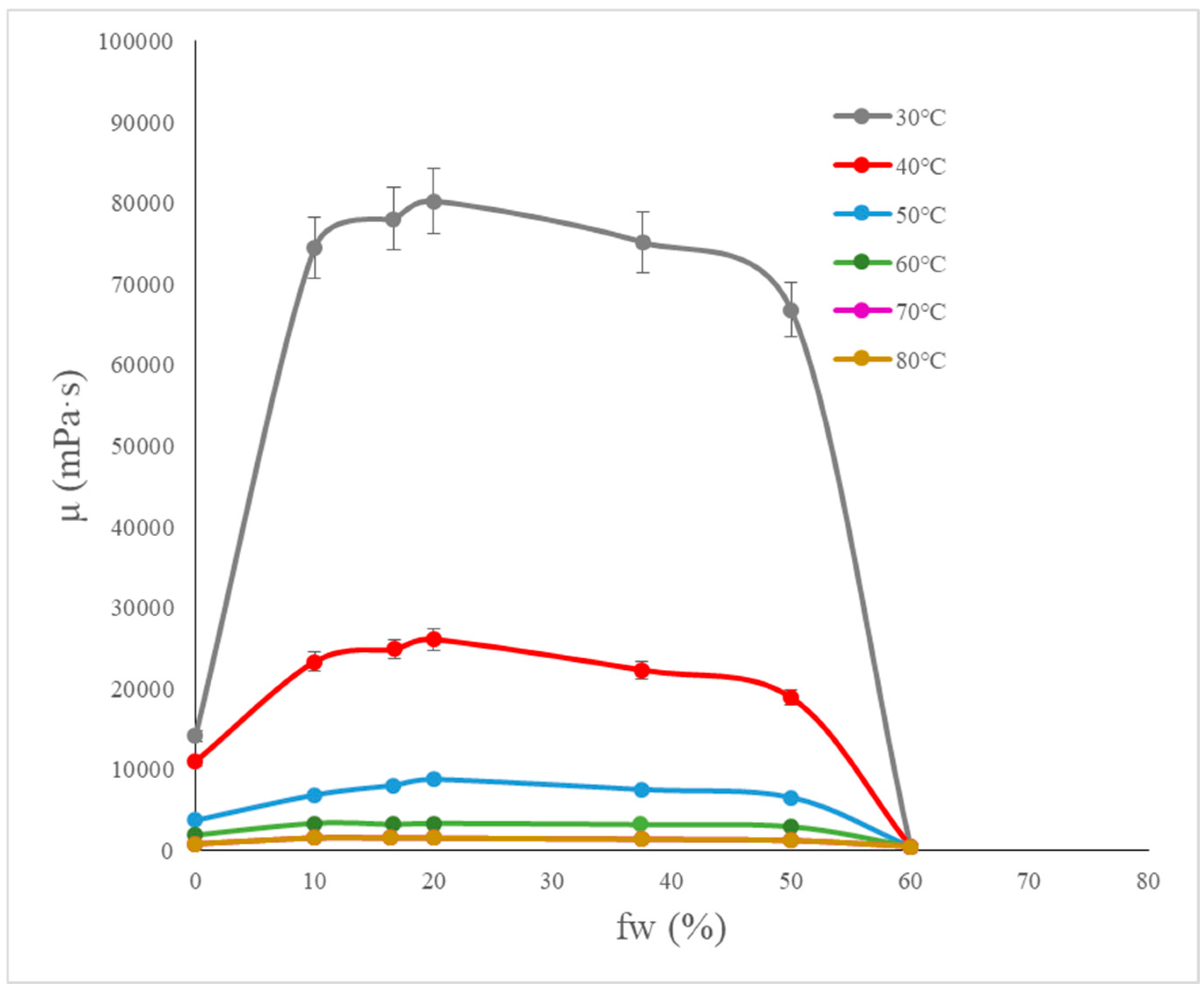
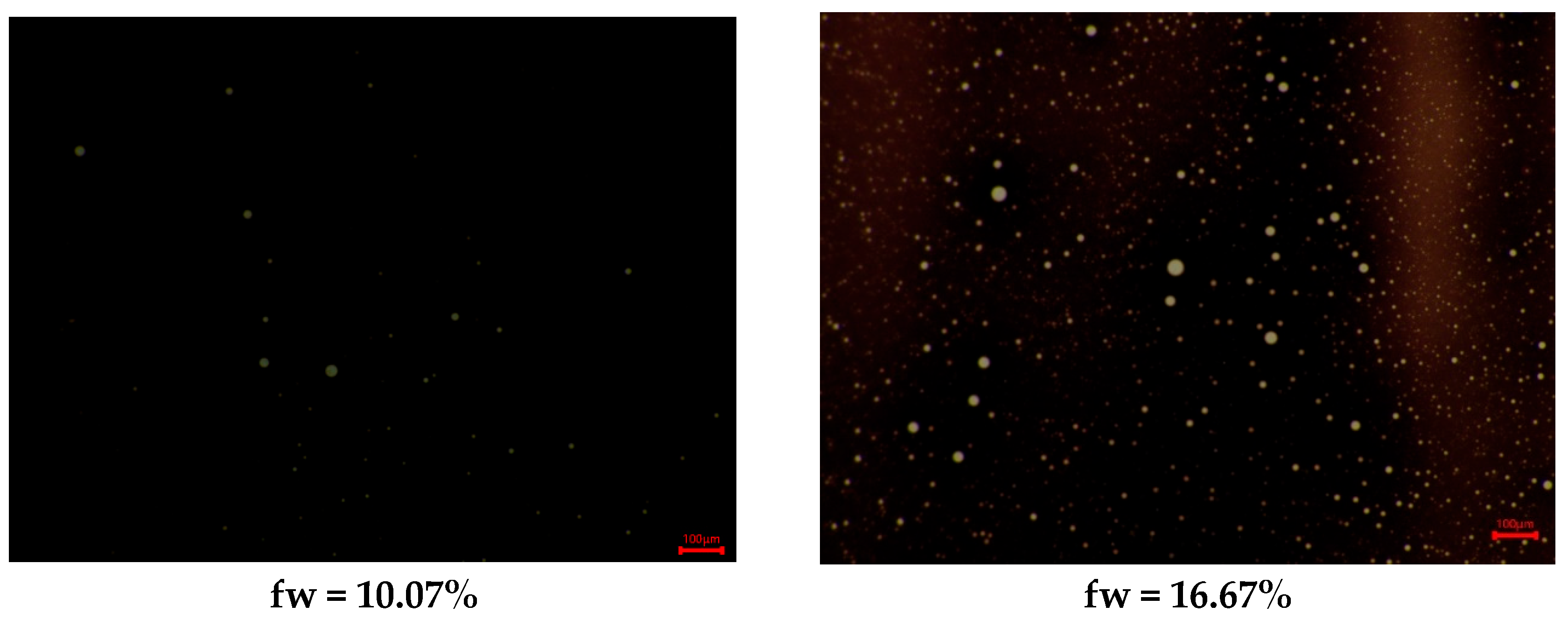
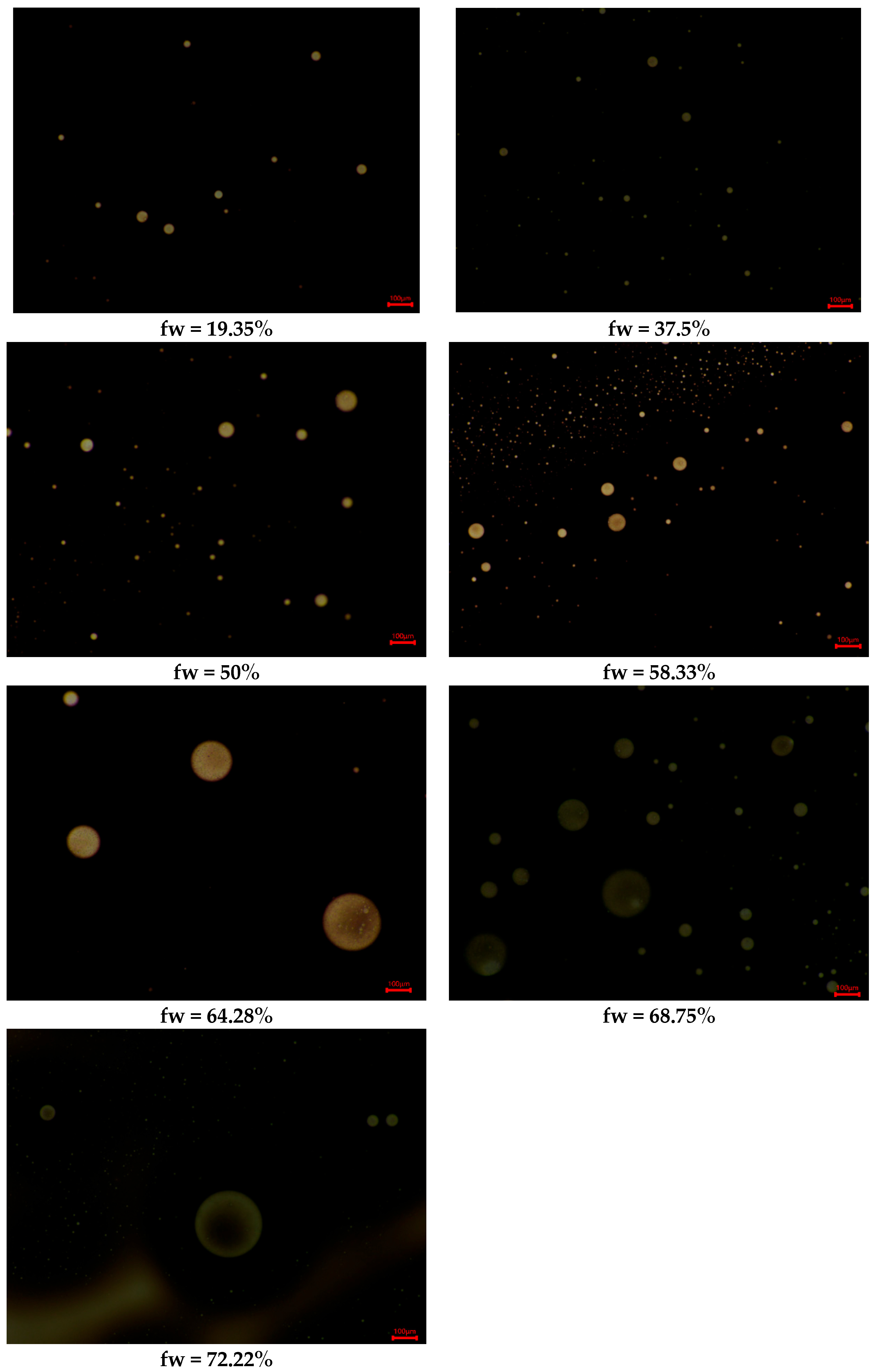
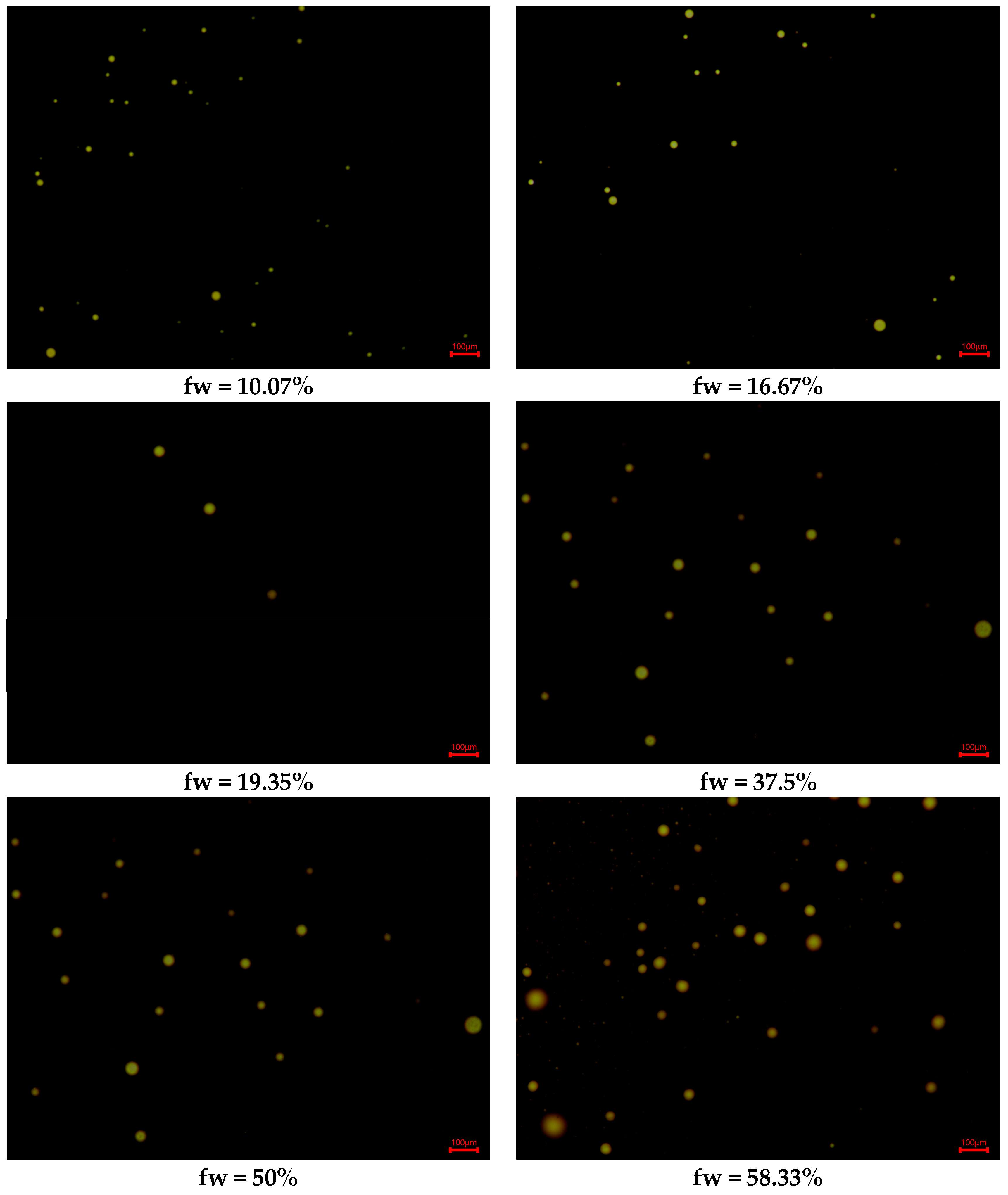
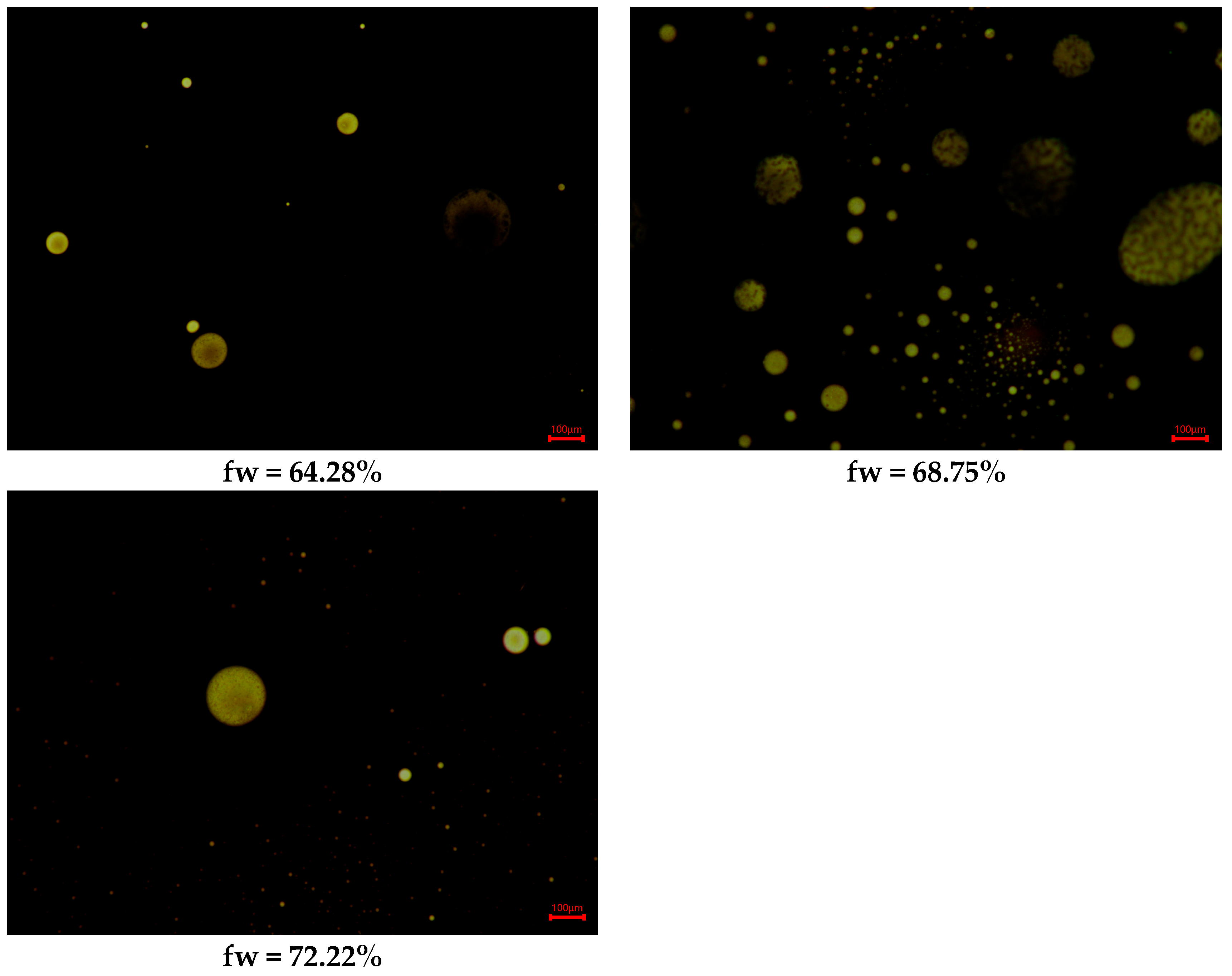
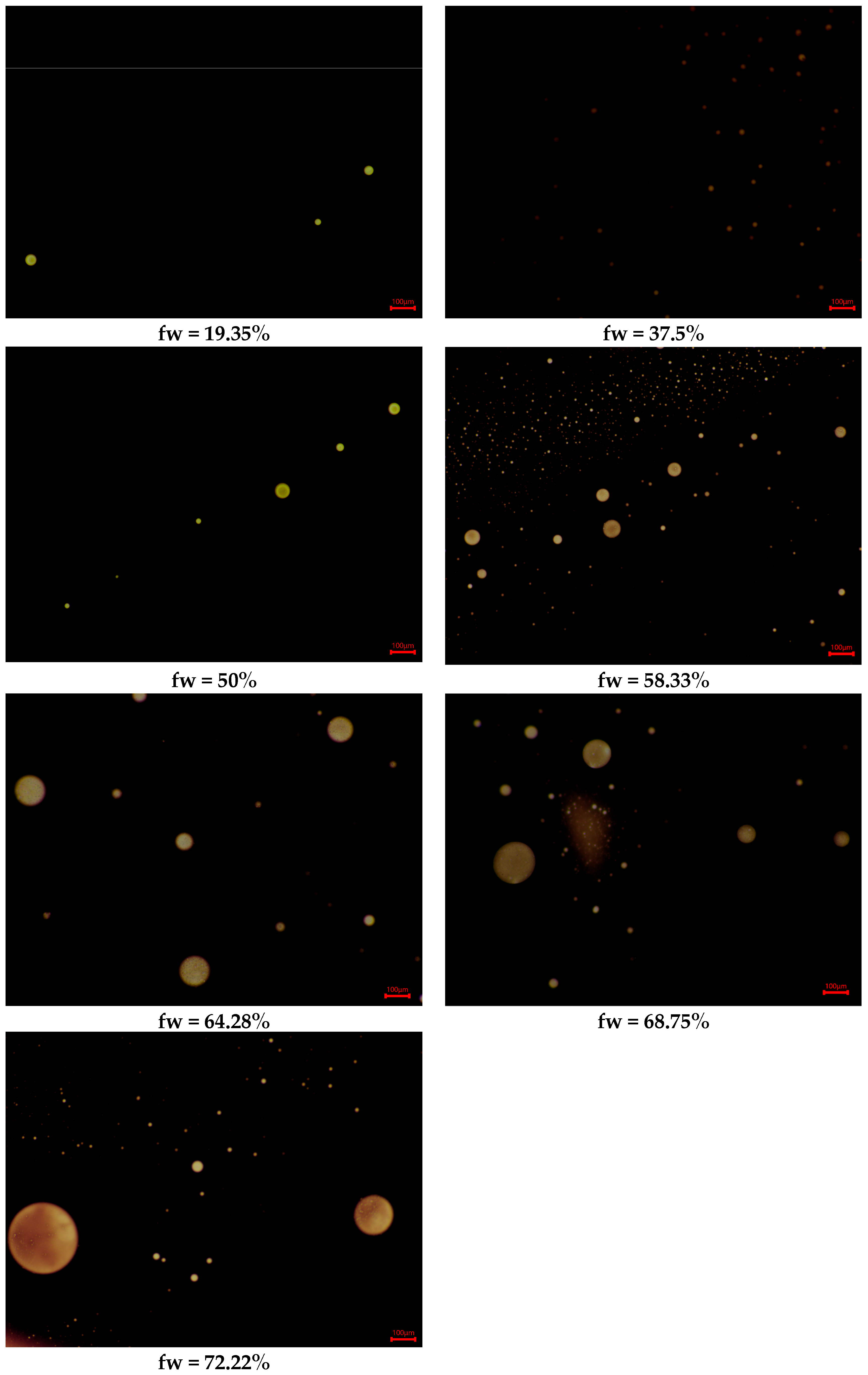
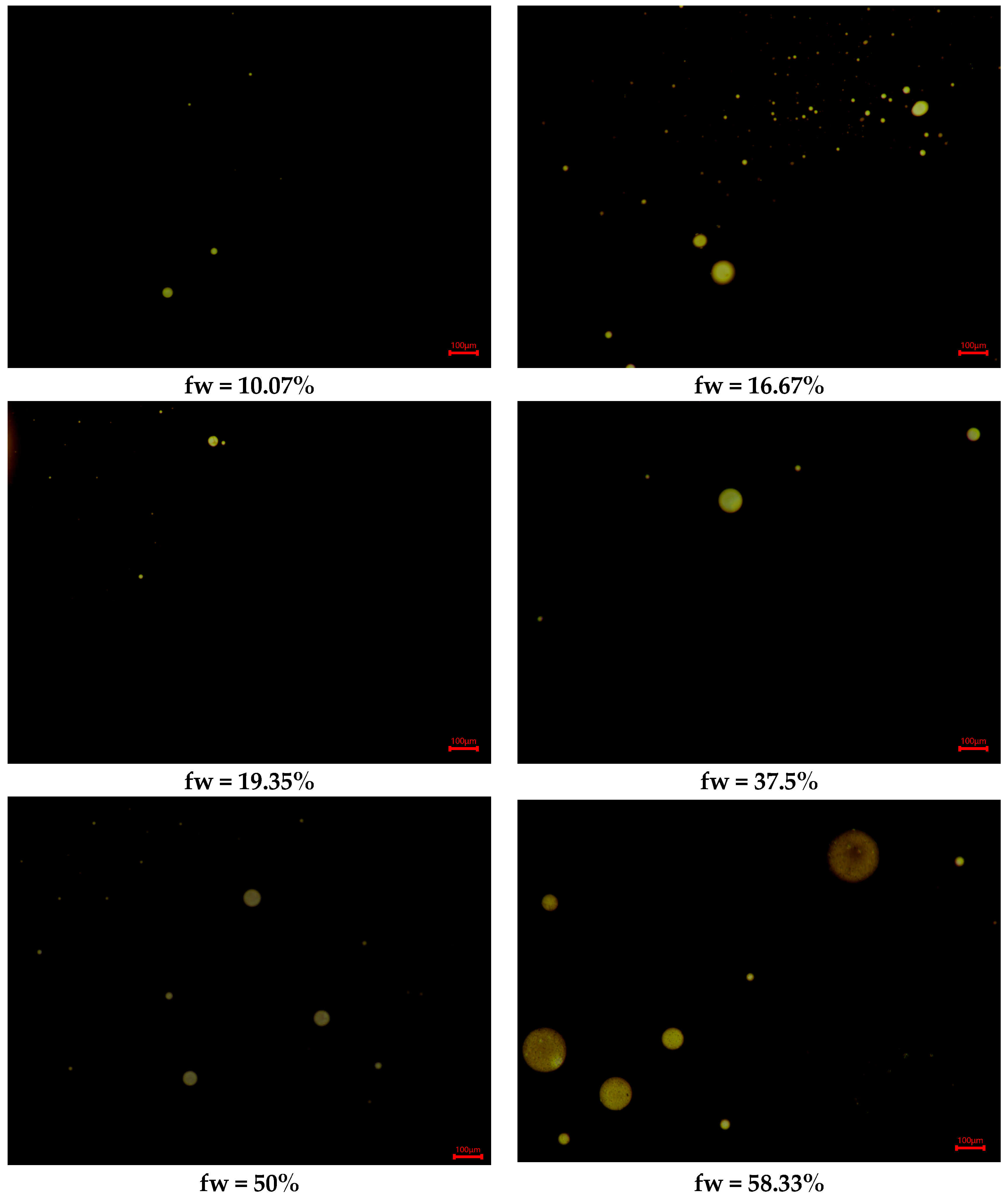
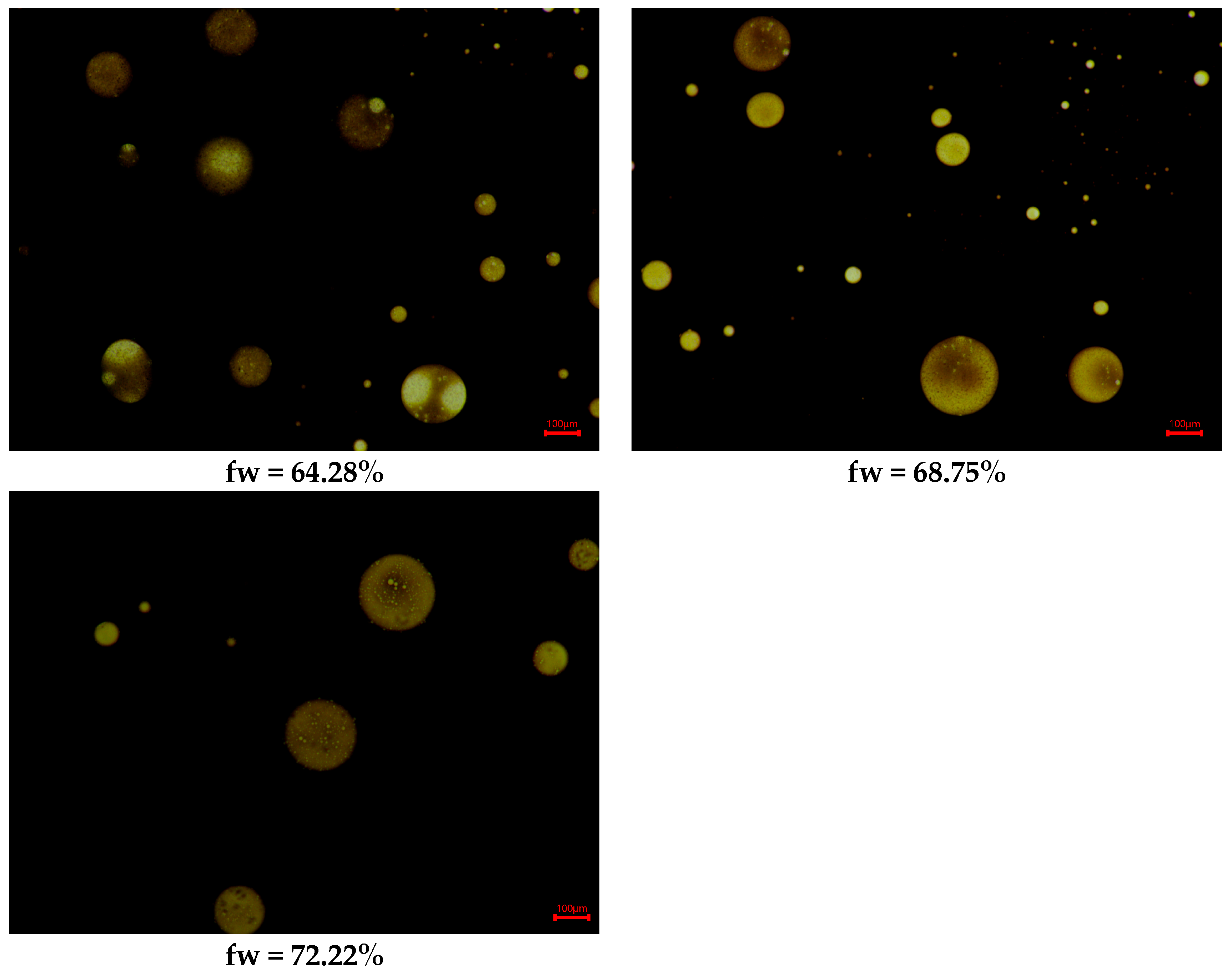
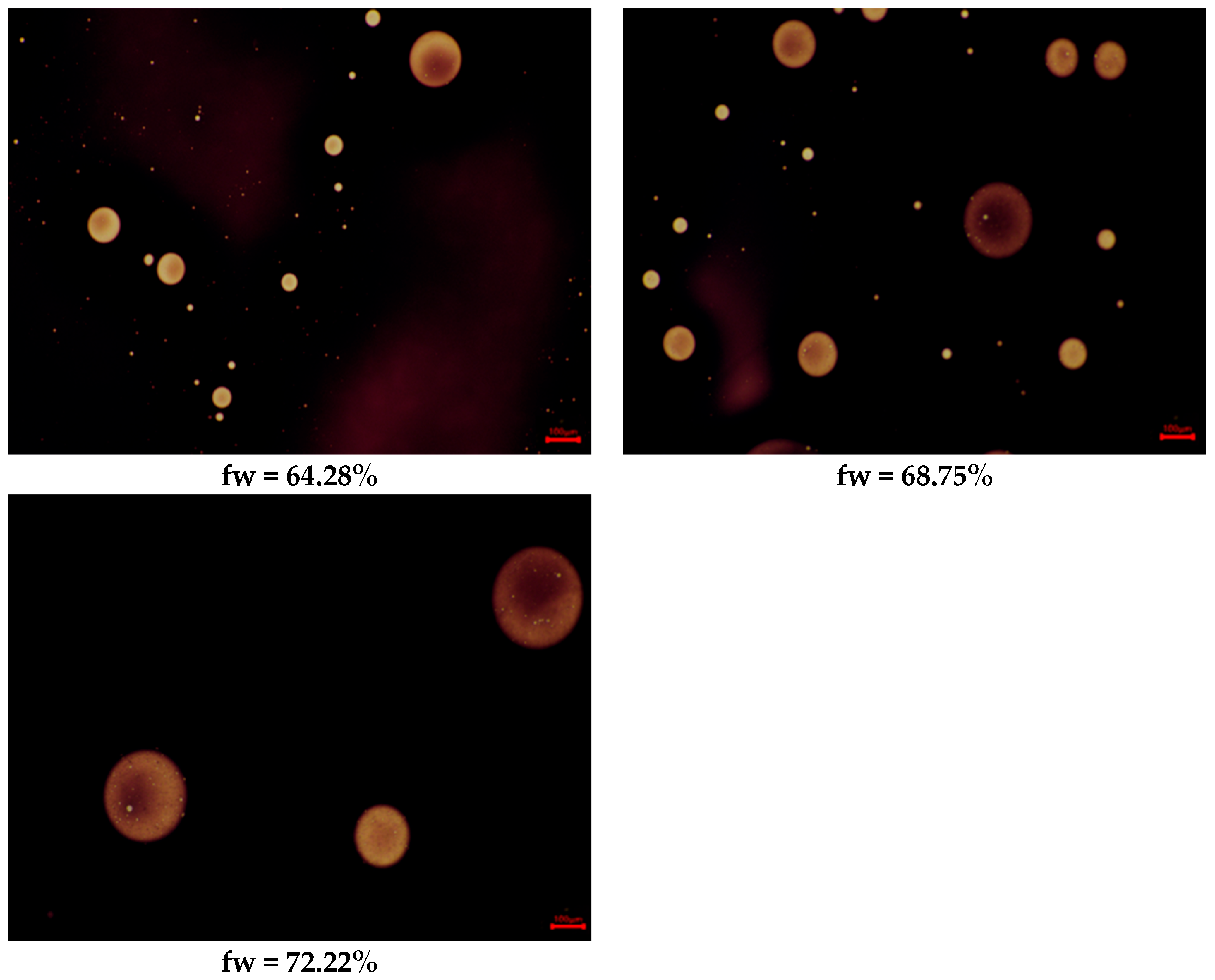
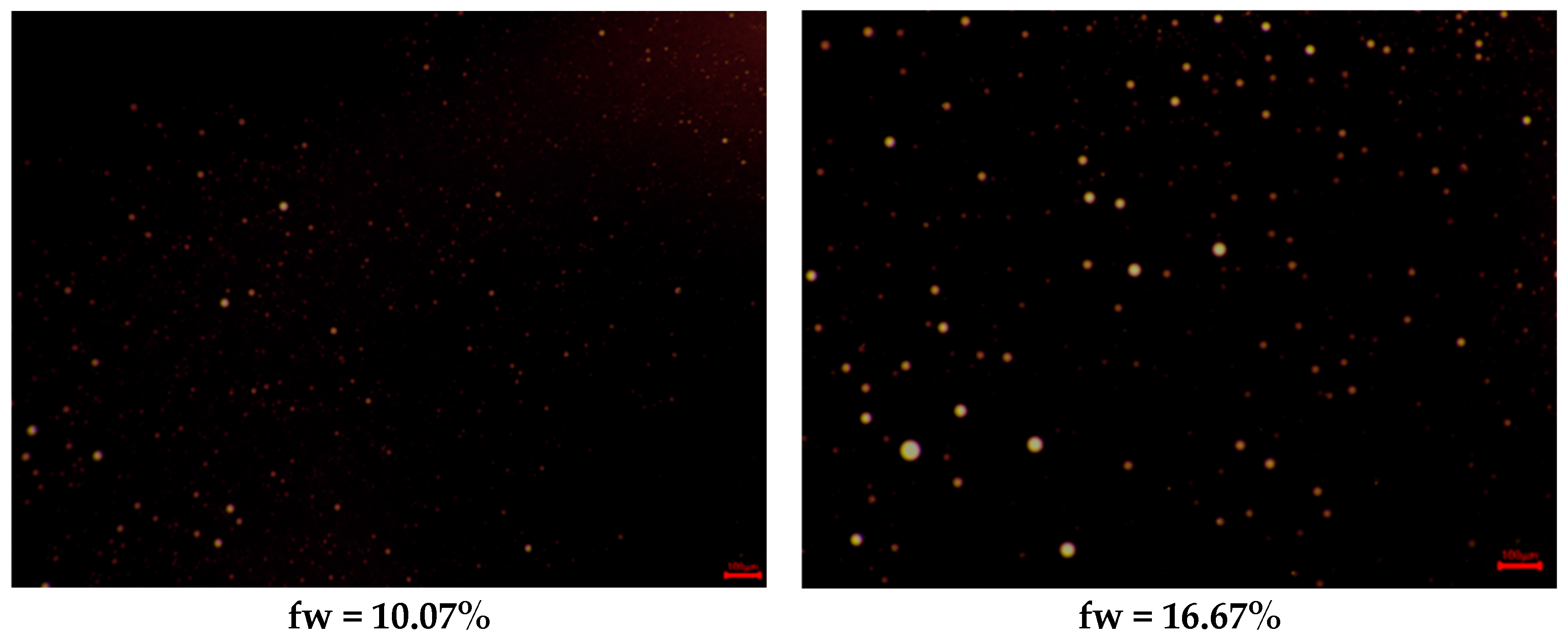
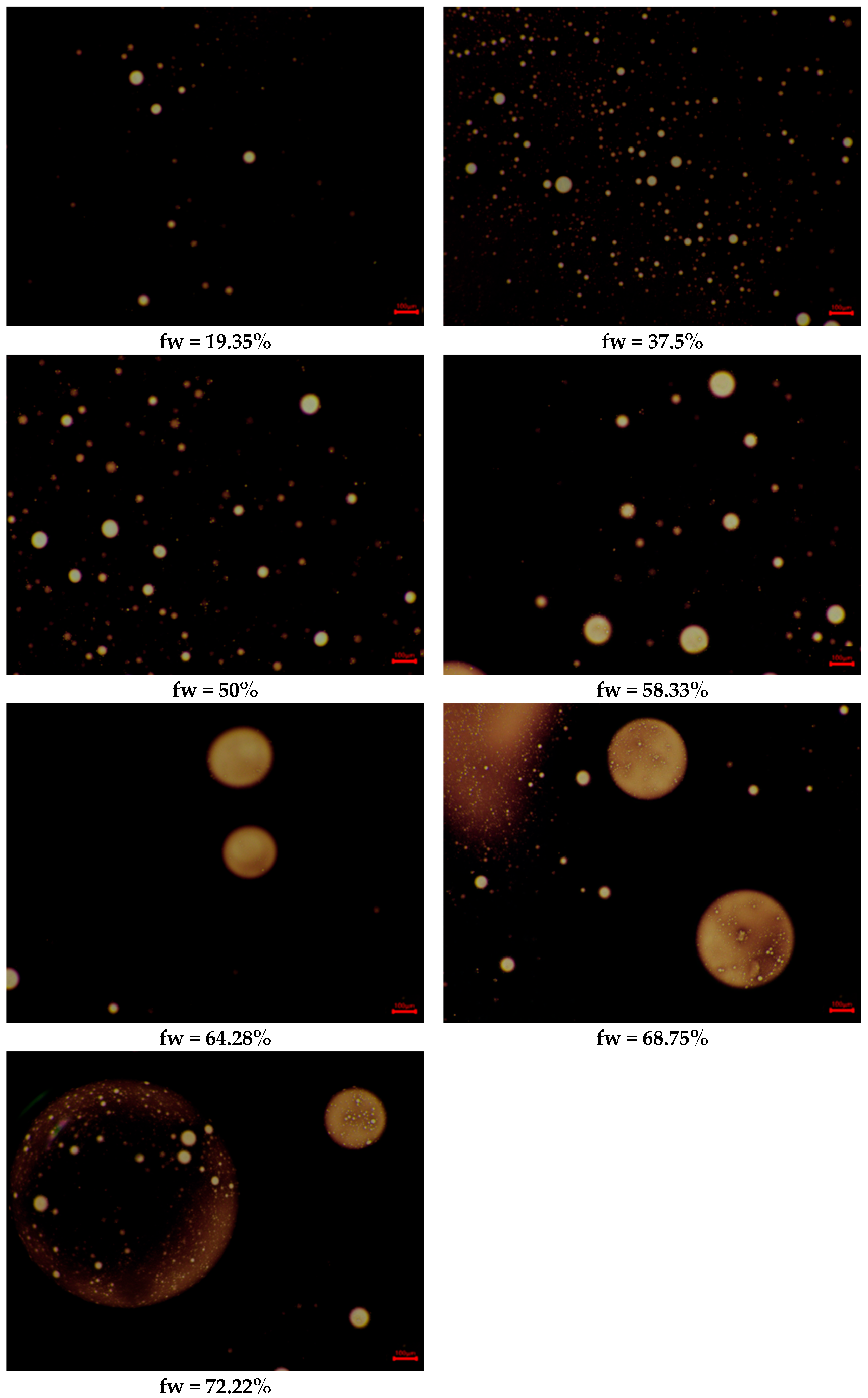
In the experiment, it was found that solutions with water contents of 10.07%, 16.67%, 19.35%, 37.50%, 50.00%, and 58.33% were homogeneous mixtures. When the water content was 64.28%, 68.75%, and 72.22%, oil–water separation resulted in heterogeneous solutions. According to Q/HSHF ZC102-2014 Determination of Inversion Point of Water bearing Crude Oil Emulsion (Rotational Viscometer Method), the relationship between the viscosity and water content of emulsion under different water contents shows a change rule of first increasing and then decreasing, and the inversion point is about 37.5% (Figure 5). The microscopic images of each experimental emulsion are shown in Figure A2.
Figure 5. Reverse Point Analysis Result 1.
For experiments 10–18, the emulsion samples are shown in Figure A3:
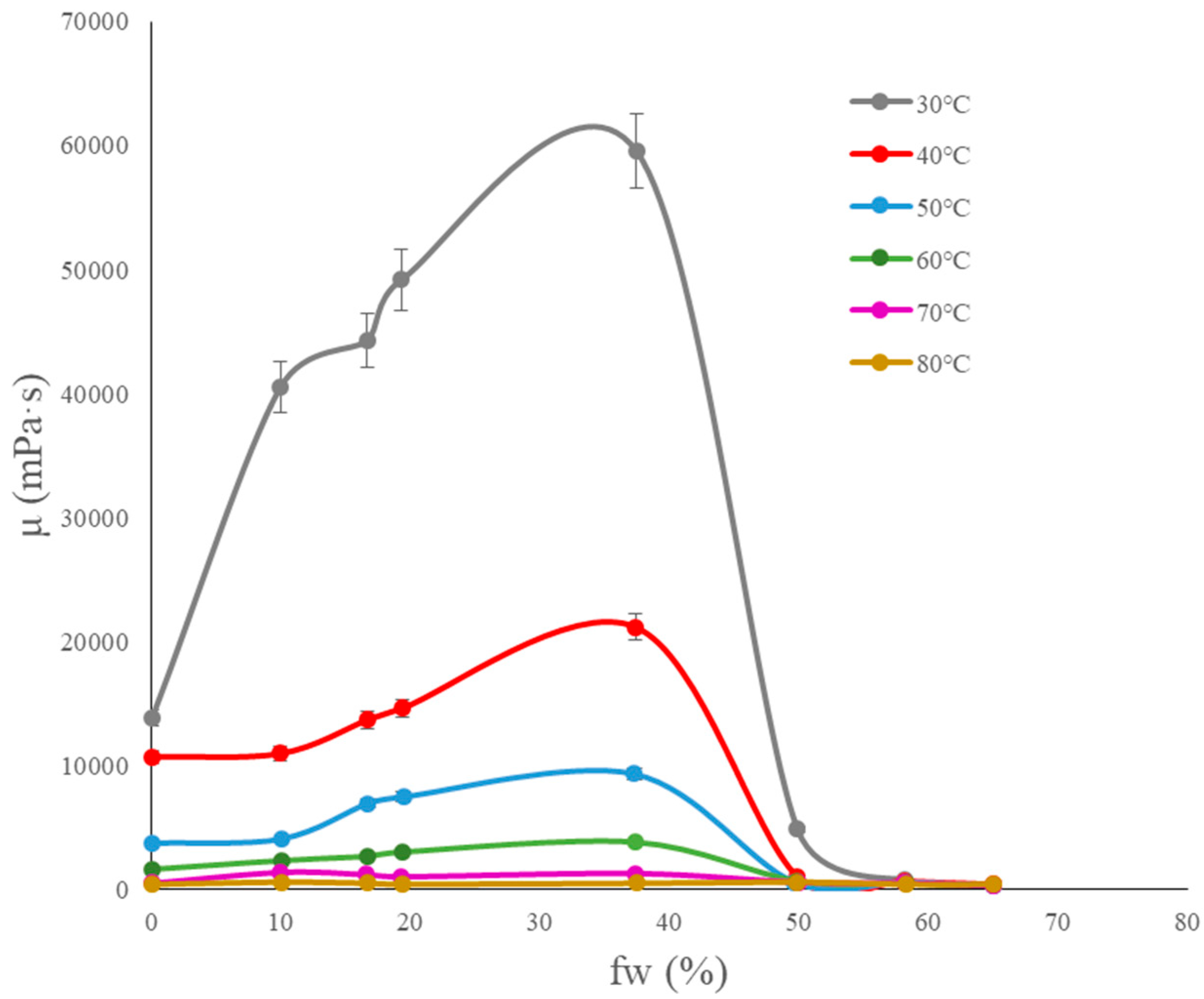
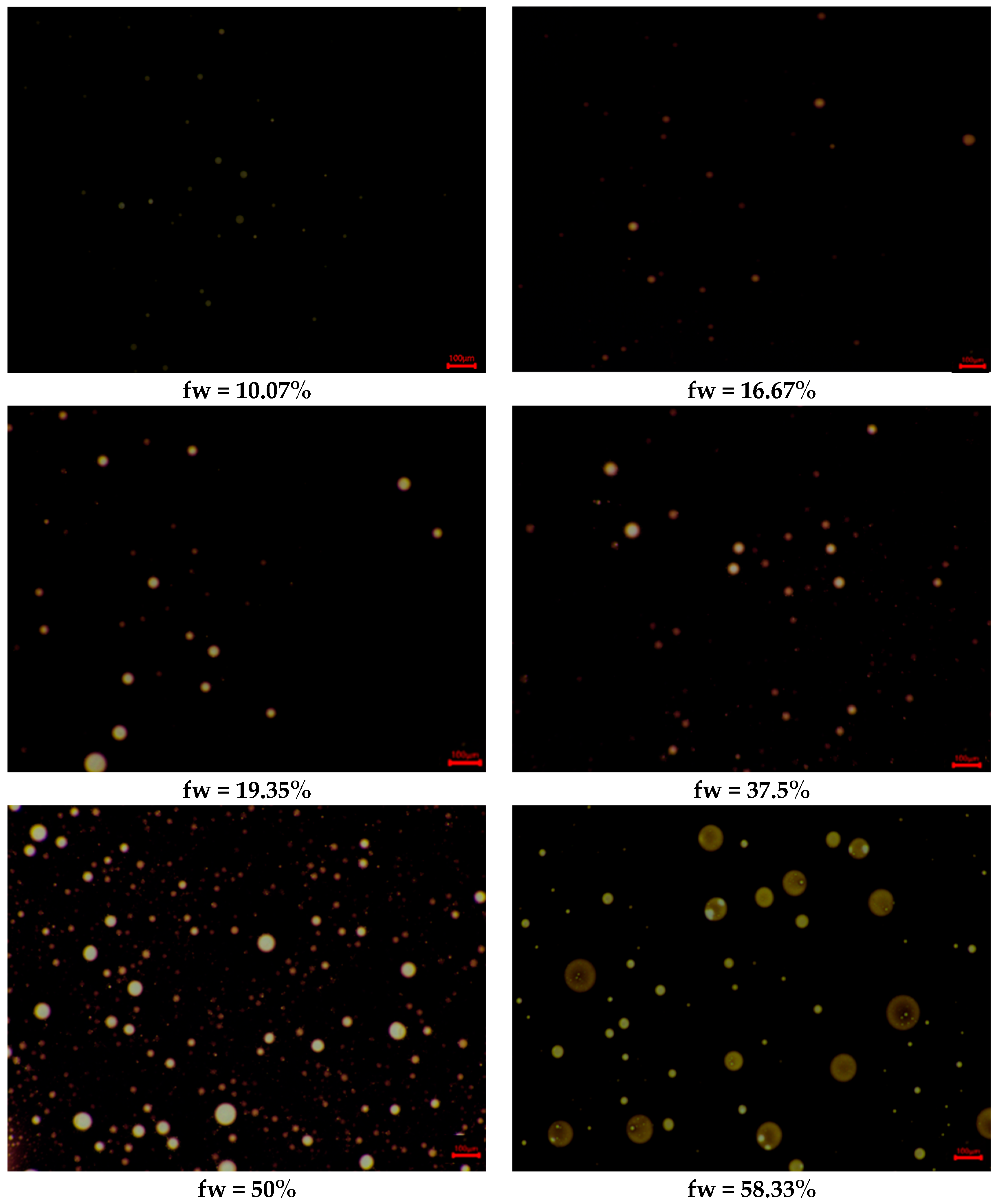
In the experiment, it was found that solutions with water contents of 10.07%, 16.67%, 19.35%, 37.50%, 50.00%, and 58.33% were homogeneous mixtures. When the water content was 64.28%, 68.75%, and 72.22%, oil–water separation resulted in heterogeneous solutions. According to Q/HSHF ZC102-2014 Determination of Inversion Point of Water bearing Crude Oil Emulsion (Rotational Viscometer Method), the relationship between the viscosity and water content of emulsion under different water contents shows a change rule of first increasing and then decreasing, and the inversion point is about 37.5% (Figure 6). The microscopic images of each experimental emulsion are shown in Figure A4.
Figure 6. Analysis result 2 of inverting points.
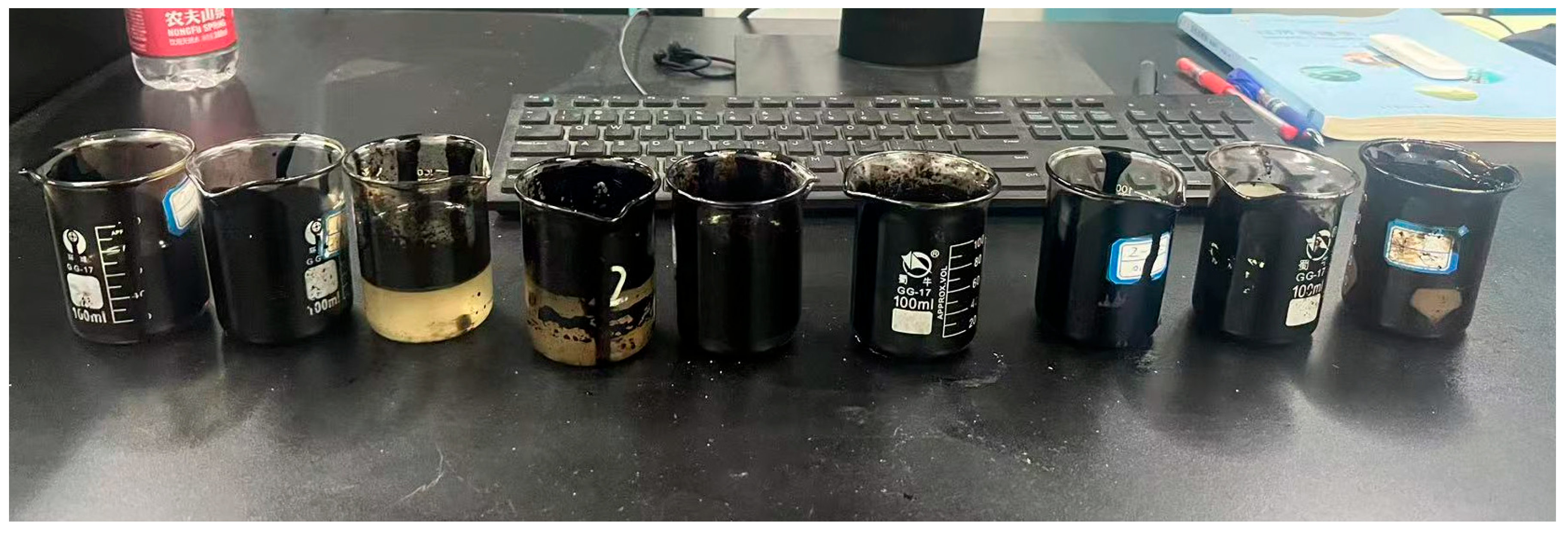
For experiments 19–27, the emulsion samples are shown in Figure A5.
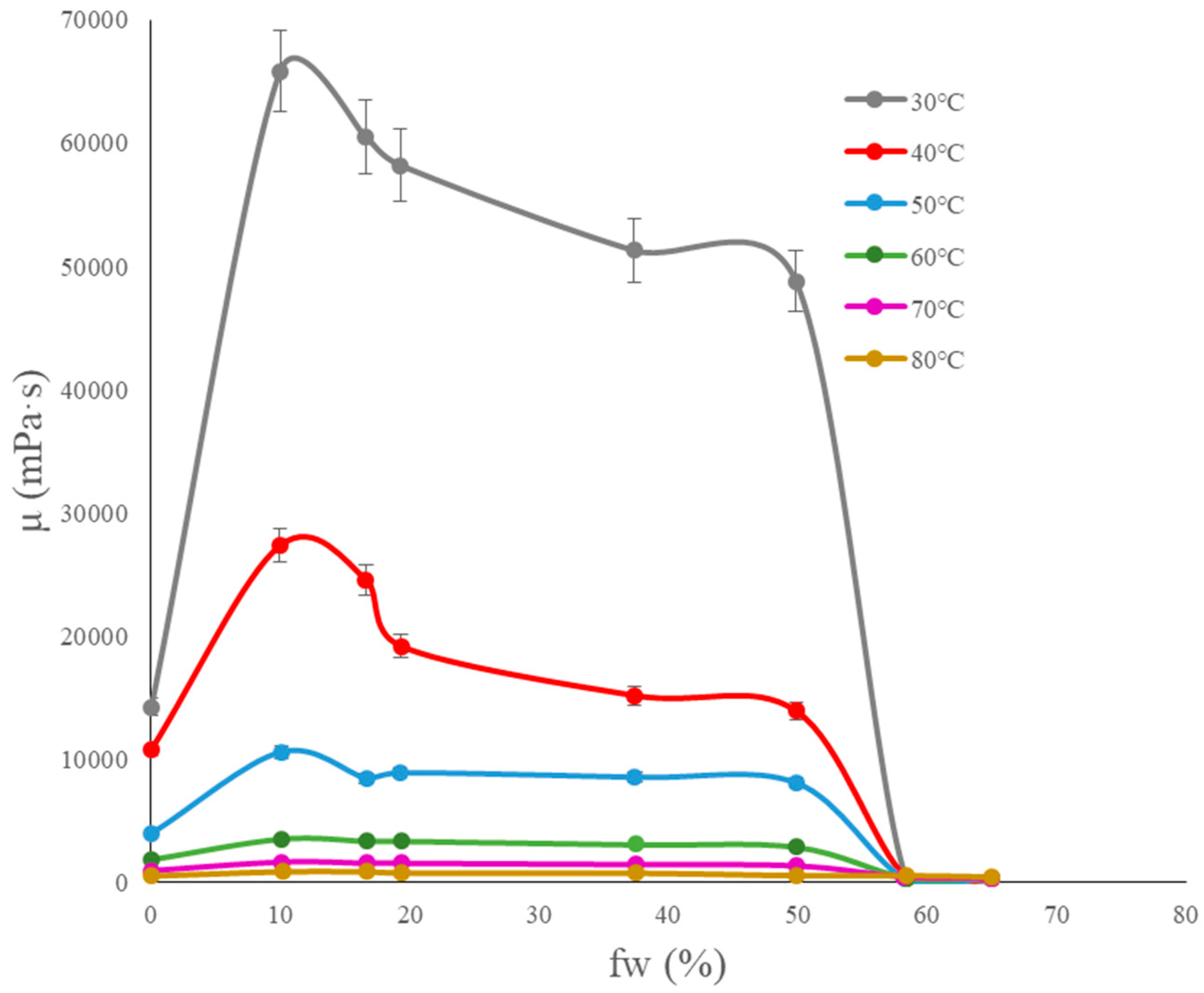
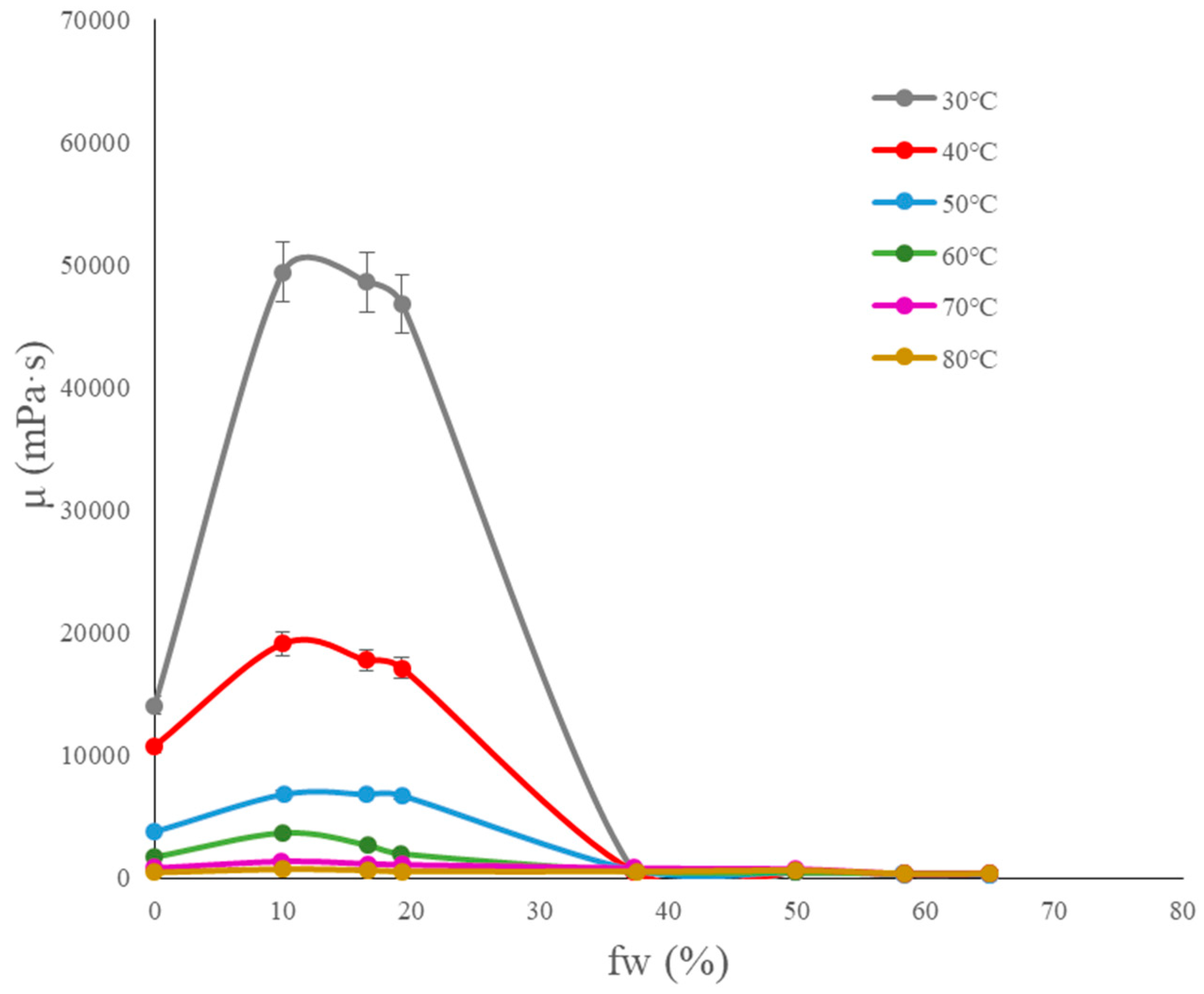
In the experiment, it was found that solutions with water contents of 10.07%, 16.67%, 19.35%, 37.50%, and 50.00% were homogeneous mixtures. When the water contents were 58.33%, 64.28%, 68.75%, and 72.22%, oil–water separation resulted in heterogeneous solutions. According to Q/HSHF ZC102-2014 Determination of Inversion Point of Water bearing Crude Oil Emulsion (Rotational Viscometer Method), the relationship between the viscosity and water content of emulsion under different water contents shows a change rule of first increasing and then decreasing, and the inversion point is about 10.07% (Figure 7). The microscopic images of each experimental emulsion are shown in Figure A6.
Figure 7. Analysis result 3 of inverting points.
For experiments 28–36, the emulsion samples are shown in Figure A7.
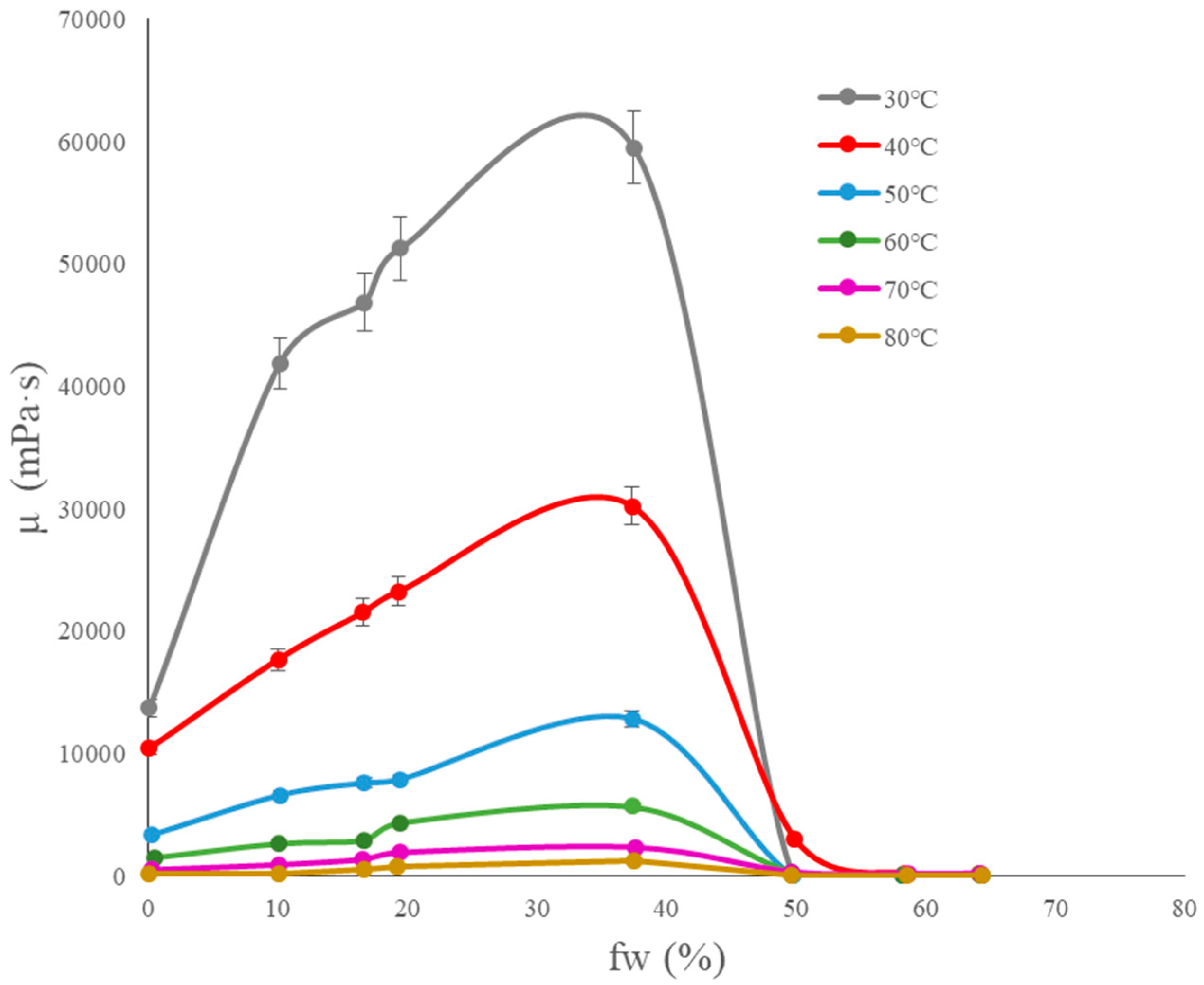
In the experiment, it was found that solutions with water contents of 10.07%, 16.67%, 19.35%, 37.50%, and 50.00% were homogeneous mixtures. When the water contents were 58.33%, 64.28%, 68.75%, and 72.22%, oil–water separation resulted in heterogeneous solutions. According to Q/HSHF ZC102-2014 Determination of Inversion Point of Water bearing Crude Oil Emulsion (Rotational Viscometer Method), the relationship between the viscosity and water content of emulsion under different water contents shows a change rule of first increasing and then decreasing, and the inversion point is about 37.5% (Figure 8). The microscopic images of each experimental emulsion are shown in Figure A8.
Figure 8. Inversion point analysis result 4.
For experiments 37–45, the emulsion samples are shown in Figure A9.
In the experiment, it was found that solutions with water contents of 10.07%, 16.67%, 19.35%, 37.50%, and 50.00% were homogeneous mixtures. When the water contents were 58.33%, 64.28%, 68.75%, and 72.22%, oil–water separation resulted in heterogeneous solutions. According to Q/HSHF ZC102-2014 Determination of Inversion Point of Water bearing Crude Oil Emulsion (Rotational Viscometer Method), the relationship between the viscosity and water content of emulsion under different water contents shows a change rule of first increasing and then decreasing, and the inversion point is about 37.5% (Figure 9). The microscopic images of each experimental emulsion are shown in Figure A10.
Figure 9. Inversion point analysis result 5.
For experiments 46–54, the emulsion samples are shown in Figure A11.
In the experiment, it was found that solutions with water contents of 10.07%, 16.67%, 19.35%, 37.50%, and 50.00% were homogeneous mixtures. When the water contents were 58.33%, 64.28%, 68.75%, and 72.22%, oil–water separation resulted in heterogeneous solutions. According to Q/HSHF ZC102-2014 Determination of Inversion Point of Water bearing Crude Oil Emulsion (Rotational Viscometer Method), the relationship between the viscosity and water content of emulsion under different water contents shows a change rule of first increasing and then decreasing, and the inversion point is about 10.07% (Figure 10). The microscopic images of each experimental emulsion are shown in Figure A12.
Figure 10. Inversion point analysis result 6.
For experiments 55–63, the emulsion samples are shown in Figure A13.
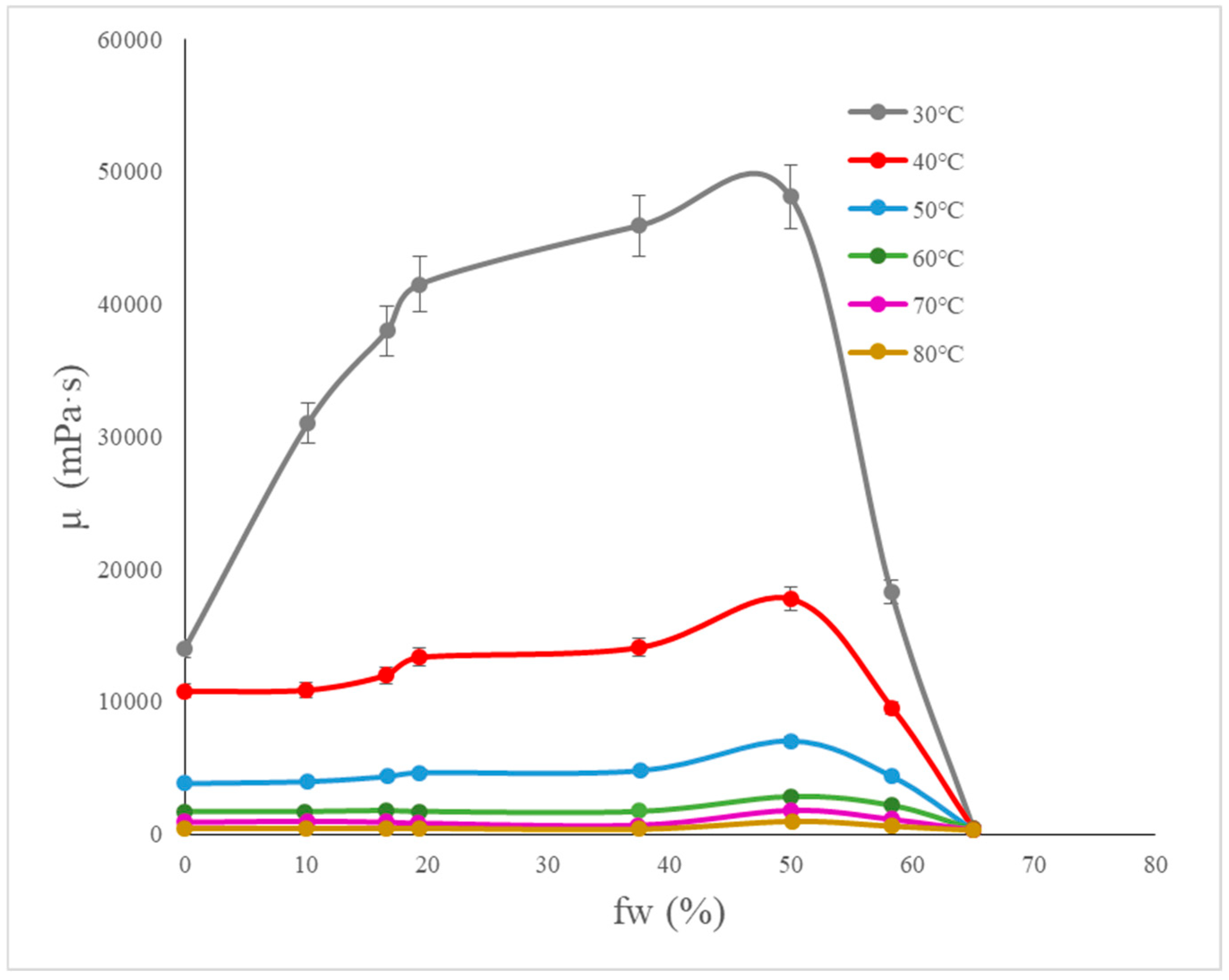
In the experiment, it was found that solutions with water contents of 10.07%, 16.67%, 19.35%, 37.50%, 50.00%, and 58.33% were homogeneous mixtures. When the water content was 64.28%, 68.75%, and 72.22%, oil–water separation resulted in heterogeneous solutions. According to Q/HSHF ZC102-2014 Determination of Inversion Point of Water bearing Crude Oil Emulsion (Rotational Viscometer Method), the relationship between the viscosity and water content of emulsion under different water contents shows a change rule of first increasing and then decreasing, and the inversion point is about 50% (Figure 11). The microscopic images of each experimental emulsion are shown in Figure A14.
Figure 11. Analysis result 7 of inverting points.
For experiments 64–72, the emulsion samples are shown in Figure A15.
In the experiment, it was found that solutions with water contents of 10.07%, 16.67%, 19.35%, 37.50%, and 50.00% were homogeneous mixtures. When the water contents were 58.33%, 64.28%, 68.75%, and 72.22%, oil–water separation resulted in heterogeneous solutions. According to Q/HSHF ZC102-2014 Determination of Inversion Point of Water bearing Crude Oil Emulsion (Rotational Viscometer Method), the relationship between the viscosity and water content of emulsion under different water contents shows a change rule of first increasing and then decreasing, and the inversion point is about 50% (Figure 12). The microscopic images of each experimental emulsion are shown in Figure A16.
Figure 12. Analysis result 8 of inverting points.
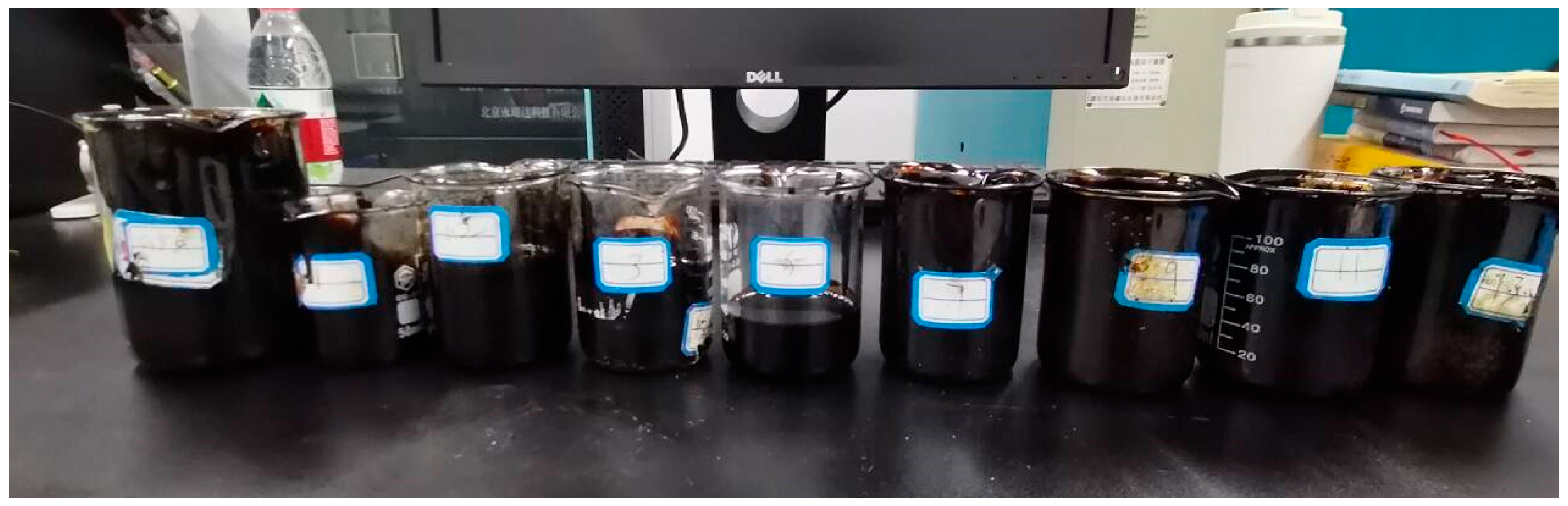
For experiments 64–72, the emulsion samples are shown in Figure A17.
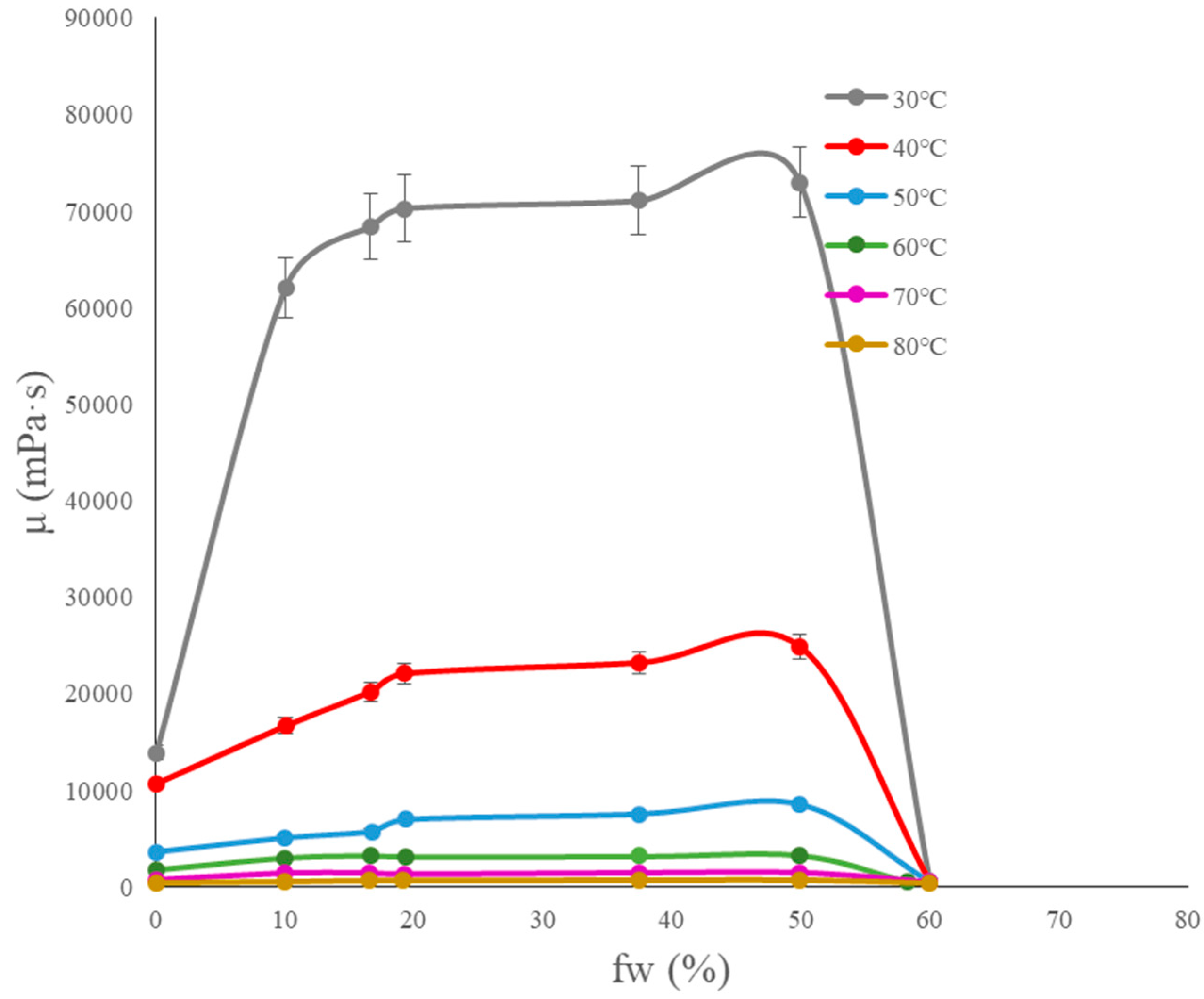
In the experiment, it was found that solutions with water contents of 10.07%, 16.67%, 19.35%, 37.50%, and 50.00% were homogeneous mixtures. When the water contents were 58.33%, 64.28%, 68.75%, and 72.22%, oil–water separation resulted in heterogeneous solutions. According to Q/HSHF ZC102-2014 Determination of Inversion Point of Water bearing Crude Oil Emulsion (Rotational Viscometer Method), the relationship between the viscosity and water content of emulsion under different water contents shows a change rule of first increasing and then decreasing, and the inversion point is about 20% (Figure 13). The microscopic images of each experimental emulsion are shown in Figure A18.
Figure 13. Inversion point analysis result 9.

3.2. Analysis and Discussion

Further statistical analysis of the micro-morphological characteristics of the emulsion yields the Table 1.
Table 1. Statistical table of emulsion micro-morphological characteristic parameters.
Based on the statistical data of emulsion particle size distribution and the influence of temperature, water cut, and salinity on emulsion properties (as shown in Table 1: Statistical table of emulsion micro-morphological characteristic parameters), The following insights can be gained.
When the temperature is kept constant, the particle size of the emulsion increases significantly with the rise in water cut. Taking the condition of 360 °C and 0 mg/L salinity as an example: when the water cut increased from 10.07% to 19.35% (an increase of approximately 92%), the emulsion particle size expanded from 1–5 μm to 5–30 μm; the upper limit of particle size distribution increased by five times, and the average particle size increased by nearly five times. When the water cut further rose to 72.22%, the particle size reached 200–250 μm, which was 40–500 times larger than the initial range of 1–5 μm.
Meanwhile, the increase in water cut led to a wider range of particle size distribution, reduced uniformity, and decreased the stability of the emulsion. For instance, at 360 °C and 0 mg/L salinity, the particle size range corresponding to 10.07% water cut was 1–5 μm (with a span of 4 μm); when the water cut increased to 64.28%, the particle size range expanded to 100–150 μm (with a span of 50 μm), and the span of the distribution range increased by 11.5 times.
When the salinity was constant, a higher temperature resulted in a smaller emulsion particle size, and this characteristic was more prominent under low water cut conditions. Taking the condition of 0 mg/L salinity and 10.07% water cut as an example, the particle size remained in the range of 1–5 μm as the temperature increased from 150 °C to 360 °C, showing no obvious fluctuation. However, at a high water cut of 72.22%, the particle size range was 250–350 μm at 150 °C, and decreased to 200–250 μm at 360 °C, with the upper limit of particle size reduced by 28.6%.
In addition, higher temperature narrowed the particle size distribution range and improved emulsion uniformity and stability, and this trend was more obvious at low water cut. For example, at 7500 mg/L salinity and 10.07% water cut, the particle size range was 5–15 μm (span = 10 μm) at 150 °C, and 10–25 μm (span = 15 μm) at 360 °C. Within the low water cut range (10.07–19.35%), the span of particle size distribution at high temperatures was controlled within 20 μm, which was significantly smaller than that at low temperatures.
Under constant temperature, higher salinity led to larger emulsion particle size, and this feature was more distinct at high water cut. Taking the condition of 360 °C and 10.07% water cut as an example, when the salinity increased from 0 mg/L to 7500 mg/L, the particle size expanded from 1–5 μm to 10–25 μm, with the upper limit of distribution increased by four times. At a high water cut of 72.22%: the particle size range was 200–250 μm at 0 mg/L salinity, and 100–120 μm at 7500 mg/L salinity, indicating that the particle size was larger under low salinity conditions, which was opposite to the rule observed in the low water cut range.
Moreover, higher salinity widened the particle size distribution range and reduced emulsion uniformity, and this effect was more significant at high water cut. For example, at 330 °C and 64.28% water cut, the particle size range was 120–200 μm (span = 80 μm) at 0 mg/L salinity, and 110–150 μm (span = 40 μm) at 7500 mg/L salinity. In contrast, at low water cut (10.07%), the increase in salinity expanded the span of particle size distribution from 4 μm (0 mg/L) to 15 μm (7500 mg/L), with the span increased by 2.75 times.
Regarding temperature, higher temperature resulted in higher water cut at the inversion point. For example, at 0 mg/L salinity and 10.07% water cut, the water cut at the inversion point was 20.00% at 150 °C, and increased to 50.00% at both 330 °C and 360 °C, representing a 150% increase compared with that at 150 °C. At 7500 mg/L salinity, the water cut at the inversion point was 10.05% at 150 °C, and rose to 37.50% at 330 °C and 360 °C–an increase of 273.1%.
Regarding salinity, higher salinity led to higher water cut at the inversion point. For instance, at 150 °C and 10.07% water cut, the water cut at the inversion point decreased from 20.00% (0 mg/L salinity) to 10.05% (7500 mg/L salinity). However, at 330 °C and 360 °C, the water cut at the inversion point under 7500 mg/L salinity (37.50%) was lower than that under 0 mg/L salinity (50.00%). This phenomenon is presumably due to the reaction between inorganic salts and active substances in heavy oil at high temperatures, which generates surfactants. These surfactants offset the adverse effect of salinity on particle size, thereby maintaining high emulsion stability and a relatively high water cut at the inversion point.
During the steam injection process, water exists in a vapor state and can quickly disperse into crude oil upon contact. Under the shearing action of the formation, an oil-in-water emulsion is rapidly formed. At high temperatures (150–360 °C), active substances in crude oil react with inorganic salts in formation water to generate natural surfactants, which reduce the oil–water interfacial tension. As a result, the emulsion can maintain stability even at a relatively high water cut (up to 72.22%).
To summarize the emulsification mechanism: (1) High temperature promotes the rapid dispersion of water and its contact with crude oil. (2) The shearing action of porous media facilitates oil–water mixing, dispersion, and encapsulation. (3) The synergistic effect of high temperature, inorganic salts in formation water, and crude oil leads to the formation of natural surfactants, which reduce oil–water interfacial tension and enhance emulsion stability.
Based on the above analysis of the emulsification mechanism, the following conclusions are drawn to guide mining practices: The formation of emulsions during steam injection is inevitable, and it is almost impossible to prevent emulsion formation. The stability of water-in-oil emulsions mainly depends on the stability of the liquid film between oil and water. Oil–water dispersion increases the interface area and total interfacial free energy; however, the emergence of natural surfactants reduces the interfacial free energy (interfacial tension), thereby improving the stability of the liquid film and increasing the water cut at the inversion point (up to 50.00% under specific conditions). Oil-in-water emulsions are mainly formed under the conditions of “high temperature, high salinity, and low water cut (10.07–19.35%)” in the early stage of huff and puff. In oilfield practice, chemical agents can be used during the development stage with low water cut (10.07–37.50%) to maximize the destruction of the liquid film between oil and water, promote water droplet coalescence, and facilitate emulsion breaking and phase inversion, thereby improving mining efficiency.

4. Conclusions

(1)
During the steam injection process, water exists in a vapor state and can quickly disperse into crude oil upon contact. Under the shear action of the formation, an oil-in-water emulsion is rapidly formed. During this process, active substances in the crude oil react with inorganic salts in the formation water at high temperatures (150–360 °C) to generate natural surfactants, which effectively reduce the oil–water interfacial tension. Benefiting from this, the emulsion can maintain stable performance even at a relatively high water cut, with the maximum stable water cut reaching up to 72.22%.
(2)
At high temperatures (150–360 °C), water rapidly disperses and comes into full contact with crude oil; the shear action of porous media accelerates oil–water mixing, dispersion, and encapsulation, with the particle size of the formed emulsion ranging from 1 μm to 350 μm depending on the operating conditions; the synergistic effect of high temperature, inorganic salts in formation water (0–7500 mg/L) and crude oil promotes the formation of natural surfactants. These surfactants not only reduce the oil–water interfacial tension but also enhance the emulsion stability, enabling the emulsion to maintain uniformity with a particle size distribution span as narrow as 4 μm under optimal conditions.
(3)
Oil-in-water emulsions are mainly formed under the conditions of “high temperature (330–360 °C), high salinity (7500 mg/L), and low water cut (10.07–19.35%)” in the early stage of huff and puff. In mining practice, chemical agents can be added during the development stage with low water cut (10.07–37.50%). This measure aims to maximize the destruction of the liquid film between oil and water, promote the coalescence of water droplets, and facilitate emulsion breaking and phase inversion, thereby improving the oil recovery efficiency.

Author Contributions

Conceptualization, H.C., Y.L., Z.Q. and D.L.; data curation, H.C., Y.L., Z.Q., D.L., C.D., J.T. and T.L.; methodology, J.T.; validation, T.L., J.T. and W.Y.; investigation, J.T.; resources, C.D.; validation, T.L., J.T. and W.Y.; writing—original draft preparation, T.L. and J.T.; funding acquisition, Z.Q. and W.Y.; supervision, H.C., Y.L., D.L. and C.D. All authors have read and agreed to the published version of the manuscript.

Funding

This research was funded by Open Fund Project of CNOOC Key Laboratory of Offshore Heavy Oil Thermal Recovery (grant number CCL2024TJT0NST1333), National Natural Science Foundation of China (grant number 52004048, U22B2074) and Chongqing Municipal Education Commission Science and Technology Research Plan Project, China (grant number KJZD-M202301501).

Data Availability Statement

The original contributions presented in this study are included in the article. Further inquiries can be directed to the corresponding author.

Conflicts of Interest

Authors Hui Cai, Yingxian Liu, Dong Liu and Chunxiao Du were employed by the company CNOOC China Limited Tianjin Branch. The remaining authors declare that the research was conducted in the absence of any commercial or financial relationships that could be construed as a potential conflict of interest.

Appendix A

Table A1. Experimental parameters.
CaseSalinityTemperature (°C)Water Cut (%)
1036010.07
216.67
319.35
437.5
550
658.33
764.28
868.75
972.22
10033010.07
1116.67
1219.35
1337.5
1450
1558.33
1664.28
1768.75
1872.22
19015010.07
2016.67
2119.35
2237.5
2350
2458.33
2564.28
2668.75
2772.22
28750036010.07
2916.67
3019.35
3137.5
3250
3358.33
3464.28
3568.75
3672.22
37750033010.07
3816.67
3919.35
4037.5
4150
4258.33
4364.28
4468.75
4572.22
46750015010.07
4716.67
4819.35
4937.5
5050
5158.33
5264.28
5368.75
5472.22
5515,00036010.07
5616.67
5719.35
5837.5
5950
6058.33
6164.28
6268.75
6372.22
6415,00033010.07
6516.67
6619.35
6737.5
6850
6958.33
7064.28
7168.75
7272.22
7315,00015010.07
7416.67
7519.35
7637.5
7750
7858.33
7964.28
8068.75
8172.22
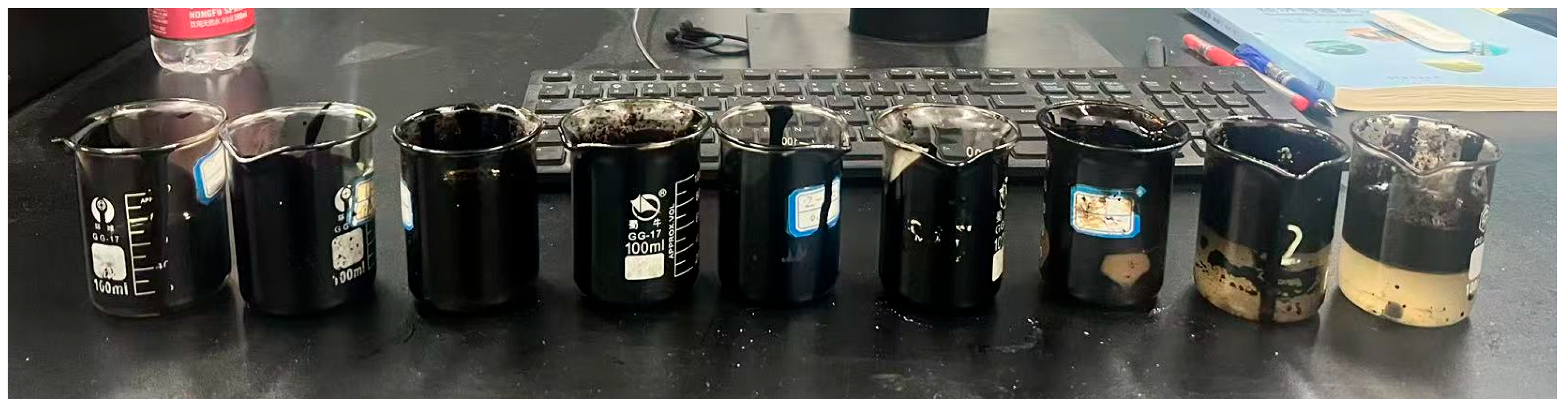
Figure A1. 1–9 (from left to right) experimental emulsion samples.
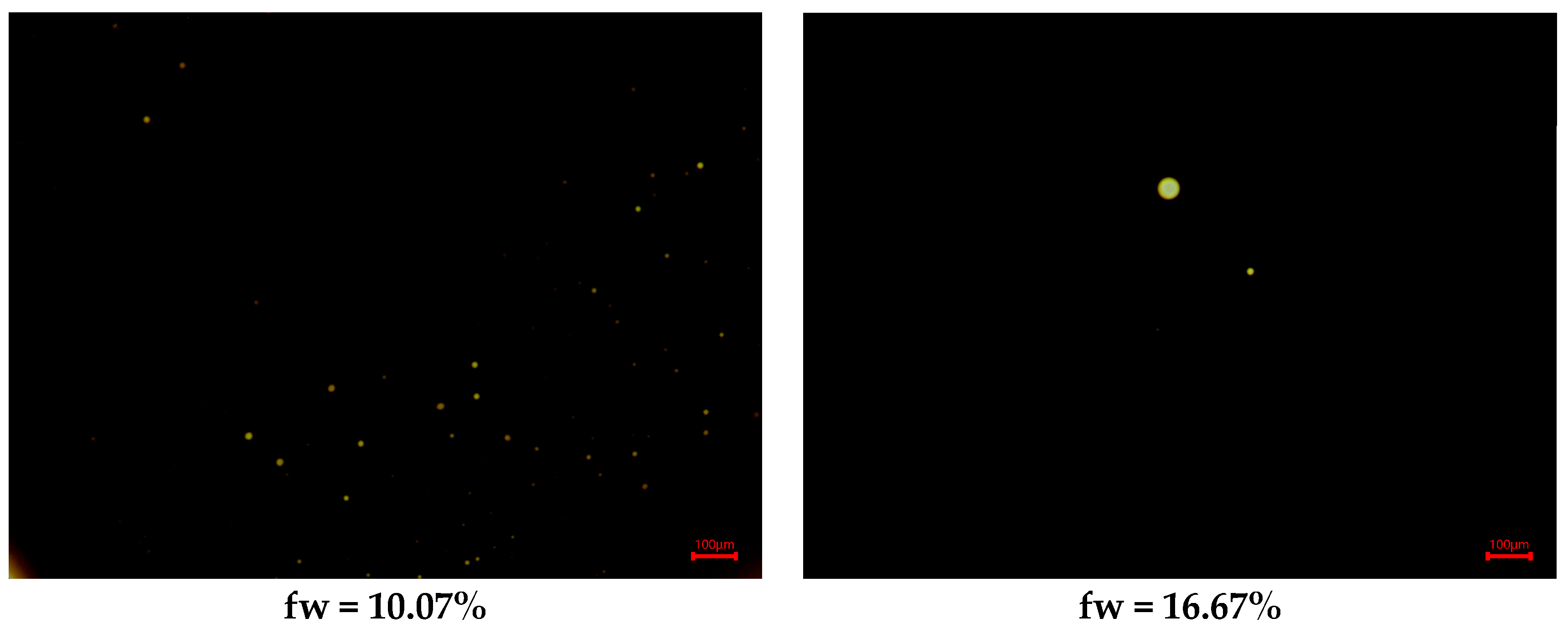
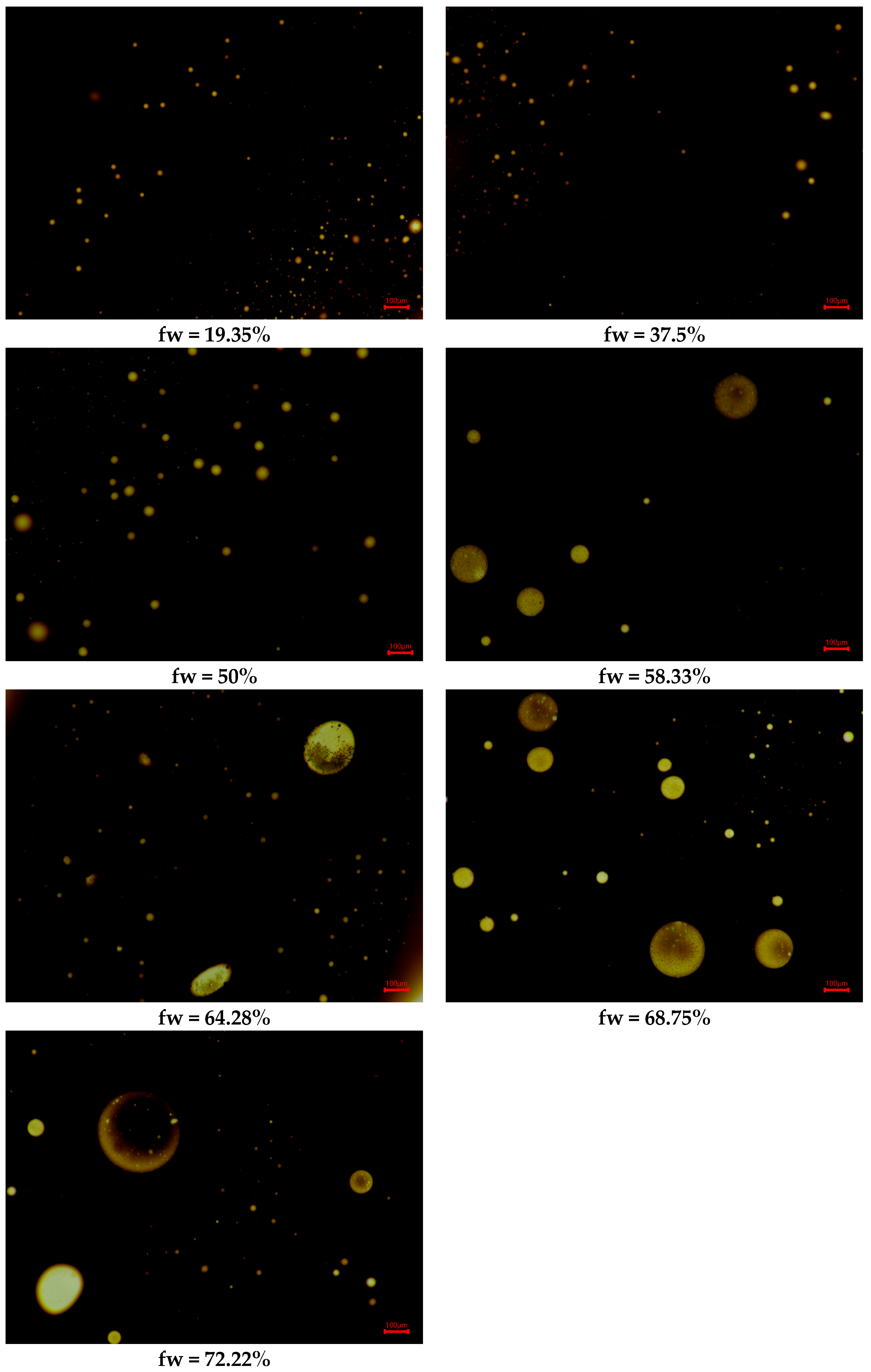
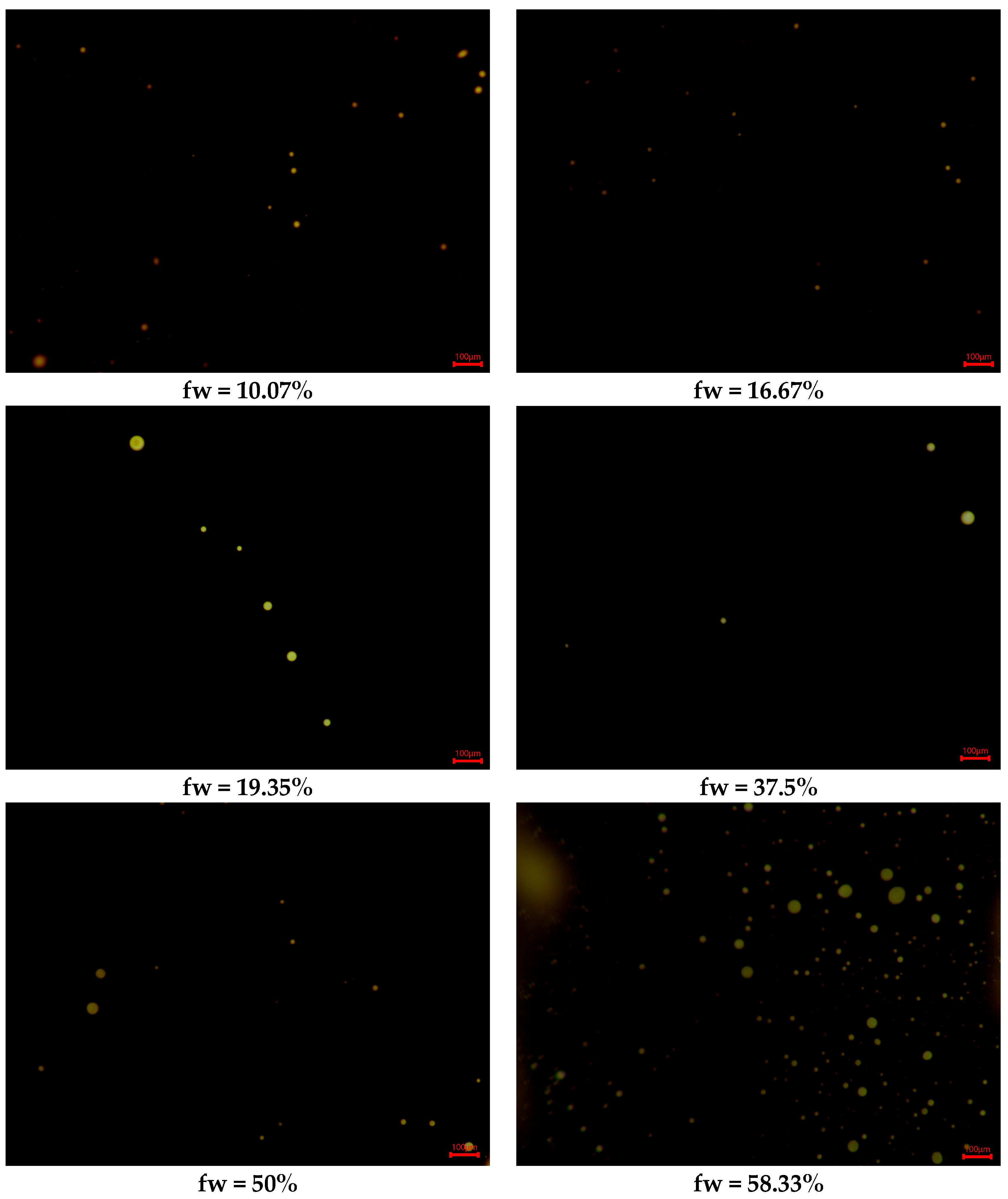
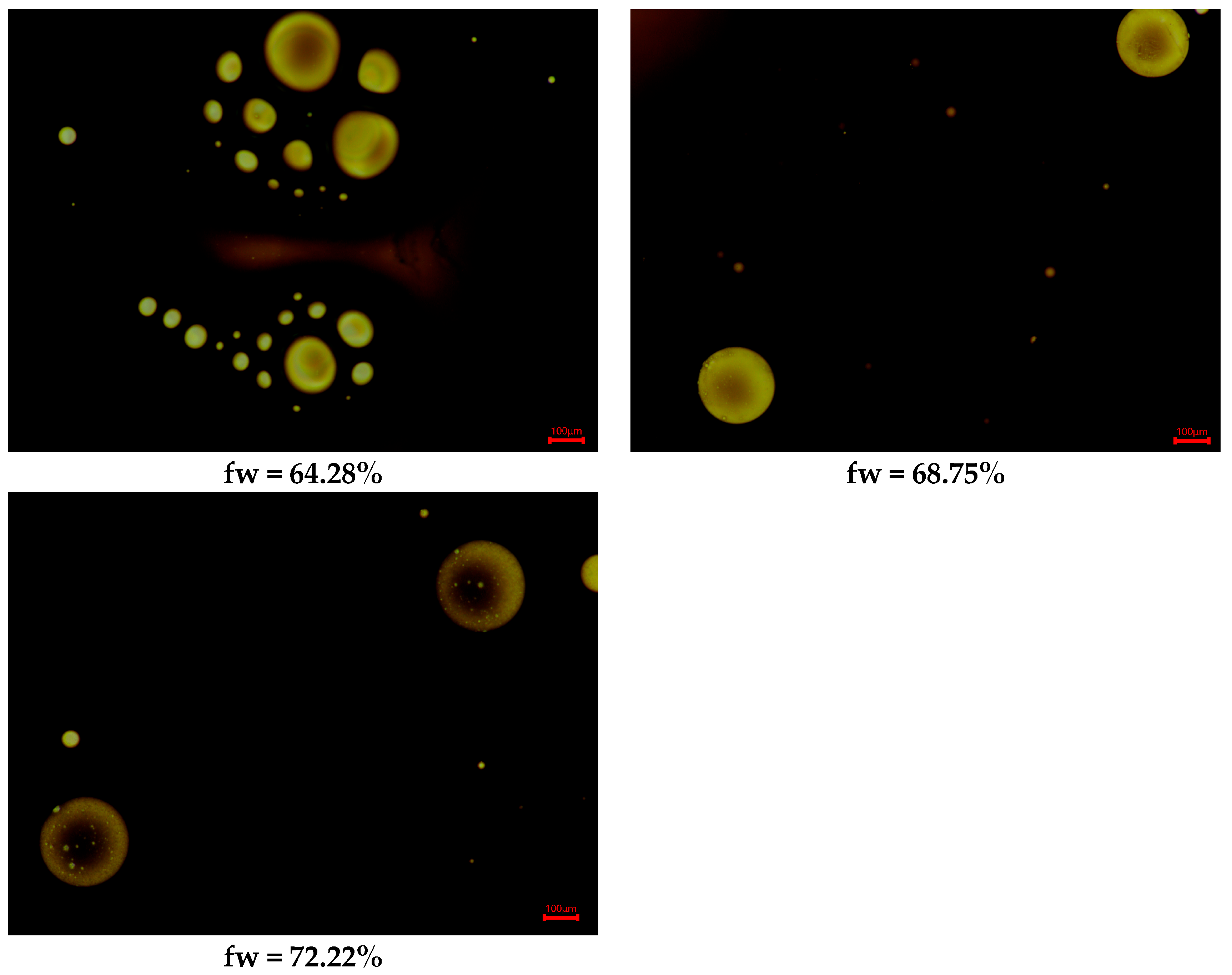
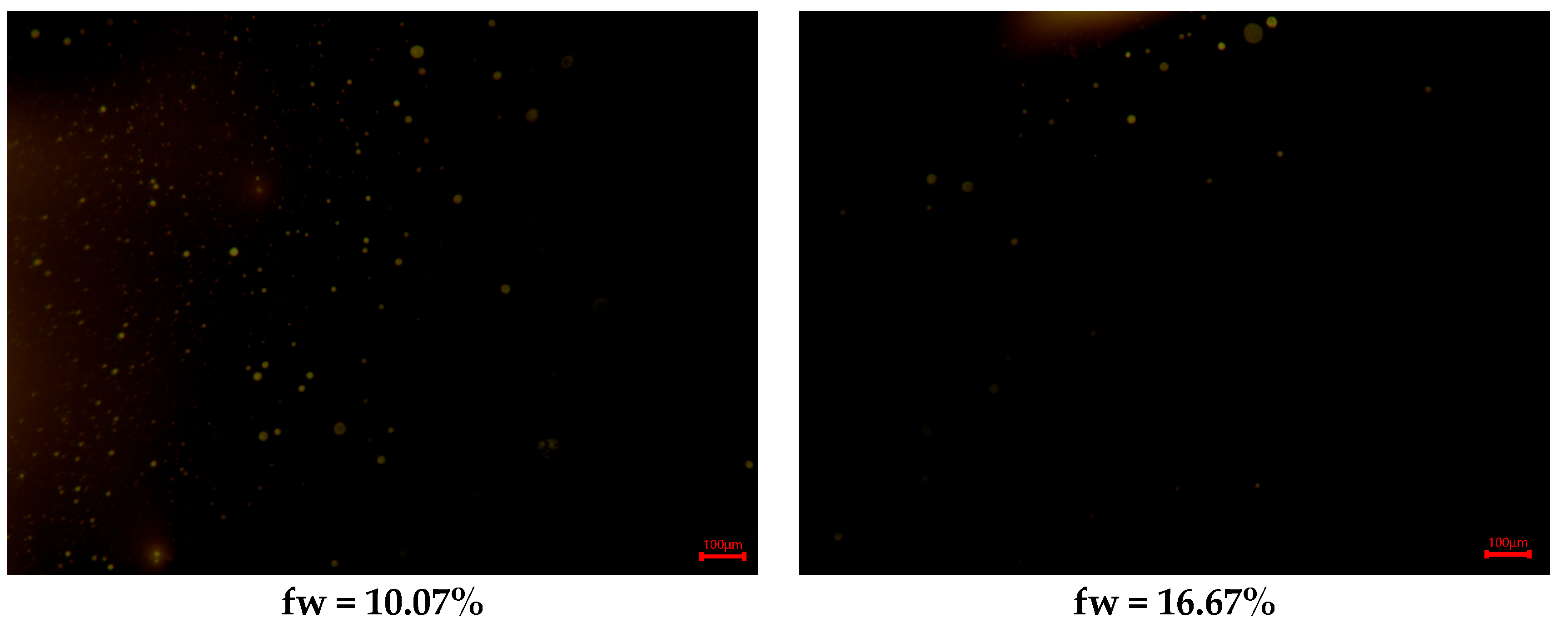
Figure A2. Microscopic images of emulsion samples from Experiments 1–9.
Figure A3. Experimental emulsion samples numbered 10–18 (from left to right).
Figure A4. Microscopic images of emulsion from Experiments 10–18.
Figure A5. 19–27 (from left to right) experimental emulsion samples.
Figure A6. Microscopic images of emulsion from Experiments 19–27.
Figure A7. Experimental emulsion samples numbered 28–36 (from left to right).
Figure A8. Microscopic images of emulsion samples No. 28–36.
Figure A9. Experimental emulsion samples numbered 37–45 (from left to right).
Figure A10. Microscopic images of experimental emulsions No. 37–45.
Figure A11. Experimental emulsion samples numbered 46–54 (from left to right).
Figure A12. Microscopic images of experimental emulsions No. 46–54.
Figure A13. Experimental emulsion samples numbered 55–63 (from left to right).
Figure A14. Microscopic images of experimental emulsions No. 55–63.
Figure A15. Experimental emulsion samples numbered 64–72 (from left to right).
Figure A16. Microscopic images of experimental emulsions No. 64–72.
Figure A17. Experimental emulsion samples numbered 73–81 (from left to right).
Figure A18. Microscopic images of experimental emulsions No. 73–81.

References

  1. Ren, F.X.; Sun, H.J.; Chang, H.U. Heavy oil development technology and practices in liaohe oilfield. Spec. OilGas Reserv. 2012, 19, 1–8. [Google Scholar] [CrossRef]
  2. Lissant, K.J. Emulsification and demulsification: An historical overview. Colloids Surf. 1988, 29, 1–5. [Google Scholar] [CrossRef]
  3. Papirer, E.; Bourgeois, C.; Siffert, B.; Balard, H. Chemical nature and water oil emulsifying properties of asphaltenes. Fuel 1982, 61, 732–734. [Google Scholar] [CrossRef]
  4. Liang, C.; Zhao, K.; Chu, Y.; Wei, Q.; Wang, W.; Zhen, G.; Zhao, X.; Qin, J.; Zhang, R. Evaluation of self emulsification effect of normal temperature water drive in heavy oil reservoir: Taking Ji7 well block of Changji Oilfield in the Junggar Basin as an example. J. Chang. Univ. 2021, 18, 69–75. [Google Scholar] [CrossRef]
  5. Zhu, T.Y.; Kang, W.L.; Yang, H.B.; Li, Z.; Zhou, B.; He, Y.; Wang, J.; Aidarova, S.; Sarsenbekuly, B. Advances of microemulsion and its applications for improved oil recovery. Adv. Colloid Interface Sci. 2022, 299, 102527. [Google Scholar] [CrossRef] [PubMed]
  6. Liu, W.; Liu, Q.; Wang, J. New progress in the study of factors affecting the stability of crude oil emulsions. Oil Gas Field Surf. Eng. 2012, 31, 28–30. [Google Scholar] [CrossRef]
  7. Shi, X.; Tang, W. The Development Law of Heavy Oil Self Emulsified Water Drive. Xinjiang Pet. Geol. 2024, 45, 228–234. [Google Scholar] [CrossRef]
  8. Lu, Y.; Wu, H.; Meng, Z.; Gao, K.; Hou, J.; Kang, W. Effect of 1-octanol on the stabilization of crude oil emulsions with hydrophobically modified polyacrylamide. Fuel 2019, 256, 116007. [Google Scholar] [CrossRef]
  9. Zhang, J.; Xu, J.Y.; Gao, M.C.; Wu, Y.X. Apparent viscosity of oil-water (coarse) emulsion and its Theological characterization during the phase inversion region. J. Dispers. Sci. Technol. 2023, 34, 1148–1160. [Google Scholar] [CrossRef]
  10. Wang, W.; Gong, J.; Li, X. Shear Diluency of Non Newtonian Heavy Oil in Water Emulsion. Acta Pet. Sin. 2010, 31, 1024–1026 + 1030. [Google Scholar] [CrossRef]
  11. Liu, C.W.; Li, M.Z.; Rui, H. Rheology of water-in-oil emulsions with different drop sizes. J. Dispers. Sci. Technol. 2016, 37, 333–344. [Google Scholar] [CrossRef]
  12. Huang, Q.; Wang, L. The influence of micro droplet distribution on the rheological properties of waxy crude oil emulsions. Acta Pet. Sin. 2013, 34, 765–774. [Google Scholar] [CrossRef]
  13. Liu, Y.; Wan, W.; Luo, H.; Li, C.; Zhang, W.; Ma, B. Oil water self emulsification and water drive characteristics of heavy oil reservoirs in Ji 7 well area. Xinjiang Pet. Geol. 2021, 42, 696–701. [Google Scholar] [CrossRef]
  14. Jiang, Y.; Li, C. Study on rheological properties of W/O emulsion. Oil Gas Storage Transp. 2000, 19, 10–12. [Google Scholar] [CrossRef]
  15. Jia, W.; Li, C.; Wu, X. Experimental study and method for predicting the viscosity of water-in-super heavy oil emulsions. Chem. Technol. Fuels Oils 2016, 51, 688–694. [Google Scholar] [CrossRef]
  16. Liu, J.; Liu, S.; Zhong, L.; Wei, C.; Du, H.; Wang, Z. The emulsification characteristics of heavy oil water in Block Jin 17 of Shengli Oilfield and their impact on emulsion flooding. Oil Gas Geol. Recovery 2023, 30, 112–121. [Google Scholar] [CrossRef]
  17. Neto, D.; Sad, C.; Silva, M.; Santos, F.D.; Pereira, L.B.; Corona, R.R.; Silva, S.R.; Bassane, J.F.; Castro, E.V.; Filgueiras, P.R.; et al. Rheological study of the behavior of water-in-oil emulsions of heavy oils. J. Pet. Ence Eng. 2018, 173, 1323–1331. [Google Scholar] [CrossRef]
Disclaimer/Publisher’s Note: The statements, opinions and data contained in all publications are solely those of the individual author(s) and contributor(s) and not of MDPI and/or the editor(s). MDPI and/or the editor(s) disclaim responsibility for any injury to people or property resulting from any ideas, methods, instructions or products referred to in the content.

Article Metrics

Citations

Article Access Statistics

Multiple requests from the same IP address are counted as one view.