Article

Numerical Study of the Condenser of a Small CO2 Refrigeration Unit Operating Under Supercritical Conditions

by
Piotr Szymczak
,
Piotr Bogusław Jasiński
* and
Marcin Łęcki
Institute of Turbomachinery, Lodz University of Technology, Wólczańska Street 217/221, 93-005 Łódź, Poland
*
Author to whom correspondence should be addressed.
Energies 2025, 18(11), 2992; https://doi.org/10.3390/en18112992
Submission received: 14 May 2025 / Revised: 1 June 2025 / Accepted: 3 June 2025 / Published: 5 June 2025
(This article belongs to the Special Issue Advances in Supercritical Carbon Dioxide Cycle)

Abstract

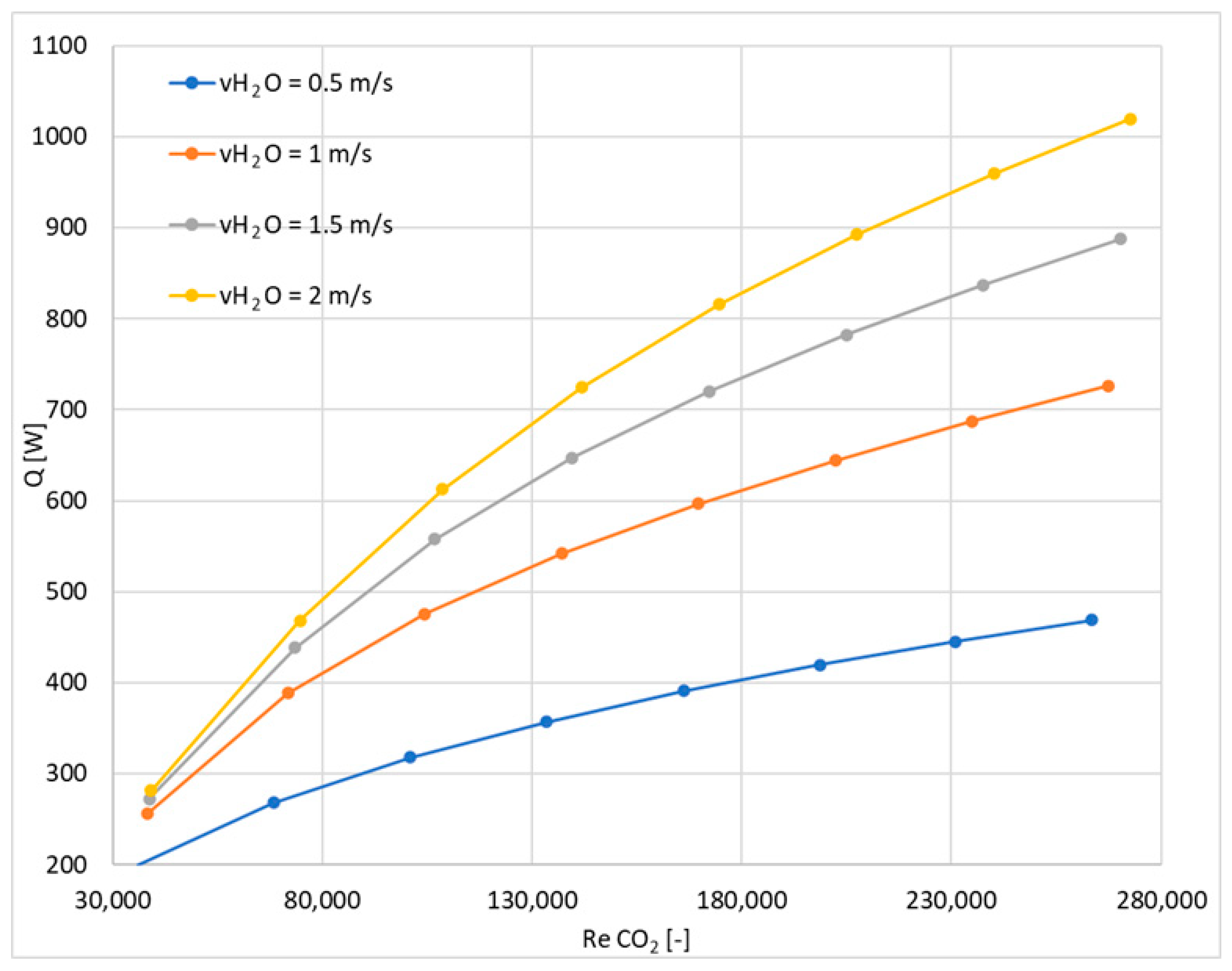
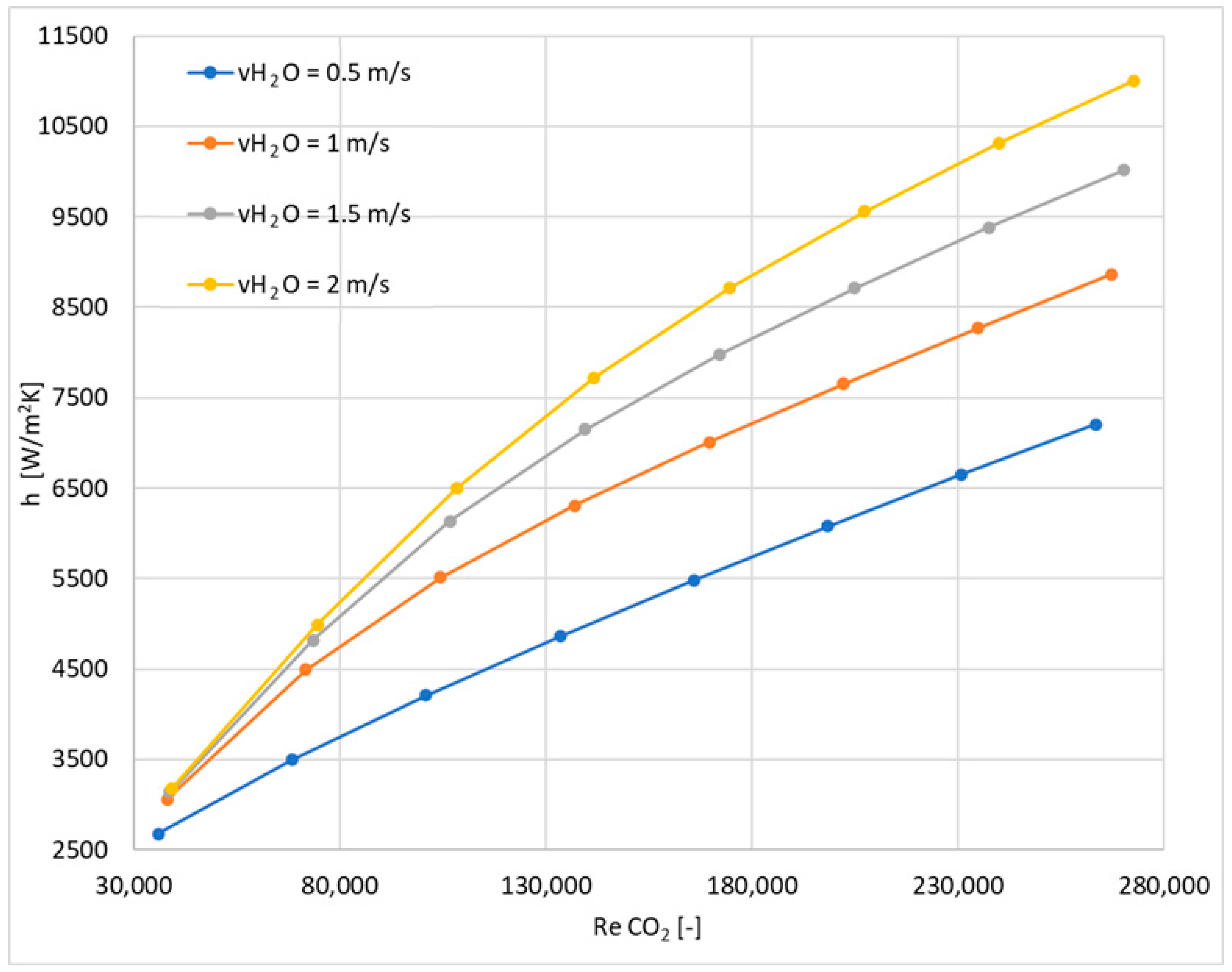
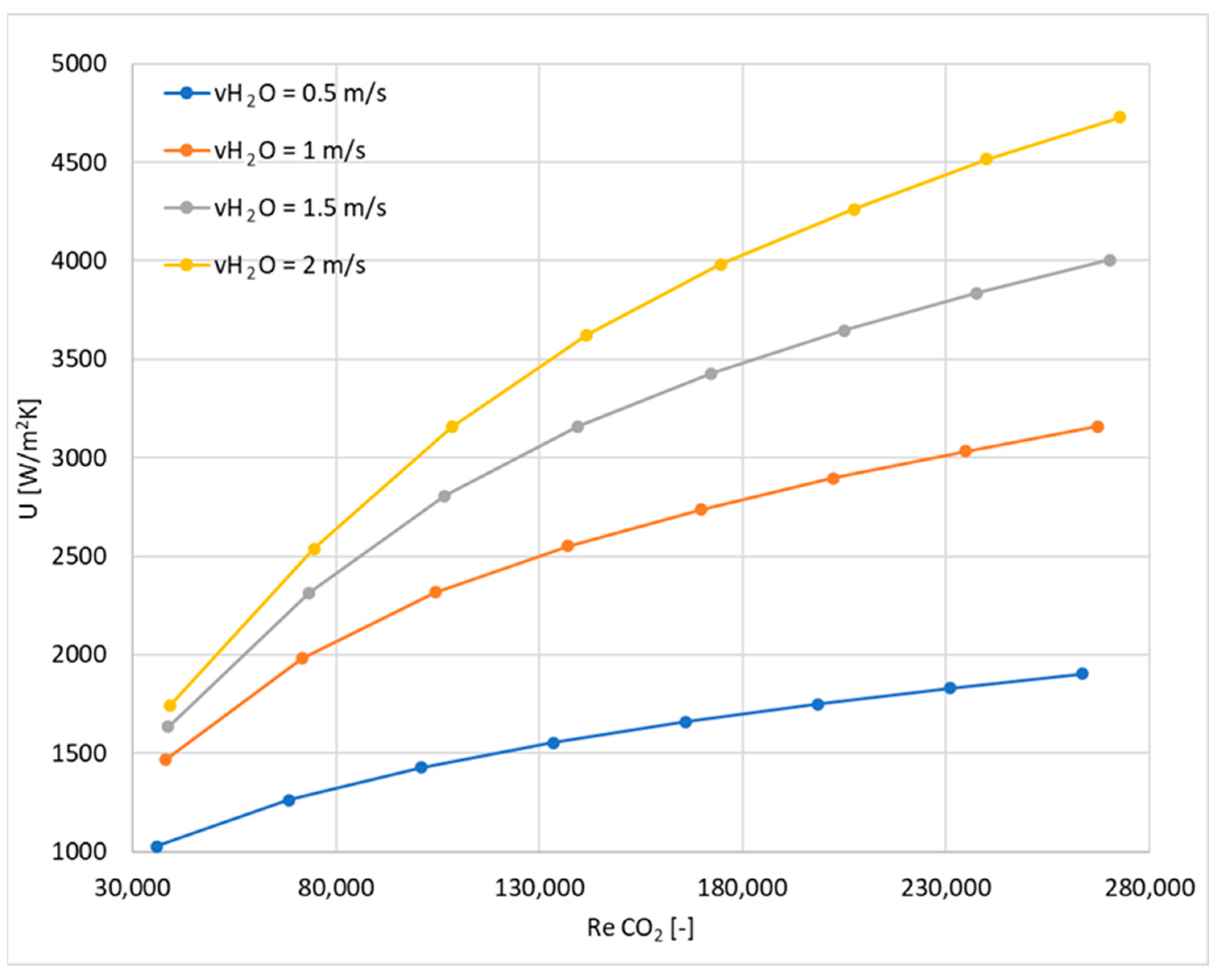
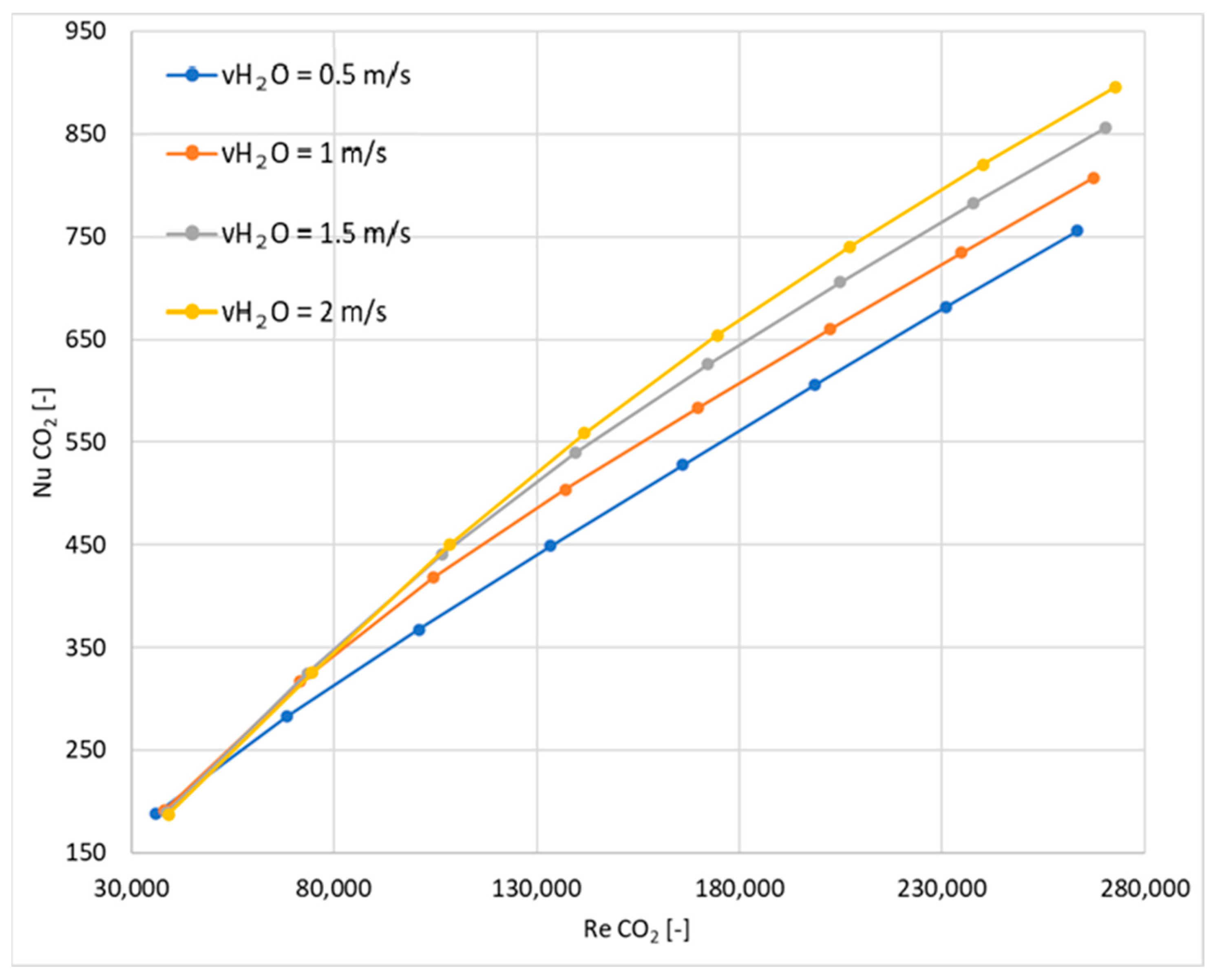
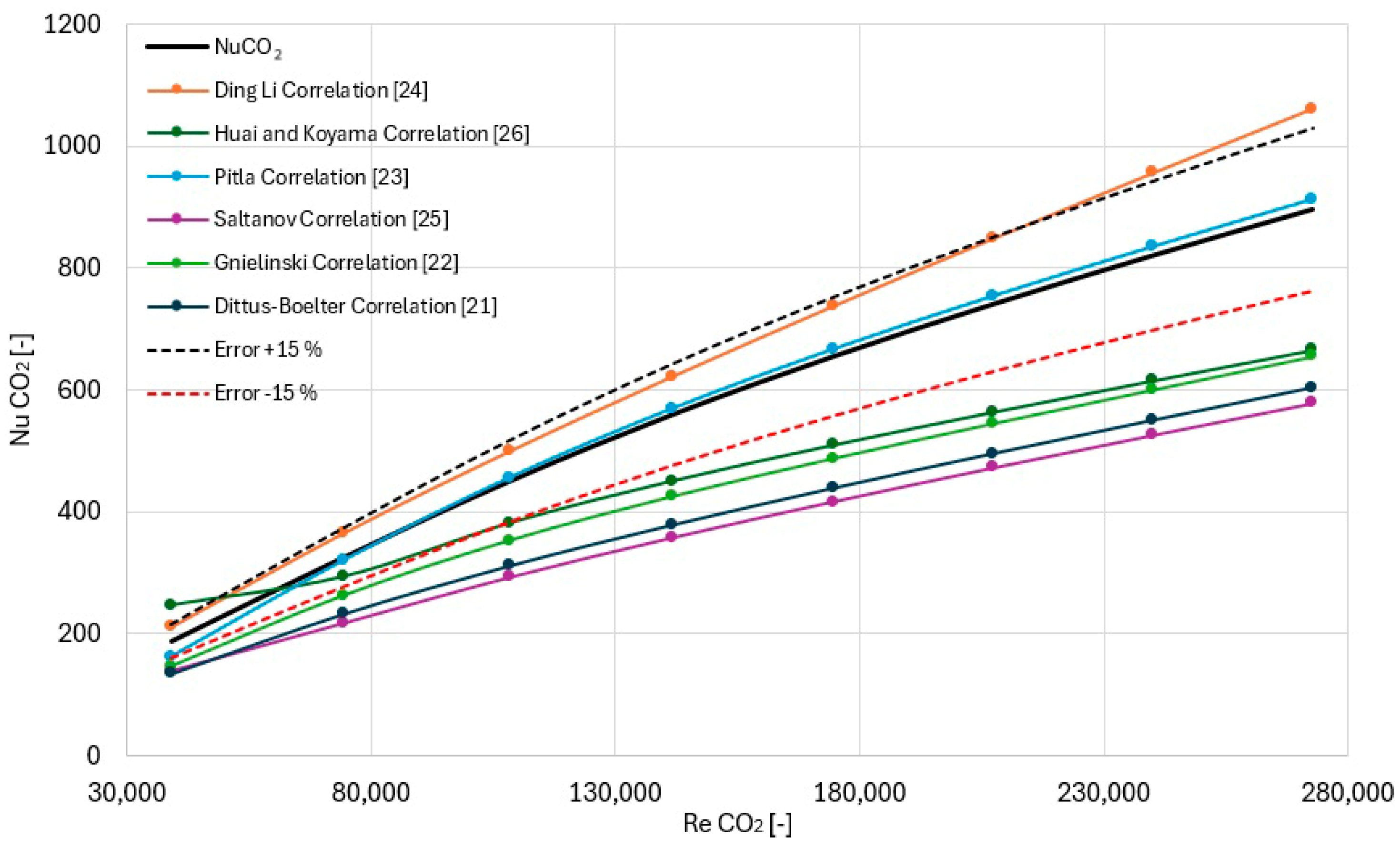
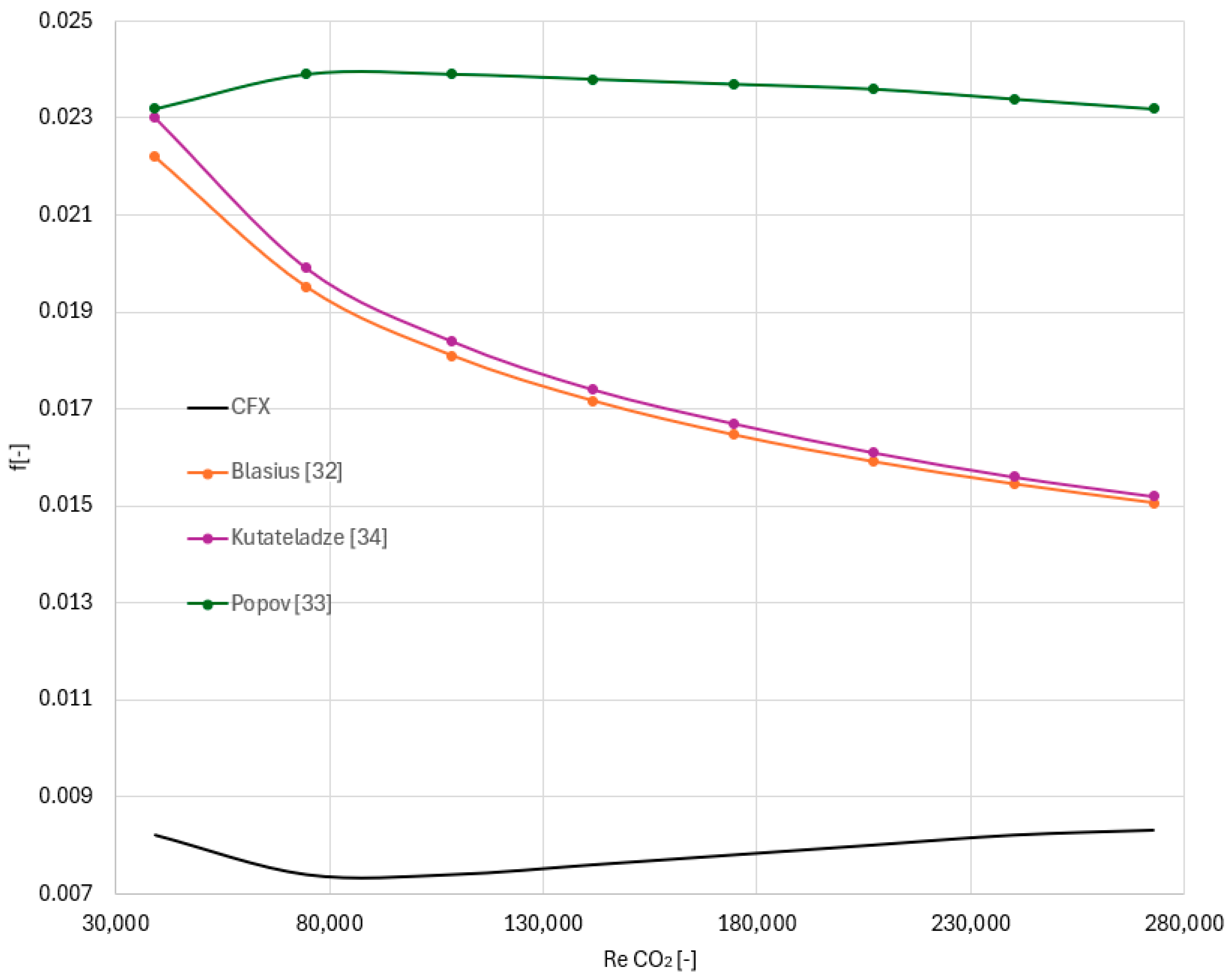
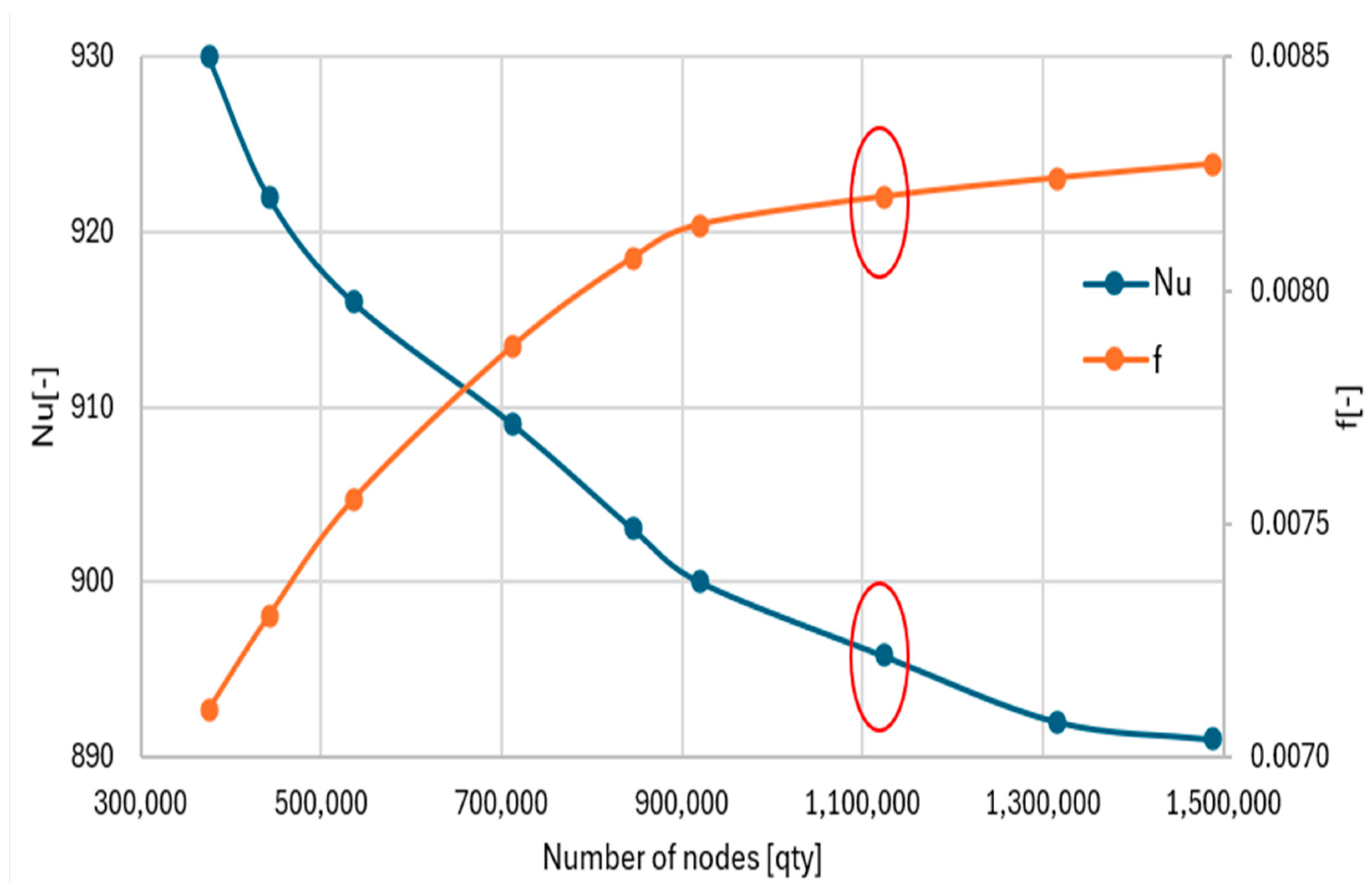
The paper presents a numerical analysis of a tube-in-tube condenser of a small refrigeration system. One of the challenges in designing such units is to reduce their dimensions while maintaining the highest possible cooling capacity, so the research presented here focuses on the search for and impact of the appropriate flow conditions of these two fluids on condenser performance. The refrigerant is supercritical CO2, which is cooled by water. Thermal-flow simulations were performed for eight CO2 inlet velocities in the range of 1–8 m/s, and four cooling water velocities of 0.5–2 m/s. The main parameters of the exchanger operation were analyzed: heat transfer coefficient, Nusselt number, overall heat transfer coefficient, and friction factor, which were compared with selected correlations. The results showed that the condenser achieves the highest power for the highest water velocities (2 m/s) and CO2 (8 m/s), i.e., over 1000 W, which corresponds to a heat flux on the tube surface of approx. 2.6 × 10⁵ W/m2 and a heat transfer coefficient of approx. 4700 W/m2K. One of the most important conclusions is the discovery of a significant effect of water velocity on heat transfer from the CO2 side—an increase in water velocity from 0.5 m/s to 2 m/s results in an increase in the heat transfer coefficient sCO2 by over 60%, with the same Re number. The implication of this study is to show the possibility of adjusting and selecting condenser parameters over a wide range of capacities, just by changing the fluid velocity.
Keywords: supercritical CO2; condenser; numerical simulations; CFD; nusselt number; friction factor; tube in tube heat exchangers supercritical CO2; condenser; numerical simulations; CFD; nusselt number; friction factor; tube in tube heat exchangers