Comparative Analysis of Subjective Indoor Environment Assessment in Actual and Simulated Conditions

 ,
, 

Abstract
1. Introduction
2. Materials and Methods
3. Results and Discussion
4. Conclusions
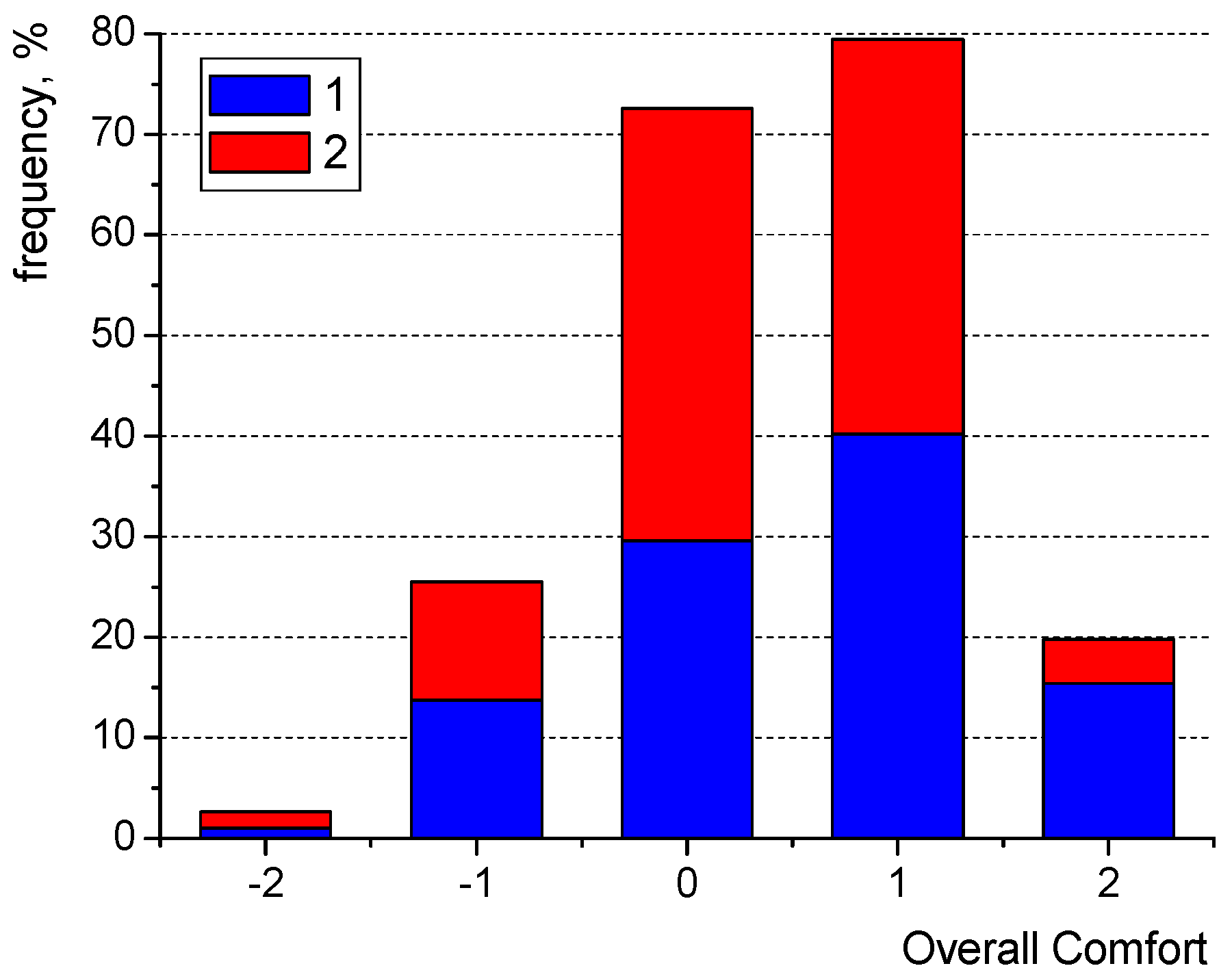
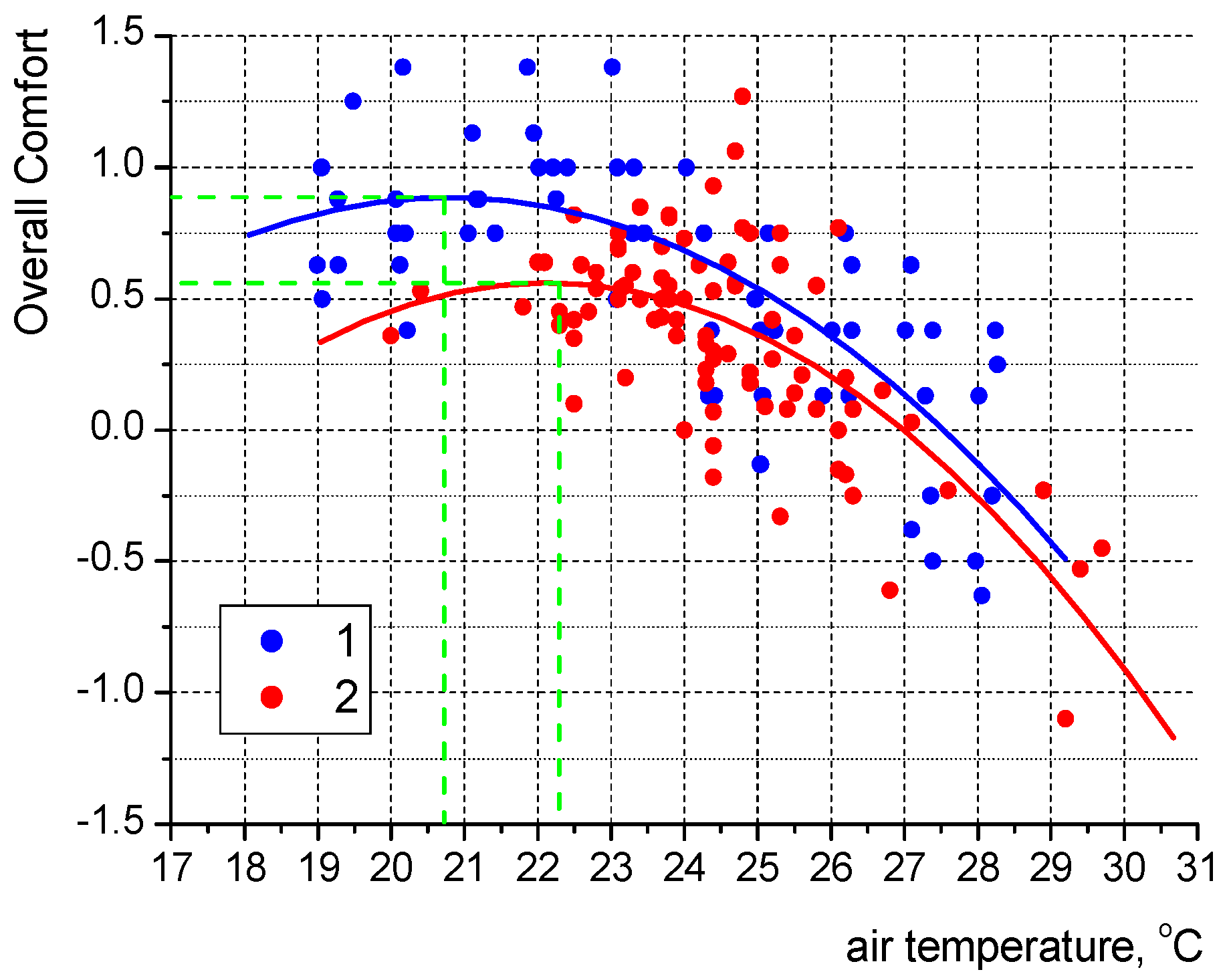
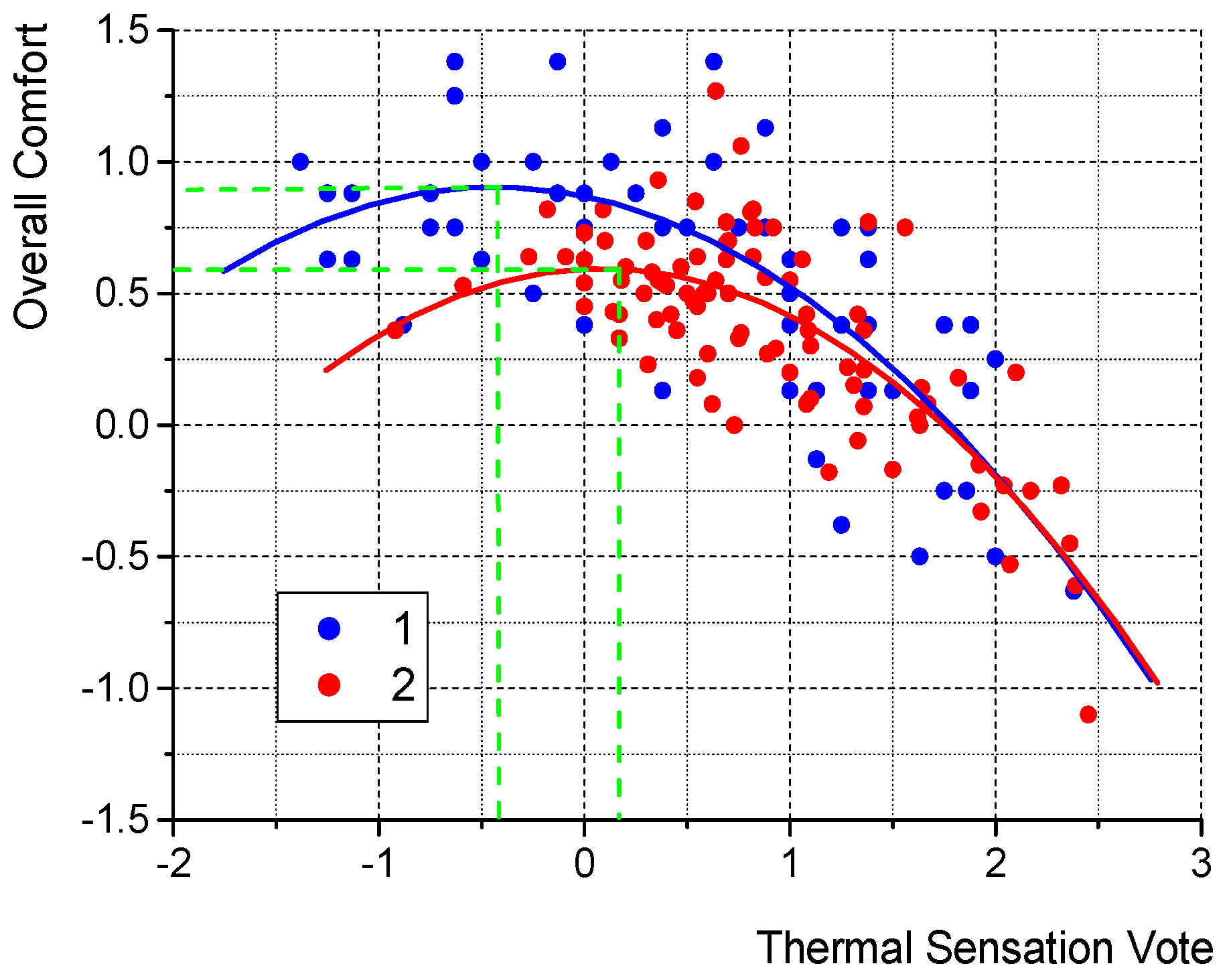
- Overall comfort in the climate chamber was typically higher than that in the educational rooms at the same air temperature values. It might be related to the impact of other factors such as the lack of stress in the climate chamber as opposed to students’ presence in lecture/classrooms.
- The most favourable air temperature value in the climate chamber experiments was ca. 20.7 °C, while in the educational rooms it was ca. 22.3 °C. This shift can be explained by the presence of increased air movement (often caused by draughts) in the lecture/classrooms, especially in the summer season possibly due to open windows.
- The most preferable conditions in the climate chamber occurred at a thermal sensation vote of TSV = −0.4 (“pleasantly slightly cool”), while in the educational rooms it was TSV = +0.2 (“neutral/pleasantly slightly warm”). This shift can also be explained by elevated air movement in the lecture/classrooms during their normal operation.
- Overall comfort data for the climate chamber tests were typically higher than that for the educational rooms for the same thermal sensation votes. As mentioned above, this phenomenon can be attributed to other unfavourable factors present in the lecture/classrooms such as increased stress levels.
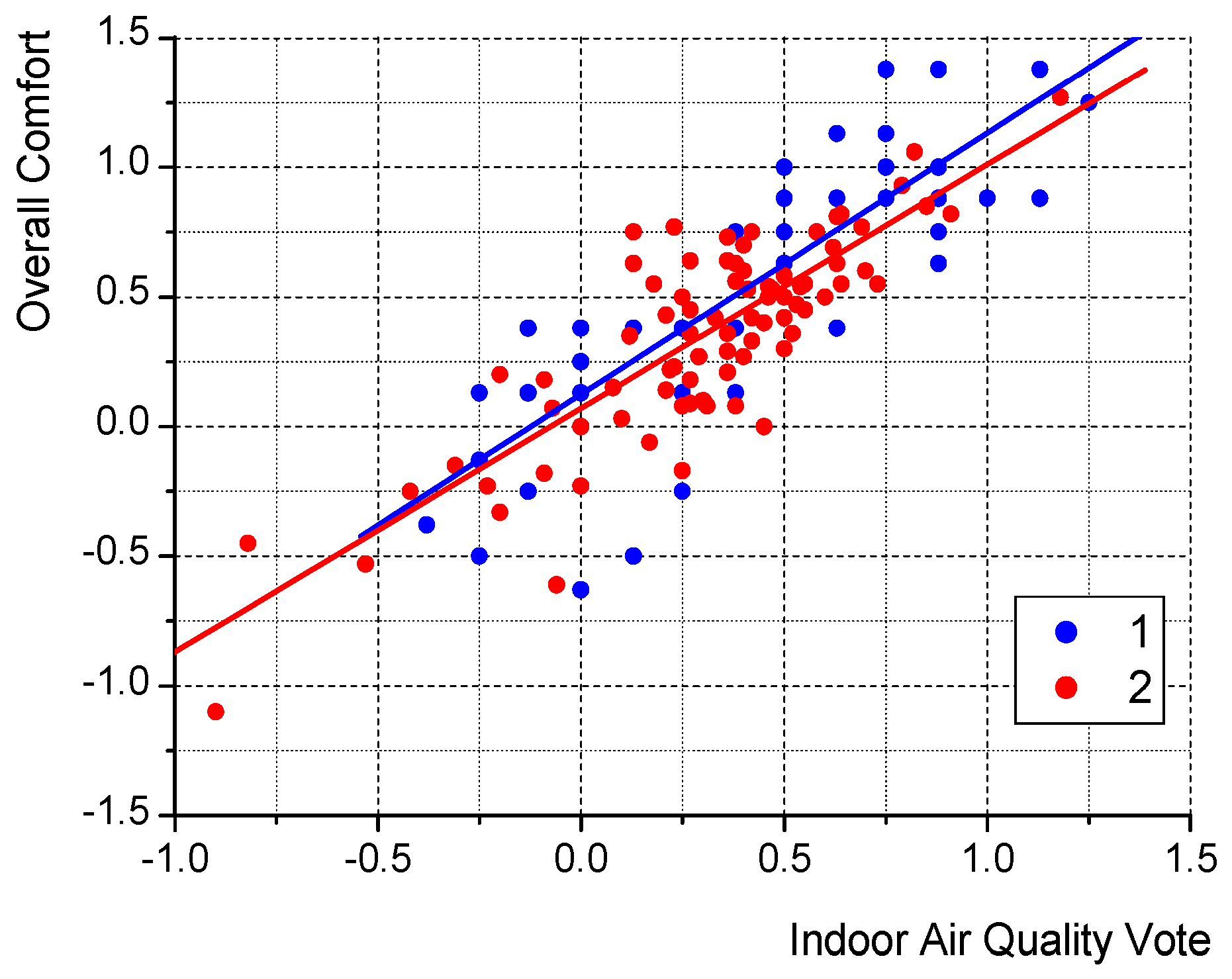
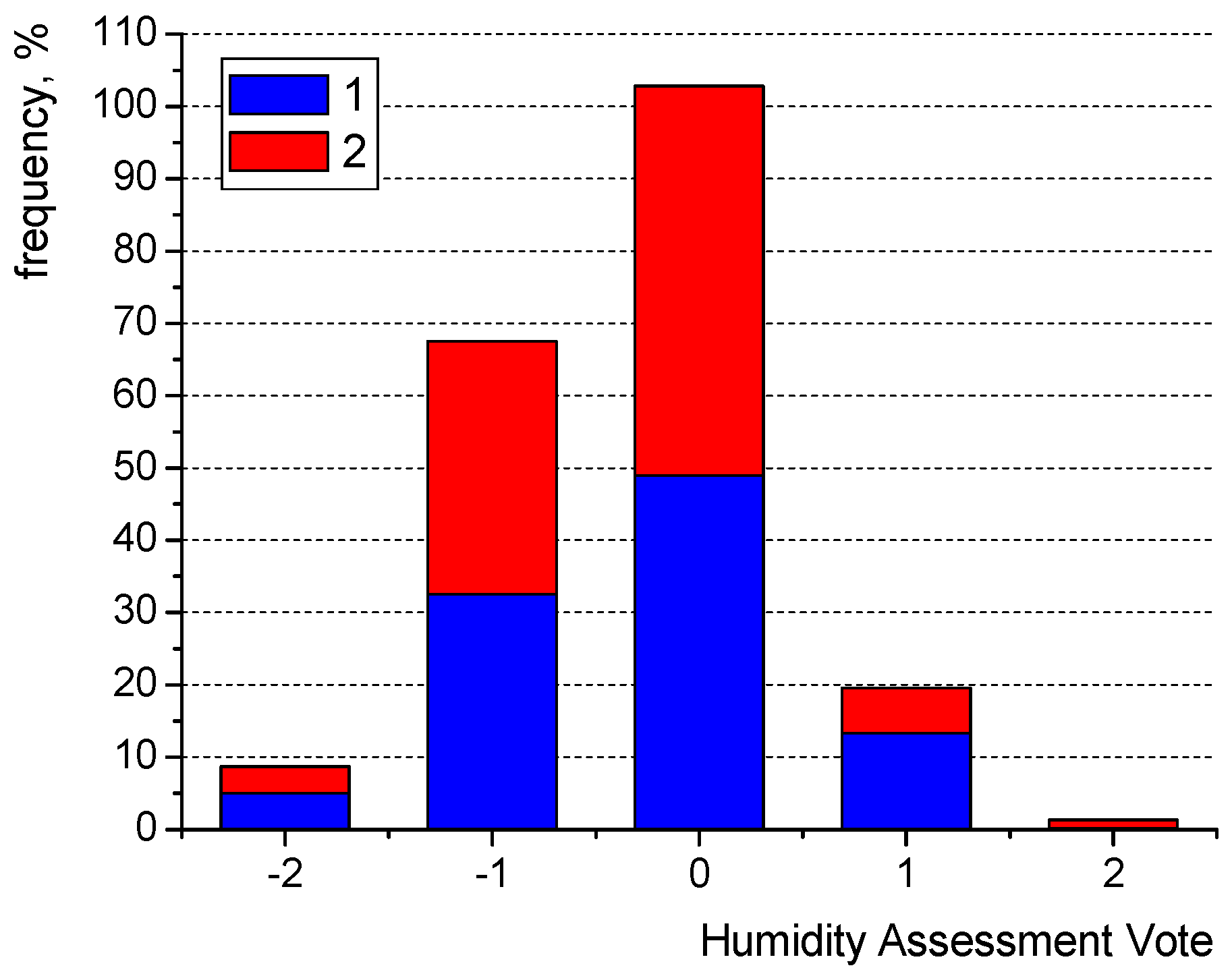
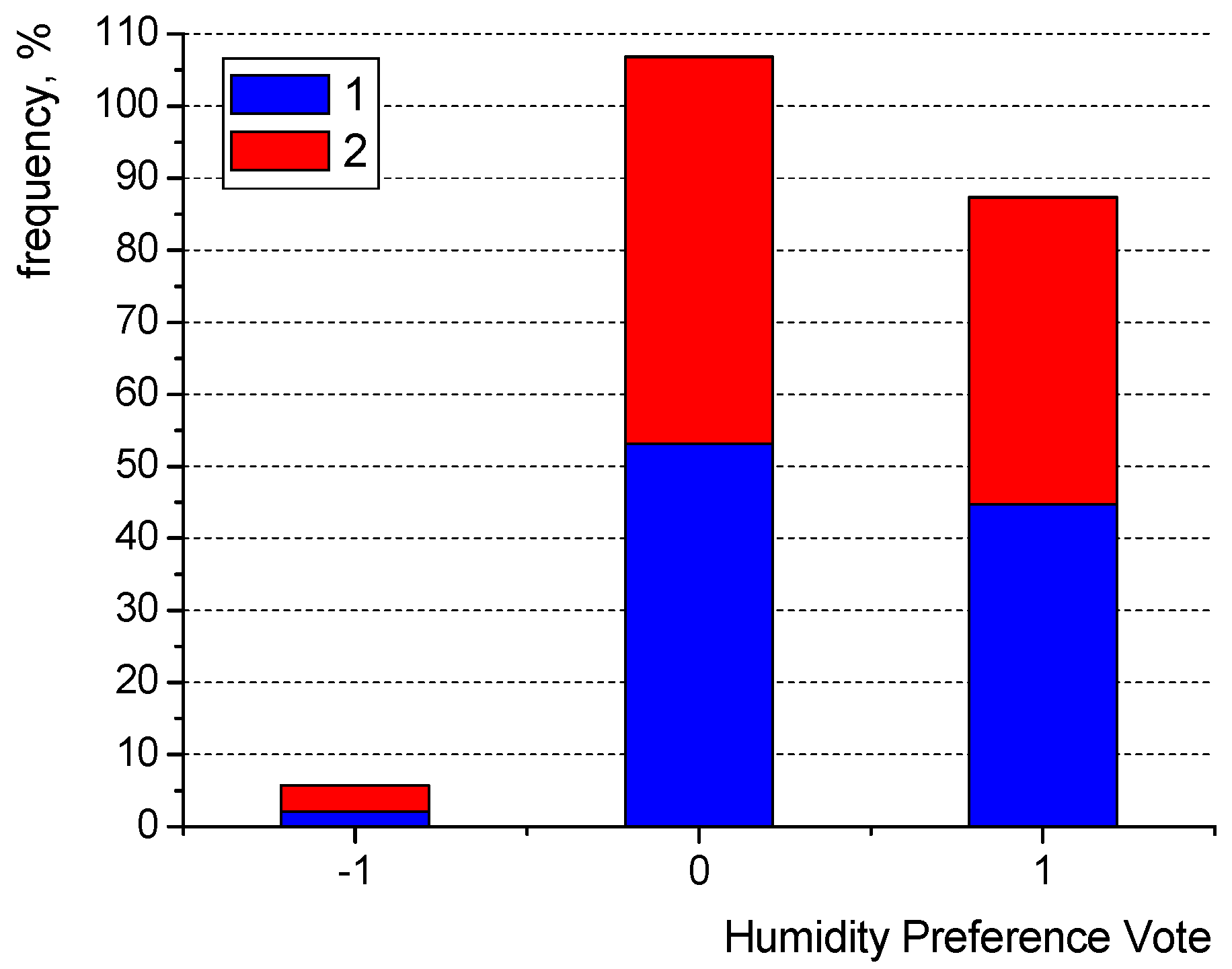
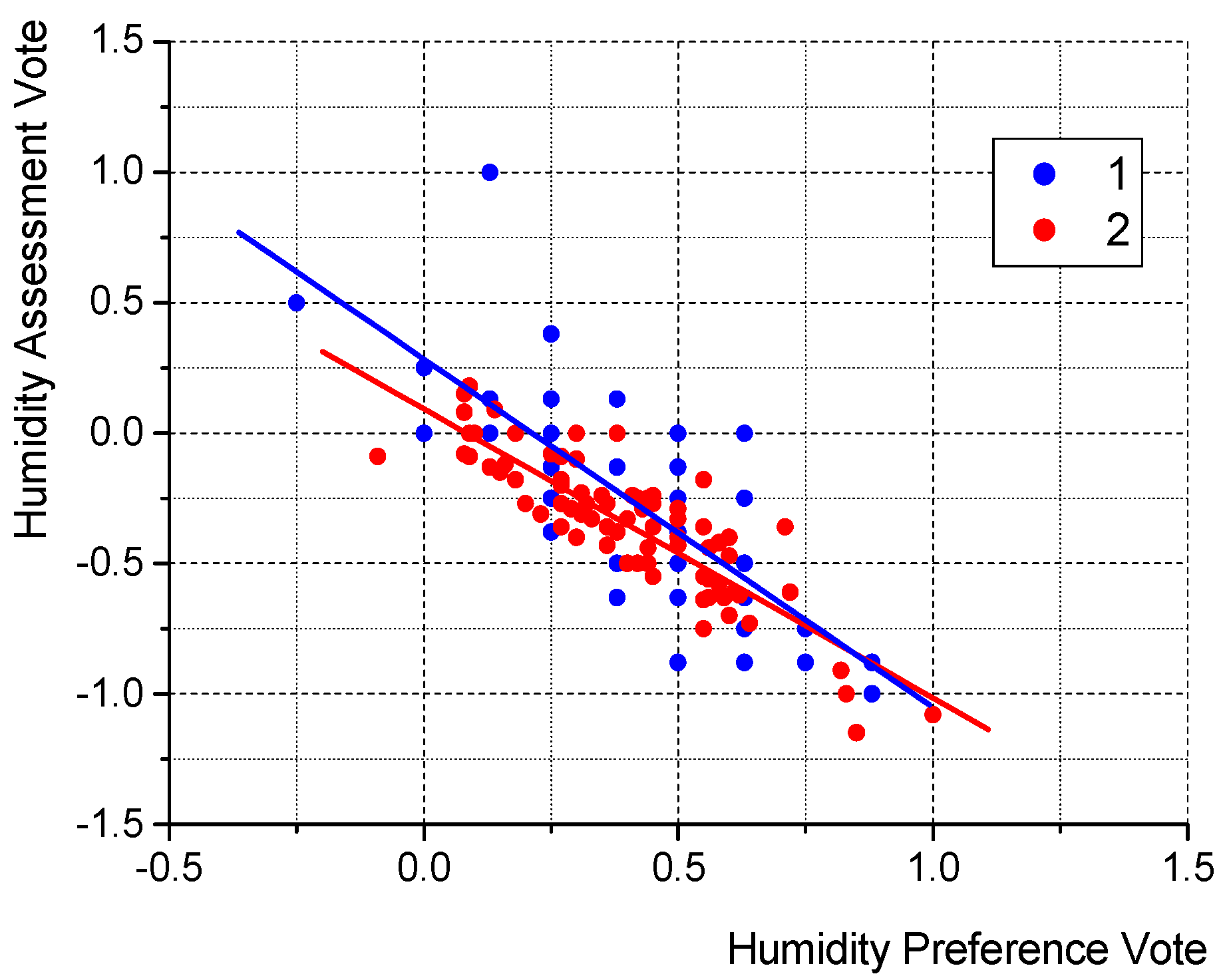
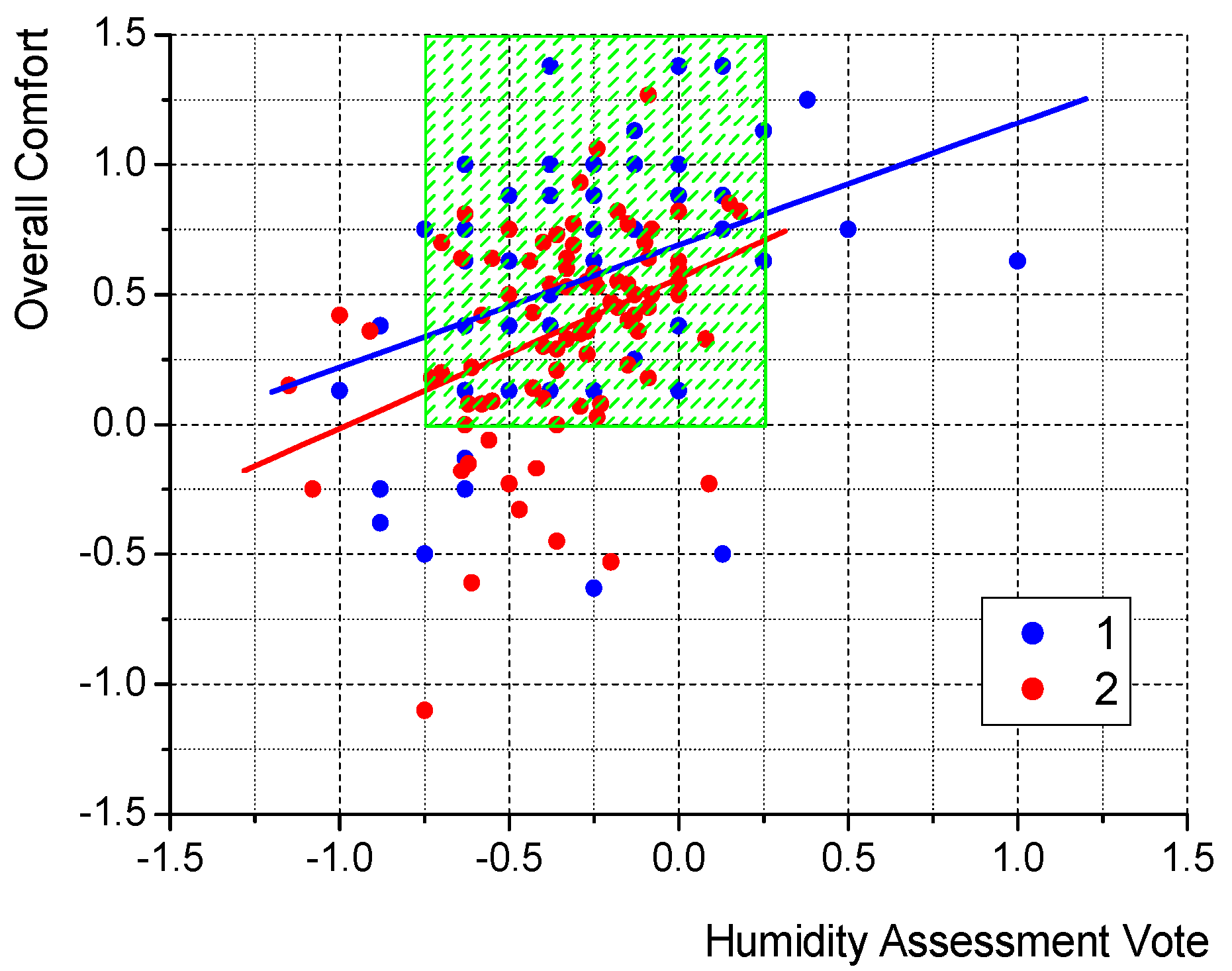
- Quite strong correlations between overall comfort and indoor air quality as well as between humidity assessment and humidity preference votes were observed, which did not seem to depend on the type of environment.
Supplementary Materials
Author Contributions
Funding
Data Availability Statement
Conflicts of Interest
References
- International Energy Agency, Tracking Buildings. Available online: https://www.iea.org/energy-system/buildings (accessed on 9 December 2023).
- Brasche, S.; Bischof, W. Daily time spent indoors in German homes—Baseline data for the assessment of indoor exposure of German occupants. Int. J. Hyg. Environ. Health 2005, 208, 247–253. [Google Scholar] [CrossRef] [Scilit]
- Klepeis, N.E.; Nelson, W.C.; Ott, W.R.; Robinson, J.P.; Tsang, A.M.; Switzer, P.; Behar, J.V.; Hern, S.C.; Engelmann, W.H. The National Human Activity Pattern Survey (NHAPS): A resource for assessing exposure to environmental pollutants. J. Expo. Anal. Environ. Epidemiol. 2001, 11, 231–252. [Google Scholar] [CrossRef] [Scilit] [PubMed]
- Ratajczak, K.; Amanowicz, Ł.; Pałaszyńska, K.; Pawlak, F.; Sinacka, J. Recent Achievements in Research on Thermal Comfort and Ventilation in the Aspect of Providing People with Appropriate Conditions in Different Types of Buildings—Semi-Systematic Review. Energies 2023, 16, 6254. [Google Scholar] [CrossRef] [Scilit]
- Basińska, M.; Ratajczak, K.; Michałkiewicz, M.; Fuć, P.; Siedlecki, M. The Way of Usage and Location in a Big City Agglomeration as Impact Factors of the Nurseries Indoor Air Quality. Energies 2021, 14, 7534. [Google Scholar] [CrossRef] [Scilit]
- Cao, B.; Luo, M.; Li, M.; Zhu, Y. Too cold or too warm? A winter thermal comfort study in different climate zones in China. Energy Build. 2016, 133, 469–477. [Google Scholar] [CrossRef] [Scilit]
- Hwang, R.-L.; Lin, T.-P.; Kuo, N.-J. Field experiments on thermal comfort in campus classrooms in Taiwan. Energy Build. 2006, 38, 53–62. [Google Scholar] [CrossRef] [Scilit]
- Montazami, A.; Gaterell, M.; Nicol, F.; Lumley, M.; Thoua, C. Impact of social background and behaviour on children’s thermal comfort. Build. Environ. 2017, 122, 422–434. [Google Scholar] [CrossRef] [Scilit]
- Van Hoof, J.; Schellen, L.; Soebarto, V.; Wong, J.K.W.; Kazak, J.K. Ten questions concerning thermal comfort and ageing. Build. Environ. 2017, 120, 123–133. [Google Scholar] [CrossRef] [Scilit]
- Indraganti, M.; Ooka, R.; Rijal, H.B. Thermal comfort in offices in India: Behavioral adaptation and the effect of age and gender. Energy Build. 2015, 103, 284–295. [Google Scholar] [CrossRef] [Scilit]
- Indraganti, M.; Rao, C.D. Effect of age, gender, economic group and tenure on thermal comfort: A field study in residential buildings in hot and dry climate with seasonal variations. Energy Build. 2010, 42, 273–281. [Google Scholar] [CrossRef] [Scilit]
- Karjalainen, S. Gender differences in thermal comfort and use of thermostats in everyday thermal environments. Build. Environ. 2007, 42, 1594–1603. [Google Scholar] [CrossRef] [Scilit]
- Maykot, J.K.; Rupp, R.F.; Ghisi, E. A field study about gender and thermal comfort temperatures in office buildings. Energy Build. 2018, 178, 254–264. [Google Scholar] [CrossRef] [Scilit]
- Parsons, K.C. The effects of gender, acclimation state, the opportunity to adjust clothing and physical disability on requirements for thermal comfort. Energy Build. 2002, 34, 593–599. [Google Scholar] [CrossRef] [Scilit]
- Luo, M.; Wang, W.; Ke, K.; Cao, B.; Zhai, Y.; Zhou, X. Human metabolic rate and thermal comfort in buildings: The problem and challenge. Build. Environ. 2018, 131, 44–52. [Google Scholar] [CrossRef] [Scilit]
- Fang, Z.; Zhang, S.; Cheng, Y.; Fong, A.M.L.; Oladokun, M.O.; Lin, Z.; Wua, H. Field study on adaptive thermal comfort in typical air conditioned classrooms. Build. Environ. 2018, 133, 73–82. [Google Scholar] [CrossRef] [Scilit]
- Buratti, C.; Ricciardi, P. Adaptive analysis of thermal comfort in university classrooms: Correlation between experimental data and mathematical models. Build. Environ. 2009, 44, 674–687. [Google Scholar] [CrossRef] [Scilit]
- Ricciardi, P.; Buratti, C. Environmental quality of university classrooms: Subjective and objective evaluation of the thermal, acoustic, and lighting comfort conditions. Build. Environ. 2018, 127, 23–36. [Google Scholar] [CrossRef] [Scilit]
- Krawczyk, D.A.; Gładyszewska-Fiedoruk, K.; Rodero, A. The analysis of microclimate parameters in the classrooms located in different climate zones. App. Therm. Eng. 2017, 113, 1088–1096. [Google Scholar] [CrossRef] [Scilit]
- Sakellaris, I.A.; Saraga, D.E.; Mandin, C.; Roda, C.; Fossati, S.; De Kluizenaar, Y.; Carrer, P.; Dimitroulopoulou, S.; Mihucz, V.G.; Szigeti, T.; et al. Perceived Indoor Environment and Occupants’ Comfort in European “Modern” Office Buildings: The OFFICAIR Study. Int. J. Environ. Res. Public Health 2016, 13, 444. [Google Scholar] [CrossRef] [Scilit]
- Kim, Y.K.; Abdou, Y.; Abdou, A.; Altan, H. Indoor Environmental Quality Assessment and Occupant Satisfaction: A Post-Occupancy Evaluation of a UAE University Office Building. Buildings 2022, 12, 986. [Google Scholar] [CrossRef] [Scilit]
- Altomonte, S.; Allen, J.; Bluyssen, P.M.; Brager, G.; Heschong, L.; Loder, A.; Schiavon, S.; Veitch, J.A.; Wang, L.; Wargocki, P. Ten questions concerning well-being in the built environment. Build. Environ. 2020, 180, 106949. [Google Scholar] [CrossRef] [Scilit]
- Göçer, Ö.; Candido, C.; Thomas, L.; Göçer, K. Differences in Occupants’ Satisfaction and Perceived Productivity in High- and Low-Performance Offices. Buildings 2019, 9, 199. [Google Scholar] [CrossRef] [Scilit]
- EN 16798-1:2019; Energy Performance of Buildings—Ventilation for Buildings—Part 1: Indoor Environmental Input Parameters for Design and Assessment of Energy Performance of Buildings Addressing Indoor Air Quality, Thermal Environment, Lighting and Acoustics—Module M1-6. European Committee for Standardization: Brussels, Belgium, 2019.
- Borowski, M.; Zwolińska, K.; Czerwiński, M. An Experimental Study of Thermal Comfort and Indoor Air Quality—A Case Study of a Hotel Building. Energies 2022, 15, 2026. [Google Scholar] [CrossRef] [Scilit]
- Vilcekova, S.; Meciarova, L.; Burdova, E.K.; Katunska, J.; Kosicanova, D.; Doroudiani, S. Indoor environmental quality of classrooms and occupants’ comfort in a special education school in Slovak Republic. Build. Environ. 2017, 120, 29–40. [Google Scholar] [CrossRef] [Scilit]
- Aguilar, A.J.; de la Hoz-Torres, M.L.; Ruiz, D.P.; Martínez-Aires, M.D. Monitoring and Assessment of Indoor Environmental Conditions in Educational Building Using Building Information Modelling Methodology. Int. J. Environ. Res. Public Health 2022, 19, 13756. [Google Scholar] [CrossRef] [Scilit]
- Basińska, M.; Michałkiewicz, M.; Ratajczak, K. Effect of Air Purifier Use in the Classrooms on Indoor Air Quality—Case Study. Atmosphere 2021, 12, 1606. [Google Scholar] [CrossRef] [Scilit]
- Zender-Swiercz, E. Analysis of the impact of the parameters of outside air on the condition of indoor air. Int. J. Environ. Sci. Technol. 2017, 14, 1583–1590. [Google Scholar] [CrossRef] [Scilit]
- Zender-Swiercz, E. Improving the indoor air quality using the individual air supply system. Int. J. Environ. Sci. Technol. 2018, 15, 689–696. [Google Scholar] [CrossRef] [Scilit]
- Amanowicz, Ł.; Ratajczak, K.; Dudkiewicz, E. Recent Advancements in Ventilation Systems Used to Decrease Energy Consumption in Buildings—Literature Review. Energies 2023, 16, 1853. [Google Scholar] [CrossRef] [Scilit]
- Rolando, D.; Mazzotti Pallard, W.; Molinari, M. Long-Term Evaluation of Comfort, Indoor Air Quality and Energy Performance in Buildings: The Case of the KTH Live-In Lab Testbeds. Energies 2022, 15, 4955. [Google Scholar] [CrossRef] [Scilit]
- Aflaki, A.; Esfandiari, M.; Jarrahi, A. Multi-Criteria Evaluation of a Library’s Indoor Environmental Quality in the Tropics. Buildings 2023, 13, 1233. [Google Scholar] [CrossRef] [Scilit]
- Clements, N.; Zhang, R.; Jamrozik, A.; Campanella, C.; Bauer, B. The Spatial and Temporal Variability of the Indoor Environmental Quality during Three Simulated Office Studies at a Living Lab. Buildings 2019, 9, 62. [Google Scholar] [CrossRef] [Scilit]
- Lan, L.; Wargocki, P.; Wyon, D.P.; Lian, Z. Effects of thermal discomfort in an office on perceived air quality, SBS symptoms, physiological responses, and human performance. Indoor Air 2011, 21, 376–390. [Google Scholar] [CrossRef] [Scilit]
- Geng, Y.; Ji, W.; Lin, B.; Zhu, Y. The impact of thermal environment on occupant IEQ perception and productivity. Build. Environ. 2017, 121, 158–167. [Google Scholar] [CrossRef] [Scilit]
- Yang, Y.; Li, B.; Liu, H.; Tan, M.; Yao, R. A study of adaptive thermal comfort in a well-controlled climate chamber. App. Therm. Eng. 2015, 76, 283–291. [Google Scholar] [CrossRef] [Scilit]
- Ji, W.; Cao, B.; Luo, M.; Zhu, Y. Influence of short-term thermal experience on thermal comfort evaluations: A climate chamber experiment. Build. Environ. 2017, 114, 246–256. [Google Scholar] [CrossRef] [Scilit]
- Zhang, Z.; Zhang, Y.; Khan, A. Thermal comfort of people from two types of air-conditioned buildings—Evidences from chamber experiments. Build. Environ. 2019, 162, 106287. [Google Scholar] [CrossRef] [Scilit]
- Soebarto, V.; Zhang, H.; Schiavon, S. A thermal comfort environmental chamber study of older and younger people. Build. Environ. 2019, 155, 1–14. [Google Scholar] [CrossRef] [Scilit]
- Chen, M.; Farahani, A.V.; Kilpeläinen, S.; Kosonen, R.; Younes, J.; Ghaddar, N.; Ghali, K.; Melikov, A.K. Thermal comfort chamber study of Nordic elderly people with local cooling devices in warm conditions. Build. Environ. 2023, 235, 110213. [Google Scholar] [CrossRef] [Scilit]
- Jian, Y.; Liu, S.; Bian, M.; Liu, Z.; Liu, S. Climate Chamber Experiment Study on the Association of Turning off Air Conditioning with Human Thermal Sensation and Skin Temperature. Buildings 2022, 12, 472. [Google Scholar] [CrossRef] [Scilit]
- Ahmad, R.I.; Norfadzilah, J.; Raemy, M.Z. Human Responses to the Thermal Comfort in Air-Conditioned Building: A Climate Chamber Study. Int. J. Integr. Eng. 2022, 14, 287–295. [Google Scholar] [CrossRef] [Scilit]
- Dong, Y.; Shi, Y.; Liu, Y.; Rupp, R.F.; Toftum, J. Perceptive and physiological adaptation of migrants with different thermal experiences: A long-term climate chamber experiment. Build. Environ. 2022, 211, 108727. [Google Scholar] [CrossRef] [Scilit]
- Jia, X.; Wang, J.; Zhu, Y.; Ji, W.; Cao, B. Climate chamber study on thermal comfort of walking passengers with elevated ambient air velocity. Build. Environ. 2022, 218, 109100. [Google Scholar] [CrossRef] [Scilit]
- Upadhyay, K.; Elangovan, R.; Subudhi, S. Establishing thermal comfort baseline in a sub-tropical region through a controlled climate chamber study. Adv. Build. Energy Res. 2023. [Google Scholar] [CrossRef] [Scilit]
- Yang, R.; Yang, L.; Wei, J. Research on the thermal environment in a climate chamber with different high-temperature combinations. Adv. Build. Energy Res. 2023. [Google Scholar] [CrossRef] [Scilit]
- De Dear, R. Thermal comfort in practice. Indoor Air 2004, 14 (Suppl. S7), 32–39. [Google Scholar] [CrossRef] [Scilit] [PubMed]
- Available online: www.testo.com (accessed on 10 December 2023).
- EN 15251:2007; Indoor Environmental Input Parameters for Design and Assessment of Energy Performance of Buildings Addressing Indoor Air Quality, Thermal Environment, Lighting and Acoustics. CEN: Brussels, Belgium, 2007.
- ISO 28802:2012; Ergonomics of the Physical Environment—Assessment of Environments by Means of an Environmental Survey Involving Physical Measurements of the Environment and Subjective Responses of People. European Committee for Standardization: Brussels, Belgium, 2012.
- Singh, M.K.; Kumar, S.; Ooka, R.; Rijal, H.B.; Gupta, G.; Kumar, A. Status of thermal comfort in naturally ventilated classrooms during the summer season in the composite climate of India. Build. Environ. 2018, 128, 287–304. [Google Scholar] [CrossRef] [Scilit]
- Nematchoua, M.K.; Tchinda, R.; Orosa, J.A. Thermal comfort and energy consumption in modern versus traditional buildings in Cameroon: A questionnaire-based statistical study. Appl. Energy 2014, 114, 687–699. [Google Scholar] [CrossRef] [Scilit]
- Kosmopoulos, P.; Galanos, D.; Anastaselos, D.; Papadopoulos, A. An Assessment of the Overall Comfort Sensation in Workplaces. Int. J. Vent. 2012, 10, 311–322. [Google Scholar] [CrossRef] [Scilit]
- Morandi, F.; Pittana, I.; Cappelletti, F.; Gasparella, A.; Tzempelikos, A. Assessing Overall Indoor Environmental Comfort and Satisfaction: Evaluation of a Questionnaire Proposal by Means of Statistical Analysis of Responses. In Proceedings of the IAQ 2020: Indoor Environmental Quality Performance Approaches, Athens, Greece, 4–6 May 2022. [Google Scholar]
- Orman, Ł.J.; Krawczyk, N.; Radek, N.; Honus, S.; Pietraszek, J.; Dębska, L.; Dudek, A.; Kalinowski, A. Comparative Analysis of Indoor Environmental Quality and Self-Reported Productivity in Intelligent and Traditional Buildings. Energies 2023, 16, 6663. [Google Scholar] [CrossRef] [Scilit]
- Majewski, G.; Orman, Ł.J.; Telejko, M.; Radek, N.; Pietraszek, J.; Dudek, A. Assessment of Thermal Comfort in the Intelligent Buildings in View of Providing High Quality Indoor Environment. Energies 2020, 13, 1973. [Google Scholar] [CrossRef] [Scilit]
- Kong, D.; Liu, H.; Wu, Y.; Li, B.; Wei, S.; Yuan, M. Effects of indoor humidity on building occupants’ thermal comfort and evidence in terms of climate adaptation. Build. Environ. 2019, 155, 298–307. [Google Scholar] [CrossRef] [Scilit]
- Buonocore, C.; De Vecchi, R.; Scalco, V.; Lamberts, R. Influence of relative air humidity and movement on human thermal perception in classrooms in a hot and humid climate. Build. Environ. 2018, 146, 98–106. [Google Scholar] [CrossRef] [Scilit]



| No | Parameter | Measuring Range | Measuring Accuracy |
|---|---|---|---|
| 1 | Air temperature | −20–70 °C | ±0.3 °C |
| 2 | Air speed | 0–5 m/s | ±(0.03 m/s + 4% of the obtained value) |
| 3 | CO2 level | 0–10,000 ppm | ±50 ppm + 3% of the obtained value |
Disclaimer/Publisher’s Note: The statements, opinions and data contained in all publications are solely those of the individual author(s) and contributor(s) and not of MDPI and/or the editor(s). MDPI and/or the editor(s) disclaim responsibility for any injury to people or property resulting from any ideas, methods, instructions or products referred to in the content. |
© 2024 by the authors. Licensee MDPI, Basel, Switzerland. This article is an open access article distributed under the terms and conditions of the Creative Commons Attribution (CC BY) license (https://creativecommons.org/licenses/by/4.0/).
Share and Cite
Orman, Ł.J.; Siwczuk, N.; Radek, N.; Honus, S.; Piotrowski, J.Z.; Dębska, L. Comparative Analysis of Subjective Indoor Environment Assessment in Actual and Simulated Conditions. Energies 2024, 17, 656. https://doi.org/10.3390/en17030656
Orman ŁJ, Siwczuk N, Radek N, Honus S, Piotrowski JZ, Dębska L. Comparative Analysis of Subjective Indoor Environment Assessment in Actual and Simulated Conditions. Energies. 2024; 17(3):656. https://doi.org/10.3390/en17030656
Chicago/Turabian StyleOrman, Łukasz Jan, Natalia Siwczuk, Norbert Radek, Stanislav Honus, Jerzy Zbigniew Piotrowski, and Luiza Dębska. 2024. "Comparative Analysis of Subjective Indoor Environment Assessment in Actual and Simulated Conditions" Energies 17, no. 3: 656. https://doi.org/10.3390/en17030656
APA StyleOrman, Ł. J., Siwczuk, N., Radek, N., Honus, S., Piotrowski, J. Z., & Dębska, L. (2024). Comparative Analysis of Subjective Indoor Environment Assessment in Actual and Simulated Conditions. Energies, 17(3), 656. https://doi.org/10.3390/en17030656