Article

Optimization and Modification of Bacterial Cellulose Membrane from Coconut Juice Residues and Its Application in Carbon Dioxide Removal for Biogas Separation


by
Wipawee Dechapanya
1,
Kamontip Wongsuwan
2,
Jonathon Huw Lewis
3 and
Attaso Khamwichit
1,*
1
Department of Chemical Engineering, School of Engineering and Technology, Walailak University, Thasala District, Nakhon Si Thammarat 80160, Thailand
2
Engineering Graduate Program, College of Graduate Studies, Walailak University, Thasala District, Nakhon Si Thammarat 80160, Thailand
3
The National School of Teaching and Education, Coventry University, Milton Keynes MK5 8FR, UK
*
Author to whom correspondence should be addressed.
Energies 2024, 17(18), 4750; https://doi.org/10.3390/en17184750
Submission received: 25 July 2024 / Revised: 4 August 2024 / Accepted: 20 September 2024 / Published: 23 September 2024

Abstract

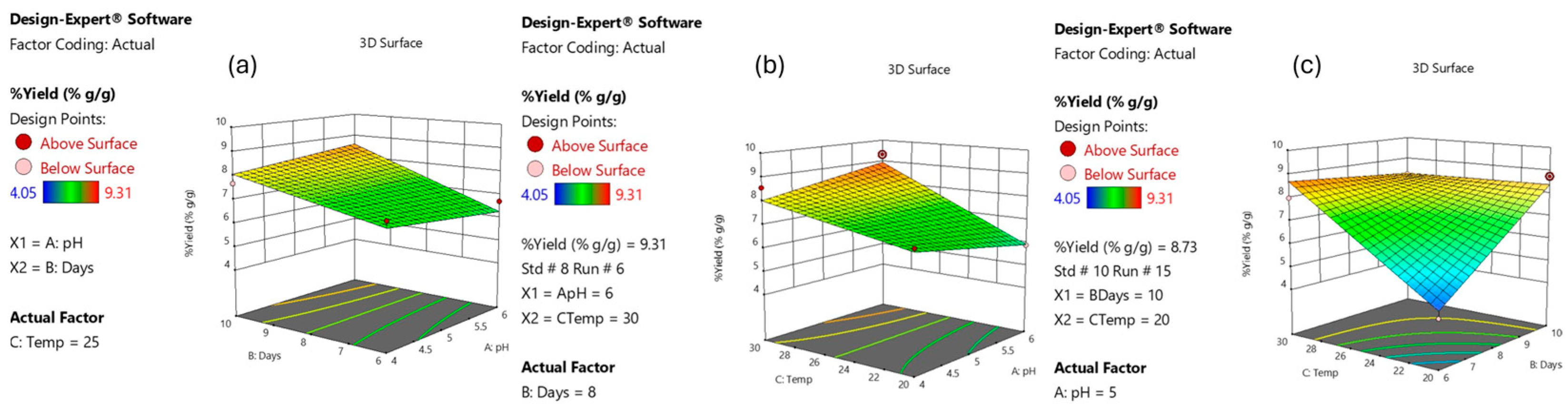
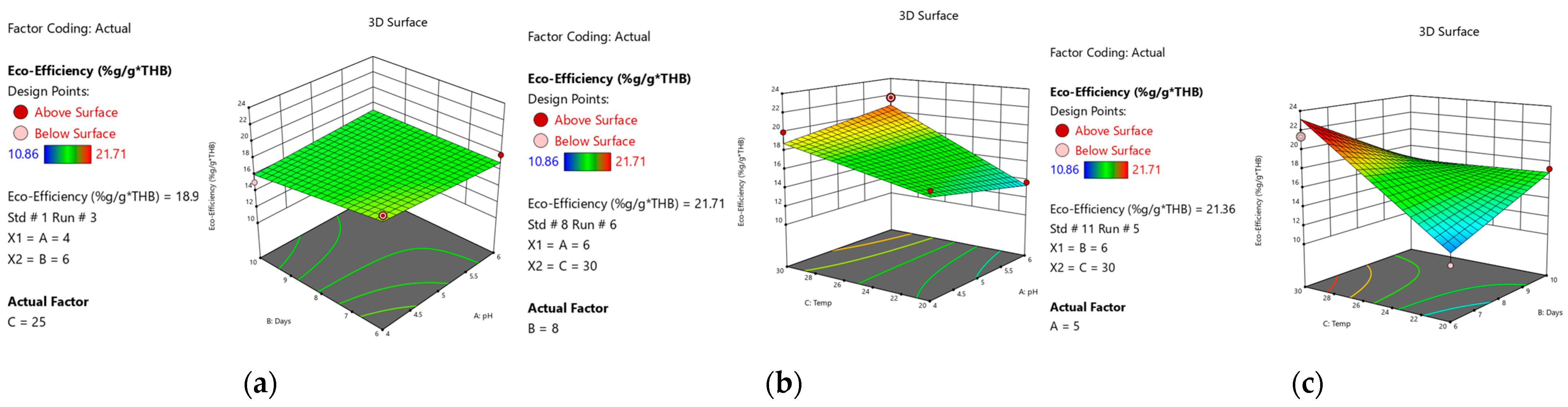
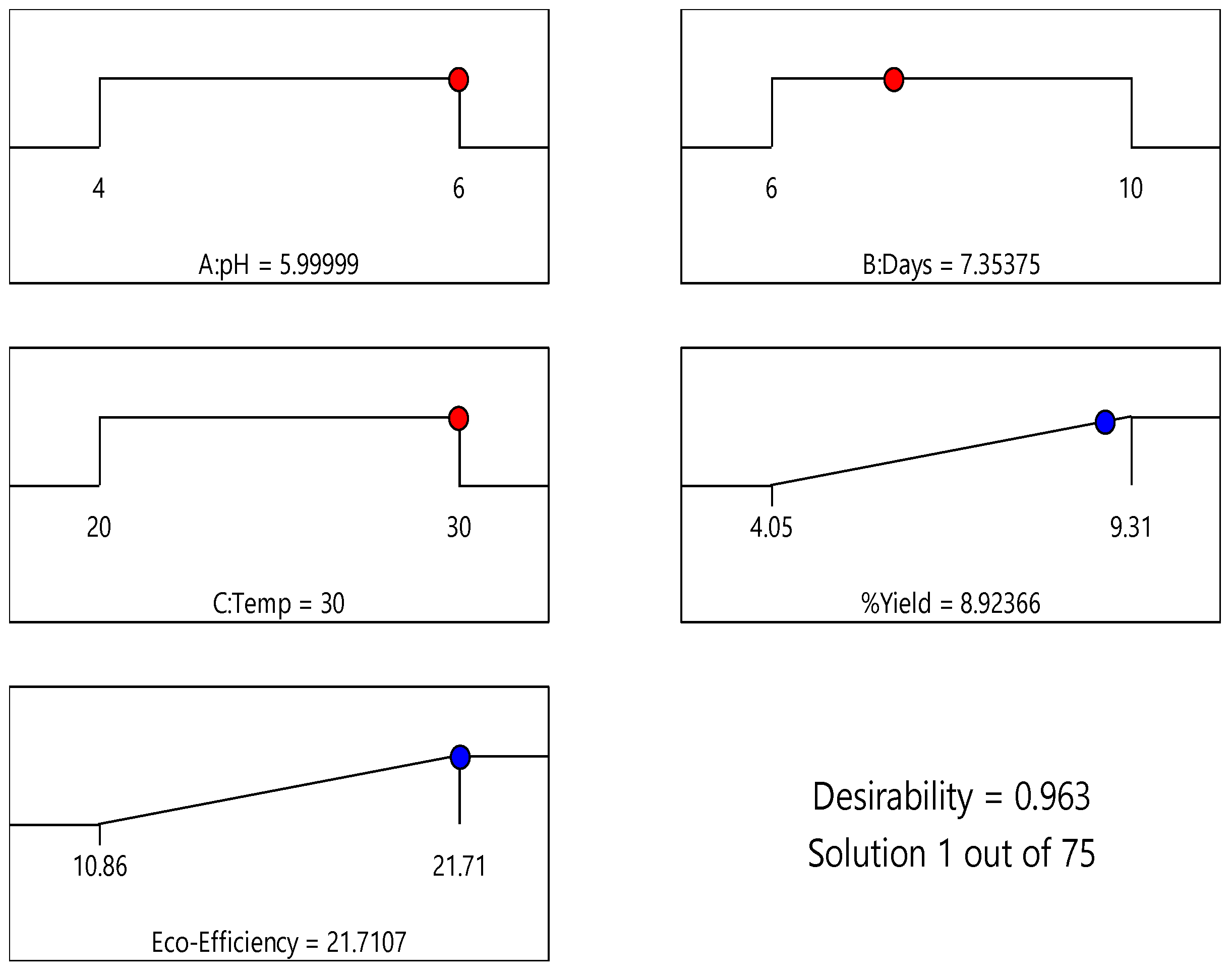
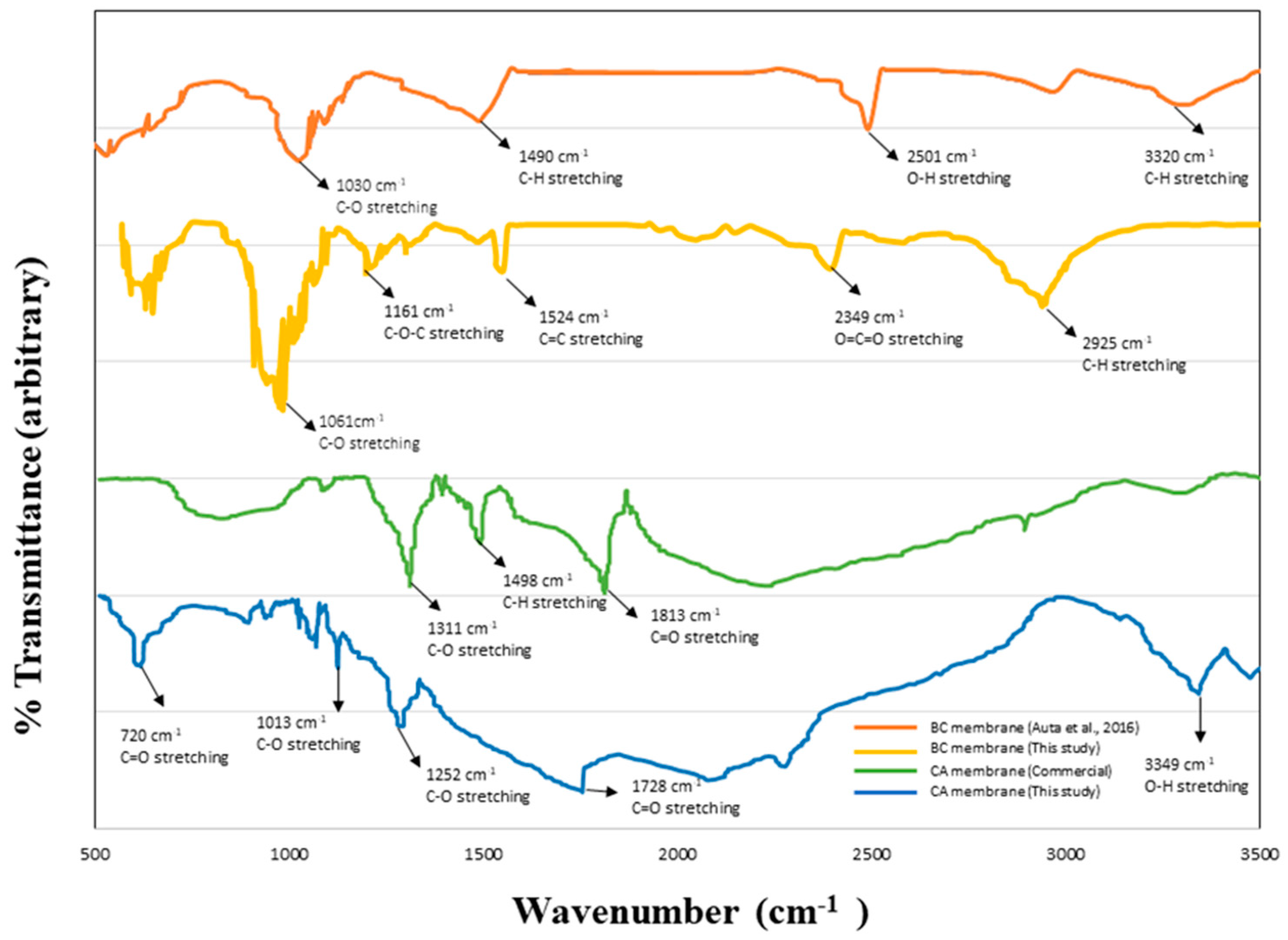
Driven by environmental and economic considerations, this study explores the viability of utilizing coconut juice residues (CJRs), a byproduct from coconut milk production, as a carbon source for bacterial cellulose (BC) synthesis in the form of a versatile bio-membrane. This work investigates the use of optimization modeling as a tool to find the optimal conditions for BC cultivation in consideration of waste minimization and resource sustainability. Optimization efforts focused on three parameters, including pH (4–6), cultivation temperature (20–30 °C), and time (6–10 days) using Design Expert (DE) V.13. The maximum yield of 9.31% (g/g) was achieved when the cultivation took place at the optimal conditions (pH 6, 30 °C, and 8 days). This approach aligns with circular economy principles, contributing to sustainable resource management and environmental impact reduction. The experimental and predicted optimal conditions from DE V.13 were in good agreement, validating the study’s outcomes. The predictive model gave the correlations of the optimal conditions in response to the highest yield and maximum eco-efficiency. The use of prediction modeling resulted in a useful tool for forecasting and obtaining guidelines that can assist other researchers in calculating optimal conditions for a desired yield. Acetylation of the BC resulted in cellulose acetate (CA) membranes. The CA membrane exhibited the potential to separate CO2 from a CH4/CO2 mixed gas with a CO2 selectivity of 1.315 in a membrane separation. The promising gas separation results could be further explored to be utilized in biogas purification applications.
Keywords: bio-waste management; circular economy; high-added value products; biowaste utilization; BC modeling and optimization bio-waste management; circular economy; high-added value products; biowaste utilization; BC modeling and optimization