Article

Toward a Direct CO2 Tax for the Brazilian LDV Fleet
by
Rafael Fernandes Mosquim
1,†,
Flávia Mendes de Almeida Collaço
2,† and
Carlos Eduardo Keutenedjian Mady
3,*,†
1
School of Mechanical Engineering, University of Campinas, Campinas 13083-970, Brazil
2
Faculty of Economics, Administration and Accounting, Federal University of Ceará, Fortaleza 60355-636, Brazil
3
Institute of Energy and Environment of the University of São Paulo, São Paulo 05508-900, Brazil
*
Author to whom correspondence should be addressed.
The contributions to this work were allocated according to each specialty and presented in the author contributions.
Energies 2024, 17(11), 2467; https://doi.org/10.3390/en17112467
Submission received: 16 April 2024 / Revised: 14 May 2024 / Accepted: 17 May 2024 / Published: 22 May 2024
(This article belongs to the Section C: Energy Economics and Policy)

Abstract

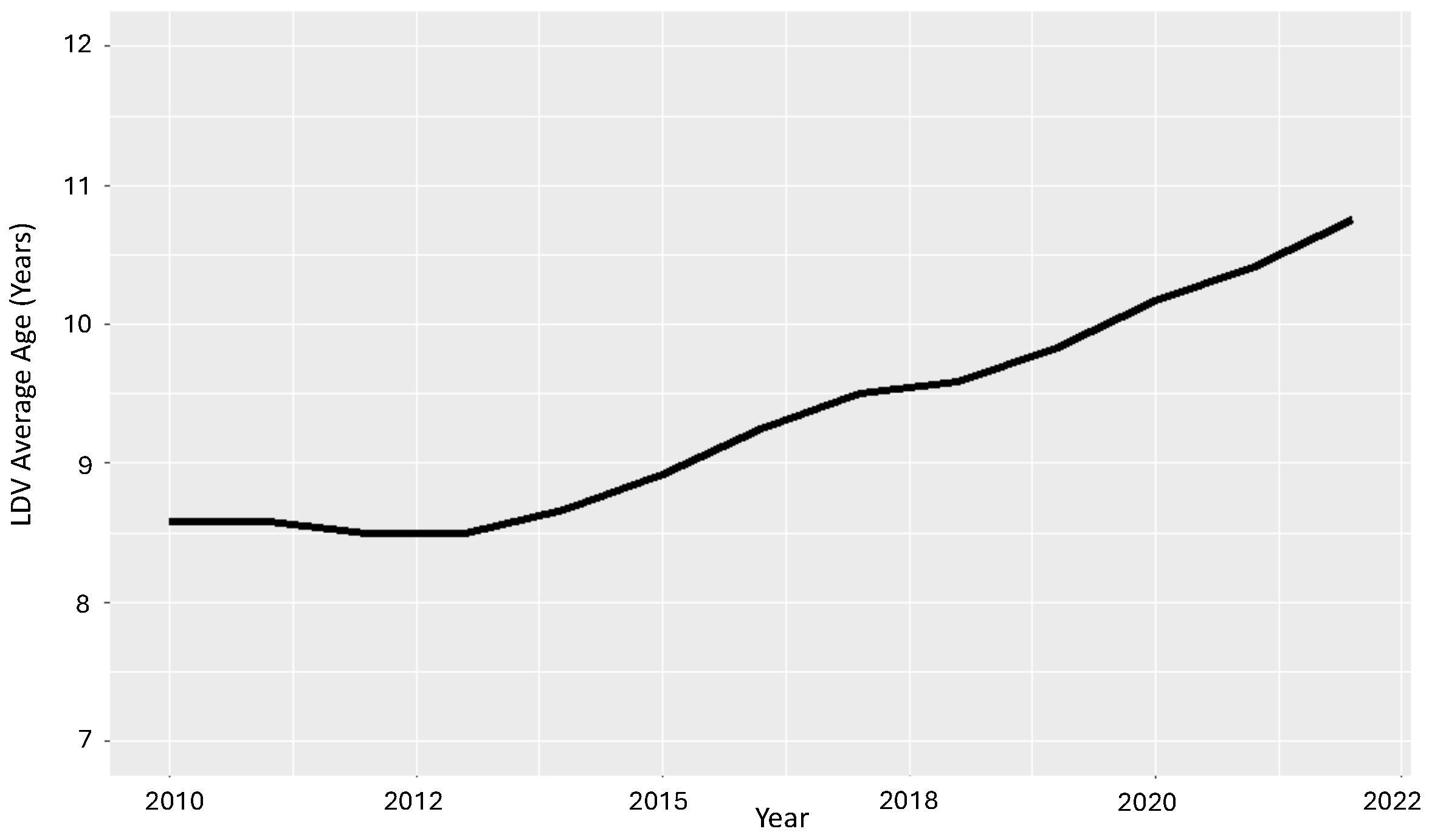
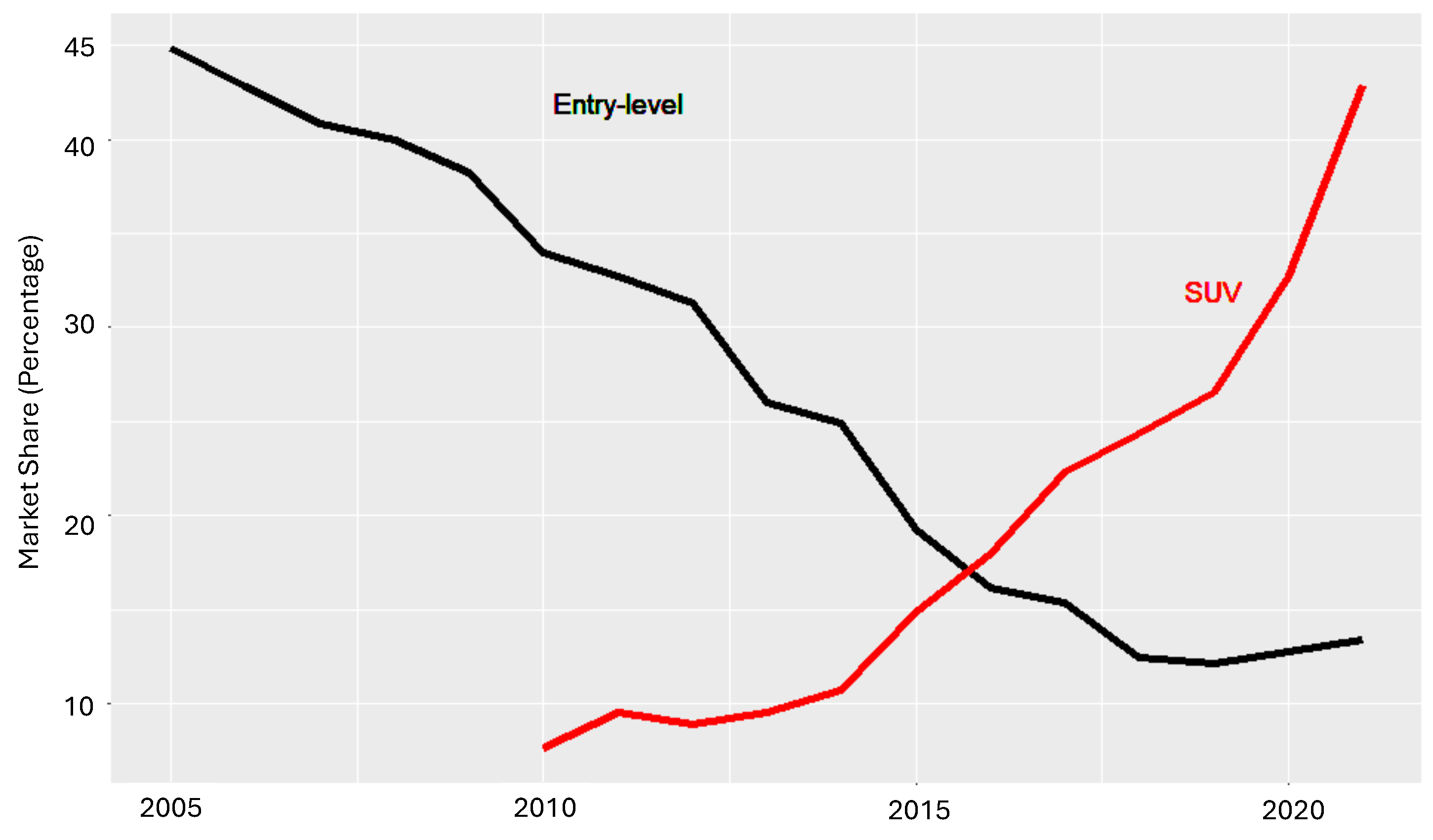
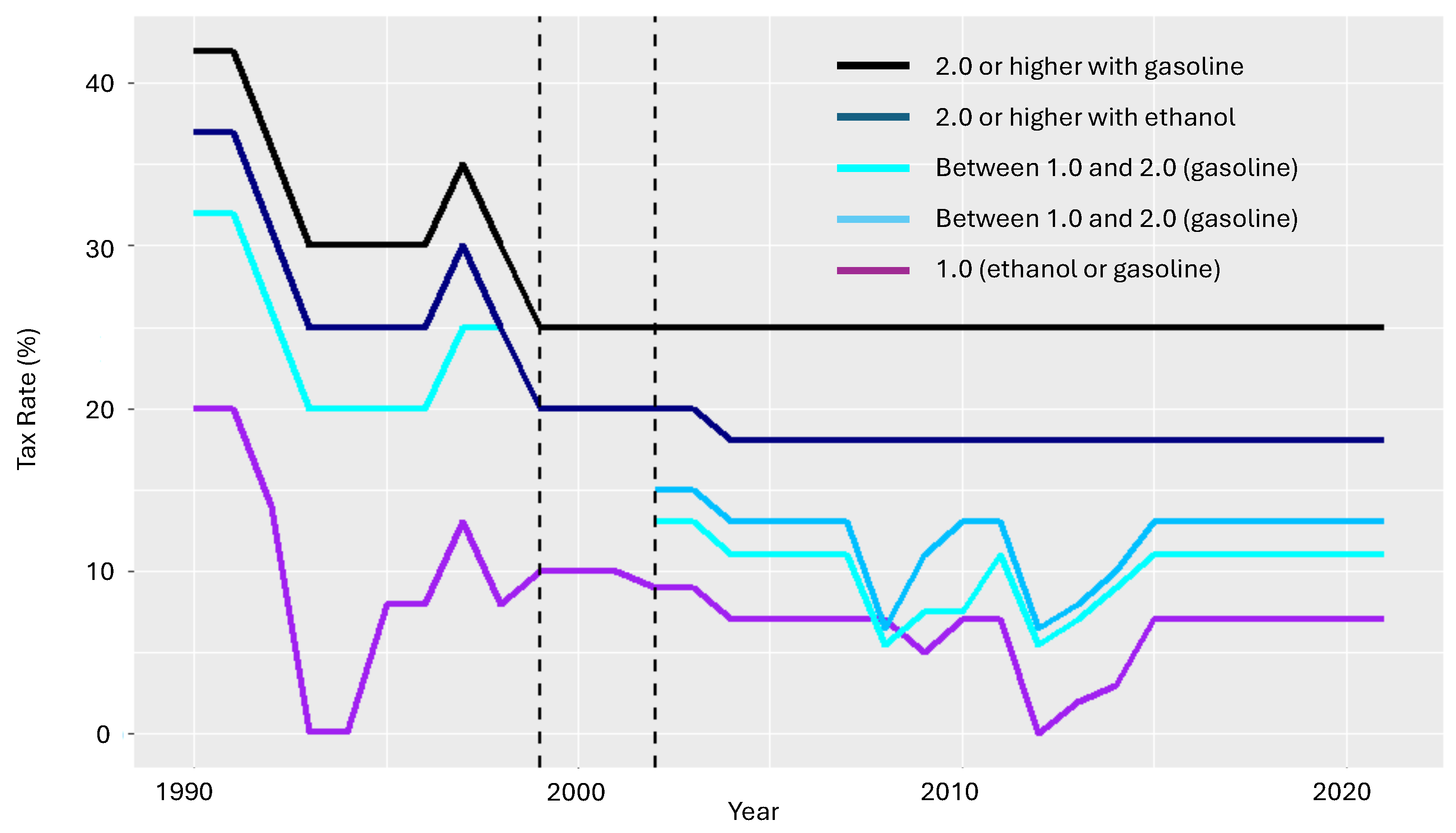
Policies for reducing the environmental impact of light-duty vehicles are restarting in Brazil. While electrification attracts more engagement than other forms of carbon footprint reduction, the use of ethanol could achieve faster gains with the existing infrastructure. The prominence of entry-level cars has reduced, which may be due to several factors, making these vehicles uneconomical for manufacturers to produce. This situation is different from those in other countries. It is our premise that other modes, such as walking, cycling, and public transportation, are the main methods of decarbonization. However, most need improvements in terms of security and attractiveness for consumers. Hence, the internal combustion engine will dominate the Brazilian fleet for quite some time. This article discusses the policies used to incentivize the implementation of entry-level vehicles in contrast with electric vehicles based on regression models of the Brazilian fleet. By providing a history of the 1.0 L engine in Brazil, this article debates replacing the indirect displacement taxation with direct CO2 taxation, which can make the Brazilian entry-level car practical again, with the possibility of adopting some incentives. This logic will cause a fleet renovation and more rational energy use. The distinguishing feature of this article is the proposition of possible public policies based on a regression model of the national fleet. The key findings show that the fleet is getting older and heavier, consuming more energy, and emitting greater amounts of CO2 per unit of displacement, for example, 1.0 L. Furthermore, the carbon footprint of the electricity mix is similar to that of the produced ethanol (from well to wheel, the carbon footprint is the same). This highlights the necessity for national policy adjustments and effective public policies to reduce carbon emissions from the energy sector for small vehicles.
Keywords: performance; transportation; sustainability; public policies; SDG13 performance; transportation; sustainability; public policies; SDG13