Article

Control of Cement Timing, Mineralogy, and Texture on Hydro-chemo-mechanical Coupling from CO2 Injection into Sandstone: A Synthesis


1
Department of Civil & Environmental Engineering, University of Utah, Salt Lake City, UT 84112, USA
2
Energy & Geoscience Institute, University of Utah, Salt Lake City, UT 84108, USA
3
Petroleum Recovery Research Center, New Mexico Tech, Socorro, NM 87801, USA
4
Department of Earth and Environmental Science, New Mexico Tech, Socorro, NM 87801, USA
5
Department of Earth and Environmental Science, Wheaton College, Wheaton, IL 60187, USA
6
Geomechanics, Sandia National Laboratories, Albuquerque, NM 87123, USA
7
Department of Materials Engineering, New Mexico Tech, Socorro, NM 87801, USA
*
Author to whom correspondence should be addressed.
Energies 2023, 16(24), 7949; https://doi.org/10.3390/en16247949
Submission received: 24 October 2023 / Revised: 28 November 2023 / Accepted: 28 November 2023 / Published: 7 December 2023
(This article belongs to the Special Issue Forecasting CO2 Sequestration with Enhanced Oil Recovery II)

Abstract

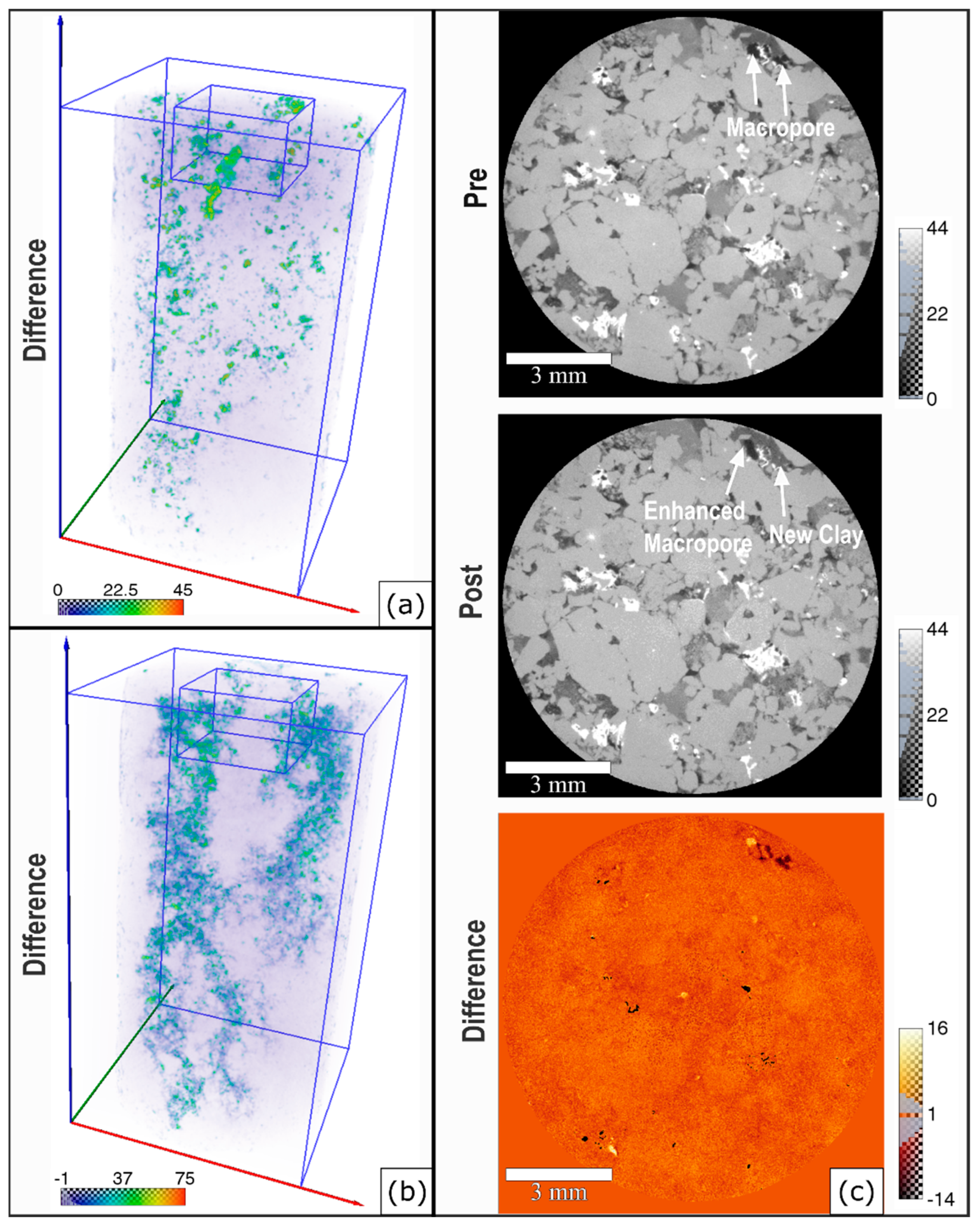
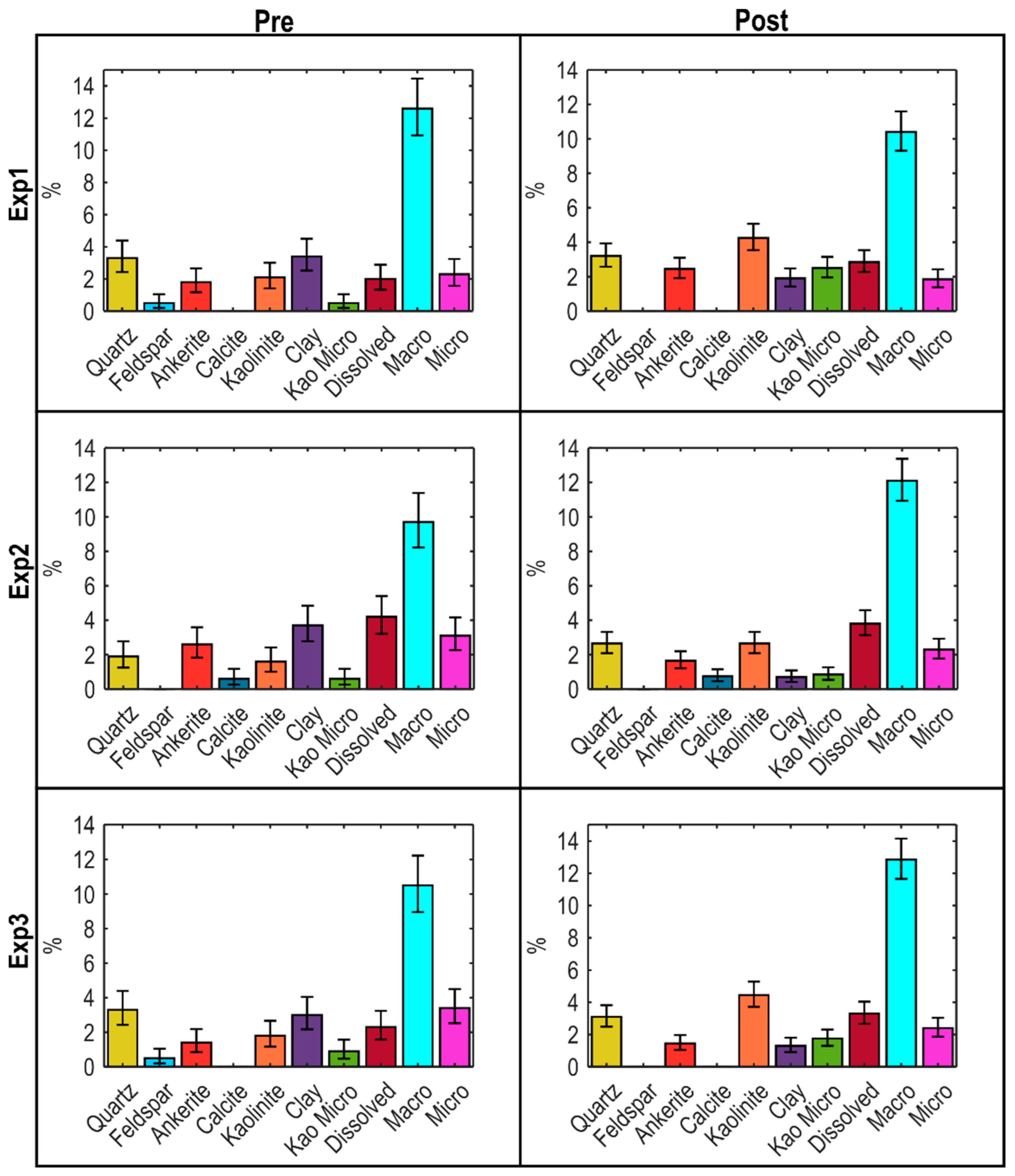
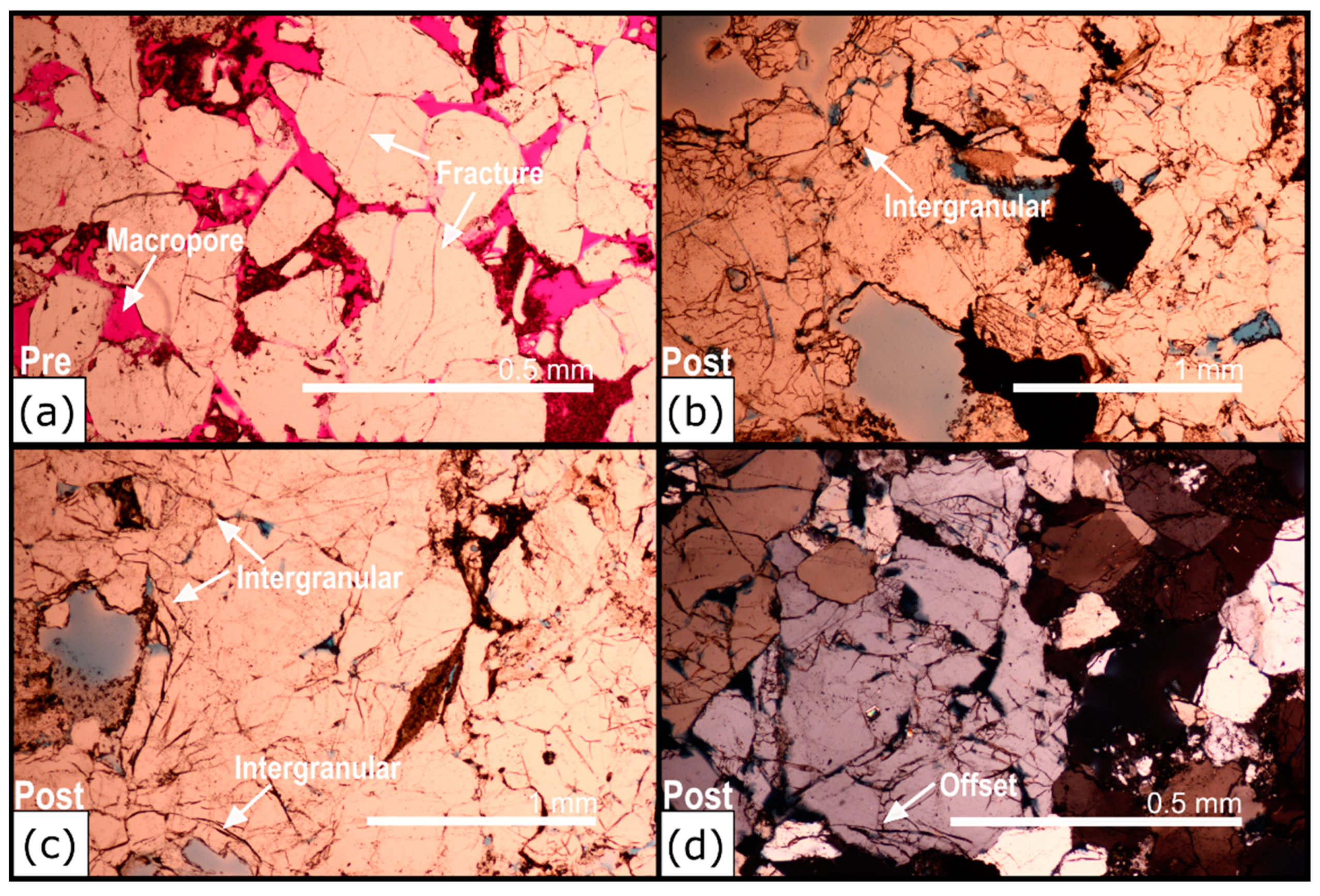
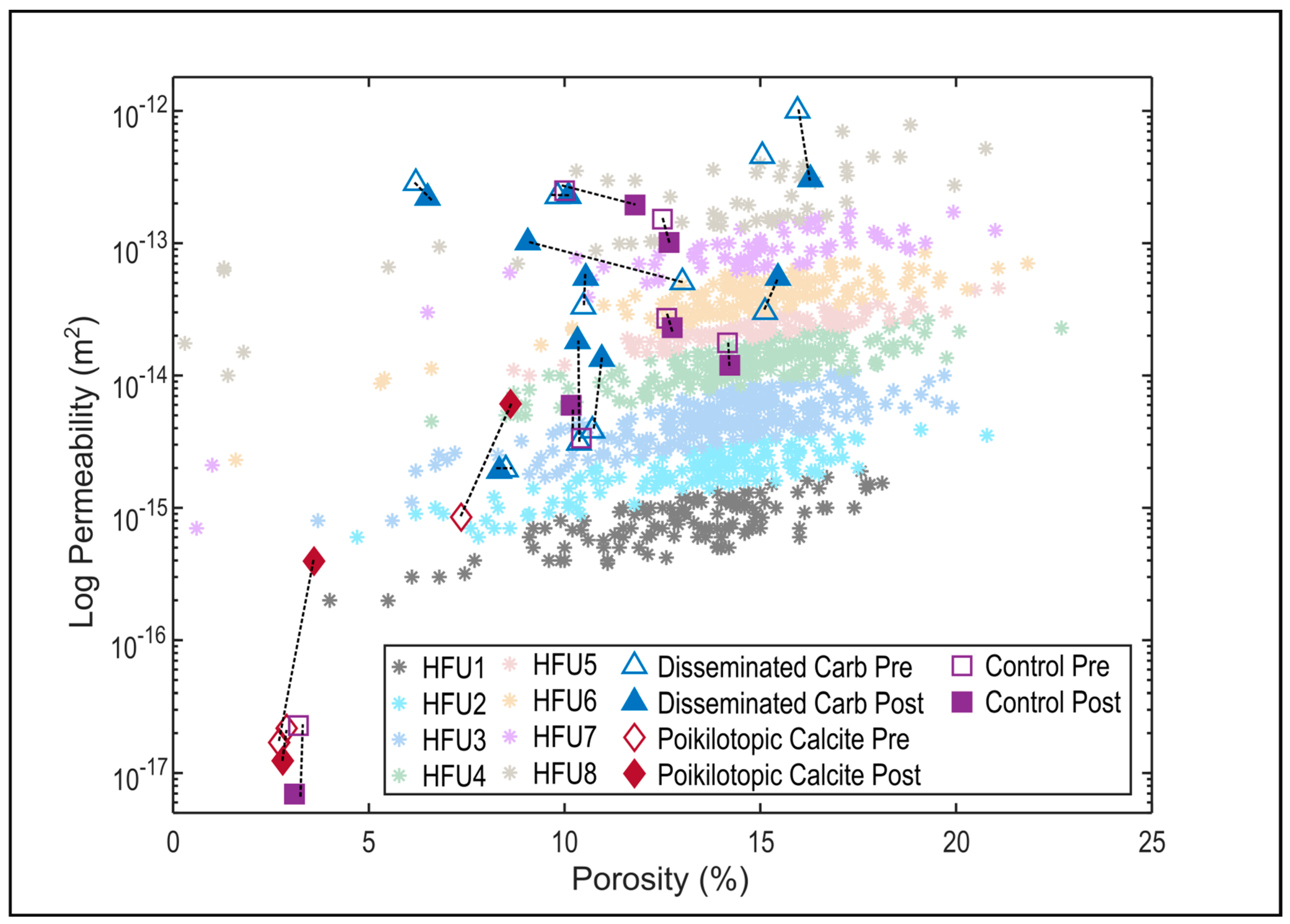
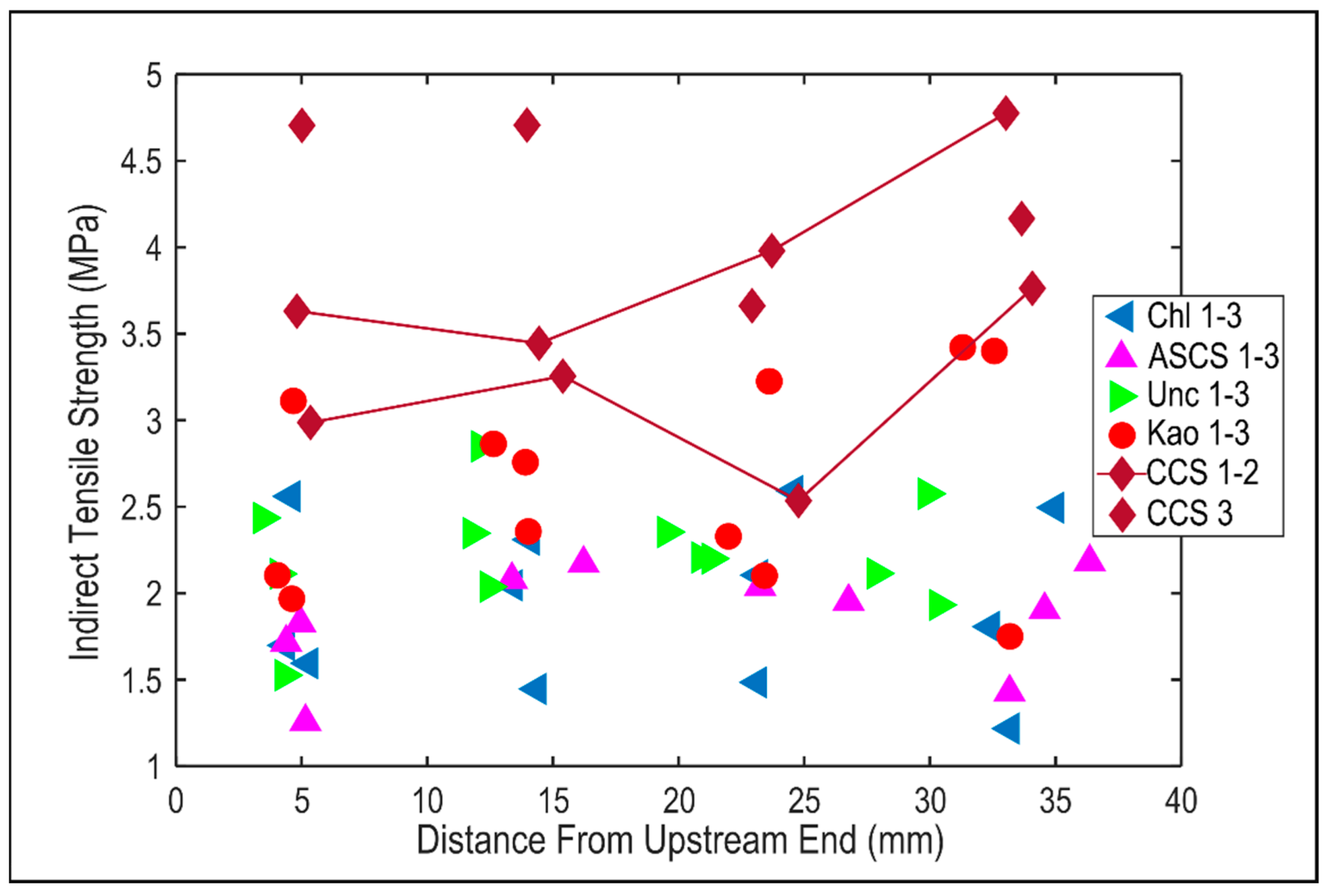
Carbon capture, utilization, and storage (CCUS) has been widely applied to enhance oil recovery (CO2-EOR). A thorough investigation of the impact of injecting CO2 into a heterogeneous reservoir is critical to understanding the overall reservoir robustness and storage performance. We conducted fifteen flow-through tests on Morrow B sandstone that allowed for chemical reactions between a CO2-rich brackish solution and the sandstones, and four creep/flow-through tests that simultaneously allowed for chemical reactions and stress monitoring. From fluid chemistry and X-ray computed tomography, we found that the dissolution of disseminated cements and the precipitation of iron-rich clays did not significantly affect the permeability and geomechanical properties. Minor changes in mechanical properties from Brazilian and creep tests indicated that the matrix structure was well-supported by early diagenetic quartz overgrowth cement and the reservoir’s compaction history at deep burial depths. However, one sample experienced a dissolution of poikilotopic calcite, leading to a permeability increase and significant tensile strength degradation due to pore opening, which overcame the effect of the early diagenetic cements. We concluded that the Morrow B sandstone reservoir is robust for CO2 injection. Most importantly, cement timing, the abundance and texture of reactive minerals, and the reservoir’s burial history are critical in predicting reservoir robustness and storage capacity for CO2 injection.
Keywords: fluid–rock interaction; Morrow B sandstone; CO2-rich brackish solution; flow-through experiment; creep test; cement diagenesis; tensile strength; elastic bulk modulus; reservoir robustness fluid–rock interaction; Morrow B sandstone; CO2-rich brackish solution; flow-through experiment; creep test; cement diagenesis; tensile strength; elastic bulk modulus; reservoir robustness