Abstract
Regenerative electric heating has gradually become one of the main forms of winter heating with the promotion of “coal to electricity” project. By fully exploiting its regulating capacity, it can effectively achieve a win–win situation of “peak shaving and valley filling” on the grid side and “demand response” on the customer side. In order to meet the different heating demands of users, a regenerative electric heating optimization and control strategy is proposed, taking into account the difference in users’ thermal comfort. Firstly, the reasons for the difference in user thermal comfort are analyzed, and the differentiated preference factors are calculated based on the maximum likelihood estimation method to design differentiated heating schemes. Then, a dynamic optimization and control model for regenerative electric heating with comfort and economic evaluation indicators is established and solved by using quantum genetic algorithm. Finally, a numerical example is used for simulation analysis. The research results show that the strategy proposed in this paper can take into account the comfort of customers and the economy of peaking and low load shifting, so that the operation of regenerative electric heating can respond to the different needs of different customer groups, and realize flexible adjustment at any time of the day.
1. Introduction
Accelerating the electric energy substitution, promoting the electrification of urban and rural residents’ consumption, and completely getting rid of the dependence on fossil energy are the key factors to achieve the goal of “carbon peak and carbon neutral” [1]. In order to optimize the energy structure of winter heating, replace the bulk coal used for heating, and reduce the emission of air pollutants in heating areas, the strategy of electrical energy substitution for energy supply was proposed by most countries to promote the wide application of electric heating [2]. Currently, the mainstream electric heating systems are mainly regenerative electric heating and air-source heat pumps. Compared to air source heat pumps, regenerative electric heating systems operate in a more flexible manner, facilitate interaction with the power grid, and have broad application prospects [3].
The construction of electric heating facilities with heat storage function is an important part of the change in residents’ lifestyle. However, due to the lack of reasonable and effective operational control measures, and the lack of scientific coordination between electricity consumption and heat release, the existing operating methods cannot fully utilize the economic advantages of heat storage during low load periods, and it is also difficult to achieve stable and comfortable indoor heating temperatures for users. How to achieve a balance and coordination between economy and comfort, and obtain the optimal scheduling and operation plan with the best revenue indicators is an urgent problem to be solved after the large-scale integration of regenerative electric heating [4,5].
1.1. Research on the Regulating Capability and Models of Regenerative Electric Heating
The authors from [6,7] analyzed in detail the relationship between building characteristics and room temperature changes and established a temperature control model for regenerative electric heating based on the time-varying characteristics of building air temperature. The authors from [8] proposed a regenerative electric heating load model that considered the differences in user thermal comfort to accurately simulate the differentiated demand response behavior of regenerative electric heating users. This method can provide insights into the construction of the regulation capability and models of regenerative electric heating. The authors from [9] analyzed the load power characteristics of regenerative electric heating and established a group regulation model through cluster analysis, and studied its adjustable potential.
1.2. Research on Optimal Operation Strategy of Regenerative Electric Heating
In terms of optimizing the operation strategy of regenerative electric heating, current research mainly focuses on two aspects: one aspect is the regulation strategy of the users themselves of regenerative electric heating. The authors from [10,11] proposed an optimal operation strategy for electric heating with mutual iterative solution of maximum power demand and maximum comfort, considering both economic and comfort aspects. The authors from [12] proposed a Day-Ahead Optimal Dispatch method considering the minimum heat demand of users, and comprehensively considered the maintenance of heating duration and user comfort in power grid failure scenarios. This method can provide insights into the optimization operation strategy of regenerative electric heating. The authors from [13] investigated the electric heating storage scheduling strategy under the Time-of-use Electricity Price Mechanism. The authors from [14] investigated the optimal operation strategy for the combination of regenerative electric heating and gas on the customer side. The authors from [15,16] considered the operational constraints and ultimate operating states of the power grid in the optimization process of user side regenerative electric heating. The authors from [17] aimed to achieve user demand response in a smart home environment, utilizing electricity prices and outdoor temperature prediction data to obtain the optimal 24-h temperature scheduling plan for air conditioning, while minimizing electricity costs. Another aspect is how regenerative electric heating can coordinate with other energy systems in the power grid. The authors from [18] established an operation optimization model with indoor heat dissipation as the control variable and minimum total system operation cost as the optimization objectives, and a method for optimizing the operation of electric heating system based on user comfort constraints was proposed. The authors from [19] established a multi-objective optimization model for the participation of regenerative electric heating in wind power consumption, which took the maximum wind power consumption, minimum operation cost, and minimum carbon emission as the optimization objectives. The authors from [20] established a low-carbon dispatch optimization model for the power grid considering electric heating load and clean energy consumption, and analyzed the changes in the consumption of wind power in the power grid after taking into account the comfort of electric heating users. The authors from [21] established an intelligent collaborative control architecture for renewable energy and regenerative electric heating loads in the power grid based on multi-agent control technology.
1.3. Research on Optimization Algorithm of Regenerative Electric Heating
The optimization problem of power systems is often with large-scale discrete and continuous variables. Intelligent search algorithms are commonly used to solve such power system optimization problems, such as genetic algorithm, particle swarm optimization, Tabu search algorithm, etc. [22,23]. Among all intelligent search algorithms, the genetic algorithm is widely adopted due to its good convergence stability. The quantum genetic algorithm is one of the most outstanding algorithms among all genetic algorithms. Due to its unique encoding and updating methods, quantum genetic algorithms outperform traditional genetic algorithms in various aspects [24]. The author from [25] used quantum genetic algorithm to solve the reactive power optimization configuration of AC/DC hybrid power grids. The author from [26] utilizes the advantages of quantum genetic algorithm to solve the optimization calculation problem of power grid fault diagnosis. Quantum genetic algorithm combines the advantages of quantum theory and classical genetic algorithm, and has better population diversity, a faster rate of convergence, and better global optimization ability than ordinary genetic algorithms.
To sum up, most of the existing optimal operation strategies for electric heating considering comfort and economy were single evaluative analysis, without classifying and refining heat users and deeply exploring the differentiated demands for heating between different groups. In order to meet the different heating demands of users, a regenerative electric heating optimization and control strategy is proposed taking into account the difference in users’ thermal comfort.
The purpose of this paper is to classify and refine the thermal users, and deeply explore the differentiated demand for heating among different groups, so as to meet the heating demand of users with different characteristics. Regenerative heating optimization for different users can achieve personalized thermal comfort requirements, energy saving optimization, and flexible response according to the differences in thermal comfort of users. This can improve user satisfaction, reduce energy consumption and operating costs, and provide a better heating experience for different users.
In order to meet the differentiated heating needs of different users, reduce energy consumption and operating costs, and improve user satisfaction, this paper innovatively proposes a dynamic optimization regulation model of regenerative electric heating with comfort and economy as evaluation indexes. Firstly, the working principle of regenerative electric heating is described, and the mathematical model of the typical working mode of regenerative electric heating system is established. Secondly, the reasons of thermal comfort difference are analyzed, the differential preference factor is calculated based on the maximum likelihood estimation method, and the differentiated heating scheme is designed. Then, a dynamic optimal control model of regenerative electric heating with evaluation indexes of comfort and economy is established and solved by quantum genetic algorithm. The results show that the model can make the operation of regenerative electric heating respond to the different needs of different user groups and realize the flexible adjustment of day and night.
2. Working Principle and Mathematical Model of Regenerative Electric Heating
2.1. Structure and Working Principle of Regenerative Electric Heating Equipment
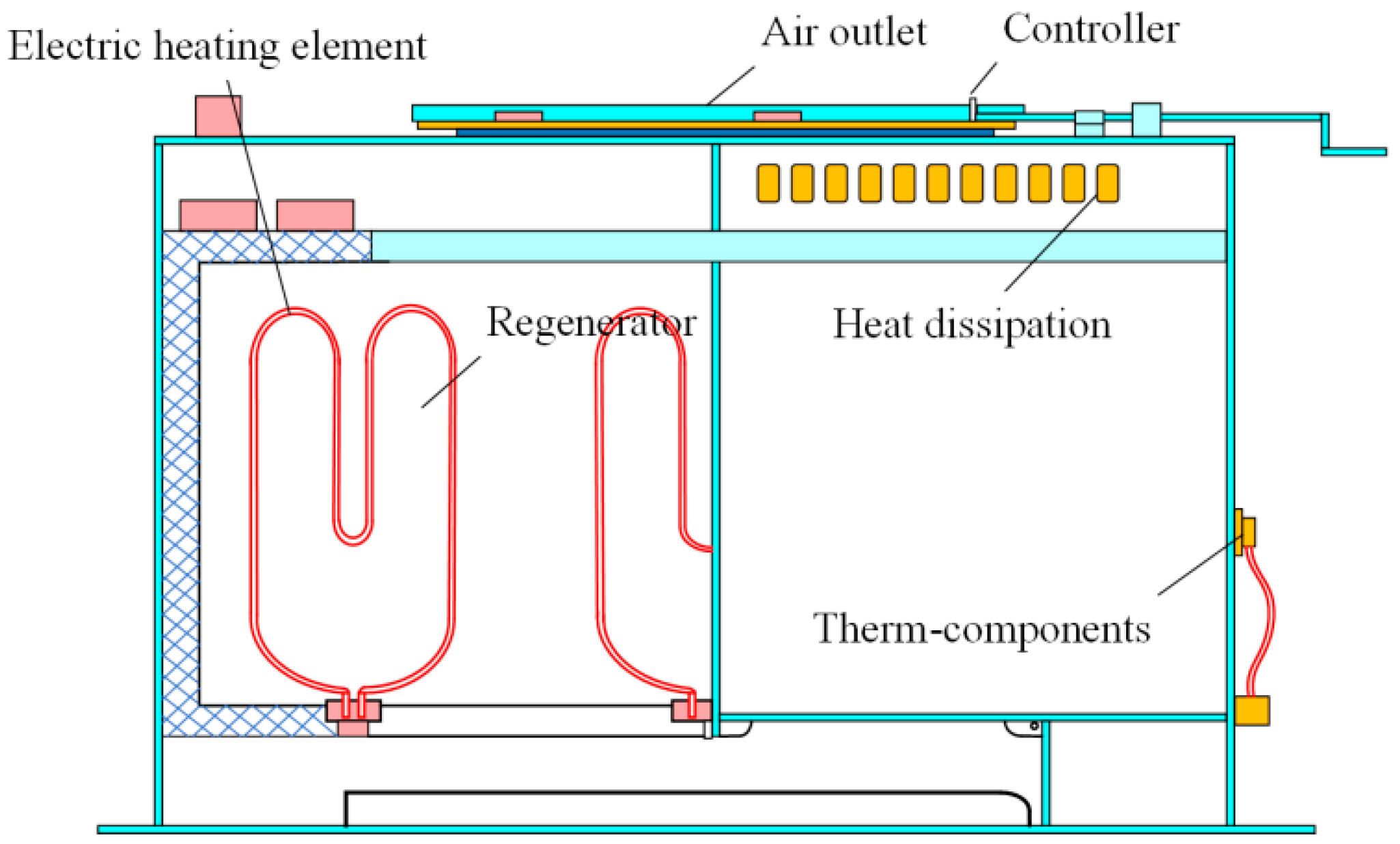
A typical regenerative electric heating structure is shown in Figure 1, and its working principle is that the user sets the storage power, peak and valley hours, and heating temperature through the controller, taking into account their own thermal comfort and Time-of-use Electricity Price Mechanism. The controller controls the direct heating equipment of the regenerative electric heating system in the low load periods, and controls the heat release speed by adjusting the heat dissipation port and circulating fan to provide direct heating for the user. At the same time, the heating is stored until the thermal storage maximum. During peak load periods, the heat is released by the thermal storage unit to provide heating for users. If the residual heat of the heat storage body cannot maintain the room temperature demand, the direct heating equipment begins to assist in heating, thereby maintaining the indoor temperature within the required range.
Figure 1.
Structure diagram of regenerative electric heating.
2.2. Modeling of Regenerative Electric Heating System
2.2.1. Direct Heating Equipment
Two flow directions of the energized heating capacity are created by the controller’s modification of the operating power of the direct heating equipment: one directs heat to the user, and the other directs heat to the regenerator’s heat storage to help control operation. The electro-thermal conversion relationship can be expressed by the following formula:
where: is the sum of the electric heat of the direct heating equipment in the period; is the heat produced by the direct heating equipment to the user in the period; is the heat discharged by the accumulator for the time period; is the operating power of direct heating equipment in the period; and is the electro-thermal conversion efficiency of direct heating equipment.
2.2.2. Heat Storage Equipment
The heat storage equipment is stored by the direct heat storage equipment during the low power consumption period and released on demand during the peak power consumption period, which plays a buffering role in the indoor temperature regulation. In this paper, the temperature change in the regenerator in the heat storage equipment is converted into heat change. The operating characteristics of the heat storage equipment can be expressed as the relationship between the total heat storage, heat storage/release, and heat loss. The dynamic mathematical model is constrained as follows:
where: is the total heat storage capacity of the heat storage equipment in the period; is the heat storage capacity of the regenerator in the period; is the heat released by the regenerator in the period; and are the heat storage and release efficiency of the heat storage equipment, respectively; and is the energy coefficient of energy dissipation or self-loss of the heat storage equipment itself to the environment.
2.2.3. Regenerative Electric Heating System Model
The regenerative electric heating system purchases electricity from the power grid converts the electric energy into heat energy through the direct heat equipment and then provides heat energy to the user under two working conditions through the optimal scheduling of the heat storage equipment.
where: is the total heat load demand of users in the period.
The above content provides a complete description of the operating mode of the regenerative electric heating system, which can not only meet the heating needs of users, but also provides the possibility for the power grid to optimize and regulate it.
3. Analysis of User Thermal Comfort Differences
3.1. Analysis of Thermal Comfort Differences among Users
The thermal demand of users in winter directly affects the formulation and implementation of heating control strategies. There is a significant difference in thermal comfort between different user groups, and age is the leading factor. Older groups usually have a higher demand for a warmer environment due to their poor body regulation ability, while younger groups prefer a cooler room temperature environment due to their stronger metabolic and thermoregulatory abilities. Health conditions also have an impact on thermal comfort: susceptible groups with diseases need to maintain a warm environment to alleviate symptoms, while people in good health are usually adapted to carry out various activities at lower ambient temperatures. Economic level is an important constraint, and better-off groups may be more inclined to provide higher heating temperatures in pursuit of greater comfort, while the less well-off groups may pay more attention to energy saving and cost control, and thus choose lower room temperatures within the acceptable range. In order to satisfy the requirements for thermal comfort of various user groups, the start-and-stop of electric heating equipment should be flexibly adjusted in accordance with individual variances and preferences of users.
Here, this paper divides users into two groups based on their age and physical health status: the young group and the old group, and then uses thermal comfort evaluation index to calculate the optimal thermal comfort for different groups, which was based on the predicted mean vote (PMV):
where: is the PMV index value; is the indoor ambient temperature; is the relative air humidity; , and are known parameters, which are related to the individual characteristics of users.
Through a thermal comfort questionnaire survey of 235 users of different ages in a rural area of northeast China, the data of clothing thermal resistance, work nature, and thermal comfort temperature demand are integrated and analyzed to fit the thermal comfort model parameters for each type of user, and the results are shown in Table 1. According to the PMV value range of [−0.5, 0.5] recommended by ISO7730 as the human comfort temperature range, under the condition that the relative humidity of indoor air is 60%, the human metabolic rate is 1.2 and the air flow velocity was va < 0.2 m/s, the optimal thermal comfort temperature of users under different age groups and clothing thermal resistance is calculated, as shown in Table 2 for different users’ own characteristic parameters and corresponding optimal thermal comfort temperature.
Table 1.
The questionnaire survey results.
Table 2.
Parameters of thermal comfort model for different users.
Economic factors are a key consideration in the assessment and analysis of users’ heating needs. The division by age and physical health status alone is not sufficient to fully reflect the actual situation. In order to create a regenerative electric heating optimal regulation strategy that is suitable for customers based on economic sensitivity, we must further segment these two categories. This will allow us to create the best electricity consumption plan based on the relative weighting of customers’ preferences for comfort and economy. In this section, history data about the heating behavior of different types of users was collected, including daily heating electricity bills and indoor temperature, in order to classify the persons being surveyed into high-income group (>150,000 CNY/year), middle-income group (50,000–150,000 CNY/year) and low-income group (<50,000 CNY/year) according to their annual household income. For the youth group, most of them are working people, so they can be divided into high-income group, middle-income group, and low-income group according to their work nature and labor ability; considering that most of the elderly group are retired at home or have lost their labor ability, they are divided into middle-income group and low-income group.
3.2. Solution of Thermal Comfort Demand Preference with Multiple Features
The differentiated behavior of users’ participation in demand response is mainly characterized by the weighting factors of economic and comfort preferences when deciding heating regulation schemes, i.e., for economically oriented users, they prefer to sacrifice comfort for the lowest cost during the whole winter heating period, and vice versa. In this section, based on the classification by class in Section 3.1, the historical data of user heating behavior information is classified, and the maximum likelihood estimation method is used to calculate the differentiated preference factors of users in order to realize the refined simulation of users’ differentiated response behavior. The specific solution process is as follows:
The discrete set of heating behavior historical data, , satisfies the probability distribution and can be described as . The set of samples contains daily heating electricity bills and indoor temperature and can be described as . The set of demand preference coefficients can be described as , and the three together describe the emergence probability of sample point:
The probability of occurrence for the event is called the likelihood function under this sample, denoted as , satisfying:
The likelihood function obtains its maximum value when the set of demand preference coefficients takes the value of , indicating that the selected parameters can reasonably respond to the statistical model, and the set of demand preference coefficients at this time is called the maximum likelihood estimate of .
If the likelihood function is differentiable with respect to the set of demand preference coefficients, the maximum point is obtained by taking the partial derivative of the likelihood function according to the differentiation property of the multivariate function, which is the demand preference coefficients for economy and comfort of the user, as shown in Table 3, from which point it is satisfied that:
Table 3.
Demand preference coefficients for single feature users.
On this basis, the preference factors of users with multiple characteristics are calculated. The weighted sum representation of the correlation coefficients between each feature parameter (household structure and income status) and thermal comfort temperature are calculated based on Spearman coefficient correlation analysis, which is performed according to the preference coefficients of each category feature and its corresponding user group historical data of heating behavior, as shown in mathematical Formula (5):
where are the user’s preference factors for economy and comfort requirements, respectively.
3.3. User Thermal Comfort Design Scheme
According to the analysis performed, the thermal comfort design for users has a more reasonable design of their heating temperature range, which significantly improves the economy while satisfying the heating comfort. The thermal comfort design scheme for various user groups according to their thermal comfort demand preferences is shown in Table 4. The vertical comparison shows that a lower temperature range is set during the daytime when nobody is at home, the outdoor temperature is high and the electricity price is more expensive during the peak load period, and a higher temperature range is set at night when people live together, the outdoor temperature is lower and the electricity price is lower during the low load period. The horizontal comparison shows that a higher temperature range can be set for the higher economic level or the aging group, and a lower temperature range can be set for the lower economic level or the younger group. The design of thermal comfort is based on the difference in users’ own behavior and avoids the unreasonableness brought by setting the same heating temperature for all groups in 24 h throughout the day, thus achieving the balance of the contradictory factors of heating comfort and economy.
Table 4.
Thermal comfort demand preferences of users with multiple characteristics.
4. Optimization and Regulation Indicators for Regenerative Electric Heating
4.1. Comfort Indicators
Electricity effect functions of living appliances are divided into two categories: temperature utility functions and time utility functions, which are evaluation indicators for analyzing the quantitative relationship between the utility obtained by electricity users in the process of consuming electric energy and the output of electric energy [27]. The temperature utility function is oriented to the temperature-controlled electrical equipment of the energy storage and describes the degree of satisfaction of the user. According to the relationship between the expected temperature and the actual temperature of the user, the temperature utility function is shown in a mathematical Formula (6).
where, in the formula: is the temperature utility function of the period; is the parameter representing the rate of decrease in the utility of the reaction temperature, with a value of (0, 1]; and are the lower and upper limits of the user’s differentiated thermal comfort temperature interval, respectively, taken as in Table 5, in which thermal comfort temperature range was fitted by multiple users features.
Table 5.
Thermal comfort design scheme based on users’ difference in thermal comfort.
Considering that the optimal regulation strategy is to target the user’s comprehensive comfort within a regulation cycle (this paper takes one day as the unit), a function with the mean value of temperature utility and temperature effect minimum value was adopted as the user’s comfort index, as shown in mathematical Formula (11).
where: is the total indicator of user comfort; is one of the sub-indicators reflecting the mean value of the temperature utility function of user comfort within a regulation cycle; is the second sub-indicator reflecting the minimum value of the temperature utility function within a regulation cycle, characterizing the fluctuation in indoor temperature and the difference in the mean value; and are the weight distribution coefficients.
4.2. Economic Indicators
Peak load Time-of-use Electricity Price can stimulate customers’ demand response through price signals, and customers can adjust their electricity consumption behavior to shift more load to the low load periods to reduce heating electricity costs and improve grid operation efficiency. In order to evaluate the economic efficiency of the controlled users under the proposed regulation strategy, the load transfer rate as shown in mathematical Formula (8) is proposed as an economic indicator:
where: and are the total hours of peak load and low load periods; is the heat load demand in hours during the peak load periods; is the heat load demand in hours during the low load periods; is the rated electrical power of the selected regenerative electric heating equipment; and is the operating power of the equipment during the scheduling periods.
5. Dynamic Optimal Regulation Model and Calculation Method
5.1. Dynamic Optimal Regulation Model
- a
- Objective function
Considering that the main contradiction of users in the winter heating season is “body feeling comfort” and “heating cost under different temperature”, this section takes the balance decision of heating electricity cost and comfort of users in a scheduling cycle as the objective function in order to build a dynamic optimization regulation model which takes into account the difference in users’ thermal comfort and gives consideration to comfort and economic indicators. It is expressed as:
where
where: is the differentiated preference factor for different requirements of heating comfort and economy; the larger the value of is, the more the objective of dynamic optimization tends to be the user’s comfort; the smaller the value of is, the more the objective of dynamic optimization tends to be the user’s economy; is the preference adjustment control coefficient, and its value range is [0, 1] and its coefficients reflect the preference factor on the choice of optimization bias.
- b
- Thermal energy supply and demand balance constraint:
See mathematical Formula (4) for details
where: is the thermal comfort temperature set by different user groups according to their differences in each time period; is the local outdoor temperature data of users in the period; is the equivalent thermal resistance between indoor-outdoor; and is the simulation step.
- c
- Direct heating equipment operation constraint:where: is the rated electric power of the selected regenerative electric heating equipment.
- d
- Operating constraints of heat storage equipment
Energy constraint for heat storing and discharging of heat equipment is as follows:
See mathematical Formula (3) for details
where: is the rated capacity of the storage equipment.
The heat limit of the heat storing and discharging process constraint is as follows:
Heat storage equipment constraint in the regulation process is as follows:
where: is the amount of heat stored in the heat accumulator during the initial dispatching period; is the amount of heat remaining in the heat accumulator at the end of the dispatching period.
5.2. Quantum Genetic Algorithm
The Quantum Genetic Algorithm (QGA) is an example of the successful application of the quantum computing (QC) concept in the field of the genetic algorithm (GA) [25]. To achieve population evolution guided by optimal individual information, the optimization solution of the goal was achieved by utilizing the characteristic that the superposition state of each qubit will shrink and collapse to a certain form during the iteration process. Due to its unique encoding and updating methods, the QGA outperforms the traditional genetic algorithm in all aspects [24], and has the characteristics of small population size, fast rate of convergence, and strong global optimization ability.
5.3. Dynamic Optimal Regulation Model Solving Process
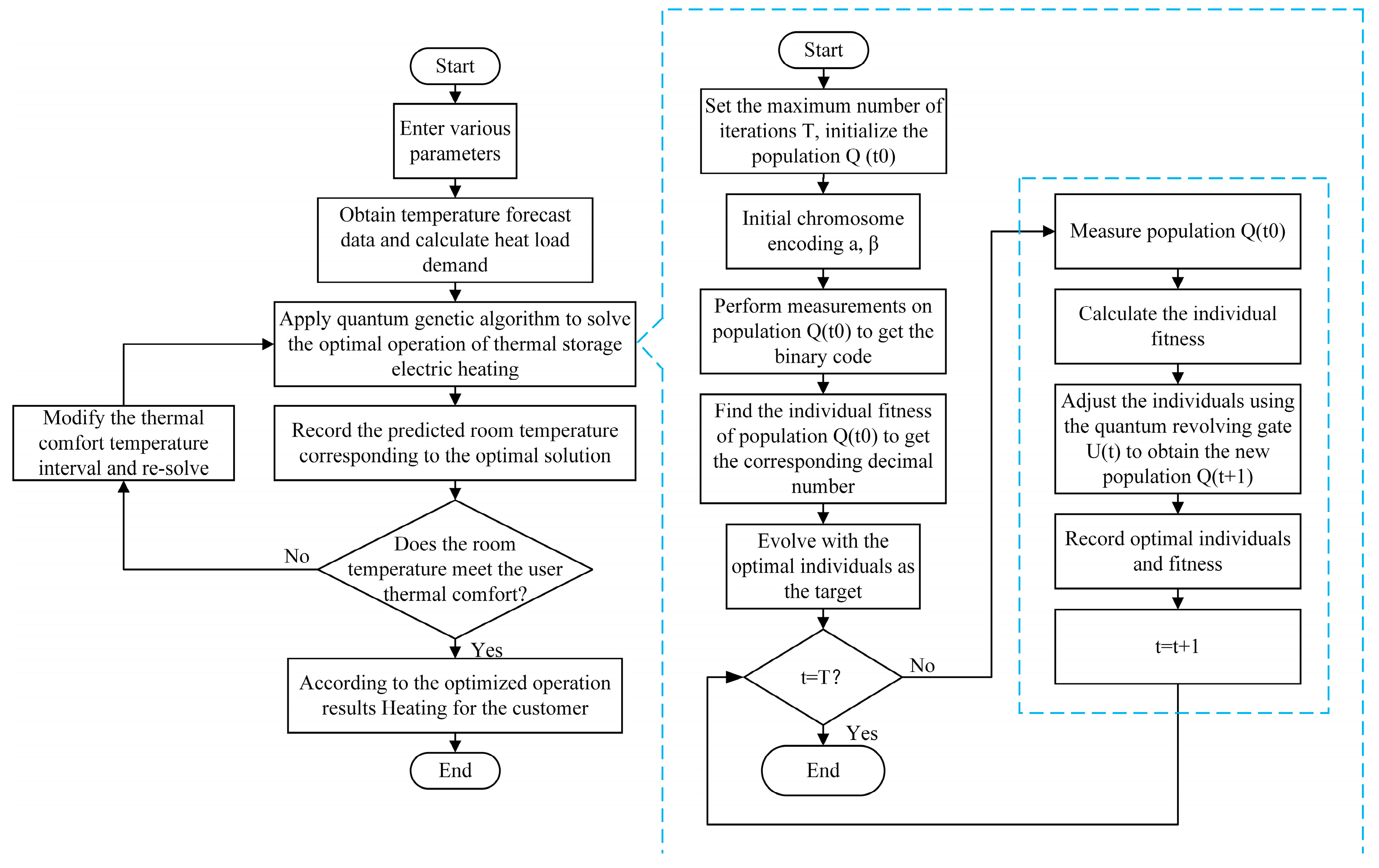
It is a nonlinear planning problem to develop a regenerative electric heating optimal regulation strategy that takes into account the differences in the thermal comfort of the users. An algorithm is used to solve the dynamic optimal regulation model developed in this section. Combined with the model built in this chapter, the fitness function is a nonlinear function of optimal comfort or optimal economy directed by the differential preference factor under the influence of preference regulation control coefficients. Quantum bits and quantum logic gates are used to update the chromosome to encode and update the operating state of the direct heat equipment. The solution flow of the dynamic optimal regulation strategy based on QGA is shown in Figure 2, and the specific solution method is as follows:
Figure 2.
Flow of regenerative electric heating optimal regulation strategy solution with user-difference in thermal comfort.
Step1: Input the initial value or default value of building equivalent parameters; input the equipment parameters; input the user set value.
Step2: Use the temperature forecast data of the next 24 h and calculate the heat demand by mathematical Formula (8).
Step3: Apply the QGA according to mathematical Formulas (9) to (17) to solve the dynamic optimal values of regenerative electric heating operating power for 96 time periods in the next 24 h and record the room temperature forecast values corresponding to the optimal solutions.
Step4: Compare the predicted room temperature with the user’s thermal comfort temperature interval for each time period: if it meets the user’s demand, go to Step5, if not, go back to Step3. Correct the thermal comfort temperature interval for that time period and solve it again.
Step5: Input the optimal values obtained from Step3 into the operation log of regenerative electric heating, and supply heat to customers according to the schedule in each time period based on this optimization result.
The specific steps for solving the optimal value of the input power using QGA are:
Step 3-1: Input the original parameters. The input includes the current population evolution number and the maximum population iteration number ; the initial population with individuals is randomly generated.
Step 3-2: Initial chromosome coding. Genetic algorithms often use binary encoding to take values of chromosomes, the QGA is based on the introduction of quantum programming using quantum bit probability amplitude to represent the encoding of chromosomes and a quantum bit will be in multiple quantum superposition states with amplitude 1 at the same time, increasing the variation of chromosome values, as shown in the following mathematical formula:
The decision variable in the dynamic optimal regulation model established in this paper is the operating power of 96 time periods in the next 24 h. The chromosome structure as described in this paper is divided into 96 subparts, and each subpart represents the individual genes constituted by each chromosome, i.e., the operating power of regenerative electric heating operation power in that time period, so that the i-th gene at k iterations after employing quantum bit encoding is denoted as
To make the initial state probabilities of spatial variables equal, is further set.
Step 3-3: Individual evaluation. Measure the number of individuals in the population and the binary code of the deterministic solution can be obtained so as to find the individual fitness value of the population to the corresponding decimal number.
Step 3-4: Record the optimal individual in the population and the corresponding fitness value and take the current optimal individual (the current optimal energy equipment capacity allocation result) as the evolutionary target.
Step 3-5: Quantum revolving gate operation updates the chromosome coding. The QGA updates the chromosome encoding by changing the quantum angle of all chromosome quantum bits in the population and interfering with the quantum state by rotating the plural amplitude, so that the chromosome value converges to the better chromosome, and the quantum revolving gate is shown as follows:
Step 3-6: Generate the next generation population. The new population is further obtained based on the result of updating the chromosome encoding by using the quantum rotation gate.
Step 3-7: Multiple iterations. Repeat Steps 3-3 to 3-6 until where the iteration is terminated.
Step 3-8: Output the optimal operation result.
6. Example Analysis
6.1. Example Data
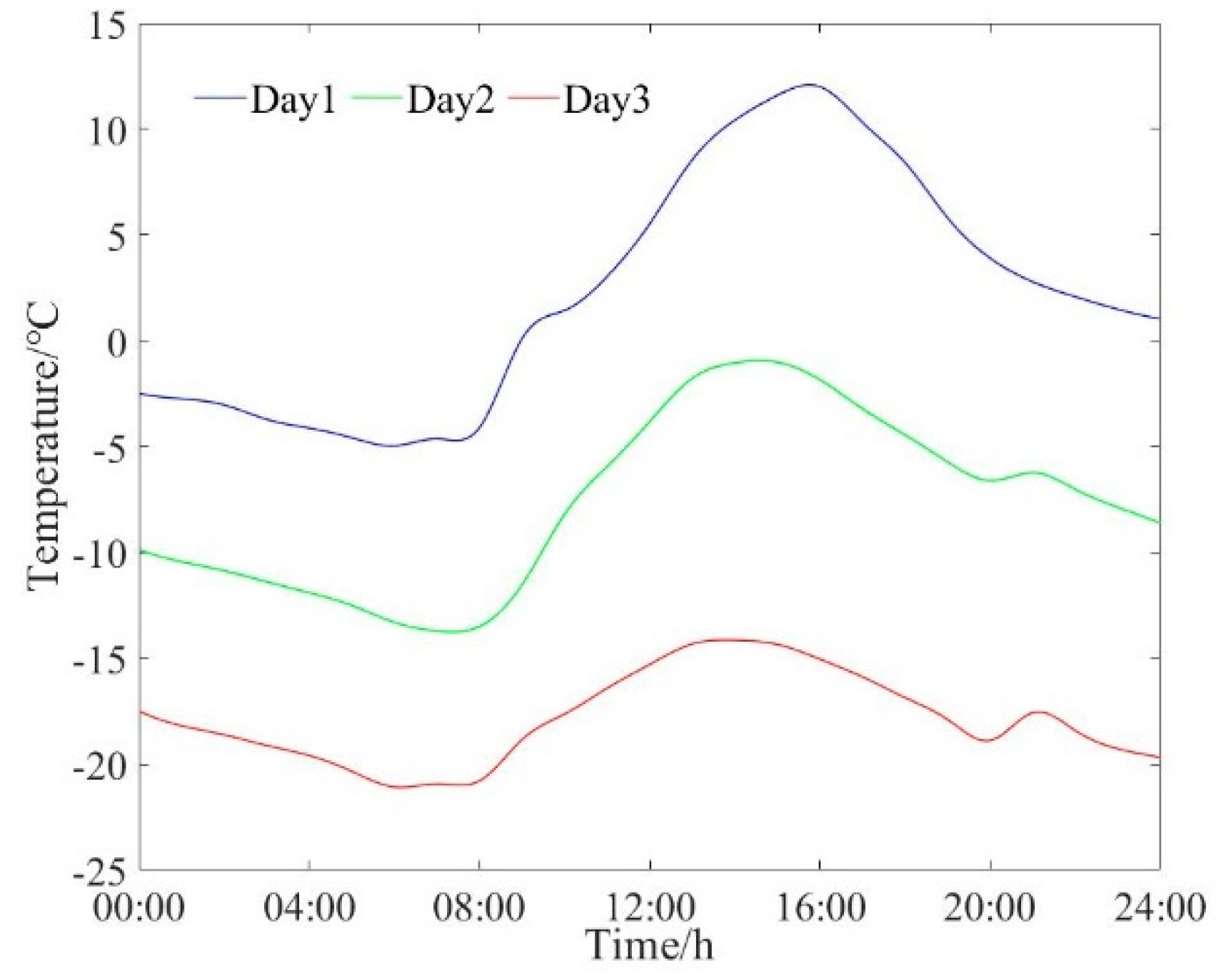
In this section, we analyze an example of the “coal to electricity” conversion project being performed in a rural area of a city in the Liaoning Province of China. The average building area of the town is 82 m2 and the rated power of regenerative electric heating is , taking into account the heat load demand of and the heat storage time of per day with a certain margin. The typical daily outdoor temperature data used in this example is the result of the fuzzy C-mean algorithm clustering of the data sampled from the weather observatory near the town from 1 November 2022 to 1 April 2023, as shown in Figure 3. The user set temperature is the thermal comfort temperature interval for each type of user in Table 6. is taken as 0.25, and are taken as 0.5 when calculating the comfort index, and is taken as 0.4 in the optimization objective expression. The other main equipment parameters are:
Figure 3.
Outdoor air temperature data.
Table 6.
Main parameter settings.
Using the optimal control strategy that takes into account the difference in thermal comfort of users proposed in this paper, the operating power and start-stop time of electric heating equipment are simulated and analyzed, and the optimal control scheme and user thermal comfort satisfaction are compared horizontally and vertically to verify the effectiveness of the method.
6.2. Calculation Analysis
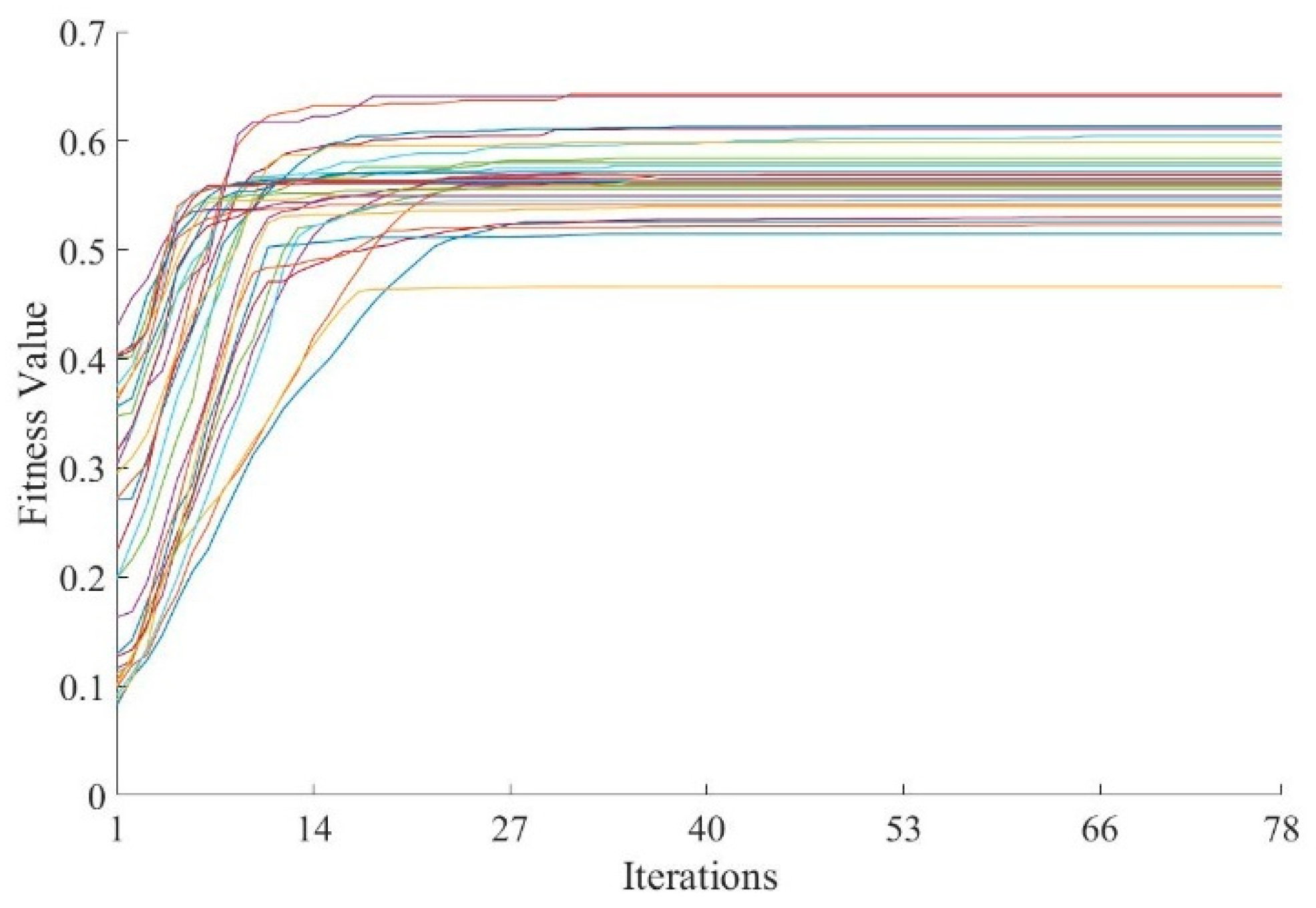
By analyzing the objective function, it can be seen that by setting the value of , users can adjust the operation mode of regenerative electric heating according to their own thermal comfort difference, i.e., adjust the preference of operation optimization results between economy and comfort. In this paper, the evolution algebra is set to 100, and the population number is set to 50 to obtain the preference factor of the thermal comfort temperature demand of each user group in Table 3 for three typical days. At the same time, the iterative convergence of the QGA in calculating the preference factor is analyzed. Figure 4 shows the change in fitness value with the number of iterations. It can be seen from the figure that the population changes with the increase in the number of iterations. At the beginning of the iteration, the fitness value changed greatly, and then most of the fitness values tended to be stable and convergent after 37 generations. The maximum number of iterations was 78 generations.
Figure 4.
Variation in fitness values with the number of iterations. Different colored lines indicate different comfort levels, varying with the number of iterations.
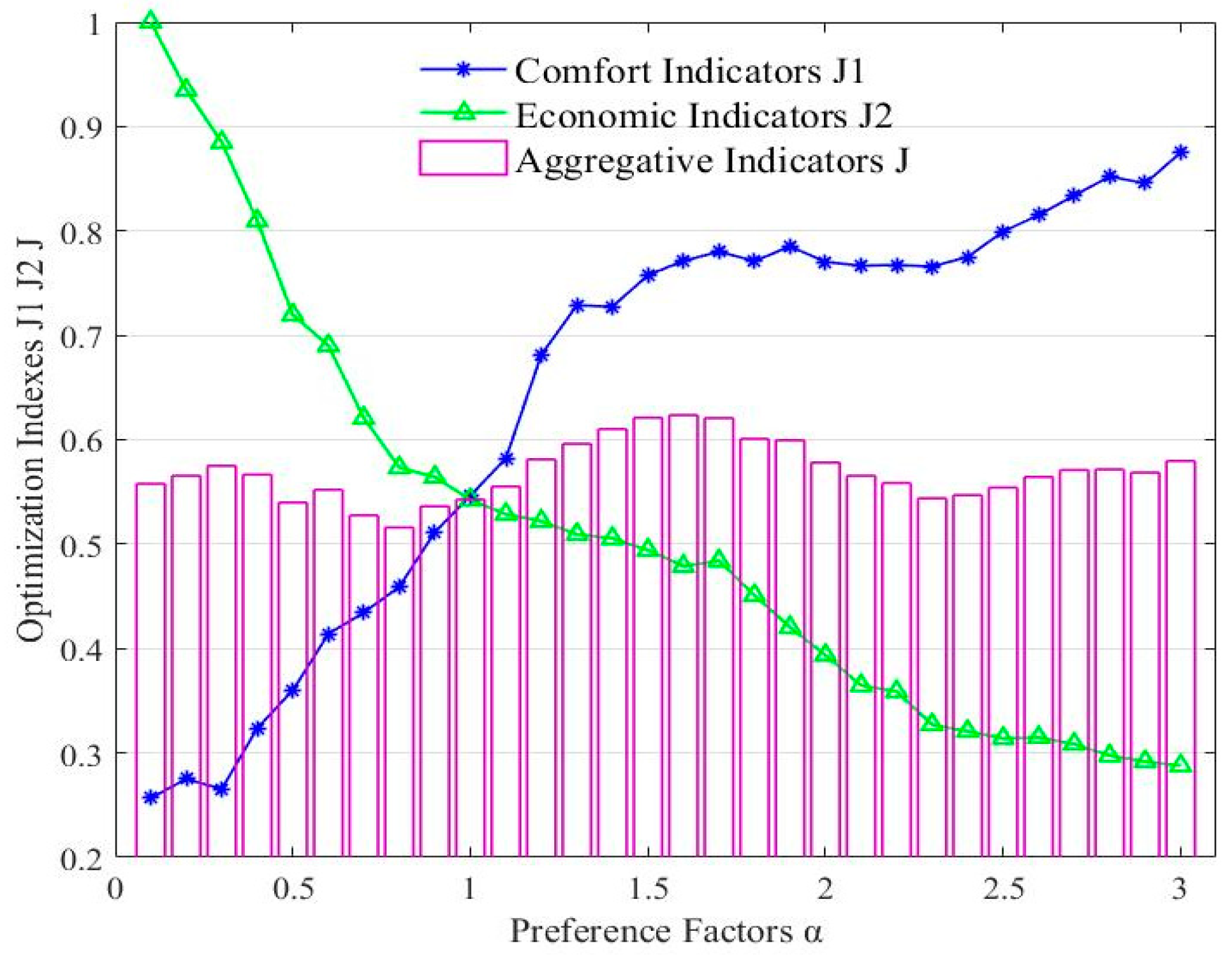
The response of each optimization index solved by the QGA to the preference factor is shown in Figure 5. The graphs show that the results are in accordance with the predefined preference factor : the larger the the more users prefer good heating experience, and the smaller the the more users prefer good economy at the expense of a certain heating experience. The corresponding preference factor can be obtained in Figure 5 according to the comfort and economy preference coefficients for the five groups classified in Table 3, which provide parameters to support the subsequent calculation. The preference factor for the high-income youth group, middle-income youth group, low-income youth group, middle-income elderly group, and low-income elderly group are 2.7, 1.3, 0.5, 1.8, and 1.0, respectively.
Figure 5.
Response of the optimization index to the preference factor (results after fitting for 3 typical days).
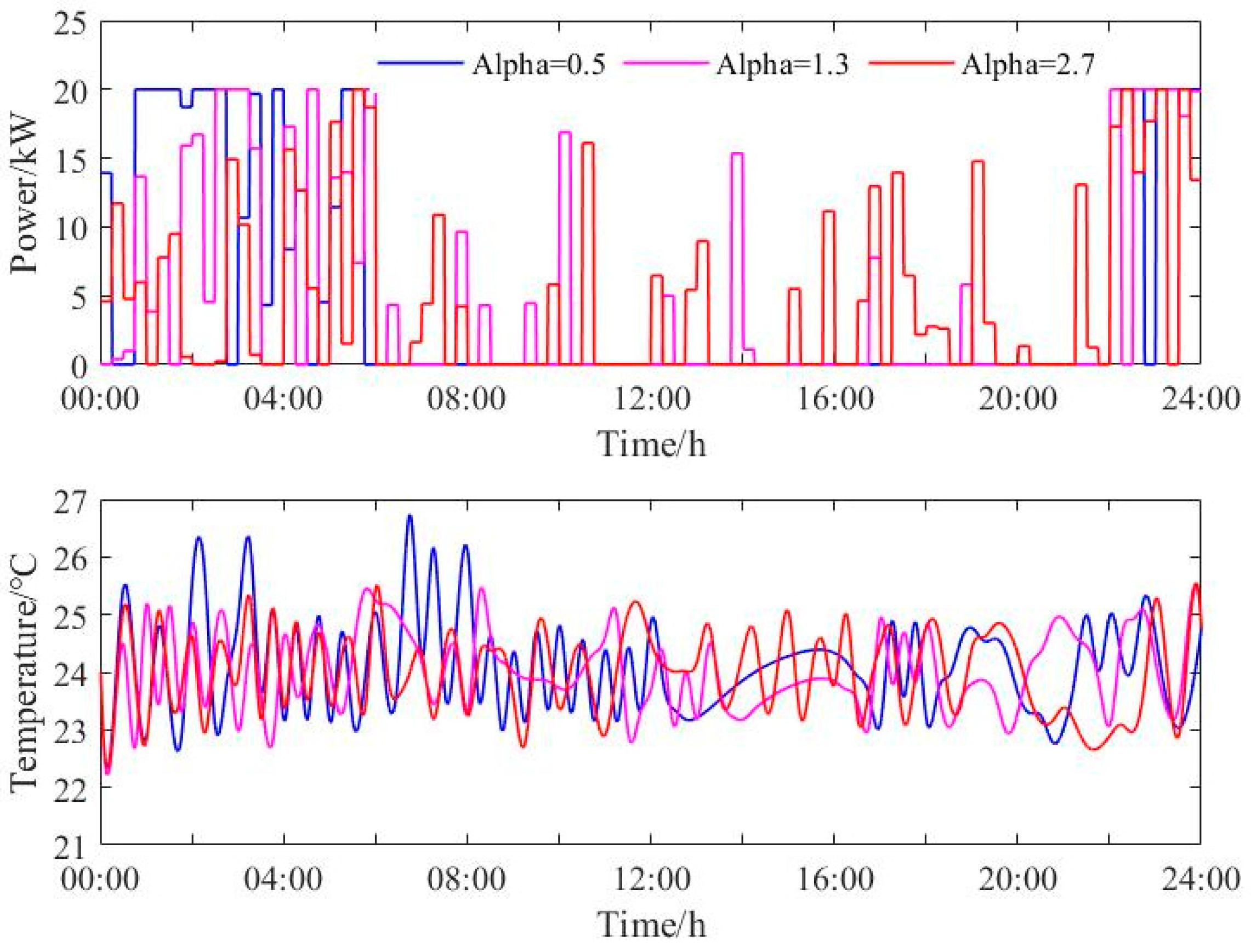
To analyze the effect of preference factors on heating comfort and economy, assuming that the ambient temperatures set for the youth group are all , and with preference factors of: 2.7, 1.3, and 0.5, respectively, the operation of regenerative electric heating and indoor ambient temperature changes throughout the day are obtained as shown in Figure 6. The MAE (mean absolute error) and RMSE (root mean square error) between its indoor temperature fluctuations and preset values are: 0.7742, 0.6342, and 0.5086; and 0.9248, 0.7498, and 05034, respectively; and the average temperatures are 24.2774, 24.0669, 24.0351; and the electricity consumption in peak load and low periods are: , , and , , and . The indicators of various operating parameters show that the larger the value of preference factor is taken to be, the more inclined to comfort with less room temperature fluctuation, but at the same time, it needs to transfer part of the valley section load to the peak section and lose the economy.
Figure 6.
Optimized regulation results of regenerative electric heating for different user preferences (Day = 1).
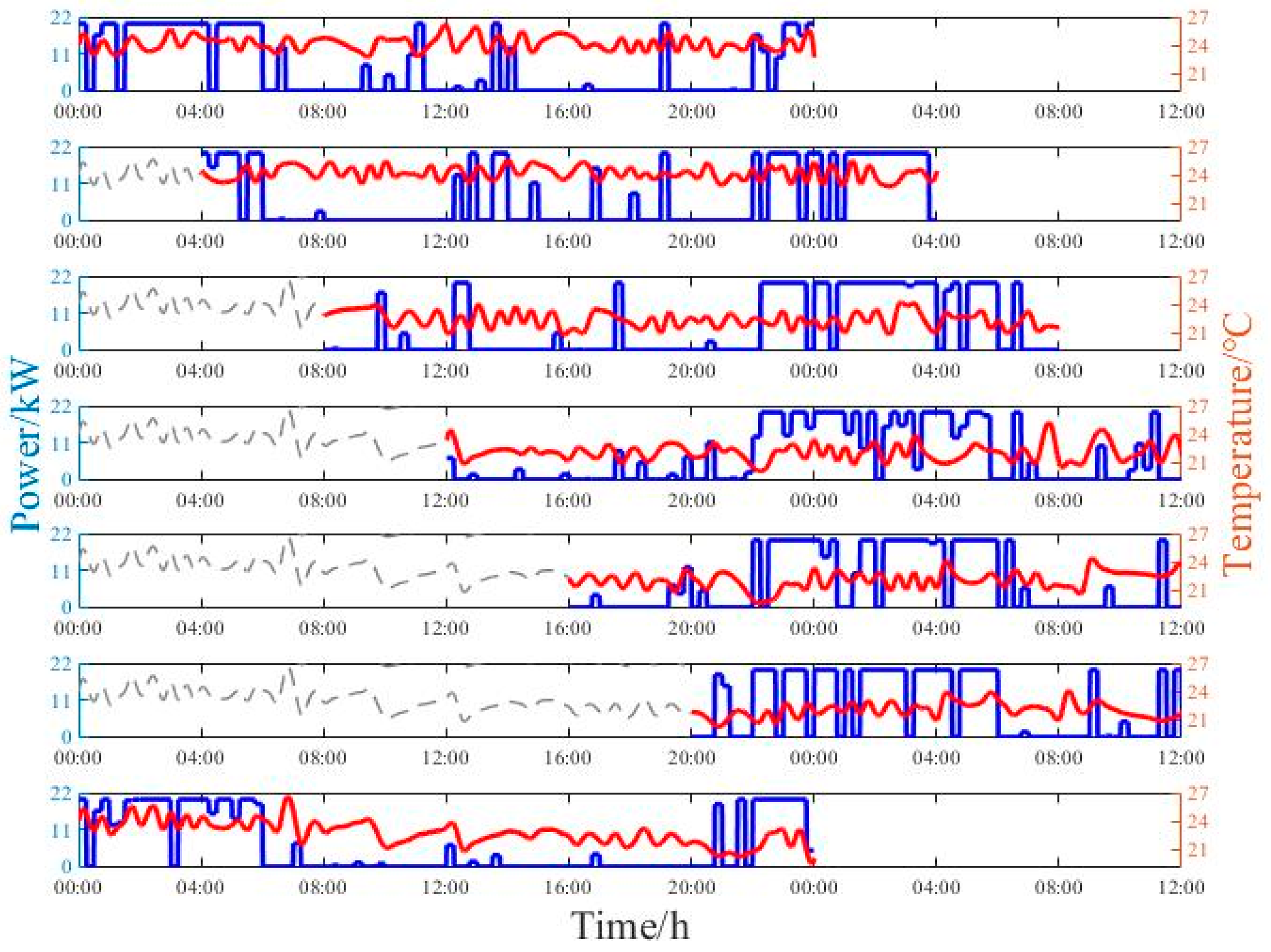
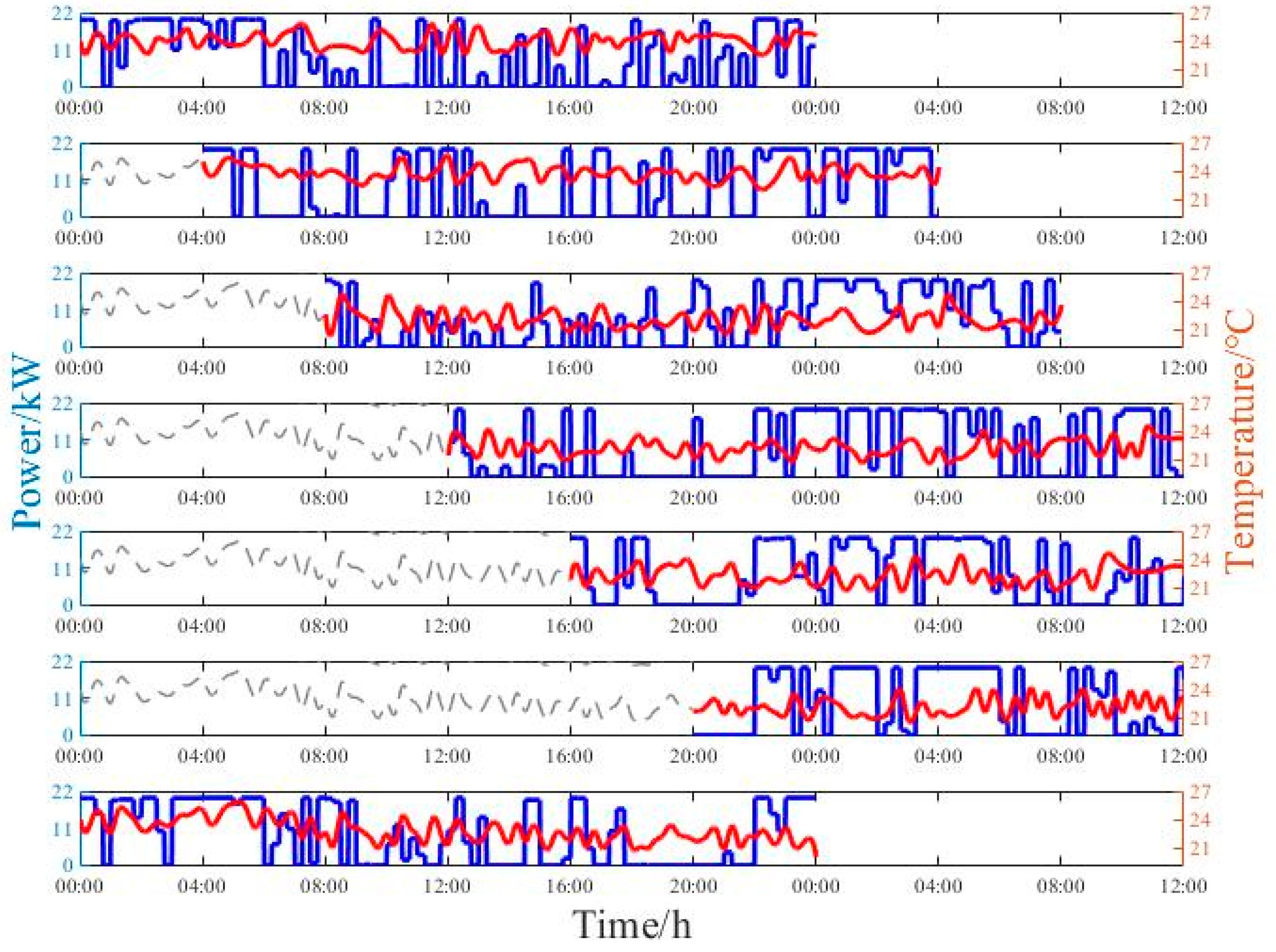
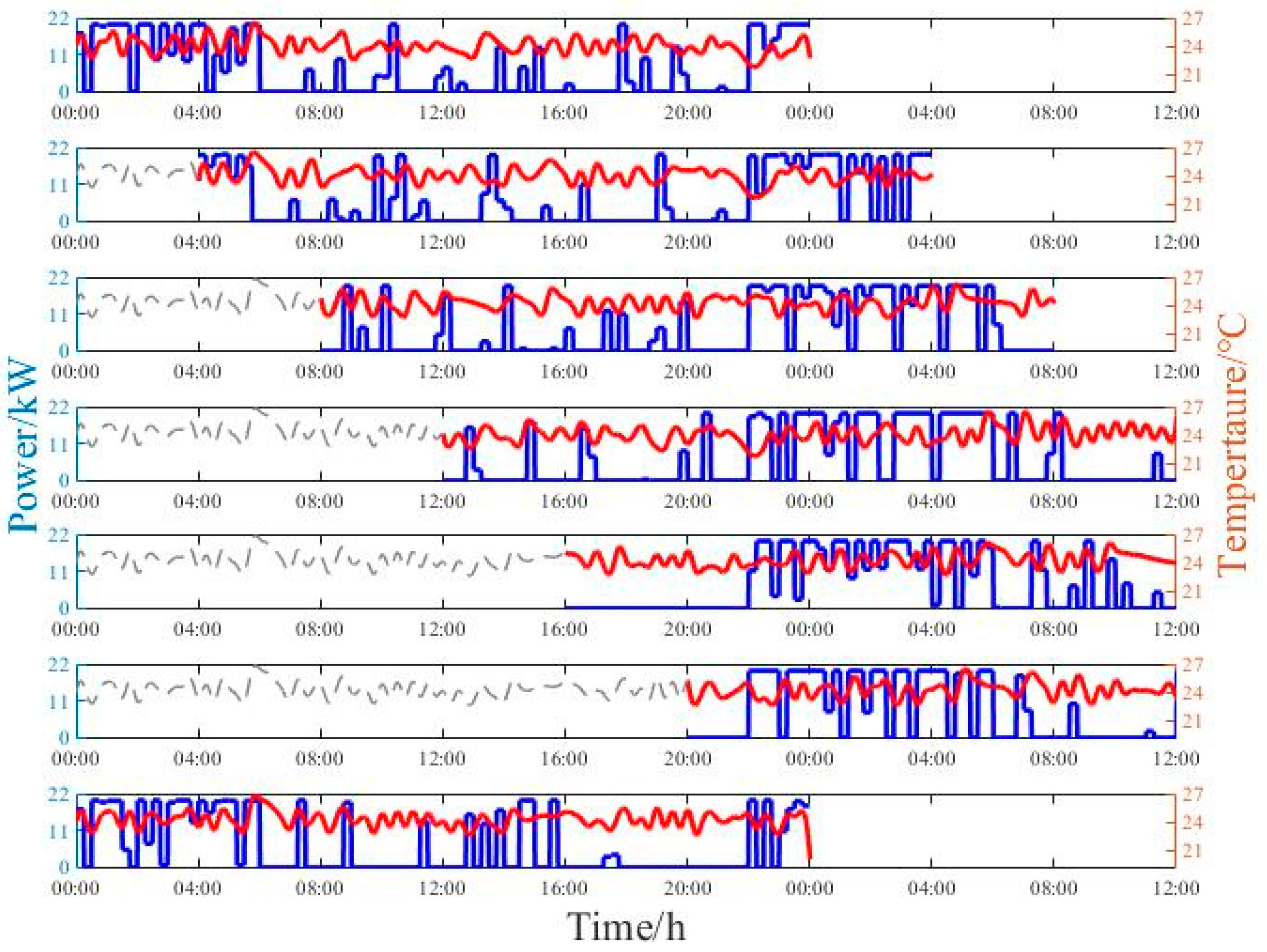
Considering the user thermal comfort design scheme, a rolling optimization decision is made for regenerative electric heating regulation strategy formulation within a scheduling cycle, i.e., the user is allowed to adjust the heating temperature and preference factor in the middle of the day, and it is assumed that the typical temperature data used to formulate the optimal scheduling strategy and the actual temperature obey a normal distribution N(0,0.5) error. The operation of regenerative electric heating is corrected on a rolling basis according to the real-time thermal load demand, keeping in mind the combined effect of the temperature error and the variability of thermal comfort temperatures at different times throughout the day, in order to improve the transfer rate of peak load to valley load and to improve the economic efficiency of customers while satisfying comfort. Using the middle-class youth group as an example, rolling optimization decisions are made for three typical days in one scheduling cycle, with users having the option to change the heating temperature and preference monitor at any time. The heating temperature is lowered from 08:00 to 19:00. The optimization results and actual operation results for some time periods are shown in Figure 7, Figure 8 and Figure 9, and the statistical results of relevant operation parameters and indexes are shown in Table 7.
Figure 7.
Optimized operation results of Day1 for the design scheme of thermal comfort for users ().
Figure 8.
Optimized operation results of Day2 for the design scheme of thermal comfort for users ().
Figure 9.
Optimized operation results of Day3 for the design scheme of thermal comfort for users ().
Table 7.
Statistical results of relevant operating parameters and indicators.
Without considering the user thermal comfort design scheme, the optimized results of the operation of the middle-income youth group at Day2 with the same thermal comfort temperature set throughout the day are shown in Figure 10. The actual all-day 24 h operation results differ from the optimized results at the 00:00 starting hour in terms of input power and temperature profiles. According to the optimized results of the operation at the starting time of 00:00, the power consumptions in peak load and low load periods are , , and the comfort index is 0.6172; the actual operation results are , , and the comfort index is 0.6106. With the operating indexes of the design scheme considering the thermal comfort of users, it can be seen that the electricity consumption in peak and low load periods is effectively reduced under the condition of ensuring comfort, which makes the economy and comfort basically consistent with the set expectation. At the same time, the comparison between the design scheme without considering the user’s thermal comfort (10) and the design scheme considering the user’s thermal comfort (Figure 8) shows that the design scheme considering the user’s thermal comfort can effectively reduce the electricity consumption in peak and valley segments, improve the user’s comfort index, and reduce temperature fluctuations.
Figure 10.
Optimized operation results of Day2 without considering the user thermal comfort design scheme ().
7. Conclusions
The application of regenerative electric heating is a key part of the popularization of the “coal to electricity” project, and the current typical operation methods cannot meet the differentiated heating needs of different user groups. In this paper, an optimal operation strategy of regenerative electric heating considering the difference in user thermal comfort was proposed, and the specific conclusions are as follows:
- In order to refine the differentiated behavior of user participation in demand response, the differentiated preference factors are calculated based on the maximum likelihood estimation method to design differentiated heating schemes. Additionally, the thermal comfort scheme was designed based on multiple characteristics of users’ thermal comfort preferences.
- The regenerative electric heating optimal control index was intended to achieve a balanced decision between user comfort and economy during the heating duration. Preference criteria are utilized to define different user groups. The QGA was used to solve the dynamic optimal regulation model with the different thermal comfort, and the optimal power of regenerative electric heating was solved for each time period in the scheduling cycle.
- The research results show that the strategy proposed in this paper can take into account the comfort of customers and the economy of peak and low load shifting compared with the traditional operation method, so that the operation of regenerative electric heating can respond to the different needs of different customer groups and achieve flexible regulation at all times of the day.
Author Contributions
D.G. was responsible for the working principle and mathematical model of regenerative electric heating. Z.F. was responsible for analyzing the differences in user thermal comfort. L.S. was responsible for optimizing control indicators of regenerative electric heating. K.H. was responsible for dynamically optimizing control models and solving methods. Z.L. and P.Y. were responsible for case analysis. All authors have read and agreed to the published version of the manuscript.
Funding
This research was funded by “State Grid Liaoning Electric Power Co., Ltd. Technology Projects, Grant Number 2022YF-108”.
Data Availability Statement
Not applicable.
Conflicts of Interest
The authors declare no conflict of interest.
References
- Li, H.; Liu, D.; Yao, D.Y. Analysis and reflection on the development of power system towards the goal of carbon emission peak and carbon neutrality. Proc. CSEE 2021, 41, 6245–6259. [Google Scholar]
- Liu, X.H.; Han, J.; Zhang, N.; Wang, J.J. Status of decentralized civil heating technology in China. Bull. Chin. Acad. Sci. 2019, 34, 401–408. [Google Scholar]
- Dong, Y.T.; Wang, Y.S.; Ni, C.B.; Yi, J.B. Dispatch of a combined heat-power system considering elasticity with thermal comfort. Power Syst. Prot. Control 2021, 49, 26–34. [Google Scholar]
- Lu, N. An Evaluation of the HVAC Load Potential for Providing Load Balancing Service. IEEE Trans. Smart Grid 2012, 3, 1263–1270. [Google Scholar] [CrossRef]
- Kondoh, J.; Lu, N.; Hammerstrom, D.J. An Evaluation of the Water Heater Load Potential for Providing Regulation Service. IEEE Trans. Power Syst. 2011, 26, 1309–1316. [Google Scholar] [CrossRef]
- Wang, Z.Q.; Wang, S.; Zhang, X.Y.; Liu, W.X.; Gong, Q.; Chen, Q.F. Load characteristics modeling of regional electric heating system considering difference of users response behaviors. Autom. Electr. Power Syst. 2019, 43, 67–73. [Google Scholar]
- Shao, S.; Pipattanasomporn, M.; Rahman, S. Development of physical-based demand response-enabled residential load models. IEEE Trans. Power Syst. 2013, 28, 607–614. [Google Scholar] [CrossRef]
- Zhang, R.; Liu, H.M.; Chen, W. Regenerative Electric Heating Load Modeling Considering Users’ Response Behavior Biases. In Proceedings of the 2020 IEEE 3rd Student Conference on Electrical Machines and Systems (SCEMS), Jinan, China, 4 December 2020. [Google Scholar]
- Zhang, H.L.; Yan, G.G.; Shi, J.; Deng, B.Y.; Yang, Y.L.; Liu, W. Research on the characteristics modeling and adjustable potential of regenerative electric heating flexible load. High Volt. Eng. 2022, 48, 2108–2116. [Google Scholar]
- Fan, S.; Jia, K.Q.; Guo, B.Q.; Jiang, L.M.; Wang, Z.H.; He, G.Y. Collaborative optimal operation strategy for decentralized electric heating loads. Autom. Electr. Power Syst. 2017, 41, 20–29. [Google Scholar]
- Kilkki, O.; Alahaivala, A.; Seilonen, I. Optimized Control of Price-Based Demand Response With Electric Storage Space Heating. Ind. Inform. IEEE Trans. 2015, 11, 281–288. [Google Scholar] [CrossRef]
- Zhang, J.R.; Mu, Y.F.; Jia, H.J.; Huo, X.X.; Li, S.P.; Fan, R.Q. Day-ahead Optimal Dispatch method for regenerative electric heating considering thermal demand of users during power outage. Autom. Electr. Power Syst. 2020, 44, 15–22. [Google Scholar]
- Fan, D.C.; Wang, R.Z.; Qi, H.N.; Deng, X.Y.; Chen, Y.D.; Liu, T.J.; Liu, Y.B. Edge intelligence enabled optimal scheduling with distributed price-responsive load for regenerative electric boilers. Front. Energy Res. 2022, 10, 976294. [Google Scholar] [CrossRef]
- Su, Z.; Pan, F.; Li, Y.; Liu, L.; Liu, H. Optimal Operation Study of Residential Regenerative Electric Heating Group Load. In Proceedings of the 2020 Asia Energy and Electrical Engineering Symposium (AEEES), Chengdu, China, 23–26 March 2020. [Google Scholar]
- Cheng, M.L.; Cheng, T.L.; Fu, X.X.; Xu, Y.R.; Chen, W.Q.; Guo, M.X. Optimal dispatching method for regenerative electric heating considering the heating reliability and capacity of distribution network. Electr. Meas. Instrum. 2023, 1–10. [Google Scholar]
- Shang, X.J.; Li, S.P.; Huo, X.X.; Song, J.; Zhang, W.G. Research on optimal dispatching strategy of regenerative electric eating in critical safety state of power grid. In Proceedings of the IET International Conference on AC and DC Power Transmission, Online, 2–3 July 2020. [Google Scholar]
- Hong, Y.Y.; Lin, J.K.; Wu, C.P.; Chuang, C.C. Multi-Objective Air-Conditioning Control Considering Fuzzy Parameters Using Immune Clonal Selection Programming. IEEE Trans. Smart Grid 2012, 3, 1603–1610. [Google Scholar] [CrossRef]
- Shi, Z.; Jin, Y.F.; Wang, Y.; Zhang, X.T.; Yang, B.; Zhou, M. Optimal operation of an electric heating region integrated energy system based on a user comfort interval constraint. Power Syst. Prot. Control 2022, 50, 168–177. [Google Scholar]
- Jin, G.F.; Xing, J.S.; Zhang, L.; Zhang, X.L.; Zhao, L.J.; Liu, Z.F.; Cong, B. Multi-objective optimization of wind power accommodation with regenerative electric heating considering user comfort. Electr. Power Constr. 2022, 43, 12–21. [Google Scholar]
- Fang, J.Y.; Song, Z.Q.; Han, X.J.; Xiu, X.Q. Study on Wind Power Consumption Method Using Energy Storage Technology to Coordinate Heat Storage Electric Boilers. Electr. Energy Manag. Technol. 2017, 526, 16–21. [Google Scholar]
- Shen, R.D.; Zhong, S.Y.; Zheng, R.F.; Yang, D.F.; Xu, B.Q.; Li, Y.; Zhao, J. Advanced control framework of regenerative electric heating with renewable energy based on multi-agent cooperation. Energy Build. 2023, 281, 112779. [Google Scholar] [CrossRef]
- Zhang, J.R.; Chen, W.Q.; Zhang, Y.Q.; Mu, Y.F.; Li, S.P.; Yu, J.C. Bi-level Optimal Planning Method for Park Regenerative Electric Heating Considering Capacity of Distribution Network and Reliable Heating. J. Glob. Energy Interconnect. 2021, 4, 142–152. [Google Scholar]
- Shi, L.B.; Zhou, Y.H.; Song, D.J.; Chen, A.J.; Li, W. Multi-objective Optimal Configuration of Regenerative Electric Heating Considering the Safe and Stable Operation of Distribution Network. Sci. Technol. Eng. 2022, 22, 12883–12891. [Google Scholar]
- Suo, J.W.; Gu, L.; Pan, Y.; Yang, S.J.; Hu, X.Y. Quantum Inspired Genetic Algorithm for Double Digest Problem. IEEE Access 2020, 8, 72910–72916. [Google Scholar] [CrossRef]
- Li, Y.; Bai, E.; Xu, J.; Liu, J.; Liu, S.; Ren, P.; Yuan, P. Dynamic Reactive Power Allocation Strategy for AC/DC System Based on Quantum Genetic Algorithm. In Proceedings of the 2020 Chinese Automation Congress: Chinese Automation Congress, Shanghai, China, 6–8 November 2020. [Google Scholar]
- Wang, J.L.; Xia, L. Fault Diagnosis Method of Shipboard Power System Using Quantum Genetic Algorithm. Proc. CSU-EPSA 2013, 25, 35–39. [Google Scholar]
- Zhao, X.L.; He, G.Y. Power utility evaluation of residential electrical appliances. Autom. Electr. Power 2016, 40, 53–59. [Google Scholar]
Disclaimer/Publisher’s Note: The statements, opinions and data contained in all publications are solely those of the individual author(s) and contributor(s) and not of MDPI and/or the editor(s). MDPI and/or the editor(s) disclaim responsibility for any injury to people or property resulting from any ideas, methods, instructions or products referred to in the content. |
© 2023 by the authors. Licensee MDPI, Basel, Switzerland. This article is an open access article distributed under the terms and conditions of the Creative Commons Attribution (CC BY) license (https://creativecommons.org/licenses/by/4.0/).