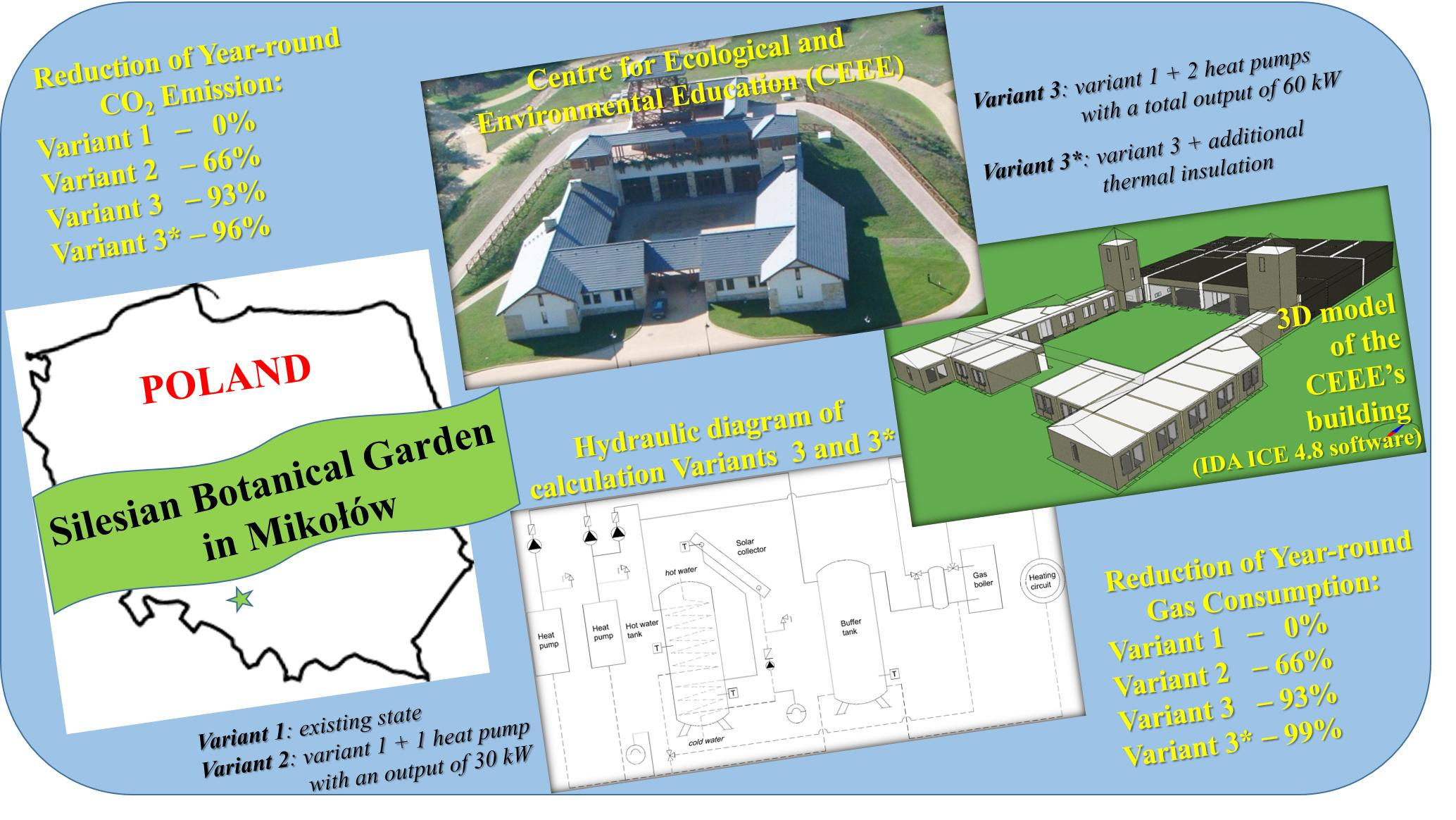
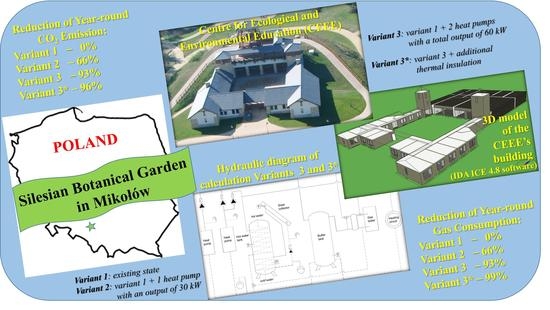
Simulation Analysis of Heat Pumps Application for the Purposes of the Silesian Botanical Garden Facilities in Poland


Abstract
Share and Cite
Ciuman, P.; Kaczmarczyk, J.; Jastrzębska, M. Simulation Analysis of Heat Pumps Application for the Purposes of the Silesian Botanical Garden Facilities in Poland. Energies 2023, 16, 340. https://doi.org/10.3390/en16010340
Ciuman P, Kaczmarczyk J, Jastrzębska M. Simulation Analysis of Heat Pumps Application for the Purposes of the Silesian Botanical Garden Facilities in Poland. Energies. 2023; 16(1):340. https://doi.org/10.3390/en16010340
Chicago/Turabian StyleCiuman, Piotr, Jan Kaczmarczyk, and Małgorzata Jastrzębska. 2023. "Simulation Analysis of Heat Pumps Application for the Purposes of the Silesian Botanical Garden Facilities in Poland" Energies 16, no. 1: 340. https://doi.org/10.3390/en16010340
APA StyleCiuman, P., Kaczmarczyk, J., & Jastrzębska, M. (2023). Simulation Analysis of Heat Pumps Application for the Purposes of the Silesian Botanical Garden Facilities in Poland. Energies, 16(1), 340. https://doi.org/10.3390/en16010340