Simulation Analysis of Heat Pumps Application for the Purposes of the Silesian Botanical Garden Facilities in Poland


Abstract
1. Introduction
2. Analysed Building
3. Energy Analyses Methodology
3.1. Adopted Assumptions for Energy Simulations
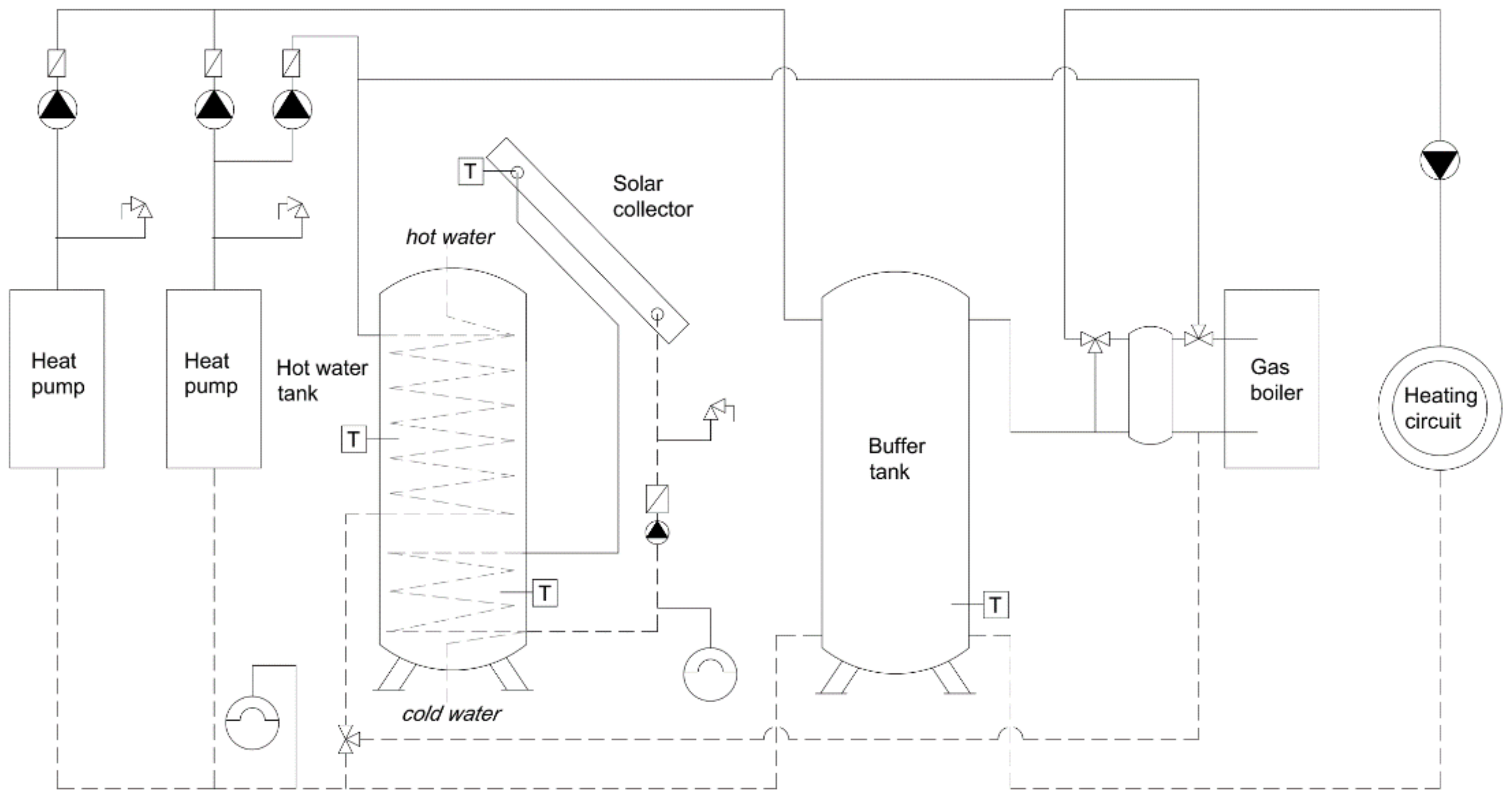
3.2. Calculation Variants
3.3. Analysed Parameters and Calculations Methodology
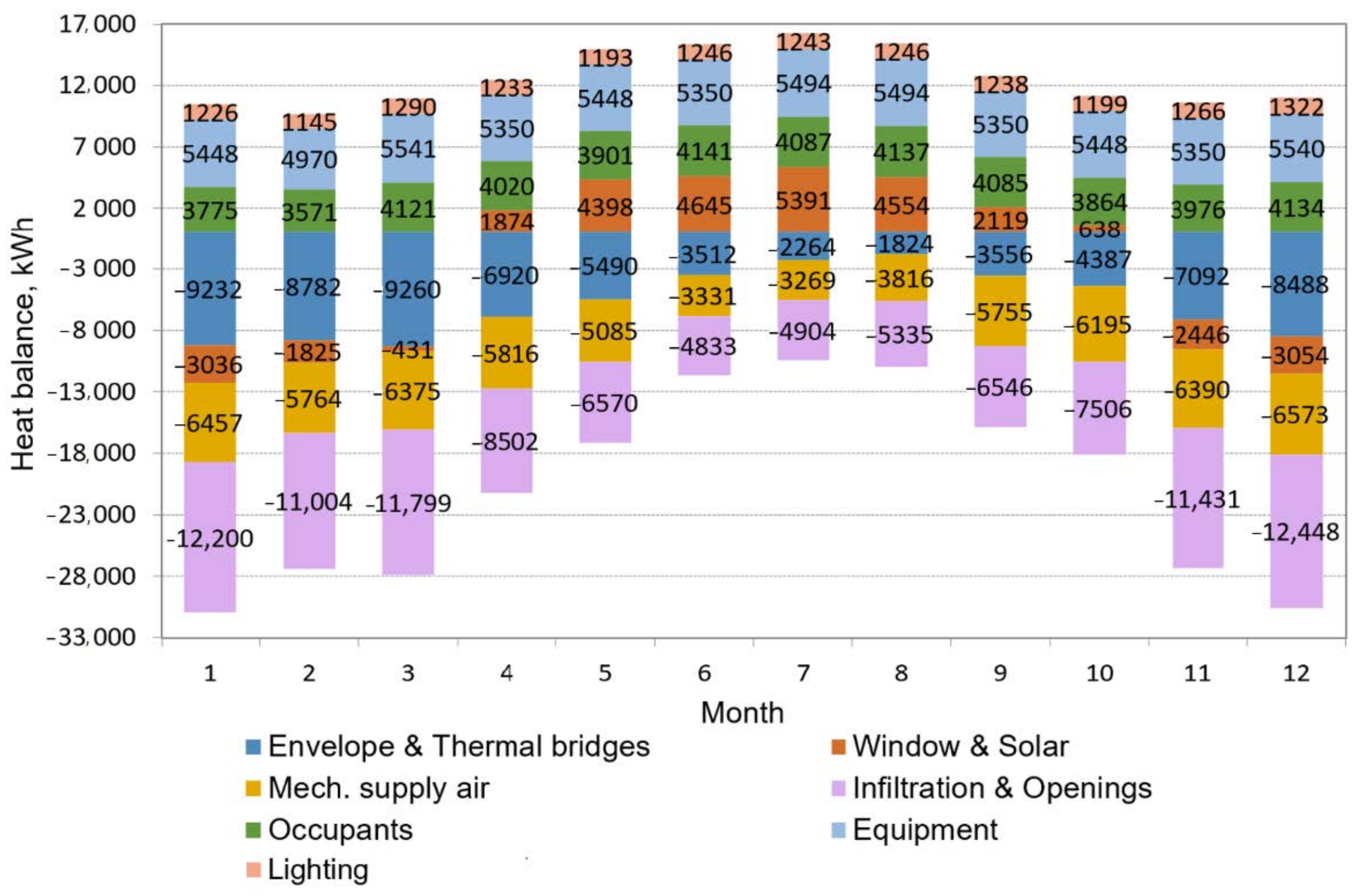
- heat demand for the entire building, including heat losses through the building envelope and thermal bridges, internal partitions, windows (in winter), infiltration air and mechanical air supplied by air handling units and heat losses from sanitary installations, as well as heat gains of occupants, electronic equipment, lighting and windows (in summer);
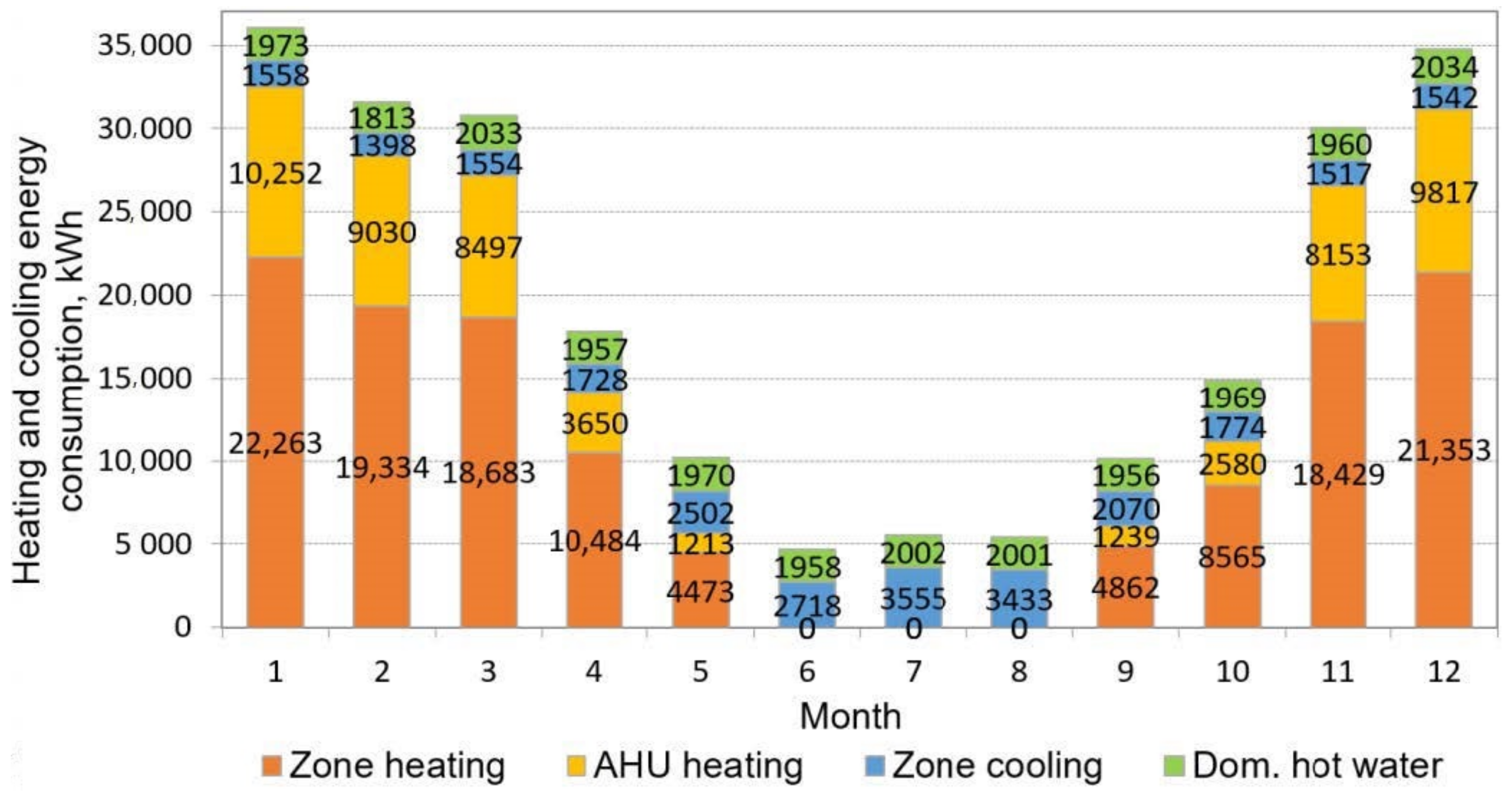
- monthly heating energy consumption for space heating and preparation of domestic hot water, and cooling energy consumption;
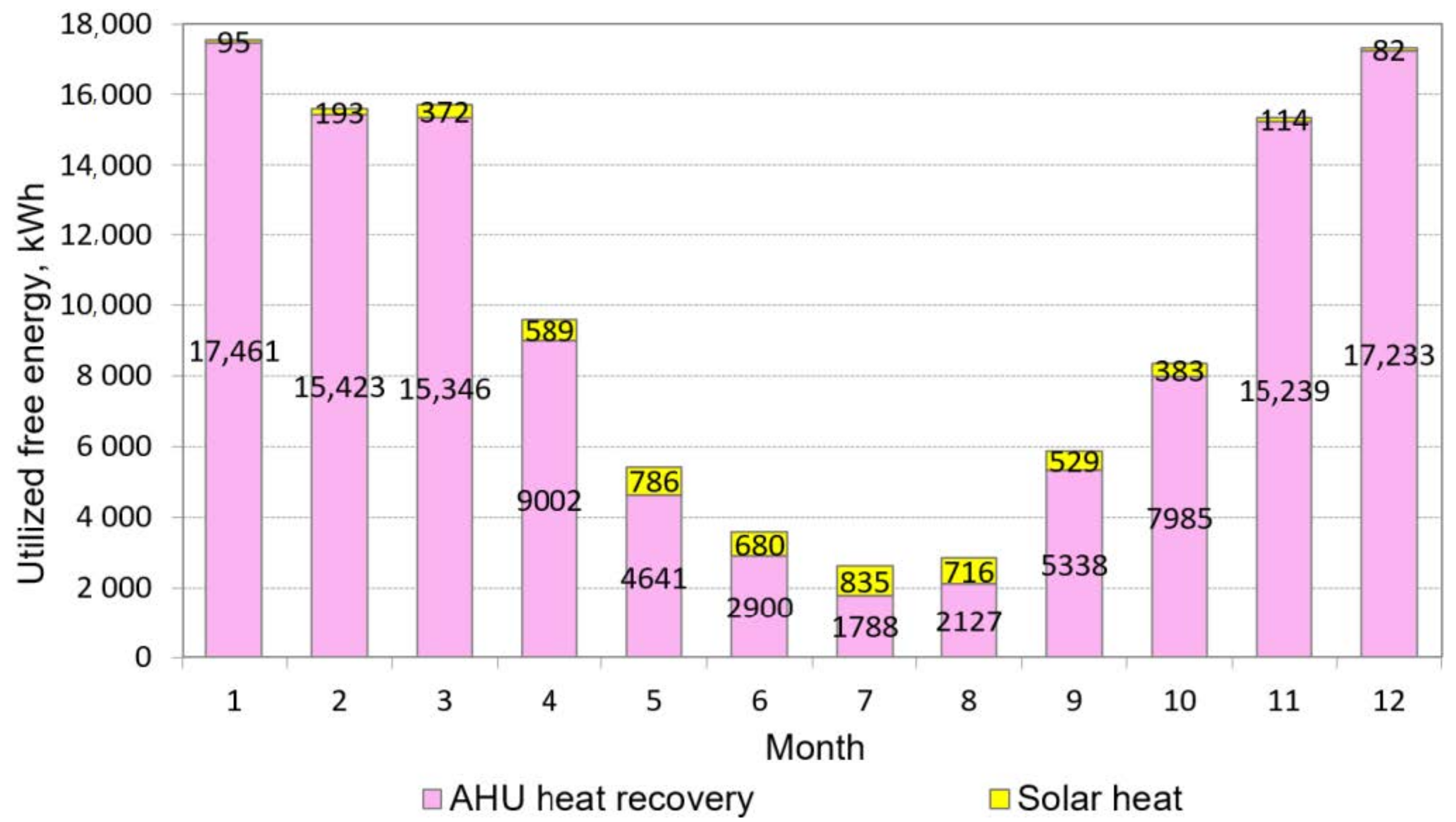
- monthly utilized free energy in a building from heat recovery in air handling units and from solar collectors;
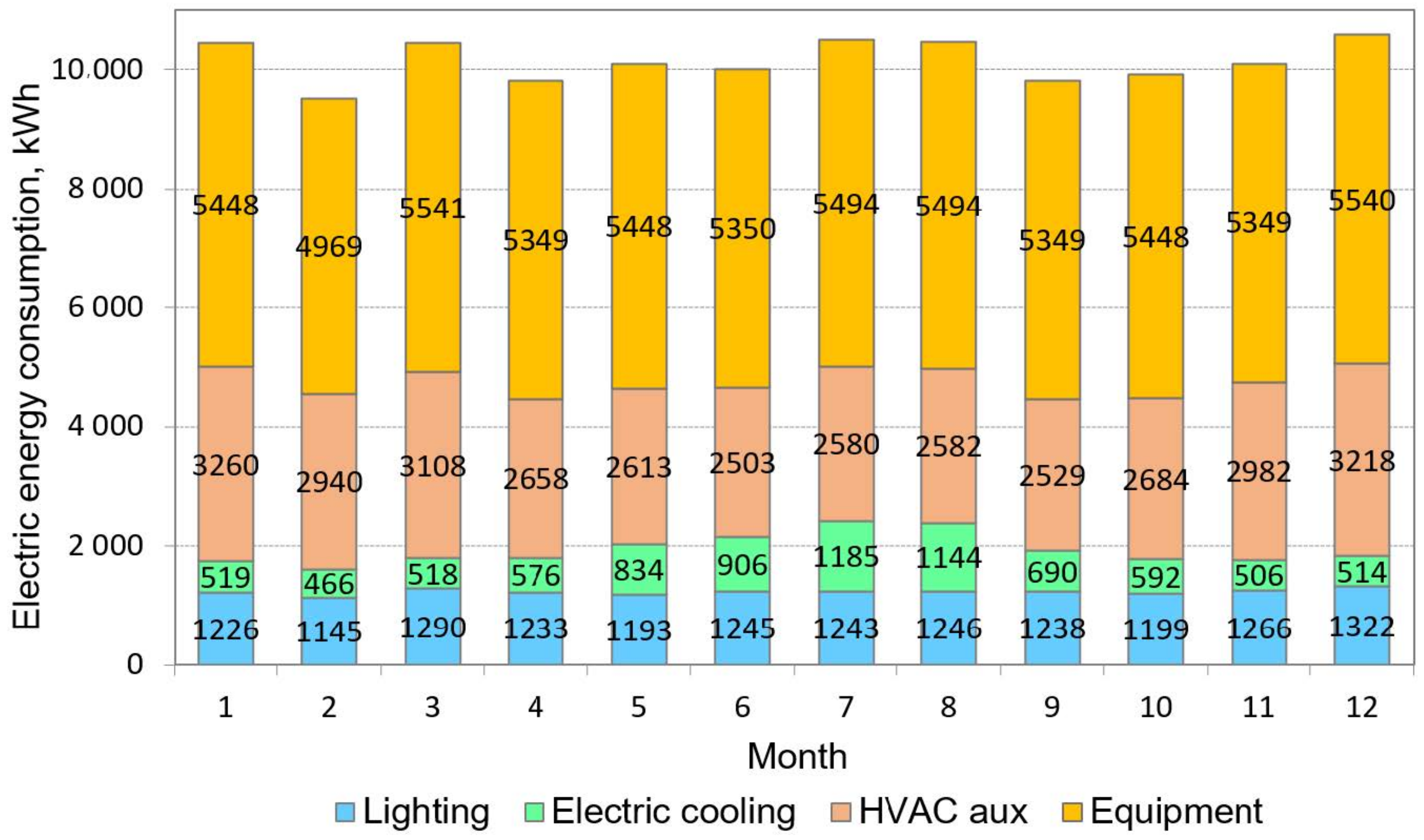
- monthly electric energy consumption for lighting, electronic equipment, air conditioners, auxiliary devices and heat pump compressor;
- monthly fuel gas consumption for each calculation variant.
- Qp—annual demand for non-renewable Primary Energy for technical systems, kWh/year
- Af—area of rooms with regulated air temperature, m2
- Qp,H—annual demand for non-renewable Primary Energy for the heating system, kWh/year
- Qp,W—annual demand for non-renewable Primary Energy for the preparation of domestic hot water, kWh/year
- Qp,C—annual demand for non-renewable Primary Energy for the cooling system, kWh/year
- Qp,L—annual demand for non-renewable Primary Energy for the lighting installation, kWh/year
- Qf,H—annual demand for final energy supplied to the building for the heating system, kWh/year
- Qf,W—annual demand for final energy supplied to the building for preparation of domestic hot water, kWh/year
- Qf,C—annual demand for final energy supplied to the building for the cooling system, kWh/year
- Qf,L—annual demand for final energy supplied to the building for the lighting installation, kWh/year
- wi—non-renewable Primary Energy input factor for production and delivery of:
- energy for the heating system (wH factor, for gas equal 1.1), -
- energy for preparation of domestic hot water (wW factor, for gas equal 1.1), -
- energy for the cooling system (wC factor), -
- electrical energy (wel factor, for system power grid equal 3), -
- Eel,aux,H—annual demand for auxiliary final energy supplied to the building for the heating system, kWh/year
- Eel,aux,W—annual demand for auxiliary final energy supplied to the building for preparation of domestic hot water, kWh/year
- Eel,aux,C—annual demand for auxiliary final energy supplied to the building for the cooling system, kWh/year
4. Results and Discussion
4.1. Heat Balance of the CEEE’s Building
4.2. Heating and Cooling Energy Consumption in the CEEE’s Building
4.3. Utilized Free Energy in the CEEE’s Building
4.4. Electric Energy Consumption in the CEEE’s Building
4.5. Fuel Gas Consumption for All Calculation Variants
4.6. Validation of Energy Simulations
4.7. Analysis of Primary Energy Values for All Calculation Variants
4.8. Analysis of CO2 Emission for All Calculation Variants
- The electronic equipment and lighting had a relatively large share in electricity consumption. Reducing energy consumption could be achieved by replacing the fluorescent light sources with LEDs [47];
- The implementation of ground heat exchangers for preliminary air heating. The systems were tested in Mediterranean and cold Norwegian climate conditions, demonstrating the possibility of reducing electricity consumption for heat pump operation and the reduction of the shutdown time when the outside temperature is below the limit operating temperature [36]. Due to the high power of the adopted pumps and the need to supply high values of ventilation air volume flow rate, it is necessary to carry out additional analyses of the possibilities of their implementation.
5. Conclusions
- The numerical model of the SBG building reflected the operation of the actual facility to a good degree. The year-round numerical value of electricity consumption was 6% higher than the actual one, and the year-round numerical value of gas fuel consumption was 10% higher than the real one. The lower actual energy and gas consumption may be the result of assumptions made and a different operation of the building due to the coronavirus pandemic in recent years as well as different actual weather conditions from those assumed in the simulation;
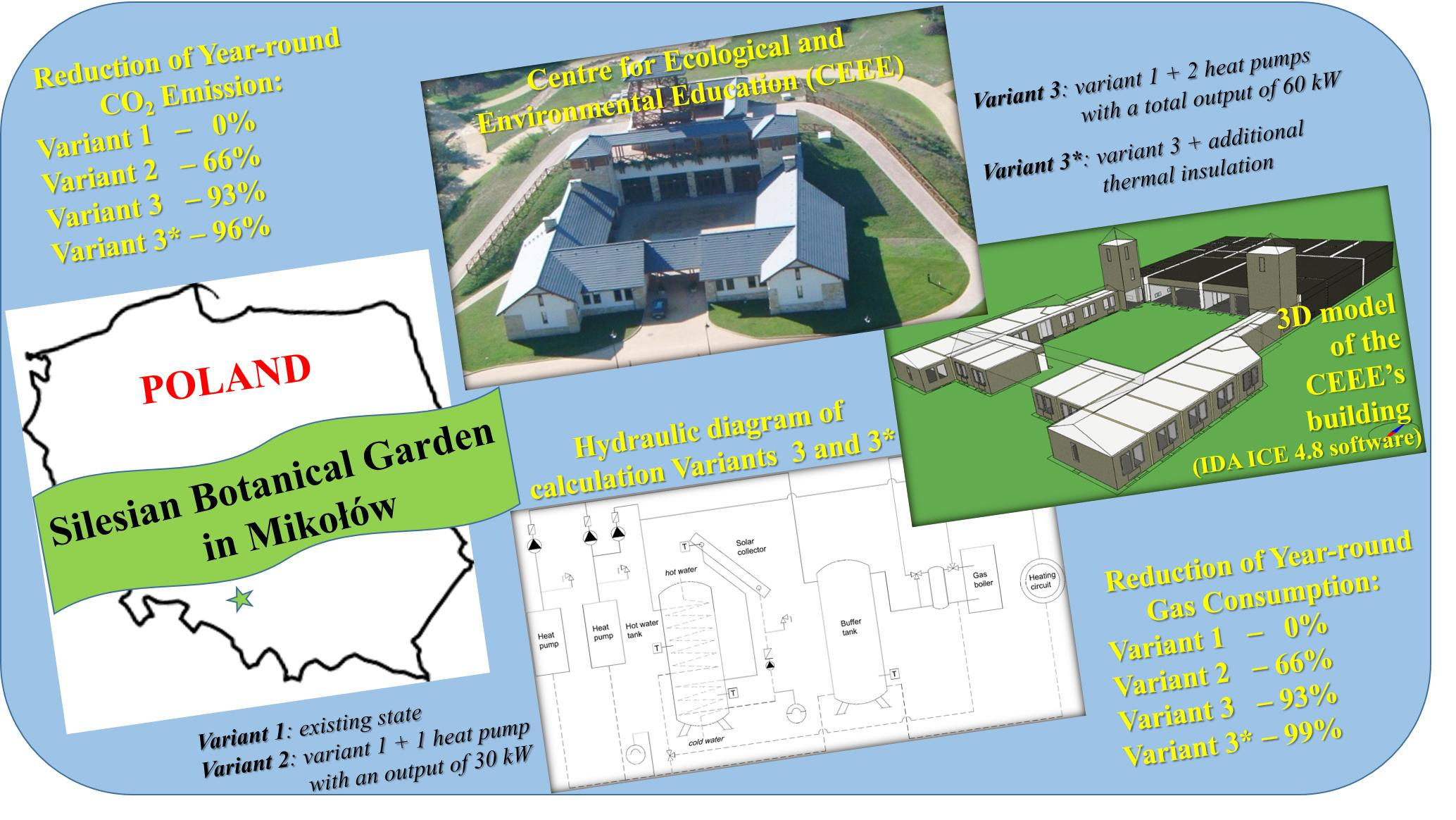
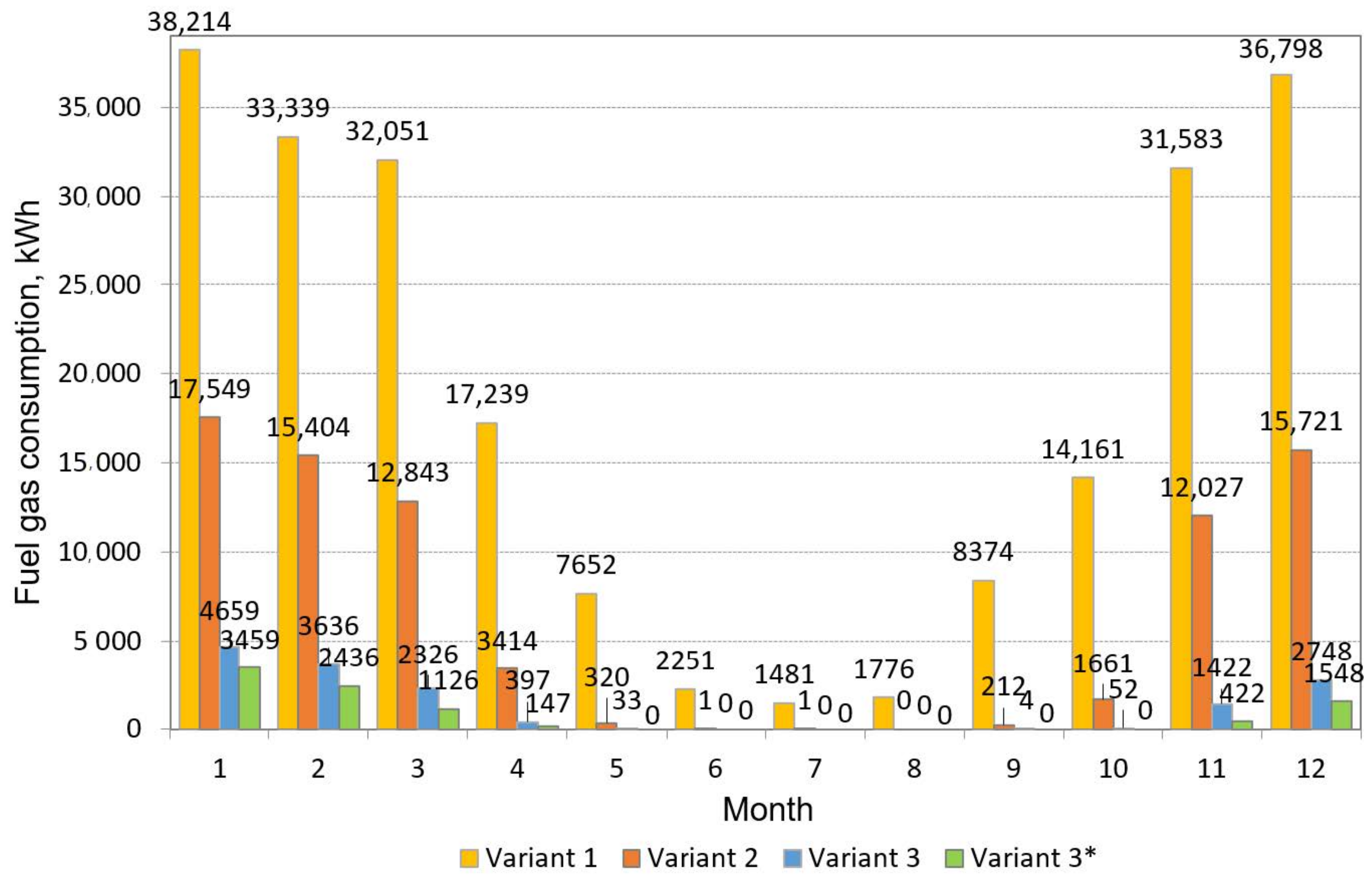
- By supplementing the existing boiler room (Variant 1) with a single 30 kW heat pump (Variant 2), gas consumption was reduced by 66%. By supplementing it with two heat pumps with a total capacity of 60 kW (Variant 3), gas consumption was reduced by 93%. Implementing the better thermal insulation of the building in Variant 3* led to a 96% reduction in gas consumption. The CO2 emission was reduced from 53,889 kg/year in Variant 1 to 18,205 kg/year in Variant 2 to 3513 kg/year in Variant 3 and 2 102 kg/year in Variant 3*;
- the significant share of electricity should be provided to the building from the renewable energy sources installation. The concept was presented in [33] to ensure the limit value of total Primary Energy 45 kWh/m2/year. Assuming a self-consumption ratio of 40%, a two-fold size of proposed installation would be necessary. Providing the electricity only from system power grid did not ensure the required value of total Primary Energy;
- To improve the energy efficiency of the building, the solution with ground heat exchangers for preliminary air heating should be analysed.
Author Contributions
Funding
Institutional Review Board Statement
Data Availability Statement
Acknowledgments
Conflicts of Interest
References
- Energia i Zielony Ład. Available online: https://ec.europa.eu/info/strategy/priorities-2019-2024/european-green-deal/energy-and-green-deal_pl (accessed on 30 October 2022).
- Energy Transformation in Poland|American Chamber of Commerce in Poland. Available online: https://amcham.pl/news/energy-transformation-poland (accessed on 30 October 2022).
- Porozumienie Paryskie. Available online: https://climate.ec.europa.eu/eu-action/international-action-climate-change/climate-negotiations/paris-agreement_pl (accessed on 30 October 2022).
- A European Green Deal. Available online: https://ec.europa.eu/info/strategy/priorities-2019-2024/european-green-deal_en (accessed on 30 October 2022).
- Improving the Energy Efficiency of Poland’s Buildings|News|CORDIS|European Commission. Available online: https://cordis.europa.eu/article/id/435871-improving-the-energy-efficiency-of-poland-s-buildings (accessed on 30 October 2022).
- Energy Policy of Poland until 2040 (EPP2040)—Ministry of Climate and Environment—Gov.Pl Website. Available online: https://www.gov.pl/web/climate/energy-policy-of-poland-until-2040-epp2040 (accessed on 30 October 2022).
- Polska przyjęła strategię w zakresie renowacji budynków—Ministerstwo Rozwoju i Technologii—Portal Gov.pl. Available online: https://www.gov.pl/web/rozwoj-technologia/polska-przyjela-strategie-w-zakresie-renowacji-budynkow (accessed on 30 October 2022).
- Statystyki|Główny Urząd Nadzoru Budowlanego. Available online: https://www.gunb.gov.pl/strona/statystyki (accessed on 30 October 2022).
- Abbasi, M.H.; Abdullah, B.; Ahmad, M.W.; Rostami, A.; Cullen, J. Heat transition in the European building sector: Overview of the heat decarbonisation practices through heat pump technology. Sustain. Energy Technol. Assess. 2021, 48, 101630. [Google Scholar] [CrossRef] [Scilit]
- Program Czyste Powietrze–STOP Smog. Available online: https://www.czystepowietrze.gov.pl/ (accessed on 30 October 2022).
- Mojecieplo.Gov.Pl. Available online: https://mojecieplo.gov.pl/# (accessed on 31 October 2022).
- Sevindik, S.; Spataru, C.; Domenech Aparisi, T.; Bleischwitz, R. A comparative environmental assessment of heat pumps and gas boilers towards a circular economy in the UK. Energies 2021, 14, 3027. [Google Scholar] [CrossRef] [Scilit]
- Beccali, M.; Bonomolo, M.; Martorana, F.; Catrini, P.; Buscemi, A. Electrical hybrid heat pumps assisted by natural gas boilers: A review. Appl. Energy 2022, 322, 119466. [Google Scholar] [CrossRef] [Scilit]
- Aprianti, T.; Tan, E.; Diu, C.; Sprivulis, B.; Ryan, G.; Srinivasan, K.; Chua, H.T. A comparison of ground and air source heat pump performance for domestic applications: A case study in Perth, Australia. Int. J. Energy Res. 2021, 45, 20686–20699. [Google Scholar] [CrossRef] [Scilit]
- Valancius, R.; Singh, R.M.; Jurelionis, A.; Vaiciunas, J. A review of heat pump systems and applications in cold climates: Evidence from Lithuania. Energies 2019, 12, 4331. [Google Scholar] [CrossRef] [Scilit]
- Aprianti, T.; Tan, E.; Diu, C.; Sprivulis, B.; Ryan, G.; Srinivasan, K.; Chua, H.T. Performance comparison of Ground Source Heat Pump (GSHP) against Air Source Heat Pump (ASHP) for domestic applications: A case study in Perth, Australia. Teknomekanik 2021, 4, 55–63. [Google Scholar] [CrossRef] [Scilit]
- Sankelo, P.; Ahmed, K.; Mikola, A.; Kurnitski, J. Renovation results of Finnish single-family renovation subsidies: Oil boiler replacement with heat pumps. Energies 2022, 15, 7620. [Google Scholar] [CrossRef] [Scilit]
- Chesser, M.; Lyons, P.; O’Reilly, P.; Carroll, P. Air source heat pump in-situ performance. Energy Build. 2021, 251, 111365. [Google Scholar] [CrossRef] [Scilit]
- Ponad dwukrotny wzrost sprzedaży powietrznych pomp ciepła w I poł. 2022 roku! Polska Organizacja Rozwoju Technologii Pomp Ciepła. 2022. Available online: https://portpc.pl/ponad-dwukrotny-wzrost-sprzedazy-powietrznych-pomp-ciepla-w-i-pol-2022-roku/ (accessed on 31 October 2022).
- Sarevet, H.; Fadejev, J.; Thalfeldt, M.; Kurnitski, J. Residential buildings with heat pumps peak power reduction with high performance insulation. E3S Web Conf. 2020, 172, 12008. [Google Scholar] [CrossRef] [Scilit]
- Ma, Z.; Xia, L.; Gong, X.; Kokogiannakis, G.; Wang, S.; Zhou, X. Recent advances and development in optimal design and control of ground source heat pump systems. Renew. Sustain. Energy Rev. 2020, 131, 110001. [Google Scholar] [CrossRef] [Scilit]
- Montero, O.; Brischoux, P.; Callegari, S.; Fraga, C.; Rüetschi, M.; Vionnet, E.; Calame, N.; Rognon, F.; Patel, M.; Hollmuller, P. Large air-to-water heat pumps for fuel-boiler substitution in non-retrofitted multi-family buildings—Energy performance, CO2 savings, and lessons learned in actual conditions of use. Energies 2022, 15, 5033. [Google Scholar] [CrossRef] [Scilit]
- Schreurs, T.; Madani, H.; Zottl, A.; Sommerfeldt, N.; Zucker, G. Techno-economic analysis of combined heat pump and solar PV system for multi-family houses: An Austrian case study. Energy Strategy Rev. 2021, 36, 100666. [Google Scholar] [CrossRef] [Scilit]
- Hesaraki, A.; Madani, H. Energy Performance of Ground-Source Heat Pump and Photovoltaic/Thermal (PV/T) in Retrofitted and New Buildings: Two Case Studies Using Simulation and On-Site Measurements; SINTEF Academic Press: Trondheim, Norway, 2020; ISBN 978-82-536-1679-7. [Google Scholar]
- Xu, W.; Liu, C.; Li, A.; Li, J.; Qiao, B. Feasibility and performance study on hybrid air source heat pump system for ultra-low energy building in severe cold region of China. Renew. Energy 2020, 146, 2124–2133. [Google Scholar] [CrossRef] [Scilit]
- Zator, S.; Skomudek, W. Impact of DSM on energy management in a single-family house with a heat pump and photovoltaic installation. Energies 2020, 13, 5476. [Google Scholar] [CrossRef] [Scilit]
- Marijanovic, Z.; Theile, P.; Czock, B.H. Value of short-term heating system flexibility–A case study for residential heat pumps on the German intraday market. Energy 2022, 249, 123664. [Google Scholar] [CrossRef] [Scilit]
- Niekurzak, M.; Lewicki, W.; Drożdż, W.; Miązek, P. Measures for assessing the effectiveness of investments for electricity and heat generation from the hybrid cooperation of a photovoltaic installation with a heat pump on the example of a household. Energies 2022, 15, 6089. [Google Scholar] [CrossRef] [Scilit]
- Aira, R.; Fernández-Seara, J.; Diz, R.; Pardiñas, Á.Á. Experimental analysis of a ground source heat pump in a residential installation after two years in operation. Renew. Energy 2017, 114, 1214–1223. [Google Scholar] [CrossRef] [Scilit]
- Carroll, P.; Chesser, M.; Lyons, P. Air source heat pumps field studies: A systematic literature review. Renew. Sustain. Energy Rev. 2020, 134, 110275. [Google Scholar] [CrossRef] [Scilit]
- Han, J.; Cui, M.; Chen, J.; Lv, W. Analysis of thermal performance and economy of ground source heat pump system: A case study of the large building. Geothermics 2021, 89, 101929. [Google Scholar] [CrossRef] [Scilit]
- Gao, B.; Zhu, X.; Yang, X.; Yuan, Y.; Yu, N.; Ni, J. Operation performance test and energy efficiency analysis of ground-source heat pump systems. J. Build. Eng. 2021, 41, 102446. [Google Scholar] [CrossRef] [Scilit]
- Jastrzębska, M. Installation’s conception in the field of renewable energy sources for the needs of the Silesian Botanical Garden. Energies 2022, 15, 6598. [Google Scholar] [CrossRef] [Scilit]
- Informational Materials of Mikołów Commune: Geotechnical Documentation, Mikołów, Sosnowa Street—The Centre for Ecological and Environmental Education (CEEE)—Freestanding Building, 2010 and 2013. Own Documentation of the Mayor of Mikołów Commune Made Available Directly to the Author of This Study in January 2014. unpublished. (In Polish)
- Vujnović, N.; Dović, D. Cost-optimal energy performance calculations of a new NZEB hotel building using dynamic simulations and optimization algorithms. J. Build. Eng. 2021, 39, 102272. [Google Scholar] [CrossRef] [Scilit]
- Arghand, T.; Javed, S.; Dalenbäck, J.-O. Combining direct ground cooling with ground-source heat pumps and district heating: Borehole sizing and land area requirements. Geothermics 2022, 106, 102565. [Google Scholar] [CrossRef] [Scilit]
- Clauß, J.; Georges, L. Model complexity of heat pump systems to investigate the building energy flexibility and guidelines for model implementation. Appl. Energy 2019, 255, 113847. [Google Scholar] [CrossRef] [Scilit]
- Congedo, P.M.; Baglivo, C.; Bonuso, S.; D’Agostino, D. Numerical and experimental analysis of the energy performance of an Air-Source Heat Pump (ASHP) coupled with a horizontal Earth-to-Air Heat Exchanger (EAHX) in different climates. Geothermics 2020, 87, 101845. [Google Scholar] [CrossRef] [Scilit]
- IDA Indoor Climate and Energy (IDA ICE). Available online: https://www.equa.se/en/ida-ice (accessed on 31 October 2022).
- American Society of Heating, Refrigerating and Air Conditioning Engineers. ASHRAE Handbook; Fundamentals (SI Edition); American Society of Heating, Refrigerating and Air Conditioning Engineers: Atlanta, GA, USA, 2011. [Google Scholar]
- Regulation of the Minister for Infrastructure of 14 January 2002 on the Determination of Average Standards for Water Consumption (Journal of Laws, Dz.U. 2002 nr 8 poz. 70). Available online: https://isap.sejm.gov.pl/isap.nsf/DocDetails.xsp?id=wdu20020080070 (accessed on 31 October 2022). (In Polish)
- Announcement of the Minister of Development and Technology of 15 April 2022 on the Announcement of the Consolidated Text of the Regulation of the Minister of Infrastructure on the Technical Conditions to be Met by Buildings and Their Location (Journal of Laws, Dz.U. 2022 poz. 1225). Available online: https://isap.sejm.gov.pl/isap.nsf/download.xsp/WDU20220001225/O/D20221225.pdf (accessed on 31 October 2022). (In Polish)
- Regulation of the Minister of Infrastructure and Development of 27 February 2015 on the Methodology for Determining the Energy Performance of a Building or Part of a Building and Performance Certificates (Journal of Laws, Dz.U. poz. 376 with Amendments). Available online: http://isap.sejm.gov.pl/isap.nsf/DocDetails.xsp?id=WDU20150000376 (accessed on 31 October 2022). (In Polish)
- The National Centre for Emissions Management (KOBiZE). Calorific Values and CO2 Emission Factors for Reporting under the Emission Trading Scheme for 2021. Available online: https://kobize.pl/uploads/materialy/materialy_do_pobrania/monitorowanie_raportowanie_weryfikacja_emisji_w_eu_ets/WO_i_WE_do_monitorowania-ETS-2021.pdf (accessed on 31 October 2022). (In Polish)
- Allouhi, A. Solar PV integration in commercial buildings for self-consumption based on life-cycle economic/environmental multi-objective optimization. J. Clean. Prod. 2020, 270, 122375. [Google Scholar] [CrossRef] [Scilit]
- Marańda, W. Analysis of self-consumption of energy from grid-connected photovoltaic system for various load scenarios with short-term buffering. SN Appl. Sci. 2019, 1, 406. [Google Scholar] [CrossRef] [Scilit]
- Da Silva de Souza, D.; de Souza Silva, P.; Barbosa de Alencar, D. Comparative analysis of compact fluorescent lamps versus led lamps: An economy factor. Int. J. Innov. Educ. Res. 2020, 8, 198–212. [Google Scholar] [CrossRef] [Scilit]



| Year-Round Electric Energy Consumption (kWh/Year) | ||||
|---|---|---|---|---|
| Lighting | Cooling (Air Conditioners) | HVAC aux (Fans, Pumps) | Heat Pump Compressor | |
| Variant 1 | 14,847 | 8450 | 33,657 | 0 |
| Variant 2 | 14,847 | 8450 | 33,657 | 40,945 |
| Variant 3 | 14,847 | 8450 | 33,657 | 66,675 |
| Variant 3* | 14,847 | 8450 | 30,209 | 61,014 |
| Electric Energy Consumption by Heat Pump Compressor (kWh/year) | |||
|---|---|---|---|
| Month | Variant 2 | Variant 3 | Variant 3* |
| 1 | 5616 | 10,649 | 9533 |
| 2 | 4917 | 9380 | 8379 |
| 3 | 5267 | 9335 | 8435 |
| 4 | 3675 | 5109 | 4709 |
| 5 | 1992 | 2195 | 2098 |
| 6 | 1229 | 1305 | 1286 |
| 7 | 860 | 940 | 948 |
| 8 | 983 | 1056 | 1064 |
| 9 | 2253 | 2392 | 2313 |
| 10 | 3292 | 4124 | 3859 |
| 11 | 5208 | 9414 | 8678 |
| 12 | 5653 | 10,776 | 9712 |
| Year-Round Gas Consumption (kWh/Year) | Reduction of Year-Round Gas Consumption (%) | |
|---|---|---|
| Heating System and Domestic Hot Water System | ||
| Variant 1 | 230,425 | - |
| Variant 2 | 79,153 | 66 |
| Variant 3 | 15,276 | 93 |
| Variant 3* | 9138 | 99 |
| Primary Energy (kWh/m2/Year) | |||
|---|---|---|---|
| For Electric Energy Consumption from System Power Grid | For Gas Consumption, | Total Primary Energy | |
| Variant 1 | 161 | 240 | 401 |
| Variant 2 | 278 | 82 | 360 |
| Variant 3 | 351 | 16 | 367 |
| Variant 3* | 325 | 9 | 334 |
| Electric Energy Consumption (kWh/Year) | Primary Energy (kWh/m2/Year) | ||||
|---|---|---|---|---|---|
| From System Power Grid | From Renewable Energy Sources | For Electric Energy Consumption | For Gas Consumption | Total Primary Energy | |
| Variant 3 | 10,215 | 113,414 | 29 | 16 | 45 |
| Variant 3* | 12,685 | 101,835 | 36 | 9 | 45 |
| Year-Round CO2 Emission (kg/Year) | Reduction of Year-Round CO2 Emission (%) | |
|---|---|---|
| Variant 1 | 53,889 | - |
| Variant 2 | 18,205 | 66 |
| Variant 3 | 3513 | 93 |
| Variant 3* | 2102 | 96 |
Disclaimer/Publisher’s Note: The statements, opinions and data contained in all publications are solely those of the individual author(s) and contributor(s) and not of MDPI and/or the editor(s). MDPI and/or the editor(s) disclaim responsibility for any injury to people or property resulting from any ideas, methods, instructions or products referred to in the content. |
© 2022 by the authors. Licensee MDPI, Basel, Switzerland. This article is an open access article distributed under the terms and conditions of the Creative Commons Attribution (CC BY) license (https://creativecommons.org/licenses/by/4.0/).
Share and Cite
Ciuman, P.; Kaczmarczyk, J.; Jastrzębska, M. Simulation Analysis of Heat Pumps Application for the Purposes of the Silesian Botanical Garden Facilities in Poland. Energies 2023, 16, 340. https://doi.org/10.3390/en16010340
Ciuman P, Kaczmarczyk J, Jastrzębska M. Simulation Analysis of Heat Pumps Application for the Purposes of the Silesian Botanical Garden Facilities in Poland. Energies. 2023; 16(1):340. https://doi.org/10.3390/en16010340
Chicago/Turabian StyleCiuman, Piotr, Jan Kaczmarczyk, and Małgorzata Jastrzębska. 2023. "Simulation Analysis of Heat Pumps Application for the Purposes of the Silesian Botanical Garden Facilities in Poland" Energies 16, no. 1: 340. https://doi.org/10.3390/en16010340
APA StyleCiuman, P., Kaczmarczyk, J., & Jastrzębska, M. (2023). Simulation Analysis of Heat Pumps Application for the Purposes of the Silesian Botanical Garden Facilities in Poland. Energies, 16(1), 340. https://doi.org/10.3390/en16010340