Article

Estimating the Employment and Fiscal Consequences of Thermal Coal Phase-Out in China
1
Smith School of Enterprise and the Environment, University of Oxford, Oxford OX1 3QY, UK
2
School of Economic and Management, North China Electric Power University, Beijing 102206, China
*
Author to whom correspondence should be addressed.
Energies 2022, 15(3), 800; https://doi.org/10.3390/en15030800
Submission received: 5 November 2021 / Revised: 13 January 2022 / Accepted: 19 January 2022 / Published: 22 January 2022
(This article belongs to the Special Issue Policy and Finance for Clean Energy Transition)

Abstract

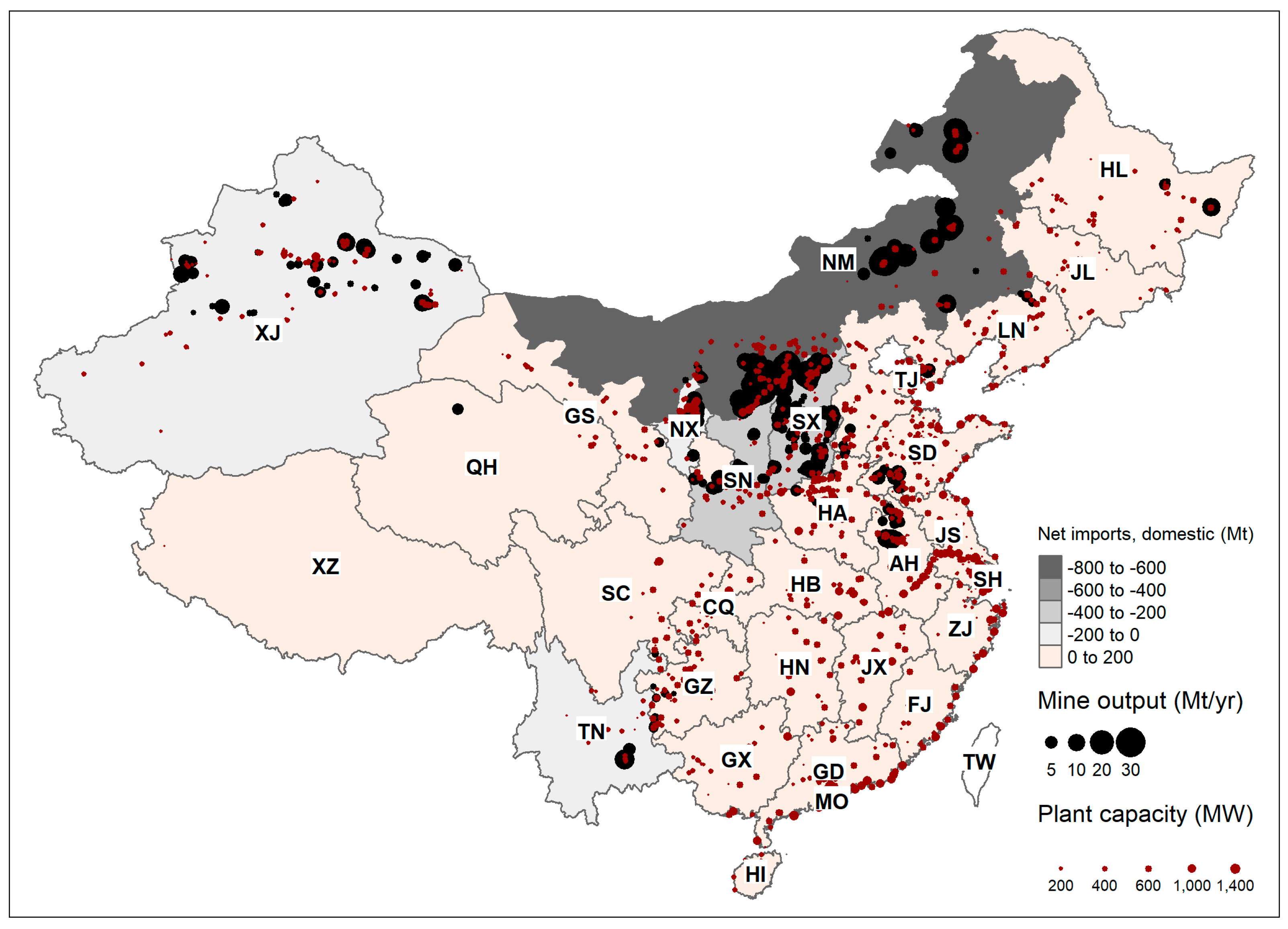
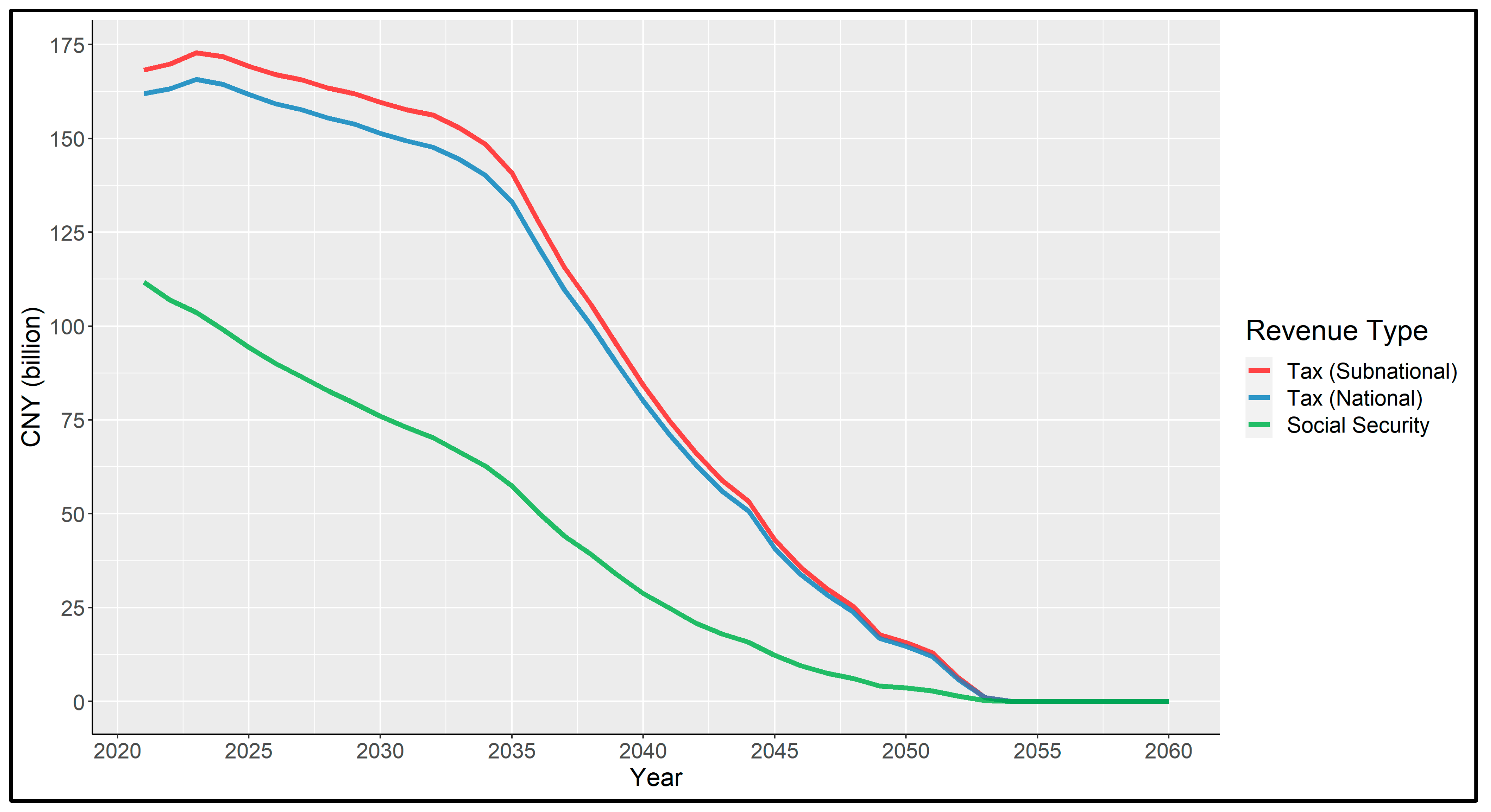
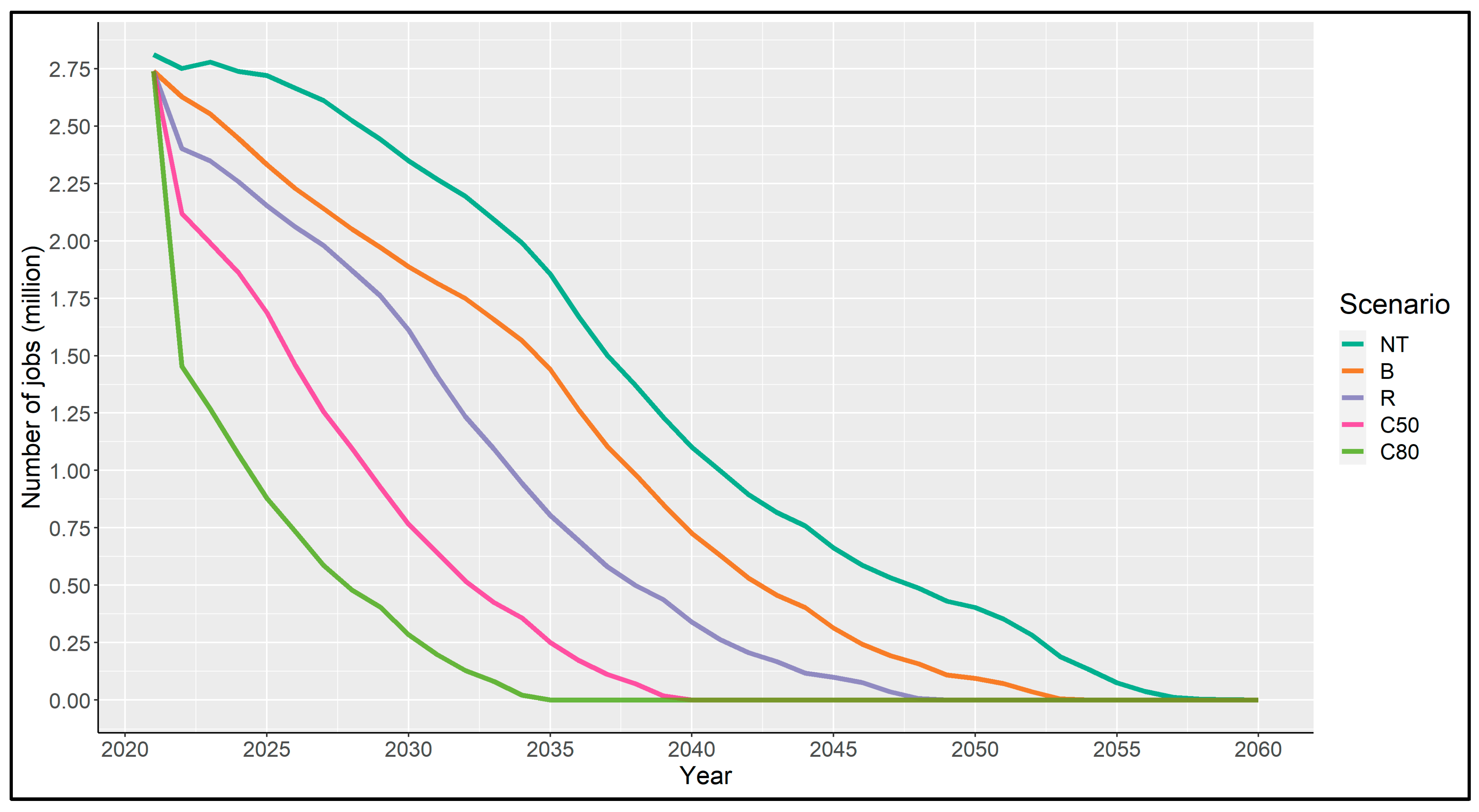
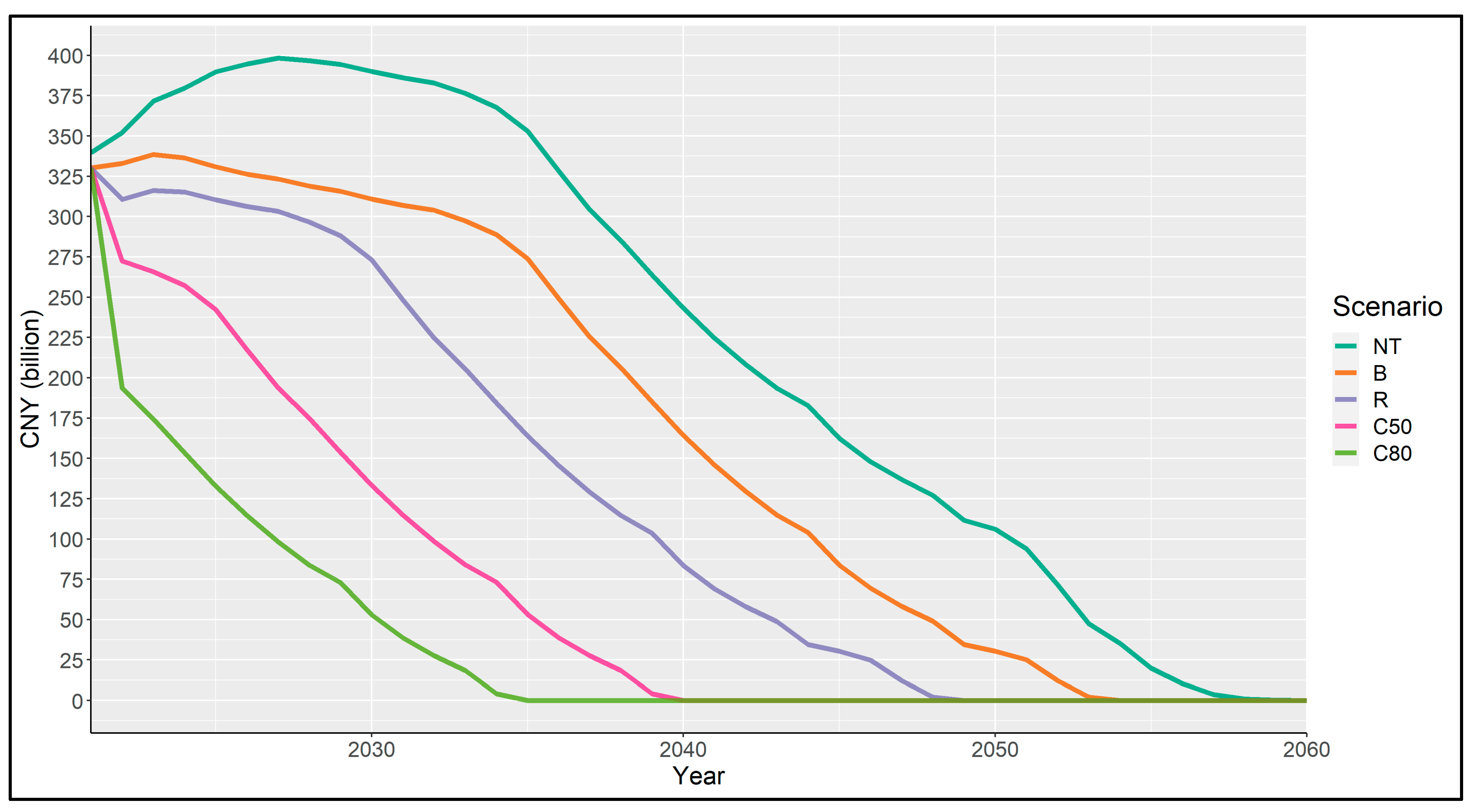
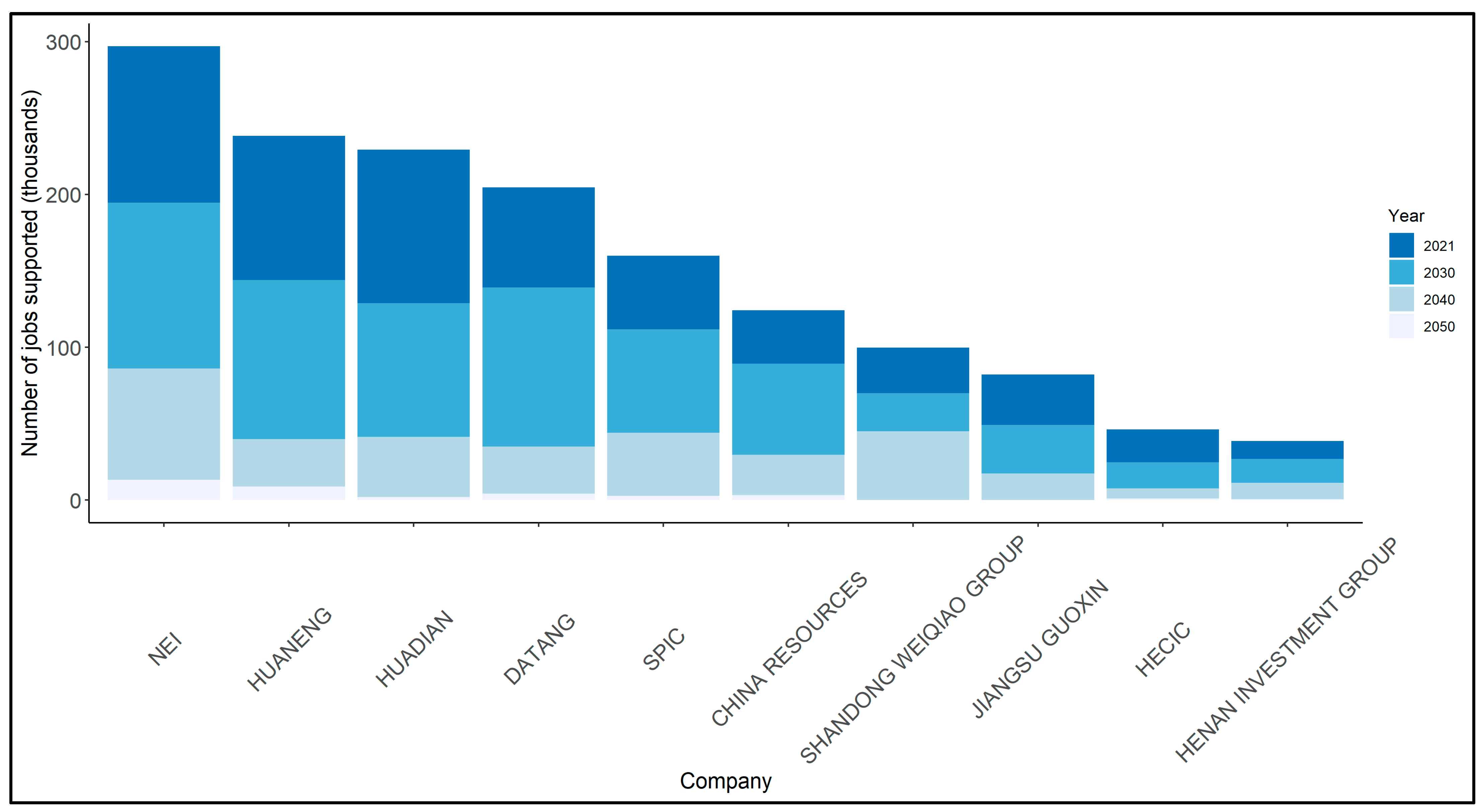
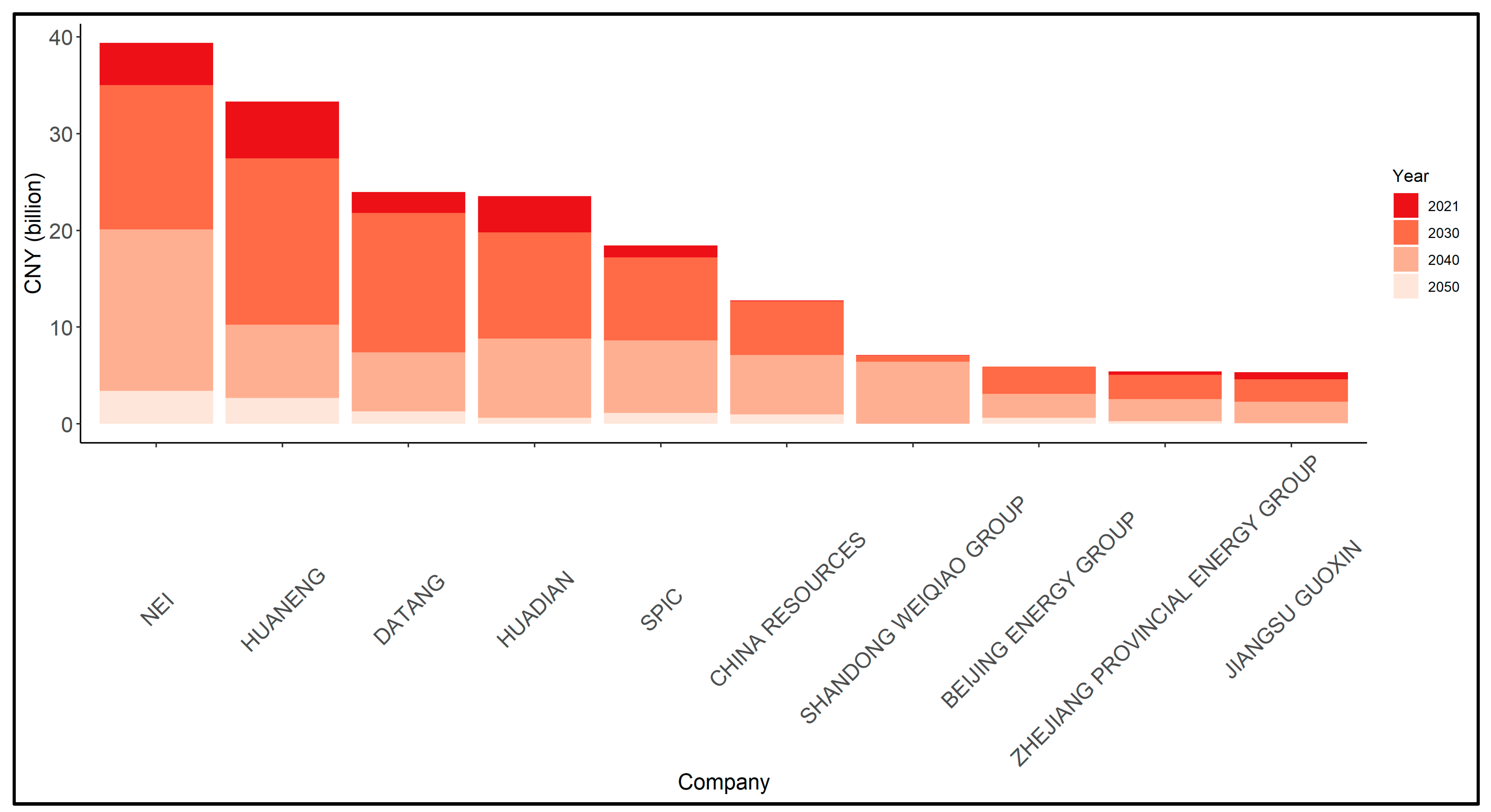
China hosts over half of global coal-fired power generation capacity and has the world’s largest coal reserves. Its 2060 carbon neutrality goal will require coal-fired electricity generation to shrink dramatically, with or without carbon capture and storage technology. Two macroeconomic areas in which the socioeconomic impact of this decline is felt are losses in jobs and tax revenues supported by thermal coal mining, transport and power generation. At the national level, under a ‘baseline’ (B) scenario consistent with China’s carbon neutrality goal, labour productivity growth in coal mining implies that significant job losses will occur nationally in the medium term, even if all coal plants continue operating as planned. Jobs supported by the coal power industry would decline from an estimated 2.7 million in 2021, to 1.44 million in 2035 and 94,000 in 2050, with jobs losses from mining alone expected to exceed 1.1 million by 2035. Tax revenues from thermal coal would total approximately CNY 300 billion annually from 2021–2030, peaking in 2023 at CNY 340 billion. This is significantly less than estimated subsidies of at least CNY 480 billion, suggesting coal is likely a net fiscal drain on China’s public finances, even without accounting for the costs of local pollution and the social cost of carbon. As coal plant retirements accelerate, from 2034 onwards, fiscal revenues begin to fall more rapidly, with rates of decline rising from 1% in the 2020s to over 10% a year by the 2040s. More aggressive climate policy and technology scenarios bring job and tax losses forward in time, while a No Transition policy, in which all currently planned coal plants are built, delays but does not ultimately prevent these losses. At the provincial level, China’s major coal-producing provinces will likely face challenges in managing the localised effects of expected job losses and finding productive alternative uses for this labour. Governments of coal-producing provinces like Inner Mongolia, with an industry highly dependent on exports to other provinces, are more exposed than others to declining tax revenues from coal, and more insulated from job losses, given their high current degree of labour efficiency. Although their provincial revenues are likely to remain stable until the early 2030s under the B scenario, the possibility of increasing policy stringency underlines the need for revenue and skill base diversification. At the firm level, China’s ‘Big Five’ state-owned power companies were responsible for over 40% of both jobs and tax revenues in 2021. The number of jobs supported by the activities of each of the largest ten firms, with one exception, will decline by 71–84% by the early 2040s, with the tax contribution of each declining by 43–69% in the same period.
Keywords: China; coal phase-out; climate policy; just transition; tax revenue; employment China; coal phase-out; climate policy; just transition; tax revenue; employment