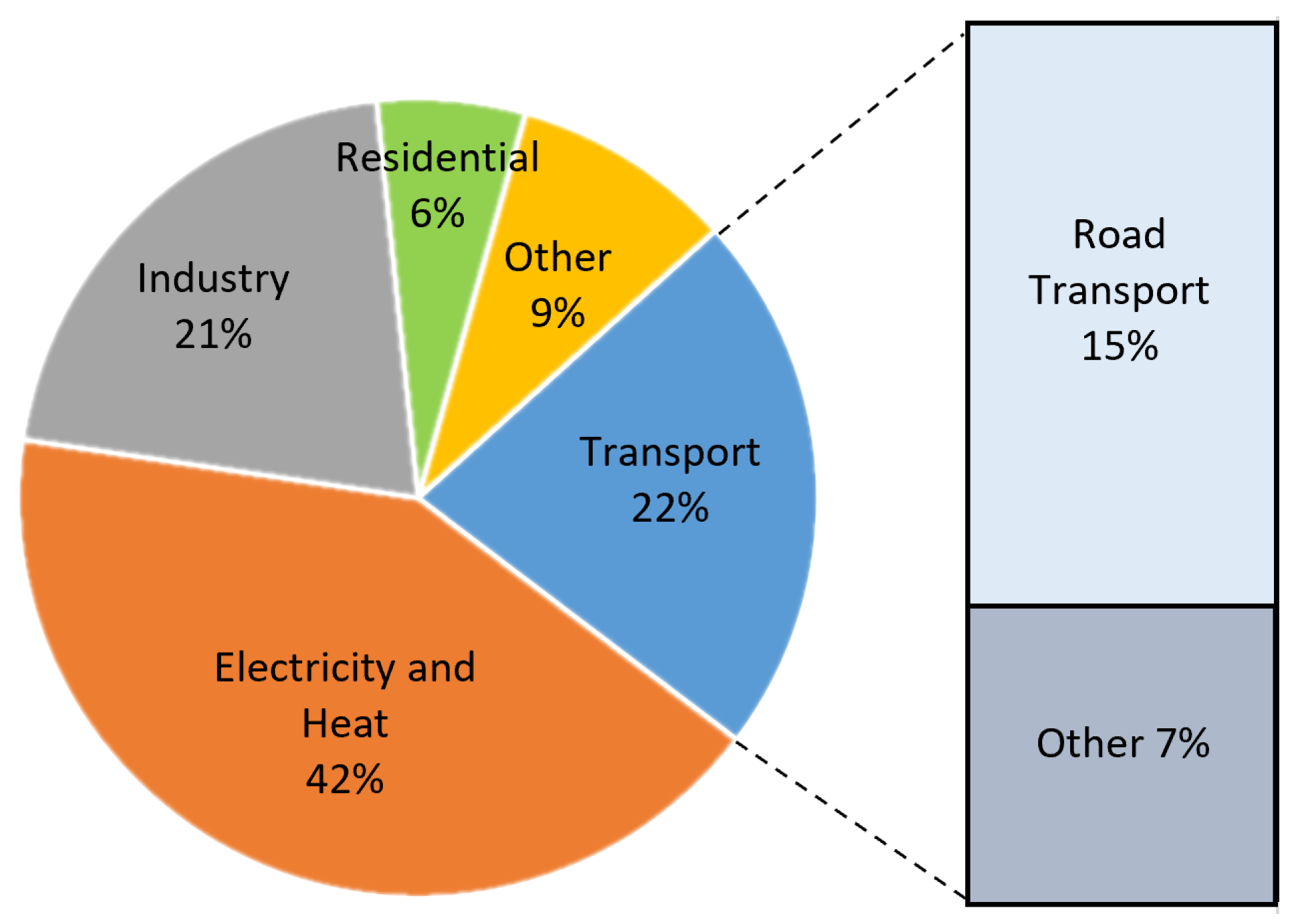
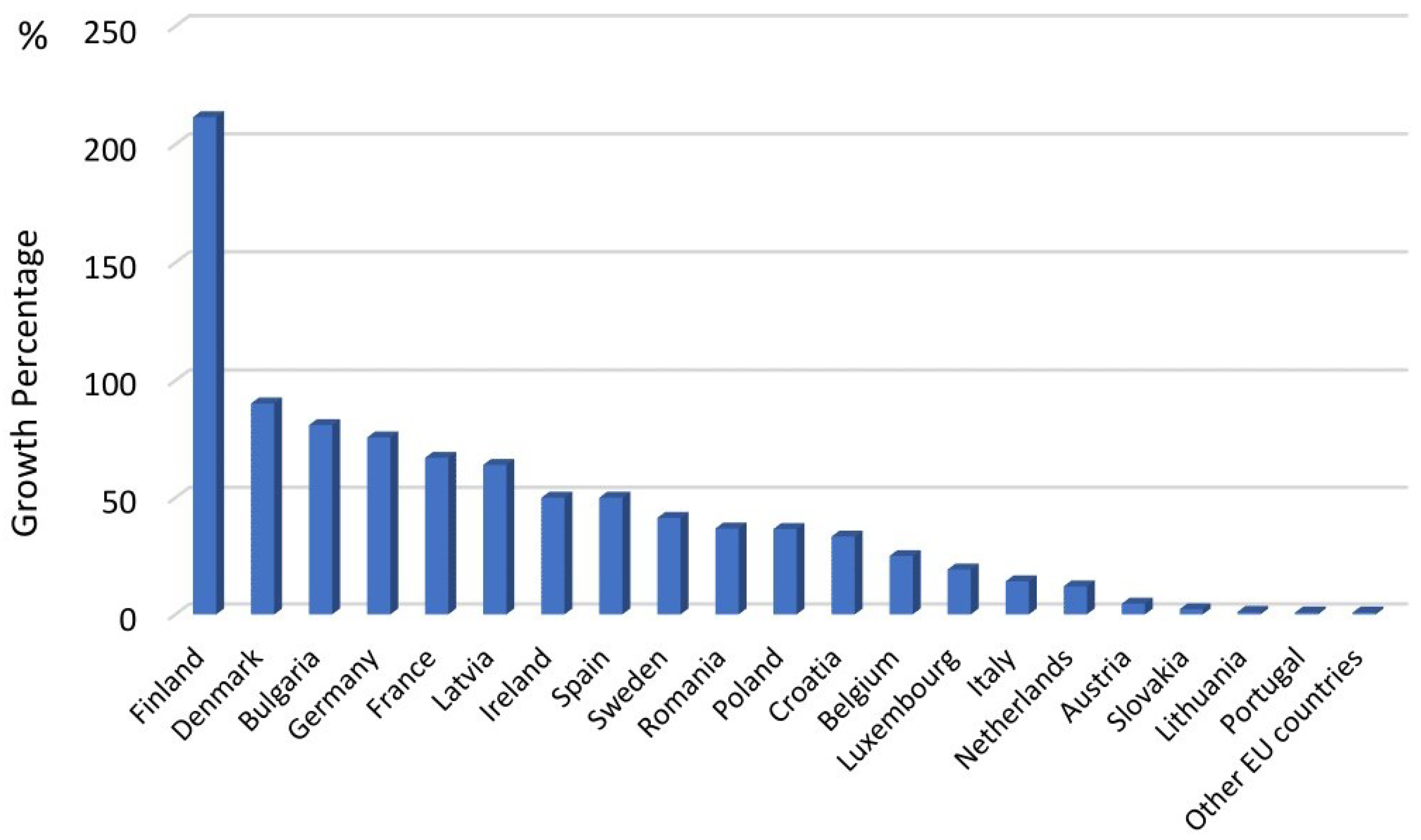
Electric Bus Scheduling and Timetabling, Fast Charging Infrastructure Planning, and Their Impact on the Grid: A Review



Abstract
1. Introduction
The Surveying Method
2. Different Types of EBs and Charging Technologies
2.1. Depot Charging
2.2. Fast Charging
2.3. Battery Swapping
2.4. Wireless Charging

| Charging Technology | Advantages | Disadvantages |
|---|---|---|
| Depot charging [34,35] | Multiple charging level | Batteries’ lifetime will decrease due to V2G operation |
| Providing V2G configuration | Long recharging time | |
| High efficiency | Increase the number of deadhead trips to/from the depot | |
| Less grid loss | Larger battery packs, more weight and cost | |
| No need to leases the property around the service area | Restrictions on placing bus routes due to EBs’ travel range limitation and deadhead trips to/from depot | |
| The upfront capital cost is often cheaper | ||
| Fast charging [31,32] | Less recharging duration | Voltage instability |
| Cover longer bus routes compared to depot charging | High cost of fast charging infrastructure | |
| Little time loss for recharging during the operation hours | Difficulty of placing fast chargers in tight and crowded city downtowns | |
| Require smaller batteries | ||
| Wireless charging [36,37] | Recharging process is safe and convenient without using any plugs | Huge investment cost for establishing on road infrastructure |
| No need for socket and connector | Low range of power transmission | |
| Capability of recharge while the bus is moving | Weak power transfer | |
| Battery swapping [38,39,40] | Fully charged batteries replaced in a short time | More expensive than conventional buses due to ownership or rent of a large battery swap station |
| Prevent the battery capacity and lifetime fade by slow charging | Requires a large amount of budget for buying batteries | |
| Provide V2G configuration to balance the electricity demand and load | Requires a large area for swapping batteries and their equipment | |
3. Theoretical Background and Related Works
3.1. Charging Station Location Planning
3.1.1. Node-Based Approach
3.1.2. Flow-Based Approach
3.1.3. Path-Based Approach
3.1.4. Equilibrium-Based Approach
Fast Charging Infrastructure Location Planning (FCILP)
| Paper | Objectives and Decision Variables | Charging Type | Model | Algorithm | Case Study | Remarks |
|---|---|---|---|---|---|---|
| Kunith et al. (2014) [64] | Optimum number of fast charging stations; min construction cost | Fast charging 1 | MILP | standard solver | - | Considering battery charging behavior and operational constraints |
| Kunith et al. (2017) [56] | Best locations and the optimum number of chargers and battery capacity | Fast charging 1 | MILP | standard solver | Berlin, Germany | Capacitated set covering problem |
| Rogge et al. (2018) [61] | Min the total cost of ownership | Depot charging | MILP | Grouping genetic algorithm | Germany & Denmark | Min vehicle investment, charger investment, operational costs, and energy expenses |
| Rohrbeck et al. (2018) [70] | Min total costs: the price of establishing charging stations and purchasing cost of vehicles | Opportunity charging | MILP | standard solver | Mannheim, Germany | Considering battery aging, traffic congestion, and partial charging |
| Liu et al. (2018) [71] | Min the cost of installing fast-chargers and batteries | Fast charging 2 | MILP | AARC | Utah, United States | Considering uncertain energy consumption for battery-EB |
| He et al. (2019) [68] | Minimizing the total cost of installing fast chargers, ESS, and EB batteries | Fast charging 2 | MILP | standard solver | Utah, United States | Showing how the ESSs may save system costs by lowering demand charges |
| Olmos et al. (2019) [69] | Best location of chargers, power rate of charging infrastructures, and size of ESS | Opportunity charging | - | Iterative sequence | Donostia, Spain | Minimizing the total cost of ownership |
| Lin et al. (2019) [52] | Min the total operating, establishing, and grid power loss costs | Fast charging 1 | MISOCP | Spatial-temporal approach | Shenzhen, China | Multistage planning model |
| Liu & Ceder (2020) [87] | Min the required number of EBs and fast charging infrastructure | Fast charging 3 | DF and IP | Adjusted max-flow | Singapore | lexicographic method-based two-stage construction-and-optimization solution was adopted to solve the bi-objective problem |
| Othman et al. (2020) [66] | Min the operational costs and energy consumption | Fast charging 4 | EHDG | Voronoi diagram | Toronto, Canada | The proposed EHDG algorithm is based on genetic algorithm and gradient descent technique |
| Liu et al. (2020) [59] | Min operating costs; all backup buses, drivers, maintenance, energy consumption cost, and construction costs of charging depots | Depot charging | MILP | Artificial fish swarm algorithm | China | Optimizing the layout of bus routes, the service frequency, and the location of charging depots |
| Zhang et al. (2021) [62] | Total costs of user and operator unsatisfied demand, passengers’ travel time, and operator cost | Fast charging 3 | MINLP & MILP | Modified genetic algorithm | Swiss | Bi-level programming framework |
| Uslu & Kaya (2021) [60] | Min the total cost; optimal locations and capacities of EB charging stations | Depot charging | MILP | standard solver | Turkey | Driving range has the highest effect for selecting locations and capacities of charging stations at minimum cost |
| Wu et al. (2021) [65] | Min maintenance, fast charging station construction, travel to charging stations costs and power loss of fast chargers | Fast charging 3 | BPSO | Mathematical program | Yangjiang, China | The bus terminuses clustered by the Affinity Propagation approach in order to estimate the approximate number of charging stations |
| Olsen et al. (2021) [73] | Min the total cost of installing depot chargers, vehicle, and operating costs | Opportunity charging | VNS | - | - | They proved that complete integration of BEB scheduling and charging station location planning is better than sequential planning |
| Alwesabi et al. (2021) [21] | Min the battery cost, system inverters, and total cable cost | Wireless charging | MILP | standard solver | Binghamton University | Finding the optimum fleet size, battery capacity, and dynamic wireless charging locations, simultaneously |
| Stumpe et al. (2021) [75] | Min the number of required vehicles, personnel and energy consumption costs | Opportunity charging | VNS | MILP | - | They performed sensitivity analysis for different input parameter uncertainties |
| Tzamakos et al. (2022) [77] | Min the number of wireless chargers | Wireless charging | MILP | standard solver | - | M/M/1 queuing model was used for bus recharging queuing |
| Li et al. (2022) [76] | Min the deadhead trips and charging services | Fast charging 3 | MILP | standard solver | Chengdu, China | The fast charging infrastructure location planning was investigated under the BOT model |
| Hu et al. (2022) [72] | Min the total cost of system; buying new chargers, EBs’ batteries, charging cost and passengers’ extra waiting time | Opportunity charging | MILP | standard solver | Sydney, Australia | Robust optimization technique was used to deal with the uncertain passengers’ travel demand and trip time |
| Wang et al. (2022) [88] | Min the fleet size, BEBs; batteries, and installing pantograph chargers costs | Opportunity charging | MILP | standard solver | Oslo, Norway | Time-dependent dwelling time, ridership, and travel time of BEBs were considered |
3.2. Bus Timetabling
3.3. Bus Scheduling
3.3.1. EB Scheduling with Heuristic Solution Approaches
3.3.2. EB Scheduling with Exact Solution Approaches
3.4. Integration of Bus Scheduling and Timetabling
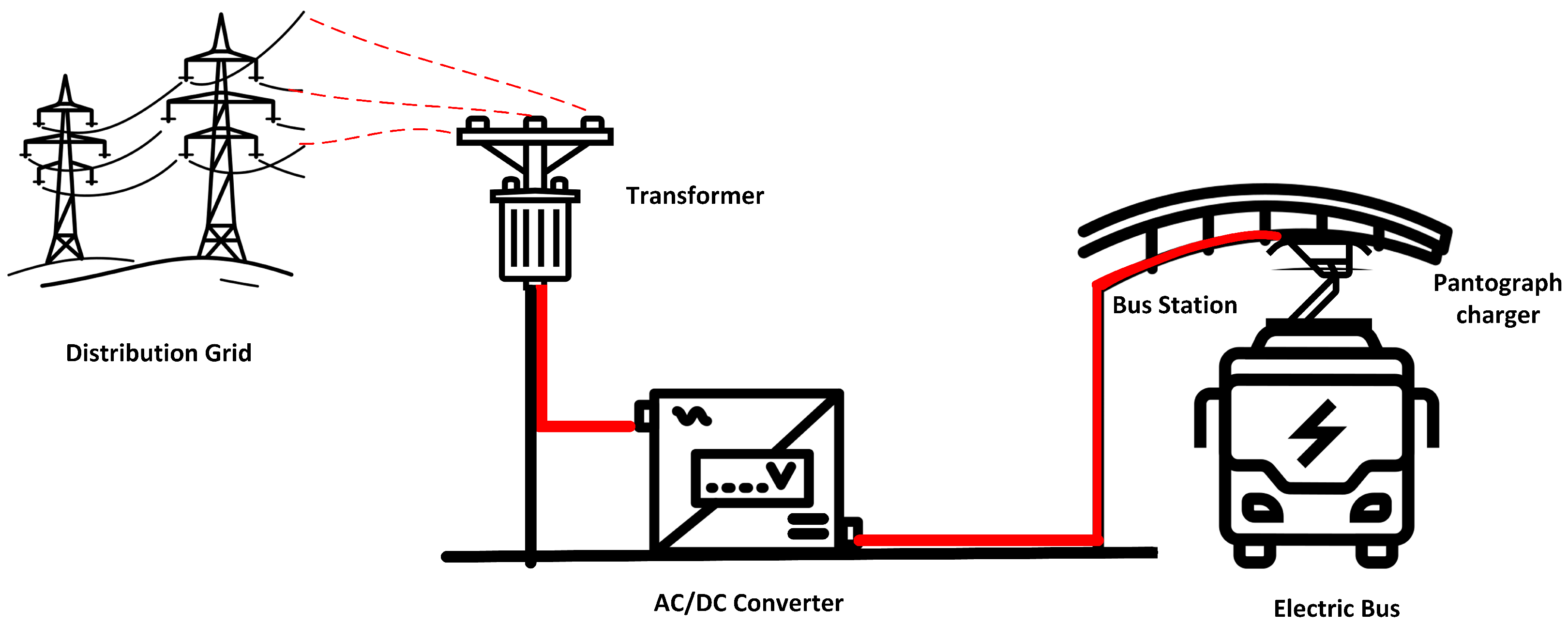
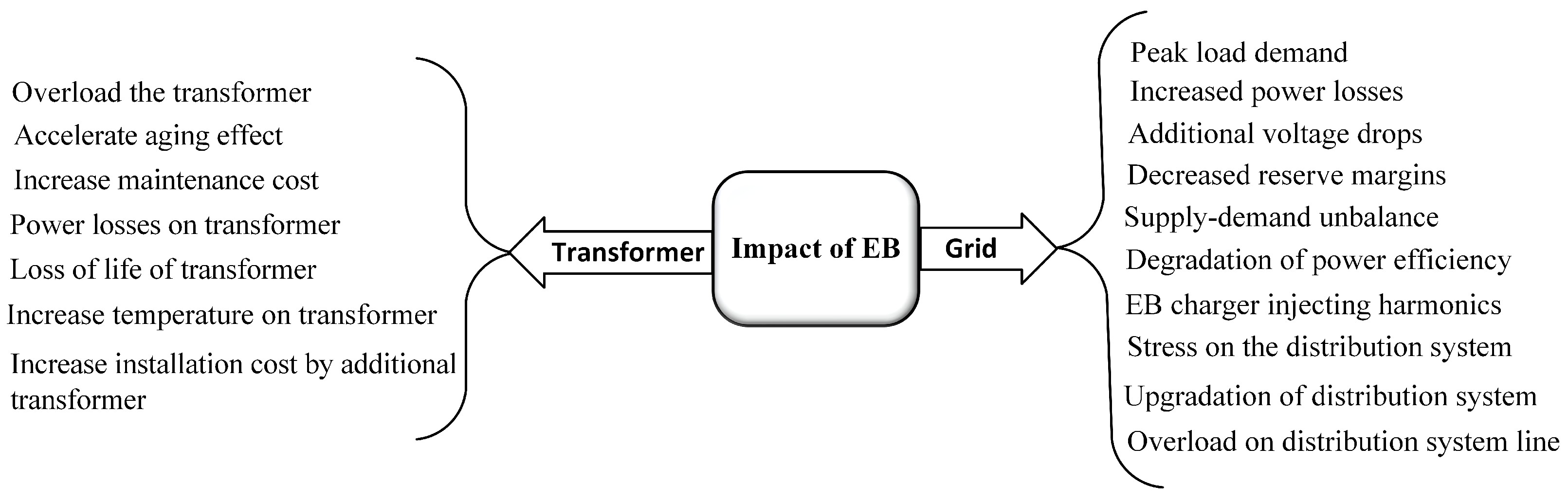
3.5. Impact on The Power System
3.5.1. Impact on the Distribution Grid
3.5.2. Impact on the Transformer
3.5.3. Ancillary Service by Electric Buses
4. Challenges and Limitations
5. Future Direction
Author Contributions
Funding
Data Availability Statement
Acknowledgments
Conflicts of Interest
Abbreviations
| AARC | Affinely adjustable robust counterpart |
| ACO | Ant colony optimization |
| AGA | Adaptive genetic algorithm |
| BEB | Battery-electric bus |
| BOT | Build-operate-transfer |
| BPSO | Binary particle swarm optimization |
| B2G | Bus to grid |
| DF | Deficit function |
| DG | Distribution grid |
| DOD | Depth of discharge |
| DSO | Distribution system operation |
| EB | Electric bus |
| EBS | Electric bus scheduling |
| EHDG | Enhanced heuristic descent gradient |
| EV | Electric vehicle |
| FCILP | Fast charging infrastructure location planning |
| GA | Genetic algorithm |
| G2V | Grid to vehicle |
| ILP | Integer linear programming |
| ITTVS | Integrated timetabling and vehicle scheduling |
| LNS | Large neighborhood search |
| MILP | Mixed-integer linear programming |
| MIP | Mixed-integer programming |
| NSGA-II | Non-dominated sorting genetic algorithm II |
| PHA | Progressive hedging algorithm |
| PHEV | Plug-in hybrid electric vehicles |
| PSO | Particle swarm optimization |
| SA | Simulated annealing |
| TOU | Time-of-use |
| TSO | Transmission system operation |
| TT | Timetabling |
| UBPM | Uncertain bi-level programming model |
| VS | Vehicle scheduling |
| VNS | Variable neighborhood search |
| VSP-TW | Vehicle scheduling problem with time windows |
| V2G | Vehicle to grid |
| V2H | Vehicle to home |
Appendix A
Appendix A.1
Appendix A.2
Appendix A.3
References
- Nejat, P.; Jomehzadeh, F.; Taheri, M.M.; Gohari, M.; Majid, M.Z.A. A global review of energy consumption, CO2 emissions and policy in the residential sector (with an overview of the top ten CO2 emitting countries). Renew. Sustain. Energy Rev. 2015, 43, 843–862. [Google Scholar] [CrossRef] [Scilit]
- Emissions from Bus Travel. Available online: https://www.carbonindependent.org/20.html (accessed on 5 May 2022).
- Miles, J.; Potter, S. Developing a viable electric bus service: The Milton Keynes demonstration project. Res. Transp. Econ. 2014, 48, 357–363. [Google Scholar] [CrossRef] [Scilit]
- Deng, R.; Liu, Y.; Chen, W.; Liang, H. A survey on electric buses—energy storage, power management, and charging scheduling. IEEE Trans. Intell. Transp. Syst. 2019, 22, 9–22. [Google Scholar] [CrossRef] [Scilit]
- Li, J.Q. Battery-electric transit bus developments and operations: A review. Int. J. Sustain. Transp. 2016, 10, 157–169. [Google Scholar] [CrossRef] [Scilit]
- An, K. Battery electric bus infrastructure planning under demand uncertainty. Transp. Res. Part C: Emerg. Technol. 2020, 111, 572–587. [Google Scholar] [CrossRef] [Scilit]
- European Alternative Fuels Observatory. Available online: https://alternative-fuels-observatory.ec.europa.eu/ (accessed on 17 April 2022).
- Electric Buses Arrive on Time—Transport & Environment. Available online: https://www.transportenvironment.org/discover/electric-buses-arrive-time/ (accessed on 17 April 2022).
- Kang, J.; Yu, R.; Huang, X.; Maharjan, S.; Zhang, Y.; Hossain, E. Enabling Localized Peer-to-Peer Electricity Trading among Plug-in Hybrid Electric Vehicles Using Consortium Blockchains. IEEE Trans. Ind. Inform. 2017, 13, 3154–3164. [Google Scholar] [CrossRef] [Scilit]
- Zhang, Y.; Hu, Q.; Meng, Z.; Ralescu, A. Fuzzy dynamic timetable scheduling for public transit. Fuzzy Sets Syst. 2020, 395, 235–253. [Google Scholar] [CrossRef] [Scilit]
- Bie, Y.; Hao, M.; Guo, M. Optimal electric bus scheduling based on the combination of all-stop and short-turning strategies. Sustainability 2021, 13, 1827. [Google Scholar] [CrossRef] [Scilit]
- He, Y.; Liu, Z.; Song, Z. Optimal charging scheduling and management for a fast-charging battery electric bus system. Transp. Res. Part E Logist. Transp. Rev. 2020, 142, 102056. [Google Scholar] [CrossRef] [Scilit]
- Lajunen, A. Lifecycle costs and charging requirements of electric buses with different charging methods. J. Clean. Prod. 2018, 172, 56–67. [Google Scholar] [CrossRef] [Scilit]
- Mahmoud, M.; Garnett, R.; Ferguson, M.; Kanaroglou, P. Electric buses: A review of alternative powertrains. Renew. Sustain. Energy Rev. 2016, 62, 673–684. [Google Scholar] [CrossRef] [Scilit]
- DaSilva, L.; Mohamed, M. Optimizing Electric Bus Transit Systems: A Review of Modelling Techniques and Methods. In Proceedings of the 55th Annual Meetings of the Canadian Transportation Research Forum, Montreal, QC, USA, 24–27 May 2020. [Google Scholar]
- Perumal, S.S.; Lusby, R.M.; Larsen, J. Electric bus planning & scheduling: A review of related problems and methodologies. Eur. J. Oper. Res. 2021, 301, 395–413. [Google Scholar]
- Manzolli, J.A.; Trovão, J.P.; Antunes, C.H. A review of electric bus vehicles research topics–Methods and trends. Renew. Sustain. Energy Rev. 2022, 159, 112211. [Google Scholar] [CrossRef] [Scilit]
- Rong, A.; Chen, S.; Shi, D.; Zhang, M.; Wang, C. A Review on Electric Bus Charging Scheduling from Viewpoints of Vehicle Scheduling. In Proceedings of the 2021 IEEE International Conference on Industrial Engineering and Engineering Management (IEEM), Marina Bay Sands, Singapore, 13 December 2021; pp. 1–5. [Google Scholar]
- Aamodt, A.; Cory, K.; Coney, K. Electrifying Transit: A Guidebook for Implementing Battery Electric Buses; Technical Report; National Renewable Energy Lab. (NREL): Golden, CO, USA, 2021. [Google Scholar]
- Mathieu, L. Electric Buses Arrive on Time—Marketplace, Economic, Technology, Environmental and Policy Perspectives for Fully Electric Buses in the EU. Transport and Environment. Available online: https://www.transportenvironment.org/wp-content/uploads/2021/07/Electric-buses-arrive-on-time-1.pdf (accessed on 8 May 2022).
- Alwesabi, Y.; Liu, Z.; Kwon, S.; Wang, Y. A novel integration of scheduling and dynamic wireless charging planning models of battery electric buses. Energy 2021, 230, 120806. [Google Scholar] [CrossRef] [Scilit]
- Bi, Z.; De Kleine, R.; Keoleian, G.A. Integrated Life Cycle Assessment and Life Cycle Cost Model for Comparing Plug-in versus Wireless Charging for an Electric Bus System. J. Ind. Ecol. 2017, 21, 344–355. [Google Scholar] [CrossRef] [Scilit]
- Ahmad, F.; Saad Alam, M.; Saad Alsaidan, I.; Shariff, S.M. Battery swapping station for electric vehicles: Opportunities and challenges. IET Smart Grid 2020, 3, 280–286. [Google Scholar] [CrossRef] [Scilit]
- Fang, S.C.; Ke, B.R.; Chung, C.Y. Minimization of construction costs for an all battery-swapping electric-bus transportation system: Comparison with an all plug-in system. Energies 2017, 10, 890. [Google Scholar] [CrossRef] [Scilit]
- Kunith, A.; Mendelevitch, R.; Kuschmierz, A.; Goehlich, D. Optimization of fast charging infrastructure for electric bus transportation–Electrification of a city bus network. In Proceedings of the EVS29 International Battery, Hybrid and Fuel Cell Electric Vehicle Symposium, Montréal, QC, Canada, 19–22 June 2016. [Google Scholar]
- Bi, Z.; Song, L.; De Kleine, R.; Mi, C.C.; Keoleian, G.A. Plug-in vs. wireless charging: Life cycle energy and greenhouse gas emissions for an electric bus system. Appl. Energy 2015, 146, 11–19. [Google Scholar] [CrossRef] [Scilit]
- Shin, J.; Shin, S.; Kim, Y.; Ahn, S.; Lee, S.; Jung, G.; Jeon, S.J.; Cho, D.H. Design and implementation of shaped magnetic-resonance-based wireless power transfer system for roadway-powered moving electric vehicles. IEEE Trans. Ind. Electron. 2013, 61, 1179–1192. [Google Scholar] [CrossRef] [Scilit]
- Teoh, L.E.; Khoo, H.L.; Goh, S.Y.; Chong, L.M. Scenario-based electric bus operation: A case study of Putrajaya, Malaysia. Int. J. Transp. Sci. Technol. 2018, 7, 10–25. [Google Scholar] [CrossRef] [Scilit]
- Correa, G.; Muñoz, P.; Falaguerra, T.; Rodriguez, C. Performance comparison of conventional, hybrid, hydrogen and electric urban buses using well to wheel analysis. Energy 2017, 141, 537–549. [Google Scholar] [CrossRef] [Scilit]
- Al-Ogaili, A.S.; Al-Shetwi, A.Q.; Al-Masri, H.M.; Babu, T.S.; Hoon, Y.; Alzaareer, K.; Babu, N.P. Review of the Estimation Methods of Energy Consumption for Battery Electric Buses. Energies 2021, 14, 7578. [Google Scholar] [CrossRef] [Scilit]
- Yoldaş, Y.; Önen, A.; Muyeen, S.; Vasilakos, A.V.; Alan, I. Enhancing smart grid with microgrids: Challenges and opportunities. Renew. Sustain. Energy Rev. 2017, 72, 205–214. [Google Scholar] [CrossRef] [Scilit]
- Habib, S.; Khan, M.M.; Abbas, F.; Sang, L.; Shahid, M.U.; Tang, H. A comprehensive study of implemented international standards, technical challenges, impacts and prospects for electric vehicles. IEEE Access 2018, 6, 13866–13890. [Google Scholar]
- Lepre, N.; Burget, S.; McKenzie, L. Deploying Charging Infrastructure for Electric Transit Buses. Available online: https://atlaspolicy.com/wp-content/uploads/2022/05/Deploying-Charging-Infrastructure-for-Electric-Transit-Buses.pdf (accessed on 16 July 2022).
- Tan, K.M.; Ramachandaramurthy, V.K.; Yong, J.Y. Integration of electric vehicles in smart grid: A review on vehicle to grid technologies and optimization techniques. Renew. Sustain. Energy Rev. 2016, 53, 720–732. [Google Scholar] [CrossRef] [Scilit]
- Yong, J.Y.; Ramachandaramurthy, V.K.; Tan, K.M.; Mithulananthan, N. A review on the state-of-the-art technologies of electric vehicle, its impacts and prospects. Renew. Sustain. Energy Rev. 2015, 49, 365–385. [Google Scholar] [CrossRef] [Scilit]
- Tran, D.H.; Choi, W. Design of a high-efficiency wireless power transfer system with intermediate coils for the on-board chargers of electric vehicles. IEEE Trans. Power Electron. 2017, 33, 175–187. [Google Scholar] [CrossRef] [Scilit]
- Patil, D.; Mcdonough, M.K.; Miller, J.M.; Fahimi, B.; Balsara, P.T. Wireless power transfer for vehicular applications: Overview and challenges. IEEE Trans. Transp. Electrif. 2017, 4, 3–37. [Google Scholar] [CrossRef] [Scilit]
- Zhang, T.; Chen, X.; Yu, Z.; Zhu, X.; Shi, D. A Monte Carlo simulation approach to evaluate service capacities of EV charging and battery swapping stations. IEEE Trans. Ind. Inform. 2018, 14, 3914–3923. [Google Scholar] [CrossRef] [Scilit]
- Sun, B.; Tan, X.; Tsang, D.H. Optimal charging operation of battery swapping and charging stations with QoS guarantee. IEEE Trans. Smart Grid 2017, 9, 4689–4701. [Google Scholar] [CrossRef] [Scilit]
- Martínez-Lao, J.; Montoya, F.G.; Montoya, M.G.; Manzano-Agugliaro, F. Electric vehicles in Spain: An overview of charging systems. Renew. Sustain. Energy Rev. 2017, 77, 970–983. [Google Scholar] [CrossRef] [Scilit]
- Jung, J.; Chow, J.Y.; Jayakrishnan, R.; Park, J.Y. Stochastic dynamic itinerary interception refueling location problem with queue delay for electric taxi charging stations. Transp. Res. Part C Emerg. Technol. 2014, 40, 123–142. [Google Scholar] [CrossRef] [Scilit]
- Eisel, M.; Schmidt, J.; Kolbe, L.M. Finding suitable locations for charging stations. In Proceedings of the 2014 IEEE International Electric Vehicle Conference (IEVC), Florence, Italy, 17–19 December 2014; pp. 1–8. [Google Scholar]
- Baouche, F.; Billot, R.; Trigui, R.; El Faouzi, N.E. Efficient allocation of electric vehicles charging stations: Optimization model and application to a dense urban network. IEEE Intell. Transp. Syst. Mag. 2014, 6, 33–43. [Google Scholar] [CrossRef] [Scilit]
- Asamer, J.; Reinthaler, M.; Ruthmair, M.; Straub, M.; Puchinger, J. Optimizing charging station locations for urban taxi providers. Transp. Res. Part A Policy Pract. 2016, 85, 233–246. [Google Scholar] [CrossRef] [Scilit]
- He, S.Y.; Kuo, Y.H.; Wu, D. Incorporating institutional and spatial factors in the selection of the optimal locations of public electric vehicle charging facilities: A case study of Beijing, China. Transp. Res. Part C Emerg. Technol. 2016, 67, 131–148. [Google Scholar] [CrossRef] [Scilit]
- Kuby, M.; Lim, S. The flow-refueling location problem for alternative-fuel vehicles. Socio-Econ. Plan. Sci. 2005, 39, 125–145. [Google Scholar] [CrossRef] [Scilit]
- Mak, H.Y.; Rong, Y.; Shen, Z.J.M. Infrastructure planning for electric vehicles with battery swapping. Manag. Sci. 2013, 59, 1557–1575. [Google Scholar] [CrossRef] [Scilit]
- Zhang, H.; Moura, S.J.; Hu, Z.; Qi, W.; Song, Y. A second-order cone programming model for planning PEV fast-charging stations. IEEE Trans. Power Syst. 2017, 33, 2763–2777. [Google Scholar] [CrossRef] [Scilit]
- He, F.; Yin, Y.; Zhou, J. Deploying public charging stations for electric vehicles on urban road networks. Transp. Res. Part C: Emerg. Technol. 2015, 60, 227–240. [Google Scholar] [CrossRef] [Scilit]
- Chen, Z.; He, F.; Yin, Y. Optimal deployment of charging lanes for electric vehicles in transportation networks. Transp. Res. Part B Methodol. 2016, 91, 344–365. [Google Scholar] [CrossRef] [Scilit]
- He, F.; Wu, D.; Yin, Y.; Guan, Y. Optimal deployment of public charging stations for plug-in hybrid electric vehicles. Transp. Res. Part B Methodol. 2013, 47, 87–101. [Google Scholar] [CrossRef] [Scilit]
- Lin, Y.; Zhang, K.; Shen, Z.J.M.; Ye, B.; Miao, L. Multistage large-scale charging station planning for electric buses considering transportation network and power grid. Transp. Res. Part C Emerg. Technol. 2019, 107, 423–443. [Google Scholar] [CrossRef] [Scilit]
- Ko, Y.D.; Jang, Y.J. The optimal system design of the online electric vehicle utilizing wireless power transmission technology. IEEE Trans. Intell. Transp. Syst. 2013, 14, 1255–1265. [Google Scholar] [CrossRef] [Scilit]
- Liu, Z.; Song, Z. Robust planning of dynamic wireless charging infrastructure for battery electric buses. Transp. Res. Part C Emerg. Technol. 2017, 83, 77–103. [Google Scholar] [CrossRef] [Scilit]
- Helber, S.; Broihan, J.; Jang, Y.J.; Hecker, P.; Feuerle, T. Location planning for dynamic wireless charging systems for electric airport passenger buses. Energies 2018, 11, 258. [Google Scholar] [CrossRef] [Scilit]
- Kunith, A.; Mendelevitch, R.; Goehlich, D. Electrification of a city bus network—An optimization model for cost-effective placing of charging infrastructure and battery sizing of fast-charging electric bus systems. Int. J. Sustain. Transp. 2017, 11, 707–720. [Google Scholar] [CrossRef] [Scilit]
- Xylia, M.; Leduc, S.; Patrizio, P.; Kraxner, F.; Silveira, S. Locating charging infrastructure for electric buses in Stockholm. Transp. Res. Part C Emerg. Technol. 2017, 78, 183–200. [Google Scholar] [CrossRef] [Scilit]
- Mohamed, M.; Farag, H.; El-Taweel, N.; Ferguson, M. Simulation of electric buses on a full transit network: Operational feasibility and grid impact analysis. Electr. Power Syst. Res. 2017, 142, 163–175. [Google Scholar] [CrossRef] [Scilit]
- Liu, Y.; Feng, X.; Ding, C.; Hua, W.; Ruan, Z. Electric transit network design by an improved artificial fish-swarm algorithm. J. Transp. Eng. Part A Syst. 2020, 146, 04020071. [Google Scholar] [CrossRef] [Scilit]
- Uslu, T.; Kaya, O. Location and capacity decisions for electric bus charging stations considering waiting times. Transp. Res. Part D Transp. Environ. 2021, 90, 102645. [Google Scholar] [CrossRef] [Scilit]
- Rogge, M.; Van der Hurk, E.; Larsen, A.; Sauer, D.U. Electric bus fleet size and mix problem with optimization of charging infrastructure. Appl. Energy 2018, 211, 282–295. [Google Scholar] [CrossRef] [Scilit]
- Zhang, W.; Zhao, H.; Song, Z. Integrating transit route network design and fast charging station planning for battery electric buses. IEEE Access 2021, 9, 51604–51617. [Google Scholar] [CrossRef] [Scilit]
- Wang, G.; Fang, Z.; Xie, X.; Wang, S.; Sun, H.; Zhang, F.; Liu, Y.; Zhang, D. Pricing-aware real-time charging scheduling and charging station expansion for large-scale electric buses. ACM Trans. Intell. Syst. Technol. (TIST) 2020, 12, 1–26. [Google Scholar] [CrossRef] [Scilit]
- Kunith, A.; Goehlich, D.; Mendelevitch, R. Planning and optimization of a fast charging infrastructure for electric urban bus systems. In Proceedings of the 2nd International Conference on Traffic and Transport Engineering, Lisbon, Portugal, 17–18 April 2014; Volume 27. [Google Scholar]
- Wu, X.; Feng, Q.; Bai, C.; Lai, C.S.; Jia, Y.; Lai, L.L. A novel fast-charging stations locational planning model for electric bus transit system. Energy 2021, 224, 120106. [Google Scholar] [CrossRef] [Scilit]
- Othman, A.M.; Gabbar, H.A.; Pino, F.; Repetto, M. Optimal electrical fast charging stations by enhanced descent gradient and Voronoi diagram. Comput. Electr. Eng. 2020, 83, 106574. [Google Scholar] [CrossRef] [Scilit]
- Csonka, B. Optimization of static and dynamic charging infrastructure for electric buses. Energies 2021, 14, 3516. [Google Scholar] [CrossRef] [Scilit]
- He, Y.; Song, Z.; Liu, Z. Fast-charging station deployment for battery electric bus systems considering electricity demand charges. Sustain. Cities Soc. 2019, 48, 101530. [Google Scholar] [CrossRef] [Scilit]
- Olmos, J.; López, J.A.; Gaztañaga, H.; Herrera, V.I. Analysis of optimal charging points location and storage capacity for hybrid and full electric buses. In Proceedings of the 2019 Fourteenth International Conference on Ecological Vehicles and Renewable Energies (EVER), Monte-Carlo, Monaco, 8–10 May 2019; pp. 1–7. [Google Scholar]
- Rohrbeck, B.; Berthold, K.; Hettich, F. Location Planning of Charging Stations for Electric City Buses Considering Battery Ageing Effects. In Operations Research Proceedings 2017; Springer: Berlin/Heidelberg, Germany, 2018; pp. 701–707. [Google Scholar]
- Liu, Z.; Song, Z.; He, Y. Planning of fast-charging stations for a battery electric bus system under energy consumption uncertainty. Transp. Res. Rec. 2018, 2672, 96–107. [Google Scholar] [CrossRef] [Scilit]
- Hu, H.; Du, B.; Liu, W.; Perez, P. A joint optimisation model for charger locating and electric bus charging scheduling considering opportunity fast charging and uncertainties. Transp. Res. Part C Emerg. Technol. 2022, 141, 103732. [Google Scholar] [CrossRef] [Scilit]
- Olsen, N.; Kliewer, N. Location Planning of Charging Stations for Electric Buses in Public Transport Considering Vehicle Scheduling: A Variable Neighborhood Search Based Approach. Appl. Sci. 2022, 12, 3855. [Google Scholar] [CrossRef] [Scilit]
- Li, L.; Lo, H.K.; Xiao, F. Mixed bus fleet scheduling under range and refueling constraints. Transp. Res. Part C Emerg. Technol. 2019, 104, 443–462. [Google Scholar] [CrossRef] [Scilit]
- Stumpe, M.; Rößler, D.; Schryen, G.; Kliewer, N. Study on sensitivity of electric bus systems under simultaneous optimization of charging infrastructure and vehicle schedules. EURO J. Transp. Logist. 2021, 10, 100049. [Google Scholar] [CrossRef] [Scilit]
- Li, M.; Tang, P.; Lin, X.; He, F. Multistage planning of electric transit charging facilities under build-operate-transfer model. Transp. Res. Part D Transp. Environ. 2022, 102, 103118. [Google Scholar] [CrossRef] [Scilit]
- Tzamakos, D.; Iliopoulou, C.; Kepaptsoglou, K. Electric bus charging station location optimization considering queues. Int. J. Transp. Sci. Technol. 2022. [Google Scholar] [CrossRef] [Scilit]
- Abdelwahed, A.; van den Berg, P.L.; Brandt, T.; Collins, J.; Ketter, W. Evaluating and optimizing opportunity fast-charging schedules in transit battery electric bus networks. Transp. Sci. 2020, 54, 1601–1615. [Google Scholar] [CrossRef] [Scilit]
- Gkiotsalitis, K. Bus holding of electric buses with scheduled charging times. IEEE Trans. Intell. Transp. Syst. 2020, 22, 6760–6771. [Google Scholar] [CrossRef] [Scilit]
- Patil, R.; Rahegaonkar, A.; Patange, A.; Nalavade, S. Designing an optimized schedule of transit electric bus charging: A municipal level case study. Mater. Today Proc. 2022, 56, 2653–2658. [Google Scholar] [CrossRef] [Scilit]
- Wang, Y.; Huang, Y.; Xu, J.; Barclay, N. Optimal recharging scheduling for urban electric buses: A case study in Davis. Transp. Res. Part E Logist. Transp. Rev. 2017, 100, 115–132. [Google Scholar] [CrossRef] [Scilit]
- Jiang, Y.; He, T. Optimal Charging Scheduling and Management with Bus-Driver-Trip Assignment considering Mealtime Windows for an Electric Bus Line. Complexity 2022, 2022, 3087279. [Google Scholar] [CrossRef] [Scilit]
- Manzolli, J.A.; Trovão, J.P.F.; Antunes, C.H. Electric bus coordinated charging strategy considering V2G and battery degradation. Energy 2022, 254, 124252. [Google Scholar] [CrossRef] [Scilit]
- Huang, D.; Wang, Y.; Jia, S.; Liu, Z.; Wang, S. A Lagrangian relaxation approach for the electric bus charging scheduling optimisation problem. Transp. A Transp. Sci. 2022, 1–24. [Google Scholar] [CrossRef] [Scilit]
- Huang, D.; Wang, S. A two-stage stochastic programming model of coordinated electric bus charging scheduling for a hybrid charging scheme. Multimodal Transp. 2022, 1, 100006. [Google Scholar] [CrossRef] [Scilit]
- Hu, H.; Du, B.; Perez, P. Integrated optimisation of electric bus scheduling and top-up charging at bus stops with fast chargers. In Proceedings of the 2021 IEEE International Intelligent Transportation Systems Conference (ITSC), Indianapolis, IN, USA, 19–22 September 2021; pp. 2324–2329. [Google Scholar]
- Liu, T.; Ceder, A.A. Battery-electric transit vehicle scheduling with optimal number of stationary chargers. Transp. Res. Part C Emerg. Technol. 2020, 114, 118–139. [Google Scholar] [CrossRef] [Scilit]
- Wang, Y.; Liao, F.; Lu, C. Integrated optimization of charger deployment and fleet scheduling for battery electric buses. Transp. Res. Part D Transp. Environ. 2022, 109, 103382. [Google Scholar] [CrossRef] [Scilit]
- Ceder, A.A.; Hassold, S.; Dano, B. Approaching even-load and even-headway transit timetables using different bus sizes. Public Transp. 2013, 5, 193–217. [Google Scholar] [CrossRef] [Scilit]
- Teng, J.; Chen, T.; Fan, W. Integrated approach to vehicle scheduling and bus timetabling for an electric bus line. J. Transp. Eng. Part A Syst. 2020, 146, 04019073. [Google Scholar] [CrossRef] [Scilit]
- Zhang, S.; Ceder, A.A.; Cao, Z. Integrated optimization for feeder bus timetabling and procurement scheme with consideration of environmental impact. Comput. Ind. Eng. 2020, 145, 106501. [Google Scholar] [CrossRef] [Scilit]
- Shang, H.Y.; Huang, H.J.; Wu, W.X. Bus timetabling considering passenger satisfaction: An empirical study in Beijing. Comput. Ind. Eng. 2019, 135, 1155–1166. [Google Scholar] [CrossRef] [Scilit]
- Ceder, A.; Philibert, L. Transit timetables resulting in even maximum load on individual vehicles. IEEE Trans. Intell. Transp. Syst. 2014, 15, 2605–2614. [Google Scholar] [CrossRef]
- Häll, C.H.; Ceder, A.; Ekström, J.; Quttineh, N.H. Adjustments of public transit operations planning process for the use of electric buses. J. Intell. Transp. Syst. 2019, 23, 216–230. [Google Scholar] [CrossRef] [Scilit]
- Ceder, A.; Golany, B.; Tal, O. Creating bus timetables with maximal synchronization. Transp. Res. Part A Policy Pract. 2001, 35, 913–928. [Google Scholar] [CrossRef] [Scilit]
- Zhigang, L.; Jinsheng, S.; Haixing, W.; Wei, Y. Regional bus timetabling model with synchronization. J. Transp. Syst. Eng. Inf. Technol. 2007, 7, 109–112. [Google Scholar]
- Ibarra-Rojas, O.J.; Rios-Solis, Y.A. Synchronization of bus timetabling. Transp. Res. Part B Methodol. 2012, 46, 599–614. [Google Scholar] [CrossRef] [Scilit]
- Saharidis, G.K.; Dimitropoulos, C.; Skordilis, E. Minimizing waiting times at transitional nodes for public bus transportation in Greece. Oper. Res. 2014, 14, 341–359. [Google Scholar] [CrossRef] [Scilit]
- Parbo, J.; Nielsen, O.A.; Prato, C.G. User perspectives in public transport timetable optimisation. Transp. Res. Part C Emerg. Technol. 2014, 48, 269–284. [Google Scholar] [CrossRef] [Scilit]
- Gkiotsalitis, K.; Alesiani, F. Robust timetable optimization for bus lines subject to resource and regulatory constraints. Transp. Res. Part E Logist. Transp. Rev. 2019, 128, 30–51. [Google Scholar] [CrossRef] [Scilit]
- Kliewer, N.; Mellouli, T.; Suhl, L. A time–space network based exact optimization model for multi-depot bus scheduling. Eur. J. Oper. Res. 2006, 175, 1616–1627. [Google Scholar] [CrossRef] [Scilit]
- Wen, M.; Linde, E.; Ropke, S.; Mirchandani, P.; Larsen, A. An adaptive large neighborhood search heuristic for the electric vehicle scheduling problem. Comput. Oper. Res. 2016, 76, 73–83. [Google Scholar] [CrossRef] [Scilit]
- Gertsbach, I.; Gurevich, Y. Constructing an optimal fleet for a transportation schedule. Transp. Sci. 1977, 11, 20–36. [Google Scholar] [CrossRef] [Scilit]
- Ceder, A.; Stern, H.I. Deficit function bus scheduling with deadheading trip insertions for fleet size reduction. Transp. Sci. 1981, 15, 338–363. [Google Scholar] [CrossRef] [Scilit]
- Ceder, A. Public Transit Planning and Operation: Modeling, Practice and Behavior; CRC Press: Boca Raton, FL, USA, 2016. [Google Scholar]
- Liu, T.; Ceder, A.A. Deficit function related to public transport: 50 year retrospective, new developments, and prospects. Transp. Res. Part B Methodol. 2017, 100, 1–19. [Google Scholar] [CrossRef] [Scilit]
- Li, J.Q. Transit bus scheduling with limited energy. Transp. Sci. 2014, 48, 521–539. [Google Scholar] [CrossRef] [Scilit]
- Wang, H.; Shen, J. Heuristic approaches for solving transit vehicle scheduling problem with route and fueling time constraints. Appl. Math. Comput. 2007, 190, 1237–1249. [Google Scholar] [CrossRef] [Scilit]
- Chao, Z.; Xiaohong, C. Optimizing battery electric bus transit vehicle scheduling with battery exchanging: Model and case study. Procedia-Soc. Behav. Sci. 2013, 96, 2725–2736. [Google Scholar] [CrossRef] [Scilit]
- Paul, T.; Yamada, H. Operation and charging scheduling of electric buses in a city bus route network. In Proceedings of the 17th International IEEE Conference on Intelligent Transportation Systems (ITSC), Qingdao, China, 8–11 October 2014; pp. 2780–2786. [Google Scholar]
- Sung, Y.W.; Chu, J.C.; Chang, Y.J.; Yeh, J.C.; Chou, Y.H. Optimizing mix of heterogeneous buses and chargers in electric bus scheduling problems. Simul. Model. Pract. Theory 2022, 119, 102584. [Google Scholar] [CrossRef] [Scilit]
- Ke, B.R.; Fang, S.C.; Lai, J.H. Adjustment of bus departure time of an electric bus transportation system for reducing costs and carbon emissions: A case study in Penghu. Energy Environ. 2022, 33, 728–751. [Google Scholar] [CrossRef] [Scilit]
- Wang, J.; Wang, H.; Chang, A.; Song, C. Collaborative Optimization of Vehicle and Crew Scheduling for a Mixed Fleet with Electric and Conventional Buses. Sustainability 2022, 14, 3627. [Google Scholar] [CrossRef] [Scilit]
- Li, X.; Wang, T.; Li, L.; Feng, F.; Wang, W.; Cheng, C. Joint optimization of regular charging electric bus transit network schedule and stationary charger deployment considering partial charging policy and time-of-use electricity prices. J. Adv. Transp. 2020, 2020, 8863905. [Google Scholar] [CrossRef] [Scilit]
- Guo, J.; Xue, Y.; Guan, H. Research on the combinatorial optimization of EBs departure interval and vehicle configuration based on uncertain bi-level programming. Transp. Lett. 2022, 1–11. [Google Scholar] [CrossRef] [Scilit]
- Yao, E.; Liu, T.; Lu, T.; Yang, Y. Optimization of electric vehicle scheduling with multiple vehicle types in public transport. Sustain. Cities Soc. 2020, 52, 101862. [Google Scholar] [CrossRef] [Scilit]
- Zhou, G.J.; Xie, D.F.; Zhao, X.M.; Lu, C. Collaborative optimization of vehicle and charging scheduling for a bus fleet mixed with electric and traditional buses. IEEE Access 2020, 8, 8056–8072. [Google Scholar] [CrossRef] [Scilit]
- Zhu, Y.; Yan, F.; Pan, J.S.; Yu, L.; Bai, Y.; Wang, W.; He, C.; Shi, Z. Mutigroup-Based Phasmatodea Population Evolution Algorithm with Mutistrategy for IoT Electric Bus Scheduling. Wirel. Commun. Mob. Comput. 2022, 2022, 1500646. [Google Scholar] [CrossRef] [Scilit]
- Alwesabi, Y.; Wang, Y.; Avalos, R.; Liu, Z. Electric bus scheduling under single depot dynamic wireless charging infrastructure planning. Energy 2020, 213, 118855. [Google Scholar] [CrossRef] [Scilit]
- Rinaldi, M.; Parisi, F.; Laskaris, G.; D’Ariano, A.; Viti, F. Optimal dispatching of electric and hybrid buses subject to scheduling and charging constraints. In Proceedings of the 2018 21st International Conference on Intelligent Transportation Systems (ITSC), Maui, HI, USA, 4–7 November 2018; pp. 41–46. [Google Scholar]
- Tang, X.; Lin, X.; He, F. Robust scheduling strategies of electric buses under stochastic traffic conditions. Transp. Res. Part C Emerg. Technol. 2019, 105, 163–182. [Google Scholar] [CrossRef] [Scilit]
- Jiang, M.; Zhang, Y. A Branch-and-Price Algorithm for Large-Scale Multidepot Electric Bus Scheduling. IEEE Trans. Intell. Transp. Syst. 2022. [Google Scholar] [CrossRef] [Scilit]
- Gkiotsalitis, K.; Iliopoulou, C.; Kepaptsoglou, K. An exact approach for the multi-depot electric bus scheduling problem with time windows. Eur. J. Oper. Res. 2022. [Google Scholar] [CrossRef] [Scilit]
- Reuer, J.; Kliewer, N.; Wolbeck, L. The electric vehicle scheduling problem: A study on time-space network based and heuristic solution. In Proceedings of the Conference on Advanced Systems in Public Transport (CASPT), Rotterdam, The Netherlands, 19–23 July 2015. [Google Scholar]
- Zhang, A.; Li, T.; Zheng, Y.; Li, X.; Abdullah, M.G.; Dong, C. Mixed electric bus fleet scheduling problem with partial mixed-route and partial recharging. Int. J. Sustain. Transp. 2022, 16, 73–83. [Google Scholar] [CrossRef] [Scilit]
- Wu, W.; Lin, Y.; Liu, R.; Jin, W. The multi-depot electric vehicle scheduling problem with power grid characteristics. Transp. Res. Part B Methodol. 2022, 155, 322–347. [Google Scholar] [CrossRef] [Scilit]
- van Kooten Niekerk, M.E.; Van den Akker, J.; Hoogeveen, J. Scheduling electric vehicles. Public Transp. 2017, 9, 155–176. [Google Scholar] [CrossRef] [Scilit]
- Ceder, A. Efficient timetabling and vehicle scheduling for public transport. In Computer-Aided Scheduling of Public Transport; Springer: Berlin/Heidelberg, Germany, 2001; pp. 37–52. [Google Scholar]
- Chakroborty, P.; Deb, K.; Sharma, R.K. Optimal fleet size distribution and scheduling of transit systems using genetic algorithms. Transp. Plan. Technol. 2001, 24, 209–225. [Google Scholar] [CrossRef] [Scilit]
- Fleurent, C.; Lessard, R.; Séguin, L. Transit timetable synchronization: Evaluation and optimization. In Proceedings of the 9th International Conference on Computer-Aided Scheduling of Public Transport (CASPT), San Diego, CA, USA, 9–11 August 2004. [Google Scholar]
- van den HEUVEL, A.; van den AKKER, J.; Van Kooten, M. Integrating Timetabling and Vehicle Scheduling in Public Bus Transportation; Reporte Técnico UU-CS-2008-003; Department of Information and Computing Sciences, Utrecht University: Holanda, The Netherlands, 2008. [Google Scholar]
- Fonseca, J.P.; van der Hurk, E.; Roberti, R.; Larsen, A. A matheuristic for transfer synchronization through integrated timetabling and vehicle scheduling. Transp. Res. Part B Methodol. 2018, 109, 128–149. [Google Scholar] [CrossRef] [Scilit]
- Petersen, H.L.; Larsen, A.; Madsen, O.B.; Petersen, B.; Ropke, S. The simultaneous vehicle scheduling and passenger service problem. Transp. Sci. 2013, 47, 603–616. [Google Scholar] [CrossRef] [Scilit]
- Carosi, S.; Frangioni, A.; Galli, L.; Girardi, L.; Vallese, G. A matheuristic for integrated timetabling and vehicle scheduling. Transp. Res. Part B Methodol. 2019, 127, 99–124. [Google Scholar] [CrossRef] [Scilit]
- Guihaire, V.; Hao, J.K. Transit network timetabling and vehicle assignment for regulating authorities. Comput. Ind. Eng. 2010, 59, 16–23. [Google Scholar] [CrossRef] [Scilit]
- Schmid, V.; Ehmke, J.F. Integrated timetabling and vehicle scheduling with balanced departure times. OR Spectr. 2015, 37, 903–928. [Google Scholar] [CrossRef] [Scilit]
- Ibarra-Rojas, O.J.; Giesen, R.; Rios-Solis, Y.A. An integrated approach for timetabling and vehicle scheduling problems to analyze the trade-off between level of service and operating costs of transit networks. Transp. Res. Part B Methodol. 2014, 70, 35–46. [Google Scholar] [CrossRef] [Scilit]
- Weiszer, M.; Fedorko, G.; Čujan, Z. Multiobjective evolutionary algorithm for integrated timetable optimization with vehicle scheduling aspects. Perner’s Contacts 2010, 5, 286–294. [Google Scholar]
- Liu, T.; Ceder, A. Synchronization of public transport timetabling with multiple vehicle types. Transp. Res. Rec. 2016, 2539, 84–93. [Google Scholar] [CrossRef] [Scilit]
- Liu, T.; Ceder, A.A. Integrated public transport timetable synchronization and vehicle scheduling with demand assignment: A bi-objective bi-level model using deficit function approach. Transp. Res. Procedia 2017, 23, 341–361. [Google Scholar] [CrossRef] [Scilit]
- Liu, T.; Ceder, A.; Chowdhury, S. Integrated public transport timetable synchronization with vehicle scheduling. Transp. A Transp. Sci. 2017, 13, 932–954. [Google Scholar] [CrossRef] [Scilit]
- Liu, Z.g.; Shen, J.s. Regional bus operation bi-level programming model integrating timetabling and vehicle scheduling. Syst. Eng.-Theory Pract. 2007, 27, 135–141. [Google Scholar] [CrossRef] [Scilit]
- Michaelis, M.; Schöbel, A. Integrating line planning, timetabling, and vehicle scheduling: A customer-oriented heuristic. Public Transp. 2009, 1, 211–232. [Google Scholar] [CrossRef] [Scilit]
- Pätzold, J.; Schiewe, A.; Schiewe, P.; Schöbel, A. Look-ahead approaches for integrated planning in public transportation. In Proceedings of the 17th Workshop on Algorithmic Approaches for Transportation Modelling Optimization, and Systems (ATMOS 2017), Vienna, Austria, 7–8 September 2017; Schloss Dagstuhl-Leibniz-Zentrum fuer Informatik: Dagstuhl, Germany, 2017. [Google Scholar]
- Perumal, S.S.; Dollevoet, T.; Huisman, D.; Lusby, R.M.; Larsen, J.; Riis, M. Solution approaches for integrated vehicle and crew scheduling with electric buses. Comput. Oper. Res. 2021, 132, 105268. [Google Scholar] [CrossRef] [Scilit]
- Cao, Z.; Ceder, A.A. Autonomous shuttle bus service timetabling and vehicle scheduling using skip-stop tactic. Transp. Res. Part C Emerg. Technol. 2019, 102, 370–395. [Google Scholar] [CrossRef] [Scilit]
- Khemakhem, S.; Rekik, M.; Krichen, L. A flexible control strategy of plug-in electric vehicles operating in seven modes for smoothing load power curves in smart grid. Energy 2017, 118, 197–208. [Google Scholar] [CrossRef] [Scilit]
- Clairand, J.M.; González-Rodríguez, M.; Cedeño, I.; Escrivá-Escrivá, G. A charging station planning model considering electric bus aggregators. Sustain. Energy Grids Netw. 2022, 30, 100638. [Google Scholar] [CrossRef] [Scilit]
- Dietmannsberger, M.; Schumann, M.; Meyer, M.; Schulz, D. Modelling the electrification of bus depots using real data: Consequences for the distribution grid and operational requirements. In Proceedings of the 1st E-Mobility Power System Integration Symposium, Berlin, Germany, 23 October 2017; p. 8. [Google Scholar]
- Korolko, N.; Sahinoglu, Z. Robust optimization of EV charging schedules in unregulated electricity markets. IEEE Trans. Smart Grid 2015, 8, 149–157. [Google Scholar] [CrossRef] [Scilit]
- Haidar, A.M.; Muttaqi, K.M.; Sutanto, D. Technical challenges for electric power industries due to grid-integrated electric vehicles in low voltage distributions: A review. Energy Convers. Manag. 2014, 86, 689–700. [Google Scholar] [CrossRef] [Scilit]
- Al-Saadi, M.; Bhattacharyya, S.; Tichelen, P.V.; Mathes, M.; Käsgen, J.; Van Mierlo, J.; Berecibar, M. Impact on the Power Grid Caused via Ultra-Fast Charging Technologies of the Electric Buses Fleet. Energies 2022, 15, 1424. [Google Scholar] [CrossRef] [Scilit]
- Leou, R.C.; Hung, J.J. Optimal Charging Schedule Planning and Economic Analysis for Electric Bus Charging Stations. Energies 2017, 10, 483. [Google Scholar] [CrossRef] [Scilit]
- Vagropoulos, S.I.; Bakirtzis, A.G. Optimal bidding strategy for electric vehicle aggregators in electricity markets. IEEE Trans. Power Syst. 2013, 28, 4031–4041. [Google Scholar] [CrossRef] [Scilit]
- Clement-Nyns, K.; Haesen, E.; Driesen, J. The impact of charging plug-in hybrid electric vehicles on a residential distribution grid. IEEE Trans. Power Syst. 2009, 25, 371–380. [Google Scholar] [CrossRef] [Scilit]
- Foster, J.M.; Trevino, G.; Kuss, M.; Caramanis, M.C. Plug-in electric vehicle and voltage support for distributed solar: Theory and application. IEEE Syst. J. 2012, 7, 881–888. [Google Scholar] [CrossRef] [Scilit]
- Li, T.; Zhang, J.; Zhang, Y.; Jiang, L.; Li, B.; Yan, D.; Ma, C. An optimal design and analysis of a hybrid power charging station for electric vehicles considering uncertainties. In Proceedings of the IECON 2018-44th Annual Conference of the IEEE Industrial Electronics Society, Washington, DC, USA, 21–23 October 2018; pp. 5147–5152. [Google Scholar]
- Zagrajek, K.; Paska, J.; Kłos, M.; Pawlak, K.; Marchel, P.; Bartecka, M.; Michalski, Ł.; Terlikowski, P. Impact of Electric Bus Charging on Distribution Substation and Local Grid in Warsaw. Energies 2020, 13, 1210. [Google Scholar] [CrossRef] [Scilit]
- Purnell, K.; Bruce, A.; MacGill, I. Impacts of electrifying public transit on the electricity grid, from regional to state level analysis. Appl. Energy 2022, 307, 118272. [Google Scholar] [CrossRef] [Scilit]
- Basma, H.; Mansour, C.; Haddad, M.; Nemer, M.; Stabat, P. Energy consumption and battery sizing for different types of electric bus service. Energy 2022, 239, 122454. [Google Scholar] [CrossRef] [Scilit]
- Abdullah, H.M.; Gastli, A.; Ben-Brahim, L. Reinforcement Learning Based EV Charging Management Systems—A review. IEEE Access 2021, 9, 41506–41531. [Google Scholar] [CrossRef] [Scilit]
- Dubey, A.; Santoso, S.; Cloud, M.P.; Waclawiak, M. Determining Time-of-Use Schedules for Electric Vehicle Loads: A Practical Perspective. IEEE Power Energy Technol. Syst. J. 2015, 2, 12–20. [Google Scholar] [CrossRef] [Scilit]
- Sun, B.; Huang, Z.; Tan, X.; Tsang, D.H. Optimal scheduling for electric vehicle charging with discrete charging levels in distribution grid. IEEE Trans. Smart Grid 2016, 9, 624–634. [Google Scholar] [CrossRef] [Scilit]
- Karfopoulos, E.; Hatziargyriou, N. Distributed coordination of electric vehicles for conforming to an energy schedule. Electr. Power Syst. Res. 2017, 151, 86–95. [Google Scholar] [CrossRef] [Scilit]
- Erdinç, O.; Taşcıkaraoǧlu, A.; Paterakis, N.G.; Dursun, I.; Sinim, M.C.; Catalao, J.P. Comprehensive optimization model for sizing and siting of DG units, EV charging stations, and energy storage systems. IEEE Trans. Smart Grid 2017, 9, 3871–3882. [Google Scholar] [CrossRef] [Scilit]
- Wu, F.; Sioshansi, R. A two-stage stochastic optimization model for scheduling electric vehicle charging loads to relieve distribution-system constraints. Transp. Res. Part B Methodol. 2017, 102, 55–82. [Google Scholar] [CrossRef] [Scilit]
- Samaras, P.; Fachantidis, A.; Tsoumakas, G.; Vlahavas, I. A prediction model of passenger demand using AVL and APC data from a bus fleet. In Proceedings of the 19th Panhellenic Conference on Informatics, Athens, Greece, 1–3 October 2015; pp. 129–134. [Google Scholar]
- Zhou, C.; Dai, P.; Li, R. The passenger demand prediction model on bus networks. In Proceedings of the 2013 IEEE 13th International Conference on Data Mining Workshops, Dallas, TX, USA, 7–10 December 2013; pp. 1069–1076. [Google Scholar]
- Mendes-Moreira, J.; Moreira-Matias, L.; Gama, J.; de Sousa, J.F. Validating the coverage of bus schedules: A machine learning approach. Inf. Sci. 2015, 293, 299–313. [Google Scholar] [CrossRef] [Scilit]
- Khiari, J.; Moreira-Matias, L.; Cerqueira, V.; Cats, O. Automated setting of bus schedule coverage using unsupervised machine learning. In Proceedings of the Pacific-Asia Conference on Knowledge Discovery and Data Mining, Auckland, New Zealand, 19–22 April 2016; pp. 552–564. [Google Scholar]
- Kang, Q.; Feng, S.; Zhou, M.; Ammari, A.C.; Sedraoui, K. Optimal load scheduling of plug-in hybrid electric vehicles via weight-aggregation multi-objective evolutionary algorithms. IEEE Trans. Intell. Transp. Syst. 2017, 18, 2557–2568. [Google Scholar] [CrossRef] [Scilit]
- Arif, S.M.; Lie, T.T.; Seet, B.C.; Ahsan, S.M.; Khan, H.A. Plug-in electric bus depot charging with PV and ESS and their impact on LV feeder. Energies 2020, 13, 2139. [Google Scholar] [CrossRef] [Scilit]
- Dai, Q.; Cai, T.; Duan, S.; Zhao, F. Stochastic modeling and forecasting of load demand for electric bus battery-swap station. IEEE Trans. Power Deliv. 2014, 29, 1909–1917. [Google Scholar] [CrossRef] [Scilit]
- Zhang, X. Short-Term Load Forecasting for Electric Bus Charging Stations Based on Fuzzy Clustering and Least Squares Support Vector Machine Optimized by Wolf Pack Algorithm. Energies 2018, 11, 1449. [Google Scholar] [CrossRef] [Scilit]
- Thiringer, T.; Haghbin, S. Power quality issues of a battery fast charging station for a fully-electric public transport system in Gothenburg city. Batteries 2015, 1, 22–33. [Google Scholar] [CrossRef] [Scilit]
- Zoltowska, I.; Lin, J. Optimal Charging Schedule Planning for Electric Buses Using Aggregated Day-Ahead Auction Bids. Energies 2021, 14, 4727. [Google Scholar] [CrossRef] [Scilit]
- You, P.; Yang, Z.; Zhang, Y.; Low, S.H.; Sun, Y. Optimal charging schedule for a battery switching station serving electric buses. IEEE Trans. Power Syst. 2015, 31, 3473–3483. [Google Scholar] [CrossRef] [Scilit]
- Yang, C.; Lou, W.; Yao, J.; Xie, S. On charging scheduling optimization for a wirelessly charged electric bus system. IEEE Trans. Intell. Transp. Syst. 2017, 19, 1814–1826. [Google Scholar] [CrossRef] [Scilit]
- De Hoog, J.; Alpcan, T.; Brazil, M.; Thomas, D.A.; Mareels, I. Optimal charging of electric vehicles taking distribution network constraints into account. IEEE Trans. Power Syst. 2015, 30, 365–375. [Google Scholar] [CrossRef] [Scilit]
- Zhang, B.; Lam, A.Y.; Domínguez-García, A.D.; Tse, D. An Optimal and Distributed Method for Voltage Regulation in Power Distribution Systems. IEEE Trans. Power Syst. 2015, 30, 1714–1726. [Google Scholar] [CrossRef] [Scilit]
- Gray, M.K.; Morsi, W.G. Power quality assessment in distribution systems embedded with plug-in hybrid and battery electric vehicles. IEEE Trans. Power Syst. 2015, 30, 663–671. [Google Scholar] [CrossRef] [Scilit]
- Sortomme, E.; Hindi, M.M.; MacPherson, S.D.; Venkata, S.S. Coordinated charging of plug-in hybrid electric vehicles to minimize distribution system losses. IEEE Trans. Smart Grid 2011, 2, 198–205. [Google Scholar] [CrossRef] [Scilit]
- Bohn, S.; Dubey, A.; Santoso, S. A Comparative Analysis of PEV Charging Impacts-An International Perspective; SAE Technical Papers; SAE: Detroit, MI, USA, 2015. [Google Scholar] [CrossRef] [Scilit]
- No, C. Minimum Energy Performance Standards (MEPS); Techical Report; Transformer: Canberra, ACT, Australia, 2014; pp. 3–5. [Google Scholar]
- El-Bayeh, C.Z.; Mougharbel, I.; Asber, D.; Saad, M.; Chandra, A.; Lefebvre, S. Novel approach for optimizing the transformer’s critical power limit. IEEE Access 2018, 6, 55870–55882. [Google Scholar] [CrossRef] [Scilit]
- Clairand, J.M.; González-Roríguez, M.; Terán, P.G.; Cedenño, I.; Escrivá-Escrivá, G. The impact of charging electric buses on the power grid. In Proceedings of the 2020 IEEE Power & Energy Society General Meeting (PESGM), Montreal, QC, Canada, 2–6 August 2020; pp. 1–5. [Google Scholar]
- Balducci, P.J.; Nguyen, T.B.; Fathelrahman, E.M.; Balducci, P.J.; Schienbein, L.A.; Brown, D.R.; Fathelrahman, E.M. An Examination of the Costs and Critical Characteristics of Electric Utility Distribution System Capacity Enhancement Projects. In Proceedings of the IEEE PES Power Systems Conference and Exposition, New York, NY, USA, 10–13 October 2004. [Google Scholar]
- IEEE Guide for Loading Mineral-Oil-Immersed Transformers. Available online: https://ieeexplore.ieee.org/stamp/stamp.jsp?tp=&arnumber=6166928&tag=1 (accessed on 4 January 2022).
- Georgilakis, P.S.; Amoiralis, E.I. Distribution transformer cost evaluation methodology incorporating environmental cost. IET Gener. Transm. Distrib. 2010, 4, 861–872. [Google Scholar] [CrossRef] [Scilit]
- Ahmadian, A.; Sedghi, M.; Aliakbar-Golkar, M.; Fowler, M.; Elkamel, A. Two-layer optimization methodology for wind distributed generation planning considering plug-in electric vehicles uncertainty: A flexible active-reactive power approach. Energy Convers. Manag. 2016, 124, 231–246. [Google Scholar] [CrossRef] [Scilit]
- Azzouz, M.A.; Shaaban, M.F.; El-Saadany, E.F. Real-time optimal voltage regulation for distribution networks incorporating high penetration of PEVs. IEEE Trans. Power Syst. 2015, 30, 3234–3245. [Google Scholar] [CrossRef] [Scilit]
- Hussain, S.; El-Bayeh, C.Z.; Lai, C.; Eicker, U. Multi-Level Energy Management Systems Toward a Smarter Grid: A Review. IEEE Access 2021, 9, 71994–72016. [Google Scholar] [CrossRef] [Scilit]
- Abdelsamad, S.F.; Morsi, W.G.; Sidhu, T.S. Optimal secondary distribution system design considering plug-in electric vehicles. Electr. Power Syst. Res. 2016, 130, 266–276. [Google Scholar] [CrossRef] [Scilit]
- Zafar, U.; Bayhan, S.; Sanfilippo, A. Home Energy Management System Concepts, Configurations, and Technologies for the Smart Grid. IEEE Access 2020, 8, 119271–119286. [Google Scholar] [CrossRef] [Scilit]
- Saldaña, G.; Ignacio, J.; Martin, S.; Zamora, I.; Asensio, F.J.; Oñederra, O. Electric Vehicle into the Grid: Charging Methodologies Aimed at Providing Ancillary Services Considering Battery Degradation. Energies 2019, 12, 2443. [Google Scholar] [CrossRef] [Scilit]
- Yang, J.; He, L.; Fu, S. An improved PSO-based charging strategy of electric vehicles in electrical distribution grid. Appl. Energy 2014, 128, 82–92. [Google Scholar] [CrossRef] [Scilit]
- Guille, C.; Gross, G. A conceptual framework for the vehicle-to-grid (V2G) implementation. Energy Policy 2009, 37, 4379–4390. [Google Scholar] [CrossRef] [Scilit]
- Wellik, T.; Griffin, J.; Kockelman, K.; Mohamed, M. Utility-transit nexus: Leveraging intelligently charged electrified transit to support a renewable energy grid. Renew. Sustain. Energy Rev. 2021, 139, 110657. [Google Scholar] [CrossRef] [Scilit]
- Qin, N.; Gusrialdi, A.; Paul Brooker, R.; T-Raissi, A. Numerical analysis of electric bus fast charging strategies for demand charge reduction. Transp. Res. Part A Policy Pract. 2016, 94, 386–396. [Google Scholar] [CrossRef] [Scilit]
- Chen, Z.; Yin, Y.; Song, Z. A cost-competitiveness analysis of charging infrastructure for electric bus operations. Transp. Res. Part C Emerg. Technol. 2018, 93, 351–366. [Google Scholar] [CrossRef] [Scilit]
- Chen, H.; Hu, Z.; Zhang, H.; Luo, H. Coordinated charging and discharging strategies for plug-in electric bus fast charging station with energy storage system. IET Gener. Transm. Distrib. 2018, 12, 2019–2028. [Google Scholar] [CrossRef] [Scilit]
- Gao, Y.; Guo, S.; Ren, J.; Zhao, Z.; Ehsan, A.; Zheng, Y. An Electric Bus Power Consumption Model and Optimization of Charging Scheduling Concerning Multi-External Factors. Energies 2018, 11, 2060. [Google Scholar] [CrossRef] [Scilit]
- Wu, Z.; Guo, F.; Polak, J.; Strbac, G. Evaluating grid-interactive electric bus operation and demand response with load management tariff. Appl. Energy 2019, 255, 113798. [Google Scholar] [CrossRef] [Scilit]
- Chen, Y.; Zhang, Y.; Sun, R. Data-driven estimation of energy consumption for electric bus under real-world driving conditions. Transp. Res. Part D Transp. Environ. 2021, 98, 102969. [Google Scholar] [CrossRef] [Scilit]
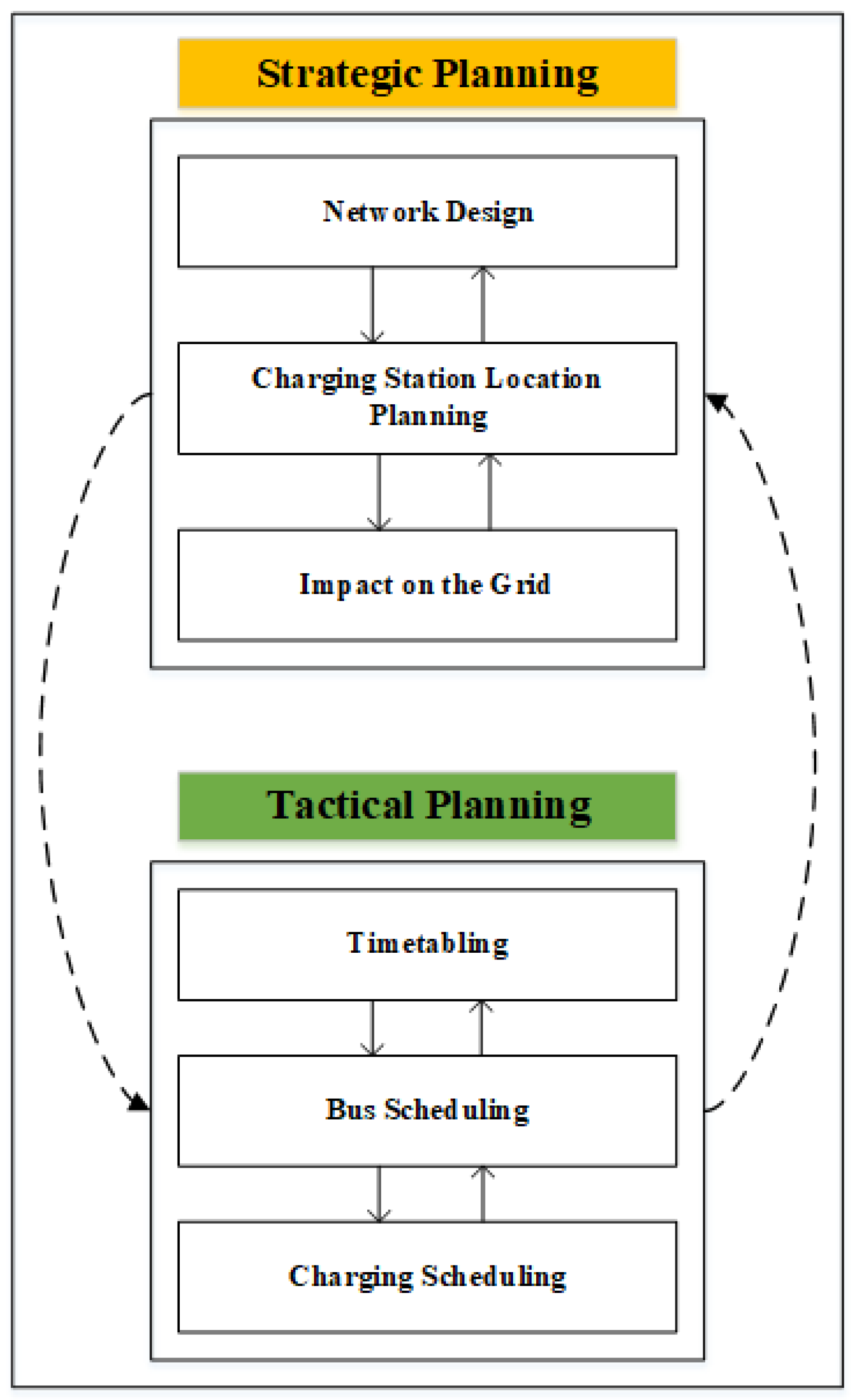
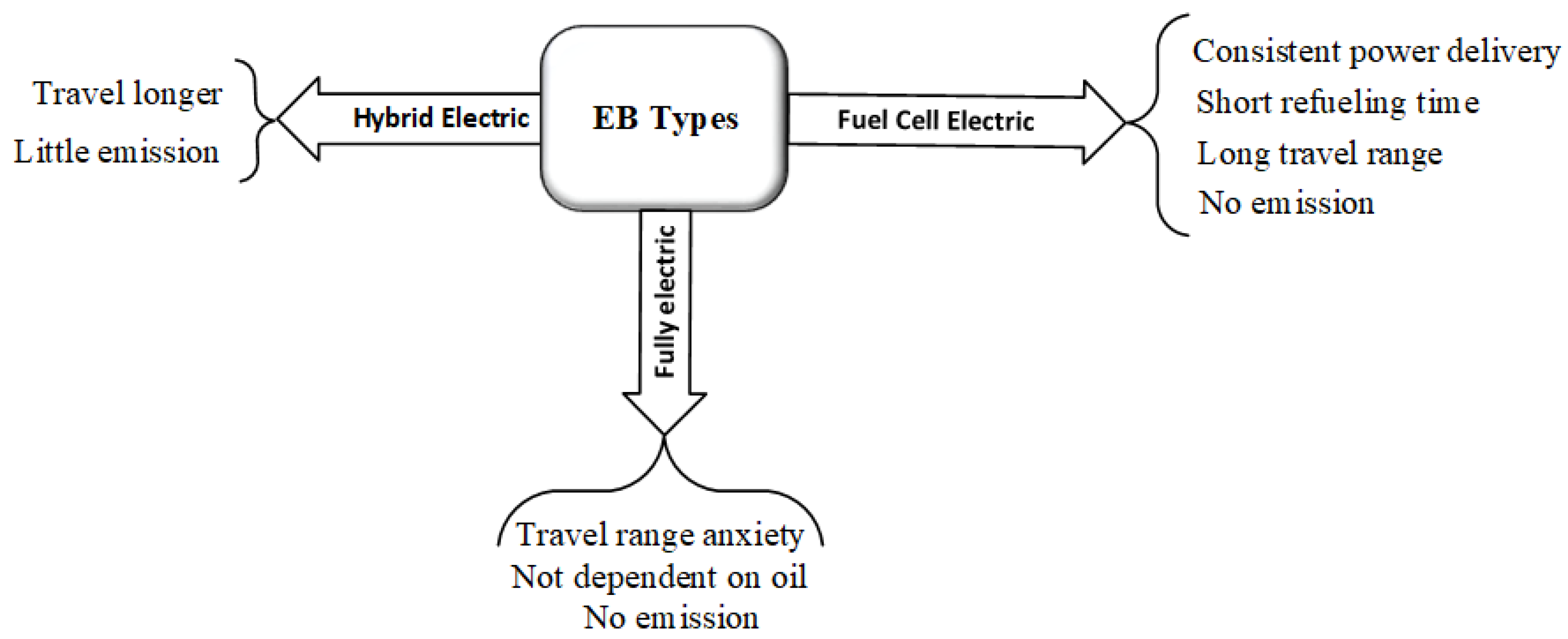


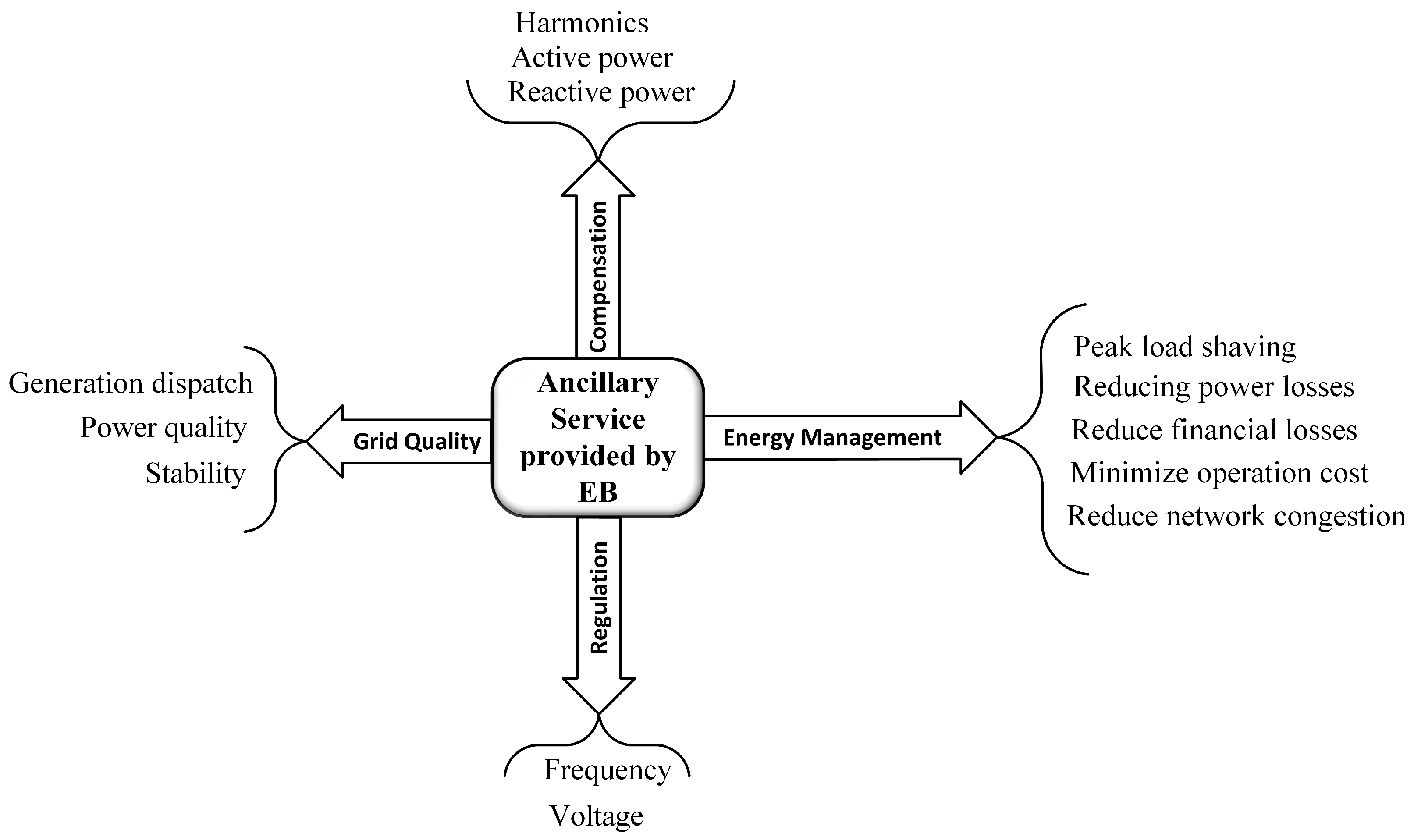
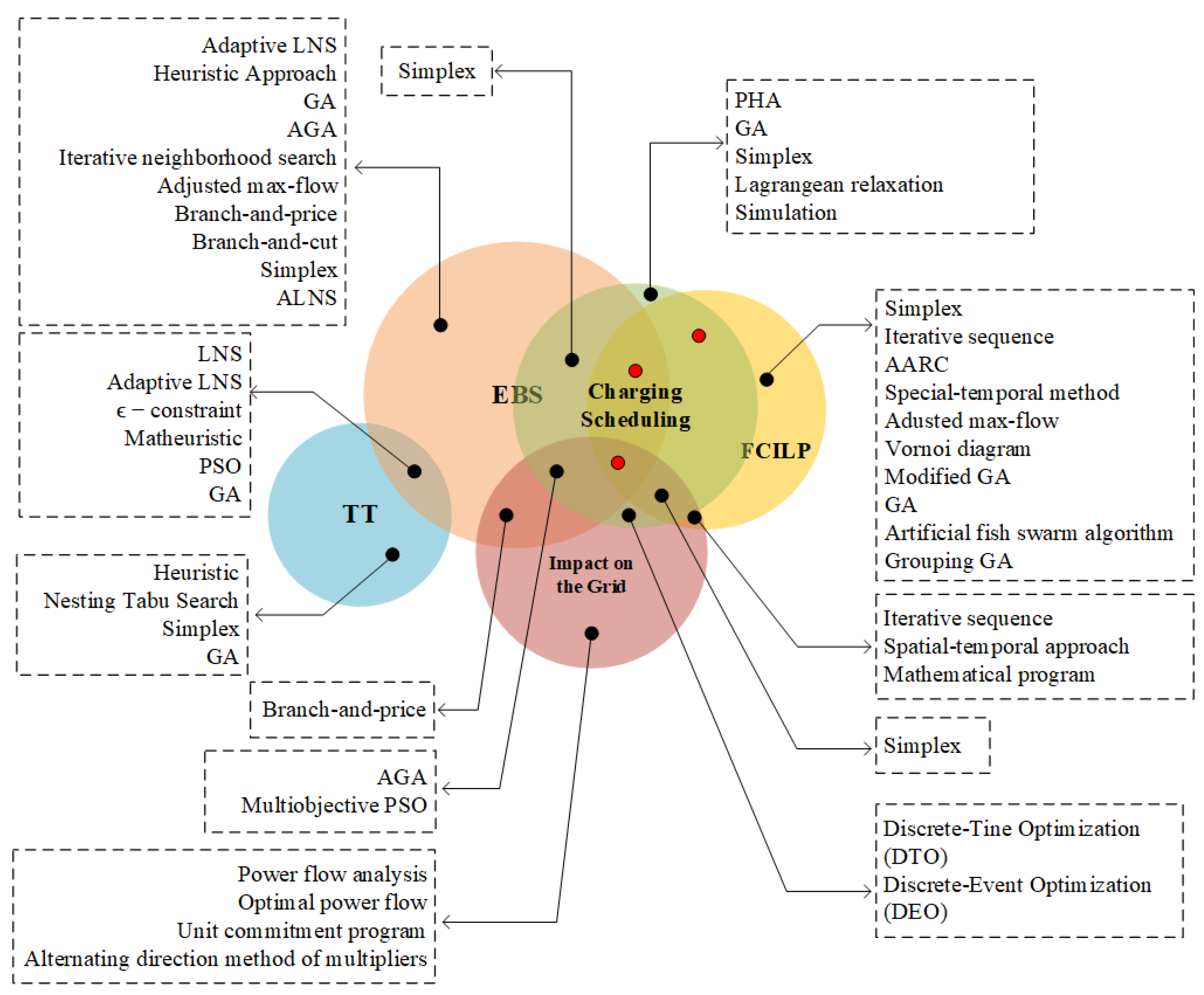
| Review Paper | Comparing Charging Technologies | VS | TT-VS | Charging Infrastructure Location | Charging Scheduling | Impact on the Grid | Remark |
|---|---|---|---|---|---|---|---|
| [5] | ✓ | ✓ | Analyzing the vehicle cost, energy cost, and emissions of buses powered by different sources. | ||||
| [14] | ✓ | Reviewing environmental, economic, and energy efficiency of electric buses. | |||||
| [15] | ✓ | Categorizing planning, case studies, and simulation of electric buses. | |||||
| [4] | ✓ | ✓ | ✓ | Reviewing power management, travel range limitation, energy storage system sizing. | |||
| [16] | ✓ | ✓ | ✓ | An overview of strategic, tactical and operational problems. | |||
| [17] | ✓ | Future research on EBs will be strategies for energy and fleet management and sustainability. | |||||
| [18] | ✓ | ✓ | Integration of EB charging scheduling and vehicle scheduling for improving economic attractiveness. | ||||
| This work | ✓ | ✓ | ✓ | ✓ | ✓ | ✓ | Public transit operation planning integration and impact of charging stations on the grid. |
| Depot Charging | Fast Charging | Wireless/Continuous Charging | Battery Swapping | ||
|---|---|---|---|---|---|
| Bus | Type | Hybrid/fully electric | Fully electric | Fully electric | Hybrid/fully electric |
| Battery capacity (kWh) | >200 [20] | 40–120 [20] | 18.1 [21]—(123–201) [22] | 324 [6], 320–590 [23] | |
| Range (km) | 175–350 [19], 322 [14] | 40–110 (unlimited theoretically) [5], 32–48 [14] | (unlimited theoretically) | 72–150 [5] | |
| Weight | More | Less | Less | Depending on the battery size | |
| Cost (bus + battery) ($1000) | Hybrid: 650 [22], 624 [19], BEB: 806 [19], 729 [22] | 806 [19] | 591 [22] | >650 [24] | |
| Charger | Power (kW) | 40–50 [14] 65–150 [19], 30–50 [17] | Up to 600, 200–500 [25] 350–450 [14] 350–600 [19], 100–600 [17] | 60 [26], typically 100 [27] | 9 [5]–60 [22] |
| Time | 4–6 h typically, 2–4 h [14] | 5–10 min [14] | 3–4 h, no time for en-route charging | 15 min [6] | |
| Transformer | No need to upgrade | Need to upgrade | - | - | |
| Grid stability | High | Low | - | High | |
| Location | Bus depot | Certain bus stops | Certain bus stops/bus depot | Specific spots | |
| Manufacturing Cost | Operational Cost | Infrastructure Cost | Energy Efficiency | Range | Noise and Vibration | ||
|---|---|---|---|---|---|---|---|
| Conventional Buses | Less | More | Less | 822 gr/km [2] | Less (20.66 MJ/km) [14] | 400 km [29] | More |
| Electric Buses | More | Less (80% reduction) | More | 0 | More 1 [30] | 40–110 km [5] | Less |
| Paper | Electric Bus | VS | TT | Objective | |||||
|---|---|---|---|---|---|---|---|---|---|
| Operation Cost | Passenger | ||||||||
| Purchase Cost/Number of Vehicles | Deadhead Trips | Fuel/Electricity Cost | TOU | Waiting Time | Transferring Time | ||||
| Ibarra-Rojas et al. (2014) [137] | ✓ | ✓ | ✓ | ✓ | ✓ | ✓ | |||
| Schmid & Ehmke (2015) [136] | ✓ | ✓ | ✓ | ✓ | |||||
| Wen et al. (2016) [102] | ✓ | ✓ | ✓ | ✓ | |||||
| Fonseca et al. (2018) [132] | ✓ | ✓ | ✓ | ✓ | |||||
| Cao & Ceder (2019) [146] | ✓ | ✓ | ✓ | ✓ | ✓ | ✓ | |||
| Li et al. (2019) [74] | ✓ | ✓ | ✓ | ✓ | |||||
| Zhang et al. (2020) [91] | ✓ | ✓ | ✓ | ✓ | ✓ | ||||
| Yao et al. (2020) [116] | ✓ | ✓ | ✓ | ✓ | ✓ | ||||
| Teng et al. (2020) [90] | ✓ | ✓ | ✓ | ✓ | ✓ | ✓ | ✓ | ||
| Zhou et al. (2020) [117] | ✓ | ✓ | ✓ | ✓ | |||||
| Liu & Ceder (2020) [87] | ✓ | ✓ | ✓ | ||||||
| Li et al. (2020) [114] | ✓ | ✓ | ✓ | ✓ | ✓ | ||||
| Bie et al. (2021) [11] | ✓ | ✓ | ✓ | ✓ | ✓ | ||||
| Sung et al. (2022) [111] | ✓ | ✓ | ✓ | ✓ | |||||
| Gkiotsalitis [123] | ✓ | ✓ | ✓ | ||||||
| Wang et al. (2022) [88] | ✓ | ✓ | ✓ | ||||||
| Jiang & Zhang (2022) [122] | ✓ | ✓ | ✓ | ✓ | ✓ | ||||
| Zhang et al. (2022) [125] | ✓ | ✓ | ✓ | ✓ | |||||
| Guo et al. (2022) [115] | ✓ | ✓ | ✓ | ✓ | |||||
| Wu et al. (2022) [126] | ✓ | ✓ | ✓ | ✓ | |||||
| Paper | Single/Multi Depot | Single/Multi Line | Vehicle Type | Model | Method/Algorithm | Case Study |
|---|---|---|---|---|---|---|
| Ibarra-Rojas et al. (2014) [137] | Single | Multi | Homogeneous | MILP | -constraint | Monterrey, Mexico |
| Schmid & Ehmke (2015) [136] | Single | Multi | Homogeneous | MIP | LNS | Göttingen, Germany |
| Wen et al. (2016) [102] | Multi | Multi | Homogeneous | MIP | Adaptive LNS | - |
| Fonseca et al. (2018) [132] | Multi | Multi | Homogeneous | MILP | Matheuristic | Copenhagen, Denmark |
| Cao & Ceder (2019) [146] | Single | Single | Homogeneous | MILP | GA | Auckland, New Zealand |
| Li et al. (2019) [74] | Multi | Multi | Heterogeneous | ILP | Time-space-energy network and time-space | Hong Kong |
| Zhang et al. (2020) [91] | Single | Single | Heterogeneous | MIP | GA | Beijing, China |
| Yao et al. (2020) [116] | Multi | Multi | Heterogeneous | MILP | GA | Beijing, China |
| Teng et al. (2020) [90] | Single | Single | Homogeneous | MIP | Multiobjective PSO | Shanghai, China |
| Zhou et al. (2020) [117] | Single | Multi | Heterogeneous | Bi-level programming | Iterative neighborhood search | Beijing, China |
| Liu & Ceder (2020) [87] | Multi | Multi | Homogeneous | DF and IP | Adjusted max-flow | Singapore |
| Li et al. (2020) [114] | Single | Multi | Homogeneous | Nonconvex mathematical model | AGA | Anting Town, Shanghai |
| Bie et al. (2021) [11] | Single | Single | Homogeneous | ILP | Branch-and-price | - |
| Sung et al. (2022) [111] | Multi | Multi | Heterogeneous | Simulation | Hueristic | Kaohsiung, Taiwan |
| Gkiotsalitis [123] | Multi | Multi | Homogeneous | MILP | Branch-and-cut | - |
| Wang et al. (2022) [88] | Single | Multi | Homogeneous | MILP | MILP | Oslo, Norway |
| Jiang & Zhang (2022) [82] | Multi | Multi | Homogeneous | MILP | Branch-and-price | - |
| Zhang et al. (2022) [125] | Multi | Multi | Heterogeneous | MILP | ALNS | Nanjing, China |
| Guo et al. (2022) [115] | Single | Single | Homogeneous | UBPM | GA | Nanchang, China |
| Wu et al. (2022) [126] | Multi | Multi | Homogeneous | MILP | Branch-and-price | Guangzhou, China |
| Paper | Method | Gap | Advantages | Disadvantages |
|---|---|---|---|---|
| Ibarra-Rojas et al. (2014) [137] | -constraint | 0 (for up to 50 bus lines) | Allows to analyze the trade-off between level of service and number of buses. | Limit to solve small and medium size problems |
| Schmid & Ehmke (2015) [136] | LNS | 21.68% | able to outperform a commercial solver in terms of run time and solution quality | Solutions are far from optimum for large-scale problems |
| Wen et al. (2016) [102] | Adaptive LNS | 4.4% | Provide good solutions for large instances and near optimum solutions for small instances | Large fluctuation for different instances |
| Fonseca et al. (2018) [132] | Matheuristic | 9.72% | Able to find better feasible solutions faster than a commercial solver | Requires many analysis to choose the right parameters |
| Cao & Ceder (2019) [146] | GA | 0 | Easy to implement | Only applies on one bus line and one vehicle type |
| Li et al. (2019) [74] | Time-space-energy network and time-space | 3.19% | Simple implementation | Approximate solutions |
| Zhang et al. (2020) [91] | GA | 5.8% | It can provide some quick and relatively inexpensive solutions | It reaches out of memory error after 15 min |
| Yao et al. (2020) [116] | GA | - 1 | Easy to understand and implement | Unable to find optimal solutions consistently |
| Teng et al. (2020) [90] | Multiobjective PSO | - | Robustness to control parameters | Converge to local solutions |
| Zhou et al. (2020) [117] | Iterative neighborhood search | - | Easy to code and use | Many parameters have to be tuned |
| Liu & Ceder (2020) [87] | Adjusted max-flow | 0 | Could be applied to large-scale problems | High complexity |
| Li et al. (2020) [114] | AGA | - | Easy to understand | Solutions may be far from optimum |
| Bie et al. (2021) [11] | Branch-and-price | 0 | Obtain the exact solution set | High complexity to develop |
| Sung et al. (2022) [111] | Hueristic | - | Could be used for initial solution for other problems | Obtain local solutions |
| Gkiotsalitis [123] | Branch-and-cut | 0 | Reliable and obtain the exact solution set | Limited to 30 number of trips |
| Wang et al. (2022) [88] | MILP | 4% | Can obtain the solution with high quality | Unable to find the optimum solution |
| Jiang & Zhang (2022) [82] | Branch-and-price | 0.32% | Able to generate high-quality solutions | Limited to instances with 400 trips |
| Zhang et al. (2022) [125] | ALNS | 0.08% | Able to find high quality solutions | Requires many analysis to choose the right method |
| Guo et al. (2022) [115] | GA | - | Easy to understand | Computationally expensive |
| Wu et al. (2022) [126] | Branch-and-price | 9.59% | More reliable and efficient | Limitation on the scalibility of the method |
Publisher’s Note: MDPI stays neutral with regard to jurisdictional claims in published maps and institutional affiliations. |
© 2022 by the authors. Licensee MDPI, Basel, Switzerland. This article is an open access article distributed under the terms and conditions of the Creative Commons Attribution (CC BY) license (https://creativecommons.org/licenses/by/4.0/).
Share and Cite
Alamatsaz, K.; Hussain, S.; Lai, C.; Eicker, U. Electric Bus Scheduling and Timetabling, Fast Charging Infrastructure Planning, and Their Impact on the Grid: A Review. Energies 2022, 15, 7919. https://doi.org/10.3390/en15217919
Alamatsaz K, Hussain S, Lai C, Eicker U. Electric Bus Scheduling and Timetabling, Fast Charging Infrastructure Planning, and Their Impact on the Grid: A Review. Energies. 2022; 15(21):7919. https://doi.org/10.3390/en15217919
Chicago/Turabian StyleAlamatsaz, Kayhan, Sadam Hussain, Chunyan Lai, and Ursula Eicker. 2022. "Electric Bus Scheduling and Timetabling, Fast Charging Infrastructure Planning, and Their Impact on the Grid: A Review" Energies 15, no. 21: 7919. https://doi.org/10.3390/en15217919
APA StyleAlamatsaz, K., Hussain, S., Lai, C., & Eicker, U. (2022). Electric Bus Scheduling and Timetabling, Fast Charging Infrastructure Planning, and Their Impact on the Grid: A Review. Energies, 15(21), 7919. https://doi.org/10.3390/en15217919