Article

Imaging Domain Seismic Denoising Based on Conditional Generative Adversarial Networks (CGANs)

1
Institute of Geomechanics, Chinese Academy of Geological Sciences, Beijing 100081, China
2
Key Laboratory of Paleomagnetism & Tectonic Reconstruct, Ministry of Natural Resources, Beijing 100081, China
3
Key Laboratory of Petroleum Geomechanics, China Geological Survey, Beijing 100081, China
*
Authors to whom correspondence should be addressed.
Energies 2022, 15(18), 6569; https://doi.org/10.3390/en15186569
Submission received: 6 July 2022 / Revised: 30 August 2022 / Accepted: 31 August 2022 / Published: 8 September 2022

Abstract

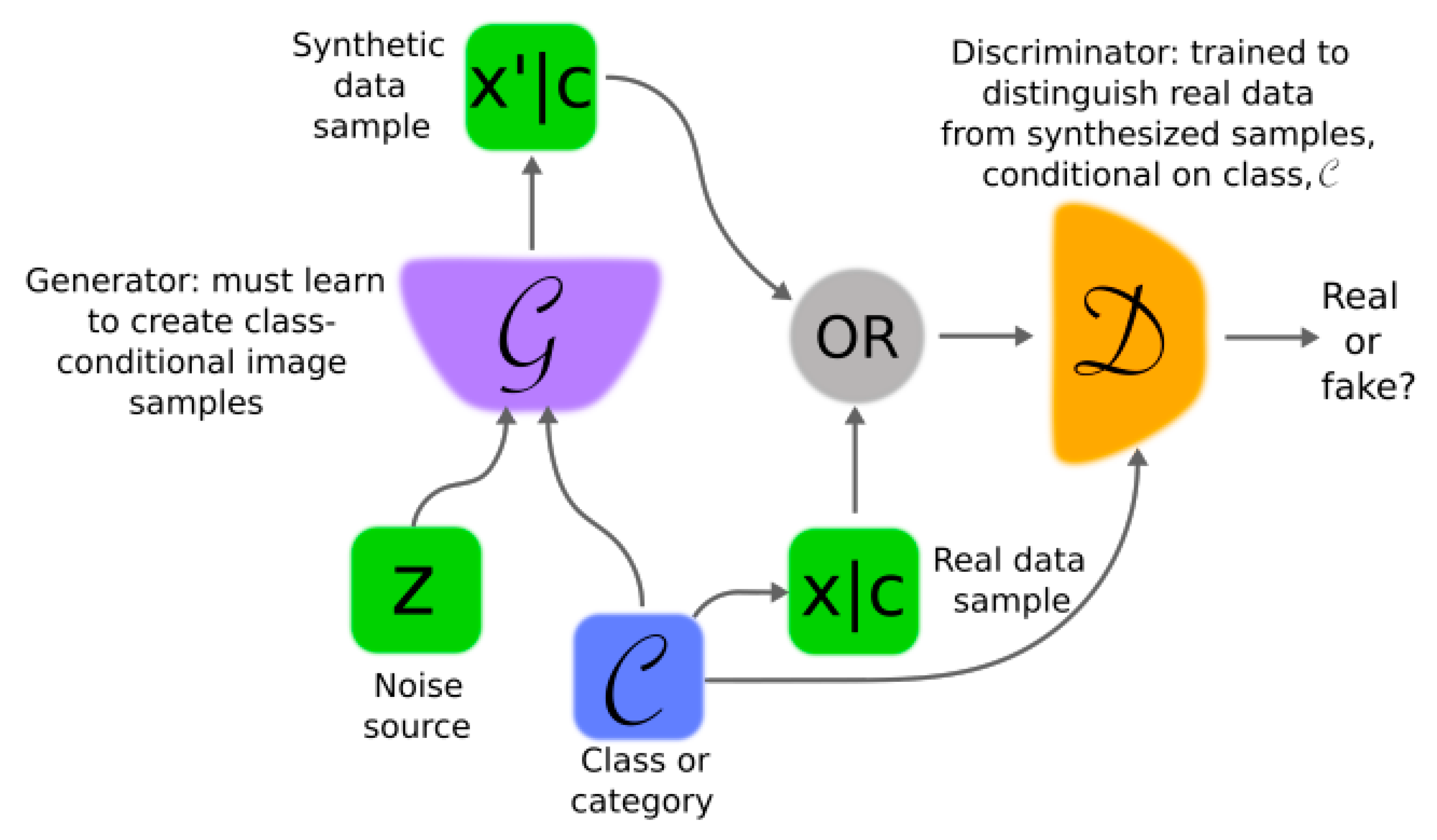
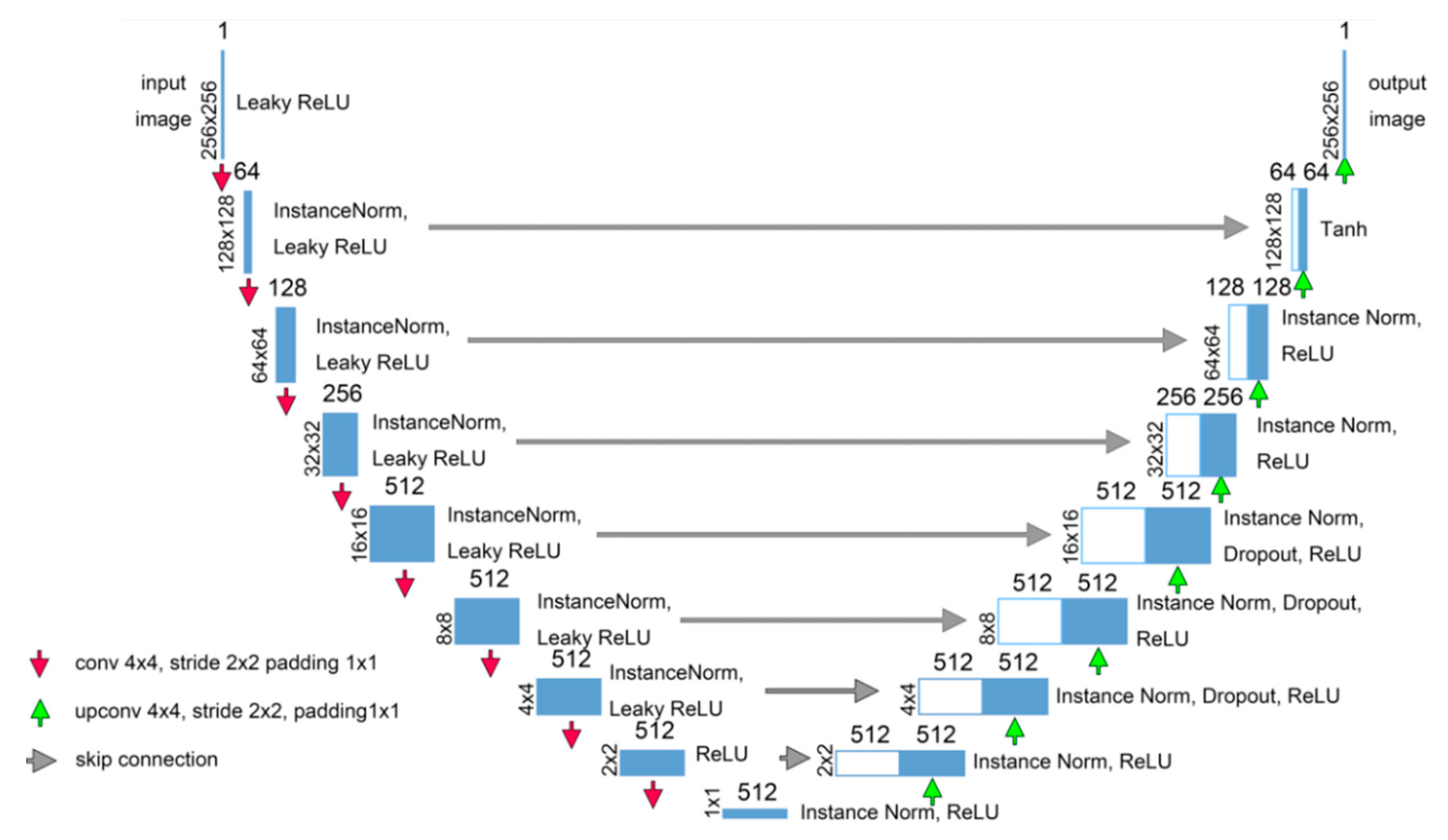
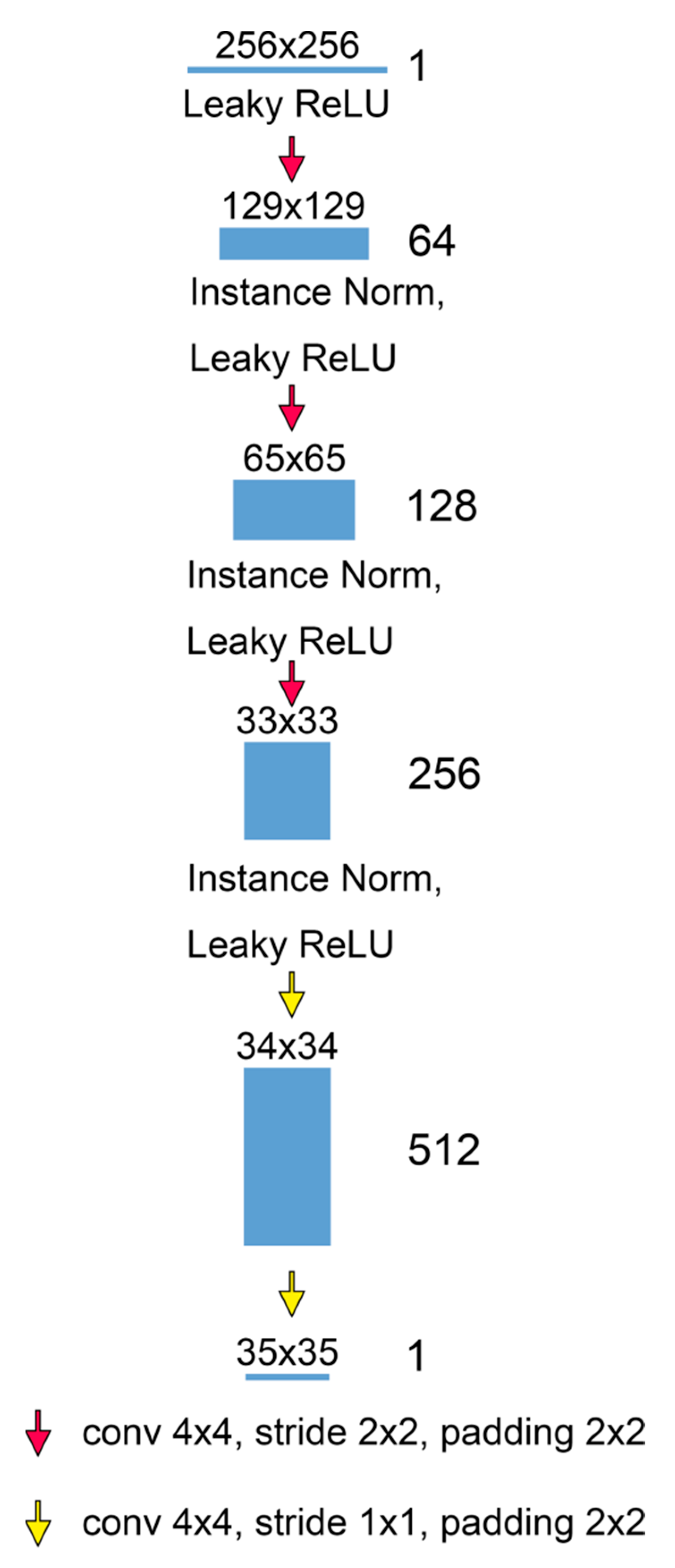
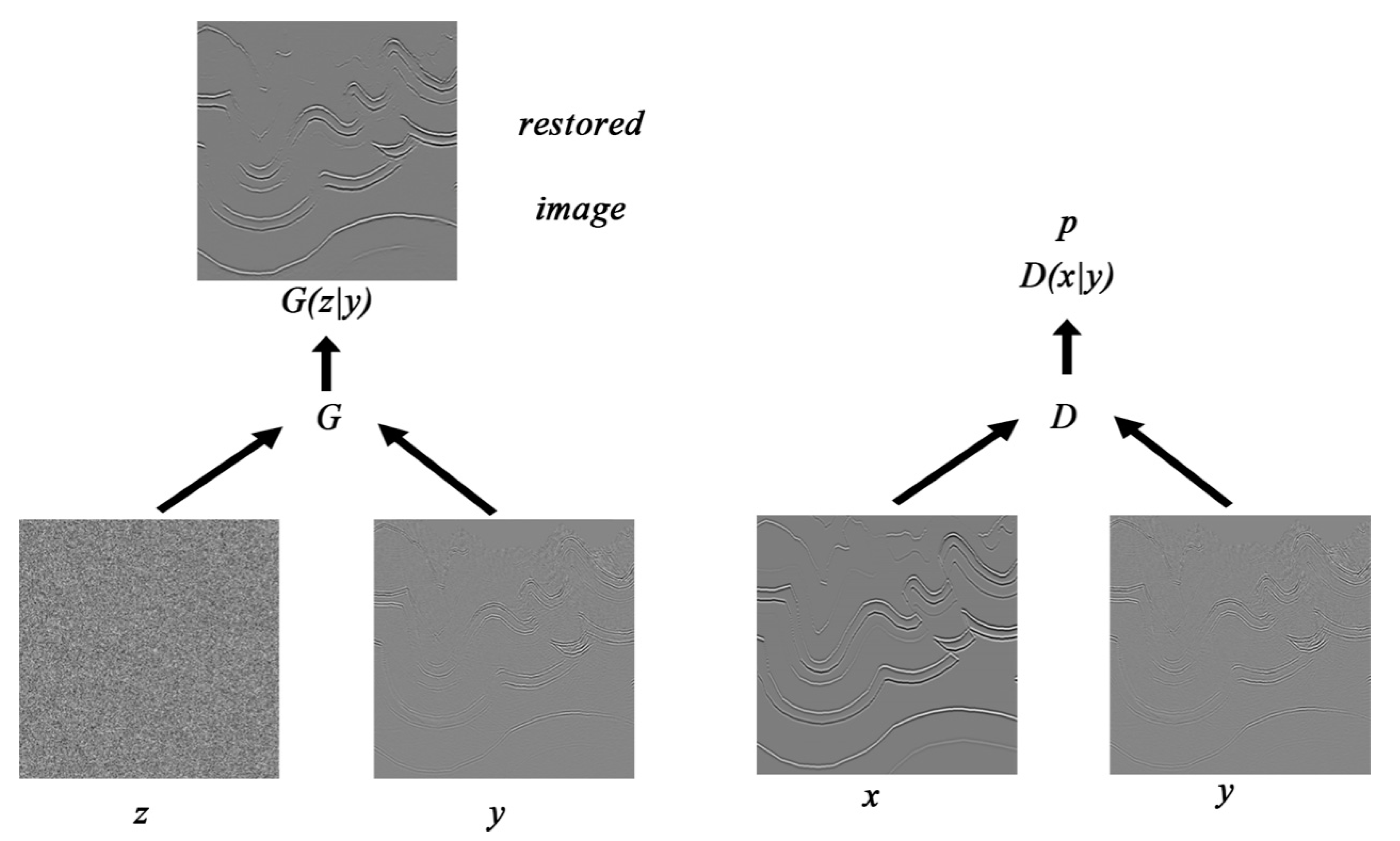
A high-resolution seismic image is the key factor for helping geophysicists and geologists to recognize the geological structures below the subsurface. More and more complex geology has challenged traditional techniques and resulted in a need for more powerful denoising methodologies. The deep learning technique has shown its effectiveness in many different types of tasks. In this work, we used a conditional generative adversarial network (CGAN), which is a special type of deep neural network, to conduct the seismic image denoising process. We considered the denoising task as an image-to-image translation problem, which transfers a raw seismic image with multiple types of noise into a reflectivity-like image without noise. We used several seismic models with complex geology to train the CGAN. In this experiment, the CGAN’s performance was promising. The trained CGAN could maintain the structure of the image undistorted while suppressing multiple types of noise.
Keywords: seismic imaging; denoising; deep learning; deblur generative adversarial networks seismic imaging; denoising; deep learning; deblur generative adversarial networks