Article

Wind Turbine Gust Load Alleviation with Active Flow Control

Center for Wind Energy, Department of Mechanical Engineering, University of Texas at Dallas, 800 W. Campbell Road, Richardson, TX 75080, USA
*
Author to whom correspondence should be addressed.
Energies 2022, 15(17), 6474; https://doi.org/10.3390/en15176474
Submission received: 11 July 2022 / Revised: 20 August 2022 / Accepted: 27 August 2022 / Published: 5 September 2022
(This article belongs to the Special Issue Innovative Methods for the Control of Very Large Wind Turbines)

Abstract

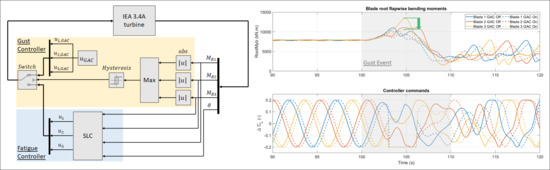
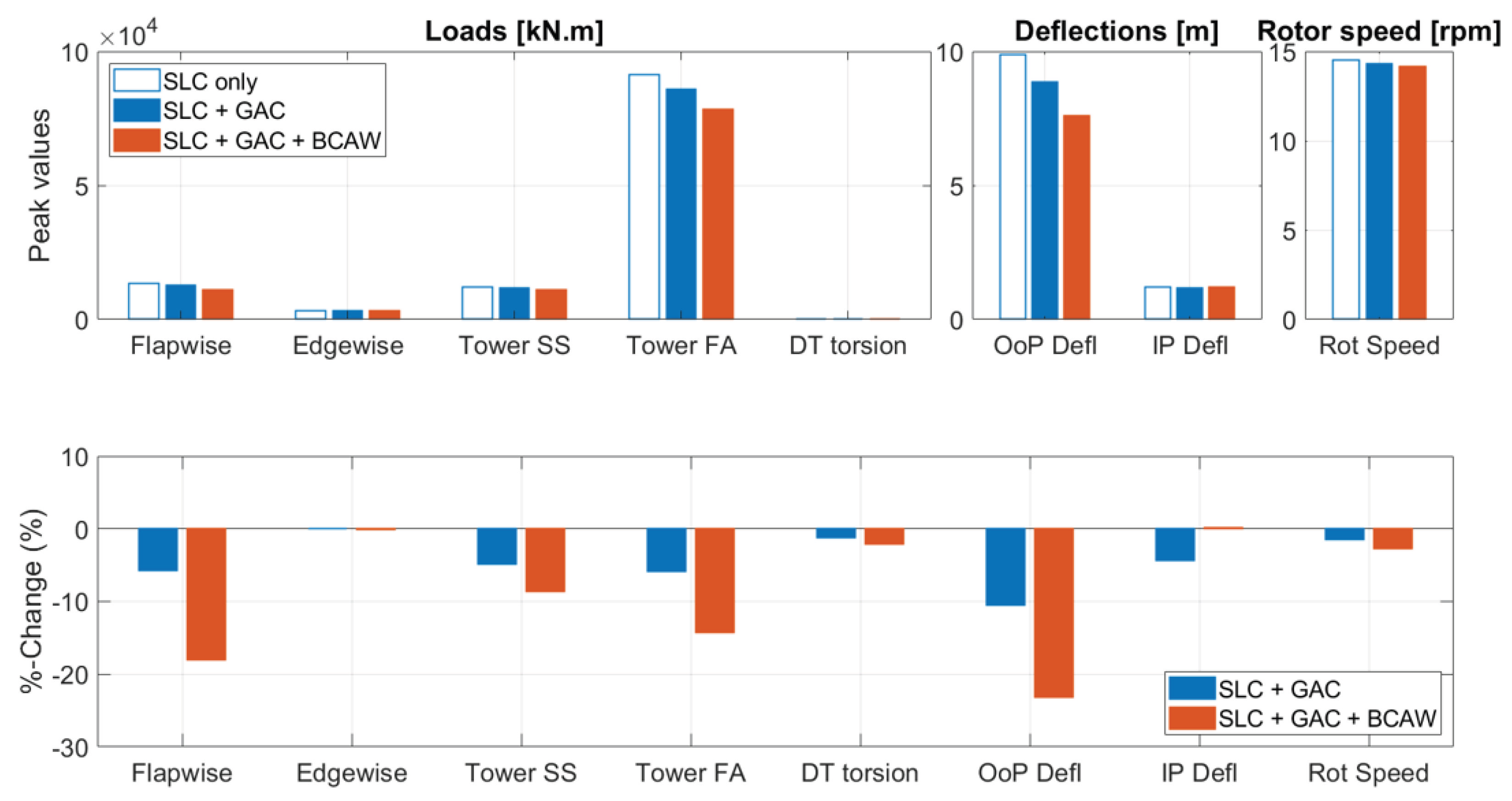
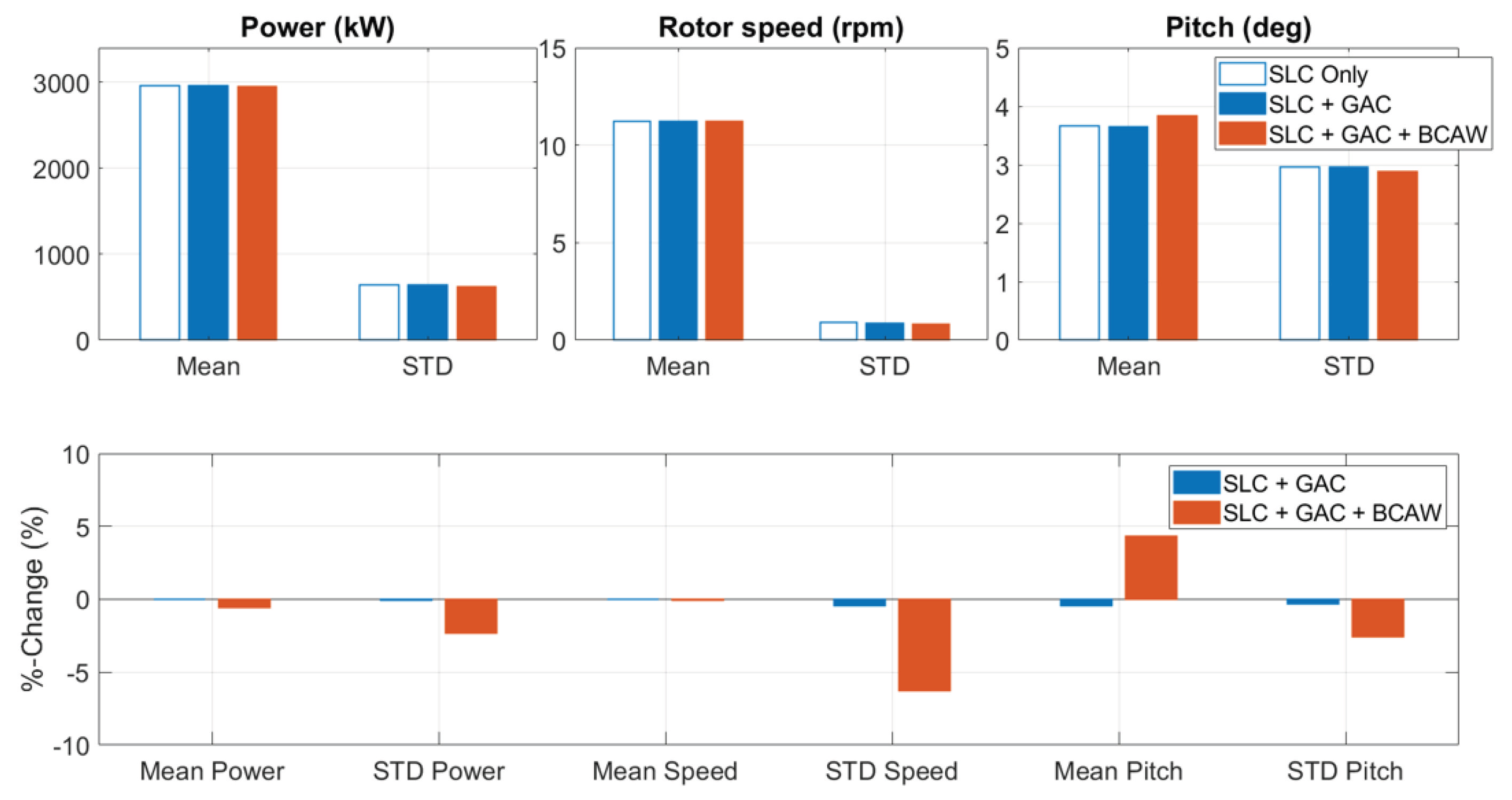
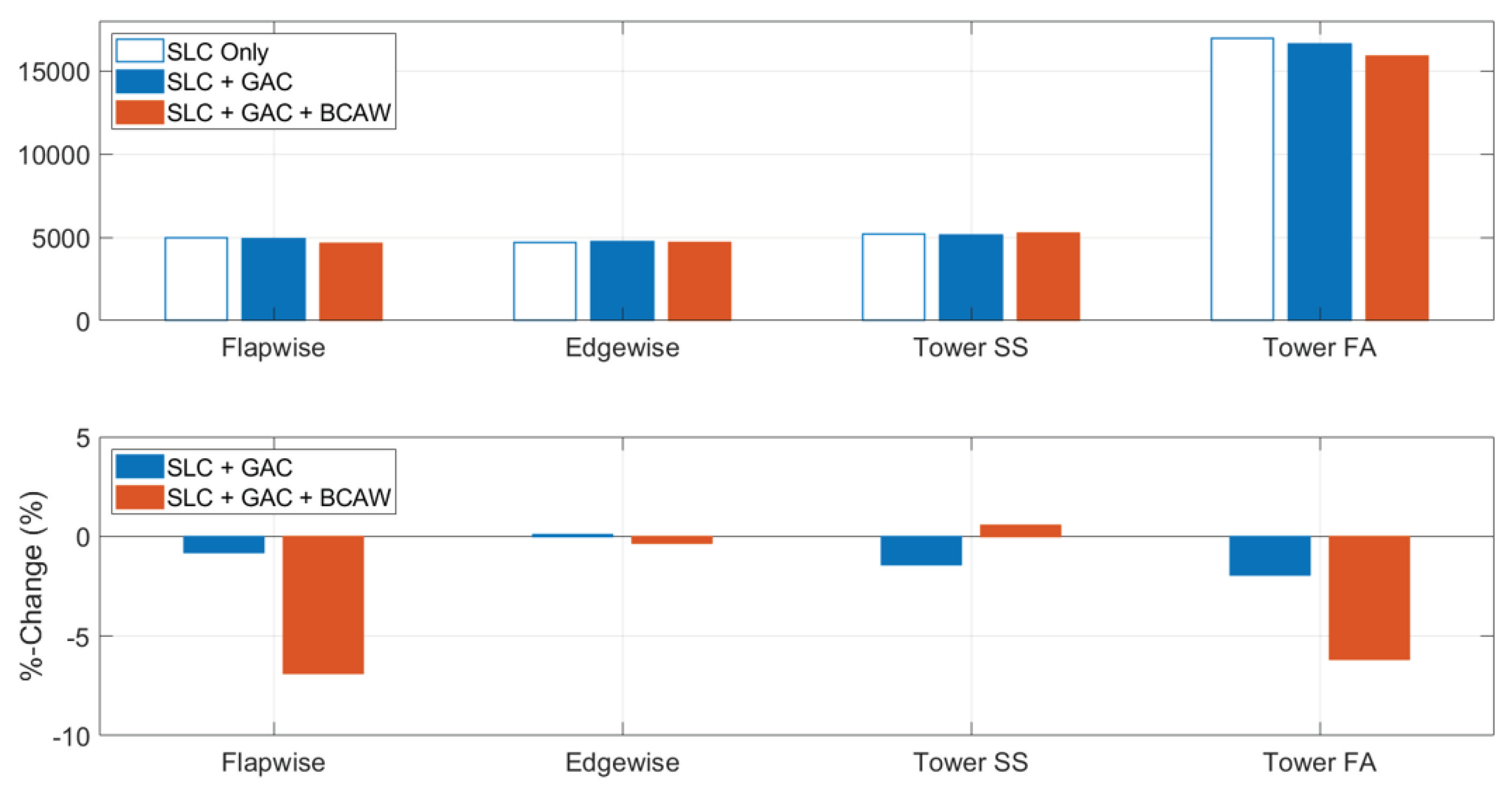
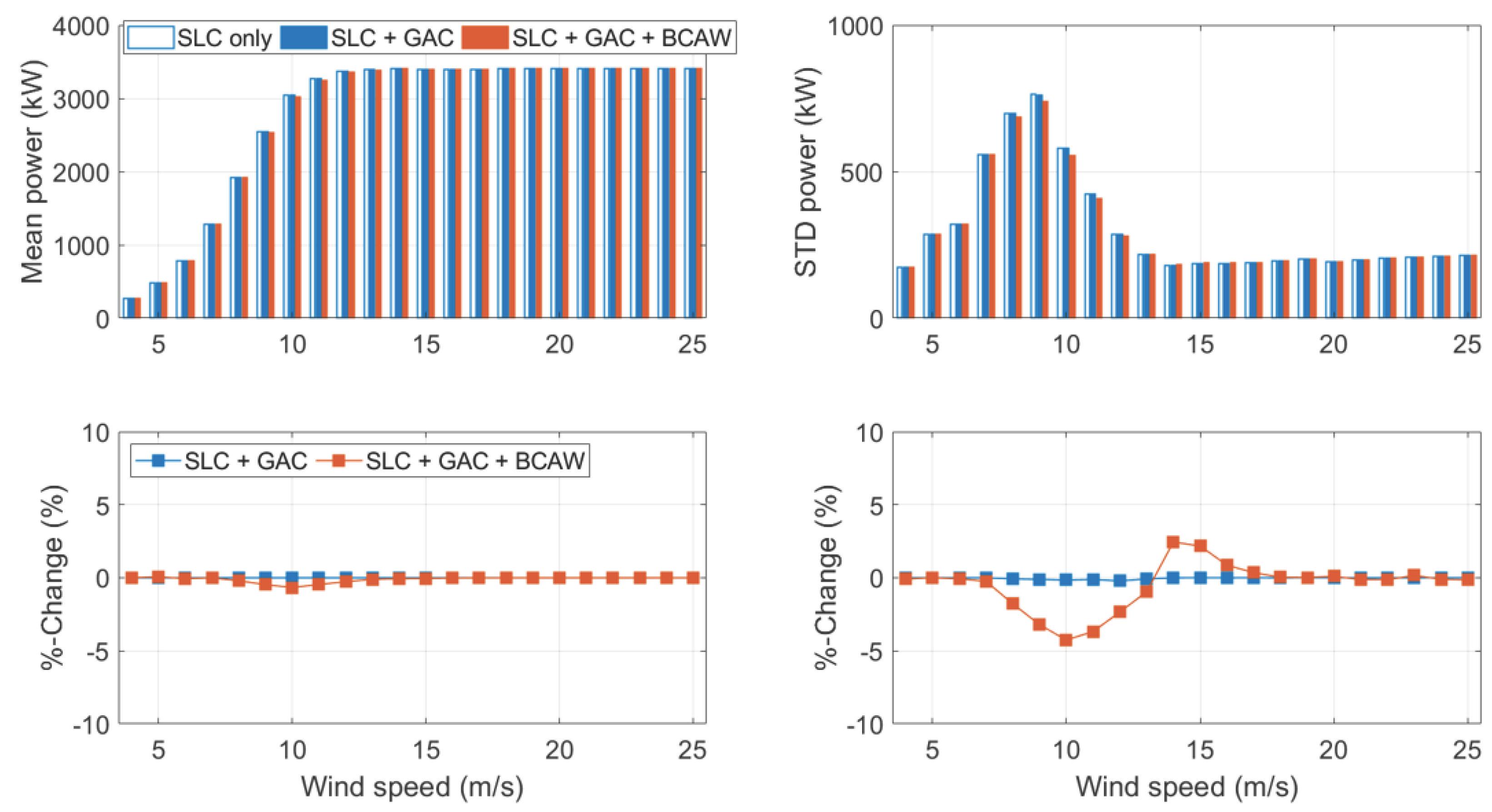
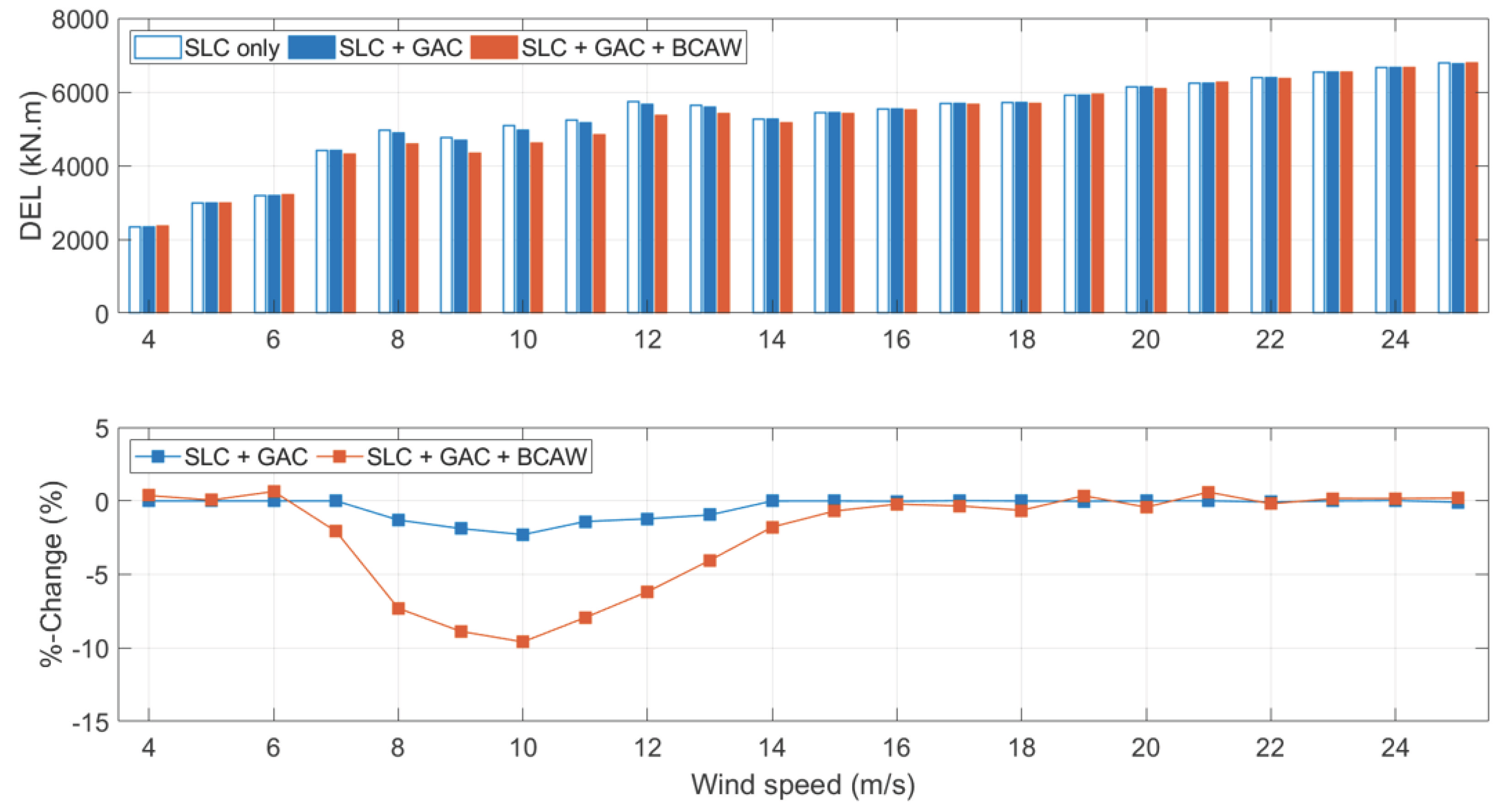
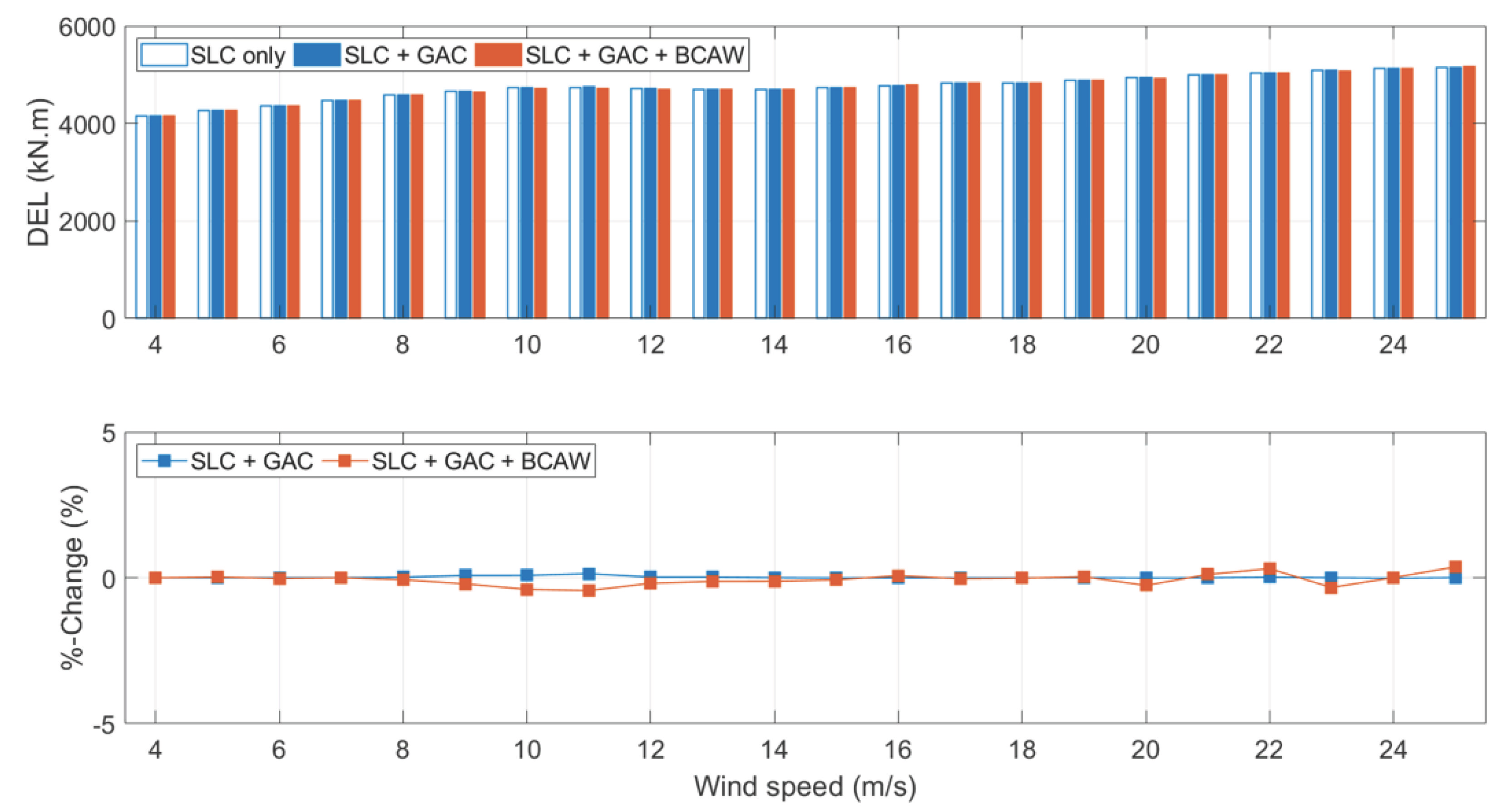
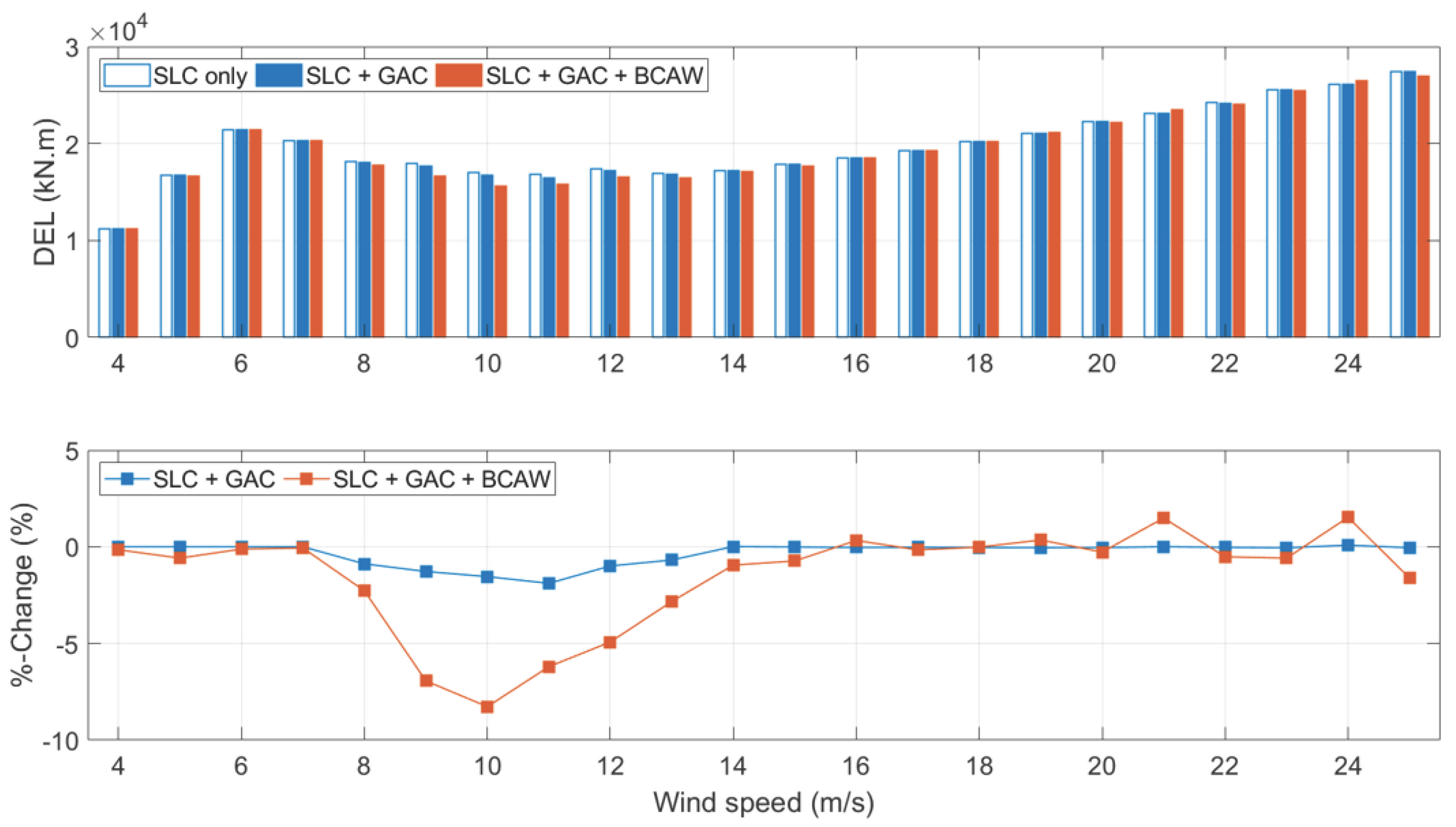
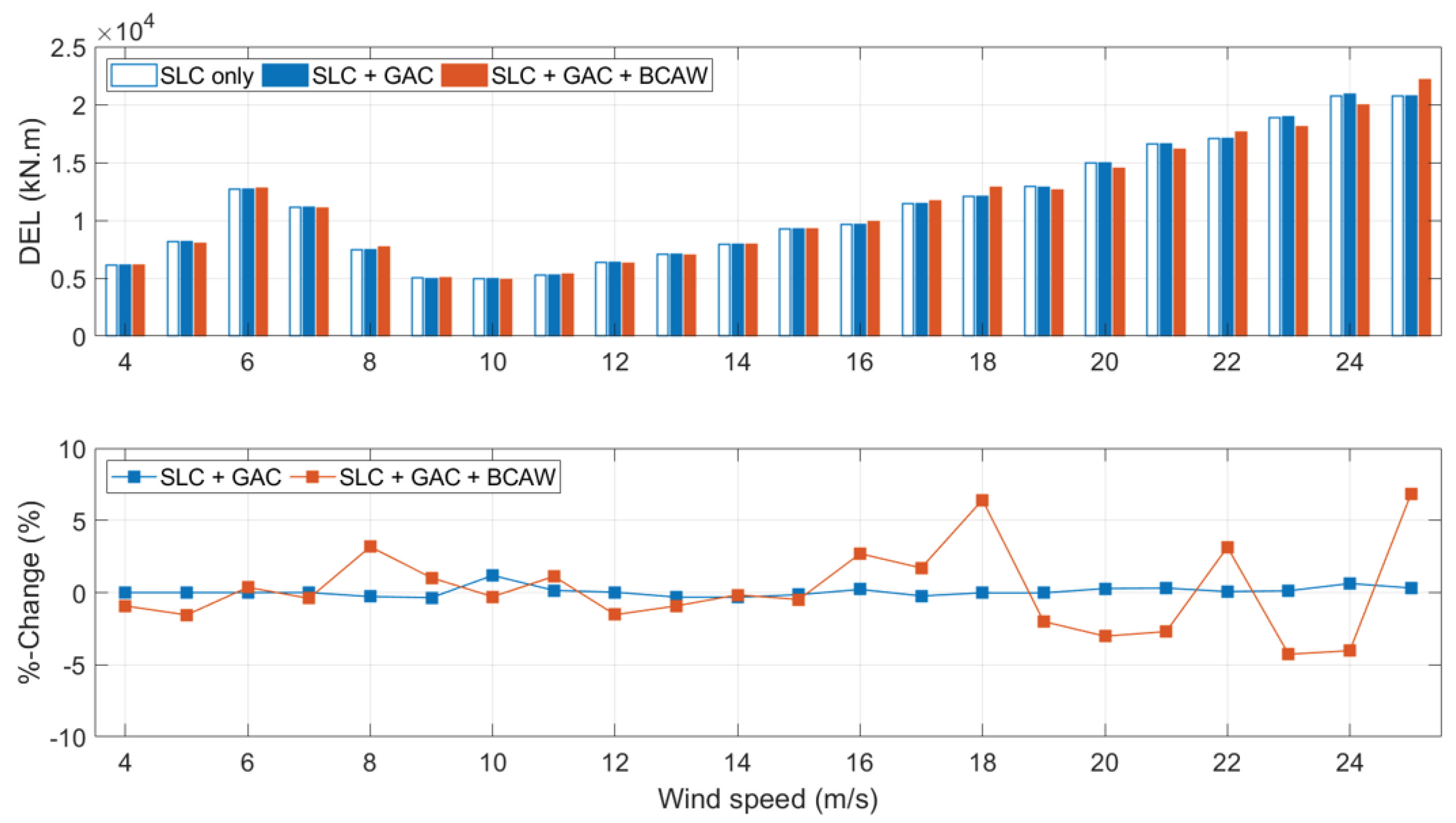
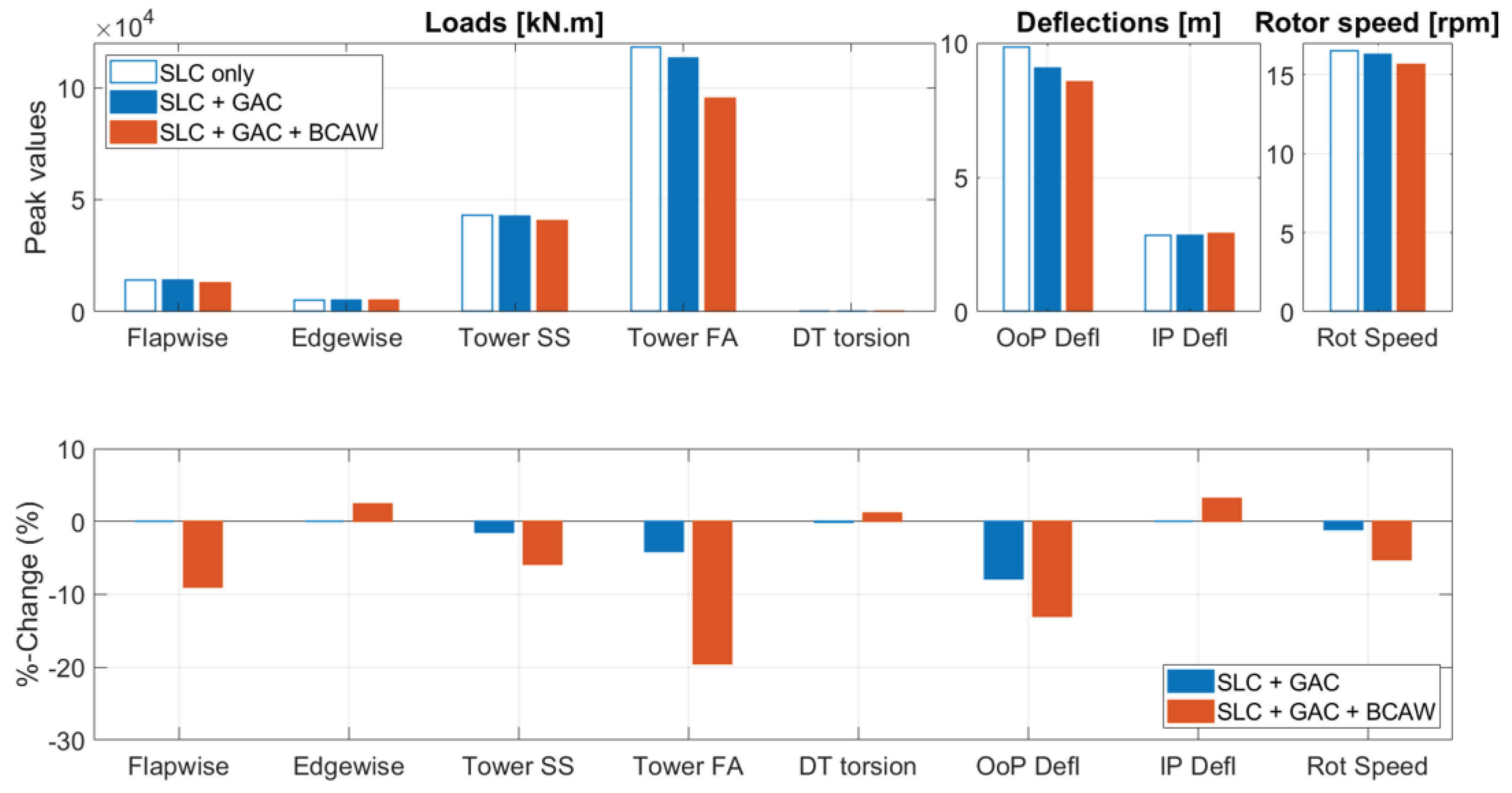
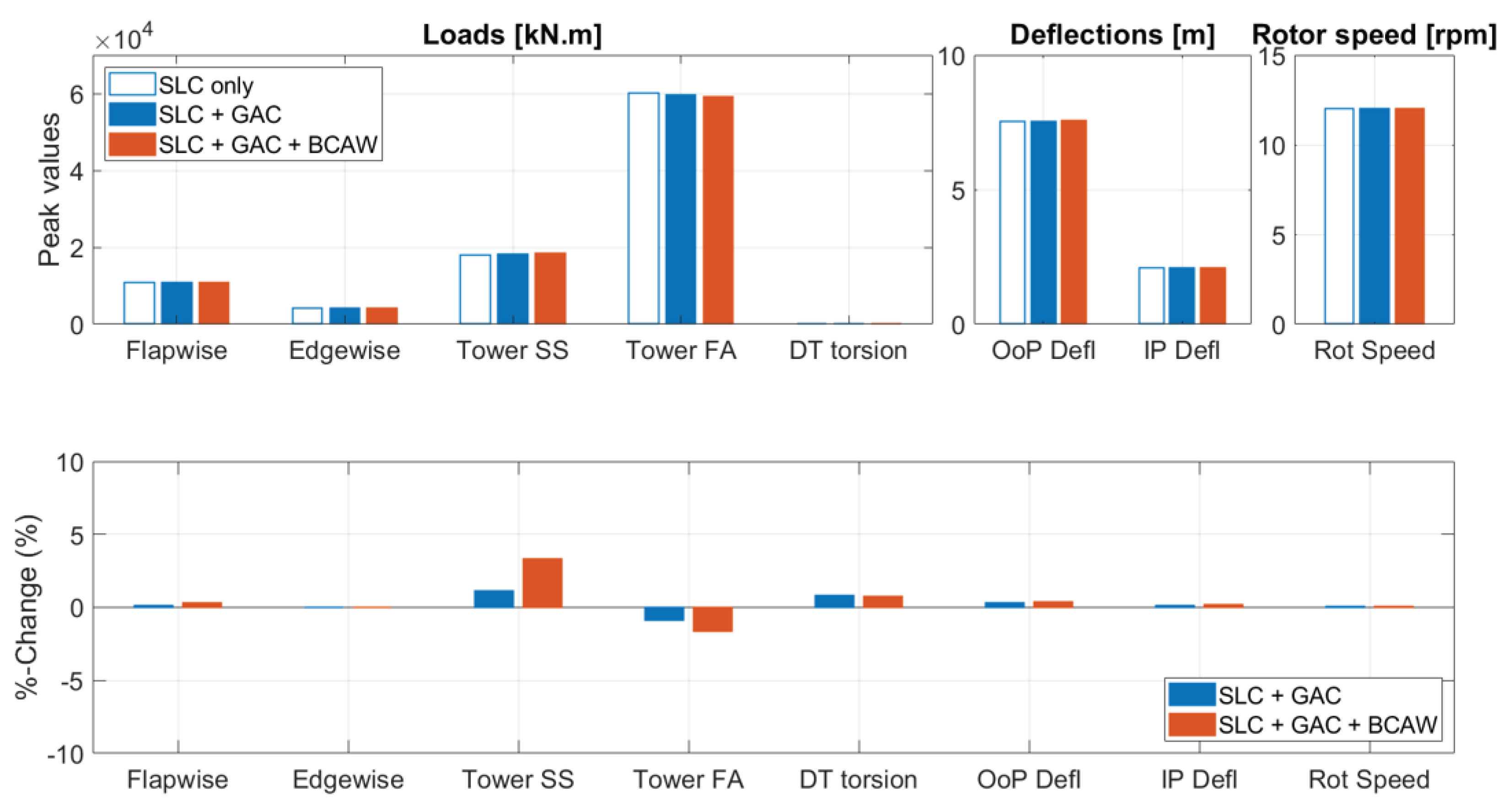
Large wind turbine rotors are becoming more common in utility-scale wind power, especially for offshore wind plants. However, the trend toward large rotors can be limited by their ability to manage dynamic and extreme loads. To provide a safety margin for the rotor design and avoid catastrophic events such as tower strikes, extreme loads need to be controlled. The objective of this study is to develop and evaluate a feedback control system to alleviate extreme loads and reduce blade deflections under gust events using active flow control devices. We also propose a modification in the turbine controller to achieve further reduction in extreme loads. The extreme load reductions are evaluated under gust wind conditions with direction changes according to the IEC standard. The effects of the gust alleviation controller on turbine performance and fatigue loads are investigated as well. With the deployment of the gust alleviation controller and modified turbine baseline controller, the extreme loads and deflections reduce by up to 23%. The energy captured by the turbine is not affected by the proposed gust alleviation controller. The fatigue loads of various wind turbine components are either reduced or remain unchanged.
Keywords: wind turbine; gust load control; active flow control wind turbine; gust load control; active flow control
Graphical Abstract