Article

Reusing Flowback and Produced Water with Different Salinity to Prepare Guar Fracturing Fluid

1
Unconventional Petroleum Research Institute, China University of Petroleum (Beijing), Beijing 102249, China
2
State Key Laboratory of Petroleum Resource and Prospecting, China University of Petroleum (Beijing), Beijing 102249, China
*
Authors to whom correspondence should be addressed.
Energies 2022, 15(1), 153; https://doi.org/10.3390/en15010153
Submission received: 3 November 2021 / Revised: 20 December 2021 / Accepted: 23 December 2021 / Published: 27 December 2021

Abstract

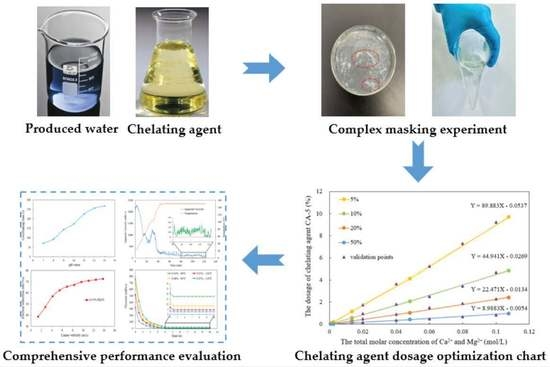
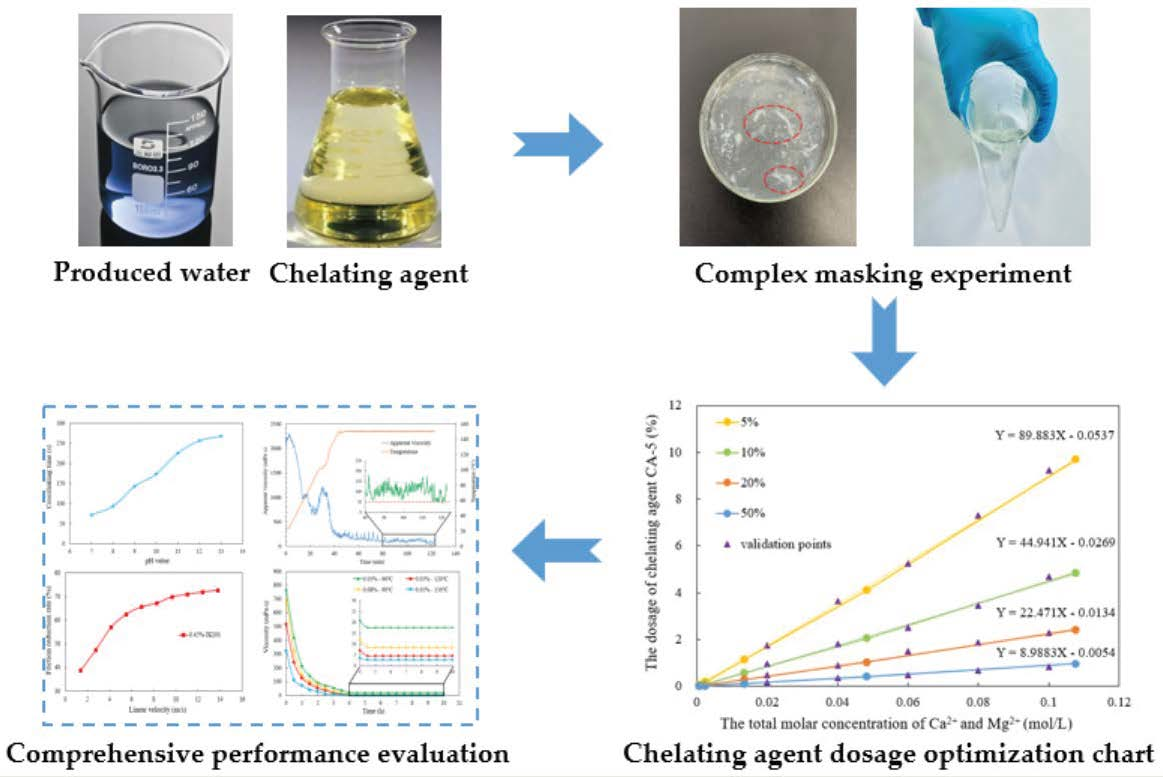
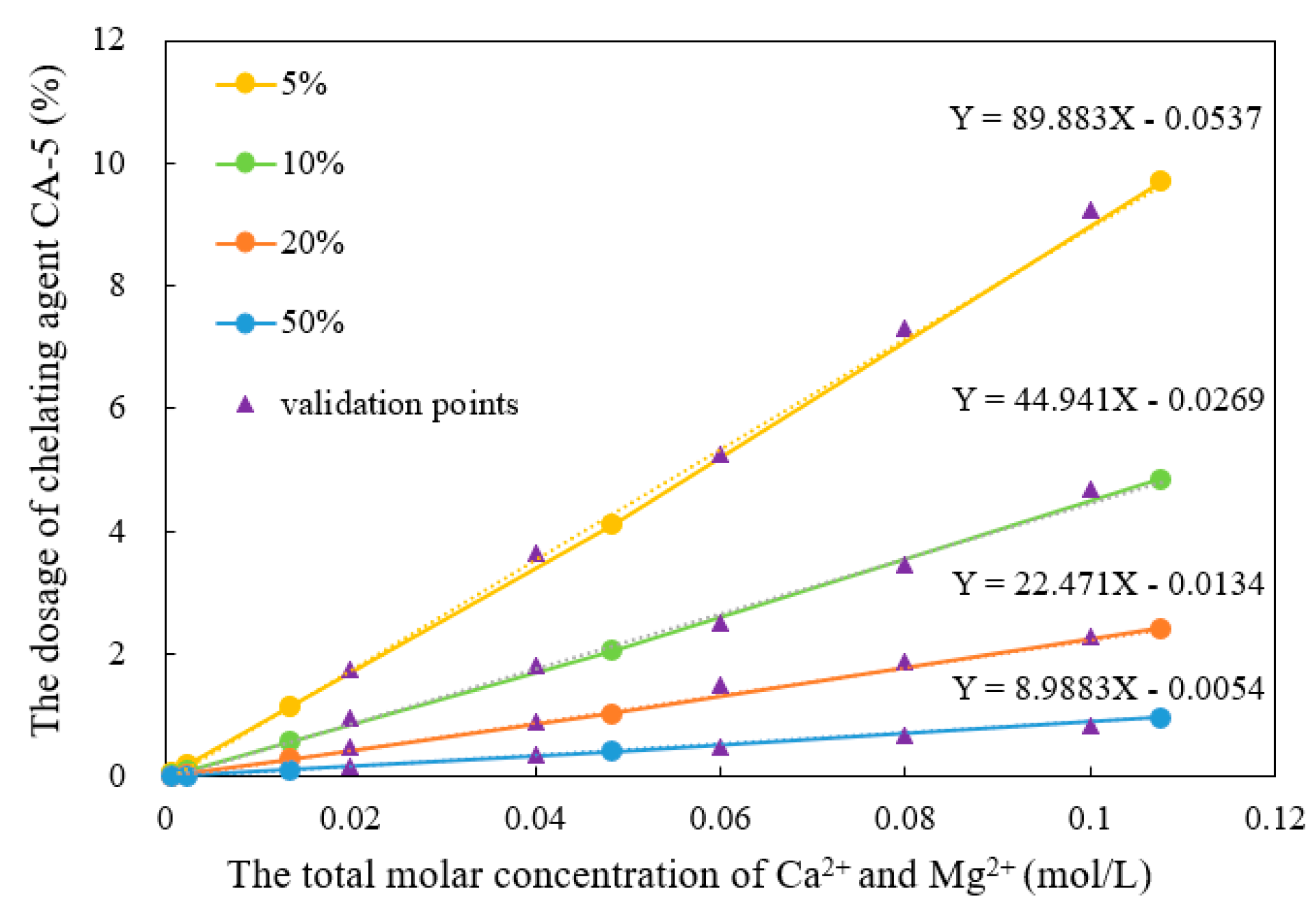
Economical and environmental concerns have forced the oil and gas industry to consider reusing flowback and produced water for fracturing operations. The major challenge is that the high-salinity of flowback water usually prevents its compatibility with several fracturing fluid additives. In this paper, the authors explored an economic and effective method to prepare guar fracturing fluids with different salinity waters. The main research idea was to use chelating agents to mask metal ions, such as calcium and magnesium, that are harmful to crosslinking. Firstly, a complexometric titration test was conducted to measure the chelating ability of three chelating agents. Secondly, through viscosity, crosslinking, and hanging tests, it was verified that the complex masking method could cope with the problem of high-valence metal ions affecting crosslinking. Thirdly, the preferred chelating agent was mixed with several other additives, including thickeners, crosslinkers, and pH regulators, to prepare the novel guar fracturing fluid. The comprehensive performances of the novel fluid system were tested such as temperature and shear resistance, friction reduction, gel-breaking performance, and core damage rate. The results show that the organophosphate chelating agent (i.e., CA-5) had the greatest ability to chelate calcium and magnesium ions. There was a good linear relationship between the dosage of CA-5 and the total molar concentration of calcium and magnesium ions in brine water. The main mechanism was that the chelating agent formed a complex with calcium and magnesium ions at a chelation ratio of 1:5. The test results of the comprehensive performance evaluation indicate that the prepared guar fracturing fluid met the requirements for field application, and the lower the salinity of the flowback water, the more it is economical and effective.
Keywords: flowback and produced water; chelating agent; complex masking method; crosslinker; chelation ratio flowback and produced water; chelating agent; complex masking method; crosslinker; chelation ratio
Graphical Abstract