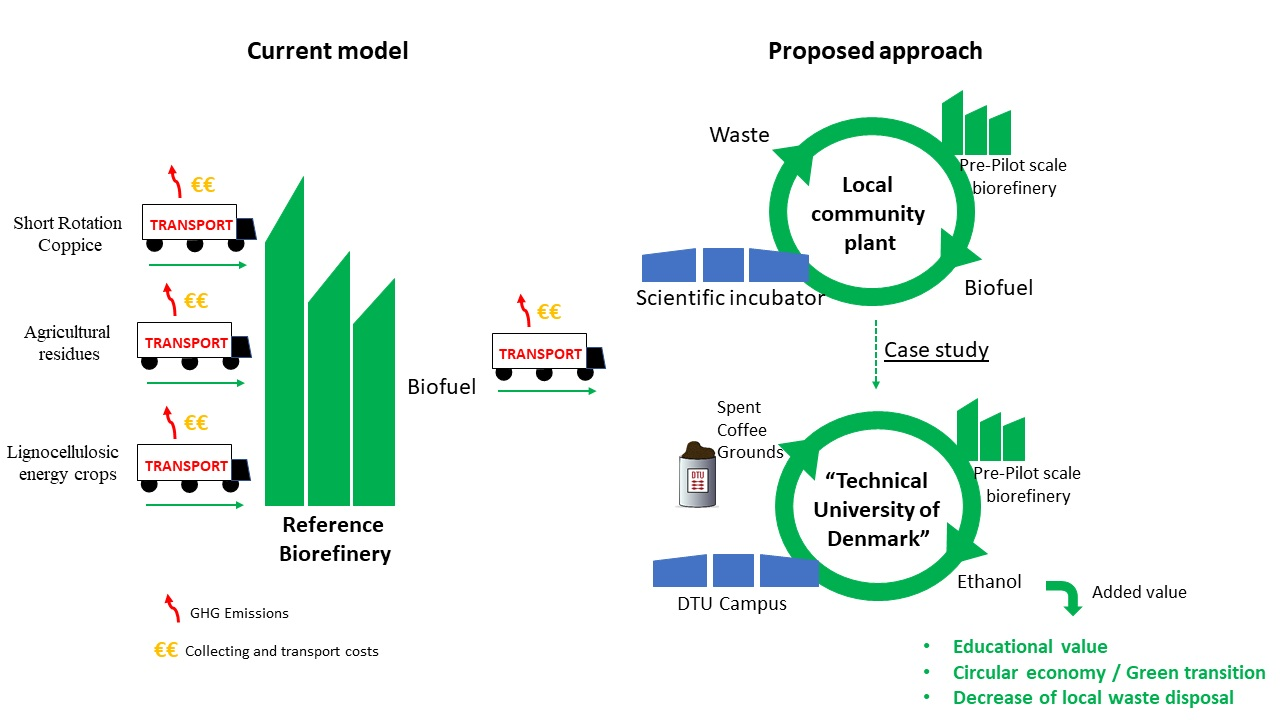
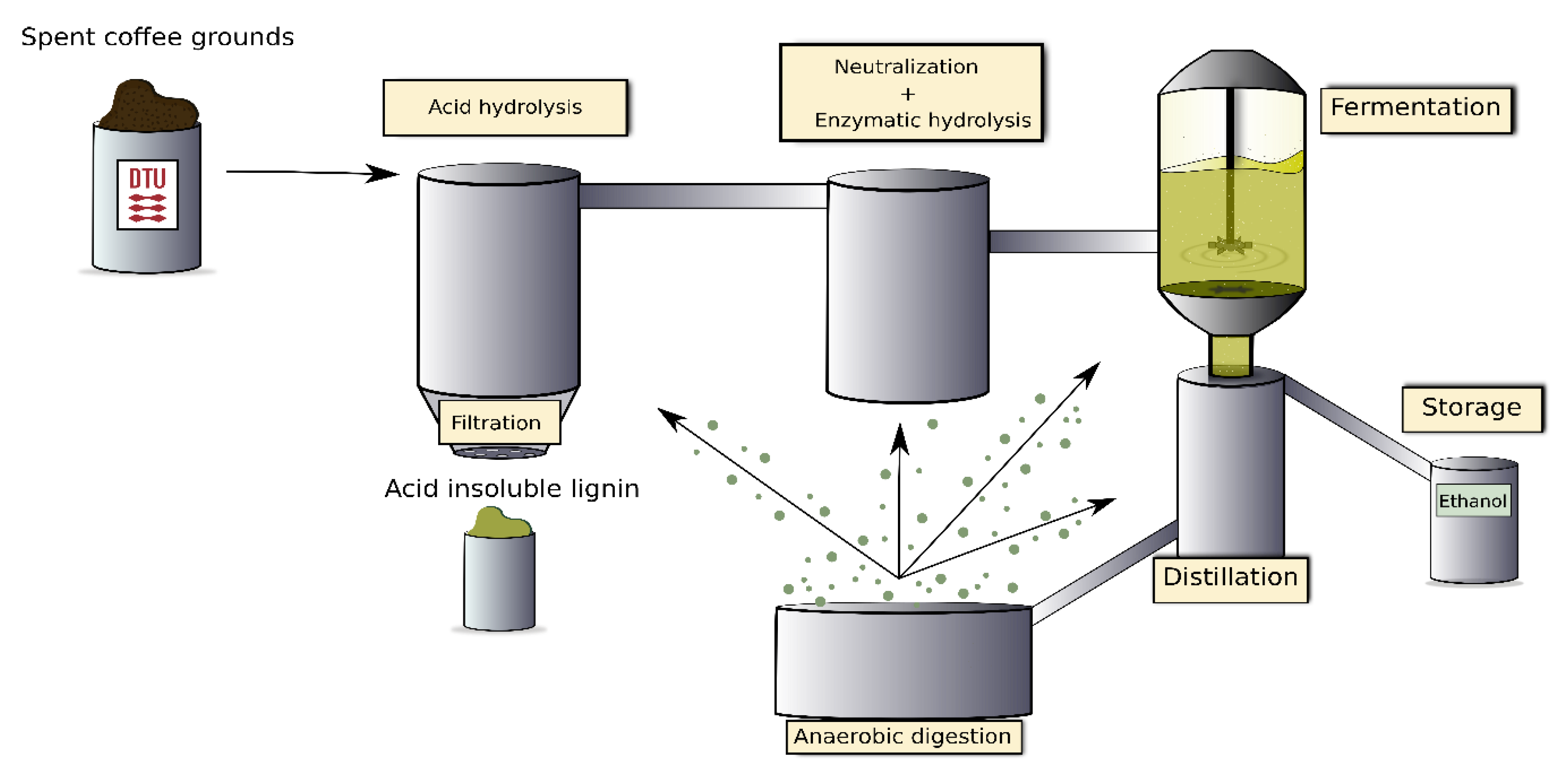
The “Zero Miles Product” Concept Applied to Biofuel Production: A Case Study
 and
and 
Abstract
Share and Cite
Kaae Kirk, N.; Navarrete, C.; Ellegaard Juhl, J.; Martínez, J.L.; Procentese, A. The “Zero Miles Product” Concept Applied to Biofuel Production: A Case Study. Energies 2021, 14, 565. https://doi.org/10.3390/en14030565
Kaae Kirk N, Navarrete C, Ellegaard Juhl J, Martínez JL, Procentese A. The “Zero Miles Product” Concept Applied to Biofuel Production: A Case Study. Energies. 2021; 14(3):565. https://doi.org/10.3390/en14030565
Chicago/Turabian StyleKaae Kirk, Nikolaj, Clara Navarrete, Jakob Ellegaard Juhl, José Luis Martínez, and Alessandra Procentese. 2021. "The “Zero Miles Product” Concept Applied to Biofuel Production: A Case Study" Energies 14, no. 3: 565. https://doi.org/10.3390/en14030565
APA StyleKaae Kirk, N., Navarrete, C., Ellegaard Juhl, J., Martínez, J. L., & Procentese, A. (2021). The “Zero Miles Product” Concept Applied to Biofuel Production: A Case Study. Energies, 14(3), 565. https://doi.org/10.3390/en14030565