Article

Modeling Dynamic Multifractal Efficiency of US Electricity Market

1
Department of Management Sciences, Comsats University, Islamabad 45550, Pakistan
2
VALORIZA—Research Center for Endogenous Resource Valorization, 7300-555 Portalegre, Portugal
3
Department of Economic Sciences and Organizations, Polytechnic Institute of Portalegre, 7300-555 Portalegre, Portugal
4
CEFAGE-UE, IIFA, University of Évora, 7000-809 Évora, Portugal
*
Author to whom correspondence should be addressed.
Energies 2021, 14(19), 6145; https://doi.org/10.3390/en14196145
Submission received: 14 August 2021 / Revised: 19 September 2021 / Accepted: 24 September 2021 / Published: 27 September 2021

Abstract

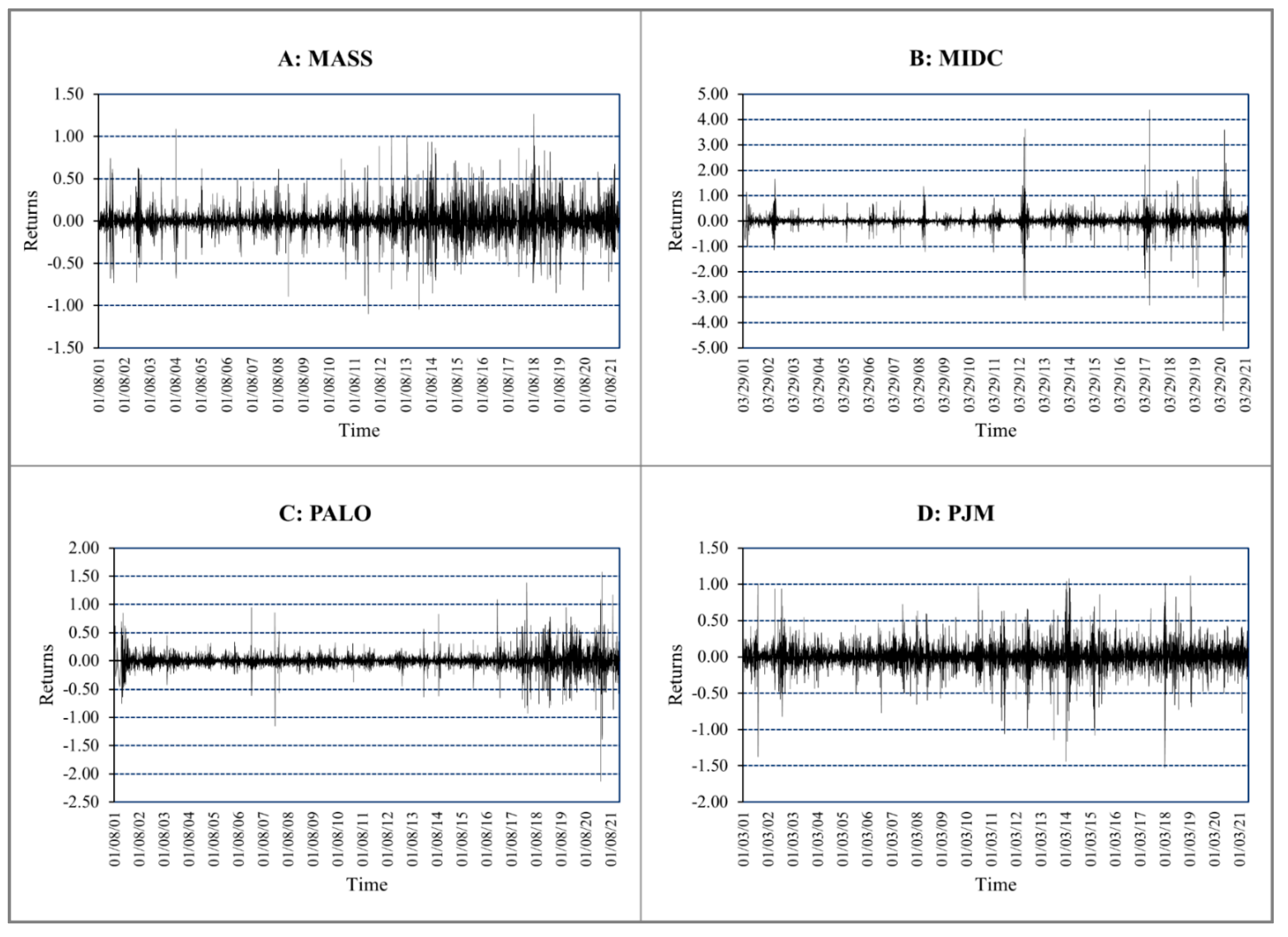
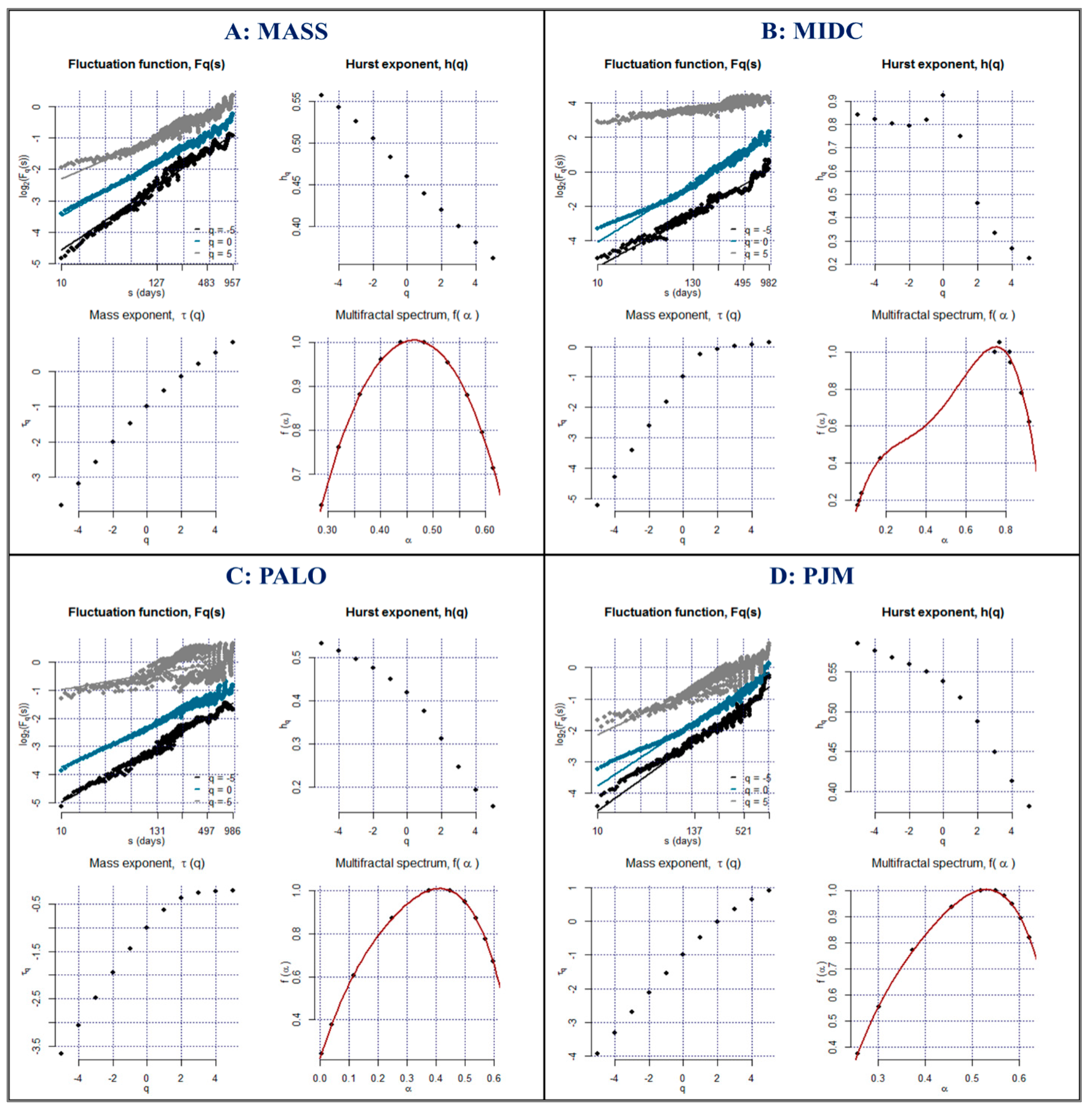
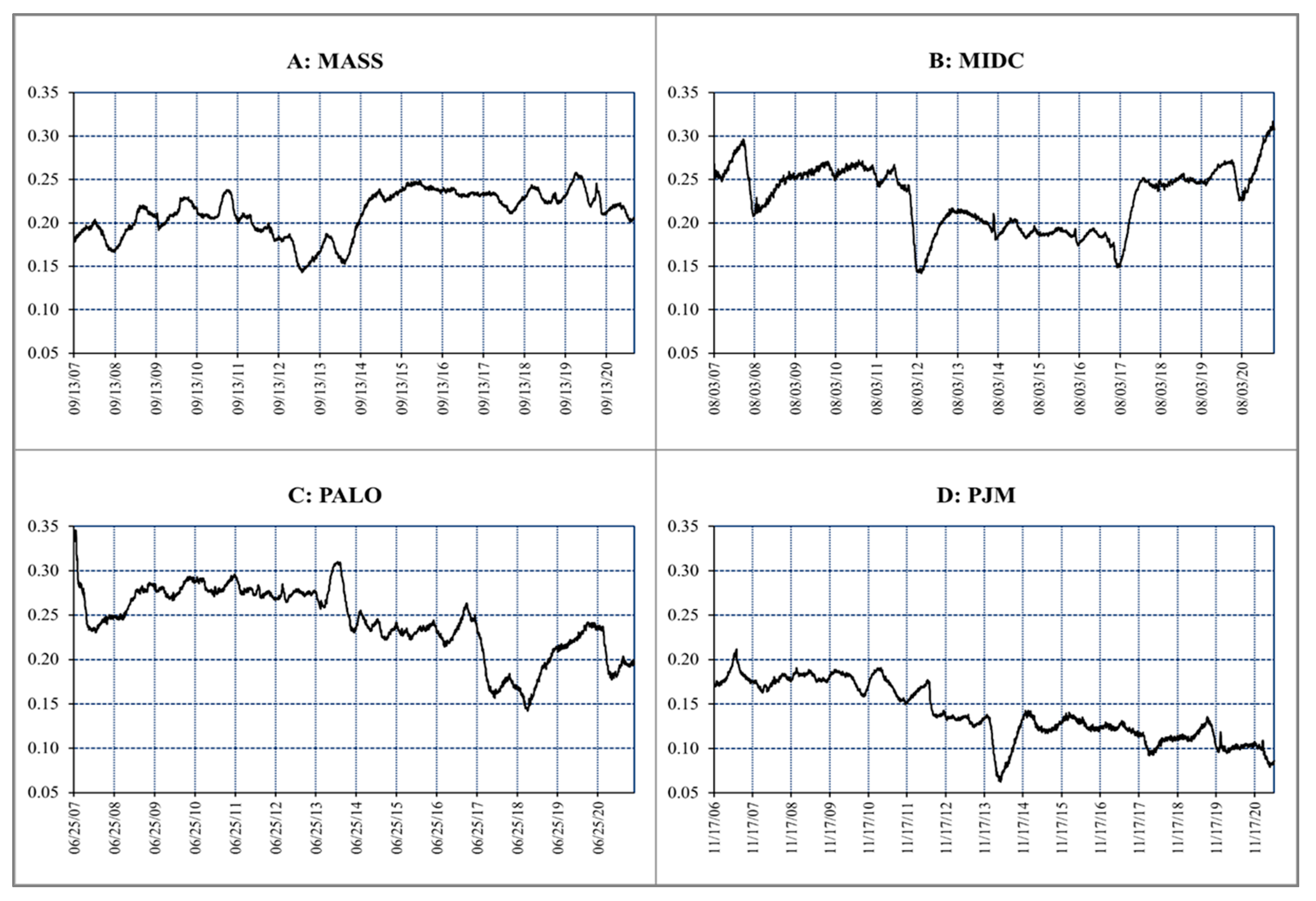
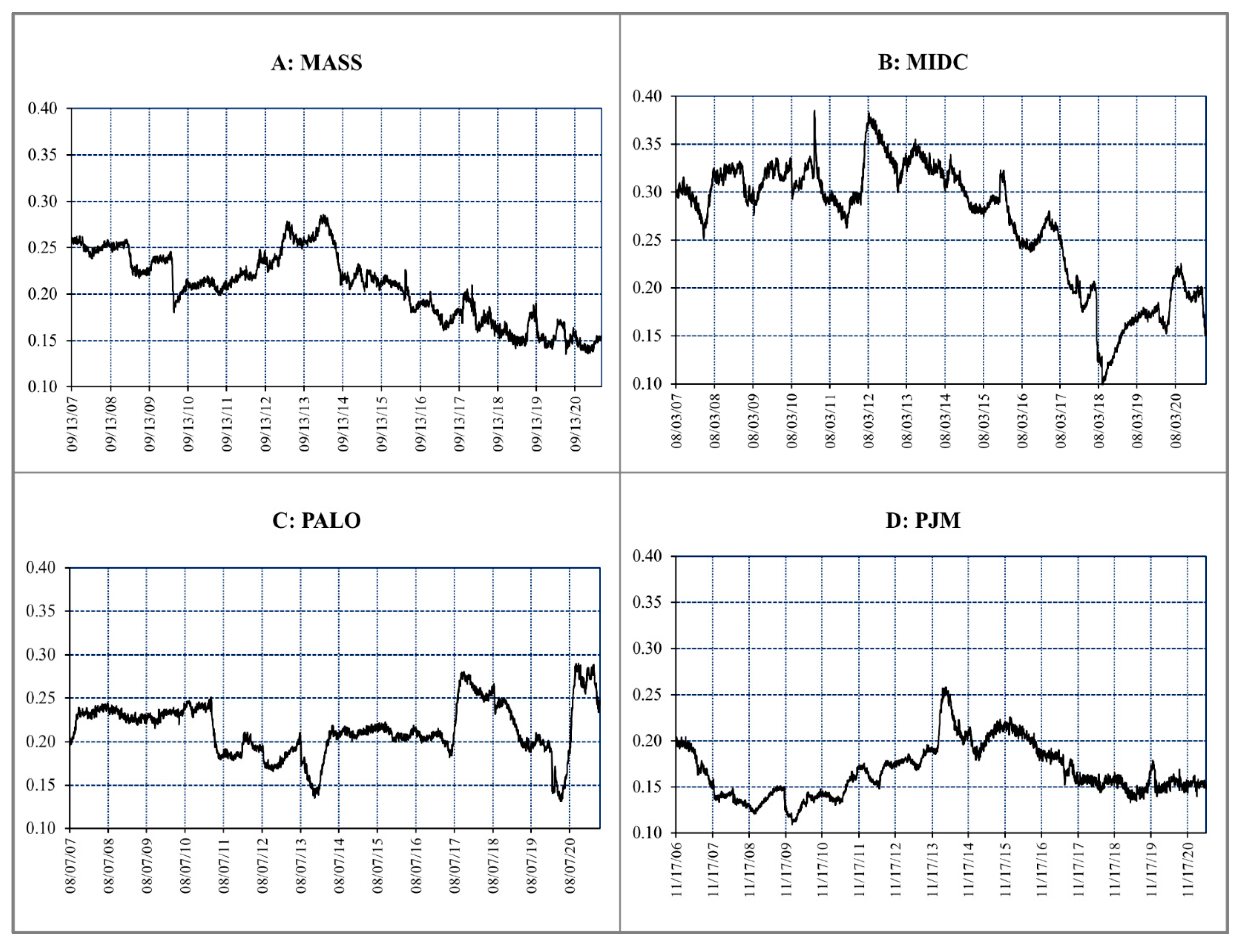
The dramatic deregulatory reforms in US electricity markets increased competition, resulting in more complex prices compared to other commodities. This paper aims to investigate and compare the overall and time-varying multifractality and efficiency of four major US electricity regions: Mass Hub, Mid C, Palo Verde, and PJM West. Multifractal detrended fluctuation analysis (MFDFA) is employed to better quantify the intensity of self-similarity. Large daily data from 2001 to 2021 are taken in order to make a more conclusive analysis. The four electricity market returns showed strong multifractal features with PJM West having the highest multifractality (corresponding to lowest efficiency) and Mass Hub having the lowest multifractality (i.e., highest efficiency). Moreover, all series exhibited mean reverting (anti-persistent) behavior in the overall time period. The findings of MFDFA rolling window suggest Palo Verde as the most volatile index, while a significant upward trend in the efficiency of Mass Hub and PJM West is observed after the first quarter of 2014. The novel findings have important implications for policymakers, regulatory authorities, and decision makers to forecast electricity prices better and control efficiency.
Keywords: electricity; efficiency; multifractal detrended fluctuation analysis; multifractality; MLM; rolling window electricity; efficiency; multifractal detrended fluctuation analysis; multifractality; MLM; rolling window