Article

Quantitative Analysis of Sustainable Transport Development as a Support Tool for Transport System Management: Spatial Approach

1
Institute of Management and Technical Sciences, Warsaw Management University, 03-772 Warsaw, Poland
2
Department of Development Policy and Marketing, Institute of Economics and Finance, Warsaw University of Life Sciences—SGGW, 02-787 Warsaw, Poland
*
Author to whom correspondence should be addressed.
Energies 2021, 14(19), 6149; https://doi.org/10.3390/en14196149
Submission received: 3 August 2021 / Revised: 15 September 2021 / Accepted: 23 September 2021 / Published: 27 September 2021
(This article belongs to the Special Issue Analysis of Pro-ecological Behavior of Consumers)

Abstract

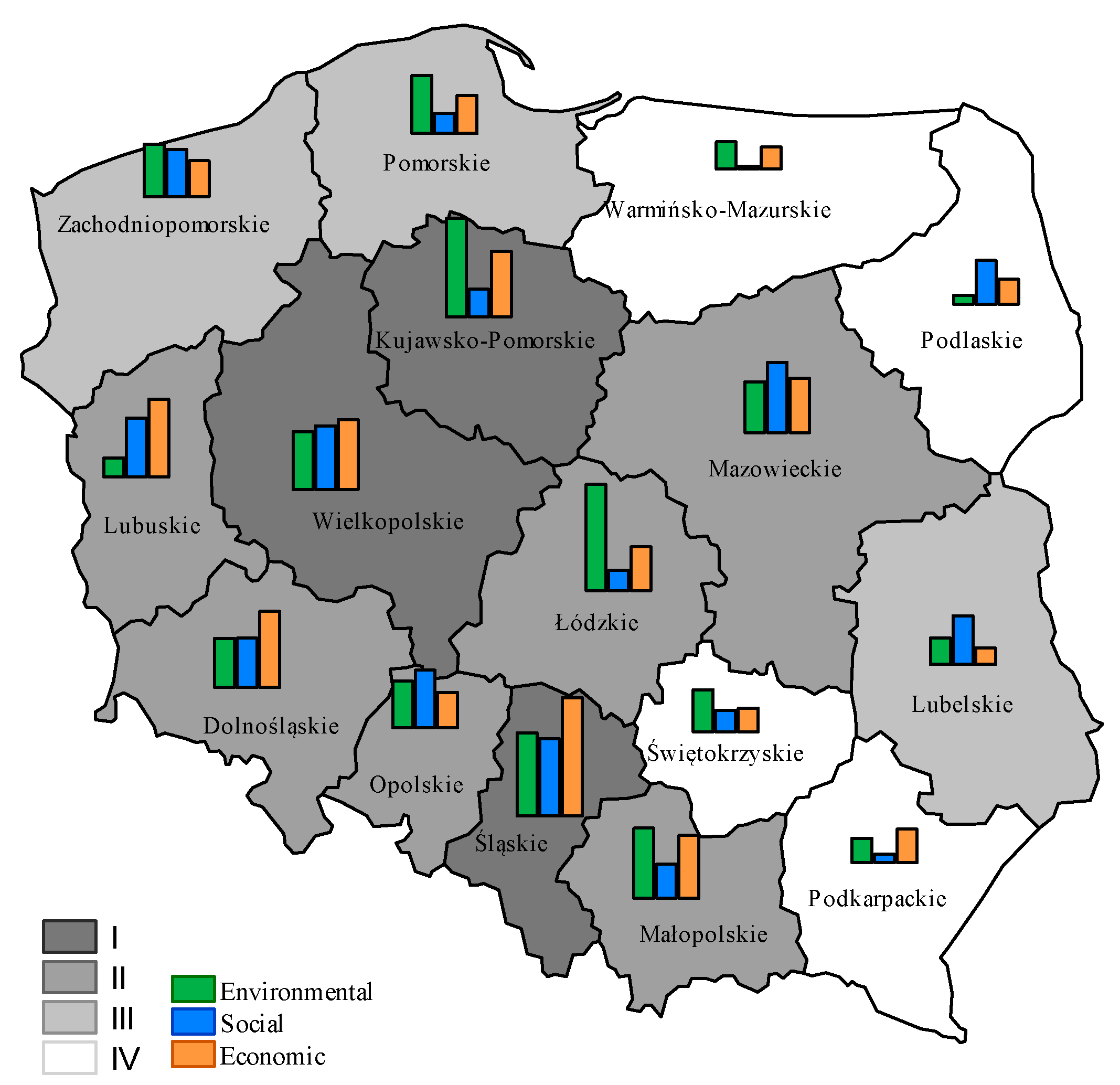
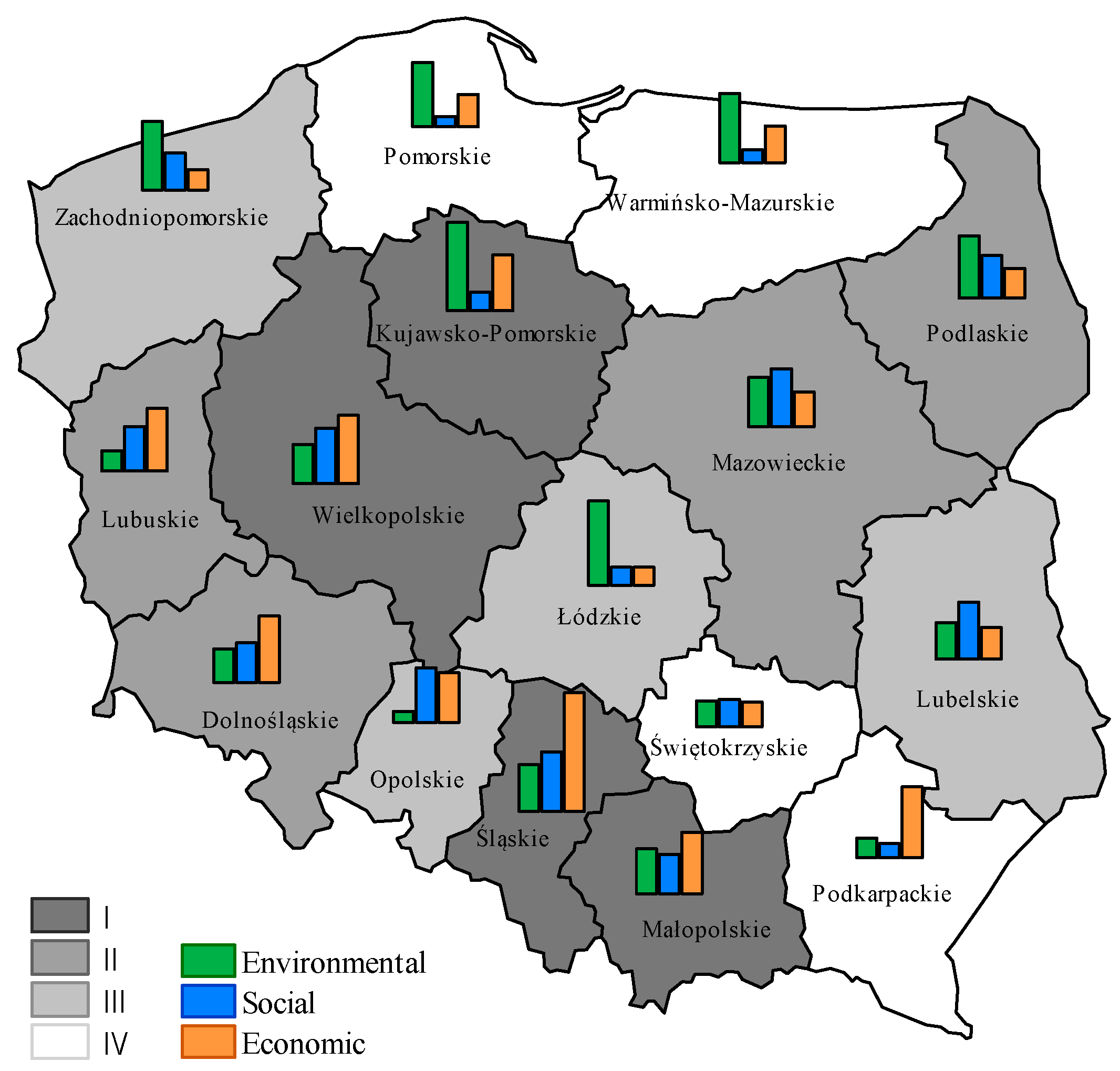
The main aim of this paper is to assess sustainable transport development, particularly in Polish voivodeships, as well as to identify underdeveloped geographical areas. In order to deal with this research topic, both classical and multivariate order statistical measures were implemented into the research process. The source of information for the research was the data drawn from BDL (Bank of Local Data) Statistics Poland. The rankings of Polish voivodeships were obtained for sustainable transport development and its individual components in the form of three orders: environmental, social and economic. This allowed us to identify underdeveloped regions in the area of transport sustainability and its particular aspects. It should be noted that we applied both the original set of diagnostic variables and their classification into particular orders. However, the choice of variables was mostly conditioned by the availability of data. Furthermore, this was the first time that the taxonomic methods applied here, featuring the implementation of the multidimensional Weber median, have been used to assess aspects of transport sustainability. This kind of synthetic method design allowed us to consider the interactions between different areas of a sophisticated transportation system and made our analysis immune to skewing by diagnostic variables.
Keywords: sustainable development; means of transport; infrastructure management; greenhouse gas emission; climate change; pollution; taxonomic analysis; synthetic measure; spatial assessment sustainable development; means of transport; infrastructure management; greenhouse gas emission; climate change; pollution; taxonomic analysis; synthetic measure; spatial assessment