Article

Household Electricity Generation as a Way of Energy Independence of States—Social Context of Energy Management

1
Department of Economics, Mingachevir State University (MSU), Mingechevir AZ4500, Azerbaijan
2
Renaissance Development Russia, 105264 Moscow, Russia
3
Department of Chemistry, I.M. Sechenov First Moscow State Medical University, 119991 Moscow, Russia
4
Faculty of Management, Technical University of Czestochowa, 42-201 Czestochowa, Poland
*
Author to whom correspondence should be addressed.
Energies 2021, 14(12), 3407; https://doi.org/10.3390/en14123407
Submission received: 16 March 2021 / Revised: 21 May 2021 / Accepted: 4 June 2021 / Published: 9 June 2021
(This article belongs to the Special Issue Innovation in Energy Security and Long-Term Energy Efficiency Ⅱ)

Abstract

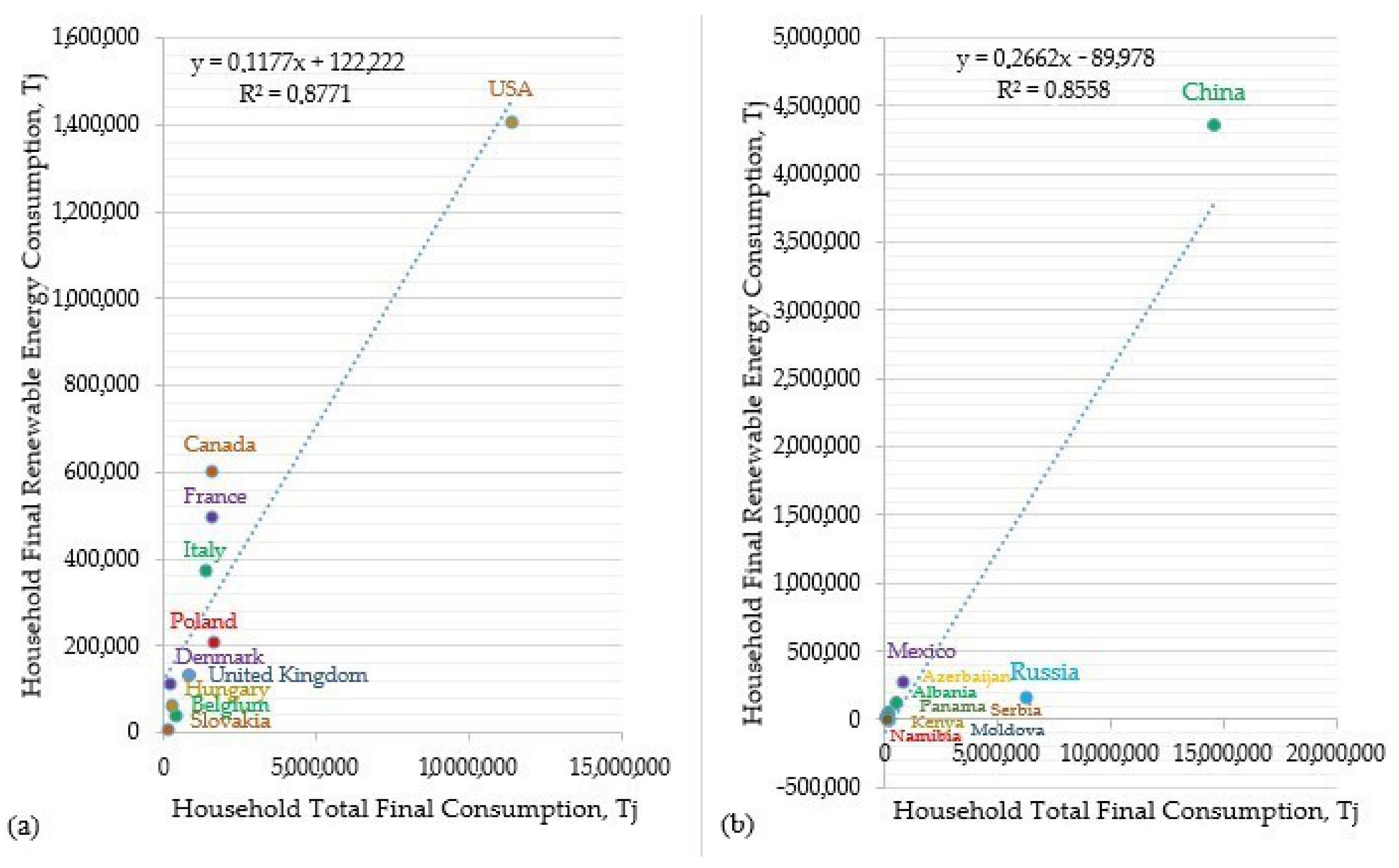
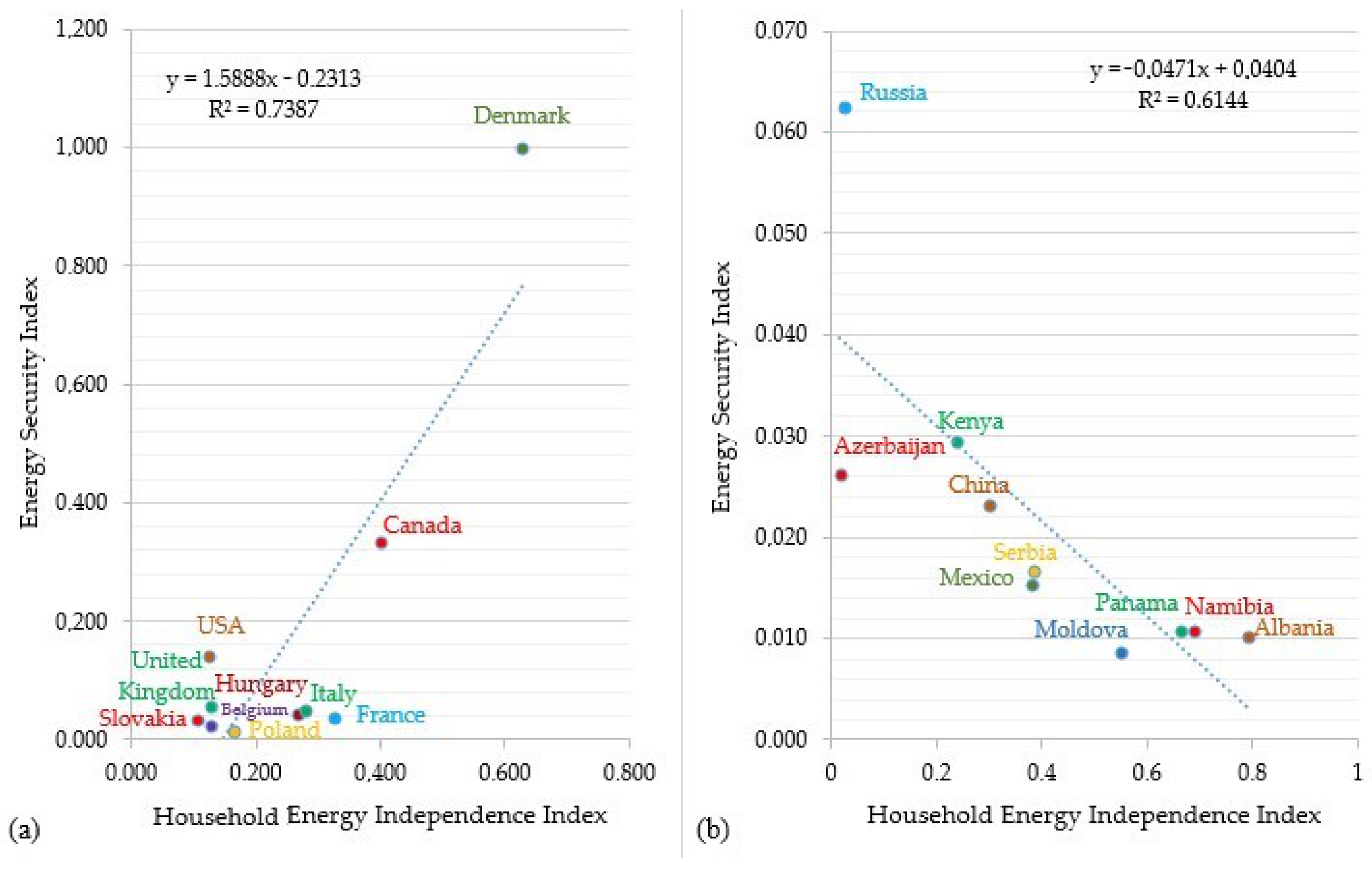
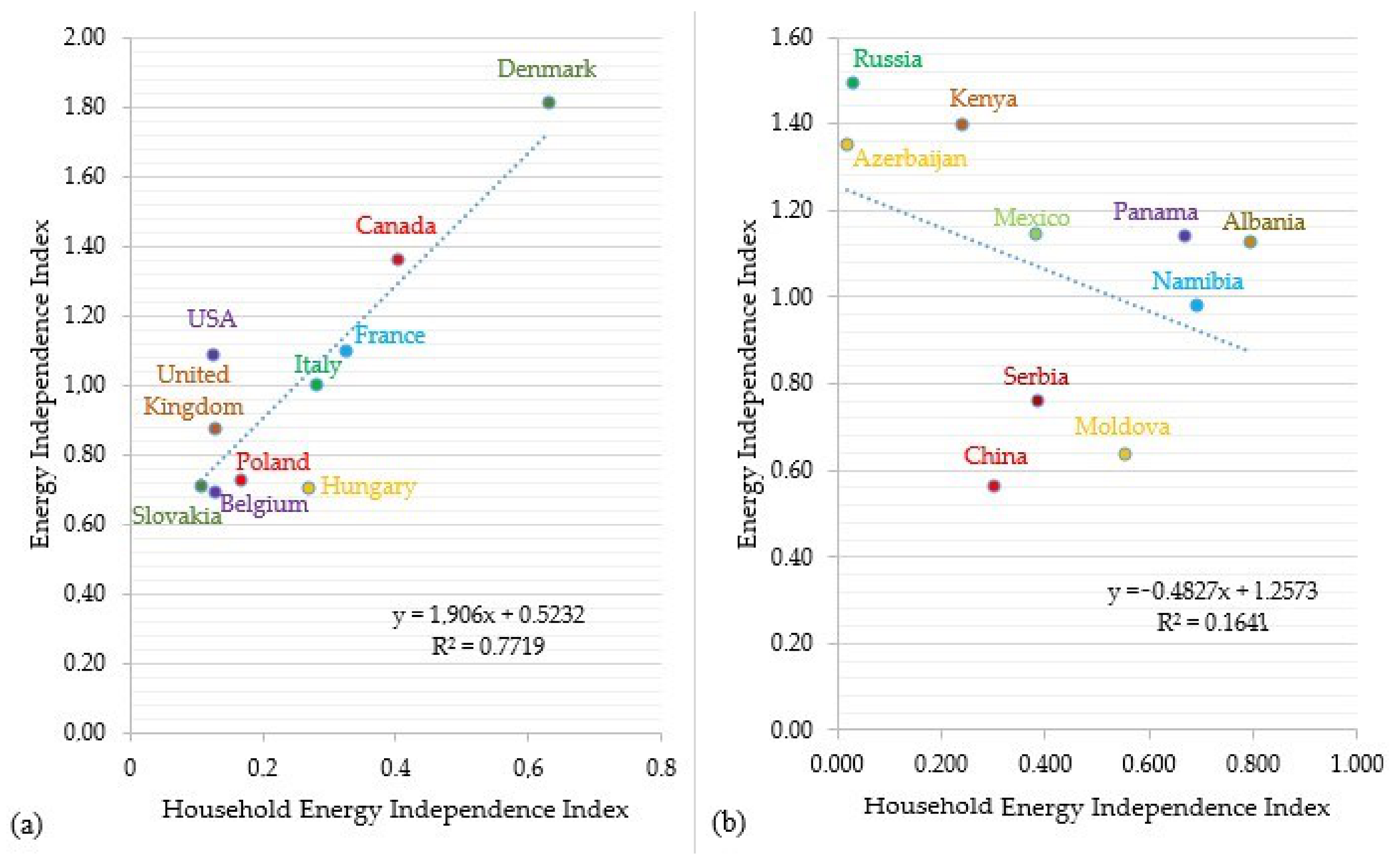
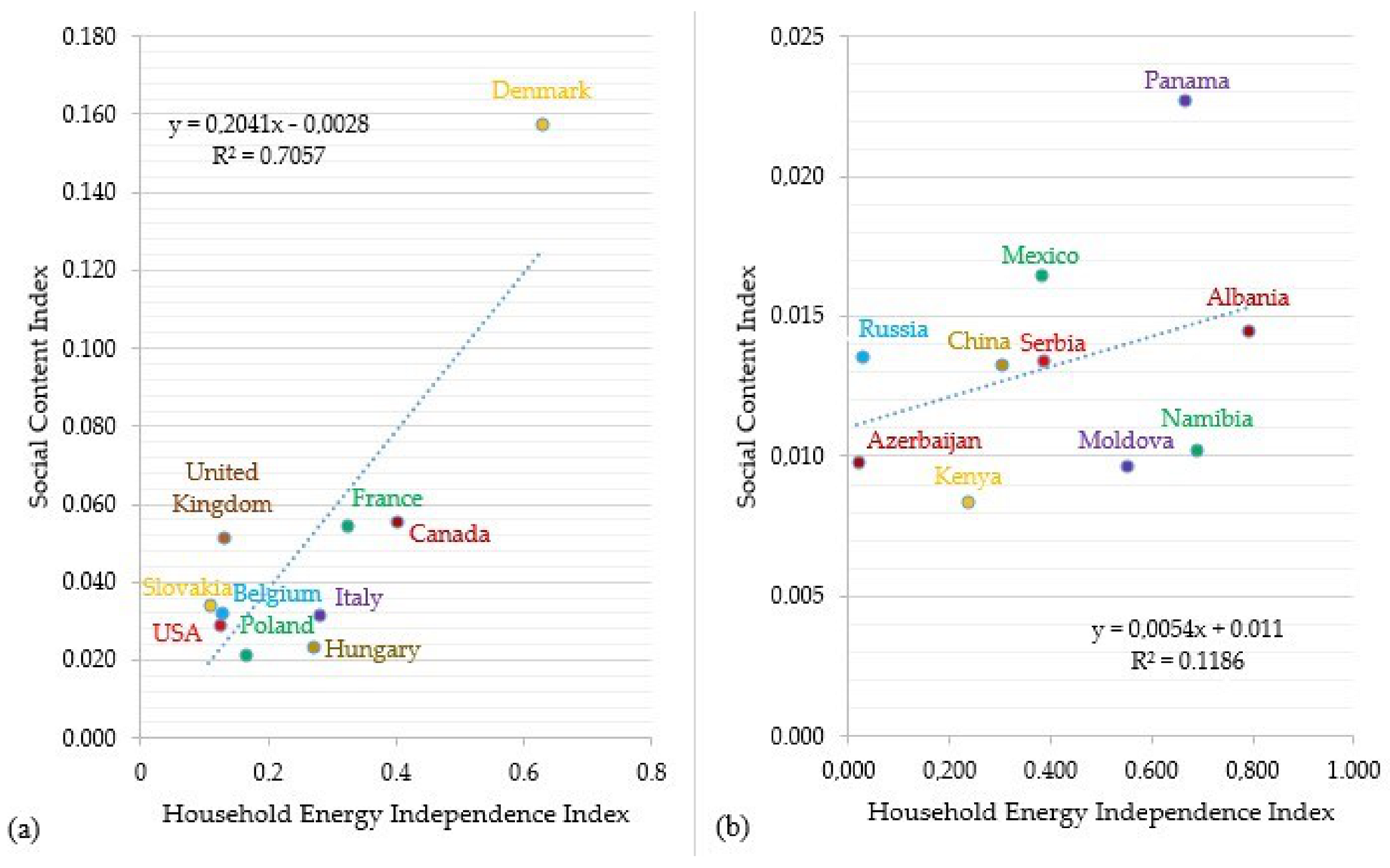
The purpose of this study was to determine the degree of influence of alternative options for generating electricity by households on the level of energy independence of countries. The research methodology was based on the use of correlation–regression analysis, as well as adapted non-linear optimization by choosing one of three scenarios for electricity generation by households for 20 countries. Regression analysis showed the dependence of a country’s energy security on households’ energy independence. It is determined that an increase in households’ energy production helps to reduce the level of energy dependence in developed countries. However, for developing countries, there is no such interrelation. The solution of the formulated problem of nonlinear optimization for the studied countries has demonstrated that the criterion of energy dependence is superior to the criterion of a country’s energy security. In the long term, this study can be deepened in the direction of assessing the effectiveness of household investment in electricity generation projects. The proposed results can be used by responsible persons in the field of economy and energy in order to determine the position of various policies, and use strategic levers and indicators that ensure an effective response to energy security challenges in the regional and global markets.
Keywords: correlation; energy dependence; energy efficiency management; energy security; scenario; social development correlation; energy dependence; energy efficiency management; energy security; scenario; social development