Article

Increasing Biogas Yield from Fodder by Microbial Stimulation of Propionic Acid Synthesis in Grass Silages
by
Krystyna Zielińska
1,
Agata Fabiszewska
2,*,
Katarzyna Piasecka-Jóźwiak
1 and
Renata Choińska
1
1
Department of Fermentation Technology, Prof. Wacław Dąbrowski Institute of Agricultural and Food Biotechnology-State Research Institute, Rakowiecka 36 Street, 02-532 Warsaw, Poland
2
Department of Chemistry, Institute of Food Sciences, Warsaw University of Life Sciences, 159 c Nowoursynowska Street, 02-787 Warsaw, Poland
*
Author to whom correspondence should be addressed.
Energies 2021, 14(10), 2843; https://doi.org/10.3390/en14102843
Submission received: 22 April 2021 / Revised: 10 May 2021 / Accepted: 11 May 2021 / Published: 14 May 2021
(This article belongs to the Section A4: Bio-Energy)

Abstract

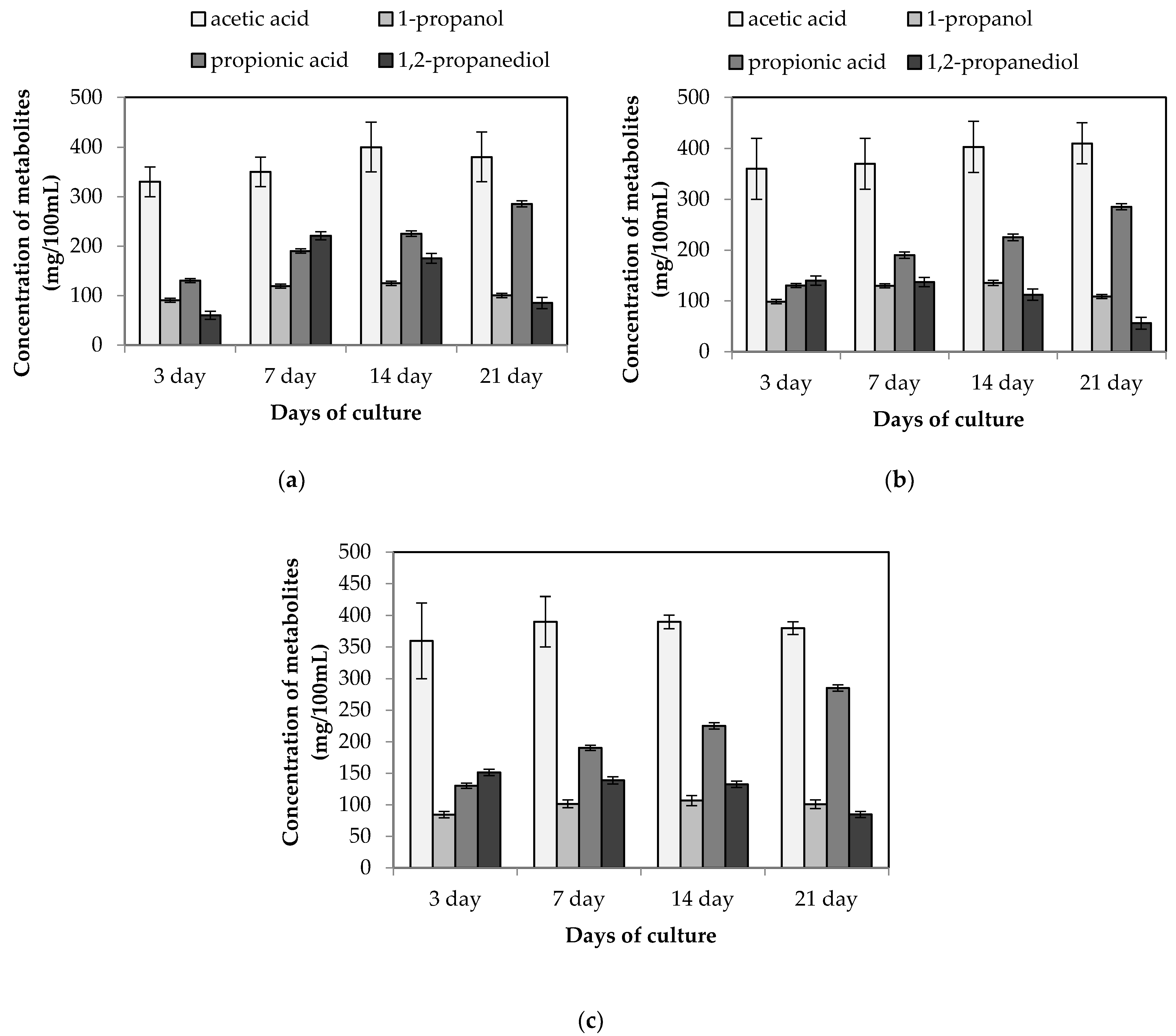
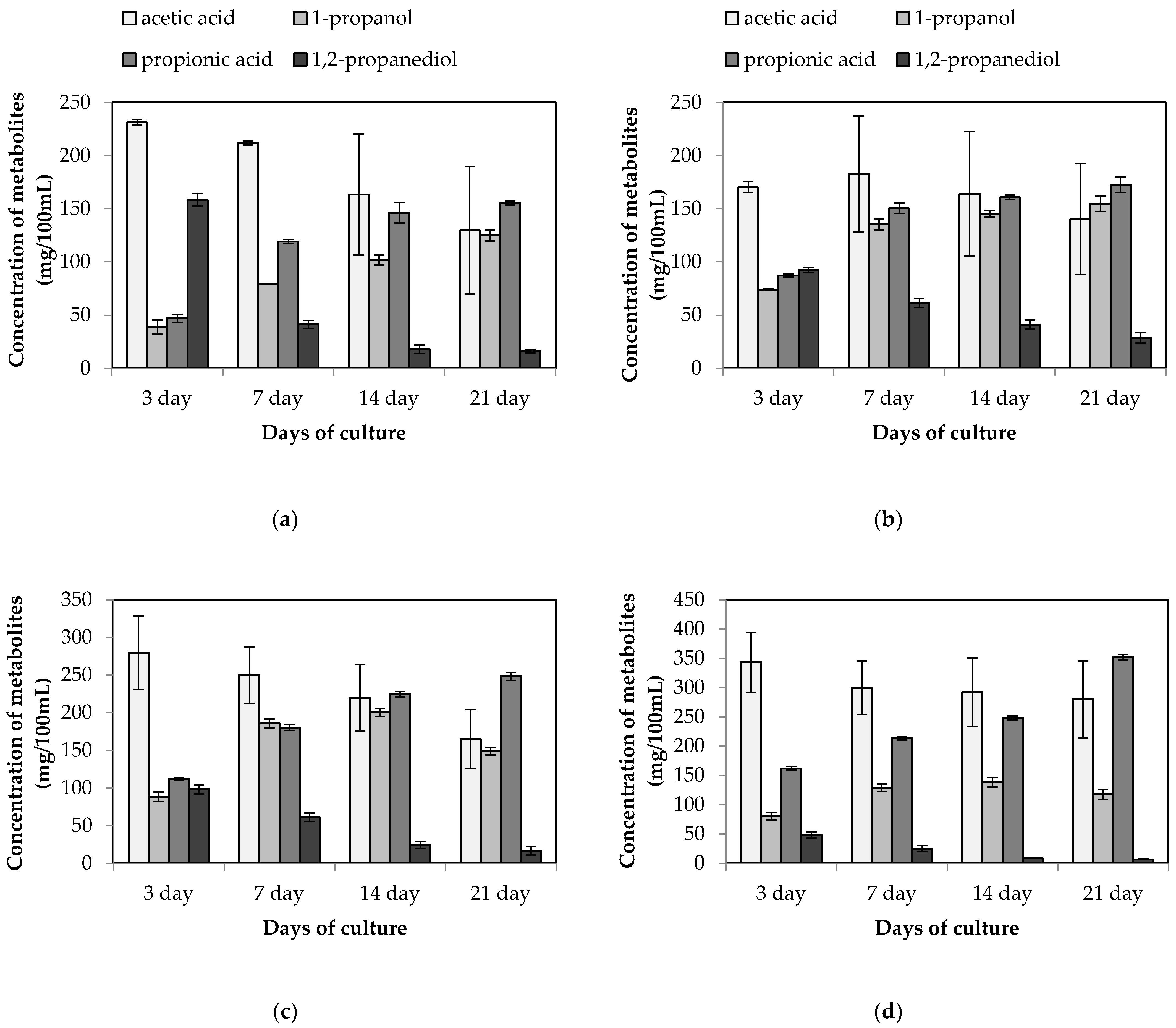
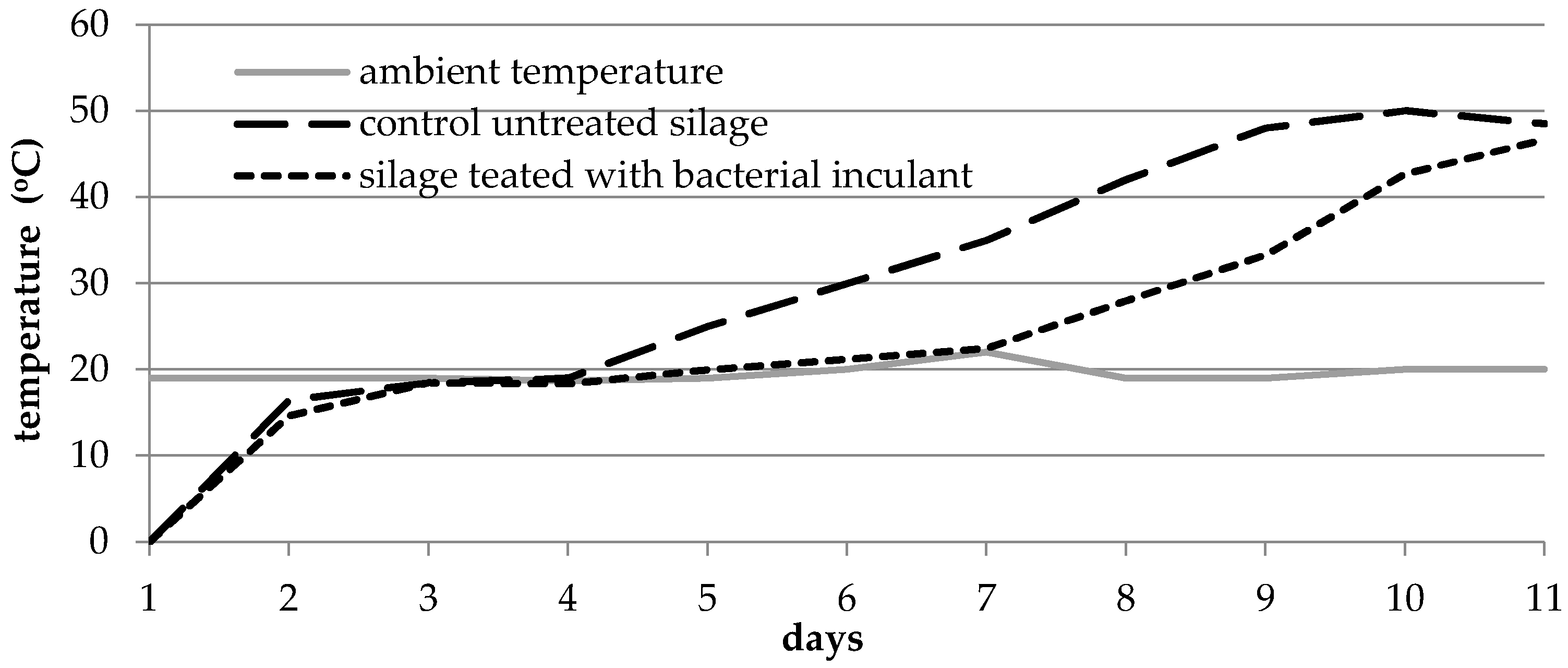
A new direction in the use of lactic acid bacteria inoculants is their application for renewable raw materials ensiling for biogas production. The aim of the study was to demonstrate the possibility of stimulating the synthesis of propionic acid in the process of co-fermentation of selected strains of Lactobacillus buchneri and L. diolivorans as well as L. buchneri and Pediococcus acidilactici. L. buchneri KKP 2047p and P. acidilactici KKP 2065p were characterized by the special capabilities for both synthesis and metabolism of 1,2-propanediol. L. diolivorans KKP 2057p stands out for the ability to metabolize 1,2-propanediol to propionic acid. As a result of the co-fermentation a concentration of propionic acid was obtained at least 1.5 times higher in the final stage of culture in comparison to cultivating individual species of bacteria separately. The results of in vitro experiments were applied in agricultural practice, by application of two lactic acid bacteria inoculants in ensiling of grass silage and improving its suitability for biogas production. Grass silages made with the addition of the inoculant were characterized by the content of 1,2-propanediol, 1-propanol and propionic acid ensured extension of the aerobic stability from 4 to 7 days in comparison to untreated silages. It was found that the use of both inoculants resulted in an approximately 10–30% increase in biogas yield from this raw material.
Keywords: 1,2-propanediol; biogas; grass silage; Lactobacillus; Pediococcus; propionic acid 1,2-propanediol; biogas; grass silage; Lactobacillus; Pediococcus; propionic acid