Article

Life Cycle Environmental Costs of Buildings

1
School of Civil Engineering, Beijing Jiaotong University, Beijing 100044, China
2
College of Architecture and Civil Engineering, Beijing University of Technology, Beijing 100124, China
3
China Academy of Building Research, Beijing 100013, China
*
Author to whom correspondence should be addressed.
Energies 2020, 13(6), 1353; https://doi.org/10.3390/en13061353
Submission received: 21 February 2020 / Revised: 9 March 2020 / Accepted: 12 March 2020 / Published: 14 March 2020
(This article belongs to the Special Issue Life Cycle & Technoeconomic Modeling)

Abstract

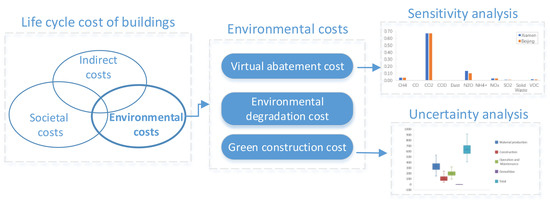
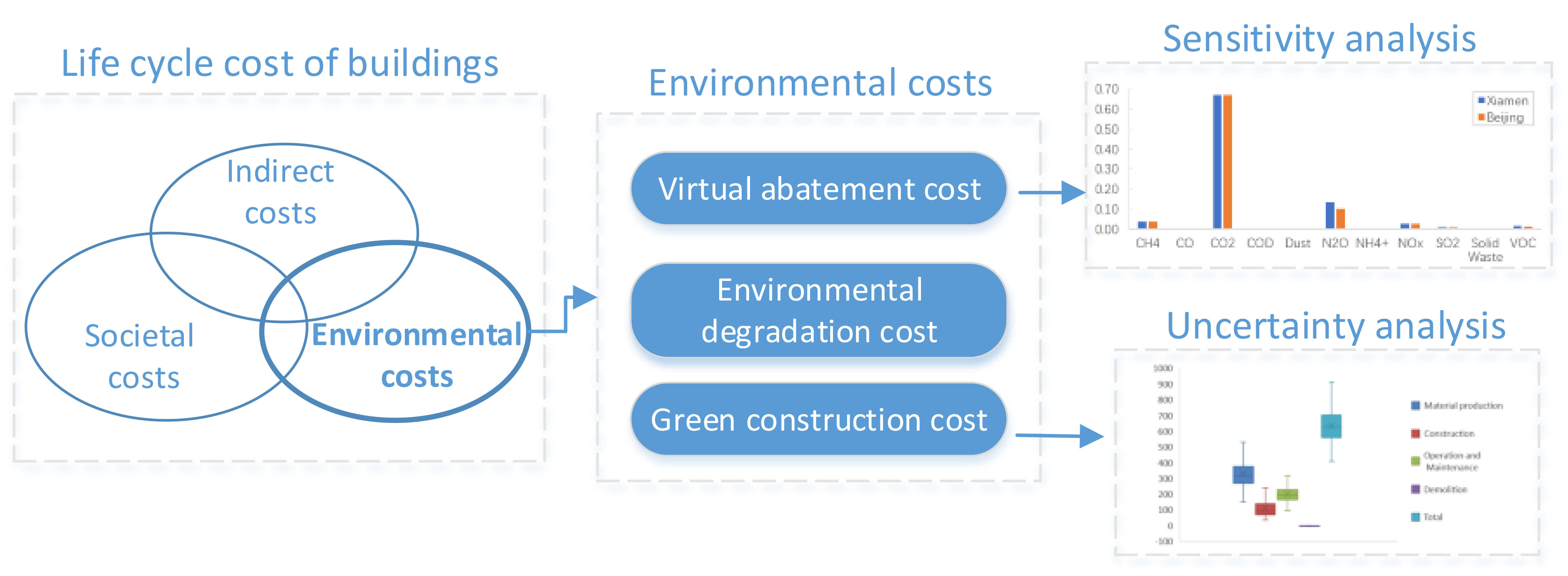
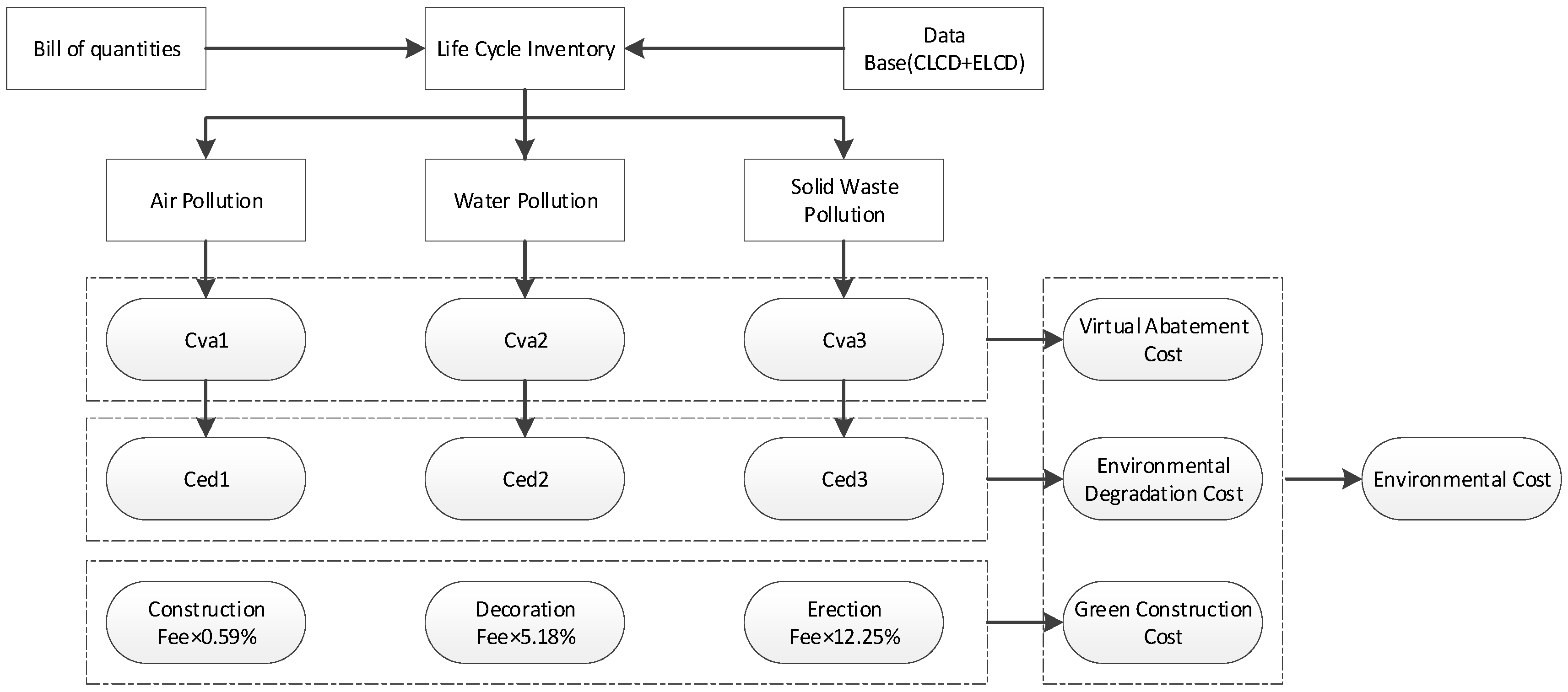
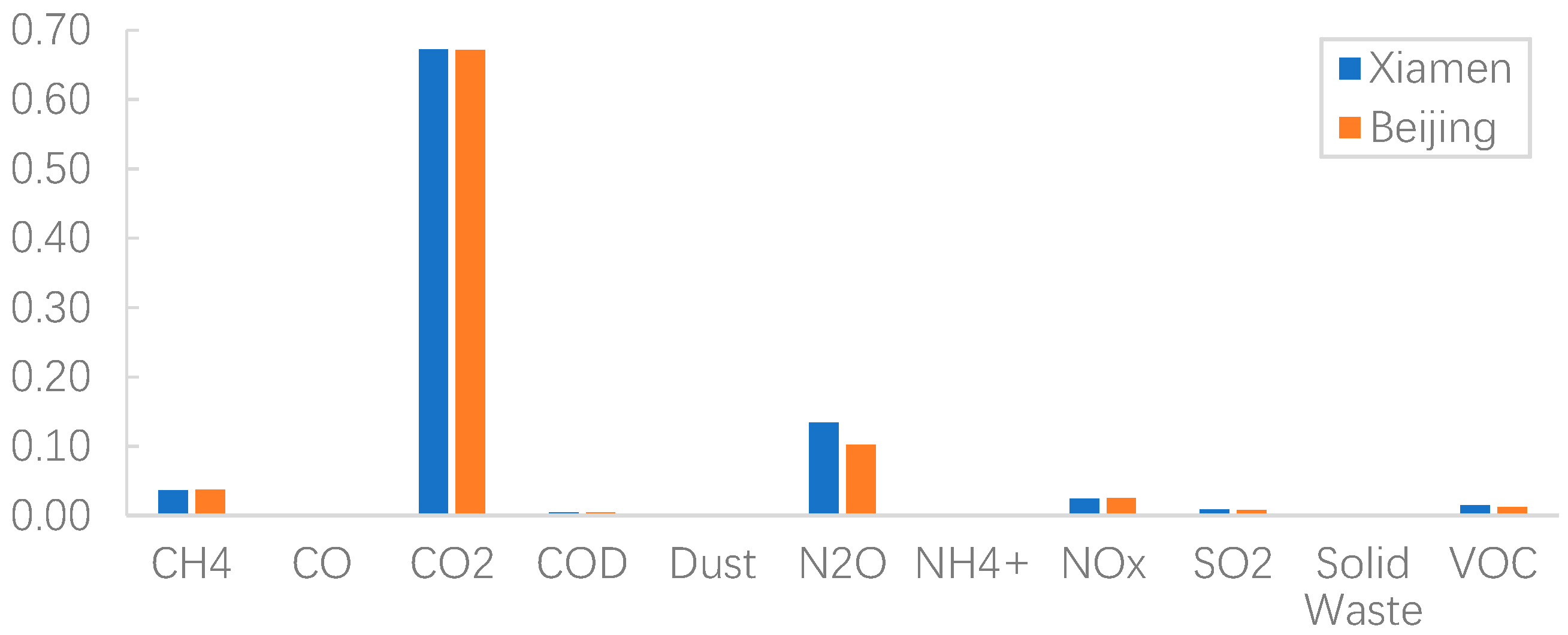
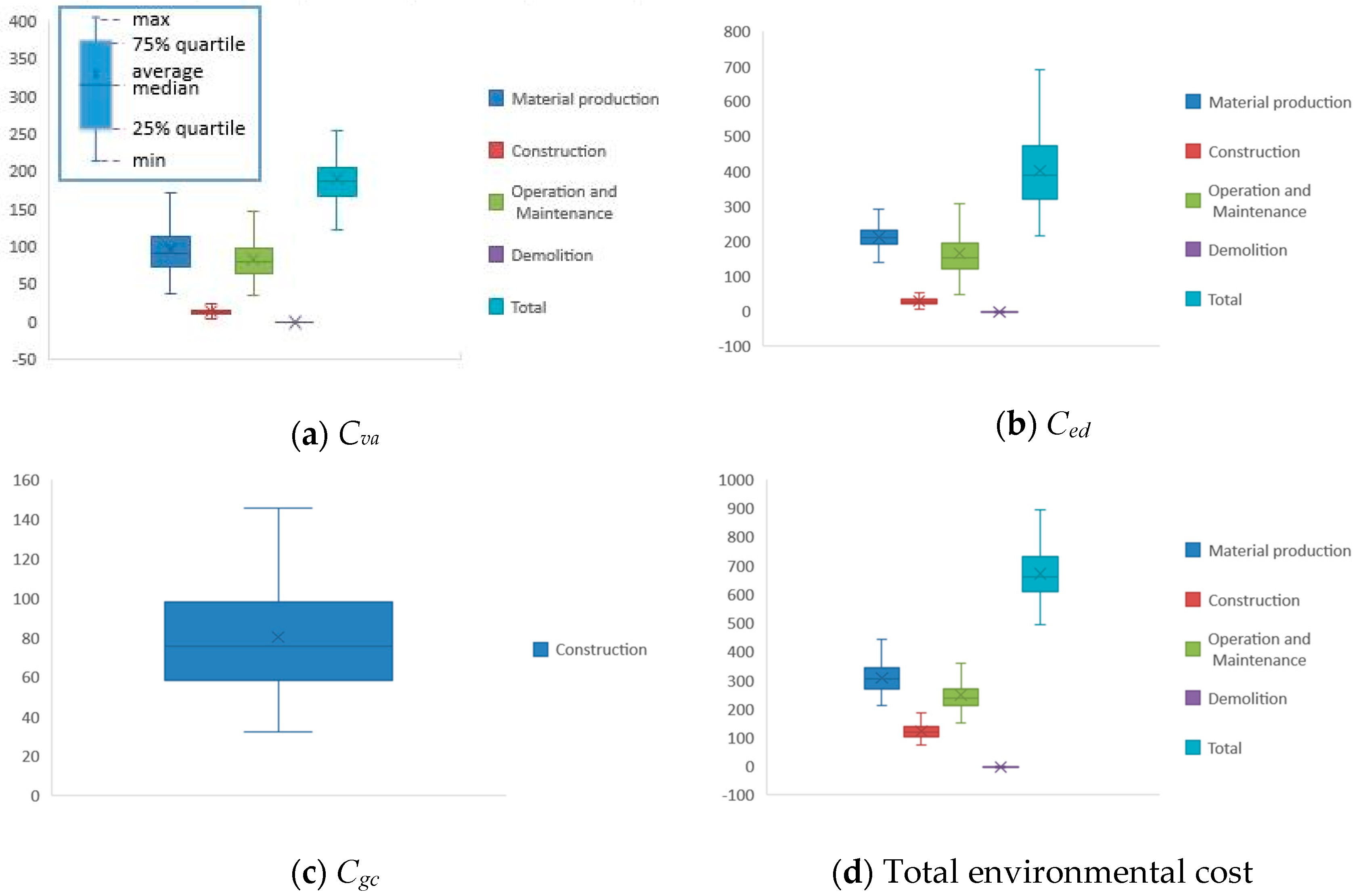
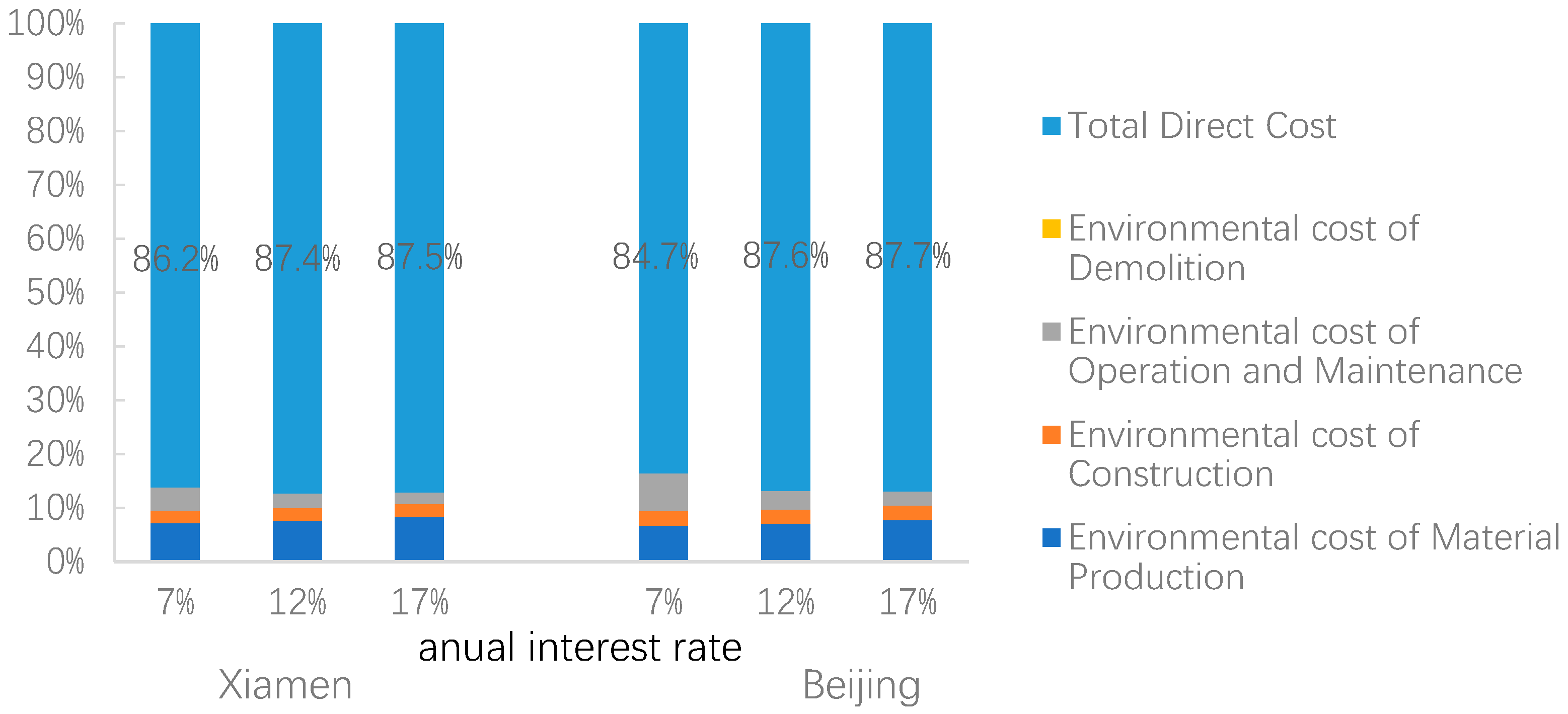
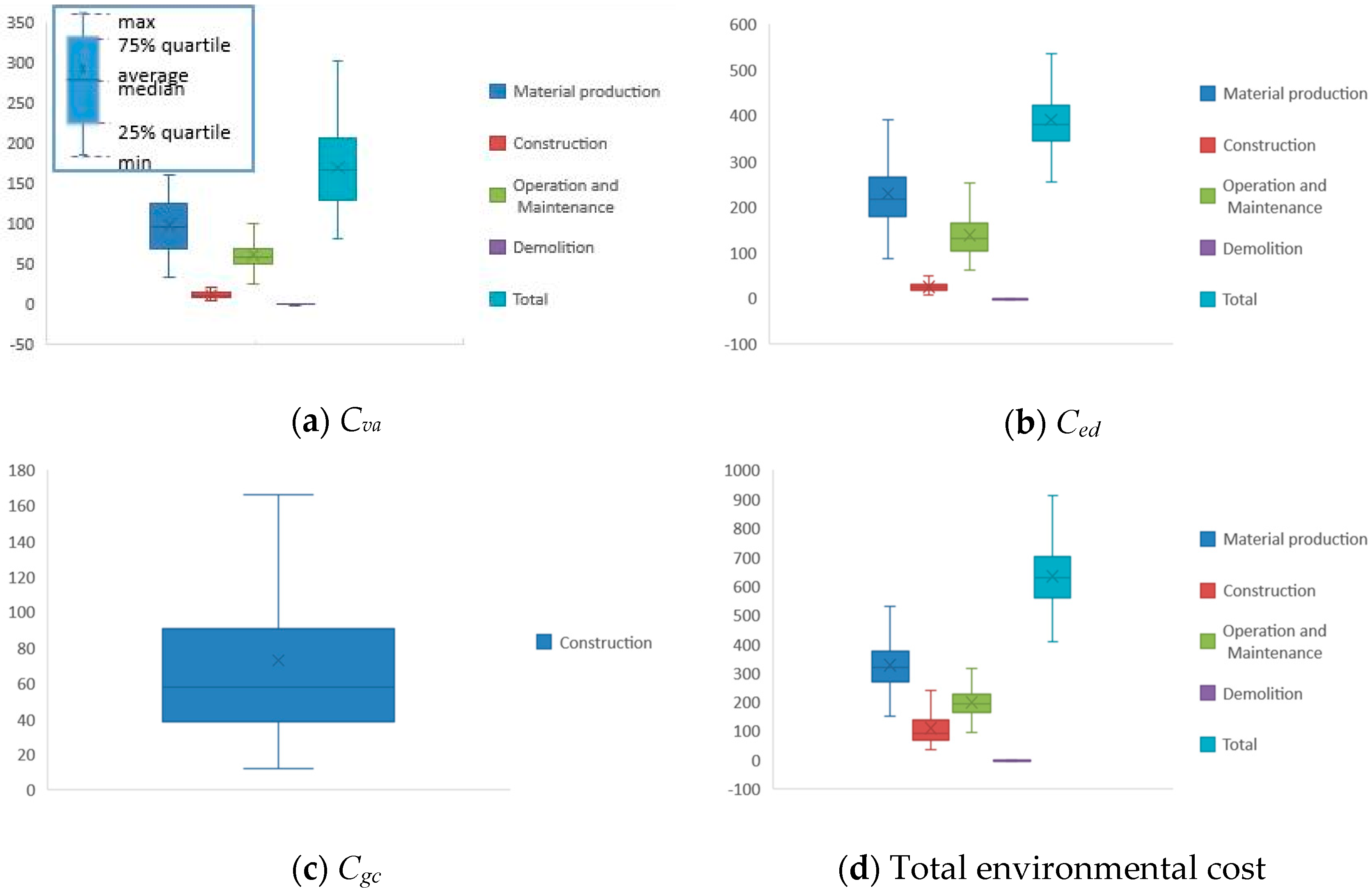
Energy consumption and pollutant emissions from buildings have caused serious impacts on the environment. Currently, research on building environmental costs is quite insufficient. Based on life cycle inventory of building materials, fossil fuel and electricity power, a calculating model for environmental costs during different stages is presented. A single-objective optimization model is generated by converting environmental impact into environmental cost, with the same unit with direct cost. Two residential buildings, one located in Beijing and another in Xiamen, China, are taken as the case studies and analyzed to test the proposed model. Moreover, data uncertainty and sensitivity analysis of key parameters, including the discount rate and the unit virtual abatement costs of pollutants, are also conducted. The analysis results show that the environmental cost accounts for about 16% of direct cost. The environmental degradation cost accounts for about 70% of the total environmental cost. According to the probabilistic uncertainty analysis results, the coefficient of variation of material production stage is the largest. The sensitivity analysis results indicate that the unit virtual abatement cost of CO2 has the largest influence on the final environmental cost.
Keywords: building; environmental costs; green GDP, China; uncertainty analysis; sensitivity analysis building; environmental costs; green GDP, China; uncertainty analysis; sensitivity analysis
Graphical Abstract