Article

Numerical Modelling of Horizontal Oil-Water Pipe Flow


1
Helmholtz-Zentrum Dresden-Rossendorf (HZDR)—Institute of Fluid Dynamics, Bautzner Landstrasse 400, D-01328 Dresden, Germany
2
ANSYS, Inc. 10 Cavendish Ct, Lebanon, NH 03766, USA
*
Author to whom correspondence should be addressed.
Energies 2020, 13(19), 5042; https://doi.org/10.3390/en13195042
Submission received: 24 August 2020 / Revised: 21 September 2020 / Accepted: 22 September 2020 / Published: 24 September 2020

Abstract

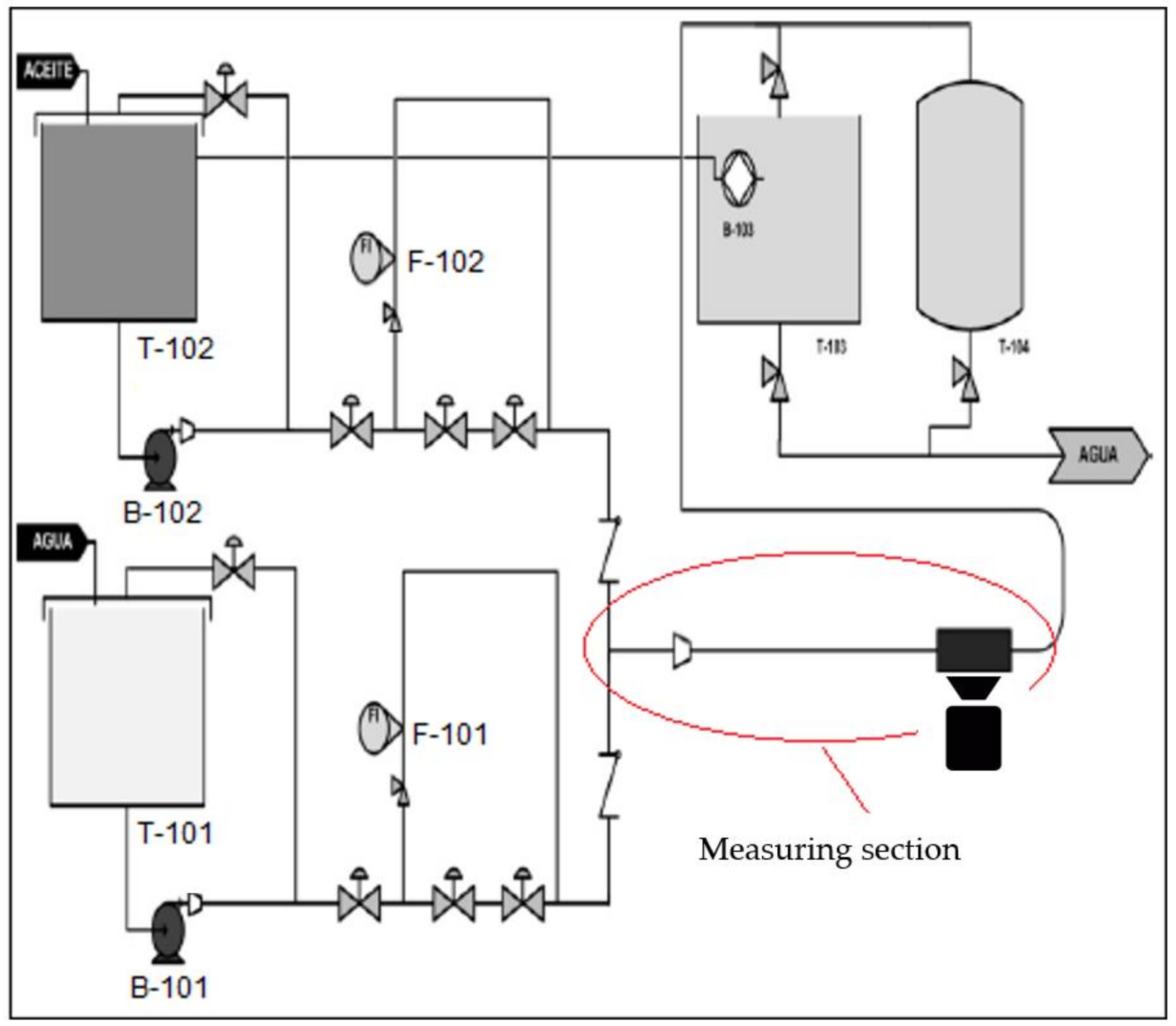
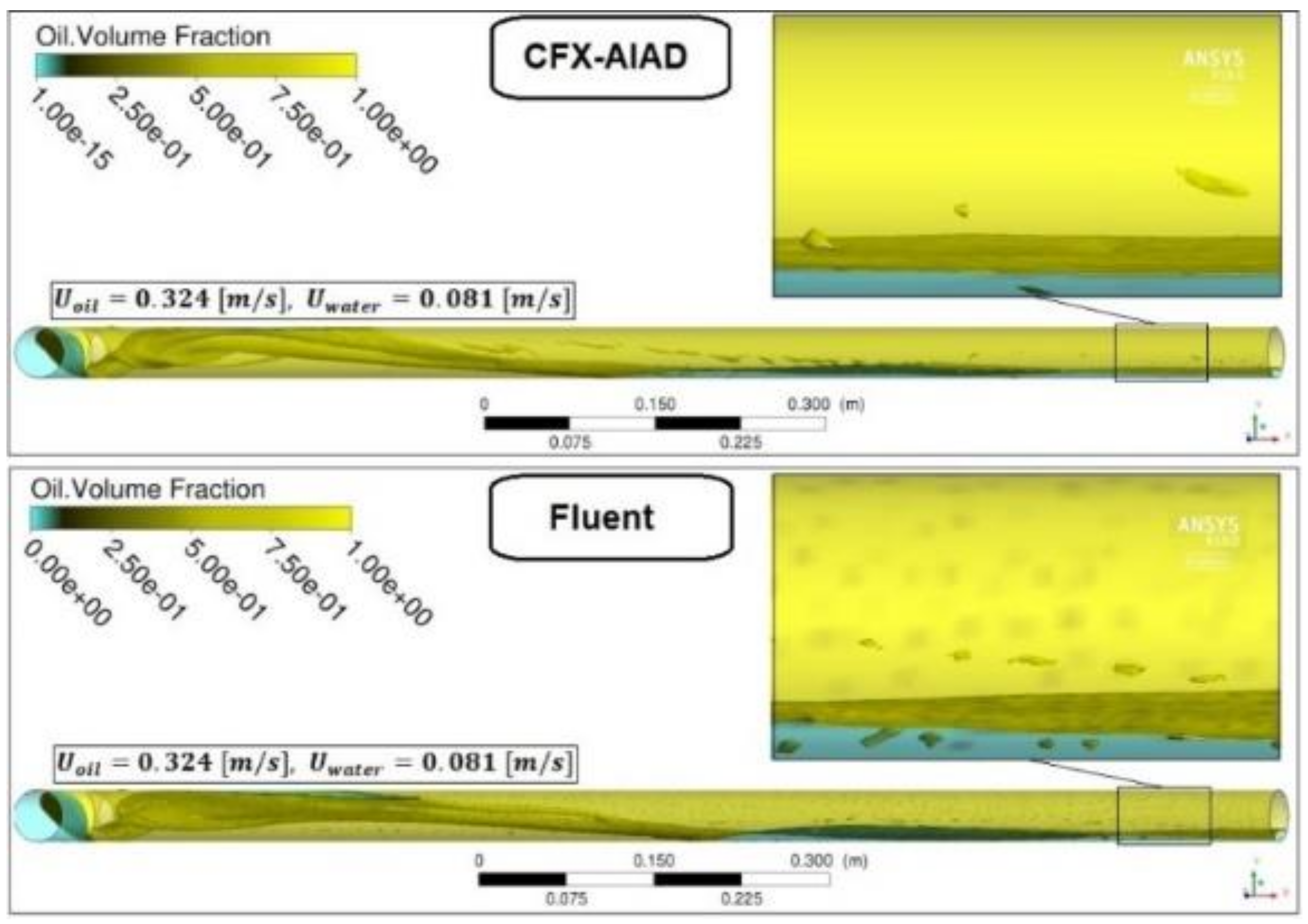
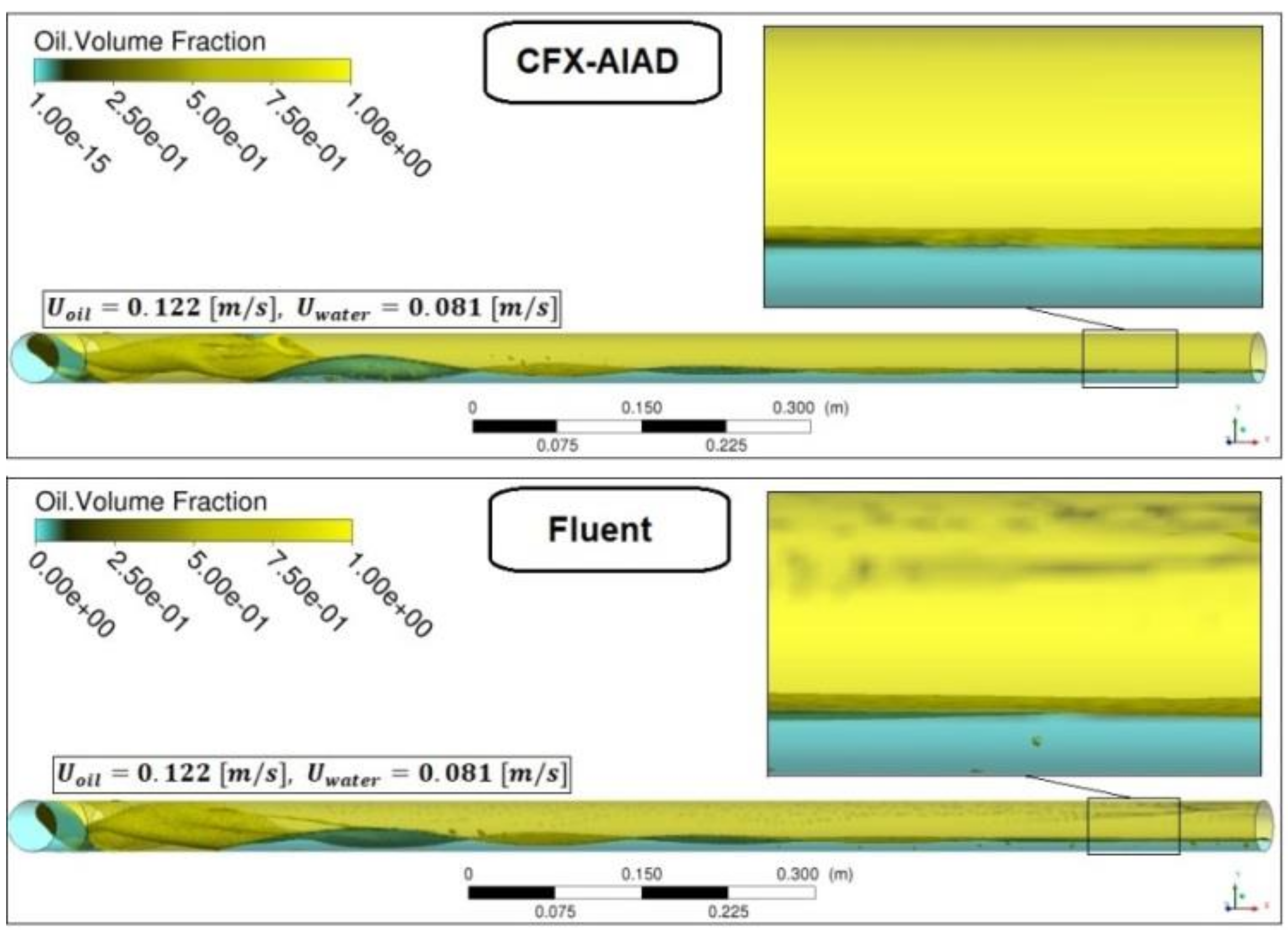
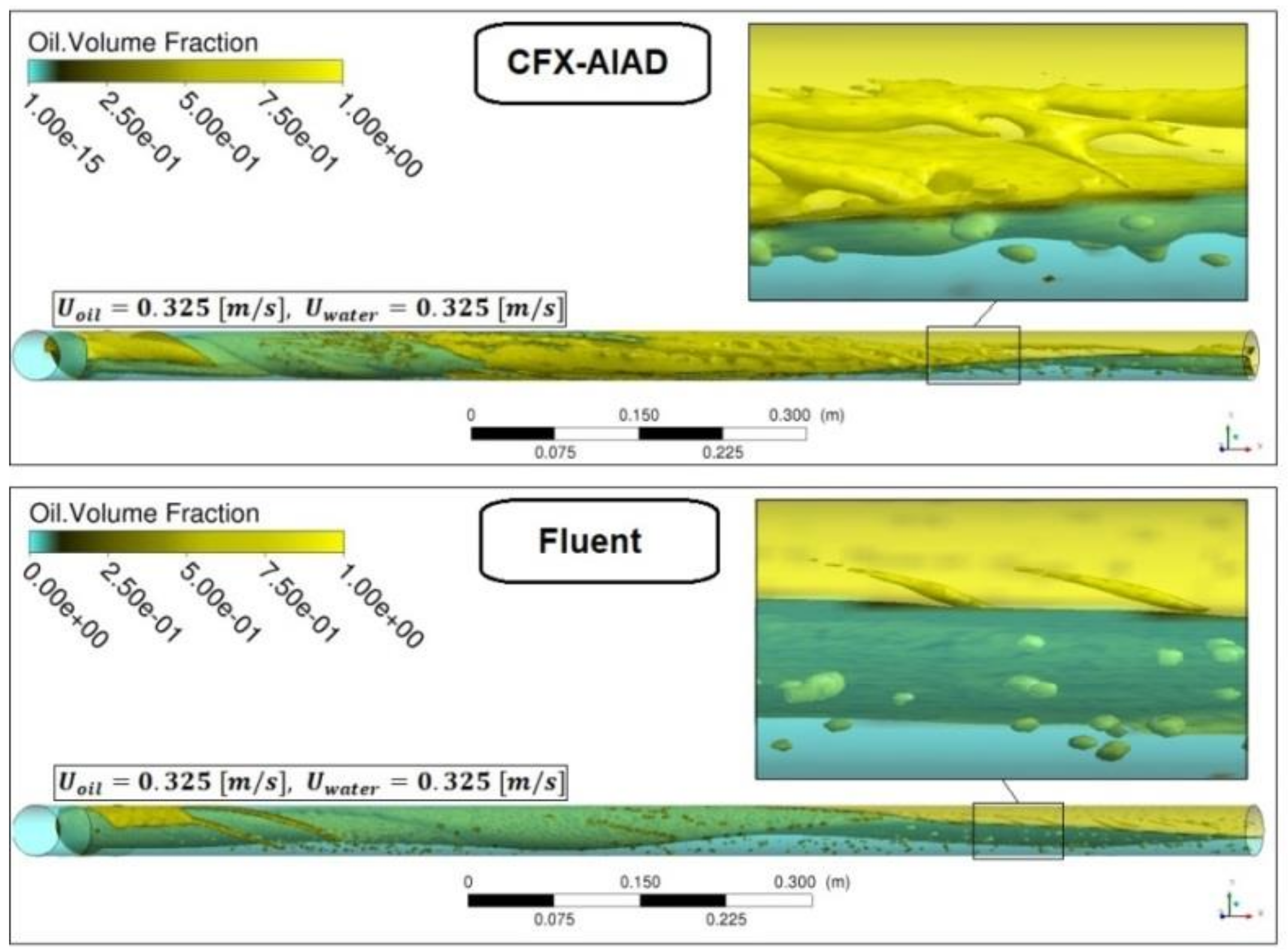
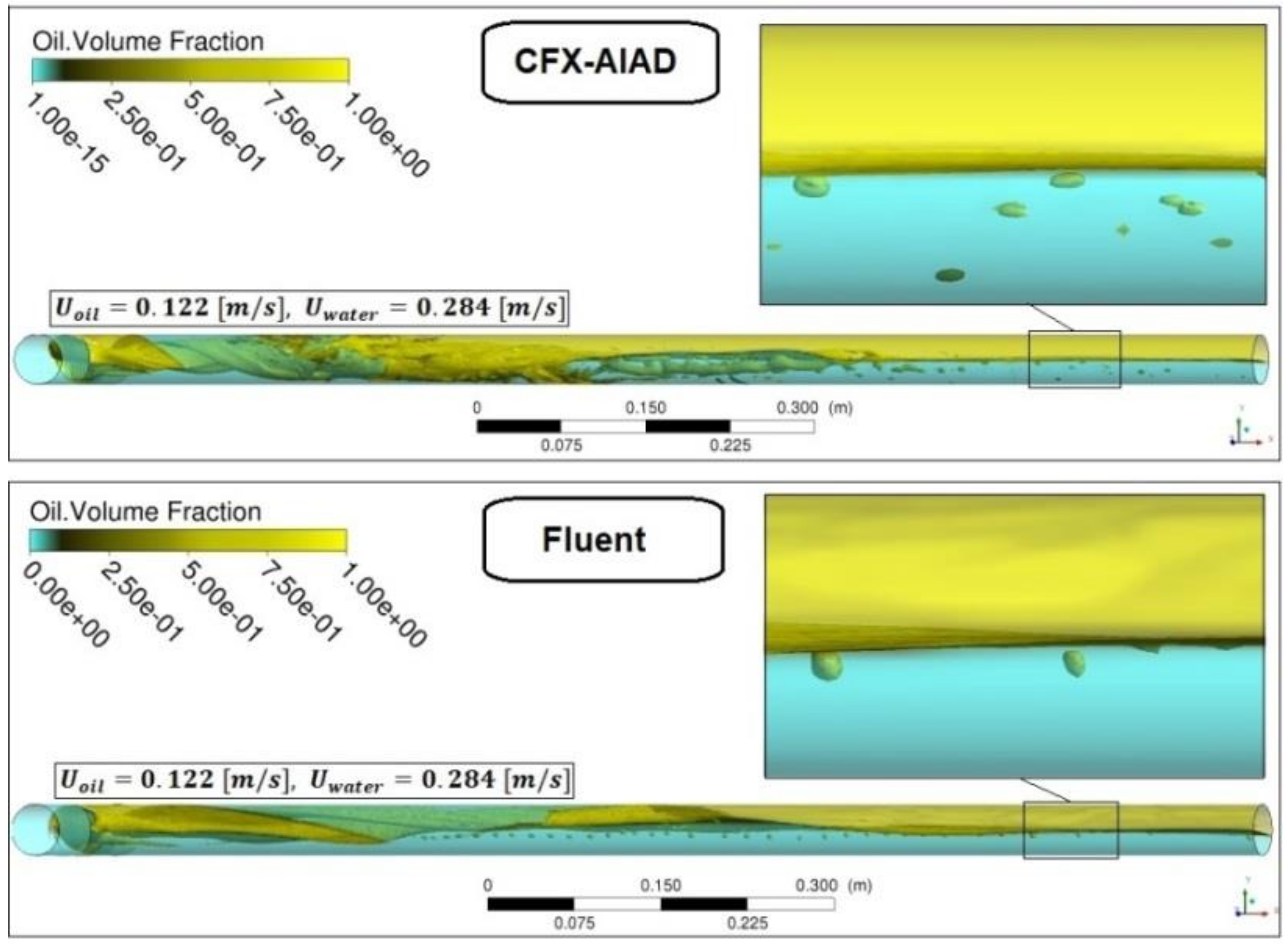
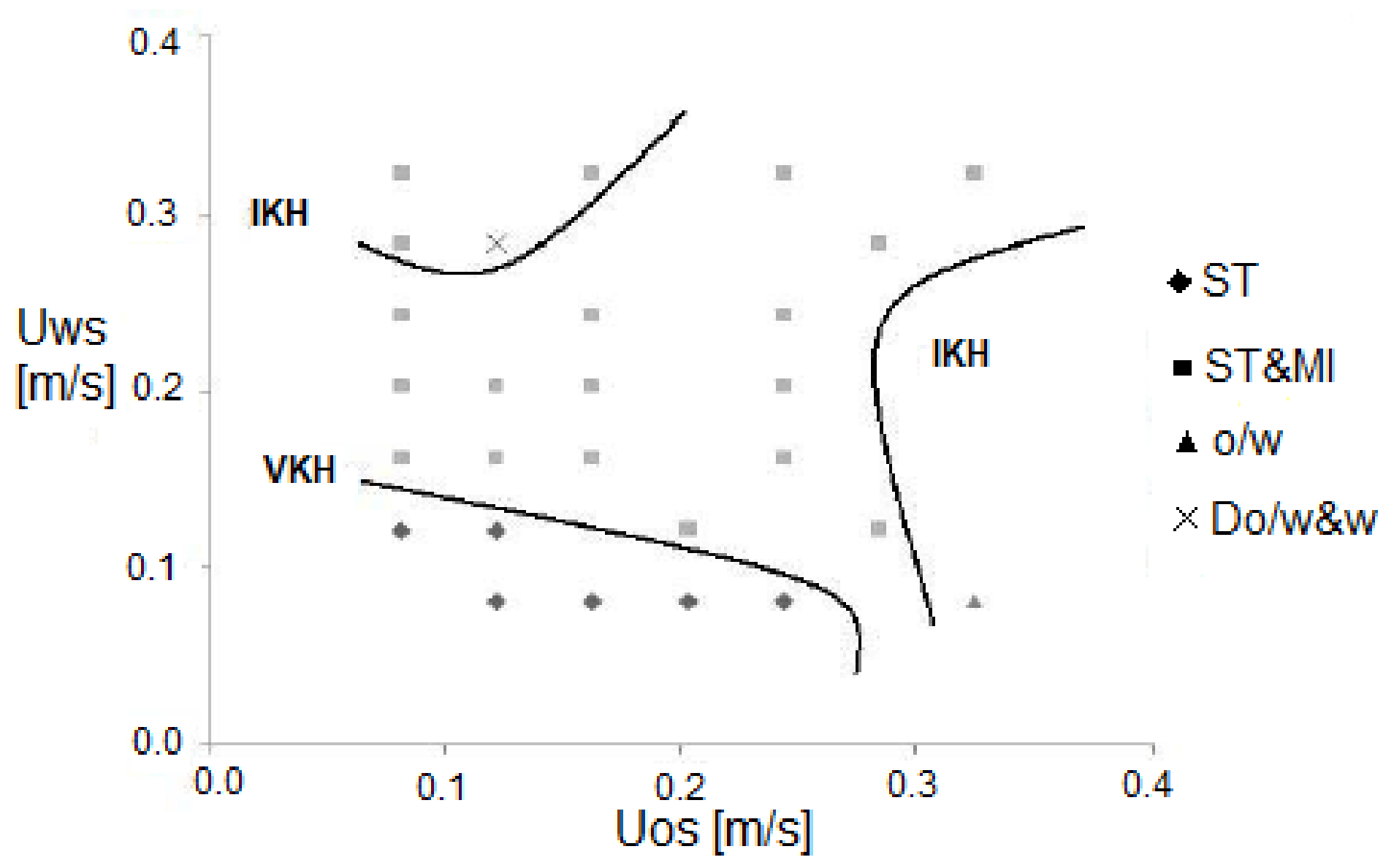
The purpose of this work is modeling of a horizontal oil–water flow with and without the Algebraic Interfacial Area Density (AIAD) model. Software and hardware developments in the past years have significantly increased and improved the accuracy, flexibility, and performance of simulations for large and complex problems typically encountered in industrial applications. At Helmholtz-Zentrum Dresden-Rossendorf (HZDR), the focus has been concentrated on the R&D of new modeling capabilities for Euler–Euler approach where interfaces exist. In this research paper, the applicability of the AIAD model for a horizontal oil–water flow is investigated. The comparison between the standard ANSYS Fluent Eulerian Interface Capabilities (namely Multi-Fluid VOF) without AIAD and ANSYS CFX with AIAD implemented via user functions for the oil–water flow was performed. Thereafter, the obtained results were compared with existing experimental data produced by the Department of Thermodynamics and Transport Phenomena of the University Simon Bolivar (USB) in Caracas, Venezuela. The results of the simulations show that horizontal oil–water flow can be modelled with rather acceptable accuracy when using regime transition capabilities as those offered by the AIAD model.
Keywords: oil; water; CFD; mixing; pipe oil; water; CFD; mixing; pipe