Article

On the Performance of Night Ventilation in a Historic Office Building in Nordic Climate


Department of Building Engineering, Energy Systems and Sustainability Science, Faculty of Engineering and Sustainable Development, University of Gävle, 801 76 Gävle, Sweden
*
Author to whom correspondence should be addressed.
Energies 2020, 13(16), 4159; https://doi.org/10.3390/en13164159
Submission received: 1 July 2020 / Revised: 31 July 2020 / Accepted: 4 August 2020 / Published: 11 August 2020
(This article belongs to the Special Issue Thermal Energy Storage in Building Integrated Thermal Systems)

Abstract

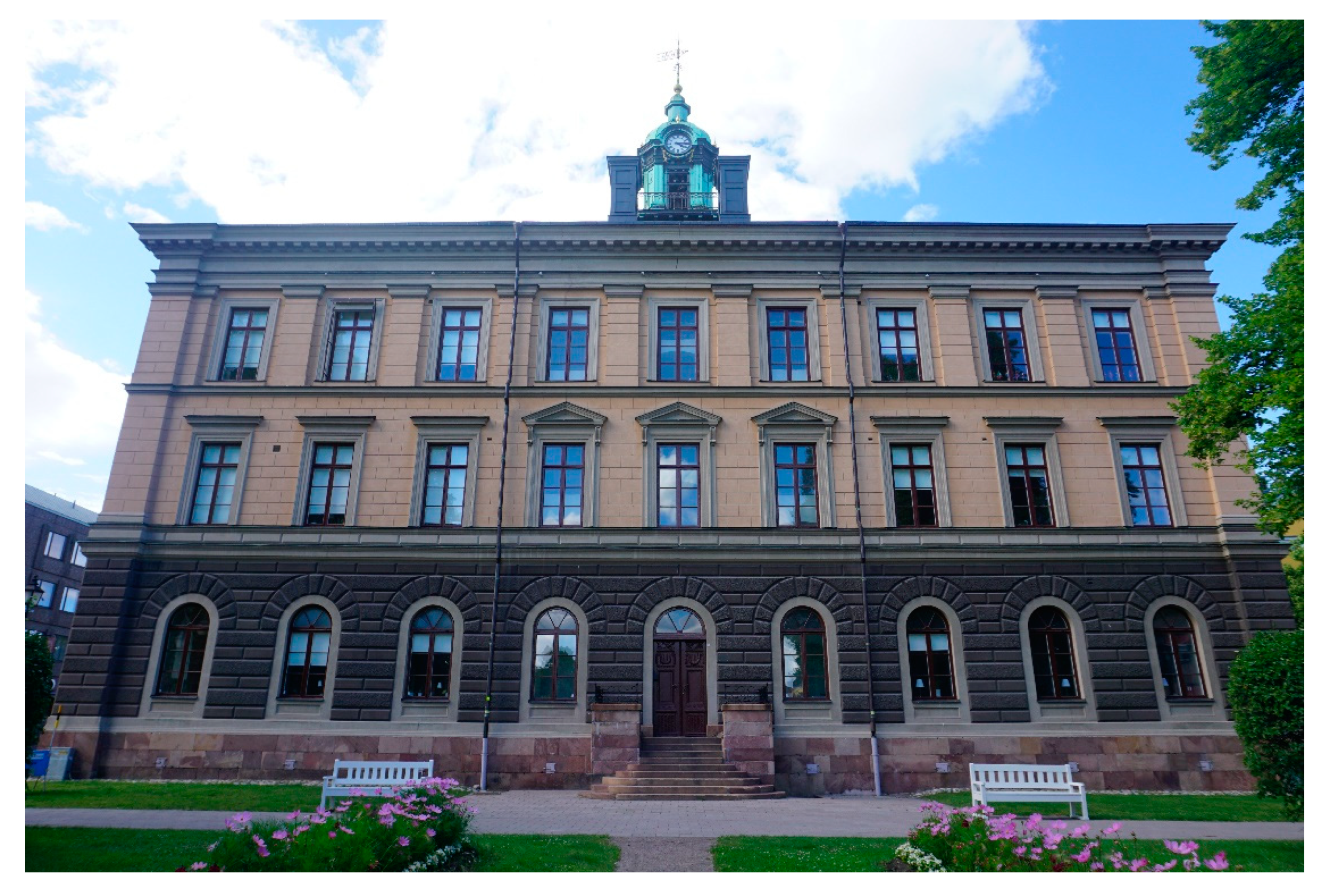
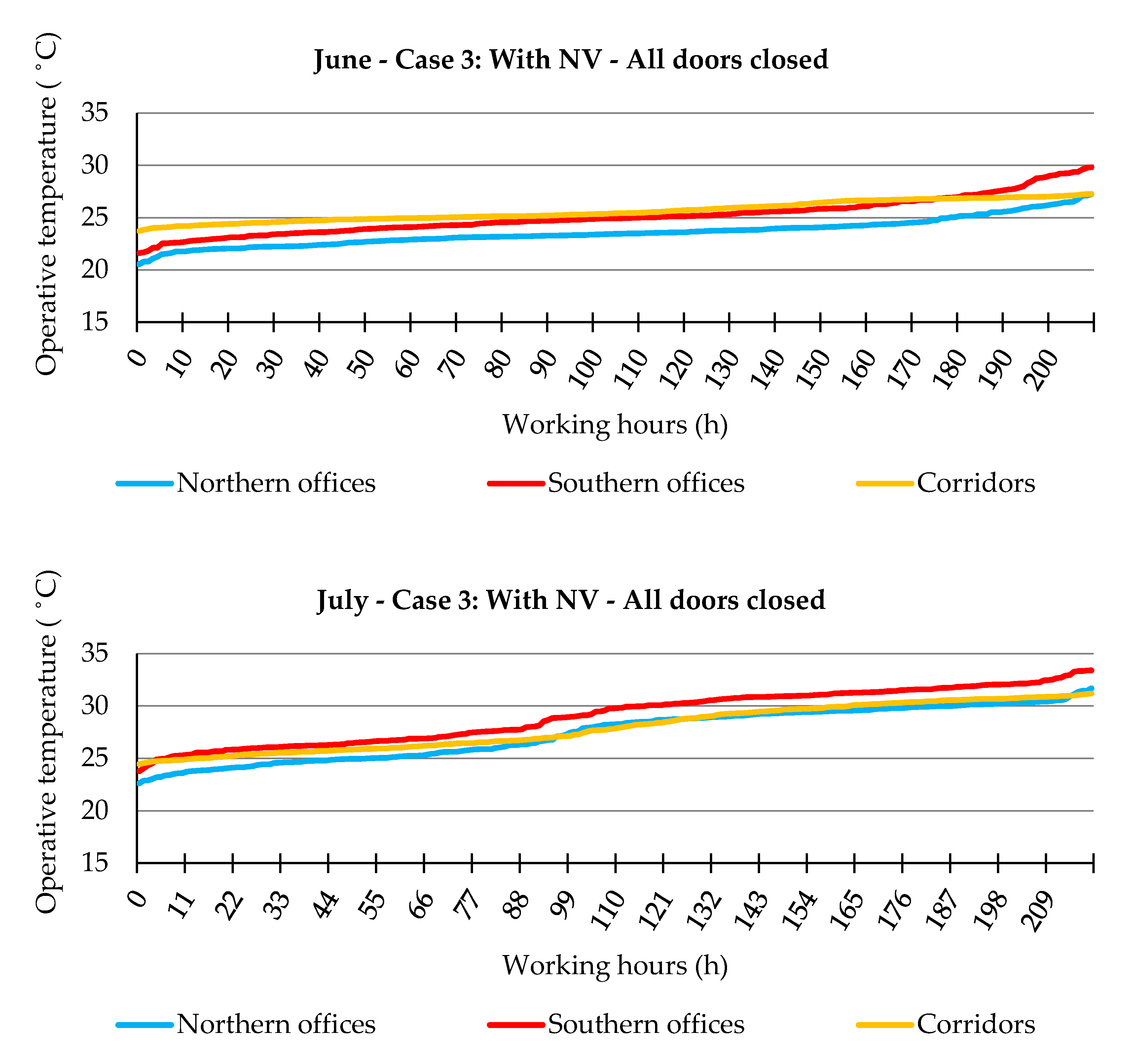
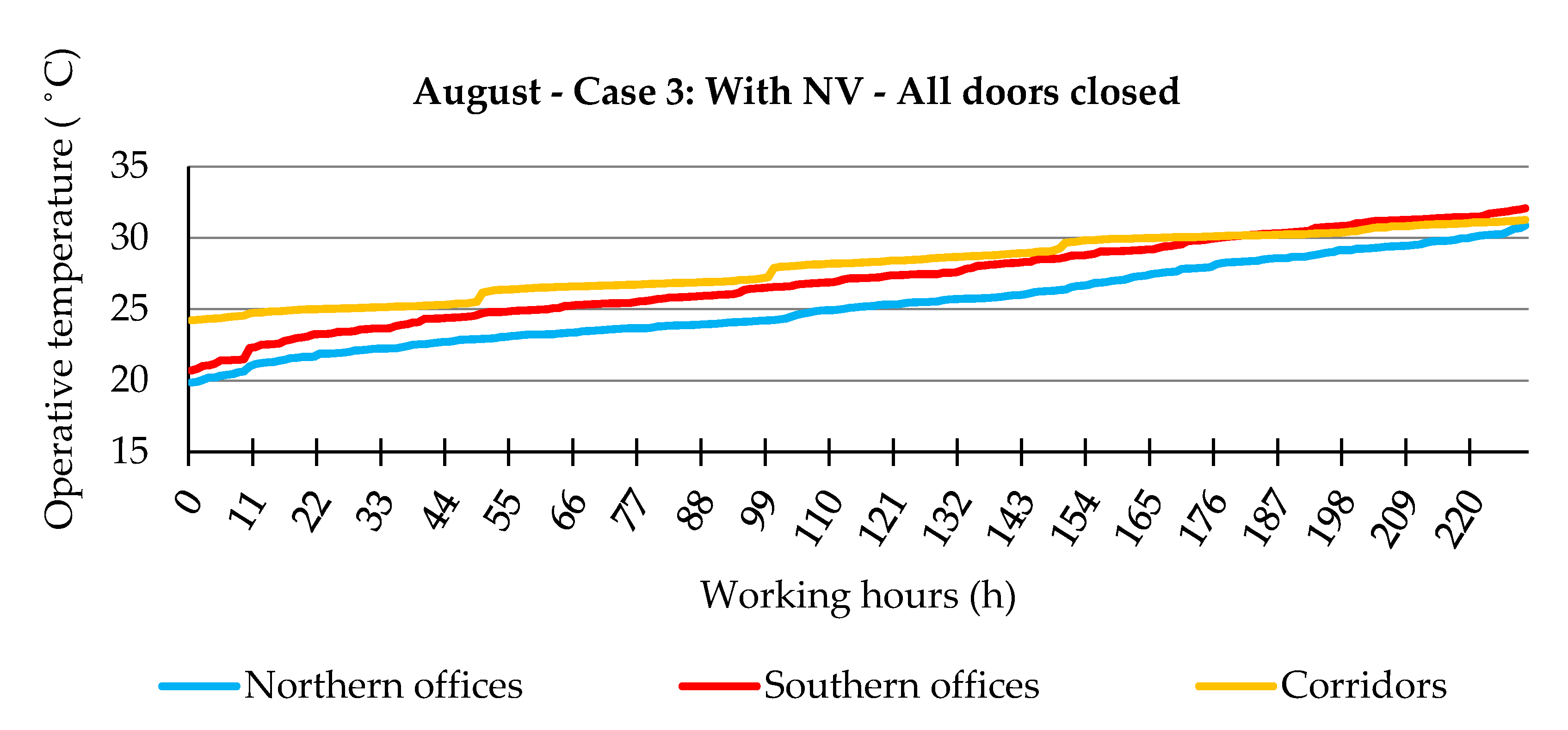
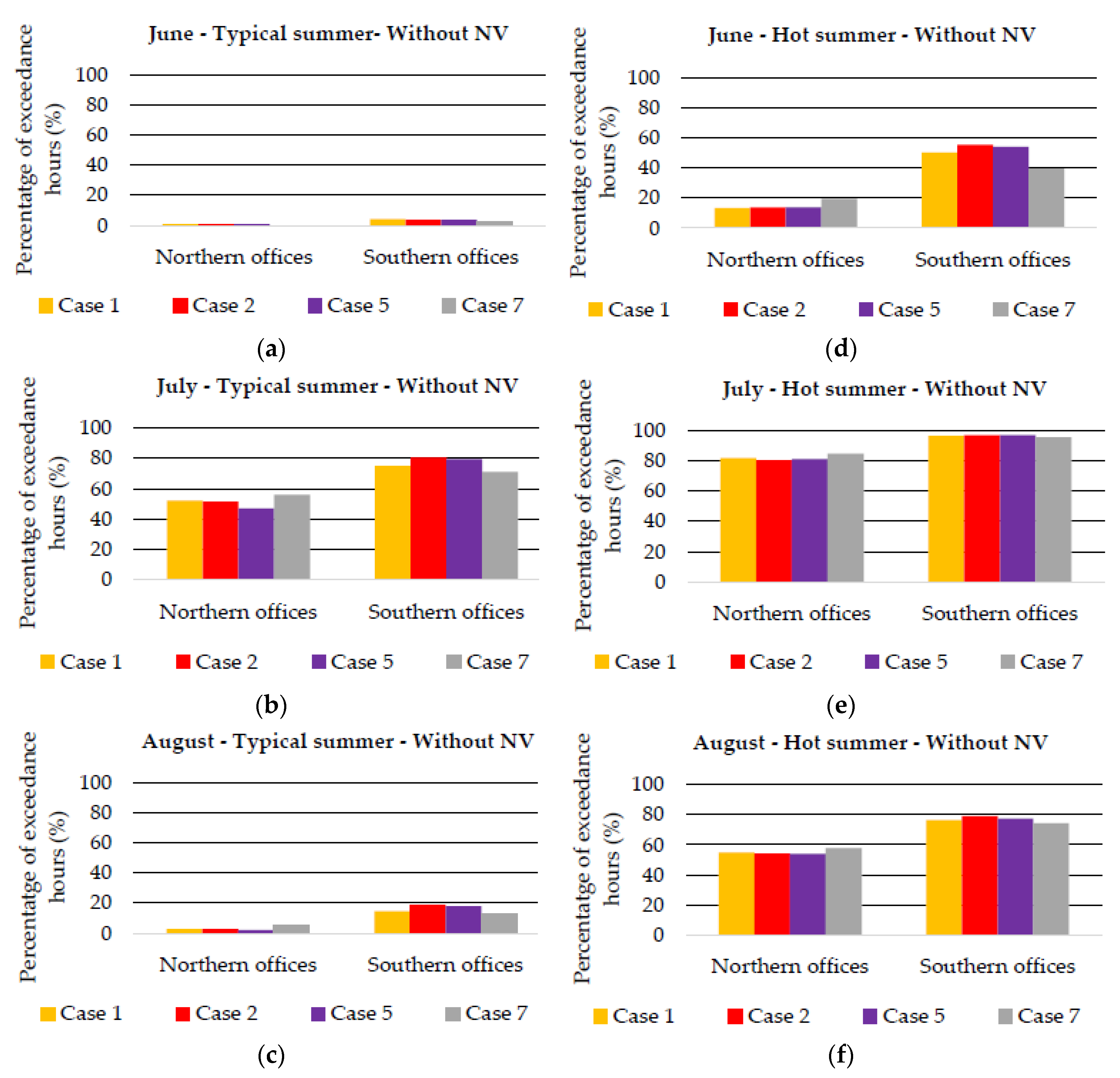
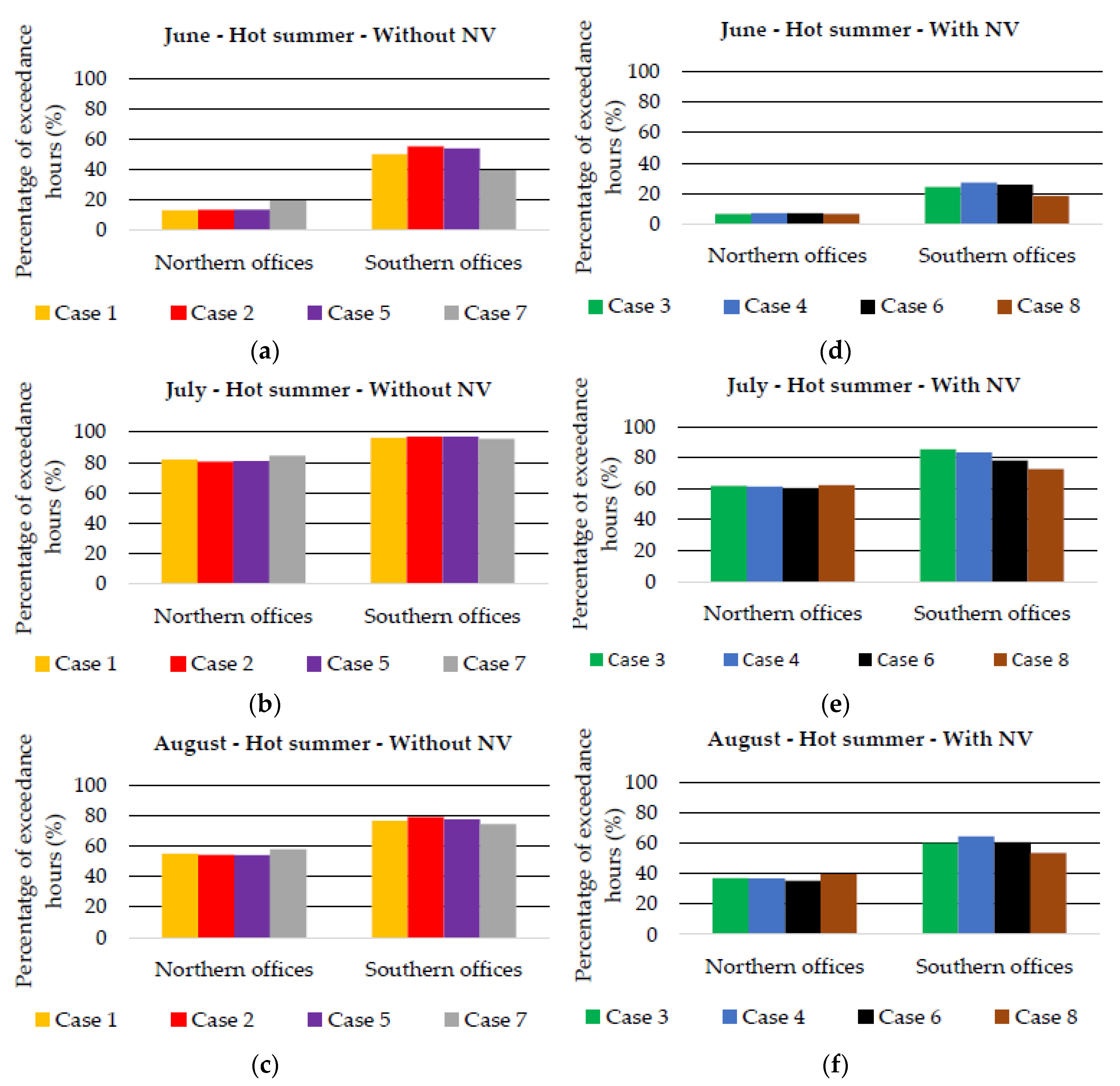
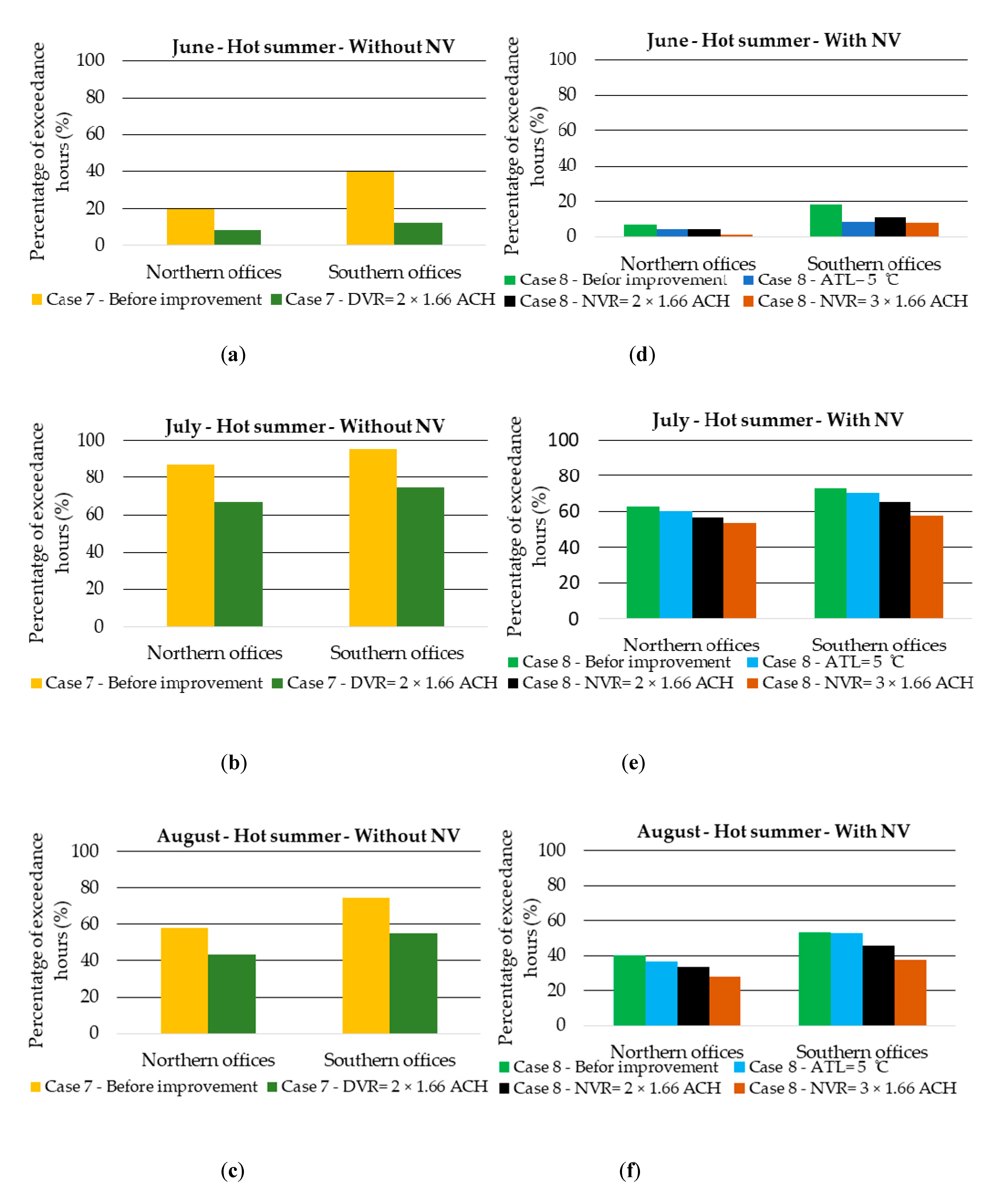
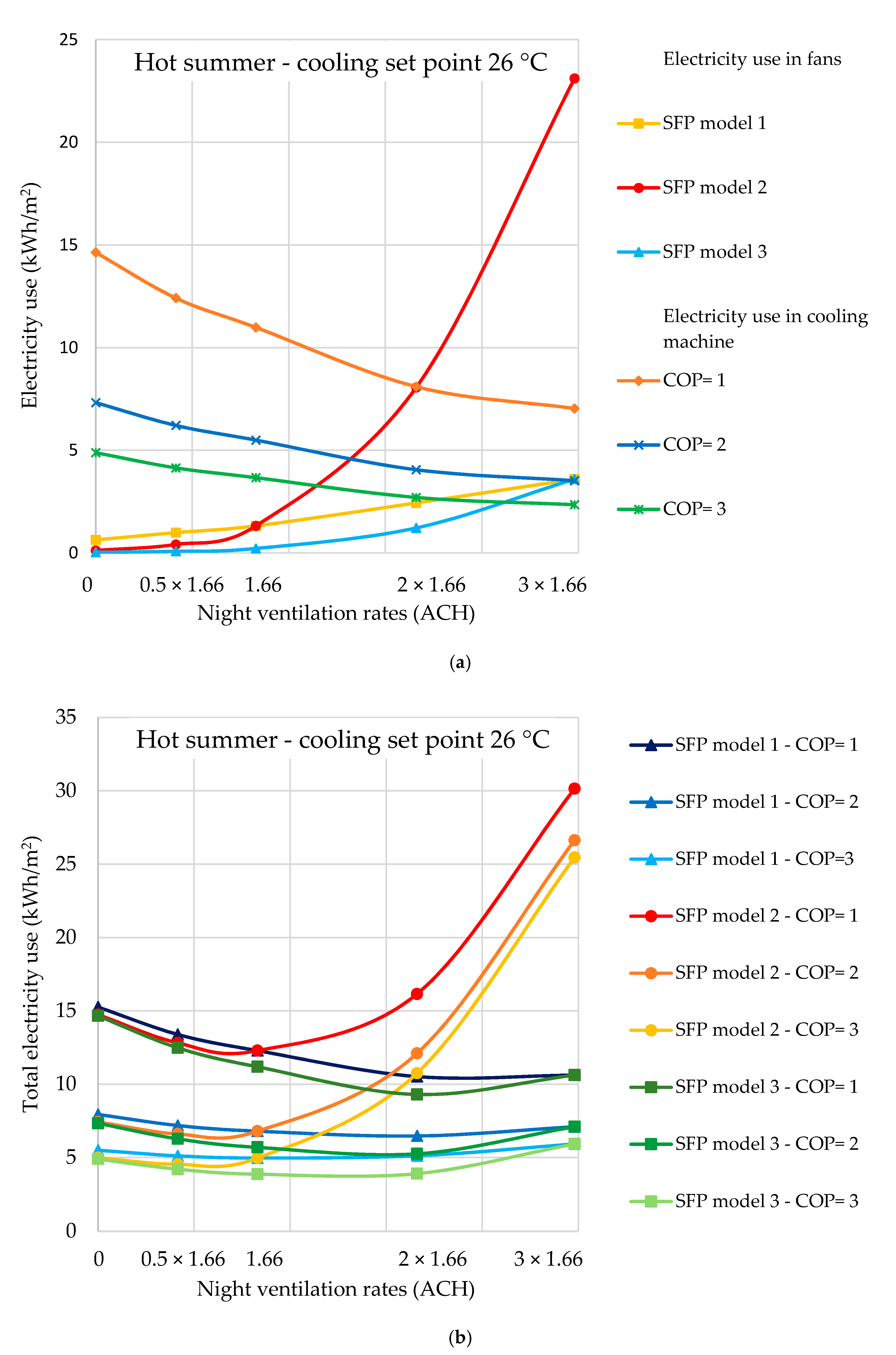
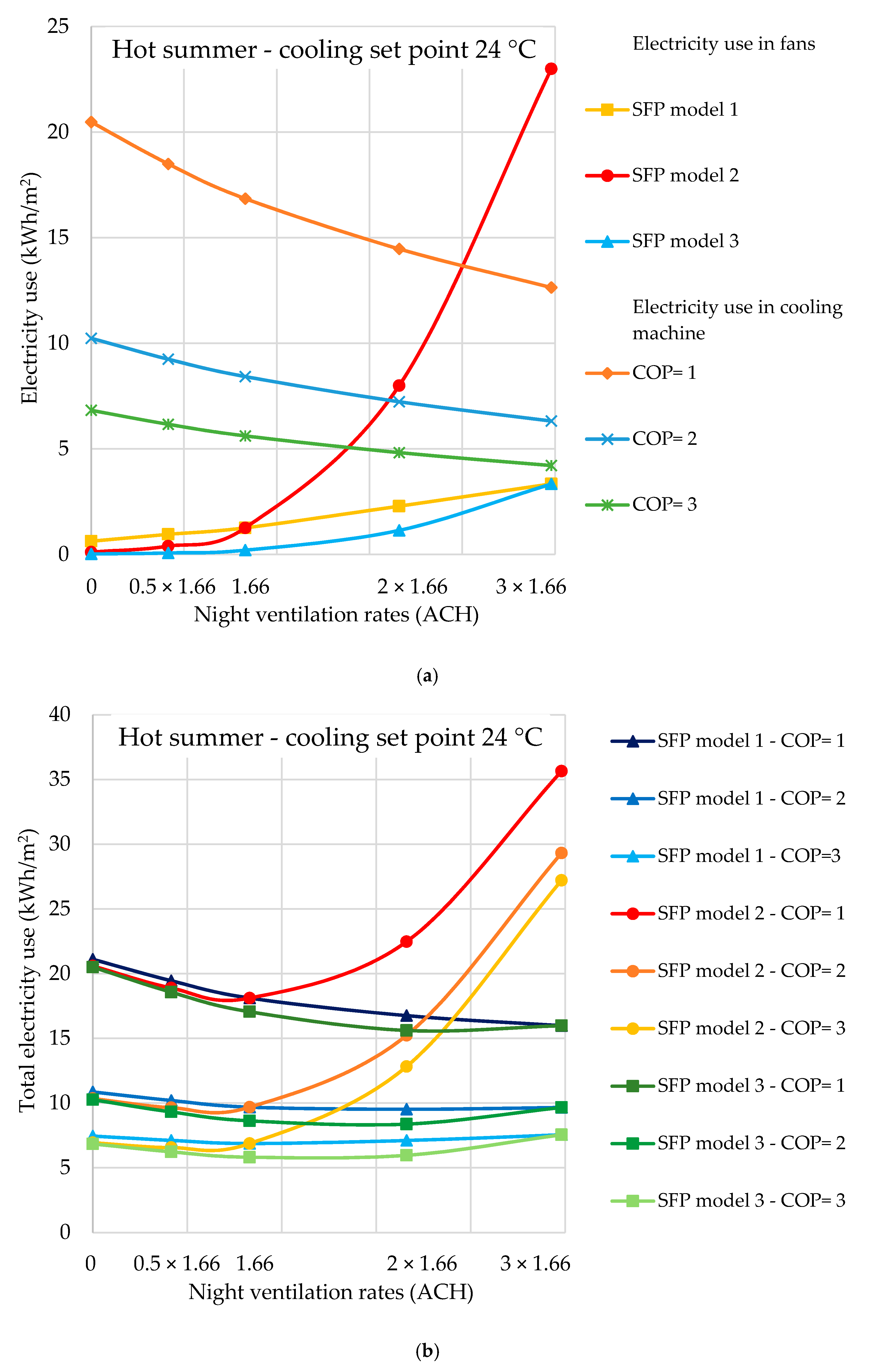
The effect of mechanical night ventilation on thermal comfort and electricity use for cooling of a typical historic office building in north-central Sweden was assessed. IDA-ICE simulation program was used to model the potential for improving thermal comfort and electricity savings by applying night ventilation cooling. Parametric study comprised different outdoor climates, flow rates, cooling machine’s coefficient of performance and ventilation units’ specific fan power values. Additionally, the effect of different door schemes (open or closed) on thermal comfort in offices was investigated. It was shown that night ventilation cannot meet the building’s total cooling demand and auxiliary active cooling is required, although the building is located in a cold climate. Night ventilation had the potential in decreasing the percentage of exceedance hours in offices by up to 33% and decreasing the total electricity use for cooling by up to 40%. More electricity is saved with higher night ventilation rates. There is, however, a maximum beneficial ventilation rate above which the increase in electricity use in fans outweighs the decrease in electricity use in cooling machine. It depends on thermal mass capacity of the building, cooling machine´s coefficient of performance, design ventilation rate, and available night ventilation cooling potential (ambient air temperature).
Keywords: night ventilation; historic buildings; office buildings; building energy simulation; IDA-ICE; Nordic climate night ventilation; historic buildings; office buildings; building energy simulation; IDA-ICE; Nordic climate