Article

Fracture Detection and Numerical Modeling for Fractured Reservoirs


1
College of Business, Engineering and Technology, Texas A&M University-Texarkana, Texarkana, TX 75503, USA
2
National Mobile Communication Research Laboratory, Southeast University, Nanjing 211100, China
3
Department of Petroleum and Geosystems Engineering, University of Texas at Austin, Austin, TX 78712, USA
4
Department of Petroleum Engineering, China University of Petroleum, Beijing 102202, China
*
Author to whom correspondence should be addressed.
Energies 2019, 12(3), 386; https://doi.org/10.3390/en12030386
Submission received: 17 January 2019 / Accepted: 25 January 2019 / Published: 26 January 2019

Abstract

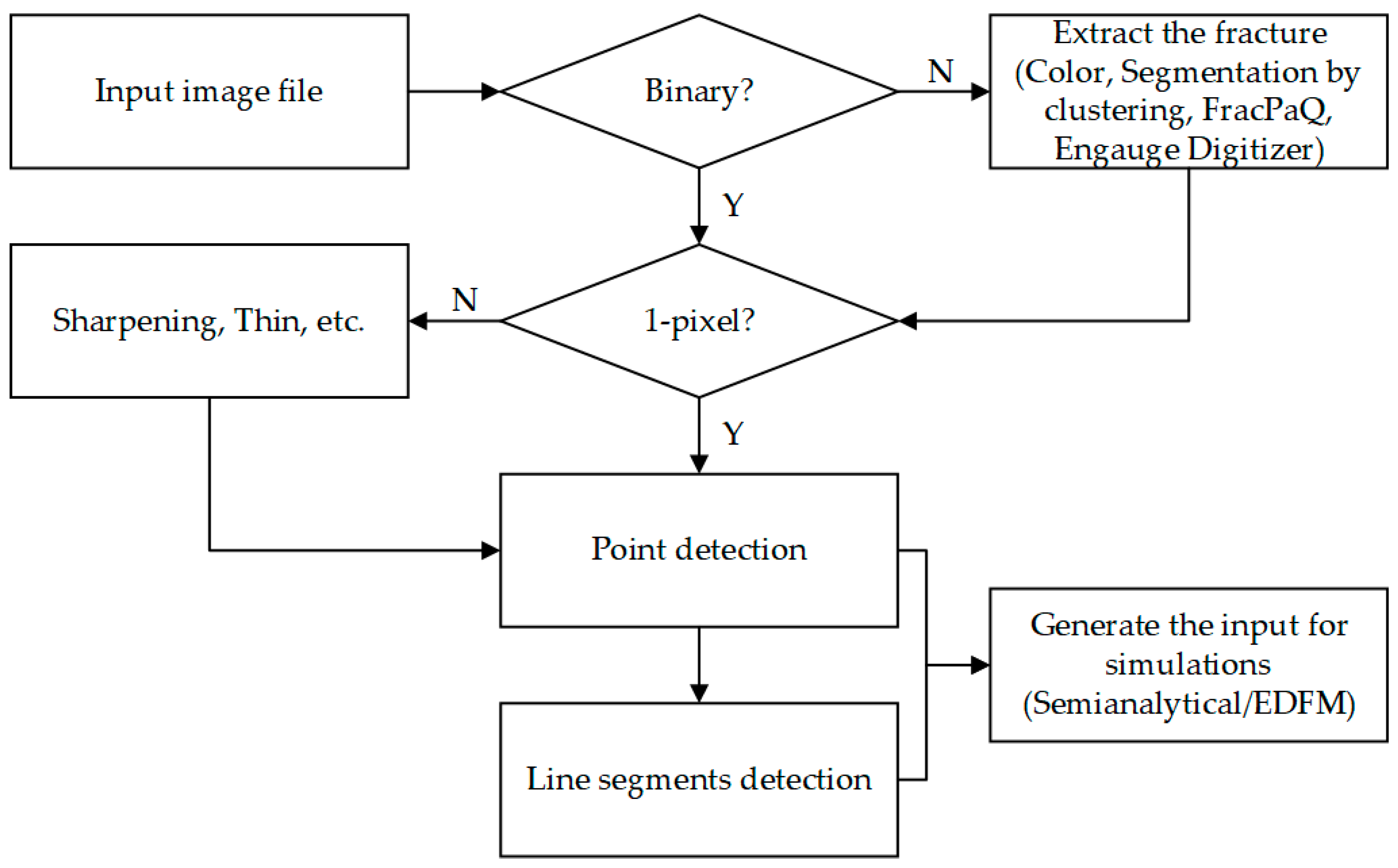
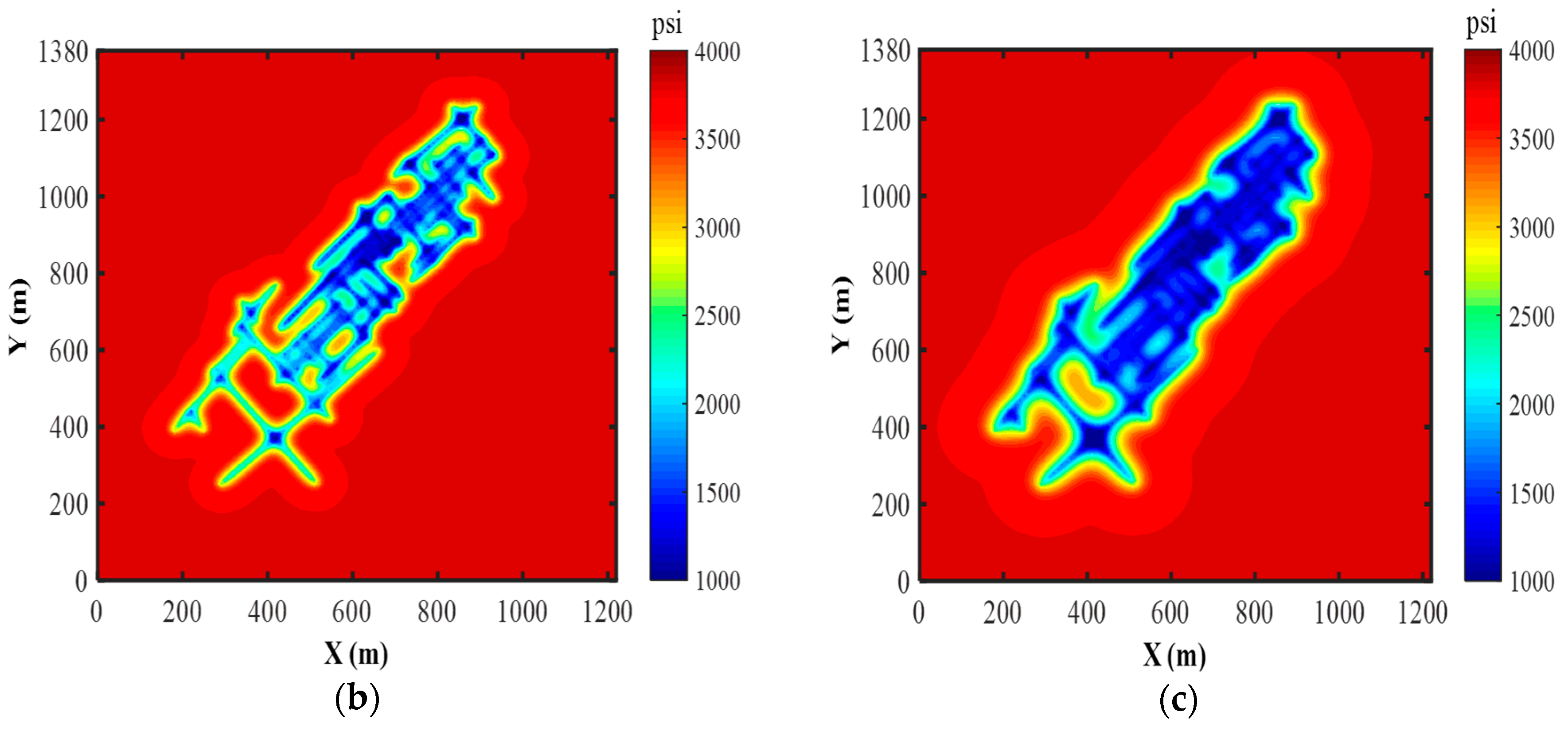
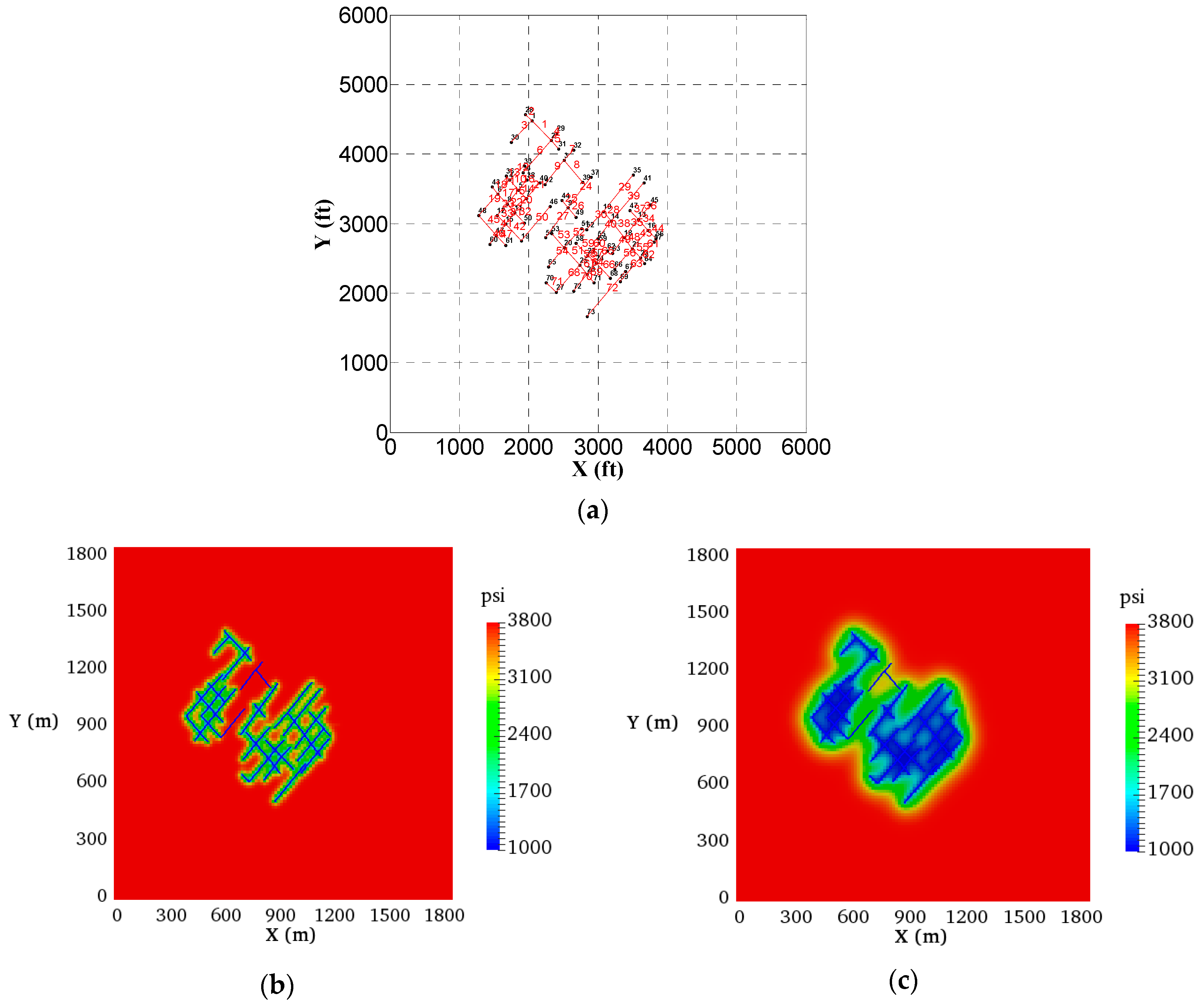
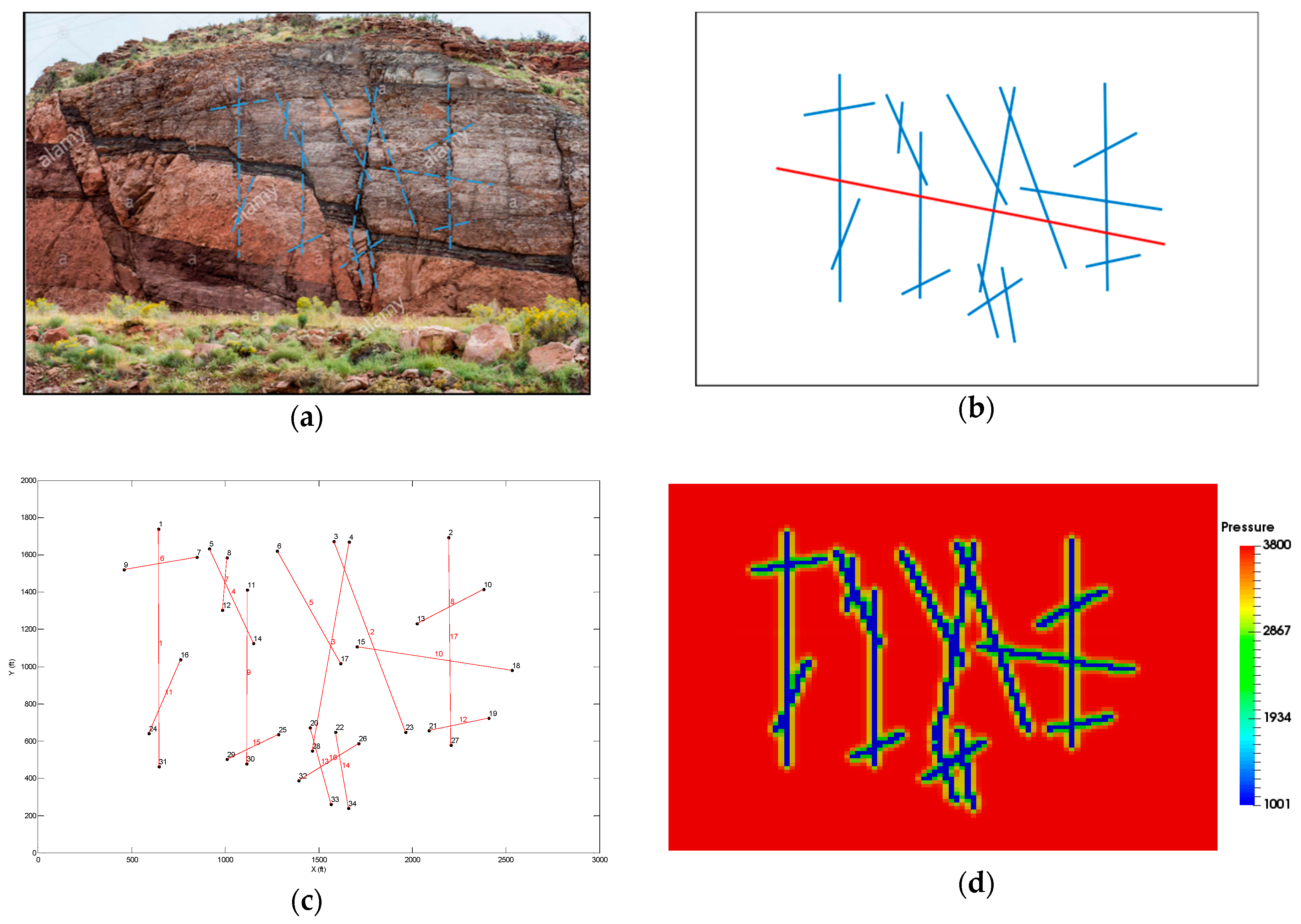
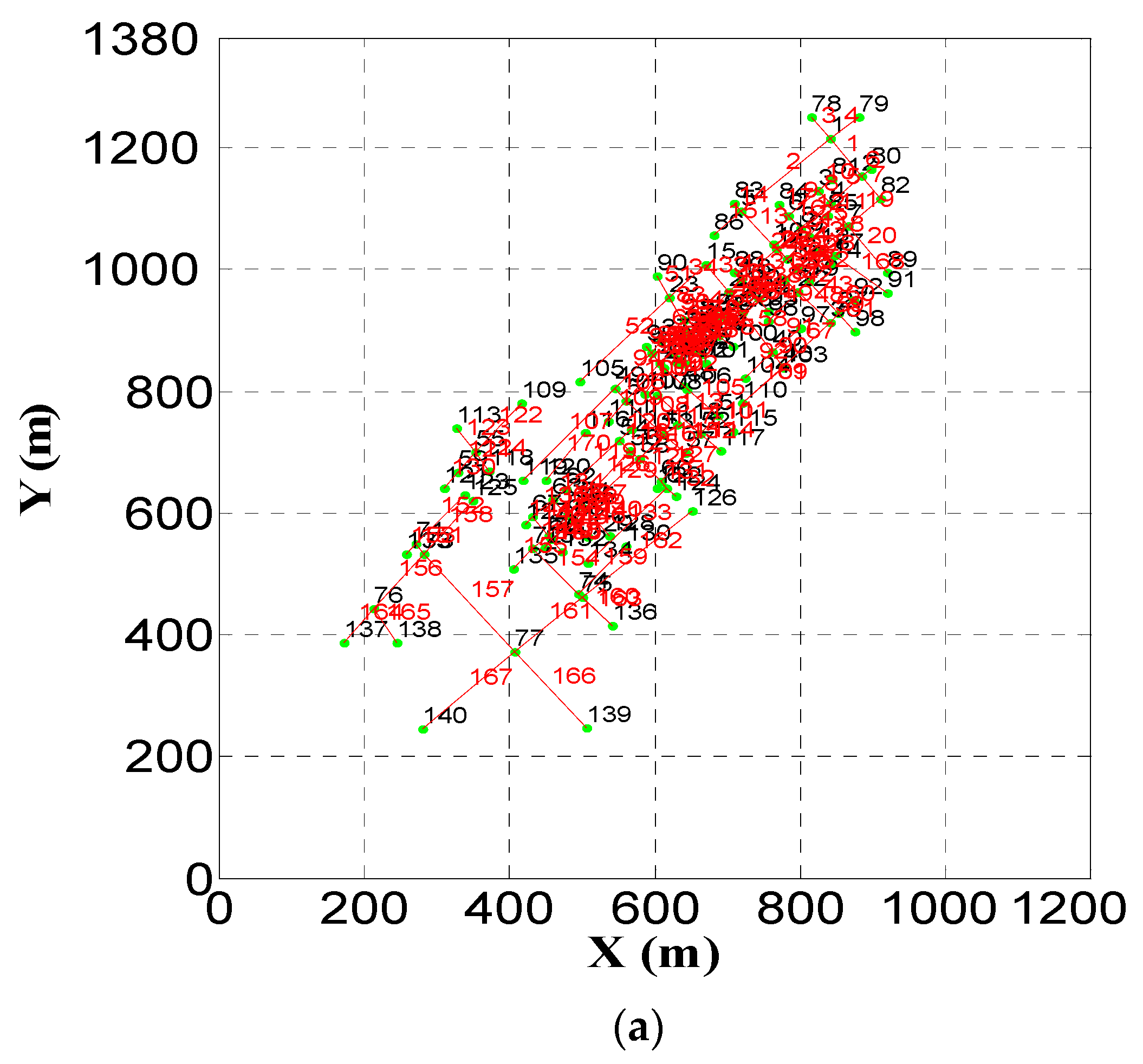
The subsurface fractures could impact the fluid mechanisms dramatically, which makes the modeling of the hydraulic and natural fractures an essential step for fractured reservoirs simulations. However, because of the complexities of fracture patterns and distributions, it is difficult to detect and quantify the fracture networks. In this study, line detection techniques are designed and applied to quantify the fracture segments from fracture figures. Using this fracture detection algorithm, the fracture segments could be located by detecting the endpoints and the intersections of fractures, thus that the fracture patterns could be accurately captured and characterized. The proposed method is applied to two previous well-known field cases and the pressure distribution results are consistent with the micro-seismic data profiles. These two field cases are simulated and computed by using a semianalytical model and Embedded Discrete Fracture Model (EDFM) respectively. The third case is constructed by the fracture outcrop figure and simulated by a numerical simulator with EDFM implemented. The simulation results are accurate and clearly illustrate the important role fractures play in unconventional reservoirs. The technology proposed in this study could be used to quantify the fracture input data for reservoir simulations and be easily expanded for fracture detection and characterization problems in other fields.
Keywords: fractured reservoir; line detection; semi-analytical model; EDFM; fracture modeling fractured reservoir; line detection; semi-analytical model; EDFM; fracture modeling