1. Introduction
Strategic risk management has become a critical priority for financial institutions operating in a rapidly changing technological environment and under strict regulatory oversight. Digitalization is reshaping the relationship between banks and customers, creating both new risks and opportunities (
Zhou et al., 2025).
Traditional banks face increasing pressure from Fintech firms and Neobanks, which leverage technologies such as artificial intelligence, blockchain, and automation to deliver agile, cost-efficient services (
Henriques & Sadorsky, 2025). In contrast, conventional banks often struggle with legacy systems and rigid governance structures, making strategic adaptation essential for maintaining competitiveness (
Nuñez et al., 2020).
Digital transformation is not limited to digitizing existing processes; it also requires developing customer-centric, flexible operating models. This shift raises fundamental questions about how traditional banks can innovate without compromising stability.
Despite the growing body of research on strategic risk and financial digitalization, most studies have focused on developed markets, leaving emerging economies underexplored. This gap is critical because regulatory frameworks, technological adoption, and cultural dynamics differ significantly across regions, influencing how strategic risks materialize and are managed.
Colombia offers a unique context due to its rapid digital adoption, increasing Fintech penetration, and evolving regulatory environment, which create both opportunities and vulnerabilities for traditional banks (
Murinde et al., 2022). By addressing this gap, the present study provides empirical evidence from an emerging market, highlighting cultural and organizational factors that shape strategic adaptation amid digital transformation.
This study is original in two keyways. First, it addresses a gap in the literature by examining strategic risks associated with financial digitalization in an emerging market context, where regulatory frameworks, technological adoption, and cultural dynamics differ significantly from those in developed economies.
Second, it introduces the concept of a cultural gap in strategic adaptation as a distinct form of strategic risk, moving beyond generic notions of resistance to change. By integrating qualitative evidence with concurrency analysis, this research provides a nuanced understanding of how cultural and organizational factors interact with technological and regulatory pressures, offering both theoretical insights and practical implications for risk management in the digital era.
This research aims to analyze strategic risks from financial digitalization, highlighting the disruptive role of Fintech firms and Neobanks, the associated challenges and opportunities, and how traditional banks can adapt to remain competitive and stable in a rapidly evolving financial ecosystem. To guide this study, the following research questions were formulated:
RQ1: How does financial digitalization influence the strategic risk of traditional banks in Colombia?
RQ2: What are the main cultural and organizational factors that hinder strategic adaptation in the context of digital transformation?
RQ3: How do financial institutions perceive opportunities for collaboration with Fintech firms and Neobanks as a strategy to mitigate risks and enhance competitiveness?
To clarify these issues, a qualitative research design was employed, using semi-structured interviews with 10 executives and experts from the Colombian financial sector. These individuals were deliberately chosen for their expertise in strategic risk management and digital transformation. The subsequent analysis employed coding, augmented by concurrency techniques and natural language processing tools, to identify patterns and relationships among categories such as digitalization, regulatory compliance, cybersecurity, and organizational culture.
Findings from the research indicate that the foremost strategic risks confronting traditional banking converge into three principal domains: cultural resistance and the strategic adaptation gap; exposure to regulatory and macroeconomic volatility; and technological hurdles related to cybersecurity and potential digital obsolescence. Nevertheless, the study identifies significant growth opportunities through collaboration with Fintech firms, adoption of open banking frameworks, and innovations focused on customer engagement—factors that could enhance the sector’s competitiveness and sustainability amid pervasive technological disruption.
This study contributes to the understanding of strategic risk by introducing the concept of a cultural gap in strategic adaptation and its significance for digital transformation. It also combines qualitative evidence with concurrency analysis to map relationships among risk categories. In practice, it provides financial institutions with actionable strategies to mitigate cultural and technological risks, enhance regulatory compliance, and form partnerships with Fintech firms and Neobanks to improve competitiveness.
2. Literature Review
2.1. Enterprise Risk Management (ERM) and Strategic Risk in Digital Finance
Enterprise Risk Management (ERM) has evolved into a comprehensive framework that integrates risk into strategic decision-making, strengthening governance and enhancing firm value (
Hoyt & Liebenberg, 2011;
Beasley et al., 2005). By aligning risk management with strategic planning.
ERM addresses maturity gaps across industries and supports resilience in dynamic environments (
Bromiley et al., 2015). Recent evidence shows that mature ERM practices foster competitive advantage and organizational adaptability, making ERM a critical capability for financial institutions undergoing digital transformation (
Al Lawati et al., 2025;
Brunner-Kirchmair & Hiebl, 2025).
Strategic risk refers to uncertainties that can undermine organizational objectives and long-term sustainability (
Lam, 2014;
COSO, 2017). In banking, these risks encompass cultural, technological, regulatory, and market factors that shape performance over time (
Seabrook et al., 2021;
Palenchar & Heath, 2007;
Jiménez et al., 2024). Failure to anticipate and manage strategic risks has been linked to persistent declines in organizational performance (
Miller & Bromiley, 1990).
Recent trends emphasize the growing importance of organizational culture and decision-making processes in risk governance, surpassing purely structural approaches (
Butt et al., 2024). Aligning strategy with values and behaviors that enable execution is now essential (
Mikes & Power, 2024;
Alofan et al., 2020).
For traditional banks, strategic risks are amplified by financial digitalization, regulatory shifts, and competition from Fintech firms and Neobanks. These dynamics demand rapid adoption of advanced technologies—such as artificial intelligence, blockchain, and cloud computing—to improve efficiency and customer experience (
Banna et al., 2021). However, misalignment between strategic vision and technological implementation can erode competitiveness and expose institutions to systemic vulnerabilities (
Murinde et al., 2022).
2.2. Drivers of Financial Digitalization
Digital transformation is reshaping business models, processes, and customer relationships, extending beyond the digitization of channels (
Murinde et al., 2022;
Banna et al., 2021;
Sarma, 2025). Key technological drivers include artificial intelligence, big data, cloud computing, and mobile platforms, which collectively enhance efficiency, scalability, and user experience (
Y. Liu et al., 2024;
Tang & Li, 2025;
Fang & Liu, 2024).
Organizational factors also play a critical role. A culture that promotes knowledge sharing and experimentation, combined with targeted training, significantly influences the successful adoption of Fintech solutions (
Alsmadi & Al-Omoush, 2025).
Although prior studies report benefits such as financial inclusion, cost reduction, and improved fraud detection, these claims warrant cautious interpretation given measurement and context variations (
Kumar et al., 2022;
Y. Liu et al., 2024).
Competitive dynamics have shifted as Neobanks enter the market, offering agile services—such as savings, loans, and payments—that challenge traditional banking models (
Kumar et al., 2022). Institutions that fail to adopt digital strategies risk obsolescence, whereas those that balance innovation, security, and regulatory compliance are better positioned to remain competitive in an increasingly digital financial ecosystem.
2.3. Risk Categories and Technological Challenges
Technological complexity and cybersecurity vulnerabilities have intensified as financial institutions integrate advanced systems, expand digital interfaces, and adopt third-party APIs and chatbots (
Bout et al., 2022;
Urbani et al., 2024;
Kaur et al., 2023). These developments increase the attack surface and introduce nonlinear dependencies that complicate security management in tightly coupled organizational structures (
Schneier & Vance, 2025). Risk perception in Fintech services is further shaped by contextual factors and trust dynamics, underscoring the need for robust governance and customer assurance mechanisms (
Zhao & Khaliq, 2024). National cybersecurity programs and strategic initiatives remain essential for strengthening internal capabilities (
AlDaajeh et al., 2022).
Regulatory uncertainty adds another layer of complexity. Rapid changes in compliance requirements and data governance standards, particularly regarding transparency and explainability, delay adoption and increase operational risk (
Arkanuddin et al., 2021;
Kou & Lu, 2025).
Competitive risks are equally significant. The literature reflects two opposing views: the competition-fragility hypothesis, which links Fintech-driven margin pressure to increased risk-taking and systemic vulnerability (
Elekdag, 2024;
Mateev et al., 2021;
Bookstaber et al., 2018), and the competition-stability hypothesis, which argues that technological innovation and diversification enhance resilience and efficiency (
Zhang et al., 2023;
Henriques & Sadorsky, 2025;
Z. Liu et al., 2024). Understanding these dynamics is critical for designing strategies that balance innovation with risk control.
2.4. Opportunities for Innovation
Innovation has become a strategic imperative for traditional banks seeking to remain competitive in a rapidly evolving financial ecosystem. Digital transformation now extends beyond competitive advantage; it is essential for organizational relevance and long-term sustainability (
Murinde et al., 2022).
Several technological enablers drive this shift. Open banking, supported by standardized APIs, facilitates seamless interaction between banks and third-party providers, enabling agile and personalized financial services (
Desiraju et al., 2024;
Z. Liu et al., 2024). Artificial Intelligence (AI) strengthens cybersecurity by automating threat detection and response and enhancing operational efficiency (
Kaur et al., 2023). Collaborations with Fintech firms further expand service portfolios and reduce the risk of obsolescence, positioning such partnerships as a cornerstone of sustainable banking (
Ling & Ling, 2025).
Data openness and advanced analytics represent another critical opportunity. Big data and AI enable predictive risk management and customer-centric strategies, but they require robust governance and ethical safeguards to ensure compliance and trust (
Kumar et al., 2022;
Zhao & Khaliq, 2024).
Finally, process automation—through tools such as Robotic Process Automation (RPA) and AI—offers significant gains in speed, accuracy, and regulatory adherence, addressing structural rigidities and supporting scalable innovation (
Fang & Liu, 2024;
Afrin et al., 2025). Collectively, these opportunities underscore the need for integrated strategies that combine technological adoption with cultural and operational transformation.
3. Methodology
This study employed a descriptive qualitative approach to examine how digitalization affects strategic risk management in the financial sector in Medellin-Colombia. This design was chosen because the phenomenon analyzed (digital transformation and its strategic implications) requires an interpretive approach that allows for the exploration of perceptions, practices, and organizational responses beyond statistical generalization (
Creswell et al., 2007;
Hernández et al., 2016).
3.1. Selection of the Participating
The study employed theoretical sampling to recruit professionals from Colombia’s financial sector, ensuring diversity across roles and institutional types (
Patton, 1990). Ten semi-structured interviews were conducted with executives, risk managers, and specialists from banks, cooperatives, and insurance companies.
Inclusion criteria required participants to have experience in strategic risk management and digital transformation. Candidates were identified through professional associations and institutional networks, and invitations were sent via official email channels.
Data saturation was achieved after the eighth interview, confirmed by three indicators: (i) no new themes emerged, (ii) the coding framework stabilized, and (iii) responses showed consistency across the final two interviews. Each interview lasted approximately 60 min and was conducted in the participant’s natural work environment to enhance contextual validity (
Knox & Burkard, 2009).
Ethical standards were upheld through informed consent and strict confidentiality protocols.
Table 1 summarizes participant characteristics while preserving anonymity.
Table 1 illustrates the participants’ characteristics, highlighting the diversity of profiles and the high level of specialization among the professionals interviewed. The ten participants provide a comprehensive overview of the Colombian financial ecosystem, encompassing banks, insurance companies, and financial cooperatives. This composition offers a broad perspective on the sector, reflecting the experiences of organizations with varying degrees of risk management maturity and in adopting digital transformation processes.
The interview protocol was developed through a thorough review of the literature. Thirteen questions were organized into four analytical categories: (i) Strategic risks in traditional banking, (ii) Financial digitalization, (iii) Technological challenges, and (iv) Opportunities for innovation. These categories were directly linked to the research objectives. The full protocol is provided in
Appendix A.
3.2. Data Analysis
The interviews were transcribed and analyzed using a coding process to identify patterns among categories. A concurrence analysis measured the frequency of overlapping categories, revealing semantic links and constructing conceptual networks. This was enhanced by natural language processing (NLP) tools that visualize relationships using frequency matrices (
Kang et al., 2020).
The analytical procedure included transcription and database construction, initial coding with an inductive approach to identify categories, and concurrence matrices to quantify intersections. To ensure reliability, an inter-coder agreement procedure was applied in accordance with established protocols (
Campbell et al., 2013).
Three researchers independently coded the interviews using the agreed analytical categories. After the initial coding, a systematic comparison was conducted, and discrepancies were resolved through iterative discussions until complete consensus was reached (
O’Connor & Joffe, 2020). This negotiated approach strengthened interpretive consistency and enhanced the study’s robustness. Triangulation with the theoretical framework was also performed to ensure both validity and practical relevance.
Before the consensus phase, initial coding agreement across the three coders reached approximately 80% at the top-level category level, calculated as percent agreement. This indicator is reported descriptively to provide a quantitative anchor for coding reliability, acknowledging that final category assignments were determined through negotiated consensus.
To complement manual coding, we conducted a concurrence analysis using Natural Language Processing (NLP) techniques. The analysis was implemented in Python 3.13 and advanced language models (ChatGPT-4.0 and o1), enabling automated detection of concurrence patterns among categories (
Chang et al., 2021). The unit of analysis was the paragraph, and concurrence was computed based on the frequency with which two categories appeared within the same segment.
Concurrence frequency (number of times two categories appeared together in a segment). Normalized concurrence index (adjusted for category frequency to avoid bias from dominant codes). Density of connections (number of links per category in the semantic network). These computational steps were integrated with qualitative interpretation to ensure that visualization did not replace inductive coding.
NLP and LLM-Assisted Workflow, Reproducibility, and Data Handling
To enhance analytical transparency and reproducibility, the qualitative analysis followed a clearly defined workflow combining manual coding with computational support.
First, interview transcripts were manually coded by three researchers using an inductive–deductive approach. Coding decisions, category definitions, and thematic boundaries were established independently before any computational processing.
Second, Natural Language Processing (NLP) techniques were applied solely to support concurrence analysis and network visualization. Large Language Models (ChatGPT-4.0 and o1) were used as analytical assistants to: (i) compute concurrence matrices based on previously defined coding outputs, (ii) check consistency in category linking across paragraphs, and (iii) generate exploratory summaries of category intersections. The models were not used to generate codes, define categories, or interpret results; these remained the responsibility of the researchers.
Third, the concurrence analysis was implemented in Python 3.13. The unit of analysis was the paragraph. Concurrence was defined as the simultaneous presence of two coded categories within the same paragraph. For each pair of categories (i, j), the raw concurrence frequency
was normalized to control for category salience using the following index:
where
and
represent the total frequencies of categories “i” and “j” in the corpus, network density was computed as the ratio of observed links to the maximum possible number of links among categories.
3.3. Ethical Considerations and Bias Controls
All participants provided their informed consent, and the data were handled in accordance with confidentiality protocols, ensuring that no sensitive personal information was disclosed. To minimize selection bias, theoretical sampling was employed to select participants with established expertise in strategic risk management and digital transformation within the financial sector.
This approach guaranteed a diverse representation of roles (including executives, risk managers, and technical specialists) and types of institutions (such as traditional banks, cooperatives, and insurance companies), thereby reducing the risk of homogeneity in the perspectives analyzed (
Collier & Mahoney, 1996).
To mitigate response bias, measures were implemented to reduce the influence of socially desirable responses: interviews were conducted in natural settings, with absolute confidentiality assured, thereby encouraging participants to express themselves freely and authentically. A semi-structured interview format was adopted to facilitate in-depth exploration of perceptions without restricting responses (
Broadbent, 1967).
All interview transcripts were anonymized prior to analysis. Identifying information was removed during transcription, and only de-identified textual data were used for subsequent coding and analysis. No raw or identifiable interview transcripts were shared with external third-party services. When LLMs were employed, they processed anonymized excerpts exclusively, and no information that could identify participants or institutions was included. These safeguards were designed to minimize confidentiality risks associated with automated text processing and are consistent with established qualitative ethics standards.
4. Results
The findings from ten semi-structured interviews with financial-sector professionals (R1–R10) provide insights into the perception and management of strategic risks amidst financial digitalization. This section presents empirical results, highlighting recurring themes and patterns identified through qualitative coding. Interpretative insights and theoretical implications will be discussed later.
To enhance clarity and usability, results are organized into five analytical categories with explicit subthemes. To maintain transparency,
Table 2 includes a coverage indicator (
n), representing the number of participants (
n = 10) who mentioned each key theme. This serves a descriptive purpose, showing thematic agreement without implying statistical significance or generalizing beyond the qualitative nature of the research.
4.1. Strategic Risks in Traditional Banking
Interviews revealed three dominant dimensions of strategic risk for traditional banks: cultural misalignment, macro-regulatory exposure, and technological vulnerability. Respondents emphasized that effective management—not mere identification—is critical for integrating these risks into corporate strategy.
4.1.1. Cultural and Organizational Resistance
Organizational culture emerged as the most frequently cited risk. Participants (R2, R8, R9, R10) described resistance to change and misalignment between strategic intent and execution capacity as key barriers to digital transformation. These challenges extend beyond market pressures, reflecting structural inertia and limited organizational agility. As one respondent noted, “the challenge is to convince people” (R2), while another stressed that “aligning business objectives with organizational culture” remains the most significant hurdle (R10).
4.1.2. Macroeconomic and Regulatory Exposure
Respondents (R1, R7) highlighted external risks—such as macroeconomic volatility and regulatory uncertainty—as structural constraints on long-term planning. Interviewees underscored that these factors lie largely beyond managerial control, shaping liquidity, interest rate dynamics, and overall financial stability. One participant noted “volatility and the governmental environment of the country” (R1), while another identified “interest rate risk, market risk, and liquidity risk” as critical concerns (R7).
4.1.3. Technological and Cybersecurity Risks
Technology-related risks, including cybersecurity threats and digital obsolescence, were identified as strategic—not merely operational—issues. Respondents (R4, R5, R6) emphasized that technological capabilities and cybersecurity now underpin competitive positioning and customer trust. “Cybersecurity must become strategic for banking” (R4), one participant asserted, while another noted that “technology is a fundamental part of strategy” (R5). Persistent gaps in digital readiness were also acknowledged: “we still have a long way to go in digital transformation” (R6).
Collectively, these findings illustrate that strategic risks in banking span cultural, external, and technological domains, reinforcing the need for integrated governance and adaptive capabilities.
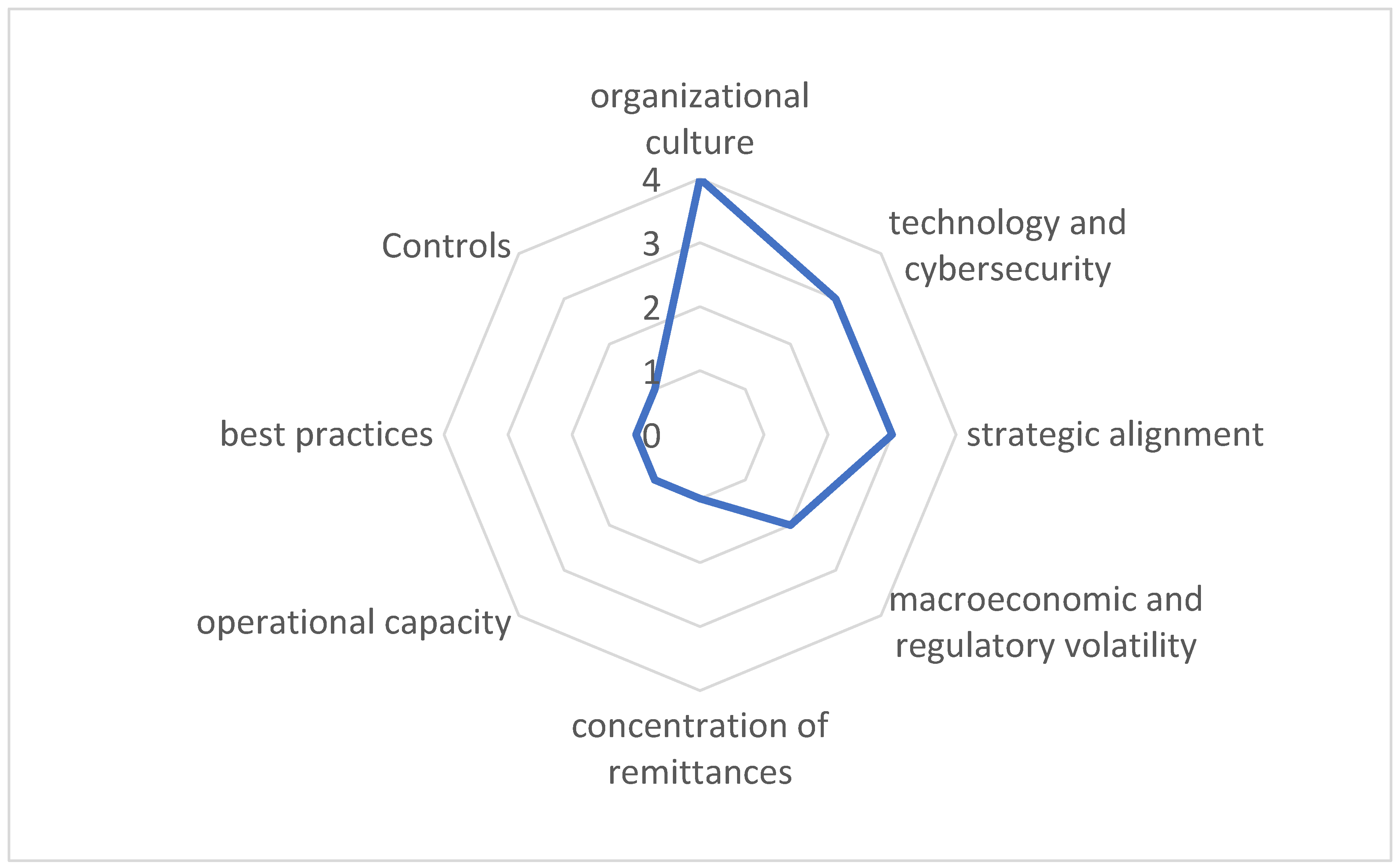
Figure 1 illustrates the level of consensus among respondents regarding the main strategic risks identified within traditional banking. Organizational culture is the most frequently mentioned risk (4 mentions), closely linked to resistance to change and challenges in adapting to new dynamics. In second place, technology and cybersecurity (3 mentions) alongside strategic alignment (3 mentions) are deemed critical factors for maintaining competitiveness and ensuring organizational sustainability. The risk of macroeconomic and regulatory volatility (2 mentions) underscores banks’ vulnerability to external factors that can jeopardize business stability. Additionally, other factors such as reliance on or concentration of remittances, operational and resource capacity, as well as adherence to best practices and controls (1 mention each) are recognized as specific yet highly pertinent risks, highlighting particular vulnerabilities that could impact the overall business model.
4.2. Financial Digitalization
The interview analysis indicates that financial digitalization represents a key driver of change within the banking system, with implications for strategic positioning, collaboration models, and risk exposure. Three descriptive subthemes emerged from the qualitative coding.
4.2.1. Fintech and Neobanks as Strategic Counterparts
Several interviewees (R1, R2, R3, R4, R6) viewed FinTech firms and neobanks as strategic allies rather than direct competitors, emphasizing collaboration in innovation and market reach. One interviewee remarked, “Fintech and neobanks are allies for banks” (R1), while another emphasized the need for partnerships to remain competitive (R3).
Success requires a clear segment rationale and value proposition to enhance customer experience in niche markets. Without alignment, competition for the same customer base can obstruct collaboration. Viable partnerships also require formal integration for data exchange, security, and accountability, along with a governance model to address risks, monitor KPIs, and define exit strategies. Therefore, partnering with FinTech firms should be a strategic decision, guided by design, segmentation, compliance, and governance.
4.2.2. Digitalization as an Inevitable Strategic Path
Interviewees broadly agreed that digitalization is essential for the long-term sustainability of banking operations (R2, R3, R4, R6, R10). Digital transformation was consistently described as a structural and irreversible process rather than a temporary trend. One respondent noted that digitalization represents “the path that banking must take to stay competitive” (R2). At the same time, another highlighted a shift from initial skepticism to a recognized need for digital integration within the financial system (R10).
4.2.3. Risks Associated with Digitalization
In addition to its strategic relevance, respondents identified several risks associated with digitalization. Interviewees (R4, R5, R6, R7, R9) emphasized cybersecurity vulnerabilities, technological complexity, and the speed of technological change as the most significant challenges. These risks were perceived as critical to maintaining operational stability, customer trust, and competitive positioning in an increasingly digital financial environment.
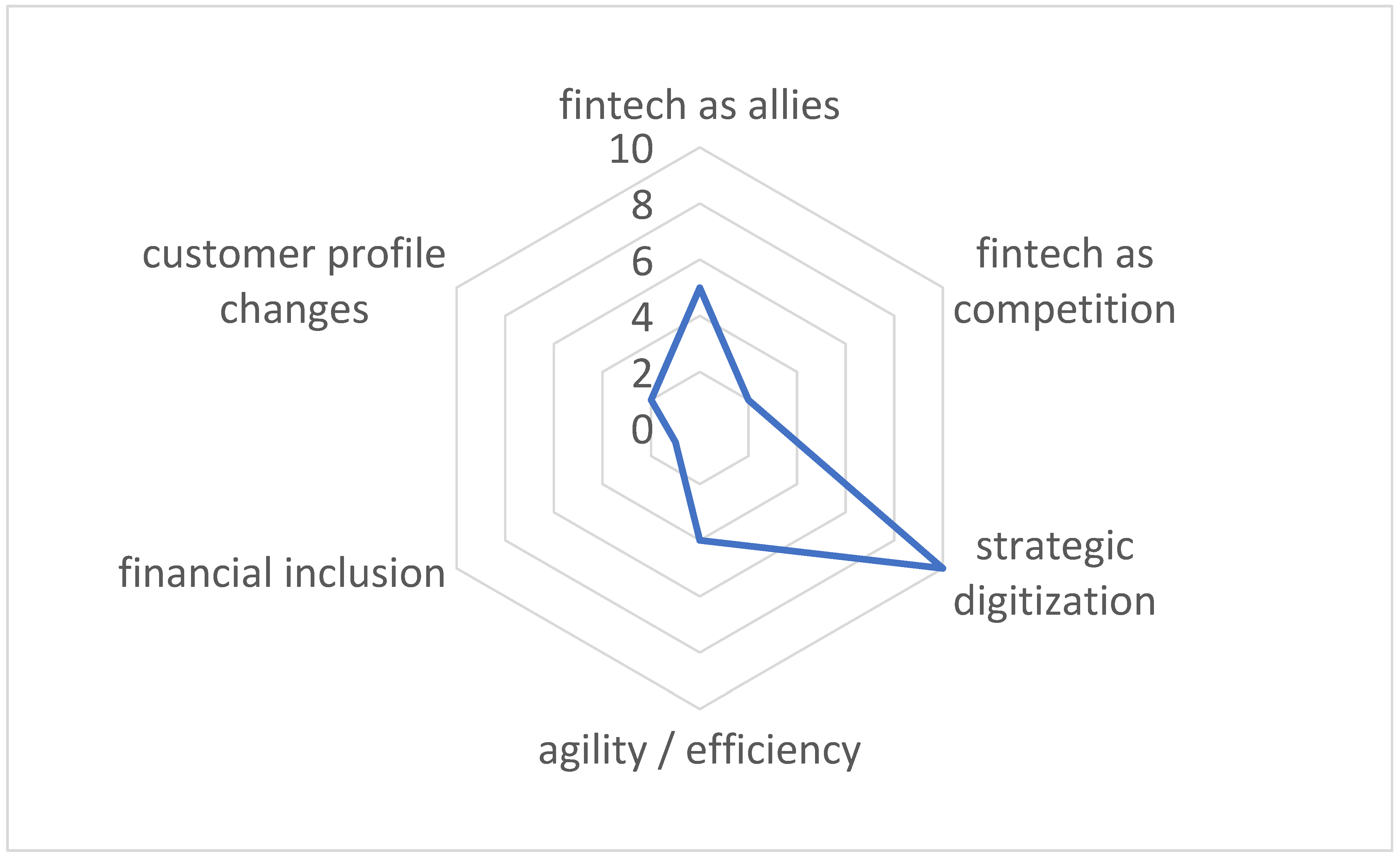
Figure 2 illustrates the interviewees’ perceptions of the primary factors driving financial digitalization, emphasizing its emergence as a pivotal theme in banking institutions’ strategies. This figure provides a comparative overview of response distributions and highlights areas of strong agreement, enabling identification of the aspects on which digitalization exerts the most significant influence.
The response pattern indicates that stakeholders in the financial system do not view digitalization merely as a technological tool; rather, they regard it as a transformative change that reshapes organizational culture, redefines business models, and necessitates new capabilities in data governance and risk management. The regions with the highest concentration on the map indicate clear consensus on priority issues, while the areas with the lowest concentration reveal divergent perceptions of their strategic importance or institutional maturity.
4.3. Technological Challenges
The interviews indicated that all participants (R1–R10) experienced challenges related to technological change; however, their emphasis varied across four distinct dimensions identified through qualitative coding.
4.3.1. Speed of Technological Change
Several respondents (R4, R7) identified the rapid pace of technological evolution as a primary challenge. Interviewees highlighted increasing time-to-market pressures and difficulties in aligning internal processes with accelerating technological change. As one participant stressed, reducing “time to market” has become essential (R4), while another emphasized that the main issue lies in “how quickly technology changes” (R7).
4.3.2. Regulatory and Political Constraints
Regulatory and political factors were highlighted by multiple interviewees (R3, R6, R8) as significant constraints on technological progress. Participants cited regulatory pressures that affect the pace of innovation, including approval requirements and evolving expectations. One interviewee noted that “regulations may well force us to slow down processes” (R3), while another emphasized that regulation ultimately “dictates the pace of innovation” (R6). In addition, political and regulatory changes were perceived as affecting organizations’ capacity to innovate (R8).
4.3.3. External and Geopolitical Factors
External conditions, including geopolitical dynamics, were identified as indirect barriers to technological strategies. Interviewees (R1, R10) identified broader external uncertainties that influence technological planning and implementation. As one respondent referred to “challenging external factors for banking” (R1), another highlighted that geopolitical developments have a “direct” impact on technology-related decisions (R10).
4.3.4. Internal Resource and Governance Limitations
Respondents emphasized internal constraints related to financial resources and governance capabilities (R2, R9). Participants noted that limited financial margins restrict access to advanced technologies (R9), while others linked technological capacity to the effectiveness of risk governance structures (R2), underscoring internal limitations in managing technological transformation.
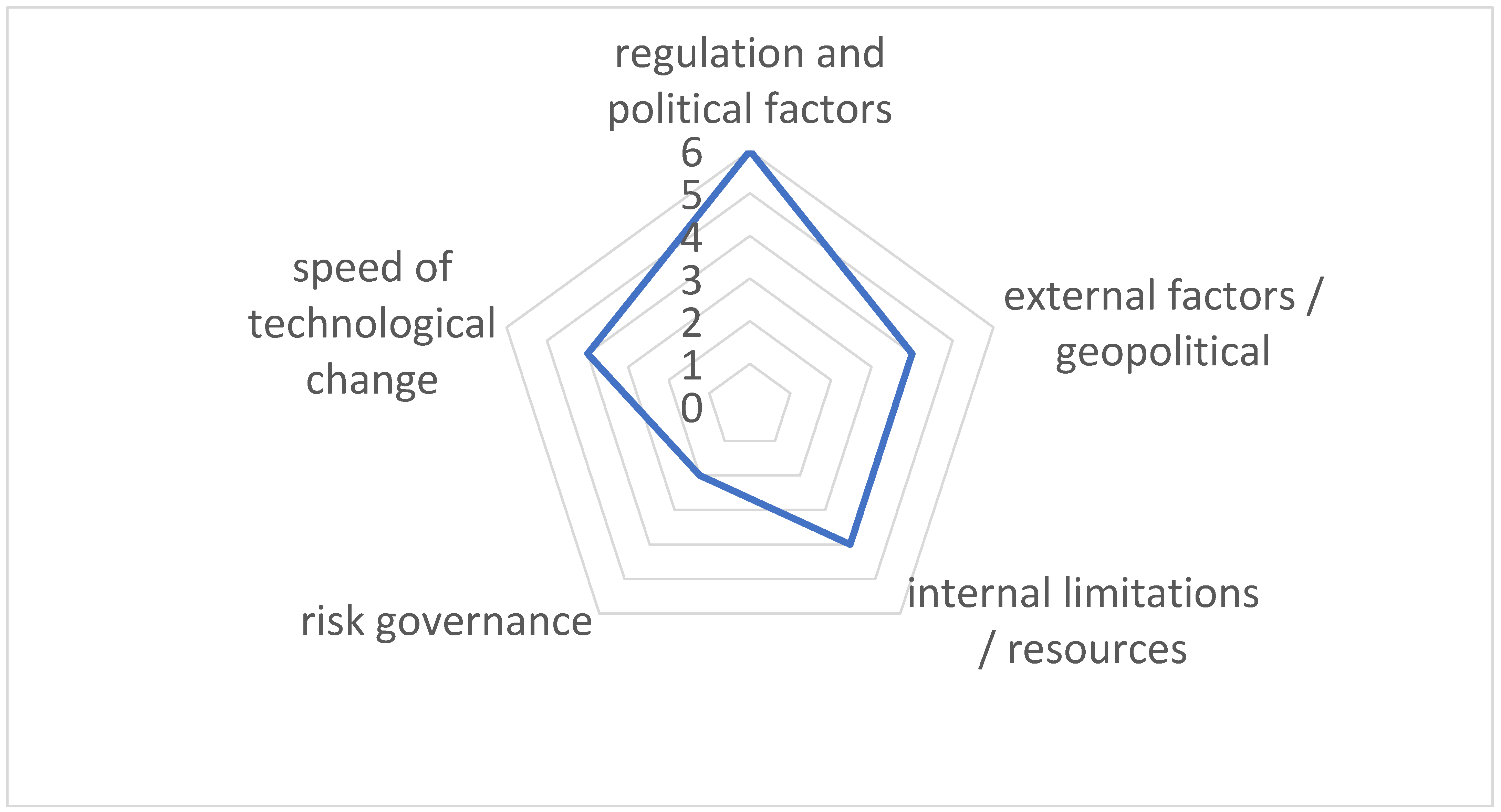
Figure 3 shows respondents’ consensus on key technological challenges in traditional banking. Regulatory and political factors are the most commonly cited issues, highlighting the complex interplay between technology and compliance. Additionally, rapid technological change, internal resource limitations, and geopolitical factors pose significant challenges. These findings emphasize the pressure on financial institutions to upgrade their technological infrastructure. Moreover, risk governance is essential to link technological issues to effective management, as respondents recognize that while technology offers benefits, it also introduces vulnerabilities that require stronger controls and oversight.
Regulatory and political factors significantly impact technological transformation in three main areas: the speed of innovation deployment, the maturity controls for scaling, and compliance costs. Changes in interest rates and monetary policy affect funding, leading to prioritization of shorter payback periods and reduced long-term investment. Data custody and governance expectations, especially in open banking, complicate customer data management.
Cloud services and outsourcing create a trade-off between agility and control, requiring stronger vendor oversight and resilience. Compliance with cybersecurity and operational resilience requirements increases demands on identity management and disaster recovery, affecting project timelines. Additionally, political dynamics and migration policies complicate onboarding and compliance. Overall, regulation and politics shape incentives for innovation, timelines, and governance, underscoring the need to balance speed and accountability.
4.4. Opportunities for Innovation
The analysis of interviews revealed broad agreement among participants that innovation is a key opportunity for traditional banking, particularly in customer orientation, operational efficiency, and digital enablement. Three operational layers emerged from the qualitative coding.
4.4.1. Product Layer
At the product level, respondents emphasized the need to shift toward more customer-centric offerings. Interviewees highlighted that innovation should be driven by customer needs rather than internal assumptions. As one participant stated, “innovation must match what the customer wants, not just what the bank thinks they need” (R1). Similarly, another respondent stressed that the main opportunity lies in “understanding the customer and predicting their needs” (R7).
4.4.2. Process Layer
At the process level, interviewees emphasized operational efficiency as a central opportunity for innovation. Respondents highlighted automation, workflow simplification, and the elimination of unnecessary steps as mechanisms to improve performance. One participant noted that “innovating means making processes simpler by removing unnecessary steps” (R8), while another emphasized that automation enables organizations “to cut costs and improve efficiency” (R10).
4.4.3. Organizational Layer
Respondents emphasized the impact of digital technologies on organizational innovation and service delivery. They noted that digital platforms enable faster processes and highlighted the connection between innovation and customer expectations for digital solutions. Innovation extends beyond product development to include enhanced customer experience and integrated capabilities. Overall, respondents agreed that innovation opportunities in traditional banking focus on three key areas: improved customer focus, digital technology adoption, and operational efficiency.
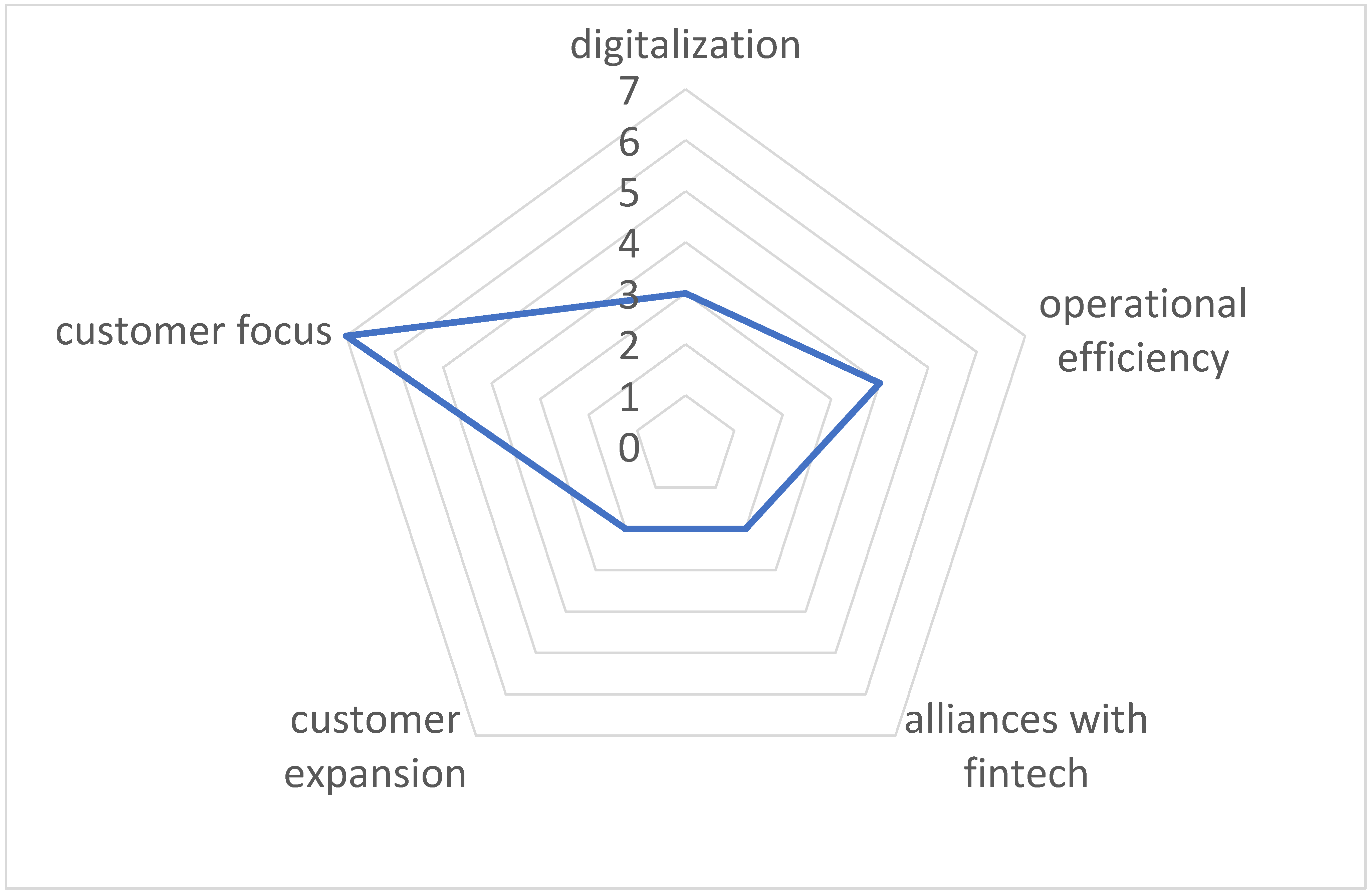
Figure 4 shows the level of agreement among respondents on the primary opportunities for innovation in traditional banking. The data reveals that customer focus is the most significant factor, with the highest number of mentions. This finding underscores the shift in the banking model toward a user-experience-centered approach, in which innovation is viewed as a means of enhancing customer relationships and boosting satisfaction and loyalty.
Operational efficiency and digitalization rank second among the most essential factors, underscoring their critical role in enabling organizational transformation. Efficiency focuses on process optimization, reducing rework, and enhancing internal productivity, while digitalization provides the technological foundation for these advancements.
Lastly, partnerships with Fintech companies and customer expansion, though mentioned less frequently, still represent meaningful emerging strategic opportunities. These alliances highlight a trend toward inter-institutional collaboration to accelerate technology adoption, while customer expansion is viewed as a result of innovation rather than a primary objective.
Customer-centered innovation operates on three layers: product, process, and organizational. At the product layer, the focus is on creating consistent and straightforward customer journeys that enhance clarity and minimize friction. This involves standardizing processes like onboarding and service requests, ensuring omnichannel consistency, and enabling customer autonomy through self-service options. CRM platforms and personalization engines are commonly used to improve customer experience.
The process layer emphasizes simplification to reduce steps and internal handoffs, accelerating decision-making, especially in risk management. Innovations in this area leverage automation and process management tools to streamline workflows and reduce cycle times.
At the organizational layer, innovation shifts from repetitive tasks to strategic oversight. This requires governance routines that integrate technology, risk, and metrics, with a focus on measurable customer-experience outcomes such as response times and adherence to service-level commitments. Overall, customer-centered innovation involves operational redesign to enhance speed, consistency, and control, which are crucial for scaling.
4.5. Emerging Category: Cultural Gap in Strategic Adaptation
The interviews highlighted a significant cultural gap in strategic adaptation, revealing a disconnect between strategic intent and an organization’s capacity to implement change. This gap, seen as a systemic limitation rather than mere resistance, stems from entrenched routines and limited agility, which hinder the execution of strategic priorities amid rapid technological change.
Cultural factors were identified as key obstacles, with internal resistance and rigid processes obstructing strategic initiatives. One interviewee remarked that “the strategy often wants to move faster than the organization is prepared to execute,” emphasizing a mismatch between ambition and readiness. Transforming habits and culture was deemed essential for banking sustainability, as cultural gaps threatened competitiveness and responsiveness.
A heat map analysis linked internal resistance to the innovation-culture gap, suggesting that negative attitudes towards change diminish the effectiveness of technological investments. Environmental pressures often outpace financial institutions’ adaptability, driven by shifts in customer behavior and market dynamics.
The study concluded that banking sustainability is not just about technology or regulations; it requires addressing internal cultural dynamics. The misalignment between strategy and execution manifests in decision-making norms and accountability, posing a significant risk.
This cultural gap becomes evident during execution, leading to slower time-to-market, reduced value delivery, and inconsistencies in controls and customer experiences. When strategies persist, they can become mere documents, while outdated practices hinder agility and increase risk during transformation.
Unlike inertia, the cultural gap reflects a failure to translate priorities into actionable change, driven by inadequate incentives or unclear roles. Interviewees identified observable indicators of this gap, including delays between approval and implementation, operational problems such as increased manual work and unclear decision ownership, and risks such as uneven policy application and high volatility in service outcomes.
The interviews reveal a cultural gap between strategy and execution, resulting in delays, uneven adoption, rework, and control strain, which negatively impacts competitive agility and transformation sustainability. To enhance comparability and facilitate reuse, the main findings were organized using a standardized reporting structure. Each key risk/opportunity theme includes: (i) a specific definition, (ii) representative quotes, (iii) management actions from the interviews, and (iv) a link to prior literature.
Table 3 presents the standardized results for the five categories analyzed.
5. Discussion
This study reinforces the COSO ERM model, integrating risk management with organizational strategy and emphasizing cultural and governance factors as vital to resilience (
COSO, 2017). Findings indicate that cultural rigidity and lack of agility create strategic risks, hindering execution and increasing exposure to technological and regulatory vulnerabilities. This aligns with
Mikes and Power (
2024), who argue that culture has replaced structural reform as a key determinant of risk governance.
Interviewees highlighted cultural misalignment as a barrier to implementing digital strategy, illustrating that risk is embedded in organizational values and decision-making. Our findings also resonate with
Lam (
2014), who describes strategic risk as the likelihood of unexpected events undermining goals, and with
Miller and Bromiley (
1990), who show its long-term impact on performance.
Seabrook et al. (
2021) emphasize the structural dimension of strategic risk, a perspective that our study extends by introducing the concept of a “cultural gap in strategic adaptation.”
Research indicates that digitalization and innovation drive organizational change (
Banna et al., 2021), but our findings show that misalignment with strategic objectives limits their effectiveness. This rigidity is a critical barrier to implementing digital strategy, underscoring that strategic risk is not merely technological but deeply cultural.
Additionally, the growth of Fintech is reshaping the competitive landscape in finance, with an analysis of more than 10,000 Fintech companies indicating that their presence is associated with increased risk-taking among traditional banks (
Elekdag, 2024). This supports the competition-fragility hypothesis, suggesting that profit pressures push banks toward riskier behaviors, escalating financial system vulnerabilities (
Mateev et al., 2021;
Bookstaber et al., 2018).
Recent studies present an alternative view, known as the competition stability hypothesis. This idea suggests that Fintech can reduce overall risk by diversifying credit sources, improving risk assessment tools, and enhancing the efficiency of the financial system (
Zhang et al., 2023). Fintech platforms have significantly expanded financial inclusion and enabled more flexible credit assessment models. Consequently, they can enhance the quality of traditional banks’ portfolios using advanced statistical techniques (
Elekdag, 2024).
Our findings contribute to the competition–fragility versus competition–stability debate. Interviewees highlighted that while Fintech and Neobanks increase competitive pressure, the effects vary across contexts. Institutions with strong risk governance and agile processes view Fintech partnerships as opportunities, whereas those with legacy systems may face heightened vulnerabilities, consistent with prior research.
Financial institutions must navigate strategic risks and adapt their business models amid rapid digital change. Although digitalization can improve efficiency and customer satisfaction, it demands robust risk management practices aligned with the COSO ERM framework. Ineffective management can impede goal achievement.
We introduce the concept of a “cultural gap in strategic adaptation,” defined as a risk factor arising from misalignment between organizational culture and rapid change. Previous research noted cultural resistance as a barrier, but our findings suggest culture can be an adaptive capability. Misalignment can hinder execution, increase vulnerability to risks, and reduce competitiveness.
This mechanism can be summarized as follows: as digital/regulatory changes accelerate, organizations with rigid cultures face delays in executing strategic initiatives, increasing risk exposure, and diminishing competitiveness. Our study clarifies how cultural misalignment operates as a dynamic strategic risk factor.
6. Conclusions
Research shows that traditional banks face complex strategic risks stemming from cultural, technological, regulatory, and competitive factors. The main challenge for banks is adapting to rapid changes in digital technology and new regulations, often faster than their internal teams can respond. This poses a critical risk to the alignment of culture, strategy, and technology. The analysis emphasizes the need for robust cybersecurity and effective data management as key components of resilience, and for addressing outdated technology, which can slow innovation and increase operational risks.
Digital transformation is now a reality for traditional banks. The main strategic risks identified are competition from fintech companies, regulatory issues, and cybersecurity threats. However, there are also significant opportunities for innovation and growth in the financial market. For example, banks in Colombia that embrace digitalization and work with fintech companies have become more competitive.
Looking ahead, banking must reinvent itself by adopting flexible, customer-focused business models and making innovation a core part of its strategy. In summary, the banking sector is at a turning point. It can either resist change and lag or adapt and grasp new opportunities. The future of banking relies on closing the gap between planning and execution, building flexible teams, and combining technology, efficiency, and clear regulations to maintain stability without hindering competition.
6.1. Theoretical Implications
The research findings highlight significant challenges associated with strategic risks in the banking sector. A primary concern is cybersecurity, which represents a systemic risk affecting both business continuity and customer trust. Technological vulnerabilities are among the most impactful factors on global financial systems (
Henriques & Sadorsky, 2025). Another critical challenge noted in the research concerns the cultural gap in strategic adaptation, whereby organizational culture is often perceived as static and as influencing risk management (
Mikes & Power, 2024). However, the results indicate that culture is a dynamic factor that can either delay or accelerate the implementation of strategies.
Furthermore, the research underscores the importance of digitalization and innovation in ensuring the sustainability and competitiveness of financial institutions. This perspective aligns with earlier analyses of the interplay between competition, innovation, and risk in the banking sector (
Allen & Gale, 2004). Additionally, this research emphasizes the necessity of a holistic approach to integrating strategic risks, viewing technological, regulatory, cultural, and market factors as an interdependent system that shapes the adaptability of financial entities.
6.2. Practical Implications
To make the findings actionable, we propose stakeholder-specific actions that address cultural, technological, and regulatory challenges identified in this study:
For Bank Regulators:
Accelerate approval processes for digital products and services to reduce time-to-market delays.
Establish cybersecurity benchmarks and mandatory incident readiness metrics for all financial institutions.
Promote open banking frameworks through standardized API regulations to foster collaboration between banks and Fintech firms.
Implement traceability requirements for data governance to ensure compliance.
For Fintech Firms:
Adopt interoperability standards (e.g., API protocols) to facilitate secure integration with traditional banks.
Develop compliance dashboards aligned with local regulatory frameworks to build trust and reduce friction.
Engage in joint cybersecurity drills with partner banks to strengthen resilience against systemic threats.
Formalize governance models that clarify roles and responsibilities in risk-sharing partnerships.
For Bank Executives:
Create board-level digital risk dashboards tracking cyber KPIs, regulatory compliance, and innovation metrics.
Form cross-functional agile teams to accelerate execution and reduce cultural rigidity.
Implement data governance frameworks, ensuring traceability and quality across all digital processes.
Invest in cloud security and automation tools to enhance operational resilience and regulatory adherence.
6.3. Limitations and Future Lines of Research
This study identifies constraints affecting transferability and inference strength. The small sample size of ten semi-structured interviews limits statistical generalization, making findings more mechanism-oriented than broadly representative. The specific context of Colombia suggests that regulatory and cultural dynamics may not be applicable elsewhere. Additionally, reliance on self-reported data may introduce bias, as participants could understate vulnerabilities or overstate strengths. While the sample includes diverse roles, it leans towards risk/strategy functions, likely emphasizing governance over operational issues.
To improve external validity and empirical precision, future research should focus on strategic risk and financial digitalization through three interconnected dimensions:
Cross-country comparative studies to validate the mechanism of ‘digital/regulatory pace → cultural/process rigidity → execution delay → risk exposure,’ identifying factors like regulatory tightness and technical debt.
Development of a quantitative scale to operationalize the ‘cultural gap,’ enabling more precise causal estimates of its impact on strategic adaptation.
Investigating partnerships with Fintech companies to promote resilience and incorporate criteria such as interoperability and cybersecurity into a governance framework.
Author Contributions
Conceptualization, C.B., V.A., C.G. and E.V.; methodology, E.V.; software, C.G.; validation, C.B., V.A. and E.V.; formal analysis, C.B. and C.G.; investigation, C.B., V.A. and C.G.; writing—original draft preparation, C.B., V.A. and C.G.; writing—review and editing, C.B., V.A., C.G. and E.V.; supervision, E.V. All authors have read and agreed to the published version of the manuscript.
Funding
This research received no external funding. The APC was funded by the authors.
Institutional Review Board Statement
Ethical review and approval were waived for this study because it was classified as ‘risk-free’ under Article 11 of Colombia’s Resolution 8430/1993, as it involved non-invasive interviews and the collection of organizational (not personally sensitive) data. Per the institutional policy of Universidad EAFIT and Colombian regulation, ethics committee approval was not required. Nevertheless, informed consent was obtained from all participants, and all applicable international ethical standards were followed (Declaration of Helsinki, CIOMS, ICH-GCP, WHO, Minciencias).
Informed Consent Statement
Informed consent was obtained from all subjects involved in the study.
Data Availability Statement
Data is unavailable due to privacy or ethical restrictions.
Acknowledgments
We thank all the institutions that participated in the study.
Conflicts of Interest
The authors declare no conflicts of interest.
Appendix A. Interview Protocol and Informed Consent
Strategic Risks and Financial Digitalization: Analyzing the Challenges and Opportunities for Fintech Firms and Neobanks.
This research aims to analyze strategic risks arising from financial digitalization, highlighting the disruptive role of Fintech firms and Neobanks, the associated challenges and opportunities, and how traditional banks can adapt to remain competitive and stable in a rapidly evolving financial ecosystem.
Approach: Qualitative, based on semi-structured interviews.
Estimated Duration: 30–45 min per interview.
Mode: Conducted in person.
Interviews will be audio-recorded with prior consent and transcribed verbatim.
Direct identifiers (names) will be removed during transcription; participants will be assigned anonymous codes.
Data will be stored securely with restricted access to the research team.
Due to confidentiality agreements, full transcripts will not be publicly available.
The study complies with principles of voluntariness, beneficence, justice, and respect for persons.
Participation is voluntary, without financial compensation, and participants may withdraw at any time without consequences.
Before starting, please note:
This interview is part of an academic study aimed at analyzing strategic risks in the context of financial digitalization. Your participation is voluntary. The information collected will be treated confidentially, and results will be presented anonymously without attributing individual comments. With your permission, the interview will be audio-recorded solely for internal analysis purposes. You may skip any question or withdraw at any time without penalty.
Do you authorize the interview under these conditions?
What have been the main challenges in identifying strategic risks?
Which tools and methodologies does your institution apply to identify strategic risks?
What are the primary strategic risks identified in your institution?
Which internal factors constrain or enhance your organization’s capacity to respond to strategic risks?
Which external factors do you currently perceive as most challenging for the bank’s strategy (regulation, technology, competition, macroeconomics)?
Do you consider FinTech firms a strategic ally in the financial sector, and what impacts have the entry of FinTechs and Neobanks had on your strategic positioning and market share?
What role does digitalization play in your institution’s growth strategy?
What strategic opportunities does digital expansion offer for the growth and competitiveness of your institution?
Which strategies do you think have driven the growth of leading banks in the current environment?
What good practices have you implemented for the treatment of strategic risks in your institution?
What treatment measures have you used to mitigate or leverage the identified strategic risks (e.g., portfolio reconfiguration, partnerships, technology investment, corporate governance changes)?
What changes do you observe in the risk profiles of clients and the market as a result of digitalization and the use of emerging technologies?
How have the expectations of digital clients evolved, and how is your institution responding to these changes?
References
- Afrin, S., Roksana, S., & Akram, R. (2025). AI-enhanced robotic process automation: A review of intelligent automation innovations. IEEE Access, 13, 173–197. [Google Scholar] [CrossRef]
- AlDaajeh, S., Saleous, H., Alrabaee, S., Barka, E., Breitinger, F., & Raymond Choo, K.-K. (2022). The role of national cybersecurity strategies on the improvement of cybersecurity education. Computers & Security, 119, 102754. [Google Scholar] [CrossRef]
- Al Lawati, A., Hussin, B. M., Abdul Kadir, M. R., & Khudari, M. (2025). The impact of enterprise risk management on firm competitiveness: The mediating role of competitive advantage in the Omani insurance industry. Risks, 13(10), 199. [Google Scholar] [CrossRef]
- Allen, F., & Gale, D. (2004). Part 2: Bank concentration and competition: An evolution in the making. A conference sponsored by the federal reserve bank of Cleveland [Special issue]. Journal of Money, Credit and Banking, 36(3). Available online: https://www.jstor.org/stable/i371342 (accessed on 27 November 2025).
- Alofan, F., Chen, S., & Tan, H. (2020). National cultural distance, organizational culture, and adaptation of management innovations in foreign subsidiaries: A fuzzy set analysis of TQM implementation in Saudi Arabia. Journal of Business Research, 109, 184–199. [Google Scholar] [CrossRef]
- Alsmadi, A. A., & Al-Omoush, K. S. (2025). Transforming financial landscapes: Exploring the nexus between digitalization in accounting and Islamic fintech adoption. Human Behavior and Emerging Technologies, 2025(1), 2854513. [Google Scholar] [CrossRef]
- Arkanuddin, M. F., Saragih, F. D., & Nugroho, B. Y. (2021). The key role of the financial regulation in FinTech ecosystem: A model validation. Studies of Applied Economics, 39(12), 1–16. [Google Scholar] [CrossRef]
- Banna, H., Kabir Hassan, M., & Rashid, M. (2021). Fintech-based financial inclusion and bank risk-taking: Evidence from OIC countries. Journal of International Financial Markets, Institutions and Money, 75, 101447. [Google Scholar] [CrossRef]
- Beasley, M. S., Clune, R., & Hermanson, D. R. (2005). Enterprise risk management: An empirical analysis of factors associated with the extent of implementation. Journal of Accounting and Public Policy, 24(6), 521–531. [Google Scholar] [CrossRef]
- Benischke, M. H., Martin, G. P., & Glaser, L. (2019). CEO equity risk bearing and strategic risk taking: The moderating effect of CEO personality. Strategic Management Journal, 40(1), 153–177. [Google Scholar] [CrossRef]
- Bicchi, N., Kuo, A., & Gallego, A. (2025). Unpacking technological risks: Different sources of concern and policy preferences. Political Studies, 73(3), 1054–1077. [Google Scholar] [CrossRef]
- Bookstaber, R., Paddrik, M., & Tivnan, B. (2018). An agent-based model for financial vulnerability. Journal of Economic Interaction and Coordination, 13(2), 433–466. [Google Scholar] [CrossRef]
- Bout, E., Loscri, V., & Gallais, A. (2022). How machine learning changes the nature of cyberattacks on IoT networks: A survey. IEEE Communications Surveys and Tutorials, 24(1), 248–279. [Google Scholar] [CrossRef]
- Broadbent, D. E. (1967). Word-frequency effect and response bias. Psychological Review, 74(1), 1–15. [Google Scholar] [CrossRef]
- Bromiley, P., McShane, M., Nair, A., & Rustambekov, E. (2015). Enterprise risk management: Review, critique, and research directions. Long Range Planning, 48(4), 265–276. [Google Scholar] [CrossRef]
- Brunner-Kirchmair, T. M., & Hiebl, M. R. (2025). Enterprise risk management maturity and organisational ambidexterity: Evidence from German mittelstand firms. Accounting & Finance, 65, 2753–2777. [Google Scholar] [CrossRef]
- Butt, A., Imran, F., Helo, P., & Kantola, J. (2024). Strategic design of culture for digital transformation. Long Range Planning, 57(2), 102415. [Google Scholar] [CrossRef]
- Campbell, J. L., Quincy, C., Osserman, J., & Pedersen, O. K. (2013). Coding in-depth semistructured interviews: Problems of unitization and intercoder reliability and agreement. Sociological Methods & Research, 42(3), 294–320. [Google Scholar] [CrossRef]
- Chang, T., DeJonckheere, M., Vydiswaran, V. V., Li, J., Buis, L. R., & Guetterman, T. C. (2021). Accelerating mixed methods research with natural language processing of big text data. Journal of Mixed Methods Research, 15(3), 398–412. [Google Scholar] [CrossRef]
- Collier, D., & Mahoney, J. (1996). Insights and pitfalls: Selection bias in qualitative research. World Politics, 49(1), 56–91. [Google Scholar] [CrossRef]
- COSO. (2017). Enterprise risk management—Integrating with strategy and performance. Committee of Sponsoring Organizations of the Treadway Commission. [Google Scholar]
- Creswell, J. W., Hanson, W. E., Clark, V. L., & Morales, A. (2007). Qualitative research designs: Selection and implementation. The Counseling Psychologist, 35(2), 236–264. [Google Scholar] [CrossRef]
- Desiraju, K., Mishra, A. N., & Sengupta, P. (2024). Customer perceptions on open banking apps: Insights using structural topic modeling. Journal of Retailing and Consumer Services, 81, 104029. [Google Scholar] [CrossRef]
- Elekdag, S. (2024). Does FinTech increase bank risk taking? (IMF working papers, Vol. 2024, Issue 017). IMF. [Google Scholar] [CrossRef]
- Fang, X., & Liu, M. (2024). How does the digital transformation drive digital technology innovation in enterprises? Evidence from the enterprise’s digital patents. Technological Forecasting and Social Change, 204, 123428. [Google Scholar] [CrossRef]
- Henriques, I., & Sadorsky, P. (2025). Connectedness and systemic risk between FinTech and traditional financial stocks: Implications for portfolio diversification. Research in International Business and Finance, 73, 102629. [Google Scholar] [CrossRef]
- Hernández, R., Fernández, C., & Baptista, M. d. P. (2016). Metodología de la investigación (M. Graw Hill, Ed.; 6th ed.). McGraw Hill. [Google Scholar]
- Hoyt, R. E., & Liebenberg, A. P. (2011). The value of enterprise risk management. Journal of Risk and Insurance, 78(4), 795–822. [Google Scholar] [CrossRef]
- Jiménez, A., Arrieta, Y., Nuñez, M. A., & Villanueva, E. (2024). Management of strategic risks for the sustainability of SMEs in the manufacturing sector in Antioquia. Sustainability, 16(5), 2094. [Google Scholar] [CrossRef]
- Kang, Y., Cai, Z., Tan, C.-W., Huang, Q., & Liu, H. (2020). Natural language processing (NLP) in management research: A literature review. Journal of Management Analytics, 7(2), 139–172. [Google Scholar] [CrossRef]
- Kaur, R., Gabrijelčič, D., & Klobučar, T. (2023). Artificial intelligence for cybersecurity: Literature review and future research directions. Information Fusion, 97, 101804. [Google Scholar] [CrossRef]
- Knox, S., & Burkard, A. W. (2009). Qualitative research interviews. Psychotherapy Research, 19(4–5), 566–575. [Google Scholar] [CrossRef]
- Kou, G., & Lu, Y. (2025). FinTech: A literature review of emerging financial technologies and applications. Financial Innovation, 11(1), 1. [Google Scholar] [CrossRef]
- Kumar, V., Thrikawala, S., & Acharya, S. (2022). Financial inclusion and bank profitability: Evidence from a developed market. Global Finance Journal, 53, 100609. [Google Scholar] [CrossRef]
- Lam, J. (2014). Enterprise risk management: From incentives to controls (2nd ed.). Wiley. [Google Scholar]
- Ling, H., & Ling, X. (2025). The impact of digital inclusive finance on enterprise digital technology innovation: Empirical evidence from the Chinese manufacturing industry. Humanities and Social Sciences Communications, 12(1), 375. [Google Scholar] [CrossRef]
- Liu, Y., Tang, Z., & Shao, W. (2024). Corporate financial digitalization, internal governance, and social trust. Finance Research Letters, 70, 106295. [Google Scholar] [CrossRef]
- Liu, Z., Li, X., & Li, Z. (2024). Inclusive FinTech, open banking, and bank performance: Evidence from China. Financial Innovation, 10(1), 149. [Google Scholar] [CrossRef]
- Mateev, M., Tariq, M. U., & Sahyouni, A. (2021). Competition, capital growth, and risk-taking in emerging markets: Policy implications for banking sector stability during the COVID-19 pandemic. PLoS ONE, 16(6), e0253803. [Google Scholar] [CrossRef]
- Mikes, A., & Power, M. (2024). How culture displaced structural reform: Problem definition, marketization, and neoliberal myths in bank regulation. Journal of Business Ethics, 193(2), 303–323. [Google Scholar] [CrossRef]
- Miller, K. D., & Bromiley, P. (1990). Strategic risk and corporate performance: An analysis of alternative risk measures. Academy of Management Journal, 33(4), 756–779. [Google Scholar] [CrossRef][Green Version]
- Murinde, V., Rizopoulos, E., & Zachariadis, M. (2022). The impact of the FinTech revolution on the future of banking: Opportunities and risks. International Review of Financial Analysis, 81, 102103. [Google Scholar] [CrossRef]
- Nuñez, M. A., Rivas-Montoya, L. M., Villanueva, E., Mejía, P., Montoya-Londoño, C. A., & Jaraba, I. (2020). Riesgo estratégico. Universidad EAFIT. [Google Scholar]
- O’Connor, C., & Joffe, H. (2020). Intercoder reliability in qualitative research: Debates and practical guidelines. International Journal of Qualitative Methods, 19, 1–13. [Google Scholar] [CrossRef]
- Palenchar, M. J., & Heath, R. L. (2007). Strategic risk communication: Adding value to society. Public Relations Review, 33(2), 120–129. [Google Scholar] [CrossRef]
- Patton, M. Q. (1990). Qualitative evaluation and research methods. SAGE Publications, Inc. [Google Scholar]
- Sarma, M. (2025). Financial digitalization in India. Eurasian Economic Review, 15(2), 401–424. [Google Scholar] [CrossRef]
- Schneier, B., & Vance, A. (2025). Guest editorial: “Complexity is the worst enemy of security”: Studying cybersecurity through the lens of organizational complexity. MIS Quarterly, 49(1), 205–210. [Google Scholar] [CrossRef]
- Seabrook, I. E., Barucca, P., & Caccioli, F. (2021). Evaluating structural edge importance in temporal networks. EPJ Data Science, 10(1), 23. [Google Scholar] [CrossRef]
- Tang, L., & Li, M. (2025). Is financial digitalization an effective strategy for preventing stock price crashes? Finance Research Letters, 72, 106523. [Google Scholar] [CrossRef]
- Urbani, R., Ferreira, C., & Lam, J. (2024). Managerial framework for evaluating AI chatbot integration: Bridging organizational readiness and technological challenges. Business Horizons, 67(5), 595–606. [Google Scholar] [CrossRef]
- Zhang, Y., Ye, S., Liu, J., & Du, L. (2023). Impact of the development of FinTech by commercial banks on bank credit risk. Finance Research Letters, 55, 103857. [Google Scholar] [CrossRef]
- Zhao, H., & Khaliq, N. (2024). In quest of perceived risk determinants affecting intention to use fintech: Moderating effects of situational factors. Technological Forecasting and Social Change, 207, 123599. [Google Scholar] [CrossRef]
- Zhou, Z., Zhang, J., & He, C. (2025). Manufacturing enterprise digital transformation, manager cognition, and strategic risk-taking—Evidence from China. International Review of Economics and Finance, 98, 103906. [Google Scholar] [CrossRef]
| Disclaimer/Publisher’s Note: The statements, opinions and data contained in all publications are solely those of the individual author(s) and contributor(s) and not of MDPI and/or the editor(s). MDPI and/or the editor(s) disclaim responsibility for any injury to people or property resulting from any ideas, methods, instructions or products referred to in the content. |