


Abstract
This study examines the impact of tax avoidance practices on investment efficiency in Egypt, with particular emphasis on the moderating role of earnings management by exploring whether these tactics reflect managerial opportunism or serve as a mechanism to ease financial constraints. We employ panel data regression to analyze a sample of 58 non-financial firms listed on the Egyptian Exchange (EGX) over the period 2017–2024, yielding 464 firm-year observations. Data are collected from official corporate websites, EGX, and Egypt for Information Dissemination (EGID). Grounded in agency theory, signaling theory, and pecking order theory, this study reveals how conflicts of interest and information asymmetry between managers and stakeholders lead to managerial opportunism. The findings show that tax avoidance undermines the investment efficiency in the Egyptian market. Earnings manipulation further intensified this effect due to the financial statements’ opacity. A closer examination reveals that earnings management exacerbates overinvestment by masking managerial decisions. Conversely, for financially constrained firms with a tendency to underinvest, tax avoidance and earnings management may contribute to improved efficiency by generating internal liquidity and alleviating external financing constraints. These results provide valuable insights for regulators, highlighting that policy should be directed against managerial opportunism and improving transparency, instead of focusing solely on curbing tax avoidance. From an investor perspective, they should closely monitor and understand the tax-planning strategies to ensure they enhance the firm’s value.
1. Introduction
With global economic instability, and especially after the worldwide pandemic, corporate management has increasingly focused on profit maximization and enhancing shareholders’ wealth. The significance of this strategic objective brings important financial decisions that deserve academic interest.
Among these, two practices in particular are of great relevance to corporate financial position: tax avoidance (TA) practices and investment efficiency practices (IE). Tax avoidance represents a strategic decision through which firms reduce their tax burden by exploiting gaps or ambiguities in existing tax laws (Fitriani & Taqi, 2024). While such practices may be beneficial for firms by increasing internal funds, tax avoidance is considered a double-edged sword. It raises ethical and regulatory concerns for governments, especially in developing countries, that collect taxes as a significant means of public financing.
Another dimension that is critical to academics is investment efficiency, which refers to the extent to which firms align capital expenditures with their optimal investment levels. Deviations from this, whether underinvestment or overinvestment, represent inefficient resource allocation (Biddle et al., 2009; K. Chen et al., 2025). Asiri et al. (2020) argued that firms should invest in projects as long as their marginal benefits exceed their marginal costs. However, real-world conditions are far from ideal, and capital limitations, information asymmetry, and managerial incentives often drive firms away from the optimal investment model, leading to either overinvestment in negative return projects or underinvestment by dropping profitable projects.
Complicating this dynamic, the strategy of earnings management arises when managers exercise their discretion to manipulate financial reporting to accomplish objective goals such as meeting strategic goals. Although EM could yield short-term objectives, if used excessively, it diminishes the transparency of financial statements and masks the actual economic performance of the company (Healy & Wahlen, 1999). Accordingly, we hypothesize that EM moderates the association between tax avoidance and investment efficiency, given its potential to influence both financial transparency and the optimal level of resource allocation.
In the Egyptian setting, the relationship between tax avoidance, earnings management, and investment efficiency is especially salient. Egypt, as an emerging market, is characterized by relatively concentrated ownership structures, weak investor protection rules, and capital markets where external financing is often costly or constrained. Such features heighten agency conflicts and information asymmetry between insiders and external capital providers. In this setting, managers face less supervision and are thus more able to divert the cash preserved through tax planning away from shareholders’ interests. At the same time, high information asymmetry grants managers the discretion to manage earnings, which obscures the actual drivers of performance and the risks associated with tax avoidance strategies.
Prior studies have considered the individual effects of tax avoidance and earnings management on investment behavior. Evidence from Egypt, for instance, indicates that managerial characteristics, including competence and overconfidence, influence the relationship between tax avoidance and investment efficiency (Abd El Rehim, 2025). Additional research reveals that tax avoidance can detrimentally affect investment efficiency, with this dynamic being influenced by firm-specific factors, like cash reserves (Elfeky et al., 2024). Furthermore, international studies corroborate that tax avoidance is typically linked to investment inefficiency across various countries (Benkraiem et al., 2024). In addition, Sharaf (2019) reveals that earnings management impairs investment efficiency in firms listed in Egypt. More recently, Eissa et al. (2025) found that institutional ownership mitigates the adverse impact of earnings management on investment efficiency.
However, despite these advances, the interplay between tax avoidance and earnings management and how earnings management may moderate the connection between tax avoidance and investment efficiency has not been extensively researched, especially within the Egyptian context.
To the best of the authors’ knowledge, no empirical study has analyzed how earnings management might moderate the association between tax avoidance and investment efficiency in Egypt, particularly among non-financials listed in the EGX100 index. This paper aims to bridge that gap by examining the association between TA, EM, and IE. This gap is especially due to the country’s institutional features, especially a weak governance structure and elevated levels of information asymmetry (Eissa et al., 2025; Abdel-Meguid, 2021). The findings are expected to contribute to the literature on corporate financial decisions in emerging markets and provide insights for regulators towards the improvement of transparency and governance.
2. Theoretical Background and Literature Review
2.1. Theoretical Background
Many scholars have used a combination of theories to study corporate behavior, with agency theory being first introduced by Meckling and Jensen (1976), which examines the principal–agent relation, where shareholders assign decision-making authority to corporate managers. This delegation frequently leads to conflicts of interest as managers may have more self-serving issues than those of shareholders. Information asymmetry further allow managers to exploit their informational advantage, typically reflected in earnings management whereby they manipulate reported figures to achieve specific performance targets, receive a bonus, or avoid transgressing covenants (Islam et al., 2022). These activities reduce reporting credibility whilst eroding investor confidence.
The signaling theory (Spence, 1973) provides a complementary perspective. It proposes that firms reveal financial information as a means of communicating how well they are performing in the short and long run. Since managers possess a greater understanding of the firm, their disclosures serve to attenuate information asymmetry and guide investors’ decisions. From this perspective, tax avoidance strategies can signal either effective managerial decision-making or self-interested behavior (Abbasi et al., 2024; Khurana et al., 2018; Desai & Dharmapala, 2006). However, in the case of earnings management, these signals can become ambiguous, either veiling firm’s true performance to mask the manager’s intent or, alternatively, making such announcements appear beneficial, by increasing their value relevance to stakeholders (Amidu et al., 2019).
Finally, the pecking order theory (Myers & Majluf, 1984) suggests that firms prioritize financing sources according to cost, with internal funds coming first, followed by debt, and lastly capital (equity). The reason for this hierarchy is due to the higher costs ofexternal financing attributed to information asymmetry. Tax planning is thus a strategic means to generate internal funds, which are the most preferred source in the pecking order. Reducing cash tax outflows allows firms to create internal liquidity that can be crucial for investing, particularly in a financially constrained state (Edwards et al., 2016).
In the context of an emerging market like Egypt, marked by greater information asymmetry and weak corporate governance (Eissa et al., 2025; Abd-Elmageed & Abdel Megeid, 2020), these theoretical issues become more pronounced. From an agency theory perspective, managers benefiting from the information asymmetry may engage in tax avoidance to generate low-cost internal funds. However, the effectiveness of deploying such funds is governed by managerial intentions and transparency. The funds may either be used in value-creating investments, or deployed for empire-building actions that serve managerial priorities and not shareholder interests. This dynamic is moderated by earnings management that obfuscates or enhances the clarity of financial signals to shareholders.
2.2. Previous Literature
2.2.1. Tax Avoidance and Investment Efficiency
There is a lot of literature to review that is focused on tax avoidance and its influence on investment efficiency. However, this relationship is not straightforward, with outcomes that vary considerably across institutional contexts and firm-specific conditions. Prior studies (Dhaliwal et al., 2004; Hope & Thomas, 2008; Armstrong et al., 2015; Jia & Gao, 2021), show that managers exploit high levels ofinformation asymmetry and financial reporting opacity to appropriate the benefits of tax avoidance at the expense of shareholders. Such behavior often results in inefficient resource allocation, particularly managerial empire building in weakly governed environments, ultimately causing a decline in firm value.
One body of literature (Ding, 2019; Widuri et al., 2020; Asiri et al., 2020) suggests that although tax avoidance increases cash availability, managerial opportunism and reporting opaqueness can lead to suboptimal investments, especially where governance mechanisms are ineffective. Additionally, Sukarno et al. (2022) show that effective CSR reporting can alleviate tax avoidance effects on investment efficiency. Macchioni et al. (2024) find that higher financial reporting quality mitigates the negative effects of tax avoidance by reducing information asymmetry.
Benkraiem et al. (2024), in the same vein, report that the harmful effects of tax avoidance are less pronounced in environments with strong investor protection. In the Egyptian context, Elfeky et al. (2024) document that tax avoidance reduces investment efficiency, with cash holding playing a mediating role. Ajmal et al. (2025) reveal the role of short-term debt and ownership concentration in reducing over- or underinvestment due to tax avoidance.
In contrast, other studies indicate that tax avoidance can be beneficial to shareholders by generating an internal source of funds. For example, Mayberry (2012) and Ngelo et al. (2022) show that tax avoidance can alleviate capital constraints and improve investment efficiency. Moreover, Khurana et al. (2018) indicate that strong management ability and sound governance lead to increased efficient investment through tax avoidance. More recent evidence by (Abbasi et al., 2024) underlines that corporate philanthropy combined with tax planning heightens the investment efficiency through improving firm brand image and public perception. Taken together, these findings support the fact that tax avoidance may have a contrasting impact on investment efficiency based on the context and market conditions.
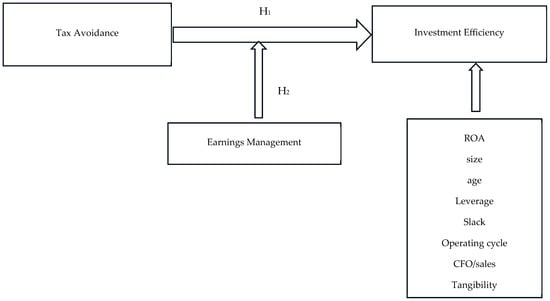
Thus, this study suggests the following hypothesis:
H1.
Tax avoidance has a significant impact on investment efficiency among Egyptian firms listed on the EGX100.
2.2.2. Earnings Management and Investment Efficiency
By leveraging the agency role that exists in this relationship between tax avoidance and investment efficiency, an additional line of research underlines the potential relevance of earnings management as an administrative instrument to potentially affect and induce investment decisions. Earnings management is directly linked to the quality of financial statements, which are reported and, therefore, influence future investment decisions. Evidence has consistently revealed that higher earnings quality leads to a higher capital allocation efficiency. Cherkasova and Rasadi (2017) and Biddle and Hilary (2006) demonstrate that improved earnings quality lowers deviations from the optimum level of investment. Linhares et al. (2018) similarly report that earnings management amplifies the risk of investing inefficiently. Corporate governance measures could act as a moderator in the work by Bzeouich et al. (2019), which documents the positive correlation between high quality of financial reporting (indicating lower earnings management) and investment efficiency, particularly enhanced by the independence and diversity of boards. This is in contrast with Sukarno et al. (2022), who focus on situations where earnings management may facilitate access to credit and indirectly support investment efficiency. More empirical evidence is provided by Eissa et al. (2025) and Zhang and Yang (2024), demonstrating that institutional ownership and the degree of board independence can counteract the detrimental effect of earnings management on optimal investment decisions.
2.2.3. Earnings Management and Tax Avoidance
Since EM and TA arise from managerial discretion and agency-driven incentives, we summarize these factors in the context of prior work. TA, however, refers to a legal reduction in tax income (Widuri et al., 2020). EM encompasses the planning and manipulation of a firm’s financial statements (Dechow & Skinner, 2000). In several cases, EM methods intersect, since EM can be used as a means of reducing taxable income, which increases the opportunity for TA (Salah, 2024).
Also, a substantial number of studies have investigated the direct relationship between earnings manipulation and tax avoidance, with EM increasing the opacity of financial statements which in turn facilitate tax avoidance strategies (Wang & Chen, 2012; Amidu et al., 2019; Thalita et al., 2022; Gunawan & Surjari, 2022; Syahfitri & Putri, 2024; Fitriani & Taqi, 2024). In this context, firms engaging in EM often adopt TA strategies as a means of reducing taxable income and increasing funds available under management discretion.
On the other hand, some research reports conflicting findings. Delgado et al. (2023) concluded that tax obligations become heavier for firms that engage in EM. Servantlord et al. (2024) concluded that EM does not have much effect on TA in their sample. Marques et al. (2011) find that in Portuguese private firms, tax rules and external supervision shape EM practices, which typically result in managers reconciling the desire to reduce tax liabilities by deferring their duties compared with maintaining stakeholder credibility.
Combining these threads in that stream, we suggest that earnings management is not just an independent variable, but indeed a major moderating factor. From an agency theory standpoint, the cash flows preserved through tax-planning strategies can be redirected into value-creating investments or inefficient projects that benefit managers (empire building). Earnings management serves either to accentuate this agency problem by diminishing the transparency of financial statements and obscuring how efficiently the firms are utilizing their resources, or to communicate the performance to investors, facilitating the firms’ access to external capital to enhance resource allocation.
Therefore, earnings management may modify the association of tax avoidance and investment efficiency. Based on this reasoning, we propose the following moderating hypothesis:
H2.
Tax avoidance’s impact on investment efficiency is significantly moderated by the earnings management among Egyptian firms listed on the EGX100.
This conceptual framework is shown in Figure 1.
Figure 1.
Conceptual Framework.
3. Methodology and Research Design
3.1. Sample Selection and Data Sources
This study investigates how earnings management moderates the relationship between tax avoidance and investment efficiency using a quantitative approach. The population consists of companies listed on the Egyptian Exchange (EGX) as of the revised listing of August 2024, observed over the period 2017–2024. The final sample was selected based on the following criteria:
- Companies are required to present their financial statements in Egyptian pounds.
- Financial institutions and banks are excluded due to their distinct accounting and regulatory standards.
- To ensure data availability, firms must have been actively traded one year prior to the study period (i.e., in 2016).
- Companies with missing data for the variables being investigated were excluded.
After applying these filters, the final balanced panel dataset consists of 58 non-financial firms, with a total of 464 firm-year observations as shown in Table 1. Data were retrieved from the Egyptian Stock Exchange, corporate websites, and Egypt for Information Dissemination S.A.E.
Table 1.
The sample selection criteria.
3.2. Research Design
3.2.1. Independent Variables
Tax Avoidance
Corporate tax avoidance measurement is one of the challenges faced by academics since it includes different strategies and tactics to reduce the applicable tax burden; hence, one specific metric is inadequate for measuring it (Rui, 2019). In order to address this complexity and to improve the robustness of our findings, we use three independent but complementary measures that are well-established in the literature: Book–Tax Differences (BTD), the effective tax rate (ETR), and the cash effective tax rate (CETR) (X. Chen et al., 2018; Hanlon & Heitzman, 2010; Taylor & Richardson, 2012).
BTD reflects the difference between accounting and taxable income. Arising from the use of distinct accounting standards and tax regulations, these differences create opportunities for tax planning and allow BTD to reflect more persistent and strategic forms of tax avoidance. In contrast, ETR takes an aggregated view, which includes both current and deferred taxes (Ngelo et al., 2022), while CETR focuses on actual cash outflows to tax authorities (Asiri et al., 2020). Such comparisons enable a more comprehensive evaluation of tax avoidance behavior and its influence on investment efficiency.
The first measure, Book–Tax Difference (BTD), was largely employed in previous studies (X. Chen et al., 2018; Qingyuan & Lumeng, 2018). It reflects differences between a corporate firm’s pre-tax accounting income and its taxable income and reflects strategies that reduce its current income tax expense. Large BTD is interpreted as a high indicator of tax avoidance:
where
: Book–tax difference for firm i, in year t. Earnings before taxes. : Current income tax for firm i, in year t. : Deferred tax liability for firm i, in year t. DTAit: Deferred tax assets for firm i, in year t. Statutory rate: Official tax rate applied to companies in Egypt, which is 22.5% TAit: Total assets for firm i, in year t.
Second, the effective tax rate (ETR) is a standard measure of a firm’s tax burden, calculated as total income tax expense divided by pre-tax accounting income (Hanlon & Heitzman, 2010; Taylor & Richardson, 2012). A higher ETR represents a lower tax avoidance rate, whereas a lower ETR means more tax avoidance (Asiri et al., 2020):
The third measure is the cash effective tax rate (CETR). The rate, calculated as cash taxes paid divided by earnings before taxes, is well-suited to measuring tax tactics that delay payments of cash taxes with no resulting effect on the income statement tax expense (Macchioni et al., 2024). A lower CETR represents a higher level of tax avoidance:
3.2.2. Dependent Variable
Investment Efficiency
Investment efficiency is achieved when a firm’s capital expenditures align with its optimal level, while inefficiency arises from deviations from this optimum (Biddle et al., 2009). These deviations are captured by the residuals from Model (3). Negative residuals indicate underinvestment (actual investment below the optimum), and positive residuals indicate overinvestment (actual investment above the optimum).
Following the methodology of (Richardson, 2006; Biddle et al., 2009; Khurana et al., 2018; Bzeouich et al., 2019), total investment is calculated as follows:
where
R&D: Research and development expenses for firm i, in year t; : Capital expenditures for firm i, in year t; : Acquisition of new firms by firm i, in year t; : Proceeds of PPE sale for firm i, in year t.
Total investment expenditure can then be broken down into two parts: (i) the necessary spending to maintain existing assets, and (ii) the spending on new investments (Richardson, 2006):
where
ITOTAL,t = maintenance expenditure + Inew,t
ITOTAL,t is the total investment calculated from Equation (1); maintenance expenditure is the depreciation and amortization expenses for assets for firm i, in year t; Inew: New investment expenditure. The new investment expenditure is then modeled as a function of growth opportunities and financial constraints. The residual from this regression represents the abnormal, or inefficient, investment. For our primary analysis, we use the absolute value of this residual, multiplied by −1, to create a direct measure of investment efficiency:
where
Inew,t: Expected new investment in year t. : the change in net sales for the period relative to net sales for the period t − 1. : cash holdings, calculated as cash and cash equivalents, scaled by lagged total assets. : firm leverage measured by total liabilities and divided by lagged total assets (Richardson, 2006; Hu et al., 2011). : firm size measured by the natural logarithm of total assets for period t − 1. is the firm age, calculated as the natural logarithm of the number of years since the firm was listed on EGX to t − 1. : Expected investment in t − 1 divided by total assets for t − 2. : Return on assets measured by net income for t divided by lagged total assets for t − 1 (Khurana et al., 2018). εi,t−1: The residual is the abnormal investment, which is the difference between the actual investment and the optimal investment. Positive residual is an indicator for overinvestment, while negative residual is an indicator for underinvestment.
3.2.3. Moderator Variable
Earnings Management
Earnings management is usually measured by discretionary accruals, a subset of total accruals that managers can manipulate for personal or strategic gain, rather than non-discretionary accruals imposed by accounting standards. Discretionary accruals are estimated using the modified Jones model (Dechow, 1995). For this study, which focuses on the moderating effect of earnings management irrespective of its direction, we use the absolute value of discretionary accruals as our proxy (Eissa et al., 2025).
The modified Jones (1991) model is described as follows:
where
TACCit: Total accruals for firm i in year t; calculated as the difference between reported net income (NI) and the cash flows from operating activities (OCF) during year t. Ait−1: Total assets for firm i at the beginning of year t. ∆REVit: The change in revenues from year t − 1 to year t. ∆ARit: The change in accounts receivable from year t − 1 to year t. PPEit: The gross property, plant, and equipment scaled by lagged total asset NDA non-discretionary accruals scaled by lagged total assets. εit: Residuals, used as a measure of discretionary earnings management.
To ensure the robustness of our findings, we will also test Hypothesis 2 using the performance-adjusted model developed by Kothari et al. (2005), which controls for firm performance by including return on assets (ROA) measured by the ratio of net income on lagged total assets.
Once again, the residual for this model’s absolute value will be used to compute the earnings management:
3.2.4. Control Variables
Following previous studies (Biddle et al., 2009; F. Chen et al., 2011; Mayberry, 2012; Sharaf, 2019; Asiri et al., 2020; Macchioni et al., 2024), we control for explanatory variables that may correlate with investment efficiency by including variables covering firm characteristics such as agency conflicts, financing constraints, liquidity conditions, and operational efficiency, which have previously been documented to influence investment efficiency.
Firm size is calculated as the natural logarithm of total assets. It reflects access to finance and quality of governance, issues that impact investment efficiency. Firm age is measured by the natural logarithm of firm age since listing in EGX. It represents accumulated experience versus organizational rigidity, which can affect firms’ ability to detect and effectively undertake efficient investments. Leverage is measured by the ratio of total liabilities to total assets. It may capture either the disciplinary role of debt or the potential risk of debt overhang, which may cause over- or underinvestment. Profitability is measured by the net income divided by total lagged assets, linked to the ability of generating internal cash, which is pivotal to the tax avoidance–investment efficiency connection. Tangibility is measured by the ratio of property, plant, and equipment to total assets. It refers to firms’ ability to pledge collateral, financing-related constraints, and the financial decisions of firms. Slack is calculated by the ratio of cash balance to property, plant, and equipment. It measures internal liquidity. which can either support efficient investment or support managerial overinvestment. Operating cycle is measured by the natural logarithm of the collection period in days and inventory days outstanding. It shows how liquidity in the company is tied up in operations, thus influencing the agility of investment choice of the company. CFO is measured by the ratio of operating cash flow to sales. It shows firms’ reliance on internal financing and their ability to match investment to growth opportunities.
3.3. Research Models
We estimate the following regression equations to test our hypotheses. The variables used are summarized in Table 2.
Table 2.
Description of variables.
First, to test the relationship between tax avoidance and investment efficiency, we use the following equation:
Secondly, to investigate the moderating impact of earnings management on the relationship between tax avoidance and investment efficiency:
4. Results and Discussion
4.1. Descriptive Statistics
Descriptive statistics of all variables analyzed in this study are shown in Table 3. Investment efficiency (IE) is the dependent variable with a mean close to 0, which is in line with its definition of being a deviation from an optimal level. The standard deviation rate of 0.175 and the range between −1.725 and 1.593 support substantial variation in the investment behavior of the sample. Both positive and negative findings confirm the presence of underinvestment and overinvestment, reflecting the common deviations from capital allocation that are optimal amongst the sample companies.
Table 3.
Descriptive statistics.
In relation to the three measured tax avoidances, BTD, ETR, CETR, it means 0.014, 0.205, 0.337, respectively, while their standard deviation are 0.201, 0.278, 1.174, with a minimum of −1.677, −2.14, and −1.71, respectively; this suggests that it is not uncommon to find some firms having losses or deferring tax assets; there is a maximum of 3.125, 2.501, and 10.137, respectively, and such disparities are likely due to substantial deferred tax positions or relatively high tax payments compared to pre-tax income
Regarding the moderation variable, the distributions of earnings management (EM) measures are similar. The modified Jones model (EM_MJM)-based measure also has a mean of 0.122 (std. dev. = 0.260), and the performance-adjusted measure (EM_Kothari) indicates a mean value of 0.117 (std. dev. = 0.259). The low average values indicate that the level of discretionary accruals is generally modest. However, the greatest value above 4.4 indicates that a section of firms engages in significant manipulation of earnings. The robust consistency between these two performance measures further supports their reliability as proxies of managerial discretion around financial reporting.
Table 4 below displays the findings of Pearson correlation analysis between the different variables under study, consisting of the key independent variables (BTD, ETR, and CETR), the dependent variable (investment efficiency, IE) measured by the absolute value of the residual multiplied by −1, the moderator (EM MJM and EM Kothari models) measured by the absolute value of the residual of each model, and control variables (ROA, firm age, firm size, leverage ratio, operating cycle, tangibility, slack, and CFO to sales ratio). Overall, the correlation coefficients show weak-to-moderate relationships between the variables, indicating the lack of serious multicollinearity issues and confirming that all variables were included in the following regression analyses.
Table 4.
Correlation analysis.
The study adopts an empirical design based on a panel dataset of Egyptian firms listed on the EGX100 during the period 2017–2024. To examine the hypotheses, panel data regression methods were applied.
Several diagnostic tests were performed to assess the reliability of the results before the main models were run. Levin–Lin–Chu and Im–Pesaran–Shin unit root tests (Pesaran, 2007) proved that all variables were stationary, and the Variance Inflation Factor (VIF) tested whether multicollinearity was not an issue.
Model selection tests, then, were employed to identify the best estimation approach. The F-test presented in Table 5 stated that the Pooled OLS model was rejected by the panel structure, and the Hausman test (Hausman, 1978) indicated that the Fixed Effects (FE) model outperformed the Random Effects model, as shown in Table 6. Moreover, the Breusch–Pagan test revealed heteroskedasticity (Breusch & Pagan, 1979), and the Wooldridge test (Wooldridge, 2002) detected serial correlation. To address these concerns and for robust inference, the analysis relied on a Fixed Effects model with cluster-robust standard errors at the firm level. This specification controls for unobserved, time-invariant firm characteristics and produces more reliable estimates.
Table 5.
F-Test.
Table 6.
Hausman Test Results.
Table 7 presents the regression results of our first hypothesis, which tests the effect of tax avoidance on investment efficiency. Model (1) shows a significant negative relationship between BTD and investment efficiency (β = −0.082), which is consistent with prior results (Ding, 2019; Widuri et al., 2020; Ajmal et al., 2025). From an agency theory perspective, this finding suggests that in weak governance environments, conflicts of interest between managers and stakeholders are intensified, enabling managers to divert resources saved through tax planning away from value-creating investments and toward inefficient projects that serve their private interests. Managers benefit from information asymmetry and financial opacity and engage in tax avoidance, which further conceals how saved cash is utilized. This behavior undermines shareholders’ ability to track the investment decisions and evaluate firm performance (Dhaliwal et al., 2011; Khurana et al., 2018).
Table 7.
Impact of tax avoidance on investment efficiency.
This result reinforces the existing evidence in the literature that tax avoidance, captured through book–tax difference, is negatively associated with investment efficiency, especially in weak governance settings.
Models (2) and (3) present the effective rate proxies for tax avoidance and optimal investment decisions and demonstrate a positive correlation (β = 0.067 ** and 0.042 **, respectively), suggesting that higher effective rates (the lower the tax avoidance) are associated with greater investment efficiency. In agreement with model (1), this finding reflects the other side of the impact, implying that corporate transparency and a lower level of tax planning are correlated with the firm’s ability to allocate capital efficiently. Aligning with signaling theory, firms that engage less in tax avoidance strategies communicate more reliable and transparent signals about their financial performance and governance quality to external shareholders. This strategy reduces information asymmetry and enhances the managerial focus on routine operational performance, thereby contributing to firm value (Armstrong et al., 2015; Dhaliwal et al., 2011). This finding highlights the importance of the stakeholders’ perception about the tax positions and related disclosures in shaping investment efficiency. We therefore endorse our first hypothesis based on these findings.
Unlike Mayberry (2012) and Ngelo et al. (2022), who argue that tax planning increases investment efficiency by relieving financial constraints, facilitating access to external finance, and reducing the cost of capital, one possible explanation for the difference in results could be contextual considerations, with the positive effects reported in previous studies likely dependent on good governance and sound capital markets. In contrast, the average firm in an Egyptian context appears to face agency costs and informational distortions associated with tax avoidance that outweigh any potential benefit and ultimately impair investment efficiency.
The control variables support the regression framework and provide interesting contextual information. As expected, return on assets (ROA) is positively and significantly related to investment performance. This is consistent with the belief that profitable firms have the advantage of funding and selecting value-adding projects that will allow them to maintain their performance (Bzeouich et al., 2019). The positive coefficient for financial slack also indicates that readily available liquidity enables firms to act quickly on profitable investment opportunities, an observation that also corresponds with previous research (Asiri et al., 2020).
By contrast, leverage shows a significantly negative relationship with investment efficiency. We can assess this finding through the dual lenses of agency theory. The excess of debt can also result in overinvestment as managers may deploy free cash flow on value-destroying ventures (Jensen, 1986). Conversely, it may cause underinvestment problem or the “debt overhang” problem, where managers avoid positive-NPV projects because the returns would primarily accrue to the debt holders rather than their shareholders (Myers, 1977).
An interesting result is the positive coefficient of the operating cycle, often used as a proxy for operational efficiency. This can be attributed to the nature and characteristics of some companies included in the sample, such as real estate and construction companies. Specifically, in these sectors, firms with pre-established and predictable long-term cycles will have more efficient capital allocation processes.
The positive effect of asset tangibility is, however, in contradiction with the literature (Benkraiem et al., 2024; Asiri et al., 2020; Mayberry, 2012). While indicating the contribution of fixed assets as valuable collateral to support external financing at lower cost, the aforementioned studies revealed that these external funds can be used in value-destroying projects. However, in this study, the improved funding capacity enables firms to pursue a wider range of profitable investments.
Table 8 presents the regression results of the second hypothesis. Model 3 reports earnings management measured using the modified Jones model, while model 4 applies the performance-adjusted Kothari model, and we observe the increase in the adjusted R-square in model 4 to 38.7%, indicating the higher explanatory power attributable to the Kothari model.
Table 8.
Moderating effect of earnings management on the relationship between tax avoidance and investment efficiency.
In both models 3 and 4, earnings management significantly moderates the impact of tax avoidance proxies on the optimal allocation of resources.
In the case of the interaction between BTD and EM, earnings management accentuates the negative influence of BTD on the efficiency of investment by exacerbating agency conflicts. This occurs as earnings management further reduces reporting transparency and weakens monitoring mechanisms, allowing managers greater discretion over the allocation of internally generated funds. The results suggest that earnings management and tax avoidance have evolved together as financial “camouflage”, which concealed the use of tax-saved cash and redirected it toward inefficient investments by insulating management from scrutiny (Desai & Dharmapala, 2006). This is in line with (Benkraiem et al., 2024), who show that poor reporting quality amplifies the adverse effects of tax avoidance.
By contrast, in cases when effective rates interact with earnings management (ETR × EM, CETR × EM), earnings manipulation undermines the positive relationship of effective rates with investment efficiency. More importantly, these findings indicate that earnings management acts as a destructive force. Even when companies comply with tax laws and exhibit higher effective tax rates and more transparent tax positions, the earnings management clouds this transparency, distorts stakeholders’ attention, and ultimately negates the investment efficiency gains associated with greater transparency.
To the best of the authors’ knowledge, previous studies have largely examined tax avoidance and earnings management separately, but evidence on their joint effect on investment efficiency remains limited.
The reversal of ROA’s coefficient to a significantly negative value is especially revealing. It indicates that, under a situation of tax avoidance and earnings management, high profits do not indicate high efficiency but instead provide room for managerial opportunism. In such settings, managers in profitable firms may exploit their position for empire-building or value-destroying investments, facilitated by the general opacity created by the combination of tax avoidance and earnings management (Hope & Thomas, 2008). Other control variables remain consistent with the first results.
4.2. Additional Analysis
In order to dig a little deeper, we split the sample into over-investing and underinvesting firms. According to this analysis, the tax avoidance and earnings management impacts are significantly different for the two groups. This asymmetry between over- and underinvesting companies helps to explain why prior studies report mixed results concerning the tax avoidance effects on investment inefficiency. Table 9 presents the results across models 1 and 2 for the overinvestment subsample. The positive coefficient of BTD (0.069 and 0.075, respectively) indicates that tax avoidance facilitates the misallocation of capital to negative-NPV projects. This outcome reflects the agency view, whereby managers, supported by the opacity of tax strategies and the availability of free cash flow, are enabled to pursue value-destroying investments and enhance personal prestige. (Jensen, 1986; Richardson, 2006; Desai & Dharmapala, 2009).
Table 9.
Splitting the sample into two groups: overinvestment and underinvestment.
On the contrary, the positive coefficients from ETR and CETR (0.038 and 0.047, and 0.034 and 0.045, respectively) are very informative, since they indicate that the reason for overinvestment is not only an issue of tax strategy, but also a matter of fundamental managerial opportunism. Within such weak governance structures, managers disposed to building empires will overinvest regardless of the source of cash, since there are several possibilities for rent extractions without the need for complex tax avoidance (Desai & Dharmapala, 2006). Enhanced taxation transparency could even exacerbate this by reducing the cost of capital, giving a surplus to be used for exploitation. This result is contrary to (Asiri et al., 2020)results, which may be attributed to the existence of severe agency conflicts in the Egyptian market due to the governmental ownership concentration in state-owned companies (X. Chen et al., 2016).
The discrepancy in the outcomes of the tax avoidance proxies in the overinvestment subsample can be due to the method of measurement, where the effective tax rates are sensitive to profitability in their calculations. Consequently, these proxies tend to be distorted in loss years, reducing their usefulness in representing authentic tax-planning behaviors. On the other hand, BTD is scaled by total assets, which is much more stable and less sensitive to swings in profitability. This helps BTD capture more consistently the tax-avoidance behavior, particularly among samples with a high proportion of loss-making firms.
The role of earnings management as a moderator also sheds light on this mechanism. EM intensifies overinvestment both by concealing the abuse of tax-saved funds (0.031 and 0.028) (when interacting with BTD) and by indicating a managerial characteristic of opportunism that manifests itself as resource misallocation independent of the source of finance (in its interaction with ETR/CETR) (0.024 and 0.022, and 0.018 and 0.020, respectively). Ultimately, the evidence points to unchecked managerial empire-building as the primary driver, followed closely by tax avoidance and earnings management as secondary instruments.
The results for the underinvestment subsample in models 3 and 4 illustrate the opposite story. The negative and significant association of BTD level with underinvestment (−0.058 and −0.059) comes in line with the pecking order theory, suggesting that tax avoidance constitutes a vital internal source of capital for financially constrained companies. Companies undertaking different tax avoidance approaches are able to invest in projects that they would otherwise be unable to pursue due to external funding constraints (Asiri et al., 2020; Benkraiem et al., 2024; Elfeky et al., 2024). Therefore, in this context, tax avoidance can be considered a value-maximizing approach that enhances shareholders’ wealth. However, the negative coefficients of ETR/CETR (−0.037 and −0.041, and −0.029 and −0.030, respectively) indicate that greater transparency also reduces underinvestment, albeit from a different perspective. For the less financially restricted firms included in the subsample, greater tax adherence contributes to credibility, lessens information asymmetry, and facilitates access to cheaper external capital. These findings contrast with the agency-based interpretation of tax avoidance and highlight that its effect on investment efficiency is conditional on firms’ financing constraints. Earnings management further clarifies this picture. Combined with high BTD, EM signals perform in a way that helps reduce financing frictions. In the case of high ETR/CETR, earnings management seems to support transparency by strategically managing stakeholders’ perceptions, thereby mitigating remaining investment obstacles. Regarding the control variables, the negative correlation between leverage and underinvestment indicates the disciplinary role of debt in reducing managerial inefficiency (Jensen, 1986; Benkraiem et al., 2024). Likewise, the negative coefficient for financial slack confirms that internal liquidity plays a decisive role in enabling firms to undertake profitable investment opportunities, without resorting to costly external financing.
5. Conclusions
We extend the literature by testing the tax avoidance impact on the investment efficiency and the moderating effect of earnings management in the Egyptian market using different measures.
Our results add additional insights concerning the negative relationship between tax avoidance and investment efficiency. Additionally, earnings manipulation intensifies the negative impact of book–tax difference on optimal investment decisions; however, it outweighs the positive impact of effective tax rates on investment efficiency, as shown through the higher transparency and lower information asymmetry, revealing that the opportunistic behavior of managers is the main factor drawing the investment plan in the weakly governed environments.
Likewise, our findings revealed that when splitting the sample into overinvestment and underinvestment groups, the book–tax difference is positively related to overinvestment, exploiting the free cash flow preserved from the tax burden reduction; nevertheless, the effective tax rates are positively related to overinvestment, indicating that the managers are prone to overinvest, regardless of the source of funds.
Earnings management in this case is employed either to camouflage the poor performance of negative net-present-value projects or to ameliorate the financial position of the companies in order to attract external funds to then be used in exacerbating the overinvestment behavior.
Lastly, the book–tax difference is negatively associated with underinvestment, relaxing the financial constraints and capital rationing problem facing highly constrained firms, while the effective tax rates mitigate the underinvestment behavior through higher transparency and lower information asymmetry, enhancing shareholders’ confidence in management, and the earnings management comes to signal the strength of the firms’ performance and ease the access to financial sources.
Practical implications:
Regulators and Policymakers: They should focus more on regulations and disclosures to enhance the corporate governance mechanisms and to curb managerial opportunism, rather than focusing on reducing the tax avoidance practices.
Investors and Stakeholders: They should consider the tax avoidance techniques and earnings manipulation with caution, as they may be either destructive or beneficial for firm value.
Limitations and Future Research: This study could be extended to a cross-country comparison of emerging markets in the Middle East to strengthen generalizability. Future research should also empirically examine the moderating role of corporate governance mechanisms. The moderating role of real earnings management can be tested in future studies to ensure the impact of managerial discretion on investment decisions. In the Egyptian context, the impact of the pandemic and the devaluation of currency may have an impact on the motive behind the managerial discretion affecting tax avoidance and resource allocation.
Author Contributions
Conceptualization, Investigation, Methodology, Software, I.H.S.; Supervision, Writing—original draft, Validation, Software, T.E.; Supervision, Writing—original draft, Validation, Formal analysis, R.E.-M.; Funding acquisition, Writing—original draft, Visualization, A.A.; Writing—original draft, Writing—review & editing, Visualization, S.I.A. All authors have read and agreed to the published version of the manuscript.
Funding
This research received no external funding.
Institutional Review Board Statement
Not applicable.
Informed Consent Statement
Not applicable.
Data Availability Statement
The raw data supporting the conclusions of this article will be made available by the authors on request.
Acknowledgments
The author extends the appreciation to the Deanship of Postgraduate Studies and Scientific Research at Majmaah University for funding this research work through the project number (R-2026-2296).
Conflicts of Interest
The authors declare no conflict of interest.
References
- Abbasi, H. A. E., Sohail, M. K., & Shah, M. (2024). Impact of corporate tax avoidance and philanthropy on investment efficiency. Evidence from Pakistan. NICE Research Journal, 17(2), 15–32. [Google Scholar] [CrossRef] [Scilit]
- Abd-Elmageed, M. H., & Abdel Megeid, N. S. (2020). Impact of operational efficiency and financial performance on capital structure using earnings management as a moderator variable. Al-Fikr Al-Muhasibi (The Accounting Thought), 24(3), 1029–1059. [Google Scholar] [CrossRef] [Scilit]
- Abdel-Meguid, A. (2021). Corporate governance in Egypt: The landscape, the research, and future directions. Corporate Ownership and Control, 18(3), 296–306. [Google Scholar] [CrossRef] [Scilit]
- Abd El Rehim, A. I. (2025). Tax avoidance, investment efficiency and the role of managerial ability and CEO overconfidence: Evidence from Egypt. Scientific Journal of Accounting Research, 7(1), 709–775. [Google Scholar] [CrossRef] [Scilit]
- Ajmal, T. K., Kumar, V., & Balasubramanian, G. (2025). Tax-avoidance effect on investment inefficiency: An examination of agency theory. Journal of Emerging Market Finance, 24(1), 63–86. [Google Scholar] [CrossRef] [Scilit]
- Amidu, M., Coffie, W., & Acquah, P. (2019). Transfer pricing, earnings management and tax avoidance of firms in Ghana. Journal of Financial Crime, 26(1), 235–259. [Google Scholar] [CrossRef] [Scilit]
- Armstrong, C. S., Blouin, J. L., Jagolinzer, A. D., & Larcker, D. F. (2015). Corporate governance, incentives, and tax avoidance. Journal of Accounting and Economics, 60(1), 1–17. [Google Scholar] [CrossRef] [Scilit]
- Asiri, M., Al-Hadi, A., Taylor, G., & Duong, L. (2020). Is corporate tax avoidance associated with investment efficiency? North American Journal of Economics and Finance, 52, 101143. [Google Scholar] [CrossRef] [Scilit]
- Benkraiem, R., Gaaya, S., & Lakhal, F. (2024). Tax avoidance, investor protection, and investment inefficiency: An international evidence. Research in International Business and Finance, 69, 102258. [Google Scholar] [CrossRef] [Scilit]
- Biddle, G. C., & Hilary, G. (2006). Accounting quality and firm-level capital investment. The Accounting Review, 81(5), 963–982. [Google Scholar] [CrossRef] [Scilit]
- Biddle, G. C., Hilary, G., & Verdi, R. S. (2009). How does financial reporting quality relate to investment efficiency. Journal of Accounting and Economics, 48(2–3), 112–131. [Google Scholar] [CrossRef] [Scilit]
- Breusch, T. S., & Pagan, A. R. (1979). A simple test for heteroscedasticity and random coefficient variation. Econometrica: Journal of the Econometric Society, 47, 1287–1294. [Google Scholar]
- Bzeouich, B., Lakhal, F., & Dammak, N. (2019). Earnings management and corporate investment efficiency: Does the board of directors matter. Journal of Financial Reporting and Accounting, 17(4), 650–670. [Google Scholar] [CrossRef] [Scilit]
- Chen, F., Hope, O. K., Li, Q., & Wang, X. (2011). Financial reporting quality and investment efficiency of private firms in emerging markets. The Accounting Review, 86(4), 1255–1288. [Google Scholar] [CrossRef] [Scilit]
- Chen, K., Li, C., Xiang, Y., & Jia, X. (2025). Drivers of corporate governance: The impact of social trust and investment efficiency. International Review of Financial Analysis, 108, 104676. [Google Scholar] [CrossRef] [Scilit]
- Chen, X., Lin, X., Ding, W., & Zhu, K. (2018). State ownership, performance evaluation and tax avoidance. China Journal of Accounting Studies, 6(1), 84–105. [Google Scholar] [CrossRef] [Scilit]
- Chen, X., Sun, Y., & Xu, X. (2016). Free cash flow, over-investment and corporate governance in China. Pacific-Basin Finance Journal, 37, 81–103. [Google Scholar] [CrossRef] [Scilit]
- Cherkasova, V., & Rasadi, D. (2017). Earnings quality and investment efficiency: Evidence from Eastern Europe. Review of Economic Perspectives, 17(4), 441. [Google Scholar] [CrossRef] [Scilit]
- Dechow, P. M. (1995). Detecting earnings management. Harvard Business School. [Google Scholar]
- Dechow, P. M., & Skinner, D. J. (2000). Earnings management: Reconciling the views of accounting academics, practitioners, and regulators. Accounting Horizons, 14(2), 235–250. [Google Scholar] [CrossRef] [Scilit]
- Delgado, F. J., Fernández-Rodríguez, E., García-Fernández, R., Landajo, M., & Martínez-Arias, A. (2023). Tax avoidance and earnings management: A neural network approach for the largest European economies. Financial Innovation, 9(1), 19. [Google Scholar] [CrossRef] [Scilit]
- Desai, M. A., & Dharmapala, D. (2006). Corporate tax avoidance and high-powered incentives. Journal of Financial Economics, 79(1), 145–179. [Google Scholar] [CrossRef] [Scilit]
- Desai, M. A., & Dharmapala, D. (2009). Corporate tax avoidance and firm value. The Review of Economics and Statistics, 91, 537–546. [Google Scholar] [CrossRef] [Scilit]
- Dhaliwal, D. S., Gleason, C. A., & Mills, L. F. (2004). Last-chance earnings management: Using the tax expense to meet analysts’ forecasts. Contemporary Accounting Research, 21(2), 431–459. [Google Scholar] [CrossRef] [Scilit]
- Dhaliwal, D. S., Huang, S. X., Moser, W. J., & Pereira, R. (2011, August 6–10). Corporate tax avoidance and the level and valuation of firm cash holdings. 2011 American Accounting Association Annual Meeting-Tax Concurrent Sessions, Denver, CO, USA. [Google Scholar]
- Ding, X. (2019, July 27–28). Research on the impact of corporate tax avoidance on investment efficiency. The 2nd International Conference on Financial Management, Education and Social Science (FMESS), Huhhot, China. [Google Scholar]
- Edwards, A., Schwab, C., & Shevlin, T. (2016). Financial constraints and cash tax savings. The Accounting Review, 91(3), 859–881. [Google Scholar] [CrossRef] [Scilit]
- Eissa, A. M., Elgendy, T., & Diab, A. (2025). Earnings management, institutional ownership and investment efficiency: Evidence from a developing country. Journal of Financial Reporting and Accounting, 23(3), 1206–1226. [Google Scholar] [CrossRef] [Scilit]
- Elfeky, M. I., Elbrashy, A., & Issa, A. (2024). The effect of tax avoidance on investment efficiency: The mediating role of cash holding—Evidence from Egypt. Egyptian Journal of Business Studies, 48(2), 808–906. [Google Scholar]
- Fitriani, R., & Taqi, M. (2024). The influence of profit management, transfer pricing, and capital intensity on tax avoidance with company size as a moderation variable. Islamic Capital Market, 2(1). [Google Scholar] [CrossRef] [Scilit]
- Gunawan, C. T., & Surjari, D. A. (2022). Effect of transfer pricing, capital intensity and earnings management on tax avoidance. Journal of Economics, Finance, and Accounting Studies, 4(2), 184. [Google Scholar] [CrossRef] [Scilit]
- Hanlon, M., & Heitzman, S. (2010). A review of tax research. Journal of accounting and Economics, 50(2–3), 127–178. [Google Scholar] [CrossRef] [Scilit]
- Hausman, J. A. (1978). Specification tests in econometrics. Econometrica, 46(6), 1251–1271. [Google Scholar] [CrossRef] [Scilit]
- Healy, P. M., & Wahlen, J. M. (1999). A review of the earnings management literature and its implications for standard setting. Accounting Horizons, 13(4), 365–383. [Google Scholar] [CrossRef] [Scilit]
- Hope, O. K., & Thomas, W. B. (2008). Managerial empire building and firm disclosure. Journal of Accounting Research, 46(3), 591–626. [Google Scholar] [CrossRef] [Scilit]
- Hu, R., Tian, J., & Wu, X. (2011). The empirical measurement of enterprise inefficient investment–richardson-based investment expectation model. In International Conference on Information and Business Intelligence (pp. 461–467). Springer. [Google Scholar]
- Islam, R., Haque, Z., & Moutushi, R. H. (2022). Earnings quality and financial flexibility: A moderating role of corporate governance. Cogent Business & Management, 9(1), 2097620. [Google Scholar] [CrossRef] [Scilit]
- Jensen, M. C. (1986). Agency costs of free cash flow, corporate finance, and takeovers. The American Economic Review, 76(2), 323–329. [Google Scholar]
- Jia, Y., & Gao, X. (2021). Is managerial rent extraction associated with tax aggressiveness? Evidence from informed insider trading. Review of Quantitative Finance and Accounting, 56(2), 423–452. [Google Scholar] [CrossRef] [Scilit]
- Jones, J. J. (1991). Earnings management during import relief investigations. Journal of Accounting Research, 29(2), 193–228. [Google Scholar] [CrossRef] [Scilit]
- Khurana, I. K., Moser, W. J., & Raman, K. K. (2018). Tax avoidance, managerial ability, and investment efficiency. Abacus, 54(4), 547–575. [Google Scholar] [CrossRef] [Scilit]
- Kothari, S. P., Leone, A. J., & Wasley, C. E. (2005). Performance matched discretionary accrual measures. Journal of Accounting and Economics, 39(1), 163–197. [Google Scholar] [CrossRef] [Scilit]
- Linhares, F. S., Costa, F. M. D., & Beiruth, A. X. (2018). Earnings management and investment efficiency. Revista Brasileira de Gestão de Negócios, 20, 295–310. [Google Scholar]
- Macchioni, R., Fiondella, C., & Prisco, M. (2024). Tax avoidance, overinvestment, financial reporting quality. Evidence from Italian private firms. Meditari Accountancy Research, 32(6), 2198–2220. [Google Scholar] [CrossRef] [Scilit]
- Marques, M., Rodrigues, L. L., & Craig, R. (2011). Earnings management induced by tax planning: The case of Portuguese private firms. Journal of International Accounting, Auditing and Taxation, 20(2), 83–96. [Google Scholar] [CrossRef] [Scilit]
- Mayberry, M. (2012). Tax avoidance and investment: Distinguishing the effects of capital rationing and overinvestment [Doctoral dissertation, Texas A&M University]. [Google Scholar]
- Meckling, W. H., & Jensen, M. C. (1976). Theory of the firm. In Managerial behavior, agency costs and ownership structure. Gower. [Google Scholar]
- Menshawy, I. M., Basiruddin, R., Mohd-Zamil, N. A., & Hussainey, K. (2023). Strive towards investment efficiency among Egyptian companies: Do board characteristics and information asymmetry matter? International Journal of Finance & Economics, 28(3), 2382–2403. [Google Scholar]
- Myers, S. C. (1977). Determinants of corporate borrowing. Journal of Financial Economics, 5(2), 147–175. [Google Scholar] [CrossRef] [Scilit]
- Myers, S. C., & Majluf, N. S. (1984). Corporate financing and investment decisions when firms have information that investors do not have. Journal of Financial Economics, 13(2), 187–221. [Google Scholar] [CrossRef] [Scilit]
- Ngelo, A. A., Permatasari, Y., Harymawan, I., Anridho, N., & Kamarudin, K. A. (2022). Corporate tax avoidance and investment efficiency: Evidence from the enforcement of tax amnesty in Indonesia. Economies, 10(10), 251. [Google Scholar] [CrossRef] [Scilit]
- Pesaran, M. H. (2007). A simple panel unit root test in the presence of cross-section dependence. Journal of Applied Econometrics, 22(2), 265–312. [Google Scholar] [CrossRef] [Scilit]
- Qingyuan, L., & Lumeng, W. (2018). Financial statement comparability and corporate tax avoidance. China Journal of Accounting Studies, 6(4), 448–473. [Google Scholar] [CrossRef] [Scilit]
- Richardson, S. (2006). Over-investment of free cash flow. Review of Accounting Studies, 11, 159–189. [Google Scholar] [CrossRef] [Scilit]
- Rui, J. (2019). Effect of corporate tax avoidance on the investment-cash flow sensitivity. Journal of Physics: Conference Series, 1237(2), 022050. [Google Scholar] [CrossRef] [Scilit]
- Salah, O. B. (2024). Analyzing the causal relationship between tax avoidance and earnings management: Evidence from the STOXX Europe 600 Index. Journal of Accounting and Management Information Systems, 23(1), 29–49. [Google Scholar] [CrossRef] [Scilit]
- Servantlord, J., Akhadi, I., & Street, K. T. (2024). The impact of earning management, inventory intensity and management compensation on tax avoidance. International Journal of Economics, Business and Management Research, 8(8), 324–341. [Google Scholar] [CrossRef] [Scilit]
- Sharaf, I. A. I. (2019). The impact of earnings management on investment efficiency of companies: An empirical study on companies listed in the Egyptian stock exchange. Alexandria Journal of Accounting Research, 3(2), 228–288. [Google Scholar]
- Spence, M. (1973). Job market signaling: The quarterly journal of economics. MIT Press. [Google Scholar]
- Sukarno, R. S., Firmansyah, A., Jadi, P. H., Fasita, E., Febrian, W., & Sismanyudi, D. (2022). Financial reporting quality, tax avoidance, debt maturity, and investment efficiency: The moderating role of corporate social responsibility disclosure. Jurnal Dinamika Akuntansi dan Bisnis, 9(1), 51–72. [Google Scholar] [CrossRef] [Scilit]
- Syahfitri, D. I., & Putri, N. H. (2024). The impact of earnings management, leverage, and profitability on tax avoidance in mining sector companies. eCo-Fin, 6(2), 236–248. [Google Scholar] [CrossRef] [Scilit]
- Taylor, G., & Richardson, G. (2012). International corporate tax avoidance practices: Evidence from Australian firms. The International Journal of Accounting, 47(4), 469–496. [Google Scholar] [CrossRef] [Scilit]
- Thalita, A. A., Hariadi, B., & Rusydi, M. K. (2022). The effect of earnings management on tax avoidance with political connections as a moderating variable. International Journal of Research in Business and Social Science, 11(5), 344–353. [Google Scholar] [CrossRef] [Scilit]
- Wang, S., & Chen, S. (2012). The motivation for tax avoidance in earnings management. In International Conference on Engineering and Business Management (pp. 447–450). Scientific Research. [Google Scholar]
- Widuri, R., Naomi, V., Bumulo, L. C., & Wijaya, J. B. (2020, November 3–4). Tax avoidance and investment efficiency: Can competition in product markets mediate. 5th International Conference on Tourism, Economics, Accounting, Management and Social Science (TEAMS 2020) (pp. 426–432), Online. [Google Scholar]
- Wooldridge, J. M. (2002). Econometric analysis of cross section and panel data. MIT Press. [Google Scholar]
- Zhang, Z., & Yang, A. (2024, October 27–29). The impact of earnings management of listed companies in China on their investment efficiency—Based on the adjustment effect of the supervision of independent directors. ICEMBDA 2023: Proceedings of the 4th International Conference on Economic Management and Big Data Applications (p. 290), Tianjin, China. [Google Scholar]

Disclaimer/Publisher’s Note: The statements, opinions and data contained in all publications are solely those of the individual author(s) and contributor(s) and not of MDPI and/or the editor(s). MDPI and/or the editor(s) disclaim responsibility for any injury to people or property resulting from any ideas, methods, instructions or products referred to in the content. |
© 2026 by the authors. Licensee MDPI, Basel, Switzerland. This article is an open access article distributed under the terms and conditions of the Creative Commons Attribution (CC BY) license.