Patient-Controlled Real-Time Transcutaneous Electrical Acupoint Stimulation at Neiguan (PC6) for Chemotherapy-Induced Nausea and Vomiting in Breast Cancer: An Exploratory Single-Arm Two-Stage Trial

 ,
,
Simple Summary
Abstract
1. Introduction
2. Materials and Methods
2.1. Study Design and Recruitment
2.2. Diagnostic Criteria
- Diagnosis of breast cancer confirmed by pathological or cytological examination.
- Chemotherapy regimen includes emetogenic agents such as anthracyclines, cisplatin, the AC regimen (doxorubicin or epirubicin + cyclophosphamide), or carboplatin (AUC ≥ 4).
- Presence of nausea, retching, or vomiting during the chemotherapy phase.
2.3. Inclusion Criteria
- Met the diagnostic criteria and are aged 20 to 75 years.
- Experience CINV symptoms during the most recent chemotherapy cycle.
- Plan to receive at least two consecutive chemotherapy cycles with unchanged chemotherapy and antiemetic regimens in both cycles.
- Karnofsky Performance Status (KPS) ≥ 60.
- Expected survival of at least 6 months.
- Ability to understand study procedures and complete questionnaires.
- Provide written informed consent.
- No acupuncture or related therapies (e.g., electroacupuncture, TEAS) within 4 weeks prior to enrollment.
2.4. Exclusion Criteria
- Concurrent radiotherapy or other anti-cancer therapies during the study period.
- Gastrointestinal disorders or other medical conditions that may independently cause nausea or vomiting.
- Severe psychiatric disorders or cognitive impairment that may affect compliance.
- Skin lesions, infection, or allergy at the PC6 acupoint.
- Peripheral neuropathy that may interfere with TEAS application.
- Participation in another clinical trial within 4 weeks prior to enrollment.
- Inability to comply with study procedures or follow instructions.
2.5. Diagnostic and Chemotherapy Rationale
2.6. Intervention: Patient-Controlled, Real-Time TEAS
2.6.1. Device and Acupoint
2.6.2. Device Parameters
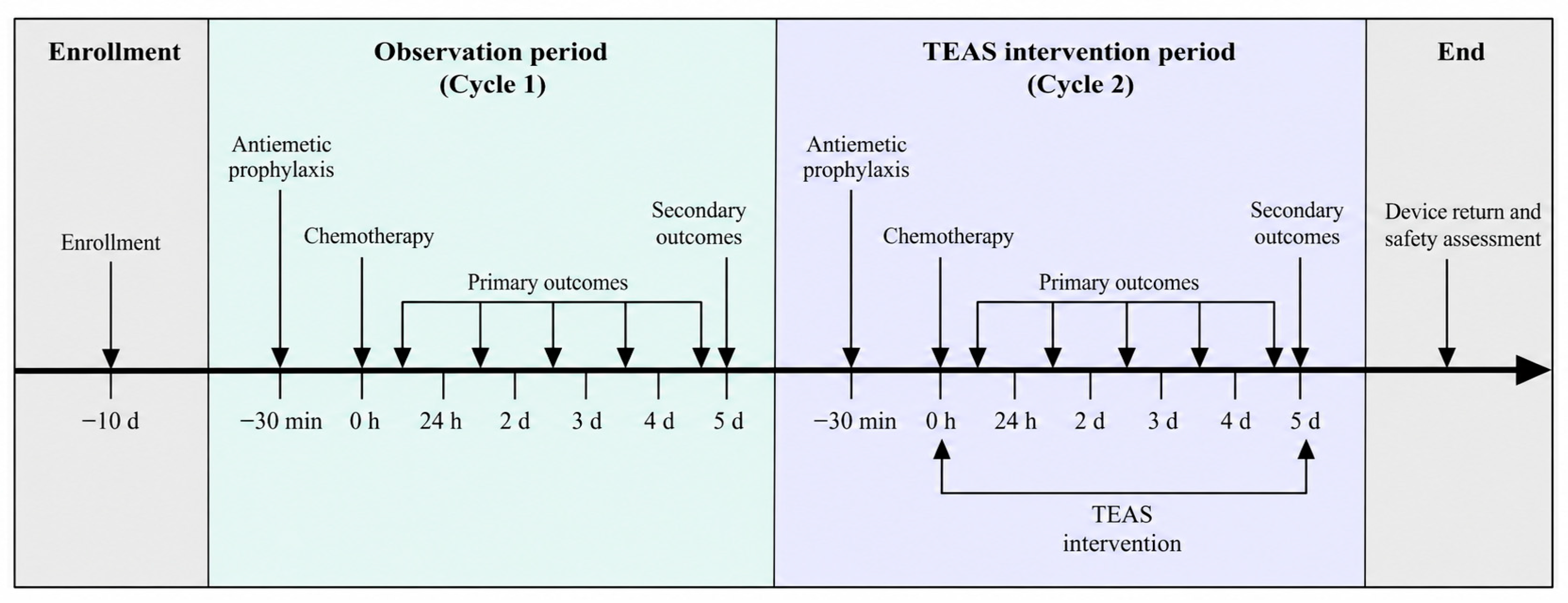
2.6.3. Intervention Schedule
2.7. Safety and Monitoring
2.8. Outcome Measures
2.8.1. Primary Decision Endpoint and Exploratory Clinical Outcomes
2.8.2. Secondary Outcomes
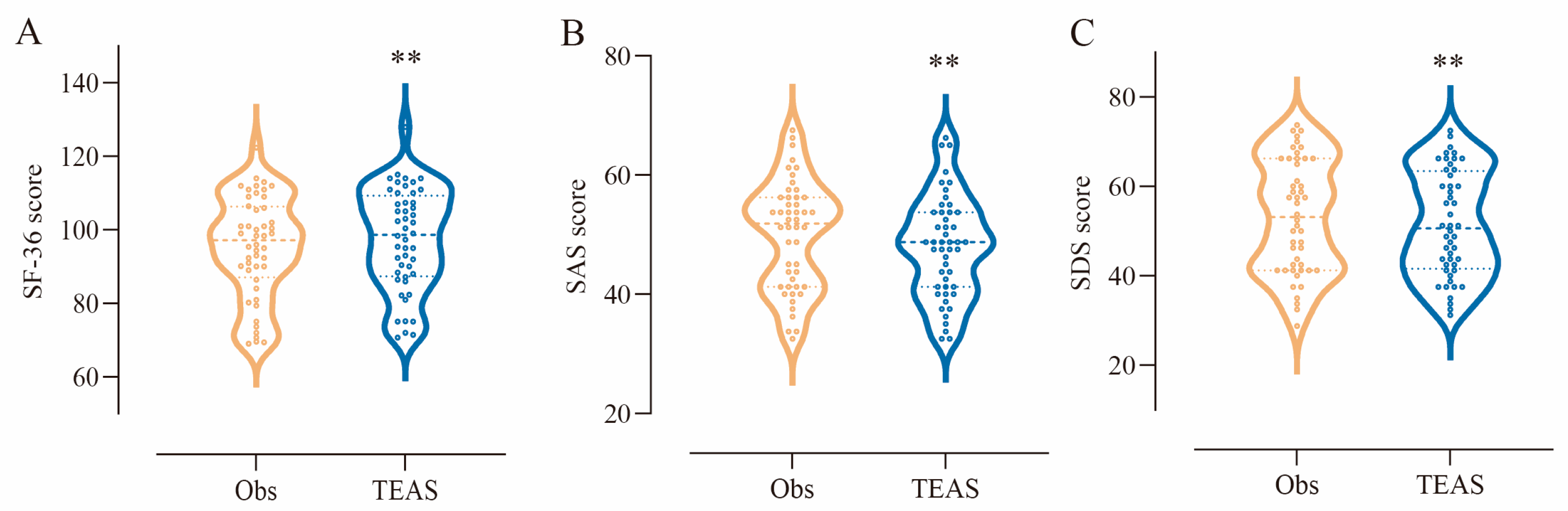
- Quality of life, assessed using the 36-Item Short Form Health Survey (SF-36), which evaluates physical functioning, role limitations due to physical health, bodily pain, general health, vitality, social functioning, role limitations due to emotional problems, and mental health.
- Anxiety, measured using the Self-Rating Anxiety Scale (SAS); scores of 50–59, 60–69, and ≥70 indicate mild, moderate, and severe anxiety, respectively.
- Depression, measured using the Self-Rating Depression Scale (SDS); index scores of <0.50, 0.50–0.59, 0.60–0.69, and ≥0.70 indicate no depression and mild, moderate, and severe depression, respectively.
- General information, including demographic characteristics, medical history, comorbidities, and medication use.
- Safety outcomes, including TEAS-related skin irritation, local discomfort, numbness, palpitations, and other adverse events.
2.9. Response Evaluation
2.10. Sample Size Calculation
2.11. Statistical Analysis
2.12. Safety Assessment
3. Results
3.1. Baseline Characteristics
3.2. Primary and Exploratory Outcome
3.2.1. First-Stage Efficacy Outcomes and Justification for Proceeding to the Second Stage
3.2.2. Full-Cohort Outcomes After Completion of the Second Stage
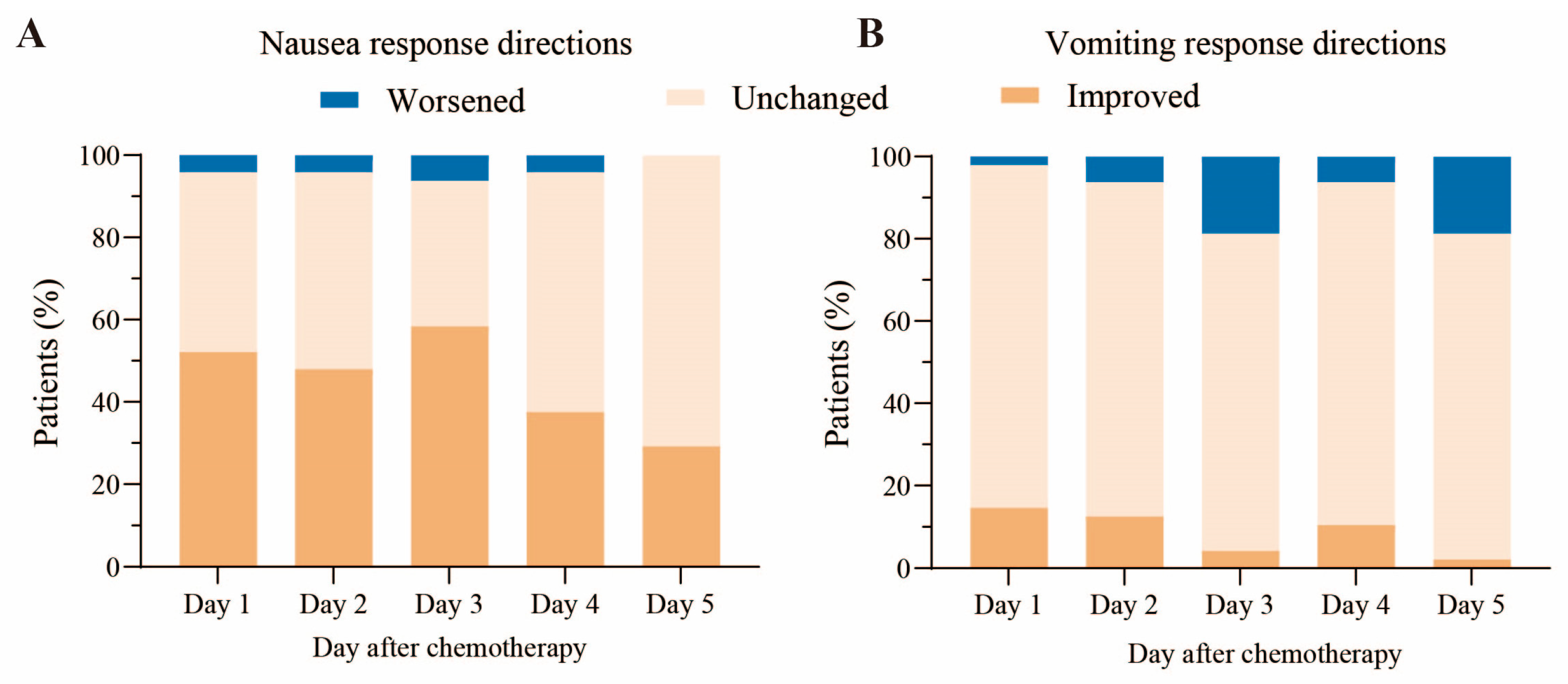
3.2.3. Paired Changes in Nausea and Vomiting Grades Between the Observation and TEAS Intervention Periods
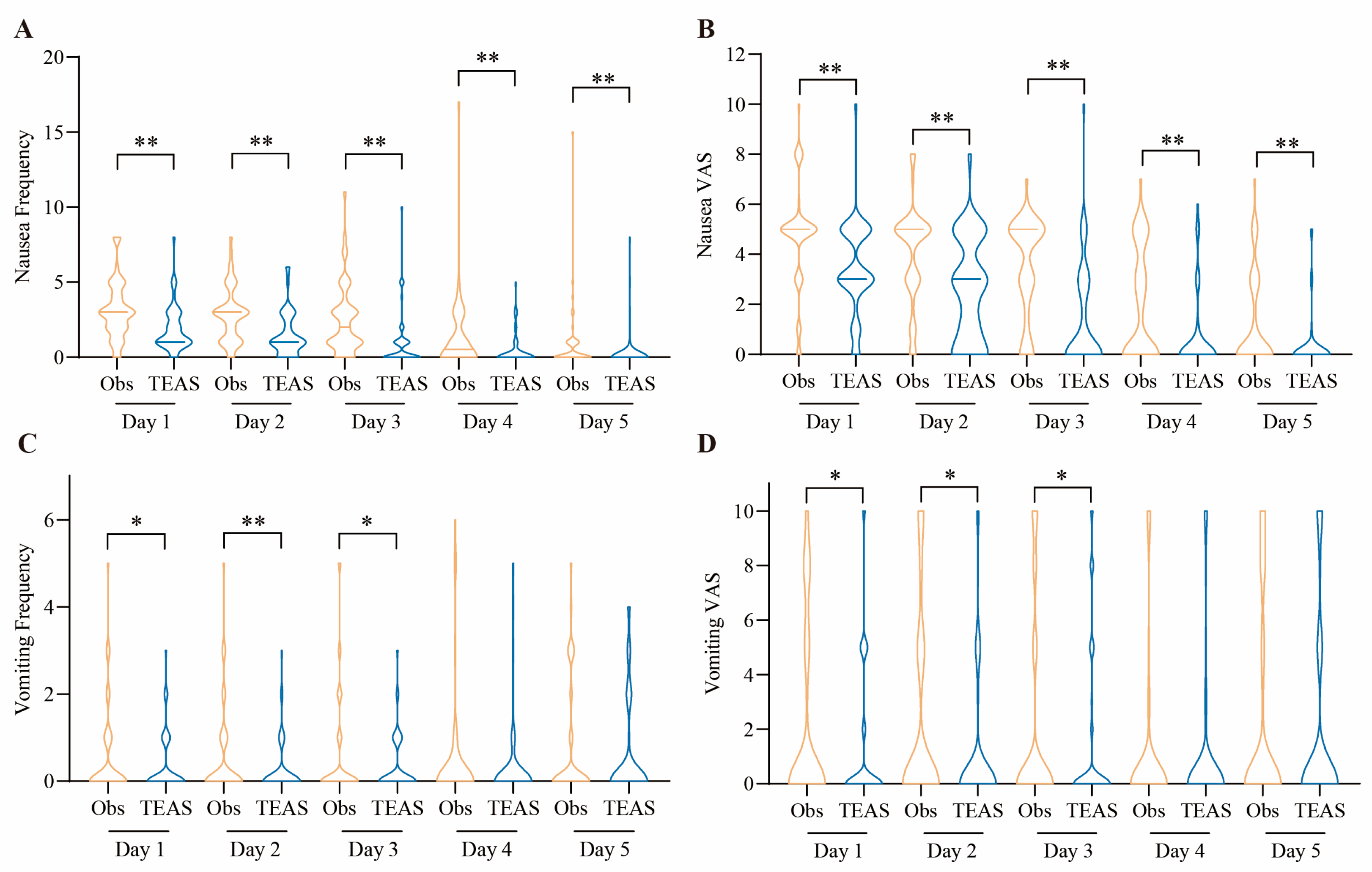
3.2.4. Nausea and Vomiting Frequency and Severity During the Observation and TEAS Intervention Periods
3.3. Secondary Outcomes
3.4. Device Utilization and Safety Outcomes
4. Discussion
Limitations
5. Conclusions
Supplementary Materials
Author Contributions
Funding
Institutional Review Board Statement
Informed Consent Statement
Data Availability Statement
Acknowledgments
Conflicts of Interest
Abbreviations
| Obs | Observation period |
| CINV | Chemotherapy-induced nausea and vomiting |
| TEAS | Transcutaneous electrical acupoint stimulation |
References
- Herrstedt, J.; Clark-Snow, R.; Ruhlmann, C.; Molassiotis, A.; Olver, I.; Rapoport, B.; Aapro, M.; Dennis, K.; Hesketh, P.; Navari, R.; et al. 2023 MASCC and ESMO Guideline Update for the Prevention of Chemotherapy- and Radiotherapy-Induced Nausea and Vomiting. ESMO Open 2024, 9, 102195. [Google Scholar] [CrossRef] [Scilit]
- Piechotta, V.; Adams, A.; Haque, M.; Scheckel, B.; Kreuzberger, N.; Monsef, I.; Jordan, K.; Kuhr, K.; Skoetz, N. Antiemetics for Adults for Prevention of Nausea and Vomiting Caused by Moderately or Highly Emetogenic Chemotherapy: A Network Meta-Analysis. Cochrane Database Syst. Rev. 2021, 11, CD012775. [Google Scholar] [CrossRef] [Scilit]
- Heckroth, M.; Luckett, R.T.; Moser, C.D.; Parajuli, D.; Abell, T.L. Nausea and Vomiting in 2021: A Comprehensive Update. J. Clin. Gastroenterol. 2021, 55, 279–299. [Google Scholar] [CrossRef] [Scilit]
- Gupta, K.; Walton, R.; Kataria, S. Chemotherapy-Induced Nausea and Vomiting: Pathogenesis, Recommendations, and New Trends. Cancer Treat. Res. Commun. 2021, 26, 100278. [Google Scholar] [CrossRef] [Scilit]
- Ng, B.; Astari, Y.K.; Wiranata, J.A.; Leo, B.; Hutajulu, S.H.; Hardianti, M.S.; Taroeno-Hariadi, K.W.; Kurnianda, J.; Purwanto, I. Chemotherapy-Induced Nausea and Vomiting in Patients With Breast Cancer: Risk Factor and Predictive Model Using Classification and Regression Tree (CART). Cureus 2023, 15, e44438. [Google Scholar] [CrossRef] [Scilit]
- Grunberg, S.M.; Deuson, R.R.; Mavros, P.; Geling, O.; Hansen, M.; Cruciani, G.; Daniele, B.; De Pouvourville, G.; Rubenstein, E.B.; Daugaard, G. Incidence of Chemotherapy-Induced Nausea and Emesis after Modern Antiemetics. Cancer 2004, 100, 2261–2668. [Google Scholar] [CrossRef] [Scilit]
- Sun, H.; Zhang, X.; Xin, X.; Yan, J.; Huang, T. Efficacy and Safety of Different 5-HT3 Receptor Antagonists as Monotherapy for Preventing Nausea and Vomiting in Patients Undergoing Surgery or Chemotherapy: A Network Meta-Analysis of Randomized Controlled Trials. J. Clin. Pharmacol. 2025, 65, 1587–1597. [Google Scholar] [CrossRef] [Scilit]
- Rithirangsriroj, K.; Manchana, T.; Akkayagorn, L. Efficacy of Acupuncture in Prevention of Delayed Chemotherapy Induced Nausea and Vomiting in Gynecologic Cancer Patients. Gynecol. Oncol. 2015, 136, 82–86. [Google Scholar] [CrossRef] [Scilit]
- Lin, R.; Guo, Z.; Zhang, J.; Wang, L.; Zhang, L.; Tang, X.; Liu, W.; Cui, S.; Xu, N. Acupuncture for Nausea and Vomiting Induced by Highly Emetogenic Chemotherapy: A Systematic Review and Meta-Analysis. Front. Neurol. 2026, 16, 1692411. [Google Scholar] [CrossRef] [Scilit]
- Lyman, G.H.; Greenlee, H.; Bohlke, K.; Bao, T.; DeMichele, A.M.; Deng, G.E.; Fouladbakhsh, J.M.; Gil, B.; Hershman, D.L.; Mansfield, S.; et al. Integrative Therapies During and After Breast Cancer Treatment: ASCO Endorsement of the SIO Clinical Practice Guideline. J. Clin. Oncol. Off. J. Am. Soc. Clin. Oncol. 2018, 36, 2647–2655. [Google Scholar] [CrossRef] [Scilit]
- Belluomini, L.; Avancini, A.; Sposito, M.; Pontolillo, L.; Tregnago, D.; Trestini, I.; Insolda, J.; Carbognin, L.; Milella, M.; Bria, E.; et al. Integrating nutrition, physical exercise, psychosocial support and antiemetic drugs into CINV management: The road to success. Crit. Rev. Oncol. Hematol. 2024, 201, 104444. [Google Scholar] [CrossRef] [Scilit]
- Dibble, S.L.; Luce, J.; Cooper, B.A.; Israel, J.; Cohen, M.; Nussey, B.; Rugo, H. Acupressure for Chemotherapy-Induced Nausea and Vomiting: A Randomized Clinical Trial. Oncol. Nurs. Forum 2007, 34, 813–820. [Google Scholar] [CrossRef] [Scilit]
- Molassiotis, A.; Russell, W.; Hughes, J.; Breckons, M.; Lloyd-Williams, M.; Richardson, J.; Hulme, C.; Brearley, S.; Campbell, M.; Garrow, A.; et al. The Effectiveness and Cost-Effectiveness of Acupressure for the Control and Management of Chemotherapy-Related Acute and Delayed Nausea: Assessment of Nausea in Chemotherapy Research (ANCHoR), a Randomised Controlled Trial. Health Technol. Assess. 2013, 17, 1–114. [Google Scholar] [CrossRef] [Scilit]
- Shen, J.; Wenger, N.; Glaspy, J.; Hays, R.D.; Albert, P.S.; Choi, C.; Shekelle, P.G. Electroacupuncture for Control of Myeloablative Chemotherapy-Induced Emesis: A Randomized Controlled Trial. JAMA 2000, 284, 2755–2761. [Google Scholar] [CrossRef] [Scilit]
- Roscoe, J.A.; Matteson, S.E.; Morrow, G.R.; Hickok, J.T.; Bushunow, P.; Griggs, J.; Qazi, R.; Smith, B.; Kramer, Z.; Smith, J. Acustimulation Wrist Bands Are Not Effective for the Control of Chemotherapy-Induced Nausea in Women with Breast Cancer. J. Pain Symptom Manag. 2005, 29, 376–384. [Google Scholar] [CrossRef] [Scilit]
- Roscoe, J.A.; Morrow, G.R.; Hickok, J.T.; Bushunow, P.; Pierce, H.I.; Flynn, P.J.; Kirshner, J.J.; Moore, D.F.; Atkins, J.N. The Efficacy of Acupressure and Acustimulation Wrist Bands for the Relief of Chemotherapy-Induced Nausea and Vomiting. A University of Rochester Cancer Center Community Clinical Oncology Program Multicenter Study. J. Pain Symptom Manag. 2003, 26, 731–742. [Google Scholar] [CrossRef] [Scilit]
- Lu, L.; Xie, C.; Li, X.; Zhou, Y.; Yin, Z.; Wei, P.; Gao, H.; Wang, J.; Yong, Y.; Song, J. Efficacy and Safety of Electrical Acupoint Stimulation for Postoperative Nausea and Vomiting: A Systematic Review and Meta-Analysis. PLoS ONE 2023, 18, e0285943. [Google Scholar] [CrossRef] [Scilit]
- Pearl, M.L.; Fischer, M.; McCauley, D.L.; Valea, F.A.; Chalas, E. Transcutaneous Electrical Nerve Stimulation as an Adjunct for Controlling Chemotherapy-Induced Nausea and Vomiting in Gynecologic Oncology Patients. Cancer Nurs. 1999, 22, 307–311. [Google Scholar] [CrossRef] [Scilit]
- Lee, A.; Zhang, J.Z.; Xie, J.; Cheng, V.; Wong, M.K.H.; Yau, D.K.W. Stimulation of the Wrist Acupuncture Point PC6 for Preventing Postoperative Nausea and Vomiting: A Network Meta-Analysis. Cochrane Database Syst. Rev. 2025, 9, CD003281. [Google Scholar] [CrossRef] [Scilit]
- Li, X.; Zhao, C.; Shi, J. Acupoint Selection Rules in Treatment of Chemotherapy-Induced Nausea and Vomiting with Acupuncture and Moxibustion. World J. Acupunct. Moxibustion 2022, 32, 149–156. [Google Scholar] [CrossRef] [Scilit]
- Witt, C.M.; Meissner, K.; Pach, D.; Thiele, C.; Lüdtke, R.; Ghadiyali, Z.; Deter, H.-C.; Zimmermann-Viehoff, F. Stimulation of Gastric Slow Waves with Manual Acupuncture at Acupuncture Points ST36 and PC6—A Randomized Single Blind Controlled Trial. Neurogastroenterol. Motil. 2012, 24, 438–445. [Google Scholar] [CrossRef] [Scilit]
- Zhang, F.; Wang, Q.-Y.; Wei, N.-X.; Zhu, X.; Wu, L.-B.; Shu, Q.; Chang, H.-M.; Wu, Y.; Luo, Z.-J.; Shao, W.-J.; et al. Electroacupuncture Suppresses Premature Ventricular Complexes Occurring Post-Myocardial Infarction through Corticothalamic Circuit. Cell Rep. 2026, 45, 116734. [Google Scholar] [CrossRef] [Scilit]
- Jang, H.; Kim, S.; Kim, D.; Park, M.; Rhue, S.; Lee, C.; Kim, S.; Kang, B.; Lee, H. “It’s a Part of the Patient”: The Experiences of Patients with Cancer Undergoing Home-Based Chemotherapy from Patients’ and Nurses’ Perspectives. Asia-Pac. J. Oncol. Nurs. 2022, 9, 100072. [Google Scholar] [CrossRef] [Scilit]
- Xiang, M.; Ma, Y.; Li, Q. Two-Stage Design Sample Size Determination for Two Doses in Oncology Phase II Trials. N. Engl. J. Stat. Data Sci. 2025, 3, 253–264. [Google Scholar] [CrossRef] [Scilit]
- Sun, D.S.; Ko, Y.H.; Jin, J.Y.; Woo, I.S.; Park, S.Y.; Eom, Y.A.; Kang, J.H.; Kim, H.K. Efficacy of the granisetron transdermal system for the control of nausea and vomiting induced by highly emetogenic chemotherapy: A multicenter, randomized, controlled trial. Korean J. Intern. Med. 2023, 38, 406–416. [Google Scholar] [CrossRef] [Scilit]
- Wang, D.-S.; Hu, M.-T.; Wang, Z.-Q.; Ren, C.; Qiu, M.-Z.; Luo, H.-Y.; Jin, Y.; Fong, W.P.; Wang, S.-B.; Peng, J.-W.; et al. Effect of Aprepitant for the Prevention of Chemotherapy-Induced Nausea and Vomiting in Women: A Randomized Clinical Trial. JAMA Netw. Open 2021, 4, e215250. [Google Scholar] [CrossRef] [Scilit]
- Wickham, R.J. Revisiting the Physiology of Nausea and Vomiting-Challenging the Paradigm. Support. Care Cancer Off. J. Multinatl. Assoc. Support. Care Cancer 2020, 28, 13–21. [Google Scholar] [CrossRef] [Scilit]





| Item | Grade 0 | Grade I | Grade II | Grade III |
|---|---|---|---|---|
| Nausea | No nausea | Mild nausea without affecting food intake or daily life | Moderate nausea affecting food intake or daily life | Severe nausea, bedridden due to nausea |
| Vomiting | No vomiting | 1–2 times/day | 3–5 times/day | >5 times/day |
| Efficacy evaluation | Complete response | Partial response | No response | |
| Item | Result | |||
|---|---|---|---|---|
| Height, cm, mean ± SD (range) | 161.3 ± 2.4 (157.0–166.0) | |||
| Weight, kg, mean ± SD (range) | 49.5 ± 3.5 (43.6–56.5) | |||
| BMI, kg/m2, mean ± SD (range) | 18.9 ± 1.1 (17.1–21.2) | |||
| Age, years, mean ± SD (range) | 49.21 ± 9.66 (32–74) | |||
| Interval between chemotherapy cycles, days, mean ± SD (range) | 19.01 ± 7.77 (6–41) | |||
| KPS score, mean ± SD (range) | 74.38 ± 9.43 (60–90) | |||
| Tumor stage n (%) | Stage I | Stage II | Stage III | Stage IV |
| 1 (2.1) | 4 (8.3) | 5 (10.4) | 38 (79.2) | |
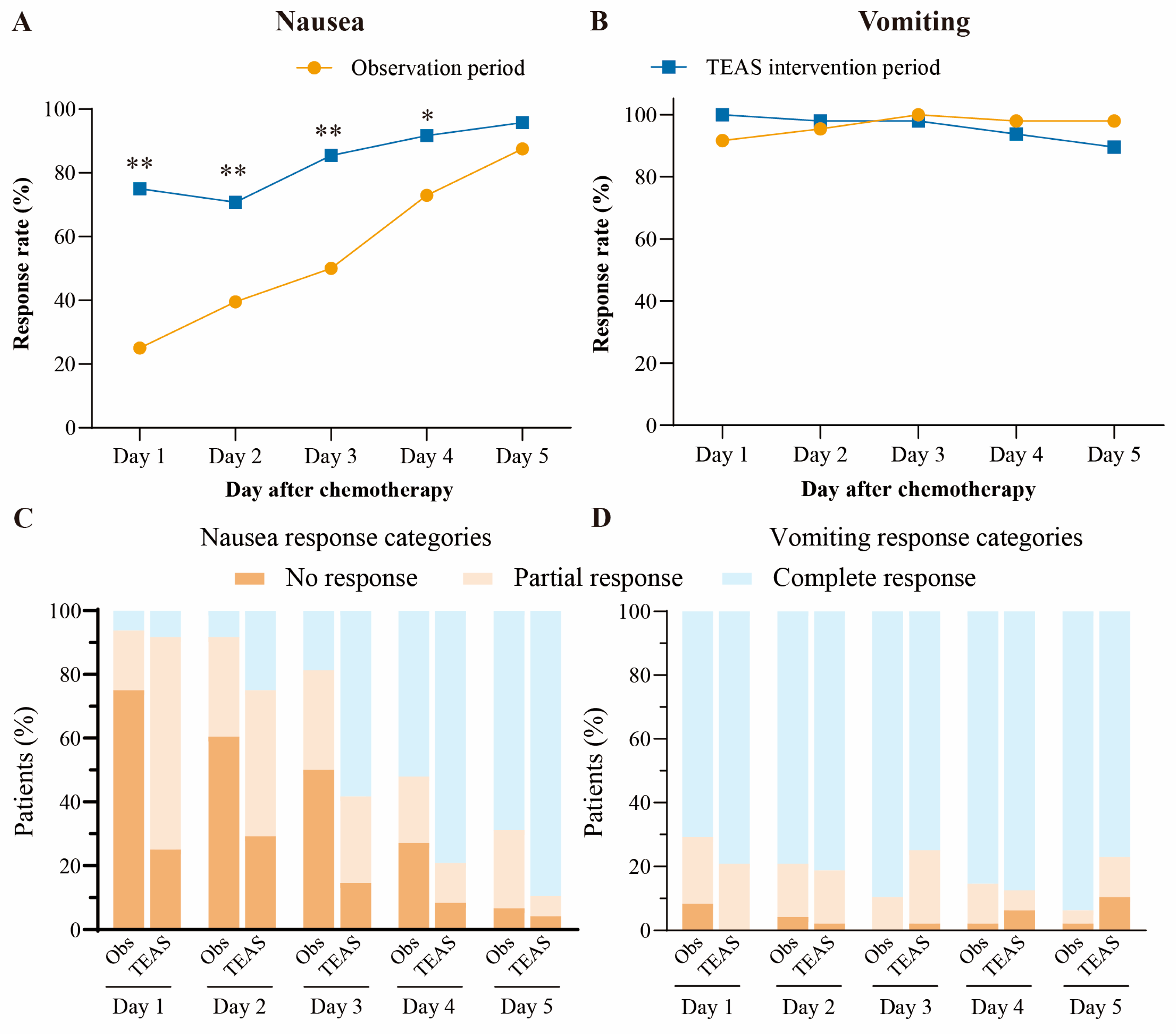
| Outcome | Time | Observation Responders, n (%) | TEAS Responders, n (%) | Non-Response → Response, n | Response → Non-Response, n | Difference, Percentage Points | Exact McNemar p |
|---|---|---|---|---|---|---|---|
| Nausea | Day 1 | 12 (25.00) | 36 (75.00) | 24 | 0 | 50.00 | <0.001 |
| Nausea | Day 2 | 19 (39.58) | 34 (70.83) | 17 | 2 | 31.25 | <0.001 |
| Nausea | Day 3 | 24 (50.00) | 41 (85.42) | 18 | 1 | 35.42 | <0.001 |
| Nausea | Day 4 | 35 (72.92) | 44 (91.67) | 10 | 1 | 18.75 | 0.012 |
| Nausea | Day 5 | 42 (87.50) | 46 (95.83) | 4 | 0 | 8.33 | 0.125 |
| Vomiting | Day 1 | 44 (91.67) | 48 (100.00) | 4 | 0 | 8.33 | 0.125 |
| Vomiting | Day 2 | 46 (95.83) | 47 (97.92) | 2 | 1 | 2.09 | 1.000 |
| Vomiting | Day 3 | 48 (100.00) | 47 (97.92) | 0 | 1 | −2.08 | 1.000 |
| Vomiting | Day 4 | 47 (97.92) | 45 (93.75) | 1 | 3 | −4.17 | 0.625 |
| Vomiting | Day 5 | 47 (97.92) | 43 (89.58) | 0 | 4 | −8.34 | 0.125 |
Disclaimer/Publisher’s Note: The statements, opinions and data contained in all publications are solely those of the individual author(s) and contributor(s) and not of MDPI and/or the editor(s). MDPI and/or the editor(s) disclaim responsibility for any injury to people or property resulting from any ideas, methods, instructions or products referred to in the content. |
© 2026 by the authors. Licensee MDPI, Basel, Switzerland. This article is an open access article distributed under the terms and conditions of the Creative Commons Attribution (CC BY) license.
Share and Cite
Liu, H.; Zhou, J.; Du, J.; Shen, Q.; Lu, C.; Zhang, J.; Zhang, W.; Ran, R.; Fang, J.; Ye, J.; et al. Patient-Controlled Real-Time Transcutaneous Electrical Acupoint Stimulation at Neiguan (PC6) for Chemotherapy-Induced Nausea and Vomiting in Breast Cancer: An Exploratory Single-Arm Two-Stage Trial. Curr. Oncol. 2026, 33, 520. https://doi.org/10.3390/curroncol33090520
Liu H, Zhou J, Du J, Shen Q, Lu C, Zhang J, Zhang W, Ran R, Fang J, Ye J, et al. Patient-Controlled Real-Time Transcutaneous Electrical Acupoint Stimulation at Neiguan (PC6) for Chemotherapy-Induced Nausea and Vomiting in Breast Cancer: An Exploratory Single-Arm Two-Stage Trial. Current Oncology. 2026; 33(9):520. https://doi.org/10.3390/curroncol33090520
Chicago/Turabian StyleLiu, Huiting, Jie Zhou, Junying Du, Qiongying Shen, Chao Lu, Jianxing Zhang, Weiping Zhang, Ran Ran, Jianqiao Fang, Jiongyao Ye, and et al. 2026. "Patient-Controlled Real-Time Transcutaneous Electrical Acupoint Stimulation at Neiguan (PC6) for Chemotherapy-Induced Nausea and Vomiting in Breast Cancer: An Exploratory Single-Arm Two-Stage Trial" Current Oncology 33, no. 9: 520. https://doi.org/10.3390/curroncol33090520
APA StyleLiu, H., Zhou, J., Du, J., Shen, Q., Lu, C., Zhang, J., Zhang, W., Ran, R., Fang, J., Ye, J., Gao, H., & Fang, J. (2026). Patient-Controlled Real-Time Transcutaneous Electrical Acupoint Stimulation at Neiguan (PC6) for Chemotherapy-Induced Nausea and Vomiting in Breast Cancer: An Exploratory Single-Arm Two-Stage Trial. Current Oncology, 33(9), 520. https://doi.org/10.3390/curroncol33090520