

Postoperative Complications Result in Poor Oncological Outcomes: What Is the Evidence?



Abstract
1. Introduction
2. Materials and Methods
2.1. Selection Criteria, Search Strategies, and Data Collection
2.2. Data Extraction and Synthesis
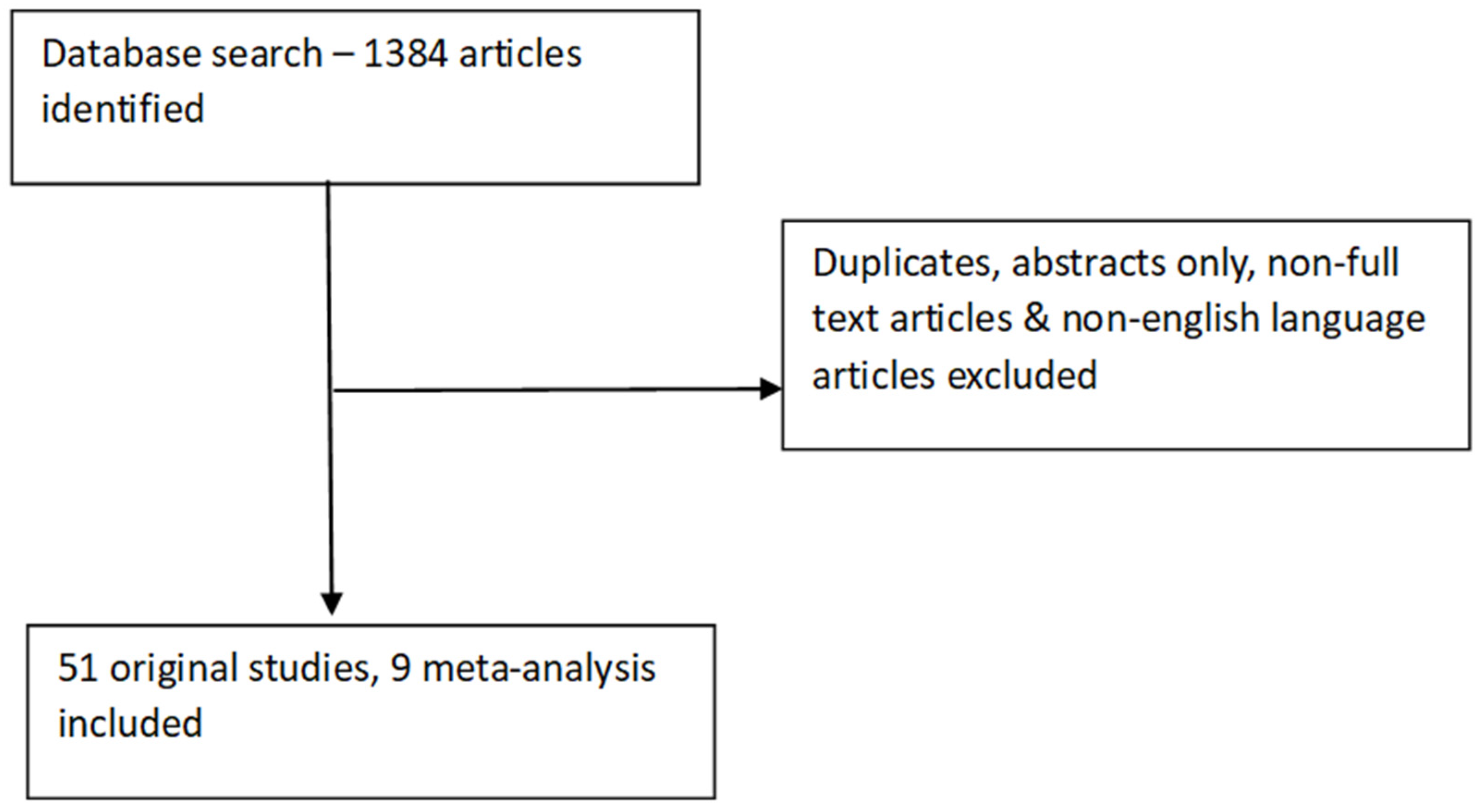
2.3. Literature Search Results
3. Results
3.1. Classification Systems for Grading POSTOPERATIVE COMPLICATIONS
3.2. Reported Postoperative Complications Grading Systems
3.3. Overall Impact of Postoperative Complications on Cancer Outcomes
3.3.1. Thoracoabdominal Surgery
3.3.2. Surface and Soft Tissue Surgeries
3.4. Subgroup Analysis of Types of Postoperative Complications and Their Impact on Cancer Outcomes
3.4.1. Anastomotic Leak
3.4.2. Wound Complications
Wound-Related Complications in Thoracoabdominal Surgeries
Wound-Related Complications in Surface and Soft Tissue Surgeries
3.4.3. Other Infectious Complications
3.4.4. Non-Infectious Complications
4. Discussion
4.1. Role of Neoadjuvant Chemotherapy on Postoperative Complications
4.2. Postoperative Complications and Delay in Initiation of Adjuvant Treatment
5. Limitations of the Current Literature on Postoperative Complications and Oncological Outcomes
6. Future Research
7. Conclusions
Author Contributions
Funding
Conflicts of Interest
References
- Notarfrancesco, M.; Fankhauser, C.D.; Lorch, A.; Ardizzone, D.; Helnwein, S.; Hoch, D.; Hermanns, T.; Thalmann, G.; Beyer, J. Perioperative complications and oncological outcomes of post-chemotherapy retroperitoneal lymph node dissection in patients with germ cell cancer at two high-volume university centres in Switzerland—A retrospective chart review. Swiss. Med. Wkly. 2023, 153, 40053. [Google Scholar] [CrossRef] [PubMed]
- McSorley, S.T.; Watt, D.G.; Horgan, P.G.; McMillan, D.C. Postoperative Systemic Inflammatory Response, Complication Severity, and Survival Following Surgery for Colorectal Cancer. Ann. Surg. Oncol. 2016, 23, 2832–2840. [Google Scholar] [CrossRef] [PubMed]
- Wasmann, K.A.T.G.M.; Klaver, C.E.L.; van der Bilt, J.D.W.; Nagtegaal, I.D.; Wolthuis, A.M.; van Santvoort, H.C.; Ramshorst, B.; D’Hoore, A.; de Wilt, J.H.W.; Tanis, P.J. Subclassification of Multivisceral Resections for T4b Colon Cancer with Relevance for Postoperative Complications and Oncological Risks. J. Gastrointest. Surg. 2020, 24, 2113–2120. [Google Scholar] [CrossRef] [PubMed]
- Khuri, S.F.; Henderson, W.G.; DePalma, R.G.; Mosca, C.; Healey, N.A.; Kumbhani, D.J. Determinants of long-term survival after major surgery and the adverse effect of postoperative complications. Ann. Surg. 2005, 242, 326–341; discussion 341–343. [Google Scholar] [CrossRef] [PubMed]
- Wan, X.; Wang, W.; Liu, J.; Tong, T. Estimating the sample mean and standard deviation from the sample size, median, range and/or interquartile range. BMC Med. Res. Methodol. 2014, 14, 135. [Google Scholar] [CrossRef] [PubMed]
- Yamashita, S.; Sheth, R.A.; Niekamp, A.S.; Aloia, T.A.; Chun, Y.S.; Lee, J.E.; Vauthey, J.N.; Conrad, C. Comprehensive Complication Index Predicts Cancer-specific Survival after Resection of Colorectal Metastases Independent of RAS Mutational Status. Ann. Surg. 2017, 266, 1045–1054. [Google Scholar] [CrossRef]
- Kaukonen, K.M.; Bailey, M.; Pilcher, D.; Cooper, D.J.; Bellomo, R. Systemic inflammatory response syndrome criteria in defining severe sepsis. N. Engl. J. Med. 2015, 372, 1629–1638. [Google Scholar] [CrossRef] [PubMed]
- Bain, C.R.; Myles, P.S.; Corcoran, T.; Dieleman, J.M. Postoperative systemic inflammatory dysregulation and corticosteroids: A narrative review. Anaesthesia 2023, 78, 356–370. [Google Scholar] [CrossRef] [PubMed]
- Wajekar, A.S.; Solanki, S.L.; Patil, V.P. Postoperative complications and critical care management after cytoreduction surgery and hyperthermic intraperitoneal chemotherapy: A systematic review of the literature. World J. Crit. Care Med. 2022, 11, 375–386. [Google Scholar] [CrossRef]
- Xue, J.; Yan, X.; Ding, Q.; Li, N.; Wu, M.; Song, J. Effect of neoadjuvant chemotherapy on the immune microenvironment of gynaecological tumours. Ann. Med. 2023, 55, 2282181. [Google Scholar] [CrossRef]
- Koedam, T.W.A.; Bootsma, B.T.; Deijen, C.L.; Van De Brug, T.; Kazemier, G.; Cuesta, M.A.; Fürst, A.; Lacy, A.M.; Haglind, E.; Tuynman, J.B.; et al. Oncological Outcomes After Anastomotic Leakage After Surgery for Colon or Rectal Cancer: Increased Risk of Local Recurrence. Ann. Surg. 2022, 275, e420–e427. [Google Scholar] [CrossRef]
- Bao, Q.R.; Pellino, G.; Spolverato, G.; Restivo, A.; Deidda, S.; Capelli, G.; Ruffolo, C.; Bianco, F.; Cuicchi, D.; Jovine, E.; et al. The impact of anastomotic leak on long-term oncological outcomes after low anterior resection for mid-low rectal cancer: Extended follow-up of a randomised controlled trial. Int. J. Color. Dis. 2022, 37, 1689–1698. [Google Scholar] [CrossRef]
- Gamboa, A.C.; Lee, R.M.; Turgeon, M.K.; Varlamos, C.; Regenbogen, S.E.; Hrebinko, K.A.; Holder-Murray, J.; Wiseman, J.T.; Ejaz, A.; Feng, M.P.; et al. Impact of Postoperative Complications on Oncologic Outcomes After Rectal Cancer Surgery: An Analysis of the US Rectal Cancer Consortium. Ann. Surg. Oncol. 2021, 28, 1712–1721. [Google Scholar] [CrossRef]
- Fransgaard, T.; Caspar Thygesen, L.; Gögenur, I. The impact of postoperative complications and delay of adjuvant chemotherapy on oncological outcomes in patients with colorectal cancer. Color. Dis. 2021, 23, 1132–1140. [Google Scholar] [CrossRef] [PubMed]
- Oh, C.K.; Huh, J.W.; Lee, Y.J.; Choi, M.S.; Pyo, D.H.; Lee, S.C.; Park, S.M.; Shin, J.K.; Park, Y.A.; Cho, Y.B.; et al. Long-term oncologic outcome of postoperative complications after colorectal cancer surgery. Ann. Coloproctol. 2020, 36, 273–280. [Google Scholar] [CrossRef] [PubMed]
- Miyamoto, Y.; Hiyoshi, Y.; Tokunaga, R.; Akiyama, T.; Daitoku, N.; Sakamoto, Y.; Yoshida, N.; Baba, H. Postoperative complications are associated with poor survival outcome after curative resection for colorectal cancer: A propensity-score analysis. J. Surg. Oncol. 2020, 122, 344–349. [Google Scholar] [CrossRef] [PubMed]
- Furnée, E.J.B.; Aukema, T.S.; Oosterling, S.J.; Borstlap, W.A.A.; Bemelman, W.A.; Tanis, P.J. Influence of Conversion and Anastomotic Leakage on Survival in Rectal Cancer Surgery; Retrospective Cross-sectional Study. J. Gastrointest. Surg. 2019, 23, 2007–2018. [Google Scholar] [CrossRef]
- Sprenger, T.; Beißbarth, T.; Sauer, R.; Tschmelitsch, J.; Fietkau, R.; Liersch, T.; Hohenberger, W.; Staib, L.; Gaedcke, J.; Raab, H.R.; et al. Long-term prognostic impact of surgical complications in the German Rectal Cancer Trial CAO/ARO/AIO-94. Br. J. Surg. 2018, 105, 1510–1518. [Google Scholar] [CrossRef]
- Cienfuegos, J.A.; Baixauli, J.; Beorlegui, C.; Ortega, P.M.; Granero, L.; Zozaya, G.; Hernández Lizoáin, J.L. The impact of major postoperative complications on long-term outcomes following curative resection of colon cancer. Int. J. Surg. 2018, 52, 303–308. [Google Scholar] [CrossRef]
- Park, E.J.; Baik, S.H.; Kang, J.; Hur, H.; Min, B.S.; Lee, K.Y.; Kim, N.K. The Impact of Postoperative Complications on Long-term Oncologic Outcomes after Laparoscopic Low Anterior Resection for Rectal Cancer. Medicine 2016, 95, e3271. [Google Scholar] [CrossRef] [PubMed]
- Espín, E.; Ciga, M.A.; Pera, M.; Ortiz, H.; Spanish Rectal Cancer Project. Oncological outcome following anastomotic leak in rectal surgery. Br. J. Surg. 2015, 102, 416–422. [Google Scholar] [CrossRef] [PubMed]
- Krarup, P.M.; Nordholm-Carstensen, A.; Jorgensen, L.N.; Harling, H. Anastomotic leak increases distant recurrence and long-term mortality after curative resection for colonic cancer: A nationwide cohort study. Ann. Surg. 2014, 259, 930–938. [Google Scholar] [CrossRef] [PubMed]
- Kube, R.; Mroczkowski, P.; Granowski, D.; Benedix, F.; Sahm, M.; Schmidt, U.; Gastinger, I.; Lippert, H.; Study Group Qualitätssicherung Kolon/Rektum-Karzinome (Primärtumor) (Quality Assurance in Primary Colorectal Carcinoma). Anastomotic leakage after colon cancer surgery: A predictor of significant morbidity and hospital mortality, and diminished tumour-free survival. Eur. J. Surg. Oncol. 2010, 36, 120–124. [Google Scholar] [CrossRef]
- Marra, F.; Steffen, T.; Kalak, N.; Warschkow, R.; Tarantino, I.; Lange, J.; Zünd, M. Anastomotic leakage as a risk factor for the long-term outcome after curative resection of colon cancer. Eur. J. Surg. Oncol. 2009, 35, 1060–1064. [Google Scholar] [CrossRef] [PubMed]
- Ptok, H.; Marusch, F.; Meyer, F.; Schubert, D.; Gastinger, I.; Lippert, H. Impact of anastomotic leakage on oncological outcome after rectal cancer resection. Br. J. Surg. 2007, 94, 1548–1554. [Google Scholar] [CrossRef] [PubMed]
- Law, W.L.; Choi, H.K.; Lee, Y.M.; Ho, J.W.C. The impact of postoperative complications on long-term outcomes following curative resection for colorectal cancer. Ann. Surg. Oncol. 2007, 14, 2559–2566. [Google Scholar] [CrossRef] [PubMed]
- McArdle, C.S.; McMillan, D.C.; Hole, D.J. Impact of anastomotic leakage on long-term survival of patients undergoing curative resection for colorectal cancer. Br. J. Surg. 2005, 92, 1150–1154. [Google Scholar] [CrossRef]
- Walker, K.G.; Bell, S.W.; Rickard, M.J.F.X.; Mehanna, D.; Dent, O.F.; Chapuis, P.H.; Bokey, E.L. Anastomotic leakage is predictive of diminished survival after potentially curative resection for colorectal cancer. Ann. Surg. 2004, 240, 255–259. [Google Scholar] [CrossRef] [PubMed]
- Bell, S.W.; Walker, K.G.; Rickard, M.J.F.X.; Sinclair, G.; Dent, O.F.; Chapuis, P.H.; Bokey, E.L. Anastomotic leakage after curative anterior resection results in a higher prevalence of local recurrence. Br. J. Surg. 2003, 90, 1261–1266. [Google Scholar] [CrossRef]
- Wang, H.W.; Jin, K.M.; Li, J.; Wang, K.; Xing, B.C. Postoperative complications predict poor outcomes only in patients with a low modified clinical score after resection of colorectal liver metastases: A retrospective cohort study. Updates Surg. 2022, 74, 1601–1610. [Google Scholar] [CrossRef]
- Fernández-Moreno, M.C.; Dorcaratto, D.; Garcés-Albir, M.; Muñoz, E.; Arvizu, R.; Ortega, J.; Sabater, L. Impact of type and severity of postoperative complications on long-term outcomes after colorectal liver metastases resection. J. Surg. Oncol. 2020, 122, 212–225. [Google Scholar] [CrossRef] [PubMed]
- Fukami, Y.; Kaneoka, Y.; Maeda, A.; Takayama, Y.; Onoe, S. Postoperative complications following aggressive repeat hepatectomy for colorectal liver metastasis have adverse oncological outcomes. Surg. Today 2017, 47, 99–107. [Google Scholar] [CrossRef] [PubMed]
- Mavros, M.N.; De Jong, M.; Dogeas, E.; Hyder, O.; Pawlik, T.M. Impact of complications on long-term survival after resection of colorectal liver metastases. Br. J. Surg. 2013, 100, 711–718. [Google Scholar] [CrossRef] [PubMed]
- Neeman, U.; Lahat, G.; Goykhman, Y.; Geva, R.; Peles-Avraham, S.; Nachmany, I.; Nakache, R.; Klausner, J.M.; Lubezky, N. Prognostic significance of pancreatic fistula and postoperative complications after pancreaticoduodenectomy in patients with pancreatic ductal adenocarcinoma. Surgeon 2020, 18, 24–30. [Google Scholar] [CrossRef] [PubMed]
- Ma, K.W.; Cheung, T.T.; She, W.H.; Chok, K.S.H.; Chan, A.C.Y.; Dai, W.C.; Tsang, S.H.Y.; Lo, C.M. Major postoperative complications compromise oncological outcomes of patients with intrahepatic cholangiocarcinoma after curative resection—A 13-year cohort in a tertiary center. Asian J. Surg. 2019, 42, 164–171. [Google Scholar] [CrossRef] [PubMed]
- Harimoto, N.; Shirabe, K.; Ikegami, T.; Yoshizumi, T.; Maeda, T.; Kajiyama, K.; Yamanaka, T.; Maehara, Y. Postoperative complications are predictive of poor prognosis in hepatocellular carcinoma. J. Surg. Res. 2015, 199, 470–477. [Google Scholar] [CrossRef] [PubMed]
- Chok, K.S.; Ng, K.K.; Poon, R.T.; Lo, C.M.; Fan, S.T. Impact of postoperative complications on long-term outcome of curative resection for hepatocellular carcinoma. Br. J. Surg. 2009, 96, 81–87. [Google Scholar] [CrossRef]
- Choudry, M.H.A.; Shuai, Y.; Jones, H.L.; Pai, R.K.; Pingpank, J.F.; Ahrendt, S.S.; Holtzman, M.P.; Zeh, H.J.; Bartlett, D.L. Postoperative Complications Independently Predict Cancer-Related Survival in Peritoneal Malignancies. Ann. Surg. Oncol. 2018, 25, 3950–3959. [Google Scholar] [CrossRef]
- Schneider, M.A.; Eshmuminov, D.; Lehmann, K. Major Postoperative Complications Are a Risk Factor for Impaired Survival after CRS/HIPEC. Ann. Surg. Oncol. 2017, 24, 2224–2232. [Google Scholar] [CrossRef]
- Baratti, D.; Kusamura, S.; Iusco, D.; Bonomi, S.; Grassi, A.; Virzì, S.; Leo, E.; Deraco, M. Postoperative complications after cytoreductive surgery and hyperthermic intraperitoneal chemotherapy affect long-term outcome of patients with peritoneal metastases from colorectal cancer: A two-center study of 101 patients. Dis. Colon Rectum 2014, 57, 858–868. [Google Scholar] [CrossRef]
- Wu, C.; Wang, N.; Zhou, H.; Wang, T.; Mao, Q.; Zhang, X.; Zhao, D. Effects of Neoadjuvant Chemotherapy Toxicity and Postoperative Complications on Short-term and Long-term Outcomes After Curative Resection of Gastric Cancer. J. Gastrointest. Surg. 2020, 24, 1278–1289. [Google Scholar] [CrossRef] [PubMed]
- Climent, M.; Hidalgo, N.; Vidal Puig, S.; Iglesias, M.; Cuatrecasas, M.; Ramón, J.M.; García-Albéniz, X.; Grande, L.; Pera, M. Postoperative complications do not impact on recurrence and survival after curative resection of gastric cancer. Eur. J. Surg. Oncol. 2016, 42, 132–139. [Google Scholar] [CrossRef] [PubMed][Green Version]
- Léonard, G.; Pradère, B.; Monléon, L.; Boutin, J.M.; Branchereau, J.; Karam, G.; Rigaud, J.; Bruyère, F. Oncological and Post-Operative Outcomes of Robot-Assisted Laparoscopic Radical Prostatectomy in Renal Transplant Recipients: A Multicenter and Comparative Study. Transplant. Proc. 2020, 52, 850–856. [Google Scholar] [CrossRef]
- Muto, S.; Kitamura, K.; Ieda, T.; Shimizu, F.; Nagata, M.; Isotani, S.; Ide, H.; Yamaguchi, R.; Horie, S. A preliminary oncologic outcome and postoperative complications in patients undergoing robotassisted radical cystectomy: Initial experience. Investig. Clin. Urol. 2017, 58, 171–178. [Google Scholar] [CrossRef]
- Cusano, A.; Haddock, P.; Jackson, M.; Staff, I.; Wagner, J.; Meraney, A. A comparison of preliminary oncologic outcome and postoperative complications between patients undergoing either open or robotic radical cystectomy. Int. Braz. J. Urol. 2016, 42, 663–670. [Google Scholar] [CrossRef] [PubMed]
- Nguyen, D.P.; Awamlh BAHAl Charles Osterberg, E.; Chrystal, J.; Flynn, T.; Lee, D.J.; Scherr, D.S. Postoperative complications and short-term oncological outcomes of patients aged ≥80 years undergoing robot-assisted radical cystectomy. World J. Urol. 2015, 33, 1315–1321. [Google Scholar] [CrossRef]
- Tan, H.J.; Hafez, K.S.; Ye, Z.; Wei, J.T.; Miller, D.C. Postoperative complications and long-term survival among patients treated surgically for renal cell carcinoma. J. Urol. 2012, 187, 60–67. [Google Scholar] [CrossRef]
- Casanova Barea, J.; De la Gala, F.; Piñeiro, P.; Reyes, A.; Simón, C.; Rancan, L.; Vara, E.; Paredes, S.; Bellón, J.M.; Garutti Martinez, I. Influence of postoperative complications on long-term outcome after oncologic lung resection surgery. Substudy of a randomized control trial. J. Clin. Monit. Comput. 2021, 35, 1183–1192. [Google Scholar] [CrossRef] [PubMed]
- Takeuchi, M.; Kawakubo, H.; Mayanagi, S.; Irino, T.; Fukuda, K.; Nakamura, R.; Wada, N.; Takeuchi, H.; Kitagawa, Y. Influence of Neoadjuvant Therapy on Poor Long-Term Outcomes of Postoperative Complications in Patients with Esophageal Squamous Cell Carcinoma: A Retrospective Cohort Study. Ann. Surg. Oncol. 2019, 26, 2081–2089. [Google Scholar] [CrossRef]
- Kinjo, Y.; Kurita, N.; Nakamura, F.; Okabe, H.; Tanaka, E.; Kataoka, Y.; Itami, A.; Sakai, Y.; Fukuhara, S. Effectiveness of combined thoracoscopic-laparoscopic esophagectomy: Comparison of postoperative complications and midterm oncological outcomes in patients with esophageal cancer. Surg. Endosc. 2012, 26, 381–390. [Google Scholar] [CrossRef]
- Machiels, M.; Weytjens, R.; Erven, K.; Westerhoff, J.M.; Amrouch, S.; Bosiers, J.; Verkinderen, L.; Hauspy, J.; van Dam, P.; Stevens, P.; et al. Oncological outcome, postoperative complications, and mammographic changes after intraoperative radiotherapy with electrons (IOERT) as a boost in a large single-institution cohort of breast cancer patients. Breast J. 2020, 26, 1937–1945. [Google Scholar] [CrossRef] [PubMed]
- Teoh, L.Y.; Lai, L.L.; Hanim, A.A.A.; Teh, M.S.; Jamaris, S.; Yahya, A.; Ng, K.H.; See, M.H. Oncological safety and postoperative complications in oncoplastic breast surgery among Asian women: A single institutional review. Breast J. 2020, 26, 2208–2212. [Google Scholar] [CrossRef] [PubMed]
- Mousa, M.; Barnea, Y.; Arad, U.; Inbal, A.; Klausner, J.; Menes, T. Association Between Postoperative Complications After Immediate Alloplastic Breast Reconstruction and Oncologic Outcome. Clin. Breast Cancer 2018, 18, e699–e702. [Google Scholar] [CrossRef]
- Murthy, B.L.; Thomson, C.S.; Dodwell, D.; Shenoy, H.; Mikeljevic, J.S.; Forman, D.; Horgan, K. Postoperative wound complications and systemic recurrence in breast cancer. Br. J. Cancer 2007, 97, 1211–1217. [Google Scholar] [CrossRef] [PubMed]
- Potkrajcic, V.; Kolbenschlag, J.; Sachsenmaier, S.; Daigeler, A.; Ladurner, R.; Golf, A.; Gani, C.; Zips, D.; Paulsen, F.; Eckert, F. Postoperative complications and oncologic outcomes after multimodal therapy of localized high risk soft tissue sarcoma. Radiat. Oncol. 2022, 17, 210. [Google Scholar] [CrossRef] [PubMed]
- Broecker, J.S.; Ethun, C.G.; Monson, D.K.; Lopez-Aguiar, A.G.; Le, N.; McInnis, M.; Godette, K.; Reimer, N.B.; Oskouei, S.V.; Delman, K.A.; et al. The Oncologic Impact of Postoperative Complications Following Resection of Truncal and Extremity Soft Tissue Sarcomas. Ann. Surg. Oncol. 2017, 24, 3574–3586. [Google Scholar] [CrossRef] [PubMed]
- Boukovalas, S.; Goepfert, R.P.; Smith, J.M.; Mecham, E.; Liu, J.; Zafereo, M.E.; Chang, E.I.; Hessel, A.C.; Hanasono, M.M.; Gross, N.D.; et al. Association between postoperative complications and long-term oncologic outcomes following total laryngectomy: 10-year experience at MD Anderson Cancer Center. Cancer 2020, 126, 4905–4916. [Google Scholar] [CrossRef] [PubMed]
- Milliet, F.; Gal, J.; Chamorey, E.; Dassonville, O.; Poissonnet, G.; Peyrade, F.; Benezery, K.; Hechema, R.; Sudaka, A.; Sanchez-Luini, M.; et al. Total pharyngolaryngectomy in the elderly: The impact of age on postoperative complications and oncologic and functional outcomes. Surg. Oncol. 2018, 27, 767–772. [Google Scholar] [CrossRef] [PubMed]
- Li, J.; Zhang, Y.; Hu, D.M.; Gong, T.P.; Xu, R.; Gao, J. Impact of postoperative complications on long-term outcomes of patients following surgery for gastric cancer: A systematic review and meta-analysis of 64 follow-up studies. Asian J. Surg. 2020, 43, 719–729. [Google Scholar] [CrossRef]
- Mualla, N.M.; Hussain, M.R.; Akrmah, M.; Malik, P.; Bashir, S.; Lin, J.J. The Impact of Postoperative Complications on Long-Term Oncological Outcomes Following Curative Resection of Colorectal Cancer (Stage I-III): A Systematic Review and Meta-Analysis. Cureus 2021, 13, e12837. [Google Scholar] [CrossRef]
- Kong, J.; Li, G.; Chai, J.; Yu, G.; Liu, Y.; Liu, J. Impact of Postoperative Complications on Long-Term Survival After Resection of Hepatocellular Carcinoma: A Systematic Review and Meta-Analysis. Ann. Surg. Oncol. 2021, 28, 8221–8233. [Google Scholar] [CrossRef] [PubMed]
- Chen, G.; Wang, J.; Chen, K.; Kang, M.; Zhang, H.; Jin, X.; Lin, L.; Chen, J. Relationship Between Postoperative Complications and the Prognosis of Gastric Carcinoma Patients Who Underwent Surgical Resection: A Systematic Review and Meta-Analysis. Cancer Control. 2021, 28, 10732748211011955. [Google Scholar] [CrossRef]
- Dorcaratto, D.; Mazzinari, G.; Fernandez, M.; Muñoz, E.; Garcés-Albir, M.; Ortega, J.; Sabater, L. Impact of postoperative complications on survival and recurrence after resection of colorectal liver metastases: Systematic review and meta-analysis. Ann. Surg. 2019, 270, 1018–1027. [Google Scholar] [CrossRef]
- Wang, S.; Xu, L.; Wang, Q.; Li, J.; Bai, B.; Li, Z.; Wu, X.; Yu, P.; Li, X.; Yin, J. Postoperative complications and prognosis after radical gastrectomy for gastric cancer: A systematic review and meta-analysis of observational studies. World J. Surg. Oncol. 2019, 17, 52. [Google Scholar] [CrossRef] [PubMed]
- Lu, Z.R.; Rajendran, N.; Lynch, A.C.; Heriot, A.G.; Warrier, S.K. Anastomotic leaks after restorative resections for rectal cancer compromise cancer outcomes and survival. Dis. Colon Rectum 2016, 59, 236–244. [Google Scholar] [CrossRef] [PubMed]
- Yin, Z.; Huang, X.; Ma, T.; Jin, H.; Lin, Y.; Yu, M.; Jian, Z. Postoperative complications affect long-term survival outcomes following hepatic resection for colorectal liver metastasis. World J. Surg. 2015, 39, 1818–1827. [Google Scholar] [CrossRef] [PubMed]
- Mirnezami, A.; Mirnezami, R.; Chandrakumaran, K.; Sasapu, K.; Sagar, P.; Finan, P. Increased local recurrence and reduced survival from colorectal cancer following anastomotic leak: Systematic review and meta-analysis. Ann. Surg. 2011, 253, 890–899. [Google Scholar] [CrossRef] [PubMed]
- Slankamenac, K.; Graf, R.; Barkun, J.; Puhan, M.A.; Clavien, P.A. The comprehensive complication index: A novel continuous scale to measure surgical morbidity. Ann. Surg. 2013, 258, 1–7. [Google Scholar] [CrossRef]
- Dindo, D.; Demartines, N.; Clavien, P.A. Classification of surgical complications: A new proposal with evaluation in a cohort of 6336 patients and results of a survey. Ann. Surg. 2004, 240, 205–213. [Google Scholar] [CrossRef]
- US Department of Health and Human Services; National Institutes of Health; National Cancer Institute. Common Terminology Criteria for Adverse Events (CTCAE); Version 5; US Department of Health and Human Services; National Institutes of Health; National Cancer Institute: Rockville, MD, USA, 2017.

| Studies | Publication Year | Data Duration | Type of Study | No of Institutes (Country) | Cancer Diagnosis | Surgery | Type or Surgery | Sample Size | Age | Age (Statistical Terms) | Female (%) | NACT (%) |
|---|---|---|---|---|---|---|---|---|---|---|---|---|
| Colorectal | ||||||||||||
| Koedam et al. [11] | 2022 | 1997–2003, 2004–2010 | RC | Multicentre (8 countries) | Colorectal CA | Resection anastomosis | Open, Lap | 1076 (COLOR), 764 (COLOR II) | NS | NS | NS | NS |
| Bao et al. [12] | 2022 | 2009–2016 | PC | Multicentre (Italy) | Rectal CA | Low anterior resection | open, Lap | 311 | 63.6 ± 10.9 | Mean (SD) | 40.5 | 81 |
| Gamboa et al. [13] | 2021 | 2007–2017 | RC | Multicentre (USA) | Rectal CA | Proctectomy (LAR/APR) | Open, Lap, robotic | 1136 | 59 (51–67) | Median (IQR) | 39 | 76 |
| Fransgaard et al. [14] | 2021 | 2010–2015 | RC | One (Denmark) | Colorectal CA | NS | NS | 4083 | NS | NS | 45.16 | NS |
| Wasmann et al. [3] | 2020 | 2000–2014 | RC | Multicentre (Belgium and Denmark) | Colon CA | Multi-visceral resections | Open, Lap, conversion | 130 | 68 | Mean | 47 | NS |
| Oh et al. [15] | 2020 | 2010 | RC | One (Republic of Korea) | Colorectal CA | NS | NS | 310 | 60.5 (32–85) | Mean (Range) | 33.8 | NS |
| Miyamoto et al. [16] | 2020 | 2005–2017 | PC | One (Japan) | Colorectal CA | NS | NS | 673 | 69 (19–95) | Median (range) | 39 | NS |
| Furnée et al. [17] | 2019 | 2011 | RC | Multicentric (The Netherlands) | Rectal CA | Low anterior resection with primary anastomosis | Open, Lap, conversion | 746 | 57.45 | Mean | NS | NS |
| Sprenger et al. [18] | 2018 | 1995–2002 | RC | Multicentre (Germany) | Rectal CA | Resection anastomosis | NS | 799 | 62 (30–77) | Median (range) | 31.4 | 50.8 |
| Cienfuegos et al. [19] | 2018 | 2000–2014 | RC | Multicentre (Spain) | Colorectal CA | NS | Open, Lap, conversion | 950 | 66.2 | Mean | 39.05 | NS |
| Park et al. [20] | 2016 | 2005–2012 | RC | One (Republic of Korea) | Rectal CA | Low anterior resection | Open, LAP | 686 | 62.2 (28–89) | Mean (range) | 38.63 | NS |
| Espin et al. [21] | 2015 | 2006–2008 | RC | Multicentre (Spain) | Rectal CA | Low anterior resection | NS | 1153 | NS | NS | 35.21 | 53.69 |
| Krarup et al. [22] | 2014 | 2001–2008 | RC | Multicentre (Denmark) | Colon CA | Resection anastomosis without ostomy | Open, Lap | 8589 | 72 (23–98) | Median (range) | 52.41 | NS |
| Kube et al. [23] | 2010 | 2000–2004 | RC | Multicentre (Germany) | Colon CA | Colonic resection with anastomosis | NS | 844 | NS | NS | NS | NS |
| Marra et al. [24] | 2009 | 1991–2004 | RC | One (Switzerland) | Colon CA | Resection anastomosis | NS | 440 | 68.6 (22–99) | Mean (range) | 39.55 | NS |
| Ptok et al. [25] | 2007 | 2000–2001 | RC | Multicentre (Germany) | Rectal CA | Resection | NS | 303 | 66 (32–92) | Median (range) | 32.01 | 6.6 |
| Law et al. [26] | 2007 | 1996–2004 | RC | One (China) | Colorectal CA | Radical resection | Open, Lap | 1657 | 70 (24–94) | Median (range) | 43.09 | NS |
| McArdle et al. [27] | 2005 | 1991–1994 | RC | Multicentre (Scotland) | Colorectal CA | Resection | NS | 2235 | NS | NS | 50.25 | NS |
| Walker et al. [28] | 2004 | 1971–1999 | RC | Multicentre (Australia) | Colorectal CA | Resection | NS | 1722 | NS | NS | 5.11 | NS |
| Bell et al. [29] | 2003 | 1971–1991 | RC | One (Australia) | Rectal CA | Anterior Resection | NS | 403 | 67 (31–94) | Median (range) | 29.8 | NS |
| Colorectal Liver metastasis (CRLM) | ||||||||||||
| Wang et al. [30] | 2022 | 2007–2018 | RC | One (China) | CRLM | Hepatectomy | Open, lap | 751 | 58 (51.0–64.0) | Median (IQR) | 35.4 | 65.8 |
| Fernández-Moreno et al. [31] | 2020 | 2000–2016 | RC | One (Spain) | CRLM | Hepatectomy | Open, lap | 254 | 63.66 (±10.98) | Mean (SD) | 39.8 | NS |
| Yamashita et al. [6] | 2017 | 2008–2014 | RC | One (USA) | CRLM | Hepatectomy | NS | 575 | 56 (18–88) | Median (range) | 40.7 | 86 |
| Fukami et al. [32] | 2016 | 1994–2015 | RC | One (Japan) | CRLM | Hepatectomy | Open, Lap | 282 | 64 (10) | Mean (SD) | 38.65 | 6 |
| Mavros et al. [33] | 2013 | 2000–2009 | RC | One (USA) | CRLM | Hepatectomy (and Radiofrequency ablation) | NS | 251 | 58 (51–68) | Median (IQR) | 34.7 | 76.9 |
| Hepato-pancreatico-biliary | ||||||||||||
| Neeman et al. [34] | 2019 | 2008–2016 | PC | One (Israel) | Pancreatic CA | Pancreaticoduodenectomy | NS | 148 | 66 (41–85) | Median (range) | 40 | NS |
| Ma et al. [35] | 2018 | 1991–2013 | RC | One (Hong Kong) | Cholangio CA | Hepatectomy | NS | 107 | 61(25–79) | Median (range) | 45.79 | 4.67 |
| Harimoto et al. [36] | 2015 | 2004–2012 | RC | Three (Japan) | Hepatocellular CA | Hepatectomy | NS | 966 | 68 | Mean | 31.6 | NS |
| Chok et al. [37] | 2009 | 1989–2004 | RC | One (Hong Kong) | Hepatocellular CA | Hepatectomy | Open | 863 | 54 (12.5) | Mean (SD) | 18.42 | NS |
| Peritoneal | ||||||||||||
| Choudry et al. [38] | 2018 | 2001–2016 | RC | One (USA) | Peritoneal CA | CRS HIPEC | NS | 1296 | 55.8 (47.1–63.8) | Median (IQR) | NS | NS |
| Schneider et al. [39] | 2017 | 2009–2014 | RC | One (Switzerland) | Peritoneal CA/metastasis | CRS HIPEC | Open, Lap | 113 | 52 (43–59) | Median (IQR) | 50.44 | NS |
| Baratti et al. [40] | 2014 | 2004–2012 | RC | Two (Italy) | Peritoneal metastasis | CRS HIPEC | NS | 101 | 59.4(10.4) | Mean (SD) | 60.39 | NS |
| Gastro-intestinal | ||||||||||||
| Wu et al. [41] | 2019 | 2006–2016 | RC | One (China) | Gastric CA | Gastrectomy (subtotal and total) | NS | 500 | NS | NS | 36.4 | NS |
| Climent et al. [42] | 2015 | 1990–2009 | RC | One (Spain) | Gastric CA | Gastric resection | NS | 271 | 69 (7) | Mean (SD) | 41 | 0 |
| Urology | ||||||||||||
| Notarfrancesco et al. [1] | 2023 | 2010–2020 | RC | Two (Switzerland) | Metastatic germ cell CA testis | Post-chemo RPLND | Open, lap, robotic | 136 | 31.3 (17.3–69.8) | Median (range) | NS | 100 |
| Leonard et al. [43] | 2020 | 2008–2016 | RC | One (France) | Prostate CA in Renal transplant patients | Radical prostatectomy | Robotic | 27 | 63.3 [43–73] | Mean (range) | 100 | NS |
| Muto et al. [44] | 2017 | 2012–2016 | RC | One (Japan) | Bladder CA | Radical Cystectomy | Robotic Open | 49 | 68.55 | Mean | 20.4 | 36.73 |
| Cusano et al. [45] | 2016 | 2003–2013 | RC | One (USA) | Bladder CA | Cystectomy | Open or robotic | 213 | 67 (10.4) | Mean (SD) | 21.12 | 27.7 |
| Nguyen et al. [46] | 2014 | 2001–2013 | RC | One (Switzerland) | Bladder CA | Robot assisted radical cystectomy | Robotic | 61 | 83 (80–94) | Median (range) | 11 | NS |
| Tan et al. [47] | 2012 | 1995–2005 | RC | Multicentric (USA) | Renal Cell CA | Partial/radical nephrectomy | Open, Lap | 12,618 | NS | NS | 42.13 | NS |
| Thoracic | ||||||||||||
| Barea et al. [48] | 2021 | 2012–2014 | RC | One (Spain) | Lung cancer | Lung resection | NS | 146 | 55–78 | Range | 36.3 | NS |
| Takeuchi et al. [49] | 2019 | 2000–2017 | RC | One (Japan) | Esophageal CA | Esophagectomy | NS | 431 | 64 (34–85) | Median (range) | 14.1 | NS |
| Kinjo et al. [50] | 2012 | 2002–2010 | RC | One (Japan) | Esophageal CA | Esophagectomy | Thoracoscopic, open | 185 | 63.4 | Mean | 15 | NS |
| Breast | ||||||||||||
| Machiels et al. [51] | 2020 | 2007–2018 | RC | One (Belgium) | Breast CA | Breast Conservation Surgery + radiotherapy | NS | 763 | NS | NS | 100 | NS |
| Teoh et al. [52] | 2020 | 2011–2018 | RC | One (Malaysia) | Breast CA | Mastectomy with/out reconstruction | NS | 421 | 53.16 (±10.75) | Mean (SD) | 100 | NS |
| Mousa et al. [53] | 2017 | 2009–2016 | RC | One (Israel) | Breast CA | Alloplastic breast reconstruction | Open | 186 | 48.9 (21–77) | Median (range) | 100 | 13 |
| Murthy et al. [54] | 2007 | 1994–2001 | RC | One (UK) | Breast CA | Mastectomy, breast conservation | Open | 1065 | 58 (22–98) | Median (range) | 100 | NS |
| Sarcoma | ||||||||||||
| Potkrajcic et al. [55] | 2022 | 2011–2017 | RC | One (Germany) | Soft tissue sarcoma | Excision | Open | 74 | 59.6 (18–87) | Mean (range) | 36 | 58.1 |
| Broecker et al. [56] | 2017 | 2000–2015 | RC | One (USA) | Soft tissue sarcoma | Excision | Open | 546 | 55 (12–93) | Median (range) | 46 | 12 |
| Head and Neck | ||||||||||||
| Boukovalas et al. [57] | 2020 | 2008–2013 | RC | One (USA) | Laryngeal CA | Total laryngectomy | Open | 362 | 63.6 | Mean | 18.8 | 39.5 |
| Milliet et al. [58] | 2018 | 2000–2015 | RC | One (France) | Laryngeal or hypopharyngeal CA | Total pharyngo-laryngectomy | Open | 245 | 66.4 (35–90) | Mean (range) | 11 | 48 |
| Studies | Morbidity (%) | Morbidity (Grade ≥ III-%) | Classification | Commonest Surgical Complications | Follow-Up (Months) | RFS (%) | RFS (Years) | Other Oncological Outcomes | OS (%) | OS (Years) | POSTOPERATIVE COMPLICATIONS Correlation to RFS (Yes/No) | POSTOPERATIVE COMPLICATIONS Correlation to OS (Yes/No) | ||
|---|---|---|---|---|---|---|---|---|---|---|---|---|---|---|
| First (%) | Second (%) | Third (%) | Median (Range) | |||||||||||
| Colorectal | ||||||||||||||
| Koedam et al. [11] | 6.1 | NS | AL (NS) | NS | NS | 60 | Colon (50.9), rectal (53.6) | 5 | NA | Colon (58.5), Rectal (69.3) | 5 | Rectal-Y, Colon-N | Rectal-Y, Colon-N | |
| Bao et al. [12] | 30.2 | 12.9 | CD | AL (20.3) | NS | NS | 69.5 (31.9) m(SD) | 80.7, 75.1, and 63.5 | 3, 5, and 10 | NA | 89.2, 85.3, 70.2 | 3, 5 and 10 | N | N |
| Gamboa et al. [13] | 46 | 32 | CD | Infectious (20) | Intestinal dysmotility (19) | Renal (9) | 31 (IQR 13–54) | 48 | 5 | NA | 64 | 5 | Y | Y |
| Fransgaard et al. [14] | 67.8 | NS | NS | NS | NS | NS | NS | NS | NS | Hazard ratios of RFS and OS calculated for delay in adjuvant therapy | NS | NS | N | N |
| Wasmann et al. [3] | 35 | NS | NS | NS | NS | NS | 56 | NS | NS | 26% local recurrence | NS | NS | NS | NS |
| Oh et al. [15] | NS | 37.4 | extended CD | Wound complications (31.6%) | Ileus (19.7) | AL (11.9) | 72.2 (0.2–113.6) | 81.5 | 5 | NS | NS | NS | N | NS |
| Miyamoto et al. [16] | 12.6 | NS | CD | SSI (4) | AL (4) | Bowel obstruction (3) | 41.5 | 74 | 5 | NS | NS | NS | Y | Y |
| Furnée et al. [17] | NS | NS | NS | AL (14.2) | NS | NS | 48 | NS | NS | RFS and OS calculated for groups with/without AL and with surgical technique | NS | NS | Y | Y |
| Sprenger et al. [18] | NS | NS | NS | Wound complications (14.39) | AL (12.76) | NS | NS | 63.2 | 10 | 15.5% local recurrence | 46.6 | 10 | Y | Y |
| Cienfuegos et al. [19] | NS | 5.3 | CD | NS | NS | NS | 84.8 | 68.8, 32.1 | 5,10 | NS | 48.3, 32.2 | 5, 10 | Y | Y |
| Park et al. [20] | 25.51 | 16.53 | CD | AL (7.9) | Intestinal obstruction (4.66) | Anastomotic stricture | 43.6 (IQR 26–58) | 77.7 | 5 | 7.8% local recurrence | 89.2 | 5 | Y | N |
| Espin et al. [21] | NS | NS | NS | AL (9.4) | NS | NS | 60 | NS | NS | 19.4% overall recurrence | 77.5 | 5 | N | N |
| Krarup et al. [22] | NS | NS | NS | AL (5) | NS | NS | 63.6 (IQR 43.2–87.6) | NS | NS | 14.9% distant recurrence | NS | NS | Y | Y |
| Kube et al. [23] | NS | NS | NS | AL (100) | Wound infection (2.9) | Wound dehiscence (1.2) | 23 | 63 | 5 | NS | 51 | 5 | Y | Y |
| Marra et al. [24] | NS | NS | NS | Pneumonia (6.36) | UTI (6.13) | Wound infection (2.95) | 63.1 (0.3–193.6) | NS | NS | 5.7% local recurrence, 11.3% distant recurrence | 33.3 (with AL), 63.7 (without AL) | 5 | N | Y |
| Ptok et al. [25] | NS | NS | NS | AL (100) | NS | NS | 40 | 70.9 | 5 | NS | NS | NS | Y | NS |
| Law et al. [26] | 27.3 | NS | NS | Pulmonary (5.7) | Cardiac (5.2) | Wound (4.5) | 45.3 | NS | NS | 29.1% overall recurrence, 74.7% 5-year CSS | 64.9 | 5 | Y | Y |
| McArdle et al. [27] | NS | NS | NS | AL (3.85) | NS | NS | NS | NS | NS | OS 42% in patients with AL, 55.1% in patients without AL. CSS 61% with Al, 32% without AL | NS | 5 | Y | Y |
| Walker et al. [28] | NS | NS | NS | AL (5.1) | NS | NS | 129.6 (60–276) | NS | NA | OS 44.3% with AL, 64% without AL | NS | 5 | Y | Y |
| Bell et al. [29] | NS | NS | NS | AL (100) | NS | NS | NA | NS | NA | 11.7% 5 year local recurrence | NS | NA | Y | NS |
| Colorectal Liver metastasis | ||||||||||||||
| Wang et al. [30] | 28.8 | 11.6 (CD), 19(CCI) | CD and CCI | Infection | Biliary leak | Ascites | 30 (3–154) | NS | NA | Hazard ratios calculated for different POSTOPERATIVE COMPLICATIONS grading systems | NS | NA | Y | Y |
| Fernández-Moreno et al. [31] | 38.1 | NS | CD for surgical and all by CCI | NS | NS | NS | 40.5 (76–99) | 31 | 5 | NA | 62 | 5 | Y | Y |
| Yamashita et al. [6] | 100 | 15 | CCI | NS | NS | NS | 37 (6.1–96) | NS | 3 | RFS calculated for both POSTOPERATIVE COMPLICATIONS group (high and low CCI) and with and without RAS mutation | NS | NS | Y | NS |
| Fukami et al. [32] | 17.4 | 8.9 | CD | Wound infection (6) | Colorectal leak (2.8) | Intra-abdominal abscess (2.1) | 48 (12–192) | NS | NS | 79.5% and 57.4% 3- and 5-year OS after repeat hepatectomy | 39.5, 23.6 | 3, 5 | NS | Y |
| Mavros et al. [33] | 21.91 | 5.6 | CD | Pulmonary (8) | Gastrointestinal (7.2) | Cardiac (3.6) | 33.6 (15.6–62.4) | 19.5 | 5 | NS | 41.9 | 5 | Y | Y |
| Hepato-pancreato-biliary | ||||||||||||||
| Neenan et al. [34] | NS | 19.59 | CD | Pancreatic fistula (8.1) | Major wound complications (4.73) | Hemorrhage (2.7) | 22 (2–102) | 15.5 | 3 | NS | 20 | 5 | N | N |
| Ma et al. [35] | 32.7 | 20.6 | CD | Pleural effusion (15.88) | Pneumonia (8.4) | Liver or renal failure (6.5 each) | 24 (3.19–276.27) | 27 | 3 | NS | 27 | 5 | Y | Y |
| Harimoto et al. [36] | NS | 17.1 | CD | Bile leak (3.4) | Wound infection (3) | Abdominal abscess (2.9) | 40.8 | 23.7 | 5 | NS | 48.6 | 5 | Y | Y |
| Chok et al. [37] | 33.4 | NS | NS | Wound complications (9.7) | Pulmonary (8) | Liver failure (5) | 35.6 | NS | NS | NS | 41.5, 26.6 | 5, 10 | N | Y |
| Peritoneal | ||||||||||||||
| Choudry et al. [38] | 66 | 24 | CD, CCI | NS | NS | NS | 55 | 14 | 5 | NS | 39 | 5 | NS | NS |
| Schneider et al. [39] | 41.7 | 10.6 | CD | NS | NS | NS | 28 | NS | 3 | 26, 38, 96% 3-year RFS colorectal, high grade appendiceal, and low grade appendiceal CA | NS | NS | Y | NS |
| Baratti et al. [40] | NS | 23.8 | NCI-CTCAE | AL/perforation (6.93) | Hematological toxicity (5.94) | Abdominal abscess (4.95) | 44.9 (24.1–65.7) | 14.3 | 5 | NS | 11.7 | 5 | Y | Y |
| Gastro-intestinal | ||||||||||||||
| Wu et al. [41] | 26.5 | 19.1 | NS | Surgical (20.5) | General (19.1) | Infectious (14.8) | 25.7 (12.3–48) | 53.6 | 3 | NS | 63.4 | 3 | Y | N |
| Climent et al. [42] | 59.8 | 10 | CD, CCI | Intraabdominal sepsis (13.6) | Respiratory sepsis (7) | CLABSI (5.2) | 149.9 (140.1–159.9) | NS | NS | NS | 55.8, 48.1 | 5, 10 | N | N |
| Urology | ||||||||||||||
| Notarfrancesco et al. [1] | 30.9 | 9.55 | CD | Ileus | Circulatory | Pulmonary | 37.2 (0.1–142.1) | 20.6 | 5 | 41.3% local recurrence, 58.6% distant recurrence or tumor marker positive | 90.45 | 5 | N | N |
| Leonard et al. [43] | 29.6 | 7.4 | CD | NS | NS | NS | 34.9 | NS | NS | RFS 26.9 months in transplant patients | NS | NS | NS | NS |
| Muto et al. [44] | NS | NS | NS | Pyelonephritis (10.2) | Neobladder stenosis (4.08) | Rectal injury (4.08) | 21.75 (7–32) | NS | NS | mean: RFS, 37.4 months; OS, 40.2 months | NS | NS | NS | NS |
| Cusano et al. [45] | NS | 19.24 | CD | Gastrointestinal (22.07) | Vascular (14.55) | Infection (13.14) | NS | NS | NS | 22.3% vs. 34.8% recurrence in robotic vs. open surgery | NS | NS | NS | NS |
| Nguyen et al. [46] | 44 | 14.75 | CD | Infectious (38) | Gastrointestinal | Cardiac | 36 | 73 | 2 | NS | 61 | 2 | NS | NS |
| Tan et al. [47] | 37 | NS | NS | Gastrointestinal (12.4) | Pulmonary failure(7.5) | Genitourinary(6.4) | 32 (1–132) | NS | NS | NS | 59.9 | 5 | NS | Y |
| Thoracic | ||||||||||||||
| Barea et al. [48] | 46.6 | 11.6 | CD | Atelectasis with bronchoscopy | Bleeding | Empyema | 48 | NS | NS | NS | 64.7 | 2 | Y | Y |
| Takeuchi et al. [49] | 71.3 | NS | CD | RLN palsy (26.4) | Pneumonia (19.7) | AL (15.8) | NS | 59 | 3 | NS | 69.5 | 3 | NS | NS |
| Kinjo et al. [50] | 58.38 | NS | NCI-CTCAE | Pulmonary (28.65) | Recurrent Laryngeal Nerve palsy (16.76) | Anastomotic leak (12.97) | 33.33 (3–95) | NS | 2 | 71.6%, 57.7%, and 58.3% RFS, in thoracoscopic-lap group, thoracoscopic and open groups | NS | NS | N | NS |
| Breast | ||||||||||||||
| Machiels et al. [51] | 3.5 | NS | NS | Hematoma (2.6) | Wound infection (0.66) | Wound dehiscence (0.26) | 62.2 (0.5–135) | 95.1 | 5 | NA | 97.2 | 5 | Y | Y |
| Teoh et al. [52] | NS | NS | NS | Seroma(13) | SSI (7.8) | Bleeding/Hematoma (4.7) | 44 | NS | NS | 8.3% local and 12.8% Distant recurrence | NS | NS | NS | NS |
| Mousa et al. [53] | 45 | NS | NS | Dehiscence or infectious (16) | Skin necrosis (10) | Hematoma (4) | 40.28 | NS | NS | (4%)Local or regional, (7%)Distant recurrence, (3%) both | NS | NS | N | NS |
| Murthy et al. [54] | NS | NS | NS | Wound complications (9) | NS | NS | NS | 82.2 | 5 | NA | NS | NS | Y | NS |
| Soft tissue Sarcoma | ||||||||||||||
| Potkrajcic et al. [55] | NS | NS | MWC scoring | Wound complications | NS | NS | 57.96 (74.4) | 77.4 | 5 | NS | 91.9 | 5 | NS | NS |
| Broecker et al. [56] | 29 | 16 | CD | NS | NS | NS | 37 (0–185) | 40 | 5 | 35% recurrence (39% local and 61% distant) | NS | NS | Y | NS |
| Head and Neck | ||||||||||||||
| Boukovalas et al. [57] | 37.6 | 25.4 | CD | Wound complications (22.1) | Pneumonia (5.8) | Total flap loss (2.3) | 21.1 (0.2–132.9) | NS | NA | 29% local, 29% distant recurrence | NS | NS | Y | Y |
| Milliet et al. [58] | NS | NS | NS | Salivary fistula (31.43) | NS | NS | NS | 31 | 5 | NS | 36 | 5 | NS | NS |
| Studies | Data Duration | Publication Year | Cancer Diagnosis | Studies | Sample Size | RFS [Pooled HR (95% CI)] | OS [Pooled HR (95% CI)] | Other Oncological Outcomes | RFS/OS (Year) | POSTOPERATIVE COMPLICATIONS Impact on RFS | POSTOPERATIVE COMPLICATIONS Impact on OS |
|---|---|---|---|---|---|---|---|---|---|---|---|
| Mualla et al. [60] | NS | 2021 | Non-metastatic Colorectal CA | 16 (1 RCT, 3 PC, 12 RC) | 37,192 | 1.41 (1.11–1.80) | 1.36 (1.15–1.61) | NS | NS | Y | Y |
| Kong et al. [61] | 2000–2019 | 2021 | Hepatocellular Carcinoma | 37 (RC) | 14,096 | 1.25 (1.16–1.35) | 1.39 (1.28–1.5) | NS | 5 | Y | Y |
| Chen et al. [62] | 2009–2020 | 2021 | Gastric CA | 32 (RC) | 32,067 | 1.49 (1.33–1.67) | NS | NS | NS | Y | Y |
| Li et al. [59] | 1998–2018 | 2020 | Gastric CA | 64 (49 RC, 15 PC) | 46,198 | 1.66 (1.13–2.44) | 1.58 (1.37–1.82) | NS | NS | Y | Y |
| Dorcaratto et al. [63] | NS | 2019 | Colorectal Liver metastasis | 41 | 12,817 | 1.38 (1.27–1.49) | 1.43 [1.3–1.57] | NS | 5 | Y | Y |
| Wang et al. [64] | 1986–2015 | 2019 | Gastric CA | 16 (RC) | 12,065 | 1.28 (1.10–1.49) | 1.40 (1.06–1.84) | NS | NS | Y | Y |
| Lu et al. [65] | 1982–2015 | 2016 | Rectal cancer | 11 (5 PC, 6 RC) | 13,655 | NS | NS | 1.61 (1.25–2.09) Local recurrence | NS | Y | Y |
| Yin et al. [66] | 1991–2007 | 2015 | Colorectal Liver metastasis | 5 (4 PC, 1 RC) | 2370 | 1.37 (1.23–1.53); 1.34 (1.17–1.53) | 1.52 (1.27–1.83); 1.36 (1.18–1.58) | NS | 5; 10 | Y | Y |
| Mirnezami et al. [67] | 1965–2009 | 2011 | Colorectal CA | 21 (1 RCT, 13 non RCT, 7 RC) | 21,902 | NS | 1.64 (1.4–1.91) | 2.05 (1.51–2.8) Local recurrence | NS | Y | Y |
Disclaimer/Publisher’s Note: The statements, opinions and data contained in all publications are solely those of the individual author(s) and contributor(s) and not of MDPI and/or the editor(s). MDPI and/or the editor(s) disclaim responsibility for any injury to people or property resulting from any ideas, methods, instructions or products referred to in the content. |
© 2024 by the authors. Licensee MDPI, Basel, Switzerland. This article is an open access article distributed under the terms and conditions of the Creative Commons Attribution (CC BY) license (https://creativecommons.org/licenses/by/4.0/).
Share and Cite
Wajekar, A.; Solanki, S.L.; Cata, J.; Gottumukkala, V. Postoperative Complications Result in Poor Oncological Outcomes: What Is the Evidence? Curr. Oncol. 2024, 31, 4632-4655. https://doi.org/10.3390/curroncol31080346
Wajekar A, Solanki SL, Cata J, Gottumukkala V. Postoperative Complications Result in Poor Oncological Outcomes: What Is the Evidence? Current Oncology. 2024; 31(8):4632-4655. https://doi.org/10.3390/curroncol31080346
Chicago/Turabian StyleWajekar, Anjana, Sohan Lal Solanki, Juan Cata, and Vijaya Gottumukkala. 2024. "Postoperative Complications Result in Poor Oncological Outcomes: What Is the Evidence?" Current Oncology 31, no. 8: 4632-4655. https://doi.org/10.3390/curroncol31080346
APA StyleWajekar, A., Solanki, S. L., Cata, J., & Gottumukkala, V. (2024). Postoperative Complications Result in Poor Oncological Outcomes: What Is the Evidence? Current Oncology, 31(8), 4632-4655. https://doi.org/10.3390/curroncol31080346

