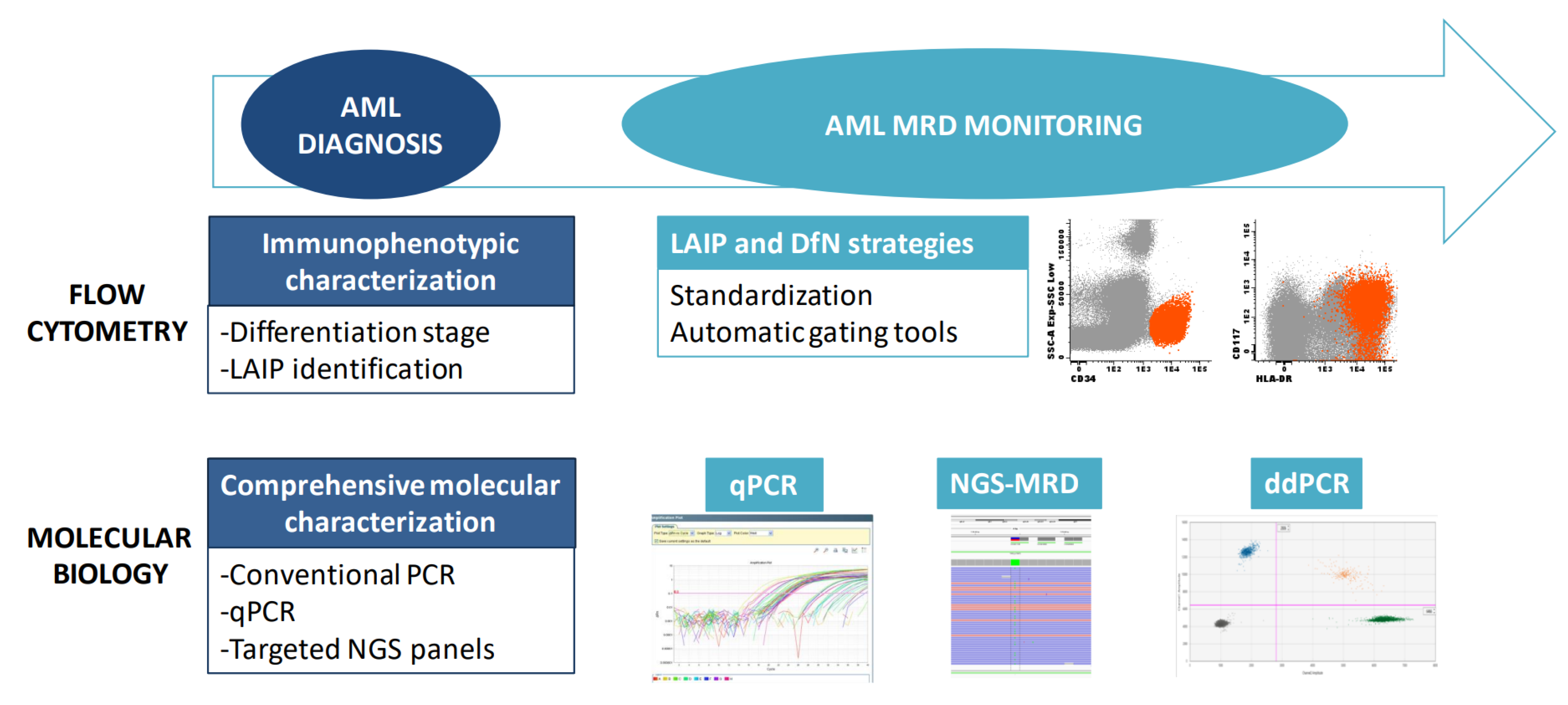
Novel Tools for Diagnosis and Monitoring of AML

 , , ,
, , , Abstract
Share and Cite
Guijarro, F.; Garrote, M.; Villamor, N.; Colomer, D.; Esteve, J.; López-Guerra, M. Novel Tools for Diagnosis and Monitoring of AML. Curr. Oncol. 2023, 30, 5201-5213. https://doi.org/10.3390/curroncol30060395
Guijarro F, Garrote M, Villamor N, Colomer D, Esteve J, López-Guerra M. Novel Tools for Diagnosis and Monitoring of AML. Current Oncology. 2023; 30(6):5201-5213. https://doi.org/10.3390/curroncol30060395
Chicago/Turabian StyleGuijarro, Francesca, Marta Garrote, Neus Villamor, Dolors Colomer, Jordi Esteve, and Mónica López-Guerra. 2023. "Novel Tools for Diagnosis and Monitoring of AML" Current Oncology 30, no. 6: 5201-5213. https://doi.org/10.3390/curroncol30060395
APA StyleGuijarro, F., Garrote, M., Villamor, N., Colomer, D., Esteve, J., & López-Guerra, M. (2023). Novel Tools for Diagnosis and Monitoring of AML. Current Oncology, 30(6), 5201-5213. https://doi.org/10.3390/curroncol30060395