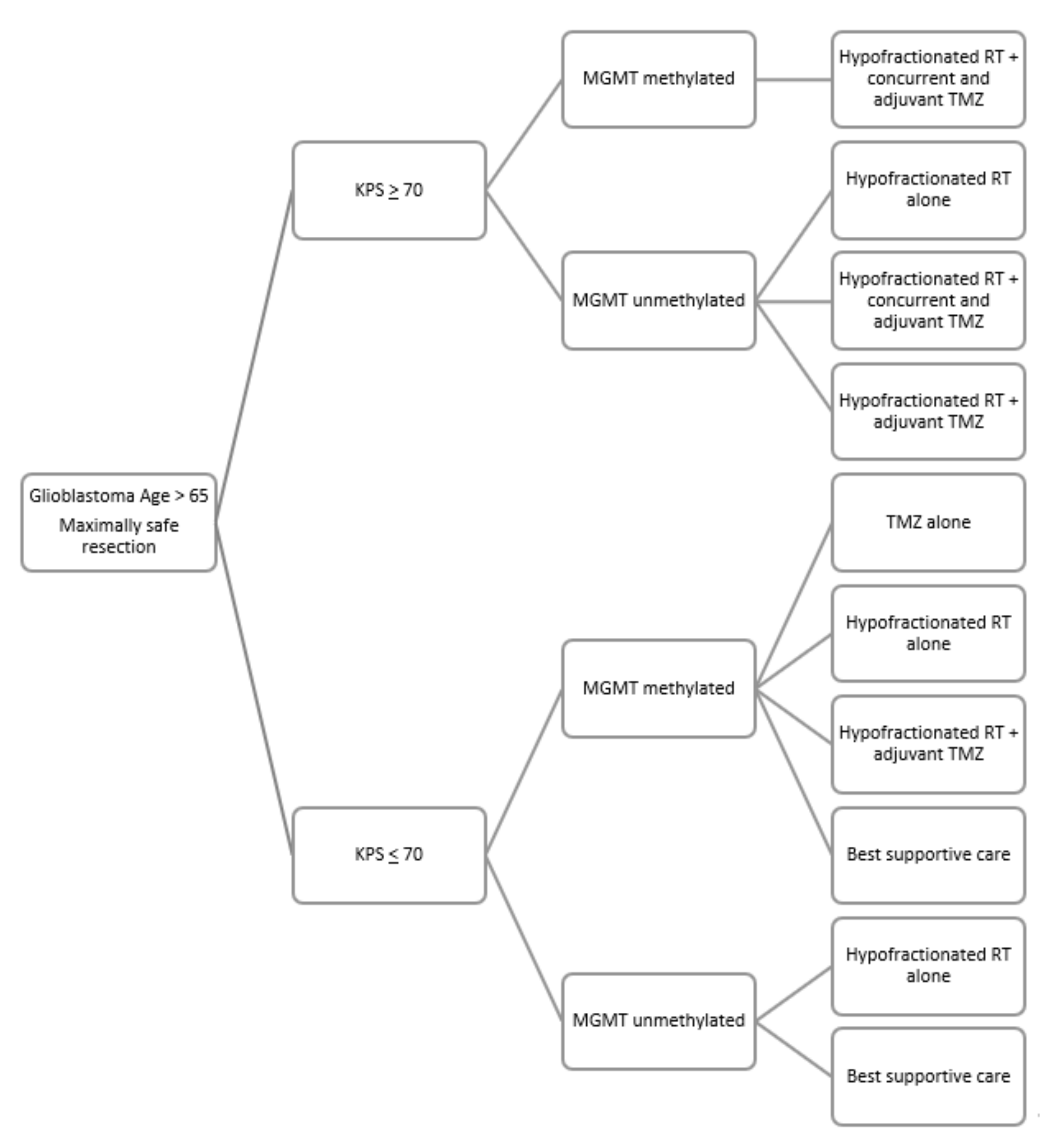
Treatment of Older Adult Patients with Glioblastoma: Moving towards the Inclusion of a Comprehensive Geriatric Assessment for Guiding Management

Abstract
Share and Cite
Chahal, M.; Thiessen, B.; Mariano, C. Treatment of Older Adult Patients with Glioblastoma: Moving towards the Inclusion of a Comprehensive Geriatric Assessment for Guiding Management. Curr. Oncol. 2022, 29, 360-376. https://doi.org/10.3390/curroncol29010032
Chahal M, Thiessen B, Mariano C. Treatment of Older Adult Patients with Glioblastoma: Moving towards the Inclusion of a Comprehensive Geriatric Assessment for Guiding Management. Current Oncology. 2022; 29(1):360-376. https://doi.org/10.3390/curroncol29010032
Chicago/Turabian StyleChahal, Manik, Brian Thiessen, and Caroline Mariano. 2022. "Treatment of Older Adult Patients with Glioblastoma: Moving towards the Inclusion of a Comprehensive Geriatric Assessment for Guiding Management" Current Oncology 29, no. 1: 360-376. https://doi.org/10.3390/curroncol29010032
APA StyleChahal, M., Thiessen, B., & Mariano, C. (2022). Treatment of Older Adult Patients with Glioblastoma: Moving towards the Inclusion of a Comprehensive Geriatric Assessment for Guiding Management. Current Oncology, 29(1), 360-376. https://doi.org/10.3390/curroncol29010032