Review

Ecdysterone: A Component of Dietary Supplements with Ergogenic Potential?

by
Sareli Alonso León
1,
Berta Pinto Robayna
1,2,
Carlos Díaz Romero
1,2 and
Néstor Benítez Brito
1,2,*
1
Department of Chemical Engineering and Pharmaceutical Technology, Nutrition and Bromatology Area, Pharmacy Faculty, Universidad de La Laguna, 38200 San Cristóbal de La Laguna, Tenerife, Spain
2
Nutrition, Health and Food Research Group (NAYS), Universidad de La Laguna, 38200 San Cristóbal de La Laguna, Tenerife, Spain
*
Author to whom correspondence should be addressed.
Nutraceuticals 2026, 6(2), 31; https://doi.org/10.3390/nutraceuticals6020031
Submission received: 11 January 2026 / Revised: 1 April 2026 / Accepted: 8 April 2026 / Published: 7 May 2026
(This article belongs to the Special Issue Feature Review Papers in Nutraceuticals)

Abstract

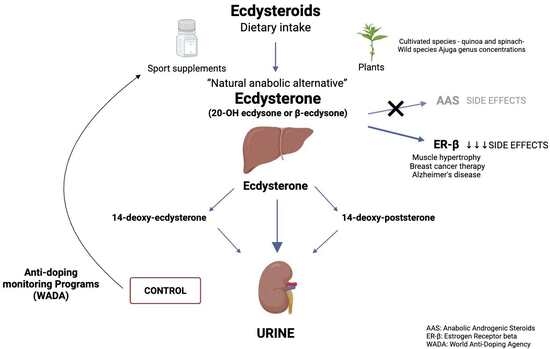
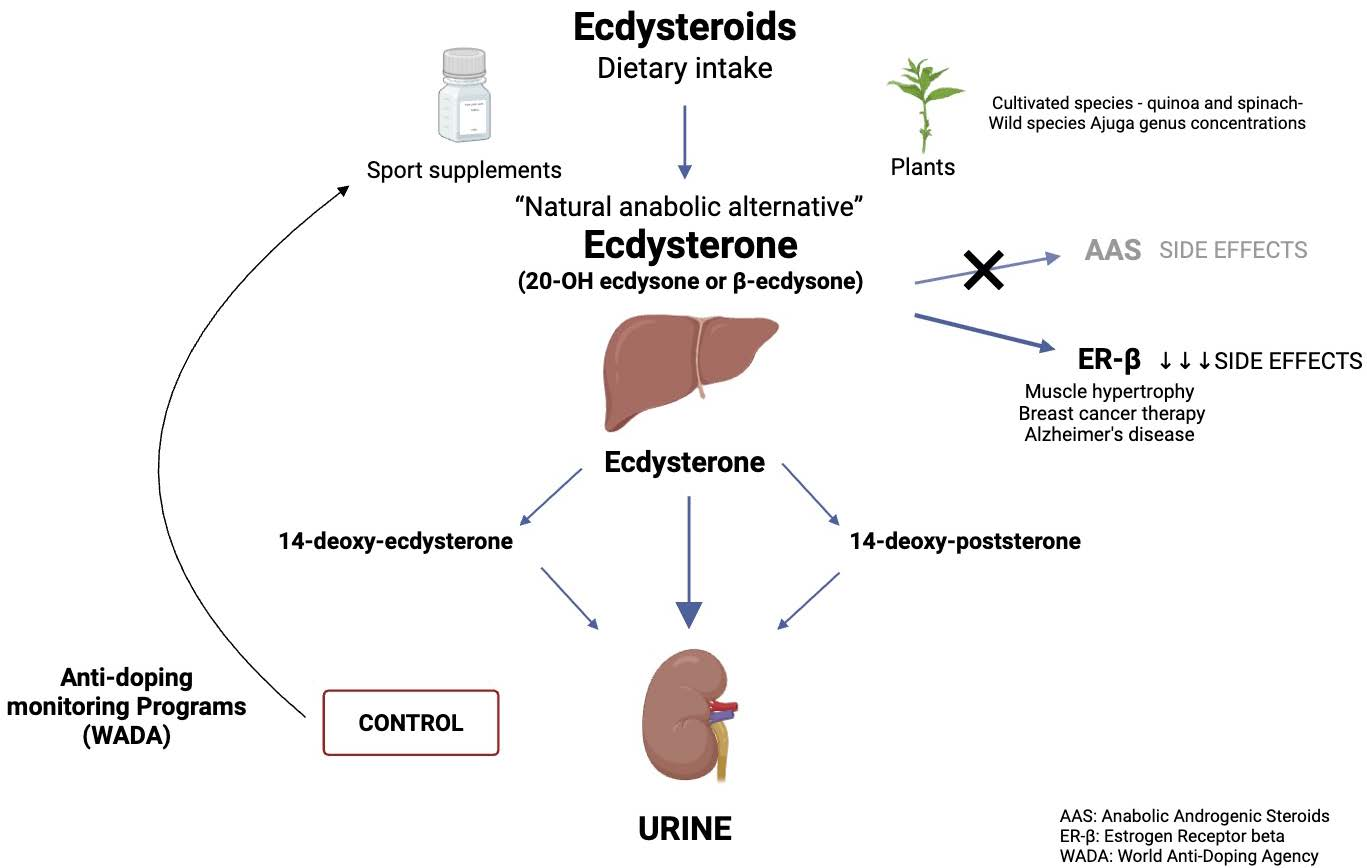
Ecdysterone is a natural compound proposed as an alternative to anabolic-androgenic steroids (AAS) due to its comparable ergogenic potential and more favorable safety profile. This narrative review summarizes current evidence using a standardized search protocol. Although many plants synthesize ecdysteroids, only a few cultivated species—emphasizing quinoa and spinach—contribute meaningfully to dietary intake, while wild species such as those from the Ajuga genus contain substantially higher concentrations. Experimental studies indicate that ecdysterone enhances protein synthesis and physical performance through estrogen receptor-beta activation, avoiding the adverse effects typically associated with AAS. Additional pharmacological effects, including potential roles in breast cancer therapy and Alzheimer’s disease, have also been described. Ecdysteroids are generally considered non-toxic in humans; however, analysis of commercial supplements frequently reveals poor quality control and discrepancies between labeled and actual ecdysterone content. Although prevalence of use among athletes appears low, establishing urinary reference ranges to differentiate dietary exposure from supplement-derived intake is essential. Ecdysterone and its metabolites, 14-deoxy-ecdisterone and 14-deoxy-poststerone, are detectable in urine for more than two days depending on dosage. Given its ergogenic potential and detectability, ecdysterone may pose risks for unethical use and should be considered for inclusion in initial anti-doping testing procedures. Further research on ecdysteroids is required to elucidate their mechanisms of action, confirm the absence of adverse effects, and establish reference urinary concentration ranges that allow differentiation between diet-related metabolites and those derived from drug use.

Graphical Abstract

1. Introduction

The term “ergogenia” comes from the Greek, specifically from the words: “ergos” which means work and “genan”, which is to generate. “Ergogenic assistance” is defined as any maneuver or method executed to increase the ability to develop physical work and improve sport performance [1,2,3].
Genetic and training are the primary factors affecting the sport performance; nutrition typically makes a small but considerable contribution to success performance in elite athletes, and the use of dietary supplements can provide an additional, though minor, benefit within a well-structured nutrition program [1,4,5,6]. Among the ergogenic aids, the use of nutritional or non-nutritional sports supplements stands out [Table 1]. According to the International Olympic Committee (IOC) consensus statement [7], dietary supplements are available in a wide variety of forms, including functional foods; formulated foods and sports foods, specifically designed for athletes; as well as single- and multi-ingredient nutrients and other food components or herbal products.
The practice of using pharmacologically active substances to boost performance in professional and athletic contexts dates back many centuries [8]. In recent years, the consumption of sports nutritional supplements with supposed ergogenic properties has increased considerably. The so-called nutraceutical products are foods or food components that, in addition to their nutritional effects, have beneficial effects on health, including the improvement of sport performance. A great advantage of nutraceuticals over medications is their safety; they complement the diet naturally and lack side effects, while their main disadvantage is their low effectiveness [9].
Dietary supplements are commonly used across all levels of sport. The sport supplementation varies not only among sports, but also among athletes. This is an emerging area that includes a wide range of foods, including dietary supplements, which have flooded the market and are frequently used by athletes, often in an uncontrolled manner [10]. Evidence suggests that dietary strategies are commonly perceived as performance enhancers, and many athletes consider them an essential part of their nutritional regimen during both training and competition [11]. Athletes are exposed to numerous nutritional products that are attractively marketed with claims of improving health, function, and performance. These products are promoted as enhancing strength, increasing muscle mass, reducing fatigue after intense exercise, and even boosting resistance to illness and infections. However, there is limited scientific evidence to support many of these claims, and the efficacy and safety of numerous products remain questionable [7]. The Australian Institute of Sport establishes a classification of supplements into four groups (ABCD) based on the scientific evidence that supports them. Only a few substances are included in group A, which corresponds to that with sufficient scientific evidence for their consumption to be recommended [12]. Additionally, a high consumption of these food components (nutrients or no nutrients), not only may not improve the physical capacity of the athlete but may also be detrimental to their health [1,4]. Moreover, responses to supplement use may be influenced by the context in which they are consumed and can vary considerably between individuals due to factors such as genetics, the microbiome and habitual diet. Protecting athletes’ health and raising awareness of potential risks must be a priority. Therefore, seeking expert professional guidance is strongly recommended before initiating the use of supplements [7]. The nutrient amounts provided are very high, compared to the recommended daily intakes [1,3,4]. Likewise, due to beliefs that the intake of nutritional supplements can compensate for the deficiencies caused by poor eating habits, their consumption has spread widely in the general population [1,4].
Within the use of sport supplements, testosterone and their synthetic derivatives have widely been used. These androgenic hormones are responsible for the manifestation of secondary sexual characteristics in the male, including skeletal muscle hypertrophy due to stimulation of anabolic processes [3,4,8]. In addition to the typical and well-known endocrine effects, the use of these sport supplements is prohibited because of the wide variety of side effects that have been associated with excessive consumption. Likewise, significant neuropsychiatric mood changes, such as aggressive and even violent behavior as well as anxiety, depression, mania, hypomania and paranoia, have been well documented in athletes due to the abuse of these steroid substances [8,13,14]. In a controlled study of 156 athletes (88 of whom used steroids), 23% of the steroid users reported major mood changes symptoms that were not observed in non-users [15]. In addition, a greater number of cardiovascular and hypertension events have been observed in people who abused these substances [8,13].
For this reason, there is currently increasing medical concern about the widespread misuse of anabolic-androgenic steroids (AAS), a practice that began among athletes [8,13] but has since extended to the general population. In this context, the use of dietary supplements containing so-called ‘natural steroids,’ such as ecdysterone, has become particularly attractive to athletes, as they are perceived to enhance performance without the classical side effects associated with traditional AAS. Consequently, this topic has attracted increasing interest not only within sports but also beyond it [16]. For all that indicated above, studies have continuously investigated the supposed ergogenic effects of ecdysteroids, including increases in strength and muscle mass during resistance training, while also reducing fatigue and supporting recovery [17,18].
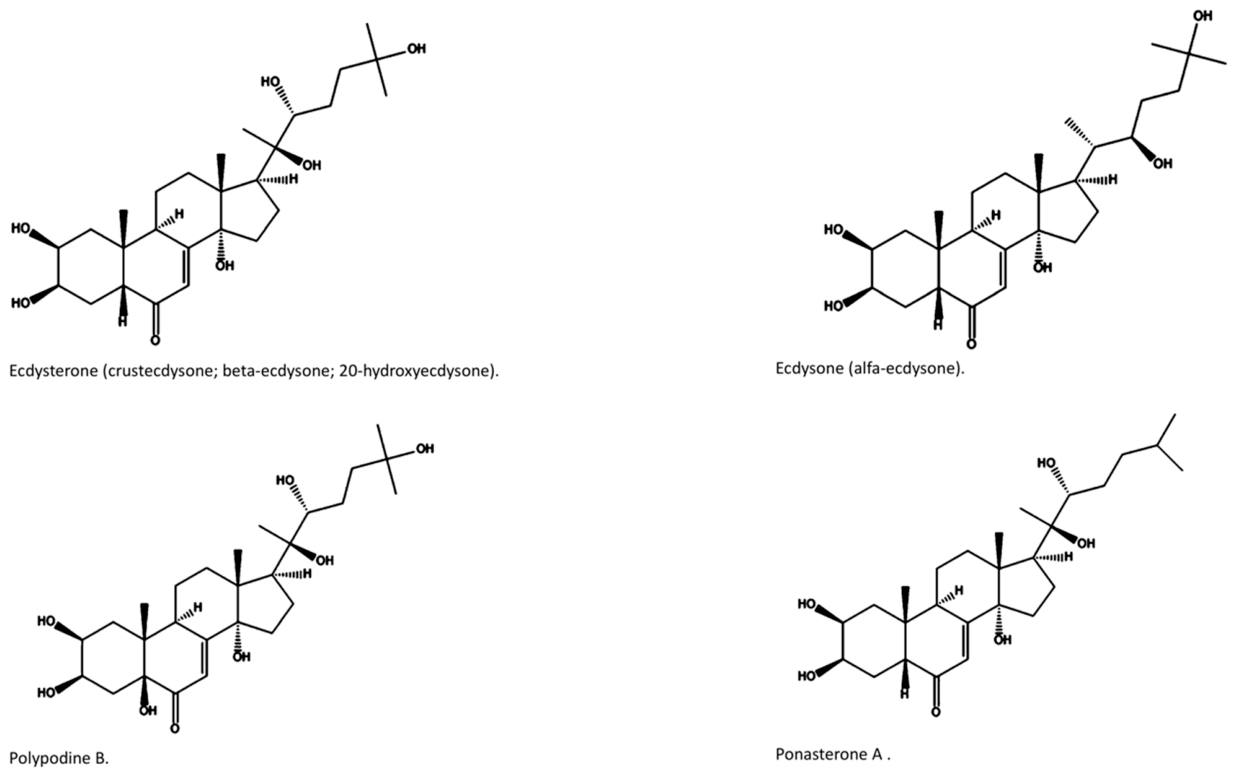
Ecdysterone (20-OH ecdysone or β-ecdysone) [Figure 1] is the most abundant and studied; and it has commonly been used in the elaboration of supplements. It was first isolated in 1954 from silkworm pupae [19]. They are also synthesized in some plant species to combat insect pests [20], which can facilitate their extraction and consumption [21]. Among other pharmacological effects, ecdysteroids are commonly considered anabolic and adaptogenic agents. Due to these properties, ecdysterone has long raised attention as a “natural anabolic alternative” performance enhancer in sports [18,19]. In fact, in the 1980s, Russian Olympians were suspected of using the substance (“Russian secret”) to enhance their athletic performance [19,22,23].
In this narrative review, the current literature on ecdysterone and its pharmacological effects were examined to establish their possible ergogenic biological effects, particularly those referred to the increase in muscle mass. In addition, the side effects and adverse effects that could be produced for the consumption of this steroid substance were studied. The use of ecdysterone in sports and its legal implications, including the urinary detection of ecdysterone metabolites to distinguish dietary intake from supplement misuse, represents a valuable tool in anti-doping monitoring programs.

2. Materials and Methods

A narrative review of the literature was conducted to compile and synthesize the principal scientific findings related to the topic under investigation. Both Descriptors in Health Sciences or DeSH and Medical Subject Headings or MeSH were used. The literature search was initially performed in Pubmed® through the following syntax: (Ecdysterone[Mesh] OR ecdysterone[title/abstract]) AND (sport[title/abstract] OR exercise[title/abstract] OR Training[title/abstract] OR Resistance[title/abstract] OR anabolic OR aerobic[title/abstract] OR Supplementation[title/abstract] OR Adaptations[title/abstract] OR “Anabolic Androgenic”[title/abstract] OR Steroids[title/abstract] OR Performance[title/abstract] OR Doping[title/abstract] OR hypertrophy[title/abstract]). Subsequently, the syntax was adapted to Web of Science®, Punto Q® y Google Scholar® to, finally, perform a manual search from the bibliography of the studies located.
To conduct this review, a broad spectrum of scholarly literature was evaluated, ranging from observational studies and randomized controlled trials to various review formats and meta-analyses. Inclusion parameters strictly targeted publications investigating the physiological interactions between ecdysterone and physical exercise. Priority was given to English and Spanish texts. The final selection of sources was consolidated following a comprehensive critical appraisal of titles and abstracts, ensuring their absolute relevance to the primary research objectives.

3. Natural Sources of Ecdysteroids

Ecdysteroids are a large family of polyhydroxylated hormones, which are present in arthropods and plants. They were initially known as arthropod phytosteroid hormones which regulate molting, metamorphosis, embryogenesis and reproduction [24]. While ecdysterone and α-ecdysone are the dominant ecdysteroids in insects, ecdysterone is the predominant ecdysteroid found in plants, though it naturally co-occurs with smaller amounts of other derivatives, including α-ecdysone, polypodine B, 2-deoxy-ecdysterone, ponasterone, and turkesterone [Figure 1] [25,26]. Notably, plant species can produce and store ecdysterone in quantities that far exceed those found in insects [27,28]. Its primary biological role in flora is considered to be defensive; acting as a phytoalexin, it shields the plant against herbivorous insects and soil-dwelling nematodes.
There are many plant species that synthesize ecdysteroids. Above 300 different phytoecdysteroids were already described in 2008 [29] and their levels can reach ≈3% in plants referred to dry weight [30]. Few of these plants have ecdysteroids consumed in the diet from cultivated plants, for example, quinoa (Chenopodium quinoa) or spinach (Spinacia oleraceae L.) [19,29,31]. The popular belief that consuming spinach enhances muscular strength, famously popularized by the cartoon character ‘Popeye’, may possess a scientific foundation. The anabolic properties derived from the ecdysteroids present in this plant could provide a biological explanation for this traditional claim [21,26]. Specifically, analyses of spinach leaves have shown that their ecdysterone content ranges from 4 to 800 μg·g−1 of fresh weight (f.w.) This concentration can vary with the plant variety, but there are many other factors influencing it, such as the season of harvest, development phase and growth rate, geographical location and natural environment [26,27,29,32,33,34]. In contrast, ref. [35] have recently quantified the concentration of ecdysterone in fresh spinach at merely 0.1 μg·g−1 f.w. Given these minimal values, the actual dietary intake of ecdysterone derived from standard spinach consumption is considered negligible [36]. Consequently, the ecdysterone utilized in commercial formulations is extracted from botanical sources that naturally yield significantly higher concentrations of these compounds. Many of these ecdysteroid-rich species have a documented history in traditional folk medicine [31], including Ajuga turkestanica, Leuzea carthamoides (Willd.) Iljin., various Pfaffia species, Cyanotis vaga (Lour.) Schult. and Schult.f., Cyanotis arachnoidea C.B. Clarke, as well as multiple ferns from the Polypodium genus [37]. Furthermore, ecdysteroids serve as the primary bioactive constituents in several herbs prominently featured in traditional Chinese medicine, such as Cyanotis vaga, Leuzea carthamoides, and Rhaponticum carthamoides [19]. Other plants, such as Rhapoiticum carthamoides tea and Cyanotis arachnoides cream, have very high ecdysteroid concentrations, such as 154 and 190 μg·g−1, respectively [38]. The genus Ajuga (Lamiaceae) a medicinal herb frequently utilized in traditional North African medicine, particularly for the management of diabetes and immune-mediated conditions such as allergies, rheumatism, and cancer. It is also historically prescribed for various metabolic, renal, cardiovascular, respiratory, and digestive ailments. Consequently, a vast array of biological properties—spanning from antidiabetic, neuroprotective, anti-inflammatory, and antitumor actions to cytotoxic, antiviral, and antibacterial effects—has been ascribed to this botanical source [39,40]. Although each plant species harbors a distinct and intricate profile of secondary metabolites, phytoecdysteroids remain the most highly valued constituents due to their pronounced adaptogenic and anabolic capabilities. Uncultivated species belonging to Ajuga genus continue to serve as a principal natural reservoir for these ecdysteroids [41].

4. Biological and Pharmacological Effects of Ecdysterone

The biological or pharmacological effects attributed to the ecdysteroids can be divided into three groups: (1) metabolic or ergogenic effects; (2) other biological or pharmacological effects; and (3) side effects and toxicity.

4.1. Metabolic or Ergogenic Effects

A wide variety of potential beneficial effects of ecdysteroids on metabolism have been described in animal species and humans. Particularly, anabolic effects include an upregulation of protein synthesis alongside enhanced muscular mass, and consequently, improvements in strength and performance, reduction in fatigue, and ease of recovery. All these effects suppose an improvement in physical and sport activities [17,19,23,25,41,42,43,44]. Both in vitro and in vivo investigations demonstrate that ecdysterone promotes protein synthesis and enhances muscle hypertrophy [17,19]. This specific anabolic mechanism is driven by the activation of estrogen receptor beta (ER-β) [17,19], thereby bypassing the adverse reactions typically associated with anabolic-androgenic steroids (AAS) [19,21,23]. Estrogen receptors (ER) are classified into two primary isoforms: ER-α and ER-β. The α-subtype is predominantly localized in reproductive organs (such as the uterus and mammary glands), alongside the liver, heart, and kidneys. Conversely, the β-subtype is mostly distributed across the prostate, vascular endothelium, and gastrointestinal system. Nevertheless, a distinct group of tissues and cell populations—including skeletal muscle, the epididymis, thyroid, bones, and the brain—exhibit co-expression of both receptor forms [19]. In addition, ref. [23] confirmed in humans that the mechanism of action of ecdysterone seems to be independent of androgen receptor activity, showing a preference for ER-β activation.
In addition, in C2C12 cells (a myoblast cell line which is used as an “in vitro” model for investigating muscular hypertrophy), the PI3K/protein kinase B phosphorylation cascade has been associated with the hypertrophic activity produced by ecdysterone. It was demonstrated that ER-β was able to modulate protein kinase B (Akt) activation. This pathway potentially serves as the mechanistic bridge connecting ER-β stimulation to the hypertrophic response induced by ecdysterone within these cellular models [17,19].
The muscle hypertrophy induced by the ecdysterone was comparable, or even of greater potency than, common AAS with selective androgen receptor modulators. In rat models, daily oral supplementation at a dosage of 5 mg/kg over a 10-day period resulted in notable gains in both overall body mass and protein accumulation within the tibial muscle [17]. However, ref. [19] compared the effects on myotube diameter of several hormone compounds of ecdysterone, such as dihydrotestosterone (DHT), insulin-like growth factor types 1 (IGF-1), and dexamethasone, concluding that ecdysterone has effects comparable to those of DHT and IGF-1. In addition, Parr et al. (2015) [17] observed higher diameters of C2C12 cells when ecdysterone (1.0 nM) was used, compared to DHT at the same concentration or IGF-1 (1.3 nM). Therefore, the ecdysterone presents slightly greater anabolic activity when inducing muscular hypertrophy. In contrast, a previously published double-blind, placebo-controlled trial on resistance-trained males after ecdysterone supplementation [45] failed to observe any statistically significant alterations in overall body mass, body composition, muscular strength, or circulating markers of anabolic and catabolic activity. In this study, ecdysterone was evaluated in combination with methoxyisoflavone and sulfo-polysaccharide. Such concurrent supplementation introduces confounding variables, providing a plausible explanation for the observed discrepancies.
Mechanism of action of ecdysterone in skeletal muscles is still nonspecific. Current evidence proposes that the stimulation of a putative membrane-associated G protein-coupled receptor (GPCR) triggers the activation of phospholipase C (PLC), the enzyme responsible for generating inositol trisphosphate (IP3). The latter activates its own receptor (IP3R), releasing intracellular calcium reserves in the cytoplasm. Furthermore, ecdysterone has the capacity to trigger the opening of extracellular calcium channels. The subsequent influx of calcium ions promotes the phosphorylation of Akt, ultimately driving an upregulation in protein synthesis [46].
Other interesting metabolic effects can also be emphasized, such as hypolipidemic, antidiabetic, hepatoprotective, and adaptogenic effects. When administered orally, ecdysterone has been shown to alleviate induced hyperglycemia in rat models and enhance overall tissue glucose uptake, likely by upregulating cellular insulin sensitivity. In addition, these compounds exhibit significant antiatherosclerotic and hypocholesterolemic properties; they achieve this by inhibiting cholesterol biosynthesis, accelerating its catabolic breakdown, and facilitating its transformation into bile acids. Beyond these metabolic benefits, ecdysterone acts as an immunomodulator in both human and rat subjects while also demonstrating notable anti-inflammatory capabilities in rodents [41].

4.2. Other Biological or Pharmacological Effects

In addition to the described anabolic effect of ecdysteroids in muscles depending on ER-β, there are a plethora of other pharmacological effects whose biochemical molecular mechanisms remain unknown [20].
Recent investigations have explored the pharmacological impact of ecdysterone across various molecular subtypes of human breast cancer cells. Interestingly, while it exhibits anabolic properties in skeletal muscle, this compound demonstrated a notable tumor-suppressive action within these malignant models, alongside a potent induction of autophagy. Furthermore, it displayed a synergistic capacity with doxorubicin, effectively promoting cell death across multiple breast carcinoma cell lines [20]. Conversely, its impact on healthy, non-transformed human fibroblasts remained minimal. Consequently, this phytoecdysteroid emerges as a promising adjuvant candidate for genotoxic treatment regimens in breast cancer management. Given its documented ability to improve stress resilience and combat fatigue [14,41], integrating ecdysterone into doxorubicin-based cytotoxic protocols could offer substantial therapeutic advantages. This strategy is particularly relevant considering the severe adverse reactions frequently triggered by doxorubicin, which encompass cumulative cardiotoxicity, acute nausea and vomiting, gastrointestinal distress, alopecia, and neurological complications [47]. More clinical investigation on the effectiveness and toxicity of the ecdysterone is needed to confirm the usefulness of ecdysterone in the treatment (or therapy) of breast cancer. To assess their independent and combined “in vitro” efficacy with doxorubicin, several novel ecdysteroid analogs were synthesized and evaluated using a paired mouse lymphoma cell line model. The findings revealed that these structural derivatives exerted a strong chemosensitizing effect alongside doxorubicin, highlighting their potential as lead compounds for the future design and optimization of potent chemosensitizers [48]. In a separate phytochemical analysis of the aerial sections of P. verticillata, eleven distinct compounds were isolated. Among these, 5-hydroxyecdysone, polypodine B, and 22-oxo-hydroxyecdysterone demonstrated substantial cytotoxic properties when tested against SMCC7721, LN299, and PC12 cell lines [49].
Ecdysterone exhibited anti-oxidative properties and scavenging and neuroprotective properties; these antioxidant properties could alleviate the neuronal loss and behavioral deficits in neurologic patients. Combining ecdysterone supplementation with high-intensity interval training (HIIT) emerges as a promising therapeutic strategy to ameliorate physiological brain function during the cognitive decline associated with Alzheimer’s disease. This dual intervention has been shown to drive synaptic refinement alongside noticeable behavioral improvements. Nevertheless, further basic research is necessary to fully elucidate the underlying biological mechanisms of this synergistic effect [50,51]. In a separate clinical context, ecdysteroids are also credited with accelerating cutaneous tissue repair, demonstrating utility in the topical management of psoriasis, thermal burns, and superficial wounds [41].

4.3. Side Effects and Toxicity

Rodents exhibit excellent tolerance to elevated doses of exogenous ecdysterone. In murine models, the median lethal dose (LD50) exceeds 9 g/kg when administered orally and is recorded at 6.4 g/kg following intraperitoneal (i.p.) injection. Furthermore, this steroidal compound does not accumulate within biological tissues. Following oral ingestion, ecdysterone and its principal metabolites—namely poststerone, 14-deoxy-ecdysterone, 14-deoxypoststerone, and their various reduced derivatives—are cleared from the rat organism within a 48 h window, primarily via fecal excretion [52]. Regarding human toxicity, current evidence suggests a highly favorable safety profile. The administration of elevated ecdysterone concentrations has not been linked to any documented acute or chronic adverse events [41]. There is evidence showing that ecdysterone does not have toxic effects on the liver or kidneys due to the absence of biomarkers for liver or kidney toxicity after 10 weeks of administration [23]. As previously mentioned, ecdysterone acts on estrogen receptors, unlike EAAs that act on androgen receptors, the latter responsible for numerous long-term side effects, such as virilization, sterility, and even violent attitudes caused by excessive consumption of androgenic steroids. Ecdysteroids do not produce such negative effects, which is due to their action on the estrogen receptor [8,13,41]. Nevertheless, comprehensive clinical trials remain imperative. The precise physiological pathways governing ecdysterone activity must be definitively characterized. Additionally, rigorous toxicological assessments are required to systematically rule out any potential adverse reactions.

5. Supplements

Athletes look for substances not yet banned by organizations to improve physical performance. This is where ecdysterone stands out: a natural product with fewer side effects because it does not act on the androgen receptor but on the estrogen receptor [17,18,23,41].
Ecdysterone is extensively commercialized as a nutritional supplement aimed at boosting athletic performance. A growing variety of botanical formulations—derived from spinach and other plant extracts—are currently promoted for their purported ability to accelerate recovery, reduce fatigue, and promote both muscular hypertrophy and strength gains [17,19]. However, scientific literature quantifying the actual ecdysterone content within these commercial products remains scarce. Drawing from a comprehensive list of 149 items identified by Lafont and Dinan (2003) [37], researchers evaluated 15 commercially available dietary supplements, procured online, to verify their ecdysterone content, alongside an additional product marketed as turkesterone [53]. Although seven of these formulations explicitly declared ecdysterone on their nutritional labels, analytical testing confirmed detectable concentrations of the ecdysteroid in only five of them. A recent controlled human trial evaluating the prolonged intake of an ecdysterone-based supplement revealed notable enhancements in both physical strength and muscular hypertrophy [23]. Meanwhile, it is well established that typical western dietary patterns supply only negligible amounts of these ecdysteroids. (less than 1 mg/day), while the recommended dose used by bodybuilders is thousand-fold higher ≈1 g day−1 [18]. The doses used for sportsmen are very high. Even with an exceptionally high dietary intake of spinach (1 kg·day−1), the maximum daily yield of ecdysterone derived from this source would scarcely surpass 100 mg, an amount that falls well below the doses commonly used by sportsmen [21,54,55]. A broad variety of products labeled to contain ecdysterone can be found on the market. Labeling accuracy in commercial supplements currently lacks robust quality assurance. Significant discrepancies permeate the market. As a result, profound inconsistencies are frequently observed concerning both the claimed botanical sources and the actual quantitative concentrations of ecdysterone. A significant proportion of these commercial preparations fall short of basic quality and safety benchmarks, particularly regarding the accuracy of their declared active ingredients. Analytical assessments typically reveal that the true concentration of ecdysterone is substantially inferior to the dosage claimed by the manufacturer on the packaging. Establishing robust, fully validated analytical protocols is paramount for the accurate quantification of ecdysterone and its structural derivatives. To effectively regulate commercial supplements, certified reference materials must be implemented. Implementing rigorous analytical standardization is therefore crucial. Many commercial supplements provide highly ambiguous labeling—such as vague references to ‘spinach extract’, declarations of ‘10% ecdysone’, or a complete omission of specific ecdysteroid concentrations. This lack of transparency precludes consumers from ascertaining the true active dosage. Consequently, this unreliability not only leads to erratic therapeutic outcomes due to inadvertent dosing errors but also elevates the risk of severe adverse reactions [16].
Furthermore, defining normative baseline ranges that align with standard dietary intake and routine use of botanical products is necessary [38]. Recent pharmacokinetic data generated by the Polish Anti-Doping Laboratory offer valuable concentration metrics that the World Anti-Doping Agency (WADA) could utilize to delineate these thresholds. The studies revealed distinct excretion profiles: while spinach consumption triggered a rapid spike in urinary elimination during the initial hours followed by a sharp drop, other botanical sources exhibited a more sustained and gradual clearance. Additionally, clearance rates varied significantly based on both the administration route and inter-individual differences among the participants. Notably, the maximum ecdysterone concentration recorded in these trials reached 691 ng/mL, which was directly linked to the ingestion of a plant-based paste [38].

6. Anti-Doping Application in Phytosteroids

6.1. Pharmacocinetics and Urinary Excretion

Restricted oral bioavailability presents a significant barrier to the pharmaceutical deployment of ecdysterone. Urinary analysis typically recovers only half of an administered dose, encompassing the parent compound and two primary metabolites [16]. The unrecovered fraction poses a complex pharmacokinetic challenge. This remainder may simply persist unabsorbed in the gastrointestinal tract. Alternatively, it could be cleared through secondary excretion routes—such as biliary, salivary, sudoriferous, or fecal pathways—or converted into currently uncharacterized metabolic derivatives [16]. Furthermore, Kraiem et al. [53] evaluated the urinary kinetics of ecdysterone following the ingestion of distinct culinary preparations of spinach. The overall fraction eliminated via the renal pathway remained notably low. Surprisingly, altering the dietary delivery matrix produced no discernible shifts in the final analytical quantification. Whether the nutritional source was mechanically blended or thermally processed, the recovered concentrations of the parent molecule and its primary metabolic derivatives (specifically 14-deoxy-ecdysterone and 14-deoxy-poststerone) remained statistically equivalent. Consequently, relying exclusively on urinary profiles to distinguish normal dietary exposure from pharmacological administration remains highly problematic. This diagnostic limitation becomes particularly pronounced during late-stage post-administration sampling [56].
In general, the detection of prohibited substances in sports relies on the analysis of biological samples, primarily focusing on these substances or their metabolites in athletes’ urine. If ecdysterone and other plant steroids are regulated within anti-doping frameworks, the establishment of urinary reference concentration ranges is of great importance for differentiating diet-related levels from those derived from intentional drug use.
Currently, the literature detailing the urinary excretion profiles of ecdysterone remains noticeably sparse, especially concerning human clinical interventions. Many existing investigations rely on highly restricted sample cohorts. Consequently, current findings must be interpreted with caution. Such preliminary data frequently engenders contradictory assertions across the scientific record. To establish a robust hierarchy of evidence, the execution of meticulously designed, large-scale clinical trials is strictly required. Historically, the seminal investigation detailing human ecdysterone elimination was introduced by Tsitsimpikou et al. in 2001 [56]. Following oral ingestion, the parent compound consistently emerged as the predominant analyte within the urinary matrix. Its presence became quantifiable a mere 45 min post-administration of a 50 mg pure dose, indicating highly accelerated absorption and clearance dynamics [16]. Furthermore, this specific dosage sustained detectable urinary concentrations for more than 48 h [56]. Although there is some controversy, it is currently accepted that in humans, 14-desoxy-ecdysterone is the main urinary metabolite, which was detectable to 25–29 h [56]. In a similar but more recent study [16], ecdysterone was detectable in urine for over two days after a 50 mg dose of ecdysterone, with a maximum concentration in urine between 2.8 and 8.5 h. Two urinary metabolites, 14-deoxy-ecdysterone and 14-deoxy-poststerone, were detected subsequently, reaching maximum concentrations between 8.5 and 39.5 h and 23.3–41.3 h, respectively. This second metabolite was only detected when the ecdysterone concentration was very high [38]. Out of 16 purchased supplements, two (Desire X and Turkesterone) were selected for the excretion studies due to their differing ecdysterone concentrations. Desire X contains 0.0088 mg of ecdysterone per capsule, which is unlikely to produce anabolic effects, whereas Turkesterone contains 2.3 mg per capsule, a dose likely to induce such effects. When the higher dose of ecdysterone (Turkesterone, 2.3 mg of ecdysterone/capsule) was administered, ecdysterone remained detectable for up to 48 h post-consumption, while the main metabolite, 14-deoxy-ecdysterone, was detectable for up to 96 h. With the lower dose of ecdysterone (0.0088 mg/capsule), the parent drug could be detected for up to 36 h, and the metabolite 14-deoxy-ecdysterone for up to 70 h.

6.2. Prevalence of Use

The prevalence of its use among elite athletes was relatively low. Only four positives for ecdysterone out of 1000 athletes were confirmed, corresponding to a prevalence of use of 0.4% [53]. This finding requires confirmation in other populations and with other related ecdysteroids. Over a 2.5-year period, the presence of ecdysterone was confirmed in only 507 of the 11,191 tested samples [38]. The concentration range was highly variable, spanning from 1 ng/mL (the limit of detection for this method at the Polish Anti-Doping Laboratory) to over 2000 ng/mL. Significant sex-based disparities in systemic ecdysterone levels have been documented. Average concentrations in female cohorts were exactly half of those quantified in male participants [38]. Notably, this stark divergence directly contradicts earlier pharmacokinetic findings [16]. Furthermore, the overall detection prevalence reached 4.5% [38]. Such a metric represents a remarkable tenfold increase compared to the baseline frequencies established by Kraiem et al. [53].

6.3. Legal Status

Many countries are currently strengthening legislation against the possession and use of AAS, increasingly classifying these drugs as equivalent to narcotics [8]. Numerous athletes and their coaches continue to seek unfair advantages through the use of these performance-enhancing substances. Consequently, this issue has evolved from a strictly sports-related concern into a broader public health problem, exacerbated by a considerable lack of information regarding the side effects of such steroids [57].
According to the International Olympic Committee (IOC), doping is defined as the administration or use by an athlete of any substance foreign to the body, or any physiological substance taken in excessive quantities, with the sole intention of artificially and dishonestly increasing competitive performance [57].
The World Anti-Doping Agency (WADA) annually publishes a list of prohibited substances and methods, applicable both in and out of competition. The primary reason for including a drug on such list is to report drugs known or suspected of enhancing performance in sports activities. In addition, other reasons are included such as protecting the health of athletes, preserving the integrity of sport or being a “good” example for society. Included in this list are EAAs and also antiestrogens because they are sometimes used to antagonize the side effects of EAAs and other drugs [8,58].
The administration of ecdysterone may be considered a practice that yields an unfair advantage in athletic competitions. Results from a controlled human administration trial have demonstrated performance-enhancing effects during power training [23]. However, ecdysteroids are currently absent from the prohibited substances list, making them an appealing candidate for use by athletes [17,19]. Consequently, numerous researchers [18,23] strongly advocate for the inclusion of ecdysterone within class S1 (“Anabolic Agents”), particularly given that its mechanism of action appears to function independently of androgen receptor activation. Thus, following the results reported in the literature for its anabolic activity, ecdysterone has recently been included in the Monitoring Program of the WADA of 2020 under section “Anabolic Agents, In- and Out-of-Competition” [58]. According to research focused on the potential integration of ecdysterone into the initial testing procedures (ITP) of doping control laboratories, the administration of a 50 mg dose resulted in the urinary detection of both the parent compound and its metabolite, deoxy-ecdysterone, for over two days. Consequently, it was concluded that ecdysterone and its metabolic derivatives are highly suitable candidates for integration into standard ITP protocols [18,19].

7. Conclusions

The present research is fundamentally structured as a narrative review. While this methodological approach provides valuable insights, elevating the overarching quality of evidence necessitates more rigorous paradigms. Consequently, future investigative efforts must prioritize systematic reviews and quantitative meta-analyses.
Current data demonstrates a profound ergogenic capacity. In fact, ecdysterone exhibits performance-enhancing properties comparable to classical anabolic-androgenic steroids. Crucially, this compound operates predominantly via the estrogen receptor beta (ER-β) pathway. Such a unique molecular mechanism theoretically bypasses the adverse physiological consequences typically associated with traditional steroidal agents. Furthermore, the observed improvements in physical performance are directly linked to accelerated protein synthesis and subsequent muscle hypertrophy, alongside a broad spectrum of additional physiological benefits.
The commercial supplement market currently faces severe quality control deficiencies. Fortunately, precise urinary analysis provides a reliable method to distinguish baseline dietary exposure from deliberate pharmacological abuse. Consequently, integrating ecdysterone into standard anti-doping monitoring programs is strongly recommended.
Moving forward, the scientific community must prioritize meticulously designed clinical trials to definitively validate these efficacy claims. It is imperative to fully elucidate the underlying molecular mechanisms. Additionally, confirming the absolute absence of side effects remains critical. Finally, establishing standardized reference thresholds for urinary metabolites will provide the exact diagnostic tool needed to accurately separate routine dietary consumption from intentional performance enhancement.

Author Contributions

Conceptualization: N.B.B. and C.D.R. Methodology: N.B.B., B.P.R. and S.A.L. Validation: N.B.B., B.P.R., C.D.R. and S.A.L. Formal analysis and data curation: N.B.B., B.P.R., C.D.R. and S.A.L. Investigation: N.B.B., B.P.R., C.D.R. and S.A.L. Resources: N.B.B., B.P.R., C.D.R. and S.A.L. Writing—Review and Editing: N.B.B., B.P.R., C.D.R. and S.A.L. All authors have read and agreed to the published version of the manuscript.

Funding

This research received no external funding.

Institutional Review Board Statement

Not applicable.

Informed Consent Statement

Not applicable.

Data Availability Statement

No new data were created or analyzed in this study. Data sharing is not applicable to this article.

Acknowledgments

The authors of the manuscript would like to thank the University of La Laguna for the possibility of making this study available.

Conflicts of Interest

The authors declare no conflicts of interest.

Abbreviations

The following abbreviations are used in this manuscript:
AASAnabolic-Androgenic Steroids
IOCInternational Olympic Committee
EREstrogen Eeceptors
DHTDihydrotestosterone
IGF-1Insulin-like Growth Factor Types 1
GPCRsG protein-Coupled Receptor (GPCRs)
PLCPhospholipase C
LD50Lethal Dose 50
IP3Inositol-3-Phosphate
EAAsEssential Amino Acids
WADAWorld Anti-Doping Agency
ITPInitial Test Procedures

References

  1. Blasco Redondo, R. Las ayudas ergogénicas nutricionales en el ámbito deportivo. Primera parte. Aspectos generales. Nutr. Clin. Med. 2016, 2, 69–78. [Google Scholar] [CrossRef]
  2. de Antuñano, N.P.G.; Marqueta, P.M.; Redondo, R.B.; Fernández, C.C.; Bonafonte, L.F.; Aurrekoetxea, T.G.; García, J.A.V. Suplementos nutricionales para el deportista. Ayudas ergogénicas en el deporte—2019. Documento de consenso de la Sociedad Española de Medicina del Deporte. Arch. Med. Deporte 2019, 36, 7–83. [Google Scholar]
  3. Lino, J. Ayudas ergogénicas en el deporte. Arbor: Ciencia, Pensamiento y Cultura. Arbor 2000, 165, 171–185. [Google Scholar] [CrossRef]
  4. Gallego, J.G.; Collado, P.S.; Verdú, J.M. Nutrición en el Deporte: Ayudas Ergogénicas y Dopaje; Ediciones Díaz de Santos: Madrid, Spain, 2006. [Google Scholar]
  5. Hernández Gallardo, D. Estado Nutricional y Rendimiento Deportivo en Deportistas Adolescentes Cubanos. Ph.D. Thesis, Universidad de Granada, Granada, Spain, 2014. Available online: https://digibug.ugr.es/handle/10481/30327 (accessed on 15 December 2025).
  6. Pelegri, P. Suplementos Deportivos. Revisión. Grupo Sobre Entrenamiento (G-SE). 2016, p. 23. Available online: https://g-se.com/suplementos-deportivos-revision-2230-sa-j588554d0ea65e (accessed on 15 December 2025).
  7. Maughan, R.J.; Burke, L.M.; Dvorak, J.; Larson-Meyer, D.E.; Peeling, P.; Phillips, S.M.; Rawson, E.S.; Walsh, N.P.; Garthe, I.; Geyer, H.; et al. IOC consensus statement: Dietary supplements and the high-performance athlete. Br. J. Sports Med. 2018, 52, 439–455. [Google Scholar] [CrossRef]
  8. Sjöqvist, F.; Garle, M.; Rane, A. Use of doping agents, particularly anabolic steroids, in sports and society. Lancet 2008, 371, 1872–1882. [Google Scholar] [CrossRef] [PubMed]
  9. Goncharov, N.V.; Korf, E.A.; Novozhilov, A.V.; Jenkins, R.O.; Avdonin, P.V. Chapter 15—Nutraceuticals in sports activities and fatigue. In Nutraceuticals, 2nd ed.; Gupta, R.C., Lall, R., Srivastava, A., Eds.; Academic Press: Cambridge, MA, USA, 2021; pp. 215–228. [Google Scholar] [CrossRef]
  10. Garthe, I.; Maughan, R.J. Athletes and supplements: Prevalence and perspectives. Int. J. Sport Nutr. Exerc. Metab. 2018, 28, 126–138. [Google Scholar] [CrossRef]
  11. Beck, K.L.; Thomson, J.S.; Swift, R.J.; von Hurst, P.R. Role of nutrition in performance enhancement and postexercise recovery. Open Access J. Sports Med. 2015, 6, 259–267. [Google Scholar] [CrossRef]
  12. Australian Institute of Sport. Australian Institute of Sports (AIS) Position Statement: Supplements and Sports Foods in High Performance Sport; AIS: Canberra, Australia, 2022.
  13. Avella, R.; Medellín Ruiz, J. Los esteroides anabolizantes androgénicos, riesgos y consecuencias—[Anabolic andro-genic steroids, risks and consequences]. Rev. U.D.C.A Act. Div. Cient. 2012, 15, 47–55. [Google Scholar] [CrossRef]
  14. Dinan, L. The Karlson Lecture. Phytoecdysteroids: What use are they? Arch. Insect Biochem. Physiol. 2009, 72, 126–141. [Google Scholar] [CrossRef] [PubMed]
  15. Pope, H.G.; Katz, D.L. Psychiatric and medical effects of anabolic-androgenic steroid use. A controlled study of 160 athletes. Arch. Gen. Psychiatry 1994, 51, 375–382. [Google Scholar] [CrossRef]
  16. Ambrosio, G.; Yuliandra, T.; Wuest, B.; Mazzarino, M.; de la Torre, X.; Botrè, F.; Diel, P.; Isenmann, E.; Parr, M.K. Urinary Elimination of Ecdysterone and Its Metabolites Following a Single-Dose Administration in Humans. Metabolites 2021, 11, 366. [Google Scholar] [CrossRef]
  17. Parr, M.K.; Botrè, F.; Naß, A.; Hengevoss, J.; Diel, P.; Wolber, G. Ecdysteroids: A novel class of anabolic agents? Biol. Sport 2015, 32, 169–173. [Google Scholar] [CrossRef]
  18. Parr, M.K.; Ambrosio, G.; Wuest, B.; Mazzarino, M.; de la Torre, X.; Sibilia, F.; Joseph, J.F.; Diel, P.; Botrè, F. Targeting the administration of ecdysterone in doping control samples. Forensic Toxicol. 2020, 38, 172–184. [Google Scholar] [CrossRef]
  19. Parr, M.K.; Zhao, P.; Haupt, O.; Ngueu, S.T.; Hengevoss, J.; Fritzemeier, K.H.; Piechotta, M.; Schlörer, N.; Muhn, P.; Zheng, W.; et al. Estrogen receptor beta is involved in skeletal muscle hypertrophy induced by the phytoecdysteroid ecdysterone. Mol. Nutr. Food Res. 2014, 58, 1861–1872. [Google Scholar] [CrossRef]
  20. Shuvalov, O.; Fedorova, O.; Tananykina, E.; Gnennaya, Y.; Daks, A.; Petukhov, A.; Barlev, N.A. An arthropod hormone, ecdysterone, inhibits the growth of breast cancer cells via different mechanisms. Front. Pharmacol. 2020, 11, 561537. [Google Scholar] [CrossRef]
  21. Hunyadi, A.; Herke, I.; Lengyel, K.; Báthori, M.; Kele, Z.; Simon, A.; Tóth, G.; Szendrei, K. Ecdysteroid-containing food supplements from Cyanotis arachnoidea on the European market: Evidence for spinach product counterfeiting. Sci. Rep. 2016, 6, 37322. [Google Scholar] [CrossRef] [PubMed]
  22. Courtheyn, D.; Le Bizec, B.; Brambilla, G.; De Brabander, H.; Cobbaert, E.; Van de Wiele, M.; Vercammen, J.; De Wasch, K. Recent developments in the use and abuse of growth promoters. Anal. Chim. Acta 2002, 473, 71–82. [Google Scholar] [CrossRef]
  23. Isenmann, E.; Ambrosio, G.; Joseph, J.F.; Mazzarino, M.; de la Torre, X.; Zimmer, P.; Kazlauskas, R.; Goebel, C.; Botrè, F.; Diel, P.; et al. Ecdysteroids as non-conventional anabolic agent: Performance enhancement by ecdysterone supplementation in humans. Arch. Toxicol. 2019, 93, 1807–1816. [Google Scholar] [CrossRef]
  24. Bajguz, A.; Bąkała, I.; Talarek, M. Chapter 5. Ecdysteroids in plants and their pharmacological effects in vertebrates and humans. In Studies in Natural Products Chemistry; Elsevier: Amsterdam, The Netherlands, 2015; Volume 45, pp. 121–145. [Google Scholar] [CrossRef]
  25. Dinan, L.; Lafont, R. Effects and applications of arthropod steroid hormones (ecdysteroids) in mammals. J. Endocrinol. 2006, 191, 1–8. [Google Scholar] [CrossRef] [PubMed]
  26. Fang, X.; Szołtysik, R.; Tang, J.; Bajkacz, S. Efficient extraction and sensitive HPLC-MS/MS quantification of selected ecdysteroids in plants. J. Food Compos. Anal. 2022, 110, 104580. [Google Scholar] [CrossRef]
  27. Dinan, L. Phytoecdysteroids: Biological aspects. Phytochemistry 2001, 57, 325–339. [Google Scholar] [CrossRef]
  28. Festucci-Buselli, R.A.; Contim, L.A.S.; Barbosa, L.C.A.; Stuart, J.; Otoni, W.C. Biosynthesis and potential functions of the ecdysteroid 20-hydroxyecdysone—A review. Botany 2008, 86, 978–987. [Google Scholar] [CrossRef]
  29. Bakrim, A.; Maria, A.; Sayah, F.; Lafont, R.; Takvorian, N. Ecdysteroids in spinach (Spinacia oleracea L.): Biosyn-thesis, transport, and regulation of levels. Plant Physiol. Biochem. 2008, 46, 844–854. [Google Scholar] [CrossRef]
  30. Bandara, B.M.R.; Jayasinghe, L.; Karunaratne, V.; Wannigama, G.; Bokel, M.; Kraus, W.; Sotheeswaran, S. Ecdysterone from stem of Diploclisia glaucescens. Phytochemistry 1989, 28, 1073–1075. [Google Scholar] [CrossRef]
  31. Thiem, B.; Kikowska, M.; Maliński, M.P.; Kruszka, D.; Napierała, M.; Florek, E. Ecdysteroids: Production in plant in vitro cultures. Phytochem. Rev. 2017, 16, 603–622. [Google Scholar] [CrossRef]
  32. Bajkacz, S.; Rusin, K.; Wolny, A.; Adamek, J.; Erfurt, K.; Chrobok, A. Highly efficient extraction procedures based on natural deep eutectic solvents or ionic liquids for determination of 20-hydroxyecdysone in spinach. Molecules 2020, 25, 4736. [Google Scholar] [CrossRef]
  33. Cheng, D.M.; Yousef, G.G.; Lila, M.A. Variation in phytoecdysteroid accumulation in seeds and shoots of Spinacia oleracea L. accessions. HortScience 2010, 45, 1634–1638. [Google Scholar] [CrossRef]
  34. Gorelick, J.; Iraqi, R.; Nirit, B. Ecdysteroid content and therapeutic activity in elicited spinach accessions. Plants 2020, 9, 727. [Google Scholar] [CrossRef]
  35. Grucza, K.; Wicka, M.; Drapała, A.; Kwiatkowska, D. Determination of ecdysterone in dietary supplements and spinach by ultra-high-performance liquid chromatography-tandem mass spectrometry. Separations 2022, 9, 8. [Google Scholar] [CrossRef]
  36. Yuliandra, T.; Touvleliou, K.; de la Torre, X.; Botrè, F.; Loke, S.; Isenmann, E.; Valder, S.; Diel, P.; Parr, M.K. Urinary excretion of ecdysterone and its metabolites following spinach consumption. Mol. Nutr. Food Res. 2023, 67, e2200518. [Google Scholar] [CrossRef] [PubMed]
  37. Lafont, R.; Dinan, L. Practical uses for ecdysteroids in mammals including humans: An update. J. Insect Sci. 2003, 3, 7. [Google Scholar] [CrossRef]
  38. Kwiatkowska, D.; Grucza, K.; Chajewska, K.; Konarski, P.; Wojtkowiak, K.; Drapała, A.; Wicka, M. Ecdysterone: Possible sources of origin in urine. Drug Test. Anal. 2022, 16, 777–785. [Google Scholar] [CrossRef]
  39. Bouyahya, A.; El Omari, N.; Elmenyiy, N.; Guaouguaou, F.-E.; Balahbib, A.; El-Shazly, M.; Chamkhi, I. Ethnomedicinal use, phytochemistry, pharmacology, and toxicology of Ajuga iva (L.) Schreb. J. Ethnopharmacol. 2020, 258, 112875. [Google Scholar] [CrossRef] [PubMed]
  40. Popova, E.; Titova, M.; Tynykulov, M.; Zakirova, R.P.; Kulichenko, I.; Prudnikova, O.; Nosov, A. Sustainable production of Ajuga bioactive metabolites using cell culture technologies: A review. Nutrients 2023, 15, 1246. [Google Scholar] [CrossRef] [PubMed]
  41. Báthori, M.; Tóth, N.; Hunyadi, A.; Márki, A.; Zádor, E. Phytoecdysteroids and anabolic-androgenic steroids—Structure and effects on humans. Curr. Med. Chem. 2008, 15, 75–91. [Google Scholar] [CrossRef] [PubMed]
  42. Gorelick-Feldman, J.; Maclean, D.; Ilic, N.; Poulev, A.; Lila, M.A.; Cheng, D.; Raskin, I. Phytoecdysteroids increase protein synthesis in skeletal muscle cells. J. Agric. Food Chem. 2008, 56, 3532–3537. [Google Scholar] [CrossRef]
  43. Haupt, O.; Ngueu, S.; Diel, P.; Parr, M. Anabolic Effect of Ecdysterone Results in Hypertrophy of C2C12 Myotubes by an Estrogen Receptor Mediated Pathway. Published 2013. Available online: https://www.semanticscholar.org/paper/Anabolic-effect-of-ecdysterone-results-in-of-C-2-C-Haupt-Ngueu/436948d2a5ee9a820551a453693a9e0c6c37b61d (accessed on 15 December 2025).
  44. Pérez-Piñero, S.; Ávila-Gandía, V.; Rubio Arias, J.A.; Muñoz-Carrillo, J.C.; Losada-Zafrilla, P.; López-Román, F.J. A 12-week randomized double-blind placebo-controlled clinical trial, evaluating the effect of supplementation with a spinach extract on skeletal muscle fitness in adults older than 50 years of age. Nutrients 2021, 13, 4373. [Google Scholar] [CrossRef]
  45. Wilborn, C.D.; Taylor, L.W.; Campbell, B.I.; Kerksick, C.; Rasmussen, C.J.; Greenwood, M.; Kreider, R.B. Effects of methoxyisoflavone, ecdysterone, and sulfo-polysaccharide supplementation on training adaptations in resistance-trained males. J. Int. Soc. Sports Nutr. 2006, 3, 19–27. [Google Scholar] [CrossRef]
  46. Gorelick-Feldman, J.; Cohick, W.; Raskin, I. Ecdysteroids elicit a rapid Ca2+ flux leading to Akt activation and in-creased protein synthesis in skeletal muscle cells. Steroids 2010, 75, 632–637. [Google Scholar] [CrossRef]
  47. Carvalho, C.; Santos, R.X.; Cardoso, S.; Correia, S.; Oliveira, P.J.; Santos, M.S.; Moreira, P.I. Doxorubicin: The good, the bad and the ugly effect. Curr. Med. Chem. 2009, 16, 3267–3285. [Google Scholar] [CrossRef]
  48. Savchenko, R.G.; Nové, M.; Spengler, G.; Hunyadi, A.; Parfenova, L.V. In vitro adjuvant antitumor activity of various classes of semi-synthetic poststerone derivatives. Bioorg. Chem. 2021, 106, 104485. [Google Scholar] [CrossRef] [PubMed]
  49. Jiang, P.; Liu, Y.; Sun, Y.-P.; Pan, J.; Guan, W.; Xu, Z.; Li, X.; Wang, S.; Mei, Y.; Kuang, H.; et al. Ecdysteroids from the aerial parts of Paris verticillata. Chem. Biodivers. 2021, 18, e2100239. [Google Scholar] [CrossRef]
  50. Gholipour, P.; Komaki, A.; Parsa, H.; Ramezani, M. Therapeutic effects of high-intensity interval training exercise alone and its combination with ecdysterone against amyloid beta-induced rat model of Alzheimer’s disease: A behavioral, biochemical, and histological study. Neurochem. Res. 2022, 47, 2090–2108. [Google Scholar] [CrossRef] [PubMed]
  51. Gholipour, P.; Komaki, A.; Ramezani, M.; Parsa, H. Effects of the combination of high-intensity interval training and ecdysterone on learning and memory abilities, antioxidant enzyme activities, and neuronal population in an amyloid-beta-induced rat model of Alzheimer’s disease. Physiol. Behav. 2022, 251, 113817. [Google Scholar] [CrossRef]
  52. Dinan, L.; Balducci, C.; Guibout, L.; Foucault, A.-S.; Bakrim, A.; Kumpun, S.; Girault, J.-P.; Tourette, C.; Dioh, W.; Dilda, P.; et al. Ecdysteroid metabolism in mammals: The fate of ingested 20-hydroxyecdysone in mice and rats. J. Steroid Biochem. Mol. Biol. 2021, 212, 105896. [Google Scholar] [CrossRef] [PubMed]
  53. Kraiem, S.; Al-Jaber, M.Y.; Al-Mohammed, H.; Al-Menhali, A.S.; AlThani, N.J.; Helaleh, M.; Samsam, W.; Touil, S.; Beotra, A.; Georgakopoulas, C.; et al. Analytical strategy for the detection of ecdysterone and its metabolites in vivo in uPA(+/+)-SCID mice with humanized liver, human urine samples, and estimation of prevalence of its use in anti-doping samples. Drug Test. Anal. 2021, 13, 1341–1353. [Google Scholar] [CrossRef]
  54. Dinan, L.; Mamadalieva, N.; Lafont, R. Dietary phytoecdysteroids. In Phytochemicals in Human Health; Gupta, R., Ed.; Springer: Berlin/Heidelberg, Germany, 2020. [Google Scholar] [CrossRef]
  55. Kumpun, S.; Girault, J.-P.; Dinan, L.; Blais, C.; Maria, A.; Dauphin-Villemant, C.; Yingyongnarongkul, B.; Suksamrarn, A.; Lafont, R. The metabolism of 20-hydroxyecdysone in mice: Relevance to pharmacological effects and gene switch applications of ecdysteroids. J. Steroid Biochem. Mol. Biol. 2011, 126, 1–9. [Google Scholar] [CrossRef]
  56. Tsitsimpikou, C.; Tsamis, G.D.; Siskos, P.A.; Spyridaki, M.H.; Georgakopoulos, C.G. Study of excretion of ecdysterone in human urine. Rapid Commun. Mass Spectrom. 2001, 15, 1796–1801. [Google Scholar] [CrossRef]
  57. Rodríguez Rodríguez Salvador, V.; Gallego Lago, I.; Zarco Villarosa, D. Visión y Deporte; Editorial Glosa, S.L.: Barcelona, Spain, 2010. [Google Scholar]
  58. The 2020 Monitoring Program. World Anti Doping Agency. Available online: https://www.wada-ama.org/en/resources/monitoring-program (accessed on 12 May 2024).
Figure 1. Structures of ecdysteroids.
Nutraceuticals 06 00031 g001
Table 1. Classification of the main nutritional and non-nutritional ergogenic aids. Adapted from [3].
Ergogenic AidsExamples
Non-nutritionalMechanicsAppropriate sport clothes
Appropriate footwear
PsychologicalConcentration methods
Relaxation
Hypnosis
PhysiologicalWarm up
Physiotherapy
Blood doping
Oxygen inhalation therapy
PharmacologicalLegalProbiotics
Caffeine
Sodium bicarbonate
Glycerol
Tastants
IllegalPsychomotor stimulants
Anabolic steroids
Diuretics
β-blockers
Corticosteroids
NutritionalMacronutrient
supplements
Proteins
Amino acids
Carbohydrates
Lipids
Micronutrient
supplements
Vitamins (B-group, antioxidants)
Minerals (chrome, boron, magnesium)
OthersDietary nitrate/beetroot juice
Ketone supplements
Fruit-derived polyphenols
Nutraceuticals
Disclaimer/Publisher’s Note: The statements, opinions and data contained in all publications are solely those of the individual author(s) and contributor(s) and not of MDPI and/or the editor(s). MDPI and/or the editor(s) disclaim responsibility for any injury to people or property resulting from any ideas, methods, instructions or products referred to in the content.