


Perspective

Addressing Heat Stress in Arid, High-Visitor Cities with a Focus on Makkah

1
SIHAT Health, Claymont, DE 19703, USA
2
Department of Environmental Science and Management, North South University, Dhaka 1229, Bangladesh
3
Department of Information Systems, Cleveland State University, Cleveland, OH 44115, USA
4
Rutgers Global Health Institute, New Brunswick, NJ 08901, USA
*
Author to whom correspondence should be addressed.
Int. J. Environ. Res. Public Health 2026, 23(9), 1172; https://doi.org/10.3390/ijerph23091172
Submission received: 1 July 2026 / Revised: 24 August 2026 / Accepted: 26 August 2026 / Published: 7 September 2026

Highlights

Public health relevance—How does this work relate to a public health issue?
  • Extreme heat poses an increasing public health threat in Makkah, where residents and millions of pilgrims may experience hazardous thermal conditions that increase the risk of heat-related illness and other adverse health outcomes.
  • Climate change, rapid urbanization, and limited urban green infrastructure may contribute to increasing heat exposure, highlighting the need for sustainable strategies to improve thermal comfort and protect population health.
Public health significance—Why is this work of significance to public health?
  • This perspective synthesizes evidence on nature-based solutions, including urban greening, green corridors, green roofs, permeable surfaces, and water-sensitive urban design, and considers their potential applicability to heat mitigation in hot-arid environments.
  • The paper discusses how integrating nature-based solutions into urban planning could potentially mitigate heat stress, improve environmental quality, enhance resilience, and generate co-benefits for health, biodiversity, and sustainable urban development, subject to local feasibility and evaluation.
Public health implications—What are the key implications or messages for practitioners, policymakers and/or researchers in public health?
  • Urban planners, public health authorities, and policymakers should consider nature-based solutions within heat-health action plans, city planning, and pilgrimage preparedness strategies, while prioritizing interventions supported by Makkah-specific feasibility and health-impact assessments.
  • Future research should evaluate the health, environmental, and economic effects of nature-based solutions using high-resolution geospatial, climate, and epidemiological data to support evidence-based climate adaptation in rapidly warming cities.

Abstract

Makkah faces substantial heat-stress challenges associated with extreme temperatures, dense urban form, and the large numbers of pilgrims present during Hajj and Umrah, creating important public health concerns. Recent heat-related fatalities highlight the need for complementary strategies that address outdoor as well as indoor heat exposure, alongside conventional cooling approaches such as air conditioning. This article examines the potential role of nature-based and complementary engineered interventions in mitigating urban heat stress in Makkah, focusing on afforestation, urban greening, and the possible use of artificial water bodies, contingent on sustainable water management. Drawing on case studies and published evidence from arid and heat-prone regions, including China, Pakistan, Saudi Arabia, and the wider Middle East, we summarize reported cooling effects, implementation experience, and feasibility considerations and assess their potential relevance to Makkah. The perspective highlights critical challenges related to water scarcity, spatial constraints, ecological impacts, and governance, while proposing phased implementation pathways that could be evaluated incrementally. If carefully designed and integrated with urban planning and climate-adaptation strategies, nature-based and complementary interventions could potentially reduce human heat stress, reduce cooling demand, and strengthen climate resilience in Makkah. However, their effectiveness, water requirements, environmental impacts, and scalability require evaluation under Makkah-specific environmental and operational conditions.

1. A Brief Introduction: From Pilgrim Exposure to Climate Resilience in Makkah

Makkah is increasingly vulnerable to extreme heat stress, a growing hazard that poses significant risks during the annual Hajj pilgrimages attended by millions. Up to three million people congregate in Makkah for the Hajj pilgrimage [1]. It is an annual event in the last month of the Arabic (lunar) calendar. Umrah, the shorter pilgrimage, is performed year-round, drawing millions more to Makkah annually. The Hajj, and to a lesser extent the Umrah, involve rituals over several days and across several sites. Performing these rituals requires physical exertion, which can be a health hazard given the arid climate and the dense urban development in Makkah. The extreme heat experienced during Hajj can contribute to heat-related illness among pilgrims [2,3]. The Hajj of 2024 was marked by a severe heat event during which more than 1300 pilgrim deaths were reported, with extreme heat considered a major contributing factor. [3,4].
This tragedy must bring urgency to the search for new strategies to protect pilgrims and residents from increasingly extreme temperatures [4]. Conventional cooling approaches, particularly air conditioning in enclosed spaces, can reduce indoor heat exposure but do not directly address heat exposure in outdoor pilgrimage environments [5].
Potential nature-based and hybrid interventions include afforestation, urban greening, and appropriately designed water bodies, although vegetation-based interventions and artificial lakes would require careful water planning, engineering support, and environmental assessment.
Air conditioning remains an important and effective intervention for reducing heat exposure in enclosed buildings and other mechanically cooled environments. However, it cannot by itself address population-level heat exposure in outdoor environments, pedestrian corridors, transportation areas, and pilgrimage sites where individuals may be exposed to extreme heat while walking or performing physically demanding rituals. Afforestation and urban greening may contribute to heat mitigation through shading, modification of local microclimates, and evapotranspiration, while artificial lakes and other water bodies may produce localized cooling effects whose net influence on human thermal stress depends on humidity, wind conditions, and other site-specific factors.
Urban trees and vegetation can reduce heat through shading and evapotranspiration; however, their effectiveness in arid environments depends on species selection, irrigation, water availability, and maintenance [6]. Large-scale initiatives such as China’s Three-North Shelterbelt provide evidence of the potential and challenges of long-term vegetation restoration across arid and semi-arid landscapes, although their ecological and climatic outcomes should not be interpreted as direct evidence of urban-scale heat mitigation in Makkah [7]. The Al Baydha Project in Saudi Arabia provides an illustrative example of dryland restoration approaches involving rainwater harvesting and vegetation establishment [8].Similarly, experiences from China’s Loess Plateau restoration and Pakistan’s tree-planting initiatives provide useful lessons regarding vegetation restoration, soil conservation, restoration planning, and community participation [9,10].

2. Considering Nature-Based Solutions to Makkah’s Challenges

Although ecosystem-based approaches to environmental management have long histories, the term “nature-based solutions” gained increasing prominence in environmental policy and research during the 2000s and 2010s [11]. NbS got traction as it provided an alternative to large-scale engineering and infrastructure building. Since then, NbS have been applied across areas including urban greening, stormwater management, ecosystem restoration, coastal protection, and climate adaptation [11]. One lesson that needs pointing out is that NbS often requires engineering support to initiate ecosystem processes. With this in mind, we explore a practical pathway for using NbS to help address rising heat stress in Makkah.
While the potential is clear, translating these solutions into action demands overcoming real-world hurdles. Engineering complexities may require specialized techniques and materials, increasing cost and time. In water-scarce regions like Makkah, ensuring a sustainable water supply adds another layer of challenge. And in dense urban settings, integrating green infrastructure requires thoughtful planning to navigate limited space. Addressing these barriers head-on is not just necessary. It will ultimately determine the region’s success and the sustainability of NbS.

3. Nature-Based Solutions to Heat Stress in Makkah

3.1. Lowering Makkah’s Summer Temperature for Pilgrim Safety

Drawing on lessons from vegetation restoration and dryland management initiatives in other arid and semi-arid regions [7,8,9,10], strategies such as afforestation and urban greening may help reduce human heat stress in Makkah by modifying air temperature, mean radiant temperature, humidity, wind conditions, and shading [12]. Heat exposure should be considered separately for pilgrims and residents because differences in activity, exposure duration, mobility, acclimatization, and access to cooling may influence population-specific heat risk. Accordingly, the effectiveness of heat-mitigation interventions should be assessed using composite thermal-stress indicators such as wet-bulb globe temperature (WBGT) rather than air temperature alone.
At the city-regional scale, afforestation in and around the city is possible. Urban greening is one of the tools at the scale of urban districts and blocks. It is important to distinguish between landscape-scale afforestation and urban heat mitigation. Large-scale programs such as the Three-North Shelterbelt, the Loess Plateau restoration, and Pakistan’s tree-planting initiatives provide useful evidence regarding vegetation establishment, ecological restoration, soil conservation, and climate resilience in arid and semi-arid environments [7,9,10,13,14]. However, evidence from these landscape-scale programs should not be interpreted as direct evidence of urban-scale heat mitigation or as directly transferable to urban districts or ritual sites in Makkah.
Urban-scale cooling depends on canopy density and configuration, shading, evapotranspiration, background climate, building morphology, wind conditions, and the spatial distribution of vegetation [12]. Accordingly, evidence from urban parks, street trees, green infrastructure, and water bodies is more directly relevant to evaluating heat mitigation within Makkah’s built environment, particularly when the spatial scale and location of interventions are considered in relation to where people live, walk, gather, and perform rituals.
Afforestation and urban-greening interventions could potentially reduce heat exposure in selected high-risk areas of and around Makkah; however, their magnitude, spatial extent, water requirements, and health benefits would need to be established through Makkah-specific modeling and field evaluation.
Urban greening could create cooler microclimates and provide shade, while potentially reducing localized heat exposure and generating additional amenity and community benefits [12,15,16]. Building-scale interventions such as cool roofs can reduce heat absorption and indoor cooling demand [17,18]. Success depends on thoughtful planning, choosing the right species, managing soil and water, and ensuring long-term maintenance [19,20]. Experiences from other arid and semi-arid regions may provide useful lessons for species selection, water management, implementation planning, and long-term maintenance, while their effectiveness should be evaluated in Makkah-specific conditions.

3.2. Exploring Artificial Water Bodies as a Potential Complementary Intervention

Artificial water bodies represent a conceptual intervention that could potentially provide localized microclimatic cooling, but their suitability for Makkah remains uncertain because of water scarcity, energy requirements, environmental considerations, spatial constraints, and the potential for increased humidity. Cooling from lakes and other water bodies is generally spatially heterogeneous, with the magnitude and spatial extent influenced by water-body size, geometry, wind conditions, surrounding urban morphology, and land cover [21,22,23].
Consequently, artificial lakes located in valleys outside the dense urban core would be unlikely to substantially modify thermal conditions at distant urban districts or ritual sites. Any cooling benefits would likely be concentrated within and around the intervention areas, with the spatial extent potentially influenced by local airflow and landscape configuration.
Therefore, any proposed regional water bodies should be considered complementary components of a broader heat-mitigation strategy rather than stand-alone solutions for reducing heat exposure across Makkah. Importantly, the effectiveness of such water bodies should be assessed in terms of their net effect on human thermal stress rather than air-temperature reduction alone. In particular, changes in relative humidity, wind conditions, and mean radiant temperature should be considered alongside air temperature and WBGT.
If artificial lakes are pursued, they could potentially be integrated with irrigation reservoirs, green infrastructure, and appropriately designed overflow and drainage systems, subject to site-specific engineering and hydrological assessment. Surrounding water bodies with drought-tolerant vegetation and, where appropriate, permeable surfaces could support shading, soil stabilization, and water infiltration, although their combined effects on local thermal conditions would require site-specific evaluation [21].
Additionally, appropriately designed urban water bodies may provide amenity and landscape benefits in addition to localized microclimatic effects, although these potential co-benefits should be considered alongside water demand, environmental impacts, and maintenance requirements [21]. The physiography of the region and the potential locations of the proposed interventions are shown in Figure 1.
Identifying a sustainable and environmentally responsible water source for such lakes would require detailed hydrological, engineering, and environmental assessment. The Red Sea is relatively close to Makkah compared with other potential seawater sources, making desalination and conveyance technically conceivable; however, the feasibility, energy requirements, and costs would depend on the selected intake location, conveyance route, elevation profile, and proposed water demand.
At the current conceptual stage, however, the required water volume, desalination capacity, conveyance requirements, energy demand, and associated costs cannot be reliably estimated because the proposed lakes do not yet have defined dimensions or storage capacities. The proposed Red Sea–Dead Sea Water Conveyance Project provides a historical example of a large-scale desalination and water-conveyance concept considered for an arid region [24,25,26]. However, the project was not implemented and therefore did not generate the intended project outcomes. It is referenced here only to illustrate the scale and complexity of proposed regional water-conveyance systems, rather than as evidence of successful implementation or operational feasibility. If artificial lakes were pursued, their water supply would require a separate assessment of water demand, desalination capacity, conveyance requirements, energy consumption, cost, environmental impacts, and long-term sustainability.

3.3. Evidence from Arid and Heat-Prone Regions

Evidence from urban environments suggests that water bodies and green infrastructure can contribute to localized thermal regulation, although cooling effects vary according to water-body size, vegetation configuration, surrounding urban morphology, wind conditions, and climatic conditions [21,22,23,27,28]. These interventions should therefore be considered complementary components of a broader urban heat-mitigation strategy rather than uniformly effective city-wide solutions. Although large-scale desalination and water-management projects can raise concerns about energy consumption, carbon emissions, and environmental impacts, the case studies summarized in Table 1 illustrate a range of approaches to water management, urban greening, ecological restoration, and heat mitigation that may offer relevant lessons for Makkah. Collectively, these examples provide contextual lessons that can inform, but should not be assumed to directly validate, the feasibility or effectiveness of NbS implementation in Makkah.
The relevance of these case studies to Makkah depends on local water availability, climate, urban form, ecological conditions, and implementation capacity. Taken together, they provide a comparative basis for considering potential strategies for sustainable heat mitigation and climate adaptation in Makkah, rather than direct evidence that these interventions would produce equivalent outcomes under Makkah-specific conditions.

3.4. Challenges

Implementing the proposed NbS interventions would involve a wide geographic area and require coordination among socio-political institutions across multiple levels. Significant engineering interventions will be needed, particularly for water transportation and lake construction. If seawater desalination were considered as a water source, a long-distance conveyance system from the Red Sea to Makkah would require strategic planning and design at multiple scales, with the exact route and distance determined through future feasibility studies. Potential sites for artificial lakes would need to be identified through site-specific assessments of topography, land availability, hydrology, environmental constraints, and proximity to population and pilgrimage activity.
However, spatial constraints pose a major hurdle. Makkah is densely built in several areas, leaving minimal room for large-scale green infrastructure. Locations such as Arafat, Muzdalifah, and Mina face particularly severe space limitations, complicating large-scale interventions. Moreover, the spatial reach of cooling interventions must be considered in relation to population distribution and patterns of pedestrian movement. Regional artificial lakes located outside the dense urban area should not be expected to substantially reduce thermal exposure at distant ritual sites. Consequently, interventions should also be strategically located within or near high-exposure areas, including pedestrian routes, transportation nodes, gathering areas, and ritual sites, where shading, vegetation, water features, and other cooling measures can provide more direct benefits.
Ecological and heat-health concerns also arise. While lakes in arid environments may reduce local air temperature through evaporative cooling, they can also increase local humidity, which may reduce the efficiency of human evaporative cooling under some atmospheric conditions. Because the primary public-health objective is to reduce heat-related illness rather than air temperature alone, the effectiveness of water-based interventions should therefore be evaluated using composite heat-stress indicators such as WBGT, together with air temperature, relative humidity, wind speed, and mean radiant temperature. The potential health benefit of an artificial lake will depend on the balance between its reduction in air temperature and any accompanying increase in humidity. Water-based interventions may be beneficial where evaporative and associated microclimatic cooling produces a net reduction in human thermal stress, particularly when combined with shade and adequate air movement. Conversely, where humidity increases substantially or wind conditions limit heat dissipation, reductions in air temperature alone may not translate into lower heat-health risk. Consequently, the suitability of artificial lakes should be determined through site-specific measurements and validated microclimate modeling rather than air-temperature reductions alone. Furthermore, high desert temperatures can increase evaporative water losses, requiring appropriate water-conservation measures to maintain water levels [37]. The ecological impacts of creating artificial lakes, including changes to local biodiversity, habitat dynamics, and lake connectivity, must also be carefully considered [29,30,38].
Ultimately, implementing NbS in Makkah will require more than technical design; it will require coordinated policies, cross-sector collaboration, and adaptive management to evaluate effectiveness and support long-term sustainability.
At the current conceptual stage, the water requirements for the proposed artificial lakes cannot be estimated reliably because their dimensions, surface areas, depths, and storage capacities have not yet been defined. A future feasibility assessment should quantify initial filling requirements as well as annual make-up water requirements associated with evaporation and operational losses.
The proposed artificial lakes should be regarded as conceptual interventions requiring detailed hydrological, engineering, environmental, and economic feasibility assessment rather than as predetermined infrastructure designs. Key parameters would include lake surface area and depth, storage volume, evaporation losses, annual make-up water requirements, conveyance distance, desalination capacity and energy requirements, capital and operating costs, and environmental impacts. These parameters should be evaluated using integrated assessments of water demand, energy requirements, land use, environmental impacts, and economic costs before any large-scale implementation is considered.

3.5. Implementation

A range of urban design interventions could be considered at both the city-block and building scales to support heat mitigation in Makkah’s dense urban fabric. Despite spatial limitations, evidence from urban green-infrastructure studies suggests that targeted interventions can contribute to reducing urban heat risk in dense urban environments [28,39]. Urban design approaches could provide targeted opportunities to reduce heat exposure; for example, green roofs and walls may contribute to urban heat mitigation under appropriate climatic, design, and maintenance conditions [40]. Shaded courtyards, wind corridors, and strategically placed trees may help reduce outdoor heat exposure when appropriately designed for local climatic and urban conditions. Incorporating green infrastructure and appropriately designed water features may contribute to localized cooling, water retention, and reduced cooling demand, depending on site-specific conditions [21,22,23,28,40].
Implementation of large-scale NbS would require strong governance, careful cost management, sustained public and institutional support, and mechanisms for monitoring and adaptive management [41,42]. In Makkah, implementation should be guided by scalability, cost-effectiveness, water availability, environmental impacts, and demonstrated reductions in human heat stress.
Potential policy instruments, including financial incentives and regulatory measures, could be evaluated to encourage developer participation and facilitate the integration of nature-based solutions into urban planning [42]. Coordinated action across planning, environmental, and public health agencies would be important for implementation. Pilgrims and residents may experience different patterns and levels of heat exposure. Pilgrims may experience high-intensity, short-duration exposure associated with walking, ritual activity, crowding, and limited familiarity with local environmental conditions. Residents may experience more frequent or prolonged exposure through employment, transportation, housing, and routine outdoor activities and may have different levels of climatic acclimatization and access to cooling resources. Consequently, the spatial distribution and benefits of NbS should be evaluated against population-specific exposure patterns rather than city-wide averages alone.
Spatial targeting should be a central component of implementation. Rather than assuming that regional interventions will provide city-wide cooling, pilot projects should prioritize locations with high pedestrian density and heat exposure, including ritual sites, pedestrian corridors, transportation nodes, and other high-density gathering areas. High-resolution spatial analysis incorporating land-surface temperature, thermal comfort indicators, pedestrian movement, population density, urban morphology, vegetation cover, and prevailing wind conditions could be used to identify priority locations and estimate the likely spatial reach of individual interventions. This approach could allow the effectiveness of localized interventions to be evaluated against observed patterns of human heat exposure.
Evaluation of these interventions should prioritize human heat stress rather than air temperature alone. Proposed indicators should include WBGT, mean radiant temperature, air temperature, relative humidity, wind speed, and, where feasible, direct measures of pedestrian thermal exposure. For water-based interventions, monitoring should specifically assess whether reductions in air temperature are accompanied by increases in humidity that could offset potential health benefits. Before and after intervention measurements, supported by high-resolution microclimate modeling, could be used to estimate the net effect of individual interventions on thermal stress and to identify the climatic conditions under which water-based cooling may provide the greatest potential benefit.
Where feasible, intervention sites should be evaluated against matched non-intervention comparison sites selected on the basis of similar land use, urban morphology, baseline thermal conditions, pedestrian density, and exposure patterns. Repeated measurements before and after implementation would allow changes in environmental and thermal-stress indicators to be compared between intervention and comparison areas, providing a counterfactual estimate of the intervention effect. Where randomized implementation is not feasible, quasi-experimental approaches, such as difference-in-differences analyses, could be considered to estimate intervention-associated changes while accounting for temporal trends and, where appropriate, meteorological variation.

3.6. Reiterating the Urgency

The tragic events of 2024 highlight the urgency to protect pilgrims during Hajj and Umrah. With projected growth of the global Muslim population, demand for Hajj and Umrah could increase over time, although future pilgrimage volumes will also depend on capacity, policy, and other logistical factors. Climate projections indicate that warming and heat extremes are expected to increase in many regions, including the Middle East, reinforcing the need for long-term heat-adaptation planning.
Air conditioning is an important component of heat management in enclosed spaces, but it does not address all outdoor heat exposure experienced by pilgrims and residents.
Air conditioning is effective for reducing indoor heat exposure but can be energy-intensive, and heat rejected from cooled spaces may contribute to localized outdoor heat loads. The proposed measures pose substantial engineering, environmental, and economic challenges.
However, many of the underlying technologies and practices are established at smaller or different scales, although their feasibility, integration, and effectiveness at the proposed scale and under Makkah-specific environmental conditions remain to be demonstrated.
This perspective emphasizes the need for further specification of implementation methods, feasibility criteria, and anticipated outcomes before large-scale interventions can be considered. NbS, including afforestation and urban water bodies, would require upfront investment. Potential benefits could include reduced cooling demand, lower energy use, improved thermal comfort, and public-health gains, but the magnitude and feasibility of these outcomes would need to be evaluated under Makkah-specific conditions.
Careful consideration of infrastructure, economic costs, and environmental impacts is essential for the success of such engineering projects.
The practical implementation of the proposed NbS in Makkah involves overcoming engineering constraints, logistical challenges, water management, and species selection. For example, the Green Riyadh Program and the Saudi Green Initiative illustrate the growing emphasis on urban greening and vegetation planning in Saudi Arabia [43,44].
Additionally, evidence from dryland afforestation studies highlights the importance of species selection and consideration of water requirements when planning vegetation interventions in water-limited environments [19,20]. These approaches would need to be adapted to Makkah’s climate and implemented through coordination among relevant authorities, stakeholders, and local communities, with long-term monitoring to assess their effectiveness and sustainability.
Overall, integrating NbS with urban planning and water-management strategies should be accompanied by site-specific feasibility assessment, rigorous evaluation of human heat stress, and long-term environmental and economic monitoring.
This perspective has several limitations. It does not present new field measurements, high-resolution climate modeling, health-impact estimates, or detailed engineering and economic feasibility analyses for Makkah. The evidence is drawn primarily from published studies and case examples from other arid or heat-prone settings, whose findings may not be directly transferable to Makkah. Accordingly, the interventions discussed should be regarded as hypotheses for further evaluation rather than established solutions. Future work should prioritize Makkah-specific microclimate modeling, water-demand assessment, health-impact evaluation, and pilot implementation.

Author Contributions

O.U.: Conceptualization, methodology, writing—original draft. S.M.: Data analysis, writing—review and editing. I.S.: Project administration, resources. U.H.: Supervision, writing—review and editing. All authors have read and agreed to the published version of the manuscript.

Funding

This work received no specific funding from any public, commercial, or not-for-profit funding agency.

Institutional Review Board Statement

Ethics approval, consent to participate, and consent to publish are not applicable because this article does not involve human participants, human data, human tissue, or animal subjects. The manuscript is based solely on published literature and publicly available information.

Informed Consent Statement

Not applicable.

Data Availability Statement

No new data were created or analyzed in this study. Data sharing is not applicable to this article.

Acknowledgments

During the preparation of this manuscript, the authors used Claude Sonnet 5 (Anthropic) for AI-assisted preparation of Figure 1. The authors have reviewed and edited the output and take full responsibility for the content of this publication.

Conflicts of Interest

Osman Ulvi is affiliated with SIHAT Health, a healthcare staffing company. SIHAT Health had no role in the conceptualization, preparation, analysis, interpretation, or writing of this perspective article nor in the decision to submit the manuscript for publication. The remaining authors declare that they have no competing interests.

References

  1. Statista. Key Facts and Figures about the Hajj Pilgrimage. Statista. Available online: https://www.statista.com/chart/32443/key-facts-and-figures-about-the-hajj-pilgrimage/ (accessed on 12 February 2026).
  2. The Guardian. Hundreds of Hajj Pilgrims Die in Mecca from Heat-Related Illness. The Guardian, 18 June 2024. Available online: https://www.theguardian.com/world/article/2024/jun/18/hundreds-of-hajj-pilgrims-die-in-mecca-from-heat-related-illness (accessed on 20 June 2025).
  3. NBC News. More than 1300 People Died During Hajj, Many of Them After Walking in the Scorching Heat. NBC News, 2024. Available online: https://www.nbcnews.com/news/world/1000-dead-hajj-saudi-arabia-heat-wave-rcna158468 (accessed on 21 June 2025).
  4. Yezli, S.; Ehaideb, S.; Yassin, Y.; Alotaibi, B.; Bouchama, A. Escalating climate-related health risks for Hajj pilgrims to Mecca. J. Travel Med. 2024, 31, taae042. [Google Scholar] [CrossRef] [Scilit] [PubMed]
  5. Mayo Clinic. Heatstroke. Mayo Clinic. Available online: https://www.mayoclinic.org/diseases-conditions/heat-stroke/symptoms-causes/syc-20353581 (accessed on 15 January 2026).
  6. U.S. Environmental Protection Agency. Using Trees and Vegetation to Reduce Heat Islands. U.S. Environmental Protection Agency. Available online: https://www.epa.gov/heatislands/using-trees-and-vegetation-reduce-heat-islands (accessed on 18 January 2026).
  7. Zhai, J.; Wang, L.; Liu, Y.; Wang, C.; Mao, X. Assessing the effects of China’s Three-North Shelter Forest Program over 40 years. Sci. Total Environ. 2023, 857, 159354. [Google Scholar] [CrossRef] [Scilit] [PubMed]
  8. Al Baydha Project. Al Baydha Project, Saudi Arabia. Available online: https://www.albaydha.org/ (accessed on 10 March 2025).
  9. World Bank. Restoring China’s Loess Plateau; World Bank: Washington, DC, USA, 2007; Available online: https://www.worldbank.org/en/news/feature/2007/03/15/restoring-chinas-loess-plateau (accessed on 12 March 2025).
  10. United Nations Environment Programme. Pakistan’s Ten Billion Tree Tsunami; UNEP: Washington, DC, USA, 2021; Available online: https://www.unep.org/news-and-stories/story/pakistans-ten-billion-tree-tsunami (accessed on 14 March 2025).
  11. World Bank. Biodiversity, Climate Change, and Adaptation: Nature-Based Solutions from the World Bank Portfolio; World Bank: Washington, DC, USA, 2008; Available online: https://documents.worldbank.org/en/publication/documents-reports/documentdetail/149141468320661795/biodiversity-climate-change-and-adaptation-nature-based-solutions-from-the-world-bank-portfolio (accessed on 18 March 2025).
  12. Lai, D.; Liu, W.; Gan, T.; Liu, K.; Chen, Q. A review of mitigating strategies to improve the thermal environment and thermal comfort in urban outdoor spaces. Sci. Total Environ. 2019, 661, 337–353. [Google Scholar] [CrossRef] [Scilit] [PubMed]
  13. Aleem, M.; Khan, S.N.; Akbar, M.U.; Arshad, A.; Alsubhi, Y.; Pandey, M.; Javaid, A.; Aleem, M.; Ali, M.H.; Mansaray, A.; et al. Ten Billion Tree Tsunami Project Reveals Climate Change Mitigation and Precipitation Increase in Khyber Pakhtunkhwa Province, Pakistan. Earth Syst. Environ. 2026, 10, 45–62. [Google Scholar] [CrossRef] [Scilit]
  14. Haq, F.; Mark, B.G.; Shum, C.K.; Zeballos-Castellon, G.; Rahman, G. Effectiveness of Billion Trees Tsunami Afforestation Projects in restoration of forests in Pakistan. Environ. Dev. Sustain. 2025, 27, 25087–25102. [Google Scholar] [CrossRef] [Scilit]
  15. Taleb, H.; Taleb, D. Enhancing the thermal comfort on urban level in a desert area: Case study of Dubai, United Arab Emirates. Urban For. Urban Green. 2014, 13, 253–260. [Google Scholar] [CrossRef] [Scilit]
  16. Mohammed, A.; Khan, A.; Saeed Khan, H.; Santamouris, M. On the cooling energy impacts of combined urban heat mitigation strategies in subtropical urban building environment. Energy Build. 2024, 309, 113918. [Google Scholar] [CrossRef] [Scilit]
  17. U.S. Department of Energy. Cool Roofs. Energy Saver. Available online: https://www.energy.gov/energysaver/cool-roofs (accessed on 22 January 2026).
  18. Sen, S.; Khazanovich, L. Limited application of reflective surfaces can mitigate urban heat pollution. Nat. Commun. 2021, 12, 3491. [Google Scholar] [CrossRef] [Scilit] [PubMed]
  19. Su, T.-H.; Shen, Y.; Chiang, Y.-Y.; Liu, Y.-T.; You, H.-M.; Lin, H.-C.; Kung, K.-N.; Huang, Y.-M.; Lai, C.-M. Species selection as a key factor in the afforestation of coastal salt-affected lands: Insights from pot and field experiments. J. Environ. Manag. 2024, 360, 121126. [Google Scholar] [CrossRef] [Scilit] [PubMed]
  20. Reisman-Berman, O.; Keasar, T.; Tel-Zur, N. Native and non-native species for dryland afforestation: Bridging ecosystem integrity and livelihood support. Ann. For. Sci. 2019, 76, 114. [Google Scholar] [CrossRef] [Scilit]
  21. Lin, J.; Yang, W.; Yu, K.; Geng, J.; Liu, J. Construction of water corridors for mitigation of urban heat island effect. Land 2023, 12, 308. [Google Scholar] [CrossRef] [Scilit]
  22. Jandaghian, Z.; Colombo, A. The role of water bodies in climate regulation: Insights from recent studies on urban heat island mitigation. Buildings 2024, 14, 2945. [Google Scholar] [CrossRef] [Scilit]
  23. Ma, Y.; Fu, Y.; Ren, Z.; Liu, C. Urban water bodies mitigate heat waves, the case of the Chinese city Kunming. Discov. Cities 2024, 1, 5. [Google Scholar] [CrossRef] [Scilit]
  24. Fine, S.L. Conduit for Peace in the Middle East: An Analysis of the Red Sea-Dead Sea Water Conveyance Project. Harv. Environ. Law Rev. 2018. Available online: https://journals.law.harvard.edu/elr/2018/03/12/conduit-for-peace-in-the-middle-east-an-analysis-of-the-red-sea-dead-sea-water-conveyance-project/ (accessed on 5 April 2025).
  25. World Bank. Red Sea Dead Sea Study Program to Report on Latest Findings. World Bank, 15 June 2010. Available online: https://www.worldbank.org/en/news/press-release/2010/06/15/red-sea-dead-sea-study-program-to-report-on-latest-findings (accessed on 7 April 2025).
  26. World Bank. Red Sea–Dead Sea Water Conveyance Study Program Project: Request for Inspection; Report No. 65111; World Bank: Washington, DC, USA, 2011; Available online: https://documents.worldbank.org/en/publication/documents-reports/documentdetail/510341468184139751 (accessed on 9 April 2025).
  27. United Nations Environment Programme. Plant for the Planet: Billion Tree Campaign; UNEP: Washington, DC, USA, 2008; Available online: https://www.unep.org/resources/publication/plant-planet-billion-tree-campaign (accessed on 20 April 2025).
  28. Pereira, C.; Flores-Colen, I.; Mendes, M.P. Guidelines to reduce the effects of urban heat in a changing climate: Green infrastructures and design measures. Sustain. Dev. 2024, 32, 57–83. [Google Scholar] [CrossRef] [Scilit]
  29. Bayat, J.; Hashemi, S.H.; Nikzad, M.F.; Talakesh, S.M.R. Necessity of water treatment to meet lake water quality goals in Chitgar Lake. Lake Reserv. Manag. 2021, 37, 160–169. [Google Scholar] [CrossRef] [Scilit]
  30. Asadollahfardi, G.; Noghani, S.; Panahandeh, A.; Samadi, A.; Asnaashari, E. Evaluation of environmental sustainability of the construction and operation phases of man-made lakes: A case study of Chitgar Lake. Environ. Prog. Sustain. Energy 2023, 42, e14160. [Google Scholar] [CrossRef] [Scilit]
  31. Amoozadeh, F.; Soleimani, S. The Cooling Effects of Urban Lakes on the Surrounding Buildings (Case Study: District 22 of Chitgar Lake, Tehran). Motaleate Shahri 2024, 13, 33–44. [Google Scholar] [CrossRef]
  32. Chen, Y.-P.; Wang, K.-B.; Fu, B.-J.; Wang, Y.-F.; Tian, H.-W.; Wang, Y.; Zhang, Y. 65% cover is the sustainable vegetation threshold on the Loess Plateau. Environ. Sci. Ecotechnol. 2024, 22, 100442. [Google Scholar] [CrossRef] [Scilit] [PubMed]
  33. National Center for Privatization & PPP (NCP). Al Shuqaiq 3 Independent Water Plant (IWP) Case Study. Available online: https://www.vision2030.gov.sa/media/3nbjxrmh/ntp-2022-annual-report-digital_en.pdf (accessed on 20 August 2026).
  34. Marubeni Corporation. Commercial Operation of Shuqaiq 3 Independent Water Project in Saudi Arabia. Available online: https://www.marubeni.com/en/news/2022/release/00034.html (accessed on 17 August 2026).
  35. Dubai Electricity and Water Authority. Hassyan Seawater Reverse-Osmosis Project. Dubai Electricity and Water Authority (DEWA). Available online: https://www.dewa.gov.ae/en/about-us/strategic-initiatives/hassyan (accessed on 25 August 2026).
  36. Veolia. Most Energy-Efficient Desalination Plant in UAE. Veolia, 14 May 2024. Available online: https://www.veolia.com/en/our-media/press-releases/veolia-contract-most-energy-efficient-desalination-plant-uae (accessed on 14 May 2025).
  37. Youssef, Y.W.; Khodzinskaya, A. A review of evaporation reduction methods from water surfaces. E3S Web Conf. 2019, 97, 05044. [Google Scholar] [CrossRef] [Scilit]
  38. Xie, H.; Ma, Y.; Jin, X.; Jia, S.; Zhao, X.; Zhao, X.; Cai, Y.; Xu, J.; Wu, F.; Giesy, J.P. Land use and river-lake connectivity: Biodiversity determinants of lake ecosystems. Environ. Sci. Ecotechnol. 2024, 21, 100434. [Google Scholar] [CrossRef] [Scilit] [PubMed]
  39. Lopes, H.S.; Vidal, D.G.; Cherif, N.; Silva, L.; Remoaldo, P.C. Green infrastructure and its influence on urban heat island, heat risk, and air pollution: A case study of Porto (Portugal). J. Environ. Manag. 2025, 376, 124446. [Google Scholar] [CrossRef] [Scilit] [PubMed]
  40. Barriuso, F.; Urbano, B. Green roofs and walls design intended to mitigate climate change in urban areas across all continents. Sustainability 2021, 13, 2245. [Google Scholar] [CrossRef] [Scilit]
  41. Zhang, Y. Role of green finance, green bonds, public private partnership, and technology innovation in carbon neutrality and sustainable development. Heliyon 2024, 10, e37189. [Google Scholar] [CrossRef] [Scilit] [PubMed]
  42. Longato, D.; Cortinovis, C.; Balzan, M.; Geneletti, D. Identifying suitable policy instruments to promote nature-based solutions in urban plans. Cities 2024, 154, 105348. [Google Scholar] [CrossRef] [Scilit]
  43. Green Riyadh. Green Riyadh Program. Available online: https://www.riyadhgreen.sa/Home/EN/ (accessed on 2 June 2026).
  44. National Center for Vegetation Cover Development and Combating Desertification (NCVC). The National Greening Program. Available online: https://ncvc.gov.sa/en/Pages/The-National-Greening-Program.aspx (accessed on 25 May 2026).
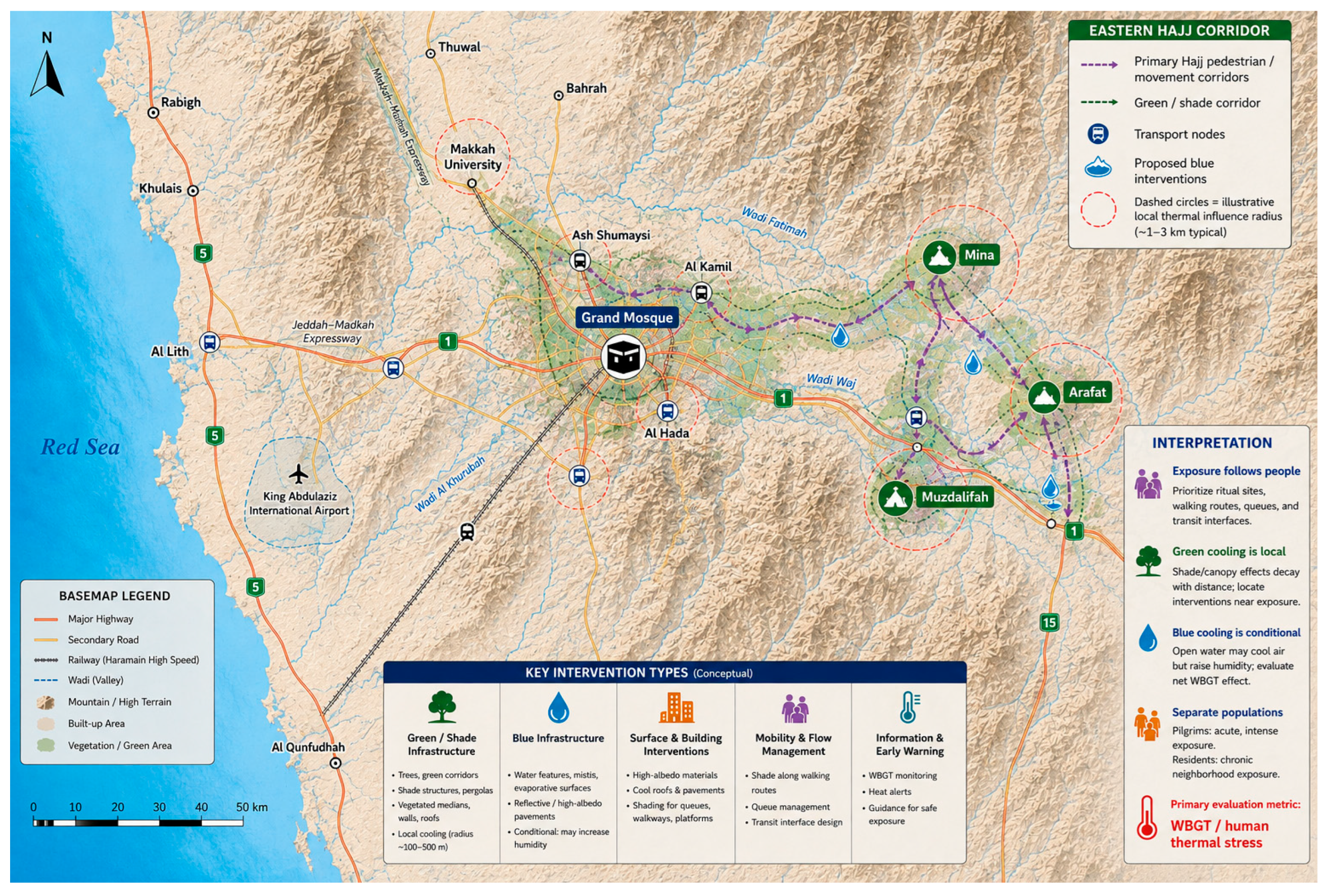
Figure 1. Landscape around Makkah, Saudi Arabia. The map was developed using Shuttle Radar Topography Mission (SRTM) digital elevation model (DEM) data and basemap layers accessed through ArcGIS Online. Elevation data were obtained from the NASA/USGS SRTM DEM. ArcGIS Online basemap data were used for geographic reference and cartographic context. The map layout and visualization were prepared with AI-assisted cartographic support using Claude Sonnet 5 (Anthropic), with the underlying geospatial data derived from the aforementioned sources.
Ijerph 23 01172 g001
Table 1. Global examples and relevant case studies of NbS and large-scale interventions in arid, heat-prone regions, offering lessons for Makkah.
CharacteristicCase StudySuccess/OutcomeYearCostKey Lessons for MakkahRef.
AfforestationThree-North Shelterbelt Program, ChinaIncreased vegetation cover and contributed to ecological restoration and environmental improvement across arid and semi-arid regions.1978–OngoingReported/estimated at >$8 billionLong-term planning, local species selection, and community participation are essential.[7]
Urban GreeningUrban Heat Island Mitigation, DubaiStudies of Dubai’s urban environment indicate that vegetation and integrated heat-mitigation strategies can improve outdoor thermal conditions under specific urban and climatic conditions.2010s–PresentNot disclosedIntegrating vegetation into urban design may improve outdoor thermal conditions under appropriate climatic, spatial, and design conditions.[15,16]
Reforestation CampaignsTen Billion Tree Tsunami Programme, PakistanEvidence of increased vegetation cover and forest restoration, with substantial community participation reported in the program.2014–2021~$169 millionCommunity participation, appropriate species selection, restoration planning, and long-term management are important considerations for large-scale vegetation programs in water-limited environments.[10,13,14]
Water ManagementRed Sea–Dead Sea Water Conveyance Project Proposed large-scale desalination and water-conveyance concept; not implemented. Included as a planning and feasibility case rather than as an example of successful implementation.Planning since 2005Estimated $11–11.3 billionProposed water-conveyance and desalination systems require rigorous assessment of water demand, energy use, cost, environmental impacts, and long-term sustainability.[24,25,26]
Artificial LakesChitgar Lake, TehranStudies report localized cooling effects around the lake, with the magnitude of thermal benefits influenced by surrounding environmental and urban conditions.Completed in 2013~$200 million (estimated)Urban water bodies may provide localized cooling, but their thermal effects depend on surrounding urban form, environmental conditions, and water-management considerations.[29,30,31]
Soil and Ecosystem RestorationLoess Plateau Restoration, ChinaIncreased vegetation cover and improved soil and water conservation through integrated restoration approaches.1994–Early 2000s~$500 million (approx.)Soil stabilization, water-conservation measures, and appropriately managed vegetation can support land rehabilitation in water-limited environments.[9,32]
Energy and Water EfficiencyShuqaiq 3 Desalination Plant, Saudi ArabiaProduces approximately 450,000 m3/day through seawater reverse osmosis.Commercial operation: January 2022$600+ millionLarge-scale desalination can provide substantial water-production capacity, but its suitability for supporting greening in Makkah would require assessment of energy use, cost, environmental impacts, and water demand.[33,34]
Energy and Water EfficiencyHassyan Seawater Reverse-Osmosis Desalination Project, DubaiSeawater reverse-osmosis project with a planned capacity of approximately 818,000 m3/day; designed to improve water-supply reliability while reducing energy intensity through high-efficiency RO technology and renewable-energy integration.Operation beginning 2026; full capacity expected in 2027€848 millionLarge-scale reverse-osmosis desalination and integration with renewable energy can reduce the energy intensity and environmental footprint of water production in arid regions.[35,36]
Community EngagementAl Baydha Project, Saudi ArabiaDemonstrates a dryland restoration approach involving rainwater harvesting and vegetation establishment; its experience is relevant primarily to restoration and water-management practices rather than direct evidence of urban heat mitigation.2010s–PresentNot publicly disclosedUse of locally appropriate species and community involvement may support the sustainability and contextual relevance of dryland restoration efforts.[8]
Disclaimer/Publisher’s Note: The statements, opinions and data contained in all publications are solely those of the individual author(s) and contributor(s) and not of MDPI and/or the editor(s). MDPI and/or the editor(s) disclaim responsibility for any injury to people or property resulting from any ideas, methods, instructions or products referred to in the content.


