Land Subsidence in Qingdao, China, from 2017 to 2020 Based on PS-InSAR

Abstract
1. Introduction
2. Study Area and Data
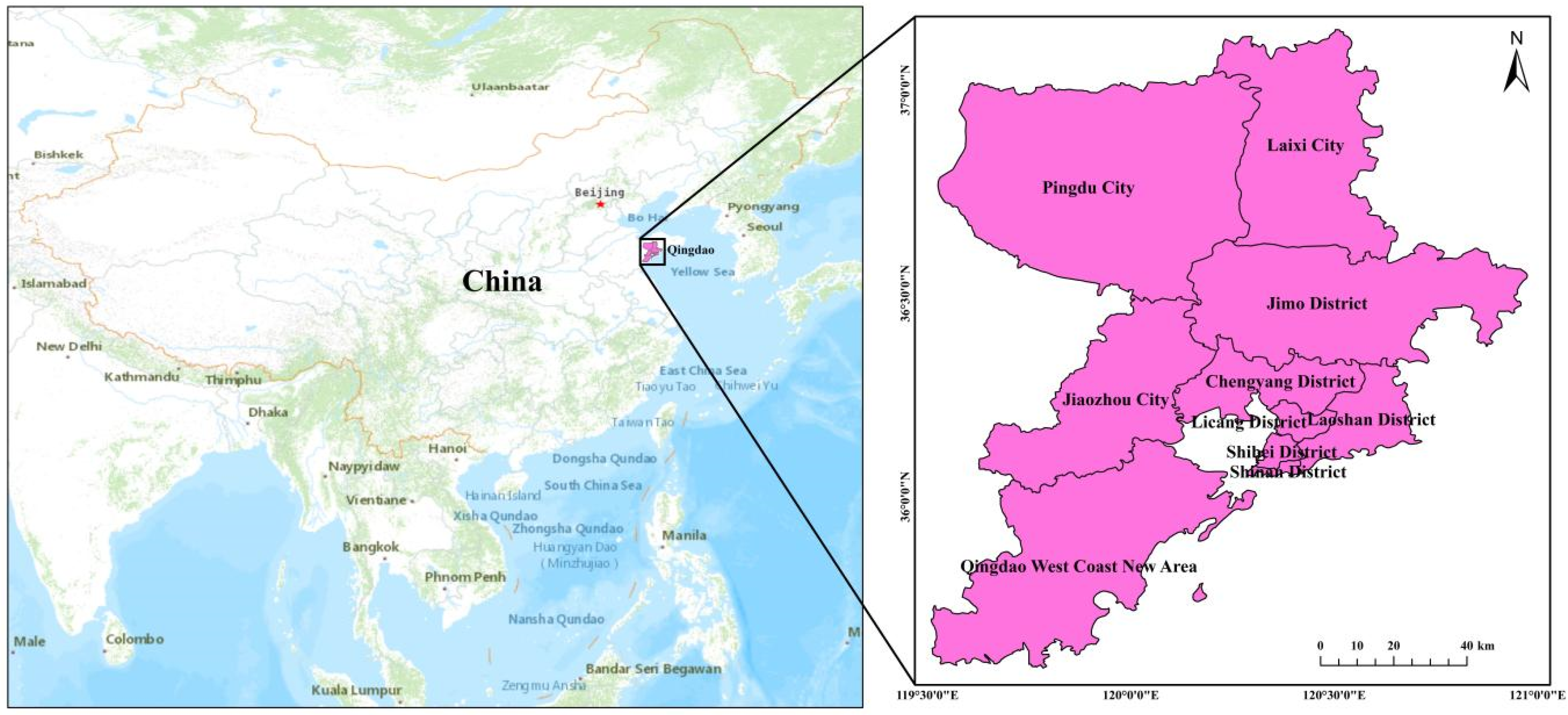
2.1. Study Area
2.2. Data
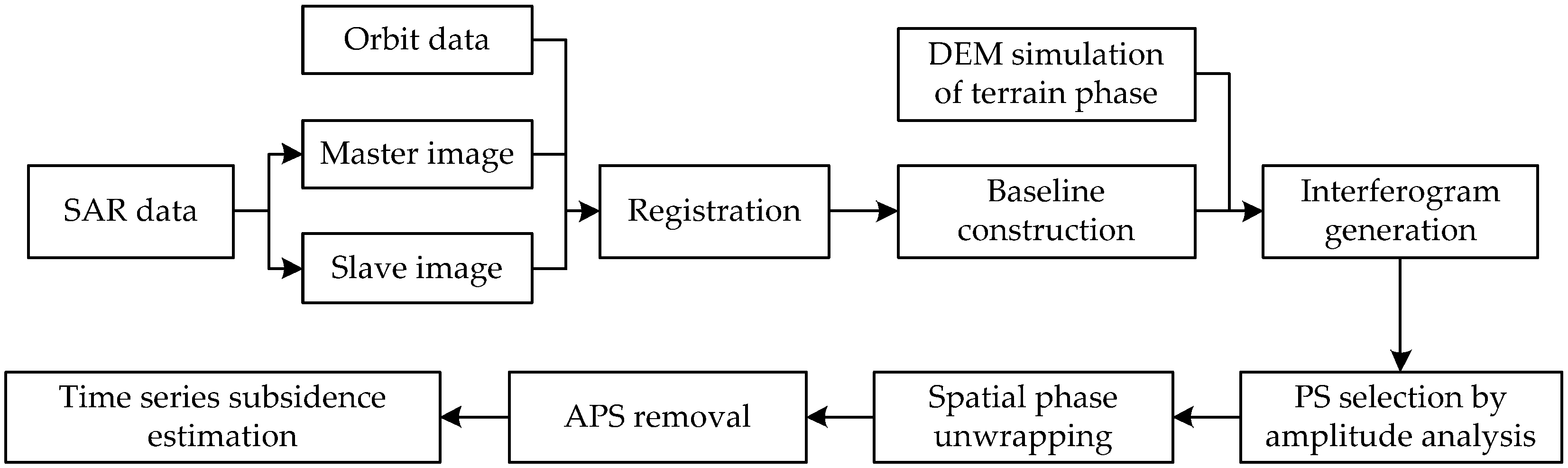
3. PS-InSAR
4. Results and Analysis
4.1. Overall Analysis
4.2. Local Analysis
5. Discussion
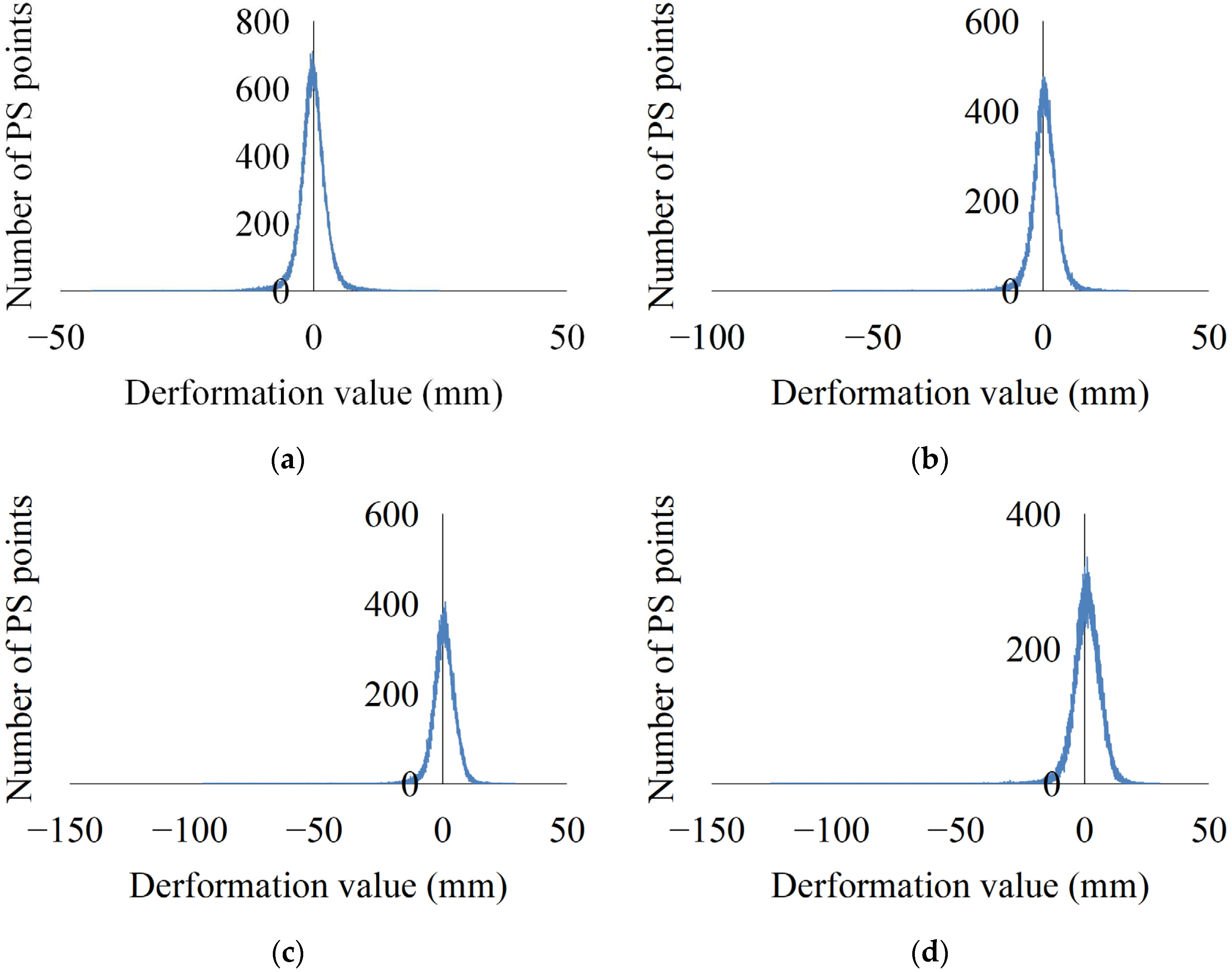
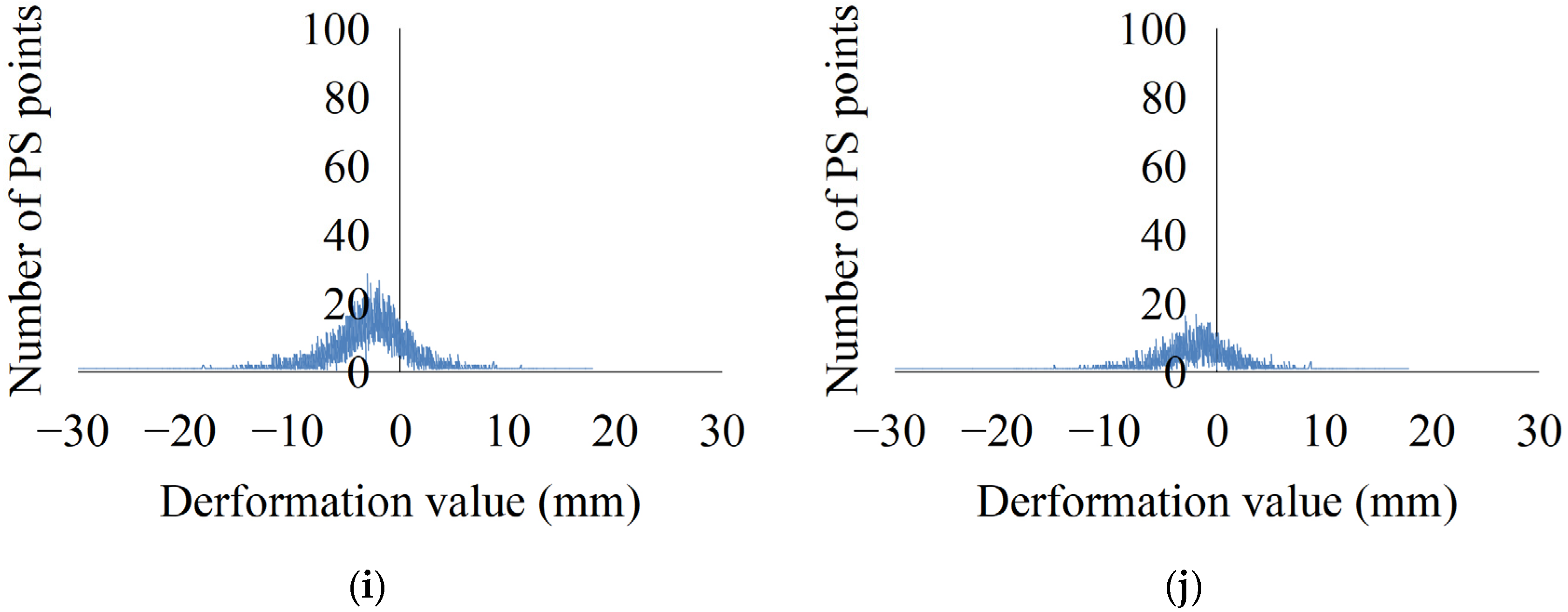
5.1. Reliability Analysis
5.2. Analysis of the Causes of Subsidence
6. Conclusions
- (1)
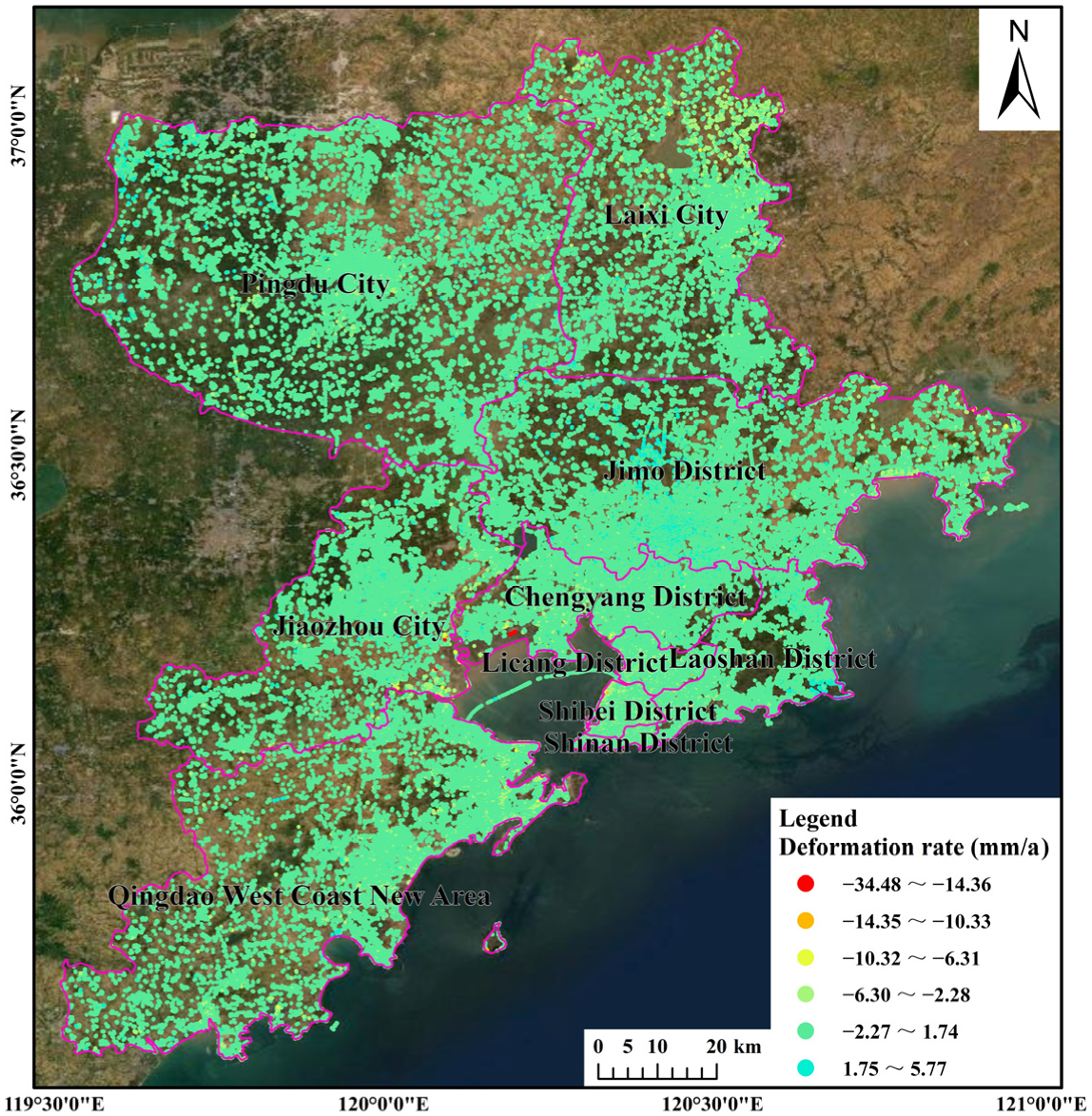
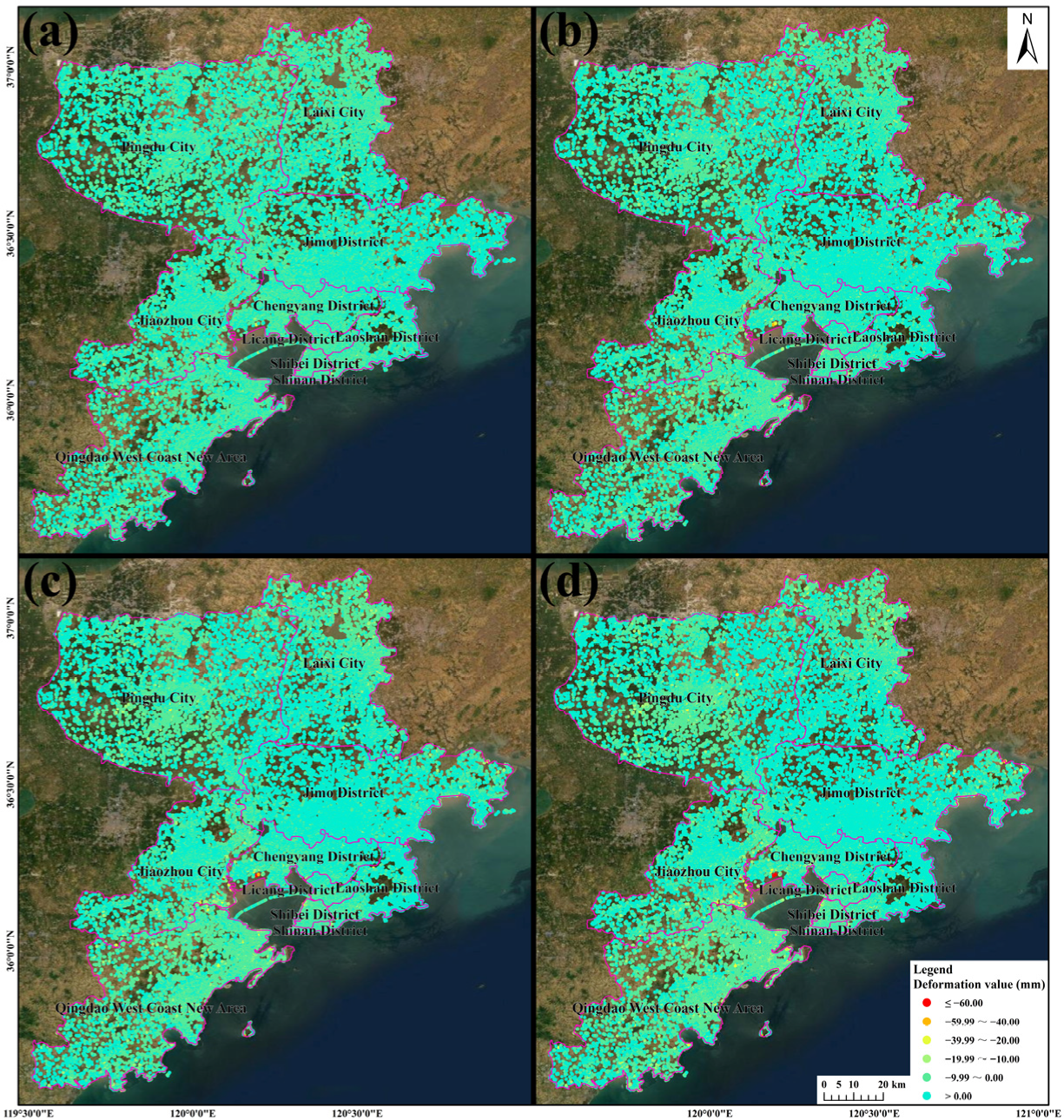
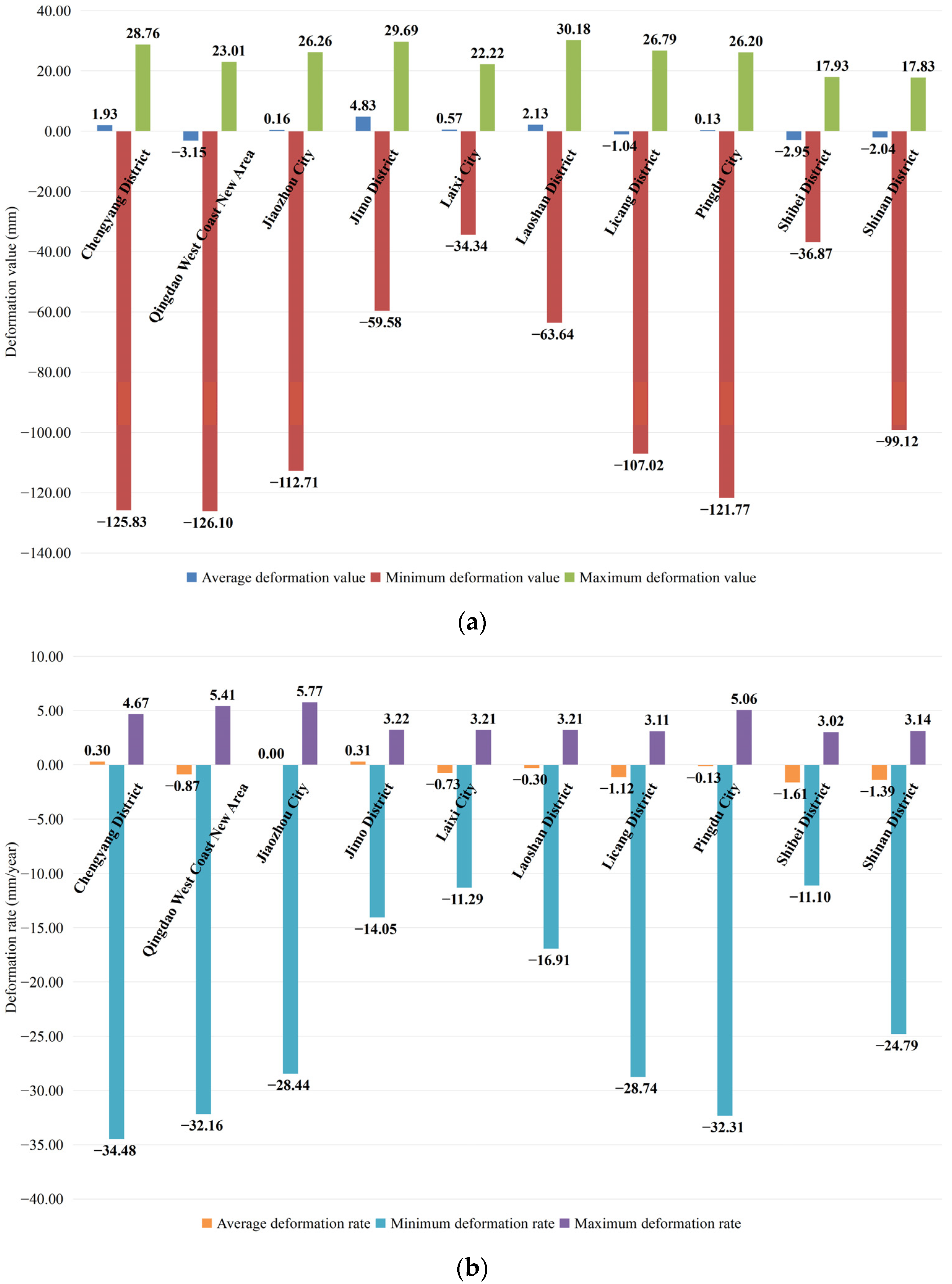
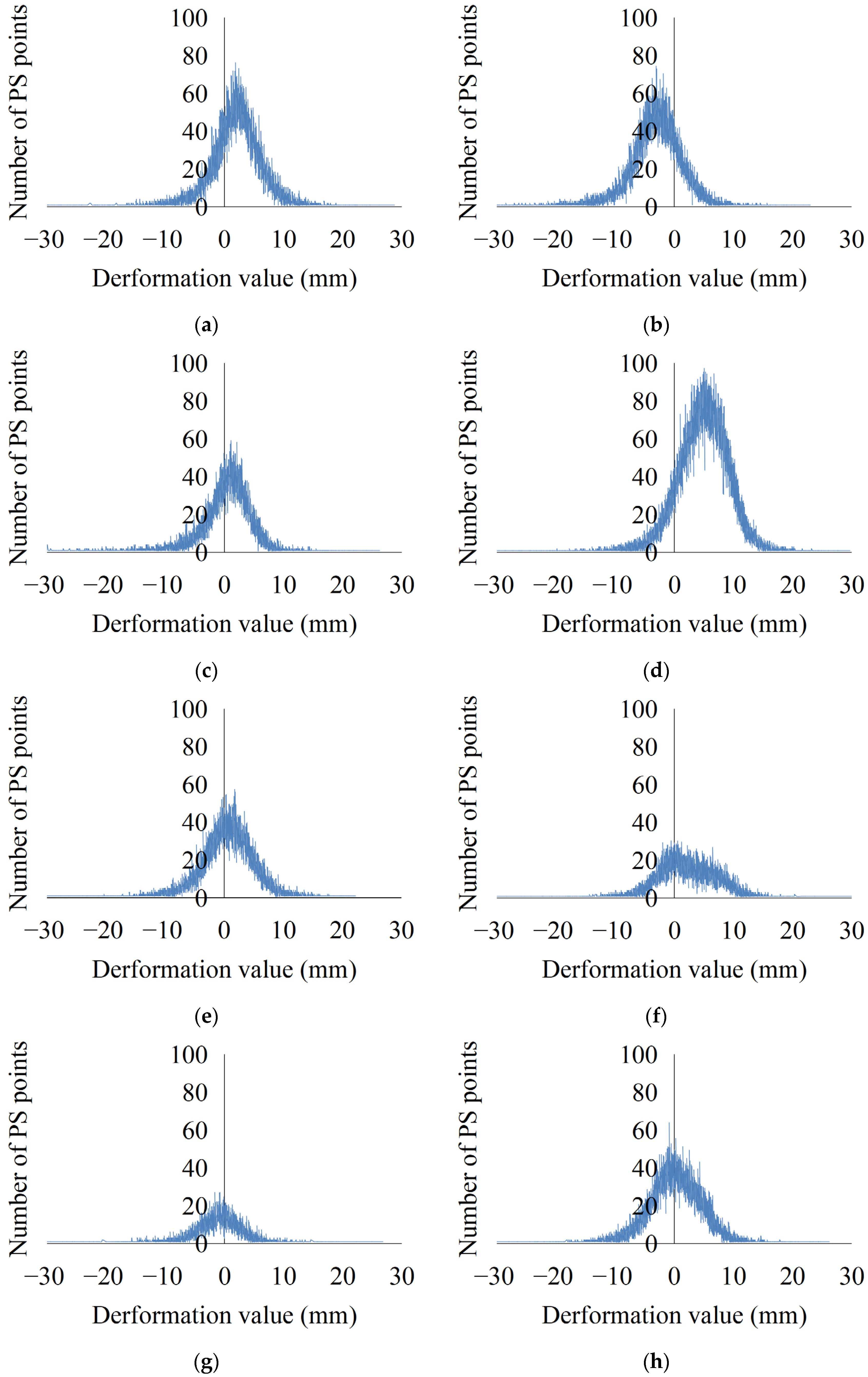
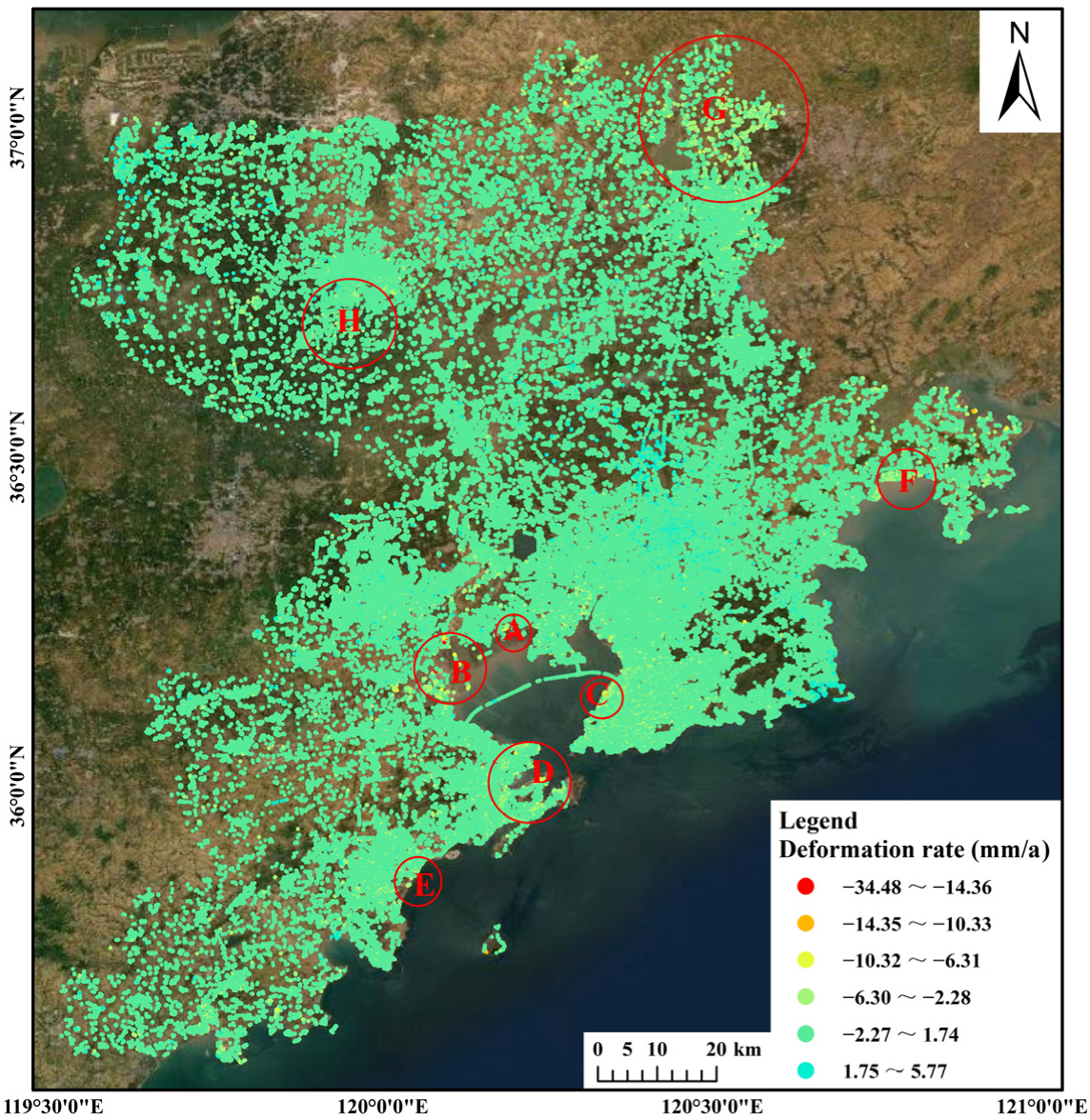
- From 2017 to 2020, the land subsidence in Qingdao was relatively stable. The deformation rate was mainly −34.48 to 5.77 mm/a, and the cumulative deformation was mainly −126.10 to 30.18 mm. The subsidence was mainly distributed in coastal areas (along the coasts of Jiaozhou Bay and the Yellow Sea) and inland areas (northeast Laixi City and central Pingdu City). The overall average deformation rate in each district/city was small, within 2.00 mm/a. The maximum subsidence rate occurred in the Chengyang District, and the deformation rate was −34.48 mm/a.
- (2)
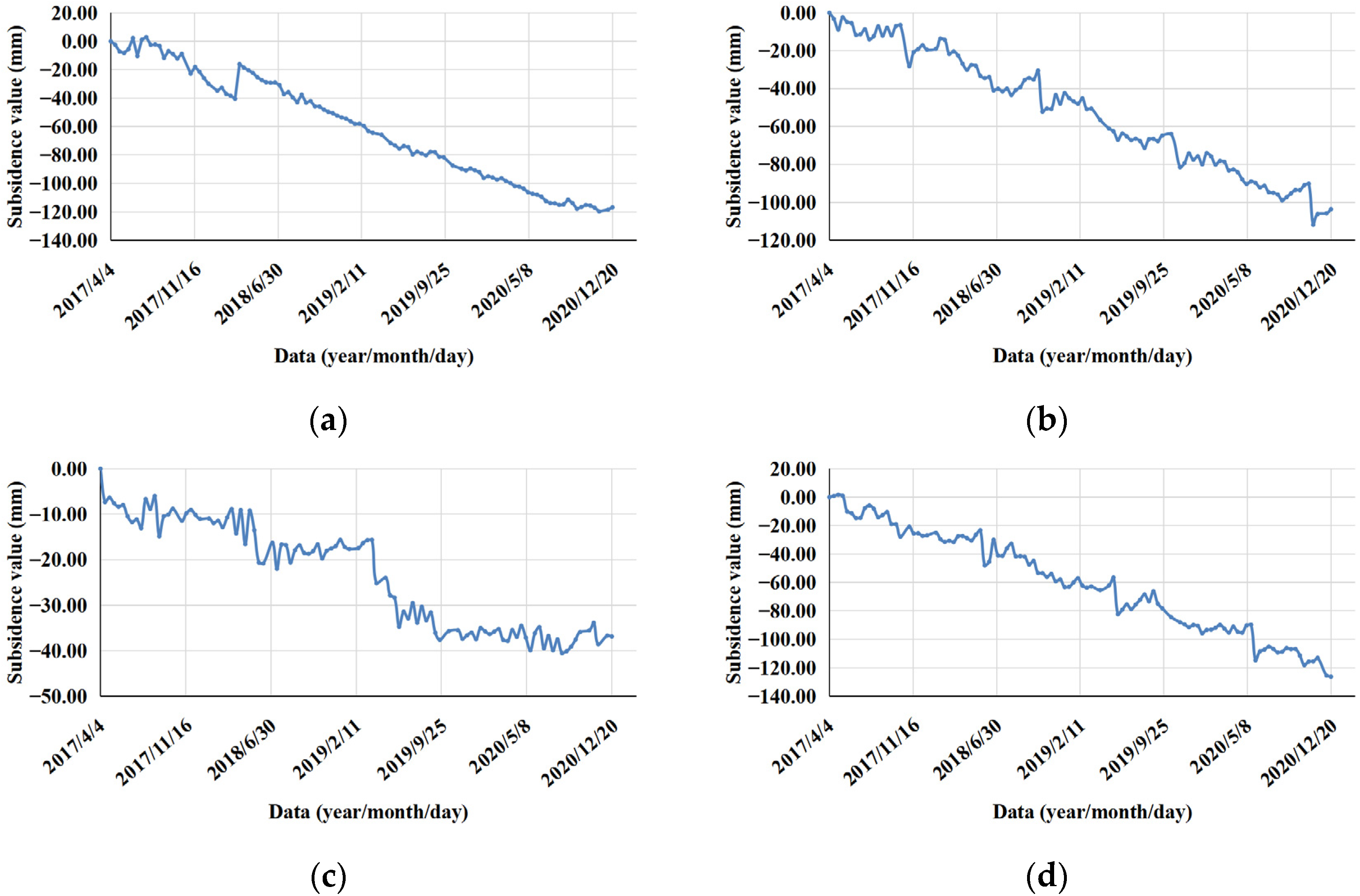
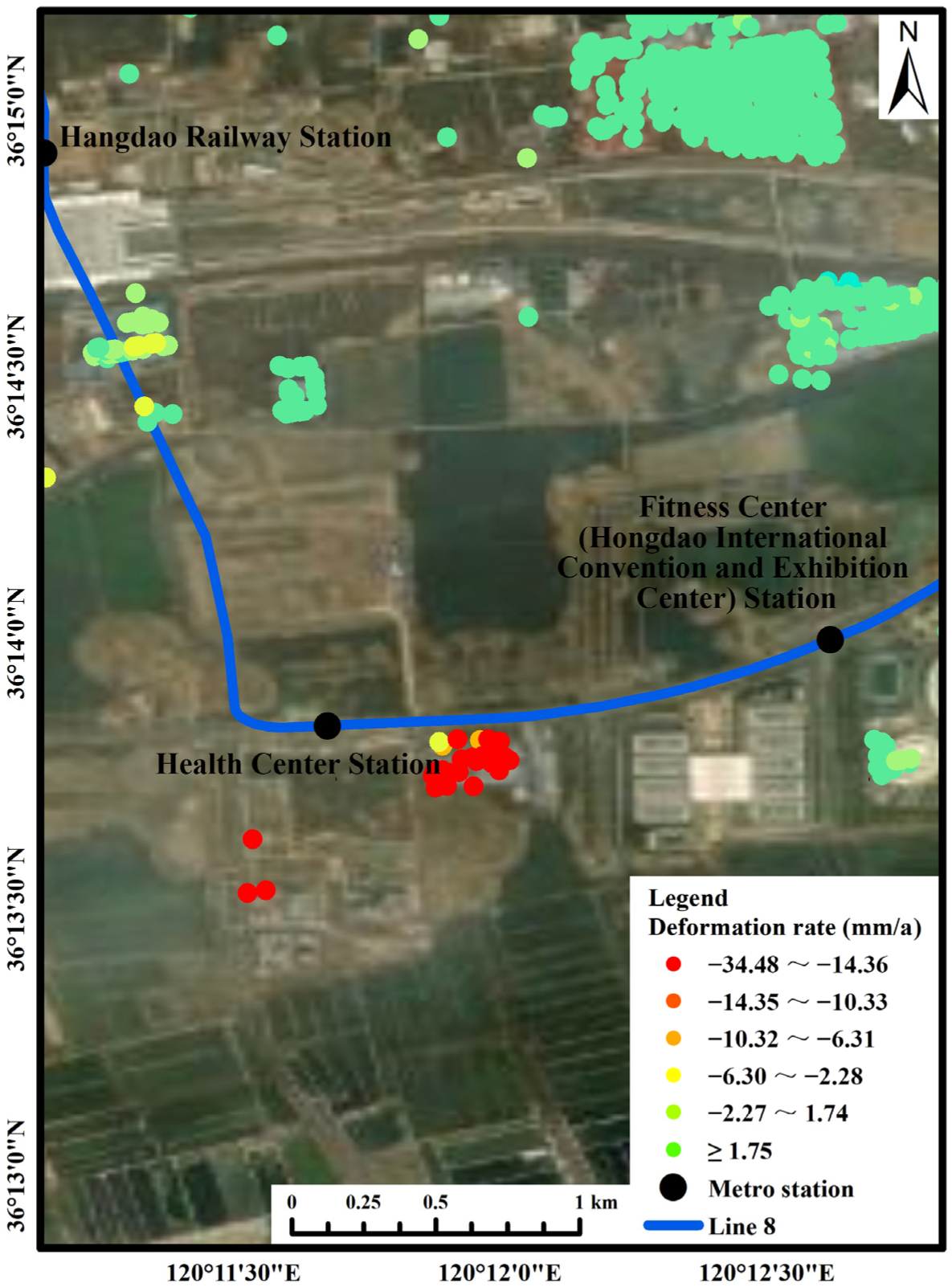
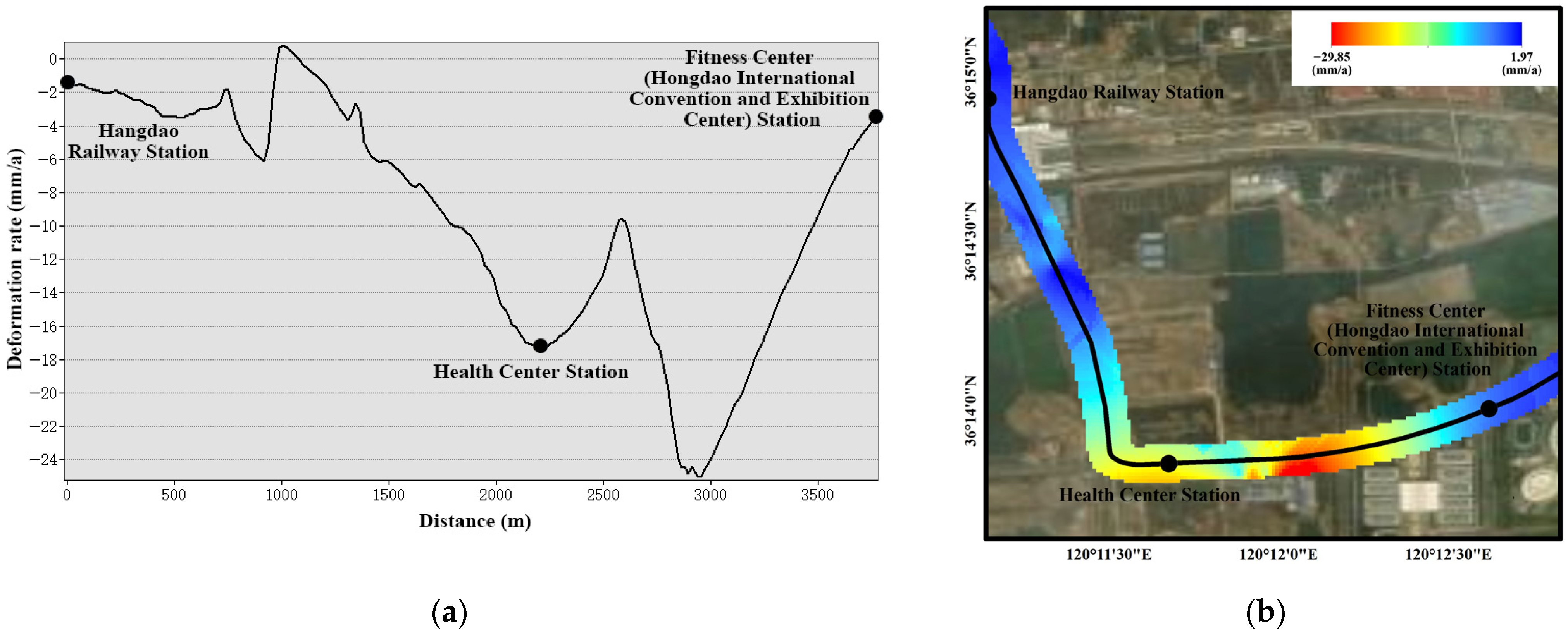
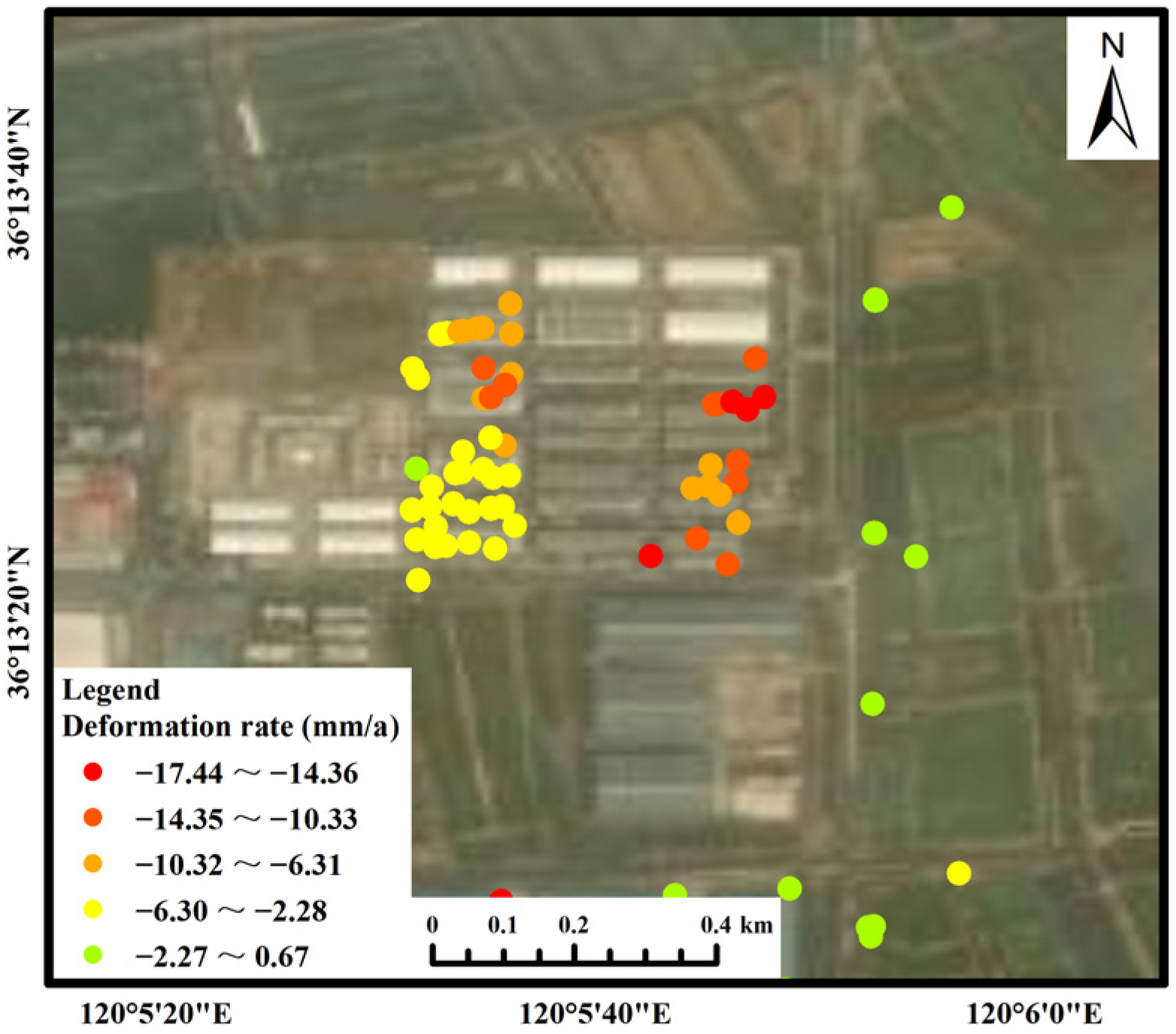
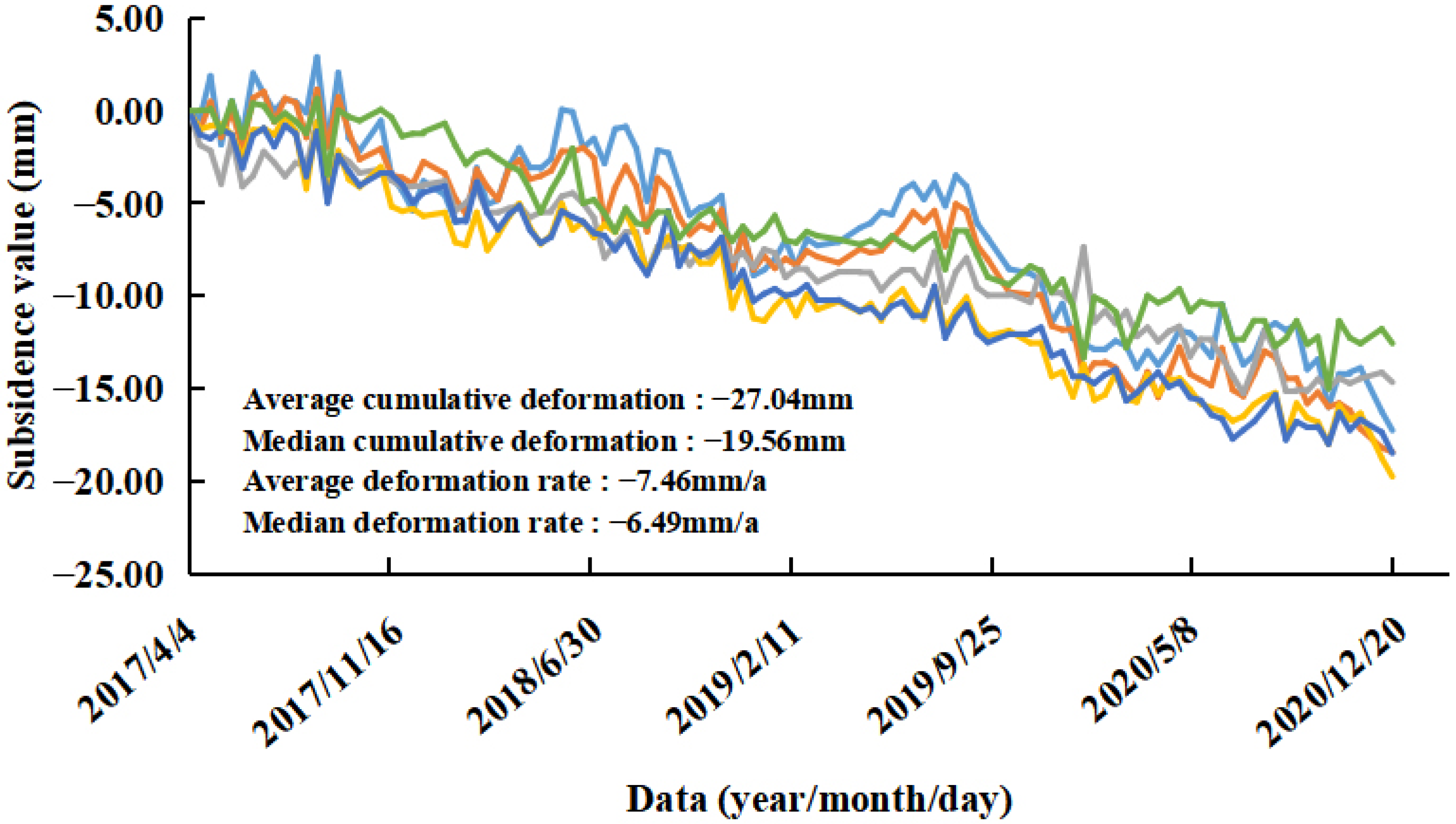
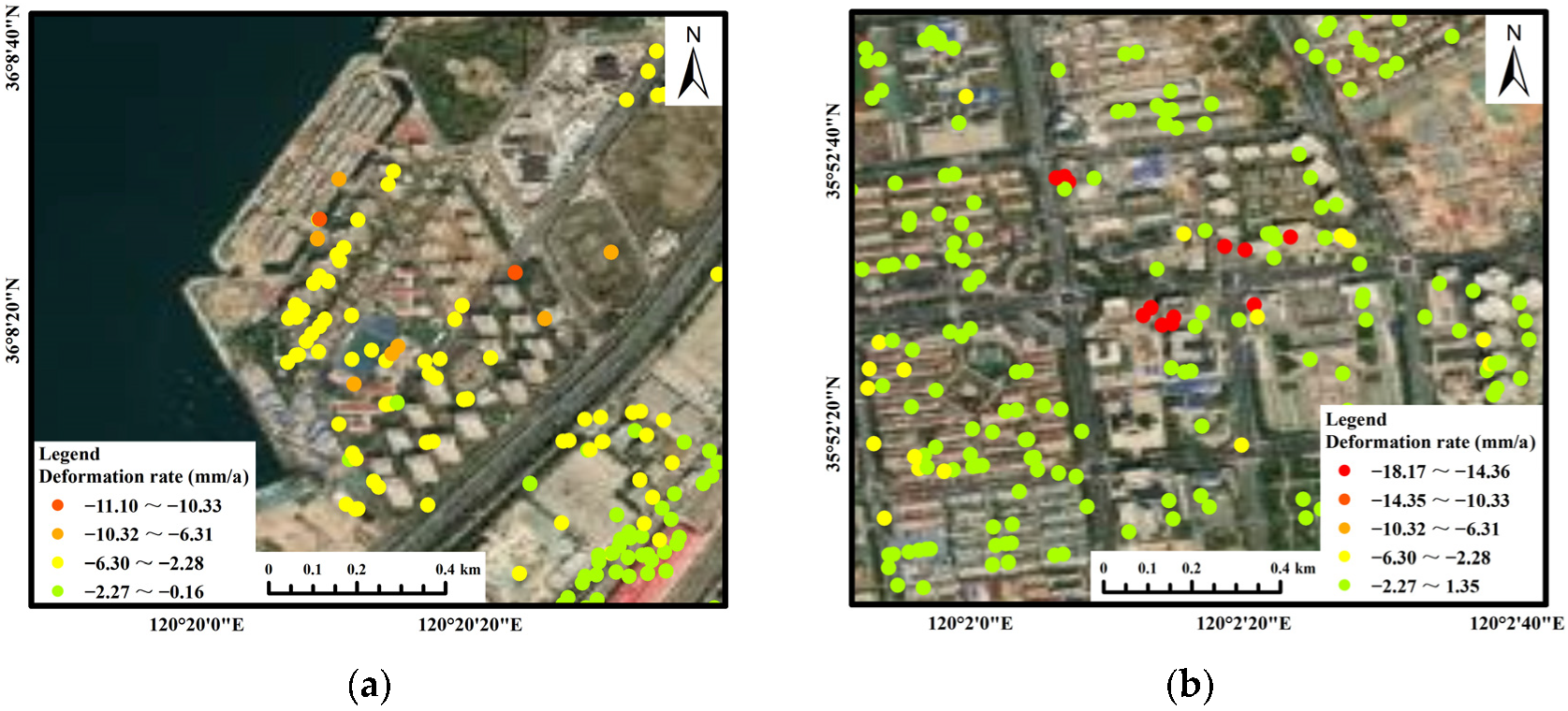
- The subsidence along the coasts of Jiaozhou Bay and the Yellow Sea was relatively scattered, exhibiting a sporadic distribution. According to the new findings of this study, the subsidence around the Health Center Station of Metro Line 8 was obvious, with a maximum subsidence rate of 34.48 mm/a. The maximum subsidence rate of a logistics company in Qingdao was 17.44 mm/a. Several high-rise residential areas and business office buildings were also found to have experienced obvious subsidence, with the maximum subsidence rate exceeding 11.00 mm/a. The subsidence in these areas was serious, so further attention should be paid to the safety of buildings and the ground surface.
- (3)
- The northeastern part of Laixi City and the central part of Pingdu City were found to be in a state of slow subsidence and exhibited a concentrated circular distribution. The average subsidence rate in the area was within 2.50 mm/a, and the average cumulative subsidence was within 5.00 mm. Although the subsidence in this area was not obvious, it is also necessary to pay attention to the subsequent deformation of the buildings in this area.
- (4)
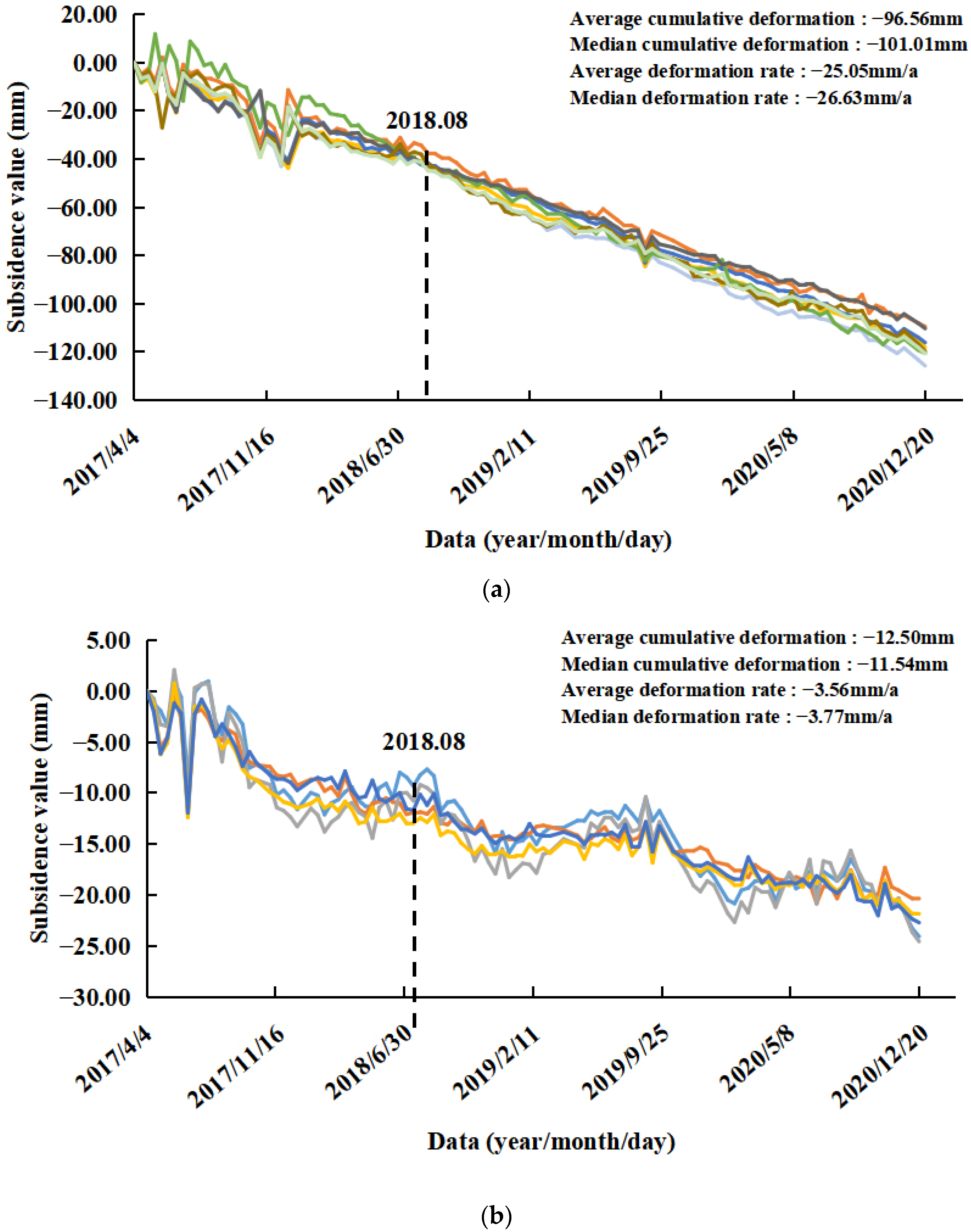
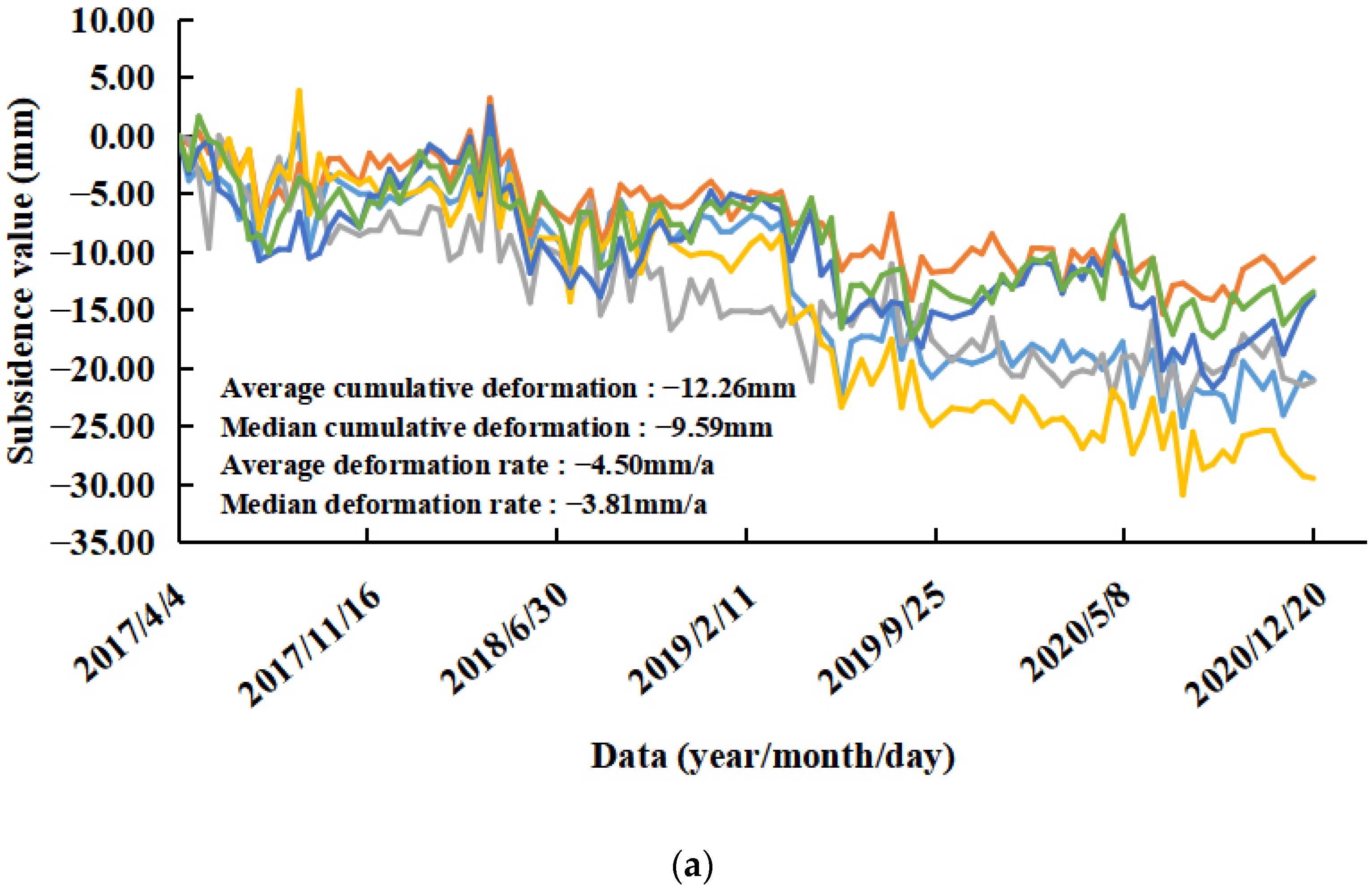
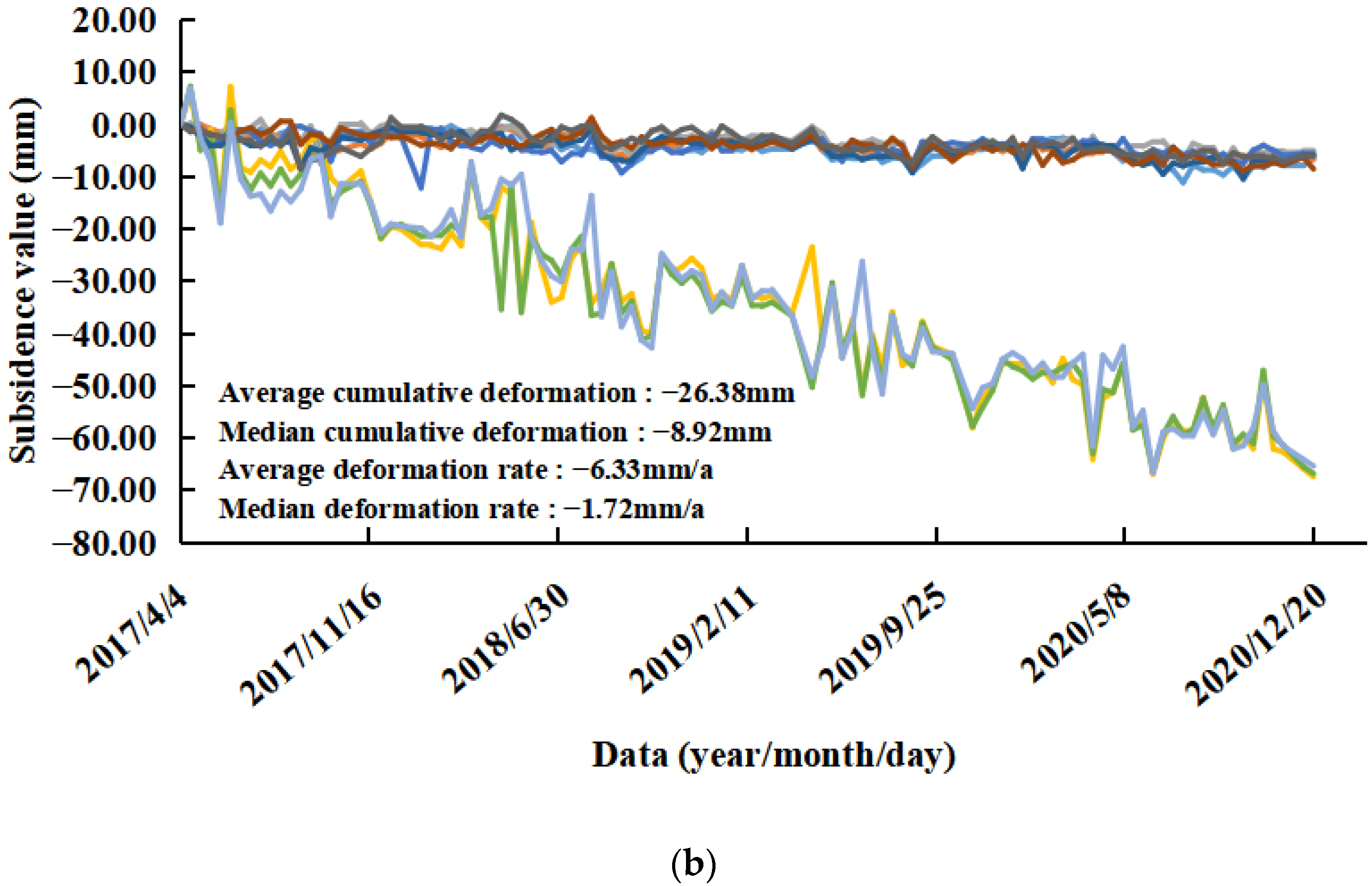
- There were obvious differences in subsidence trend and degree near the Health Center Station caused by subway construction. Unstable deformation of the ground was caused by tunnel excavation during subway construction, while a steady subsidence of the ground was maintained due to the gravity effect after the completion of the construction. Therefore, further attention should be paid to the subsidence of the area after the operation of the subway line.
- (5)
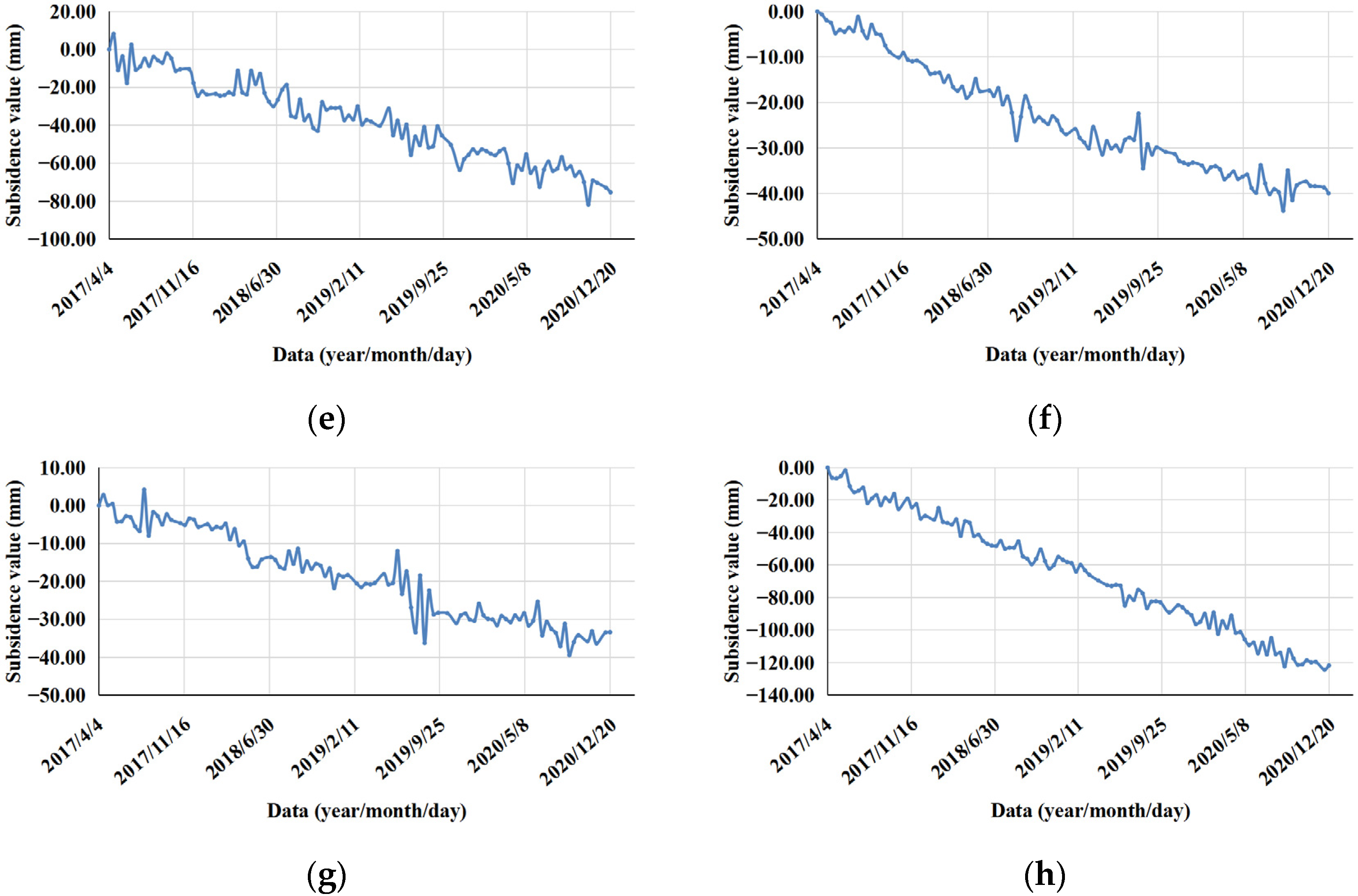
- The subsidence of buildings in Area C and E was caused by the excessive exploitation of groundwater and the load imposed by the overlying strata on the surface. Further analysis found that there was uneven subsidence of buildings in Area E, which posed a great threat to the safety of local life and property, requiring the management department to take corresponding measures to prevent disasters.
Author Contributions
Funding
Institutional Review Board Statement
Informed Consent Statement
Data Availability Statement
Conflicts of Interest
References
- El Kamali, M.; Papoutsis, I.; Loupasakis, C.; Abuelgasim, A.; Omari, K.; Kontoes, C. Monitoring of land surface subsidence using persistent scatterer interferometry techniques and ground truth data in arid and semi-arid regions, the case of Remah, UAE. Sci. Total Environ. 2021, 776, 145946. [Google Scholar] [CrossRef] [Scilit]
- Ding, P.; Jia, C.; Di, S.; Wu, J.; Wei, R. Analysis and Evaluation of Land Subsidence along Linear Engineering Based on InSAR Data. KSCE J. Civ. Eng. 2021, 25, 3477–3491. [Google Scholar] [CrossRef] [Scilit]
- Cando Jácome, M.; Martinez-Graña, A.M.; Valdés, V. Detection of Terrain Deformations Using InSAR Techniques in Relation to Results on Terrain Subsidence (Ciudad de Zaruma, Ecuador). Remote Sens. 2020, 12, 1598. [Google Scholar] [CrossRef] [Scilit]
- Vega, G.E.F. Subsidence of the city of Mexico: A historical review. Proc. Anaheim Symp. 1976, 121, 35–38. [Google Scholar]
- Gabriel, A.K.; Goldstein, R.M.; Zebker, H.A. Mapping small elevation changes over large areas: Differential radar interferometry. J. Geophys. Res. 1989, 94, 9183–9191. [Google Scholar] [CrossRef] [Scilit]
- Sandwell, D.T.; Price, E.J. Phase gradient approach to stacking interferograms. J. Geophys. Res. Solid Earth 1998, 103, 30183–30204. [Google Scholar] [CrossRef] [Scilit]
- Ferretti, A.; Prati, C.; Rocca, F. Permanent scatterers in SAR interferometry. IEEE Trans. Geosci. Remote Sens. 2001, 39, 8–20. [Google Scholar] [CrossRef] [Scilit]
- Berardino, P.; Fornaro, G.; Lanari, R.; Sansosti, E. A new algorithm for surface deformation monitoring based on small baseline differential SAR interferograms. IEEE Trans. Geosci. Remote Sens. 2002, 40, 2375–2383. [Google Scholar] [CrossRef] [Scilit]
- Costantini, M.; Falco, S.; Malvarosa, F.; Minati, F. A New Method for Identification and Analysis of Persistent Scatterers in Series of SAR Images. In Proceedings of the IEEE International Geoscience & Remote Sensing Symposium, Boston, MA, USA, 10 February 2009. [Google Scholar]
- Perissin, D.; Wang, T. Repeat-Pass SAR Interferometry with Partially Coherent Targets. IEEE Trans. Geosci. Remote Sens. 2012, 50, 271–280. [Google Scholar] [CrossRef] [Scilit]
- Zhu, X.X.; Bamler, R. Super-Resolution Power and Robustness of Compressive Sensing for Spectral Estimation with Application to Spaceborne Tomographic SAR. IEEE Trans. Geosci. Remote Sens. 2012, 50, 247–258. [Google Scholar] [CrossRef] [Scilit]
- Bianchini Ciampoli, L.; Gagliardi, V.; Ferrante, C.; Calvi, A.; D’Amico, F.; Tosti, F. Displacement Monitoring in Airport Runways by Persistent Scatterers SAR Interferometry. Remote Sens. 2020, 12, 3564. [Google Scholar] [CrossRef] [Scilit]
- Werner, C.; Wegmuller, U.; Strozzi, T.; Wiesmann, A. Interferometric point target analysis for deformation mapping. In Proceedings of the 2003 IEEE International Geoscience and Remote Sensing Symposium, Toulouse, France, 21 August 2003. [Google Scholar]
- Hooper, A.; Zebker, H.; Segall, P.; Kampes, B. A new method for measuring deformation on volcanoes and other natural terrains using InSAR persistent scatterers. Geophys. Res. Lett. 2004, 31, L23611. [Google Scholar] [CrossRef] [Scilit]
- Ferretti, A.; Fumagalli, A.; Novali, F.; Prati, C.; Rocca, F.; Rucci, A. A New Algorithm for Processing Interferometric Data-Stacks: SqueeSAR. IEEE Trans. Geosci. Remote Sens. 2011, 49, 3460–3470. [Google Scholar] [CrossRef] [Scilit]
- Mora, O.; Mallorqui, J.J.; Broquetas, A. Linear and nonlinear terrain deformation maps from a reduced set of interferometric sar images. IEEE Trans. Geosci. Remote Sens. 2003, 41, 2243–2253. [Google Scholar] [CrossRef] [Scilit]
- Gao, M.; Gong, H.; Chen, B.; Li, X.; Zhou, C.; Shi, M.; Si, Y.; Chen, Z.; Duan, G. Regional Land Subsidence Analysis in Eastern Beijing Plain by InSAR Time Series and Wavelet Transforms. Remote Sens. 2018, 10, 365. [Google Scholar] [CrossRef] [Scilit]
- Mokadem, N.; Boughariou, E.; Mudarra, M.; Ben Brahim, F.; Andreo, B.; Hamed, Y.; Bouri, S. Mapping potential zones for groundwater recharge and its evaluation in arid environments using a GIS approach: Case study of North Gafsa Basin (Central Tunisia). J. Afr. Earth Sci. 2018, 141, 107–117. [Google Scholar] [CrossRef] [Scilit]
- Chen, B.; Gong, H.; Lei, K.; Li, J.; Zhou, C.; Gao, M.; Guan, H.; Lv, W. Land subsidence lagging quantification in the main exploration aquifer layers in Beijing plain, China. Int. J. Appl. Earth Obs. Geoinf. 2019, 75, 54–67. [Google Scholar] [CrossRef] [Scilit]
- Chen, J.; Knight, R.; Zebker, H.A.; Schreüder, W.A. Confined aquifer head measurements and storage properties in the San Luis Valley, Colorado, from spaceborne InSAR observations. Water Resour. Res. 2016, 52, 3623–3636. [Google Scholar] [CrossRef] [Scilit]
- Lu, Y.-Y.; Ke, C.-Q.; Jiang, H.-J.; Chen, D.-L. Monitoring urban land surface deformation (2004–2010) from InSAR, groundwater and levelling data: A case study of Changzhou city, China. J. Earth Syst. Sci. 2019, 128, 1–15. [Google Scholar] [CrossRef] [Scilit]
- Hu, X.; Lu, Z.; Wang, T. Characterization of Hydrogeological Properties in Salt Lake Valley, Utah, using InSAR. J. Geophys. Res. Earth Surf. 2018, 123, 1257–1271. [Google Scholar] [CrossRef] [Scilit]
- Dong, S.; Samsonov, S.; Yin, H.; Huang, L. Two-Dimensional Ground Deformation Monitoring in Shanghai Based on SBAS and MSBAS InSAR Methods. J. Earth Sci. 2018, 29, 960–968. [Google Scholar] [CrossRef] [Scilit]
- Cigna, F.; Tapete, D. Present-day land subsidence rates, surface faulting hazard and risk in Mexico City with 2014–2020 Sentinel-1 IW InSAR. Remote Sens. Environ. 2021, 253, 112161. [Google Scholar] [CrossRef] [Scilit]
- He, Y.; Xu, G.; Kaufmann, H.; Wang, J.; Ma, H.; Liu, T. Integration of InSAR and LiDAR Technologies for a Detailed Urban Subsidence and Hazard Assessment in Shenzhen, China. Remote Sens. 2021, 13, 2366. [Google Scholar] [CrossRef] [Scilit]
- Qiu, Z.; Jiang, T.; Zhou, L.; Wang, C.; Luzi, G. Study of subsidence monitoring in Nanjing City with small-baseline InSAR approach. Geomat. Nat. Hazards Risk 2019, 10, 1412–1424. [Google Scholar] [CrossRef] [Scilit]
- Tao, Q.; Guo, Z.; Wang, F.; An, Q.; Han, Y. SBAS-InSAR time series ground subsidence monitoring along Metro Line 13 in Qingdao, China. Arab. J. Geosci. 2021, 14, 1–14. [Google Scholar] [CrossRef] [Scilit]
- Prasetyo, Y.; Firdaus, H.S.; Diyanah. Land Subsidence of Semarang City Using Permanent Scatterer Interferometric Synthetic Aperture Radar (Ps-Insar) Method In Sentinel 1a Between 2014–2017. IOP Conf. Ser. Earth Environ. Sci. 2019, 313, 012044. [Google Scholar] [CrossRef] [Scilit]
- Yang, Q.; Ke, Y.; Zhang, D.; Chen, B.; Gong, H.; Lv, M.; Zhu, L.; Li, X. Multi-Scale Analysis of the Relationship between Land Subsidence and Buildings: A Case Study in an Eastern Beijing Urban Area Using the PS-InSAR Technique. Remote Sens. 2018, 10, 1006. [Google Scholar] [CrossRef] [Scilit]
- de Wit, K.; Lexmond, B.R.; Stouthamer, E.; Neussner, O.; Dörr, N.; Schenk, A.; Minderhoud, P.S.J. Identifying Causes of Urban Differential Subsidence in the Vietnamese Mekong Delta by Combining InSAR and Field Observations. Remote Sens. 2021, 13, 189. [Google Scholar] [CrossRef] [Scilit]
- Yousefi, R.; Talebbeydokhti, N. Subsidence monitoring by integration of time series analysis from different SAR images and impact assessment of stress and aquitard thickness on subsidence in Tehran, Iran. Environ. Earth Sci. 2021, 80, 1–12. [Google Scholar] [CrossRef] [Scilit]
- Peng, M.; Zhao, C.; Zhang, Q.; Lu, Z.; Bai, L.; Bai, W. Multi-Scale and Multi-Dimensional Time Series InSAR Characterizing of Surface Deformation over Shandong Peninsula, China. Appl. Sci. 2020, 10, 2294. [Google Scholar] [CrossRef] [Scilit]
- Goorabi, A.; Karimi, M.; Yamani, M.; Perissin, D. Land subsidence in Isfahan metropolitan and its relationship with geological and geomorphological settings revealed by Sentinel-1A InSAR observations. J. Arid. Environ. 2020, 181, 104238. [Google Scholar] [CrossRef] [Scilit]
- Bott, L.-M.; Schöne, T.; Illigner, J.; Haghshenas Haghighi, M.; Gisevius, K.; Braun, B. Land subsidence in Jakarta and Semarang Bay—The relationship between physical processes, risk perception, and household adaptation. Ocean. Coast. Manag. 2021, 211, 105775. [Google Scholar] [CrossRef] [Scilit]
- Code for Design of Building Foundation; Ministry of Construction of the People′s Republic of China: Beijing, China, 2012.
- He, Y.; Chen, Y.; Wang, W.; Yan, H. TS-InSAR Analysis for Monitoring Ground Deformation in Lanzhou New District, the Loess Plateau of China, from 2017–2019. Adv. Space Res. 2020, 67, 1267–1283. [Google Scholar] [CrossRef] [Scilit]
- Wang, Y.; Bai, Z.; Zhang, Y.; Qin, Y.; Lin, Y.; Li, Y.; Shen, W. Using TerraSAR X-band and Sentinel-1 C-band SAR Interferometry for Deformation along Beijing-Tianjin Intercity Railway Analysis. IEEE J. Sel. Top. Appl. Earth Obs. Remote Sens. 2021, 14, 4832–4841. [Google Scholar] [CrossRef] [Scilit]



| Parameter | Sentinel-1A |
|---|---|
| Band | C |
| Product Type | SLC |
| Polarization | VV |
| Sensor Mode | IW |
| Orbit direction | Ascending |
| Spatial resolution (m) | 20 |
| No. of image | 108 |
| Data range | April 2017–December 2020 |
Publisher’s Note: MDPI stays neutral with regard to jurisdictional claims in published maps and institutional affiliations. |
© 2022 by the authors. Licensee MDPI, Basel, Switzerland. This article is an open access article distributed under the terms and conditions of the Creative Commons Attribution (CC BY) license (https://creativecommons.org/licenses/by/4.0/).
Share and Cite
Li, M.; Zhang, X.; Bai, Z.; Xie, H.; Chen, B. Land Subsidence in Qingdao, China, from 2017 to 2020 Based on PS-InSAR. Int. J. Environ. Res. Public Health 2022, 19, 4913. https://doi.org/10.3390/ijerph19084913
Li M, Zhang X, Bai Z, Xie H, Chen B. Land Subsidence in Qingdao, China, from 2017 to 2020 Based on PS-InSAR. International Journal of Environmental Research and Public Health. 2022; 19(8):4913. https://doi.org/10.3390/ijerph19084913
Chicago/Turabian StyleLi, Mengwei, Xuedong Zhang, Zechao Bai, Haoyun Xie, and Bo Chen. 2022. "Land Subsidence in Qingdao, China, from 2017 to 2020 Based on PS-InSAR" International Journal of Environmental Research and Public Health 19, no. 8: 4913. https://doi.org/10.3390/ijerph19084913
APA StyleLi, M., Zhang, X., Bai, Z., Xie, H., & Chen, B. (2022). Land Subsidence in Qingdao, China, from 2017 to 2020 Based on PS-InSAR. International Journal of Environmental Research and Public Health, 19(8), 4913. https://doi.org/10.3390/ijerph19084913