Article

Can China’s Carbon Emissions Trading System Achieve the Synergistic Effect of Carbon Reduction and Pollution Control?

1
School of Economics and Management, China University of Mining and Technology, Xuzhou 221116, China
2
School of Economics, Shandong Women’s University, Jinan 250300, China
3
Think Tank of Carbon Neutral and Energy Strategy, China University of Mining and Technology, Xuzhou 221116, China
4
School of Public Policy and Management, China University of Mining and Technology, Xuzhou 221116, China
5
School of Safety Engineering, China University of Mining and Technology, Xuzhou 221116, China
*
Authors to whom correspondence should be addressed.
Int. J. Environ. Res. Public Health 2022, 19(15), 8932; https://doi.org/10.3390/ijerph19158932

Submission received: 20 June 2022 / Revised: 19 July 2022 / Accepted: 20 July 2022 / Published: 22 July 2022
(This article belongs to the Special Issue Low-Carbon Development and Carbon Reduction)

Abstract

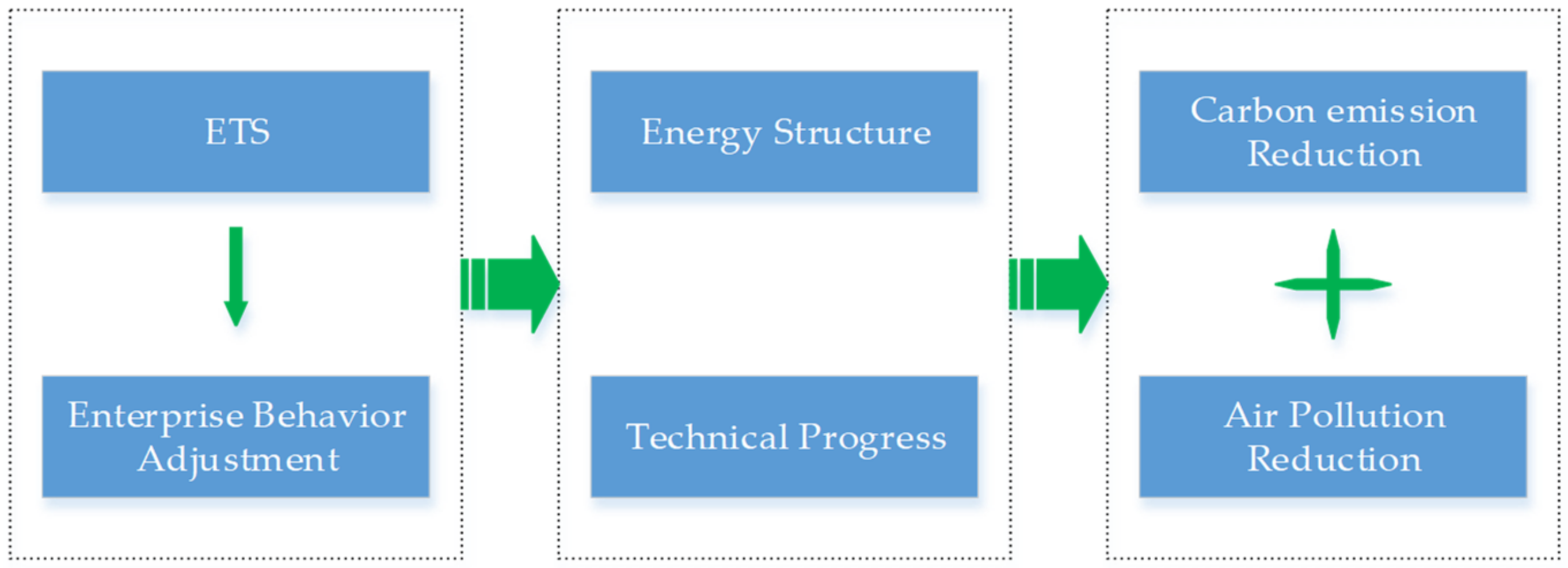
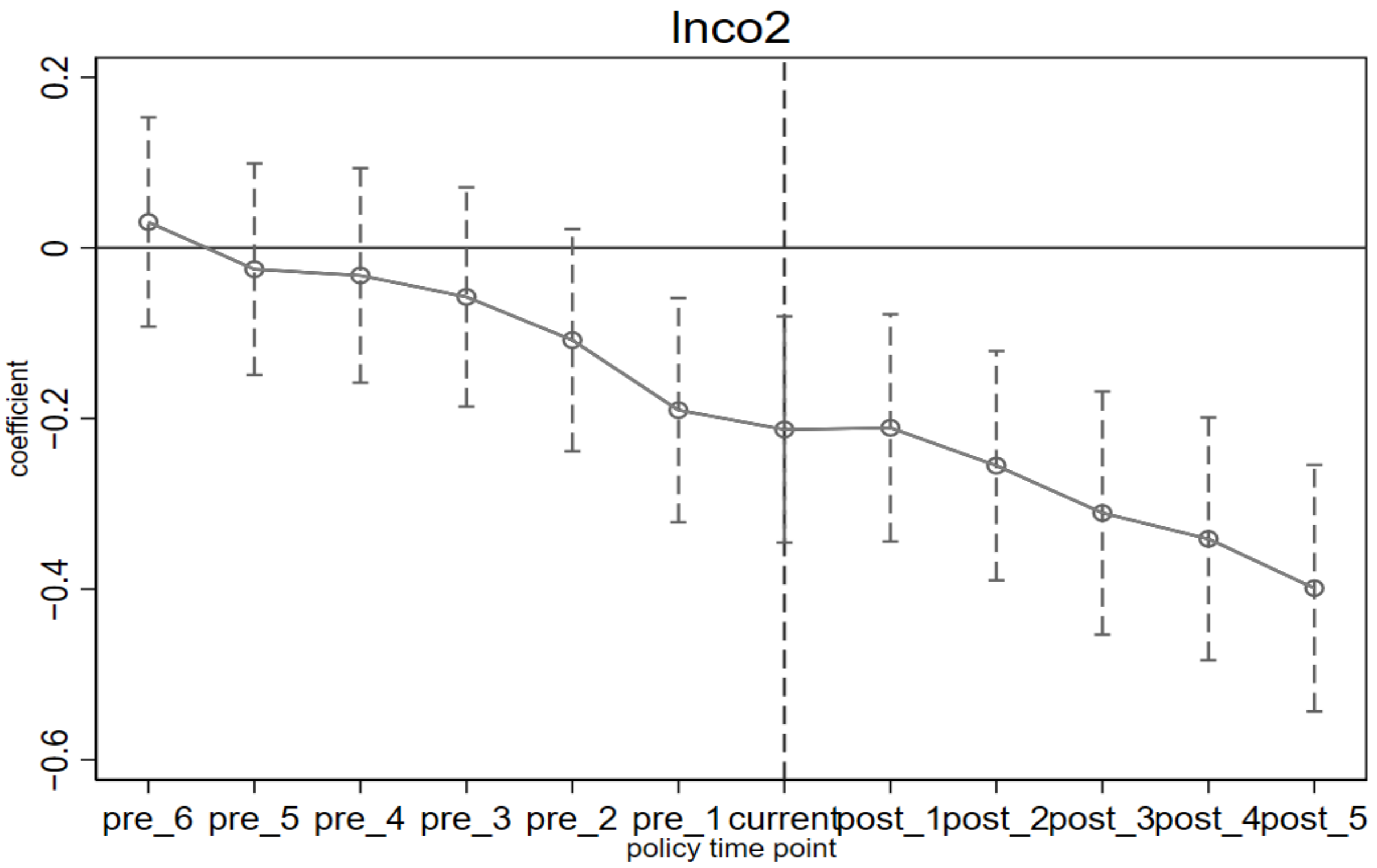
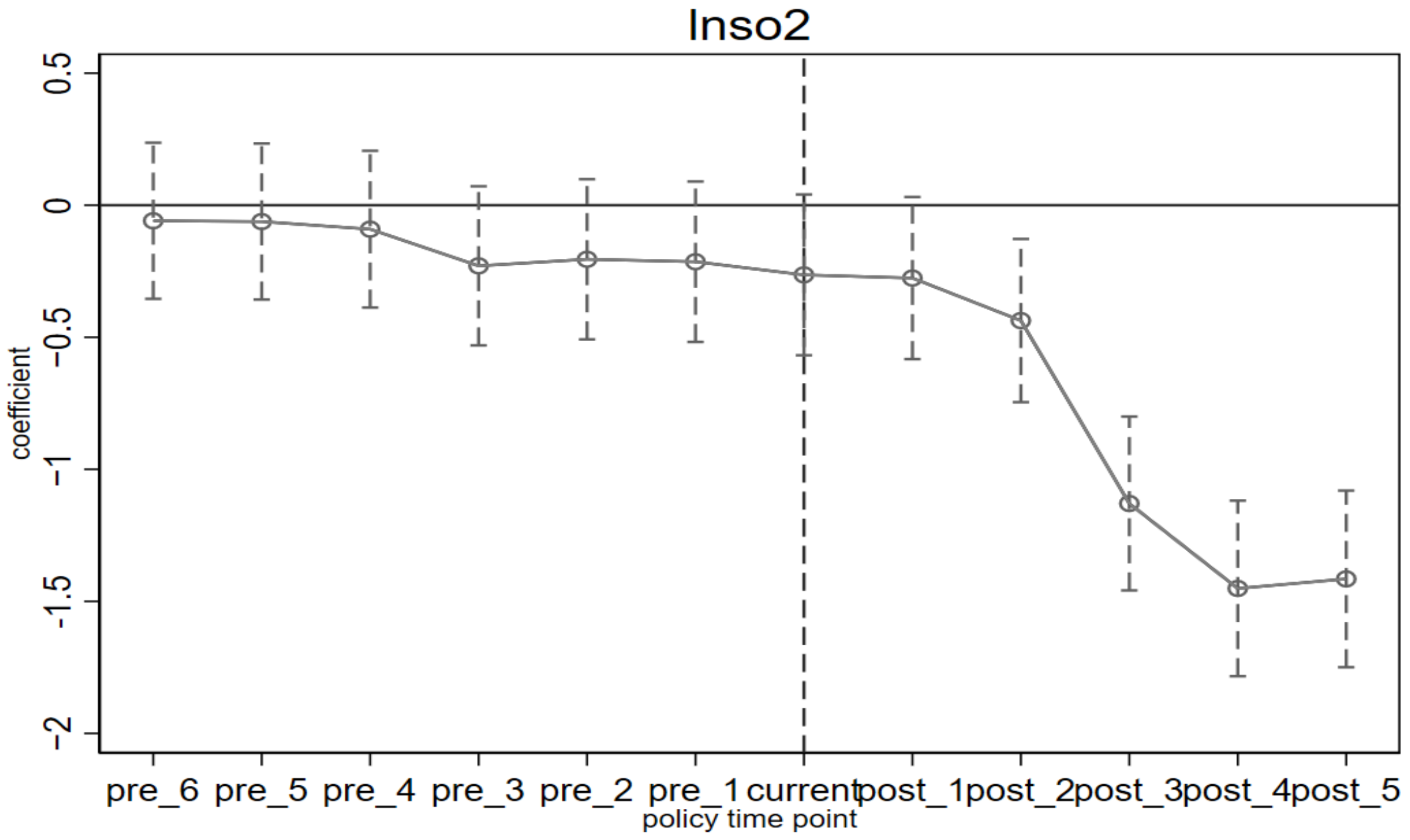
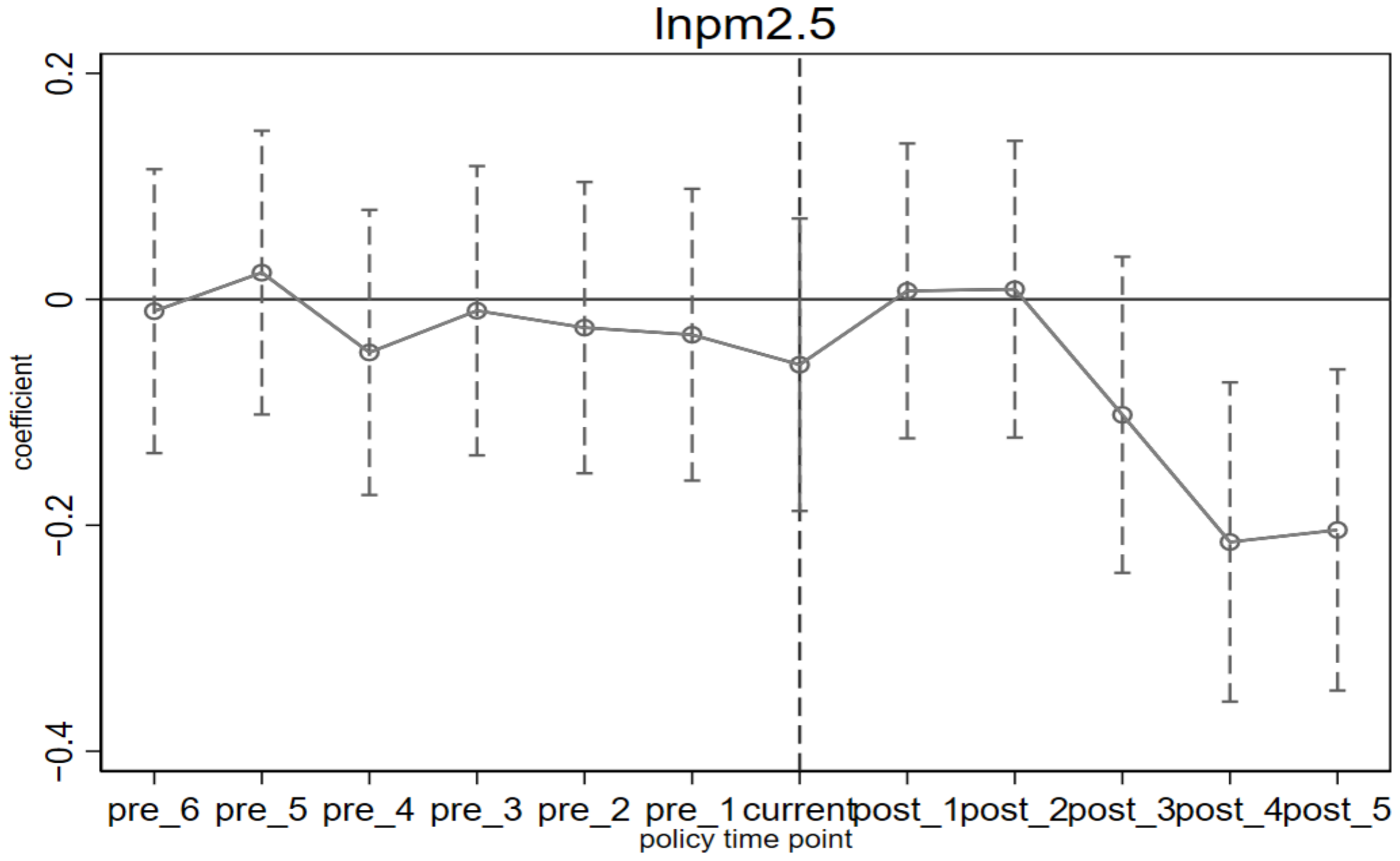
Achieving synergistic governance of air pollution treatment and greenhouse gas emission reduction is the way for the Chinese government to achieve green transformational development. Against this background, this paper takes the implementation of the carbon emissions trading system (ETS) as the breakthrough point, using the time-varying difference-in-differences (DID) model to explore the synergistic emission reduction effect of ETS on air pollution and carbon emissions and its mechanism. The results indicate that the implementation of ETS not only significantly reduces CO2 emissions but also synergistically achieves the reduction of air pollutants, and the synergistic emission reduction effect is mainly achieved through the synergistic reduction of SO2. Moreover, the emission reduction effect of ETS has economic and regional heterogeneity. On the one hand, the ETS has a more prominent carbon reduction effect in less developed provinces and cities and has a significant synergistic emission reduction effect on SO2 and PM2.5; on the other hand, the carbon emission reduction effect of ETS is more potent in Beijing, Hubei, and Shanghai, followed by Tianjin and Chongqing, and the weakest in Guangdong. In addition, through the analysis of the mediating effect, this paper finds that reducing energy consumption, optimizing the energy structure, and improving energy efficiency are effective ways for ETS to achieve synergistic emission reduction. This study provides valuable policy enlightenment for promoting the synergistic governance of pollution and carbon reduction.
Keywords: carbon emissions trading system; time-varying difference-in-differences model; synergistic emission reduction; air pollution carbon emissions trading system; time-varying difference-in-differences model; synergistic emission reduction; air pollution