Article

Machine Learning-Driven Discovery and Evaluation of Antimicrobial Peptides from Crassostrea gigas Mucus Proteome


by
Jingchen Song
1,
Kelin Liu
2,
Xiaoyang Jin
1,3,
Ke Huang
1,3,
Shiwei Fu
1,
Wenjie Yi
1,3,
Yijie Cai
1,3,
Ziniu Yu
1,
Fan Mao
1,* and
Yang Zhang
1,*
1
CAS Key Laboratory of Tropical Marine Bio-Resources and Ecology and Guangdong Provincial Key Laboratory of Applied Marine Biology, South China Sea Institute of Oceanology, Chinese Academy of Sciences, Guangzhou 510301, China
2
College of Marine Life Sciences, Ocean University of China, Qingdao 266100, China
3
University of Chinese Academy of Sciences, Beijing 100049, China
*
Authors to whom correspondence should be addressed.
Mar. Drugs 2024, 22(9), 385; https://doi.org/10.3390/md22090385
Submission received: 2 August 2024 / Revised: 23 August 2024 / Accepted: 23 August 2024 / Published: 26 August 2024
(This article belongs to the Special Issue Bioactive Proteins and Peptides from Marine Mollusks)

Abstract

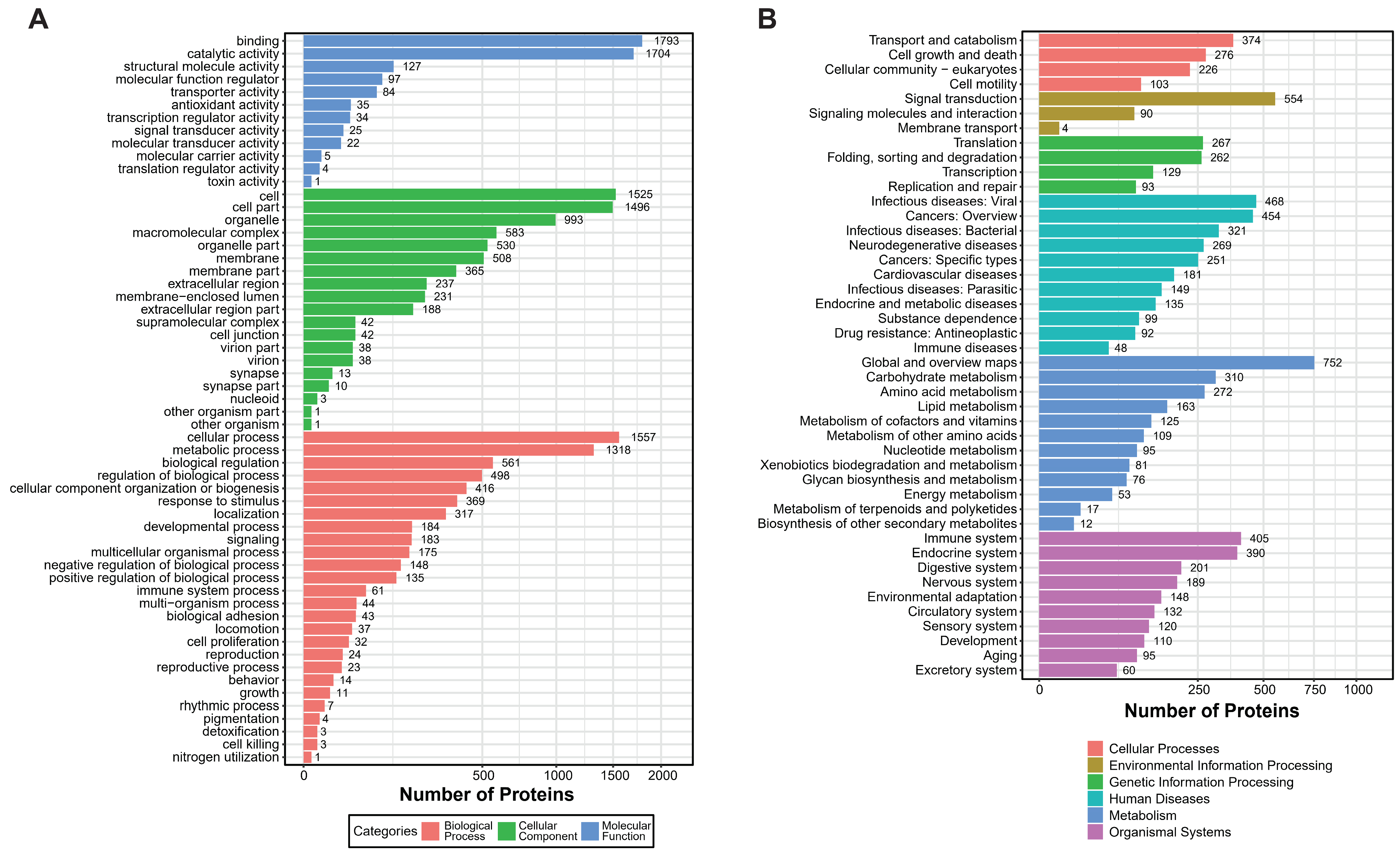
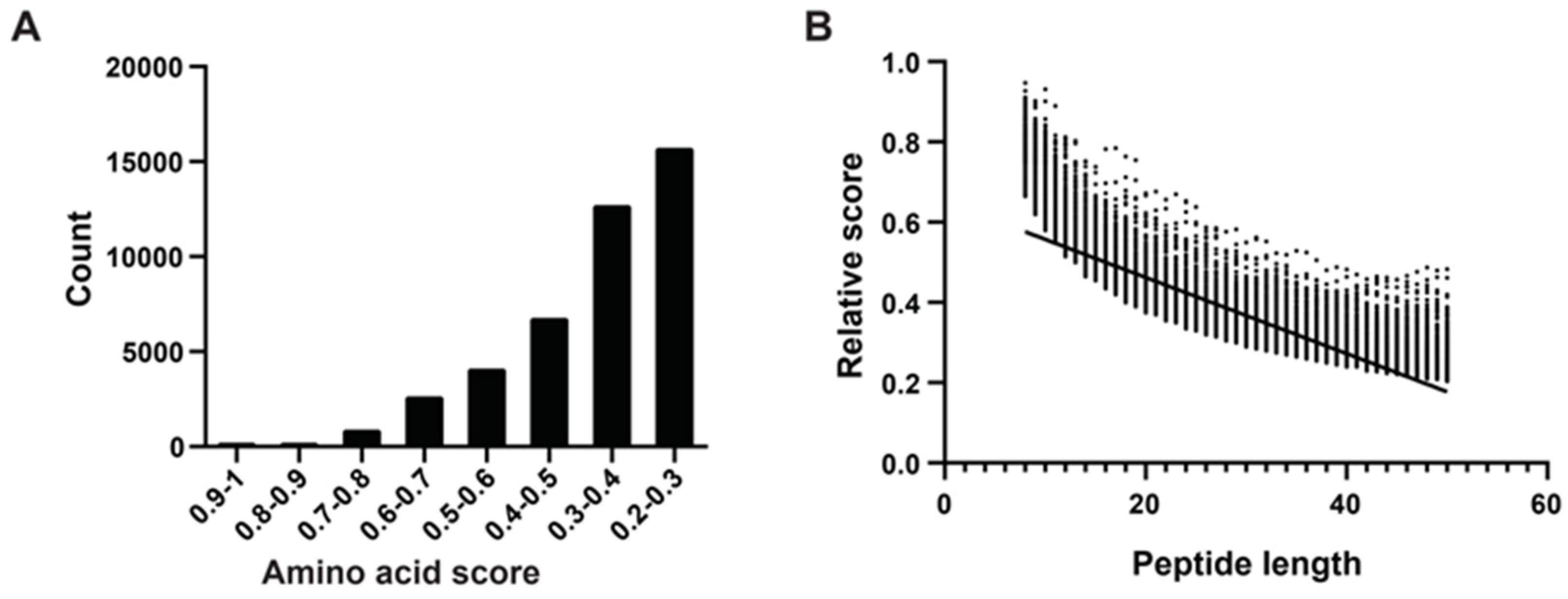
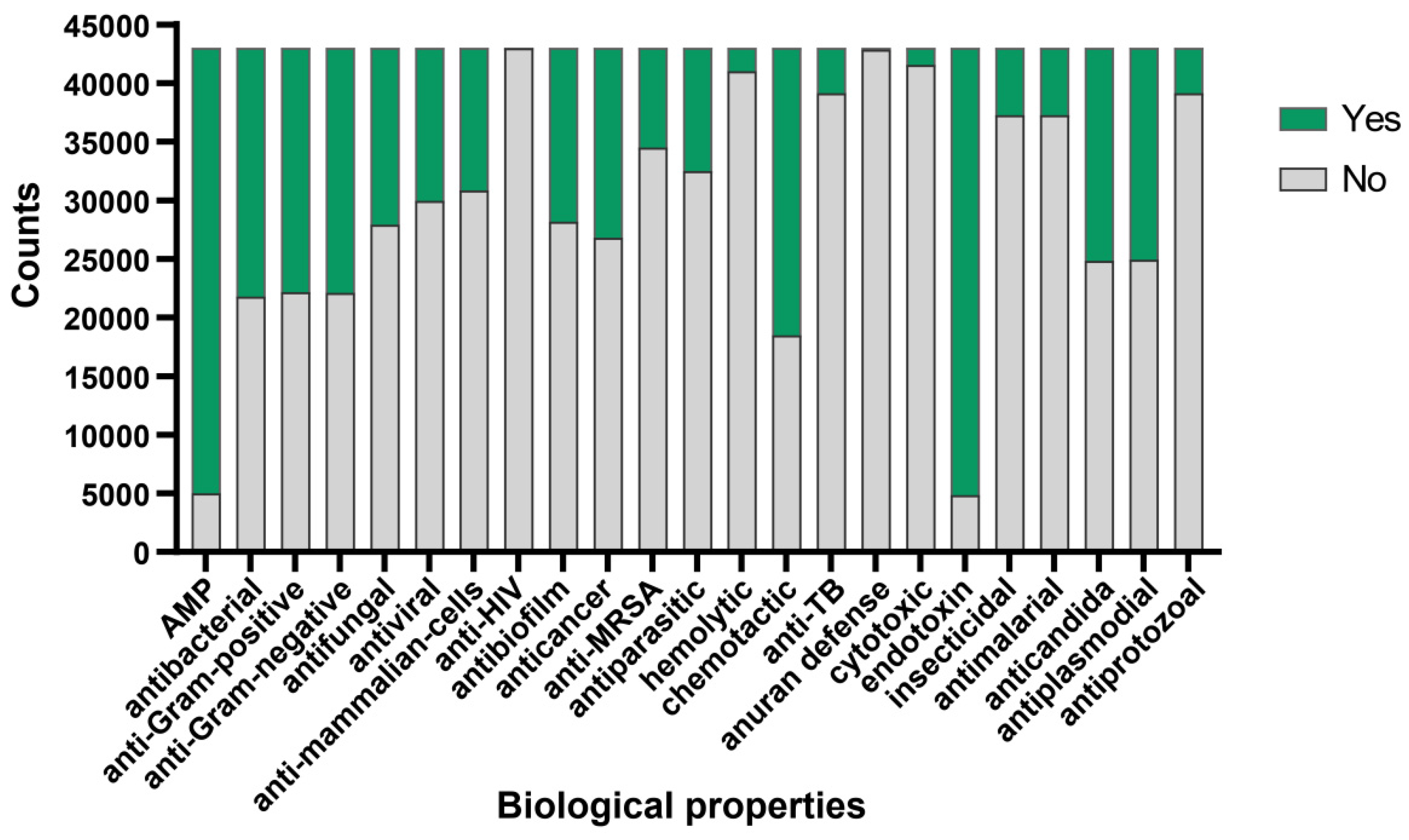
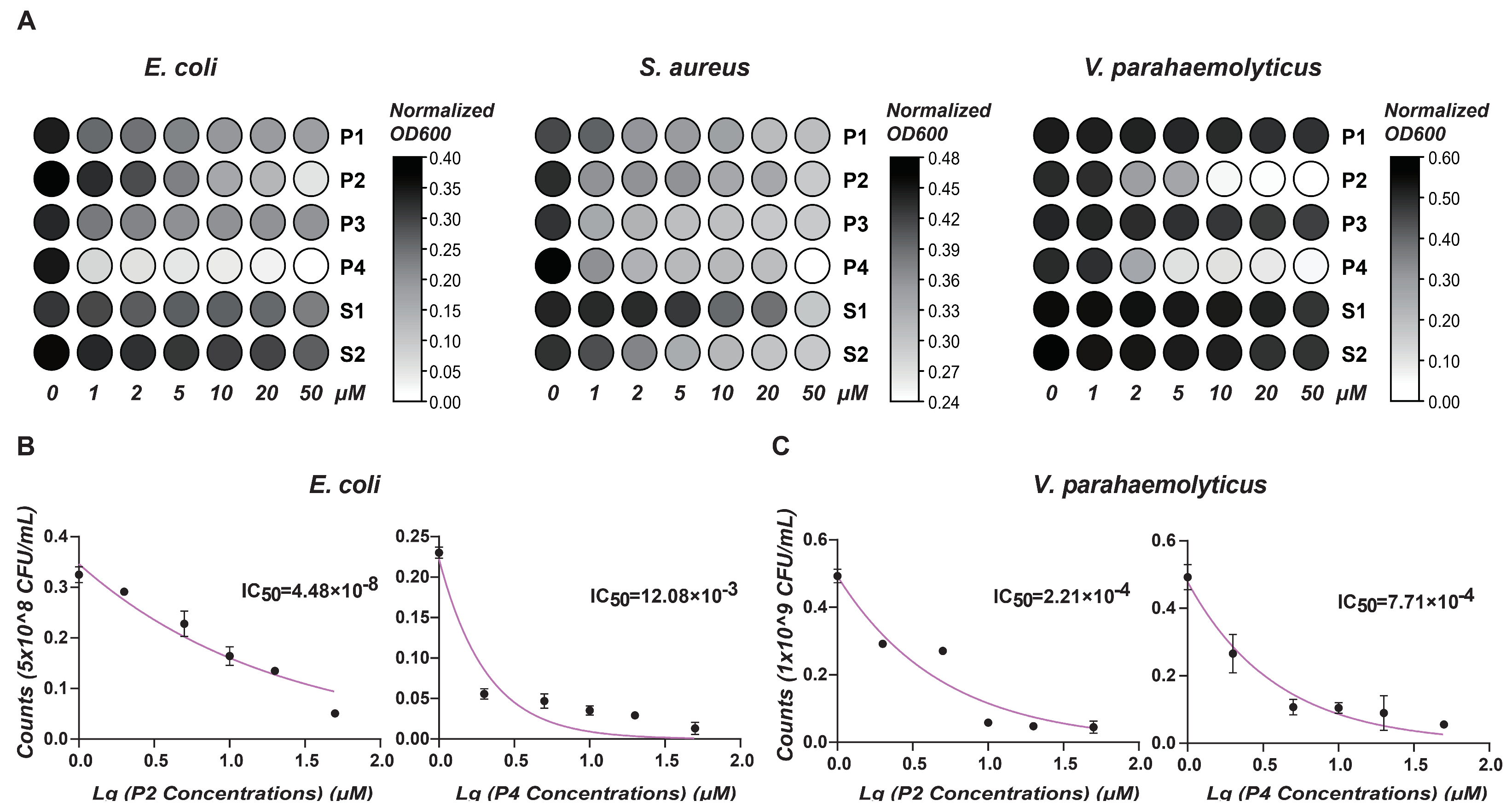
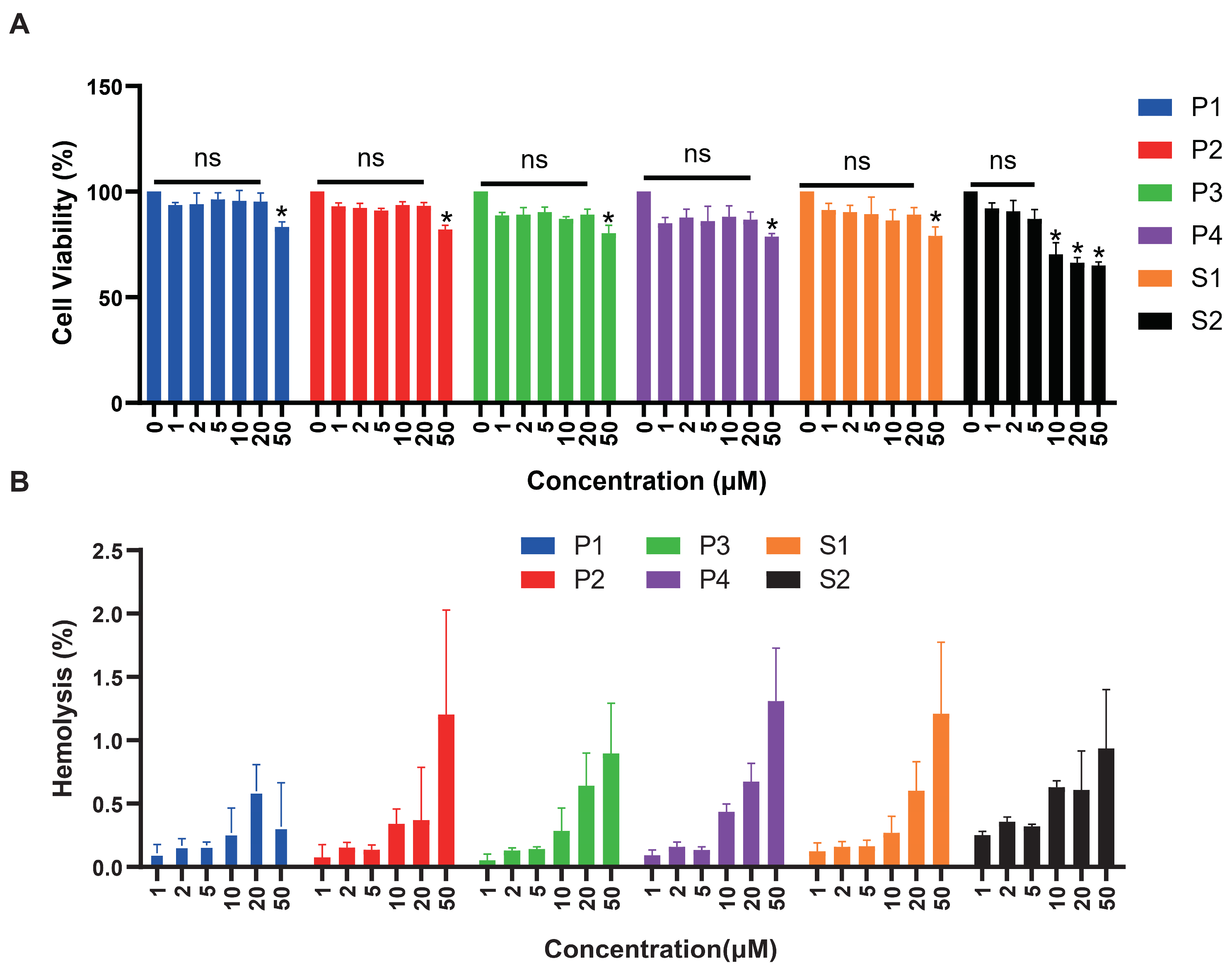
Marine antimicrobial peptides (AMPs) represent a promising source for combating infections, especially against antibiotic-resistant pathogens and traditionally challenging infections. However, traditional drug discovery methods face challenges such as time-consuming processes and high costs. Therefore, leveraging machine learning techniques to expedite the discovery of marine AMPs holds significant promise. Our study applies machine learning to develop marine AMPs, focusing on Crassostrea gigas mucus rich in antimicrobial components. We conducted proteome sequencing of C. gigas mucous proteins, used the iAMPCN model for peptide activity prediction, and evaluated the antimicrobial, hemolytic, and cytotoxic capabilities of six peptides. Proteomic analysis identified 4490 proteins, yielding about 43,000 peptides (8–50 amino acids). Peptide ranking based on length, hydrophobicity, and charge assessed antimicrobial potential, predicting 23 biological activities. Six peptides, distinguished by their high relative scores and promising biological activities, were chosen for bactericidal assay. Peptides P1 to P4 showed antimicrobial activity against E. coli, with P2 and P4 being particularly effective. All peptides inhibited S. aureus growth. P2 and P4 also exhibited significant anti-V. parahaemolyticus effects, while P1 and P3 were non-cytotoxic to HEK293T cells at detectable concentrations. Minimal hemolytic activity was observed for all peptides even at high concentrations. This study highlights the potent antimicrobial properties of naturally occurring oyster mucus peptides, emphasizing their low cytotoxicity and lack of hemolytic effects. Machine learning accurately predicted biological activity, showcasing its potential in peptide drug discovery.
Keywords: machine learning; bioactive prediction; marine antimicrobial peptides; oyster mucus proteome machine learning; bioactive prediction; marine antimicrobial peptides; oyster mucus proteome