
Article

In Silico Screening of Bioactive Compounds of Representative Seaweeds to Inhibit SARS-CoV-2 ACE2-Bound Omicron B.1.1.529 Spike Protein Trimer

by
Muruganantham Bharathi
1,
Bhagavathi Sundaram Sivamaruthi
1,2,
Periyanaina Kesika
2,*,
Subramanian Thangaleela
1 and
Chaiyavat Chaiyasut
1,*
1
Innovation Center for Holistic Health, Nutraceuticals, and Cosmeceuticals, Faculty of Pharmacy, Chiang Mai University, Chiang Mai 50200, Thailand
2
Office of Research Administration, Chiang Mai University, Chiang Mai 50200, Thailand
*
Authors to whom correspondence should be addressed.
Mar. Drugs 2022, 20(2), 148; https://doi.org/10.3390/md20020148
Submission received: 2 February 2022 / Revised: 14 February 2022 / Accepted: 14 February 2022 / Published: 17 February 2022

Abstract

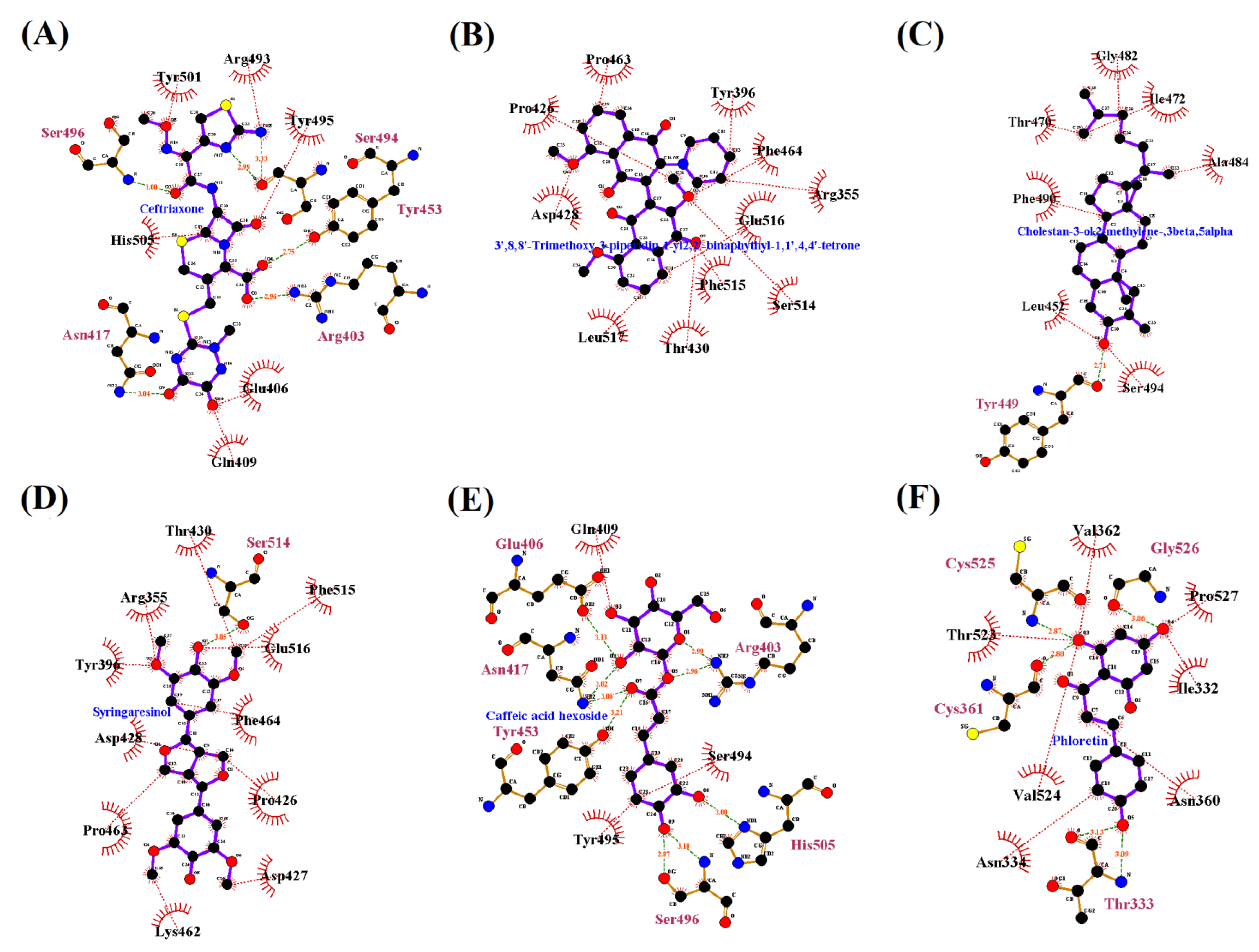
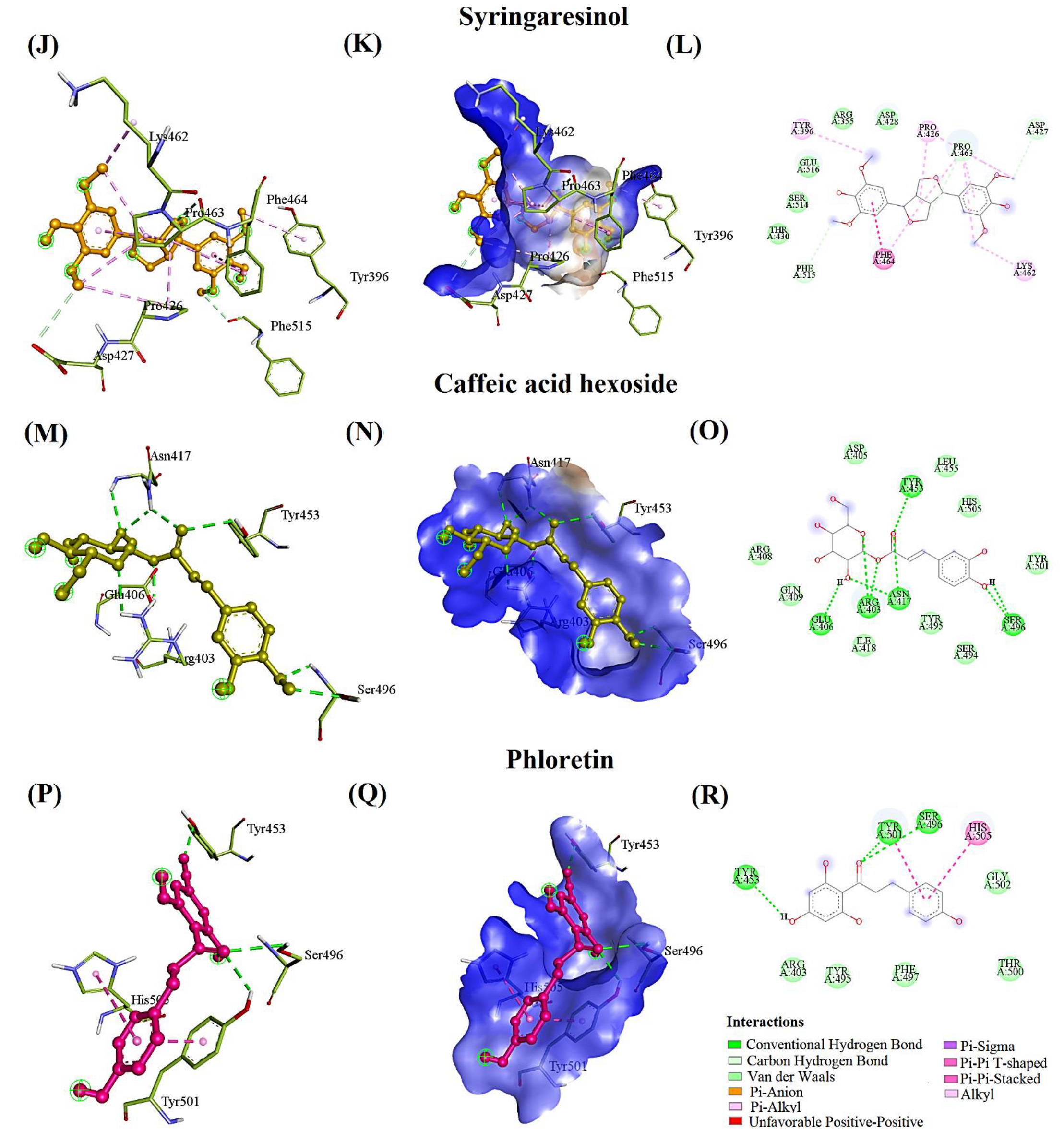
Omicron is an emerging SARS-CoV-2 variant, evolved from the Indian delta variant B.1.617.2, which is currently infecting worldwide. The spike glycoprotein, an important molecule in the pathogenesis and transmissions of SARS-CoV-2 variants, especially omicron B.1.1.529, shows 37 mutations distributed over the trimeric protein domains. Notably, fifteen of these mutations reside in the receptor-binding domain of the spike glycoprotein, which may alter transmissibility and infectivity. Additionally, the omicron spike evades neutralization more efficiently than the delta spike. Most of the therapeutic antibodies are ineffective against the omicron variant, and double immunization with BioNTech-Pfizer (BNT162b2) might not adequately protect against severe disease induced by omicron B.1.1.529. So far, no efficient antiviral drugs are available against omicron. The present study identified the promising inhibitors from seaweed’s bioactive compounds to inhibit the omicron variant B.1.1.529. We have also compared the seaweed’s compounds with the standard drugs ceftriaxone and cefuroxime, which were suggested as beneficial antiviral drugs in COVID-19 treatment. Our molecular docking analysis revealed that caffeic acid hexoside (−6.4 kcal/mol; RMSD = 2.382 Å) and phloretin (−6.3 kcal/mol; RMSD = 0.061 Å) from Sargassum wightii (S. wightii) showed the inhibitory effect against the crucial residues ASN417, SER496, TYR501, and HIS505, which are supported for the inviolable omicron and angiotensin-converting enzyme II (ACE2) receptor interaction. Cholestan-3-ol, 2-methylene-, (3beta, 5 alpha) (CMBA) (−6.0 kcal/mol; RMSD = 3.074 Å) from Corallina officinalis (C. officinalis) manifested the strong inhibitory effect against the omicron RBD mutated residues LEU452 and ALA484, was magnificently observed as the essential residues in Indian delta variant B.1.617.2 previously. The standard drugs (ceftriaxone and cefuroxime) showed no or less inhibitory effect against RBD of omicron B.1.1.529. The present study also emphasized the pharmacological properties of the considered chemical compounds. The results could be used to develop potent seaweed-based antiviral drugs and/or dietary supplements to treat omicron B.1.1529-infected patients.
Keywords: SARS-CoV-2; omicron B.1.1529; seaweeds; Sargassum wightii; Corallina officinalis SARS-CoV-2; omicron B.1.1529; seaweeds; Sargassum wightii; Corallina officinalis
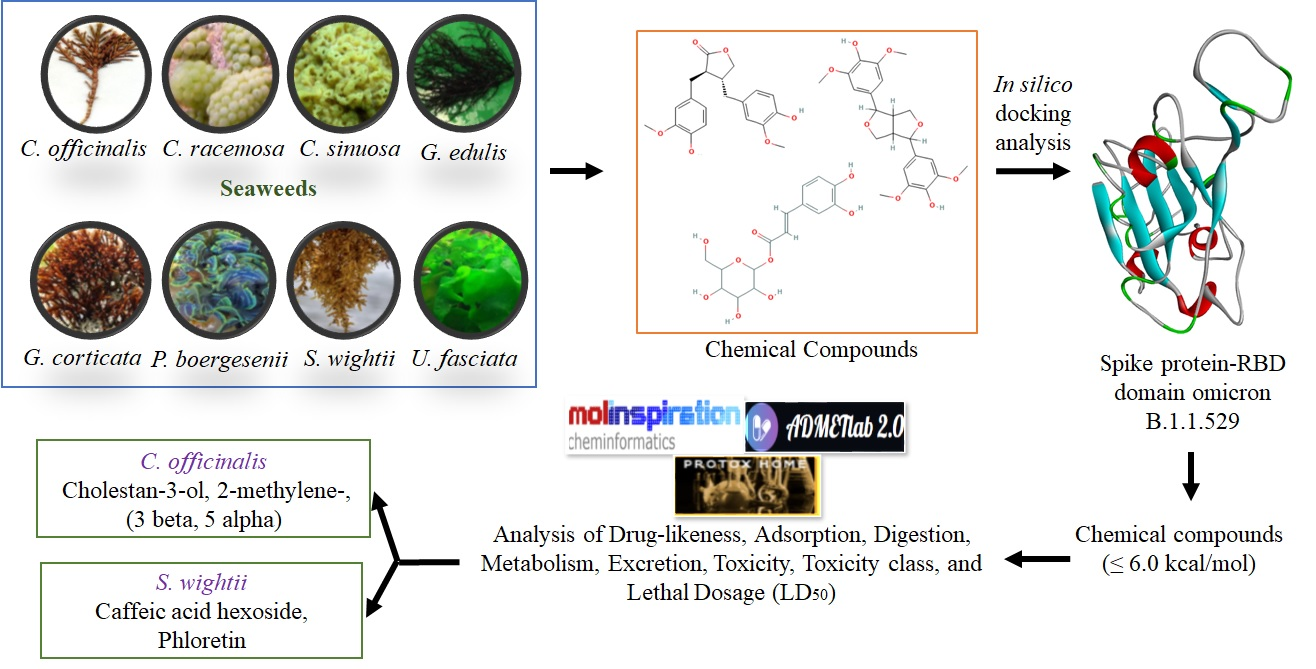
Graphical Abstract