Predictors of Prolonged ICU Stay After Isolated CABG: The Role of MiECC
 , ,
, ,
Abstract
1. Introduction
2. Materials and Methods
2.1. Ethical Approval
2.2. Patient Selection and Study Design
2.3. Surgical Technique and Perfusion Strategy
2.4. Statistical Analysis
3. Results
4. Discussion
5. Conclusions
Author Contributions
Funding
Institutional Review Board Statement
Informed Consent Statement
Data Availability Statement
Conflicts of Interest
Abbreviations
| CABG | Coronary artery bypass grafting |
| ICU | Intensive care unit |
| MiECC | Minimally invasive extracorporeal circulation |
| CPB | Cardiopulmonary bypass |
| cCPB | Conventional cardiopulmonary bypass |
| ACT | Activated clotting time |
| SIRS | Systemic inflammatory response syndrome |
| COPD | Chronic obstructive pulmonary disease |
| CKD | Chronic kidney disease |
| LVEF | Left ventricular ejection fraction |
| CRP | C-reactive protein |
| HbA1c | Glycated hemoglobin |
| LCOS | Low cardiac output syndrome |
| BSA | Body surface area |
| CI | Confidence interval |
| OR | Odds ratio |
| SD | Standard deviation |
| IQR | Interquartile range |
References
- Vrints, C.; Andreotti, F.; Koskinas, K.C.; Rossello, X.; Adamo, M.; Ainslie, J.; Banning, A.P.; Budaj, A.; Buechel, R.R.; Chiariello, G.A.; et al. 2024 ESC Guidelines for the management of chronic coronary syndromes: Developed by the task force for the management of chronic coronary syndromes of the European Society of Cardiology (ESC) Endorsed by the European Association for Cardio-Thoracic Surgery (EACTS). Eur. Heart J. 2024, 45, 3415–3537. [Google Scholar] [CrossRef] [PubMed]
- Alwaqfi, N.R.; AlBarakat, M.M.; Hawashin, W.K.; Qariouti, H.R.; Alkrarha, A.J.; Altawalbeh, R.B. Predicting Extended Intensive Care Unit Stay Following Coronary Artery Bypass Grafting and Its Impact on Hospitalization and Mortality. J. Clin. Med. Res. 2025, 17, 14–21. [Google Scholar] [CrossRef] [PubMed]
- Kumalasari, R.I.; Kosasih, C.E.; Priambodo, A.P. Risk Factors of Prolonged Mechanical Ventilation in Post Coronary Artery Bypass Graft Patients: A Scoping Review. J. Multidiscip. Healthc. 2025, 18, 903–915. [Google Scholar] [CrossRef] [PubMed]
- Nambiar, P.M.; Bhan, A.; Mehta, Y. Prolonged Stay in ICU after Cardiac Surgery: Challenges—A Review. J. Card. Crit. Care TSS 2024, 8, 70–79. [Google Scholar] [CrossRef]
- Erkan, M.H.; Rahman, Ö.F.; Durna, F. The role of the systemic inflammatory response index in predicting postoperative atrial fibrillation. Rev. Assoc. Med. Bras. 2025, 71, e20240783. [Google Scholar] [CrossRef] [PubMed]
- Erkan, M.H.; Baysal, A.N.; Gökmengil, H.; Yilmaz, İ.S.; Güner, A.; Durgut, K. Predictive Value of Halp Score for Postoperative Adverse Events After Coronary Artery Bypass Surgery. Bratisl. Med. J. 2025, 126, 2281–2287. [Google Scholar] [CrossRef]
- Rödel, A.P.P.; Fernandes, Y.M.; Brisolara, J.V.; De Carvalho, J.A.M.; Moresco, R.N. Role of Preoperative Inflammatory Blood Cell Indexes as a Postoperative Risk Predictor Among Patients Undergoing On-Pump Cardiac Surgery. Int. J. Lab. Hematol. 2025, 47, 87–92. [Google Scholar] [CrossRef] [PubMed]
- Bartoszko, J.; Karkouti, K. Managing the coagulopathy associated with cardiopulmonary bypass. J. Thromb. Haemost. 2021, 19, 617–632. [Google Scholar] [CrossRef] [PubMed]
- Halle, D.R.; Benhassen, L.L.; Søberg, K.L.; Nielsen, P.F.; Kimose, H.H.; Bauer, A.; Hasenkam, J.M.; Modrau, I.S. Impact of minimal invasive extracorporeal circulation on systemic inflammatory response—A randomized trial. J. Cardiothorac. Surg. 2024, 19, 418. [Google Scholar] [CrossRef] [PubMed]
- Anastasiadis, K.; Antonitsis, P.; Voucharas, C.; Apostolidou-Kiouti, F.; Deliopoulos, A.; Haidich, A.B.; Argiriadou, H. Minimal invasive extracorporeal circulation versus conventional cardiopulmonary bypass in cardiac surgery: A contemporary systematic review and meta-analysis. Eur. J. Cardiothorac. Surg. 2025, 67, ezaf112. [Google Scholar] [CrossRef] [PubMed]
- Anastasiadis, K.; Antonitsis, P.; Papazisis, G.; Haidich, B.; Liebold, A.; Punjabi, P.; Gunaydin, S.; El-Essawi, A.; Rao, V.; Serrick, C.; et al. Minimally invasive extracorporeal circulation versus conventional cardiopulmonary bypass in patients undergoing cardiac surgery (MiECS): Rationale and design of a multicentre randomised trial. Perfusion 2025, 40, 923–932. [Google Scholar] [CrossRef] [PubMed]
- Khwaja, A. KDIGO clinical practice guidelines for acute kidney injury. Nephron Clin. Pract. 2012, 120, c179–c184. [Google Scholar] [CrossRef] [PubMed]
- Mahesh, B.; Choong, C.K.; Goldsmith, K.; Gerrard, C.; Nashef, S.A.M.; Vuylsteke, A. Prolonged Stay in Intensive Care Unit Is a Powerful Predictor of Adverse Outcomes After Cardiac Operations. Ann. Thorac. Surg. 2012, 94, 109–116. [Google Scholar] [CrossRef] [PubMed]
- Wisniewski, A.M.; Wang, X.Q.; Sutherland, G.; Rotar, E.P.; Strobel, R.J.; Young, A.; Norman, A.V.; Beller, J.; Quader, M.; Teman, N.R. Multi-institutional model to predict intensive care unit length of stay after cardiac surgery. J. Thorac. Cardiovasc. Surg. 2025, 170, 784–792. [Google Scholar] [CrossRef] [PubMed]
- Yeşiler, F.; Akmatov, N.; Nurumbetova, O.; Beyazpınar, D.S.; Şahintürk, H.; Gedik, E.; Zeyneloğlu, P. Incidence of and Risk Factors for Prolonged Intensive Care Unit Stay After Open Heart Surgery Among Elderly Patients. Cureus 2022, 14, e31602. [Google Scholar] [CrossRef] [PubMed]
- Lomivorotov, V.V.; Efremov, S.M.; Kirov, M.Y.; Fominskiy, E.V.; Karaskov, A.M. Low-Cardiac-Output Syndrome After Cardiac Surgery. J. Cardiothorac. Vasc. Anesth. 2017, 31, 291–308. [Google Scholar] [CrossRef] [PubMed]
- Ibrahim, K.S.; Kheirallah, K.A.; Al Manasra, A.R.A.; Megdadi, M.A. Factors affecting duration of stay in the intensive care unit after coronary artery bypass surgery and its impact on in-hospital mortality: A retrospective study. J. Cardiothorac. Surg. 2024, 19, 45. [Google Scholar] [CrossRef] [PubMed]
- Brown, J.R.; Landis, R.C.; Chaisson, K.; Ross, C.S.; Dacey, L.J.; Boss, R.A., Jr.; Helm, R.E.; Horton, S.R.; Hofmaster, P.; Jones, C.; et al. Preoperative white blood cell count and risk of 30-day readmission after cardiac surgery. Int. J. Inflamm. 2013, 2013, 781024. [Google Scholar] [CrossRef] [PubMed]
- Squiccimarro, E.; Stasi, A.; Lorusso, R.; Paparella, D. Narrative review of the systemic inflammatory reaction to cardiac surgery and cardiopulmonary bypass. Artif. Organs 2022, 46, 568–577. [Google Scholar] [CrossRef] [PubMed]
- Berretta, P.; Cefarelli, M.; Montecchiani, L.; Alfonsi, J.; Vessella, W.; Zahedi, M.H.; Carozza, R.; Munch, C.; Di Eusanio, M. Minimally invasive versus standard extracorporeal circulation system in minimally invasive aortic valve surgery: A propensity score-matched study. Eur. J. Cardiothorac. Surg. 2020, 57, 717–723. [Google Scholar] [CrossRef] [PubMed]
- Awad, A.K.; Elbahloul, M.A.; Al-Omoush, O.; Abdelnasser, O.; Hajali, M.; Abdelnasser, A.; Saleh, O.; Altiti, A.; Elgharably, H.; El Diasty, M. Impact of postoperative atrial fibrillation (POAF) on outcomes after coronary artery bypass grafting: A meta-analysis of unique 247,270 patients from 50 studies. Am. Heart J. Plus 2025, 59, 100621. [Google Scholar] [CrossRef] [PubMed]
- Slaughter, J.C.; Davenport, D.L.; Saha, S.P. Acute Kidney Injury after Isolated Coronary Bypass Surgery. Int. J. Angiol. 2025, 34, 51–55. [Google Scholar] [CrossRef] [PubMed]
- Qin, H.; Xie, E.; Peng, Z.; Yang, X.; Hua, K. Association of Postoperative Atrial Fibrillation Duration after Coronary Artery Bypass Grafting with Poor Postoperative Outcomes. Rev. Cardiovasc. Med. 2024, 25, 98. [Google Scholar] [CrossRef] [PubMed]



| Prolonged ICU Stay | Non-Prolonged ICU Stay | p-Value | |
|---|---|---|---|
| (n = 32) | (n = 50) | ||
| Gender | 0.363 + | ||
| Male | 25 (78.1) | 36 (72) | |
| Female | 7 (21.9) | 14 (28) | |
| Diabetes Mellitus | 21 (65.6) | 30 (60) | 0.392 + |
| Hypertension | 25 (78.1) | 37 (74) | 0.440 + |
| COPD (Chronic Obstructive Pulmonary Disease) | 2 (6.3) | 2 (4) | 0.510 + |
| Hyperlipidemia | 15 (46.9) | 28 (56) | 0.420 + |
| CKD (Chronic Kidney Disease) | 0 (0) | 2 (4) | 0.369 + |
| Age | 64 ± 11.2 | 63.75 ± 9.08 | 0.805 * |
| Body Surface Area (BSA) | 1.84 ± 0.24 | 1.83 ± 0.2 | 0.779 * |
| Ejection Fraction (%) | 52.5 (19) | 60 (5) | 0.012 # |
| Hemoglobin (g/dL) | 13.8 (2.32) | 13.4 (2.32) | 0.222 # |
| Hematocrit (%) | 42.1 (7.17) | 40.05 (6.88) | 0.260 # |
| Neutrophils (103/µL) | 5.11 (3.09) | 4.65 (1.55) | 0.139 # |
| Leukocytes (103/µL) | 8.4 (4.25) | 7.97 (2.03) | 0.049 # |
| Platelets (103/µL) | 263 (102) | 237.5 (116.75) | 0.488 # |
| AST (U/L) | 24 (12.5) | 20 (10) | 0.311 # |
| ALT (U/L) | 19.5 (10.75) | 20 (15.75) | 0.498 # |
| Urea (mg/dL) | 39.3 (16.1) | 34.1 (16.25) | 0.285 # |
| Creatinine (mg/dL) | 0.92 (0.27) | 0.87 (0.32) | 0.316 # |
| Sodium (mmol/L) | 139 (5.55) | 138.2 (3.5) | 0.668 # |
| Potassium (mmol/L) | 4.53 (0.67) | 4.33 (0.56) | 0.300 # |
| Albumin (g/L) | 43.05 (3.33) | 41.1 (5.42) | 0.215 # |
| CRP (mg/L) | 6.51 (13.61) | 4.69 (12.77) | 0.992 # |
| HbA1c (%) | 6.75 (2.55) | 6.45 (2.55) | 0.489 # |
| Prolonged ICU Stay | Non-Prolonged ICU Stay | p-Value | |
|---|---|---|---|
| (n = 32) | (n = 50) | ||
| CPB Type | 0.530 + | ||
| MiECC | 9 (28.1) | 15 (30) | |
| Conventional | 23 (71.9) | 35 (70) | |
| Cross-Clamp Time (min) | 75 (48) | 60 (29) | 0.099 # |
| CPB Time (min) | 98 (73) | 93 (50) | 0.161 # |
| Number of Bypasses | 3.5 (1) | 3 (1) | 0.173 # |
| Univariate OR (%95 CI) | p | |
|---|---|---|
| Age | 1.003 (0.959–1.050) | 0.885 |
| Diabetes mellitus (Ref.: No) | 1.273 (0.506–3.204) | 0.609 |
| COPD (Ref.: No) | 1.600 (0.214–11.969) | 0.647 |
| New-onset atrial fibrillation (Ref.: No) | 1.708 (0.657–4.437) | 0.272 |
| Acute kidney injury (Ref.: No) | 1.212 (0.378–3.888) | 0.747 |
| CPB time | 1.008 (0.998–1.018) | 0.122 |
| Number of bypass grafts | 1.385 (0.900–2.133) | 0.139 |
| Cross-clamp time | 1.013 (0.999–1.026) | 0.064 |
| Ejection fraction (%) | 0.935 (0.889–0.984) | 0.010 |
| White blood cell count (103/µL) | 1.382 (1.092–1.749) | 0.007 |
| C-reactive protein (mg/L) | 0.998 (0.983–1.013) | 0.788 |
| MiECC (Ref.: No) | 0.913 (0.343–2.432) | 0.856 |
| Multivariate OR (%95 CI) | p | |
|---|---|---|
| Model 1 | ||
| Age | 1.015 (0.963–1.069) | 0.587 |
| Ejection Fraction (%) | 0.938 (0.889–0.990) | 0.021 |
| White Blood Cell Count (103/µL) | 1.351 (1.052–1.733) | 0.018 |
| MiECC Utilization (Ref.: No) | 0.727 (0.242–2.187) | 0.570 |
| Model 2 | ||
| Age | 1.022 (0.968–1.079) | 0.433 |
| Ejection Fraction (%) | 0.948 (0.897–1.002) | 0.058 |
| White Blood Cell Count (103/µL) | 1.359 (1.054–1.752) | 0.018 |
| MiECC Utilization (Ref.: No) | 0.839 (0.275–2.563) | 0.758 |
| Cross-Clamp Time | 1.010 (0.995–1.026) | 0.175 |
| Model 3 | ||
| Age | 1.020 (0.967–1.077) | 0.464 |
| Ejection Fraction (%) | 0.944 (0.894–0.997) | 0.038 |
| White Blood Cell Count (103/µL) | 1.361 (1.055–1.757) | 0.018 |
| MiECC Utilization (Ref.: No) | 0.813 (0.267–2.481) | 0.716 |
| Cardiopulmonary Bypass Duration | 1.006 (0.995–1.017) | 0.255 |
| Model 4 | ||
| Age | 1.008 (0.960–1.058) | 0.752 |
| Ejection Fraction (%) | 0.928 (0.879–0.980) | 0.007 |
| C-Reactive Protein (mg/L) | 0.995 (0.978–1.011) | 0.526 |
| MiECC Utilization (Ref.: No) | 0.683 (0.233–1.997) | 0.486 |
| AUC (%95 CI) | p | Cut-Off | Sensitivity (%) | Specificity (%) | |
|---|---|---|---|---|---|
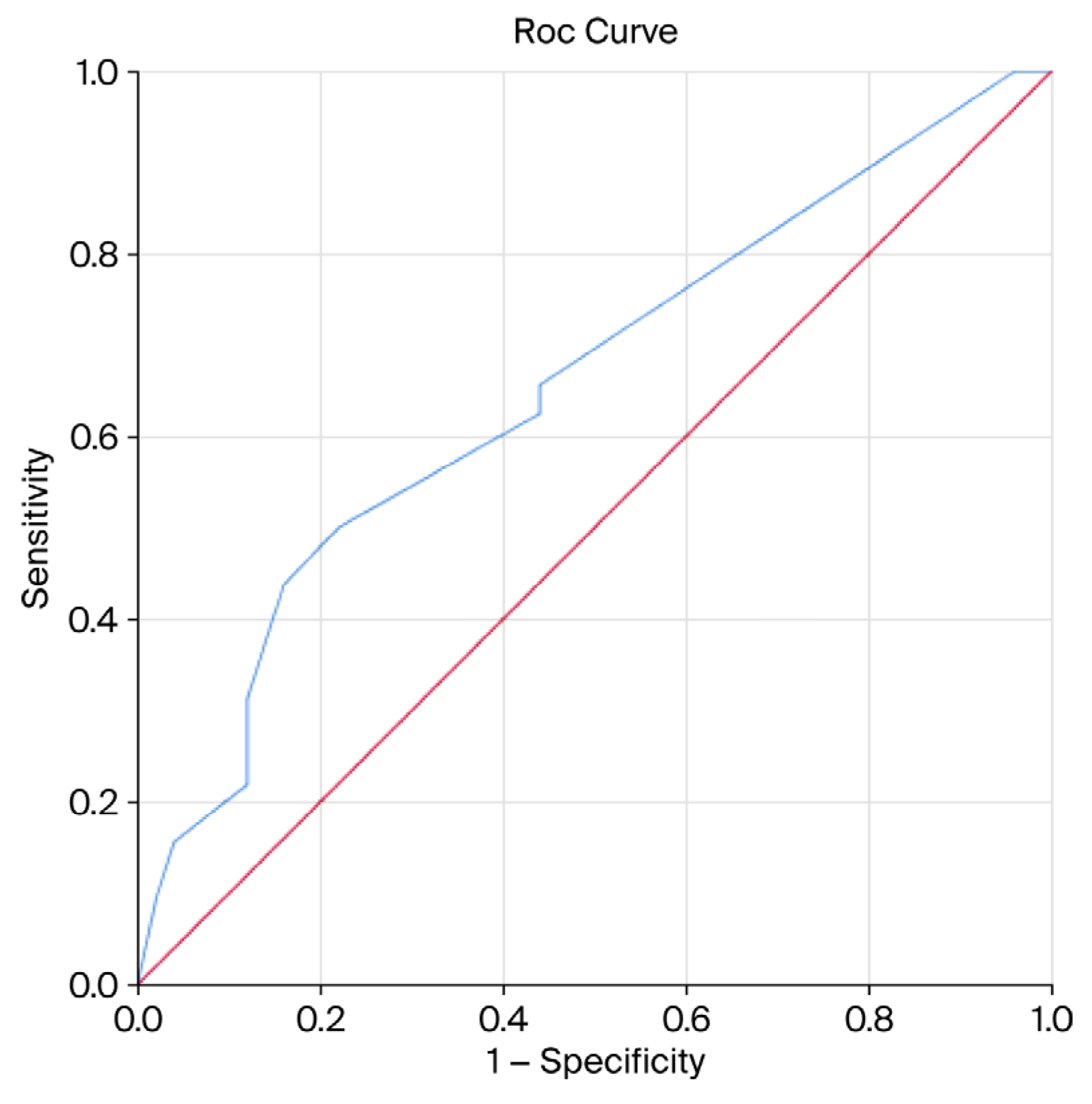
| Ejection Fraction (%) | 0.656 (0.533–0.779) | 0.018 | ≤59.0 | 65.6 | 56 |
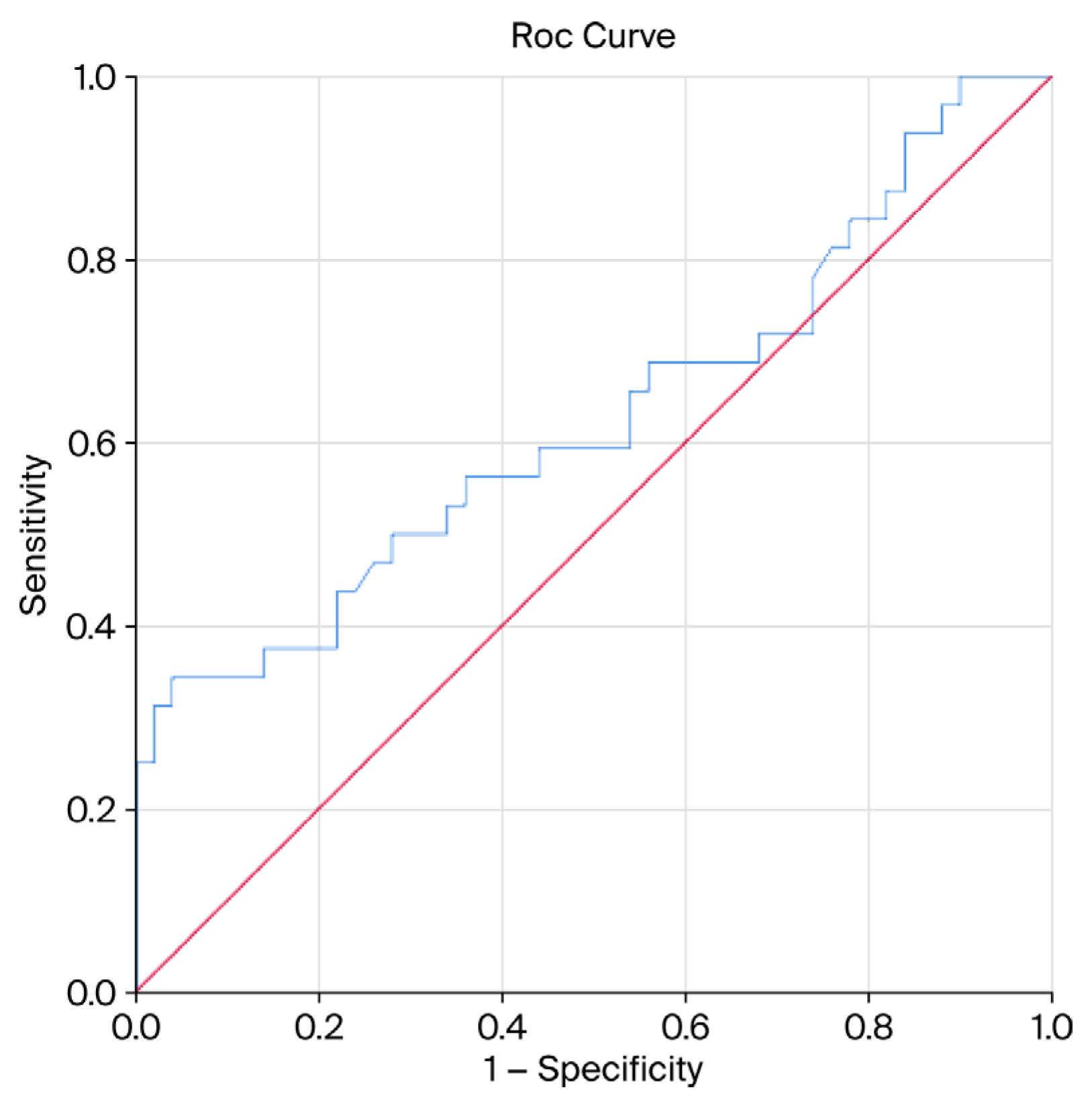
| White Blood Cell Count (103/µL) | 0.627 (0.496–0.757) | 0.054 | ≥8.25 | 56.3 | 64 |
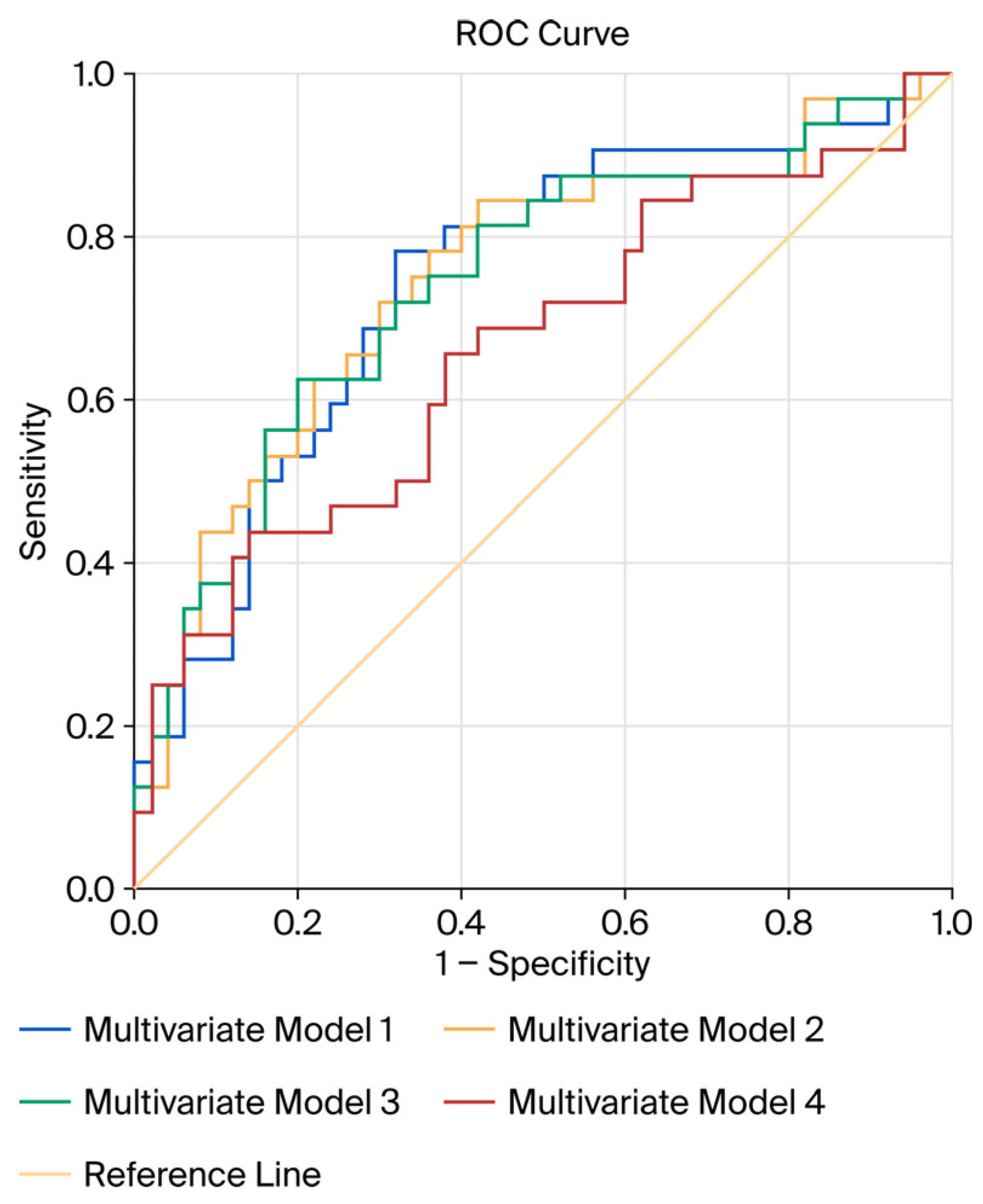
| Multivariate Model 1 | 0.745 (0.634–0.856) | <0.001 | --- | 84.4 | 52 |
| Multivariate Model 2 | 0.749 (0.637–0.862) | <0.001 | --- | 84.4 | 56 |
| Multivariate Model 3 | 0.743 (0.630–0.856) | <0.001 | --- | 84.4 | 48 |
| Multivariate Model 4 | 0.662 (0.537–0.786) | 0.014 | --- | 71.9 | 50 |
Disclaimer/Publisher’s Note: The statements, opinions and data contained in all publications are solely those of the individual author(s) and contributor(s) and not of MDPI and/or the editor(s). MDPI and/or the editor(s) disclaim responsibility for any injury to people or property resulting from any ideas, methods, instructions or products referred to in the content. |
© 2026 by the authors. Published by MDPI on behalf of the Lithuanian University of Health Sciences. Licensee MDPI, Basel, Switzerland. This article is an open access article distributed under the terms and conditions of the Creative Commons Attribution (CC BY) license.
Share and Cite
Özbakkaloğlu, A.; Rahman, Ö.F.; Arslangilay, M.; Keleş, E.; Bozkurt, Ö.T.; Cansu, D.; Bozok, Ş. Predictors of Prolonged ICU Stay After Isolated CABG: The Role of MiECC. Medicina 2026, 62, 1289. https://doi.org/10.3390/medicina62071289
Özbakkaloğlu A, Rahman ÖF, Arslangilay M, Keleş E, Bozkurt ÖT, Cansu D, Bozok Ş. Predictors of Prolonged ICU Stay After Isolated CABG: The Role of MiECC. Medicina. 2026; 62(7):1289. https://doi.org/10.3390/medicina62071289
Chicago/Turabian StyleÖzbakkaloğlu, Alper, Ömer Faruk Rahman, Mert Arslangilay, Ercan Keleş, Önder Turgut Bozkurt, Dağlar Cansu, and Şahin Bozok. 2026. "Predictors of Prolonged ICU Stay After Isolated CABG: The Role of MiECC" Medicina 62, no. 7: 1289. https://doi.org/10.3390/medicina62071289
APA StyleÖzbakkaloğlu, A., Rahman, Ö. F., Arslangilay, M., Keleş, E., Bozkurt, Ö. T., Cansu, D., & Bozok, Ş. (2026). Predictors of Prolonged ICU Stay After Isolated CABG: The Role of MiECC. Medicina, 62(7), 1289. https://doi.org/10.3390/medicina62071289