Etiology-Based Comparative Evaluation of Toxic Hepatitis in a Tertiary Referral Cohort: Drug-Induced, Herb-Induced, Mushroom Poisoning, and Other Toxic Exposures
 , ,
, ,  ,
,
Abstract
1. Introduction
2. Materials and Methods
2.1. Study Design
2.2. Patient Selection
2.3. Etiological Classification
2.4. Data Collection
2.5. Liver Injury Pattern
2.6. Hy’s Law Assessment
2.7. Liver Injury Severity Grading
2.8. Prognostic Scores
2.9. Clinical Outcomes
2.10. Statistical Analysis
3. Results
3.1. Comparisons Across Etiological Groups
3.2. Mushroom Poisoning Versus Other Causes
3.3. Clinical Outcome-Specific Findings
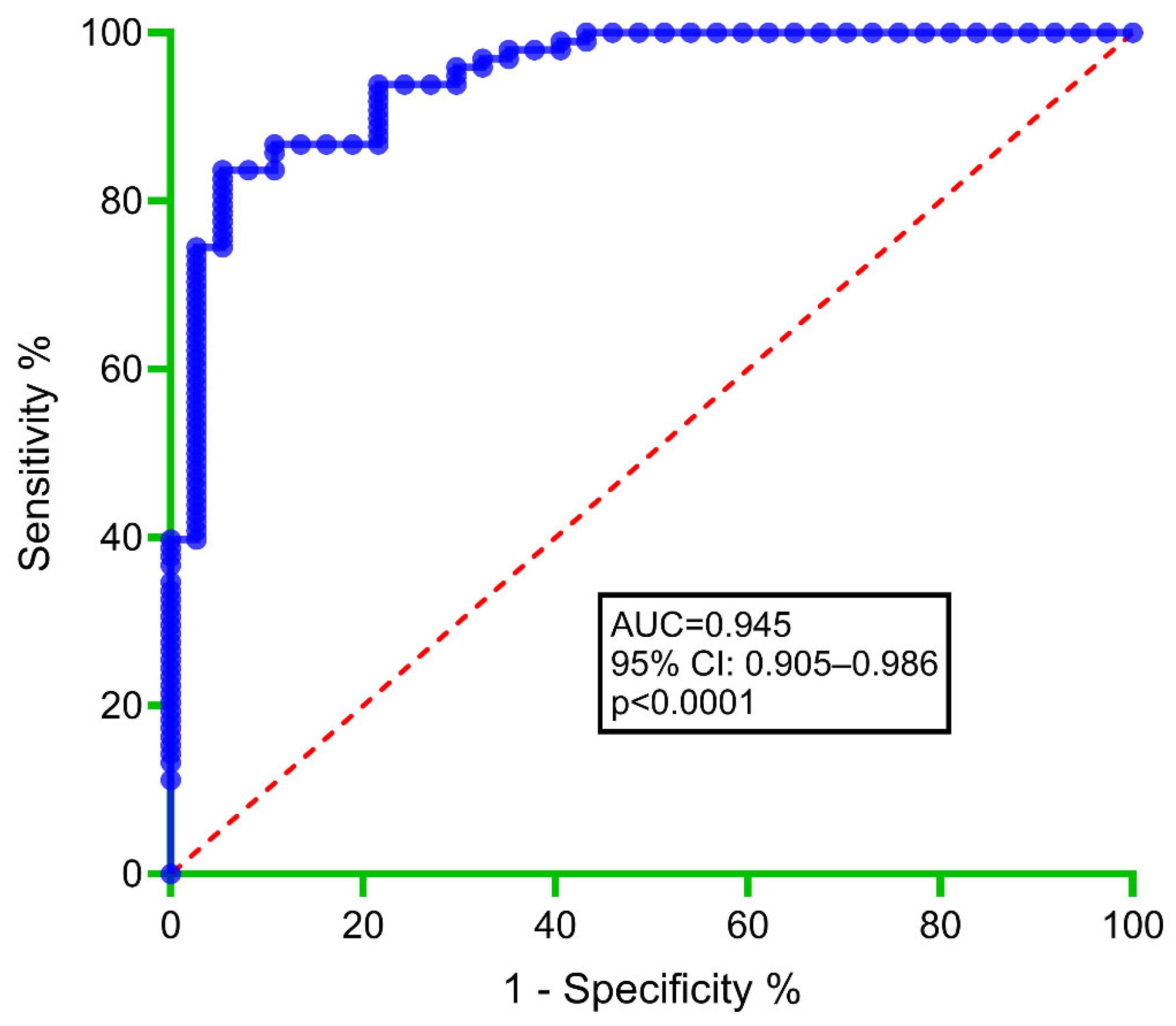
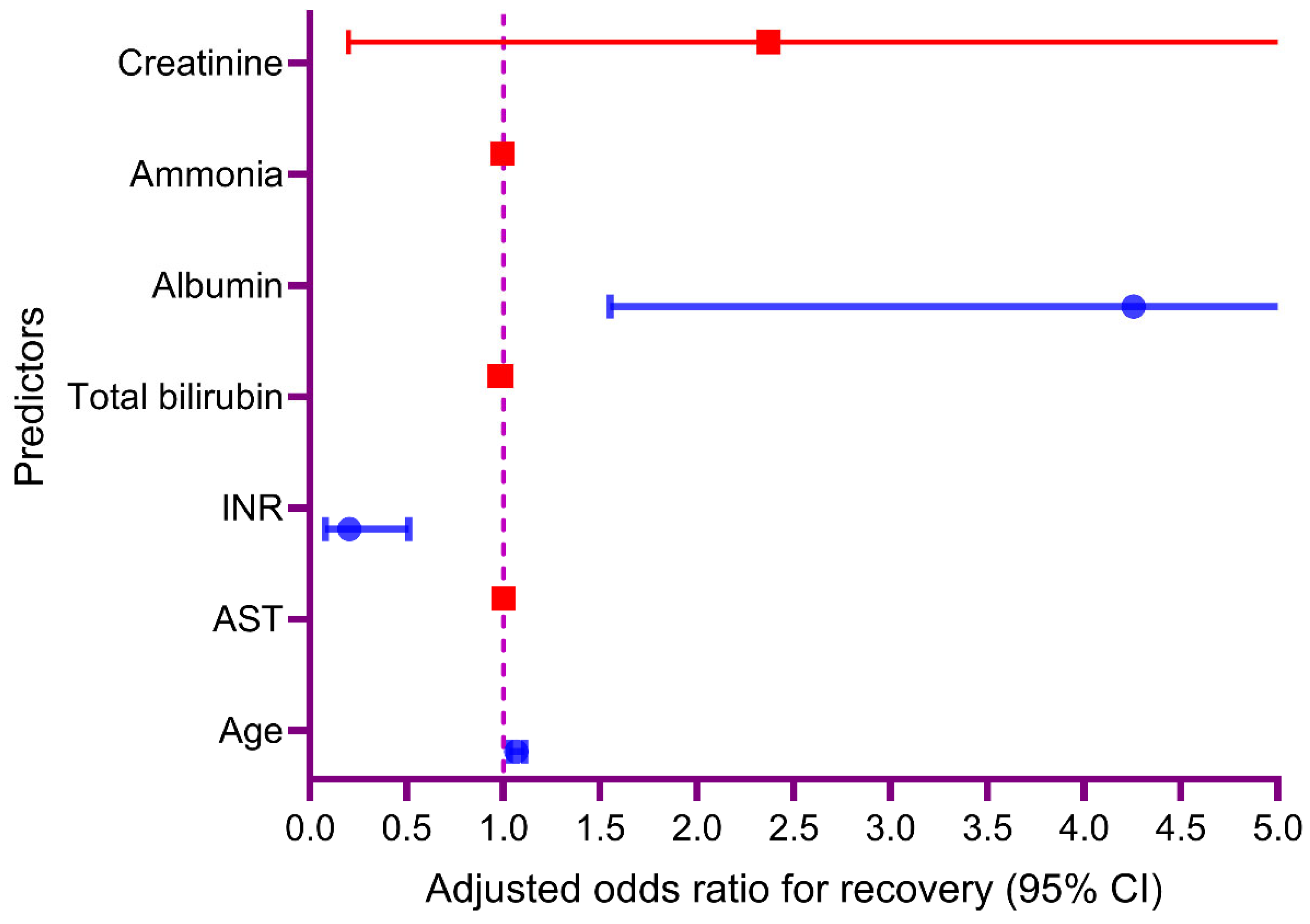
3.4. Multivariable Logistic Regression and Model Discrimination
4. Discussion
Strengths and Limitations
5. Conclusions
Supplementary Materials
Author Contributions
Funding
Informed Consent Statement
Data Availability Statement
Acknowledgments
Conflicts of Interest
Abbreviations
| Abbreviation | Definition |
| ACG | American College of Gastroenterology |
| ALF | Acute liver failure |
| ALP | Alkaline phosphatase |
| ALT | Alanine aminotransferase |
| AST | Aspartate aminotransferase |
| AUC | Area under the receiver operating characteristic curve |
| CI | Confidence interval |
| DDLT | Deceased donor liver transplantation |
| DILI | Drug-induced liver injury |
| DILIN | Drug-Induced Liver Injury Network |
| EASL | European Association for the Study of the Liver |
| GGT | Gamma-glutamyl transferase |
| HDS | Herbal and dietary supplements |
| HILI | Herbal product-related liver injury |
| INR | International normalized ratio |
| IQR | Interquartile range |
| KCC | King’s College Criteria |
| LDLT | Living donor liver transplantation |
| LT | Liver transplantation |
| MELD-Na | Model for End-Stage Liver Disease incorporating serum sodium |
| NA | Not available |
| OR | Odds ratio |
| PELD | Pediatric End-Stage Liver Disease |
| ROC | Receiver operating characteristic |
| RUCAM | Roussel Uclaf Causality Assessment Method |
| ULN | Upper limit of normal |
| WBC | White blood cell count |
References
- European Association for the Study of the Liver. EASL Clinical Practice Guidelines: Drug-induced liver injury. J. Hepatol. 2019, 70, 1222–1261. [Google Scholar] [CrossRef] [PubMed]
- Navarro, V.J.; Barnhart, H.; Bonkovsky, H.L.; Davern, T.; Fontana, R.J.; Grant, L.; Reddy, K.R.; Seeff, L.B.; Serrano, J.; Sherker, A.H.; et al. Liver injury from herbals and dietary supplements in the U.S. Drug-Induced Liver Injury Network. Hepatology 2014, 60, 1399–1408. [Google Scholar] [CrossRef] [PubMed]
- Chalasani, N.; Bonkovsky, H.L.; Fontana, R.; Lee, W.; Stolz, A.; Talwalkar, J.; Reddy, K.R.; Navarro, V.J.; Barnhart, H.L.; Gu, J.; et al. Features and outcomes of 899 patients with drug-induced liver injury: The DILIN prospective study. Gastroenterology 2015, 148, 1340–1352. [Google Scholar] [CrossRef] [PubMed]
- Santi, L.; Maggioli, C.; Mastroroberto, M.; Tufoni, M.; Napoli, L.; Caraceni, P. Acute liver failure caused by Amanita phalloides poisoning. Int. J. Hepatol. 2012, 2012, 487480. [Google Scholar] [CrossRef] [PubMed]
- Ostapowicz, G.; Fontana, R.J.; Schiødt, F.V.; Larson, A.; Davern, T.J.; Han, S.H.B.; McCashland, T.M.; Shakil, A.O.; Hay, J.E.; Hynan, L.; et al. Results of a prospective study of acute liver failure at 17 tertiary care centers in the United States. Ann. Intern. Med. 2002, 137, 947–954. [Google Scholar] [CrossRef] [PubMed]
- Reuben, A.; Koch, D.G.; Lee, W.M.; Acute Liver Failure Study Group. Drug-induced acute liver failure: Results of a U.S. multicenter, prospective study. Hepatology 2010, 52, 2065–2076. [Google Scholar] [CrossRef] [PubMed]
- Björnsson, E.S.; Bergmann, O.M.; Björnsson, H.K.; Kvaran, R.B.; Olafsson, S. Incidence, presentation, and outcomes in patients with drug-induced liver injury in the general population of Iceland. Gastroenterology 2013, 144, 1419–1425. [Google Scholar] [CrossRef] [PubMed]
- Sgro, C.; Clinard, F.; Ouazir, K.; Chanay, C.; Allard, C.; Guilleminet, C.; Lenoir, C.; Lemoine, A.; Hillon, J.-C. Incidence of drug-induced hepatic injuries: A French population-based study. Hepatology 2002, 36, 451–455. [Google Scholar] [CrossRef] [PubMed]
- Hayashi, P.H.; Rockey, D.C.; Fontana, R.J.; Lee, W.M.; Bonkovsky, H.L.; Brown, J.E.; Dakhoul, A.M.; Hoofnagle, K.D.; Navarro, V.J.; Chalasani, N. Death and liver transplantation within 2 years of onset of drug-induced liver injury. Hepatology 2017, 66, 1275–1285. [Google Scholar] [CrossRef] [PubMed]
- Zheng, E.Y.; Sandhu, N.; Navarro, V.J. Drug-induced liver injury secondary to herbal and dietary supplements. Clin. Liver Dis. 2020, 24, 141–155. [Google Scholar] [CrossRef] [PubMed]
- Teschke, R.; Eickhoff, A.; Schulze, J.; Danan, G. Herb-induced liver injury with 12,068 worldwide cases published with causality assessments by Roussel Uclaf Causality Assessment Method: An overview. Transl. Gastroenterol. Hepatol. 2021, 6, 51. [Google Scholar] [CrossRef] [PubMed]
- Teschke, R.; Zhu, Y.; Jing, J. Herb-induced liver injury in Asia and current role of RUCAM for causality assessment in 11,160 published cases. J. Clin. Transl. Hepatol. 2020, 8, 200–214. [Google Scholar] [CrossRef] [PubMed]
- Yang, Y.; Ge, F.-L.; Tang, J.-F.; Qin, S.; Zeng, R. A review of herb-induced liver injury in mainland China. Front. Pharmacol. 2022, 13, 813073. [Google Scholar] [CrossRef] [PubMed]
- Zhu, Y.; Chen, M.; Borlak, J.; Tong, W.; Hong, H. The landscape of hepatobiliary adverse reactions across 53 herbal and dietary supplements reveals immune-mediated injury as a common cause of hepatitis. Arch. Toxicol. 2020, 94, 273–293. [Google Scholar] [CrossRef] [PubMed]
- Woo, S.M.; Davis, W.D.; Aggarwal, S.; Clinton, J.W.; Kiparizoska, S.; Lewis, J.H. Herbal and dietary supplement induced liver injury: Highlights from the recent literature. World J. Hepatol. 2021, 13, 1019–1041. [Google Scholar] [CrossRef] [PubMed]
- Escudié, L.; Francoz, S.; Vinel, J.P.; Moucari, R.; Cournot, C.; Paradis, E.; Sauvanet, P.; Valla, D.; Durand, F.; Lebrec, D. Amanita phalloides poisoning: Reassessment of prognostic factors and indications for emergency liver transplantation. J. Hepatol. 2007, 46, 466–473. [Google Scholar] [CrossRef] [PubMed]
- Enjalbert, F.; Rapior, S.; Nouguier-Soulé, J.; Guillon, S.; Amouroux, N.; Cabot, C. Treatment of amatoxin poisoning: 20-year retrospective analysis. J. Toxicol. Clin. Toxicol. 2002, 40, 715–757. [Google Scholar] [CrossRef] [PubMed]
- Karvellas, C.J.; Tillman, H.; Leung, A.A.; Lee, W.M.; Schilsky, M.L.; Hameed, B.; Acute Liver Failure Study Group. Acute liver injury and acute liver failure from mushroom poisoning in North America. Liver Int. 2016, 36, 1043–1050. [Google Scholar] [CrossRef] [PubMed]
- Kieslichova, E.; Frankova, S.; Protus, M.; Merta, D.; Uchytilova, E.; Fronek, J.; Sperl, J. Acute liver failure due to Amanita phalloides poisoning: Therapeutic approach and outcome. Transplant. Proc. 2018, 50, 192–197. [Google Scholar] [CrossRef] [PubMed]
- Canbaz, H.; Bestemir, A.; Akbulut, S.; Yilmaz, S.; Yavuz, Y. Liver Transplantation for Acute Liver Failure due to Mushroom Poisoning. Turk. J. Gastroenterol. 2025, 36, 107–113. [Google Scholar] [CrossRef] [PubMed]
- Chalasani, N.P.; Maddur, H.; Russo, M.W.; Wong, R.J.; Reddy, K.R. ACG Clinical Guideline: Diagnosis and Management of Idiosyncratic Drug-Induced Liver Injury. Am. J. Gastroenterol. 2021, 116, 878–898. [Google Scholar] [CrossRef] [PubMed]
- Björnsson, E.S.; Hoofnagle, J.H. Categorization of drugs implicated in causing liver injury: Critical assessment based on published case reports. Hepatology 2016, 63, 590–603. [Google Scholar] [CrossRef] [PubMed]
- Fontana, R.J.; Liou, I.; Reuben, A.; Suzuki, A.; Fiel, M.I.; Lee, W.; Navarro, V. AASLD practice guidance on drug, herbal, and dietary supplement-induced liver injury. Hepatology 2023, 77, 1036–1065. [Google Scholar] [CrossRef] [PubMed]
- Kayes, T.; Ho, V. Amanita phalloides-Associated Liver Failure: Molecular Mechanisms and Management. Int. J. Mol. Sci. 2024, 25, 13028. [Google Scholar] [CrossRef] [PubMed]
- Tan, J.L.; Stam, J.; van den Berg, A.P.; van Rheenen, P.F.; Dekkers, B.G.J.; Touw, D.J. Amanitin intoxication: Effects of therapies on clinical outcomes—A review of 40 years of reported cases. Clin. Toxicol. 2022, 60, 1251–1265. [Google Scholar] [CrossRef] [PubMed]
- Brennan, P.N.; Cartlidge, P.; Manship, T.; Dillon, J.F. Guideline review: EASL clinical practice guidelines: Drug-induced liver injury (DILI). Frontline Gastroenterol. 2022, 13, 332–336. [Google Scholar] [CrossRef] [PubMed]
- Danan, G.; Teschke, R. RUCAM in Drug and Herb Induced Liver Injury: The Update. Int. J. Mol. Sci. 2016, 17, 14. [Google Scholar] [CrossRef] [PubMed]
- LiverTox. Severity Grading in Drug Induced Liver Injury. In LiverTox: Clinical and Research Information on Drug-Induced Liver Injury; National Institute of Diabetes and Digestive and Kidney Diseases: Bethesda, MD, USA, 2019. Available online: https://www.ncbi.nlm.nih.gov/books/NBK548241/ (accessed on 26 May 2026).
- Biggins, S.W.; Kim, W.R.; Terrault, N.A.; Saab, S.; Balan, V.; Schiano, T.; Benson, J.; Therneau, T.; Kremers, W.; Wiesner, R.; et al. Evidence-based incorporation of serum sodium concentration into MELD. Gastroenterology 2006, 130, 1652–1660. [Google Scholar] [CrossRef] [PubMed]
- McDiarmid, S.V.; Anand, R.; Lindblad, A.S. Development of a pediatric end-stage liver disease score to predict poor outcome in children awaiting liver transplantation. Transplantation 2002, 74, 173–181. [Google Scholar] [CrossRef] [PubMed]
- Wendon, J.; Cordoba, J.; Dhawan, A.; Larsen, F.S.; Manns, M.; Samuel, D.; Simpson, K.J.; Yaron, I.; Bernardi, M. EASL Clinical Practical Guidelines on the management of acute (fulminant) liver failure. J. Hepatol. 2017, 66, 1047–1081. [Google Scholar] [CrossRef] [PubMed]
- Vuppalanchi, R.; Ghabril, M. Review article: Clinical assessment of suspected drug-induced liver injury and its management. Aliment. Pharmacol. Ther. 2022, 56, 1516–1531. [Google Scholar] [CrossRef] [PubMed]
- Hosack, T.; Damry, D.; Biswas, S. Drug-induced liver injury: A comprehensive review. Ther. Adv. Gastroenterol. 2023, 16, 17562848231163410. [Google Scholar] [CrossRef] [PubMed]
- Suk, K.T.; Kim, D.J. Drug-induced liver injury: Present and future. Clin. Mol. Hepatol. 2012, 18, 249–257. [Google Scholar] [CrossRef] [PubMed]
- Kobayashi, T.; Tando, Y.; Hiraide, T.; Aida, Y.; Ishii, M.; Sato, K.; Abe, H.; Niwa, T.; Hatakeyama, H.; Yasuda, T.; et al. Epidemiology and Management of Drug-induced Liver Injury: Importance of the Updated RUCAM. J. Clin. Transl. Hepatol. 2023, 11, 1239–1245. [Google Scholar] [CrossRef] [PubMed]
- Tiwari, V.; Shandilya, S.; Albert, J.; Chand, S.; Choudhary, S. Insights into medication-induced liver injury: Understanding and management strategies. Toxicol. Rep. 2025, 14, 101976. [Google Scholar] [CrossRef] [PubMed]
- Leise, M.D.; Poterucha, J.J.; Talwalkar, J.A. Drug-induced liver injury. Mayo Clin. Proc. 2014, 89, 95–106. [Google Scholar] [CrossRef] [PubMed]
- Huang, Y.-S.; Chang, T.-T.; Peng, C.-Y.; Lo, G.-H.; Hsu, C.-W.; Hu, C.-T.; Huang, Y.-H. Herbal and dietary supplement-induced liver injury in Taiwan: Comparison with conventional drug-induced liver injury. Hepatol. Int. 2021, 15, 1456–1465. [Google Scholar] [CrossRef] [PubMed]
- Soares, P.F.; Fernandes, M.T.C.F.; Souza, A.d.S.; Lopes, C.M.; dos Santos, D.A.C.; Oliveira, D.P.R.; Pereira, M.G.; Prado, N.M.D.B.L.; da Silva Gomes, G.S.; Santos, G.; et al. Causality imputation between herbal products and herb-induced liver injury: A systematic review. Ann. Hepatol. 2021, 25, 100539. [Google Scholar] [CrossRef] [PubMed]
- Patel-Rodrigues, P.A.; Cundra, L.; Alhaqqan, D.; Gildea, D.T.; Woo, S.M.; Lewis, J.H. Herbal- and dietary-supplement-induced liver injury: A review of the recent literature. Livers 2024, 4, 94–118. [Google Scholar] [CrossRef]
- Halegoua-DeMarzio, D.; Navarro, V. Challenges in herbal-induced liver injury identification and prevention. Liver Int. 2025, 45, e16071. [Google Scholar] [CrossRef] [PubMed]
- Frenzel, C.; Teschke, R. Herbal hepatotoxicity: Clinical characteristics and listing compilation. Int. J. Mol. Sci. 2016, 17, 588. [Google Scholar] [CrossRef] [PubMed]
- Chen, S.; Yin, X.; Han, J.; Sun, W.; Yao, H.; Song, J.; Li, X. DNA barcoding in herbal medicine: Retrospective and prospective. J. Pharm. Anal. 2023, 13, 431–441. [Google Scholar] [CrossRef] [PubMed]
- Nazar, N.; Saxena, A.; Sebastian, A.; Slater, A.; Sundaresan, V.; Sgamma, T. Integrating DNA barcoding within an orthogonal approach for herbal product authentication: A narrative review. Phytochem. Anal. 2025, 36, 123–139. [Google Scholar] [CrossRef] [PubMed]
- White, J.; Weinstein, S.A.; De Haro, L.; Bédry, R.; Schaper, A.; Rumack, B.H.; Zilker, T. Mushroom poisoning: A proposed new clinical classification. Toxicon 2019, 157, 53–65. [Google Scholar] [CrossRef] [PubMed]
- Wennig, R.; Eyer, F.; Schaper, A.; Zilker, T.; Andresen-Streichert, H. Mushroom poisoning. Dtsch. Arztebl. Int. 2020, 117, 701–708. [Google Scholar] [CrossRef] [PubMed]
- Erden, A.; Esmeray, K.; Karagöz, H.; Karahan, S.; Gümüşçü, H.H.; Başak, M.; Çetinkaya, A.; Avcı, D.; Poyrazoğlu, O.K. Acute liver failure caused by mushroom poisoning: A case report and review of the literature. Int. Med. Case Rep. J. 2013, 6, 85–90. [Google Scholar] [CrossRef] [PubMed]
- Eren, S.H.; Demirel, Y.; Ugurlu, S.; Korkmaz, I.; Aktas, C.; Güven, F.M.K. Mushroom poisoning: Retrospective analysis of 294 cases. Clinics 2010, 65, 491–496. [Google Scholar] [CrossRef] [PubMed]
- Schenk-Jaeger, K.M.; Rauber-Lüthy, C.; Bodmer, M.; Kupferschmidt, H.; Kullak-Ublick, G.A.; Ceschi, A. Mushroom poisoning: A study on circumstances of exposure and patterns of toxicity. Eur. J. Intern. Med. 2012, 23, e85–e91. [Google Scholar] [CrossRef] [PubMed]
- Ganzert, M.; Felgenhauer, N.; Zilker, T. Indication of liver transplantation following amatoxin intoxication. J. Hepatol. 2005, 42, 202–209. [Google Scholar] [CrossRef] [PubMed]
- Janatolmakan, M.; Jalilian, M.; Rezaeian, S.; Abdi, A.; Khatony, A. Mortality rate and liver transplant in patients with mushroom poisoning: A systematic review and meta-analysis. Heliyon 2023, 9, e12759. [Google Scholar] [CrossRef] [PubMed]
- Jo, W.S.; Hossain, M.A.; Park, S.C. Toxicological profiles of poisonous, edible, and medicinal mushrooms. Mycobiology 2014, 42, 215–220. [Google Scholar] [CrossRef] [PubMed]



| Variable | DILI | HILI | Mushroom Poisoning | Suspected Causative Agent | NA | p |
|---|---|---|---|---|---|---|
| Age | 34 (26–50) c | 47 (33–59) c | 38 (15–51) b,c | 5 (3–20) a | 13 (2–44) a,b | <0.001 |
| WBC | 8 (6–10) a,b | 7 (6–8) a | 10 (8–18) b | 7.0 (5.0–11) a,b | 9 (8–11) a,b | 0.004 |
| Lymphocyte | 1.6 (1.2–2.3) b | 1.8 (1.8–1.9) b | 0.6 (0.5–0.9) a | 1.8 (1.5–3.7) b | 1.3 (1.0–1.9) a,b | <0.001 |
| Neutrophil | 5.3 (3.5–7.9) b | 4.2 (3.0–5.3) a,b | 8.9 (5.9–17.2) c | 3.0 (2.4–4.9) a | 6.8 (3.8–9.3) b,c | <0.001 |
| Hemoglobin | 12.6 (11.2–14.0) b | 14.5 (13.6–15.7) a | 12.4 (10.5–13.5) b | 11.2 (10.8–14.4) a,b | 12.2 (10.4–12.9) b | 0.008 |
| Platelet | 206 (141–288) a | 221 (202–287) a | 189 (131–244) a | 254 (207–325) a | 200 (108–266) a | 0.190 |
| AST | 1001 (458–1740) a,c | 687 (400–797) a | 4856 (2412–9162) b | 1503 (654–2259) a,c | 2161 (891–5984) b,c | <0.001 |
| ALT | 958 (522–1971) a | 1043 (670–1261) a,c | 4996 (3311–6707) b | 1115 (875–2028) a,c | 2496 (836–5517) b,c | <0.001 |
| ALP | 192 (138–238) a,c | 101 (66–155) a | 166 (108–234) a,c | 275 (210–497) b | 248 (134–403) b,c | <0.001 |
| GGT | 102 (62–178) a | 62 (22–542) a,b | 54 (30–68) b | 48 (30–75) b | 60 (50–136) a,b | <0.001 |
| INR | 2.1 (1.5–3.2) b | 1.3 (1.2–1.4) a | 5.0 (3.6–9.3) c | 3.0 (1.8–3.5) b,c | 3.9 (2.5–5.9) c | <0.001 |
| Total bilirubin | 16.0 (7.9–24.0) b | 3.0 (1.0–4.2) a | 4.2 (2.5–5.7) a | 9.0 (7.3–18.0) a,b | 13.8 (5.4–21.0) b | <0.001 |
| Direct bilirubin | 10.0 (5.0–16.0) b | 2.0 (0.4–2.7) a | 2.8 (1.1–3.6) a | 6.0 (4.0–13.0) b | 9.4 (3.1–12.0) b | <0.001 |
| Albumin | 3.0 (2.5–3.5) a | 4.0 (3.5–4.1) b | 3.5 (3.3–3.6) b | 3.4 (3.0–3.8) a,b | 2.9 (2.5–3.2) a | <0.001 |
| Ammonia | 147 (111–230) b | 116 (97–259) b | 585 (186–1075) a | 151 (105–195) b | 218 (151–487) a,b | <0.001 |
| Creatinine | 0.7 (0.6–0.8) b | 0.7 (0.6–0.9) b | 0.7 (0.6–1.4) b | 0.4 (0.3–0.7) a | 0.6 (0.5–0.8) a,b | <0.001 |
| Sodium | 137 (135–139) a | 139 (136–140) a | 138 (134–140) a | 136 (135–138) a | 136 (133–139) a | 0.620 |
| MELD Na | 27 (20–32) b | 15 (8–16) a | 30 (27–40) b,c | 27 (23–27) a,b,c | 35 (30–37) c | <0.001 |
| PELD score | 26 (22–28) a | — | 41 (26–41) a | 28 (18–31) a | 29 (27–31) a | 0.494 |
| R ratio | 14.7 (8.4–26.8) a | 29.5 (12.2–44.6) a | 78.3 (60.2–150.8) b | 16.8 (5.3–27.4) a | 28.5 (14.8–41.3) a | <0.001 |
| Variable | Category | DILI | HILI | Mushroom Poisoning | Suspected Causative Agent | NA | p |
|---|---|---|---|---|---|---|---|
| Sex | Male | 38 (39.2) | 9 (52.9) | 6 (25.0) | 11 (73.3) | 9 (40.9) | 0.039 |
| Female | 59 (60.8) | 8 (47.1) | 18 (75.0) | 4 (26.7) | 13 (59.1) | ||
| LT Type | LDLT | 37 (67.3) | 1 (100) | 12 (66.7) | 8 (72.7) | 19 (86.4) | 0.477 |
| DDLT | 18 (32.7) | 0 (0) | 6 (33.3) | 3 (27.3) | 3 (13.6) | ||
| Pattern of liver injury n (%) | Hepatocellular | 79 (81.4) | 17 (100) | 24 (100) | 13 (86.7) | 20 (90.9 | 0.240 |
| Cholestatic | 11 (11.3) | 0 (0) | 0 (0) | 1 (6.7) | 2 (9.1) | ||
| Mixed | 7 (7.2) | 0 (0) | 0 (0) | 1 (6.7) | 0 (0) | ||
| Hy’s law n (%) | Negative | 25 (25.8) | 7 (41.2) | 6 (25.0) | 2 (13.3) | 2 (9.1 | 0.162 |
| Positive | 72 (74.2) | 10 (58.8) | 18 (75.0) | 13 (86.7) | 20 (90.9) | ||
| Classical Hy’s law n (%) | Negative | 37 (38.1) | 10 (58.8) | 11 (45.8) | 10 (66.7) | 11 (50) | 0.183 |
| Positive | 60 (61.9) | 7 (41.2) | 13 (54.2) | 5 (33.3) | 11 (50) | ||
| DILIN-derived liver injury severity grade, n (%) | Mild | 4 (4.1) | 6 (35.3) | 2 (8.3) | 0 (0) | 0 (0) | <0.001 |
| Moderate | 29 (29.9) | 10 (58.8) | 4 (16.7) | 2 (13.3) | 1 (4.5) | ||
| Severe | 64 (66.0) | 1 (5.9) | 18 (75.0) | 13 (86.7) | 21 (95.5) | ||
| Outcome, n (%) | Recovered | 38 (39.2) | 16 (94.1) | 6 (25.0) | 4 (26.7) | 0 (0) | <0.001 |
| LT | 55 (56.7) | 1 (5.9) | 18 (75.0) | 11 (73.3) | 22 (100) | ||
| Death | 4 (4.1) | 0 (0) | 0 (0) | 0 (0) | 0 (0) |
| Variables | Mushroom Poisoning (n = 24) | Other Causes (n = 151) | p |
|---|---|---|---|
| Age | 38 (15–51) | 33 (20–47) | 0.518 |
| WBC | 10 (8–18) | 8 (6–11) | 0.006 |
| Lymphocyte | 0.6 (0.5–0.9) | 1.6 (1.2–2.4) | <0.001 |
| Neutrophil | 8.9 (5.9–17.2) | 5.0 (3.3–7.5) | <0.001 |
| Hemoglobin | 12.4 (10.5–13.5) | 12.7 (11.0–14.3) | 0.310 |
| Platelet | 189 (131–244) | 221 (146–287) | 0.092 |
| AST | 4856 (2412–9162) | 1032 (537–2045) | <0.001 |
| ALT | 4996 (3311–6707) | 1031 (571–2226) | <0.001 |
| ALP | 166 (108–234) | 194 (131–268) | 0.125 |
| GGT | 54 (30–68) | 86 (50–174) | 0.002 |
| INR | 5.1 (3.6–9.3) | 2.2 (1.4–3.4) | <0.001 |
| Total bilirubin | 4.2 (2.5–5.7) | 13.6 (5.4–22.0) | <0.001 |
| Direct bilirubin | 2.8 (1.1–3.6) | 9.0 (3.1–14.0) | <0.001 |
| Albumin | 3.6 (3.3–3.6) | 3.1 (2.6–3.5) | 0.002 |
| Ammonia | 585 (186–1075) | 160 (111–240) | <0.001 |
| Creatinine | 0.7 (0.6–1.4) | 0.7 (0.6–0.8) | 0.044 |
| Sodium | 138 (134–140) | 137 (135–139) | 0.862 |
| MELD Na | 30 (27–40) | 26 (19–32) | 0.025 |
| PELD score | 41 (26–41) | 29 (22–31) | 0.276 |
| R ratio | 78.3 (60.2–150.8) | 17.1 (9.3–32.0) | <0.001 |
| Variable | Categories | Mushroom Poisoning (n = 24) | Other Causes (n = 151) | p |
|---|---|---|---|---|
| Sex | Male | 6 (25.0) | 67 (44.4) | 0.074 |
| Female | 18 (75.0) | 84 (55.6) | ||
| LT Type | LDLT | 12 (66.7) | 65 (73.0) | 0.583 |
| DDLT | 6 (33.3) | 24 (27.0) | ||
| Pattern of liver injury n (%) | Hepatocellular | 24 (100) | 129 (85.4) | 0.135 |
| Cholestatic | 0 (0.0) | 14 (9.3) | ||
| Mixed | 0 (0.0) | 8 (5.3) | ||
| Hy’s law n (%) | Negative | 6 (25.0) | 36 (23.8) | 0.902 |
| Positive | 18 (75.0) | 115 (76.2) | ||
| Classical Hy’s law n (%) | Negative | 11 (45.8) | 68 (45.0) | 0.942 |
| Positive | 13 (54.2) | 83 (55.0) | ||
| DILIN-derived liver injury severity grade, n (%) | Mild | 2 (8.3) | 10 (6.6) | 0.511 |
| Moderate | 4 (16.7) | 42 (27.8) | ||
| Severe | 18 (75.0) | 99 (65.6) | ||
| Outcomes | Recovered | 6 (25.0) | 58 (38.4) | 0.283 |
| LT | 18 (75.0) | 89 (58.9) | ||
| Death | 0 (0.0) | 4 (2.6) |
| Variables | Recovered (n = 64) | LT (n = 107) | Death (n = 4) | p |
|---|---|---|---|---|
| Age | 40 (33–55) b | 24 (9–42) a | 60 (59–62) b | <0.001 |
| WBC | 7 (6–9) a | 9 (7–14) b | 8 (7–8) a,b | <0.001 |
| Lymphocyte | 1.8 (1.4–2.3) b | 1.3 (0.8–1.9) a | 1.7 (0.8–3.1) a,b | 0.006 |
| Neutrophil | 4.6 (3.5–5.4) a | 7.2 (3.7–9.8) b | 4.5 (3.8–5.3) a,b | 0.001 |
| Hemoglobin | 13.6 (12.3–15.0) b | 12.0 (10.3–13.2) a | 13.7 (12.0–14.4) a,b | <0.001 |
| Platelet | 221 (170–270) a | 202 (126–271) a | 233 (135–323) a | 0.618 |
| AST | 878 (519–1651) a | 1661 (787–3394) b | 991 (409–3056) a,b | 0.001 |
| ALT | 1057 (649–2090) a | 1437 (606–3994) a | 1053 (543–1875) a | 0.216 |
| ALP | 163 (102–218) a | 199 (134–282) b | 258 (198–344) a,b | 0.010 |
| GGT | 129 (56–225) b | 64 (43–113) a | 192 (138–905) b | <0.001 |
| INR | 1.4 (1.2–1.8) a | 3.5 (2.4–4.9) b | 2.2 (1.7–2.8) a,b | <0.001 |
| Total bilirubin | 6.3 (1.9–16.5) a | 13.6 (5.7–22.0) b | 17.8 (8.3–30.0) a,b | 0.001 |
| Direct bilirubin | 4.7 (1.0–11.5) a | 8.0 (3.5–13.0) b | 13.4 (6.4–21.0) a,b | 0.005 |
| Albumin | 3.5 (2.9–3.8) b | 3.1 (2.5–3.5) a | 2.5 (2.2–2.7) a | <0.001 |
| Ammonia | 106 (88–186) a | 201 (141–431) b | 189 (126–297) a,b | <0.001 |
| Creatinine | 0.7 (0.6–0.8) b | 0.6 (0.5–0.8) a | 0.6 (0.6–0.8) a,b | 0.035 |
| Sodium | 138 (136–139) a | 136 (134–140) a | 137 (129–142) a | 0.922 |
| MELD Na | 19 (14–25) a | 32 (27–36) b | 27 (26–31) a,b | <0.001 |
| PELD score | — | 29 (23–31) | — | — |
| R ratio | 20.9 (11.7–40.3) a | 22.9 (9.3–51.6) a | 17.2 (5.3–28.2) a | 0.642 |
| Variable | Categories | Recovered (n = 64) | LT (n = 107) | Death (n = 4) | p |
|---|---|---|---|---|---|
| Sex | Male | 27 (42.2) | 44 (41.1) | 2 (50.0) | 0.935 |
| Female | 37 (57.8) | 63 (58.9) | 2 (50.0) | ||
| LT Type | LDLT | 0 (0.0) | 77 (72.0) | 0 (0.0) | — |
| DDLT | 0 (0.0) | 30 (28.0) | 0 (0.0) | ||
| Pattern of liver injury n (%) | Hepatocellular | 60 (93.8) | 90 (84.1) | 3 (75.0) | 0.067 |
| Cholestatic | 4 (6.3) | 10 (9.3) | 0 (0.0) | ||
| Mixed | 0 (0.0) | 7 (6.5) | 1 (25.0) | ||
| Hy’s law n (%) | Negative | 22 (34.4) | 9 (17.8) | 1 (25.0) | 0.048 |
| Positive | 42 (65.6) | 88 (82.2) | 3 (75.0) | ||
| Classical Hy’s law n (%) | Negative | 30 (46.9) | 47 (43.9) | 2 (50.0) | 0.914 |
| Positive | 34 (53.1) | 60 (56.1) | 2 (50.0) | ||
| DILIN-derived liver injury severity grade, n (%) | Mild | 12 (18.8) | 0 (0.0) | 0 (0.0) | <0.001 |
| Moderate | 34 (53.1) | 11 (10.3) | 1 (25.0) | ||
| Severe | 18 (28.1) | 96 (89.7) | 3 (75.0) | ||
| Groups, n (%) | HILI | 16 (25.0 | 1 (0.9) | 0 (0) | <0.001 |
| DILI | 38 (59.4) | 55 (51.4) | 4 (100) | ||
| Mushroom poisoning | 6 (9.4) | 18 (16.8) | 0 (0) | ||
| Suspected causative agent | 4 (6.3) | 11 (10.3) | 0 (0) | ||
| NA | 0 (0) | 22 (20.6) | 0 (0) |
| Variables | Recovered (n = 64) | LT and Death (n = 111) | p |
|---|---|---|---|
| Age | 40 (33–55) | 25 (10–44) | <0.001 |
| WBC | 7 (6–9) | 9 (7–13) | <0.001 |
| Lymphocyte | 1.8 (1.4–2.3) | 1.3 (0.8–2.1) | 0.002 |
| Neutrophil | 4.6 (3.5–5.4) | 6.9 (3.7–9.6) | <0.001 |
| Hemoglobin | 13.6 (12.3–15.0) | 12.0 (10.3–13.3) | <0.001 |
| Platelet | 221 (170–270) | 202 (126–277) | 0.378 |
| AST | 878 (519–1651) | 1658 (699–3394) | <0.001 |
| ALT | 1057 (649–2090) | 1385 (606–3942) | 0.120 |
| ALP | 163 (102–218) | 202 (134–282) | 0.004 |
| GGT | 129 (56–225) | 64 (46–122) | 0.002 |
| INR | 1.4 (1.2–1.8) | 3.4 (2.3–4.8) | <0.001 |
| Total bilirubin | 6.3 (1.9–16.5) | 13.6 (5.8–22.0) | <0.001 |
| Direct bilirubin | 4.7 (1.0–11.5) | 8.0 (3.7–13.0) | 0.002 |
| Albumin | 3.5 (2.9–3.8) | 3.1 (2.5–3.5) | <0.001 |
| Ammonia | 106 (88–186) | 201 (138–431) | <0.001 |
| Creatinine | 0.7 (0.6–0.8) | 0.6 (0.5–0.8) | 0.010 |
| Sodium | 138 (136–139) | 136 (133–140) | 0.687 |
| MELD Na | 19 (14–25) | 32 (27–36) | <0.001 |
| R ratio | 20.9 (11.7–40.3) | 22.9 (9.1–47.4) | 0.873 |
| Variable | Categories | Recovered (n = 64) | LT and Death (n = 111) | p |
|---|---|---|---|---|
| Sex | Male | 27 (42.2) | 46 (41.4) | 0.923 |
| Female | 37 (57.8) | 65 (58.6) | ||
| LT Type | LDLT | 0 (0.0) | 77 (72.0) | — |
| DDLT | 0 (0.0) | 30 (28.0) | ||
| Pattern of liver injury n (%) | Hepatocellular | 60 (93.8) | 93 (83.8) | 0.065 |
| Cholestatic | 4 (6.3) | 10 (9.0) | ||
| Mixed | 0 (0.0) | 8 (7.2) | ||
| Hy’s law n (%) | Negative | 22 (34.4) | 20 (18.0) | 0.015 |
| Positive | 42 (65.6) | 91 (82.0) | ||
| Classical Hy’s law n (%) | Negative | 30 (46.9) | 49 (44.1) | 0.727 |
| Positive | 34 (53.1) | 62 (55.9) | ||
| DILIN-derived liver injury severity grade, n (%) | Mild | 12 (18.8) | 0 (0.0) | <0.001 |
| Moderate | 34 (53.1) | 12 (10.8) | ||
| Severe | 18 (28.1) | 99 (89.2) | ||
| Groups, n (%) | HILI | 16 (25.0) | 1 (0.9) | <0.001 |
| DILI | 38 (59.4) | 59 (53.2) | ||
| Mushroom poisoning | 6 (9.4) | 18 (16.2) | ||
| Suspected causative agent | 4 (6.3) | 11 (9.9) | ||
| NA | 0 (0.0) | 22 (19.8) |
| Variables | B | SE | Wald | OR | 95%CI | p |
|---|---|---|---|---|---|---|
| Age | 0.064 | 0.019 | 11.332 | 1.066 | 1.03–1.11 | 0.001 |
| AST | 0.000 | 0.000 | 2.326 | 1.000 | 1.00–1.00 | 0.127 |
| INR | −1.584 | 0.467 | 11.514 | 0.205 | 0.08–0.51 | 0.001 |
| Tbil | −0.019 | 0.030 | 0.403 | 0.982 | 0.93–1.04 | 0.525 |
| Albumin | 1.450 | 0.515 | 7.929 | 4.255 | 1.55–11.63 | 0.005 |
| Ammonia | −0.005 | 0.005 | 1.150 | 0.995 | 0.99–1.00 | 0.283 |
| Creatinine | 0.863 | 1.252 | 0.475 | 2.370 | 0.20–27.78 | 0.491 |
Disclaimer/Publisher’s Note: The statements, opinions and data contained in all publications are solely those of the individual author(s) and contributor(s) and not of MDPI and/or the editor(s). MDPI and/or the editor(s) disclaim responsibility for any injury to people or property resulting from any ideas, methods, instructions or products referred to in the content. |
© 2026 by the authors. Published by MDPI on behalf of the Lithuanian University of Health Sciences. Licensee MDPI, Basel, Switzerland. This article is an open access article distributed under the terms and conditions of the Creative Commons Attribution (CC BY) license.
Share and Cite
Osmanlioglu-Dag, S.R.; Dag, N.; Akbulut, S.; Harputluoglu, M.M.M.; Yılmaz, S. Etiology-Based Comparative Evaluation of Toxic Hepatitis in a Tertiary Referral Cohort: Drug-Induced, Herb-Induced, Mushroom Poisoning, and Other Toxic Exposures. Medicina 2026, 62, 1290. https://doi.org/10.3390/medicina62071290
Osmanlioglu-Dag SR, Dag N, Akbulut S, Harputluoglu MMM, Yılmaz S. Etiology-Based Comparative Evaluation of Toxic Hepatitis in a Tertiary Referral Cohort: Drug-Induced, Herb-Induced, Mushroom Poisoning, and Other Toxic Exposures. Medicina. 2026; 62(7):1290. https://doi.org/10.3390/medicina62071290
Chicago/Turabian StyleOsmanlioglu-Dag, Suheda Rumeysa, Nurullah Dag, Sami Akbulut, Muhsin Murat Muhip Harputluoglu, and Sezai Yılmaz. 2026. "Etiology-Based Comparative Evaluation of Toxic Hepatitis in a Tertiary Referral Cohort: Drug-Induced, Herb-Induced, Mushroom Poisoning, and Other Toxic Exposures" Medicina 62, no. 7: 1290. https://doi.org/10.3390/medicina62071290
APA StyleOsmanlioglu-Dag, S. R., Dag, N., Akbulut, S., Harputluoglu, M. M. M., & Yılmaz, S. (2026). Etiology-Based Comparative Evaluation of Toxic Hepatitis in a Tertiary Referral Cohort: Drug-Induced, Herb-Induced, Mushroom Poisoning, and Other Toxic Exposures. Medicina, 62(7), 1290. https://doi.org/10.3390/medicina62071290