Article

Evaluation of Neonatal Cardiotoxicity Following Maternal Green Tea Extract Consumption During Pregnancy: An Experimental Rat Study on the Cytochrome c/Caspase-9/Caspase-3 Pathway


1
Department of Medical Laboratory Techniques, Vocational School of Health Services, Dokuz Eylül University, 35330 Izmir, Turkey
2
Department of Midwifery, Faculty of Health Sciences, Manisa Celal Bayar University, 45140 Manisa, Turkey
3
Department of Physiology, Faculty of Medicine, Izmir Democracy University, 35290 Izmir, Turkey
4
Department of Histology and Embryology, Vocational School of Health Services, Manisa Celal Bayar University, 45140 Manisa, Turkey
*
Author to whom correspondence should be addressed.
Medicina 2026, 62(5), 939; https://doi.org/10.3390/medicina62050939

Submission received: 16 April 2026 / Revised: 4 May 2026 / Accepted: 6 May 2026 / Published: 12 May 2026

Abstract

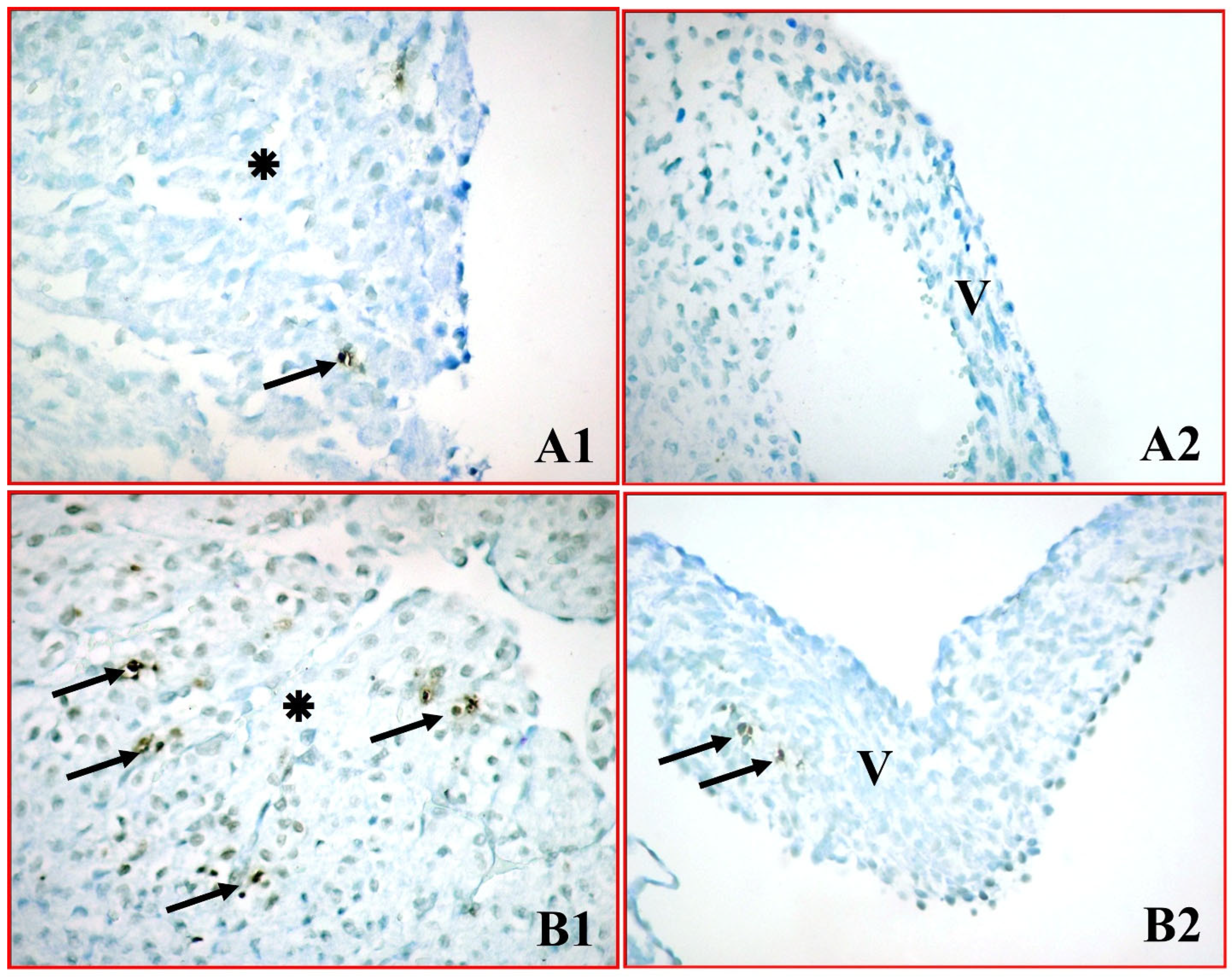
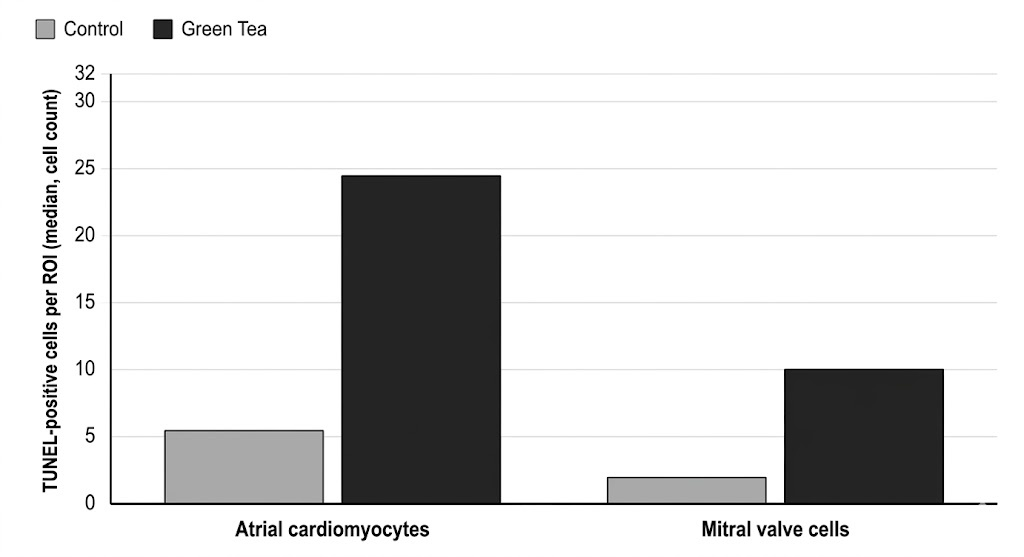
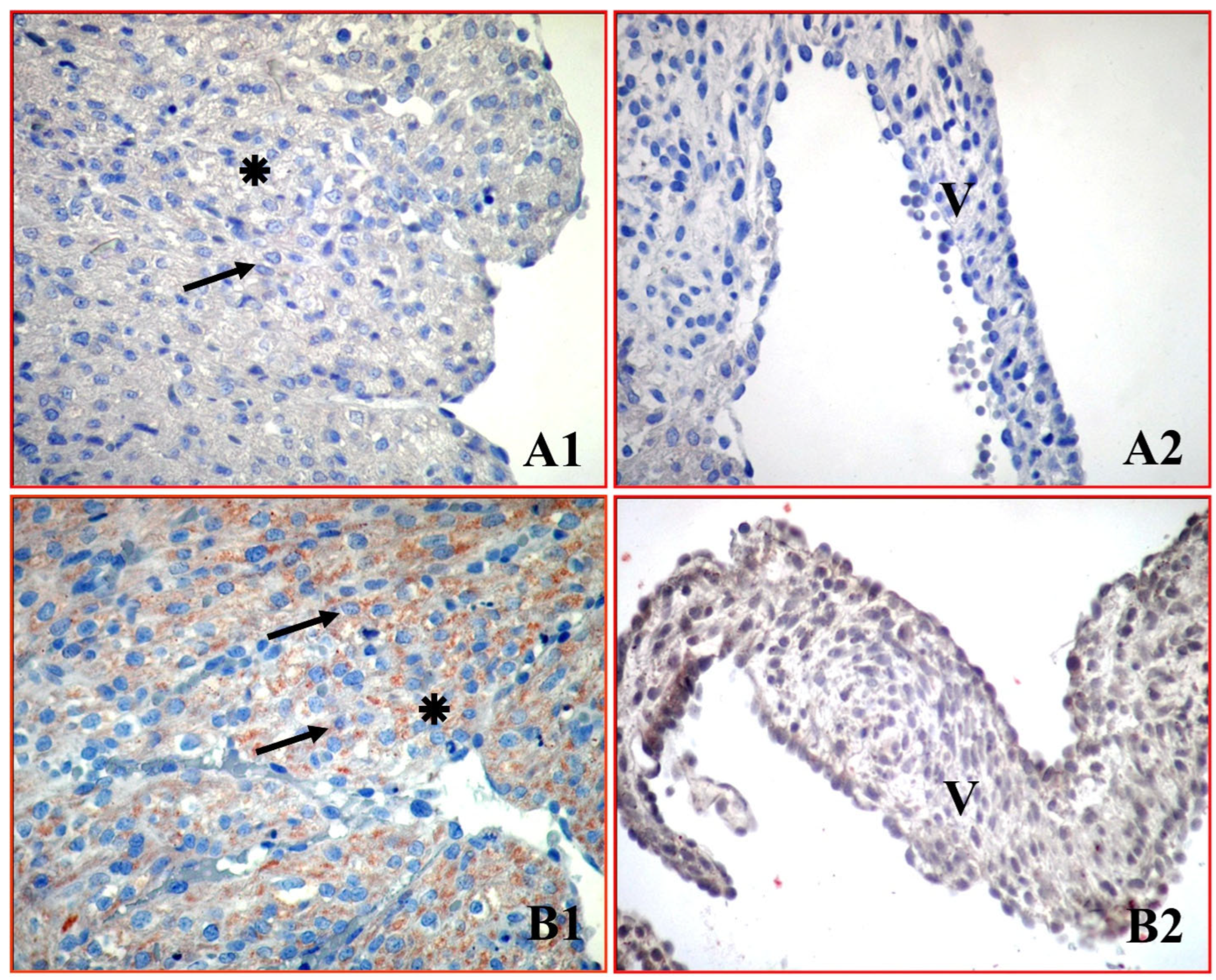
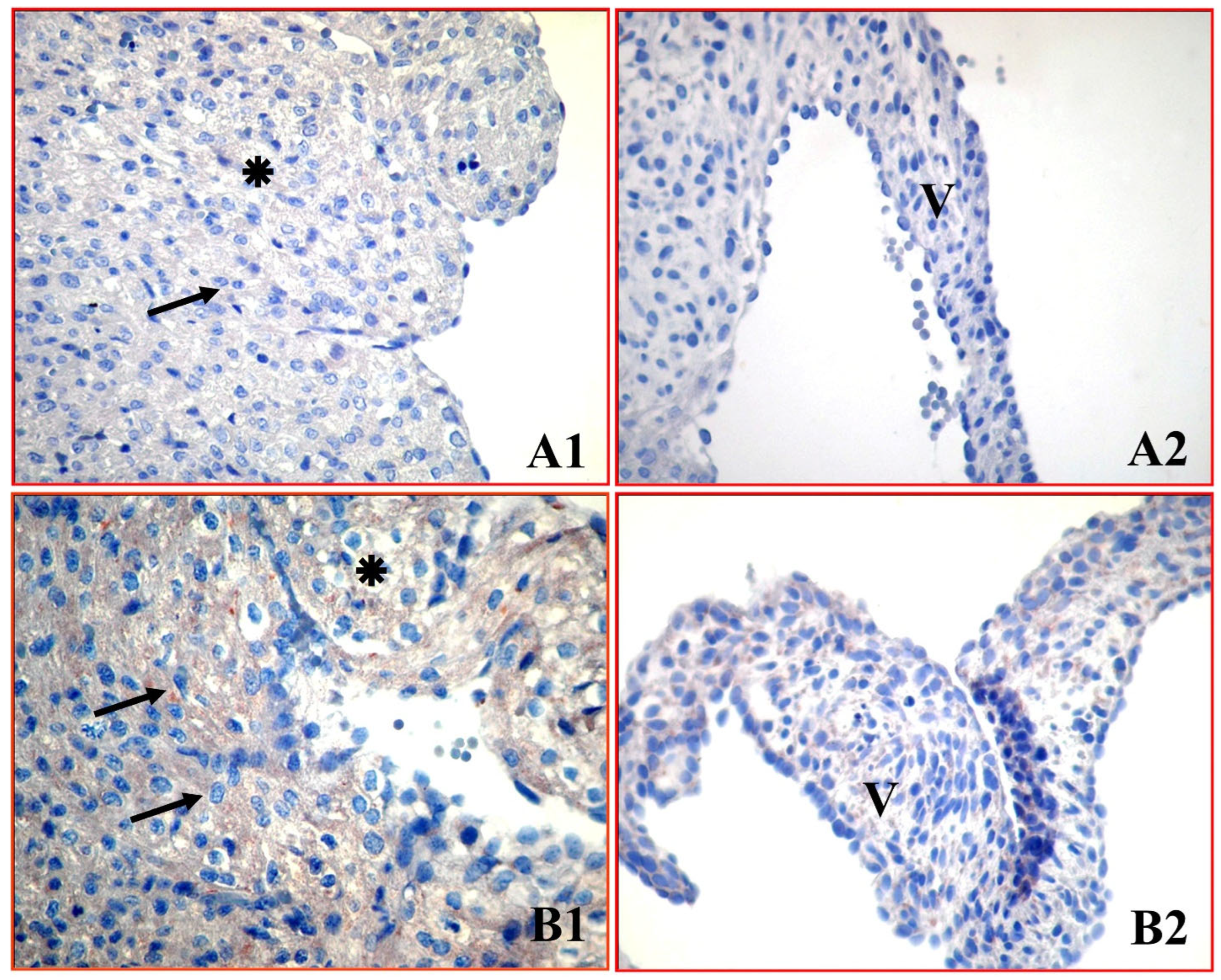
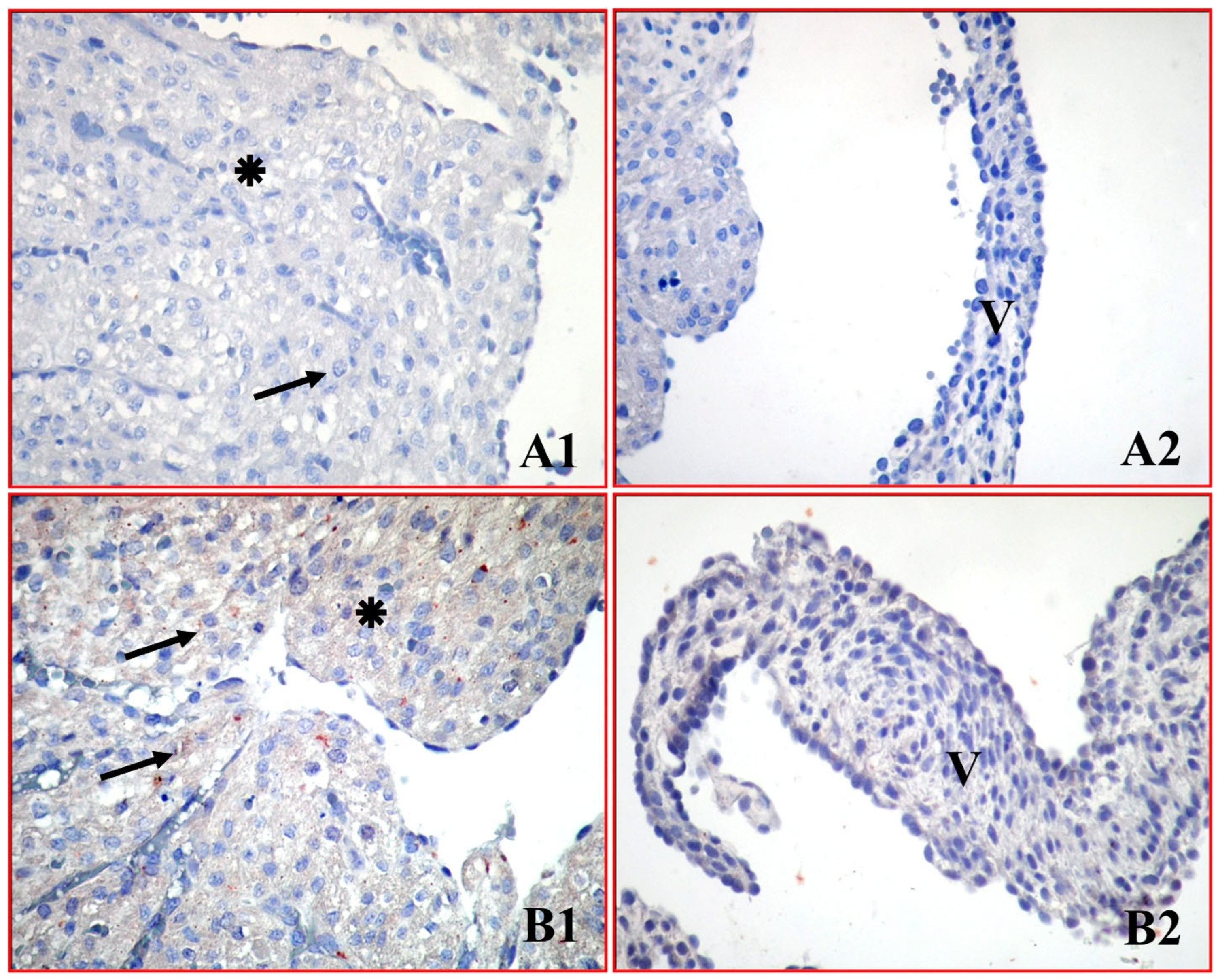
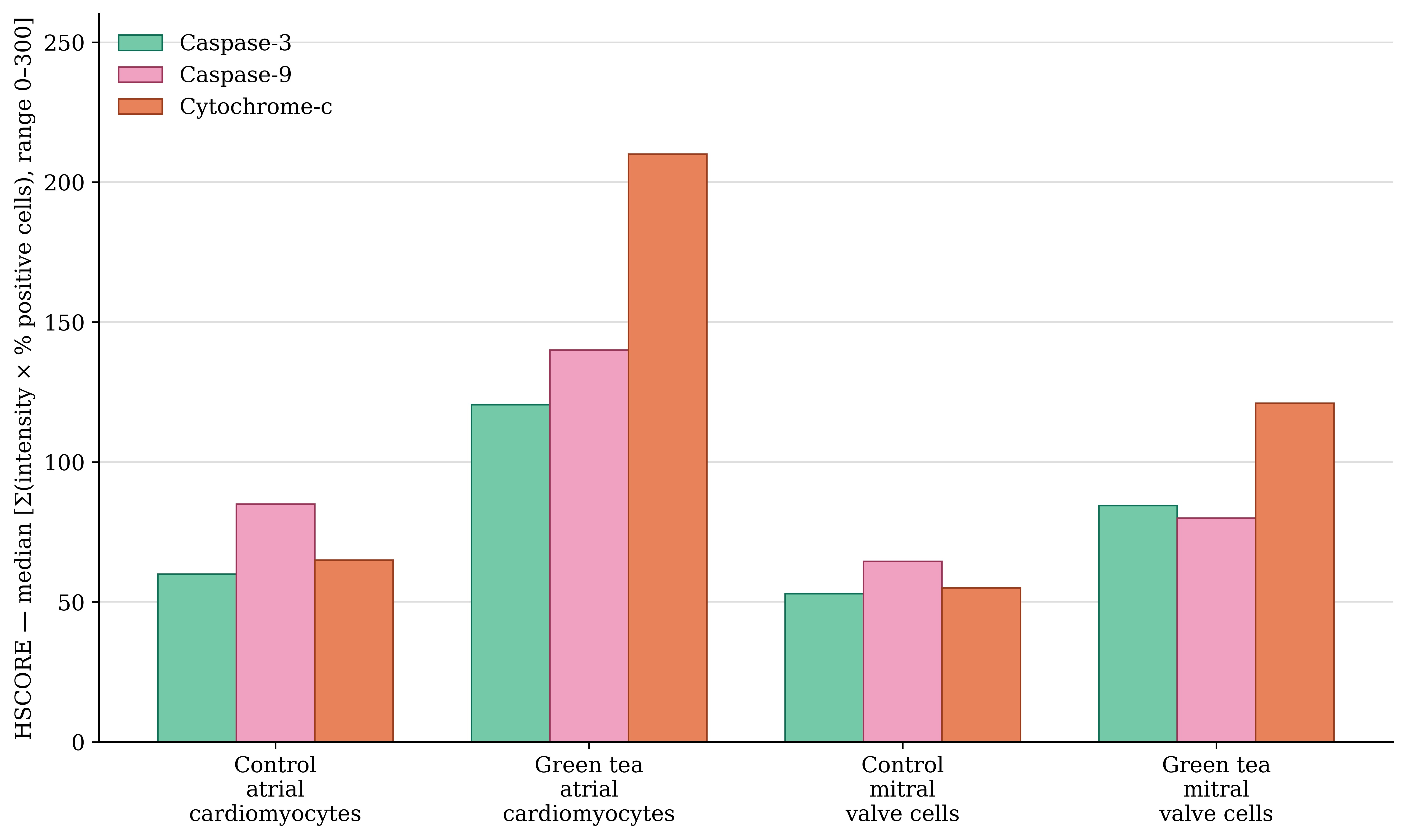
Background and Objectives: Green tea is known for its powerful antioxidant properties. However, the effects of green tea consumption during pregnancy on neonatal development and the mechanisms of these effects are not fully understood. The aim of this study was to investigate potential damage to atrial cardiomyocytes of newborn rat pups whose mothers received green tea during pregnancy and to elucidate the apoptotic mechanisms underlying this possible damage. Materials and Methods: Wistar albino rats (weighing 200–220 g, 10 weeks old) were used in this study. Following the confirmation of pregnancy, rats were randomly assigned to groups, and the experimental group was administered green tea by oral gavage at a dose of 50 mg/kg per day for 21 days. Atrial cardiomyocytes and mitral valve cells from newborn pups (postnatal day 1) were obtained and evaluated immunohistochemically for cytochrome c, caspase-9, and caspase-3 expression. Results: TUNEL analysis revealed a significant increase in DNA fragmentation in the green tea group, with the median number of apoptotic cells per region of interest (ROI) rising from 5.5 to 24.5 in atrial cardiomyocytes (p < 0.001), and from 2.0 to 10.0 in mitral valve cells (p < 0.05). Immunohistochemically, the control group showed faint-to-weak basal immunoreactivity of cytochrome c and caspase-3, and weak-to-moderate expression of caspase-9. In the green tea group, caspase-3 immunoreactivity was moderate, while cytochrome c and caspase-9 immunoreactivity were significantly higher. Quantitative HSCORE analysis confirmed significant elevations in atrial cardiomyocytes for cytochrome c (from 65.0 to 210.0; p < 0.001), caspase-9 (from 85.0 to 140.0; p < 0.001), and caspase-3 (from 60.0 to 120.5; p < 0.001). Similar statistically significant increases were observed across all corresponding markers in the mitral valve cells (p < 0.05). Overall, the induction of apoptosis was notably more pronounced in atrial cardiomyocytes than in mitral valve cells. Conclusions: Our findings suggest that the mechanism of potential damage in atrial cardiomyocytes of newborn rat pups is associated with mitochondria-mediated apoptosis, potentially triggered by activation of the cytochrome c, caspase-9 and caspase-3 axis. These results highlight the importance of exercising caution regarding the consumption of green tea supplements during pregnancy. Further studies are needed to correlate these preliminary neonatal observations with clinical outcomes.
Keywords: green tea; prenatal exposure; neonatal heart; apoptosis; caspase-3; mitochondrial pathway green tea; prenatal exposure; neonatal heart; apoptosis; caspase-3; mitochondrial pathway