Systematic Review

The Physical and Psychological Benefits of Nordic Walking in Patients with Breast Cancer: A Systematic Review

by
Lucía Ortega-Pérez de Villar
1,
Julio Fernández-Garrido
1,2 and
Omar Cauli
1,2,*
1
Department of Nursing, Faculty of Nursing and Podiatry, University of Valencia, 46010 Valencia, Spain
2
Cátedra Fundación Colisée de Envejecimiento Saludable, Activo y Participativo, University of Valencia, 46010 Valencia, Spain
*
Author to whom correspondence should be addressed.
Medicina 2026, 62(5), 932; https://doi.org/10.3390/medicina62050932 (registering DOI)
Submission received: 28 March 2026 / Revised: 30 April 2026 / Accepted: 6 May 2026 / Published: 11 May 2026
(This article belongs to the Section Epidemiology & Public Health)

Abstract

Background and Objectives: Breast cancer survivors often experience long-term physical and psychological impairments that negatively affect quality of life. Exercise-based rehabilitation strategies are increasingly recommended in this population. This study aimed to analyze the physical and psychological benefits of Nordic walking (NW) in breast cancer survivors. Materials and Methods: A systematic review (registered in PROSPERO ref: CRD42024613292) was conducted in accordance with PRISMA guidelines. SPORTDiscus, CINAHL, Cochrane, Embase, Medline Ovid and PubMed were searched from database inception to 30 December 2025, with no restrictions applied regarding the language of the included studies, using the terms “breast cancer”, “walking poles”, “pole walking” and “Nordic walking”. Studies involving adult women (≥18 years) with breast cancer were included. Data on study design, participant characteristics, intervention protocols and outcomes were extracted. Methodological quality was assessed using the Joanna Briggs Institute critical appraisal tools. Results: From 281 records identified, 17 studies were included that evaluated NW alone or in combination with other exercise. Improvements in cardiovascular capacity were reported in five studies (four out of five reported significant improvement after NW), while gains in shoulder range of motion were observed in three out of four studies assessing this outcome, mainly after standalone NW interventions. Positive changes in body posture were significantly reported after NW in all three studies investigating this parameter. Improvements in strength were reported in five studies, while gains in flexibility were observed in one study, within multimodal interventions combining NW with other exercise. Among seven studies evaluating lymphedema, sustained reductions were primarily reported after multiweek programs, especially when NW was combined with the ISA method. Several studies also reported improvements in pain, psychological alterations, and quality of life. Conclusions: NW appears to be an effective, holistic exercise modality for enhancing both physical and psychological aspects for breast cancer survivors.

1. Introduction

Breast cancer remains the most commonly diagnosed cancer in women worldwide. The latest GLOBOCAN 2022 estimates report about 2.3 million new female breast cancer cases and about 666,000 deaths globally [1,2]. Incidence is highest in more-developed regions, largely reflecting older populations, reproductive patterns, screening, and detection [3]. Mortality burden is disproportionately high in lower-resource settings because diagnosis often occurs later and access to treatment is less consistent [4]. In the United States, breast cancer incidence has been rising about 1% per year, especially for localized-stage and hormone-receptor-positive disease; the increase is also notable among women under 50 [5,6]. According to the Spanish Society of Medical Oncology (SEOM), breast cancer was the most diagnosed cancer in Spain in 2024. Although the net survival of women with breast cancer has increased in recent years [7], survivors must still combat the adverse effects of cancer treatment resulting from surgery, radiation, and/or chemotherapy that negatively affect their quality of life, especially on the physical and psychological levels. The most common side effects of these treatments include fatigue, insomnia, and strength impairment, amongst others [8,9,10].
The increase in adverse effects along with persistent symptoms over time leads to a higher level of sedentarism which in turn affects cardiorespiratory fitness and muscle strength, thereby limiting patient functionality and independence and impacting quality of life [11,12].
Cardiorespiratory problems are related to premature mortality, while a decline in strength is associated with functional deterioration, limiting independence and, consequently, reducing quality of life. In addition, psychological effects such as cognitive problems, depression, and anxiety are prevalent in this population. After chemotherapy, up to 60% of patients experience cognitive impairments and emotional distress, which also significantly impact their quality of life and contribute to feelings of depression and anxiety [10,13,14,15,16]. As a result, breast cancer patients may find themselves trapped in a vicious cycle, leading to decreased physical inactivity and further health complications [17,18,19,20].
The WHO guidelines on physical activity and sedentary behaviors for significant health benefits recommend that adults should accumulate a minimum of 150–300 min of moderate-intensity aerobic physical activity or a minimum of 75–150 min of vigorous-intensity aerobic physical activity throughout the week. Also, the equivalent of moderate- and vigorous-intensity activities can be combined to achieve significant health benefits [21]. Increased physical activity following a cancer diagnosis has been linked to a lower risk of all-cause mortality and cancer mortality.
Physical exercise has emerged as an important non-pharmacological strategy that can modulate several of these pathophysiological mechanisms [22,23,24,25,26]. Regular physical activity reduces circulating estrogen levels [22,27] and improves insulin sensitivity, thereby lowering insulin and insulin-like growth factor-1, both of which are implicated in tumor growth [22,26,27]. In addition, exercise exerts anti-inflammatory effects and enhances immune surveillance, contributing to a less favorable environment for cancer progression [25]. Evidence also suggests that exercise may improve tumor vascular function and oxygenation, potentially enhancing treatment efficacy [23,24,25].
Evidence reflects a nonlinear relationship between increasing levels of physical activity after diagnosis and breast cancer and all-cause mortality up to 10–15 MET-hours/week (which is equivalent to 150 min/week of moderate or vigorous physical activity), and there is no evidence of harmful effects at higher levels [28,29,30]. To accumulate this number of minutes of activity and thus avoid the effects of lack of physical exercise, the effectiveness of different exercise programs has been tested. These programs generally consist of aerobic or strength exercises, or a combination of both. Of note, taking part in an exercise program plays a key role in improving adherence to a regular exercise regimen, and so a wide range of methods to increase participation and compliance have been developed. Thus, to promote participation, researchers have sought activities that are socially and physically attractive [31,32,33].
Nordic walking (NW), which combines elements of classic walking, skiing, and trekking, is one of these activities. It has proven to be a simple form of physical activity that can be performed by almost anyone, anywhere. NW has similar characteristics to power walking (brisk walking) except for the additional use of two poles specifically designed to activate the upper body musculature, providing added value from a physiological and biomechanical point of view, with health benefits substantially superior to power walking [34]. Furthermore, NW provides a full-body workout that engages both the upper and lower body, activating approximately 70–90% of the body musculature and resulting in an 8% increased energy expenditure compared to regular walking, along with a reduction in joint load by approximately 30%. It has also been shown to increase gait speed and improve cardiovascular function [35,36,37].
The characteristics of NW particularly benefit breast cancer survivors, including improved aerobic capacity, strength, balance, and well-being, both in healthy individuals and those with various conditions or diseases [34,37]. It positively impacts the cardiorespiratory system, improves lipid profiles, promotes weight loss, mitigates sarcopenia, and helps alleviate pain [37]. The combination of open and closed kinetic chain movements in the upper limbs during NW creates muscle contractions that facilitate a pumping effect, enhancing circulation of both lymph and blood through the arms [38]. Furthermore, physiological studies found significant differences during NW compared to normal walking, such as increased heart rate, oxygen consumption (VO2), caloric expenditure, and lactic acid concentration [34].
From a biomechanical point of view, NW improves stability because it ensures an enlarged base of support, increased stride length, contact time, and execution speed; it decreases compression forces on the knees and reduces vertical ground reaction forces and pressure on the central metatarsal [35]. Furthermore, increasing the intensity of arm movement with the poles intensifies upper body muscle strength and reduces shoulder and neck pain by up to 40% compared to people with chronic neck pain who do not do MN exercise [34], all without significantly increasing the subjective perception of exertion [37]. These characteristics make NW a simple, safe, effective, enjoyable, and low-cost physical activity and so it is likely particularly beneficial to breast cancer patients [39,40]. A previous review by Sánchez-Lastra et al. [41] examined the effects of Nordic walking (NW) in breast cancer survivors, including nine studies focused on physical symptoms such as lymphedema, physical fitness, disability and morbid perceptions. Given the growing body of evidence on this topic, we conducted an updated systematic review providing a more comprehensive synthesis. This review expands upon previous work by analyzing the effects of NW on physical function components, and specifically, cardiovascular capacity, joint mobility, posture, flexibility, and strength along with its impact on lymphedema, pain, quality of life, and psychological alterations.

2. Materials and Methods

This systematic review was conducted according to the Preferred Reporting Items for Systematic Reviews and Meta-Analyses (PRISMAs) guideline. The selected search strategy and methods of analysis were registered at the PROSPERO database (ref: CRD42024613292).

2.1. Literature Search

A literature search using multiple electronic bibliographic databases was conducted between September 2025 and 30 December 2025. SPORTDiscus, CINAHL, Cochrane, Embase, Medline Ovid, and PubMed were searched from database inception to 30 December 2025, with no restrictions applied regarding the language of the included studies. The last search was conducted on 30 December 2025. The primary search terms used were “breast cancer” AND (“walking poles” OR “pole walking” OR “Nordic walking”). No restrictions were applied regarding publication date or language of the included studies. The complete search strategies for each database, including Boolean operators, are provided in the Supplementary File.

2.2. Inclusion/Exclusion Criteria

The selection criteria for the systematic review were defined according to the PICOS framework (population, intervention, comparison, outcomes, and study design criteria) [42]. Studies were included if they presented data from baseline and at least one post-intervention, and/or short, medium and/or long-term follow-up assessment.

2.2.1. Population

Female adult patients (≥18 years) diagnosed with breast cancer, regardless of the cancer type, stage, or oncological treatment.

2.2.2. Intervention and Comparison

Studies evaluating NW as standalone intervention or NW combined with other exercise modalities (e.g., aerobic training, resistance training), compared with usual care, other exercise interventions, or pre-post-intervention comparisons.

2.2.3. Outcomes

Studies reporting at least one physical or psychological outcome related to NW, including cardiovascular capacity, range of motion, body posture, flexibility, muscular strength, lymphoedema, pain, quality of life, psychological well-being or cognitive outcomes.

2.2.4. Studies’ Design

Randomized controlled trials (RCTs), including pilot studies, quasi-experimental studies, and uncontrolled studies, were included. The inclusion of different study designs was justified by the limited availability of RCTs in this field. No restrictions were applied regarding publication date or language.

2.2.5. Exclusion Criteria

Studies were excluded if they: (i) included male participants or pediatric/adolescent populations; (ii) did not involve NW as part of the intervention; (iii) were qualitative studies, conference abstracts, protocols, editorials, or narrative reviews; or (iv) did not report data regarding physical and/or psychological outcomes.

2.3. Analysis and Synthesis

The citation list of all articles was imported to an online citation manager (Zotero5.0.85 (http://www.zotero.org)) which was used to manage the screening process and remove duplicate citations. In the first phase, we assessed the relevance of the studies in relation to the study questions and objectives using information from the study title, abstract, and keywords, assessing the full text where there was no consensus or insufficient information. In the second phase, we assessed the full text of each study for compliance with the inclusion criteria. The article selection process was conducted and evaluated by 2 independent researchers (L.O.P.d.V. and J.F.G.) and differences were resolved by consensus, moderated by a third researcher (O.C.) [43]. No automation tools were used at any stage of the selection or data extraction processes. Two independent researchers (L.O.P.d.V. and J.F.G.) extracted study characteristics and outcome data, ensuring that the most relevant information was obtained from each study [44], as well as the country in which the study was conducted, number of participants, participant characteristics, NW programs, dropouts, and outcomes. Results related to the effect of exercise training were extracted from the post-intervention and/or follow-up assessments. A quantitative meta-analysis was not considered appropriate due to substantial clinical and methodological heterogeneity across the included studies. Specifically, marked variability was observed in intervention characteristics (standalone NW versus NW combined with other exercise modalities), intervention duration and frequency, comparator conditions, and outcome measures. In addition, outcomes were assessed using different measurement tools and reported using heterogeneous metrics, which precluded meaningful statistical pooling of effect sizes. Furthermore, the included studies encompassed different methodological designs, including RCTs, quasi-experimental studies, and uncontrolled intervention studies, contributing to additional heterogeneity in study quality and risk of bias. For these reasons, a structured narrative synthesis was conducted in accordance with current methodological recommendations for systematic reviews when meta-analysis is not feasible [45]. This approach typically organizes results thematically according to key characteristics, such as intervention type, population group, or outcome domain.

2.4. Quality Appraisal

The quality assessment of the studies to be included in this review followed the critical appraisal tools of the Joanna Briggs Institute (JBI), which help assess the reliability, relevance, and results of published articles, and the checklist was completed according to the type of study. JBI offers a suite of critical appraisal instruments that are freely available to systematic reviewers and researchers investigating the methodological limitations of primary research studies. The JBI instruments are designed to be study-specific and are presented as questions in a checklist. In our case we used the checklist for quasi-experimental [46] and RCT studies [47].

2.5. Overall Strength of the Evidence

We evaluated the certainty of evidence by classifying the results according to the levels defined in the Grading of Recommendations, Assessment, Development and Evaluation (GRADEs) framework [48]. Two researchers (L.O.P.d.V. and J.F.G.) carried out this evaluation, taking into account the following 5 key domains adapted for network meta-analyses: risk of bias, inconsistency, indirectness, imprecision and publication bias. Due to the substantial heterogeneity in the exercise modalities across the included studies a meta-analysis was not feasible. The level of evidence was categorized as high, moderate, low, or very low quality of evidence.

3. Results

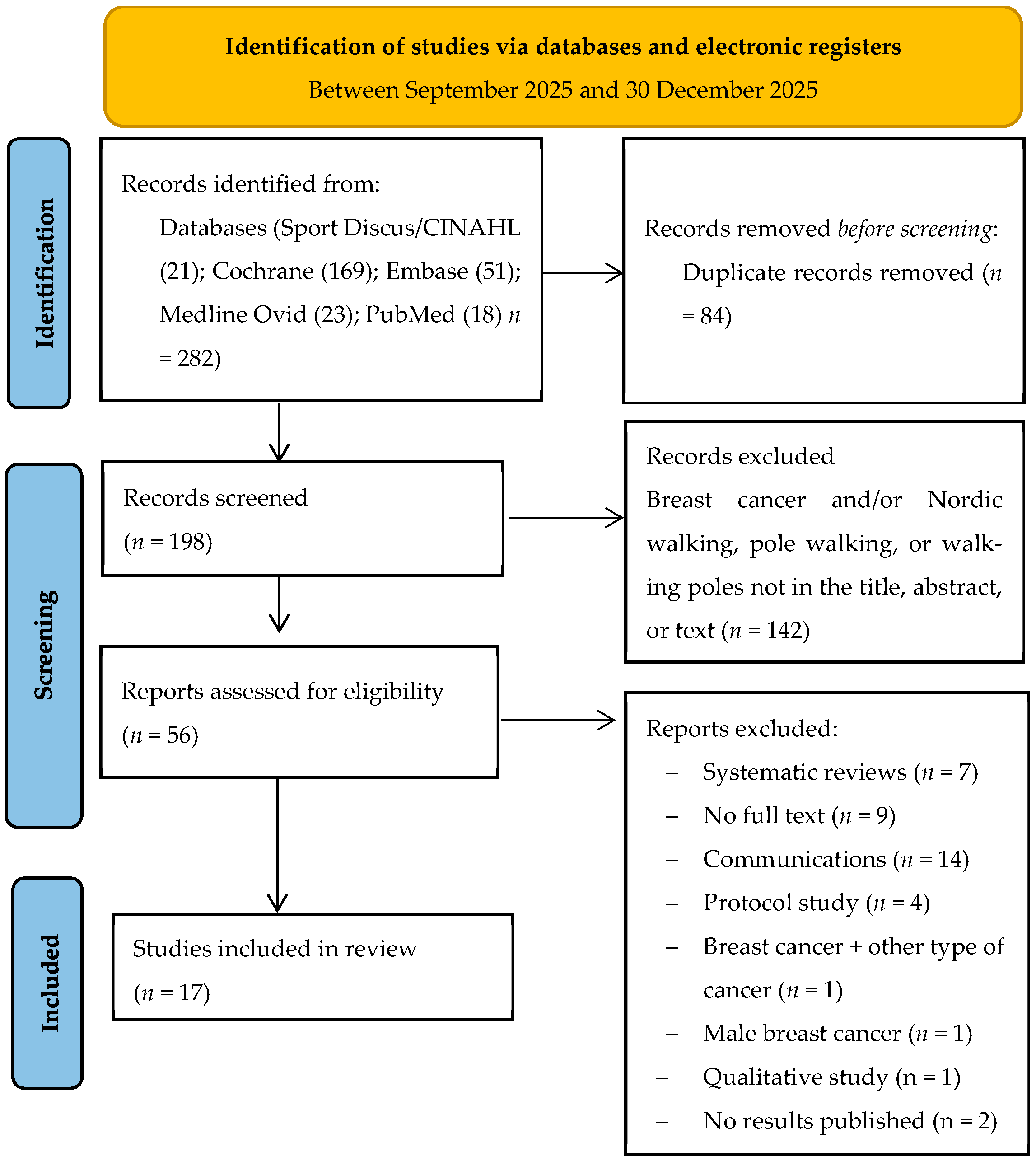
Our electronic search strategy retrieved 282 studies, of which only 17 met the inclusion criteria and were included in the final analysis. The PRISMA flow diagram illustrating the number of studies excluded at each stage of the systematic review is shown in Figure 1.
The JBI levels of evidence for the studies were as follows: eight studies provided level 1 evidence (studies with experimental designs) (Table 1) and six provided level 2 evidence (studies with quasi-experimental designs) (Table 2) for 13 and nine items, respectively. The evaluation criteria were based on the items marked as “yes” (scored as ‘1’) and “unclear” or “no” (scored as ‘0’). The higher the score, the better the quality of the study.

3.1. Study Characteristics

The 17 selected studies were conducted between 2005 and 2025 and enrolled a total of 1080 adult women diagnosed with breast cancer, with a mean age of 56.67 years. Sample sizes across the studies ranged from 181 [52] to 16 patients [50,55]. Meta-analysis was not possible because of the incompatibility of the outcome measures amongst the studies as detailed below.

3.2. Intervention Classification

Intervention duration ranged from a single NW session [63] to structure training programs lasting up to 6 months [52,53], with prescribed frequency varying from once per week [54,62] to five sessions per week [60].
Interventions were categorized into the following four subgroups based on the structure of the exercise programs: (1) NW as a standalone intervention [49,50,51,56,58,59,60,62,63,65], (2) NW combined with resistance training and/or concurrent conditioning exercises [54,55,64], (3) NW with structured aerobic and multicomponent supervised training [52,53,57] and (4) NW combined with ISA method or myofascial exercise method [50,51,61].
Table 3 summarizes the characteristics of each intervention used in the selected studies. The ISA technique is a set of dynamic exercises created especially for breast cancer survivors that are therapeutic for arthralgia, lymphoedema, and NW. This calls for the use of ISA balls, which are foam balls with a diameter of 6 or 7 cm and varying densities that can be used on their own or in conjunction with NW poles. The exercises in the series are designed to counteract or prevent upper limb lymphoedema, ease muscle tension, and gently warm up the joints. The training program began with hand and wrist joint workouts that were done solely with ISA balls. Following these, multi-joint exercises (such as those for the wrists, elbows, and shoulders) were performed with the NW poles and ISA balls.

3.3. Organization of the Main Outcomes

The effects of NW training were summarized based on the reported benefits in physical function outcomes, including cardiovascular capacity (five studies), range of motion (four studies), body posture (three studies), flexibility, and strength (five studies), on lymphoedema (seven studies) and, in reducing pain, improving quality of life, in psychological aspects and cognitive functioning (six studies).

3.3.1. Shoulder Motion and Morbidity

Four studies [55,57,62,64] analyzed the range of motion in the shoulder joint following NW-based interventions with different training structures. Overall, three of the four studies reported significant improvements in shoulder mobility, while one study reported no significant changes. Specifically, Sprod et al. [55] did not observe significant changes after an 8-week intervention combining NW with concurrent aerobic and resistance training. In contrast, studies evaluating standalone NW interventions consistently reported positive effects. Fischer et al. [62] reported significant improvements in both active (p < 0.01) and passive (p < 0.05) movements of the affected shoulder after 10 weeks of standalone NW. These findings are also supported by Vuckovic et al. [64] who observed significant increases in shoulder anteflexion, retroflexion and abduction after 10 weeks of NW program. Additionally, Casanovas-Álvarez et al. [57] demonstrated that a pre-rehabilitation program including NW was effective in maintaining arm function and preventing the decline in mobility typically observed during neoadjuvant treatment. This study also reported significant improvements in shoulder morbidity in terms of both pain and disability, with greater reduction from post-intervention to follow-up (T2–T3) than from pre- to post-intervention (T1–T2). Shoulder symptoms and limitations in activities of daily living (ADL) significantly improved across both time intervals (see Supplementary Tables S1–S4).

3.3.2. Body Posture

Three studies examined trunk muscle endurance and postural alignment following standalone NW interventions [56,58,59]. Overall, all three studies reported significant improvements in at least one parameter related to trunk muscle function or postural alignment. Hanuszkiewicz et al. measured trunk functional and postural changes in women after breast cancer [56] or during treatment [58,59]. After 8 weeks of NW, a significant increase in both total work and average power of the trunk flexor and extensor muscle was observed in middle-aged women (45–59 years old), whereas only flexor muscle endurance improved significantly in older women (≥60 years old). No significant changes in trunk function or postural parameters were observed in the group performing general gymnastic exercises. In studies comparing NW with water exercise and general fitness [58,59] significant intra- and intergroup improvements in trunk function [58] and postural changes [59] were found exclusively in the NW and water exercise group (see Supplementary Tables S1–S4).

3.3.3. Flexibility, Strength, and Cardiovascular Fitness

Only one study was found related to flexibility in female breast cancer survivors: Morano et al. [61] assessed shoulder, lower back, and hamstring flexibility following 12 weeks of NW combined with the ISA method and reported significant improvements in both upper and lower back flexibility (see Supplementary Tables S1–S4). As this was a combined intervention, flexibility gains cannot be attributed to NW alone.
Muscle strength was evaluated in five studies using different training structures and assessment tools. [54,55,57,61,64] Four of the five studies reported significant changes. Morano et al. [61] and Vuckovic et al. [64] reported significant improvements in forearm strength and the non-dominant hand; conversely, Casanovas-Álvarez et al. [57] did not observe significant changes following their pre-rehabilitation program. Furthermore, Vuckovic et al. [64] provided evidence on lower-body functional strength through the STS-30, reporting a significant increase in the number of repetitions (p < 0.001), which reflects improvement in overall functional power.
In terms of muscular endurance, Morano et al. [61] observed significant gains in trunk extensor endurance (single leg back bridge test). Similarly, Sprod et al. [55] and Malicka et al. [54] assessed upper limb muscular endurance following NW combined with concurrent aerobic and resistance conditioning. Sprod et al. [55] reported significant increase in bench press and latissimus dorsi pull-down repetitions after 8 weeks, whereas Malicka et al. [54] found significant gains in a pushing-and-pulling motion measured by isokinetic dynamometer. Overall, while consistent strength improvements were observed across studies, all positive findings derived from multimodal exercise protocols incorporating NW, precluding firm conclusions regarding the isolated effects of NW on muscular strength.
Four studies (reported across five studies) [52,53,57,60,64] evaluated cardiovascular capacity (see Supplementary Tables S1–S4). Three of the four studies reported significant improvements in cardiovascular outcomes. Using a submaximal bicycle ergometer test, Jönsson and Johansen [60] reported a significant decrease in heart rate in the intervention group after 8 weeks of standalone NW (mean difference = −5 bpm; p = 0.004). In turn, Koevoets et al. [52,53] observed a significant increase in a maximal aerobic capacity from baseline to follow-up in the intervention group compared with the control group, as assessed by a maximal-cycle cardiopulmonary exercise test using a ramp protocol with continuous breathing gas analysis and electrocardiogram monitoring. Consistent with these findings, both Casanovas-Álvarez et al. [57] and Vuckovic et al. [64], reported a significant improvement in functional capacity measured via the 6 MWT, further highlighting NW as a safe and effective modality for enhancing aerobic fitness in breast cancer survivors.

3.3.4. Lymphoedema

Lymphoedema was evaluated in seven studies [50,51,54,57,60,63,64]. Overall, sustained reductions in lymphoedema-related outcomes were reported in three studies, whereas four studies reported null or transient effects. Regarding acute effects, one study assessing a single session reported a transient reduction in both absolute and relative volume immediately after NW alongside a significant increase in the volume of the healthy arm; however, all lymphedema-related changes did not remain 24 h later [63]. In contrast, studies implementing multiweek NW programs showed more consistent medium-term effects. After 8 weeks of standalone NW, Jönson and Johanson [60] reported significant reductions in total arm volume absolute and relative lymphedema volume. However, several studies [54,57,64] did not observe significant volume reductions following a combined NW and concurrent conditioning program. Furthermore, in studies incorporating NW with the ISA method, significant reductions in upper-limb circumferences, extracellular body water, and the extracellular-to-total body water ratio were consistently observed after 10 weeks of training [50,51]. Overall, sustained reductions in lymphedema-related parameters were primarily associated with repeated multiweek interventions, particularly when NW was combined with the ISA method (Table 4).

3.3.5. Psychological Aspects, Cognitive Functioning, Pain, and Quality of Life

Psychological outcomes, cognitive functioning, pain, and quality of life were assessed in six studies with different intervention structures [49,52,53,57,64,65]. Overall, psychological well-being, pain, and quality of life outcomes showed predominantly positive effects, whereas cognitive outcomes showed largely null or heterogeneous findings.
Psychological well-being was assessed in two studies and showed significant improvements in response to exercise programs. Koevoets et al. [52] reported a significant reduction in depressive symptoms (PHQ-9) after a multicomponent exercise program including NW, although no significant between-group differences were found for anxiety. Similarly, Fields et al. [49] observed improvements in psychological distress in both the NW and usual care groups, with a trend toward greater enhancement in the NW arm.
Cognitive functioning was evaluated in two studies. Koevoets et al. [52] found no significant changes in global cognitive performance after 6 months of training. Neuroimaging data from the same cohort showed no significant differences in total hippocampal volume or gray matter volume between groups [53]. However, regional analysis revealed that volumetric reductions in the right hippocampus, dentate gyrus, and subiculum were paradoxically associated with improvements in cognitive functioning, suggesting a complex compensatory mechanism or structural remodeling [53].
Pain outcomes were evaluated in three studies [49,57,64], all of which reported significant improvements following NW interventions. After 6 weeks, Fields et al. [49] reported a clinically significant reduction (30%) in worst pain intensity among women with AIAA after 6 weeks of standalone NW, which was maintained at the 12-week follow-up. This is further supported by more recent evidence from Casanovas-Álvarez et al. [57], who reported a significant decrease in pain intensity (p = 0.04) following an 8-week supervised NW-based prehabilitation program in patients receiving neoadjuvant chemotherapy. Similarly, Vuckovic et al. [64] found that a structured NW intervention led to a significant reduction in both pain scores and the sensation of heaviness in the affected limb. Collectively, these findings suggest that NW is an effective and safe non-pharmacological strategy for mitigating treatment-related pain and physical discomfort in breast cancer survivors.
Quality of life was evaluated in five studies [49,52,57,64,65] and improved significantly across the interventions, reflecting enhancements in functional capacity and the mitigation of cancer-related symptoms. Fields et al. [49] observed that NW practice led to improvements across all SF-36 subscales, notably preventing the deterioration in general health perception and physical functioning seen in control groups. Koevoets et al. [52] and Casanovas-Álvarez et al. [57] also reported significant gains in global health status, physical functioning, and role functioning, alongside a marked reduction in fatigue.
Sartor et al. [65] provided critical evidence on the physical recovery of survivors, demonstrating that an aerobic program incorporating NW successfully reduced sedentary time and significantly improved sleep efficiency. Furthermore, Vuckovic et al. [64] linked the increased functional capacity achieved through NW with greater autonomy in daily activities, further consolidating the positive impact of this modality on the overall perceived well-being of breast cancer survivors.

3.4. Quality of Evidence

The grading of the quality of evidence using GRADE took into account imprecision and indirectness; therefore, the certainty of evidence ranged from low to very low and the results should be interpreted with caution (see Table 5).

4. Discussion

In recent years, NW has been proposed as an effective and accessible rehabilitation option for breast cancer survivors due to its versatility and because it can be performed anywhere, either individually or in groups. This type of exercise provides positive effects both physically and psychologically in this group of patients. Therefore, this systematic review synthesized the available evidence on the effects of NW in female breast cancer survivors, focusing on physical, cardiovascular, lymphatic, and psychological outcomes.
One of the most characteristic and debilitating side effects of breast cancer treatment is its impact on the shoulder on the affected side, which often leads to reduced mobility and increased morbidity, especially after surgery and radiotherapy [55]. The improvement on shoulder mobility seems to be due a combination of biomechanical, neuromuscular, and circulatory mechanisms [54,55]. The use of poles during NW promotes active engagement of the upper limbs, encouraging repetitive shoulder flexion, extension, and coordinated scapulothoracic movement, which can counteract post-surgical stiffness and adhesions commonly observed after mastectomy or radiotherapy [55]. This dynamic loading enhances muscle strength in the deltoids, rotator cuff, and scapular stabilizers while simultaneously facilitating proprioceptive feedback and motor control re-education. [66]. Additionally, the rhythmic, low-impact nature of NW improves lymphatic drainage and reduces the risk of lymphedema by stimulating muscle pump activity, thereby decreasing swelling and allowing greater joint range of motion [67]. Improved posture and trunk rotation associated with NW further contribute to restoring functional shoulder kinematics and reducing compensatory movement patterns. Collectively, these adaptations support both structural and functional recovery of the shoulder complex in breast cancer [68]. Improvements in shoulder mobility and shoulder-related disability were observed only after longer standalone NW interventions (10 weeks) [62], whereas shorter interventions and combined protocols did not yield consistent benefits [55]. This suggests a potential dose–response relationship, although conclusions remain tentative due to the small number of trials and variation in intervention structure.
Age-related differences were also evident in trunk muscle and postural adaptations, with middle-aged women showing greater gains than older participants, highlighting the need for individualized training prescriptions based on functional capacity and age [56,58,59]. Breast cancer treatments, especially surgery, radiotherapy, and chemotherapy, negatively affect muscle function, causing weakness, atrophy, and stiffness [54]. Consistent improvements in muscular strength and flexibility were observed exclusively in studies employing multimodal exercise protocols in which NW was combined with resistance training or the ISA method [54,55,61]. This may be because of the muscle activation required by this type of exercise but nevertheless, more work will be needed to confirm these results. Unlike regular walking, NW incorporates upper-limb propulsion via poles, leading to greater activation of the shoulder girdle, trunk stabilizers, and arm musculature, which is particularly beneficial for patients recovering from surgery or affected by treatment-related deconditioning [55]. This full-body involvement increases muscle strength by promoting resistance-like loading in both upper and lower extremities while maintaining low joint impact [34,69]. Additionally, the coordinated, rhythmic movement patterns improve range of motion and joint mobility, especially in the shoulders, thereby enhancing flexibility and reducing stiffness often associated with post-surgical scarring or radiation therapy [61]. Furthermore, regular practice induces anti-inflammatory effects and improves circulation, which may facilitate tissue elasticity and recovery [68,70].
Cardiorespiratory function, which is associated with premature mortality, is another of the main issues affecting breast cancer survivors [31]. Standalone NW interventions improved submaximal cardiovascular efficiency, as reflected by reduced heart rate during standardized exercise testing, whereas multicomponent exercise programs combined with NW interventions contribute to significant improvements in maximal aerobic capacity (VO2 peak). These findings indicate that NW may contribute to cardiovascular conditioning, although magnitude of benefit appears dependent on training intensity, supervision, and whether NW is delivered as a standalone or multicomponent intervention [52,53,60].
Similarly, NW has also shown positive effects in reducing lymphedema, a very common complication following breast cancer surgery. Acute single-session NW produced only transient reductions in arm volume [63], whereas repeated multiweek interventions yielded more consistent medium-term reductions in arm circumference and extracellular fluid, particularly when NW was combined with ISA method or myofascial techniques [50,51,54,60]. This may be because of the dynamic movement resulting from use of the poles, which facilitates drainage and promotes circulation during walking. Furthermore, lymphatic drainage in the arms may occur as the result of hand contractions, aiding in the removal of excess fluid in this area [71].
Regarding the psychological effects of breast cancer, cognitive decline is a common concern among patients who have undergone chemotherapy, which can lead to issues with memory, concentration, and mental processing [72,73,74]. Although some studies suggest that exercise programs, including NW, may have beneficial effects on cognitive function, we found no statistically significant changes had been reported in this sense [52,53]. Thus, psychological outcomes varied depending on the type and duration of intervention. Similarly, depression, pain, and reduced quality of life are also common among breast cancer survivors [75,76,77]. In this context, it has been demonstrated that NW can improve not only physical function but also the perception of well-being in this group, thereby reducing levels of anxiety, stress, and depression [34]. Moreover, participation in NW is commonly performed in group settings, fostering social interaction, companionship, and emotional support, which can enhance adherence and psychosocial well-being among participants [78,79]. In the analyzed studies, NW seemed to improve the psychological state and quality of life of these patients, which is crucial for their recovery [49,52], although comparison with proper control group(s) needs additional studies.
Several limitations of this review must be acknowledged. Although NW entails favorable changes in the physical and psychological symptomatology that breast cancer survivors show, according to the observed results in the examined studies, these findings should be interpreted cautiously for several reasons. First, there were not many research studies available, and the quality of their methodology was not high based on GRADE critical appraisal [48]. Second, the studies used small sample numbers and did not perform an estimate analysis on the sample sizes, which restricts the statistical significance and raises the possibility of error type II. Lastly, just few studies carried out a precise follow-up phase, which restricts our understanding of how the variables behave over time. No meta-analysis was carried out because of the significant variation in intervention parameters, outcome measures, and data reporting techniques. Selective publishing and reporting in the literature, which is another significant source of bias, might be another restriction. Lastly, the lack of a review of the gray literature may have limited coverage of all possible research on this subject. Most studies were characterized by small sample sizes, lack of blinding, incomplete reporting of intervention dosage, and heterogeneity in both interventions and outcomes. In addition, only a minority of studies employed randomized controlled designs, and long-term follow-up data were scarce. These methodological weaknesses substantially reduce the certainty of the evidence. Furthermore, outcome measures and assessment tools differ widely across studies, limiting direct comparisons and precluding quantitative meta-analysis. Clear differentiation between standalone NW and multimodal exercise programs is essential to allow attribution of effects. Studies should also report clinically meaningful thresholds, include long-term follow-up, and explore dose–response relationships. Further research is particularly warranted to clarify the effects of NW on cognitive outcomes, lymphedema progression, and age-specific musculoskeletal adaptations.
Future demands for NW in breast cancer survivors would center on its integration into standard oncology care as a prescribed, evidence-based intervention, rather than an optional activity. This includes the development of structured referral pathways from oncologists to exercise professionals and the incorporation of Nordic walking into survivorship care plans. There will also be a growing need for personalized exercise prescriptions, adapting intensity, frequency, and technique to individual patient characteristics such as treatment stage, comorbidities, and functional limitations. In parallel, the expansion of digital health solutions, including wearable monitoring and tele-rehabilitation platforms, will be essential to improve accessibility and long-term adherence. Future demands will further require large-scale, high-quality clinical trials to establish optimal training protocols and clarify long-term outcomes such as recurrence and survival. Finally, the implementation of community-based and group programs will be critical to support behavioral change, enhance psychosocial well-being, and ensure sustainability of physical activity among breast cancer survivors.
NW has several practical clinical applications in breast cancer survivorship care, functioning as a safe and effective form of structured exercise that can be integrated into rehabilitation programs. It can be prescribed in the early post-treatment phase to improve cardiorespiratory fitness, muscle strength, and functional capacity, while also helping to reduce cancer-related fatigue. The use of poles engages the upper body, which may support shoulder mobility and contribute to lymphatic flow, making it potentially beneficial for women at risk of or living with lymphedema when appropriately supervised. In addition, Nordic walking is particularly useful for improving cardiometabolic health. The psychological benefits have started to be described and its effects on psychological alterations warrant future clinical trials.

5. Conclusions

Studies about rehabilitation in breast cancer survivors suggest that NW improves cardiorespiratory fitness and muscle strength, reduces cancer-related fatigue, enhances quality of life and psychological well-being and improves lymphedema when properly supervised. Its inclusion in survivorship care aligns with broader exercise-oncology recommendations emphasizing aerobic plus resistance training. Overall, NW represents a low-cost, accessible, and scalable intervention that aligns well with current exercise-oncology recommendations for comprehensive survivorship care. Nevertheless, further research with control group is still needed to improve intervention protocols and to assess the long-term effects of NW, and particularly mental health effects should be further investigated.

Supplementary Materials

The following supporting information can be downloaded at https://www.mdpi.com/article/10.3390/medicina62050932/s1, Supplementary Table S1. Characteristics and results of the studies that analyzed range of motion. Supplementary Table S2. Characteristics and results of the studies that analyzed body posture. Supplementary Table S3. Characteristics and results of the studies that analyzed flexibility and strength. Supplementary Table S4. Characteristics and results of the studies that analyzed cardiovascular fitness. Search strategies and articles retrieved in each database.

Author Contributions

Conceptualization: L.O.-P.d.V. and O.C.; investigation: L.O.-P.d.V. and J.F.-G.; methodology: L.O.-P.d.V., J.F.-G. and O.C.; project administration: O.C.; supervision: O.C.; writing—original draft: L.O.-P.d.V.; writing—review and editing: L.O.-P.d.V., J.F.-G. and O.C. All authors have read and agreed to the published version of the manuscript.

Funding

This research received no external funding.

Institutional Review Board Statement

Ethical review and approval were waived for this study due to it being a literature review.

Informed Consent Statement

Not applicable.

Data Availability Statement

Not applicable.

Acknowledgments

The authors used an artificial intelligence tool (ChatGPT (OpenAI, GPT-5.5), CoPilot (GitHub Copilot (GPT-5.5 version, 2026 release)) to assist in language editing and improving the clarity of the manuscript. The authors take full responsibility for the content, interpretation, and conclusions of the work.

Conflicts of Interest

The authors declare no conflicts of interest.

References

  1. Bray, F.; Laversanne, M.; Sung, H.; Ferlay, J.; Siegel, R.L.; Soerjomataram, I.; Jemal, A. Global cancer statistics 2022: GLOBOCAN estimates of incidence and mortality worldwide for 36 cancers in 185 countries. CA Cancer J. Clin. 2024, 74, 229–263. [Google Scholar] [CrossRef] [PubMed]
  2. Gu, H.; Wang, R.; Beeraka, N.M.; Lu, P.; Zhao, X.; Li, L.; Liu, Y.; Kandula, D.R.; Fan, R.; Gayathri, T.; et al. Global burden and trends of breast cancer: GLOBOCAN 2022 estimates of incidence and mortality in 185 countries. Chin. Med. J. 2026, 139, 404–414. [Google Scholar] [CrossRef]
  3. Kim, J.; Harper, A.; McCormack, V.; Sung, H.; Houssami, N.; Morgan, E.; Mutebi, M.; Garvey, G.; Soerjomataram, I.; Fidler-Benaoudia, M.M. Global patterns and trends in breast cancer incidence and mortality across 185 countries. Nat. Med. 2025, 31, 1154–1162. [Google Scholar] [CrossRef]
  4. Liao, L. Inequality in breast cancer: Global statistics from 2022 to 2050. Breast 2025, 79, 103851. [Google Scholar] [CrossRef]
  5. Giaquinto, A.N.; Sung, H.; Newman, L.A.; Freedman, R.A.; Smith, R.A.; Star, J.; Jemal, A.; Siegel, R.L. Breast cancer statistics 2024. CA Cancer J. Clin. 2024, 74, 477–495. [Google Scholar] [CrossRef]
  6. Siegel, R.L.; Kratzer, T.B.; Giaquinto, A.N.; Sung, H.; Jemal, A. Cancer statistics, 2025. CA Cancer J. Clin. 2025, 75, 10–45. [Google Scholar] [CrossRef] [PubMed]
  7. Sociedad Española de Oncología Médica. Las Cifras del Cáncer en España 2024 [Internet]. 2024. Available online: https://seom.org/images/publicaciones/informes-seom-de-evaluacion-de-farmacos/LAS_CIFRAS_2024.pdf (accessed on 1 February 2024).
  8. Box, R.C.; Reul-Hirche, H.M.; Bullock-Saxton, J.E.; Furnival, C.M. Shoulder movement after breast cancer surgery: Results of a randomised controlled study of postoperative physiotherapy. Breast Cancer Res. Treat. 2002, 75, 35–50. [Google Scholar] [CrossRef] [PubMed]
  9. Lash, T.L.; Silliman, R.A. Long-term follow-up of upper-body function among breast cancer survivors. Breast J. 2002, 8, 28–33. [Google Scholar] [CrossRef] [PubMed]
  10. de Ligt, K.M.; Heins, M.; Verloop, J.; Smorenburg, C.H.; Korevaar, J.C.; Siesling, S. Patient-reported health problems and healthcare use after treatment for early-stage breast cancer. Breast 2019, 46, 4–11. [Google Scholar] [CrossRef] [PubMed]
  11. Elme, A.; Utriainen, M.; Kellokumpu-Lehtinen, P.; Palva, T.; Luoto, R.; Nikander, R.; Huovinen, R.; Kautiainen, H.; Järvenpää, S.; Penttinen, H.M.; et al. Obesity and physical inactivity are related to impaired physical health of breast cancer survivors. Anticancer Res. 2013, 33, 1595–1602. [Google Scholar] [PubMed]
  12. Kokkonen, K.; Saarto, T.; Mäkinen, T.; Pohjola, L.; Kautio, H.; Järvenpää, S.; Puustjärvi-Sunabacka, K. The functional capacity and quality of life of women with advanced breast cancer. Breast Cancer 2017, 24, 128–136. [Google Scholar] [CrossRef] [PubMed]
  13. Mafla-España, M.A.; Cauli, O. Non-Pharmacological Interventions for Managing the Symptoms of Depression in Women with Breast Cancer: A Literature Review of Clinical Trials. Diseases 2025, 13, 80. [Google Scholar] [CrossRef] [PubMed] [PubMed Central]
  14. Mitchell, A.J.; Kemp, S.; Benito-León, J.; Reuber, M. The influence of cognitive impairment on health-related quality of life in neurological disease. Acta Neuropsychiatr. 2014, 22, 2–13. [Google Scholar] [CrossRef]
  15. Wefel, J.S.; Kesler, S.R.; Noll, K.R.; Schagen, S.B. Clinical characteristics, pathophysiology, and management of noncentral nervous system cancer-related cognitive impairment in adults. CA Cancer J. Clin. 2015, 65, 123–138. [Google Scholar] [CrossRef] [PubMed] [PubMed Central]
  16. Loh, K.P.; Zittel, J.; Kadambi, S.; Pandya, C.; Xu, H.; Flannery, M.; Magnuson, A.; Bautista, J.; McHugh, C.; Mustian, K.; et al. Elucidating the associations between sleep disturbance and depression, fatigue, and pain in older adults with cancer. J. Geriatr. Oncol. 2018, 9, 464–468. [Google Scholar] [CrossRef] [PubMed]
  17. Zhou, Z.; Yang, Y.; Sun, J.; Dong, Y.; Zhu, M.; Wang, T.; Teng, L. Heterogeneity of pain-fatigue-sleep disturbance symptom clusters in lung cancer patients after chemotherapy: A latent profile analysis. Support. Care Cancer 2024, 32, 821. [Google Scholar] [CrossRef] [PubMed]
  18. Doong, S.-H.; Dhruva, A.; Dunn, L.B.; West, C.; Paul, S.M.; Cooper, B.A.; Elboim, C.; Abrams, G.; Merriman, J.D.; Langford, D.J.; et al. Associations between cytokine genes and a symptom cluster of pain, fatigue, sleep disturbance, and depression in patients prior to breast cancer surgery. Biol. Res. Nurs. 2015, 17, 237–247. [Google Scholar] [CrossRef] [PubMed] [PubMed Central]
  19. Ahabrach, H.; El Mlili, N.; Mafla-España, M.A.; Cauli, O. Hair cortisol concentration associates with insomnia and stress symptoms in breast cancer survivors. Int. J. Psychophysiol. 2023, 191, 49–56. [Google Scholar] [CrossRef] [PubMed]
  20. García-Sánchez, J.; Mafla-España, M.A.; Torregrosa, M.D.; Cauli, O. Adjuvant aromatase inhibitor treatment worsens depressive symptoms and sleep quality in postmenopausal women with localized breast cancer: A one-year follow-up study. Breast 2022, 66, 310–316. [Google Scholar] [CrossRef] [PubMed] [PubMed Central]
  21. Bull, F.C.; Al-Ansari, S.S.; Biddle, S.; Borodulin, K.; Buman, M.P.; Cardon, G.; Carty, C.; Chaput, J.-P.; Chastin, S.; Chou, R.; et al. World Health Organization 2020 guidelines on physical activity and sedentary behaviour. Br. J. Sports Med. 2020, 54, 1451–1462. [Google Scholar] [CrossRef] [PubMed] [PubMed Central]
  22. McTiernan, A. Mechanisms linking physical activity with cancer. Nat. Rev. Cancer 2008, 8, 205–211. [Google Scholar] [CrossRef]
  23. Friedenreich, C.M.; Neilson, H.K.; Farris, M.S.; Courneya, K.S. Physical Activity and Cancer Outcomes: A Precision Medicine Approach. Clin. Cancer Res. 2016, 22, 4766–4775. [Google Scholar] [CrossRef] [PubMed]
  24. Hayes, S.C.; Newton, R.U.; Spence, R.R.; Galvão, D.A. The Exercise and Sports Science Australia position statement: Exercise medicine in cancer management. J. Sci. Med. Sport 2019, 22, 1175–1199. [Google Scholar] [CrossRef] [PubMed]
  25. Koelwyn, G.J.; Quail, D.F.; Zhang, X.; White, R.M.; Jones, L.W. Exercise-dependent regulation of the tumour microenvironment. Nat. Rev. Cancer 2017, 17, 620–632. [Google Scholar] [CrossRef] [PubMed]
  26. Ligibel, J.A.; Basen-Engquist, K.; Bea, J.W. Weight Management and Physical Activity for Breast Cancer Prevention and Control. In American Society of Clinical Oncology Educational Book; American Society of Clinical Oncology: Alexandria, VA, USA, 2019; Volume 39, pp. e22–e33. [Google Scholar] [CrossRef] [PubMed]
  27. Hong, B.S.; Lee, K.P. A systematic review of the biological mechanisms linking physical activity and breast cancer. Phys. Act. Nutr. 2020, 24, 25–31. [Google Scholar] [CrossRef] [PubMed] [PubMed Central]
  28. Schmid, D.; Leitzmann, M.F. Association between physical activity and mortality among breast cancer and colorectal cancer survivors: A systematic review and meta-analysis. Ann. Oncol. 2014, 25, 1293–1311. [Google Scholar] [CrossRef] [PubMed]
  29. Filis, P.; Markozannes, G.; Chan, D.S.; Mauri, D.; Foukakis, T.; Matikas, A.; Droufakou, S.; Pentheroudakis, G.; Tsilidis, K. Grading the evidence for physical activity and any outcome in cancer survivors: An Umbrella review of 740 meta-analytic associations. Crit. Rev. Oncol. Hematol. 2025, 207, 104602. [Google Scholar] [CrossRef] [PubMed]
  30. Friedenreich, C.M.; Stone, C.R.; Cheung, W.Y.; Hayes, S.C. Physical Activity and Mortality in Cancer Survivors: A Systematic Review and Meta-Analysis. JNCI Cancer Spectr. 2020, 4, pkz080. [Google Scholar] [CrossRef] [PubMed] [PubMed Central]
  31. Ficarra, S.; Thomas, E.; Bianco, A.; Gentile, A.; Thaller, P.; Grassadonio, F.; Papakonstantinou, S.; Schulz, T.; Olson, N.; Martin, A.; et al. Impact of exercise interventions on physical fitness in breast cancer patients and survivors: A systematic review. Breast Cancer 2022, 29, 402. [Google Scholar] [CrossRef] [PubMed]
  32. Aydin, M.; Kose, E.; Odabas, I.; Meric Bingul, B.; Demirci, D.; Aydin, Z. The Effect of Exercise on Life Quality and Depression Levels of Breast Cancer Patients. Asian Pac. J. Cancer Prev. 2021, 22, 725–732. [Google Scholar] [CrossRef] [PubMed] [PubMed Central]
  33. Lin, Y.; Chen, Y.; Liu, R.; Cao, B. Effect of exercise on rehabilitation of breast cancer surgery patients: A systematic review and meta-analysis of randomized controlled trials. Nurs. Open 2023, 10, 2030–2043. [Google Scholar] [CrossRef] [PubMed] [PubMed Central]
  34. Tschentscher, M.; Niederseer, D.; Niebauer, J. Health benefits of Nordic walking: A systematic review. Am. J. Prev. Med. 2013, 44, 76–84. [Google Scholar] [CrossRef] [PubMed]
  35. Morgulec-Adamowicz, N.; Marszałek, J.; Jagustyn, P. Nordic Walking—A New Form of Adapted Physical Activity (A Literature Review). Hum. Mov. 2011, 12, 124–132. [Google Scholar] [CrossRef]
  36. Kinney, A.L.; Besier, T.F.; Silder, A.; Delp, S.L.; D’Lima, D.D.; Fregly, B.J. Changes in in vivo knee contact forces through gait modification. J. Orthop. Res. 2013, 31, 434–440. [Google Scholar] [CrossRef] [PubMed] [PubMed Central]
  37. Skórkowska-Telichowska, K.; Kropielnicka, K.; Bulińska, K.; Pilch, U.; Woźniewski, M.; Szuba, A.; Jasiński, R. Nordic walking in the second half of life. Aging Clin. Exp. Res. 2016, 28, 1035–1046. [Google Scholar] [CrossRef] [PubMed]
  38. Shaitelman, S.F.; Cromwell, K.D.; Rasmussen, J.C.; Stout, N.L.; Armer, J.M.; Lasinski, B.B.; Cormier, J.N. Recent progress in the treatment and prevention of cancer-related lymphedema. CA Cancer J. Clin. 2015, 65, 55–81. [Google Scholar] [CrossRef] [PubMed] [PubMed Central]
  39. Kimmick, G.; Fleming, S.T.; Sabatino, S.A.; Wu, X.-C.; Hwang, W.; Wilson, J.F.; Lund, M.J.; Cress, R.; Anderson, R.T.; Centers for Disease Control and Prevention National Program of Cancer Registry Patterns of Care Study Group. Comorbidity burden and guideline-concordant care for breast cancer. J. Am. Geriatr. Soc. 2014, 62, 482–488. [Google Scholar] [CrossRef] [PubMed] [PubMed Central]
  40. Patnaik, J.L.; Byers, T.; DiGuiseppi, C.; Denberg, T.D.; Dabelea, D. The Influence of Comorbidities on Overall Survival Among Older Women Diagnosed with Breast Cancer. J. Natl. Cancer Inst. 2011, 103, 1101–1111. [Google Scholar] [CrossRef] [PubMed] [PubMed Central]
  41. Sánchez-Lastra, M.A.; Torres, J.; Martínez-Lemos, I.; Ayán, C. Nordic walking for women with breast cancer: A systematic review. Eur. J. Cancer Care 2019, 28, e13130. [Google Scholar] [CrossRef] [PubMed]
  42. Stone, P.W. Popping the (PICO) question in research and evidence-based practice. Appl. Nurs. Res. 2002, 15, 197–198. [Google Scholar] [CrossRef] [PubMed]
  43. Furlan, A.D.; Pennick, V.; Bombardier, C.; van Tulder, M.; Editorial Board of the Cochrane Back Review Group. 2009 updated method guidelines for systematic reviews in the Cochrane Back Review Group. Spine 2009, 34, 1929–1941. [Google Scholar] [CrossRef] [PubMed]
  44. Higgins, J.; Thomas, J.; Chandler, J.; Cumpston, M.; Li, T.; Page, M.; Welch, V. Cochrane Handbook for Systematic Reviews of Interventions Version 6.5 (Updated August 2024). Cochrane Database of Systematic Reviews [Internet]. 2024. Available online: https://www.cochrane.org/authors/handbooks-and-manuals/handbook (accessed on 1 February 2024).
  45. De Cassai, A.; Dost, B.; Tulgar, S.; Boscolo, A. Methodological Standards for Conducting High-Quality Systematic Reviews. Biology 2025, 14, 973. [Google Scholar] [CrossRef] [PubMed] [PubMed Central]
  46. Barker, T.H.; Habibi, N.; Aromataris, E.; Stone, J.C.; Leonardi-Bee, J.; Sears, K.; Hasanoff, S.; Klugar, M.; Tufanaru, C.; Moola, S.; et al. The revised JBI critical appraisal tool for the assessment of risk of bias for quasi-experimental studies. JBI Evid. Synth. 2024, 22, 378–388. [Google Scholar] [CrossRef] [PubMed]
  47. Barker, T.H.; Stone, J.C.; Sears, K.; Klugar, M.; Tufanaru, C.; Leonardi-Bee, J.; Aromataris, E.; Munn, Z. The revised JBI critical appraisal tool for the assessment of risk of bias for randomized controlled trials. JBI Evid. Synth. 2023, 21, 494–506. [Google Scholar] [CrossRef] [PubMed]
  48. Atkins, D.; Eccles, M.; Flottorp, S.; Guyatt, G.H.; Henry, D.; Hill, S.; Liberati, A.; O’Connell, D.; Oxman, A.D.; Phillips, B.; et al. Systems for grading the quality of evidence and the strength of recommendations I: Critical appraisal of existing approaches The GRADE Working Group. BMC Health Serv. Res. 2004, 4, 38. [Google Scholar] [CrossRef] [PubMed] [PubMed Central]
  49. Fields, J.; Richardson, A.; Hopkinson, J.; Fenlon, D. Nordic Walking as an Exercise Intervention to Reduce Pain in Women with Aromatase Inhibitor–Associated Arthralgia: A Feasibility Study. J. Pain Symptom Manag. 2016, 52, 548–559. [Google Scholar] [CrossRef]
  50. Di Blasio, A.; Morano, T.; Napolitano, G.; Bucci, I.; Di Santo, S.; Gallina, S.; Cugusi, L.; Di Donato, F.; D’Arielli, A.; Cianchetti, E. Nordic Walking and the Isa Method for Breast Cancer Survivors: Effects on Upper Limb Circumferences and Total Body Extracellular Water—A Pilot Study. Breast Care 2016, 11, 428–431. [Google Scholar] [CrossRef]
  51. Di Blasio, A.; Morano, T.; Bucci, I.; Di Santo, S.; D’Arielli, A.; Castro, C.G.; Cugusi, L.; Cianchetti, E.; Napolitano, G. Physical exercises for breast cancer survivors: Effects of 10 weeks of training on upper limb circumferences. J. Phys. Ther. Sci. 2016, 28, 2778–2784. [Google Scholar] [CrossRef] [PubMed]
  52. Koevoets, E.W.; Schagen, S.B.; De Ruiter, M.B.; Geerlings, M.I.; Witlox, L.; Van Der Wall, E.; Stuiver, M.M.; Sonke, G.S.; Velthuis, M.J.; Jobsen, J.J.; et al. Effect of physical exercise on cognitive function after chemotherapy in patients with breast cancer: A randomized controlled trial (PAM study). Breast Cancer Res. 2022, 24, 36. [Google Scholar] [CrossRef] [PubMed]
  53. Koevoets, E.W.; Geerlings, M.I.; Monninkhof, E.M.; Mandl, R.; Witlox, L.; Van Der Wall, E.; Stuiver, M.M.; Sonke, G.S.; Velthuis, M.J.; Jobsen, J.J.; et al. Effect of physical exercise on the hippocampus and global grey matter volume in breast cancer patients: A randomized controlled trial (PAM study). NeuroImage Clin. 2023, 37, 103292. [Google Scholar] [CrossRef]
  54. Malicka, I.; Stefańska, M.; Rudziak, M.; Jarmoluk, P.; Pawłowska, K.; Szczepańska-Gieracha, J.; Woźniewski, M. The influence of Nordic walking exercise on upper extremity strength and the volume of lymphoedema in women following breast cancer treatment. Isokinet. Exerc. Sci. 2011, 19, 295–304. [Google Scholar] [CrossRef]
  55. Sprod, L.K.; Drum, S.N.; Bentz, A.T.; Carter, S.D.; Schneider, C.M. The Effects of Walking Poles on Shoulder Function in Breast Cancer Survivors. Integr. Cancer Ther. 2005, 4, 287–293. [Google Scholar] [CrossRef]
  56. Hanuszkiewicz, J.; Woźniewski, M.; Malicka, I. The Influence of Nordic Walking on Isokinetic Trunk Muscle Endurance and Sagittal Spinal Curvatures in Women after Breast Cancer Treatment: Age-Specific Indicators. Int. J. Environ. Res. Public Health 2021, 18, 2409. [Google Scholar] [CrossRef]
  57. Casanovas-Álvarez, A.; Estanyol, B.; Ciendones, M.; Padròs, J.; Cuartero, J.; Barnadas, A.; García-Valdecasas, B.; González-Colom, R.; Sebio-García, R.; Masià, J. Effectiveness of an Exercise and Educational-Based Prehabilitation Program in Patients with Breast Cancer Receiving Neoadjuvant Chemotherapy (PREOptimize) on Functional Outcomes: A Randomized Controlled Trial. Phys. Ther. 2024, 104, pzae151. [Google Scholar] [CrossRef] [PubMed]
  58. Hanuszkiewicz, J.; Malicka, I.; Woźniewski, M. The effects of selected forms of physical activity on trunk muscle function in women following breast cancer treatment. Isokinet. Exerc. Sci. 2014, 22, 27–35. [Google Scholar] [CrossRef]
  59. Hanuszkiewicz, J.; Malicka, I.; Barczyk-Pawelec, K.; Woźniewski, M. Effects of selected forms of physical activity on body posture in the sagittal plane in women post breast cancer treatment. J. Back Musculoskelet. Rehabil. 2015, 28, 35–41. [Google Scholar] [CrossRef] [PubMed]
  60. Jönsson, C.; Johansson, K. The effects of pole walking on arm lymphedema and cardiovascular fitness in women treated for breast cancer: A pilot and feasibility study. Physiother. Theory Pract. 2014, 30, 236–242. [Google Scholar] [CrossRef]
  61. Morano, T.; Lancia, F.; Di Marco, A.; Viscioni, G.; Bucci, I.; Grossi, S.; Pellegrino, R.; Cugusi, L.; Grassadonia, A.; Manca, A.; et al. Flexibility and Strength Effects of Adapted Nordic Walking and Myofascial Exercises Practice in Breast Cancer Survivors and Analysis of Differences. Healthcare 2024, 12, 222. [Google Scholar] [CrossRef] [PubMed]
  62. Fischer, M.J.; Krol-Warmerdam, E.M.M.; Ranke, G.M.C.; Vermeulen, H.M.; Van der Heijden, J.; Nortier, J.W.R.; Kaptein, A.A. Stick Together: A Nordic Walking Group Intervention for Breast Cancer Survivors. J. Psychosoc. Oncol. 2015, 33, 278–296. [Google Scholar] [CrossRef] [PubMed]
  63. Jönsson, C.; Johansson, K. Pole walking for patients with breast cancer-related arm lymphedema. Physiother. Theory Pract. 2009, 25, 165–173. [Google Scholar] [CrossRef]
  64. Vuckovic, M.; Bazdaric, K.; Salibasic, A.; Loncar, V.; Slivsek, G.; Segulja, S.; Turina, I.S.-B. Effects of Nordic Walking on Functional Capacity of Women Cohort with Breast Cancer. Curr. Oncol. 2024, 31, 2974. [Google Scholar] [CrossRef] [PubMed]
  65. Sartor, F.; Ditali, L.; Sirtori, G.; Morano, T.; Lancia, F.; Di Marco, A.; Izzicupo, P.; Di Baldassarre, A.; Gallina, S.; Pesce, M.; et al. Aerobic Training-Induced Changes in Sedentary Time, Non-Exercise Physical Activity, and Sleep Among Breast Cancer Survivors and Postmenopausal Women Without Cancer. Healthcare 2025, 13, 2471. [Google Scholar] [CrossRef] [PubMed] [PubMed Central]
  66. Salse-Batán, J.; Sanchez-Lastra, M.A.; Suarez-Iglesias, D.; Varela, S.; Ayán, C. Effects of Nordic walking in people with Parkinson’s disease: A systematic review and meta-analysis. Health Soc. Care Community 2022, 30, e1505–e1520. [Google Scholar] [CrossRef] [PubMed]
  67. Schmitz, K.H.; Ahmed, R.L.; Troxel, A.; Cheville, A.; Smith, R.; Lewis-Grant, L.; Bryan, C.J.; Williams-Smith, C.T.; Greene, Q.P. Weight lifting in women with breast-cancer-related lymphedema. N. Engl. J. Med. 2009, 361, 664–673. [Google Scholar] [CrossRef] [PubMed]
  68. Takeshima, N.; Islam, M.M.; Rogers, M.E.; Rogers, N.L.; Sengoku, N.; Koizumi, D.; Kitabayashi, Y.; Imai, A.; Naruse, A. Effects of nordic walking compared to conventional walking and band-based resistance exercise on fitness in older adults. J. Sports Sci. Med. 2013, 12, 422–430. [Google Scholar] [PubMed] [PubMed Central]
  69. Kocur, P.; Pospieszna, B.; Choszczewski, D.; Michalowski, L.; Wiernicka, M.; Lewandowski, J. The effects of Nordic Walking training on selected upper-body muscle groups in female-office workers: A randomized trial. Work 2017, 56, 277–283. [Google Scholar] [CrossRef] [PubMed]
  70. González-Devesa, D.; Varela, S.; Sanchez-Lastra, M.A.; Ayán, C. Nordic Walking as a Non-Pharmacological Intervention for Chronic Pain and Fatigue: Systematic Review. Healthcare 2024, 12, 1167. [Google Scholar] [CrossRef] [PubMed]
  71. Lane, K.; Worsley, D.; McKenzie, D. Lymphoscintigraphy to evaluate the effects of upper body dynamic exercise and handgrip exercise on radiopharmaceutical clearance from hands of healthy females. Lymphat. Res. Biol. 2005, 3, 16–24. [Google Scholar] [CrossRef] [PubMed]
  72. Cauli, O. Oxidative Stress and Cognitive Alterations Induced by Cancer Chemotherapy Drugs: A Scoping Review. Antioxidants 2021, 10, 1116. [Google Scholar] [CrossRef] [PubMed] [PubMed Central]
  73. Fleming, B.; Edison, P.; Kenny, L. Cognitive impairment after cancer treatment: Mechanisms, clinical characterization, and management. BMJ 2023, 380, e071726. [Google Scholar] [CrossRef] [PubMed]
  74. Liu, Y.; Liu, J.E.; Chen, S.; Zhao, F.; Chen, L.; Li, R. Effectiveness of Nonpharmacologic Interventions for Chemotherapy-Related Cognitive Impairment in Breast Cancer Patients: A Systematic Review and Network Meta-analysis. Cancer Nurs. 2023, 46, E305–E319. [Google Scholar] [CrossRef] [PubMed]
  75. Ragusa, C.; Pereira, B.; Balayssac, D. Assessment of pain prevalence in cancer patients undergoing anticancer treatments and in cancer survivors after completion of anticancer treatments: A French nationwide cross-sectional study. Int. J. Cancer 2025, 156, 1873–1884. [Google Scholar] [CrossRef]
  76. Ho, P.J.; Hartman, M.; Gernaat, S.A.M.; Cook, A.R.; Lee, S.C.; Hupkens, L.; Verkooijen, H.M. Associations between workability and patient-reported physical, psychological and social outcomes in breast cancer survivors: A cross-sectional study. Support. Care Cancer 2018, 26, 2815–2824. [Google Scholar] [CrossRef] [PubMed]
  77. Jones, S.M.W.; LaCroix, A.Z.; Li, W.; Zaslavsky, O.; Wassertheil-Smoller, S.; Weitlauf, J.; Brenes, G.A.; Nassir, R.; Ockene, J.K.; Caire-Juvera, G.; et al. Depression and quality of life before and after breast cancer diagnosis in older women from the Women’s Health Initiative. J. Cancer Surviv. 2015, 9, 620–629. [Google Scholar] [CrossRef] [PubMed] [PubMed Central]
  78. Zurawik, A.M. Socio-environmental influences on Nordic walking participation and their implications for well-being. J. Outdoor Recreat. Tour. 2020, 29, 100285. [Google Scholar] [CrossRef]
  79. Raça, I.; Dosseville, F.; Sirost, O. The impact of Nordic walking compared to non-sporting activities on socialization and well-being. Loisir Et Société/Soc. Leis. 2023, 46, 155–169. [Google Scholar] [CrossRef]
Figure 1. PRISMAs (Preferred Reporting Items for Systematic Reviews and Meta-analyses) flow diagram.
Medicina 62 00932 g001
Table 1. Critical appraisal of the experimental studies included in this review (JBI Critical Appraisal Checklist for Randomized Controlled Trials).
ReferenceQ1Q2Q3Q4Q5Q6Q7Q8Q9Q10Q11Q12Q13%Y
Fields et al. [49]YYYNNNYYNYYYY69.23
Di Blasio et al. [50]UCNYNNNYYNYYYY53.85
Di Blasio et al. [51]UCNYNNNYYNYYYY53.85
Koevoets et al. [52]YYYNNNYYYYYYY76.92
Koevoets et al. [53]YYYNNNYYYYYYY76.92
Malicka et al. [54]YNYNNNYYNYYYY61.54
Sprod et al. [55]YNYNNNYYNYYYY61.54
Hanuszkiewicz et al. [56]YNYNNNYYNYYYY61.54
Casanovas-Álvarez et al. [57]YYYNNYYYYYYYY84.61%
Abbreviations: Y, yes; N, no; UC, unclear. JBI Critical Appraisal Checklist for Randomized Controlled Trials: Q1 = “Was true randomization used for assignment of participants to treatment groups?”; Q2 = “Was allocation to treatment groups concealed?”; Q3 = “Were treatment groups similar at the baseline?”; Q4 = “Were participants blind to treatment assignment?”; Q5 = “Were those delivering treatment blind to treatment assignment?”; Q6 = “Were outcomes assessors blind to treatment assignment?”; Q7 = “Were treatment groups treated identically other than the intervention of interest?”; Q8 = “Was follow up complete and if not, were differences between groups in terms of their follow up adequately described and analyzed?”; Q9 = “Were participants analyzed in the groups to which they were randomized?”; Q10 = “Were outcomes measured in the same way for treatment groups?”; Q11 = “Were outcomes measured in a reliable way?”; Q12 = “Was appropriate statistical analysis used?”; Q13 = “Was the trial design appropriate, and any deviations from the standard RCT design (individual randomization, parallel groups) accounted for in the conduct and analysis of the trial?”.
Table 2. Critical appraisal of the non-experimental studies included in this review (JBI Critical Appraisal Checklist for Quasi-Experimental Studies, Non-Randomized Experimental Studies).
ReferenceQ1Q2Q3Q4Q5Q6Q7Q8Q9%Y
Hanuszkiewicz et al. [58]YYNNYYYYY77.78
Hanuszkiewicz et al. [59]YYNNYYYYY77.78
Jönsson and Johansson [60]YNANANYYNAYY55.55
Morano et al. [61]YNNNYYYYY66.66
Fischer et al. [62]YNANANYYNAYY55.55
Jönsson and Johansson [63]YNANANYYNAYY55.55
Vuckovic et al. [64]YNANANYYYYY66.66
Sartor et al. [65]YNNNAYNAYYY55.55
Abbreviations: Y, yes; N, no; NA, not applicable JBI Critical Appraisal Checklist for Quasi-Experimental Studies: Q1 = “Is it clear in the study what is the “cause” and what is the “effect” (i.e., there is no confusion about which variable comes first)?”; Q2 = “Were the participants included in any comparisons similar?”; Q3 = “Were the participants included in any comparisons receiving similar treatment/care, other than the exposure or intervention of interest?”; Q4 = “Was there a control group?”; Q5 = “Were there multiple measurements of the outcome both pre and post the intervention/exposure?”; Q6 = “Was follow up complete and if not, were differences between groups in terms of their follow up adequately described and analyzed?”; Q7 = “Were the outcomes of participants included in any comparisons measured in the same way?”; Q8 = “Were outcomes measured in a reliable way?”; Q9 = “Was appropriate statistical analysis used?”.
Table 3. Main characteristics of the interventions used in the selected studies.
ReferenceSample Characteristics (Number of Patients (Intervention/Control), Mean Age (Standard Deviation)Program DurationFrequencyIntensityNw Standalone/
Combine
VariableMain Outcomes
Fields et al. [49]n = 512 (20/20)
Mean age = 63 (8)
6 weeks supervised NW + 6 weeks independent NW1 h/w to 4 × 30 min sessions/wBorg scale 11 to 14Standalone NWPsychological aspects
Pain
CES-D
BPI
PSEQ
Di Blasio et al. [50,51]n = 16
(8/8)
Mean age = 49.09 (2.24)
10 lessons3 t/weekBorg scale 10–14Standalone NW
NW + ISA method
LymphoedemaForearm circumferences → anthropometric tape
Di Blasio et al. [50,51]n = 20
Mean age= 50.60 (3.60)
10 lessons3 t/weekBorg scale 10–14Standalone NW
NW + ISA method
LymphoedemaForearm circumferences → anthropometric tape
Koevoets et al. [52]n = 3258
(91/90)
Mean age = 52.1 (8.6)/52.5 (8.7)
6 months4 h/weekIndividualizedNW+ multicomponentPsychological aspects
Cardiovascular
PHQ-9
HADS
VO2 peak
EORT QLQ-C30
Koevoets et al. [53]n = 3258
(70/72)
Mean age = 52.5 (9.9)/53.2 (8.6)
6 months2 t/week55–65% of the HR reserveNW+ multicomponentCardiovascular
Cognitive function
QoL
Cardiopulmonary exercise test
Hippocampal volume
Global gray matter changes
Memory functioning → Wordlist Learning trial of the ACS
MRI
Cognitive functioning → Hopkins Verbal Learning Test Revised (HVLT-R total recall)
Malicka et al. [54]n = 38
(23/15)
Mean age = 62.8 (6.1)
8 weeks2 t/week85% of max HRNW + concurrent conditioningStrength
lymphoedema
Biodex multi joint
Volume of lymphoedema: 5 levels from the line set by the ulnar styloid process to the radii, continuing every 10 cm up to the shoulder
Sprod et al. [55]n = 16 (6/6)
Mean age = 50.33 (2.74)/59.17 (4.62)
8 weeks2 t/week40–50% of heart rate reserveNW + concurrent aerobic and resistance trainingShoulder motion and morbidity
Strength
Goniometer
Bench press
Shoulder press
Latissimus pull down
Hanuszkiewicz et al. [56]n = 58
(19/20)
Mean age = 58.8 (7.30)
8 weeks2 t/week65–70% maximum heart rateStandalone NWBody postureDynamometer isokinetic Biodex multi joint

CQ Elektronik System
Hanuszkiewicz et al. [58]n = 60
(NW = 20/GE = 20/WE = 20)
Mean age:
NW = 57.3 (8.05)
GE = 59.4 (7.47)
WE = 63.0 (7.58)
8 weeks2 t/week70–75% max HRStandalone NWBody postureDynamometer isokinetic Biodex multi joint
Hanuszkiewicz et al. [59]n = 60
(NW = 20/GE = 20/WE = 20)
Mean age:
NW = 57.3 (8.05)
GE = 59.4 (7.47)
WE = 63.0 (7.58)
8 weeks2 t/week70–75% max HRStandalone NWBody posturePhotogrammetric body posture test
Jönsson and Johansson [60]n = 35
(23/no control group)
Mean age = 60.4 (8.3
8 weeks3/5 t/week
30–60 min
70–80% of HR maxStandalone NWCardiovascular
Lymphoedema
Bicycle ergometer test (heart rate)
TAV (mL)
LAV (mL)
LRV (%)
VAS (mm)
Morano et al. [61]n = 160
(NW = 49/ME = 70)
Mean age = 52.85 (7.26)
12 weeks3 t/weekBorg 12–14NW + ISA methodFlexibility
Strength
Back scratch test
Sit and reach test
Single leg back bridge test
Handgrip
Fischer et al. [62]n = 77 (28/no control group)
Mean age = 53.8 (10.0)
10 weeks1 t/weekNRStandalone NWShoulder motion and morbidityGoniometer
SPADI
BIPQ
Jönsson and Johansson [63]n = 42
(26/no control group)
Mean age = 58.4 (6.4)
1 day1 hSelf-selectedStandalone NWLymphoedemaTAV (mL)
LAV (mL)
LRV (%)
VAS (mm)
Casanovas-Álvarez et al. [57]n = 641(30/31)
Mean age = 49.2(10.9)/54.7 (12.1)
6–9 weeks2 t/w
75 min
Borg 6–8NW combined with resistance training Adherence
Shoulder function and morbidity
Shoulder motion
Pain
Functional capacity
Fatigue
QoL
Physical activity
Quick DASH
Arm circumferences
Goniometer
VAS, 6 MWT, Hand Grip Strength, BFI, EORT QLQ-C30
IPAQ
Vuckovic et al. [64]n = 14/no control group
Mean age = 63 (range 58–71)
10 weeks2 t/w
70–80 min
40–60% HR maxNW combining with concurrent conditioning exercisesLymphoedema
Pain
Shoulder motion
Strength
Aerobic capacity
Physical activity
Arm circumferences
For point scale
Goniometer
30 STS
6 MWT
IPAQ
Sartor et al. [65]n = 156
(102 BCS_Meno; 66 BCS_Ind_Meno)
Mean age = 58 (6)
Age BCS_Meno = 58 (53, 63)
Age BCS_Ind_Meno = 46 (43, 48)
12 weeks3 t/wBorg 10–14NW + ISA methodSedentary behavior
Non-exercise physical activity
Sleep
Sense Wear Pro2, Pro3 or mini armbands
Intensity prescription was classified according to the method explicitly described by the authors (heart rate-based or Borg RPE). Abbreviations: ACS, memory functioning measured by the Amsterdam Cognitive Series word list learning; BCS_Meno, breast cancer survivor with natural menopause; BCS_Ind_Meno, breast cancer survivor with medically induced menopause; BIPQ, perception of arm and shoulder morbidity measured by the Brief Illness Perception Questionnaire; BFI, fatigue measures by the Brief Fatigue Inventory; BPI, pain measured by the Brief Pain Inventory; CES-D, depressive symptoms measured by the Center for Epidemiologic Studies Depression Scale; DASH, Disability of the Arm, Shoulder and Hand questionnaire; EORT QLQ-C30, quality of life measured by the European Organization for Research and Treatment of Cancer Quality of Life Questionnaire Core 30; HADS, anxiety and depression measured by the Hospital Anxiety and Depression Scale; HVLT-R, cognitive functioning measured by the Hopkins Verbal Learning Test-Revised total recall; ISA, Integrated Systemic Approach method; LAV, lymphedema arm volume; IPAQ, International Physical Activity Questionnaires; LRV, lymphedema reduction volume; MRI, magnetic resonance imaging; NW, Nordic walking; PHQ-9, depressive symptoms measured by the Patient Health Questionnaire-9; PSEQ, pain self-efficacy measured by the Pain Self-Efficacy Questionnaire; QoL, quality of life; SPADI, shoulder pain and disability measured by the Shoulder Pain and Disability Index; STS, Sit to Stand test; TAV, total arm volume; VAS, pain intensity measured by the Visual Analog Scale; VO2 peak, peak oxygen uptake.
Table 4. Characteristics and results of the studies that analyzed lymphoedema.
ReferenceInterventionLymphoedema AssessmentResults
Jönsson and Johansson [63]Number of sessions: 1
Duration: 1 h
Type of exercise: 10 min. warm up: slow walking and five exercises for major muscle groups using the poles + 40 min. NW (4 km) + 10 min. cool down: slow walking and stretching exercises. Supervised.
TAV (mL)
LAV (mL)
LRV (%)
VAS (mm)
No significant difference in the TAV in the arm with edema immediately after NOW or 24 h later, compared to before walking.
Significant increase in TAV in the healthy arm immediately after NW compared to before walking (p = 0.037), but 24 h later this had returned to pre-walking values.
Significant decrease in the LAV and LRV immediately after NW compared to before walking. After 24 h, NS compared to measurements from before walking.
No significant differences in VAS heaviness and tightness immediately after NW or after 24 h.
Jönsson and Johansen [60]Weeks: 8 weeks NW + 2 weeks control period
Frequency: 3–5 times/week
Duration: 30–60 min (excluding warm up and cool down).
Intensity: 70–80% of max. HR (200–age)
TAV (mL)
LAV (mL)
LRV (%)
VAS (mm)
Significant reduction in TAV (p = 0.001), LAV (p = 0.014), LRV (p = 0.015).
TAV edema T2–T3
-
Mean change 95% CI: 51 [22, 80]
-
TAV healthy T2–T3
-
Mean change 95% CI: 16 [−12, 44]
-
LAV T2–T3
-
Mean change 95% CI: 35 [8, 62]
-
LRV T2–T3
-
Mean change 95% C): 1.4 [0.3, 2.5]
No significant difference in the reduction in VAS heaviness but significant differences in tightness (p = 0.043)
VAS tightness T2–T3
-
Mean change 95% CI: 6 [0.2, 12]
Malicka et al. [54]Weeks: 8
Frequency: 60 min/week
Type of exercise:
-
Warm up 10 min = exercise of the upper extremities with poles
-
NW 40 min
-
Cool down 10 min = muscle stretching, respiratory and relaxation exercises
-
Intensity: 85% of max. HR (220–age)
Volume of lymphoedema: 5 levels from the line set by the ulnar styloid process to the radii, continuing every 10 cm up to the shoulderNo significant difference in the
reduction in volume of lymphoedema (p = 0.39)
Di Blasio et al. [50]NW group
Number of lessons: 10
Frequency: 3 times/week
Type of exercise: 15 min. warm up + 35 min. central phase + 10 min. cool down. Warm up and cool down using traditional NW. Association-suggested exercises
NW–ISA method
Number of lessons: 10
Frequency: 3 times/week
Type of exercise: supervised
15 min. warm up + 35 min. central phase + 10 min. cool down Warm up and cool down using ISA method and stretching exercises (cool down did not include a lower limb exercise)
Forearm circumferences → anthropometric tape
-
relaxed arm
-
maximal forearm
-
mid forearm
-
wrist
NW–ISA method group. Extracellular body water reduced (p = 0.001)
Extracellular to total water ratio reduced (p = 0.001)
Circumference of the upper limb (relaxed arm and forearm circumferences) reduced (p = 0.001 for all)
NW group (no significant difference)
Di Blasio et al. [51]Weeks: 10
Frequency: 3 times/week
Type of exercise:
NW
NW + ISA method
WG
W–ISA method
Duration: 70 min. 15 min. warm up + 45 min. central phase + 10 min. cool down
Intensity:
week 1–4→ trained at 10–11 Borg Scale
week 5–8 → trained at 12–13 Borg Scale
week 9–10 → trained at 13–14 Borg Scale
Forearm circumferences → anthropometric tape
-
relaxed arm
-
maximal forearm
-
mid forearm
-
wrist
NW + NW–ISA method + W–ISA method.
Reduced arm and forearm circumferences homolateral to the surgical intervention (p < 0.05)
Walking (no significant difference)
Casanovas-Álvarez et al. [57]Weeks: 6–9
Frequency: 2 days/week
Intensity: RPE 6–8
Time + type of exercise: 75 min of NW + muscle strength + health education
Arm circumferences and volumeNo significant effect on arm circumference, therefore no effect on lymphoedema indicators compared with control
Vuckovic et al. [64]Weeks: 10
Frequency: 2 days/week
Intensity: 40–60% max HR
Time + type of exercise: 70–80 min of NW + strength + stretching
Arm circumferencesNS differences before–after on either side (right arm p = 0.326, left arm p = 0.087)
Abbreviations: LAV, lymphoedema absolute volume; LRV, lymphoedema relative volume; NW, Nordic walking; TAV, total arm volume; T2, before the exercise intervention; T3, within 3 days of completing the intervention; VAS, visual analog scale.
Table 5. GRADE assessment for NW and related exercise interventions.
OutcomeN StudiesRisk of BiasHeterogeneity and InconsistencyIndirectnessImprecisionPublication BiasCertainty
Range of motion4Serious aNot seriousSerious cSerious dLowLow a,c
Body posture3Serious aNot seriousSerious cSerious dLowLow a,c
Flexibility1Serious aNot seriousSerious cSerious dLowLow a,c
Strength5Serious aNot seriousSerious cSerious dLowVery low a,c,d
Cardiovascular capacity5Serious aNot seriousSerious cSerious dLowLow a,c
Lymphoedema7Serious aNot seriousSerious cSerious dLowLow a,c
Psychological aspects2Serious aNot seriousSerious cSerious dLowVery low a,c,d
Cognitive functioning2Serious aNot seriousSerious cSerious dLowVery low a,c,d
Pain3Serious aNot seriousSerious cSerious dLowVery low a,c,d
Quality of life5Serious aNot seriousSerious cSerious dLowLow a,c
Reason for downgrading: a study design; c indirectness; d imprecision.
Disclaimer/Publisher’s Note: The statements, opinions and data contained in all publications are solely those of the individual author(s) and contributor(s) and not of MDPI and/or the editor(s). MDPI and/or the editor(s) disclaim responsibility for any injury to people or property resulting from any ideas, methods, instructions or products referred to in the content.