Biomarkers and Their Association with Kidney Scarring After the First Episode of Febrile Urinary Tract Infection or Vesicoureteral Reflux in Pediatric Patients

 ,
,  , , , ,
  , and
, and
Abstract
1. Introduction
2. Materials and Methods
2.1. Inclusion Criteria
2.2. Primary Outcomes
2.3. Secondary Outcomes
2.4. Imaging
2.5. Treatment
2.6. Sampling
2.7. Statistical Analysis
2.8. Ethical Approval
3. Results
3.1. Patient Characteristics
3.2. Infants Under 12 Months
3.3. Patients with and Without VUR
3.4. Patients With and Without Kidney Scarring
3.5. Logistic Regression
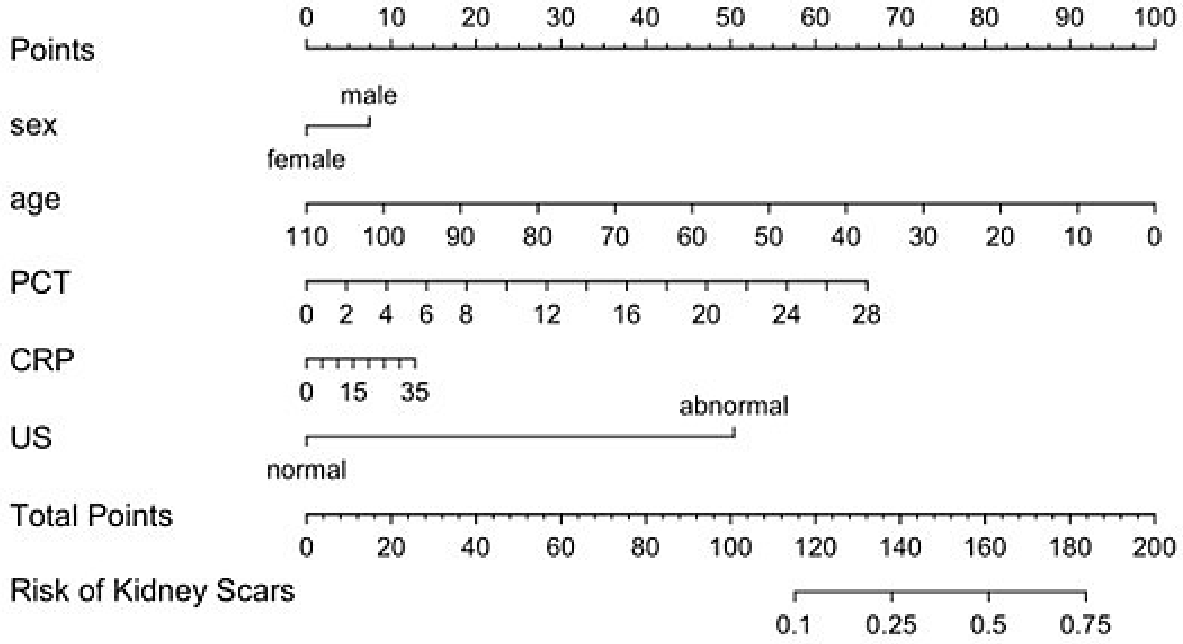
3.6. Nomogram
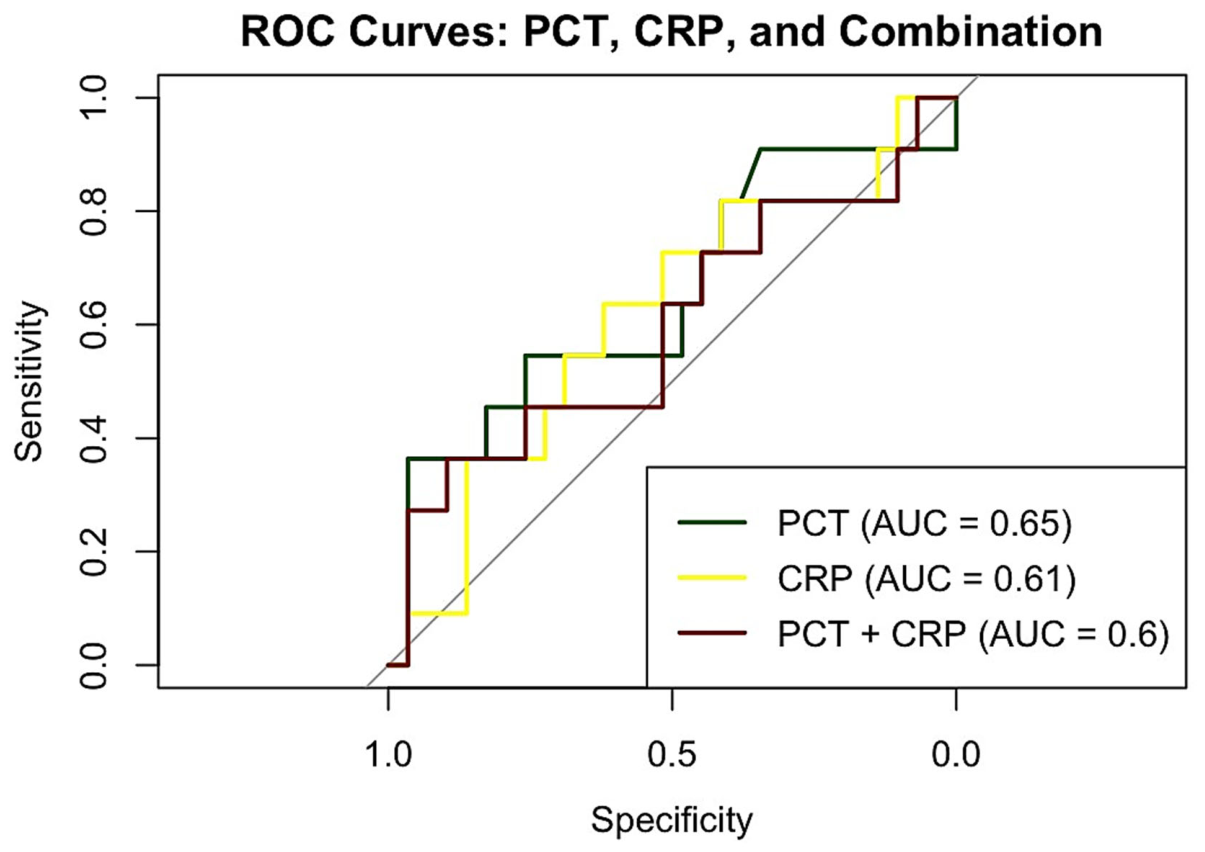
3.7. ROC Curve Analysis
4. Discussion
5. Conclusions
Author Contributions
Funding
Institutional Review Board Statement
Informed Consent Statement
Data Availability Statement
Conflicts of Interest
Abbreviations
| AUTH | Aristotle University of Thessaloniki |
| AUC | area under the curve |
| CI | confidence interval |
| CRP | C-reactive protein |
| DMSA | technetium-99m dimercaptosuccinic acid |
| ESBL | extended-spectrum beta-lactamases |
| fUTI | febrile urinary tract infection |
| NGAL | neutrophil gelatinase-associated lipocalin |
| OR | odds ratio |
| PCT | procalcitonin |
| ROC | receiver operating characteristic |
| rUTI | recurrent urinary tract infection |
| US | kidney–ureter–cyst ultrasound |
| VCUG | voiding cystourethrography |
| VUR | vesicoureteral reflux |
| WBC | white blood cells |
References
- T Hoen, L.A.; Bogaert, G.; Radmayr, C.; Dogan, H.S.; Nijman, R.J.M.; Quaedackers, J.; Rawashdeh, Y.F.; Silay, M.S.; Tekgul, S.; Bhatt, N.R.; et al. Update of the EAU/ESPU guidelines on urinary tract infections in children. J. Pediatr. Urol. 2021, 17, 200–207. [Google Scholar] [CrossRef]
- Shaikh, N.; Haralam, M.A.; Kurs-Lasky, M.; Hoberman, A. Association of Renal Scarring with Number of Febrile Urinary Tract Infections in Children. JAMA Pediatr. 2019, 173, 949. [Google Scholar] [CrossRef]
- Pietropaolo, G.; Di Sessa, A.; Tirelli, P.; Miraglia Del Giudice, E.; Guarino, S.; Marzuillo, P. Kidney involvement during the course of febrile urinary tract infection. Pediatr. Nephrol. 2025, 40, 2455–2468. [Google Scholar] [CrossRef]
- Murugapoopathy, V.; McCusker, C.; Gupta, I.R. The pathogenesis and management of renal scarring in children with vesicoureteric reflux and pyelonephritis. Pediatr. Nephrol. 2020, 35, 349–357. [Google Scholar] [CrossRef]
- Kohl, S.; Avni, F.E.; Boor, P.; Capone, V.; Clapp, W.L.; De Palma, D.; Harris, T.; Heidet, L.; Hilger, A.C.; Liapis, H.; et al. Definition, diagnosis and clinical management of non-obstructive kidney dysplasia: A consensus statement by the ERKNet Working Group on Kidney Malformations. Nephrol. Dial. Transplant. 2022, 37, 2351–2362. [Google Scholar] [CrossRef] [PubMed]
- Subcommittee On Urinary Tract Infection; Roberts, K.B.; Downs, S.M.; Finnell, S.M.E.; Hellerstein, S.; Shortliffe, L.D.; Wald, E.R.; Zerin, J.M. Reaffirmation of AAP Clinical Practice Guideline: The Diagnosis and Management of the Initial Urinary Tract Infection in Febrile Infants and Young Children 2–24 Months of Age. Pediatrics 2016, 138, e20163026. [Google Scholar] [CrossRef] [PubMed]
- Kaufman, J.; Temple-Smith, M.; Sanci, L. Urinary tract infections in children: An overview of diagnosis and management. Bmjpo 2019, 3, e000487. [Google Scholar] [CrossRef]
- National Collaborating Centre for Women’s and Children’s Health (UK). Urinary Tract Infection in Children: Diagnosis, Treatment and Long-Term Management; RCOG Press: London, UK, 2007. [Google Scholar]
- Cleland, D.A.; Eranki, A.P. Procalcitonin; StatPearls Publishing: Treasure Island, FL, USA, 2025. [Google Scholar]
- Gkiourtzis, N.; Stoimeni, A.; Michou, P.; Charitakis, N.; Cheirakis, K.; Liakos, V.; Makedou, K.; Printza, N.; Antachopoulos, C.; Tramma, D. The value of procalcitonin and urinary NGAL in the prediction of acute pyelonephritis and kidney scarring in pediatric patients with a history of febrile urinary tract infection: A systematic review and meta-analysis. Pediatr. Nephrol. 2025, 41, 323–337. [Google Scholar] [CrossRef] [PubMed]
- Horsager, T.H.; Hagstrøm, S.; Skals, R.; Winding, L. Renal scars in children with febrile urinary tract infection—Looking for associated factors. J. Pediatr. Urol. 2022, 18, 682.e1–682.e9. [Google Scholar] [CrossRef]
- Yılmaz, I.; Peru, H.; Yilmaz, F.H.; Sekmenli, T.; Çiftçi, I.; Kara, F. Association of vesicoureteral reflux and renal scarring in urinary tract infections. Arch. Argent. Pediatr. 2018, 116, e542–e547. [Google Scholar] [CrossRef]
- NICE Guideline. Urinary Tract Infection in Under 16s: Diagnosis and Management (NG224) 2022. Available online: https://www.nice.org.uk/guidance/ng224 (accessed on 31 October 2018).
- Paintsil, E. Update on recent guidelines for the management of urinary tract infections in children: The shifting paradigm. Curr. Opin. Pediatr. 2013, 25, 88–94. [Google Scholar] [CrossRef]
- Brandström, P.; Lindén, M. How Swedish guidelines on urinary tract infections in children compare to Canadian, American and European guidelines. Acta Paediatr. 2021, 110, 1759–1771. [Google Scholar] [CrossRef]
- Vali, R.; Armstrong, I.S.; Bar-Sever, Z.; Biassoni, L.; Borgwardt, L.; Brown, J.; Grant, F.D.; Mandell, G.A.; Majd, M.; Nadel, H.R.; et al. SNMMI procedure standard/EANM practice guideline on pediatric [99mTc]Tc-DMSA renal cortical scintigraphy: An update. Clin. Transl. Imaging 2022, 10, 173–184. [Google Scholar] [CrossRef]
- Ziessman, H.A.; Majd, M. Importance of Methodology on99m Technetium Dimercapto-Succinic Acid Scintigraphic Image Quality: Imaging Pilot Study for RIVUR (Randomized Intervention for Children with Vesicoureteral Reflux) Multicenter Investigation. J. Urol. 2009, 182, 272–279. [Google Scholar] [CrossRef]
- Kotoula, A.; Gardikis, S.; Tsalkidis, A.; Mantadakis, E.; Zissimopoulos, A.; Deftereos, S.; Tripsianis, G.; Manolas, K.; Chatzimichael, A.; Vaos, G. Comparative Efficacies of Procalcitonin and Conventional Inflammatory Markers for Prediction of Renal Parenchymal Inflammation in Pediatric First Urinary Tract Infection. Urology 2009, 73, 782–786. [Google Scholar] [CrossRef] [PubMed]
- Pecile, P.; Miorin, E.; Romanello, C.; Vidal, E.; Contardo, M.; Valent, F.; Tenore, A. Age-Related Renal Parenchymal Lesions in Children With First Febrile Urinary Tract Infections. Pediatrics 2009, 124, 23–29. [Google Scholar] [CrossRef]
- Kitao, T.; Kimata, T.; Yamanouchi, S.; Kato, S.; Tsuji, S.; Kaneko, K. Urinary Biomarkers for Screening for Renal Scarring in Children with Febrile Urinary Tract Infection: Pilot Study. J. Urol. 2015, 194, 766–771. [Google Scholar] [CrossRef] [PubMed]
- Colceriu, M.-C.; Aldea, P.L.; Boț (Răchişan), A.-L.; Bulată, B.; Delean, D.; Grama, A.; Mititelu, A.; Decea, R.M.; Sevastre-Berghian, A.; Clichici, S.; et al. The Utility of Noninvasive Urinary Biomarkers for the Evaluation of Vesicoureteral Reflux in Children. Int. J. Mol. Sci. 2023, 24, 17579. [Google Scholar] [CrossRef]
- Ichino, M.; Kusaka, M.; Kuroyanagi, Y.; Mori, T.; Morooka, M.; Sasaki, H.; Shiroki, R.; Shishido, S.; Kurahashi, H.; Hoshinaga, K. Urinary Neutrophil-Gelatinase Associated Lipocalin is a Potential Noninvasive Marker for Renal Scarring in Patients With Vesicoureteral Reflux. J. Urol. 2010, 183, 2001–2007. [Google Scholar] [CrossRef]
- Benzer, M.; Tekin Neijmann, S.; Gültekin, N.D.; Uluturk Tekin, A. Urinary L-FABP as a marker of vesicoureteral reflux in children: Could it also have a protective effect on the kidney? Int. Urol. Nephrol. 2017, 49, 1–12. [Google Scholar] [CrossRef] [PubMed]
- Whicher, J.; Bienvenu, J.; Monneret, G. Procalcitonin as an Acute Phase Marker. Ann. Clin. Biochem. 2001, 38, 483–493. [Google Scholar] [CrossRef] [PubMed]
- Assicot, M.; Bohuon, C.; Gendrel, D.; Raymond, J.; Carsin, H.; Guilbaud, J. High serum procalcitonin concentrations in patients with sepsis and infection. Lancet 1993, 341, 515–518. [Google Scholar] [CrossRef] [PubMed]
- Leroy, S.; Gervaix, A. Procalcitonin: A Key Marker in Children with Urinary Tract Infection. Adv. Urol. 2011, 2011, 397618. [Google Scholar] [CrossRef]
- Leroy, S.; Fernandez-Lopez, A.; Nikfar, R.; Romanello, C.; Bouissou, F.; Gervaix, A.; Gurgoze, M.K.; Bressan, S.; Smolkin, V.; Tuerlinckx, D.; et al. Association of Procalcitonin With Acute Pyelonephritis and Renal Scars in Pediatric UTI. Pediatrics 2013, 131, 870–879. [Google Scholar] [CrossRef]
- Zaffanello, M.; Brugnara, M.; Franchini, M.; Fanos, V. Is serum procalcitonin able to predict long-term kidney morbidity from urinary tract infections in children? Clin. Chem. Lab. Med. 2008, 46, 1358–1363. [Google Scholar] [CrossRef]
- Lamot, M.; Miler, M.; Nikolac Gabaj, N.; Lamot, L.; Milošević, M.; Harjaček, M.; Abdović, S. Serum Calprotectin Is a Valid Biomarker in Distinction of Bacterial Urinary Tract Infection From Viral Respiratory Illness in Children Under 3 Years of Age. Front. Pediatr. 2022, 10, 768260. [Google Scholar] [CrossRef] [PubMed]



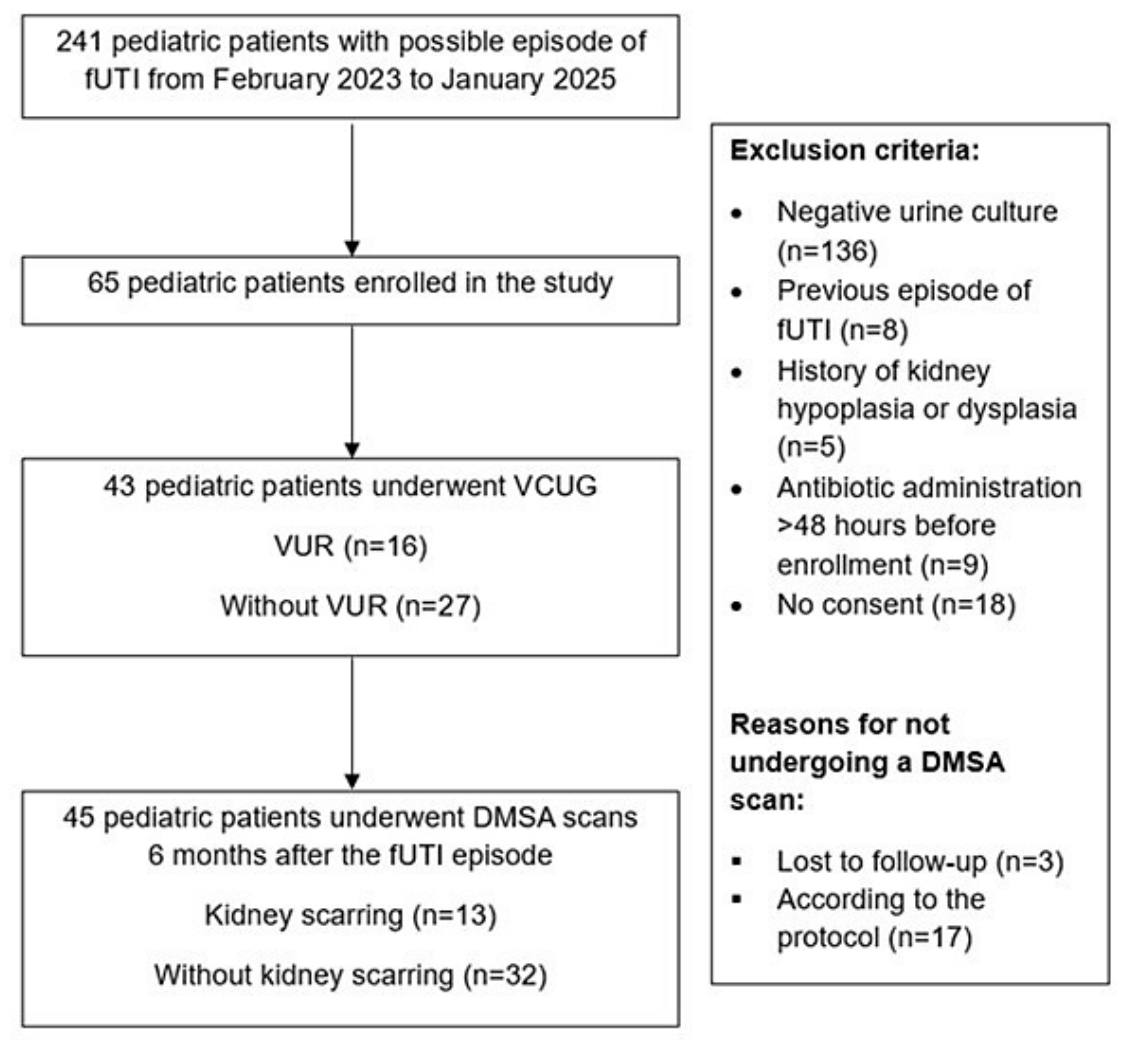
| Variables | All Participants (n = 65) |
|---|---|
| Age (months) | 4.00 [2.00–8.00] |
| Sex (male; n, %) | 37 (56.9) |
| Fever duration (days) | 2.00 [1.00–3.00] |
| PCT (ng/mL) | 0.29 [0.08–1.33] |
| CRP (mg/dL) | 2.71 [0.60–9.86] |
| WBC (/mm3) | 16,312.92 (7586.16) |
| Serum creatinine (mg/dL) | 0.35 [0.32–0.40] |
| Serum urea (mg/dL) | 16.00 [14.00–23.00] |
| Hydronephrosis (n, %) | 12 (18.5) |
| VUR (n, %) | 16 (37.2) |
| Mild VUR (n, %) | 2 (4.7) |
| Moderate VUR (n, %) | 1 (2.3) |
| Severe VUR (n, %) | 13 (30.2) |
| Abnormal US (n, %) | 18 (27.7) |
| Prematurity (n, %) | 11 (16.9) |
| Kidney scarring (n, %) | 13 (28.9) |
| Variables | fUTI with VUR (n = 16) | fUTI Without VUR (n = 27) | p-Value |
|---|---|---|---|
| Age (months) | 4.50 [2.00–8.25] | 3.00 [2.00–5.50] | 0.56 |
| Sex (male, n%) | 7 (43.8) | 19 (70.4) | 0.16 |
| Fever duration (days) | 1.00 [1.00–2.00] | 1.00 [1.00–2.50] | 0.92 |
| PCT (ng/mL) | 1.22 [0.21–4.17] | 0.24 [0.07–1.29] | 0.21 |
| CRP (mg/dL) | 8.60 (7.93) | 1.19 [0.38–3.96] | 0.03 |
| WBC (mm3) | 16,833.75 (7429.40) | 15,976.67 (8691.72) | 0.74 |
| Serum urea (mg/dL) | 22.00 [15.75–26.25] | 16.00 [12.00–19.00] | 0.03 |
| Serum creatinine (mg/dL) | 0.39 [0.34–0.45] | 0.35 [0.31–0.38] | 0.18 |
| Kidney scarring (n%) | 9 (60.0) | 4 (19.0) | 0.03 |
| Prematurity (n%) | 2 (12.5) | 5 (18.5) | 0.70 |
| Abnormal US (n%) | 8 (50.0) | 8 (29.6) | 0.31 |
| Variables | fUTI with Kidney Scarring (n = 13) | fUTI Without kidney Scarring (n = 32) | p-Value |
|---|---|---|---|
| Age (months) | 4.00 [2.00–8.00] | 4.00 [2.00–7.00] | 0.89 |
| Sex (male, n%) | 9 (69.2) | 18 (56.2) | 0.64 |
| Fever duration (days) | 1.00 [1.00–2.00] | 2.00 [1.00–3.25] | 0.27 |
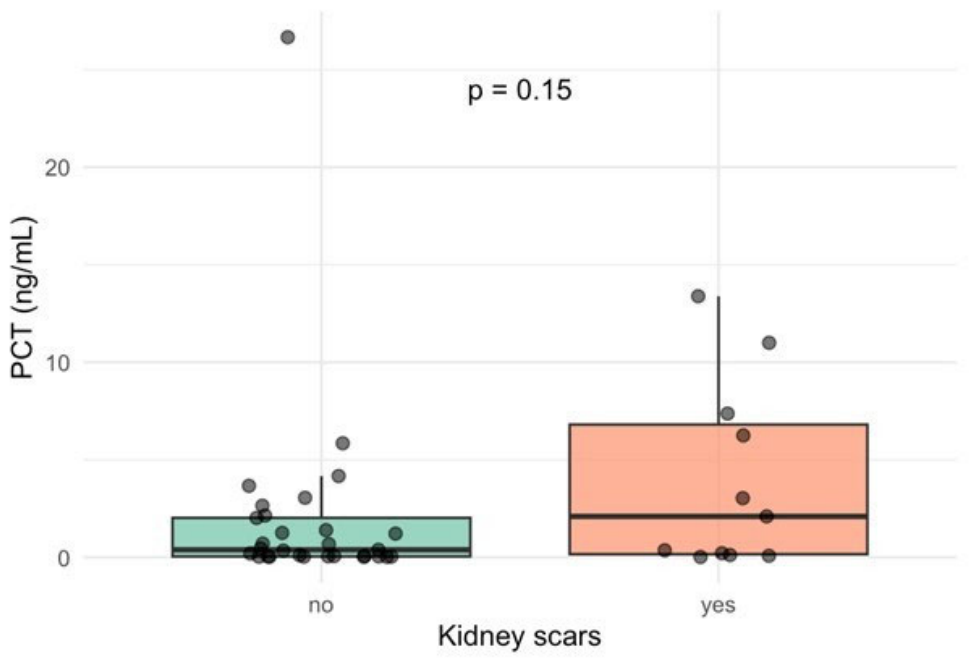
| PCT (ng/mL) | 2.10 [0.16–6.81] | 0.39 [0.05–2.03] | 0.15 |
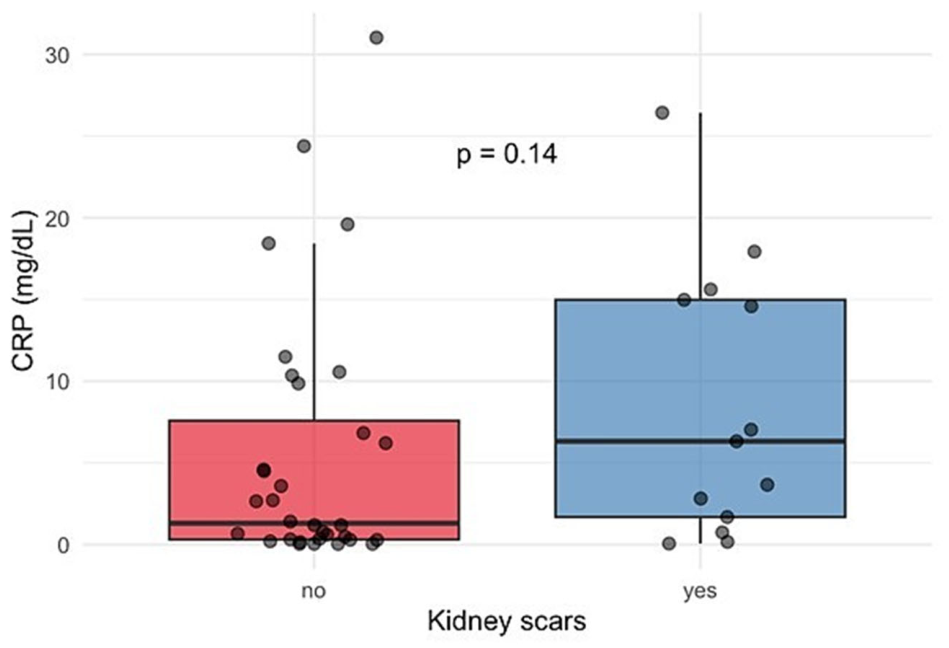
| CRP (mg/dL) | 8.62 (8.42) | 1.30 [0.30–7.58] | 0.14 |
| WBC (mm3) | 18,285.38 (7012.42) | 16,447.81 (8451.64) | 0.49 |
| Serum urea (mg/dL) | 21.00 [16.00–24.00] | 16.00 [12.75–23.50] | 0.18 |
| Serum creatinine (mg/dL) | 0.38 [0.33–0.40] | 0.35 [0.31–0.41] | 0.69 |
| VUR (n%) | 9 (69.2) | 6 (26.1) | 0.03 |
| Prematurity (n%) | 1 (7.7) | 6 (18.8) | 0.65 |
| Abnormal US (n%) | 9 (69.2) | 8 (25.0) | 0.008 |
| Model | Predictor | Odds Ratio | 95% CI (Lower) | 95% CI (Upper) | p-Value |
|---|---|---|---|---|---|
| Full Model | (Intercept) | 0.1087187 | 0.01445873 | 0.4746048 | 0.010117580 |
| Full Model | USabnormal | 6.9940464 | 1.23630010 | 53.5343914 | 0.037587501 |
| Full Model | VUR_severe | 3.7154237 | 0.63616350 | 26.3766274 | 0.154675753 |
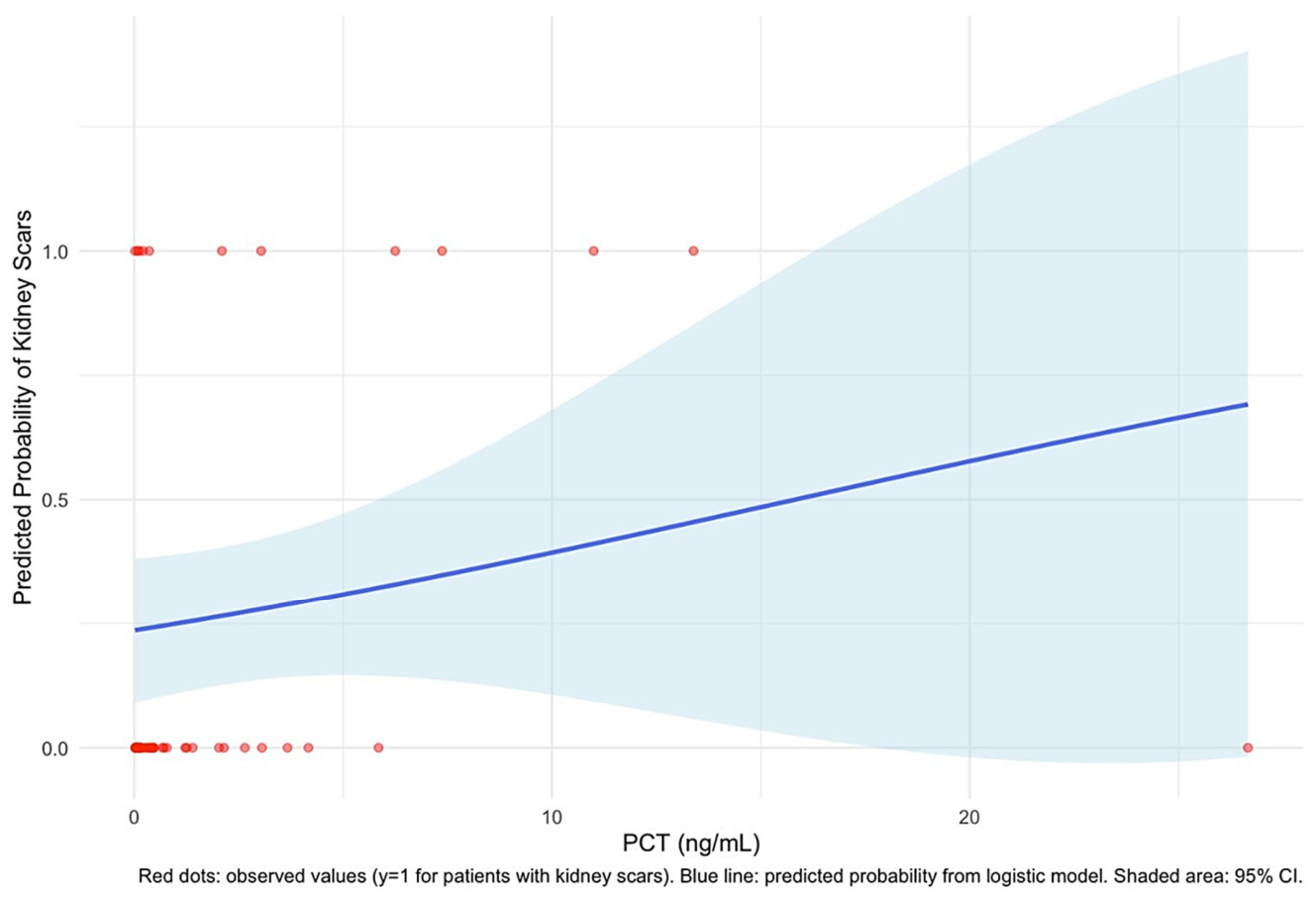
| Full Model | PCT | 1.0716799 | 0.90390978 | 1.2528432 | 0.345571020 |
| Full Model | CRP | 0.9822358 | 0.87114227 | 1.0930882 | 0.744544817 |
| Reduced Model | (Intercept) | 0.1057958 | 0.01421654 | 0.4529113 | 0.008637553 |
| Reduced Model | USabnormal | 6.3908145 | 1.22919648 | 44.1825717 | 0.036984327 |
| Reduced Model | VUR_severe | 3.4304116 | 0.62564529 | 21.9084703 | 0.163207121 |
| Reduced Model | PCT | 1.0655121 | 0.90294176 | 1.2362015 | 0.378419735 |
Disclaimer/Publisher’s Note: The statements, opinions and data contained in all publications are solely those of the individual author(s) and contributor(s) and not of MDPI and/or the editor(s). MDPI and/or the editor(s) disclaim responsibility for any injury to people or property resulting from any ideas, methods, instructions or products referred to in the content. |
© 2026 by the authors. Published by MDPI on behalf of the Lithuanian University of Health Sciences. Licensee MDPI, Basel, Switzerland. This article is an open access article distributed under the terms and conditions of the Creative Commons Attribution (CC BY) license.
Share and Cite
Gkiourtzis, N.; Michou, P.; Stoimeni, A.; Cheirakis, K.; Karatisidou, V.; Vasileiadou, T.; Liakos, V.; Antachopoulos, C.; Makedou, K.; Printza, N.; et al. Biomarkers and Their Association with Kidney Scarring After the First Episode of Febrile Urinary Tract Infection or Vesicoureteral Reflux in Pediatric Patients. Medicina 2026, 62, 811. https://doi.org/10.3390/medicina62050811
Gkiourtzis N, Michou P, Stoimeni A, Cheirakis K, Karatisidou V, Vasileiadou T, Liakos V, Antachopoulos C, Makedou K, Printza N, et al. Biomarkers and Their Association with Kidney Scarring After the First Episode of Febrile Urinary Tract Infection or Vesicoureteral Reflux in Pediatric Patients. Medicina. 2026; 62(5):811. https://doi.org/10.3390/medicina62050811
Chicago/Turabian StyleGkiourtzis, Nikolaos, Panagiota Michou, Anastasia Stoimeni, Konstantinos Cheirakis, Vera Karatisidou, Theopisti Vasileiadou, Vasileios Liakos, Charalampos Antachopoulos, Kali Makedou, Nikoleta Printza, and et al. 2026. "Biomarkers and Their Association with Kidney Scarring After the First Episode of Febrile Urinary Tract Infection or Vesicoureteral Reflux in Pediatric Patients" Medicina 62, no. 5: 811. https://doi.org/10.3390/medicina62050811
APA StyleGkiourtzis, N., Michou, P., Stoimeni, A., Cheirakis, K., Karatisidou, V., Vasileiadou, T., Liakos, V., Antachopoulos, C., Makedou, K., Printza, N., & Tramma, D. (2026). Biomarkers and Their Association with Kidney Scarring After the First Episode of Febrile Urinary Tract Infection or Vesicoureteral Reflux in Pediatric Patients. Medicina, 62(5), 811. https://doi.org/10.3390/medicina62050811