Article

Enhanced Recovery After Surgery Incorporating Erector Spinae Plane Block Versus Standard Care in Adolescent Idiopathic Scoliosis: A Comparative Cohort Analysis of Early Postoperative Recovery


1
Orthopedic and Traumatology Unit, Department of Surgery, Bambino Gesù Children’s Hospital, 00165 Rome, Italy
2
Department of Anesthesia and Critical Care, IRCCS, Bambino Gesù Children’s Hospital, 00165 Rome, Italy
3
Research Unit of Orthopaedic and Trauma Surgery, Department of Medicine and Surgery, Università Campus Bio-Medico di Roma, Via Alvaro del Portillo, 00128 Rome, Italy
4
Management and Diagnostic Innovations & Clinical Pathways Research Area, Neurorehabilitation and Adapted Physical Activity Day Hospital, Bambino Gesù Children’s Hospital, IRCCS, 00165 Rome, Italy
*
Author to whom correspondence should be addressed.
Medicina 2026, 62(4), 775; https://doi.org/10.3390/medicina62040775

Submission received: 25 February 2026 / Revised: 4 April 2026 / Accepted: 9 April 2026 / Published: 16 April 2026
(This article belongs to the Special Issue Diagnosis and Treatment of Adolescent Idiopathic Scoliosis)

Abstract

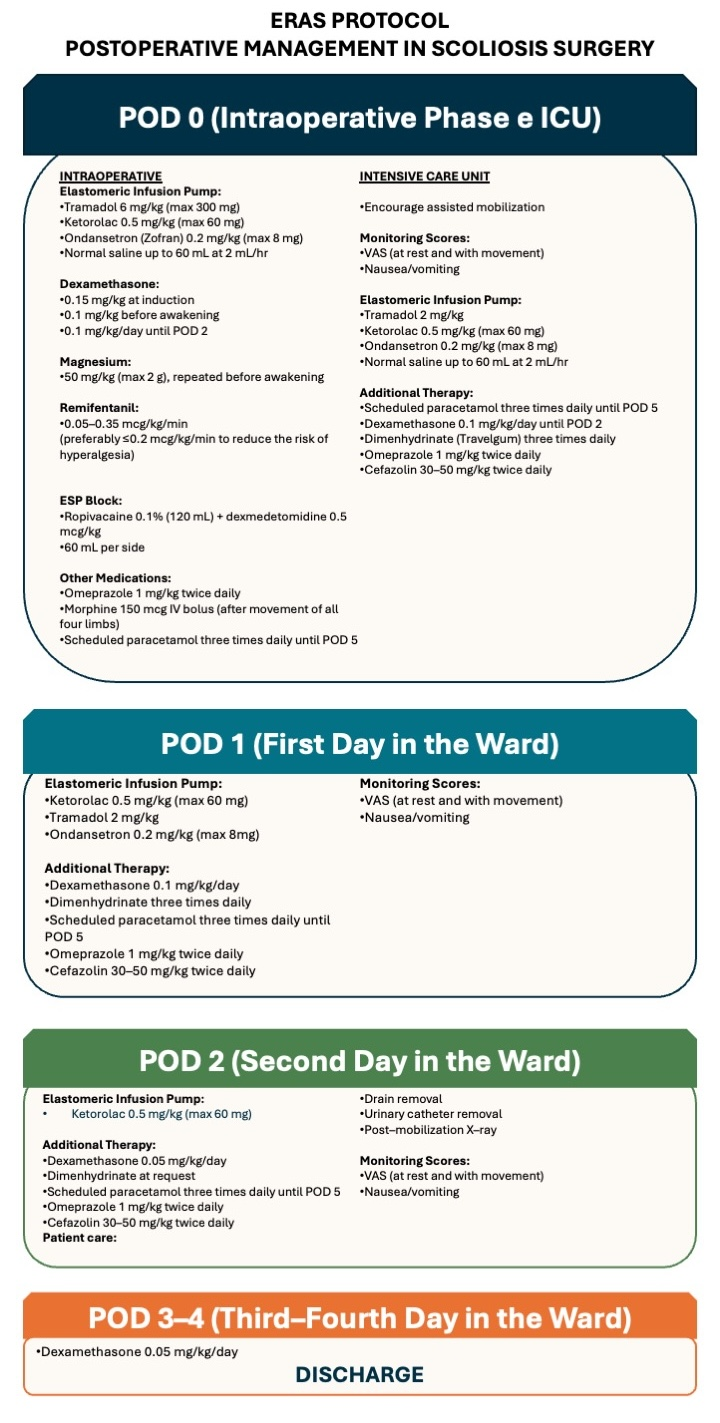
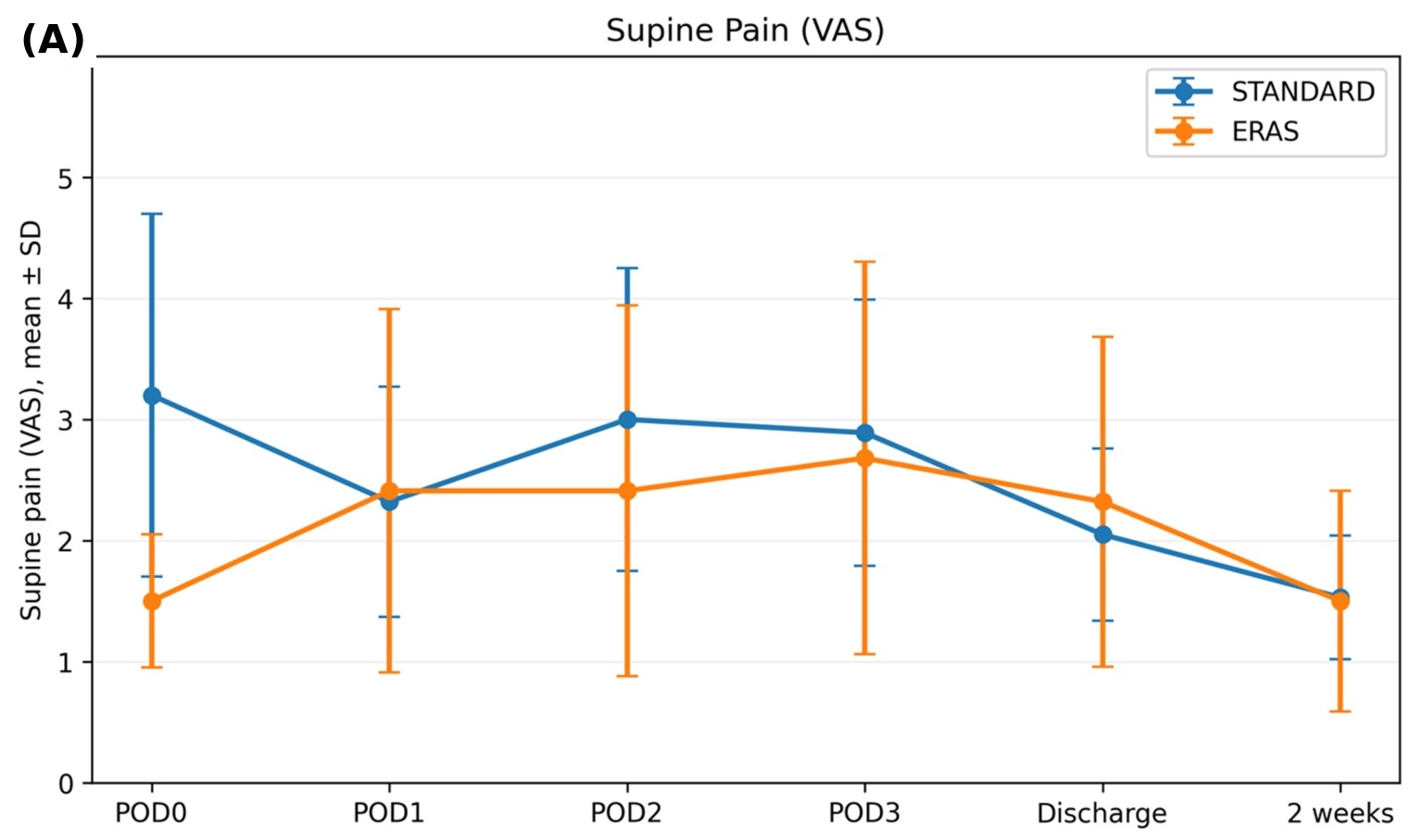
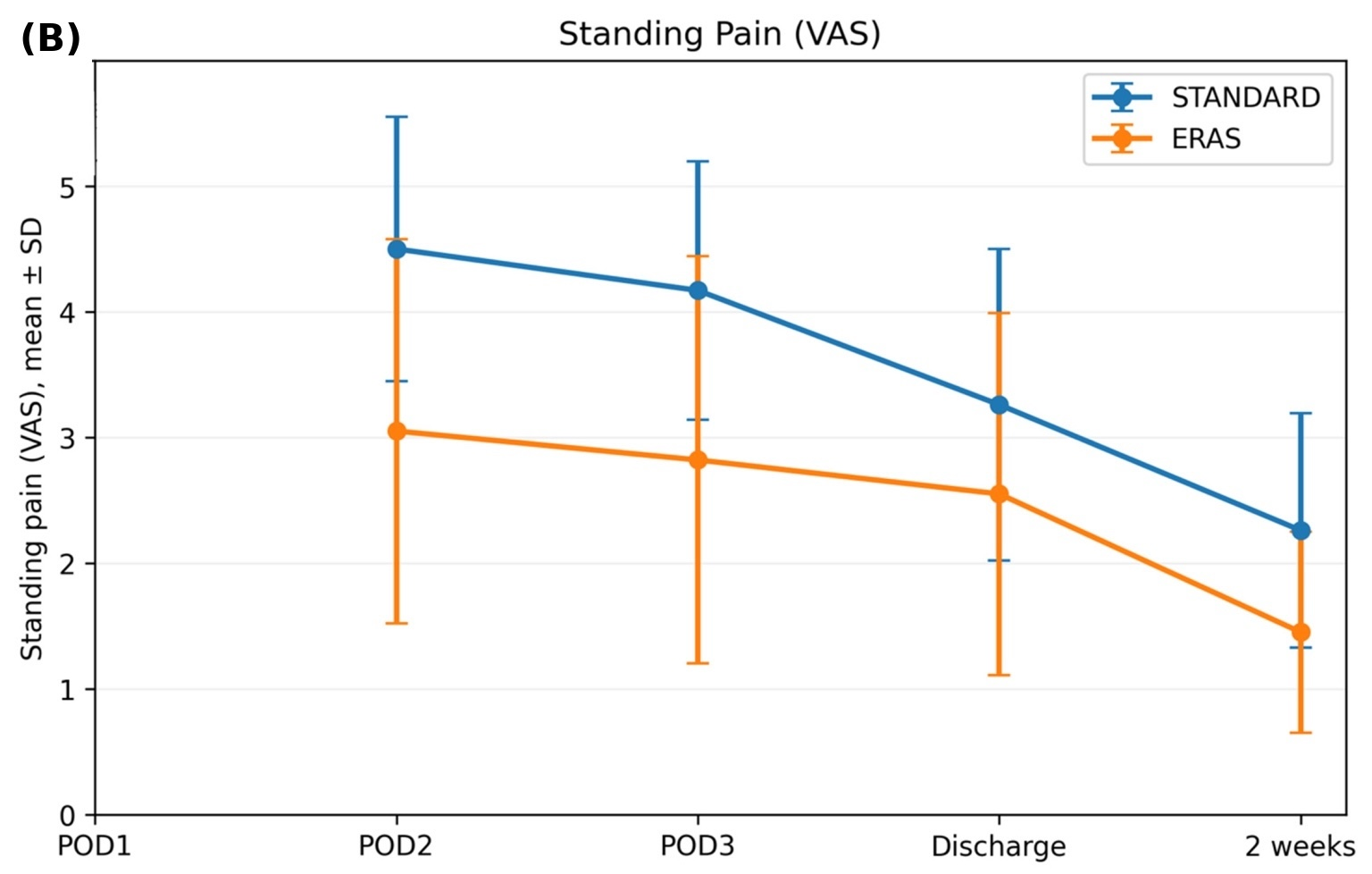
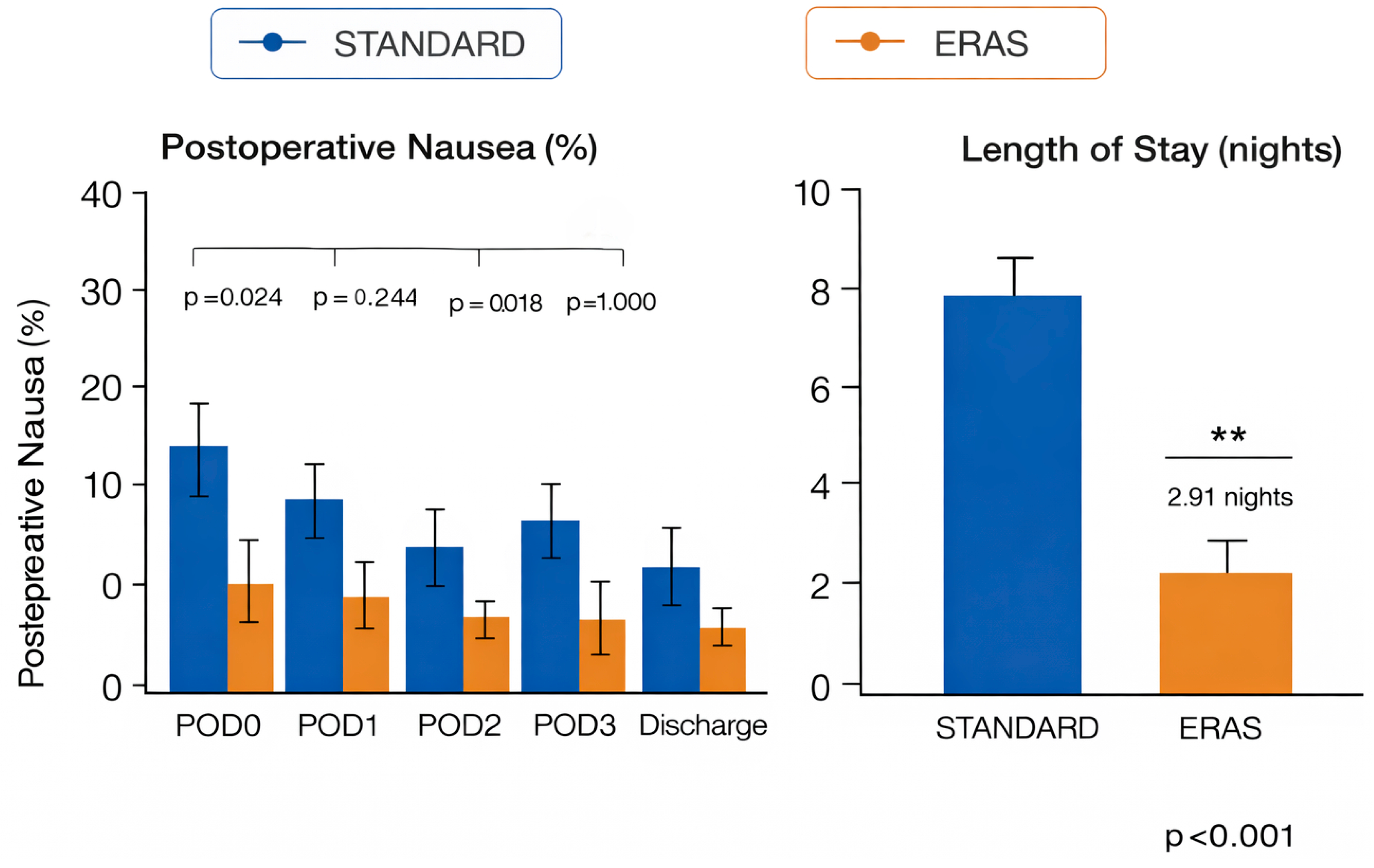
Background and Objectives: Enhanced Recovery After Surgery (ERAS) pathways are increasingly used in spine surgery, but uptake in adolescent idiopathic scoliosis (AIS) remains heterogeneous across institutions. Evidence in pediatric deformity surgery supports shorter recovery with protocolized care, yet real-world comparative data combining ERAS and the erector spinae plane block (ESPB) remain limited. This study aimed to compare early postoperative outcomes between a historical standard-care pathway and a structured ERAS+ESPB pathway in adolescents undergoing posterior spinal fusion for AIS. Materials and Methods: A single-center retrospective time-based comparative cohort study design included consecutive AIS patients (<18 years) treated between 1 January 2024 and 31 December 2025. The standard-care pathway was applied to patients operated on before 1 June 2025 (n = 34), whereas the ERAS+ESPB pathway was applied to those operated on from 1 June 2025 onward (n = 35), following formal institutional implementation. Outcomes included postoperative pain assessed using the visual analog scale under two functional conditions—at rest in the supine position and during standing/mobilization—at POD0, POD1, POD2, POD3, discharge, and 2-week follow-up; postoperative nausea at POD0–POD3; and length of stay (LOS). Between-group pain comparisons used Welch’s t-test; nausea used Fisher’s exact test; LOS used the Wilcoxon rank-sum test. Results: At POD0, supine pain was lower in ERAS+ESPB (1.50 ± 0.55) than in standard care (3.20 ± 1.50; p < 0.001). From POD1 onward, supine pain did not differ significantly between groups. Among assessable patients, standing pain was lower in ERAS+ESPB at POD2 (3.05 ± 1.53 vs. 4.50 ± 1.05; p = 0.020), POD3 (2.82 ± 1.62 vs. 4.17 ± 1.03; p = 0.006), and 2-week follow-up (1.45 ± 0.80 vs. 2.26 ± 0.93; p = 0.006). Nausea was lower in ERAS+ESPB at POD0 (11.4% vs. 35.3%; p = 0.024) and POD2 (8.6% vs. 32.4%; p = 0.018), with no significant differences at POD1 or POD3. LOS was shorter in ERAS+ESPB (5.41 ± 1.10 vs. 8.32 ± 2.06 nights; p < 0.001). Conclusions: In adolescents undergoing posterior spinal fusion for AIS, an ERAS-based perioperative pathway incorporating ESPB was associated with improved early postoperative recovery, particularly in terms of immediate postoperative pain, pain during mobilization, early postoperative nausea at selected time points, and length of hospital stay. Prospective multicenter studies are needed to confirm these findings and clarify the independent contribution of individual pathway components.
Keywords: adolescent idiopathic scoliosis; enhanced recovery after surgery; ERAS; AIS; erector spinae plane block; posterior spinal fusion; pain; nausea; length of stay; pediatric spine surgery adolescent idiopathic scoliosis; enhanced recovery after surgery; ERAS; AIS; erector spinae plane block; posterior spinal fusion; pain; nausea; length of stay; pediatric spine surgery