Cutaneous Manifestations of Inborn Errors of Immunity: Clinical Clues to Immune Disorders

 ,
,  , , , and
Abstract
1. Introduction
2. Methodology
3. Immunopathogenesis of Cutaneous Lesions in IEI
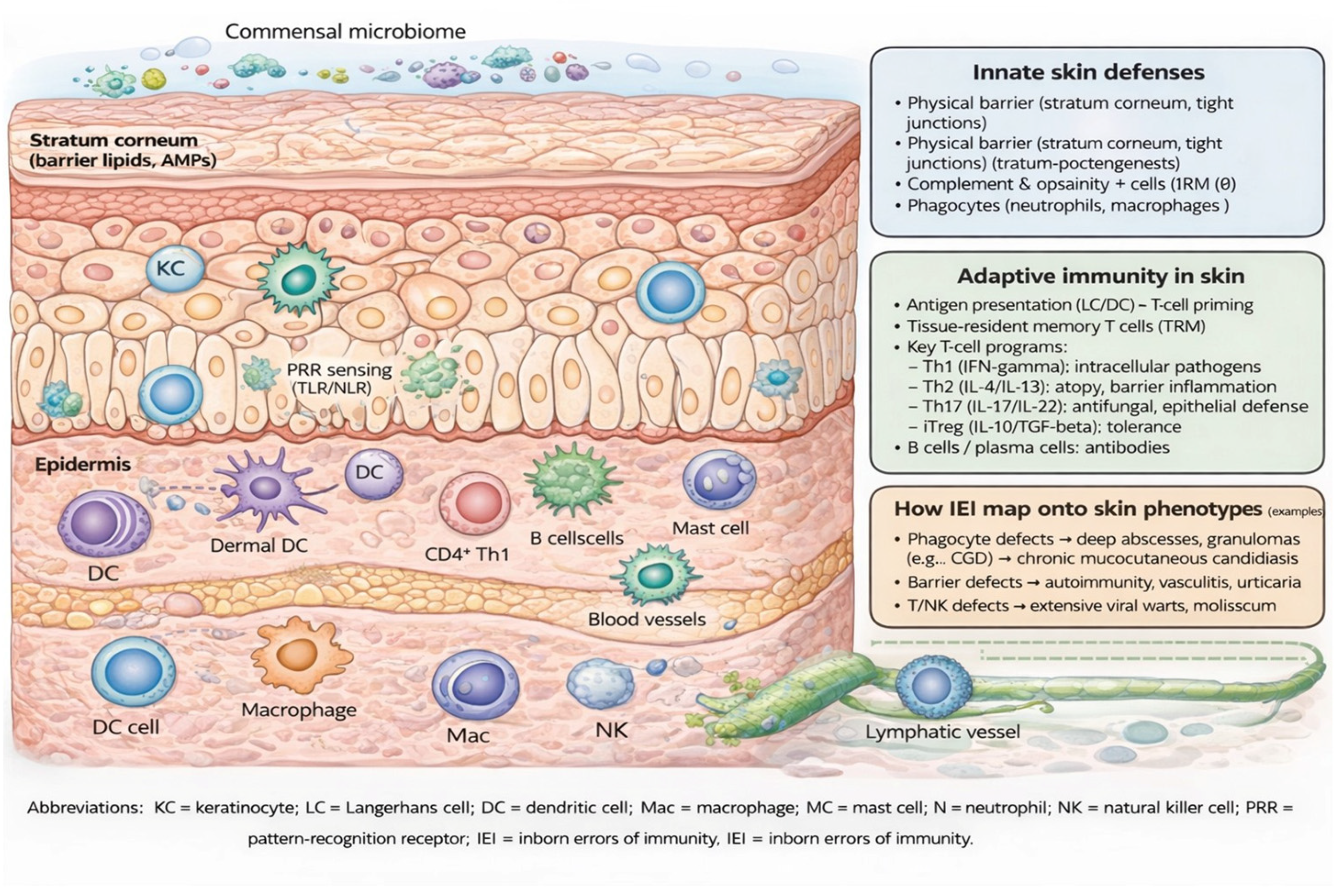
Mechanisms of Innate and Adaptive Immunity
4. Cutaneous Manifestations in IEI
4.1. Infectious and Atopic Lesions
4.2. Autoimmune Disorders
4.3. Neoplastic and Premalignant Skin Lesions
4.4. Granulomatous Dermatoses and Skin Nodules
4.5. Neutrophilic and Pustular Dermatoses
4.6. Disorders of Skin Pigmentation
4.7. Changes in Skin Appendages: Hair and Nails
4.8. Vascular Lesions and Cutaneous Vasculopathies
5. Diagnostics and Clinical Management
5.1. Importance of the Cutaneous Phenotype
5.2. Therapeutic Algorithms
6. Conclusions
Author Contributions
Funding
Institutional Review Board Statement
Informed Consent Statement
Data Availability Statement
Conflicts of Interest
Abbreviations
| AD-HIES | Autosomal Dominant Hyper-IgE Syndrome |
| ADA2 | Adenosine Deaminase 2 |
| AIRE | Autoimmune Regulator |
| AP1S3 | Adaptor Related Protein Complex 1 Sigma 3 |
| APECED | Autoimmune Polyendocrinopathy–Candidiasis–Ectodermal Dystrophy |
| APLAID | Autoinflammatory PLCG2-associated Immune Dysregulation |
| AR-HIES | Autosomal Recessive Hyper-IgE Syndrome |
| ATM | Ataxia Telangiectasia Mutated |
| B cells | B lymphocytes |
| BCC | Basal cell carcinoma |
| CARD11 | Caspase Recruitment Domain-containing protein 11 |
| cDC1 | conventional Dendritic Cell type 1 |
| cDC2 | conventional Dendritic Cell type 2 |
| CGD | Chronic Granulomatous Disease |
| CVID | Common Variable Immunodeficiency |
| CXCR4 | C-X-C Chemokine Receptor 4 |
| DC | Dendritic cells |
| DIRA | Deficiency of the IL-1 Receptor Antagonist |
| DITRA | Deficiency of the IL-36 Receptor Antagonist |
| DNASE1L3 | Deoxyribonuclease 1 Like 3 |
| DNMT3B | DNA Methyltransferase 3B |
| DOCK8 | Dedicator of Cytokinesis 8 |
| ERN1 | Endoplasmic Reticulum to Nucleus Signaling 1 |
| EVER1/EVER2 | Epidermodysplasia Verruciformis 1 and 2 (syndrome) |
| FOXN1 | Forkhead Box N1 |
| GOF | Gain of function |
| GVHD | Graft-Versus-Host Disease |
| HCK | Hemopoietic Cell Kinase |
| HHV8 | Human Herpesvirus 8 |
| HIES | Hyper-IgE Syndrome |
| HLH | Hemophagocytic lymphohistiocytosis |
| HPV | Human Papillomavirus |
| HSCT | Hematopoietic Stem Cell Transplantation |
| HSV | Herpes simplex virus |
| ICF | Immunodeficiency, Centromeric Instability and Facial anomalies syndrome |
| IEI | Inborn Errors of Immunity |
| IFN-γ | Interferon gamma |
| IgE | Immunoglobulin E |
| IKBKG | Inhibitor of NF-κB Kinase Gamma |
| IL-1 | Interleukin-1 |
| IL-12 | Interleukin 12 |
| IL-17 | Interleukin-17 |
| IL-22 | Interleukin-22 |
| IL-36 | Interleukin-36 |
| IL-4Rα | Interleukin-4 Receptor alpha |
| IL7R | Interleukin-7 Receptor |
| IRAK4 | Interleukin-1 Receptor-Associated Kinase 4 |
| IRF4 | Interferon Regulatory Factor 4 |
| IVIG | Intravenous Immunoglobulin |
| JAK | Janus Kinase |
| LC | Langerhans cells |
| LPIN2 | Lipin 2 (Phosphatidate Phosphatase) |
| LYST | Lysosomal Trafficking Regulator |
| mPAN | Medium-size vessel Polyarteritis Nodosa (monogenic PAN) |
| MHC (class I) | Major Histocompatibility Complex class I |
| MyD88 | Myeloid Differentiation Primary Response 88 |
| NBN | Nibrin |
| NEMO | NF-κB Essential Modulator |
| NF-κB1A | NF-κB Inhibitor Alpha (IκBα, gen NFKBIA) |
| NOD2 | Nucleotide-binding Oligomerization Domain-containing 2 |
| ORAS | OTULIN-Related Autoinflammatory Syndrome |
| OTULIN | OTU Deubiquitinase with Linear Linkage Specificity |
| PACNS | Primary Angiitis of the Central Nervous System |
| PAPA | Pyogenic Arthritis, Pyoderma gangrenosum and Acne syndrome |
| PCR | Polymerase chain reaction |
| PEPD | Peptidase D |
| PID | Primary Immunodeficiency |
| PLAID | PLCG2-associated Antibody Deficiency and Immune Dysregulation |
| PLCG2 | Phospholipase C Gamma 2 |
| POLA1 | DNA Polymerase Alpha 1, catalytic subunit |
| PRR | Pattern Recognition Receptors |
| PSTPIP1 | Proline-Serine-Threonine Phosphatase Interacting Protein 1 |
| RAB27A | RAS-Associated Binding protein 27A |
| RAG1/2 | Recombination Activating Gene 1 and 2 |
| SCC | Squamous cell carcinoma |
| SCID | Severe Combined Immunodeficiency |
| SCIG | Subcutaneous Immunoglobulin |
| SPINK5 | Serine Peptidase Inhibitor Kazal Type 5 |
| STAT1 | Signal Transducer and Activator of Transcription 1 |
| STAT3 | Signal Transducer and Activator of Transcription 3 |
| T cells | T lymphocytes |
| TACI | Transmembrane Activator and CAML Interactor |
| Th17 | T helper 17 cells |
| TLR7 | Toll-Like Receptor 7 |
| UNC93B1 | UNC93 homolog B1 |
| USB1 | U6 SnRNA Biogenesis 1 |
| UV | Ultraviolet |
| VZV | Varicella zoster virus |
| WAS | Wiskott–Aldrich Syndrome protein |
| WHIM | Warts, Hypogammaglobulinemia, Infections, Myelokathexis syndrome |
| XRPD | X-linked Reticulate Pigmentary Disorder |
References
- Cagdas, D.; Ayasun, R.; Gulseren, D.; Sanal, O.; Tezcan, I. Cutaneous Findings in Inborn Errors of Immunity: An Immunologist’s Perspective. J. Allergy Clin. Immunol. Pract. 2023, 11, 3030–3039. [Google Scholar] [CrossRef]
- Al-Herz, W.; Nanda, A. Skin Manifestations in Primary Immunodeficient Children. Pediatr. Dermatol. 2011, 28, 494–501. [Google Scholar] [CrossRef]
- Meric, Z.; Kosa, B.; Karaaslan, B.G.; Aydemir, S.; Aydin, M.; Gumus, D.D.; Akay, N.; Ozer, E.; Kan, A.; Çimen, S.S.; et al. The Skin Tells the Story: Early Signs of Inborn Errors of Immunity. J. Allergy Clin. Immunol. Pract. 2025, 14, 464–474.e4. [Google Scholar] [CrossRef]
- Frommherz, L.; Akçetin, L.; Hauck, F.; Giehl, K. Relevant cutaneous manifestations as indications for inborn errors of immunity. Dermatologie 2024, 75, 577–586. [Google Scholar] [CrossRef]
- Szczawińska-Popłonyk, A. Atopic Dermatitis in Inborn Errors of Immunity: At the Interface of Immunodeficiency and Immune Dysregulation. Immunol. Res. 2025, 73, 147. [Google Scholar] [CrossRef]
- Netea, M.G.; van de Veerdonk, F.L.; van Deuren, M.; van der Meer, J.W.M. Defects of Pattern Recognition: Primary Immunodeficiencies of the Innate Immune System. Curr. Opin. Pharmacol. 2011, 11, 412–422. [Google Scholar] [CrossRef] [PubMed]
- Maglione, P.J.; Simchoni, N.; Black, S.; Radigan, L.; Overbey, J.R.; Bagiella, E.; Bussel, J.B.; Bossuyt, X.; Casanova, J.-L.; Meyts, I.; et al. IRAK-4 and MyD88 Deficiencies Impair IgM Responses against T-Independent Bacterial Antigens. Blood 2014, 124, 3561–3571. [Google Scholar] [CrossRef]
- Picard, C.; von Bernuth, H.; Ghandil, P.; Chrabieh, M.; Levy, O.; Arkwright, P.D.; McDonald, D.; Geha, R.S.; Takada, H.; Krause, J.C.; et al. Clinical Features and Outcome of Patients with IRAK-4 and MyD88 Deficiency. Medicine 2010, 89, 403–425. [Google Scholar] [CrossRef] [PubMed]
- Al-Herz, W.; Zainal, M.; Nanda, A. A Prospective Survey of Skin Manifestations in Children with Inborn Errors of Immunity From a National Registry Over 17 Years. Front. Immunol. 2021, 12, 751469. [Google Scholar] [CrossRef] [PubMed]
- Nguyen, A.V.; Soulika, A.M. The Dynamics of the Skin’s Immune System. Int. J. Mol. Sci. 2019, 20, 1811. [Google Scholar] [CrossRef]
- Poli, M.C.; Aksentijevich, I.; Bousfiha, A.A.; Cunningham-Rundles, C.; Hambleton, S.; Klein, C.; Morio, T.; Picard, C.; Puel, A.; Rezaei, N.; et al. Human Inborn Errors of Immunity: 2024 Update on the Classification from the International Union of Immunological Societies Expert Committee. J. Hum. Immun. 2025, 1, E20250003. [Google Scholar] [CrossRef] [PubMed]
- Lunjani, N.; Ahearn-Ford, S.; Dube, F.S.; Hlela, C.; O’Mahony, L. Mechanisms of Microbe-Immune System Dialogue within the Skin. Genes. Immun. 2021, 22, 276–288. [Google Scholar] [CrossRef] [PubMed]
- Ye, M.T.; Zuo, Z.; Calin, S.; Ye, F.; He, H.; Kamata, W.; Yang, Y.; You, M.J. Integrated Clinical Genotype-Phenotype Characteristics of STAT3-Mutated Myeloid Neoplasms. Clin. Cancer Res. 2024, 30, 4681–4689. [Google Scholar] [CrossRef]
- Antachopoulos, C.; Walsh, T.J.; Roilides, E. Fungal Infections in Primary Immunodeficiencies. Eur. J. Pediatr. 2007, 166, 1099–1117. [Google Scholar] [CrossRef]
- Oh, J.; Freeman, A.F.; NISC Comparative Sequencing Program; Park, M.; Sokolic, R.; Candotti, F.; Holland, S.M.; Segre, J.A.; Kong, H.H. The Altered Landscape of the Human Skin Microbiome in Patients with Primary Immunodeficiencies. Genome Res. 2013, 23, 2103–2114. [Google Scholar] [CrossRef] [PubMed]
- Mohammadi, F.; Yadegar, A.; Mardani, M.; Ayati, A.; Abolhassani, H.; Rezaei, N. Organ-based Clues for Diagnosis of Inborn Errors of Immunity: A Practical Guide for Clinicians. Immun. Inflamm. Dis. 2023, 11, e833. [Google Scholar] [CrossRef]
- Arkwright, P.D.; Gennery, A.R. Ten Warning Signs of Primary Immunodeficiency: A New Paradigm Is Needed for the 21st Century. Ann. N. Y. Acad. Sci. 2011, 1238, 7–14. [Google Scholar] [CrossRef]
- Tangye, S.G.; Al-Herz, W.; Bousfiha, A.; Chatila, T.; Cunningham-Rundles, C.; Etzioni, A.; Franco, J.L.; Holland, S.M.; Klein, C.; Morio, T.; et al. Human Inborn Errors of Immunity: 2019 Update on the Classification from the International Union of Immunological Societies Expert Committee. J. Clin. Immunol. 2020, 40, 24–64. [Google Scholar] [CrossRef] [PubMed]
- Moin, A.; Farhoudi, A.; Moin, M.; Pourpak, Z.; Bazargan, N. Cutaneous Manifestations of Primary Immunodeficiency Diseases in Children. Iran. J. Allergy Asthma Immunol. 2006, 5, 121–126. [Google Scholar]
- Anis, S.; Abid, A.; Kodwavwala, S.A.U.; Sarfaraz, S.; Junejo, S.; Shahid, S.; Sultan, S.; Rizvi, A.H. Rare and Heterogeneous Manifestations of Leucocyte Adhesion Deficiency Type 1: Report of Two Cases with Diagnostic Dilemmas and Novel ITGB2 Mutation. Allergy Asthma Clin. Immunol. 2023, 19, 36. [Google Scholar] [CrossRef]
- Levine, A.E.; Mark, D.; Smith, L.; Zheng, H.B.; Suskind, D.L. Pharmacologic Management of Monogenic and Very Early Onset Inflammatory Bowel Diseases. Pharmaceutics 2023, 15, 969. [Google Scholar] [CrossRef] [PubMed]
- Zheng, H.B.; de la Morena, M.T.; Suskind, D.L. The Growing Need to Understand Very Early Onset Inflammatory Bowel Disease. Front. Immunol. 2021, 12, 675186. [Google Scholar] [CrossRef]
- Campos, L.C.; Henríquez, C.A.; Meligonis, G.; Tadros, S.; Lowe, D.M.; Grimbacher, B.; Burns, S.O.; Orteu, C.H. Skin Manifestations in Adults with Chronic Granulomatous Disease in the United Kingdom. J. Allergy Clin. Immunol. Pract. 2025, 13, 2151–2161.e7. [Google Scholar] [CrossRef] [PubMed]
- Nelson, R.W.; Geha, R.S.; McDonald, D.R. Inborn Errors of the Immune System Associated with Atopy. Front. Immunol. 2022, 13, 860821. [Google Scholar] [CrossRef]
- Seth, D.; Cheldize, K.; Brown, D.; Freeman, E.F. Global Burden of Skin Disease: Inequities and Innovations. Curr. Dermatol. Rep. 2017, 6, 204–210. [Google Scholar] [CrossRef]
- El-Sayed, Z.A.; El-Ghoneimy, D.H.; Ortega-Martell, J.A.; Radwan, N.; Aldave, J.C.; Al-Herz, W.; Al-Nesf, M.A.; Condino-Neto, A.; Cole, T.; Eley, B.; et al. Allergic Manifestations of Inborn Errors of Immunity and Their Impact on the Diagnosis: A Worldwide Study. World Allergy Organ. J. 2022, 15, 100657. [Google Scholar] [CrossRef]
- Hernández-Santos, N.; Gaffen, S.L. Th17 Cells in Immunity to Candida Albicans. Cell Host Microbe 2012, 11, 425–435. [Google Scholar] [CrossRef] [PubMed]
- Kaplan, M.Y.; Ozen, S.; Akcal, O.; Gulez, N.; Genel, F. Autoimmune and Inflammatory Manifestations in Pediatric Patients with Primary Immunodeficiencies and Their Importance as a Warning Sign. Allergol. Immunopathol. 2020, 48, 701–710. [Google Scholar] [CrossRef]
- Oliveira, J.B.; Fleisher, T.A. Laboratory Evaluation of Primary Immunodeficiencies. J. Allergy Clin. Immunol. 2010, 125, S297–S305. [Google Scholar] [CrossRef]
- Sharifinejad, N.; Azizi, G.; Rasouli, S.E.; Chavoshzadeh, Z.; Mahdaviani, S.A.; Tavakol, M.; Sadri, H.; Nabavi, M.; Ebrahimi, S.S.; Shirkani, A.; et al. Autoimmune versus Non-Autoimmune Cutaneous Features in Monogenic Patients with Inborn Errors of Immunity. Biology 2023, 12, 644. [Google Scholar] [CrossRef] [PubMed]
- Kolkhir, P.; Grakhova, M.; Bonnekoh, H.; Krause, K.; Maurer, M. Treatment of Urticarial Vasculitis: A Systematic Review. J. Allergy Clin. Immunol. 2019, 143, 458–466. [Google Scholar] [CrossRef] [PubMed]
- Lai, X.; Huang, J.; Li, H.; Chang, C.; Li, R.; Li, X.; Yan, X.; Dong, L. Epigenetic Regulatory Mechanisms of Autoimmune Skin Diseases: Novel Biomarkers and Therapeutic Prospects. Clin. Epigenetics 2025, 17, 182. [Google Scholar] [CrossRef]
- Ruocco, V.; Ruocco, E.; Piccolo, V.; Brunetti, G.; Guerrera, L.P.; Wolf, R. The Immunocompromised District in Dermatology: A Unifying Pathogenic View of the Regional Immune Dysregulation. Clin. Dermatol. 2014, 32, 569–576. [Google Scholar] [CrossRef] [PubMed]
- Goldberg, I.; Sprecher, E. Patterned Disorders in Dermatology. Clin. Dermatol. 2011, 29, 498–503. [Google Scholar] [CrossRef]
- Costa-Carvalho, B.T.; Grumach, A.S.; Franco, J.L.; Espinosa-Rosales, F.J.; Leiva, L.E.; King, A.; Porras, O.; Bezrodnik, L.; Oleastro, M.; Sorensen, R.U.; et al. Attending to Warning Signs of Primary Immunodeficiency Diseases across the Range of Clinical Practice. J. Clin. Immunol. 2014, 34, 10–22. [Google Scholar] [CrossRef]
- Fernandez-Flores, A. Skin Biopsy in the Context of Systemic Disease. Actas Dermosifiliogr. 2019, 110, 710–727. [Google Scholar] [CrossRef]
- Lehman, H. Skin Manifestations of Primary Immune Deficiency. Clin. Rev. Allergy Immunol. 2014, 46, 112–119. [Google Scholar] [CrossRef]
- López-Quintero, W.; Cleves, D.; Gomez-Vasco, J.D.; Pérez, P.; Patiño, J.; Medina-Valencia, D.; Pachajoa, H.; Torres-Canchala, L.; Vidal, A.; Olaya, M. Skin Manifestations in Pediatric Patients with Primary Immunodeficiency Diseases (PIDs) in a Tertiary Care Hospital in Colombia. World Allergy Organ. J. 2021, 14, 100527. [Google Scholar] [CrossRef] [PubMed]
- Colvin, A.; Youssef, S.; Noh, H.; Wright, J.; Jumonville, G.; LaRow Brown, K.; Tatonetti, N.P.; Milner, J.D.; Weng, C.; Bordone, L.A.; et al. Inborn Errors of Immunity Contribute to the Burden of Skin Disease and Create Opportunities for Improving the Practice of Dermatology. J. Investig. Dermatol. 2024, 144, 307–315.e1. [Google Scholar] [CrossRef]
- Zarezadeh Mehrabadi, A.; Aghamohamadi, N.; Abolhassani, H.; Aghamohammadi, A.; Rezaei, N.; Yazdani, R. Comprehensive Assessment of Skin Disorders in Patients with Common Variable Immunodeficiency (CVID). J. Clin. Immunol. 2022, 42, 653–664. [Google Scholar] [CrossRef]
- Fekrvand, S.; Abolhassani, H.; Esfahani, Z.H.; Fard, N.N.G.; Amiri, M.; Salehi, H.; Almasi-Hashiani, A.; Saeedi-Boroujeni, A.; Fathi, N.; Mohtashami, M.; et al. Cancer Trends in Inborn Errors of Immunity: A Systematic Review and Meta-Analysis. J. Clin. Immunol. 2024, 45, 34. [Google Scholar] [CrossRef] [PubMed]
- Moulin, C.; Beaupain, B.; Suarez, F.; Bertrand, Y.; Beaussant, S.C.; Fischer, A.; Durin, J.; Ranta, D.; Espéli, M.; Bachelerie, F.; et al. CXCR4 WHIM Syndrome Is a Cancer Predisposition Condition for Virus-Induced Malignancies. Br. J. Haematol. 2024, 204, 1383–1392. [Google Scholar] [CrossRef]
- Cipriani, N.A.; Blair, E.; Taxy, J.B. WHIM Syndrome and Oral Squamous Cell Carcinoma. Oral Surg. Oral Med. Oral Pathol. Oral Radiol. Endod. 2010, 109, 105–108. [Google Scholar] [CrossRef]
- Biggs, C.M.; Keles, S.; Chatila, T.A. DOCK8 Deficiency: Insights into Pathophysiology, Clinical Features and Management. Clin. Immunol. 2017, 181, 75–82. [Google Scholar] [CrossRef]
- Chu, E.Y.; Freeman, A.F.; Jing, H.; Cowen, E.W.; Davis, J.; Su, H.C.; Holland, S.M.; Turner, M.L.C. Cutaneous Manifestations of DOCK8 Deficiency Syndrome. Arch. Dermatol. 2012, 148, 79–84. [Google Scholar] [CrossRef]
- Bongiorno, M.; Rivard, S.; Hammer, D.; Kentosh, J. Malignant Transformation of Oral Leukoplakia in a Patient with Dyskeratosis Congenita. Oral Surg. Oral Med. Oral Pathol. Oral Radiol. 2017, 124, e239–e242. [Google Scholar] [CrossRef] [PubMed]
- Taskinen, M.; Ranki, A.; Pukkala, E.; Jeskanen, L.; Kaitila, I.; Mäkitie, O. Extended Follow-up of the Finnish Cartilage-Hair Hypoplasia Cohort Confirms High Incidence of Non-Hodgkin Lymphoma and Basal Cell Carcinoma. Am. J. Med. Genet. A 2008, 146A, 2370–2375. [Google Scholar] [CrossRef]
- Béziat, V.; Jouanguy, E. Human Inborn Errors of Immunity to Oncogenic Viruses. Curr. Opin. Immunol. 2021, 72, 277–285. [Google Scholar] [CrossRef]
- Dou, B.; Jiang, G.; Peng, W.; Liu, C. OTULIN Deficiency: Focus on Innate Immune System Impairment. Front. Immunol. 2024, 15, 1371564. [Google Scholar] [CrossRef] [PubMed]
- Oikonomopoulou, Z.; Shulman, S.; Mets, M.; Katz, B. Chronic Granulomatous Disease: An Updated Experience, with Emphasis on Newly Recognized Features. J. Clin. Immunol. 2022, 42, 1411–1419. [Google Scholar] [CrossRef]
- Wallach, D. The Neutrophilic Dermatoses, or the Cutaneous Expressions of Neutrophilic Inflammation. Dermatol. Clin. 2024, 42, 139–146. [Google Scholar] [CrossRef]
- Takada, S.; Saito, M.K.; Kambe, N. Blau Syndrome: NOD2-Related Systemic Autoinflammatory Granulomatosis. G. Ital. Dermatol. Venereol. 2020, 155, 537–541. [Google Scholar] [CrossRef]
- Wallach, D.; Vignon-Pennamen, M.-D. Pyoderma Gangrenosum and Sweet Syndrome: The Prototypic Neutrophilic Dermatoses. Br. J. Dermatol. 2018, 178, 595–602. [Google Scholar] [CrossRef] [PubMed]
- Ponsford, M.J.; Carne, E.M.; Bramhall, K.; Ladell, K.; Perelygina, L.; Saw, A.; Miners, K.; Llewellyn-Lacey, S.; Kollnberger, S.; Tully, I.; et al. TAP-I Deficiency Presenting with Chronic Granulomatous Rubella Virus-Driven Cutaneous Ulceration: A Case Report and Scoping Literature Review. J. Clin. Immunol. 2025, 46, 1. [Google Scholar] [CrossRef]
- Onoufriadis, A.; Simpson, M.A.; Pink, A.E.; Di Meglio, P.; Smith, C.H.; Pullabhatla, V.; Knight, J.; Spain, S.L.; Nestle, F.O.; Burden, A.D.; et al. Mutations in IL36RN/IL1F5 Are Associated with the Severe Episodic Inflammatory Skin Disease Known as Generalized Pustular Psoriasis. Am. J. Hum. Genet. 2011, 89, 432–437. [Google Scholar] [CrossRef]
- Setta-Kaffetzi, N.; Simpson, M.A.; Navarini, A.A.; Patel, V.M.; Lu, H.C.; Allen, M.H.; Duckworth, M.; Bachelez, H.; Burden, A.D.; Choon, S.E.; et al. AP1S3 Mutations Are Associated with Pustular Psoriasis and Impaired Toll-like Receptor 3 Trafficking. Am. J. Human Genet. 2014, 94, 790–797. [Google Scholar] [CrossRef] [PubMed]
- Smajlović, H.; Prohić, A. PAPA Syndrome: Challenges in Achieving Long-Term Remission. Acta Dermatovenerol. Croat. 2023, 31, 106–109. [Google Scholar]
- Cugno, M.; Borghi, A.; Marzano, A.V. PAPA, PASH and PAPASH Syndromes: Pathophysiology, Presentation and Treatment. Am. J. Clin. Dermatol. 2017, 18, 555–562. [Google Scholar] [CrossRef]
- Buvelot, H.; Posfay-Barbe, K.M.; Linder, P.; Schrenzel, J.; Krause, K.-H. Staphylococcus Aureus, Phagocyte NADPH Oxidase and Chronic Granulomatous Disease. FEMS Microbiol. Rev. 2017, 41, 139–157. [Google Scholar] [CrossRef]
- Leiding, J.W.; Holland, S.M. Chronic Granulomatous Disease. In GeneReviews®; Adam, M.P., Bick, S., Mirzaa, G.M., Pagon, R.A., Wallace, S.E., Amemiya, A., Eds.; University of Washington: Seattle, WA, USA, 1993. [Google Scholar]
- Arnold, D.E.; Heimall, J.R. A Review of Chronic Granulomatous Disease. Adv. Ther. 2017, 34, 2543–2557. [Google Scholar] [CrossRef]
- Talbert, M.L.; Malicdan, M.C.V.; Introne, W.J. Chediak-Higashi Syndrome. Curr. Opin. Hematol. 2023, 30, 144–151. [Google Scholar] [CrossRef]
- Greene, S.; Soldatos, A.; Toro, C.; Zein, W.M.; Snow, J.; Lehky, T.J.; Malicdan, M.C.V.; Introne, W.J. Chedíak-Higashi Syndrome: Hair-to-Toe Spectrum. Semin. Pediatr. Neurol. 2024, 52, 101168. [Google Scholar] [CrossRef]
- Shah, B.J.; Jagati, A.K.; Katrodiya, N.K.; Patel, S.M. Griscelli Syndrome Type-3. Indian Dermatol. Online J. 2016, 7, 506–508. [Google Scholar] [CrossRef] [PubMed]
- Gotesman, R.; Ramien, M.; Armour, C.M.; Pham-Huy, A.; Kirshen, C. Cutaneous Granulomas as the Presenting Manifestation of Griscelli Syndrome Type 2. Pediatr. Dermatol. 2021, 38, 194–197. [Google Scholar] [CrossRef] [PubMed]
- Dokal, I. Dyskeratosis Congenita. Hematol. Am. Soc. Hematol. Educ. Program. 2011, 2011, 480–486. [Google Scholar] [CrossRef]
- Chrzanowska, K.H.; Gregorek, H.; Dembowska-Bagińska, B.; Kalina, M.A.; Digweed, M. Nijmegen Breakage Syndrome (NBS). Orphanet J. Rare Dis. 2012, 7, 13. [Google Scholar] [CrossRef] [PubMed]
- Hansen, R.S.; Wijmenga, C.; Luo, P.; Stanek, A.M.; Canfield, T.K.; Weemaes, C.M.; Gartler, S.M. The DNMT3B DNA Methyltransferase Gene Is Mutated in the ICF Immunodeficiency Syndrome. Proc. Natl. Acad. Sci. USA 1999, 96, 14412–14417. [Google Scholar] [CrossRef] [PubMed]
- Zamani, R.; Shahkarami, S.; Rezaei, N. Primary Immunodeficiency Associated with Hypopigmentation: A Differential Diagnosis Approach. Allergol. Immunopathol. 2021, 49, 178–190. [Google Scholar] [CrossRef] [PubMed]
- Mocarska, M.; Muciek, A.; Dolinkiewicz, J.; Maryńczak, A.M.; Nitschke, N.; Strakowska, K.; Opalska, L.; Orłowska, A.M. Netherton Syndrome: A Comprehensive Literature Review of Pathogenesis, Clinical Manifestations, and Therapeutic Strategies. J. Mother. Child. 2025, 29, 106–113. [Google Scholar] [CrossRef]
- Rota, I.A.; Dhalla, F. FOXN1 Deficient Nude Severe Combined Immunodeficiency. Orphanet J. Rare Dis. 2017, 12, 6. [Google Scholar] [CrossRef]
- Romano, R.; Palamaro, L.; Fusco, A.; Giardino, G.; Gallo, V.; Del Vecchio, L.; Pignata, C. FOXN1: A Master Regulator Gene of Thymic Epithelial Development Program. Front. Immunol. 2013, 4, 187. [Google Scholar] [CrossRef]
- Aydin, S.E.; Kilic, S.S.; Aytekin, C.; Kumar, A.; Porras, O.; Kainulainen, L.; Kostyuchenko, L.; Genel, F.; Kütükcüler, N.; Karaca, N.; et al. DOCK8 Deficiency: Clinical and Immunological Phenotype and Treatment Options—A Review of 136 Patients. J. Clin. Immunol. 2015, 35, 189–198. [Google Scholar] [CrossRef]
- van der Burg, M.; Gennery, A.R. Educational Paper. Eur. J. Pediatr. 2011, 170, 561–571. [Google Scholar] [CrossRef]
- Stojcic, M.P.; Yousefi, P.; Biggs, C.M.; Turvey, S.E. Monogenic Disorders of the IRF Transcription Factors. J. Exp. Med. 2026, 223, e20250939. [Google Scholar] [CrossRef] [PubMed]
- Garofola, C.; Nassereddin, A.; Gross, G.P. Dyskeratosis Congenita. In StatPearls; StatPearls Publishing: Treasure Island, FL, USA, 2025. [Google Scholar]
- Shen, Y.; Boulton, A.P.R.; Yellon, R.L.; Cook, M.C. Skin Manifestations of Inborn Errors of NF-κB. Front. Pediatr. 2022, 10, 1098426. [Google Scholar] [CrossRef] [PubMed]
- Keller, M.D.; Petersen, M.; Ong, P.; Church, J.; Risma, K.; Burnham, J.; Jain, A.; Stiehm, E.R.; Hanson, E.P.; Uzel, G.; et al. Hypohidrotic Ectodermal Dysplasia and Immunodeficiency with Coincident NEMO and EDA Mutations. Front. Immunol. 2011, 2, 16178. [Google Scholar] [CrossRef]
- Chekr, J.; Andraws, J.; Elias, J.; Alasmar, D. Poikiloderma with Neutropenia: A Case Report. J. Med. Case Rep. 2025, 19, 16. [Google Scholar] [CrossRef] [PubMed]
- Aksentijevich, I.; Sampaio Moura, N.; Barron, K. Adenosine Deaminase 2 Deficiency. In GeneReviews®; Adam, M.P., Bick, S., Mirzaa, G.M., Pagon, R.A., Wallace, S.E., Amemiya, A., Eds.; University of Washington: Seattle, WA, USA, 1993. [Google Scholar]
- Ozçakar, Z.B.; Foster, J.; Diaz-Horta, O.; Kasapcopur, O.; Fan, Y.-S.; Yalçınkaya, F.; Tekin, M. DNASE1L3 Mutations in Hypocomplementemic Urticarial Vasculitis Syndrome. Arthritis Rheum. 2013, 65, 2183–2189. [Google Scholar] [CrossRef] [PubMed]
- Rossignol, F.; Wang, H.; Ferreira, C. Prolidase Deficiency. In GeneReviews®; Adam, M.P., Bick, S., Mirzaa, G.M., Pagon, R.A., Wallace, S.E., Amemiya, A., Eds.; University of Washington: Seattle, WA, USA, 1993. [Google Scholar]
- Kanderova, V.; Svobodova, T.; Borna, S.; Fejtkova, M.; Martinu, V.; Paderova, J.; Svaton, M.; Kralova, J.; Fronkova, E.; Klocperk, A.; et al. Early-Onset Pulmonary and Cutaneous Vasculitis Driven by Constitutively Active SRC-Family Kinase HCK. J. Allergy Clin. Immunol. 2022, 149, 1464–1472.e3. [Google Scholar] [CrossRef]
- Kendall, J.L.; Springer, J.M. The Many Faces of a Monogenic Autoinflammatory Disease: Adenosine Deaminase 2 Deficiency. Curr. Rheumatol. Rep. 2020, 22, 64. [Google Scholar] [CrossRef]
- Huppler, A.R.; Bishu, S.; Gaffen, S.L. Mucocutaneous Candidiasis: The IL-17 Pathway and Implications for Targeted Immunotherapy. Arthritis Res. Ther. 2012, 14, 217. [Google Scholar] [CrossRef]
- Sandru, F.; Petca, R.-C.; Dumitrascu, M.C.; Petca, A.; Ionescu (Miron), A.-I.; Baicoianu-Nitescu, L.-C. Cutaneous Manifestations in Autoimmune Polyendocrinopathy-Candidiasis-Ectodermal Dystrophy (APECED): A Comprehensive Review. Biomedicines 2024, 12, 132. [Google Scholar] [CrossRef]
- Kim, V.H.D.; Upton, J.E.M.; Derfalvi, B.; Hildebrand, K.J.; McCusker, C. Inborn Errors of Immunity (Primary Immunodeficiencies). Allergy Asthma Clin. Immunol. 2025, 20, 76. [Google Scholar] [CrossRef]
- Sillevis Smitt, J.H.; Kuijpers, T.W. Cutaneous Manifestations of Primary Immunodeficiency. Curr. Opin. Pediatr. 2013, 25, 492–497. [Google Scholar] [CrossRef]
- Galletta, F.; Rizzuti, L.; Passanisi, S.; Rosa, E.; Caminiti, L.; Manti, S. Efficacy and Safety of Omalizumab and Dupilumab in Pediatric Patients with Skin Diseases: An Observational Study. J. Pers. Med. 2025, 15, 64. [Google Scholar] [CrossRef]
- Diaz-Cabrera, N.M.; Bauman, B.M.; Iro, M.A.; Dabbah-Krancher, G.; Molho-Pessach, V.; Zlotogorski, A.; Shamriz, O.; Dinur-Schejter, Y.; Sharon, T.D.; Stepensky, P.; et al. Management of Atopy with Dupilumab and Omalizumab in CADINS Disease. J. Clin. Immunol. 2024, 44, 48. [Google Scholar] [CrossRef]
- Alsediq, N.; Algholaiqa, T.; Alnami, G.; AlJaber, A.N. Dupilumab for Atopic Manifestations in Pediatric Patients with Inborn Errors of Immunity: Efficacy and Safety in a Genetically Diverse Cohort. Front. Immunol. 2025, 16, 1715919. [Google Scholar] [CrossRef] [PubMed]
- Freeman, A.F.; Thielen, B.K.; Pozos, T.C. How I Treat: Infections and Inborn Errors of Immunity—Prevention, Diagnosis, and Treatment. J. Hum. Immun. 2025, 2, e20250137. [Google Scholar] [CrossRef] [PubMed]
- Gómez-Arias, P.J.; Gómez-García, F.; Hernández-Parada, J.; Montilla-López, A.M.; Ruano, J.; Parra-Peralbo, E. Efficacy and Safety of Janus Kinase Inhibitors in Type I Interferon-Mediated Monogenic Autoinflammatory Disorders: A Scoping Review. Dermatol. Ther. 2021, 11, 733–750. [Google Scholar] [CrossRef] [PubMed]
- Li, W.; Wang, W.; Wang, W.; Zhong, L.; Gou, L.; Wang, C.; Ma, J.; Quan, M.; Jian, S.; Tang, X.; et al. Janus Kinase Inhibitors in the Treatment of Type I Interferonopathies: A Case Series From a Single Center in China. Front. Immunol. 2022, 13, 825367. [Google Scholar] [CrossRef]
- Samuel, C.; Cornman, H.; Kambala, A.; Kwatra, S.G. A Review on the Safety of Using JAK Inhibitors in Dermatology: Clinical and Laboratory Monitoring. Dermatol. Ther. 2023, 13, 729–749. [Google Scholar] [CrossRef] [PubMed]
- Leiding, J.W.; Holland, S.M. Warts and All: Human Papillomavirus in Primary Immunodeficiencies. J. Allergy Clin. Immunol. 2012, 130, 1030–1048. [Google Scholar] [CrossRef]
- Alrashidi, A.R.; Shaheen, E.; Abualola, A.; Alharkan, A.A.; Aljuaid, A.; Alshareef, K.M.; Ghaddaf, A.A.; Alamri, S.; Samarkandy, S.J. The Efficacy of Cryotherapy Compared to Other Modalities in the Management of Palmoplantar Warts: A Systematic Review and Network Meta-Analysis. Dermatol. Rep. 2025, 17, 10121. [Google Scholar] [CrossRef] [PubMed]
- Cook, M.K.; Hagen, E.M.; Feldman, S.R. Cidofovir in the Management of Non-Genital Warts: A Review. J. Drugs Dermatol. 2023, 22, 1009–1016. [Google Scholar] [CrossRef] [PubMed]
- Lehman, H.K.; Khaira, A.; Kaur, S. Management of the Child with Primary Immunodeficiency. Curr. Opin. Pediatr. 2025, 37, 606–612. [Google Scholar] [CrossRef]


| CLINICAL DOMAIN | DERMATOLOGIC MANIFESTATIONS | REPRESENTATIVE IEI (GENETIC GROUPS) | DIAGNOSTIC CLUES/RECOMMENDED TESTS |
|---|---|---|---|
| INFECTIOUS MANIFESTATIONS | |||
| Bacterial infections | Recurrent abscesses, boils, deep tissue infections, impetigo-like lesions, ecthyma, cellulitis | Chronic granulomatous disease (CYBB, NCF1, NCF2); STAT3 deficiency (STAT3); leukocyte adhesion deficiency (ITGB2) | Bacterial culture; dihydrorhodamine oxidative burst assay; nitroblue tetrazolium test |
| Viral infections | Extensive viral skin infections (HPV warts, HSV-1/2 infections, VZV infections, molluscum contagiosum virus lesions) | DOCK8 deficiency (DOCK8); GATA2 deficiency (GATA2); T-cell deficiencies | Viral PCR from lesions; flow cytometry |
| Wild-type rubella virus detected in granulomatous skin lesions | Ataxia-telangiectasia (ATM) | Rubella virus PCR from tissue; rubella serology | |
| Fungal infections | Chronic mucocutaneous candidiasis; invasive fungal disease | STAT1 gain-of-function; IL-17 pathway defects (IL17RA, IL17F); CARD9 deficiency (invasive fungal infections) | Fungal culture; Candida PCR; evaluation of Th17 cell responses |
| Opportunistic infections | Disseminated viral or fungal infections with skin involvement | Severe combined immunodeficiency (IL2RG, RAG1, RAG2); DOCK8 deficiency | PCR; flow cytometry |
| Disseminated tuberculosis infection or atypical mycobacterial infection) | IFN-γ/IL-12 pathway defects (IL12RB1, IFNGR1, IFNGR2), severe combined immunodeficiency (IL2RG, RAG1, RAG2) | Mycobacterial culture; PCR from skin lesions for Mycobacterium species; IFN-γ pathway functional testing, Ziehl–Neelsen staining | |
| Necrotic ulcers, nodules, or abscesses caused by opportunistic bacteria (e.g., ecthyma gangrenosum due to Pseudomonas aeruginosa, cutaneous nocardiosis) | Chronic granulomatous disease (CYBB, NCF1, NCF2); DOCK8 deficiency | Bacterial culture from lesions; Gram stain; microbiologic identification of opportunistic pathogens | |
| IMMUNE DYSREGULATION | |||
| Severe eczema with recurrent infections | Early-onset severe eczema with recurrent skin infections | DOCK8 deficiency; Wiskott–Aldrich syndrome (WAS); PGM3 deficiency | Serum IgE level; eosinophil count; complete blood count with differential |
| Severe gingivitis/periodontal disease | Recurrent or early-onset gingivitis, oral ulcers, periodontal tissue destruction | Congenital neutropenias (ELANE, HAX1, G6PC3); leukocyte adhesion deficiency (ITGB2) | Absolute neutrophil count; neutrophil function assays |
| AUTOIMMUNE DERMATOSES | |||
| Psoriasis, vitiligo, alopecia areata | Psoriatic plaques; vitiligo patches; alopecia areata–like foci | Common variable immunodeficiency (TNFRSF13B); selective IgA deficiency; FOXP3 deficiency | ANA autoantibodies; serum immunoglobulin levels |
| Cutaneous lupus erythematosus/lupus-like lesions reported in CVID/photosensitive dermatoses | Photosensitive plaques, discoid lesions, telangiectasia | Complement deficiencies (C1Q, C2, C4); DNASE1L3 deficiency; ataxia-telangiectasia (ATM); Nijmegen breakage syndrome (NBN) | Direct immunofluorescence; complement level assessment; ANA autoantibodies; phototesting |
| AUTOINFLAMMATORY/URTICARIA-LIKE DISORDERS | |||
| Urticaria-like eruptions | Neutrophilic dermatoses mimicking urticaria | PLCG2-associated disorders (APLAID/PLAID), NLRP3-related cryopyrin-associated periodic syndromes (CAPS spectrum, e.g., FCAS, MWS—multiple overlapping phenotypes histopathologically representing neutrophilic dermatosis) | CRP and ESR levels; complement testing |
| GRANULOMATOUS AND INFLAMMATORY LESIONS | |||
| Granulomatous lesions | Chronic ulcers; inflammatory nodules | Chronic granulomatous disease (CYBB); common variable immunodeficiency (TNFRSF13B); DNA repair disorders—ataxia-telangiectasia (ATM), Nijmegen breakage syndrome (NBN deficiency) | Microbiologic cultures for mycobacteria and fungi; imaging of deep tissue involvement |
| MALIGNANT SKIN LESIONS | |||
| Squamous cell carcinoma (SCC) | Early-onset or aggressive cutaneous SCC | DOCK8 deficiency; WHIM syndrome (CXCR4) | Dermoscopy; HPV typing |
| Basal cell carcinoma (BCC) | Multiple or early-onset BCC | Cartilage-hair hypoplasia (RMRP) | Dermoscopy |
| Dermatofibrosarcoma protuberans | Slowly enlarging cutaneous tumor | Adenosine deaminase deficiency (ADA) | Dermoscopy, imaging of soft tissue mass |
| Epidermodysplasia verruciformis | Persistent HPV-associated skin lesions with SCC risk | EVER1/EVER2 defects (TMC6, TMC8) | Dermoscopy, HPV typing |
| DEVELOPMENTAL/KERATINIZATION DISORDERS | |||
| Congenital ichthyosis/ichthyosiform dermatitis | Early-onset scaling, erythroderma, atopy, recurrent infections | Netherton syndrome (SPINK5); DSG1 deficiency; filaggrin variants (FLG) | Trichoscopy for hair shaft abnormalities; serum IgE level |
| Palmoplantar hyperkeratosis/keratinization disorders | Hyperkeratosis of palms and soles, scaling | NEMO-associated ectodermal dysplasia (IKBKG); CARD14-associated disease; Netherton syndrome (SPINK5); DSG1 deficiency; IL36RN deficiency; AP1S3 deficiency | Dermoscopy, evaluation of associated infections or inflammatory dermatoses |
| DISORDERS WITH HAIR AND NAIL INVOLVEMENT | |||
| Hair and nail abnormalities | Alopecia, brittle hair, nail dystrophy | APECED (AIRE); STAT3 deficiency, NFKB2 deficiency, NEMO-associated ectodermal dysplasia (IKBKG) | Trichoscopy; microscopy |
| Sparse hair | Short, sparse hair | Cartilage-hair hypoplasia (RMRP) | Hair shaft microscopy |
| Congenital alopecia with immunodeficiency | Generalized alopecia | FOXN1 deficiency | Evaluation of thymic function |
| Syndromic hair and nail abnormalities | Hair and nail changes with congenital anomalies | CHARGE syndrome (CHD7) | Clinical syndromic assessment |
| VASCULAR/PURPURA/CYTOPENIA-RELATED LESIONS | |||
| Petechiae and purpura | Thrombocytopenia-related lesions | Wiskott–Aldrich syndrome (WAS) | Platelet count; Mean Platelet Volume assessment |
| Vasculopathy | Livedo racemosa, ulcerations | ADA2 deficiency (CECR1/ADA2), STING-associated vasculopathy (TMEM173) | ADA2 enzyme activity testing, interferon signature testing |
| Cytopenia-associated purpura | Petechiae with immune dysregulation | LYN gain-of-function mutation | Complete blood count with differential |
Disclaimer/Publisher’s Note: The statements, opinions and data contained in all publications are solely those of the individual author(s) and contributor(s) and not of MDPI and/or the editor(s). MDPI and/or the editor(s) disclaim responsibility for any injury to people or property resulting from any ideas, methods, instructions or products referred to in the content. |
© 2026 by the authors. Published by MDPI on behalf of the Lithuanian University of Health Sciences. Licensee MDPI, Basel, Switzerland. This article is an open access article distributed under the terms and conditions of the Creative Commons Attribution (CC BY) license.
Share and Cite
Napiorkowska-Baran, K.; Pastuszczak, M.; Płocka-Karpińska, M.; Tykwińska, M.; Treichel, P.; Margossian, G.A.; Margossian, C.L.; Rogalska, A.; Czajkowski, R. Cutaneous Manifestations of Inborn Errors of Immunity: Clinical Clues to Immune Disorders. Medicina 2026, 62, 581. https://doi.org/10.3390/medicina62030581
Napiorkowska-Baran K, Pastuszczak M, Płocka-Karpińska M, Tykwińska M, Treichel P, Margossian GA, Margossian CL, Rogalska A, Czajkowski R. Cutaneous Manifestations of Inborn Errors of Immunity: Clinical Clues to Immune Disorders. Medicina. 2026; 62(3):581. https://doi.org/10.3390/medicina62030581
Chicago/Turabian StyleNapiorkowska-Baran, Katarzyna, Maciej Pastuszczak, Maria Płocka-Karpińska, Marta Tykwińska, Paweł Treichel, Gary Andrew Margossian, Carla Liana Margossian, Agnieszka Rogalska, and Rafał Czajkowski. 2026. "Cutaneous Manifestations of Inborn Errors of Immunity: Clinical Clues to Immune Disorders" Medicina 62, no. 3: 581. https://doi.org/10.3390/medicina62030581
APA StyleNapiorkowska-Baran, K., Pastuszczak, M., Płocka-Karpińska, M., Tykwińska, M., Treichel, P., Margossian, G. A., Margossian, C. L., Rogalska, A., & Czajkowski, R. (2026). Cutaneous Manifestations of Inborn Errors of Immunity: Clinical Clues to Immune Disorders. Medicina, 62(3), 581. https://doi.org/10.3390/medicina62030581