Thyroidectomy-Related Dysphagia: A Systematic Literature Review
 ,
,  , ,
, ,
Abstract
1. Introduction to the Systematic Review
2. Materials and Methods
2.1. Search Strategy
2.2. Inclusion and Exclusion Criteria
- ✓
- Research focusing on thyroidectomy performed on human subjects.
- ✓
- Swallowing disorder had to be reported at least at one time point after thyroidectomy and expressed as an absolute number of patients.
- ✓
- Both studies employing patient-reported assessments of dysphagia and those utilizing objective diagnostic methods for swallowing disorders were incorporated.
- ✓
- According to the definition of dysphagia in the literature, based on the symptoms through which it manifests, the present review also included studies that did not explicitly use the terms “dysphagia” or “swallowing disorder,” but described symptoms such as the sensation of a “lump,” a foreign body, or any other related discomfort.
- ✓
- Both prospective and retrospective studies, randomized or non-randomized, were included, regardless of the number of patients enrolled, whether the condition was benign or malignant, the extent of surgery (total thyroidectomy or lobectomy), the surgical technique (open, robotic, or endoscopic procedures), or the language of the text.
- ❖
- Articles that were previous reviews, case reports, animal studies, or those that could not be retrieved in full.
- ❖
- Studies that used questionnaire-based rating scales but did not report the absolute number of patients presenting the disorder, as their results were not comparable with those of other studies.
- ❖
- Articles that did not provide information on this specific postoperative disorder.
- ❖
- Studies involving patients with comorbidities capable of explaining the symptoms independently of thyroid disease (e.g., gastroesophageal reflux, neurological disorders).
2.3. Risk of Bias Assessment (ROBINS-I)
3. Results
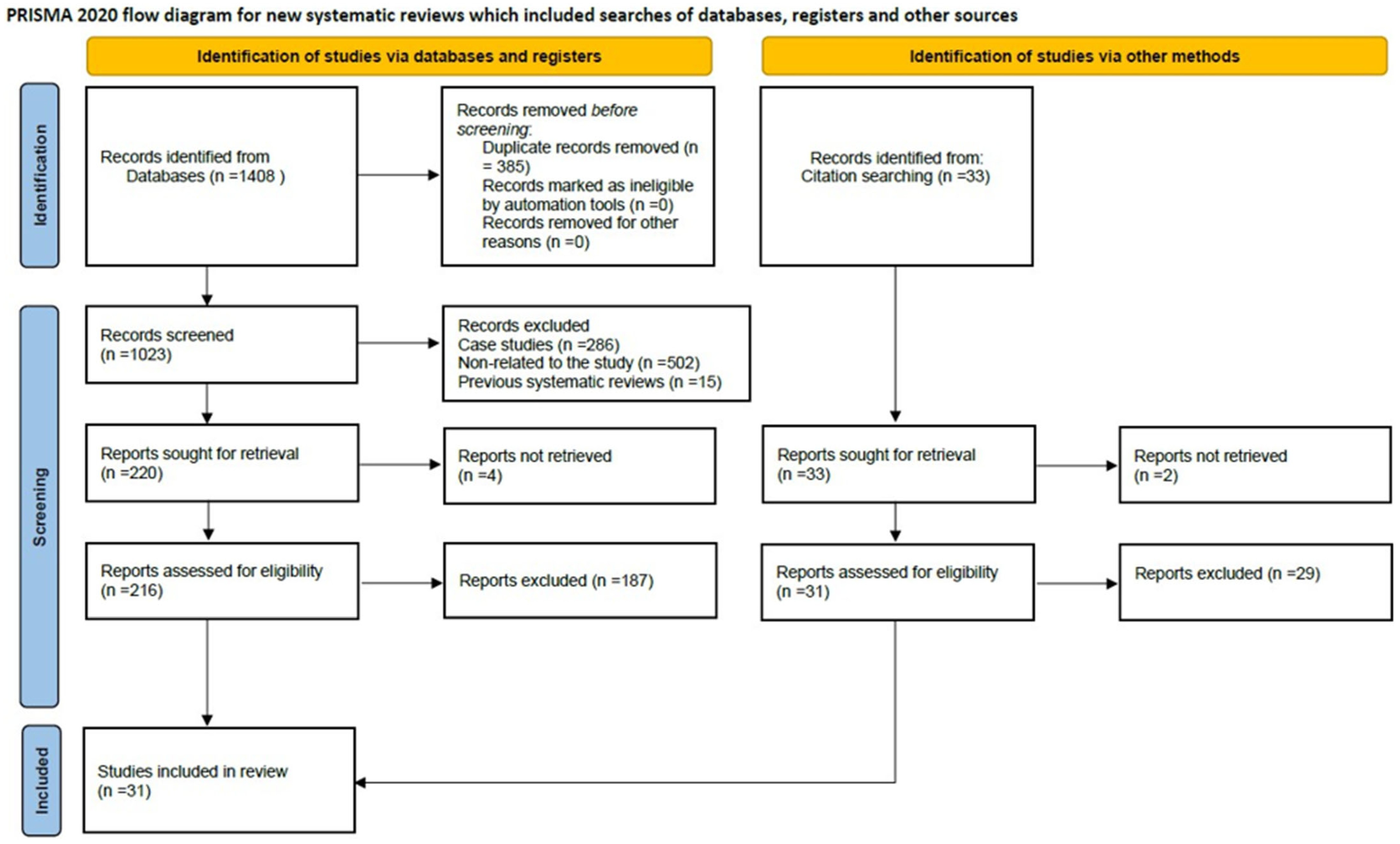
3.1. Search Results
3.2. Study Population and Design Characteristics
- A total of 64,123 patients were included.
- The mean patient age was approximately 45 years, with one notable outlier affecting distribution.
- There was a predominance of female patients, consistent with thyroid disease epidemiology.
- There was wide variation in sample sizes (ranging from small case series to large multicenter studies).
- Studies showed broad geographic representation (USA, Brazil, Italy, China, and others).
3.3. Preoperative Dysphagia: Prevalence and Characteristics
- Reported incidence varies widely (3.3–77.8%), reflecting substantial heterogeneity.
- Variability is largely attributable to non-standardized assessment methods (questionnaires, interviews).
- Symptoms are often intermittent, mild, and not always functionally limiting.
- Many patients report multiple swallowing-related complaints.
- Dysphagia is a significant factor influencing the decision for surgery, despite inconsistent severity.
- Only 11 of 31 studies reported preoperative dysphagia data, indicating probable under-recognition.
3.4. Factors Associated with Preoperative Dysphagia
3.4.1. Laryngeal Function
- Dysphagia was observed in patients both with and without laryngeal mobility abnormalities.
- This suggests mechanisms beyond structural or neurological impairment.
3.4.2. Sex-Related Anatomical Differences
- Men demonstrate greater laryngeal range of motion on ultrasound.
- There were differences attributed to anatomical variation in thyroid cartilage angle (≈90° in men vs. ≈120° in women).
- Clinical relevance remains uncertain.
3.4.3. Thyroid Size and Goiter Extension
- There was no consistent association between thyroid gland size and dysphagia.
- Substernal goiters did not show higher dysphagia rates compared with overall averages.
3.5. Surgical Approaches and Indications
- The majority of studies focused on conventional open thyroidectomy.
- Smaller numbers examined endoscopic, robotic, MIVAT, or combined techniques.
- Studies included total, subtotal thyroidectomy and lobectomy for both benign and malignant disease.
- Postoperative dysphagia incidence was not consistently stratified by surgical type or indication.
3.6. Postoperative Dysphagia: Temporal Pattern
- Symptoms typically increase early postoperatively.
- They peak within the first postoperative week.
- Symptoms remain elevated during the first month, with gradual improvement after 2 weeks.
- Return to preoperative levels occurs by approximately 3 months.
- Limited long-term data are available; isolated late symptom increases lack baseline comparison.
3.7. Outcome Measurement Tools
- Structured questionnaires were frequently used.
- The Swallowing Impairment Score (SIS) was the most commonly applied tool.
- Objective assessments were inconsistently employed.
3.8. Role of Surgical Complications
3.8.1. Uncomplicated Thyroidectomy
- Dysphagia was commonly reported despite intact recurrent laryngeal nerves.
- This indicates that dysphagia can occur independently of overt nerve injury.
3.8.2. Possibly Complicated Thyroidectomy
- Includes transient nerve paresis or unspecified nerve status.
- Higher dysphagia incidence was observed at one month postoperatively.
- Early postoperative dysphagia was more frequent in uncomplicated cases.
3.9. Comparative Findings and Limitations
- Conflicting results were reported regarding the impact of nerve injury and surgical technique.
- Small number of comparative studies limits interpretability.
- Evidence was insufficient to draw definitive conclusions regarding causation or prevention.
4. Discussion

| Authors | Year | Country | Study Design | Study Period | Indications | Sample | Preoperative Symptoms/Symptom Evaluation | Operative Technique/Treatment Practice | Results |
|---|---|---|---|---|---|---|---|---|---|
| Ben Nun et al. [33] | 2006 | Israel | R | January 1990– January 2005 | Retrosternal goiter | 75 | Choking, dyspnea | Cervical TT: 68 (91%). Substernal TT: 7 (9%). | Symptomatic improvement. |
| Almeida et al. [44] | 2009 | Brazil | C-S | 1997–2006 | DTC | 154 | HR-QOL | TT: 100%; ND: 38 (24.7%); RIT: 93 (60.4%). | Better scores: Patients ≤ 45 years, in selective or without ND, RIT < 150 mCi. |
| Pradeep et al. [46] | 2011 | India | R | Not specified | Hashimoto’s thyroiditis | 271 | Tightness in the neck, discomfort in swallowing | Thyroidectomy Group A: 35 patients with HT. Group B: 236 patients with other benign thyroid diseases. | Discomfort in swallowing and tightness in the neck were relieved at 3 months after surgery. |
| Silva et al. [16] | 2012 | Brazil | C-S | May 2006– July 2007 | DTC (46%), goiter (44%), thyroiditis (3%), other (7%). | 308 | UADS Questionnaire | Thyroidectomy: 208 OS without IONM, 100 OS with IONM. | Positive impact of IONM: decreasing the prevalence and degree of disturbance of long-term UADS after thyroidectomy. No relation between treatment with iodine therapy, extent of surgery in NMG and the prevalence of UADS. More swallowing complaints in TT than in partial thyroidectomy. |
| Xu et al. [42] | 2012 | China | RC | Not specified | Thyroid surgery of unspecified etiology | 240 | POST severity assessed at 1, 6, and 24 h after extubation | Thyroid Surgery: Group A: 7.0 ETT with saline; Group B: 6.0 ETT with saline; Group C: 7.0 ETT with lidocaine; Group D: 6.0 ETT with lidocaine. | Decrease in severity and incidence of POST in thyroid surgery with the use of smaller-sized ETT combined with IV Lidocaine. |
| Gal et al. [45] | 2013 | USA | C-S, R | 1992–2008 | Well DTC | 34 | QOL Radiation Therapy Instrument, Head and Neck Companion Module | 11 patients only TT 11 patients TT with postoperative RAI 13 patients XRT. | XRT group reported worse chewing, appetite, swallowing, and pain compared to RAI and TT groups. Both RAI and XRT groups experienced significant declines in QOL compared to TT group. |
| Ryu et al. [41] | 2013 | Republic of Korea | P, RC | Not specified | Elective thyroidectomy of unspecified etiology | 90 | Incidence and severity of hoarseness, dysphagia, POST, cough at 2 and 24 h postoperatively | All patients: total intravenous anesthesia with propofol and remifentanil. Group A: 45 patients, cuff pressure to 25 cm H2O initially, without adjustment during thyroidectomy. Group B: 45 patients, cuff pressure to 25 cm H2O throughout the operation. | Adjusting the endotracheal cuff pressure during thyroidectomy decreased the incidence and degree of POST. |
| Alkan et al. [36] | 2014 | Turkey | P | Not specified | Benign multinodular goiter | 16 | Pre- and postoperatively: Interview for presence of dysphagia, hoarseness, throat obstacle, pharyngeal annoyance and cough during bolus transit, sensation of foreign body in the pharynx. VSLS, CPM EMG, submental EMG single-bolus analysis | Primary TT: Group 1: 8 patients without the use of seprafilm. Group 2: 8 patients with the use of seprafilm between the strap muscles and the laryngotracheal unit. | The use of seprafilm between larynx and strap muscles during TT does not result in any electrophysiological difference regarding swallowing. Anti-adhesive barrier does not have any adverse effects, does not result in foreign body sensation, and can be used safely during thyroid surgery. |
| Del Rio et al. [38] | 2015 | Italia | P | Not specified | Benign and malignant of thyroid diseases | 80 | Self-evaluation of dysphagia to liquids and pain | Traditional thyroidectomy using reusable vs. disposable devices: Group A: BiClamp 150. Group B: Harmonic Focus. | Dysphagia for liquids on a scale from 0 to 10: Group A: 4.5 ± 2.35. Group B: 4.18 ± 2.4. BiClamp is a viable alternative tool with a high security standard and low cost. |
| Chun et al. [39] | 2015 | Republic of Korea | P, RC, double-blinded | July 2013–February 2014 | Elective thyroid lobectomy of unspecified etiology | 64 | MDADI, LPS | General anesthesia provided with an LMA or ETI. | The use of LMA in general anesthesia for thyroid surgery has advantages over the ETI in relieving the laryngopharyngeal symptoms, and in decreasing patients’ subjective and objective voice symptoms, reducing the duration of symptoms. |
| Kim, D. Y. [37] | 2015 | Republic of Korea | RC, double-blinded | Not specified | Papillary thyroid carcinoma | 39 | Swallowing Impairment Index | Conventional, open TT: 19 patients without ADM; 20 patients with ADM. | ADM-assisted implants improve post-thyroidectomy scarring and swallowing impairments without prolonging operative time. |
| Exarchos et al. [43] | 2016 | Greece | R | September 2012– December 2014 | Not specified | 118 | SIS-6, laryngoscopy | TT: Group 1: Patients who received a single perioperative dose of dexamethasone. Group 2: Patients who did not receive the steroid. | 48 h after TT: significantly lower SIS-6 in patients who received perioperative dexamethasone. 1 m after TT: No significant difference in SIS-6 between the dexamethasone and non-steroid groups. |
| Wang et al. [34] | 2016 | China | R | December 2012– December 2014 | Substernal goiter | 27 | Not specified | 15 patients with laparoscopic thyroidectomy via areola approach; 12 patients with open thyroidectomy via low-neck collar cervical approach. | Laparoscopic thyroidectomy for the treatment of substernal goiter via the areola approach is feasible. There were no cases of hoarseness, dysphagia, lymphatic leakage, dyspnea and death in either group. |
| Sorensen [3] | 2018 | Denmark | P, C-C, RC | November 2014– April 2016 | Benign nodular goiter | 33 | Goiter symptom scale of ThyPRO, questionnaire HREM | TT, HT, isthmectomy, lobectomy. | Swallowing symptoms often worsened immediately after surgery but typically showed significant improvement compared to baseline by the 6-month mark. The SCAE increased by 34% after surgery. Esophageal deviation and compression were significantly reduced. |
| Koo et al. [40] | 2019 | Republic of Korea | P, RC | June 2016–November 2017 | Intraparenchymal thyroid cancer with a size < 2 cm | 104 | Incidence and severity of hoarseness, dysphagia, POST, cough at 1, 6, 24 and 48 h postoperatively | SERT: Control group: (n = 52) 25 mmHg initial cuff pressure, monitored without adjustment. Adjusted group: (n = 52) with adjustment at approximately 25 mmHg throughout surgery. | No differences in the incidence of dysphagia hoarseness, or cough between the two groups, except for dysphagia and cough at 6 h postoperatively (11.4% in the adjusted group vs. 29.2% in the control group). Therefore, intraoperative monitoring and adjustment of cuff pressure can reduce the incidence of laryngo-pharyngeal complications. |
| Goswami et al. [47] | 2019 | USA | R, C | Not specified | Thyroid Cancer Survivors | 1743 | HRQOL score, online survey regarding clinical history, PROMIS 29 instrument | Surgery and RAI ablation. | High incidence of complications related to surgery and RAI ablation. Postoperative dysphonia, dysphagia, hypocalcemia, and age < 45 years, predicted worse HRQOL scores. |
5. Conclusions
Difficulties and Limitations
Supplementary Materials
Author Contributions
Funding
Institutional Review Board Statement
Informed Consent Statement
Data Availability Statement
Conflicts of Interest
Abbreviations
| AAT | Arm abduction test |
| ADM | Acellular dermal matrix |
| ALM | Abnormal laryngeal mobility |
| AVA | Acoustic voice analysis |
| C | Comparative |
| C-C | Case–control |
| CPM EMG | Cricopharyngeal muscle electromyography |
| CRP | C-reactive protein |
| C-S | Cross-sectional |
| DHI | Dysphagia handicap index |
| DTC | Differentiated thyroid cancer |
| EAT | Endoscopically assisted thyroidectomy |
| ETI | Endotracheal intubation |
| ETT | Endotracheal tube |
| FBST | Foreign-body sensation in the throat score |
| GETS | Glasgow–Edinburgh throat scale |
| GRBAS scale | Grade of hoarseness (G), roughness (R), breathiness (B), asthenic (A), and strain (S) |
| HBET | Hyoid bone elevation time |
| HREM | High-resolution esophageal manometry |
| HRQoL | Health-related quality of life |
| HT | Hemithyroidectomy |
| LMA | Laryngeal mask airway |
| LPS | Laryngopharyngeal symptom score |
| LRD | Laryngeal response duration |
| MACWA | Modified anterior chest wall approach |
| MBSImp | Modified barium swallowing impairment profile |
| MDADI | MD Anderson dysphagia inventory |
| MDHE | Maximal distance of hyoid excursion |
| MDLE | Maximal distance of laryngeal excursion |
| MHBDT | Maximum hyoid bone displacement time |
| MHBDMT | Maximum hyoid bone displacement or maintenance time |
| MIT | Minimally invasive technique |
| MIVAT | Minimally invasive video-assisted thyroidectomy |
| MPT | Maximum phonation time |
| MVP | Multidimensional voice program |
| ND | Neck dissection |
| NDII | Neck dissection impairment index |
| NLM | Normal laryngeal mobility |
| OS | Open surgery |
| P | Prospective |
| POST | Postoperative sore throat |
| PROMIS | Patient-reported outcomes measurement information system |
| PTD | Pharyngeal transit duration |
| R | Retrospective |
| RAI | Radioactive iodine |
| RC | Randomized controlled |
| RLNI | Recurrent laryngeal nerve injury |
| RS | Robotic surgery |
| SCAE | Smallest cross-sectional area of the esophagus |
| SDS | Self-rating depression scale |
| SERT | Scarless remote access endoscopic and robotic thyroidectomy |
| SIS-6 | Swallowing impairment score |
| TLUS | Transcutaneous laryngeal ultrasonography |
| TT | Total Thyroidectomy |
| TVQ | Thyroidectomy voice-related questionnaire |
| UABA | Unilateral axillo-breast approach |
| VAS | Visual analog scale |
| VFSS | Videofluoroscopic swallowing study |
| VHI-10 | Voice handicap index-10 |
| VIS | Voice impairment score |
| VRP | Voice range profile |
| VSL | Videolaryngostroboscopy |
| XRT | External beam radiotherapy |
References
- Arakawa-Sugueno, L.; Ferraz, A.R.; Morandi, J.; Capobianco, D.M.; Cernea, C.R.; Sampaio, M.A.; Kulcsar, M.A.V.; Simões, C.A.; Brandão, L.G. Videoendoscopic Evaluation of Swallowing After Thyroidectomy: 7 and 60 Days. Dysphagia 2015, 30, 496–505. [Google Scholar] [CrossRef]
- Lombardi, C.P.; D’Alatri, L.; Marchese, M.R.; Maccora, D.; Monaco, M.L.; De Crea, C.; Raffaelli, M. Prospective electromyographic evaluation of functional post thyroidectomy voice and swallowing symptoms. World J. Surg. 2012, 36, 1354–1360. [Google Scholar] [CrossRef] [PubMed]
- Sorensen, J.R. The impact of surgery on quality of life, esophageal motility, and tracheal anatomy and airflow in patients with benign nodular goiter. Dan. Med. J. 2018, 65, B5472. [Google Scholar] [PubMed]
- Costa, B.O.I.d.; Rodrigues, D.d.S.B.; Magalhães, D.D.D.d.; Santos, A.S.; Santos, R.V.; Azevedo, E.H.M.; Almeida, A.A.; Pernambuco, L. Quantitative Ultrasound Assessment of Hyoid Bone Displacement During Swallowing Following Thyroidectomy. Dysphagia 2021, 36, 659–669. [Google Scholar] [CrossRef]
- Cho, J.-G.; Byeon, H.K.; Oh, K.H.; Baek, S.-K.; Kwon, S.-Y.; Jung, K.-Y.; Woo, J.-S. Objective Assessment of Postoperative Swallowing Difficulty Through Ultrasound in Patients Undergoing Thyroidectomy. Dysphagia 2020, 35, 253–260. [Google Scholar] [CrossRef]
- Im, I.; Jun, J.-P.; Crary, M.A.; Carnaby, G.D.; Hong, K.H. Longitudinal Kinematic Evaluation of Pharyngeal Swallowing Impairment in Thyroidectomy Patients. Dysphagia 2019, 34, 161–169. [Google Scholar] [CrossRef]
- Page, M.J.; McKenzie, J.E.; Bossuyt, P.M.; Boutron, I.; Hoffmann, T.C.; Mulrow, C.D.; Shamseer, L.; Tetzlaff, J.M.; Akl, E.A.; Brennan, S.E.; et al. The PRISMA 2020 statement: An updated guideline for reporting systematic reviews. BMJ 2021, 372, n71. [Google Scholar] [CrossRef]
- Ikeda, Y.; Takami, H.; Sasaki, Y.; Takayama, J.; Niimi, M.; Kan, S. Comparative study of thyroidectomies. Endoscopic surgery versus conventional open surgery. Surg. Endosc. 2002, 16, 1741–1745. [Google Scholar] [CrossRef]
- Pereira, J.A.; Girvent, M.; Sancho, J.J.; Parada, C.; Sitges-Serra, A. Prevalence of long-term upper aerodigestive symptoms after uncomplicated bilateral thyroidectomy. Surgery 2003, 133, 318–322. [Google Scholar] [CrossRef]
- Maung, K.H.; Hayworth, D.; Nix, P.A.; Atkin, S.L.; England, R.J.A. Thyroidectomy does not cause globus pattern symptoms. J. Laryngol. Otol. 2005, 119, 973–975. [Google Scholar] [CrossRef] [PubMed]
- Burns, P.; Timon, C. Thyroid pathology and the globus symptom: Are they related? A two year prospective trial. J. Laryngol. Otol. 2007, 121, 242–245. [Google Scholar] [CrossRef]
- Greenblatt, D.Y.; Sippel, R.; Leverson, G.; Frydman, J.; Schaefer, S.; Chen, H. Thyroid resection improves perception of swallowing function in patients with thyroid disease. World J. Surg. 2009, 33, 255–260. [Google Scholar] [CrossRef] [PubMed]
- Lombardi, C.P.; Raffaelli, M.; De Crea, C.; D’Alatri, L.; Maccora, D.; Marchese, M.R.; Paludetti, G.; Bellantone, R. Long-term outcome of functional post-thyroidectomy voice and swallowing symptoms. Surgery 2009, 146, 1174–1181. [Google Scholar] [CrossRef]
- Lee, J.; Nah, K.Y.; Kim, R.M.; Ahn, Y.H.; Soh, E.-Y.; Chung, W.Y. Differences in postoperative outcomes, function, and cosmesis: Open versus robotic thyroidectomy. Surg. Endosc. 2010, 24, 3186–3194. [Google Scholar] [CrossRef]
- Sabaretnam, M.; Mishra, A.; Chand, G.; Agarwal, G.; Agarwal, A.; Verma, A.K.; Mishra, S.K. Assessment of swallowing function impairment in patients with benign goiters and impact of thyroidectomy: A case control study. World J. Surg. 2012, 36, 1293–1299. [Google Scholar] [CrossRef]
- Silva, I.C.M.; Netto Ide, P.; Vartanian, J.G.; Kowalski, L.P.; Carrara-de Angelis, E. Prevalence of upper aerodigestive symptoms in patients who underwent thyroidectomy with and without the use of intraoperative laryngeal nerve monitoring. Thyroid. Off. J. Am. Thyroid. Assoc. 2012, 22, 814–819. [Google Scholar] [CrossRef]
- Tae, K.; Kim, K.Y.; Yun, B.R.; Ji, Y.B.; Park, C.W.; Kim, D.S.; Kim, T.W. Functional voice and swallowing outcomes after robotic thyroidectomy by a gasless unilateral axillo-breast approach: Comparison with open thyroidectomy. Surg. Endosc. 2012, 26, 1871–1877. [Google Scholar] [CrossRef]
- Lee, J.; Kwon, I.S.; Bae, E.H.; Chung, W.Y. Comparative analysis of oncological outcomes and quality of life after robotic versus conventional open thyroidectomy with modified radical neck dissection in patients with papillary thyroid carcinoma and lateral neck node metastases. J. Clin. Endocrinol. Metab. 2013, 98, 2701–2708. [Google Scholar] [CrossRef] [PubMed]
- Jung, S.P.; Kim, S.H.; Bae, S.Y.; Lee, S.K.; Kim, S.; Choi, M.-Y.; Kim, J.; Kim, M.; Kil, W.H.; Choe, J.-H.; et al. A new subfascial approach in open thyroidectomy: Efficacy for postoperative voice, sensory, and swallowing symptoms. A randomized controlled study. Ann. Surg. Oncol. 2013, 20, 3869–3876. [Google Scholar] [CrossRef]
- Hyun, K.; Byon, W.; Park, H.-J.; Park, Y.; Park, C.; Yun, J.-S. Comparison of swallowing disorder following gasless transaxillary endoscopic thyroidectomy versus conventional open thyroidectomy. Surg. Endosc. 2014, 28, 1914–1920. [Google Scholar] [CrossRef]
- Chung, E.-J.; Park, M.-W.; Cho, J.-G.; Baek, S.-K.; Kwon, S.-Y.; Woo, J.-S.; Jung, K.-Y. A prospective 1-year comparative study of endoscopic thyroidectomy via a retroauricular approach versus conventional open thyroidectomy at a single institution. Ann. Surg. Oncol. 2015, 22, 3014–3021. [Google Scholar] [CrossRef] [PubMed]
- Gohrbandt, A.E.; Aschoff, A.; Gohrbandt, B.; Keilmann, A.; Lang, H.; Musholt, T.J. Changes of Laryngeal Mobility and Symptoms Following Thyroid Surgery: 6-Month Follow-Up. World J. Surg. 2016, 40, 636–643. [Google Scholar] [CrossRef] [PubMed]
- Kim, W.W.; Jung, J.H.; Lee, J.; Kang, J.G.; Baek, J.; Lee, W.K.; Park, H.Y. Comparison of the Quality of Life for Thyroid Cancer Survivors Who Had Open Versus Robotic Thyroidectomy. J. Laparoendosc. Adv. Surg. Tech. Part A 2016, 26, 618–624. [Google Scholar] [CrossRef]
- Lee, D.Y.; Lim, S.; Kang, S.H.; Oh, K.H.; Cho, J.-G.; Baek, S.-K.; Woo, J.-S.; Kwon, S.-Y.; Jung, K.-Y. A prospective 1-year comparative study of transaxillary total thyroidectomy regarding functional outcomes: Is it really promising? Surg. Endosc. 2016, 30, 1599–1606. [Google Scholar] [CrossRef]
- Elzahaby, I.A.; Fathi, A.; Abdelwahab, K.; Eldamshiety, O.; Metwally, I.H.; Abdallah, A.; Ramadan, M.M.; Kotb, S.; Abdel Aziz, M.; Refky, B.; et al. Endoscopic Thyroidectomy Using the Unilateral Axillo-breast Approach Versus the Modified Anterior Chest Wall Approach: A Prospective Comparative Study. Surg. Laparosc. Endosc. Percutaneous Tech. 2018, 28, 366–370. [Google Scholar] [CrossRef]
- Hillenbrand, A.; Cammerer, G.; Dankesreiter, L.; Lemke, J.; Henne-Bruns, D. Postoperative swallowing disorder after thyroid and parathyroid resection. Pragmatic Obs. Res. 2018, 9, 63–68. [Google Scholar] [CrossRef]
- Liu, N.; Chen, B.; Li, L.; Zeng, Q.; Lv, B. Subplatysmal or subfascial approach in totally endoscopic thyroidectomy has better postoperative efficacy for voice, sensory, swallowing symptoms and cosmetic result. Cohort study. Int. J. Surg. 2018, 60, 22–27. [Google Scholar] [CrossRef]
- Park, Y.M.; Oh, K.H.; Cho, J.-G.; Baek, S.-K.; Kwon, S.-Y.; Jung, K.-Y.; Woo, J.-S. Changes in Voice- and Swallowing-Related Symptoms After Thyroidectomy: One-Year Follow-Up Study. Ann. Otol. Rhinol. Laryngol. 2018, 127, 171–177. [Google Scholar] [CrossRef]
- Tomoda, C.; Sugino, K.; Tanaka, T.; Ogimi, Y.; Masaki, C.; Akaishi, J.; Hames, K.Y.; Suzuki, A.; Matsuzu, K.; Uruno, T.; et al. Globus Symptoms in Patients Undergoing Thyroidectomy: Relationships with Psychogenic Factors, Thyroid Disease, and Surgical Procedure. Thyroid. Off. J. Am. Thyroid. Assoc. 2018, 28, 104–109. [Google Scholar] [CrossRef]
- Sahli, Z.; Canner, J.K.; Najjar, O.; Schneider, E.B.; Prescott, J.D.; Russell, J.O.; Tufano, R.P.; Zeiger, M.A.; Mathur, A. Association between Age and Patient-Reported Changes in Voice and Swallowing after Thyroidectomy. Laryngoscope 2019, 129, 519–524. [Google Scholar] [CrossRef] [PubMed]
- Yu, S.T.; Chen, W.Z.; Xu, D.B.; Xie, R.; Zhou, T.; Yu, J.C. Minimally invasive video-assisted surgical management for parapharyngeal metastases from papillary thyroid carcinoma: A case series report. Front. Oncol. 2019, 9, 1226. [Google Scholar] [CrossRef] [PubMed]
- Jian, C.; Wu, L.; Zheng, Z.; Liu, W.; Fang, J.; Tu, H. How Should the Surgical Approach in Thyroidectomy Be Selected? A Prospective Study Comparing the Trauma of 3 Different Thyroidectomy Surgical Approaches. Surg. Laparosc. Endosc. Percutaneous Tech. 2020, 30, 22–25. [Google Scholar] [CrossRef]
- Ben Nun, A.; Soudack, M.; Best, L.-A. Retrosternal thyroid goiter: 15 years’ experience. Isr. Med. Assoc. J. IMAJ 2006, 8, 106–109. [Google Scholar]
- Wang, C.; Sun, P.; Li, J.; Yang, W.; Yang, J.; Feng, Z.; Cao, G.; Lee, S. Strategies of laparoscopic thyroidectomy for treatment of substernal goiter via areola approach. Surg. Endosc. 2016, 30, 4721–4730. [Google Scholar] [CrossRef]
- Lee, D.Y.; Lee, K.J.; Han, W.G.; Oh, K.H.; Cho, J.-G.; Baek, S.-K.; Kwon, S.-Y.; Woo, J.-S.; Jung, K.-Y. Comparison of transaxillary approach, retroauricular approach, and conventional open hemithyroidectomy: A prospective study at single institution. Surgery 2016, 159, 524–531. [Google Scholar] [CrossRef]
- Alkan, Z.; Yigit, O.; Adatepe, T.; Uzun, N.; Kocak, I.; Sunter, V.; Server, E.A. Effect of anti-adhesive barrier use on laryngotracheal movement after total thyroidectomy: An electrophysiological study. Indian J. Otolaryngol. Head Neck Surg. Off. Publ. Assoc. Otolaryngol. India 2014, 66, 71–77. [Google Scholar] [CrossRef] [PubMed][Green Version]
- Kim, D.Y.; Kang, S.-W.; Kim, D.S.; Shin, J.U.; Chung, W.Y.; Park, C.S.; Lee, J.H.; Nam, K.-H. Preventive Effect of Human Acellular Dermal Matrix on Post-thyroidectomy Scars and Adhesions: A Randomized, Double-Blinded, Controlled Trial. Dermatol. Surg. 2015, 41, 812–820. [Google Scholar] [CrossRef]
- Del Rio, P.; Lazzari, G.; Rossini, M.; Nisi, P.; Perrone, G.; Bonati, E.; Sianesi, M. The use of energy devices for thyroid surgical procedures. Harmonic Focus versus Biclamp 150. Ann. Ital. Chir. 2015, 86, 553–559. [Google Scholar] [PubMed]
- Chun, B.-J.; Bae, J.-S.; Lee, S.-H.; Joo, J.; Kim, E.-S.; Sun, D.-I. A prospective randomized controlled trial of the laryngeal mask airway versus the endotracheal intubation in the thyroid surgery: Evaluation of postoperative voice, and laryngopharyngeal symptom. World J. Surg. 2015, 39, 1713–1720. [Google Scholar] [CrossRef]
- Koo, C.-H.; Sohn, H.-M.; Choi, E.-S.; Choi, J.-Y.; Oh, A.-Y.; Jeon, Y.-T.; Ryu, J.-H. The Effect of Adjustment of Endotracheal Tube Cuff Pressure during Scarless Remote Access Endoscopic and Robotic Thyroidectomy on Laryngo-Pharyngeal Complications: Prospective Randomized and Controlled Trial. J. Clin. Med. 2019, 8, 1787. [Google Scholar] [CrossRef]
- Ryu, J.-H.; Han, S.-S.; Do, S.-H.; Lee, J.-M.; Lee, S.-C.; Choi, E.-S. Effect of adjusted cuff pressure of endotracheal tube during thyroidectomy on postoperative airway complications: Prospective, randomized, and controlled trial. World J. Surg. 2013, 37, 786–791. [Google Scholar] [CrossRef]
- Xu, Y.J.; Wang, S.L.; Ren, Y.; Zhu, Y.; Tan, Z.M. A smaller endotracheal tube combined with intravenous lidocaine decreases post-operative sore throat—A randomized controlled trial. Acta Anaesthesiol. Scand. 2012, 56, 1314–1320. [Google Scholar] [CrossRef]
- Exarchos, S.T.; Lachanas, V.A.; Tsiouvaka, S.; Tsea, M.; Hajiioannou, J.K.; Skoulakis, C.E.; Bizakis, J.G. The impact of perioperative dexamethasone on swallowing impairment score after thyroidectomy: A retrospective study of 118 total thyroidectomies. Clin. Otolaryngol. 2016, 41, 615–618. [Google Scholar] [CrossRef]
- Almeida, J.P.; Vartanian, J.G.; Kowalski, L.P. Clinical predictors of quality of life in patients with initial differentiated thyroid cancers. Arch. Otolaryngol.–Head Neck Surg. 2009, 135, 342–346. [Google Scholar] [CrossRef][Green Version]
- Gal, T.J.; Streeter, M.; Burris, J.; Kudrimoti, M.; Ain, K.B.; Valentino, J. Quality of life impact of external beam radiotherapy for advanced thyroid carcinoma. Thyroid. Off. J. Am. Thyroid. Assoc. 2013, 23, 64–69. [Google Scholar] [CrossRef]
- Pradeep, P.V.; Ragavan, M.; Ramakrishna, B.A.; Jayasree, B.; Skandha, S.H. Surgery in Hashimoto’s thyroiditis: Indications, complications, and associated cancers. J. Postgrad. Med. 2011, 57, 120–122. [Google Scholar] [CrossRef]
- Goswami, S.; Peipert, B.J.; Mongelli, M.N.; Kurumety, S.K.; Helenowski, I.B.; Yount, S.E.; Sturgeon, C. Clinical factors associated with worse quality-of-life scores in United States thyroid cancer survivors. Surgery 2019, 166, 69–74. [Google Scholar] [CrossRef]

| ROBINS-I Domain | Risk of Bias | Main Concerns |
|---|---|---|
| Bias due to confounding | High | Inconsistent adjustment for age, sex, baseline dysphagia, extent of surgery, nerve injury, anesthesia, and adjuvant therapy |
| Bias in selection of participants | Moderate | Single-center studies, unclear recruitment strategies, limited use of control groups |
| Bias in classification of interventions | Low | Surgical procedures generally well defined |
| Bias due to deviations from intended interventions | Low–Moderate | Limited reporting on perioperative variations and protocol adherence |
| Bias due to missing data | Moderate | Loss to follow-up and incomplete reporting in longer-term studies |
| Bias in measurement of outcomes | High | Predominant reliance on subjective, non-standardized questionnaires; limited objective assessment |
| Bias in selection of reported results | Moderate | Selective reporting of outcomes and time points; omission of absolute prevalence data |
| Overall risk of bias | Moderate–Serious | Driven mainly by confounding and outcome measurement bias |
| Authors | Year | Study Design | Sample | Age (y) | Approaches to Symptom Evaluation | Operative Technique | Follow-Up | Prevalence of Postoperative Dysphagia |
|---|---|---|---|---|---|---|---|---|
| Ikeda et al. [8] | 2002 | P, C | 45 | 41.17 | Questionnaire | 15 OS, 15 EAT (anterior chest approach), 15 EAT (axillary approach) | 3 m | 3 m: 5 (33%) |
| Pereira et al. [9] | 2003 | R, C-C | 60 | 58 | UADS | 38 OS (uncomplicated total), 22 OS (near total) | 4 y | 9 (15%) |
| Maung et al. [10] | 2005 | P | 41 | 48 | GETS | OS | 3 m, 12 m, 1 y | 3 and 12 m: globus symptoms did not worsen |
| Burns & Timon [11] | 2007 | P | 200 | 48 | Questionnaire | OS | 3 m, 6 m, >12 m | 58 patients with globus pharyngeus preoperatively, and 80% of symptoms resolved postoperatively |
| Greenblatt et al. [12] | 2009 | P | 116 | 49 | SWAL-QOL questionnaire | OS | 12 m | Significant improvements in 8 SWAL-QOL domains. Lower SWAL-QOL scores for 1 patient with unilateral RLNI. |
| Lombardi et al. [13] | 2009 | P | 110 | 46.5 | AVA, SIS-6, VIS, VSL, MPT | OS | 1 w, 1 m, 3 m, >1 y | 1 w: 81 (73.6%) 1 m: 70 (63.6%) 3 m: 53 (48.2%) >1 y: 22 (20%) |
| Lee et al. [14] | 2010 | P | 84 | 37.6 | VHI-10, SIS-6, VSL | 41 RS, 43 OS | 1 w, 3 m | 1 w: VHI-10 Significantly increased in both groups. 3 m: VHI-10 higher in open group. 1 w and 3 m: SIS-6 significantly higher in open group |
| Lombardi et al. [2] | 2012 | P | 33 | 44.5 | AVA, SIS-6, VIS, VSL, MPT, LEMG | OS | 1 m, 3 m | 1 m: 2.81 ± 3.63 3 m: 1.65 ± 2.56 |
| Sabaretnam et al. [15] | 2012 | P, C-C | 224 | 40.5 | SWAL-QOL questionnaire | 124 OS, 100 without surgery | >6 m | Scores of SWAL-QoL in 12 domains were low and improved significantly after surgery |
| Silva et al. [16] | 2012 | C-S | 308 | 45.2 | UADS questionnaire | 208 OS without IONM, 100 OS with IONM | 15–40 m 13–42 m | OS without IONM: 70 (33.6%) Partial: 19 (24.1%), TT: 51 (39.5%) OS with IONM: 22 (22%) Partial: 10 (31.2%), TT: 12 (17.7%) |
| Tae et al. [17] | 2012 | P | 111 | 40.78 54.36 | Questionnaire, VSL, MVP, VRP | 50 RS, 61 OS | 1 d, 1 w, 1 m, 3 m, 6 m | 1 d: RS: 2.46 ± 2.07 OS: 3.11 ± 2.85 1 w: RS: 1.63 ± 1.86 OS: 1.82 ± 2.18 1 m: RS: 1.94 ± 2.43 OS: 1.91 ± 2.72 3 m: RS: 1.57 ± 1.99 OS: 1.83 ± 2.53 6 m: RS: 0.75 ± 1.30 OS: 1.02 ± 2.02 |
| Lee et al. [18] | 2013 | C | 128 | 35.7 42.4 | QoL symptom scale, AAT, NDII | 62 RS, 66 OS | Not specified | RS: better QoL outcomes & reductions in swallowing discomfort. |
| Jung et al. [19] | 2013 | RC | 86 | 48.0 51.8 | VHI-10, SIS-6, MVP, VRP | 42 OS, subplatysmal approach 44 OS, subfascial approach | 2 w, 3 m | 2 w: Subplatysmal: 2.81 ± 3.02 Subfascial: 1.59 ± 2.37 3 m: Subplatysmal: 1.24 ± 2.16 Subfascial: 0.64 ± 1.12 |
| Hyun et al. [20] | 2014 | P, C | 47 | 46.05 39.32 | SIS-6, Barium videofluoroscopy | 24 OS, 23 EAT | 3 d, 1 m | 3 d: OS: 11.00 EAT: 6.09 1 m: OS: 6.26 EAT: 4.96 |
| Arakawa-Sugueno et al. [1] | 2015 | P, C | 54 | 25–65 | VSL | OS, MIT | 7 d, 60 d | 7 d: 87% of patients with ALM and 44% with NLM. 60 d: 67% of patients with ALM and 25% with NLM. |
| Chung et al. [21] | 2015 | P, C | 94 | 39.8 47.4 | MDVP, VRP, GRBAS scale | 47 EAT, 47 OS | 1 w, 1 m, 3 m, 6 m, 12 m | 1 w: EAT: 3.5 OS: 1.2 1 m: EAT: 3.3 OS: 0.4 3 m: EAT: 0.9 OS: 2.9 6 m: EAT: 0.3 OS: 0.6 12 m: EAT: 0.2 OS: 0 |
| Gohrbandt et al. [22] | 2016 | P | 53 | 52.4 | Questionnaire, ultrasonography | OS | 1 m, 3 m, 6 m | 1 m: 25 (47.2%) 3 m: 12 (22.6%) 6 m: 4 (7.6%) |
| Kim, W. W et al. [23] | 2016 | C, RC | 229 | 50.4 38.9 | VHI-10, SIS-6, QoL questionnaire | 117 OS, 112 RS | 32.3 ± 6.3 m | Swallowing impairment: OS: 0.38 ± 0.07 RS: 0.26 ± 0.06 |
| Lee, D. Y et al. [24] | 2016 | P, C | 280 | 49.5 | MDVP, VRP, MVP, GRBAS scale, VHI-10, DHI, VAS | 204 conventional OS, 76 transaxillary thyroidectomy | 1 w, 1 m, 3 m, 6 m, 12 m | DHI scores: higher in TA than in COS group, (wider flap elevation and injury to the neck muscle affect this result |
| Elzahaby et al. [25] | 2018 | P, C | 40 | 32.2 35.4 | Self-reported/not specified | 20 EAT with UABA, 20 EAT with MACWA | 2 m | 2 (5%) |
| Hillenbrand et al. [26] | 2018 | R | 219 | 58 | Questionnaire | OS | >6–18 m (mean 14) | immediately postoperative: 110 (50.2%) <3 m: 16 (7.3%) >3 m: 39 (17.6%) Significant risk in patients with Graves’ disease, carcinoma, in more invasive operation |
| Liu et al. [27] | 2018 | C | 143 | 31.70 | VHI-10, SIS-6 | 68 subplatysmal EAT, 75 subfascial EAT | 2 w, 3 m, 6 m | 2 w: Subplatysmal: 3.11 ± 2.04 Subfascial: 2.21 ± 1.75 3 m: Subplatysmal: 0.97 ± 1.14 Subfascial: 0.73 ± 1.27 6 m: Subplatysmal: 0.76 ± 0.99 Subfascial: 0.59 ± 1.06 |
| Park et al. [28] | 2018 | P, C | 103 | 48.02 | TVQ | 49 TT, 54 lobectomy (HT) | 1 m, 3 m, 6 m, 12 m | 1 m: TT: 11.8 HT: 7.6 3 m: TT: 11.0 HT: 6.2 6 m: TT: 9.3 HT: 5.5 12 m: TT: 8.4 HT: 6.2 |
| Sorensen [3] | 2018 | P, C-C, RC | 33 | 60 | Goiter symptom scale of ThyPRO questionnaire, HREM | TT, HT, isthmectomy, lobectomy | at baseline, 6 m | Swallowing symptoms often worsened immediately after surgery but typically showed significant improvement compared to baseline by the 6-month mark. The SCAE increased by 34% after surgery. Esophageal deviation and compression were also significantly reduced |
| Tomoda et al. [29] | 2018 | P | 616 | 49.9 | Questionnaire, FBST, SDS | OS | 3 d, 1 m, 3 m, 6 m, 1 y | 2 d: 75.3% 1 m: 78.9% 12 m: 49.3% 3 d and 12 m: FBST higher in TT compared to lobectomy |
| Im et al. [6] | 2019 | P, C | 54 | 47.33 42.64 | VFSS, MDHE, MDLE MBSImp score, PTD, LRD | 40 TT, 14 volunteers | 1 w, 3 m | Swallowing impairment after TT only in pharyngeal swallowing: 35% at 1 w At 3 m 89.3% improvement |
| Sahli et al. [30] | 2019 | R | 924 | 51.1 | Self-reported/not specified | OS | 1–4 w | 1 m: 51 (5.5%) |
| Yu et al. [31] | 2019 | R | 5 | 46 | Self-reported/not specified | OS, MIT | 10–20 m | >1 y: 0 (0%) |
| Cho et al. [5] | 2020 | P | 40 | 46.8 | US evaluation, TVQ score | 22 HT, 18 TT | 1 m, 3 m, 6 m | 12.40 ± 2.28, 9.78 ± 1.93, 7.23 ± 1.90 TT group: higher TVQ score |
| Jian et al. [32] | 2020 | P, C | 150 | 38.4 46.56 43.93 | CRP | 50 total EAT, 50 EAT, 50 conventional OS | 6 h, 24 h, 72 h | 4.12 ± 1.31 2.02 ± 1.12 3.22 ± 1.69 |
| Costa et al. [4] | 2021 | C-S | 40 | 49.55 40.75 | UADS, TLUS, HBET, MHBDT, MHBDMT | 20 OS 20 without surgery | Not specified | Clearing (75%), hoarseness (55%), feeling of bolus in the throat (50%), dry throat (50%) |
Disclaimer/Publisher’s Note: The statements, opinions and data contained in all publications are solely those of the individual author(s) and contributor(s) and not of MDPI and/or the editor(s). MDPI and/or the editor(s) disclaim responsibility for any injury to people or property resulting from any ideas, methods, instructions or products referred to in the content. |
© 2026 by the authors. Published by MDPI on behalf of the Lithuanian University of Health Sciences. Licensee MDPI, Basel, Switzerland. This article is an open access article distributed under the terms and conditions of the Creative Commons Attribution (CC BY) license.
Share and Cite
Litsou, E.; Sioka, C.; Mpakogiannis, K.; Magou, L.; Fakitsa, P.; Giannakis, A.; Sissy Foteini, S.; Fousekis, F. Thyroidectomy-Related Dysphagia: A Systematic Literature Review. Medicina 2026, 62, 440. https://doi.org/10.3390/medicina62030440
Litsou E, Sioka C, Mpakogiannis K, Magou L, Fakitsa P, Giannakis A, Sissy Foteini S, Fousekis F. Thyroidectomy-Related Dysphagia: A Systematic Literature Review. Medicina. 2026; 62(3):440. https://doi.org/10.3390/medicina62030440
Chicago/Turabian StyleLitsou, Eleni, Chrissa Sioka, Konstantinos Mpakogiannis, Labrini Magou, Polyxeni Fakitsa, Alexandros Giannakis, Sakkou Sissy Foteini, and Fotios Fousekis. 2026. "Thyroidectomy-Related Dysphagia: A Systematic Literature Review" Medicina 62, no. 3: 440. https://doi.org/10.3390/medicina62030440
APA StyleLitsou, E., Sioka, C., Mpakogiannis, K., Magou, L., Fakitsa, P., Giannakis, A., Sissy Foteini, S., & Fousekis, F. (2026). Thyroidectomy-Related Dysphagia: A Systematic Literature Review. Medicina, 62(3), 440. https://doi.org/10.3390/medicina62030440