Effectiveness of Virtual Reality Therapy on Static Postural Control and Dynamic Balance in Stroke Patients: Systematic Review, Meta-Analysis, and Meta-Regression of Randomized Controlled Trials



Abstract
1. Introduction
2. Materials and Methods
2.1. Eligibility Criteria
2.2. Search Strategy
2.3. Study Selection and Data Extraction
2.4. Outcome Measures
2.5. Assessment of Risk of Bias and Quality of Evidence
2.6. Statistical Analysis
3. Results
3.1. Study Selection
3.2. Characteristics of Study and Participant
3.2.1. Description of VR Intervention
3.2.2. Description of the Control Intervention
3.3. Description of the Measurements
3.3.1. Center of Pressure
3.3.2. Berg Balance Scale
3.3.3. Timed Up-And-Go Test
3.4. Risk of Bias in Studies
- 1.
- Regarding the bias caused by the randomization process, 14 studies were considered to have a low risk, whereas 22 studies were judged as having certain concerns, mainly because of the unclear description of the allocation sequence concealment method.
- 2.
- Regarding bias due to deviation from the intended intervention, 8 studies were rated as having a low risk, whereas 17 studies were judged as having some concerns, and 11 were judged as having a high risk. This is attributable to the particularity of the VR intervention, which makes it difficult to achieve complete blinding of the participants and implementers.
- 3.
- Regarding the bias of outcome measures, 23 studies were rated as having a low risk, 13 studies were rated as having some concern, and no study was rated as having a high risk. This was mainly because of the lack of description of the assessors’ blinding.
- 4.
- Regarding bias due to missing outcome data, 28 studies were rated as having a low risk, 4 studies were rated as having some concerns, and 4 studies were rated as having a high risk. Some studies were considered high-risk because they had a dropout rate of >20% and did not select appropriate methods for analysis.
- 5.
- Regarding the bias of reporting results, 34 studies were considered to have a low risk, 2 studies were judged as having some concerns, and 0 was judged as having a high risk.
- 6.
- Among other biases, no potential baseline imbalances, funding sources, or insufficient methodological reporting in any of the studies were observed; therefore, all were judged as having a low risk.
3.5. Main Result: Static Posture Control
3.5.1. Center of Pressure (COP) Sway Path Length with Eyes Open
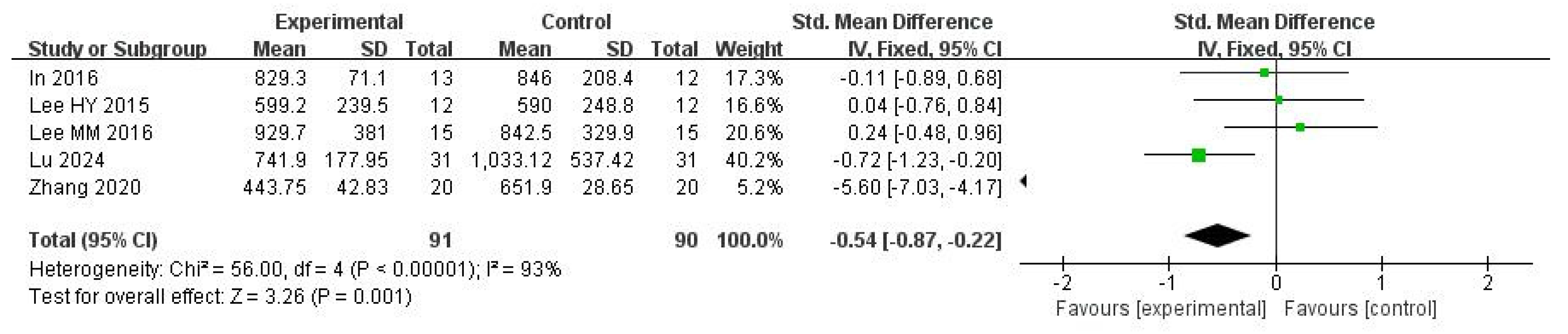
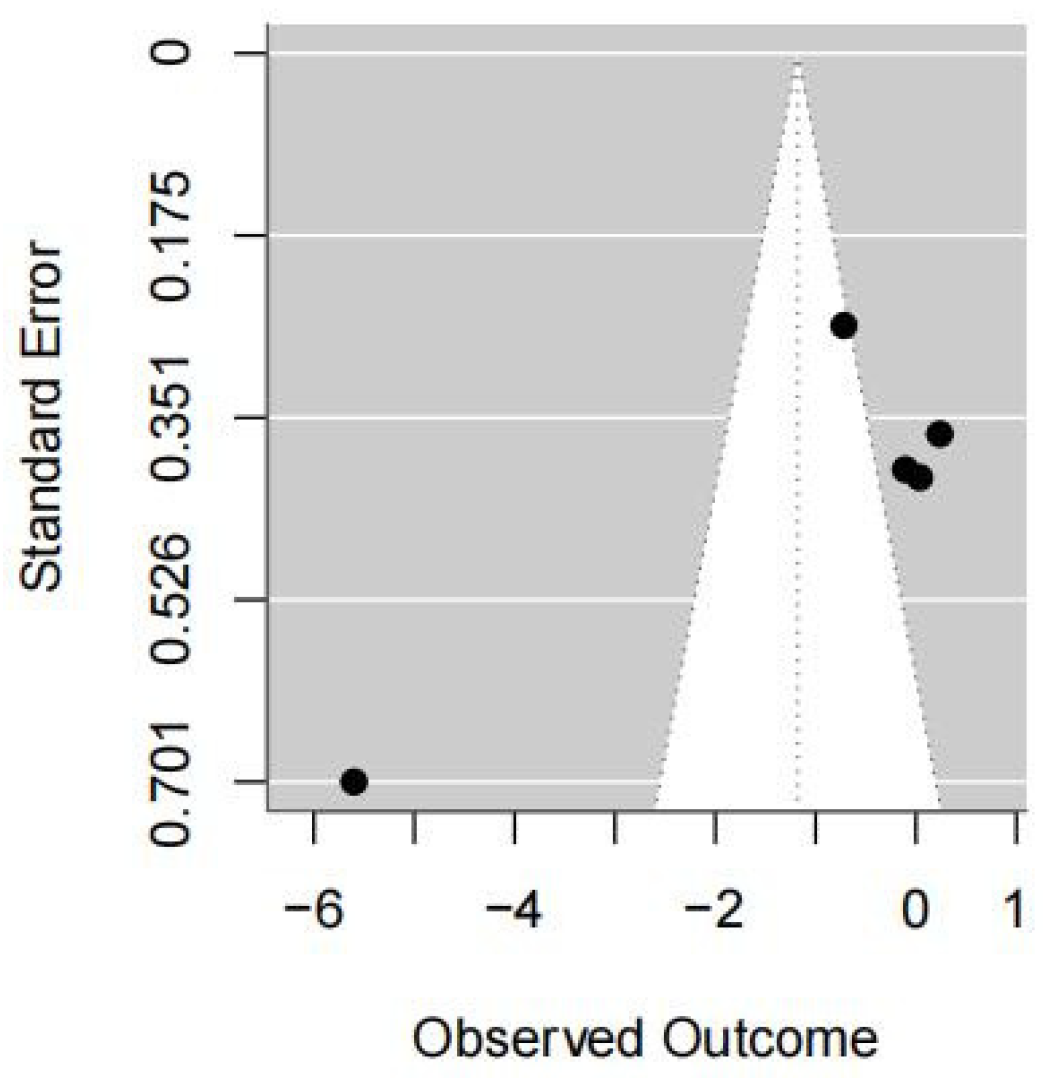
3.5.2. COP Sway Path Length with Eyes Closed
3.5.3. COP Velocity with Eyes Open
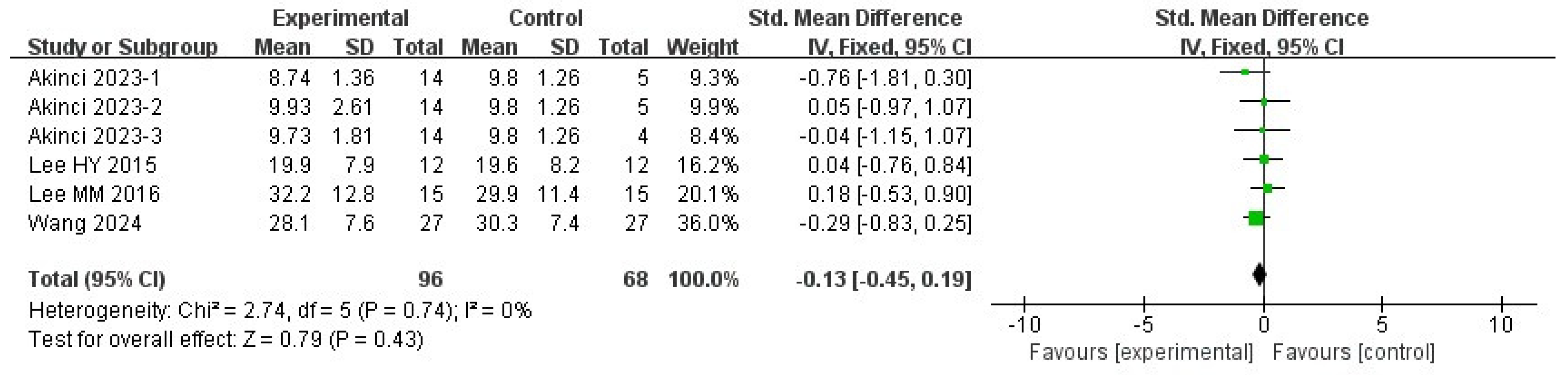
3.5.4. COP Velocity with Eyes Closed
3.6. Secondary Outcome: Dynamic Balance
3.6.1. Berg Balance Scale Results
3.6.2. Timed Up-And-Go Test Results
3.7. Meta-Regression Analysis
3.8. GRADE
4. Discussion
4.1. Principal Findings
4.2. Effectiveness of VR Interventions on Static Postural Control in Stroke
4.3. Effectiveness of VR Interventions on Dynamic Balance in Stroke
4.4. Comparison with Previous Studies
4.5. Limitations
4.6. Future Recommendations
5. Conclusions
Supplementary Materials
Author Contributions
Funding
Institutional Review Board Statement
Informed Consent Statement
Data Availability Statement
Conflicts of Interest
Abbreviations
References
- Feigin, V.L.; Brainin, M.; Norrving, B.; Martins, S.O.; Pandian, J.; Lindsay, P.; Grupper, M.F.; Rautalin, I. World Stroke Organization: Global Stroke Fact Sheet 2025. Int. J. Stroke 2025, 20, 132–144. [Google Scholar] [CrossRef]
- Maida, C.D.; Norrito, R.L.; Rizzica, S.; Mazzola, M.; Scarantino, E.R.; Tuttolomondo, A. Molecular Pathogenesis of Ischemic and Hemorrhagic Strokes: Background and Therapeutic Approaches. Int. J. Mol. Sci. 2024, 25, 6297. [Google Scholar] [CrossRef]
- Virani, S.S.; Alonso, A.; Benjamin, E.J.; Bittencourt, M.S.; Callaway, C.W.; Carson, A.P.; Chamberlain, A.M.; Chang, A.R.; Cheng, S.; Delling, F.N.; et al. Heart Disease and Stroke Statistics—2020 Update: A Report from the American Heart Association. Circulation 2020, 141, e139–e596. [Google Scholar] [CrossRef] [PubMed]
- Bukhari, S.; Yaghi, S.; Bashir, Z. Stroke in Young Adults. J. Clin. Med. 2023, 12, 4999. [Google Scholar] [CrossRef] [PubMed]
- Ma, Z.; He, W.; Zhou, Y.; Mai, L.; Xu, L.; Li, C.; Li, M. Global burden of stroke in adolescents and young adults (aged 15–39 years) from 1990 to 2019: A comprehensive trend analysis based on the global burden of disease study 2019. BMC Public Health 2024, 24, 2042. [Google Scholar] [CrossRef]
- Li, Y.; Wang, Y.; Wang, S.; Zhu, H. Global, regional, and national burden and trends of of stroke in adolescents and young adults from 1992 to 2021. J. Stroke Cerebrovasc. Dis. 2025, 34, 108414. [Google Scholar] [CrossRef]
- Shahid, J.; Kashif, A.; Shahid, M.K. A Comprehensive Review of Physical Therapy Interventions for Stroke Rehabilitation: Impairment-Based Approaches and Functional Goals. Brain Sci. 2023, 13, 717. [Google Scholar] [CrossRef]
- Proffitt, R.; Boone, A.; Hunter, E.G.; Schaffer, O.; Strickland, M.; Wood, L.; Wolf, T.J. Interventions to Improve Social Participation, Work, and Leisure Among Adults Poststroke: A Systematic Review. Am. J. Occup. Ther. 2022, 76, 7605205120. [Google Scholar] [CrossRef]
- Lubetzky-Vilnai, A.; Kartin, D. The effect of balance training on balance performance in individuals poststroke: A systematic review. J. Neurol. Phys. Ther. 2010, 34, 127–137. [Google Scholar] [CrossRef]
- Kim, Y.W.; Yoon, S.Y. The Safety and Efficacy of Balance Training on Stroke Patients with Reduced Balance Ability: A Meta-Analysis of Randomized Controlled Trials. Brain Neurorehabil. 2024, 17, e15. [Google Scholar] [CrossRef]
- Kilinc, M.; Avcu, F.; Onursal, O.; Ayvat, E.; Savcun Demirci, C.; Aksu Yildirim, S. The effects of Bobath-based trunk exercises on trunk control, functional capacity, balance, and gait: A pilot randomized controlled trial. Top. Stroke Rehabil. 2016, 23, 50–58. [Google Scholar] [CrossRef]
- Nguyen, P.T.; Chou, L.W.; Hsieh, Y.L. Proprioceptive Neuromuscular Facilitation-Based Physical Therapy on the Improvement of Balance and Gait in Patients with Chronic Stroke: A Systematic Review and Meta-Analysis. Life 2022, 12, 882. [Google Scholar] [CrossRef] [PubMed]
- Wevers, L.; van de Port, I.; Vermue, M.; Mead, G.; Kwakkel, G. Effects of task-oriented circuit class training on walking competency after stroke: A systematic review. Stroke 2009, 40, 2450–2459. [Google Scholar] [CrossRef]
- Mehrholz, J.; Thomas, S.; Elsner, B. Treadmill training and body weight support for walking after stroke. Cochrane Database Syst. Rev. 2017, 8, CD002840. [Google Scholar] [CrossRef]
- Capriotti, A.; Moret, S.; Del Bello, E.; Federici, A.; Lucertini, F. Virtual Reality: A New Frontier of Physical Rehabilitation. Sensors 2025, 25, 3080. [Google Scholar] [CrossRef]
- Islam, M.K.; Brunner, I. Cost-analysis of virtual reality training based on the Virtual Reality for Upper Extremity in Subacute stroke (VIRTUES) trial. Int. J. Technol. Assess. Health Care 2019, 35, 373–378. [Google Scholar] [CrossRef] [PubMed]
- Zhang, B.; Li, D.; Liu, Y.; Wang, J.; Xiao, Q. Virtual reality for limb motor function, balance, gait, cognition and daily function of stroke patients: A systematic review and meta-analysis. J. Adv. Nurs. 2021, 77, 3255–3273. [Google Scholar] [CrossRef]
- Khan, A.; Imam, Y.Z.; Muneer, M.; Al Jerdi, S.; Gill, S.K. Virtual reality in stroke recovery: A meta-review of systematic reviews. Bioelectron. Med. 2024, 10, 23. [Google Scholar] [CrossRef]
- Wu, J.; Zeng, A.; Chen, Z.; Wei, Y.; Huang, K.; Chen, J.; Ren, Z. Effects of Virtual Reality Training on Upper Limb Function and Balance in Stroke Patients: Systematic Review and Meta-Meta-Analysis. J. Med. Internet Res. 2021, 23, e31051. [Google Scholar] [CrossRef]
- Aminov, A.; Rogers, J.M.; Middleton, S.; Caeyenberghs, K.; Wilson, P.H. What do randomized controlled trials say about virtual rehabilitation in stroke? A systematic literature review and meta-analysis of upper-limb and cognitive outcomes. J. Neuroeng. Rehabil. 2018, 15, 29. [Google Scholar] [CrossRef]
- Horak, F.B. Postural orientation and equilibrium: What do we need to know about neural control of balance to prevent falls? Age Ageing 2006, 35, ii7–ii11. [Google Scholar] [CrossRef]
- de Haart, M.; Geurts, A.C.; Huidekoper, S.C.; Fasotti, L.; van Limbeek, J. Recovery of standing balance in postacute stroke patients: A rehabilitation cohort study. Arch. Phys. Med. Rehabil. 2004, 85, 886–895. [Google Scholar] [CrossRef]
- Geurts, A.C.; de Haart, M.; van Nes, I.J.; Duysens, J. A review of standing balance recovery from stroke. Gait Posture 2005, 22, 267–281. [Google Scholar] [CrossRef]
- Lee, H.S.; Park, Y.J.; Park, S.W. The Effects of Virtual Reality Training on Function in Chronic Stroke Patients: A Systematic Review and Meta-Analysis. Biomed. Res. Int. 2019, 2019, 7595639. [Google Scholar] [CrossRef] [PubMed]
- Cochrane Collaboration. Risk of Bias Tool (ROB) Version 2.0 Manual; Wiley: Hoboken, NJ, USA, 2019. [Google Scholar]
- Guyatt, G.H.; Oxman, A.D.; Vist, G.E.; Kunz, R.; Falck-Ytter, Y.; Alonso-Coello, P.; Schünemann, H.J. GRADE: An emerging consensus on rating quality of evidence and strength of recommendations. BMJ 2008, 336, 924–926. [Google Scholar] [CrossRef]
- Balshem, H.; Helfand, M.; Schunemann, H.J.; Oxman, A.D.; Kunz, R.; Brozek, J.; Vist, G.E.; Falck-Ytter, Y.; Meerpohl, J.; Norris, S.; et al. GRADE guidelines: 3. Rating the quality of evidence. J. Clin. Epidemiol. 2011, 64, 401–406. [Google Scholar] [CrossRef] [PubMed]
- Higgins, J.P.T.; Thomas, J.; Chandler, J.; Cumpston, M.; Li, T.; Page, M.J.; Welch, V. (Eds.) Cochrane Handbook for Systematic Reviews of Interventions, Version 6.5; Wiley: Hoboken, NJ, USA, 2024.
- Suvorov, A.Y.; Latushkina, I.V.; Gulyaeva, K.A.; Bulanov, N.M.; Nadinskaia, M.Y.; Zaikin, A.A. Basic aspects of meta-analysis. Part 1. Sechenov Med. J. 2023, 14, 4–14. [Google Scholar] [CrossRef]
- Sullivan, G.M.; Feinn, R. Using Effect Size-or Why the P Value Is Not Enough. J. Grad. Med. Educ. 2012, 4, 279–282. [Google Scholar] [CrossRef] [PubMed]
- Viechtbauer, W. Conducting Meta-Analyses in R with the metafor Package. J. Stat. Softw. 2010, 36, 1–48. [Google Scholar] [CrossRef]
- Patsopoulos, N.A.; Evangelou, E.; Ioannidis, J.P. Sensitivity of between-study heterogeneity in meta-analysis: Proposed metrics and empirical evaluation. Int. J. Epidemiol. 2008, 37, 1148–1157. [Google Scholar] [CrossRef]
- Lu, W.; Wen, M.; Li, Y.; Liu, F.; Li, Y.; Zhang, H.; Zhang, M. Effects of visual feedback balance system combined with weight loss training system on balance and walking ability in the early rehabilitation stage of stroke: A randomized controlled exploratory study. Ther. Adv. Neurol. Disord. 2024, 17, 17562864241266512. [Google Scholar] [CrossRef]
- Wang, X.; Qiu, J.; Zhou, Y.; Liu, W.; Zhang, S.; Gong, Y.; Jiang, W.; Fang, L.; Ji, C.; Yao, X.; et al. Effects of Virtual Reality-Assisted and Overground Gait Adaptation Training on Balance and Walking Ability in Stroke Patients: A Randomized Controlled Trial. Am. J. Phys. Med. Rehabil. 2024, 103, 480–487. [Google Scholar] [CrossRef]
- Pelaez-Velez, F.J.; Eckert, M.; Gacto-Sanchez, M.; Martinez-Carrasco, A. Use of Virtual Reality and Videogames in the Physiotherapy Treatment of Stroke Patients: A Pilot Randomized Controlled Trial. Int. J. Environ. Res. Public Health 2023, 20, 4747. [Google Scholar] [CrossRef]
- Akinci, M.; Burak, M.; Yasar, E.; Kilic, R.T. The effects of Robot-assisted gait training and virtual reality on balance and gait in stroke survivors: A randomized controlled trial. Gait Posture 2023, 103, 215–222. [Google Scholar] [CrossRef]
- Kim, S.; Lee, Y.; Kim, K. Gait Training with Virtual Reality-Based Real-Time Feedback for Chronic Post-Stroke Patients: A Pilot Study. Healthcare 2025, 13, 203. [Google Scholar] [CrossRef]
- Sultan, N.; Khushnood, K.; Qureshi, S.; Altaf, S.; Khan, M.K.; Malik, A.N.; Mehmood, R.; Awan, M.M.A. Effects of Virtual Reality Training Using Xbox Kinect on Balance, Postural Control, and Functional Independence in Subjects with Stroke. Games Health J. 2023, 12, 440–444. [Google Scholar] [CrossRef]
- Xu, Y.; Yao, J.; Ni, J.; Yang, Y.; Fu, L.; Xu, C. Comparison of Combined Virtual Reality Combined with Standing Balance Training Versus Standard Practice in Patients with Hemiplegia: A Single-Blinded, Randomized Controlled Trial. Am. J. Phys. Med. Rehabil. 2025, 104, 312–317. [Google Scholar] [CrossRef] [PubMed]
- Kwak, H.D.; Chung, E.; Lee, B.H. The effect of balance training using touch controller-based fully immersive virtual reality devices on balance and walking ability in patients with stroke: A pilot randomized controlled trial. Medicine 2024, 103, e38578. [Google Scholar] [CrossRef] [PubMed]
- Kilinc, S.; Mola Alİ, C.; Doganer, I.; Yaksi, E.; Ozdemir, F. Effects of virtual balance training and conservative rehabilitation on balance in chronic stroke patients. Neurol. Asia 2023, 28, 593–603. [Google Scholar] [CrossRef]
- Sana, V.; Ghous, M.; Kashif, M.; Albalwi, A.; Muneer, R.; Zia, M. Effects of vestibular rehabilitation therapy versus virtual reality on balance, dizziness, and gait in patients with subacute stroke: A randomized controlled trial. Medicine 2023, 102, e33203. [Google Scholar] [CrossRef] [PubMed]
- Marques-Sule, E.; Arnal-Gomez, A.; Buitrago-Jimenez, G.; Suso-Marti, L.; Cuenca-Martinez, F.; Espi-Lopez, G.V. Effectiveness of Nintendo Wii and Physical Therapy in Functionality, Balance, and Daily Activities in Chronic Stroke Patients. J. Am. Med. Dir. Assoc. 2021, 22, 1073–1080. [Google Scholar] [CrossRef] [PubMed]
- Zhang, M.; You, H.; Zhang, H.; Zhao, W.; Han, T.; Liu, J.; Jiang, S.; Feng, X. Effects of visual feedback balance training with the Pro-kin system on walking and self-care abilities in stroke patients. Medicine 2020, 99, e22425. [Google Scholar] [CrossRef]
- Kržišnik, M.; Horvat Rauter, B.; Bizovčar, N. Effects of virtual reality-based treadmill training on the balance and gait ability in patients after stroke. Hrvat. Rev. Rehabil. Istraž. 2021, 57, 92–102. [Google Scholar] [CrossRef]
- Xu, Y.; Tong, M.; Ming, W.K.; Lin, Y.; Mai, W.; Huang, W.; Chen, Z. A Depth Camera-Based, Task-Specific Virtual Reality Rehabilitation Game for Patients with Stroke: Pilot Usability Study. JMIR Serious Games 2021, 9, e20916. [Google Scholar] [CrossRef]
- Yaman, F.; Akdeniz Leblebicier, M.; Okur, I.; Imal Kizilkaya, M.; Kavuncu, V. Is virtual reality training superior to conventional treatment in improving lower extremity motor function in chronic hemiplegic patients? Turk. J. Phys. Med. Rehabil. 2022, 68, 391–398. [Google Scholar] [CrossRef]
- Bian, M.; Shen, Y.; Huang, Y.; Wu, L.; Wang, Y.; He, S.; Huang, D.; Mao, Y. A non-immersive virtual reality-based intervention to enhance low-er-extremity motor function and gait in patients with subacute cerebral infarction: A pilot randomized controlled trial with 1-year follow-up. Front. Neurol. 2022, 13, 985700. [Google Scholar] [CrossRef]
- Kayabinar, B.; Alemdaroglu-Gurbuz, I.; Yilmaz, O. The effects of virtual reality augmented robot-assisted gait training on dual-task performance and functional measures in chronic stroke: A randomized controlled single-blind trial. Eur. J. Phys. Rehabil. Med. 2021, 57, 227–237. [Google Scholar] [CrossRef]
- Anwar, N.; Karimi, H.; Ahmad, A.; Mumtaz, N.; Saqulain, G.; Gilani, S.A. A Novel Virtual Reality Training Strategy for Poststroke Patients: A Randomized Clinical Trial. J. Healthc. Eng. 2021, 2021, 6598726. [Google Scholar] [CrossRef] [PubMed]
- Lee, H.C.; Huang, C.L.; Ho, S.H.; Sung, W.H. The Effect of a Virtual Reality Game Intervention on Balance for Patients with Stroke: A Randomized Controlled Trial. Games Health J. 2017, 6, 303–311. [Google Scholar] [CrossRef] [PubMed]
- Lee, M.M.; Lee, K.J.; Song, C.H. Game-Based Virtual Reality Canoe Paddling Training to Improve Postural Balance and Upper Extremity Function: A Preliminary Randomized Controlled Study of 30 Patients with Subacute Stroke. Med. Sci. Monit. 2018, 24, 2590–2598. [Google Scholar] [CrossRef]
- Lee, M.M.; Shin, D.C.; Song, C.H. Canoe game-based virtual reality training to improve trunk postural stability, balance, and upper limb motor function in subacute stroke patients: A randomized controlled pilot study. J. Phys. Ther. Sci. 2016, 28, 2019–2024. [Google Scholar] [CrossRef]
- Karasu, A.U.; Batur, E.B.; Karatas, G.K. Effectiveness of Wii-based rehabilitation in stroke: A randomized controlled study. J. Rehabil. Med. 2018, 50, 406–412. [Google Scholar] [CrossRef]
- Park, D.S.; Lee, D.G.; Lee, K.; Lee, G. Effects of Virtual Reality Training using Xbox Kinect on Motor Function in Stroke Survivors: A Preliminary Study. J. Stroke Cerebrovasc. Dis. 2017, 26, 2313–2319. [Google Scholar] [CrossRef]
- Park, J.; Chung, Y. The effects of robot-assisted gait training using virtual reality and auditory stimulation on balance and gait abilities in persons with stroke. NeuroRehabilitation 2018, 43, 227–235. [Google Scholar] [CrossRef]
- In, T.; Lee, K.; Song, C. Virtual Reality Reflection Therapy Improves Balance and Gait in Patients with Chronic Stroke: Randomized Controlled Trials. Med. Sci. Monit. 2016, 22, 4046–4053. [Google Scholar] [CrossRef] [PubMed]
- Kannan, L.; Vora, J.; Bhatt, T.; Hughes, S.L. Cognitive-motor exergaming for reducing fall risk in people with chronic stroke: A randomized controlled trial. NeuroRehabilitation 2019, 44, 493–510. [Google Scholar] [CrossRef] [PubMed]
- Choi, D.; Choi, W.; Lee, S. Influence of Nintendo Wii Fit Balance Game on Visual Perception, Postural Balance, and Walking in Stroke Survivors: A Pilot Randomized Clinical Trial. Games Health J. 2018, 7, 377–384. [Google Scholar] [CrossRef]
- Llorens, R.; Gil-Gomez, J.A.; Alcaniz, M.; Colomer, C.; Noe, E. Improvement in balance using a virtual reality-based stepping exercise: A randomized controlled trial involving individuals with chronic stroke. Clin. Rehabil. 2015, 29, 261–268. [Google Scholar] [CrossRef]
- Lee, I.W.; Kim, Y.N.; Lee, D.K. Effect of a virtual reality exercise program accompanied by cognitive tasks on the balance and gait of stroke patients. J. Phys. Ther. Sci. 2015, 27, 2175–2177. [Google Scholar] [CrossRef]
- Lee, H.Y.; Kim, Y.L.; Lee, S.M. Effects of virtual reality-based training and task-oriented training on balance performance in stroke patients. J. Phys. Ther. Sci. 2015, 27, 1883–1888. [Google Scholar] [CrossRef]
- Song, G.B.; Park, E.C. Effect of virtual reality games on stroke patients’ balance, gait, depression, and interpersonal relationships. J. Phys. Ther. Sci. 2015, 27, 2057–2060. [Google Scholar] [CrossRef]
- Moon, H.-M.; Gwak, H.-D.; Shin, J.-H.; Byeon, N.-E.; Lee, W.-H. The Effects of Training with Immersive Virtual Reality Devices on Balance, Walking and Confidence in Chronic Stroke Patients. Phys. Ther. Rehabil. Sci. 2024, 13, 250–260. [Google Scholar] [CrossRef]
- Choi, H.S.; Shin, W.S.; Bang, D.H.; Choi, S.J. Effects of Game-Based Constraint-Induced Movement Therapy on Balance in Patients with Stroke: A Single-Blind Randomized Controlled Trial. Am. J. Phys. Med. Rehabil. 2017, 96, 184–190. [Google Scholar] [CrossRef] [PubMed]
- Kwon, J.A.; Shin, Y.K.; Kim, D.J.; Cho, S.R. Effects of Balance Training Using a Virtual Reality Program in Hemiplegic Patients. Int. J. Environ. Res. Public Health 2022, 19, 2805. [Google Scholar] [CrossRef]
- Yatar, G.I.; Yildirim, S.A. Wii Fit balance training or progressive balance training in patients with chronic stroke: A random-ised controlled trial. J. Phys. Ther. Sci. 2015, 27, 1145–1151. [Google Scholar] [CrossRef]
- Park, J.H.; Chung, Y. The effects of providing visual feedback and auditory stimulation using a robotic device on balance and gait abilities in persons with stroke: A pilot study. Phys. Ther. Rehabil. Sci. 2016, 5, 125–131. [Google Scholar] [CrossRef]
- de Rooij, I.J.M.; van de Port, I.G.L.; Punt, M.; Abbink-van Moorsel, P.J.M.; Kortsmit, M.; van Eijk, R.P.A.; Visser-Meily, J.M.A.; Meijer, J.G. Effect of Virtual Reality Gait Training on Participation in Survivors of Subacute Stroke: A Randomized Controlled Trial. Phys. Ther. 2021, 101, pzab051. [Google Scholar] [CrossRef] [PubMed]
- Dabrowska, M.; Pastucha, D.; Janura, M.; Tomaskova, H.; Honzikova, L.; Banikova, S.; Filip, M.; Fiedorova, I. Effect of Virtual Reality Therapy on Quality of Life and Self-Sufficiency in Post-Stroke Patients. Medicina 2023, 59, 1669. [Google Scholar] [CrossRef] [PubMed]
- Alghadir, A.H.; Al-Eisa, E.S.; Anwer, S.; Sarkar, B. Reliability, validity, and responsiveness of three scales for measuring balance in patients with chronic stroke. BMC Neurol. 2018, 18, 141. [Google Scholar] [CrossRef]
- Krohn, M.; Rintala, A.; Immonen, J.; Sjogren, T. The Effectiveness of Therapeutic Exercise Interventions with Virtual Reality on Balance and Walking Among Persons with Chronic Stroke: Systematic Review, Meta-Analysis, and Meta-Regression of Randomized Controlled Trials. J. Med. Internet Res. 2024, 26, e59136. [Google Scholar] [CrossRef]
- Shen, J.; Gu, X.; Yao, Y.; Li, L.; Shi, M.; Li, H.; Sun, Y.; Bai, H.; Li, Y.; Fu, J. Effects of Virtual Reality-Based Exercise on Balance in Patients with Stroke: A Systematic Review and Meta-analysis. Am. J. Phys. Med. Rehabil. 2023, 102, 316–322. [Google Scholar] [CrossRef]
- Ghazavi Dozin, S.M.; Mohammad Rahimi, N.; Aminzadeh, R. Wii Fit-Based Biofeedback Rehabilitation Among Post-Stroke Patients: A Systematic Review and Meta-Analysis of Randomized Controlled Trial. Biol. Res. Nurs. 2024, 26, 5–20. [Google Scholar] [CrossRef]
- Mohammadi, R.; Semnani, A.V.; Mirmohammadkhani, M.; Grampurohit, N. Effects of Virtual Reality Compared to Conventional Therapy on Balance Poststroke: A Systematic Review and Meta-Analysis. J. Stroke Cerebrovasc. Dis. 2019, 28, 1787–1798. [Google Scholar] [CrossRef] [PubMed]
- Lu, W.; Shi, M.; Liu, L.; Wang, S.; Deng, W.; Ma, Y.; Wang, Y. Effect of Virtual Reality-Based Therapies on Lower Limb Functional Recovery in Stroke Survivors: Systematic Review and Meta-Analysis. J. Med. Internet Res. 2025, 27, e72364. [Google Scholar] [CrossRef]
- Fang, Z.; Wu, T.; Lv, M.; Chen, M.; Zeng, Z.; Qian, J.; Chen, W.; Jiang, S.; Zhang, J. Effect of Traditional Plus Virtual Reality Rehabilitation on Prognosis of Stroke Survivors: A Systematic Review and Meta-Analysis of Randomized Controlled Trials. Am. J. Phys. Med. Rehabil. 2022, 101, 217–228. [Google Scholar] [CrossRef] [PubMed]
- Hao, J.; Yao, Z.; Harp, K.; Gwon, D.Y.; Chen, Z.; Siu, K.C. Effects of virtual reality in the early-stage stroke rehabilitation: A systematic review and meta-analysis of randomized controlled trials. Physiother. Theory Pract. 2023, 39, 2569–2588. [Google Scholar] [CrossRef]
- Laver, K.E.; Lange, B.; George, S.; Deutsch, J.E.; Saposnik, G.; Crotty, M. Virtual reality for stroke rehabilitation. Cochrane Database Syst. Rev. 2017, 11, CD008349. [Google Scholar] [CrossRef] [PubMed]
- Soleimani, M.; Ghazisaeedi, M.; Heydari, S. The efficacy of virtual reality for upper limb rehabilitation in stroke patients: A systematic review and meta-analysis. BMC Med. Inform. Decis. Mak. 2024, 24, 135. [Google Scholar] [CrossRef]
- Zhang, J.; Jiang, X.; Xu, Q.; Cai, E.; Ding, H. Effect of Virtual Reality-Based Training on Upper Limb Dysfunction during Post-Stroke Rehabilitation: A Meta-Analysis Combined with Meta-Regression. J. Integr. Neurosci. 2024, 23, 225. [Google Scholar] [CrossRef]
- Bruyneel, A.V.; Mesure, S.; Reinmann, A.; Sordet, C.; Venturelli, P.; Feldmann, I.; Guyen, E. Validity and reliability of center of pressure measures to quantify trunk control ability in individuals after stroke in subacute phase during unstable sitting test. Heliyon 2022, 8, e10891. [Google Scholar] [CrossRef]
- Quijoux, F.; Nicolai, A.; Chairi, I.; Bargiotas, I.; Ricard, D.; Yelnik, A.; Oudre, L.; Bertin-Hugault, F.; Vidal, P.P.; Vayatis, N.; et al. A review of center of pressure (COP) variables to quantify standing balance in elderly people: Algorithms and open-access code. Physiol. Rep. 2021, 9, e15067. [Google Scholar] [CrossRef] [PubMed]
- van Duijnhoven, H.J.; Heeren, A.; Peters, M.A.; Veerbeek, J.M.; Kwakkel, G.; Geurts, A.C.; Weerdesteyn, V. Effects of Exercise Therapy on Balance Capacity in Chronic Stroke: Systematic Review and Meta-Analysis. Stroke 2016, 47, 2603–2610. [Google Scholar] [CrossRef] [PubMed]
- Zhang, M.; Liang, Z.; Li, Y.; Meng, J.; Jiang, X.; Xu, B.; Li, H.; Liu, T. The effect of balance and gait training on specific balance abilities of survivors with stroke: A systematic review and network meta-analysis. Front. Neurol. 2023, 14, 1234017. [Google Scholar] [CrossRef]
- Vitturi, B.K.; Nerdal, P.T.; Maetzler, W. Collection of the digital data from the neurological examination. NPJ Digit. Med. 2025, 8, 234. [Google Scholar] [CrossRef]
- Nelson, M.L.A.; Hanna, E.; Hall, S.; Calvert, M. What makes stroke rehabilitation patients complex? Clinician perspectives and the role of discharge pressure. J. Comorb. 2016, 6, 35–41. [Google Scholar] [CrossRef]
- Shin, S.; Lee, Y.; Chang, W.H.; Sohn, M.K.; Lee, J.; Kim, D.Y.; Shin, Y.I.; Oh, G.J.; Lee, Y.S.; Joo, M.C.; et al. Multifaceted Assessment of Functional Outcomes in Survivors of First-time Stroke. JAMA Netw. Open 2022, 5, e2233094. [Google Scholar] [CrossRef]
- Grefkes, C.; Fink, G.R. Recovery from stroke: Current concepts and future perspectives. Neurol. Res. Pract. 2020, 2, 17. [Google Scholar] [CrossRef]
- Kuhne Escola, J.; Demirdas, R.; Schulze, M.; Chae, W.H.; Milles, L.S.; Pommeranz, D.; Oppong, M.D.; Kleinschnitz, C.; Kohrmann, M.; Frank, B. Virtual reality-guided therapy on a stroke unit: A feasibility study. Neurol. Res. Pract. 2024, 6, 60. [Google Scholar] [CrossRef] [PubMed]



| Omitted Study | Studies Number | Effect Size (95% CI) | I2 | Tau2 | Q | p |
|---|---|---|---|---|---|---|
| verall-REMLO | 5 | −1.25∼0.14 | 79.90% | 0.50 | 18.32 | 0.12 |
| Overall-DL | 5 | −1.23∼0.11 | 78.16% | 0.45 | 18.32 | 0.10 |
| In 2016 [57] | 4 | −1.50∼0.27 | 85.06% | 0.69 | 17.64 | 0.17 |
| Lee HY 2015 [62] | 4 | −1.51∼0.11 | 82.38% | 0.56 | 15.20 | 0.09 |
| Lee MM 2016 [53] | 4 | −1.52∼0.09 | 80.96% | 0.54 | 14.01 | 0.08 |
| Lu 2024 [33] | 4 | −1.42∼0.41 | 82.73% | 0.72 | 17.82 | 0.28 |
| Zhang 2020 [44] | 4 | −0.73∼0.17 | 40.19% | 0.08 | 4.79 | 0.22 |
| Omitted Study | Studies Number | Effect Size (95% CI) | I2 | Tau2 | Q | p |
|---|---|---|---|---|---|---|
| Overall-REML | 5 | −3.26∼0.91 | 97.33% | 5.45 | 60.15 | 0.27 |
| Overall-DL | 5 | −2.44∼0.22 | 93.35% | 2.10 | 60.15 | 0.10 |
| In 2016 [57] | 4 | −4.10∼1.17 | 97.89% | 7.01 | 58.56 | 0.28 |
| Lee HY2015 [62] | 4 | −4.10∼1.11 | 97.87% | 6.87 | 57.55 | 0.26 |
| Lee MM2016 [53] | 4 | −4.11∼1.02 | 97.64% | 6.64 | 54.10 | 0.24 |
| Lu 2024 [33] | 4 | −4.03∼1.40 | 94.47% | 7.44 | 59.58 | 0.34 |
| Zhang2020 [44] | 4 | −0.67∼0.28 | 46.85% | 0.11 | 5.58 | 0.42 |
| Omitted Study | Studies Number | Effect Size (95% CI) | I2 | Tau2 | Q | p |
|---|---|---|---|---|---|---|
| Overall-REML | 6 | −0.70∼−0.05 | 0% | 0 | 3.96 | 0.02 |
| Overall-DL | 6 | −0.70∼−0.05 | 0% | 0 | 3.96 | 0.02 |
| Akinci 2023-1 [36] | 5 | −0.73∼−0.04 | 2.15% | 0 | 3.94 | 0.03 |
| Akinci 2023-2 [36] | 5 | −0.72∼−0.03 | 2.68% | 0.01 | 3.96 | 0.04 |
| Akinci 2023-3 [36] | 5 | −0.66∼0.02 | 0% | 0 | 2.45 | 0.07 |
| Lee HY 2015 [62] | 5 | −0.82∼−0.11 | 0% | 0 | 2.57 | 0.01 |
| Lee MM 2016 [53] | 5 | −0.82∼−0.09 | 0% | 0 | 3.14 | 0.02 |
| Wang 2024 [34] | 5 | −0.65∼0.16 | 0% | 0 | 2.82 | 0.23 |
| Omitted Study | Number of Studies | Effect Size (95% CI) | I2 | Tau2 | Q | p |
|---|---|---|---|---|---|---|
| Overall-REML | 6 | −0.45∼0.19 | 0% | 0 | 2.76 | 0.43 |
| Overall-DL | 6 | −0.45∼0.19 | 0% | 0 | 2.76 | 0.43 |
| Akinci 2023-1 [36] | 5 | −0.40∼0.27 | 0% | 0 | 1.25 | 0.71 |
| Akinci 2023-2 [36] | 5 | −0.49∼0.19 | 0% | 0 | 2.63 | 0.38 |
| Akinci 2023-3 [36] | 5 | −0.47∼0.20 | 0% | 0 | 2.74 | 0.42 |
| Lee HY 2015 [62] | 5 | −0.51∼0.19 | 0% | 0 | 2.57 | 0.37 |
| Lee MM 2016 [53] | 5 | −0.57∼0.15 | 0% | 0 | 1.84 | 0.25 |
| Wang 2024 [34] | 5 | −0.44∼0.36 | 0% | 0 | 2.24 | 0.84 |
| Covariates | Estimate | SE | Z Value | p Value (95% CI) |
|---|---|---|---|---|
| BBS | ||||
| Intervention time (min) | 0.000 | 0.000 | 0.083 | 0.934 (−0.0002, 0.0002) |
| Stroke stage (chronic stroke or no chronic stroke) | −0.118 | 0.238 | −0.496 | 0.620 (−0.5843, 0.3481) |
| Intervention (VR alone or no VR intervention alone) | 0.035 | 0.243 | 0.145 | 0.884 (−0.4410, 0.5117) |
| Intervention VR tool (Nintendo Wii Fit or no Nintendo Wii Fit) | 0.108 | 0.259 | 0.416 | 0.678 (−0.3991, 0.6142) |
| Year of publication (<2020 or ≥2020) | −0.298 | 0.242 | −1.233 | 0.218 (−0.7725, 0.1759) |
| TUG | ||||
| Intervention time (min) | 0.0001 | 0.0002 | 0.773 | 0.439 (−0.0002, 0.0005) |
| Stroke stage (chronic stroke or no chronic stroke) | −0.336 | 0.327 | −1.027 | 0.304 (−0.9765, 0.3050) |
| Intervention (VR Alone—No VR intervention alone) | 0.189 | 0.34 | 0.556 | 0.578 (−0.4766, 0.8542) |
| Intervention VR tool (Nintendo Wii Fit—No Nintendo Wii Fit) | −0.298 | 0.345 | −0.863 | 0.388 (−0.9742, 0.3784) |
| Year of publication (<2020 or ≥2020) | −0.09 | 0.327 | −0.276 | 0.783 (−0.7314, 0.5508) |
| Outcomes and Number of Studies | Risk of Bias | Inconsistency | Indirectness | Imprecision | Publication Bias | Quality of the Evidence (GRADE) | Comments |
|---|---|---|---|---|---|---|---|
| Static postural control (7 RCTs) | Very low | The VR intervention group had a moderate effect size and showed statistical effects in static posture control. However, owing to the small number of included studies and the difficulty in blinding the experimental process because of the implementation of VR intervention, the overall evidence was very low | |||||
| Center of pressure sway path length with open eyes (5 RCTs) | Approximately 80% of the studies had a high risk of bias, which was reduced by two levels | I2 = 78%, 40% of the effect size directions are inconsistent, one level lower | No degradation | The sample size was small (n = 181), and the CI (−0.89, −0.29) did not have a zero-crossing effect, resulting in a one -level reduction | The number of included studies is <10 and cannot be evaluated. It will not be downgraded. | Very low | |
| Center of pressure sway path length with close eyes (5 RCTs) | Approximately 80% of the studies had high risk of bias, which was reduced by two levels | I2 = 93%, 16% of the effect size directions are inconsistent, and there is no degradation | No degradation | The sample size was small (n = 181), and the CI (−0.87, −0.22) did not have a zero-crossing effect, resulting in a one-level reduction | The number of included studies is <10 and cannot be evaluated. It will not be downgraded. | Very low | |
| Center of pressure velocity with open eyes (4 RCTs) | Approximately 75% of the studies had high risk of bias, which was reduced by two levels | I2 = 0%, the effect size direction is 40% inconsistent, reducing by one level | No degradation | The sample size was small (n = 164), and the CI (−0.70, −0.05) did not cross the 0 effect, resulting in a one-level reduction | The number of included studies is <10 and cannot be evaluated. It will not be downgraded. | Very low | |
| Center of pressure velocity with closed eyes (4 RCTs) | Approximately 75% of the studies had high risk of bias, which was reduced by two levels | I2 = 0%, 50% of the effect size directions are inconsistent, one level lower | No degradation | The sample size was small (n = 164), and the CI (−0.45, 0.19) crossed the 0 effect, reducing by two levels | The number of included studies is <10 and cannot be evaluated. It will not be downgraded. | Very low | |
| Dynamic balance (34 RCTs) | moderate | The results all showed large effect sizes and significant statistical significance. However, owing to fact that most of the included experiments were difficult to implement blinding during the experimental process, the level of evidence was moderate. | |||||
| BBS (31 RCTs) | Approximately 40% of the studies had a high risk of bias, which was reduced by one level | I2 = 59%, 13% of the effect size directions are inconsistent, and removing any one of the leave one out has no impact on the effect size and does not downgrade | No degradation | The sample size is sufficient (n = 943), and the CI (2.76, 3.83) does not have a zero-crossing effect and does not downgrade | No Publication bias | moderate | |
| TUG (23 RCTs) | Approximately 48% of the studies had a high risk of bias, which was reduced by one level | I2 = 68%, 26% of the effect size directions are inconsistent, and removing one or two one by one has no impact on the effect size and does not downgrade | No degradation | The sample size is sufficient (n = 694), and the CI (−4.03, 2.82) does not have a zero-crossing effect and does not downgrade | No Publication bias | moderate |
Disclaimer/Publisher’s Note: The statements, opinions and data contained in all publications are solely those of the individual author(s) and contributor(s) and not of MDPI and/or the editor(s). MDPI and/or the editor(s) disclaim responsibility for any injury to people or property resulting from any ideas, methods, instructions or products referred to in the content. |
© 2025 by the authors. Published by MDPI on behalf of the Lithuanian University of Health Sciences. Licensee MDPI, Basel, Switzerland. This article is an open access article distributed under the terms and conditions of the Creative Commons Attribution (CC BY) license.
Share and Cite
Tian, M.-Y.; Lee, M.-H.; Kim, J.-H.; Kim, M.-K. Effectiveness of Virtual Reality Therapy on Static Postural Control and Dynamic Balance in Stroke Patients: Systematic Review, Meta-Analysis, and Meta-Regression of Randomized Controlled Trials. Medicina 2026, 62, 90. https://doi.org/10.3390/medicina62010090
Tian M-Y, Lee M-H, Kim J-H, Kim M-K. Effectiveness of Virtual Reality Therapy on Static Postural Control and Dynamic Balance in Stroke Patients: Systematic Review, Meta-Analysis, and Meta-Regression of Randomized Controlled Trials. Medicina. 2026; 62(1):90. https://doi.org/10.3390/medicina62010090
Chicago/Turabian StyleTian, Ming-Yu, Myoung-Ho Lee, Ju-Hak Kim, and Myong-Kwon Kim. 2026. "Effectiveness of Virtual Reality Therapy on Static Postural Control and Dynamic Balance in Stroke Patients: Systematic Review, Meta-Analysis, and Meta-Regression of Randomized Controlled Trials" Medicina 62, no. 1: 90. https://doi.org/10.3390/medicina62010090
APA StyleTian, M.-Y., Lee, M.-H., Kim, J.-H., & Kim, M.-K. (2026). Effectiveness of Virtual Reality Therapy on Static Postural Control and Dynamic Balance in Stroke Patients: Systematic Review, Meta-Analysis, and Meta-Regression of Randomized Controlled Trials. Medicina, 62(1), 90. https://doi.org/10.3390/medicina62010090