Article

The Role of Artificial Intelligence in the Diagnosis and Management of Rheumatoid Arthritis

by
Adriana Liliana Vlad
1,2,
Corina Popazu
1,2,
Alina-Maria Lescai
1,2,*,
Doina Carina Voinescu
1,2 and
Alexia Anastasia Ștefania Baltă
1,2
1
Faculty of Medicine and Pharmacy, “Dunărea de Jos” University of Galați, 800008 Galați, Romania
2
“St. Apostle Andrei” Clinical Emergency County Hospital, 800578 Galați, Romania
*
Author to whom correspondence should be addressed.
Medicina 2025, 61(4), 689; https://doi.org/10.3390/medicina61040689

Submission received: 25 January 2025 / Revised: 28 February 2025 / Accepted: 3 March 2025 / Published: 9 April 2025
(This article belongs to the Section Hematology and Immunology)

Abstract

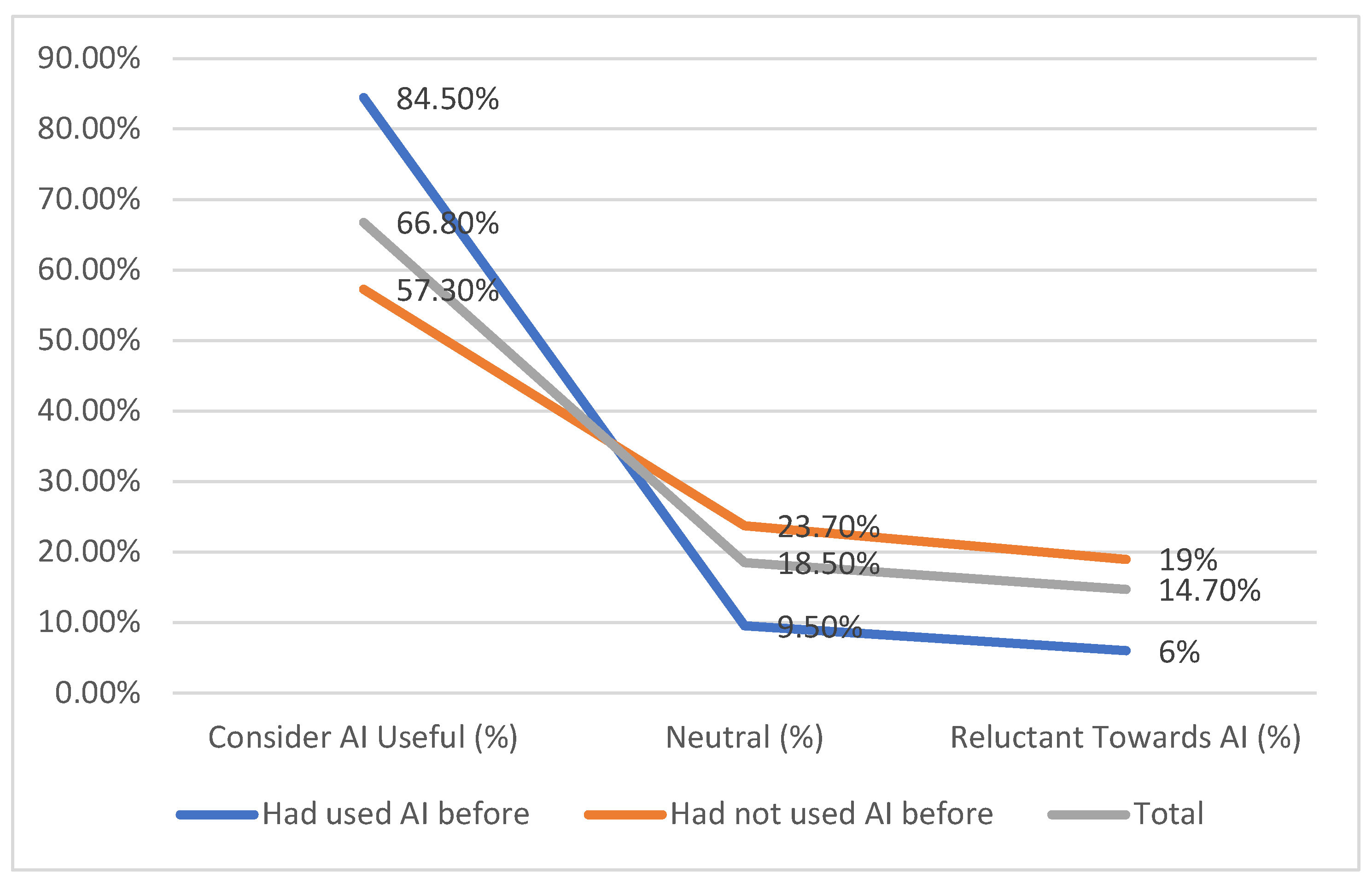
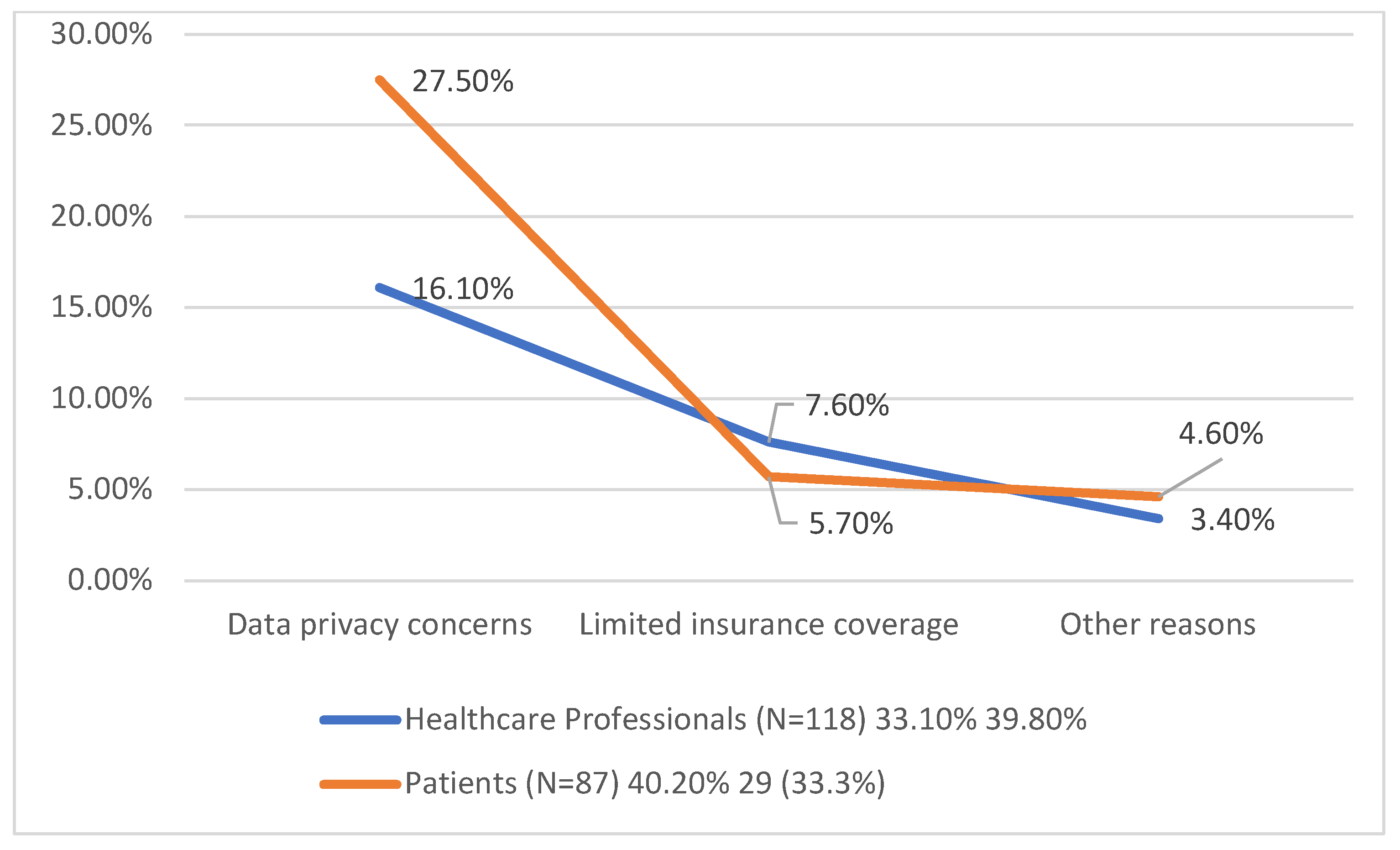
Background and Objectives: Artificial intelligence has emerged as a transformative tool in healthcare, offering capabilities such as early diagnosis, personalised treatment, and real-time patient monitoring. In the context of rheumatoid arthritis, a chronic autoimmune disease that demands timely intervention, artificial intelligence shows promise in overcoming diagnostic delays and optimising disease management. This study examines the role of artificial intelligence in the diagnosis and management of rheumatoid arthritis, focusing on perceived benefits, challenges, and acceptance levels among healthcare professionals and patients. Materials and Methods: A cross-sectional study was conducted using a detailed questionnaire distributed to 205 participants, including rheumatologists, general practitioners, and rheumatoid arthritis patients from Romania. The study used descriptive statistics, chi-square tests, and logistic regression to analyse AI acceptance in rheumatology. Data visualisation and multiple imputations addressed missing values, ensuring accuracy. Statistical significance was set at p < 0.05 for hypothesis testing. Results: Respondents with prior experience in artificial intelligence perceived it as more useful for early diagnosis and personalised management of RA (p < 0.001). Familiarity with artificial intelligence concepts positively correlated with acceptance in routine rheumatology practice (ρ = 1.066, p < 0.001). The main barriers identified were high costs (36%), lack of medical staff training (37%), and concerns regarding diagnostic accuracy (21%). Although less frequently mentioned, data privacy concerns remained relevant for a subset of respondents. The study revealed that artificial intelligence could improve diagnostic accuracy and rheumatoid arthritis monitoring, being perceived as a valuable tool by professionals familiar with digital technologies. However, 42% of participants cited the lack of data standardisation across medical systems as a major barrier, underscoring the need for effective interoperability solutions. Conclusions: Artificial intelligence has the potential to revolutionise rheumatoid arthritis management through faster and more accurate diagnoses, personalised treatments, and optimised monitoring. Nevertheless, challenges such as costs, staff training, and data privacy need to be addressed to ensure efficient integration into clinical practice. Educational programmes and interdisciplinary collaboration are essential to increase artificial intelligence adoption in rheumatology.
Keywords: artificial intelligence rheumatoid arthritis; rheumatoid arthritis; management of rheumatoid arthritis; digital technologies rheumatoid arthritis; rheumatoid arthritis management; diagnosis artificial intelligence rheumatoid arthritis; rheumatoid arthritis; management of rheumatoid arthritis; digital technologies rheumatoid arthritis; rheumatoid arthritis management; diagnosis