Review

Advances in Minimally Invasive Esophagectomy—An Overview of Recent Developments and a Novel Classification of Innovations in Treatment of Thoracic Esophageal Cancer

1
Faculty of Medicine, Carol Davila University of Medicine and Pharmacy, 050474 Bucharest, Romania
2
Department of General and Esophageal Surgery, Center of Excellence in Esophageal Surgery, Sf. Maria Clinical Hospital, 011192 Bucharest, Romania
3
Division of Gastroenterological and General Surgery, Department of Surgery, School of Medicine, Showa Medical University, Tokyo 142-8666, Japan
4
Digestive Disease Center, Showa Medical University Koto Toyosu Hospital, Toyosu 5-1-38, Koto-ku 135-8577, Japan
5
Esophageal Cancer Center, Showa Medical University Hospital, 1-5-8 Hatanodai Shinagawa-ku, Tokyo 224-8503, Japan
6
Department of Anesthesiology and Intensive Care Medicine, National Cancer Center Hospital, Tokyo 104-0045, Japan
7
Department of Esophageal Surgery, National Cancer Center Hospital, Tokyo 104-0045, Japan
8
Department of Gastroenterology, Sf. Maria Clinical Hospital, 011192 Bucharest, Romania
*
Authors to whom correspondence should be addressed.
Medicina 2025, 61(12), 2176; https://doi.org/10.3390/medicina61122176

Submission received: 13 November 2025 / Revised: 1 December 2025 / Accepted: 5 December 2025 / Published: 7 December 2025
(This article belongs to the Special Issue Advances and Perspectives in Esophageal Cancer Treatment)

Abstract

Minimally invasive esophagectomy (MIE) has become increasingly prominent in the surgical management of esophageal cancer (EC) over the past three decades. The adoption of minimally invasive techniques has significantly enhanced oncologic esophageal surgery by improving safety, achieving oncological radicality, preserving physiological function, and elevating the postoperative quality of life of the patients. The complexity of MIE lies in its technical nuances, which critically influence postoperative morbidity and, in severe cases, mortality, especially when complications evolve unchecked. These risks underscore the importance of meticulous surgical execution and perioperative management. The optimization of mediastinal lymphadenectomy and the reduction of procedure-related morbidity have consistently represented focal points of scientific inquiry and clinical refinement, posing a persistent challenge for esophageal surgeons. MIE is widely regarded as one of the most technically demanding procedures in oncologic surgery. Its advantages, however, are most evident in the postoperative phase, where reduced trauma and faster recovery are key benefits. Experienced surgical teams have introduced refinements to MIE protocols, aiming to optimize precision and reduce complication rates. This study aims to systematically synthesize the main technological advancements and innovations currently employed in the minimally invasive management of EC, presenting them in a structured classification designed to be both accessible and practical for specialists engaged in this domain.

1. Introduction

Esophageal cancer ranks as the eleventh most frequently diagnosed malignancy and the seventh leading cause of cancer-related mortality worldwide [1]. For patients with resectable disease, esophagectomy combined with chemoradiotherapy remains the cornerstone of multimodality treatment. Esophagectomy with reconstruction is recognized as one of the most technically demanding procedures in the management of gastrointestinal malignancies. In the light of relatively poor overall survival, reducing the invasiveness of esophageal resection while preserving oncological radicality has become a central objective of multidisciplinary care, with the aim of improving postoperative quality of life [2].
Over the past decades, MIE has gained increasing acceptance and is now widely performed. Thoracoscopic and laparoscopic approaches have been shown to reduce perioperative morbidity and mortality in high-volume centers [3]. Evidence from large series and randomized clinical trials consistently demonstrates that MIE is associated with lower postoperative morbidity compared with open esophagectomy, without compromising oncological outcomes [4].
MIE is an advanced technical surgical procedure with a prolonged learning curve [5]. Training in MIE within specialized esophageal centers is essential for skill acquisition and procedural safety. Advanced technical skills in minimally invasive surgery and the supervision of a mentor are mandatory for the first operations. While the direct involvement of surgical trainees in complex stages of esophagectomy remains a subject of debate, it is increasingly considered feasible under structured supervision. In specialized centers, operative efficiency is enhanced by assigning the laparoscopic and neck stages to distinct assistant surgical teams. The current generation of esophageal surgeons is being trained primarily in minimally invasive and robotic techniques, often with limited exposure to open esophagectomy—a trend reminiscent of early adoption of minimally invasive techniques in digestive surgery. In contrast to other digestive surgeries, which have benefited from the complementary advancement of interventional gastroenterology, esophageal surgery lacks such procedural redundancy. Therefore, surgeons specializing in MIE must also maintain proficiency in an open approach to ensure comprehensive operative capability [6].
MIE can be performed safely after neoadjuvant treatment, which may include chemotherapy, immunotherapy, and chemoradiotherapy [7,8] nowadays. Considering the results from the immediate postoperative period, but also the long-term oncological, conventional MIE has become the standard surgical treatment in some countries, given the low availability and high cost of using robotic technology [9].
In our tertiary center, ultra-specialized in esophageal pathology, MIE by the modified McKeown triple approach was introduced in 2015. Our surgical technique using a 3D HD video camera and 4K UHD optic technology has been described previously [10]. The early outcomes of using the minimally invasive and hybrid approach in the treatment of EC (57 patients) in our department include the reduction of perioperative morbidity, the duration of hospitalization, and a faster recovery.

2. Objectives

This article aims to present the recent advances in the treatment of esophageal thoracic cancer through a minimally invasive approach. We will also analyze various surgical practices, some recently changed based on the experience gained in minimally invasive surgery, including surgical robots.
Certain new techniques and technologies have demonstrated favorable clinical outcomes, while others have been ineffective. Presenting these results in an objective analysis will help clinicians to decide whether or not to implement certain technologies in current practice.

3. Methods

This article was written following the Narrative Review Report Checklist. Two independent authors (FA, AC) searched medical databases for papers published in the last 5 years (January 2020–July 2025).

Literature Search Strategy

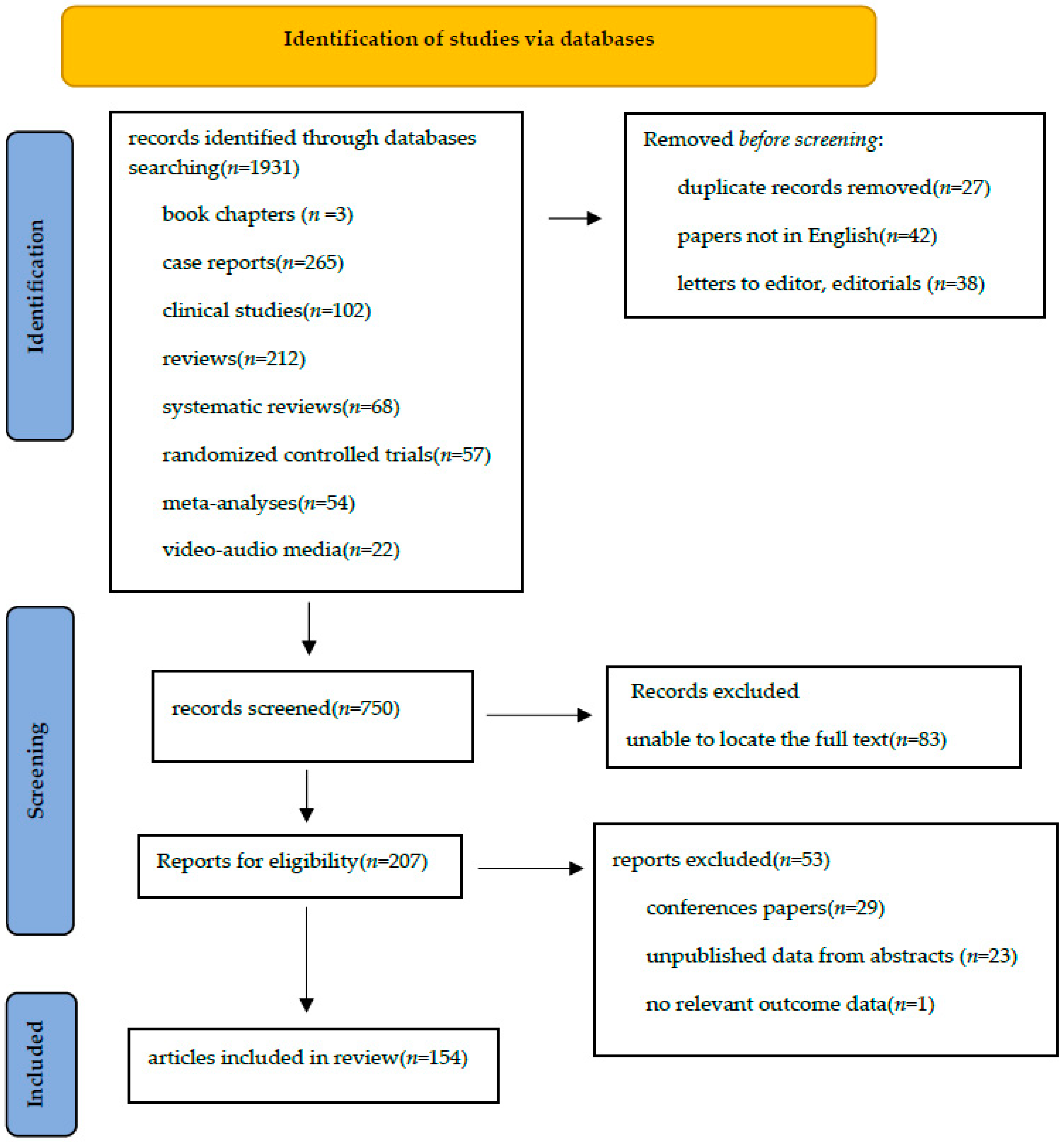
A comprehensive literature search was conducted across PubMed, PubMed Central, EMBASE, UpToDate, Scopus, MEDLINE, and Cochrane Library, covering the period from January 2020 to July 2025. The following search terms were used: “minimally invasive esophagectomy”, “robotic esophagectomy”, “robot-assisted esophagectomy”, “thoracoscopic esophagectomy”, “thoraco-laparoscopic esophagectomy”, “transhiatal esophagectomy”, “transcervical esophagectomy”, and “thoracic esophageal cancer”. Studies were eligible for inclusion if they involved human subjects aged ≥18 years and reported technical details, operative techniques, or the use of new surgical instruments and medical devices in esophagectomy. Exclusion criteria comprised non-English publications, congress abstracts, letters to the editor, editorials, duplicate studies, and case reports. The initial search resulted in 1931 articles. After removal of duplicates and preliminary screening, 1103 titles and abstracts were reviewed by authors FA, AC, and DP. A total of 750 records were curated based on relevance to the study objectives (Figure 1).

4. Results

A systematic literature review identified numerous recent advances in the minimally invasive treatment of thoracic EC. Upon analysis, it was recognized that there was a need for a structured classification of these innovations, reflecting the growing interest among specialized surgical teams in developing novel techniques and integrating emerging technologies into routine practice.
Accordingly, a classification of innovations in minimally invasive treatment of thoracic esophageal cancer (Table 1) is proposed, encompassing five distinct domains: (1) technological innovations, (2) advances in surgical approach, (3) novel lymph node dissection strategies, (4) graft preparation and esophageal reconstruction, and (5) innovations in esophagogastric anastomosis.
Each category within the proposed classification includes three distinct subclasses, designed to capture the breadth of innovation in minimally invasive surgical treatment of thoracic EC. To enhance interpretability and clinical relevance, definitions and objectives have been provided for each subclass, outlining the specific role and intended impact of the respective innovations on surgical technique, perioperative outcomes, and oncologic efficacy.

4.1. Class 1—Technological Innovations

This category encompasses advancements that enhance the safety, precision, and efficiency of minimally invasive esophagectomy. It includes the following:
  • Improvement in visualization systems: high-definition cameras, 3D imaging, and fluorescence-guided or other dye techniques that optimize the surgical field and facilitate meticulous dissection.
  • Development of advanced surgical instruments: ergonomic, articulating, energy-based tools and staplers that enable complex maneuvers in confined anatomical spaces.
  • Auxiliary equipment and anesthetic innovations: enhanced insufflation systems, integrated operating platforms, and anesthetic protocols tailored to thoracoscopic and robotic procedures, all contributing to intraoperative stability and reduced complication rates.

4.2. Subclass 1A Advances in Camera Technology

This subclass includes technological innovations in the field of optics used for intraoperative visualization, both conventionally in white light and in infrared. Current generations of cameras used in minimally invasive surgery include optimized image stabilization, detail recognition, superior autofocus, high-resolution sensors that allow detection of the depth of the operating field in low light with brightness adaptation, three-dimensional imaging, and virtual reality or artificial intelligence applications. Infrared visualization of tissues previously injected with a fluorescent substance allows for much easier and safer dissection, reducing the risk of intraoperative complications.

4.2.1. Ultra-High Definition and Tridimensional Image in MIE

Three-dimensional HD and 4K UHD. MIE provides superior visualization for mediastinal lymphadenectomy, particularly in anatomically challenging regions in the upper mediastinum, such as the vicinity of the recurrent laryngeal nerves (RLN) and beneath the tracheal bifurcation [11]. Enhanced image quality through intraoperative video augmentation—using either 3D high definition (HD) or 4K ultra HD systems—facilitates precise delineation of dissection planes, reduces intraoperative risk, and supports comprehensive periesophageal and perigastric lymphadenectomy, thereby improving oncologic staging accuracy [12]. Comparative studies evaluating 3D HD versus 4K UHD imaging technologies have generated mixed results [13]. While some authors report reduced operative time and improved depth perception in the mediastinum with 3D systems, a substantial number of esophageal surgeons continue to utilize HD or 4K UHD, reflecting variability in institutional preference and surgeon experience [14].
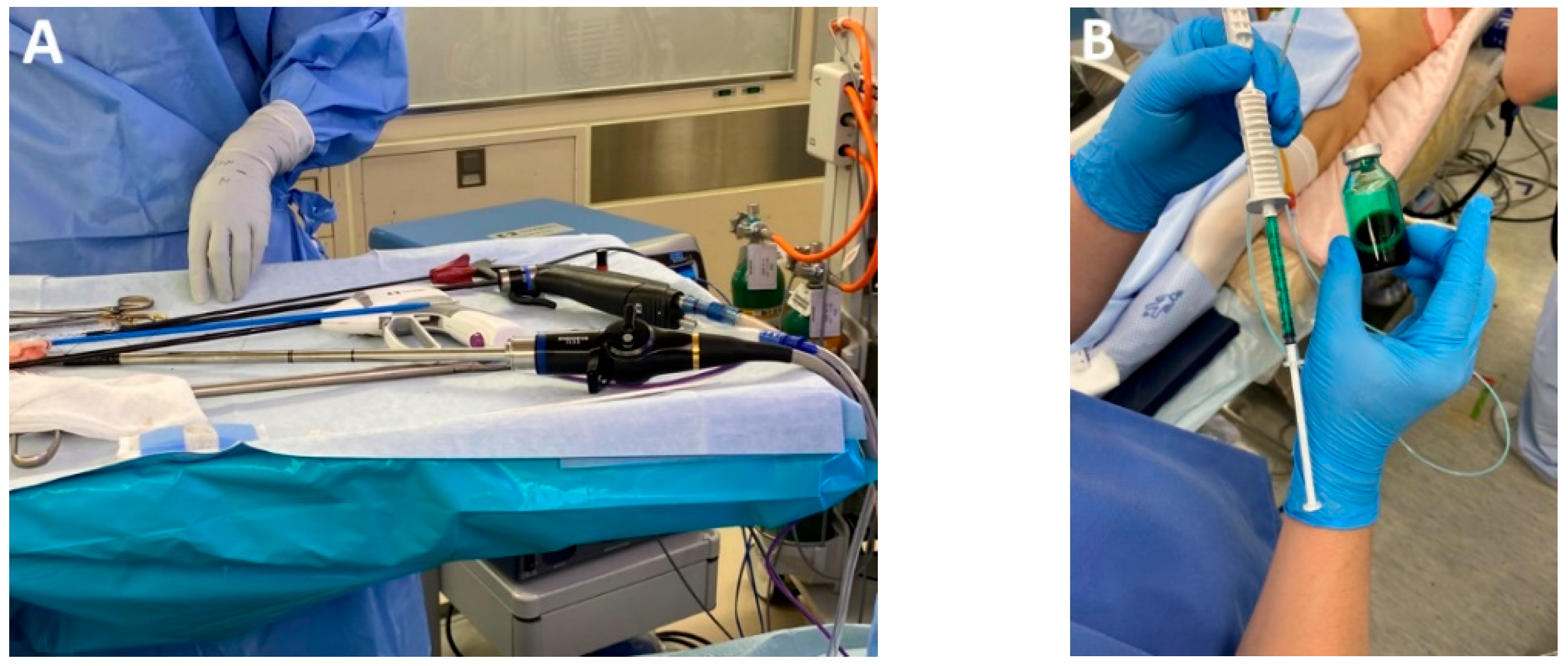
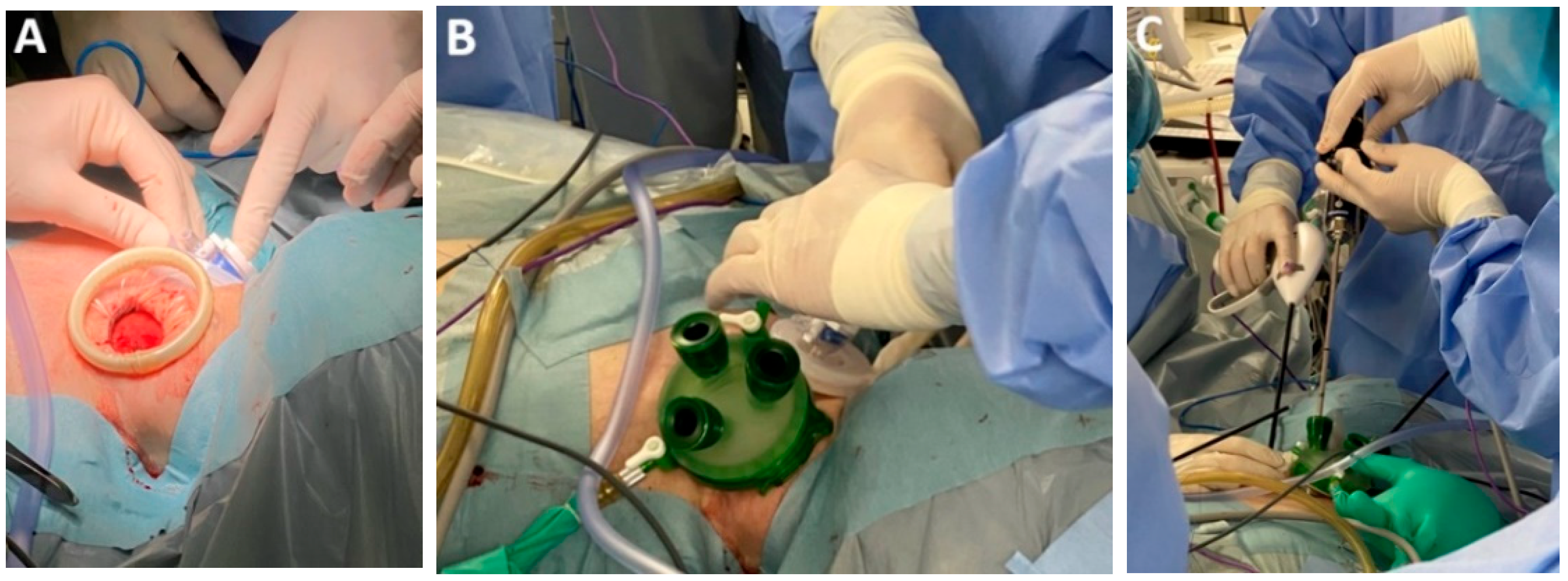
Articulating HD 3D videoscope. The integration of a 5 mm or 10 mm deflectable 3D HD videoscope (Endoeye Flex 3D, Olympus, with 100 degrees of articulation) into minimally invasive esophageal cancer surgery significantly enhances mediastinal dissection, particularly within the constrained anatomy of the superior thoracic aperture (Figure 2A). Its improved angulation and stereoscopic visualization facilitate precise tissue handling and safer dissection. These advantages are especially pertinent in minimally invasive transcervical esophagectomy (MICE), where the enhanced maneuverability and depth perception of the device may contribute to improved operative efficacy and reduced morbidity [15].

4.2.2. Fluorescence-Guided Surgery and MIE

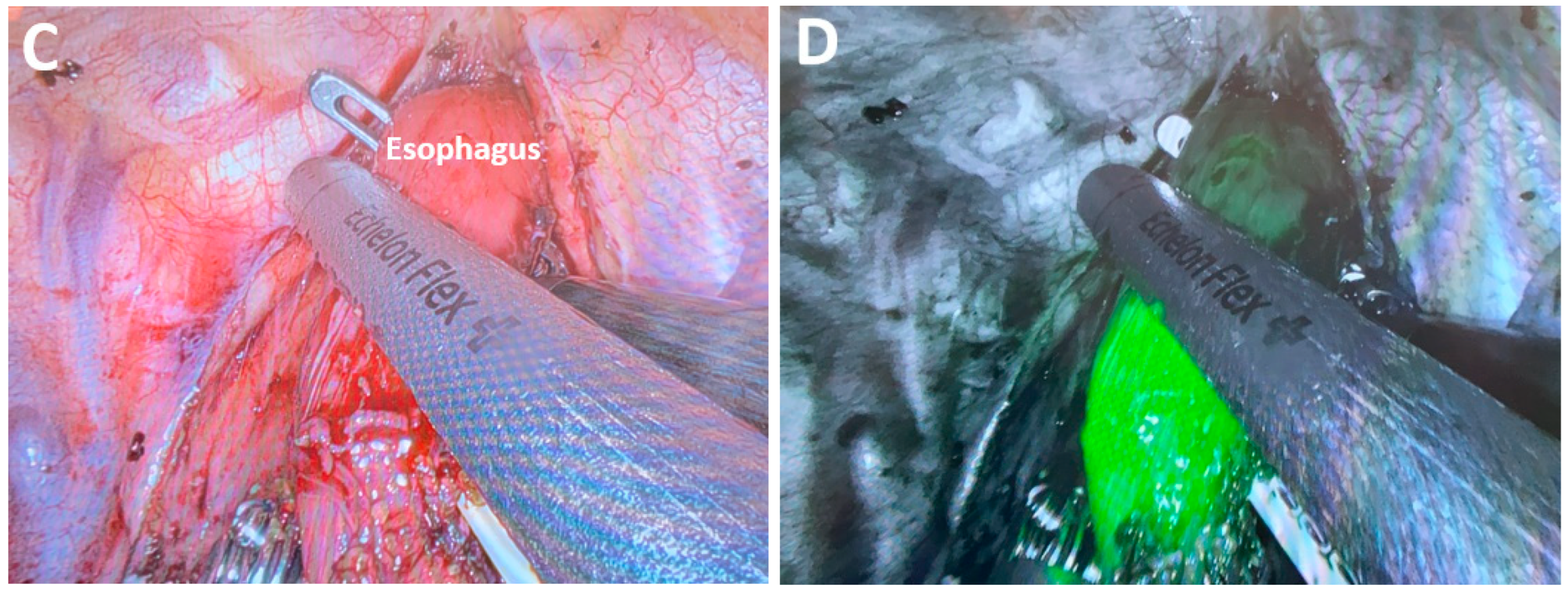
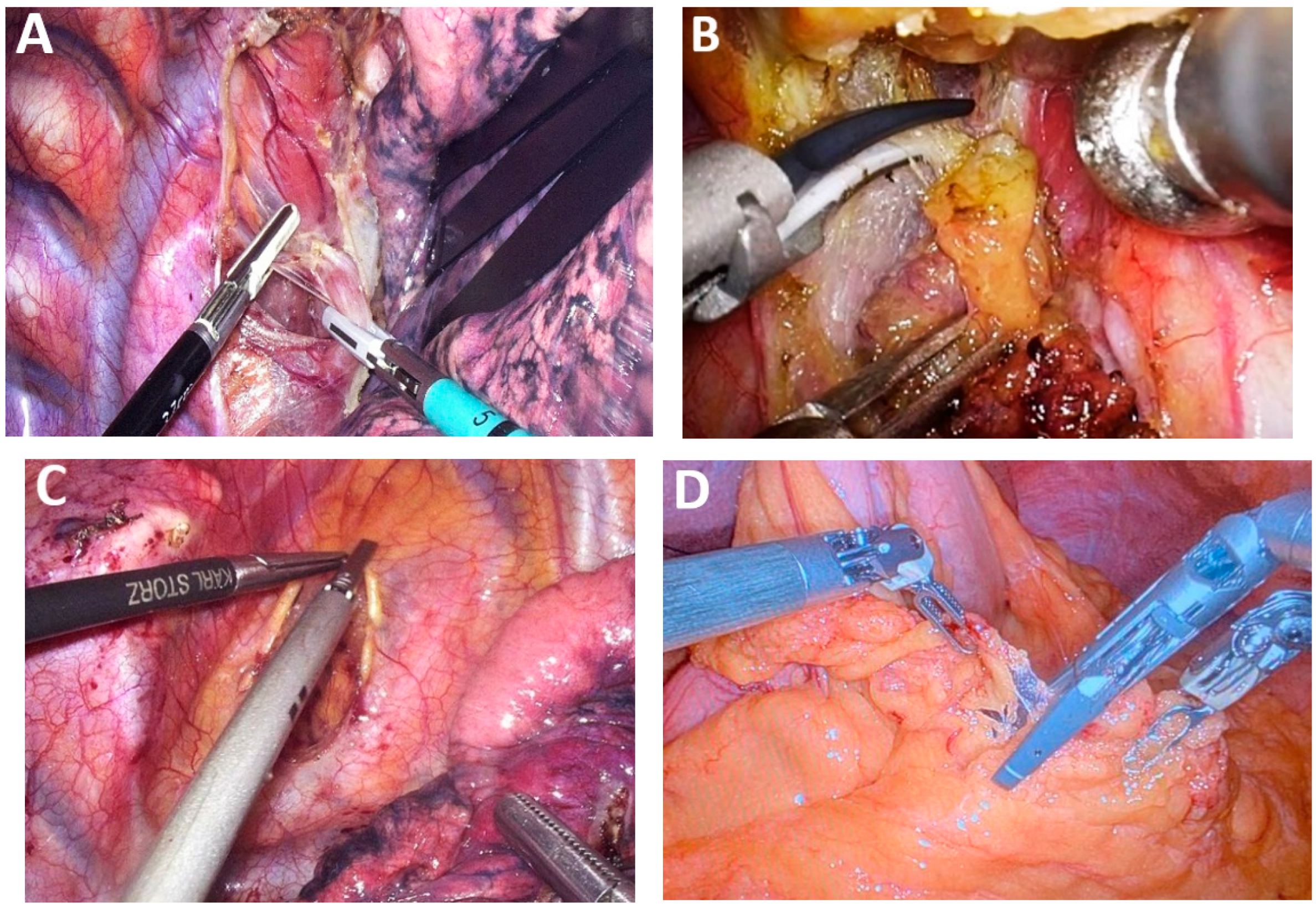
Indocyanine green (ICG) for intraoperative tumor localization. When intraoperative tumor localization is required, preoperative supratumoral injection of indocyanine green (ICG) under endoscopic guidance may be utilized. This technique is particularly advantageous during thoracoscopic or robotic esophagectomy performed in the prone position, where intraoperative endoscopic access may be limited and fluorescence guidance facilitates accurate tumor localization and resection planning, or if the transection of the upper thoracic esophagus is required (Figure 2B–D).
Fluorescence angiography with ICG. ICG is currently also used to assess the perfusion of the esophageal anastomoses; however, its interpretation remains largely subjective and operator-dependent [16,17]. The use of ICG has improved graft preparation techniques by enabling the identification and exclusion of poorly perfused areas, thereby reducing the risk of postoperative ischemia of the gastric conduit [18].
The implementation of ICG fluorescence imaging necessitates access to advanced endoscopic platforms equipped with infrared capabilities, as well as the routine availability of indocyanine green. These requirements support its use primarily in high-volume centers with appropriate infrastructure. Notably, reports from both peer-reviewed literature and informal clinical communications suggest that certain institutions, despite initially adopting ICG in large patient cohorts, have subsequently discontinued its use without clearly articulating the underlying rationale. Nevertheless, current evidence supports the feasibility and safety of ICG application in esophageal cancer surgery [19].
Nonetheless, concerns regarding its safety have been raised. In a retrospective study of 181 patients undergoing esophageal reconstruction (59 with ICG vs. 122 without), Bank et al. reported a significantly higher incidence of anastomotic fistula in the ICG group (10.2% vs. 1.6%, p = 0.015), as well as increased 90-day mortality (8.5% vs. 1.6%, p = 0.04). Moreover, abnormal fluorescence was strongly associated with elevated rates of anastomotic leakage (71.4% vs. 1.9%, p < 0.001) and 30-day mortality (28.6% vs. 0%, p = 0.012), underscoring the need for cautious interpretations and further validation of this technique [20].
Tracheobronchial fluorescence (ICG-TBF) during MIE. Upper airway administration of indocyanine green via nebulization was evaluated by Thammineedi et al. and demonstrated feasibility in a cohort of 37 patients undergoing mediastinal dissection of the esophagus from the tracheobronchial tree. Aerosolized ICG achieved a 94.6% success rate in identifying the trachea and bronchi. The technique may be particularly valuable in salvage esophagectomy, especially in patients with invaded paratracheal node involvement or tumors of the upper thoracic esophagus, where dissection from the tracheal membrane poses significant technical challenges [21].
Near infra-red fluorescence and ICG FireFly™ for identification of the thoracic duct (TD). TD identification during thoracoscopic esophagectomy can be achieved through ultrasound-guided peripheral injection of ICG, typically administered at the inguinal region or the bilateral first web spaces of the feet [22]. Intraoperative infrared visualization platforms, including ICG FireFly™ used in robot-assisted minimally invasive esophagectomy (RAMIE), enable real-time mapping of the thoracic duct trajectory and facilitate safe dissection in high-risk areas, such as the azygos vein and the upper thoracic esophagus above the aortic arch [23]. Barnes et al. explored alternative ICG delivery routes for TD visualization. Enteral administration via feeding jejunostomy proved ineffective, whereas intramesenteric injection successfully delineated the TD and identified ductal injury in four patients [24].
ICG for lymphatic drainage pattern of esophageal cancer. Fluorescence-guided detection of periesophageal and perigastric lymph nodes has been facilitated by peritumoral injection of ICG administered on the day prior to surgery. In the ESOMAP trial, Muller et al. employed intraoperative infrared imaging during RAMIE to construct a fluorescence-based map of periesophageal lymph nodes. Among 20 patients included in the study, 15 fluorescently identified nodes were resected and subsequently confirmed to be histologically negative for malignancy, suggesting a potential correlation between intraoperative fluorescence patterns and pathological outcomes [25].

4.2.3. Dye-Free Imaging

Hyperspectral imaging and real-time oximetry. Hyperspectral imaging (HSI) enables assessment of tissue oxygenation by analyzing the spectral reflectance properties of the gastric conduit and esophageal stump. This technology may assist surgeons in selecting the optimal site for esophagogastric anastomosis, thereby reducing the risk of anastomotic leakage. Ilgen et al. investigated the intraoperative feasibility of laparoscopic HSI using the TIVITA® Mini System (HSI-MIS) during MIE. Perfusion measurements were obtained at both the proximal esophageal stump and the gastric conduit, with postoperative outcomes correlating with intraoperative findings. Despite promising results, randomized clinical trials are warranted to validate the utility of HSI and support its routine intraoperative application [26].
An alternative approach to assessing gastric graft perfusion without the use of injectable dyes is the ELUXEO Vision System (FUJIFILM Healthcare Americas Corporation, Lexington, MA), which enables real-time monitoring of tissue O2 saturation through oxygen saturation endoscopic imaging (OXEI). This technique has demonstrated feasibility and offers distinct advantages in patients with contraindications to ICG, allowing for continuous intraoperative assessment and facilitating timely surgical decision-making [27]. Its safety and overall simplicity, as observed in patients enrolled in randomized clinical trials, support the potential for broader validation and future integration into routine surgical practice.

4.2.4. Artificial Intelligence

Intraoperative Image AI analysis and MIE. Artificial intelligence (AI) has demonstrated potential in accurately identifying anatomical structures and enhancing the safety of complex mediastinal dissections, particularly in cases involving lymph node invasion adjacent to the RLN or intrathoracic organs [28]. The Surgomics platform applies machine learning algorithms to intraoperative data collected during MIE to generate personalized predictions of procedural risks and postoperative outcomes [29]. Additionally, Surgomics can be leveraged to objectively assess surgical proficiency and facilitate comparative analysis of operative performance across individual surgeons and institutions.
ICG fluorescence (Stryker) and SPY-Q. The integration of artificial intelligence into near-infrared imaging with ICG enhances the objectivity of intraoperative perfusion assessment. Software platforms such as SPY-Q enable real-time analysis of fluorescence intensity curves, allowing differentiation between true tissue perfusion and raw signal intensity. This approach supports accurate interpretation of ICG imaging and may prove intraoperative decision-making regarding graft viability and anastomotic site selection [30].

4.3. Subclass 1B Surgical Instruments

This subclass comprises surgical instruments designed to facilitate the execution of fine operative maneuvers, ensure the safety of essential surgical stages, and contribute to reducing the overall duration of the procedure.

4.3.1. Ultra-Specialized Surgical Instruments for MIE

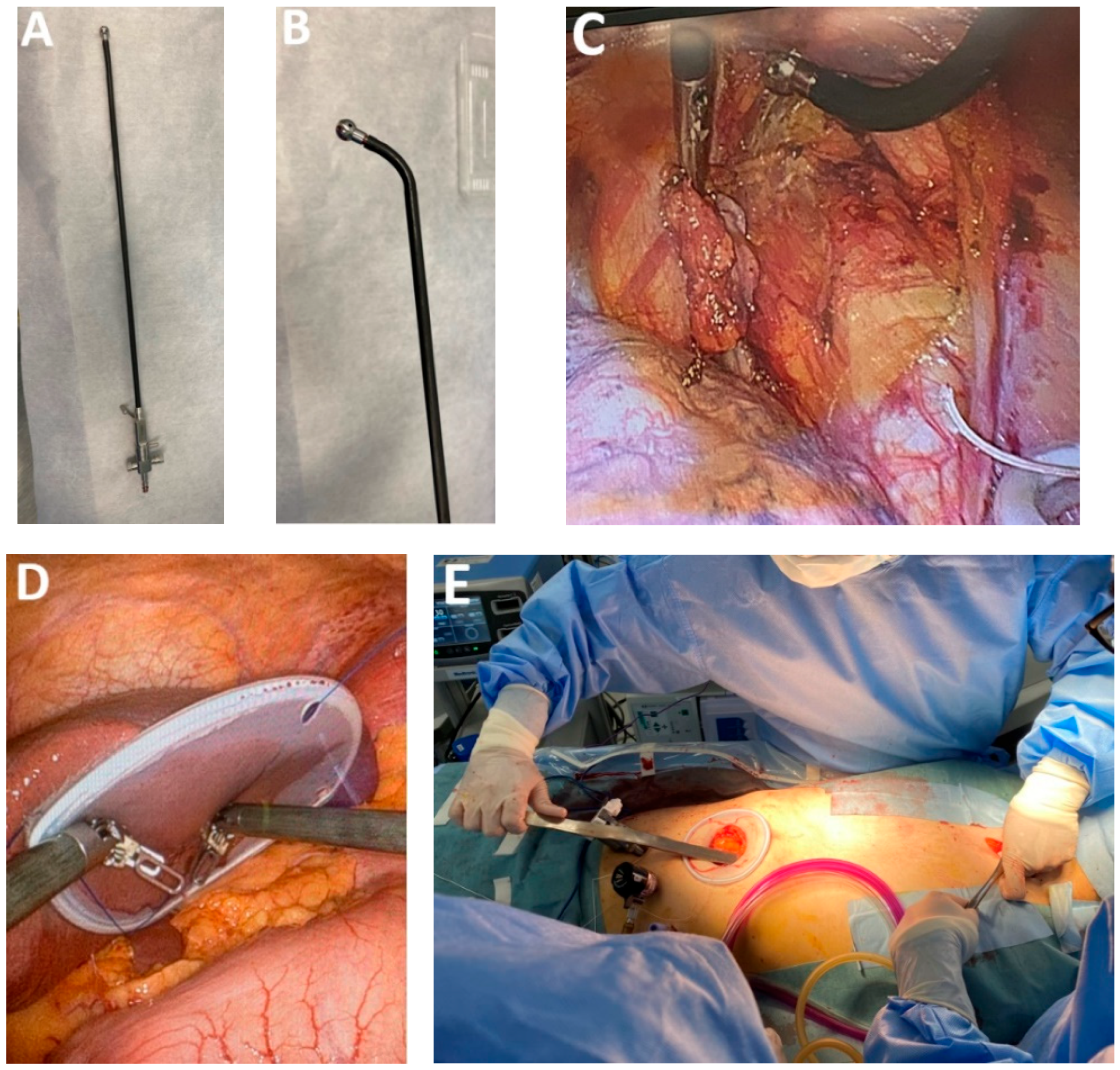
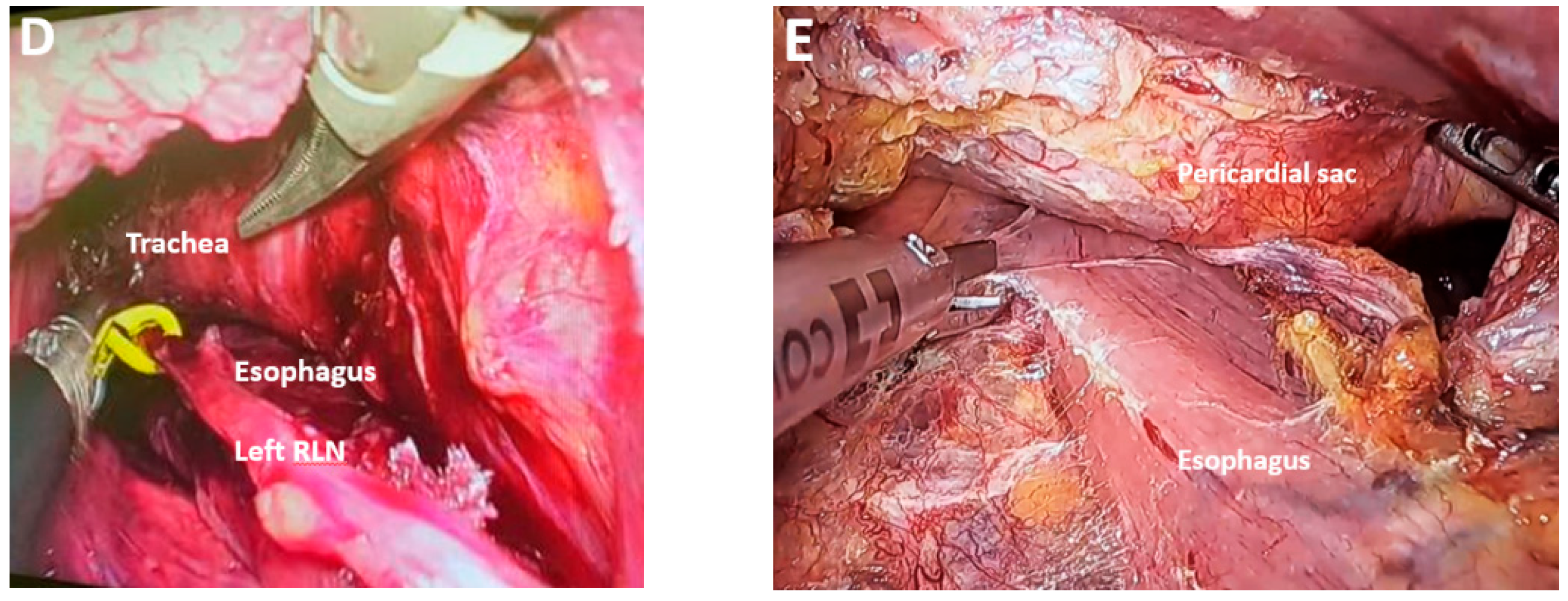
Innovative surgical instruments. Certain surgical teams devote their professional careers to the continuous refinement of esophagectomy techniques, leading to the development of patented innovative tools tailored to distinct phases of the operation. Among these, the atraumatic suction with bendable shaft (Murakami suction, Showa type, Heiwa Medical Instruments, Hofu, Japan) has demonstrated noble versatility, contributing to mediastinal dissection by gently mobilizing adjacent organs while simultaneously functioning as suction and irrigation (Figure 3A–C).
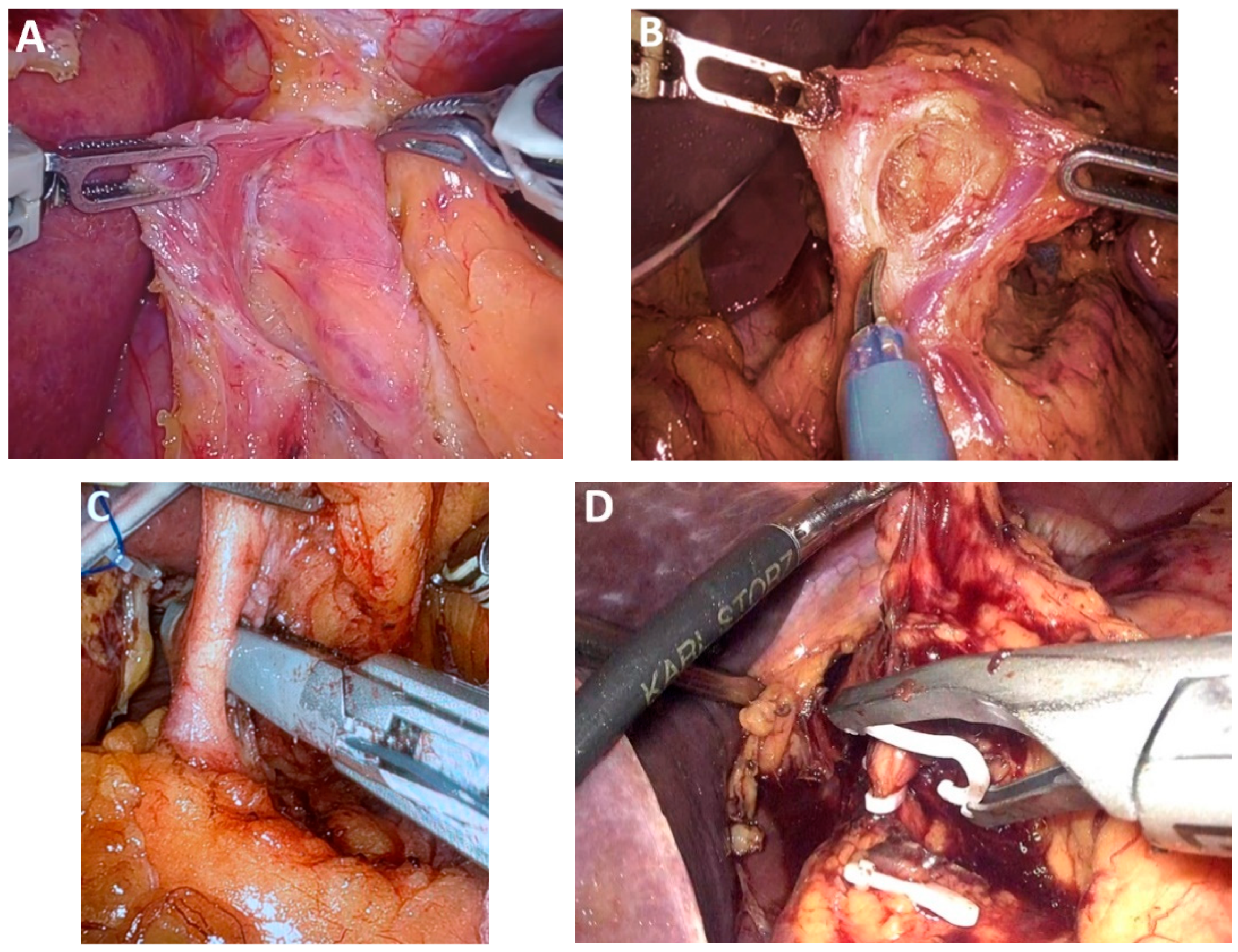
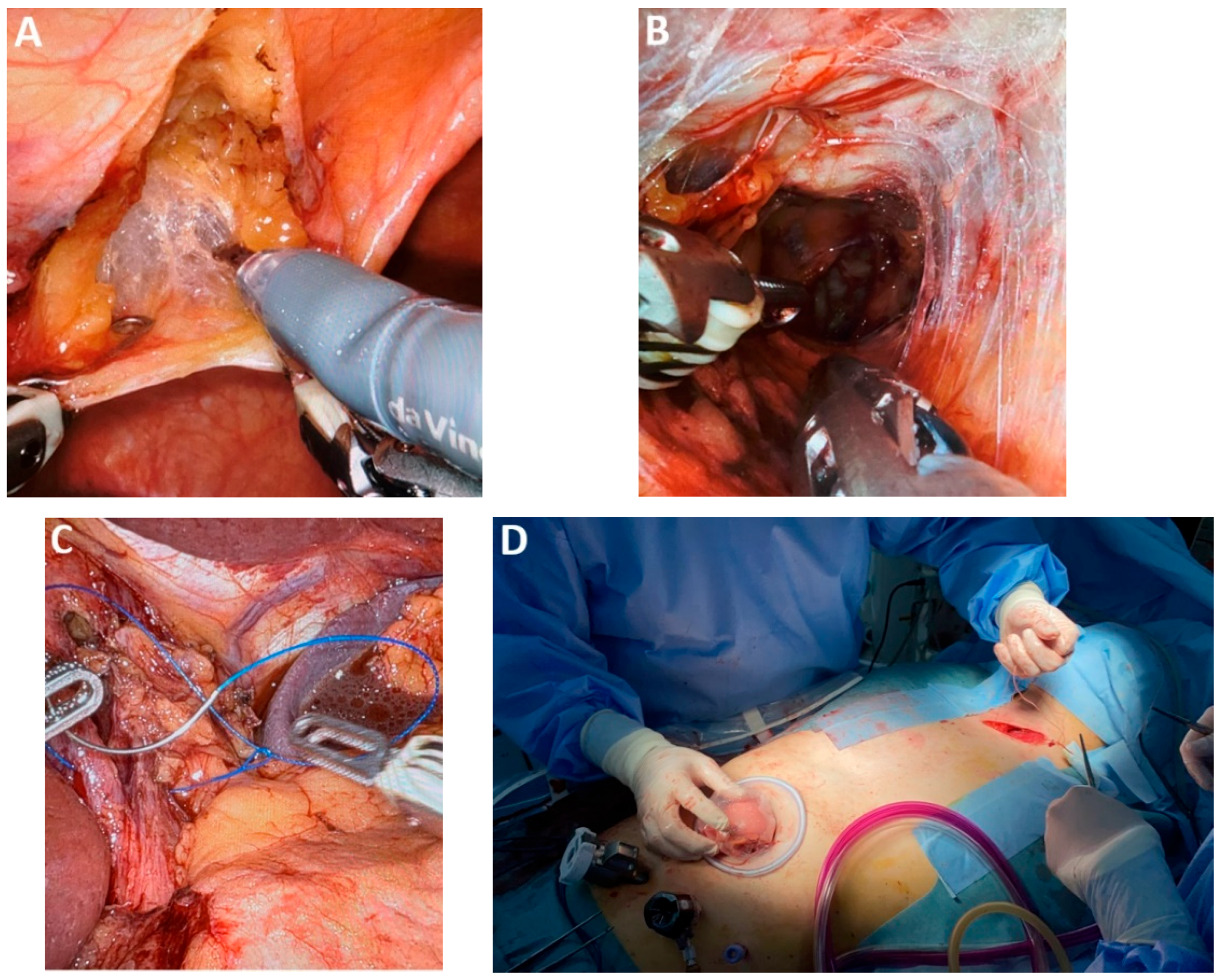
The recent introduction of the silicone disc (Hakko Medical, Chikuma, Japan), which consists of a silicone rubber membrane inside a flexible ring, has facilitated atraumatic retraction of the lung during the thoracoscopic stage and the left liver lobe during the laparoscopic stage, thereby minimizing organ injury and improving operative ergonomics (Figure 3D). Additionally, the use of fine graspers enables precise manipulations of lymphatic tissue, particularly during dissection in proximity to the RLN (Murakami lymph node grasping forceps). A specialized instrument developed to facilitate safe creation of the retrosternal tunnel is the metal spatula (Figure 3E). Its design allows controlled dissection along the posterior aspect of the sternum, minimizing the risk of injury to adjacent structures. Single-port instrumentation has also emerged as a valuable adjunct in minimally invasive approaches to EC resection.
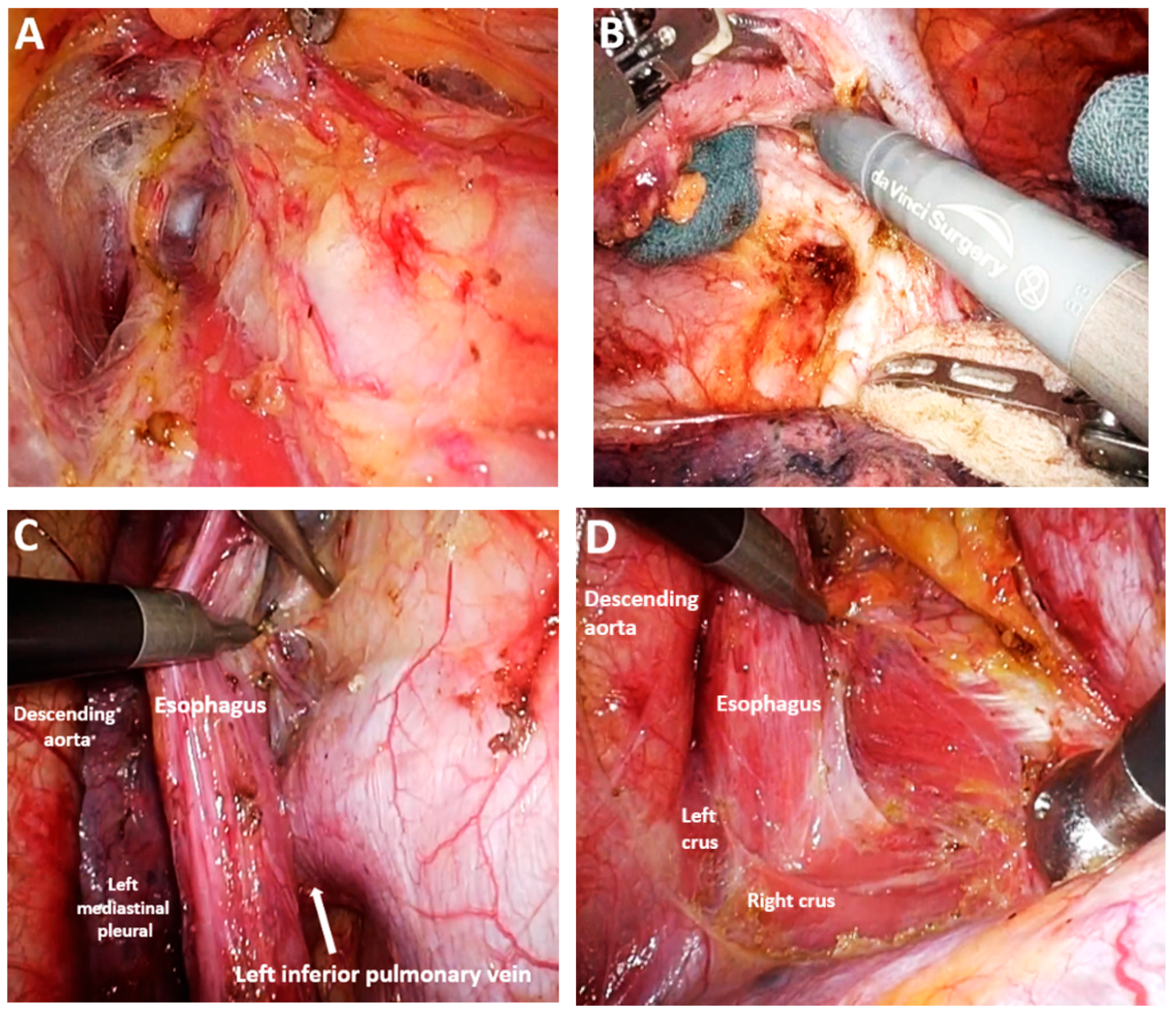
Hemostasis instruments. LigaSure™ Maryland Laparoscopic Sealer (Medtronic, Galway, Ireland) and Harmonic™ (Ethicon, Johnson&Johnson Med Tech, New Brunswick, New Jersey, USA) remain the most widely utilized instruments for dissection and hemostasis in minimally invasive esophageal cancer surgery (Figure 4A,B). Additional instruments employed for hemostasis in MIE include Da Vinci Vessel Sealer (Intuitive, Sunnyvale, California, USA), Sonicision™ (Medtronic, Galway, Ireland) and Thunderbeat™ with Intelligent Tissue Monitoring (ITM) (Olympus, Hachioji, Tokyo, Japan), which integrate advanced safety technology to enhance dissection precision and vascular control (Figure 4C,D).
Bipolar vessel sealing vs. ultrasonic energy devices in thermal damage of laryngeal nerve. Bipolar energy devices generate heat through direct electrical contact with tissue, resulting in elevated peak temperatures, while ultrasonic instruments produce frictional heat via high-frequency mechanical vibrations. Both modalities carry a risk of collateral thermal injury to adjacent structures during dissection. Multiple studies have compared bipolar vessel sealing and ultrasonic energy devices in the context of mediastinal dissection and lymphadenectomy along the RLN, achieving inconsistent results [31,32]. Bipolar vessel sealers have demonstrated superior protection against inadvertent thermal damage to critical mediastinal structures in some reports [33,34]. Ultimately, the choice of instrument depends on the surgeon’s preference, experience, and availability, particularly when operating in proximity to the RLN.

4.3.2. Advances in Endoscopic Stapling

Linear and Circular Powered Stapler (ECP) with Gripping Surface and Tri-Staple™ Technology (GST) and 3D staples.
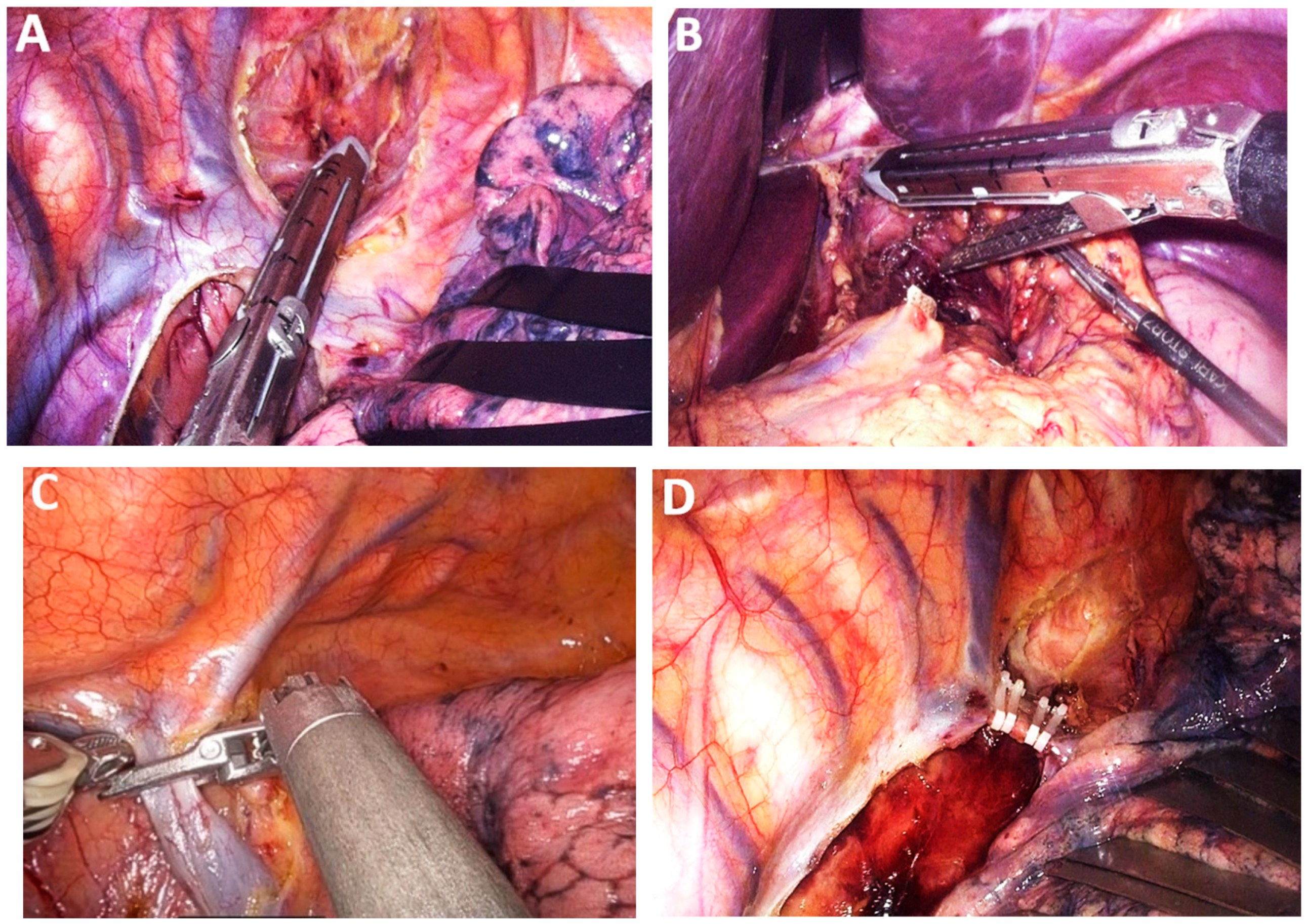
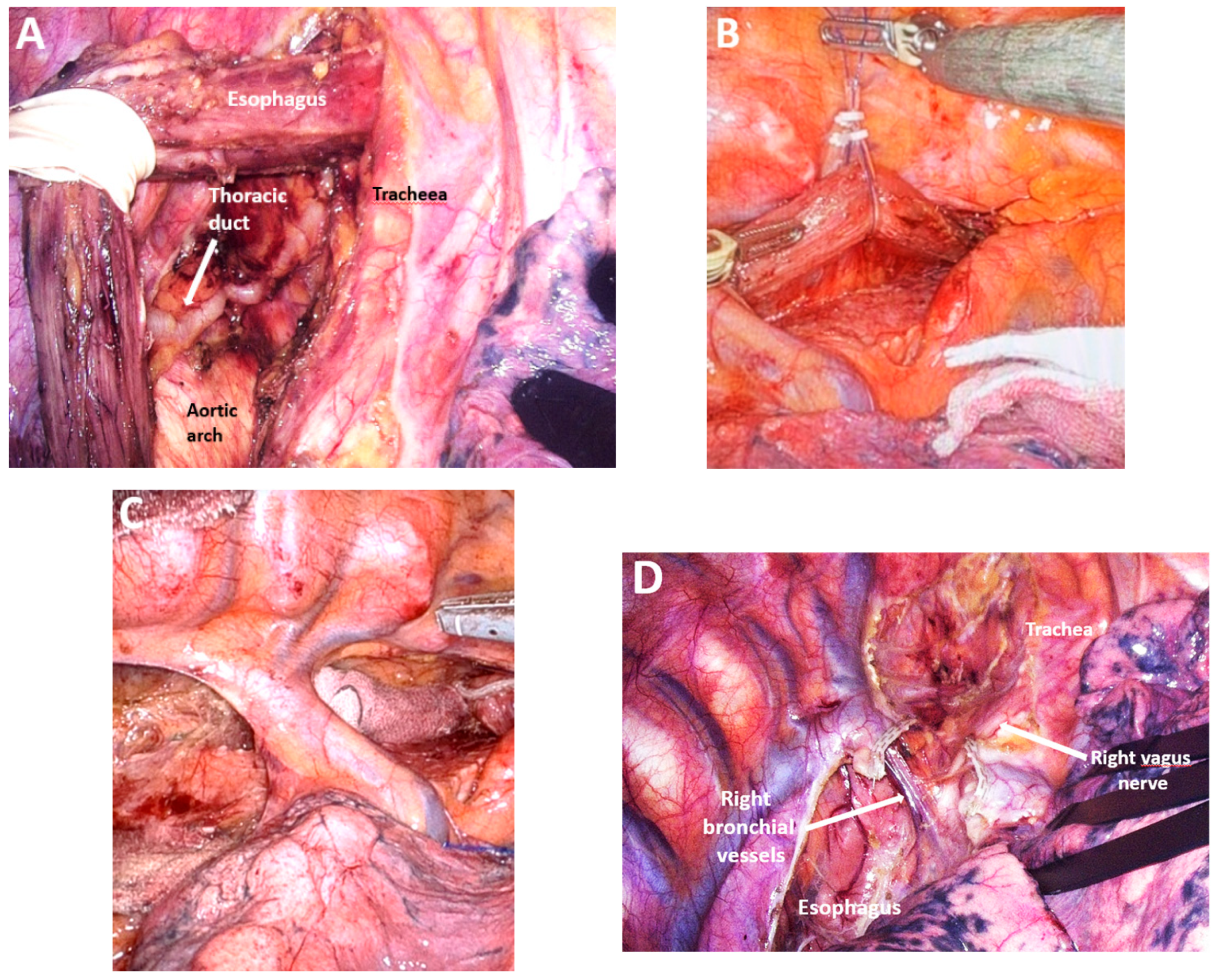
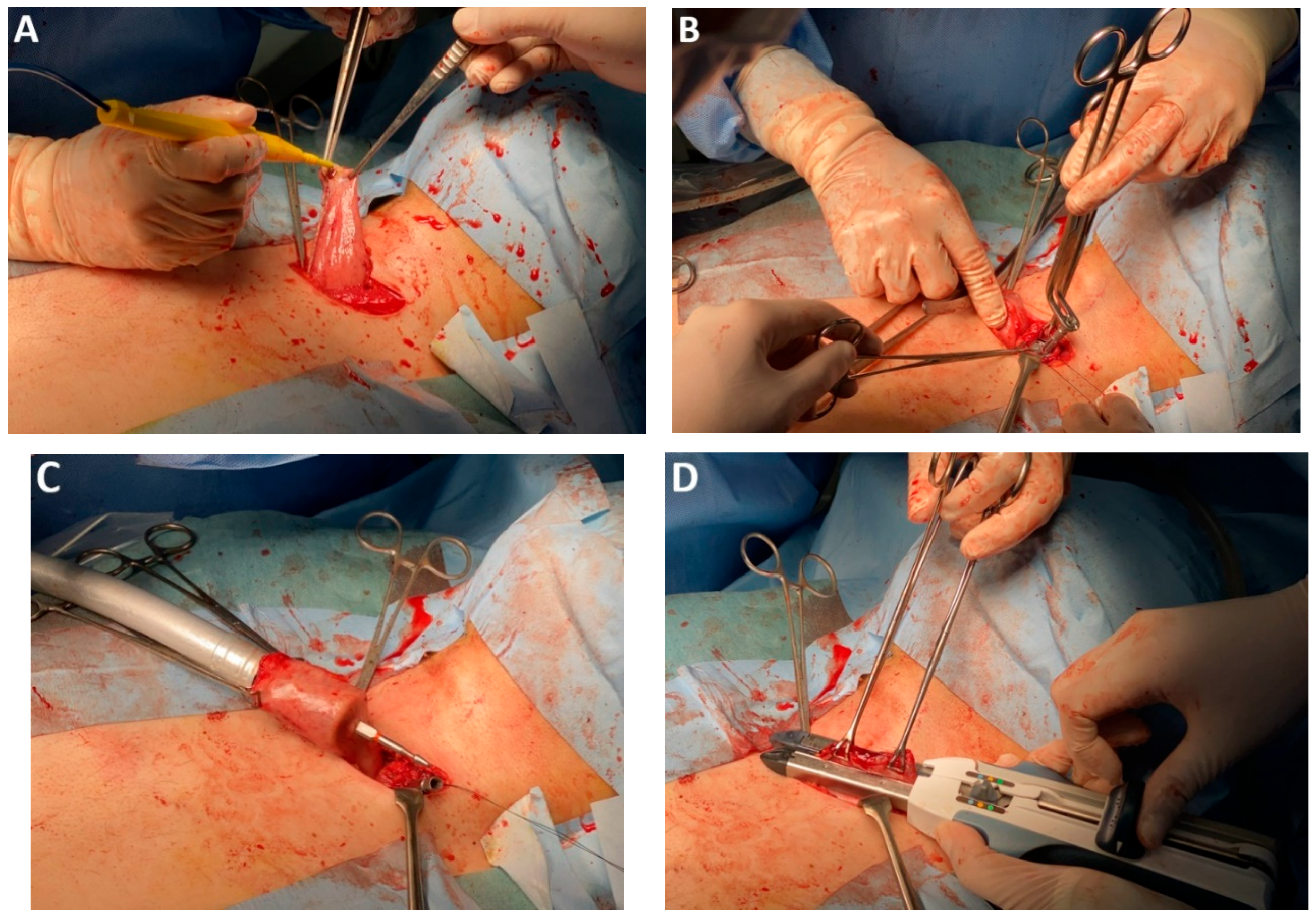
Anastomotic healing is key to postoperative recovery in patients undergoing surgery for EC. Inadequate healing, particularly the development of anastomotic leakage, poses significant septic risks that may become life-threatening if not promptly identified and managed. To enhance anastomotic integrity, mechanical stapling devices—both linear and circular—have been introduced alongside conventional hand-sewn techniques. These devices incorporate advanced technologies, including automated firing and tissue approximation with adjustable height and tridimensional staple configurations, aiming to standardize esophagogastric anastomosis and reduce technical variability [35]. The addition of multiple staple rows has further minimized the need for supplementary reinforcement, streamlining the procedure while maintaining structural reliability [36]. During the vascular stages of esophagectomy, substitution of standard vascular stapling cartridges with self-locking polymer clips (Hem-o-lok) proved feasible and cost-effective with compatibility across platforms, including surgical robots (Figure 5A–D).

4.4. Subclass 1C Auxiliary Equipment

This subclass includes advanced auxiliary equipment, including modern real-time smoke evacuation systems and other specialized devices that support the precise execution of delicate surgical maneuvers.
Smoke evacuation systems and MIE. Insufflation systems equipped with continuous smoke evacuation, such as AirSeal® (ConMed, Utica, NY, USA), provide stable CO2 pressure and enhanced intraoperative visibility—key factors during the technically demanding stages of esophagectomy. In a comparative study by Otsuka et al., patients undergoing surgery with the AirSeal® system experienced significantly shorter operative times and reduced intraoperative blood loss compared with those treated using conventional insufflators [37]. In a separate analysis, the same authors reported no significant differences in long-term oncologic outcomes between patients who received artificial pneumothorax with CO2 and those who did not [38].
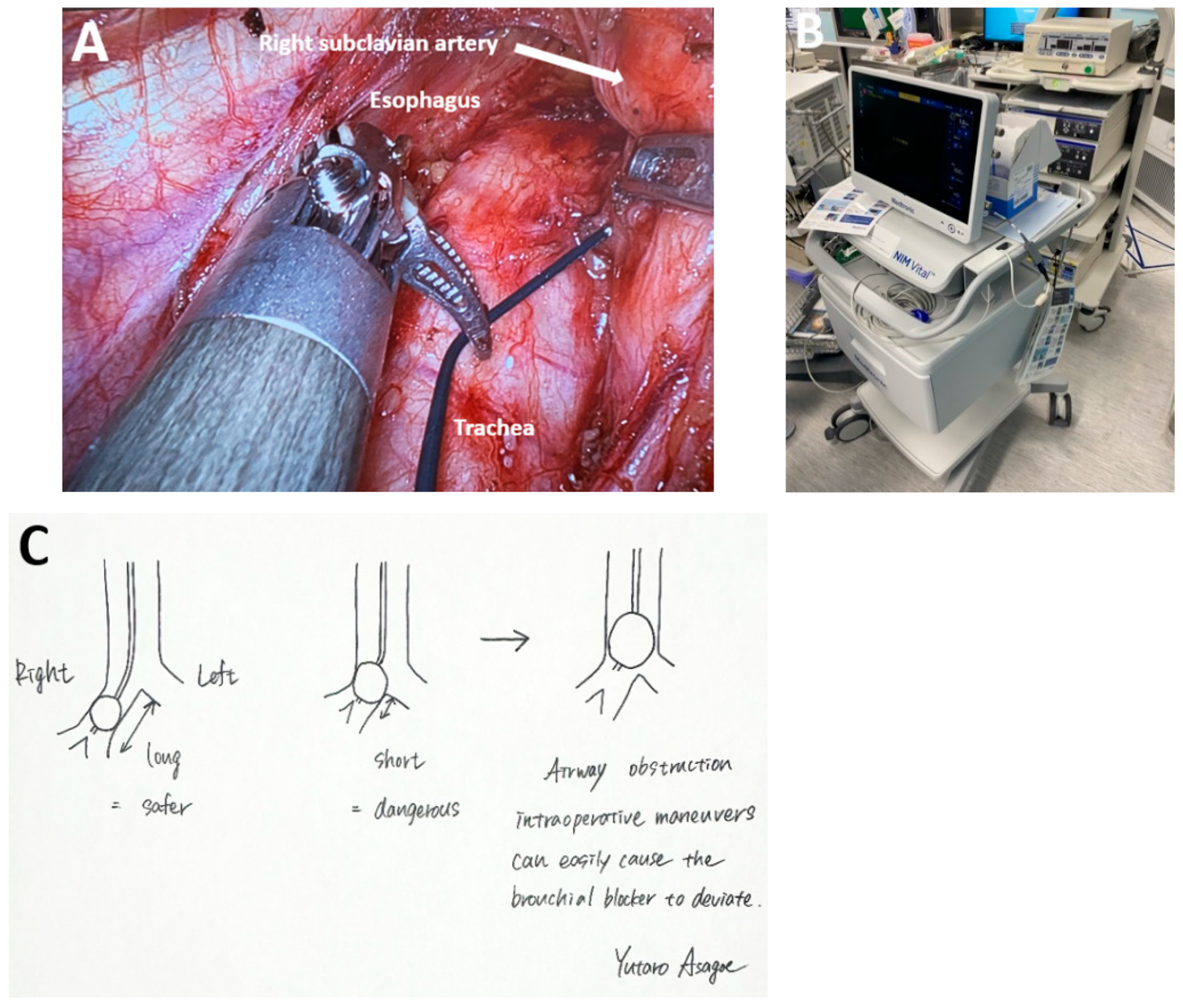
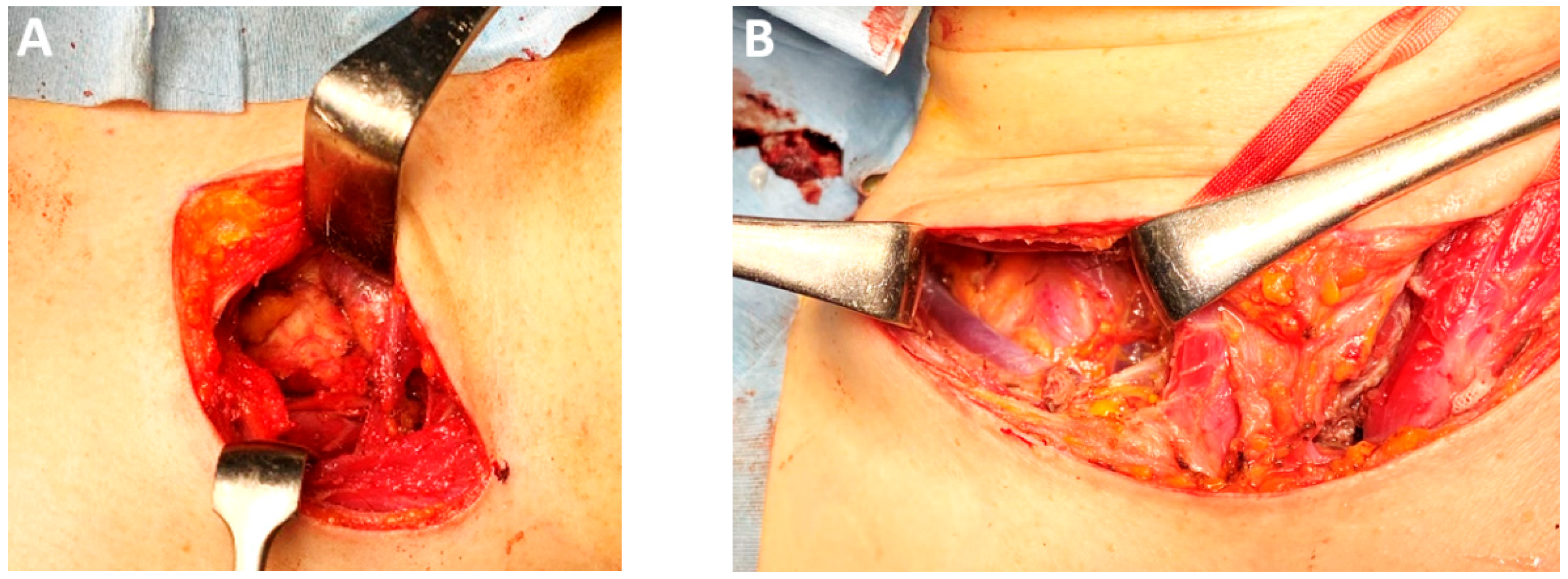
Intraoperative monitoring of laryngeal recurrent nerve. Intraoperative neuromonitoring of the RLN with the NIM Vital™ system (Medtronic, Galway, Ireland) is employed in cases where nerve identification is challenging or when excision of a metastatic lymph node adjacent to the nerve is required (Figure 6A,B). During dissection, the lymphofatty tissue surrounding the RLN can be meticulously resected to avoid iatrogenic injury [39,40].
Lung separation during MIE. The role of the anesthesia team in facilitating optimal surgical conditions during MIE is indispensable. The standard method for lung separations is the use of a double-lumen Carlens rigid catheter (Teleflex, Wayne, PA, USA), which may hinder adequate exposure for dissection along the left RLN. Endobronchial blockers (PHYCON TCB Endotracheal Tube, Uniblocker 3.0 mm (9 FR), Length 510 mm, Fuji Systems Corp., Tokyo, Japan) are preferred for selective intubation by experienced anesthesia teams.
Use of the endobronchial blocker requires an anesthesiologist skilled in bronchoscopy, as periodic verification of blocker positioning within the right main bronchus is essential to prevent proximal migration into the trachea, which can compromise ventilation of the left lung. To facilitate prompt recognition and correction of bronchial blocker displacement, anesthesiologists must maintain situational awareness of the surgical workflow and actively monitor the operative field (Figure 6C). Prior to procedures with an elevated risk of blocker migration, the fraction of inspired oxygen (FiO2) should be set to 1.0 to ensure adequate oxygenation and allow sufficient time for safe repositioning if displacement occurs. Dedicated training of the anesthesia personnel in esophageal resection protocols is critical to minimizing intraoperative anesthetic-surgical incidents and optimizing postoperative outcomes.

4.5. Class 2—Advances in Surgical Approach

The second category of innovations encompasses advances in the surgical approach of MIE, RAMIE, and transcervical esophagectomy. These developments aim to reduce surgical trauma, improve access to anatomically challenging regions, and refine operative technique. Collectively, they contribute to minimizing intraoperative complications and shortening the procedural learning curve.

4.6. Subclass 2A Transthoracic MIE

This subclass comprises approaches specifically designed to reduce the morbidity associated with conventional thoraco-laparoscopic esophagectomy. It also includes refined surgical techniques that facilitate complex maneuvers during mediastinal dissection of the esophagus and laparoscopic dissection of the future graft.
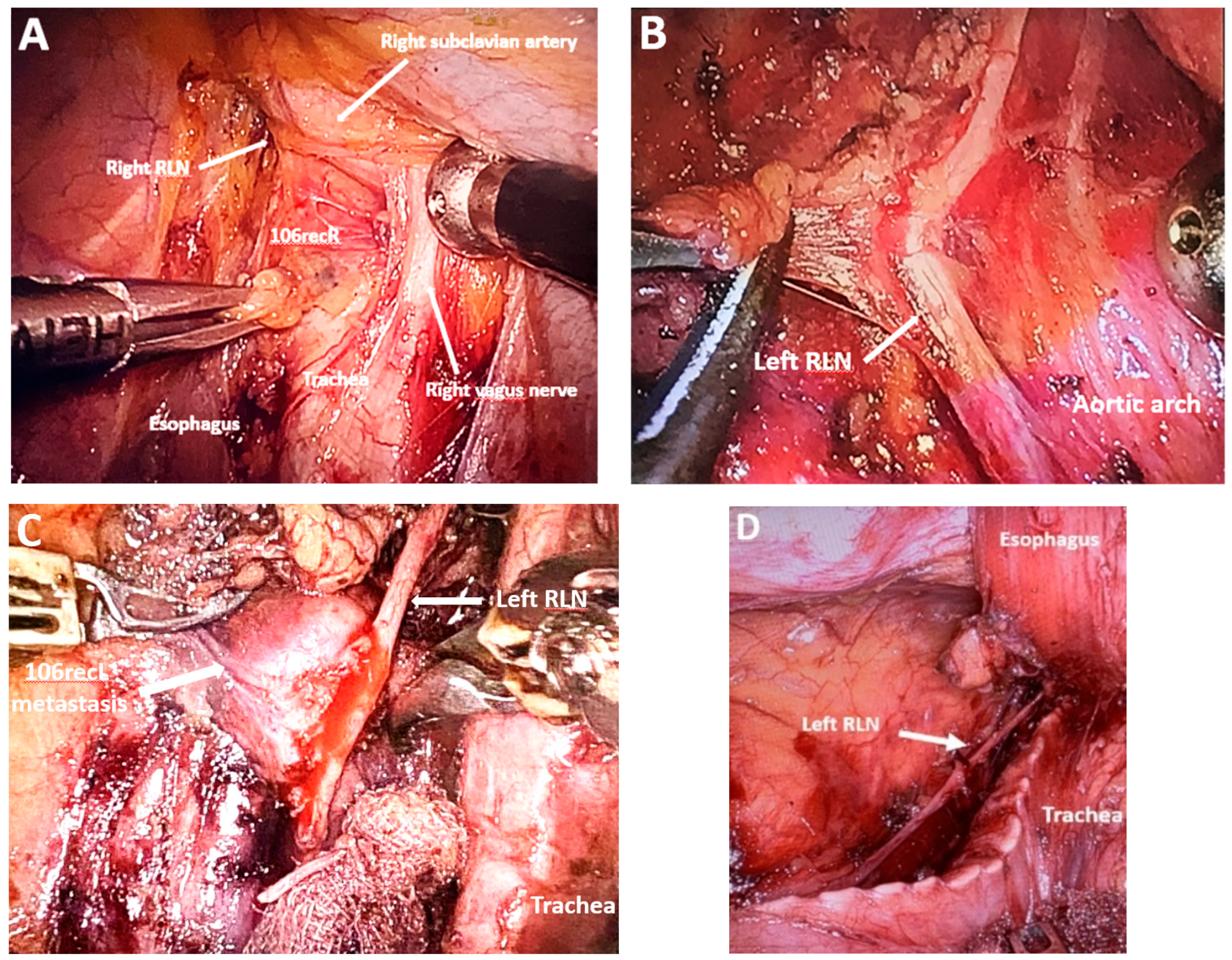
Dissection of the upper thoracic esophagus. The potential advantages of prone and semi-prone positioning over the traditional left lateral decubitus approach during thoracoscopic esophageal dissection have been discussed within the surgical community in the last 10 years. The thoracoscopic stage consists of multiple steps, the sequence of which may vary depending on the surgical team’s experience, mediastinal anatomy, and the presence of pleural adhesions. Surgeons may employ either Thoracoport-type trocars or trocars equipped with CO2 insufflation systems (artificial pneumothorax at 8 mmHg), selected according to the operative strategy and technical demands. With the right lung collapsed, dissection begins with divisions of the upper mediastinal pleura above the azygos vein, providing access to the right paratracheal lymph nodes adjacent to the right RLN (station No. 106recR, Japanese Classification of Esophageal Cancer, 12th Edition) [41,42]. The right vagus nerve serves as a reliable anatomical landmark, guiding cranial dissection and facilitating identification of the recurrent nerve as it loops beneath the right subclavian artery (Figure 7A). Dissection of the upper thoracic esophagus may be limited to the level of the inferior thyroid artery; however, in certain cases, the dissection may need to be extended more cranially.
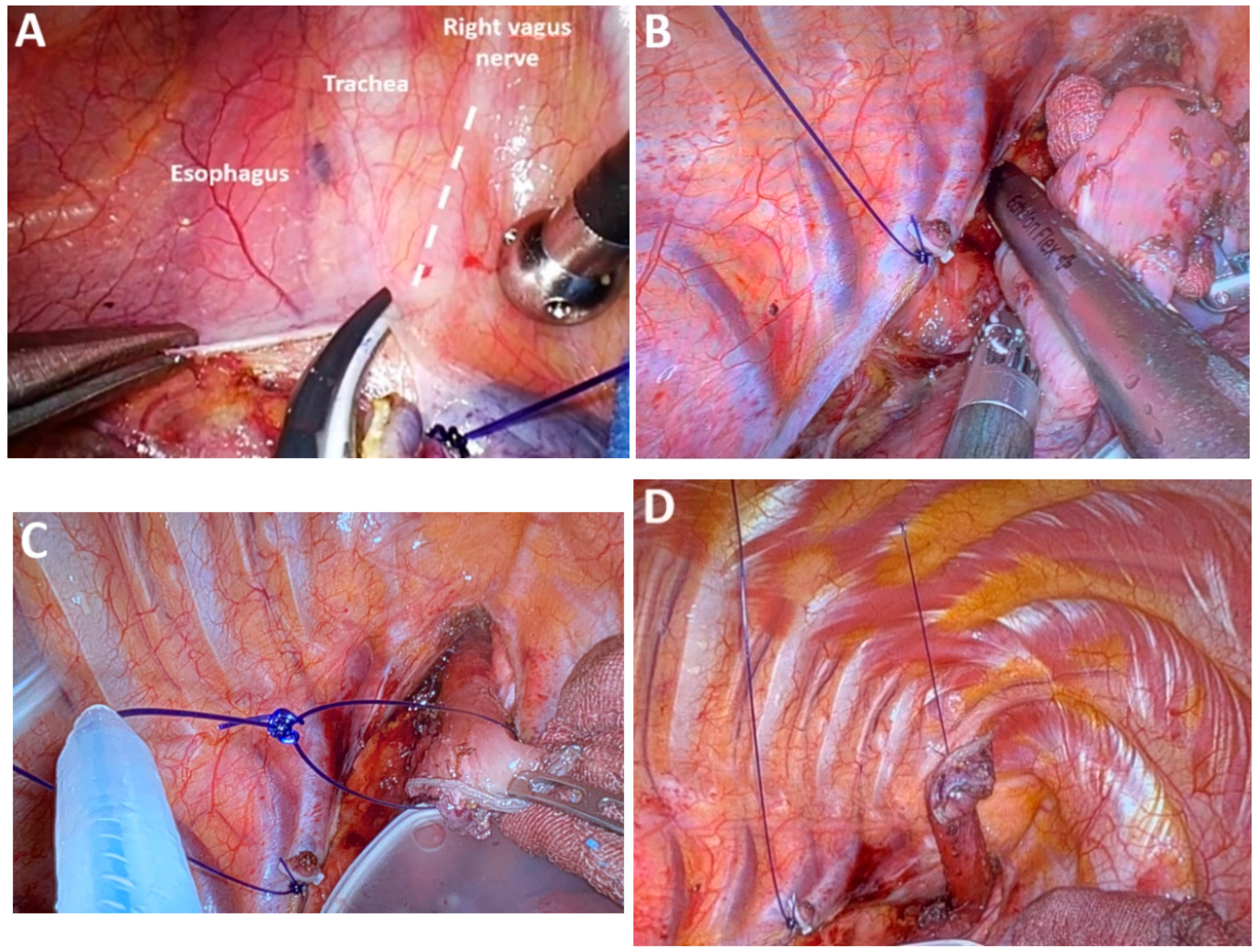
Traction on azygos vein stump. One of the key vascular steps during esophagectomy involves division of the azygos vein arch, which facilitates access to the mediastinum for circumferential dissection of the esophagus and adjacent lymphatic tissue. Following transection of the azygos vein—either with a vascular stapler or via Hem-o-lok clipping—the residual vein stumps may be secured using Endoloops. Traction can then be applied through externalized sutures to enhance operative exposure and optimize visualization of the surgical field (Figure 7B).
Sectioning the upper thoracic esophagus. An alternative strategy to enhance visualization within the mediastinal surgical field involves transecting the upper thoracic esophagus above the level of the azygos vein arch (Figure 7B). This approach avoids division of the right bronchial vessels and the azygos vein itself. The resulting esophageal stump is easily maneuverable and can be anchored using a transcutaneous suture externalized at the upper chest wall (Figure 7C,D). This facilitates dissection of the upper thoracic inlet, particularly around the left RLN (group 106recL, Japanese Classification of Esophageal Cancer, 12th Edition).

Reducing the Risk of RLN Damage

“Native tissue preservation” technique. Otsuka et al. have proposed a technique refined through extensive experience in the minimally invasive management of locally advanced EC, aimed at reducing the risk of RLN injury (Figure 8A,B). Termed the „native preservation technique”, this approach utilizes preserved connective tissue as a dissection landmark near the recurrent nerves, thereby minimizing the risk of nerve damage from direct traction (Figure 8C,D) [43].
“Elastic suspension of left RLN” technique. To minimize the risk of left RLN injury, Donming et al. employed a technique involving suspension of the nerve using an elastic traction strap. This approach facilitated safer manipulation during lymphadenectomy of the 106recL nodal station [44].
En bloc upper mediastinum lymph node resection. Zhu et al. introduced an innovative en bloc lymphadenectomy technique targeting lymph nodes adjacent to the left RLN. This approach resulted in a higher yield of resected lymph nodes and a reduced incidence of nerve injury; however, these differences did not reach statistical significance [45].
Outermost layer-oriented approach in mediastinal dissection. To reduce the risk of RLN injury while maintaining oncologic rigor during lymphadenectomy, Nakauchi et al. proposed an outermost layer-oriented dissection technique around the RLN, combined with intraoperative nerve monitoring (IONM)—a method adapted from gastric cancer surgery. Short-term outcomes associated with this approach were favorable [46].
Comparison of lymph node resection techniques. Wang et al. conducted a comparative analysis of two lymphadenectomy techniques along the left RLN: a retraction and a suspension method. The retraction technique significantly reduced operative time (p < 0.001), while postoperative outcomes were extensively analyzed and found to be comparable between the two approaches [47].
Recurrent nerve size and postoperative complications. Lye et al. conducted a retrospective study involving 149 consecutive patients who underwent RAMIE for EC. The intraoperative diameter of the recurrent laryngeal nerve was assessed using 1.5 mm as a reference threshold, and it was found that thinner left RLNs were strongly associated with increased risk of permanent postoperative RLN palsy. Based on these findings, they recommend that surgeons proactively assess nerve diameter and adjust their technique accordingly to minimize the risk of nerve injury [48].
Bilateral pleural drainage through the opening of the left pleura. At the end of the thoracoscopic stage, an incision in the left pleura may be performed at the level of the lower mediastinum to facilitate placement of a drain for evacuating both pleural cavities. Practices regarding the type of drainage system and the number of chest tubes vary among surgical teams, reflecting differences in institutional protocols and individual surgeon preferences. Opening the left pleural cavity remains a subject of debate, with both supporting and opposing viewpoints. The primary concern against this approach is the potential increase in procedural morbidity due to the creation of an additional surgical field. However, several arguments support left pleural drainage. One rationale for the need to drain the left pleura is that the left lung often sustains ventilatory trauma during esophagectomy due to prolonged high pressure of one-lung ventilation and will develop postoperative atelectasis and pleurisy. Another advantage is the opportunity to achieve more through resection of lymphofatty tissue from the middle and lower mediastinum. The decision to employ a postoperative aspiration thoracic drainage using conventional chest drainage systems or digital chest drainage systems is influenced by the surgical team’s experience and by the choice of graft ascent to the cervical region.
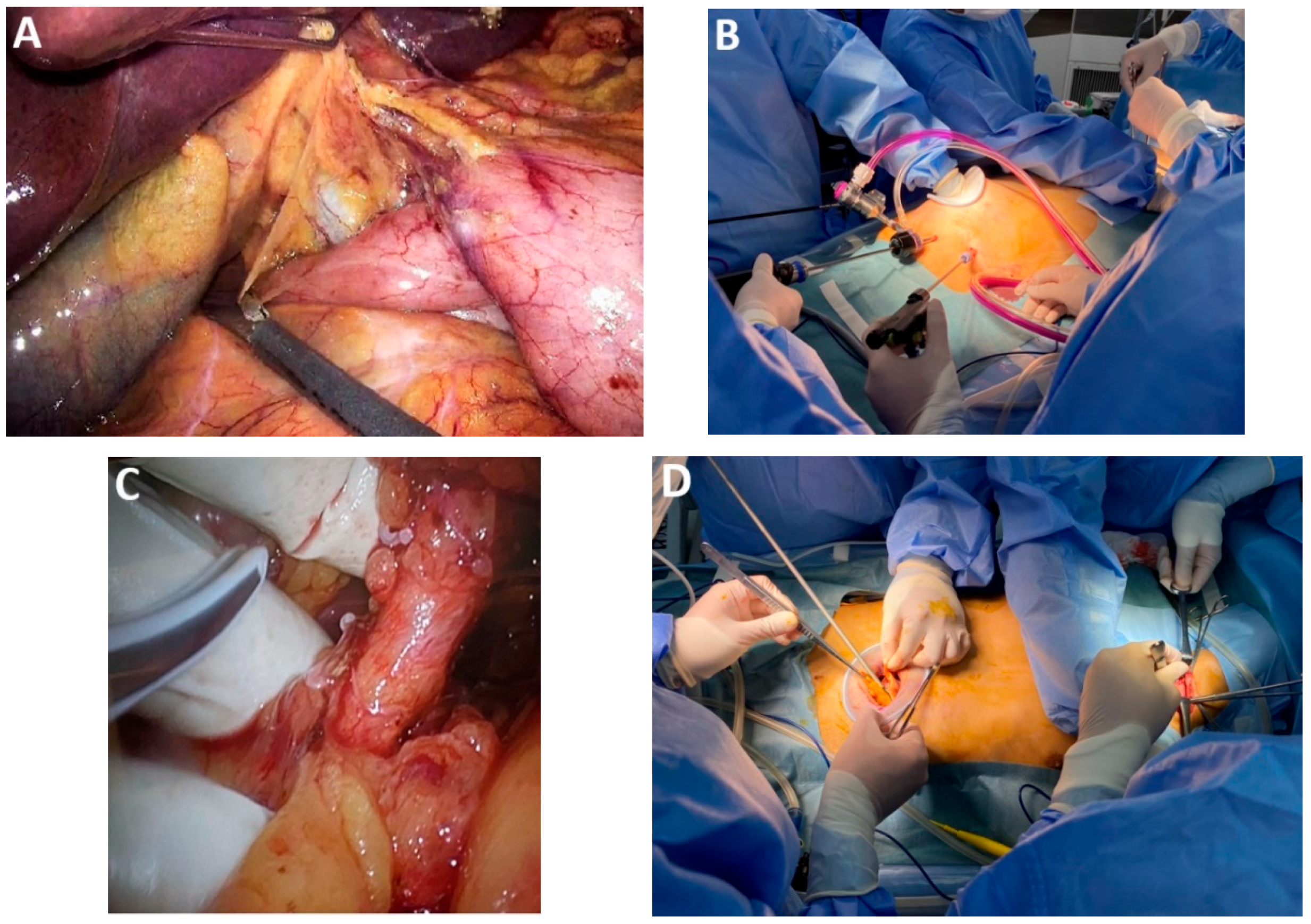
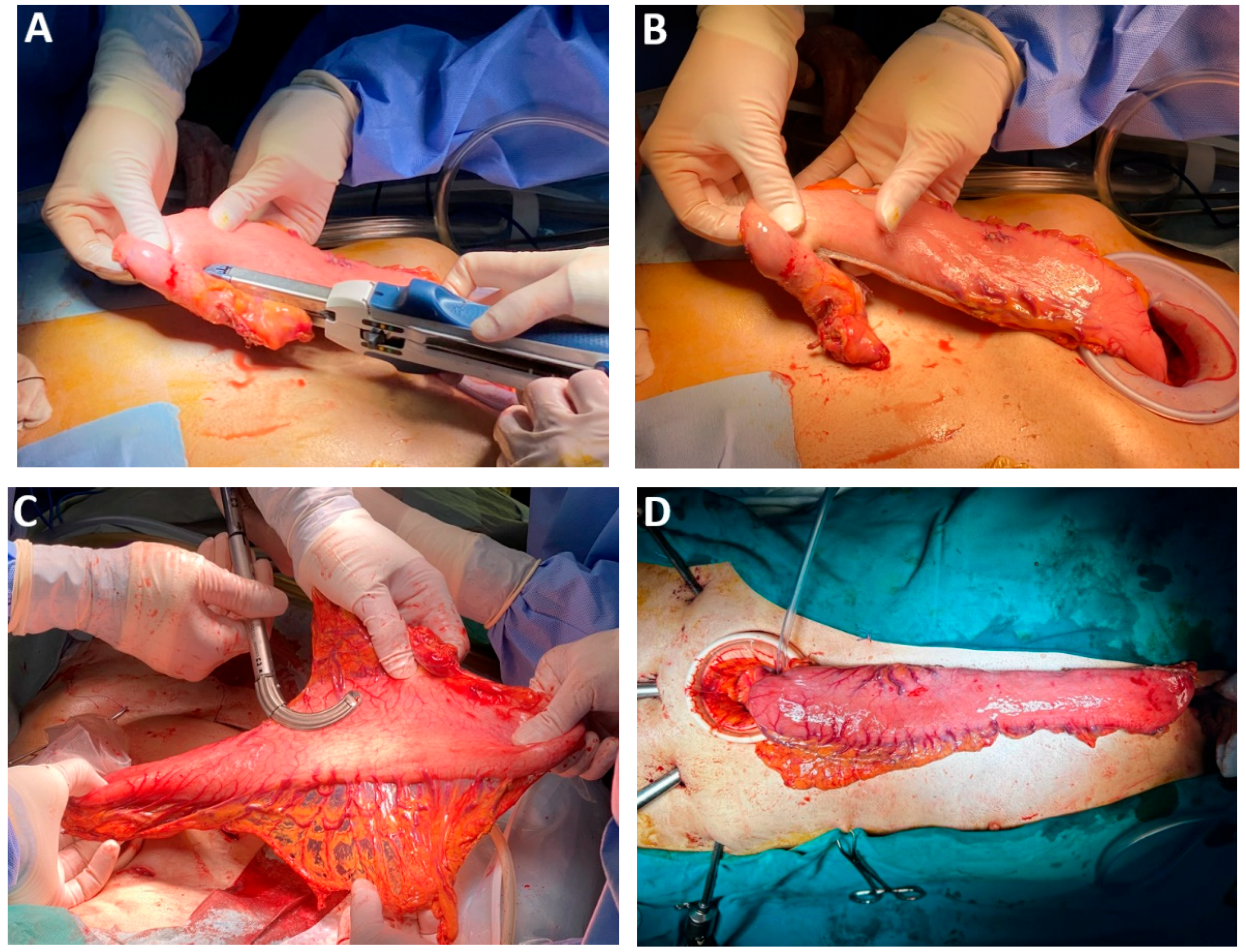
MIE—Laparoscopic and neck stage. During the laparoscopic and neck stage, the patient is positioned supine, and five trocars are typically utilized. Laparoscopic mobilization of the stomach carries a risk of bleeding or injury to the left gastroepiploic pedicle and short gastric vessels, particularly during the early stages of the learning curve. Key factors in preventing graft ischemia include careful evaluation of venous drainage, appropriate sizing of the hiatal opening, and the tension-free mobilization achieved through duodeno-pancreatic detachment of extracorporeal preparation (Figure 9A). Calibration of the hiatal aperture and fixation of the graft to the hiatus are necessary in preventing diaphragmatic hernia, especially given the reduced intraperitoneal adhesions associated with minimally invasive techniques.
Hand-assisted laparoscopy. Hand-assisted laparoscopy may be employed to minimize trauma to the gastric conduit caused by laparoscopic instruments (Figure 9B,C). This technique involves a 7 cm transverse incision along the midline, positioned 4 cm below the xyphoid and slightly offset to the left [49]. The transverse incision facilitates hand-assisted mobilization of the stomach and facilitates extracorporeal preparation of the gastric graft, helping to reduce risks associated with the learning curve in MIE and contributing to a reduction in operative time (Figure 9D).
Reduced port MIE. Enhanced access with minimal tissue trauma remains a central objective in the surgical management of EC [50,51]. Huang et al. assessed the feasibility of reducing the number of trocars and reported a shorter operative time and decreased postoperative analgesic requirements, without compromising oncologic outcomes [52].
Single-port MIE. Xiao et al. compared single-port MIE with the multiport approach and reported a lower incidence of mild postoperative complications, reduced postoperative pain, and shorter hospital stays [53]. Building on these findings, Weng et al. highlighted the improved postoperative aesthetic outcomes associated with single-port MIE, noting that both immediate and long-term clinical results remained unaffected [54]. Tang et al. utilized a periumbilical incision along with a single auxiliary trocar during laparoscopic surgery, demonstrating comparable outcomes to those achieved with the conventional multiport technique [55].

4.7. Subclass 2B: Transthoracic Robotic-Assisted Esophagectomy

This subclass incorporates surgical techniques utilizing robotic-assisted approaches. RAMIE was performed with 3D HD visualization and ICG technology. Such as the DaVinci Xi Firefly system—it offers several advantages, including safe and precise mediastinal dissection of nodal stations 106recR and 106recL, reduced risk of RLN injury, and ergonomic benefits for the surgical team [56,57]. However, robotic surgery also presents limitations, such as instrument collision within the thoracic cavity [58].
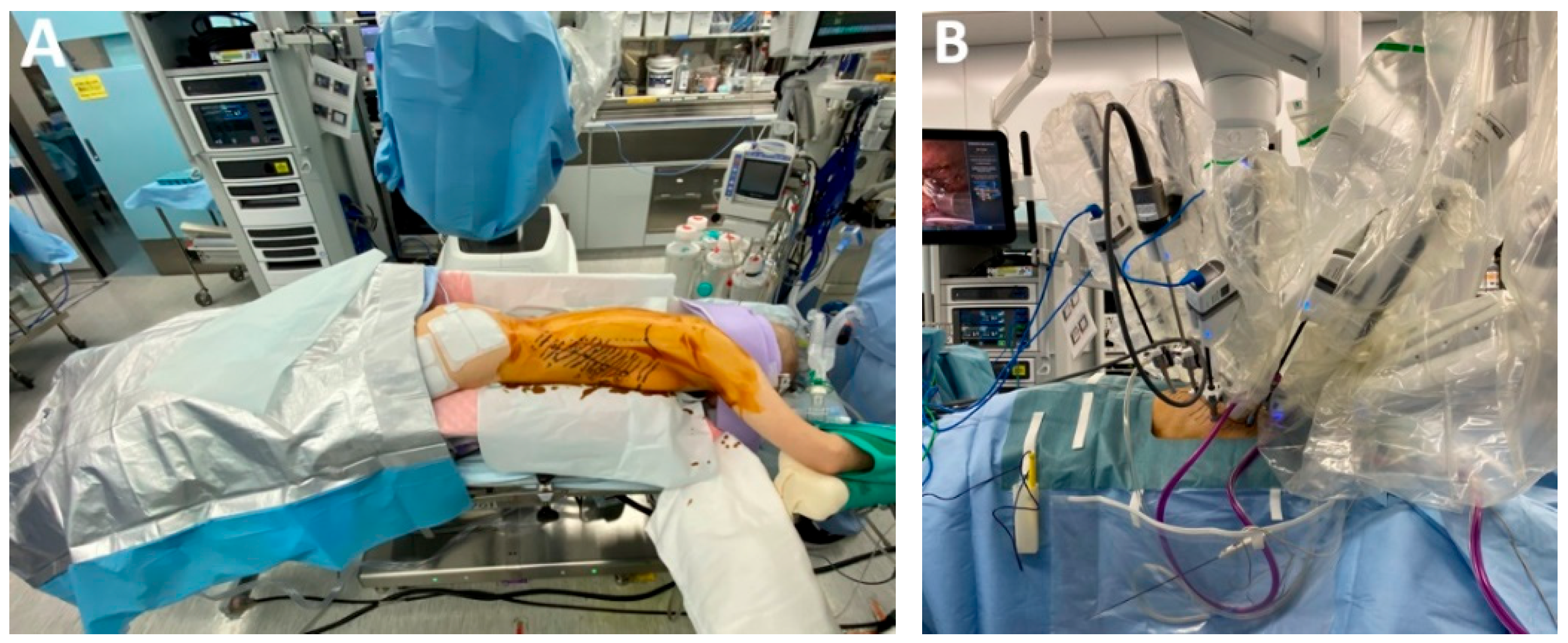
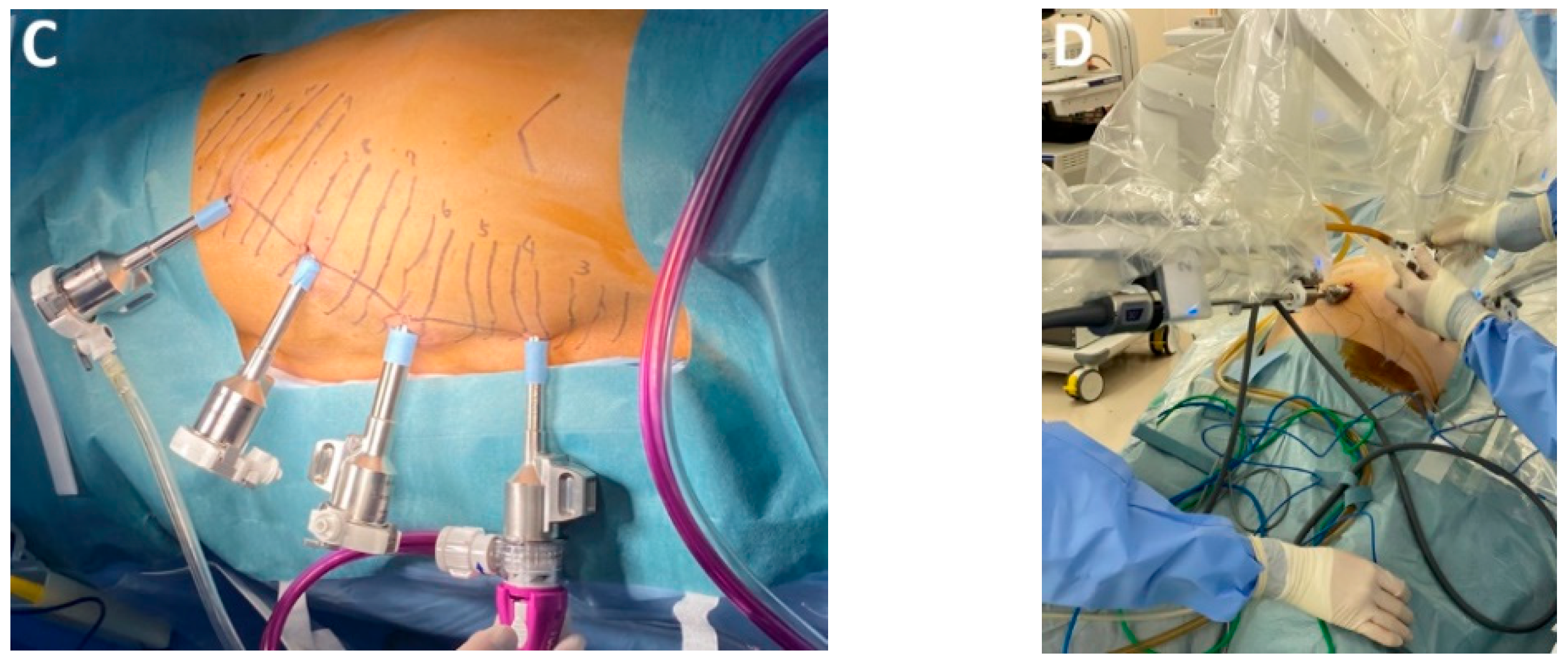
RAMIE left lateral decubitus vs. prone position. The thoracic stage of RAMIE is typically performed with the patient in the prone position, primarily to minimize intraoperative instrument collisions (Figure 10A). The positioning also alters the approach to the mediastinal dissection compared with the left lateral decubitus position. Nonetheless, RAMIE in left lateral decubitus remains feasible, offering visibility comparable to conventional thoracoscopy while enabling rapid conversion without the need for patient repositioning (Figure 10B–D). Perioperative outcomes are also comparable to those achieved with conventional MIE [59].
Challenges in robotic esophagectomy. Complex thoracic anatomy can pose significant technical challenges during RAMIE, potentially compromising oncologic efficacy and procedural safety. Anatomical variations such as a narrow mediastinum or a left-shifted thoracic esophagus have been associated with prolonged operative time, reduced lymph node yield, and a higher incidence of RLN injury [60].
Outside the Cage (OTC) Non-Intercostal RAMIE. OTC RAMIE is an innovative approach to thoracic esophagectomy that avoids intercostal incisions. By eliminating direct trauma to the intercostal nerves, this technique aims to reduce postoperative pain and minimize complications associated with nerve injury [61].
New docking methods. To address the prolonged operative time often associated with robotic-assisted procedures, Sato et al. proposed a novel docking strategy for the abdominal stage of RAMIE. This revised configuration of the robotic arms enables simultaneous cervical dissection and lymphadenectomy, enhancing procedural efficiency [62].
New robotic platforms. Recent advancements have enhanced earlier generations of surgical robots, while newer, more cost-effective modular systems have emerged. These innovations aim to reduce intraoperative instrument conflicts and improve overall procedural efficiency [63,64]. The adoption of next-generation robotic platforms may also depend on the parallel development of specialized accessories, including advanced robotic hemostasis instruments. These adjuncts are essential for maintaining procedural safety and expanding the versatility of robotic systems in complex surgical environments.
Robotic single-port esophagectomy. Instrument conflict during RAMIE may be reduced by the development of next-generation robotic platforms featuring a single arm capable of accommodating multiple laparoscopic instruments. These systems incorporate specialized design features, including tailored instrument shape and working angles, to enhance maneuverability and reduce intraoperative interference [65].
Tele-robot-assisted MIE. The integration of mechanized systems between the operating surgeon and the patient enables remote surgical intervention [66]. By leveraging contemporary telecommunications technologies, remote MIE offers substantial clinical and educational advantages. Patients with anatomically complex or high-risk esophageal cancer may benefit from access to the expertise of high-volume specialized centers. Simultaneously, the approach facilitates telementoring for surgeons in training, promoting skill acquisition and procedural standardization [67].
Autonomous Robotic Esophagectomy. The competitive landscape among laparoscopic instrument manufacturers is rapidly evolving toward the development of next-generation robotic platforms. These systems represent a transitional phase toward full automation, where surgical tasks may be executed autonomously. With the integration of artificial intelligence capable of analyzing clinical parameters and selecting the optimal surgical approach, the surgeon’s role may shift predominantly to procedural oversight [68,69].

4.8. Subclass 2C Transcervical Approach

This subclass focuses on the transcervical approach, which, unlike the blind dissection technique described by Orringer, is conducted under direct visual guidance. This method facilitates safe and effective periesophageal lymphadenectomy.
Origin of the transcervical approach. The transhiatal approach avoids transpleural access, thereby minimizing the risk of respiratory complications. Indications for transhiatal MIE mirror those of the open technique and include patients with significant pulmonary or cardiac comorbidities who are unable to tolerate single-lung ventilation. In cases where dissection of the upper thoracic esophagus proves challenging, a mediastinoscope may be employed to facilitate the cervical approach [70,71].
Transhiatal MIE with a flexible mediastinoscope. Wu et al. introduced the use of a flexible mediastinoscope as an alternative to the conventional rigid instrument to enhance access and reduce the technical complexity associated with dissection of the upper mediastinum. Compared with the rigid mediastinoscope, the flexible approach demonstrated greater feasibility, procedural efficiency, and speed, along with an improved node yield [72].
Minimally invasive transcervical esophagectomy (MICE). The combined transcervical and transhiatal approach represents an MIE technique that avoids entry into the right pleural cavity. Its adoption has increased in recent years, particularly in selected patient cohorts [73]. Despite its advantages, the transcervical route may be associated with a higher incidence of RLN palsy [74]. However, MICE may pose technical challenges due to patient-specific anatomical variations in the neck and upper mediastinum. Furuke et al. identified several factors associated with increased procedural difficulty, including a steep cervical angle (p = 0.023), reduced distance between the vertebral bodies and the aorta (p = 0.002), and midthoracic esophageal tumors (p = 0.040) [75]. The mediastinoscopic approach typically employs single-port instruments, and a key step during the cervical phase involves identification and marking of the RLN [76,77]. The integration of EndoEye Flex 3D technology (Olympus, Hachioji, Tokyo, Japan) has further enhanced visualization and operative precision.
Vercoulen et al. implemented the transcervical esophagectomy technique in a Western tertiary center, treating 75 patients with esophageal cancer (cT1b-4aN0-3M0). The procedure achieved a 96% R0 resection rate, with a mean of 29 lymph nodes harvested and a pulmonary complication rate of 16%. RLN palsy occurred in 33 of 75 patients, with spontaneous recovery documented in 30 cases [78].
Bilateral transcervical mediastinoscope-assisted transhiatal laparoscopic esophagectomy (BTC-MATLE). The bilateral transcervical approach enhances access to the superior mediastinum and reduces instrument interference within the confined operative field (Figure 11A–E) [79].
Robot-Assisted Transcervical Esophagectomy (RATME). Given the anatomical constraints of the upper mediastinum and the proximity to major vascular structures, a transcervical robotic approach was used to ensure precise dissection and optimal visualization. This technique facilitates safe maneuvering in a narrow operative field and enhances exposure of vital mediastinal organs [80,81]. Daiko et al. used robotic transcervical esophagectomy via a bilateral cervical approach for a safer upper mediastinal dissection and to reduce the rate of RLN injury [82].

4.9. Class 3A—Lymph Node Dissection

The third class consists of novel techniques for lymph node dissection that enhance the radicality of lymphadenectomy while minimizing procedure-related complications.

4.10. Subclass 3A Mediastinal Lymphadenectomy

This subclass includes innovations in mediastinal lymphadenectomy techniques used in the treatment of EC.
Standardization of mediastinal lymphadenectomy. Owing to divergent anatomical interpretations, the classification of mediastinal lymph nodes into distinct nodal groups remains inconsistent, despite the use of a shared terminology in describing lymphadenectomy techniques. In this study, the Japanese Classification of Esophageal Cancer, 12th Edition, was adopted to delineate mediastinal lymph node groups [41,42]. During upper mediastinal dissection, identification and preservation of the thoracic duct is important; it is typically visualized superior to the aortic arch (Figure 12A). Dissection of the middle mediastinum inferior to the aortic arch allows for identification and preservation of the left bronchial artery while enabling resection of the subcarinal lymph nodes (No. 107), right main bronchus nodes (No. 109R), left main bronchus nodes (No. 109L), and tracheobronchial lymph nodes (No. 106tbL) (Figure 12B,C).
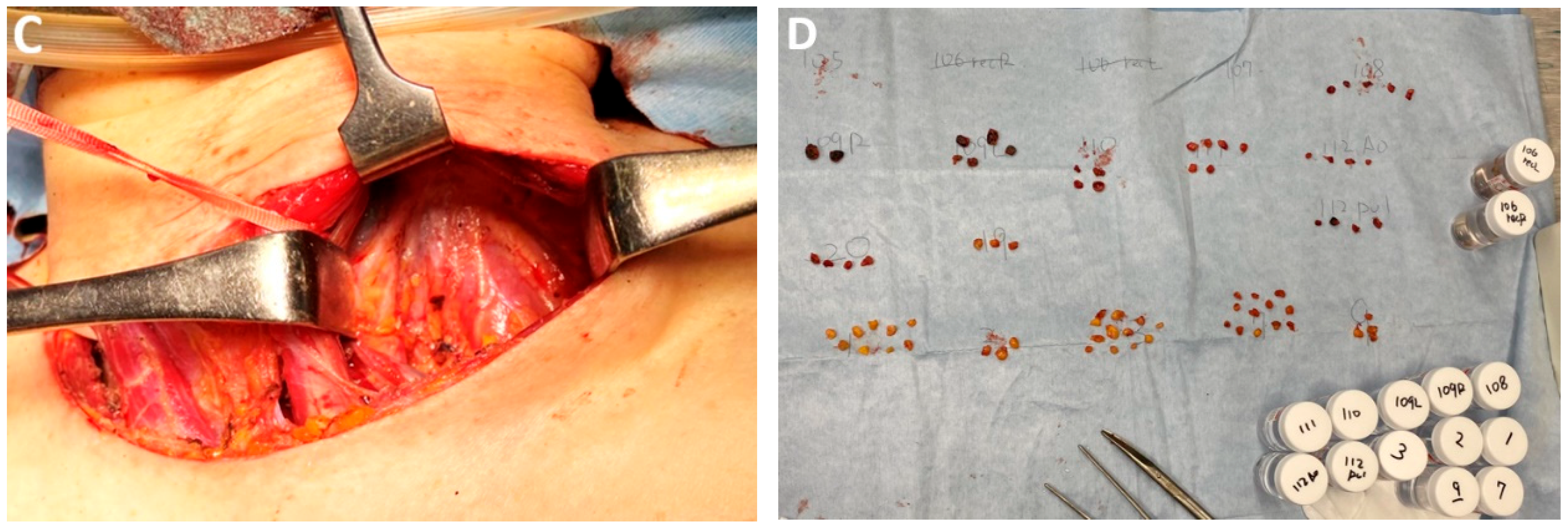
Lower mediastinal dissection begins with the division of the inferior pulmonary ligament and the mobilization of the lower mediastinal pleura up to the middle mediastinum. This step enables resection of the middle thoracic paraesophageal lymph nodes (No. 108), lower thoracic paraesophageal lymph nodes (No. 110), pulmonary ligament nodes (No. 112pulR), anterior thoracic para-aortic nodes (No. 112aoA), posterior thoracic para-aortic nodes (No. 112aoP), and supradiaphragmatic lymph nodes (No. 111) (Figure 12D).
Thoracoscopic mediastinal dissection can be technically difficult due to anatomical, clinicopathological factors (tumor stage), or post-radiochemotherapy adhesions [83]. Intraoperative management of patients undergoing mediastinal dissection can also be difficult due to a variety of anesthetic issues (hypotension, hypoxemia, tachycardia). Communication between the surgical and anesthetic teams is essential to prevent any incidents.
Radical mediastinal lymphadenectomy. Radical mediastinal lymphadenectomy is associated with an increased risk of postoperative complications. Moreover, ultraradical lymphadenectomy does not guarantee prevention of local disease recurrence, and local reintervention for metastatic excision is typically not feasible, necessitating transition to palliative care.
The extent of lymph node resection in the upper mediastinum (>4 lymph nodes) is essential for accurate staging and has prognostic value for long-term oncologic outcomes in patients with upper and middle thoracic esophageal cancers [84]. However, in cases of lower esophageal tumors, the number of resected nodes in the superior mediastinum does not independently predict long-term survival [85].
Thoracic duct resection. Esophagectomy with radical mediastinal lymphadenectomy may include TD resection; however, its oncologic benefit remains controversial. In a study by Yu et al., TD metastases were identified in 11% of patients undergoing resection, yet the procedure did not confer a survival advantage and was not recommended for routine use, except in cases of locally advanced tumors [86]. Matsuda et al., analyzing data from the JCOG1109 clinical trial, reported that TD resection in patients undergoing esophagectomy with radical lymphadenectomy and neoadjuvant therapy did not significantly impact overall survival. Notably, a subgroup receiving neoadjuvant DCF (docetaxel, cisplatin, and 5-fluorouracil) demonstrated improved survival outcomes [87].
In a comparative study involving 684 patients, Igaue et al. found no significant differences in operative time, intraoperative blood loss, lymph node yield, R0 resection rate, 5-year overall survival, or recurrence-free survival between patients with and without TD resection. However, those who underwent resection exhibited higher rates of chylothorax and 90-day mortality. Although these differences were not statistically significant, routine TD resection is not recommended in patients with cT1-3 tumors who received neoadjuvant therapy (Figure 13A) [88].

Advances in Mediastinal Lymphadenectomy

Two-rope method. Wang et al. introduced a novel mediastinal dissection technique involving suspension of the esophagus with two traction sutures to facilitate operative access and minimize trauma to adjacent structures. This method significantly reduced operative time without adversely affecting other perioperative outcomes [89].
Robotic mediastinal lymphadenectomy. Similar to flexible laparoscopic systems, robotic platforms offer dynamic control of the camera viewing angle, providing a significant advantage during mediastinal dissection by enhancing visualization and surgical precision. Unlike conventional thoracoscopic lymphadenectomy, robotic mediastinal dissection typically begins at the lower mediastinum, followed by lymphadenectomy along the right RLN and subsequently the left RLN [90,91].
In a comparative study evaluating the efficacy of RAMIE vs. MIE, Lei et al. demonstrated the superiority of the robotic approach in achieving extensive mediastinal node dissection. Specifically, RAMIE enabled more meticulous dissection of tracheobronchial (No. 106tbL), paratracheal (No. 106pre), subcarinal (No. 107), left (No. 109L), and right (No. 109R) main bronchial, lower thoracic periesophageal (No. 110), and supradiafragmatic lymph nodes (No. 111) (p < 0.05). The study reported a significantly higher number of dissected lymph node stations (p < 0.001) and total lymph nodes (p < 0.001) with RAMIE without an associated increase in postoperative surgical complications [92]. Thus, RAMIE demonstrated superior thoracic lymphadenectomy performance compared with conventional thoracoscopic approaches, without elevating postoperative morbidity or mortality [93].
Complete resection of the mesoesophagus. Drawing inspiration from the principles of mesocolic and mesorectal excision in colorectal cancer, Tachimori et al. introduced the concept of total mesoesophageal resection to enhance anatomical understanding of the mediastinum. In this framework, the esophagus is enveloped by a mesoesophagus composed of lymph nodes, blood vessels, nerves, lymphatic channels, and connective-adipose tissue, enabling a more radical lymphadenectomy [94]. Building on this concept, Lin et al. implemented minimally invasive total mesoesophageal excision in clinical practice, achieving improved local disease control, reduced recurrence rates, and enhanced disease-free and overall survival [95]. Other investigators have adopted these principles to perform extensive mediastinal lymphadenectomies without increasing postoperative morbidity [96,97].
Concentric three-layered model of the mediastinum. Fujiwara et al. introduced a concentric anatomical model to enhance understanding of the complex architecture of the superior mediastinum, which is key for esophagectomy with radical mediastinal lymphadenectomy. Centered on the trachea and esophagus, this model delineates fascial planes that separate neural networks, mediastinal vessels, and lymphatic drainage pathways, thereby facilitating anatomical orientation. Its application in both surgical training and clinical practice improves operative precision and enables more radical lymphadenectomies while minimizing injury to vital structures, including the RLN [98].
Sentinel node mapping and sentinel node navigation. Although strategies have been proposed to enhance the radicality of esophagectomy, standardized lymph node mapping (Technetium 99 or ICG) has not been incorporated into routine surgical treatment for thoracic EC. The complexity of mediastinal lymphatic anatomy—including multiple collateral pathways and lymph node stations shared with other thoracic organs—continues to challenge efforts to precisely define and execute optimal lymphadenectomy techniques [99].
Carbon nanotracers. Qi et al. utilized nanocarbon as a lymphatic tracer during mediastinal dissection to enhance the precision of lymph node station identification. The application of carbon nanotracers has demonstrated improved outcomes in the quality of thoroughness of mediastinal lymphadenectomy [100].
Functional mediastinal lymphadenectomy. Some authors have advocated for preservation of the azygos vein arch, demonstrating that mediastinal dissection is feasible at this level through meticulous isolation and controlled manipulation of the vein (Figure 13B,C). Additionally, preservation of the right bronchial artery has been proposed to maintain optimal vascularization of the respiratory tree, particularly in patients who have undergone preoperative chemoradiotherapy. These vascular preservation strategies are encompassed within the concept of functional mediastinal lymphadenectomy, which aims to balance oncologic radicality with preservation of vital structures [101].

4.11. Subclass 4B Abdominal Lymph Node Resection

This subclass includes techniques used for perigastric lymphadenectomy. Standard abdominal lymphadenectomy for thoracic esophageal cancer includes lymph node groups 1, 2, 3, 7, 9, 19, and 20 (Japanese Classification of Esophageal Cancer, 12th Edition) [41,42]. Perigastric lymphadenectomy through a minimally invasive approach can be performed laparoscopically, robotically, or hand-assisted (Figure 14A–D).

4.12. Subclass 4C Cervical Lymph Node Resection

This subclass includes techniques used for cervical periesophageal lymphadenectomy.
Left cervical lymphadenectomy. Unilateral dissection during cervical esophagectomy allows excision of the cervical paraesophageal lymph node (No. 101L) and is facilitated by prior extensive thoracoscopic dissection of the upper thoracic aperture (Figure 15A). This approach enhances anatomical exposure and simplifies esophagus isolation during the neck stage—a technique endorsed by several experts for its precision and efficiency.
Two-field lymphadenectomy (2FL)/extended two-field lymphadenectomy vs. three-field lymphadenectomy (3FL). The Japanese school of surgery had made significant contributions to EC management, particularly in the 3FL and esophageal reconstruction. 3FL, which includes cervical node stations No. 101L, No. 101R, No. 104L, and No. 104R, enhances staging accuracy by increasing the number of nodes harvested and may reduce local recurrence without significantly elevating postoperative morbidity (Figure 15B–D) [102,103]. MIE with 3FL requires a steep learning curve and is best adopted under the guidance of experienced teams [104]. While some studies associate 3FL with increased morbidity, it offers superior cervical disease control compared with 2FL and extended-2FL [105]. Prophylactic bilateral supraclavicular lymph node dissection remains a selective procedure, recommended only when dictated by tumor location [106].

4.13. Class 4—Advances in Esophageal Reconstruction

The fourth class features novel strategies for preparing esophageal substitutes and optimizing graft ascension routes to reduce the incidence of conduit necrosis and anastomotic leakage.

4.14. Subclass 4A Esophageal Reconstruction with Stomach

This subclass includes innovations used in the preparation of the future gastric for esophageal reconstruction.
Esophageal reconstruction is as essential as resection, with its success directly influencing postoperative morbidity. The stomach is the preferred conduit due to its robust vascular supply, sufficient length to prevent anastomotic tension, and ease of preparation via laparoscopy. Digestive continuity is typically restored with a single anastomosis [107]. Except in patients with prior gastric resections, the stomach—either whole or tubulized—serves as the standard esophageal substitute.
The routine tubulization of the stomach remains controversial (Figure 16A–C). Critics argue that dividing the stomach introduced additional risk of graft leakage, particularly at the area where the cartridge staple line overlaps and may compromise perfusion and increase ischemic potential. In patients with prior feeding gastrostomy, gastric graft preparation poses no major technical challenges. During the learning curve, extracorporeal graft preparation via epigastric mini-laparotomy may reduce postoperative complications related to conduit viability (Figure 16D). Intraoperative perfusion assessment using dyes, such as indocyanine green, is recommended to optimize graft viability [108].
In a study by Zhao et al. involving 272 patients undergoing esophagectomy with gastric reconstruction, ICG analysis demonstrated improved outcomes. Patients whose grafts were sectioned 9 cm from the pylorus—preserving the final branch of the right gastric artery—had significantly lower anastomotic leakage rates (p = 0.024) and higher blood flow (2.81 cm/a vs. 2.54/s, p = 0.001) compared with those with conventional graft preparation at 5 cm from the pylorus. The modified technique also demonstrated superior perfusion and reduced ischemic risk along the staple line (p < 0.001), with both groups maintaining a graft width of 3.5 cm [109].
Ischemic preconditioning of the gastric conduit in the era of MIE. Ischemic condition of the gastric graft—achieved through partial vascular interruption via embolization or surgical division days to weeks before esophagectomy—aims to enhance perfusion by preconditioning the gastric tissue to reduced blood flow, thereby promoting healing following reconstruction [110].
Robotically assisted laparoscopic esophageal reconstruction. Improper use of laparoscopic instruments during gastric graft preparation can result in gastric wall injury, with excessive traction leading to microlesions or microthrombosis that compromise capillary perfusion. Surgical experience plays a pivotal role in minimizing these risks. RAMIE, while offering smoother instrument control, limits the operator to visual feedback alone, potentially increasing the risk of inadvertent trauma. Therefore, a key objective during graft preparation is to preserve tissue integrity and avoid excessive manipulation, particularly from robotic arms [111]. Next-generation robotic platforms equipped with enhanced haptic feedback—such as the da Vinci 5 system with Force Feedback technology (Intuitive, USA)—may reduce the risk of instrumental trauma to the gastric conduit by improving tactile awareness during graft manipulation.

4.15. Subclass 4B Esophageal Reconstruction with Colon

This class includes minimally invasive techniques for colon graft reconstruction.
Right or left colon interposition is a life-saving solution for patients with prior gastric surgery or in cases where the gastric conduit becomes ischemic following esophagectomy [112,113].

4.16. Subclass 4C Ascension Route

This subclass includes innovations designed to optimize graft ascension to the superior mediastinum or cervical level.
Retrosternal route vs. posterior mediastinal route. Retrosternal tunneling is readily performed via laparoscopic or robotic approaches (Figure 17A,B). Prior to graft ascent, the diaphragmatic hiatus is routinely closed to prevent transhiatal herniation (Figure 17C) [114]. The retrosternal route minimizes the risk of injury to adjacent organs and provides sufficient length for tension-free anastomosis (Figure 17D) [115]. Although retrosternal gastric graft cancer represents management challenges, resection is feasible through a thoracoscopic approach, avoiding the need for sternotomy [116].
Kikuchi et al. analyzed esophageal reconstruction routes in 9786 patients undergoing esophagectomy, comparing posterior mediastinal (n = 3478; 35.5%, including 2986 minimally invasive cases) and retrosternal approaches (n = 6308; 64.5%, including 4690 minimally invasive cases). The posterior mediastinal route was associated with lower rates of anastomotic fistula (11.7% vs. 13.8%, p < 0.001) and postoperative wound infection (8.4% vs. 14.9%, p = 0.005), but a slightly higher incidence of pneumonia (13.7% vs. 12.2%, p = 0.040) [117]. Despite these findings, the retrosternal route remains more commonly used in Japan.
In a meta-analysis comparing cervical graft ascension routes, Booka et al. reported a significantly lower anastomotic fistula rate with posterior mediastinal reconstruction compared with the retrosternal approach (p < 0.001), with no significant difference in pulmonary complications between the two techniques [118].
Anterior to the pulmonary hilum route. Yan et al. demonstrated the feasibility of the anterior pulmonary hilum approach, highlighting its advantage in bypassing the tumor bed and afferent lymphatic pathways—an important consideration for postoperative radiotherapy in locally advanced tumors—without increasing morbidity or mortality [119].

4.17. Class 5 Advances in Performing Esophagogastric Anastomosis

This class includes modern techniques used in performing esophagogastric anastomosis during esophageal reconstruction.

4.18. Subclass 5A Hand-Sewn Esophagogastric Anastomosis

This subclass covers hand-sewn cervical anastomotic techniques aimed at reducing the incidence of anastomotic fistula—a persistent postoperative complication for which current preventive measures have achieved inconsistent results [120]. While some high-volume EC centers have reported lower fistula rates, a universally effective approach remains elusive and has yet to be adopted globally.
Adequate upper cervicomediastinal dissection is essential for creating sufficient space for esophagogastric anastomosis and minimizing the risk of fistula formation. Graft tension may lead to descent of the anastomosis into the mediastinum, increasing the likelihood of septic and pulmonary complications, particularly when fistula formation involves the right pleura. These technical nuances remain underrepresented in current literature despite their clinical significance.
Hand-sewn double-layer anastomosis. He et al. introduced a stepwise technique for cervical esophagogastric anastomosis, beginning with the construction of the posterior wall, followed by suturing the gastric graft to the posterior esophageal wall, and concluding with the anterior layer. This approach contributed to favorable postoperative outcomes, with no reported anastomotic fistulas and low rates of stenosis and acid reflux [121].

4.19. Subclass 5B Mechanical Circular Anastomosis

This subclass includes surgical techniques that use circular staplers in performing esophago-gastric anastomosis.
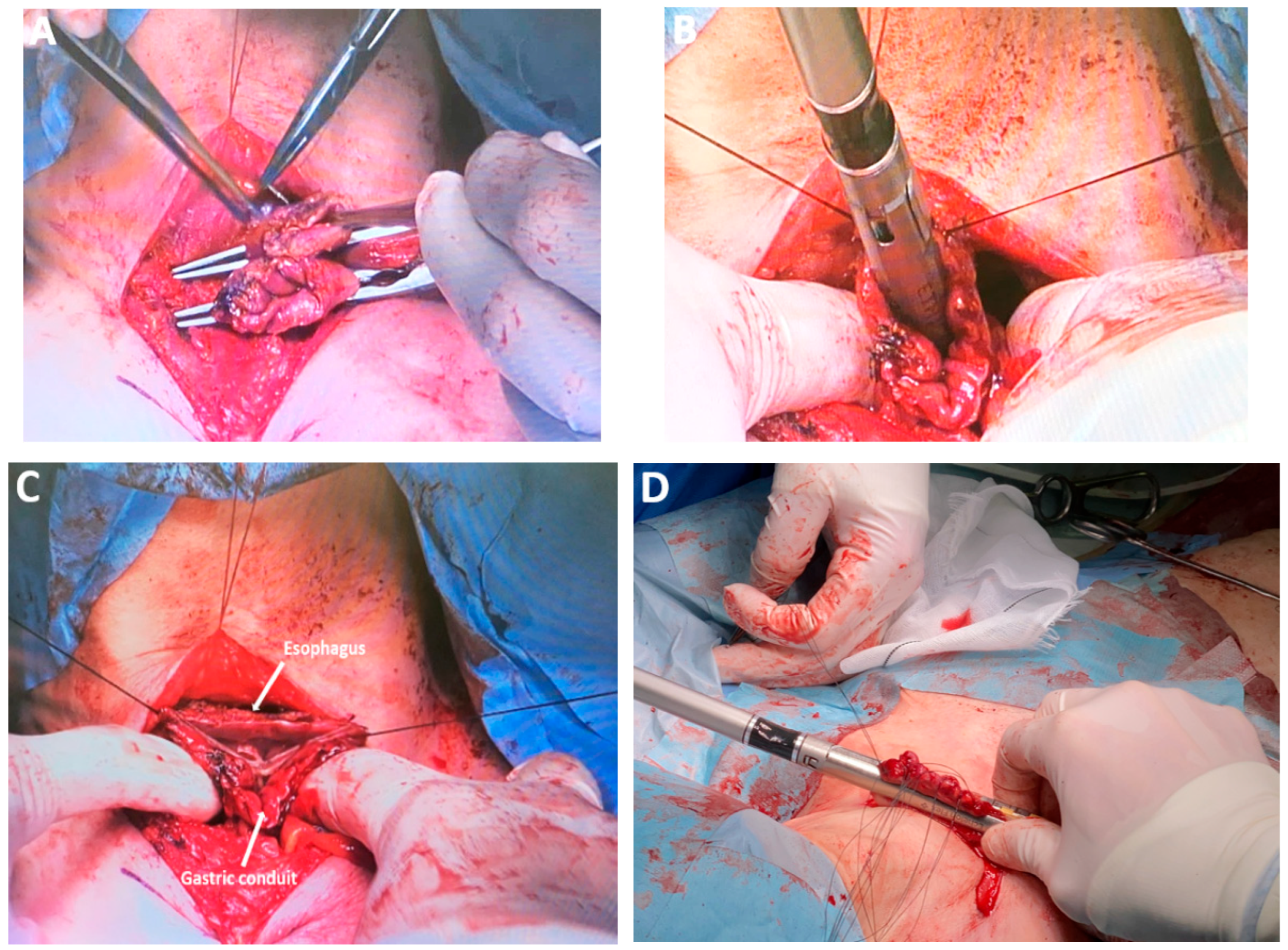
Mechanical circular anastomosis. Circular mechanical end-to-side anastomosis performed using a 25 mm stapler remains one of the most widely utilized techniques in digestive surgery (Figure 18A–D). Its popularity is attributed to the preservation of vascular integrity at the anastomotic margins and the relative ease of execution, both of which contribute to favorable surgical outcomes [122,123].
Hybrid stapled method. Fujimoto et al. employed a hybrid stapling technique for cervical esophagogastric anastomosis, initiating with a 21 mm circular stapler to create an end-to-side anastomosis between the cervical esophagus and posterior gastric wall. To widen the anastomotic lumen, a 30 mm linear stapler was applied over the circular anastomosis, followed by a 15 mm side-to-side extension. The entry site was then closed using a linear stapler. This approach was associated with a reduced incidence of anastomotic stenosis [124].
Robotic hand-sewn anastomosis. The feasibility of robotically performed intrathoracic hand-sewn esophagogastric anastomosis has been established. Ny Ayl et al. reported outcomes comparable to those of mechanical anastomosis, with similar rates of anastomotic fistula and stenosis [125]. To enhance surgical training, Wong et al. incorporated a simulation model for robotic esophagogastric anastomosis into educational programs focused on esophageal and esophagogastric junction surgery [126].
Supercharged microvascular cervical anastomosis. Among the various factors influencing cervical esophagogastric anastomotic healing, insufficient vascular supply remains one of the most frequently implicated. In a comparative study, Takeda et al. reported a 26.5% increase in perfusion following venous microanastomosis. Although the rate of anastomotic complications dropped to zero, the clinical outcomes did not reach statistical significance. A reduction in anastomotic stenosis was also observed. Given its technical complexity, this approach may be reserved for selected patients [127].

4.20. Subclass 5C Mechanical Linear Anastomosis

This subclass includes surgical techniques employing linear staplers for esophagogastric anastomosis. In a comparative analysis of mechanical versus manual anastomoses, Davey et al. reported a significant reduction in anastomotic fistula rates with stapler use. However, circular staplers were associated with a higher incidence of anastomosis stenosis. Although technically more demanding, linear stapling appears to offer superior outcomes in anastomotic healing with respect to both fistula formation and stenosis (Figure 19A–D) [128].

5. Discussion

Modern surgical management of EC prioritizes minimally invasive techniques, aiming to optimize oncologic outcomes while minimizing perioperative morbidity. Planning for esophageal resection cannot be performed without a detailed imaging evaluation, which may include 3D reconstruction of the mediastinal anatomy. MIE allows the simplification of postoperative healthcare, the reduction of the incidence of postoperative complications, especially pulmonary, the reduction of hospitalization time, and a faster social reintegration. Contemporary approaches incorporate comprehensive lymphadenectomy strategies that enable adequate nodal clearance without compromising postoperative safety. The adoption of MIE has introduced technical challenges, particularly in replicating the exposure and maneuverability of open procedures. Nonetheless, over the past two decades, MIE has evolved into the preferred approach for EC resection, supported by accumulating evidence of its safety, efficacy, and favorable postoperative recovery profile [129]. In a 2022 international multicenter study, de Groot et al. reported that totally minimally invasive esophagectomy was significantly more prevalent in high-volume centers, accounting for 53% of esophagectomy procedures, compared with low-volume institutions (p = 0.002) [130].
Three key domains have emerged as focal points in the evaluation of MIE for EC: reduction in pulmonary complications, mitigation of anastomotic leak rates, and the attainment of oncologic outcomes comparable to or exceeding those achieved with open esophagectomy. Multidisciplinary teams have increasingly investigated the impact of minimally invasive techniques across these parameters.
Textbook criteria for minimally invasive esophagectomy establish benchmarks that are difficult to achieve consistently in routine surgical practice. In a cohort of 236 patients, Seika et al. demonstrated that robotic-assisted MIE was associated with significantly improved postoperative outcomes compared with conventional MIE when performed under ideal conditions [131]. The implementations of postoperative quality indicators should be contextualized by the extent of surgical resection in patients previously treated with neoadjuvant chemoradiotherapy. Bolger et al. proposed a threshold of 15 lymph nodes resected as an objective for improved survival, a metric that may also be used to evaluate surgical performance [132].
To meet the increasingly stringent surgical quality indicators, continuous efforts are directed toward advancing the technological components of surgical care. In the field of minimally invasive esophageal cancer surgery, innovations have emerged both through rapid development and by translational adoption from other surgical domains.
The Classification of Innovations in Minimally Invasive Esophagectomy seeks to clarify the evolving landscape of this complex procedure and support clinical decision-making. By promoting a structured understanding and integration of each innovation into current practice, this approach aims to enhance surgical outcomes in EC treatment.
Among the various innovative elements introduced, particular emphasis should be placed on those that demonstrably influence the conduct of the surgical procedure and significantly improve postoperative outcomes.
The first category of technological advances comprises innovations in technical components that optimize surgical conditions in the operative field. Enhanced intraoperative imaging facilitates the identification of fine anatomical landmarks and enables safe dissection of vital mediastinal structures. As a result, the number of lymph nodes retrieved in MIE specimens is consistently adequate, reflecting improved visualization and precision during lymphadenectomy [133].
The use of instruments specifically adapted for both thoracoscopic and laparoscopic stages of MIE is indispensable to ensure procedural safety and reduce operative time [134,135]. Although MIE entails substantial costs related to endoscopic surgical equipment, the selection of the surgical approach should be guided by patient benefit rather than economic constraints [136,137].
Recent technological advances allow the use of artificial intelligence in the treatment of thoracic esophageal cancer. AI is already implemented and used on endoscopic platforms to identify early EC [138]. Virtual reality support can thus be useful in reducing postoperative complications, especially recurrent nerve injury [139]. An important contribution of virtual reality is found in the learning process of performing esophagectomy [140]. Machine learning was used to assess the gastric conduit perfusion in an experimental model for MIE [141]. Artificial intelligence can also be used to explain complex procedures, such as minimally invasive esophagectomy, to patients with EC.
The use of an endobronchial blocker represents a key anesthetic-surgical element influencing the thoracoscopic stage of MIE. This technique facilitates tracheal mobilizations, thereby improving access to the left recurrent laryngeal nerve while minimizing the risk of tracheal membrane injury compared with conventional Carlens selective intubation [142].
The second category of innovations focuses on optimizing the surgical approach to facilitate esophageal dissection within the mediastinum while minimizing operative trauma. One technical refinement with notable impact on both the duration and conditions of MIE is the transection of the upper thoracic esophagus, which significantly improves access to the superior mediastinum, particularly in the region of the recurrent laryngeal nerves. In cases involving challenging dissection of mid-thoracic esophageal tumors with close adherence to adjacent thoracic structures, lower thoracic esophageal transection may be employed to enable bidirectional dissection and improve operative control.
Nonetheless, the decision to pursue a total MIE should not be driven solely by the intent to minimize surgical trauma. Rather, it must be grounded in intraoperative anatomical realities, which may necessitate conversion to a hybrid approach in select cases [143]. Intraoperative findings also can lead to changes in surgical tactics during the course of esophagectomy, including sometimes conversion to open surgery if necessary, which is why it is important that all recent imaging of the patient be reviewed at an interval as close as possible to the operation. Regarding hybrid esophagectomy, it is considered an excellent transition from the open approach to totally MIE. Using a hybrid approach, the surgical team can choose whether the laparoscopic or thoracoscopic stage becomes a priority in the learning curve, thus reducing this learning curve [144,145].
Lin et al. proposed a modification to the operative sequence of minimally invasive esophagectomy, initiating with laparoscopic gastric mobilization, retrosternal ascent, and cervical anastomosis, followed by thoracoscopic mediastinal dissection with the esophagus transected at both ends. This approach (reverse esophagectomy) facilitates mediastinal dissection and lymphadenectomy, particularly benefiting early-career esophageal surgeons. This technique was associated with reduced operative duration, notably during the thoracic phase, and demonstrated procedural feasibility [146]. This technique is reproducible, provided that the resectability of the esophageal tumor is confirmed preoperatively with high certainty. Accurate staging and multidisciplinary evaluation are essential to ensure appropriate patient selection and to avoid intraoperative challenges related to unexpected tumor extension. Considering these aspects, upper thoracic esophageal tumors may present intraoperative challenges due to their proximity to the tracheal membrane. Despite thorough preoperative staging and assessment, unexpected adhesions or invasion can complicate dissection and compromise airway safety.
EC is commonly diagnosed in elderly patients with multiple comorbidities, contributing to a high incidence of post-esophagectomy complications [147,148]. Consequently, minimizing surgical invasiveness is fundamental, reinforcing the need to leverage all available resources toward this goal. In an international study, Riccio et al. evaluated the minimally invasive transcervical approach and suggested its potential as a viable alternative, particularly for patients at elevated risk of thoracic complications. MICE remains under standardization and requires further validation to establish its safety and efficacy [149]. In a learning curve analysis, Hu et al. reported that proficiency in the transcervical technique was achieved after 27 cases for the primary surgeon and 35 cases for the assistant surgeon, as reflected by reduced operative times [150].
Technological advancements classified as level three aim to enhance the oncologic radicality of MIE without increasing postoperative morbidity. Nonetheless, the fundamental goal of surgical intervention remains to complete resection of esophageal tumors and associated lymphatic drainage territories, adhering strictly to oncologic principles and resection margins.
Current perfusion assessment techniques for esophageal reconstruction primarily focus on quantifying blood flow and tissue oxygenation at the anastomotic site to minimize fistula risk. However, limited attention has been given to the comprehensive vascular profile of the gastric graft, including arterial inflow, venous outflow, and lymphatic drainage. These components play a central role in graft viability and healing. Further investigation into the integrated vascular dynamics of the conduit is warranted, as existing evaluations remain insufficient and underexplored. Beyond technical refinements in esophageal reconstruction using gastric conduits, intraoperative assessment of graft perfusion enables stratification of patients at high risk of anastomotic fistula or graft necrosis. For these high-risk individuals, targeted postoperative monitoring and infection control strategies may be warranted [151]. Although impaired graft vascularization remains a leading contributor to anastomotic failure, additional coexisting risk factors must be considered when evaluating anastomotic integrity [152].
A notable advancement involves the creation of a retrosternal tunnel via laparoscopic or robotic techniques, allowing cervical graft ascent while positioning the conduit outside the pleural cavity—an approach that may enhance pulmonary recovery.
Innovations in esophagogastroanastomosis, classified at level five on the surgical innovations scale, primarily aim to reduce anastomotic fistula rates. However, the adoption of MIE has not translated into a decreased risk of anastomotic leakage. While MIE offers clear postoperative benefits over open esophagectomy—solidifying its role as the current standard—its impact on anastomotic healing has been less favorable. In a cohort analysis of 10,607 esophagectomies, Khaitan et al. reported increased utilization of conventional and robotic-assisted minimally invasive techniques, yet a persistently higher incidence of fistula-related complications remained among patients undergoing MIE [153].
The execution of esophagogastric anastomosis has been significantly enhanced by the integration of advanced stapling technologies, particularly the use of linear and circular staplers. Cervical esophagogastric anastomosis continues to be performed hand-sewn worldwide, reflecting both the technical complexity of the procedure and the limited applicability of mechanical devices in this anatomical region. In a randomized clinical trial, intrathoracic anastomosis was associated with a lower incidence of anastomotic fistula and severe complications compared with cervical anastomosis, albeit at higher procedural costs. Despite its clinical advantages, intrathoracic anastomosis remains technically demanding via minimally invasive approaches, necessitating specialized training in high-volume centers to ease the learning curve. Importantly, a fistula at the intrathoracic site may result in life-threatening complications, whereas cervical anastomotic fistulas are typically amenable to conservative management in most cases [154].
Procedural standardization and subspecialization in esophageal cancer surgery have been associated with marked improvements in postoperative outcomes. Notably, the incidence of anastomotic leakage decreased from 14% to 1.6% following implementation of ultraspecialized care (p < 0.0001) [49]. Standardization of surgical techniques in EC management remains a central objective of patient-centered treatment guidelines, aiming to ensure reproducible outcomes. While its advantages—reduced operative time, lower postoperative morbidity, and enhanced team efficiency—are well recognized, implementation is hindered by heterogeneity in available technologies and variability in surgical training, often shaped by mentor-specific esophagectomy approaches [155,156].
Despite significant technological progress in the minimally invasive management of EC, several resources and innovations remain underutilized, offering further potential for refinement and improved outcomes.
Recognizing that surgical intervention alone does not encompass the full spectrum of therapeutic solutions, complementary efforts are underway to enhance treatment efficacy and survival in EC. These include integrations of immunochemotherapy protocols and emerging research into the esophageal microbiome, both of which hold promise for refining patient stratification and optimizing multimodal management.
Given that many novel surgical technologies and instruments are not yet widely adopted, it is essential to promote their dissemination and evaluate their feasibility across high-volume experienced centers. Broadening the use of such innovations not only supports industry stakeholders but also fosters continued surgical advancement, ultimately translating into improved patient outcomes. This study has several limitations inherent to its narrative style, which should be considered when interpreting the results.

6. Conclusions

The surgical management of the EC remains a complex endeavor, typically reserved for high-volume centers with specialized expertise, due to its association with significant morbidity, mortality, and prolonged postoperative recovery.
MIE has emerged as a less traumatic alternative, offering improved postoperative outcomes. MIE facilitates streamlined postoperative care, reduces the incidence of complications, particularly pulmonary, and shortens hospital stays, thereby accelerating patient recovery and faster social reintegration. The integration of minimally invasive techniques has markedly advanced esophageal oncologic surgery, enhancing procedural safety, oncological radicality, and functional preservation. The improvements have translated into a better postoperative quality of life for patients.
Recent technological innovations, including the incorporation of artificial intelligence into laparoscopic and robotic platforms, hold promise for further refinement of esophageal cancer surgery. The active involvement of esophageal surgeons in the development of these technologies ensures their practical applicability and accelerates their adoption in clinical practice. Such advancements can simplify and secure technically demanding stages of esophagectomy.
Establishing a structured classification of technological and procedural innovations in the minimally invasive treatment of esophageal cancer may provide a valuable reference for future generations of esophageal surgeons in this continuously evolving field.

Author Contributions

Conceptualization: F.A.; Investigation: F.A., A.C., A.M., C.R., S.C., and D.P.; Writing—original draft preparation: F.A. Writing—review and editing: F.A., K.O., T.Y., Y.A., D.K., A.C., S.C., A.M., C.R., A.R. (Alexandru Rotariu), A.-C.M., A.R. (Anthony Rasuceanu), and D.P.; Supervision: F.A., K.O., T.Y., Y.A., D.K., A.C., S.C., and D.P. All authors have read and agreed to the published version of the manuscript.

Funding

This research received no external funding.

Institutional Review Board Statement

Not applicable.

Informed Consent Statement

Not applicable.

Data Availability Statement

No new data were created or analyzed in this study. Data sharing is not applicable to this article.

Acknowledgments

The first author (F.A.) completed an Advanced Clinical Training in minimally invasive esophagectomy in 2023 at the Esophageal Cancer Center, Showa Medical University Hospital, Tokyo, Japan. The author expressed sincere gratitude to the entire team at the Esophageal Cancer Center for their continuous support throughout the fellowship. Special thanks are extended to Koji Otsuka for offering this valuable opportunity to train at Showa Medical University and for his ongoing scientific guidance. His assistance with travel, accommodation, and the facilitation of a temporary medical license in Japan enabled active participation in the surgical team. The author also acknowledges Masahiko Murakami, Director of the Esophageal Cancer Center, for his scientific support during the fellowship and surgical procedures. Appreciation is further extended to Associate Satoru Goto for his introduction at the Welcome Ceremony of International Fellows at Showa Medical University and his consistent support in the operative program, surgical interventions, and endoscopy unit. Gratitude is expressed to Takeshi Yamashita for the introduction to Showa University Hospital. The author also thanks Tomotake Ariyoshi, Kentaro Montegi, Akira Saito, Masahiro Kohmoto, Yoshihito Sato, and Hiroshi Kishimoto for their kindness and guidance during operations and support in adapting to the team’s working style. This experience has profoundly influenced the author’s surgical career, and the knowledge gained will be applied with dedication to patient care. During his time in Tokyo, the first author attended advanced endoscopic procedures at the Digestive Disease Center, Showa Medical University Koto Toyosu Hospital, Tokyo, under the supervision and guidance of Harohiro Inoue and Yuto Shimamura. The first author expressed sincere gratitude to the entire team of the Digestive Diseases Center at the Koto Toyosu Hospital for their scientific support. The first author would like to express sincere gratitude to Takashi Miyazaki, Miyuki Hashimoto, Miki Izumi, Taeko Suzuki, Yuka Hiraizumi, and the staff of the International Exchange Center of Showa Medical University for their continuous support during the fellowship. Also, the first author did an observership at the National Cancer Center Hospital, Tokyo (NCCH), Japan, in 2023, where he observed transcervical and robotic esophagectomy procedures performed by Hiroyuki Daiko. The author thanks Hiroyuki Daiko, Cristina Albero, and Miwa Tokumoto from the Office of International Affairs of NCCH for facilitating the observership. Gratitude is also expressed to Daisuke Kurita for the introduction to the National Cancer Center Hospital, Tokyo. The first author gratefully acknowledges Yutaro Asagoe from the National Cancer Center Hospital, Tokyo, an experienced anesthetist, for his detailed explanations and drawings regarding anesthesia in minimally invasive esophagectomy. The first author attended a robotic gastrectomy seminar at the National Cancer Hospital East (NCCHE), Kashiwa, Japan, in 2023 and would like to express sincere gratitude to Takahiro Kinoshita and Tamae Takeuchi from the Department of Gastric Surgery for their scientific support and kind introduction to NCCHE. The experience gained in Japan by the first author in the minimally invasive treatment of esophageal cancer, together with the establishment of an active international scientific collaboration through the partnership between Carol Davila University of Medicine and Pharmacy, Bucharest, Romania, and the Faculty of Medicine of Showa Medical University, provided the foundation for conducting this study.

Conflicts of Interest

The authors report no conflicts of interest in this work.

Abbreviations

The following abbreviations are used in this manuscript:
MIEMinimally invasive esophagectomy
RAMIERobotic-assisted minimally invasive esophagectomy
MICEMinimally invasive transcervical esophagectomy
ECEsophageal cancer
RLNRecurrent laryngeal nerves
ICGIndocyanine green
ICG-TBFTracheobronchial fluorescence
AIArtificial intelligence
TDThoracic duct
HSIHyperspectral imaging
OXEIOxygen saturation endoscopic imaging
RATME Robot-Assisted Transcervical Esophagectomy
2FLTwo-field lymphadenectomy
3FLThree-field Lymphadenectomy

References

  1. International Agency for Research on Cancer—IARC; World Health Organization. GLOBOCAN 2022. Available online: http://gco.iarc.fr/today (accessed on 1 July 2025).
  2. Waters, J.K.; Reznik, S.I. Update on Management of Squamous Cell Esophageal Cancer. Curr. Oncol. Rep. 2022, 24, 375–385. [Google Scholar] [CrossRef] [PubMed]
  3. Hauge, T.; Førland, D.T.; Johannessen, H.O.; Johnson, E. Short- and long-term outcomes in patients operated with total minimally invasive esophagectomy for esophageal cancer. Dis. Esophagus 2021, 7, doab061. [Google Scholar] [CrossRef] [PubMed]
  4. Müller-Stich, B.P.; Probst, P.; Nienhüser, H.; Fazeli, S.; Senft, J.; Kalkum, E.; Heger, P.; Warschkow, R.; Nickel, F.; Billeter, A.T.; et al. Meta-analysis of randomized controlled trials and individual patient data comparing minimally invasive with open oesophagectomy for cancer. Br. J. Surg. 2021, 108, 1026–1033. [Google Scholar] [CrossRef] [PubMed]
  5. Helminen, O.; Kauppila, J.H.; Saviaro, H.; Yannopoulos, F.; Meriläinen, S.; Koivukangas, V.; Huhta, H.; Mrena, J.; Saarnio, J.; Sihvo, E. Minimally invasive esophagectomy learning curves with different types of background experience. J. Thorac. Dis. 2021, 13, 6261–6271. [Google Scholar] [CrossRef] [PubMed] [PubMed Central]
  6. Büdeyri, I.; El-Sourani, N.; Eichelmann, A.K.; Merten, J.; Juratli, M.A.; Pascher, A.; Hoelzen, J.P. Caseload per Year in Robotic-Assisted Minimally Invasive Esophagectomy: A Narrative Review. Cancers 2024, 16, 3538. [Google Scholar] [CrossRef] [PubMed] [PubMed Central]
  7. Murashima, Y.; Yamamoto, S.; Hirose, T.; Kadono, T.; Ikeda, G.; Ohara, A.; Itoyama, M.; Yokoyama, K.; Honma, Y.; Ishiyama, K.; et al. Efficacy and Safety of Salvage-line Nivolumab Monotherapy for Advanced Esophageal Squamous Cell Carcinoma: Comparison of 240 mg Versus 480 mg Doses. J. Gastrointest. Cancer 2024, 55, 1345–1351. [Google Scholar] [CrossRef] [PubMed]
  8. Sihag, S.; Ku, G.Y.; Tan, K.S.; Nussenzweig, S.; Wu, A.; Janjigian, Y.Y.; Jones, D.R.; Molena, D. Safety and feasibility of esophagectomy following combined immunotherapy and chemoradiotherapy for esophageal cancer. J. Thorac. Cardiovasc. Surg. 2021, 161, 836–843.e1. [Google Scholar] [CrossRef] [PubMed] [PubMed Central]
  9. Liu, H.; Jin, D.; Wang, Q.; Cui, Z.; Zhang, L.; Wei, Y. Perioperative safety and short-term efficacy of functional minimally invasive esophagectomy. J. Int. Med. Res. 2021, 49, 3000605211010081. [Google Scholar] [CrossRef] [PubMed] [PubMed Central]
  10. Achim, F.; Gheorghe, M.; Constantin, A.; Hoara, P.; Popa, C.; Alkadour, A.; Vergu, I.; Birceanu, A.; Constantinoiu, S. Totally minimally invasive esophagectomy 3D HD for thoracic esophageal cancer after neoadjuvant chemoradiotherapy. J. Surg. Sci. 2018, 5, 133–145, 2360-30-38. [Google Scholar] [CrossRef]
  11. Bao, T.; Wang, Y.J.; Li, K.K.; Zhao, X.L.; Liu, B.; He, X.D.; Xie, X.F.; Zhang, L.; Li, K.L.; Guo, W. Safety and feasibility of three-dimensional McKeown minimally invasive esophagectomy. Surg. Endosc. 2023, 37, 6908–6914. [Google Scholar] [CrossRef] [PubMed]
  12. Kudo, T.; Oshikiri, T.; Takiguchi, G.; Urakawa, N.; Hasegawa, H.; Yamamoto, M.; Kanaji, S.; Matsuda, Y.; Yamashita, K.; Matsuda, T.; et al. Three-dimensional visualization system is one of the factors that improve short-term out-comes after minimally invasive esophagectomy. Langenbecks Arch. Surg. 2021, 406, 631–639. [Google Scholar] [CrossRef] [PubMed]
  13. Singla, V.; Bhattacharjee, H.K.; Gupta, E.; Singh, D.; Mishra, A.K.; Kumar, D. Performance of three-dimensional and ultra-high-definition (4K) technology in laparoscopic surgery: A systematic review and meta-analysis. J. Minim. Access Surg. 2022, 18, 167–175. [Google Scholar] [CrossRef] [PubMed] [PubMed Central]
  14. Shirakawa, Y.; Noma, K.; Maeda, N.; Tanabe, S.; Sakurama, K.; Fujiwara, T. Standardization of bilateral upper mediastinal lymph node dissection using microanatomical concepts in minimally invasive esophagectomy. Mini-Invasive Surg. 2020, 4, 33. [Google Scholar] [CrossRef]
  15. Kikuchi, H.; Hiramatsu, Y.; Matsumoto, T.; Soneda, W.; Kawata, S.; Hirotsu, A.; Kamiya, K.; Takeuchi, H. The hybrid position is superior to the prone position for thoracoscopic esophagectomy with upper mediastinal lymphadenectomy. Ann. Laparosc. Endosc. Surg. 2020, 5, 13. [Google Scholar] [CrossRef]
  16. Slooter, M.D.; de Bruin, D.M.; Eshuis, W.J.; Veelo, D.P.; van Dieren, S.; Gisbertz, S.S.; van Berge Henegouwen, M.I. Quantitative fluorescence-guided perfusion assessment of the gastric conduit to predict anastomotic complications after esophagectomy. Dis. Esophagus 2021, 34, doaa100. [Google Scholar] [CrossRef] [PubMed] [PubMed Central]
  17. Selvens, L.; Surendran, S.; Abraham, V.P.; Paul, N.; Arelly, S.P.D.; Myla, Y.; Samarasam, I. Evaluation of Gastric Conduit Perfusion Using Indocyanine Green Fluorescence During Radical Esophagectomy and Its Correlation With Anastomotic Leak: A Single-Center, Prospective Study. Cureus 2025, 17, e79989. [Google Scholar] [CrossRef] [PubMed] [PubMed Central]
  18. Pollmann, L.; Weberskirch, S.; Petry, M.; Kubasch, S.; Pollmann, N.S.; Bormann, E.; Pascher, A.; Juratli, M.; Hölzen, J.P. Indocyanine green quantification in full robotic esophagectomy using an unsupervised learning approach. Surgery 2025, 184, 109405. [Google Scholar] [CrossRef] [PubMed]
  19. Zhao, H.; Koyanagi, K.; Ninomiya, Y.; Kazuno, A.; Yamamoto, M.; Shoji, Y.; Yatabe, K.; Kanamori, K.; Tajima, K.; Mori, M. Modification of the lesser curvature incision line enhanced gastric conduit perfusion as determined by indocyanine green fluorescence imaging and decreased the incidence of anastomotic leakage following esophagectomy. Esophagus 2025, 22, 68–76. [Google Scholar] [CrossRef] [PubMed] [PubMed Central]
  20. Banks, K.C.; Barnes, K.E.; Wile, R.K.; Hung, Y.Y.; Santos, J.; Hsu, D.S.; Choe, G.; Elmadhun, N.Y.; Ashiku, S.K.; Patel, A.R.; et al. Outcomes of Anastomotic Evaluation Using Indocyanine Green Fluorescence during Minimally Invasive Esophagectomy. Am. Surg. 2023, 89, 5124–5130. [Google Scholar] [CrossRef] [PubMed]
  21. Thammineedi, S.R.; Patnaik, S.C.; Nusrath, S.; Naik, V.; Rayani, B.; Ramalingam, P.R.; Vashist, Y.; Shukla, S. Evaluation of indocyanine green tracheobronchial fluorescence (ICG-TBF) via nebulization during minimally invasive esophagectomy. Dis. Esophagus 2024, 37, doad059. [Google Scholar] [CrossRef] [PubMed]
  22. Somashekhar, S.P.; Saldanha, E.; Kumar, R.; Monteiro, A.; Pillarisetti, S.R.; Ashwin, K.R. A comparative study of indocyanine green instillation in inguinal node versus foot web space using da Vinci indocyanine green FireFly™ technology in identifying thoracic duct during robotic-assisted transthoracic oesophagectomy. J. Minim. Access Surg. 2024, 20, 271–277. [Google Scholar] [CrossRef] [PubMed] [PubMed Central]
  23. Peristeri, D.V.; Baltatzis, M. Real-Time Fluorescence Imaging for Thoracic Duct Identification during Oesophagectomy: A Systematic Review of the Literature. J. Chest Surg. 2025, 58, 5–14. [Google Scholar] [CrossRef] [PubMed] [PubMed Central]
  24. Barnes, T.G.; MacGregor, T.; Sgromo, B.; Maynard, N.D.; Gillies, R.S. Near infra-red fluorescence identification of the thoracic duct to prevent chyle leaks during oesophagectomy. Surg. Endosc. 2022, 36, 5319–5325. [Google Scholar] [CrossRef] [PubMed] [PubMed Central]
  25. Müller, D.T.; Schiffmann, L.M.; Reisewitz, A.; Chon, S.H.; Eckhoff, J.A.; Babic, B.; Schmidt, T.; Schröder, W.; Bruns, C.J.; Fuchs, H.F. Mapping the Lymphatic Drainage Pattern of Esophageal Cancer with Near-Infrared Fluorescent Imaging during Robotic Assisted Minimally Invasive Ivor Lewis Esophagectomy (RAMIE)-First Results of the Prospective ESOMAP Feasibility Trial. Cancers 2023, 15, 2247. [Google Scholar] [CrossRef] [PubMed] [PubMed Central]
  26. Ilgen, A.; Köhler, H.; Pfahl, A.; Stelzner, S.; Mehdorn, M.; Jansen-Winkeln, B.; Gockel, I.; Moulla, Y. Intraoperative Laparoscopic Hyperspectral Imaging during Esophagectomy—A Pilot Study Evaluating Esophagogastric Perfusion at the Anastomotic Sites. Bioengineering 2024, 11, 69. [Google Scholar] [CrossRef] [PubMed] [PubMed Central]
  27. Gritsiuta, A.I.; Esper, C.J.; Parikh, K.; Parupudi, S.; Petrov, R.V. Anastomotic Leak After Esophagectomy: Modern Approaches to Prevention and Diagnosis. Cureus 2025, 17, e80091. [Google Scholar] [CrossRef] [PubMed] [PubMed Central]
  28. Furube, T.; Takeuchi, M.; Kawakubo, H.; Noma, K.; Maeda, N.; Daiko, H.; Ishiyama, K.; Otsuka, K.; Kishimoto, Y.; Koyanagi, K.; et al. Impact of Artificial Intelligence on the Timing of Recurrent Laryngeal Nerve Recognition during Robot-Assisted Minimally Invasive Esophagectomy. Ann. Surg. Oncol. 2025, 32, 6366–6373. [Google Scholar] [CrossRef] [PubMed]
  29. Brandenburg, J.M.; Jenke, A.C.; Stern, A.; Daum, M.T.J.; Schulze, A.; Younis, R.; Petrynowski, P.; Davitashvili, T.; Vanat, V.; Bhasker, N.; et al. Active learning for extracting surgomic features in robot-assisted minimally invasive esophagectomy: A prospective annotation study. Surg. Endosc. 2023, 37, 8577–8593. [Google Scholar] [CrossRef] [PubMed] [PubMed Central]
  30. Ishige, F.; Nabeya, Y.; Hoshino, I.; Takayama, W.; Chiba, S.; Arimitsu, H.; Iwatate, Y.; Yanagibashi, H. Quantitative Assessment of the Blood Perfusion of the Gastric Conduit by Indocyanine Green Imaging. J. Surg. Res. 2019, 234, 303–310. [Google Scholar] [CrossRef] [PubMed]
  31. Koyanagi, K.; Kato, F.; Nakanishi, K.; Ozawa, S. Lateral thermal spread and recurrent laryngeal nerve paralysis after minimally invasive esophagectomy in bipolar vessel sealing and ultrasonic energy devices: A comparative study. Esophagus 2018, 15, 249–255. [Google Scholar] [CrossRef] [PubMed]
  32. Back, K.; Hur, N.; Kim, M.J.; Choe, J.H.; Kim, J.H.; Kim, J.S. A Prospective, Randomized, Controlled Comparative Study of Three Energy Devices in Open Thyroid Surgery: Thunderbeat, Harmonic, and Ligasure. J. Endocr. Surg. 2019, 19, 106–115. [Google Scholar] [CrossRef]
  33. Hayami, M.; Watanabe, M.; Mine, S.; Imamura, Y.; Okamura, A.; Yuda, M.; Yamashita, K.; Toihata, T.; Shoji, Y.; Ishizuka, N. Lateral thermal spread induced by energy devices: A porcine model to evaluate the influence on the recurrent laryngeal nerve. Surg. Endosc. 2019, 33, 4153–4163. [Google Scholar] [CrossRef] [PubMed]
  34. Applewhite, M.K.; White, M.G.; James, B.C.; Abdulrasool, L.; Kaplan, E.L.; Angelos, P.; Grogan, R.H. Ultrasonic, bipolar, and integrated energy devices: Comparing heat spread in collateral tissues. J. Surg. Res. 2017, 207, 249–254, 0022-4804. [Google Scholar] [CrossRef]
  35. Shivdekar, S.; Rojatkar, P.; Cummings, J.F.; Clymer, J.W.; Ricketts, C.D.; Petraiuolo, W.J. Comparison of Circular Staplers with Adjustable Staple Height vs. Fixed Graduated Staple Height. World J. Surg. Surg. Res. 2021, 4, 1344. [Google Scholar]
  36. Vanstraelen, S.; Coosemans, W.; Depypere, L.; Mandeville, Y.; Moons, J.; Van Veer, H.; Nafteux, P. Real-life introduction of powered circular stapler for esophagogastric anastomosis: Cohort and propensity matched score study. Dis. Esophagus 2023, 36, doac073. [Google Scholar] [CrossRef] [PubMed] [PubMed Central]
  37. Koji, O.; Masahiko, M.; Tomotake, A.; Masahiro, K.; Rei, K.; Takeshi, Y.; Satoru, G.; Kimiyasu, Y.; Akira, F.; Makoto, W.; et al. The Usefulness of Airseal® Intelligent Flow System in Video Assisted Thoracoscopic Esophagectomy. Nihon Rinsho Geka Gakkai Zasshi. (J. Jpn. Surg. Assoc.) 2015, 76, 1266–1271. [Google Scholar] [CrossRef][Green Version]
  38. Otsuka, K.; Goto, S.; Ariyoshi, T.; Yamashita, T.; Saito, A.; Kohmoto, M.; Kato, R.; Motegi, K.; Yajima, N.; Murakami, M. Long-Term Outcomes of Carbon Dioxide Insufflation in Thoracoscopic Esophagectomy After Neoadjuvant Chemotherapy for Esophageal Squamous Cell Carcinoma: A Retrospective Cohort Study. Cureus 2024, 16, e65053. [Google Scholar] [CrossRef] [PubMed] [PubMed Central]
  39. Shigeno, T.; Okuno, K.; Ogo, T.; Fujiwara, H.; Tanioka, T.; Kawada, K.; Haruki, S.; Tokunaga, M.; Fushimi, K.; Kinugasa, Y. Intraoperative Recurrent Laryngeal Nerve Monitoring for Esophagectomy: A National Cohort Study. Ann. Thorac. Surg. 2025, 119, 201–208. [Google Scholar] [CrossRef] [PubMed]
  40. Peyser Cardoso, R.; Agarwal, L.; Cardoso, S.A.; Agarwal, A.; Varshney, V.; Soni, S.; Selvakumar, B.; Varshney, P. Impact of intraoperative recurrent laryngeal nerve monitoring on minimally invasive esophagectomy outcomes for esophageal cancer: A meta-analysis of case-control studies. Dis. Esophagus 2025, 38, doae116. [Google Scholar] [CrossRef] [PubMed]
  41. Mine, S.; Tanaka, K.; Kawachi, H.; Shirakawa, Y.; Kitagawa, Y.; Toh, Y.; Yasuda, T.; Watanabe, M.; Kamei, T.; Oyama, T.; et al. Japanese Classification of Esophageal Cancer, 12th Edition: Part I. Esophagus 2024, 21, 179–215. [Google Scholar] [CrossRef] [PubMed] [PubMed Central]
  42. Doki, Y.; Tanaka, K.; Kawachi, H.; Shirakawa, Y.; Kitagawa, Y.; Toh, Y.; Yasuda, T.; Watanabe, M.; Kamei, T.; Oyama, T.; et al. Japanese Classification of Esophageal Cancer, 12th Edition: Part II. Esophagus 2024, 21, 216–269. [Google Scholar] [CrossRef] [PubMed] [PubMed Central]
  43. Otsuka, K.; Murakami, M.; Goto, S.; Ariyoshi, T.; Yamashita, T.; Saito, A.; Kohmoto, M.; Kato, R.; Lefor, A.K.; Aoki, T. Minimally invasive esophagectomy and radical lymph node dissection without recurrent laryngeal nerve paralysis. Surg. Endosc. 2020, 34, 2749–2757. [Google Scholar] [CrossRef] [PubMed] [PubMed Central]
  44. Guo, D.; Jiang, Y.; Zhang, Q.; Xing, H.; Wang, Z. A novel technique for lymphadenectomy along the left recurrent laryngeal nerve during minimally invasive esophagectomy: A retrospective cohort study. BMC Surg. 2023, 23, 355. [Google Scholar] [CrossRef]
  45. Zhu, Z.; Luo, R.; Li, Z.; He, Z.; Xu, Y.; Xu, S.; Yan, P. A comparison of two methods of lymph node dissection along the left recurrent laryngeal nerve in McKeown minimally invasive esophagectomy. J. Gastrointest. Oncol. 2023, 14, 29–39. [Google Scholar] [CrossRef] [PubMed] [PubMed Central]
  46. Nakauchi, M.; Shibasaki, S.; Suzuki, K.; Serizawa, A.; Akimoto, S.; Tanaka, T.; Inaba, K.; Uyama, I.; Suda, K. Robotic esophagectomy with outermost layer-oriented dissection for esophageal cancer: Technical aspects and a retrospective review of a single-institution database. Surg. Endosc. 2023, 37, 8879–8891. [Google Scholar] [CrossRef] [PubMed]
  47. Wang, Y.J.; He, X.D.; He, Y.Q.; Bao, T.; Xie, X.F.; Li, K.K.; Guo, W. Comparison of two different methods for lymphadenectomy along the left recurrent laryngeal nerve by minimally invasive esophagectomy in patients with esophageal squamous cell carcinoma: A prospective randomized trial. Int. J. Surg. 2024, 110, 159–166. [Google Scholar] [CrossRef] [PubMed] [PubMed Central]
  48. Lye, T.J.; Chiu, C.H.; Chao, Y.K. Association between recurrent laryngeal nerve diameter and postoperative palsy following robot-assisted minimally invasive esophagectomy. Dis Esophagus. 2025, 38, doaf048. [Google Scholar] [CrossRef] [PubMed]
  49. Murakami, M.; Otsuka, K.; Goto, S.; Ariyoshi, T.; Yamashita, T.; Aoki, T. Thoracoscopic and hand assisted laparoscopic esophagectomy with radical lymph node dissection for esophageal squamous cell carcinoma in the left lateral decubitus position: A single center retrospective analysis of 654 patients. BMC Cancer 2017, 17, 748. [Google Scholar] [CrossRef] [PubMed] [PubMed Central]
  50. Zheng, F.; Yang, J.; Zhang, J.; Li, J.; Fang, W.; Chen, M. Efficacy and complications of single-port thoracoscopic minimally invasive esophagectomy in esophageal squamous cell carcinoma: A single-center experience. Sci. Rep. 2023, 13, 16325. [Google Scholar] [CrossRef] [PubMed] [PubMed Central]
  51. Aslan, S.; Tiryaki, G.G.; Pashayev, J.; Cetinkaya, C.; Durusoy, A.F.; Ermerak, N.O.; Batirel, H.F. Uniportal video-assisted thoracoscopic surgery esophagectomy outcomes in 40 consecutive patients. Interdiscip. Cardiovasc. Thorac. Surg. 2023, 36, ivad034. [Google Scholar] [CrossRef] [PubMed] [PubMed Central]
  52. Huang, J.; Yu, Y.; Wu, Z.; Wu, C.; Li, J.; Lou, Z.; Wu, M. Thoracoscopic three-port single versus multiple intercostal for radical resection of esophageal cancer: A retrospective analysis. BMC Cancer 2024, 24, 1140. [Google Scholar] [CrossRef] [PubMed] [PubMed Central]
  53. Xiao, X.; Luan, S.Y.; Zhang, S.H.; Shang, Q.X.; Yang, Y.S.; Wen, Y.; Fang, P.H.; Zhou, J.F.; Li, X.K.; Hu, Y.; et al. The comparison of uniportal versus multiportal video-assisted thoracic surgery for esophageal cancer: A propensity-weighted analysis. Surg. Endosc. 2025, 39, 1730–1739. [Google Scholar] [CrossRef] [PubMed]
  54. Weng, G.; Su, W.; Fiorelli, A.; Lin, Y.; Chen, L.; Zhang, H.; Fang, W. Single-port compared to multi-port video-assisted thoracoscopic esophagectomy: A propensity-matched study. J. Thorac. Dis. 2025, 17, 1626–1635. [Google Scholar] [CrossRef] [PubMed] [PubMed Central]
  55. Tang, H.; Song, Z.; Wei, R.; Yan, K.; Chen, Z.; Huang, K.; Xin, N.; Hirahara, N.; Sarkaria, I.S.; Li, X.; et al. A preliminary study of modified inflatable mediastinoscopic and single-incision plus one-port laparoscopic esophagectomy. J. Thorac. Dis. 2024, 16, 2472–2481. [Google Scholar] [CrossRef] [PubMed] [PubMed Central]
  56. Matsunaga, T.; Shishido, Y.; Saito, H.; Sakano, Y.; Makinoya, M.; Miyauchi, W.; Shimizu, S.; Miyatani, K.; Kono, Y.; Murakami, Y.; et al. Impact of Robot-Assisted Minimally Invasive Esophagectomy for Esophageal Cancer: A Propensity Score-Matched Short-Term Analysis. Yonago Acta Medica 2023, 66, 239–245. [Google Scholar] [CrossRef] [PubMed] [PubMed Central]
  57. Kuriyama, K.; Okamura, A.; Kanamori, J.; Imamura, Y.; Tamura, M.; Takahashi, N.; Terayama, M.; Kanie, Y.; Maruyama, S.; Watanabe, M. Anatomical factor associated with thoracic procedural difficulty in robot-assisted minimally invasive esophagectomy. Langenbecks Arch. Surg. 2024, 409, 190. [Google Scholar] [CrossRef] [PubMed]
  58. Duan, X.; Yue, J.; Shang, X.; Chen, C.; Ma, Z.; Chen, Z.; Zhang, C.; Jiang, H. Learning Curve of Robot-Assisted Lymph Node Dissection of the Left Recurrent Laryngeal Nerve: A Retrospective Study of 417 Patients. Ann. Surg. Oncol. 2023, 30, 3991–4000. [Google Scholar] [CrossRef] [PubMed]
  59. Lee, S.; Tamura, T.; Miki, Y.; Nishi, S.; Miyamoto, H.; Ishidate, T.; Kasashima, H.; Fukuoka, T.; Yoshii, M.; Shibutani, M.; et al. Robot-assisted minimally invasive esophagectomy for esophageal cancer in the left lateral decubitus position. Surg. Endosc. 2024, 38, 7208–7216. [Google Scholar] [CrossRef] [PubMed] [PubMed Central]
  60. Koterazawa, Y.; Goto, H.; Aoki, T.; Sawada, R.; Ikeda, T.; Harada, H.; Otowa, Y.; Urakawa, N.; Hasegawa, H.; Kanaji, S.; et al. Performing robot-assisted minimally invasive esophagectomy for patients with a narrow mediastinum and left-shifted esophagus for esophageal squamous cell carcinoma presents further challenges. Surg. Endosc. 2025, 39, 4156–4165. [Google Scholar] [CrossRef] [PubMed]
  61. Têtu, M.; Guimarães Rocha Lima, P.; Castano, W.; Maqueda, L.B.; Ferraro, P.; Nasir, B.; Liberman, M. Outside the Cage (OTC) Non-Intercostal Robotic-Assisted Esophagectomy. Ann. Thorac. Surg. Short Rep. 2024, 3, 216–218. [Google Scholar] [CrossRef] [PubMed] [PubMed Central]
  62. Sato, K.; Fujita, T.; Otomo, M.; Shigeno, T.; Kajiyama, D.; Fujiwara, N.; Daiko, H. Total RAMIE with three-field lymph node dissection by a simultaneous two-team approach using a new docking method for esophageal cancer. Surg. Endosc. 2024, 38, 4887–4893. [Google Scholar] [CrossRef] [PubMed]
  63. Picozzi, P.; Nocco, U.; Labate, C.; Gambini, I.; Puleo, G.; Silvi, F.; Pezzillo, A.; Mantione, R.; Cimolin, V. Advances in Robotic Surgery: A Review of New Surgical Platforms. Electronics 2024, 13, 4675. [Google Scholar] [CrossRef]
  64. Puntambekar, S.; Bharambe, S.; Pawar, S.; Chitale, M.; Panse, M. Feasibility of transthoracic esophagectomy with a next-generation surgical robot. Sci. Rep. 2022, 12, 17925. [Google Scholar] [CrossRef] [PubMed] [PubMed Central]
  65. Lee, J.H.; Gu, B.M.; Song, H.H.; Jang, Y.J.; Kim, H.K. Single-Port Robot-Assisted Minimally Invasive Esophagectomy Using the Single-Port Robotic System via the Subcostal Approach: A Single-Center Retrospective Study. Cancers 2025, 17, 1052. [Google Scholar] [CrossRef] [PubMed] [PubMed Central]
  66. Ebihara, Y.; Hirano, S.; Shichinohe, T.; Morohashi, H.; Oki, E.; Hakamada, K.; Ikeda, N.; Mori, M. Tele-robot-assisted minimally invasive esophagectomy using a double-surgeon cockpit on a cadaver. Surg. Today 2025, 55, 1335–1339. [Google Scholar] [CrossRef] [PubMed]
  67. Boer, R.B.D.; de Jongh, C.; van Boxel, G.I.; Rouanet, P.; Mourregot, A.; Ruurda, J.P.; van Hillegersberg, R. Feasibility of Telementoring during Robot-Assisted Minimally Invasive Esophagectomy. Dig. Surg. 2025, 42, 1–8. [Google Scholar] [CrossRef] [PubMed]
  68. Lozanovski, V.J.; Hadzijusufovic, E.; Wandhoefer, C.; Gisbertz, S.; Lang, H.; Grimminger, P.P. Hinotori™ robotic esophagectomy: A feasibility cadaver study. Dis. Esophagus 2024, 37, doae091. [Google Scholar] [CrossRef] [PubMed]
  69. Rivero-Moreno, Y.; Rodriguez, M.; Losada-Muñoz, P.; Redden, S.; Lopez-Lezama, S.; Vidal-Gallardo, A.; Machado-Paled, D.; Cordova Guilarte, J.; Teran-Quintero, S. Autonomous Robotic Surgery: Has the Future Arrived? Cureus 2024, 16, e52243. [Google Scholar] [CrossRef] [PubMed] [PubMed Central]
  70. Khaitan, P.G.; Lazar, J.F.; Margolis, M.; Henderson, H.R.; Watson, T.J. Robotic esophagectomy: How I do it? Mini-Invasive Surg. 2020, 4, 51. [Google Scholar] [CrossRef]
  71. Kanchodu, S.; Nag, H.H. Laparoscopic-assisted transhiatal oesophagectomy: An experience from a tertiary care centre over 10 years. J. Minimal Access Surg. 2023, 19, 378–383. [Google Scholar] [CrossRef] [PubMed] [PubMed Central]
  72. Wu, C.L.; Dong, B.; Wu, B.; Li, S.H.; Qi, Y. The application of rigid and flexible mediastinoscopy in esophagectomy: Our experience and a new technology. World J. Surg. Oncol. 2021, 19, 234. [Google Scholar] [CrossRef] [PubMed] [PubMed Central]
  73. Fujiwara, H.; Shiozaki, A.; Konishi, H.; Otsuji, E. Mediastinoscope and laparoscope-assisted esophagectomy. J. Vis. Surg. 2016, 2, 125. [Google Scholar] [CrossRef] [PubMed] [PubMed Central]
  74. Dabsha, A.; Elkharbotly, I.A.M.H.; Yaghmour, M.; Badr, A.; Badie, F.; Khairallah, S.; Esmail, Y.M.; Shmushkevich, S.; Hossny, M.; Rizk, A.; et al. Novel Mediastinoscope-Assisted Minimally Invasive Esophagectomy for Esophageal Cancer: A Systematic Review and Meta-analysis. Ann. Surg. Oncol. 2023, 30, 4030–4039. [Google Scholar] [CrossRef] [PubMed]
  75. Furuke, H.; Konishi, H.; Fujiwara, H.; Shiozaki, A.; Ohashi, T.; Shimizu, H.; Arita, T.; Yamamoto, Y.; Morimura, R.; Kuriu, Y.; et al. Predictors of the difficulty of transcervical subcarinal lymph node dissection for esophageal cancer. Esophagus 2023, 20, 420–426. [Google Scholar] [CrossRef] [PubMed] [PubMed Central]
  76. Klarenbeek, B.R.; Fujiwara, H.; Scholte, M.; Rovers, M.; Shiozaki, A.; Rosman, C. Introduction of Minimally Invasive transCervical oEsophagectomy (MICE) according to the IDEAL framework. Br. J. Surg. 2023, 110, 1096–1099. [Google Scholar] [CrossRef] [PubMed] [PubMed Central]
  77. Huang, J.-S.; Lin, W.-W.; Zhong, Q.-H.; Guo, F.-L.; Wu, J.-Y.; Zhang, Z.-Y.; Lin, J.-B. Single-port inflatable mediastinoscopy combined with laparoscopic esophagectomy via right cervical auxiliary operating port and sternal lifting: A safe and reliable surgical method. J. Thorac. Dis. 2025, 17, 1481–1490. [Google Scholar] [CrossRef] [PubMed] [PubMed Central]
  78. Vercoulen, R.J.M.T.; van Veenendaal, L.; Kramer, I.F.; Hutteman, M.; Shiozaki, A.; Fujiwara, H.; Rosman, C.; Klarenbeek, B.R. Minimally Invasive transCervical oEsophagectomy (MICE) for oesophageal cancer: Prospective cohort study (IDEAL stage 2A). Br. J. Surg. 2024, 111, znae160. [Google Scholar] [CrossRef] [PubMed] [PubMed Central]
  79. Daiko, H.; Ishiyama, K.; Kurita, D.; Kubo, K.; Kubo, Y.; Utsunomiya, D.; Igaue, S.; Nozaki, R.; Akimoto, E.; Kakuta, R.; et al. Bilateral transcervical mediastinoscopic-assisted transhiatal laparoscopic esophagectomy compared with thoracolaparoscopic esophagectomy for esophageal cancer: A propensity score-matched analysis. Surg. Endosc. 2024, 38, 5746–5755. [Google Scholar] [CrossRef] [PubMed]
  80. Nakauchi, M.; Uyama, I.; Suda, K.; Shibasaki, S.; Kikuchi, K.; Kadoya, S.; Ishida, Y.; Inaba, K. Robot-assisted mediastinoscopic esophagectomy for esophageal cancer: The first clinical series. Esophagus 2019, 16, 85–92. [Google Scholar] [CrossRef] [PubMed]
  81. Hadzijusufovic, E.; Lozanovski, V.J.; Griemert, E.-V.; Bellaio, L.; Lang, H.; Grimminger, P.P. Single-Port da Vinci Robot–Assisted Cervical Esophagectomy: How to Do It. Thorac. Cardiovasc. Surg. 2024, 72, 654–658. [Google Scholar] [CrossRef] [PubMed] [PubMed Central]
  82. Fujita, T.; Sato, K.; Fujiwara, N.; Kajiyama, D.; Shigeno, T.; Otomo, M.; Daiko, H. Robot-assisted transcervical esophagectomy with a bilateral cervical approach for thoracic esophagectomy. Surg. Endosc. 2024, 38, 1617–1625. [Google Scholar] [CrossRef] [PubMed]
  83. Ketel, M.H.M.; van der Aa, D.C.; Henckens, S.P.G.; Rosman, C.; van Berge Henegouwen, M.I.; Klarenbeek, B.R.; Gisbertz, S.S.; DES Collaboration Group. Extent and Boundaries of Lymph Node Stations During Minimally Invasive Esophagectomy: A Survey Among Dutch Esophageal Surgeons. Ann. Surg. Oncol. 2024, 31, 5683–5696. [Google Scholar] [CrossRef] [PubMed] [PubMed Central]
  84. Koterazawa, Y.; Goto, H.; Saiga, H.; Kato, T.; Sawada, R.; Harada, H.; Urakawa, N.; Hasegawa, H.; Kanaji, S.; Yamashita, K.; et al. The number of resected lymph nodes from the upper mediastinal area predicts long-term outcomes of esophageal squamous cell carcinoma after minimally invasive esophagectomy. Surg. Endosc. 2024, 38, 3625–3635. [Google Scholar] [CrossRef] [PubMed]
  85. Tanaka, K.; Fujita, T.; Nakajima, Y.; Okamura, A.; Kawada, K.; Watanabe, M.; Doki, Y. Validation of the cutoff values for the number of metastatic lymph nodes for esophageal cancer staging: A multi-institutional analysis of 655 patients in Japan. Esophagus 2024, 21, 464–471. [Google Scholar] [CrossRef] [PubMed] [PubMed Central]
  86. Yu, B.; Qi, C.; Li, B.; Liu, Z.; Li, Z.; Li, C. Prognosis of Robot-Assisted Esophagectomy with Thoracic Duct Resection in Esophageal Squamous Cell Carcinoma. Ann. Surg. Oncol. 2025, 32, 5877–5886. [Google Scholar] [CrossRef] [PubMed]
  87. Matsuda, S.; Takeuchi, H.; Kato, K.; Machida, R.; Ito, Y.; Tsubosa, Y.; Daiko, H.; Koyanagi, K.; Ogata, T.; Fukuda, T.; et al. Prognostic Impact of Thoracic Duct Resection in Patients Who Underwent Transthoracic Esophagectomy Following Neoadjuvant Therapy for Esophageal Squamous Cell Carcinoma: Exploratory Analysis of JCOG1109. Ann. Surg. Oncol. 2025, 32, 293–301. [Google Scholar] [CrossRef] [PubMed]
  88. Igaue, S.; Fujita, T.; Oguma, J.; Ishiyama, K.; Sato, K.; Kurita, D.; Kubo, Y.; Kubo, K.; Utsunomiya, D.; Akimoto, E.; et al. Oncological outcomes of thoracic duct preservation and resection for esophageal carcinoma based on an understanding of its surgical microanatomy in the era of minimally invasive esophagectomy and neoadjuvant chemotherapy. Eur. J. Surg. Oncol. 2025, 51, 110062. [Google Scholar] [CrossRef] [PubMed]
  89. Wang, Q.; Liu, H.; Zhang, L.; Jin, D.; Cui, Z.; Cai, R.; Huang, J.; Wei, Y. Two-rope method for dissecting esophagus in McKeown MIE. Front. Surg. 2023, 9, 1031142. [Google Scholar] [CrossRef] [PubMed] [PubMed Central]
  90. Daiko, H.; Oguma, J.; Ishiyama, K.; Kurita, D.; Kubo, K.; Kubo, Y.; Utsunomiya, D.; Igaue, S.; Nozaki, R.; Leng, X.F.; et al. Technical feasibility and oncological outcomes of robotic esophagectomy compared with conventional thoracoscopic esophagectomy for clinical T3 or T4 locally advanced esophageal cancer: A propensity-matched analysis. Surg. Endosc. 2024, 38, 3590–3601. [Google Scholar] [CrossRef] [PubMed]
  91. Chao, Y.K.; Li, Z.; Jiang, H.; Wen, Y.W.; Chiu, C.H.; Li, B.; Shang, X.; Fang, T.J.; Yang, Y.; Yue, J.; et al. Multicentre randomized clinical trial on robot-assisted versus video-assisted thoracoscopic oesophagectomy (REVATE trial). Br. J. Surg. 2024, 111, znae143. [Google Scholar] [CrossRef] [PubMed] [PubMed Central]
  92. Lei, J.; Bai, Y.; Qiao, Z.; Ma, J. Robot-assisted minimally invasive esophagectomy versus minimally invasive esophagectomy for thoracic lymph node dissection in patients with squamous cell carcinoma: A retrospective comparative cohort study. J. Thorac. Dis. 2024, 16, 2115–2124. [Google Scholar] [CrossRef] [PubMed] [PubMed Central]
  93. Ekeke, C.N.; Kuiper, G.M.; Luketich, J.D.; Ruppert, K.M.; Copelli, S.J.; Baker, N.; Levy, R.M.; Awais, O.; Christie, N.A.; Dhupar, R.; et al. Comparison of robotic-assisted minimally invasive esophagectomy versus minimally invasive esophagectomy: A propensity-matched study from a single high-volume institution. J. Thorac. Cardiovasc. Surg. 2022, 166, 374–382.e1. [Google Scholar] [CrossRef] [PubMed] [PubMed Central]
  94. Tachimori, Y. Total mesoesophageal esophagectomy. Chin. Med. J. 2014, 127, 574–579. [Google Scholar] [CrossRef] [PubMed]
  95. Lin, J.H.; Xu, S.J.; Chen, C.; You, C.X.; Chen, R.Q.; Zhang, Z.F.; Kang, M.Q.; Chen, S.C. Impact of minimally invasive total mesoesophageal excision and minimally invasive esophagectomy on failure patterns of locally advanced esophageal squamous cell carcinoma: A matched cohort study with long-term follow-up. Surg. Endosc. 2023, 37, 7698–7708. [Google Scholar] [CrossRef] [PubMed]
  96. Cuesta, M.A.; van Jaarsveld, R.C.; Mingol, F.; Bleys, R.L.A.W.; van Hillegersberg, R.; Padules, C.; Bruna, M.; Ruurda, J.P. A novel anatomical description of the esophagus: The supracarinal mesoesophagus. Surg. Endosc. 2023, 37, 6895–6900. [Google Scholar] [CrossRef] [PubMed] [PubMed Central]
  97. Akagawa, S.; Hosogi, H.; Yoshimura, F.; Kawada, H.; Kanaya, S. Mesenteric excision for esophageal cancer surgery: Based on the concept of mesotracheoesophagus. Int. Cancer Conf. J. 2018, 7, 117–120. [Google Scholar] [CrossRef] [PubMed] [PubMed Central]
  98. Fujiwara, H.; Kanamori, J.; Nakajima, Y.; Kawano, T.; Miura, A.; Fujita, T.; Akita, K.; Daiko, H. An anatomical hypothesis: A “concentric-structured model” for the theoretical understanding of the surgical anatomy in the upper mediastinum required for esophagectomy with radical mediastinal lymph node dissection. Dis. Esophagus 2019, 32, doy119. [Google Scholar] [CrossRef] [PubMed]
  99. Takeuchi, H.; Kitagawa, Y. Sentinel node navigation surgery in esophageal cancer. Ann. Gastroenterol. Surg. 2018, 3, 7–13. [Google Scholar] [CrossRef] [PubMed] [PubMed Central]
  100. Qi, F.Q.; Sun, Y. Efficacy and prognostic analysis of carbon nanotracers combined with the da Vinci robot in the treatment of esophageal cancer. World J. Clin. Cases 2024, 12, 4924–4931. [Google Scholar] [CrossRef] [PubMed] [PubMed Central]
  101. Kalayarasan, R.; Sai Krishna, P. Robotic esophagectomy with function-preserving radical mediastinal lymphadenectomy for esophageal cancer. Ann. Gastroenterol. Surg. 2024, 9, 12–23. [Google Scholar] [CrossRef] [PubMed] [PubMed Central]
  102. Sun, Z.F.; Fan, B.S.; Liu, J.Q.; Di, S.Y.; Yue, C.Y.; Zhao, J.H.; Wang, J.S.; Song, W.A.; Lu, J.; Zhang, J.L.; et al. Short-term outcomes of three- and two-field lymphadenectomy with minimally invasive esophagectomy for esophageal cancer: A propensity score-matching analysis. Transl. Cancer Res. 2024, 13, 3437–3445. [Google Scholar] [CrossRef] [PubMed] [PubMed Central]
  103. Nguyen, A.T.; Pham, V.H.; Tran, M.T.; Nguyen, P.N.D. Lymph node metastases status in esophageal squamous cell carcinoma following neoadjuvant chemoradiotherapy: A single-center cross-sectional study. Transl. Gastroenterol. Hepatol. 2025, 10, 8. [Google Scholar] [CrossRef] [PubMed] [PubMed Central]
  104. Mao, Y.; Liu, S.; Han, Y.; Guo, S.; Chen, C.; Gao, S.; Hao, A.; Duan, H.; Fang, W.; Zhang, R.; et al. Three-field vs two-field lymphadenectomy in thoracic ESCC patients: A multicenter randomized study (NST 1503). J. Natl. Cancer Cent. 2025, 5, 203–211. [Google Scholar] [CrossRef] [PubMed] [PubMed Central]
  105. van der Horst, S.; Weijs, T.J.; Braunius, W.W.; Mook, S.; Mohammed, N.H.; Brosens, L.; van Rossum, P.S.N.; Weusten, B.L.A.M.; Ruurda, J.P.; van Hillegersberg, R. Safety and Feasibility of Robot-Assisted Minimally Invasive Esophagectomy (RAMIE) with Three-Field Lymphadenectomy and Neoadjuvant Chemoradiotherapy in Patients with Resectable Esophageal Cancer and Cervical Lymph Node Metastasis. Ann. Surg. Oncol. 2023, 30, 2743–2752. [Google Scholar] [CrossRef] [PubMed]
  106. Fan, B.; Sun, Z.; Lu, J.; Liu, J.; Zhao, J.; Zhou, S.; Di, S.; Song, W.; Gong, T. Three-Field Versus Two-Field Lymphadenectomy in Minimally Invasive Esophagectomy: 3-Year Survival Outcomes of a Randomized Trial. Ann. Surg. Oncol. 2023, 30, 6730–6736. [Google Scholar] [CrossRef] [PubMed]
  107. Murakami, M.; Otsuka, K. Basic Technique of Reconstruction after Esophagectomy by Gastric Tube. Jpn. J. Thorac. Surg. 2019, 72, 869–873. [Google Scholar] [PubMed]
  108. Pather, K.; Deladisma, A.M.; Guerrier, C.; Kriley, I.R.; Awad, Z.T. Indocyanine green perfusion assessment of the gastric conduit in minimally invasive Ivor Lewis esophagectomy. Surg. Endosc. 2022, 36, 896–903. [Google Scholar] [CrossRef] [PubMed]
  109. Zhao, Y.; Shan, L.; Peng, C.; Cong, B.; Zhao, X. Learning curve for minimally invasive oesophagectomy of oesophageal cancer and survival analysis. J. Cardiothorac. Surg. 2021, 16, 328. [Google Scholar] [CrossRef] [PubMed] [PubMed Central]
  110. Mingol-Navarro, F.; Ballester-Pla, N.; Jimenez-Rosellon, R. Ischaemic conditioning of the stomach previous to esophageal surgery. J. Thorac. Dis. 2019, 11, S663–S674. [Google Scholar] [CrossRef] [PubMed] [PubMed Central]
  111. de Groot, E.M.; Goense, L.; Kingma, B.F.; van den Berg, J.W.; Ruurda, J.P.; van Hillegersberg, R. Implementation of the robotic abdominal phase during robot-assisted minimally invasive esophagectomy (RAMIE): Results from a high-volume center. Surg. Endosc. 2023, 37, 1357–1365. [Google Scholar] [CrossRef] [PubMed] [PubMed Central]
  112. Shin, K.; Kim, I.H.; Jeon, Y.H.; Gong, C.S.; Kim, C.W.; Kim, Y.H. Two Cases of Robot-Assisted Totally Minimally Invasive Esophagectomy with Colon Interposition for Gastroesophageal Junction Cancer: Surgical Considerations. J. Chest Surg. 2024, 57, 323–327. [Google Scholar] [CrossRef] [PubMed] [PubMed Central]
  113. Long, V.D.; Thong, D.Q.; Hai, N.V.; Dat, T.Q.; Le Minh Quoc, H.; Nguyen, D.T.; Anh, N.V.T.; Minh, T.A.; Vuong, N.L.; So, J.B.; et al. Surgical outcomes and quality of life assessment of esophagectomy for cancer with colon conduit via retrosternal route. Esophagus 2023, 20, 435–444. [Google Scholar] [CrossRef] [PubMed]
  114. Horikawa, M.; Oshikiri, T.; Kato, T.; Sawada, R.; Harada, H.; Urakawa, N.; Goto, H.; Hasegawa, H.; Kanaji, S.; Yamashita, K.; et al. Efficacy and Postoperative Outcomes of Laparoscopic Retrosternal Route Creation for the Gastric Conduit: Propensity Score–Matched Comparison to Posterior Mediastinal Reconstruction. Ann. Surg. Oncol. 2023, 30, 4044–4053. [Google Scholar] [CrossRef] [PubMed]
  115. Kishimoto, Y.; Otsuka, K.; Yamashita, T.; Saito, A.; Kohmoto, M.; Motegi, K.; Ariyoshi, T.; Goto, S.; Murakami, M.; Aoki, T. The correlation between intrathoracic herniation of the gastric tube and postoperative complications and the efficacy of laparoscopic retrosternal route creation. Esophagus 2025, 22, 382–389. [Google Scholar] [CrossRef] [PubMed]
  116. Horie, K.; Oshikiri, T.; Kitamura, Y.; Shimizu, M.; Yamazaki, Y.; Sakamoto, H.; Ishida, S.; Koterazawa, Y.; Ikeda, T.; Yamamoto, M.; et al. Thoracoscopic retrosternal gastric conduit resection in the supine position for gastric tube cancer. Asian J. Endosc. Surg. 2020, 13, 461–464. [Google Scholar] [CrossRef] [PubMed]
  117. Kikuchi, H.; Endo, H.; Yamamoto, H.; Ozawa, S.; Miyata, H.; Kakeji, Y.; Matsubara, H.; Doki, Y.; Kitagawa, Y.; Takeuchi, H. Impact of Reconstruction Route on Postoperative Morbidity After Esophagectomy: Analysis of Esophagectomies in the Japanese National Clinical Database. Ann. Gastroenterol. Surg. 2021, 6, 46–53. [Google Scholar] [CrossRef] [PubMed] [PubMed Central]
  118. Booka, E.; Takeuchi, H.; Morita, Y.; Hiramatsu, Y.; Kikuchi, H. What is the best reconstruction procedure after esophagectomy? A meta-analysis comparing posterior mediastinal and retrosternal approaches. Ann. Gastroenterol. Surg. 2023, 7, 553–564. [Google Scholar] [CrossRef] [PubMed] [PubMed Central]
  119. Yan, Z.; Xu, X.; Guo, B.; Wang, P.; Niu, L.; Gao, Z.; Yuan, Y.; Li, F.; He, M. A approach of gastric conduit via the anterior of pulmonary hilum route during minimally invasive McKeown esophagectomy. J. Cardiothorac. Surg. 2024, 19, 232. [Google Scholar] [CrossRef] [PubMed] [PubMed Central]
  120. Thomas, P.A. Milestones in the History of Esophagectomy: From Torek to Minimally Invasive Approaches. Medicina 2023, 59, 1786. [Google Scholar] [CrossRef] [PubMed] [PubMed Central]
  121. He, X.; Mao, T.; Peng, L.; Wang, S.; Deng, T.; He, W. Redefining Esophagectomy: The Manual Layered Insertion Method That May Reduce Anastomotic Leakage. J. Surg. Res. 2024, 296, 182–188. [Google Scholar] [CrossRef] [PubMed]
  122. Carr, R.A.; Molena, D. Minimally invasive esophagectomy: Anastomotic techniques. Ann. Esophagus 2021, 4, 19. [Google Scholar] [CrossRef]
  123. Müller, D.T.; Babic, B.; Herbst, V.; Gebauer, F.; Schlößer, H.; Schiffmann, L.; Chon, S.-H.; Schröder, W.; Bruns, C.J.; Fuchs, H.F. Does Circular Stapler Size in Surgical Management of Esophageal Cancer Affect Anastomotic Leak Rate? 4-Year Experience of a European High-Volume Center. Cancers 2020, 12, 3474. [Google Scholar] [CrossRef]
  124. Fujimoto, D.; Taniguchi, K.; Takashima, J.; Miura, F.; Kobayashi, H. Hybrid esophagogastric tube anastomosis after minimally invasive McKeown esophagectomy to prevent stenosis in patients with esophageal cancer. Langenbecks Arch. Surg. 2023, 408, 7. [Google Scholar] [CrossRef] [PubMed]
  125. Ng, A.Y.L.; Goense, L.; Van De Horst, S.; Van Den Berg, J.W.; Ruurda, J.P.; Van Hillegersberg, R. Robotic- assisted minimally invasive Ivor-Lewis handsewn anastomosis technique and outcomes from a large-volume European centre. Dis. Esophagus 2025, 38, doaf019. [Google Scholar] [CrossRef] [PubMed] [PubMed Central]
  126. Wong, L.Y.; Kamtam, D.; Kim, J.; Wallen, B.; Elliott, I.A.; Guenthart, B.A.; Liou, D.Z.; Backhus, L.M.; Berry, M.F.; Shrager, J.B.; et al. Novel Robotic Esophagogastric Anastomosis Simulation Model for Skill Development and Training. Ann. Thorac. Surg. Short Rep. 2024, 3, 206–211. [Google Scholar] [CrossRef] [PubMed] [PubMed Central]
  127. Takeda, F.R.; Tutihashi, R.; Tustumi, F.; Sallum, R.A.A.; de Freitas Busnardo, F.; Ribeiro, U., Jr.; Cecconello, I. Supercharged cervical anastomosis for esophagectomy and gastric pull-up. J. Thorac. Cardiovasc. Surg. 2021, 162, 688–697.e3. [Google Scholar] [CrossRef] [PubMed]
  128. Davey, M.G.; Donlon, N.E.; Elliott, J.A.; Robb, W.B.; Bolger, J.C. Optimal oesophagogastric anastomosis techniques for oesophageal cancer surgery—A systematic review and network meta-analysis of randomised clinical trials. Eur. J. Surg. Oncol. 2025, 51, 109600. [Google Scholar] [CrossRef] [PubMed]
  129. ROMIO Study Group. Laparoscopic or open abdominal surgery with thoracotomy for patients with oesophageal cancer: ROMIO randomized clinical trial. Br. J. Surg. 2024, 111, znae023. [Google Scholar] [CrossRef] [PubMed] [PubMed Central]
  130. de Groot, E.M.; Goense, L.; Kingma, B.F.; Haverkamp, L.; Ruurda, J.P.; van Hillegersberg, R. Trends in surgical techniques for the treatment of esophageal and gastroesophageal junction cancer: The 2022 update. Dis. Esophagus 2023, 36, doac099. [Google Scholar] [CrossRef] [PubMed] [PubMed Central]
  131. Seika, P.; Maurer, M.M.; Winter, A.; Ossami-Saidy, R.R.; Serwah, A.; Ritschl, P.V.; Raakow, J.; Dobrindt, E.; Kurreck, A.; Pratschke, J.; et al. Textbook outcome after robotic and laparoscopic Ivor Lewis esophagectomy is associated with improved survival: A propensity score–matched analysis. J. Thorac. Cardiovasc. Surg. 2025, 169, 1604–1615. [Google Scholar] [CrossRef] [PubMed]
  132. Bolger, J.C.; Castro, P.P.; Marwah, A.; Tavakoli, I.; Espin-Garcia, O.; Darling, G.E.; Yeung, J.C. Nodal Yield <15 Is Associated With Reduced Survival in Esophagectomy and Is a Quality Metric. Ann. Thorac. Surg. 2023, 116, 130–136. [Google Scholar] [CrossRef] [PubMed]
  133. Faermark, N.; Fuks, D.; Nassar, A.; Ferraz, J.-M.; Lamer, C.; Lefevre, M.; Gayet, B.; Bonnet, S. Quality of oncological resection criteria in minimally invasive esophagectomy. Surg. Endosc. 2021, 36, 3940–3946. [Google Scholar] [CrossRef] [PubMed]
  134. Blears, E.; Fernando, H.C.; Shahoud, J.; Weksler, B. Factors associated with access and approach to esophagectomy for cancer: A National Cancer Database study. Surg. Endosc. 2022, 36, 7016–7024. [Google Scholar] [CrossRef] [PubMed]
  135. Solomon, D.; Sarfaty, E.; Menasherov, N.; Bard, V.; Bueno, R.; Kashtan, H. Implementing the first program of minimally invasive esophagectomy for cancer in Israel: Shifting the paradigm in a high-volume center—A cohort study. Int. J. Surg. 2023, 109, 3467–3475. [Google Scholar] [CrossRef] [PubMed] [PubMed Central]
  136. Goense, L.; van der Sluis, P.C.; van der Horst, S.; Tagkalos, E.; Grimminger, P.P.; van Dijk, W.; Ruurda, J.P.; van Hillegersberg, R. Cost analysis of robot-assisted versus open transthoracic esophagectomy for resectable esophageal cancer. Results of the ROBOT randomized clinical trial. Eur. J. Surg. Oncol. 2023, 49, 106968. [Google Scholar] [CrossRef] [PubMed]
  137. Di Bello, F.; Rodriguez Peñarand, N.; Marmiroli, A.; Longoni, M.; Falkenbach, F.; Le, Q.C.; Nicolazzini, M.; Catanzaro, C.; Tian, Z.; Goyal, J.A.; et al. Costs of robot-assisted vs. open approaches for 5 major cancers. J. Robot. Surg. 2025, 19, 205. [Google Scholar] [CrossRef]
  138. Shimamoto, Y.; Ishihara, R.; Kato, Y.; Shoji, A.; Inoue, T.; Matsueda, K.; Miyake, M.; Waki, K.; Kono, M.; Fukuda, H.; et al. Real-time assessment of video images for esophageal squamous cell carcinoma invasion depth using artificial intelligence. J. Gastroenterol. 2020, 55, 1037–1045. [Google Scholar] [CrossRef] [PubMed]
  139. Theocharopoulos, C.; Davakis, S.; Ziogas, D.C.; Theocharopoulos, A.; Foteinou, D.; Mylonakis, A.; Katsaros, I.; Gogas, H.; Charalabopoulos, A. Deep Learning for Image Analysis in the Diagnosis and Management of Esophageal Cancer. Cancers 2024, 16, 3285. [Google Scholar] [CrossRef] [PubMed] [PubMed Central]
  140. Furube, T.; Takeuchi, M.; Kawakubo, H.; Noma, K.; Maeda, N.; Daiko, H.; Ishiyama, K.; Otsuka, K.; Sato, Y.; Koyanagi, K.; et al. Usefulness of an Artificial Intelligence Model in Recognizing Recurrent Laryngeal Nerves During Robot-Assisted Minimally Invasive Esophagectomy. Ann. Surg. Oncol. 2024, 31, 9344–9351. [Google Scholar] [CrossRef] [PubMed]
  141. Furube, T.; Kawakubo, H.; Takeuchi, M.; Ikeda, J.; Matsuda, S.; Kitagawa, Y. Real-time AI-based detection of excessive traction on the recurrent laryngeal nerve during robotic-assisted minimally invasive esophagectomy: A proof-of-concept study. Int. J. Surg. 2025, 111, 7336–7340. [Google Scholar] [CrossRef] [PubMed]
  142. Nakanoko, T.; Kimura, Y.; Natsugoe, K.; Nonaka, K.; Nambara, S.; Hu, Q.; Nakanishi, R.; Ota, M.; Oki, E.; Yoshizumi, T. Left recurrent nerve lymph node dissection in robotic esophagectomy for esophageal cancer without esophageal traction. World J. Surg. Oncol. 2023, 21, 223. [Google Scholar] [CrossRef] [PubMed] [PubMed Central]
  143. Hu, Z.H.; Li, R.X.; Wang, J.T.; Wang, G.J.; Deng, X.M.; Zhu, T.Y.; Gao, B.L.; Zhang, Y.F. Thoracolaparoscopic esophagectomy for esophageal cancer with a cervical incision to extract specimen. Asian J. Surg. 2022, 46, 348–353. [Google Scholar] [CrossRef] [PubMed]
  144. Jung, J.O.; de Groot, E.M.; Kingma, B.F.; Babic, B.; Ruurda, J.P.; Grimminger, P.P.; Hölzen, J.P.; Chao, Y.K.; Haveman, J.W.; van Det, M.J.; et al. Hybrid laparoscopic versus fully robot-assisted minimally invasive esophagectomy: An international propensity-score matched analysis of perioperative outcome. Surg. Endosc. 2023, 37, 4466–4477. [Google Scholar] [CrossRef] [PubMed] [PubMed Central]
  145. Vincke, A.; Miftode, S.; Alfarawan, F.; Bockhorn, M.; El-Sourani, N. Hybrid Minimally Invasive Esophagectomy vs. Open Esophagectomy: A Retrospective Propensity Score Matched Comparison. Medicina 2023, 59, 434. [Google Scholar] [CrossRef] [PubMed] [PubMed Central]
  146. Lin, C.H.; Chuang, C.Y.; Ko, J.L.; Hsu, C.P. Experiences in reverse sequence esophagectomy: A promising alternative for esophageal cancer surgery. Surg. Endosc. 2023, 37, 6749–6760. [Google Scholar] [CrossRef] [PubMed] [PubMed Central]
  147. Sugita, Y.; Nakamura, T.; Sawada, R.; Takiguchi, G.; Urakawa, N.; Hasegawa, H.; Yamamoto, M.; Kanaji, S.; Matsuda, Y.; Yamashita, K.; et al. Safety and feasibility of minimally invasive esophagectomy for elderly esophageal cancer patients. Dis. Esophagus 2020, 34, doaa083. [Google Scholar] [CrossRef] [PubMed]
  148. Murakami, K.; Akutsu, Y.; Miyata, H.; Toh, Y.; Toyozumi, T.; Kakeji, Y.; Seto, Y.; Matsubara, H. Essential risk factors for operative mortality in elderly esophageal cancer patients registered in the National Clinical Database of Japan. Esophagus 2023, 20, 39–47. [Google Scholar] [CrossRef] [PubMed]
  149. Riccio, F.; Klarenbeek, B.R.; Fujiwara, H.; Seto, Y.; Cuesta, M.A.; International CMIE Collaborative Group. Worldwide survey on the transcervical approach for minimally invasive treatment of esophageal cancer: Results of questionnaire of the international collaborative group on transCervical Minimally Invasive Esophagectomy. Dis. Esophagus 2025, 38, doaf035. [Google Scholar] [CrossRef] [PubMed] [PubMed Central]
  150. Hu, W.; Yuan, P.; Yuan, Y.; Chen, L.; Hu, Y. Learning curve for inflatable mediastinoscopic and laparoscopic-assisted esophagectomy. Surg. Endosc. 2023, 37, 4486–4494. [Google Scholar] [CrossRef] [PubMed]
  151. de Groot, E.M.; Kuiper, G.M.; van der Veen, A.; Fourie, L.; Goense, L.; van der Horst, S.; van den Berg, J.; van Hillegersberg, R.; Ruurda, J.P. Indocyanine green fluorescence in robot-assisted minimally invasive esophagectomy with intrathoracic anastomosis: A prospective study. Updat. Surg. 2023, 75, 409–418. [Google Scholar] [CrossRef] [PubMed] [PubMed Central]
  152. Nguyen, D.T.; Dat, T.Q.; Thong, D.Q.; Hai, N.V.; Bac, N.H.; Long, V.D. Role of indocyanine green fluorescence imaging for evaluating blood supply in the gastric conduit via the substernal route after McKeown minimally invasive esophagectomy. J. Gastrointest. Surg. 2024, 28, 351–358. [Google Scholar] [CrossRef] [PubMed]
  153. Khaitan, P.G.; Vekstein, A.M.; Thibault, D.; Kosinski, A.; Hartwig, M.G.; Block, M.; Gaissert, H.; Wolf, A.S. Robotic Esophagectomy Trends and Early Surgical Outcomes: The US Experience. Ann. Thorac. Surg. 2023, 115, 710–717. [Google Scholar] [CrossRef] [PubMed]
  154. Matthée, E.; Ubels, S.; Klarenbeek, B.; Verstegen, M.H.P.; Hannink, G.; van Workum, F.; Rosman, C.; Grutters, J.P.C.; ICAN Collaborative Research Group. Intrathoracic versus cervical anastomosis after totally or hybrid minimally invasive transthoracic oesophagectomy for oesophageal cancer: Cost-effectiveness analysis alongside the randomized ICAN trial. BJS Open 2025, 9, zraf061. [Google Scholar] [CrossRef] [PubMed] [PubMed Central]
  155. Perez, C.; Weiser, L.; Razavi, A.; Bolster, D.; Fuller, C.; Knabe, K.; Soukiasian, S.; Rocco, R.; Brownlee, A.R.; Soukiasian, H.J. Standardized Approach to Robotic-Assisted Esophagectomy. Ann. Thorac. Surg. Short Rep. 2025, 3, 365–367. [Google Scholar] [CrossRef] [PubMed] [PubMed Central]
  156. Kitagami, H.; Poudel, S.; Kitayama, Y.; Koinuma, J.; Ebihara, Y.; Hirano, S. A standardized protocol for robot-assisted minimally invasive esophagectomy: Improving efficiency and reducing costs. J. Robot. Surg. 2025, 19, 107. [Google Scholar] [CrossRef] [PubMed]
Figure 1. The PRISMA diagram highlights multiple studies that were assessed for eligibility. A large number of articles (553) were found dedicated in the last 5 years to the use of surgical robots in the treatment of EC.
Medicina 61 02176 g001
Figure 2. (A) Endoeye Flex articulating videoscope. (B) Endoscopic preparation for intraoperative localization of the esophageal tumor with ICG. (C) Intraoperative upper mediastinal view under white light. (D) Intraoperative near-infrared view highlighting ICG fluorescence in the upper thoracic esophagus. Endoscopic submucosal injection is performed proximal to the tumor to prevent transmural esophageal transection.
Medicina 61 02176 g002aMedicina 61 02176 g002b
Figure 3. (A,B) Atraumatic suction device (Showa type) utilized for gentle tissue handling. (C) Articulating suction instrument and a fine-tip grasper (Murakami type) employed for precise lymph node dissection. (D) Silicone disc used for liver retraction (E) Metal spatula applied for retrosternal tunnel creation.
Medicina 61 02176 g003
Figure 4. (A) Division of aorto-esophageal arteries using the Ligasure device. (B) Lymphadenectomy of station 106 recL performed with the Harmonic scalpel. (C) Incision of uppermediastinal pleura with Sonicision. (D) Application of Da Vinci Vessel Sealer during abdominal phase of the procedure.
Medicina 61 02176 g004
Figure 5. (A) Division of the azygos vein with a vascular stapler. (B) Transection of left gastric artery with a vascular stapler. (C) Robotic-assisted clipping of the azygos vein with Hem-o-lok polymer clips. (D) Clipping the azygos vein confluence with four Hem-o-lok clips.
Medicina 61 02176 g005
Figure 6. (A,B) Intraoperative neuromonitoring of the right RLN using the NIM Vital™ system (Medtronic) (C) Following placement of the endobronchial blocker in the right main bronchus, the distance from the tracheal bifurcation to the first bronchial branch is measured to confirm appropriate positioning. The surgical team is promptly notified of the blocker’s introduction. Given the potential for intraoperative displacement, surgeons are advised to exercise heightened caution during tracheal mobilization. In the event of blocker migration in the trachea, immediate reversion to bilateral lung ventilation is required to maintain adequate oxygenation and procedural safety. This illustration was written by Dr. Yutaro Asagoe, an anesthesiologist in the operating room of the National Cancer Center Hospital, Tokyo, Japan, in response to a query regarding airway management during MIE.
Medicina 61 02176 g006
Figure 7. (A) Right cranial nerve guides cranial dissection of upper mediastinum. (B) Traction applied to the azygos vein stump to aid exposure and transection of the esophagus during thoracic phase of the procedure. (C) Intraoperative view following transection and anchoring of the esophagus. (D) Enhanced superior mediastinal dissection facilitated by anchoring the azygos vein stump and proximal esophagus.
Medicina 61 02176 g007
Figure 8. (A) Lymphadenectomy of station 106recR (rightRLN). (B) Lymphadenectomy of station 106recL (left RLN). (C) Lymphadenectomy 106recLeft with resection of metastasis. (D) Intraoperative view following 106recLeft lymphadenectomy. The dissection of the lymph nodes surrounding the left RLN (106recL) is significantly facilitated by improved tracheal mobility, a condition achievable only through the use of an endobronchial blocker.
Medicina 61 02176 g008
Figure 9. (A) Duodenopancreatic detachment. (B) Hand-assisted laparoscopic approach during abdominal phase. (C) Dissection of the left gastric artery. (D) Concurrent abdominal and cervical dissection.
Medicina 61 02176 g009
Figure 10. (A) Semi-prone position. (B) Position of the robotic arms—thoracic stage. (C) Placement of trocars—RAMIE—thoracic stage. The image illustrates the numbering of the intercostal spaces. (D) Robotic esophagectomy—abdominal stage.
Medicina 61 02176 g010aMedicina 61 02176 g010b
Figure 11. (A) Bilateral cervicotomy. (B) Preparations for transcervical approach using single-port instruments. (C) Transcervical approach. (D) Intraoperative view of mediastinal dissection surrounding the esophagus with isolation of left RLN. (E) Transhiatal dissection of the lower esophagus.
Medicina 61 02176 g011aMedicina 61 02176 g011b
Figure 12. (A) Intraoperative view of the upper mediastinum following dissection. (B) Subcarinal view following lymph node dissection. (C) Inferior left pulmonary vein following mediastinal lymphadenectomy. (D) Lower mediastinum following completion of lymphadenectomy.
Medicina 61 02176 g012
Figure 13. (A) Identification of the preserved thoracic duct located above the aortic cross. (B) Isolation of esophagus above the cross of the azygos vein. (C) Dissection of the thoracic esophagus performed to the left of the preserved cross of the azygos vein. (D) Mediastinal dissection of the esophagus can be performed while preserving the right bronchial vessels.
Medicina 61 02176 g013
Figure 14. (A) Perigastric lymphadenectomy performed at esophagogastric junction. (B) Meticulous dissection of the left gastric pedicle. (C) Dissection of left gastric artery with vessel sealer. (D) Clipping of the left gastric artery with Hem-o-lok clips.
Medicina 61 02176 g014
Figure 15. (A) Intraoperative view of left cervical paraesophageal node dissection (station No. 101). (B) Right prophylactic supraclavicular lymph node dissection involving stations No. 101 and No. 104. (C) Left prophylactic supraclavicular lymph node dissection involving stations No. 101 and No. 104. (D) Individual dissection of lymph node stations from the esophagectomy specimen enables precise pathological staging and accurate mapping of metastatic spread.
Medicina 61 02176 g015aMedicina 61 02176 g015b
Figure 16. (A) Tubulization of gastric conduit using GIA stapler. (B) Gastric conduit following tubulization. (C) Initiating stomach tubulization using an Endo GIA radial reload. (D) Gastric conduit.
Medicina 61 02176 g016
Figure 17. (A) Robotic retrosternal dissection using a surgical robot. (B) Creation of the retrosternal tunnel for conduit passage. (C) Closing the diaphragmatic hiatus. (D) Retrosternal ascent of the gastric conduit enclosed within a protective sleeve.
Medicina 61 02176 g017
Figure 18. (A) Intraoperative view showing preparation of gastric graft for cervical anastomosis. (B) Placement of envil into the esophageal stump. (C) End-to-side mechanical esophago-gastric anastomosis performed using a circular stapler. (D) Closure of gastric conduit.
Medicina 61 02176 g018
Figure 19. (A) First step in performing a side-to-side cervical eso-gastric mechanical anastomosis with a linear Endo GIA stapler. (B) Linear stapler firing. (C) Intraoperative view following the stapler firing. (D) Final closure of the cervical anastomosis.
Medicina 61 02176 g019
Table 1. Classification of innovations in minimally invasive treatment of thoracic esophageal cancer.
Classification of InnovationsSubclassesDefinitionObjectives
1—Technological innovations1a—camera technology
1b—surgical instruments
1c—auxiliary equipment
Improvements and innovations in camera, Development of new instruments and other auxiliary equipment, including anesthetic measuresOptimization of intraoperative visualization to enhance surgical precision and reduce operative time
Integration of ergonomic and functionally advanced surgical instruments to facilitate dissection and improve surgeon efficiency
Deployment of surgical and anesthetic equipment designed to enhance procedural safety and minimize intraoperative and postoperative complications
2—Advances in surgical approach2a—transthoracic MIE
2b—transthoracic RAMIE
2c—transcervical MICE
Improvements in surgical approach
Optimization of surgical technique
Improvements of MIE, RAMIE and MICE
Reducing surgical trauma
Improved access to difficult anatomical areas
Reduced risk of intraoperative incidents and accidents
Shorter learning curve
3—Advances in lymph nodes dissection3a—thoracic
3b—abdominal
3c—cervical
New modalities of performing lymph node dissectionEffectiveness of operating stages
facilitating radical lymphadenectomy
Reducing complications associated with lymphadenectomy
4—Advances in graft preparation4a—stomach
4b—colon
4c—ascension route
New modalities to prepare esophageal substitute
New ascension routes
Minimizing the occurrence of graft necrosis
5—Advances in performing esophagogastric anastomosis5a—hand-sewn
5b—mechanical circular
5c—mechanical linear
New techniques for performing cervical or intrathoracic anastomosesReducing the risk of anastomotic leakage
Disclaimer/Publisher’s Note: The statements, opinions and data contained in all publications are solely those of the individual author(s) and contributor(s) and not of MDPI and/or the editor(s). MDPI and/or the editor(s) disclaim responsibility for any injury to people or property resulting from any ideas, methods, instructions or products referred to in the content.