Mechanistic Insights and Advances of Bispecific T Cell Engaging Antibodies Therapy in Multiple Myeloma


Abstract
1. Introduction
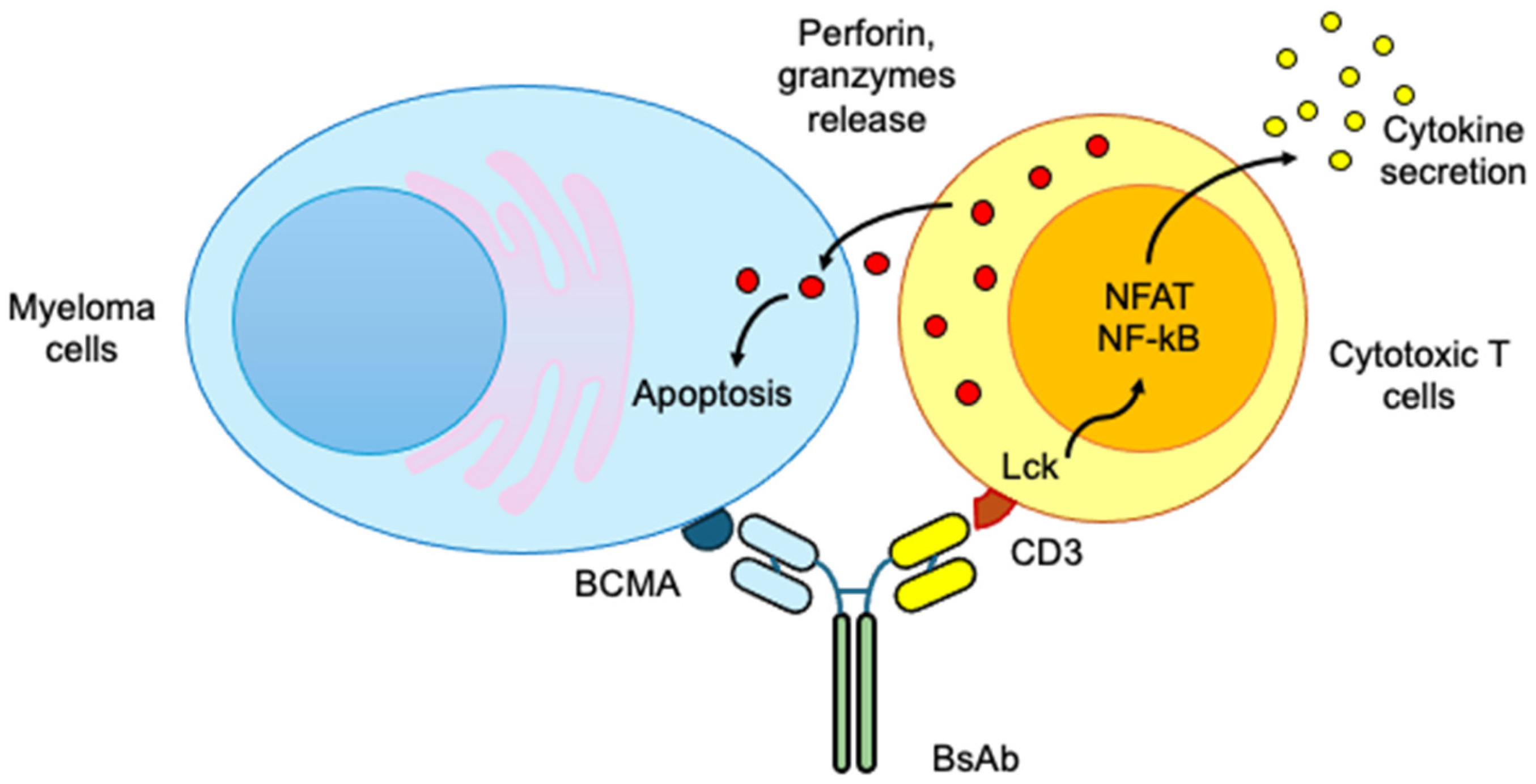
2. Mechanism of Action of Bispecific T Cell Engagers
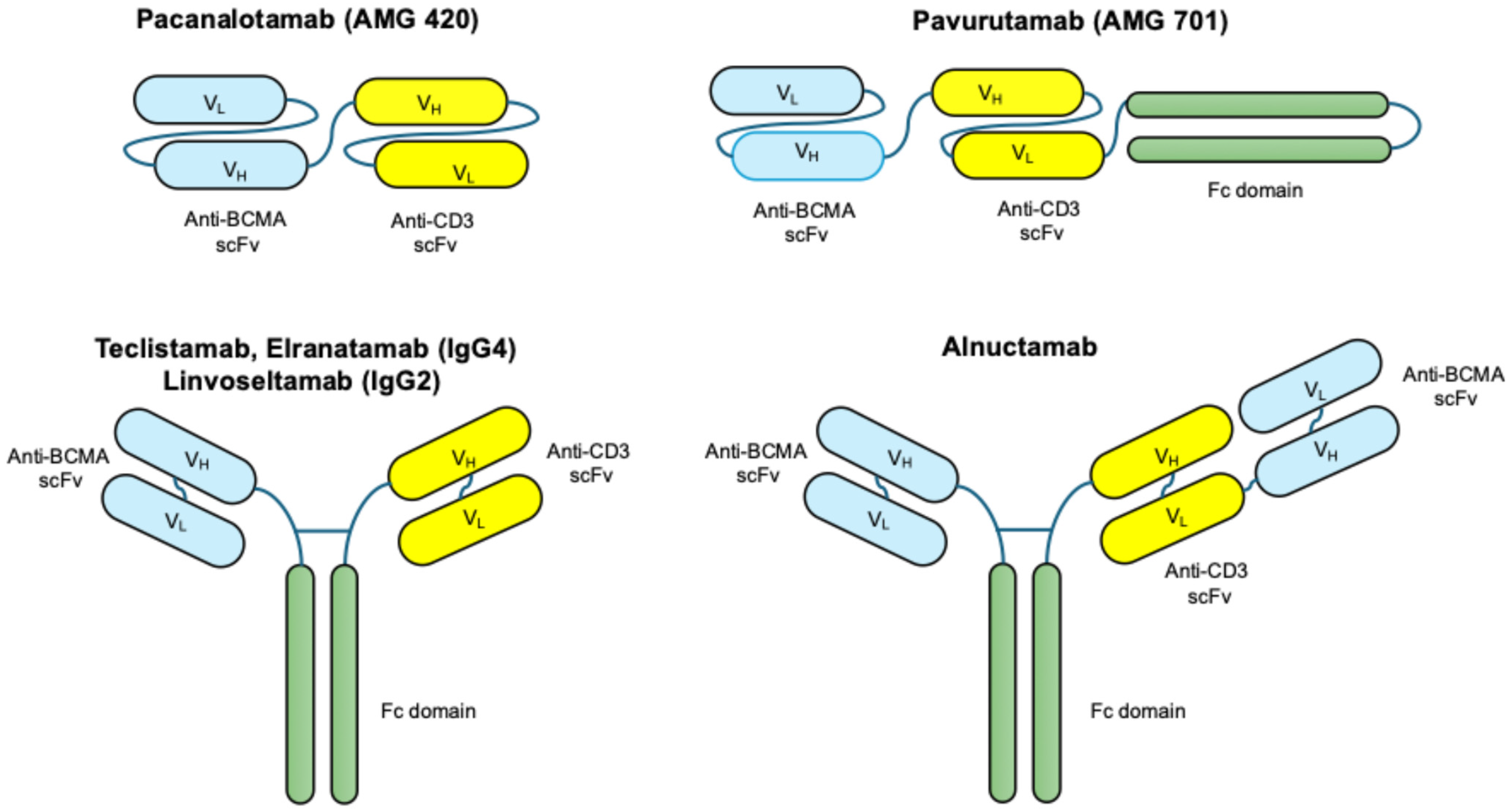
3. Advancements from First- to Next-Generation Bispecific Antibodies in Multiple Myeloma
4. Clinical Advances of Bispecific T Cell Engaging Antibodies in Multiple Myeloma
4.1. Teclistamab (Tecvayli™)
4.2. Elranatamab (Elrexfio™)
4.3. Linvoseltamab (REGN5458)
4.4. Alnuctamab (BMS-986349)
4.5. Talquetamab (Talvey™)
4.6. Cevostamab (RG6160)
5. Bispecific T Cell Engagers Versus Other Emerging Myeloma Immunotherapy Approaches
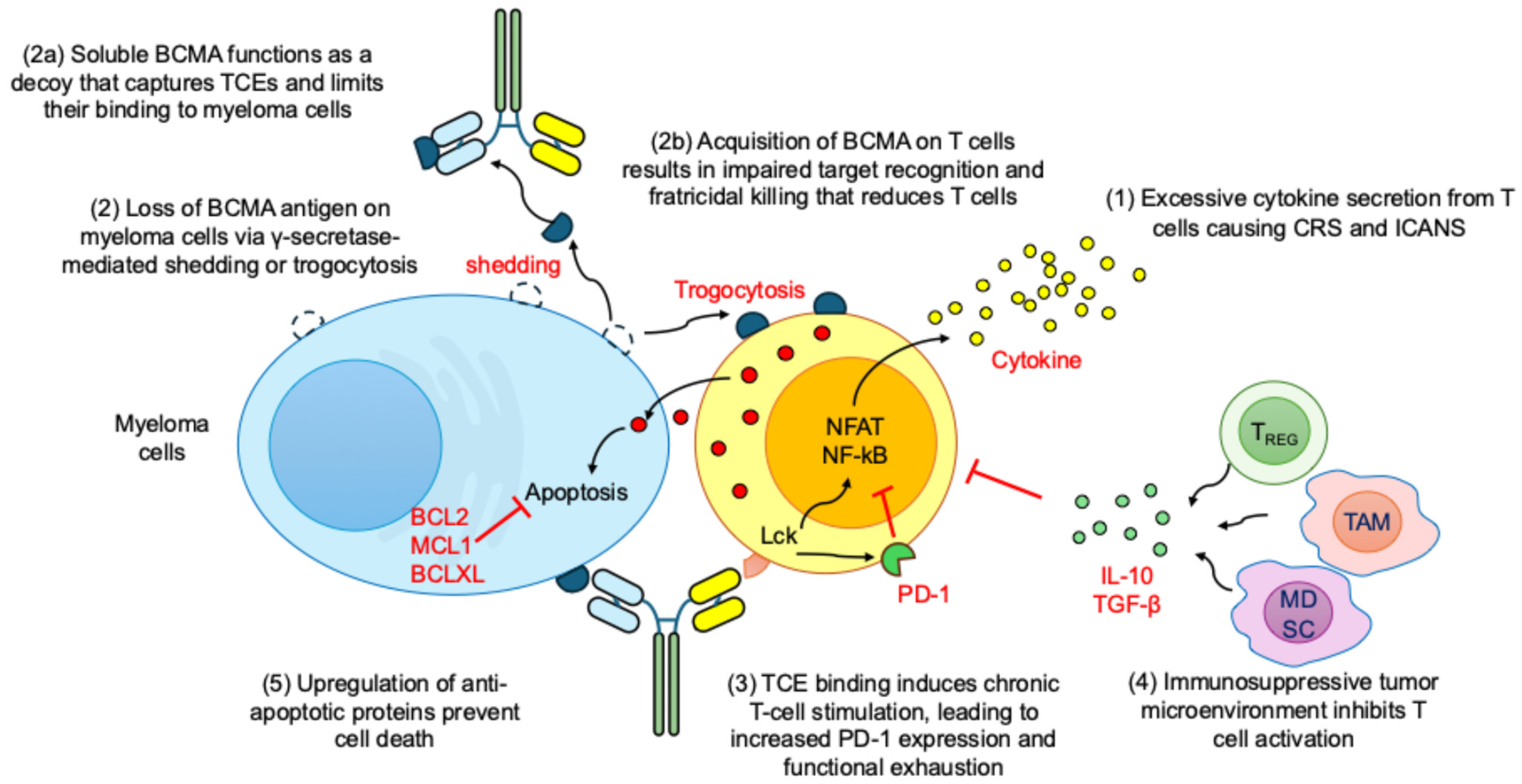
6. Challenges of TCEs Therapy in Multiple Myeloma
6.1. Adverse Effects of TCEs
6.2. Antigen Loss and Trogocytosis-Mediated Antigen Stripping
6.3. T Cell Exhaustion
6.4. Immunosuppressive Bone Marrow Microenvironment
6.5. Altered Apoptotic Signaling in Myeloma Cells
7. Predictive Biomarkers and Patient Selection for TCE Therapy
8. Future Directions
9. Conclusions
Author Contributions
Funding
Institutional Review Board Statement
Informed Consent Statement
Data Availability Statement
Acknowledgments
Conflicts of Interest
Abbreviations
| ADCs | Antibody-Drug Conjugates |
| APRIL | A Proliferation-Inducing Ligand |
| BAFF | B cell Activating Factor |
| B-ALL | B cell Acute Lymphoblastic Leukemia |
| BCMA | B cell Maturation Antigen |
| BCL-2 | B cell Lymphoma 2 |
| BCL-XL | B cell Lymphoma-Extra-Large |
| BCL6 | B cell Lymphoma 6 Protein |
| BH3 | Bcl-2 Homology 3 |
| BiTE | Bispecific T Cell Engager |
| CAR-T | Chimeric Antigen Receptor T Cell |
| CELMoDs | Cereblon E3 Ligase Modulators |
| CR | Complete Response |
| CRS | Cytokine Release Syndrome |
| CTL | Cytotoxic T Lymphocyte |
| DOR | Duration of Response |
| EMA | European Medicines Agency |
| FDA | U.S. Food and Drug Administration |
| FcRH5 | Fc Receptor Homolog 5 |
| FcRn | Neonatal Fc Receptor |
| GPRC5D | G Protein-Coupled Receptor Family C Group 5 Member D |
| HLE-BiTE | Half-Life–Extended-BiTE |
| ICANS | Immune Effector Cell-Associated Neurotoxicity Syndrome |
| IFN-γ | Interferon-Gamma |
| IgG | Immunoglobulin G |
| IL-2 | Interleukin 2 |
| IL-6 | Interleukin 6 |
| IL-10 | Interleukin 10 |
| IMiD | Immunomodulatory Drug |
| IRF4 | Interferon Regulatory Factor 4 |
| ITAM | Immunoreceptor Tyrosine-Based Activation Motif |
| IVIG | Intravenous Immunoglobulin |
| LAG-3 | Lymphocyte-Activation Gene 3 |
| Lck | Lymphocyte-Specific Protein Tyrosine Kinase |
| MCL-1 | Myeloid Cell Leukemia 1 |
| MDSC | Myeloid-Derived Suppressor Cell |
| MM | Multiple Myeloma |
| MRD | Minimal Residual Disease |
| NFAT | Nuclear Factor of Activated T Cells |
| NF-κB | Nuclear Factor Kappa-Light-Chain-Enhancer of Activated B Cells |
| ORR | Overall Response Rate |
| PD-1 | Programmed Cell Death Protein 1 |
| PFS | Progression-Free Survival |
| TREG | Regulatory T |
| RUNX1 | Runt-Related Transcription Factor 1 |
| scFv | Single-Chain Variable Fragment |
| TAM | Tumor-Associated Macrophages |
| TCE | T Cell Engaging Antibody |
| TCR | T Cell Receptor |
| TGF-β | Transforming Growth Factor Beta |
| TIGIT | T Cell Immunoreceptor with Ig and ITIM Domains |
| TIM-3 | T Cell Immunoglobulin and Mucin-Domain Containing 3 |
| TNF-α | Tumor Necrosis Factor Alpha |
| TNFR | Tumor Necrosis Factor Receptor |
| VGPR | Very Good Partial Response |
| XBP1 | X-Box Binding Protein 1 |
| ZAP70 | Zeta-Chain–Associated Protein Kinase 70 |
References
- Rajkumar, S.V. Multiple myeloma: 2022 update on diagnosis, risk stratification, and management. Am. J. Hematol. 2022, 97, 1086–1107. [Google Scholar] [CrossRef] [PubMed]
- Tang, T.F.; Chan, Y.T.; Cheong, H.C.; Cheok, Y.Y.; Anuar, N.A.; Looi, C.Y.; Gan, G.G.; Wong, W.F. Regulatory network of BLIMP1, IRF4, and XBP1 triad in plasmacytic differentiation and multiple myeloma pathogenesis. Cell Immunol. 2022, 380, 104594. [Google Scholar] [CrossRef] [PubMed]
- Tang, T.F.; Chan, Y.T.; Lim, H.J.; Cheok, Y.Y.; Anuar, N.A.; Cheong, C.S.; Looi, C.Y.; Tan, S.M.; Wong, W.F.; Gan, G.G. RUNX1 expression dynamics in plasma cell differentiation and pathogenesis of multiple myeloma. Front. Immunol. 2025, 16, 1643615. [Google Scholar] [CrossRef] [PubMed]
- Alinikula, J.; Nera, K.P.; Junttila, S.; Lassila, O. Alternate pathways for Bcl6-mediated regulation of B cell to plasma cell differentiation. Eur. J. Immunol. 2011, 41, 2404–2413. [Google Scholar] [CrossRef]
- Alberge, J.B.; Dutta, A.K.; Poletti, A.; Coorens, T.H.H.; Lightbody, E.D.; Toenges, R.; Loinaz, X.; Wallin, S.; Dunford, A.; Priebe, O.; et al. Genomic landscape of multiple myeloma and its precursor conditions. Nat. Genet. 2025, 57, 1493–1503. [Google Scholar] [CrossRef]
- Maura, F.; Bolli, N.; Angelopoulos, N.; Dawson, K.J.; Leongamornlert, D.; Martincorena, I.; Mitchell, T.J.; Fullam, A.; Gonzalez, S.; Szalat, R.; et al. Genomic landscape and chronological reconstruction of driver events in multiple myeloma. Nat. Commun. 2019, 10, 3835. [Google Scholar] [CrossRef]
- Dimopoulos, K.; Gimsing, P.; Gronbaek, K. The role of epigenetics in the biology of multiple myeloma. Blood Cancer J. 2014, 4, e207. [Google Scholar] [CrossRef]
- Sharma, A.; Heuck, C.J.; Fazzari, M.J.; Mehta, J.; Singhal, S.; Greally, J.M.; Verma, A. DNA methylation alterations in multiple myeloma as a model for epigenetic changes in cancer. Wiley Interdiscip. Rev. Syst. Biol. Med. 2010, 2, 654–669. [Google Scholar] [CrossRef]
- Xie, Z.; Chooi, J.Y.; Toh, S.H.M.; Yang, D.; Basri, N.B.; Ho, Y.S.; Chng, W.J. MMSET I acts as an oncoprotein and regulates GLO1 expression in t(4;14) multiple myeloma cells. Leukemia 2019, 33, 739–748. [Google Scholar] [CrossRef]
- Popovic, R.; Martinez-Garcia, E.; Giannopoulou, E.G.; Zhang, Q.; Zhang, Q.; Ezponda, T.; Shah, M.Y.; Zheng, Y.; Will, C.M.; Small, E.C.; et al. Histone methyltransferase MMSET/NSD2 alters EZH2 binding and reprograms the myeloma epigenome through global and focal changes in H3K36 and H3K27 methylation. PLoS Genet. 2014, 10, e1004566. [Google Scholar] [CrossRef]
- Gandhi, U.H.; Cornell, R.F.; Lakshman, A.; Gahvari, Z.J.; McGehee, E.; Jagosky, M.H.; Gupta, R.; Varnado, W.; Fiala, M.A.; Chhabra, S.; et al. Outcomes of patients with multiple myeloma refractory to CD38-targeted monoclonal antibody therapy. Leukemia 2019, 33, 2266–2275. [Google Scholar] [CrossRef]
- Chari, A.; Vogl, D.T.; Gavriatopoulou, M.; Nooka, A.K.; Yee, A.J.; Huff, C.A.; Moreau, P.; Dingli, D.; Cole, C.; Lonial, S.; et al. Oral Selinexor-Dexamethasone for Triple-Class Refractory Multiple Myeloma. N. Engl. J. Med. 2019, 381, 727–738. [Google Scholar] [CrossRef] [PubMed]
- Kapur, R.; McCarron, J.; Rajeeve, S.; Mohyuddin, G.R. The landscape of clinical trials for heavily pretreated multiple myeloma: Opportunity for more randomization? Leuk. Lymphoma 2025, 66, 355–357. [Google Scholar] [CrossRef] [PubMed]
- Ebraheem, M.S.; Gertz, M.; Mian, H. Optimizing multiple Myeloma clinical trials: Research direction, addressing limitations, and strategies for improvement. Leuk. Lymphoma 2025, 66, 16–25. [Google Scholar] [CrossRef] [PubMed]
- Lytvynova, O.; Jwayyed, J.; Pastel, D.; Prasad, R.; Khouri, J.; Williams, L.; Mazzoni, S.; Raza, S.; Anwer, F. Insights from Clinical Trials: Evidence-Based Recommendations for Induction Treatment of Newly Diagnosed Transplant-Eligible Multiple Myeloma. Antibodies 2024, 13, 80. [Google Scholar] [CrossRef]
- Korst, C.; Groen, K.; Bosman, P.W.C.; van der Valk, F.; Verkleij, C.P.M.; Kruyswijk, S.; de Ruijter, M.E.M.; Heijink, D.M.; Kuipers, M.T.; Zweegman, S.; et al. Prophylactic tocilizumab reduces the incidence of cytokine release syndrome in relapsed/refractory myeloma patients treated with teclistamab: Implications for outpatient step-up dosing. Hemasphere 2024, 8, e132. [Google Scholar] [CrossRef]
- Scott, S.A.; Marin, E.M.; Maples, K.T.; Joseph, N.S.; Hofmeister, C.C.; Gupta, V.A.; Dhodapkar, M.V.; Kaufman, J.L.; Lonial, S.; Nooka, A.K. Prophylactic tocilizumab to prevent cytokine release syndrome (CRS) with teclistamab: A single-center experience. Blood Cancer J. 2023, 13, 191. [Google Scholar] [CrossRef]
- Prager, I.; Watzl, C. Mechanisms of natural killer cell-mediated cellular cytotoxicity. J. Leukoc. Biol. 2019, 105, 1319–1329. [Google Scholar] [CrossRef]
- Cullen, S.P.; Martin, S.J. Mechanisms of granule-dependent killing. Cell Death Differ. 2008, 15, 251–262. [Google Scholar] [CrossRef]
- Correnti, C.E.; Laszlo, G.S.; de van der Schueren, W.J.; Godwin, C.D.; Bandaranayake, A.; Busch, M.A.; Gudgeon, C.J.; Bates, O.M.; Olson, J.M.; Mehlin, C.; et al. Simultaneous multiple interaction T-cell engaging (SMITE) bispecific antibodies overcome bispecific T-cell engager (BiTE) resistance via CD28 co-stimulation. Leukemia 2018, 32, 1239–1243. [Google Scholar] [CrossRef]
- Roselli, E.; Boucher, J.C.; Li, G.; Kotani, H.; Spitler, K.; Reid, K.; Cervantes, E.V.; Bulliard, Y.; Tu, N.; Lee, S.B.; et al. 4-1BB and optimized CD28 co-stimulation enhances function of human mono-specific and bi-specific third-generation CAR T cells. J. Immunother. Cancer 2021, 9, e003354. [Google Scholar] [CrossRef] [PubMed]
- Boissel, N.; Chiaretti, S.; Papayannidis, C.; Ribera, J.M.; Bassan, R.; Sokolov, A.N.; Alam, N.; Brescianini, A.; Pezzani, I.; Kreuzbauer, G.; et al. Real-world use of blinatumomab in adult patients with B-cell acute lymphoblastic leukemia in clinical practice: Results from the NEUF study. Blood Cancer J. 2023, 13, 2. [Google Scholar] [CrossRef] [PubMed]
- Topp, M.S.; Gokbuget, N.; Stein, A.S.; Zugmaier, G.; O’Brien, S.; Bargou, R.C.; Dombret, H.; Fielding, A.K.; Heffner, L.; Larson, R.A.; et al. Safety and activity of blinatumomab for adult patients with relapsed or refractory B-precursor acute lymphoblastic leukaemia: A multicentre, single-arm, phase 2 study. Lancet Oncol. 2015, 16, 57–66. [Google Scholar] [CrossRef] [PubMed]
- Rodriguez, C.; Rodriguez, T.; Kentos, A.; Driessen, C.; Sunami, K.; Lesokhin, A.M.; Yee, A.J.; Minella, A.C.; Maraboina, R.; Upreti, V.V.; et al. BCMA-targeting BiTE molecule AMG 420 in relapsed or refractory multiple myeloma: A phase 1b open-label expansion study. Leuk. Lymphoma 2025, 66, 2108–2117. [Google Scholar] [CrossRef]
- Topp, M.S.; Duell, J.; Zugmaier, G.; Attal, M.; Moreau, P.; Langer, C.; Kronke, J.; Facon, T.; Salnikov, A.V.; Lesley, R.; et al. Anti-B-Cell Maturation Antigen BiTE Molecule AMG 420 Induces Responses in Multiple Myeloma. J. Clin. Oncol. 2020, 38, 775–783. [Google Scholar] [CrossRef]
- Mocquot, P.; Mossazadeh, Y.; Lapierre, L.; Pineau, F.; Despas, F. The pharmacology of blinatumomab: State of the art on pharmacodynamics, pharmacokinetics, adverse drug reactions and evaluation in clinical trials. J. Clin. Pharm. Ther. 2022, 47, 1337–1351. [Google Scholar] [CrossRef]
- Zhu, M.; Wu, B.; Brandl, C.; Johnson, J.; Wolf, A.; Chow, A.; Doshi, S. Blinatumomab, a Bispecific T-cell Engager (BiTE((R))) for CD-19 Targeted Cancer Immunotherapy: Clinical Pharmacology and Its Implications. Clin. Pharmacokinet. 2016, 55, 1271–1288. [Google Scholar] [CrossRef]
- Hu, Y.; Xie, Y.; Wang, X.; Yang, L.; Geng, H.; Yi, Z.; Zhang, Y.; Ma, L.; Chen, F. Targeting BCMA in multiple myeloma: Designs, challenges, and future directions. Cancer Immunol. Immunother. 2025, 74, 77. [Google Scholar] [CrossRef]
- Goldstein, R.L.; Goyos, A.; Li, C.M.; Deegen, P.; Bogner, P.; Sternjak, A.; Thomas, O.; Klinger, M.; Wahl, J.; Friedrich, M.; et al. AMG 701 induces cytotoxicity of multiple myeloma cells and depletes plasma cells in cynomolgus monkeys. Blood Adv. 2020, 4, 4180–4194. [Google Scholar] [CrossRef]
- Mol, I.; Hu, Y.; LeBlanc, T.W.; Cappelleri, J.C.; Chu, H.; Nador, G.; Aydin, D.; Perez Cruz, I.; Hlavacek, P. Matching-Adjusted Indirect Comparison of Elranatamab versus Teclistamab in Patients with Triple-Class Exposed/Refractory Multiple Myeloma: Updated Results. J. Blood Med. 2025, 16, 233–239. [Google Scholar] [CrossRef]
- Usmani, S.Z.; Garfall, A.L.; van de Donk, N.; Nahi, H.; San-Miguel, J.F.; Oriol, A.; Rosinol, L.; Chari, A.; Bhutani, M.; Karlin, L.; et al. Teclistamab, a B-cell maturation antigen x CD3 bispecific antibody, in patients with relapsed or refractory multiple myeloma (MajesTEC-1): A multicentre, open-label, single-arm, phase 1 study. Lancet 2021, 398, 665–674. [Google Scholar] [CrossRef] [PubMed]
- Moreau, P.; Garfall, A.L.; van de Donk, N.; Nahi, H.; San-Miguel, J.F.; Oriol, A.; Nooka, A.K.; Martin, T.; Rosinol, L.; Chari, A.; et al. Teclistamab in Relapsed or Refractory Multiple Myeloma. N. Engl. J. Med. 2022, 387, 495–505. [Google Scholar] [CrossRef] [PubMed]
- Lesokhin, A.M.; Tomasson, M.H.; Arnulf, B.; Bahlis, N.J.; Miles Prince, H.; Niesvizky, R.; Rodriotaguez-Otero, P.; Martinez-Lopez, J.; Koehne, G.; Touzeau, C.; et al. Elranatamab in relapsed or refractory multiple myeloma: Phase 2 MagnetisMM-3 trial results. Nat. Med. 2023, 29, 2259–2267. [Google Scholar] [CrossRef] [PubMed]
- Tomasson, M.H.; Iida, S.; Niesvizky, R.; Mohty, M.; Bahlis, N.J.; Martinez-Lopez, J.; Koehne, G.; Rodriguez-Otero, P.; Miles Prince, H.; Viqueira, A.; et al. Long-term survival and safety of elranatamab in patients with relapsed or refractory multiple myeloma: Update from the MagnetisMM-3 study. Hemasphere 2024, 8, e136. [Google Scholar] [CrossRef]
- Avigan, Z.M.; Rattu, M.A.; Richter, J. An evaluation of linvoseltamab for treatment of relapsed/refractory multiple myeloma. Expert. Opin. Biol. Ther. 2025, 25, 221–228. [Google Scholar] [CrossRef]
- Lee, H.C.; Bumma, N.; Richter, J.; Zonder, J.A.; Hoffman, J.E.; Zhou, Z.Y.; Garcia-Horton, V.; Fillbrunn, M.; Wang, H.; Mattera, M.; et al. Indirect Comparison of Linvoseltamab Versus Teclistamab for the Treatment of Triple-Class Exposed Relapsed/Refractory Multiple Myeloma. Clin. Lymphoma Myeloma Leuk. 2025, 25, 897–909.e8. [Google Scholar] [CrossRef]
- Wong, S.W.; Bar, N.; Victoria Mateos, M.; Ribas, P.; Hansson, M.; Paris, L.; Hofmeister, C.; Rodriguez-Otero, P.; Aranzazu Bermúdez, M.; Santoro, A.; et al. Alnuctamab (ALNUC.; BMS-986349; CC-93269), a BCMA × CD3 T-Cell Engager, in Patients (PTS) with Relapsed/Refractory Multiple Myeloma (RRMM): Latest Results from a Phase 1 First-In-Human Clinical Study. HemaSphere 2023, 7, e1220745. [Google Scholar] [CrossRef]
- Wong, W.; Bar, N.; Paris, L.; Hofmeister, C.C.; Hansson, M.; Santoro, A.; Mateos, M.-V.; Rodríguez-Otero, P.; Lund, J.; Encinas, C.; et al. Alnuctamab (ALNUC.; BMS-986349; CC-93269), a B-Cell Maturation Antigen (BCMA) × CD3 T-Cell Engager (TCE), in Patients (pts) with Relapsed/Refractory Multiple Myeloma (RRMM): Results from a Phase 1 First-in-Human Clinical Study. Blood 2022, 140, 400–402. [Google Scholar] [CrossRef]
- Martin, T.G.; Moreau, P.; Usmani, S.Z.; Garfall, A.; Mateos, M.V.; San-Miguel, J.F.; Oriol, A.; Nooka, A.K.; Rosinol, L.; Chari, A.; et al. Teclistamab Improves Patient-Reported Symptoms and Health-Related Quality of Life in Relapsed or Refractory Multiple Myeloma: Results from the Phase II MajesTEC-1 Study. Clin. Lymphoma Myeloma Leuk. 2024, 24, 194–202. [Google Scholar] [CrossRef]
- Zamagni, E.; Silzle, I.; Špička, I.; Tahri, S.; Lonergan, S.; Nijhof, I.S.; Falcone, A.P.; Terpos, E.; Radocha, J.; Mina, R.; et al. Phase 3 Study of Teclistamab (Tec) in Combination with Lenalidomide (Len) and Tec Alone Versus Len Alone in Newly Diagnosed Multiple Myeloma (NDMM) As Maintenance Therapy Following Autologous Stem Cell Transplantation (ASCT): Safety Run-in (SRI) Results from the Majestec-4/EMN30 Trial. Blood 2024, 144, 494. [Google Scholar]
- Bahlis, N.J.; Nooka, A.K.; DiBonaventura, M.; Sullivan, S.T.; Chaudhary, M.A.; Aydin, D.; Mohty, M. The impact of reduced dosing frequency of elranatamab on patient-reported outcomes in patients with relapsed or refractory multiple myeloma: Results from MagnetisMM-3. Hemasphere 2025, 9, e70224. [Google Scholar] [CrossRef]
- Bumma, N.; Richter, J.; Jagannath, S.; Lee, H.C.; Hoffman, J.E.; Suvannasankha, A.; Zonder, J.A.; Shah, M.R.; Lentzsch, S.; Baz, R.; et al. Linvoseltamab for Treatment of Relapsed/Refractory Multiple Myeloma. J. Clin. Oncol. 2024, 42, 2702–2712. [Google Scholar] [CrossRef]
- Kiesel, B.; Osawa, M.; Masilamani, M.; Bar, M.; Hsu, K.; Godwin, C.; Burgess, M.; Lamba, M.; Gaudy, A. Informing the Recommended Phase III Dose of Alnuctamab, a CD3 × BCMA T-Cell Engager, Using Population Pharmacokinetics and Exposure-Response Analysis. Clin. Pharmacol. Ther. 2024, 116, 866–874. [Google Scholar] [CrossRef]
- Verkleij, C.P.M.; Broekmans, M.E.C.; van Duin, M.; Frerichs, K.A.; Kuiper, R.; de Jonge, A.V.; Kaiser, M.; Morgan, G.; Axel, A.; Boominathan, R.; et al. Preclinical activity and determinants of response of the GPRC5DxCD3 bispecific antibody talquetamab in multiple myeloma. Blood Adv. 2021, 5, 2196–2215. [Google Scholar] [CrossRef] [PubMed]
- Chari, A.; Minnema, M.C.; Berdeja, J.G.; Oriol, A.; van de Donk, N.; Rodriguez-Otero, P.; Askari, E.; Mateos, M.V.; Costa, L.J.; Caers, J.; et al. Talquetamab, a T-Cell-Redirecting GPRC5D Bispecific Antibody for Multiple Myeloma. N. Engl. J. Med. 2022, 387, 2232–2244. [Google Scholar] [CrossRef] [PubMed]
- Shaver, J.; Horton, D.; Halford, Z. Targeting GPRC5D With Talquetamab: A New Frontier in Bispecific Antibody Therapy for Relapsed/Refractory Multiple Myeloma. Ann. Pharmacother. 2025, 59, 350–363. [Google Scholar] [CrossRef]
- Richter, J.; Thomas, S.K.; Krishnan, A.Y.; Laubach, J.P.; Cohen, A.D.; Trudel, S.; Costa, L.J.; Bahlis, N.J.; Forsberg, P.A.; Kaedbey, R.; et al. Cevostamab in Patients with Heavily Pretreated Relapsed/Refractory Multiple Myeloma (RRMM): Updated Results from an Ongoing Phase I Study Demonstrate Clinically Meaningful Activity and Manageable Safety and Inform the Doses and Regimen for Combination Studies. Blood 2024, 44, 1021. [Google Scholar] [CrossRef]
- Tacchetti, P.; Talarico, M.; Barbato, S.; Pantani, L.; Mancuso, K.; Rizzello, I.; Zamagni, E.; Cavo, M. Antibody-drug conjugates, bispecific antibodies and CAR-T cells therapy in multiple myeloma. Expert. Rev. Anticancer. Ther. 2024, 24, 379–395. [Google Scholar] [CrossRef] [PubMed]
- McMillan, A.; Warcel, D.; Popat, R. Antibody-drug conjugates for multiple myeloma. Expert. Opin. Biol. Ther. 2021, 21, 889–901. [Google Scholar] [CrossRef]
- van de Donk, N.; Bahlis, N.J.; Pawlyn, C.; Gay, F.; Mateos, M.V.; Weisel, K.; Lonial, S.; Richardson, P.G. The Role of CELMoD Agents in Multiple Myeloma. Onco Targets Ther. 2025, 18, 921–933. [Google Scholar] [CrossRef]
- Meermeier, E.W.; Pfeffer, K.; Stein, C.K.; Sharik, M.; Du, M.T.; Tafoya Alvarado, Y.; Shi, C.X.; Zhu, Y.X.; Bergsagel, P.L.; Chesi, M. An immunostimulatory CELMoD combination overcomes resistance to T-cell engagers caused by a high multiple myeloma burden. Blood 2025. [Google Scholar] [CrossRef]
- Yazdanparast, S.; Bakhtiyaridovvombaygi, M.; Davoodi-Moghaddam, Z.; Asadi, G.; Monjezi, F.; Kiyamehr, P.; Gharehbaghian, A.; Abroun, S.; Moradi, N. CAR-NK cell therapy in multiple myeloma: From preclinical and clinical landscape to joining the force for treatment strategies optimization. Cell Commun. Signal 2025, 23, 485. [Google Scholar] [CrossRef] [PubMed]
- Roshandel, E.; Ghaffari-Nazari, H.; Mohammadian, M.; Salimi, M.; Abroun, S.; Mirfakhraie, R.; Hajifathali, A. NK cell therapy in relapsed refractory multiple myeloma. Clin. Immunol. 2023, 246, 109168. [Google Scholar] [CrossRef]
- Golmohammadi, M.; Raza, S.; Albayyadhi, M.; Sholehrasa, H.; Khouri, J.; Williams, L.; Hansen, D.K.; Moradi, A.; Xu, X.; Albliwi, M.; et al. Comprehensive assessment of adverse event profiles associated with bispecific antibodies in multiple myeloma. Blood Cancer J. 2025, 15, 130. [Google Scholar] [CrossRef] [PubMed]
- Ludwig, H.; Terpos, E.; van de Donk, N.; Mateos, M.V.; Moreau, P.; Dimopoulos, M.A.; Delforge, M.; Rodriguez-Otero, P.; San-Miguel, J.; Yong, K.; et al. Prevention and management of adverse events during treatment with bispecific antibodies and CAR T cells in multiple myeloma: A consensus report of the European Myeloma Network. Lancet Oncol. 2023, 24, e255–e269. [Google Scholar] [CrossRef] [PubMed]
- Lancman, G.; Parsa, K.; Kotlarz, K.; Avery, L.; Lurie, A.; Lieberman-Cribbin, A.; Cho, H.J.; Parekh, S.S.; Richard, S.; Richter, J.; et al. IVIg Use Associated with Ten-Fold Reduction of Serious Infections in Multiple Myeloma Patients Treated with Anti-BCMA Bispecific Antibodies. Blood Cancer Discov. 2023, 4, 440–451. [Google Scholar] [CrossRef]
- Lee, H.; Ahn, S.; Maity, R.; Leblay, N.; Ziccheddu, B.; Truger, M.; Chojnacka, M.; Cirrincione, A.; Durante, M.; Tilmont, R.; et al. Mechanisms of antigen escape from BCMA- or GPRC5D-targeted immunotherapies in multiple myeloma. Nat. Med. 2023, 29, 2295–2306. [Google Scholar] [CrossRef]
- Firestone, R.S.; Socci, N.D.; Shekarkhand, T.; Zhu, M.; Qin, W.G.; Hultcrantz, M.; Mailankody, S.; Tan, C.R.; Korde, N.; Lesokhin, A.M.; et al. Antigen escape as a shared mechanism of resistance to BCMA-directed therapies in multiple myeloma. Blood 2024, 144, 402–407. [Google Scholar] [CrossRef]
- Guha, A.; Banerjee, S. Trogocytosis at the crossroad of cancer and immunity: Mechanisms, implications and therapeutic perspectives. Front. Cell Dev. Biol. 2025, 13, 1676945. [Google Scholar] [CrossRef]
- Krejcik, J.; van de Donk, N. Trogocytosis represents a novel mechanism of action of daratumumab in multiple myeloma. Oncotarget 2018, 9, 33621–33622. [Google Scholar] [CrossRef]
- Camviel, N.; Wolf, B.; Croce, G.; Gfeller, D.; Zoete, V.; Arber, C. Both APRIL and antibody-fragment-based CAR T cells for myeloma induce BCMA downmodulation by trogocytosis and internalization. J. Immunother. Cancer 2022, 10, e005091. [Google Scholar] [CrossRef]
- Chow, A.; Perica, K.; Klebanoff, C.A.; Wolchok, J.D. Clinical implications of T cell exhaustion for cancer immunotherapy. Nat. Rev. Clin. Oncol. 2022, 19, 775–790. [Google Scholar] [CrossRef] [PubMed]
- Zylka, K.; Kubicki, T.; Gil, L.; Dytfeld, D. T-cell exhaustion in multiple myeloma. Expert. Rev. Hematol. 2024, 17, 295–312. [Google Scholar] [CrossRef] [PubMed]
- Zelle-Rieser, C.; Thangavadivel, S.; Biedermann, R.; Brunner, A.; Stoitzner, P.; Willenbacher, E.; Greil, R.; Johrer, K. T cells in multiple myeloma display features of exhaustion and senescence at the tumor site. J. Hematol. Oncol. 2016, 9, 116. [Google Scholar] [CrossRef] [PubMed]
- Zhao, Y.; Du, J.; Shen, X. Targeting myeloid-derived suppressor cells in tumor immunotherapy: Current, future and beyond. Front. Immunol. 2023, 14, 1157537. [Google Scholar] [CrossRef]
- Wu, Y.; Yi, M.; Niu, M.; Mei, Q.; Wu, K. Myeloid-derived suppressor cells: An emerging target for anticancer immunotherapy. Mol. Cancer 2022, 21, 184. [Google Scholar] [CrossRef]
- Racacho, K.J.; Shiau, Y.P.; Villa, R.; Mahri, S.; Tang, M.; Lin, T.Y.; Li, Y. The tumor immune microenvironment: Implications for cancer immunotherapy, treatment strategies, and monitoring approaches. Front. Immunol. 2025, 16, 1621812. [Google Scholar] [CrossRef]
- Slomp, A.; Peperzak, V. Role and Regulation of Pro-survival BCL-2 Proteins in Multiple Myeloma. Front. Oncol. 2018, 8, 533. [Google Scholar] [CrossRef]
- De Veirman, K.; Van Ginderachter, J.A.; Lub, S.; De Beule, N.; Thielemans, K.; Bautmans, I.; Oyajobi, B.O.; De Bruyne, E.; Menu, E.; Lemaire, M.; et al. Multiple myeloma induces Mcl-1 expression and survival of myeloid-derived suppressor cells. Oncotarget 2015, 6, 10532–10547. [Google Scholar] [CrossRef]
- Freeman, C.L.; Abraham-Miranda, J.; Menges, M.; Atkins, R.M.; Noble, J.; Liu, H.; Corallo, S.; Cuadrado Delgado, L.A.; Ribickas, A.J.; Savid-Frontera, C.; et al. Enhanced CAR-T cell function and mitochondrial fitness from earlier unfractionated stem cell product in multiple myeloma. Mol. Ther. 2025, 33, 3576–3589. [Google Scholar] [CrossRef]
- Binder, A.F.; Walker, C.J.; Mark, T.M.; Baljevic, M. Impacting T-cell fitness in multiple myeloma: Potential roles for selinexor and XPO1 inhibitors. Front. Immunol. 2023, 14, 1275329. [Google Scholar] [CrossRef] [PubMed]
- Lee, H.; Durante, M.; Skerget, S.; Vishwamitra, D.; Benaoudia, S.; Ahn, S.; Poorebrahim, M.; Barakat, E.; Jung, D.; Leblay, N.; et al. Impact of soluble BCMA and non-T-cell factors on refractoriness to BCMA-targeting T-cell engagers in multiple myeloma. Blood 2024, 144, 2637–2651. [Google Scholar] [CrossRef] [PubMed]
- Samur, M.K.; Fulciniti, M.; Aktas Samur, A.; Bazarbachi, A.H.; Tai, Y.T.; Prabhala, R.; Alonso, A.; Sperling, A.S.; Campbell, T.; Petrocca, F.; et al. Biallelic loss of BCMA as a resistance mechanism to CAR T cell therapy in a patient with multiple myeloma. Nat. Commun. 2021, 12, 868. [Google Scholar] [CrossRef] [PubMed]
- Zhou, X.; Rasche, L.; Kortum, K.M.; Mersi, J.; Einsele, H. BCMA loss in the epoch of novel immunotherapy for multiple myeloma: From biology to clinical practice. Haematologica 2023, 108, 958–968. [Google Scholar] [CrossRef]
- Goebeler, M.E.; Stuhler, G.; Bargou, R. Bispecific and multispecific antibodies in oncology: Opportunities and challenges. Nat. Rev. Clin. Oncol. 2024, 21, 539–560. [Google Scholar] [CrossRef]
- Lim, S.M.; Pyo, K.H.; Soo, R.A.; Cho, B.C. The promise of bispecific antibodies: Clinical applications and challenges. Cancer Treat. Rev. 2021, 99, 102240. [Google Scholar] [CrossRef]
- Pillarisetti, K.; Yang, D.; Luistro, L.; Yao, J.; Smith, M.; Vulfson, P.; Testa, J., Jr.; Ponticiello, R.; Brodeur, S.R.; Heidrich, B.; et al. Ramantamig (JNJ-79635322), a novel T-cell-engaging trispecific antibody targeting BCMA, GPRC5D, and CD3, in multiple myeloma models. Blood 2025. [Google Scholar] [CrossRef]
- Bandala, C.; Flores-Robles, D.; Sierra-Martinez, P.; Millan-Vega, A.; Ruiz Gonzalez, E.; Perez-Santos, M. Trispecific anti-CD3/BCMA/CD38 antibodies for multiple myeloma: A patent evaluation of US20240132615. Expert. Opin. Ther. Pat. 2025, 35, 1–6. [Google Scholar] [CrossRef]
- Zabaleta, A.; Blanco, L.; Kim, P.S.; Bisht, K.; Wang, H.; Van de Velde, H.; Lasa, M.; Tamariz-Amador, L.E.; Rodriguez-Otero, P.; San-Miguel, J.; et al. A CD38/CD3xCD28 trispecific T-cell engager as a potentially active agent in multiple myeloma patients relapsed and/or refractory to anti-CD38 monoclonal antibodies. Br. J. Haematol. 2024, 205, 2262–2267. [Google Scholar] [CrossRef]
- Carretero-Iglesia, L.; Hall, O.J.; Berret, J.; Pais, D.; Estoppey, C.; Chimen, M.; Monney, T.; Loyau, J.; Dreyfus, C.; Macoin, J.; et al. ISB 2001 trispecific T cell engager shows strong tumor cytotoxicity and overcomes immune escape mechanisms of multiple myeloma cells. Nat. Cancer 2024, 5, 1494–1514. [Google Scholar] [CrossRef]
- Keller, A.L.; Reiman, L.T.; Perez de Acha, O.; Parzych, S.E.; Forsberg, P.A.; Kim, P.S.; Bisht, K.; Wang, H.; van de Velde, H.; Sherbenou, D.W. Ex Vivo Efficacy of SAR442257 Anti-CD38 Trispecific T-cell Engager in Multiple Myeloma Relapsed After Daratumumab and BCMA-targeted Therapies. Cancer Res. Commun. 2024, 4, 757–764. [Google Scholar] [CrossRef] [PubMed]
- Pont, M.J.; Hill, T.; Cole, G.O.; Abbott, J.J.; Kelliher, J.; Salter, A.I.; Hudecek, M.; Comstock, M.L.; Rajan, A.; Patel, B.K.R.; et al. gamma-Secretase inhibition increases efficacy of BCMA-specific chimeric antigen receptor T cells in multiple myeloma. Blood 2019, 134, 1585–1597. [Google Scholar] [CrossRef] [PubMed]
- Cowan, A.J.; Pont, M.J.; Sather, B.D.; Turtle, C.J.; Till, B.G.; Libby, E.N., 3rd; Coffey, D.G.; Tuazon, S.A.; Wood, B.; Gooley, T.; et al. gamma-Secretase inhibitor in combination with BCMA chimeric antigen receptor T-cell immunotherapy for individuals with relapsed or refractory multiple myeloma: A phase 1, first-in-human trial. Lancet Oncol. 2023, 24, 811–822. [Google Scholar] [CrossRef] [PubMed]
- Chari, A.; van de Donk, N.; Dholaria, B.; Weisel, K.C.; Mateos, M.V.; Goldschmidt, H.; Martin, T.G.; Morillo, D.; Reece, D.; Rodriguez-Otero, P.; et al. Talquetamab plus daratumumab for the treatment of relapsed or refractory multiple myeloma in the TRIMM-2 study. Blood 2025. [Google Scholar] [CrossRef]
- Cohen, Y.C.; Magen, H.; Gatt, M.; Sebag, M.; Kim, K.; Min, C.K.; Ocio, E.M.; Yoon, S.S.; Chu, M.P.; Rodriguez-Otero, P.; et al. Talquetamab plus Teclistamab in Relapsed or Refractory Multiple Myeloma. N. Engl. J. Med. 2025, 392, 138–149. [Google Scholar] [CrossRef]
- Manteca, M.V.M.; Grosicki, S.; Kim, K.; Negre, E.; Vandendries, E. Magnetismm-7: An Open-Label, Multicenter, Randomized Phase 3 Study of Elranatamab Versus Lenalidomide in Post-Transplant Patients with Newly Diagnosed Multiple Myeloma. Hemasphere 2023, 7, e4258276. [Google Scholar] [CrossRef]
- Yaël, C.C.; Moreau, P.; Tolbert, J.; Qin, X.; Ma, X.; Vieyra, D.; Langlois, A.; Courtoux, C.; Terry, W.; Pei, L.; et al. MonumenTAL-3: Phase 3 Trial of Talquetamab + Daratumumab ± Pomalidomide Versus Daratumumab + Pomalidomide + Dexamethasone in Relapsed/Refractory Multiple Myeloma Following ≥1 Prior Line of Therapy. Blood 2022, 140, 4418–4419. [Google Scholar] [CrossRef]



| Agent | Manufacturer (Headquarter City, Country) | Structure | Fc Domain | Half-Life | Route & Dosing Schedule |
|---|---|---|---|---|---|
| Pacanalotamab (AMG 420) | Amgen—Thousand Oaks, CA, USA | Tandem scFv–linker–scFv | No Fc | ~2 h | Continuous IV infusion |
| Pavurutamab (AMG 701) | Amgen—Thousand Oaks, CA, USA | HLE-BiTE | Engineered Fc /albumin-binding | Days | Intermittent IV weekly/biweekly |
| Teclistamab (Tecvayli®) | Janssen/Johnson & Johnson—Titusville, NJ, USA | Full-length IgG4 | Fc with effector function disabled | ~2–3 weeks | SC (step-up) → weekly |
| Linvoseltamab (REGN5458) | Regeneron Pharmaceuticals—Tarrytown, NY, USA | Full-length IgG4 | Fc with effector function disabled | ~2–3 weeks | IV (step-up) → weekly/biweekly |
| Elranatamab (Elrexfio™) | Pfizer—New York, NY USA | Full-length IgG2 | Fc with effector function disabled | ~21–30 days | SC (step-up) → weekly → biweekly |
| Alnuctamab (BMS-986349) | Bristol Myers Squibb (BMS)—New York, NY, USA | Asymmetric 2+1 IgG-like | Fc with effector function disabled | Week-range | IV or SC (step-up) → weekly/biweekly |
| Agent (Target) | Manufacturer | Key Trial | Population | ORR (%) | Median PFS (Months) |
|---|---|---|---|---|---|
| Teclistamab (BCMA×CD3) | Janssen/Johnson & Johnson—Titusville, NJ, USA | MajesTEC-1 | ≥5 prior lines, triple-class refractory | 63 | 11.3 |
| Elranatamab (BCMA×CD3) | Pfizer—New York, NY, USA | MagnetisMM-3 | ≥3 prior lines, prior BCMA-naïve | 61 | 12–15 |
| Linvoseltamab (BCMA×CD3) | Regeneron Pharmaceuticals—Tarrytown, NY, USA | LINKER-MM1 | RRMM, median 5 prior lines | 71 | – |
| Talquetamab (GPRC5D×CD3) | Janssen/Johnson & Johnson—Titusville, NJ, USA | MonumenTAL-1 | Heavily pretreated, post-BCMA allowed | 73 | 7–8 |
| Cevostamab (FcRH5×CD3) | Genentech/Roche (South San Francisco, CA, USA/Basel, Switzerland) | GO39775 | RRMM, including prior BCMA exposure | 56 | 8–9 |
| Alnuctamab (BCMA×CD3) | Bristol Myers Squibb (BMS)—New York, NY, USA | CC-93269-MM-001 | RRMM, heavily pretreated; ≥3–4 prior lines | ~80 * | – |
| Modality | Format | Durability of Response | Key Toxicities | Cost | Facility |
|---|---|---|---|---|---|
| TCEs | Off-the-shelf bispecific antibodies | Variable; relapse possible due to antigen escape and T cell exhaustion | CRS/ICANS, cytopenias, infections | High | Immunotherapy trained centers |
| CAR-T Cell Therapy | Autologous genetically engineered T cells | Often long-lasting; potential for durable remission | CRS/ICANS, prolonged cytopenias, infections | Very high | Advanced cellular-therapy centers |
| ADC Therapy | Target-directed antibody–drug conjugate | Limited; typically transient disease control | Ocular toxicity, cytopenias, fatigue | Moderate–high | Standard oncology infusion units |
| CELMoDs | Oral small-molecule immune modulators | Moderate; often enhanced in combination | Cytopenias, rash, thrombosis | Moderate | Widely accessible outpatient settings |
| NK Cell Therapies | Allogeneic or engineered NK cell products | Under clinical investigation | Low CRS incidence | Very high | Advanced cellular-therapy centers |
| Biomarker Category | Clinical Relevance |
|---|---|
| Tumor-intrinsic factors | |
| Cell-surface antigen level (BCMA) | Predicts likelihood of response and may inform optimal TCE selection. |
| Antigen depletion | Associated with resistance; supports development of multi-antigen or sequential TCE strategies. |
| Soluble BCMA concentration | Reflects tumor burden and antigen shedding; may reduce effective target engagement. |
| Immune-intrinsic factors | |
| Low CD4:CD8 T cell ratio | Predictive of suboptimal TCE responsiveness due to impaired helper-driven cytotoxic support. |
| T cell exhaustion markers (PD-1) | Associated with reduced proliferative capacity and weakened cytotoxic function. |
| Microenvironmental factors | |
| Abundant Tregs, MDSCs, TAMs | Indicates an immunosuppressive niche that limits T cell activation and persistence. |
| Immunosuppressive cytokines (TGF-β, IL-10) | Predict immune suppression; may justify concurrent modulation strategies. |
| Circulating cytokines (e.g., IL-6) | Correlate with CRS severity and toxicity risk, informing monitoring and prophylaxis. |
| Transcriptomic signatures | Predict T cell functional capacity and response durability. |
| Treatment history-related factors | |
| Prior CAR-T therapy | May alter antigen density, T cell resilience, or microenvironmental composition. |
| Exposure to IMiDs, PIs, steroids | Can modulate immune activation state, T cell quality, and downstream response. |
Disclaimer/Publisher’s Note: The statements, opinions and data contained in all publications are solely those of the individual author(s) and contributor(s) and not of MDPI and/or the editor(s). MDPI and/or the editor(s) disclaim responsibility for any injury to people or property resulting from any ideas, methods, instructions or products referred to in the content. |
© 2025 by the authors. Published by MDPI on behalf of the Lithuanian University of Health Sciences. Licensee MDPI, Basel, Switzerland. This article is an open access article distributed under the terms and conditions of the Creative Commons Attribution (CC BY) license (https://creativecommons.org/licenses/by/4.0/).
Share and Cite
Tang, T.F.; Cheong, C.S.; Looi, C.Y.; Wong, W.F.; Gan, G.G. Mechanistic Insights and Advances of Bispecific T Cell Engaging Antibodies Therapy in Multiple Myeloma. Medicina 2025, 61, 2113. https://doi.org/10.3390/medicina61122113
Tang TF, Cheong CS, Looi CY, Wong WF, Gan GG. Mechanistic Insights and Advances of Bispecific T Cell Engaging Antibodies Therapy in Multiple Myeloma. Medicina. 2025; 61(12):2113. https://doi.org/10.3390/medicina61122113
Chicago/Turabian StyleTang, Ting Fang, Chin Sum Cheong, Chung Yeng Looi, Won Fen Wong, and Gin Gin Gan. 2025. "Mechanistic Insights and Advances of Bispecific T Cell Engaging Antibodies Therapy in Multiple Myeloma" Medicina 61, no. 12: 2113. https://doi.org/10.3390/medicina61122113
APA StyleTang, T. F., Cheong, C. S., Looi, C. Y., Wong, W. F., & Gan, G. G. (2025). Mechanistic Insights and Advances of Bispecific T Cell Engaging Antibodies Therapy in Multiple Myeloma. Medicina, 61(12), 2113. https://doi.org/10.3390/medicina61122113