Article

Prevalence, Predictors, and Outcomes of Pulmonary Hypertension in Patients with Lupus Nephritis

1
Department of Nephrology, The First Affiliated Hospital, Sun Yat-sen University, NHC Key Laboratory of Nephrology (Sun Yat-sen University), Guangdong Provincial Key Laboratory of Nephrology, Guangzhou 510080, China
2
Department of Ultrasound, The First Affiliated Hospital, Sun Yat-sen University, Guangzhou 510080, China
*
Authors to whom correspondence should be addressed.
These authors contributed equally to this work.
Medicina 2024, 60(6), 988; https://doi.org/10.3390/medicina60060988

Submission received: 10 April 2024 / Revised: 24 May 2024 / Accepted: 7 June 2024 / Published: 17 June 2024
(This article belongs to the Special Issue Pulmonary Hypertension: Symptoms, Diagnosis and Management)

Abstract

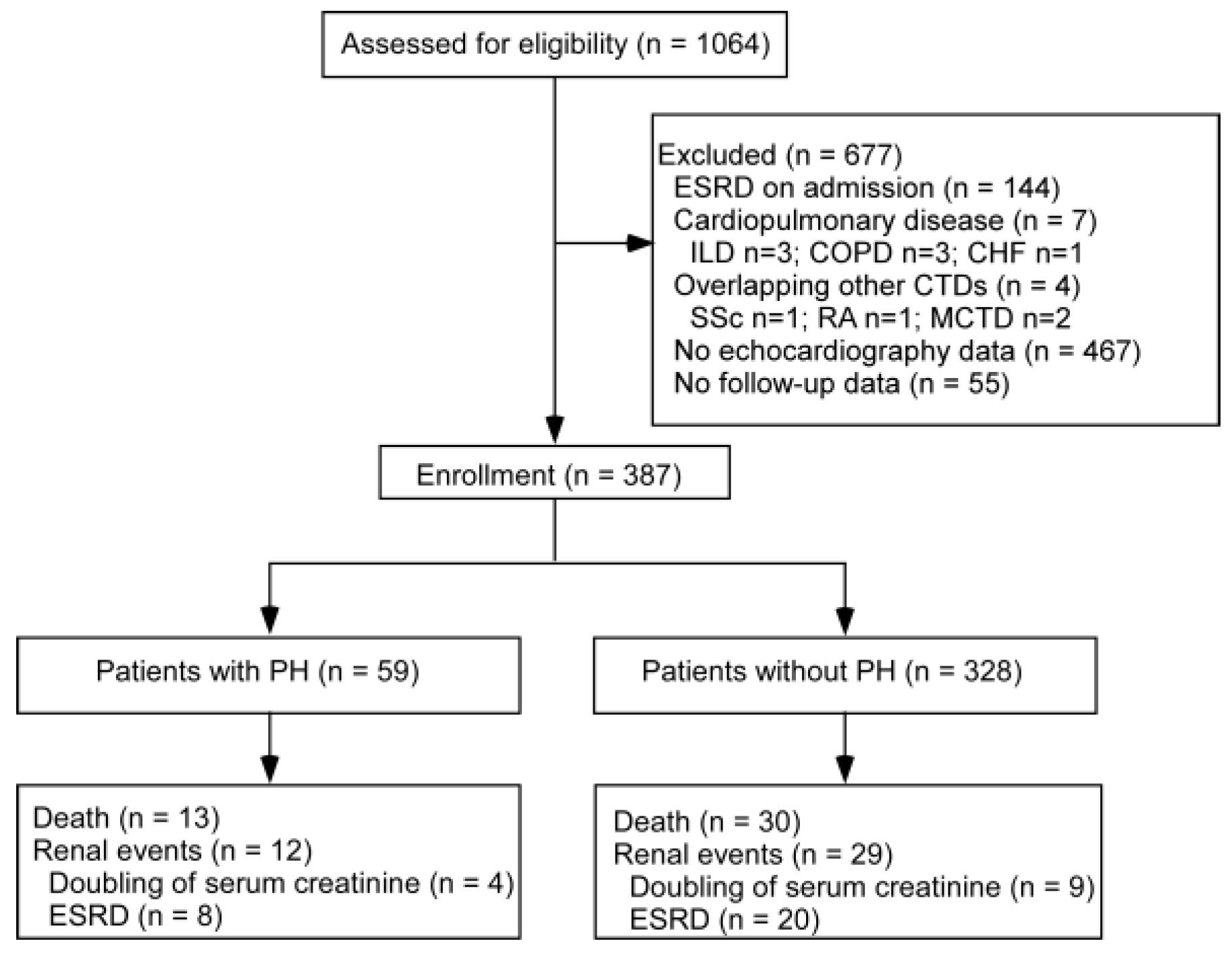
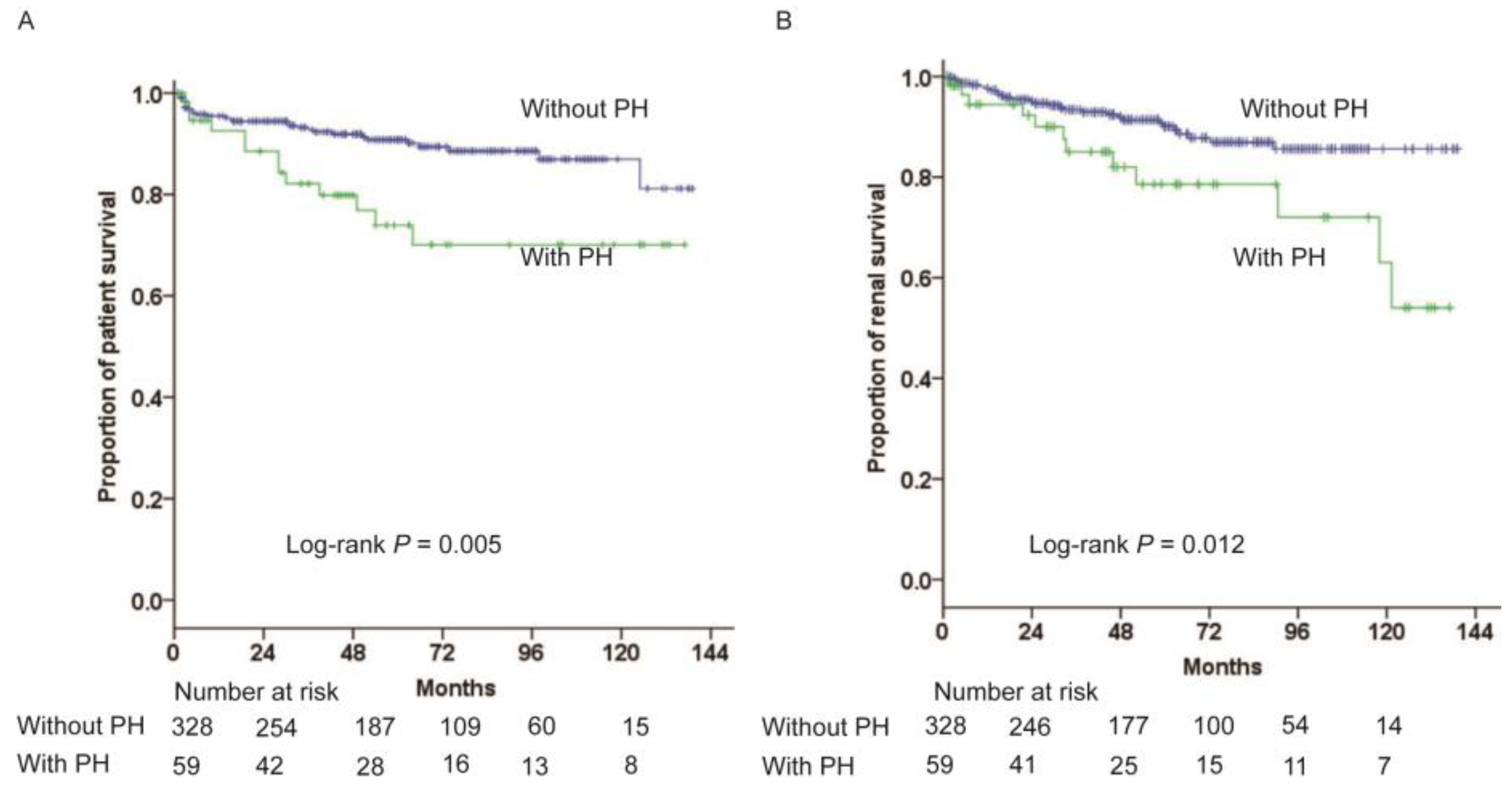
Background and Objectives: This study aimed to assess the prevalence, predictors, and outcomes of pulmonary hypertension (PH) in patients with lupus nephritis (LN). Materials and Methods: Baseline characteristics and clinical outcomes of 387 patients with LN were retrospectively collected from 2007 to 2017. PH was defined as pulmonary artery systolic pressure ≥40 mmHg assessed by resting transthoracic echocardiography. The primary endpoint was all-cause mortality. The secondary endpoint was renal events, defined as the doubling of baseline serum creatinine or end-stage renal disease. Associations between PH and outcomes were analyzed by Cox regression models. Results: A total of 15.3% (59/387) of patients with LN were diagnosed with PH, and the prevalence of PH was higher for patients with an estimated glomerular filtration rate (eGFR) < 30 mL/min/1.73 m2 compared to those with an eGFR ≥ 30 mL/min/1.73 m2 (31.5% vs. 12.6%). Higher mean arterial pressure, lower hemoglobin, and lower triglyceride levels were associated with greater odds of having PH. After adjusting for relevant confounding variables, PH was independently associated with a higher risk for death (HR: 2.01; 95% CI: 1.01–4.00; p = 0.047) and renal events (HR: 2.07; 95% CI: 1.04–4.12; p = 0.039). Conclusions: PH is an independent risk factor for all-cause mortality and adverse renal outcomes in patients with LN.
Keywords: pulmonary hypertension; lupus nephritis; mortality; kidney failure; renal dialysis pulmonary hypertension; lupus nephritis; mortality; kidney failure; renal dialysis