Article

Correlating Eye-Tracking Fixation Metrics and Neuropsychological Assessment after Ischemic Stroke


by
Alec Ionescu
1,2,
Emanuel Ștefănescu
1,2,*,
Ștefan Strilciuc
3,
Alexandru Rafila
4 and
Dafin Mureșanu
1,2
1
Department of Neuroscience, Iuliu Hatieganu University of Medicine and Pharmacy, 400012 Cluj-Napoca, Romania
2
RoNeuro Institute for Neurological Research and Diagnostic, 400364 Cluj-Napoca, Romania
3
Research Center for Functional Genomics, Biomedicine, and Translational Medicine, Iuliu Hațieganu University of Medicine and Pharmacy, 400012 Cluj-Napoca, Romania
4
Carol Davila University of Medicine and Pharmacy, Dionisie Lupu Street, 050474 Bucharest, Romania
*
Author to whom correspondence should be addressed.
Medicina 2023, 59(8), 1361; https://doi.org/10.3390/medicina59081361

Submission received: 21 June 2023 / Revised: 17 July 2023 / Accepted: 20 July 2023 / Published: 25 July 2023
(This article belongs to the Section Neurology)

Abstract

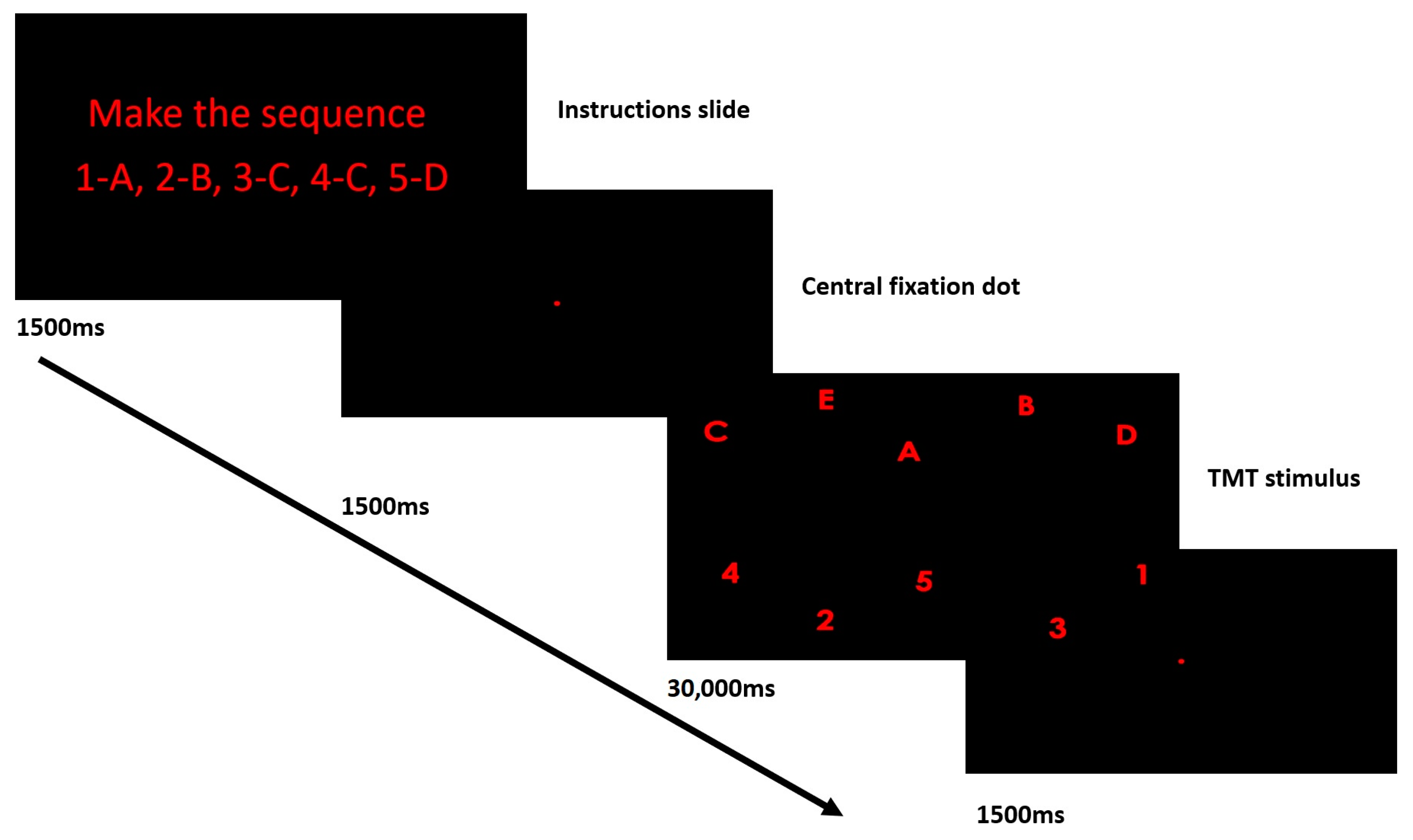
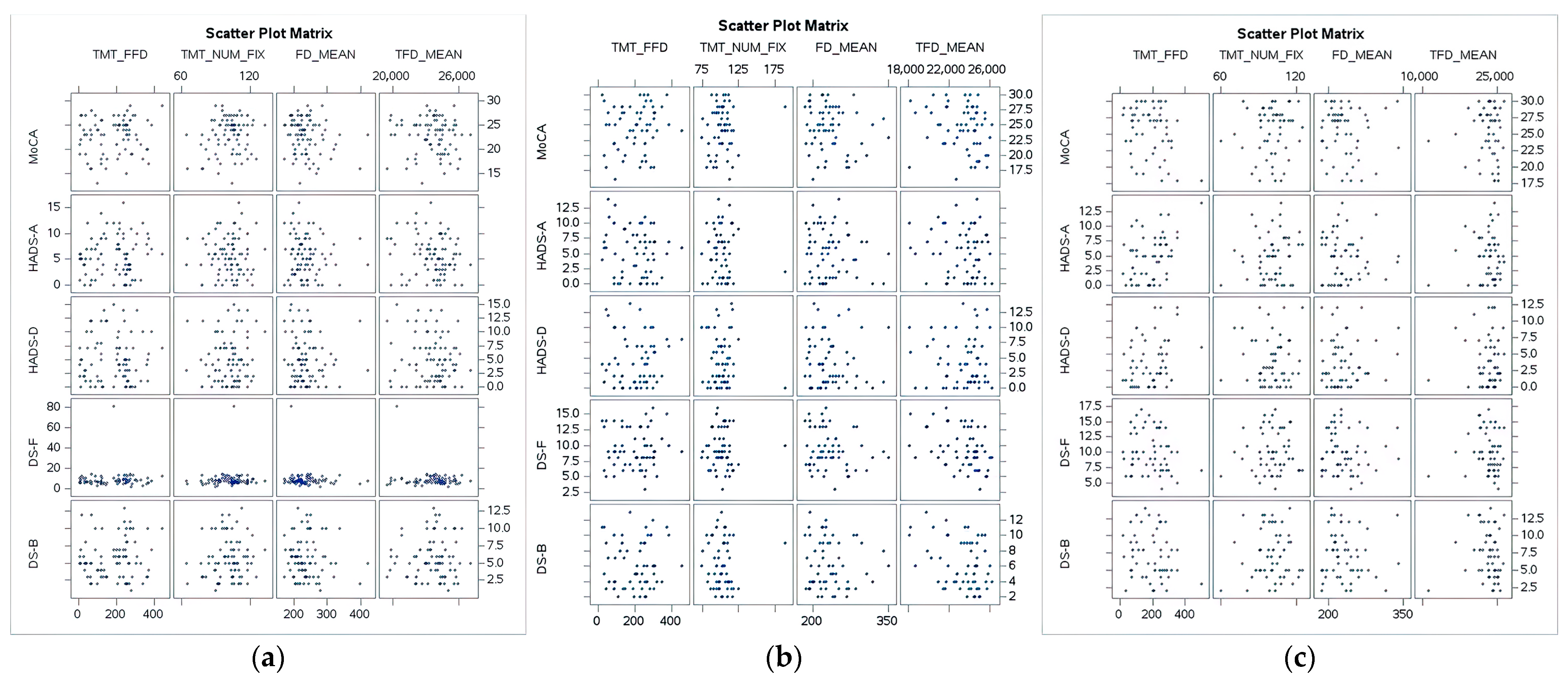
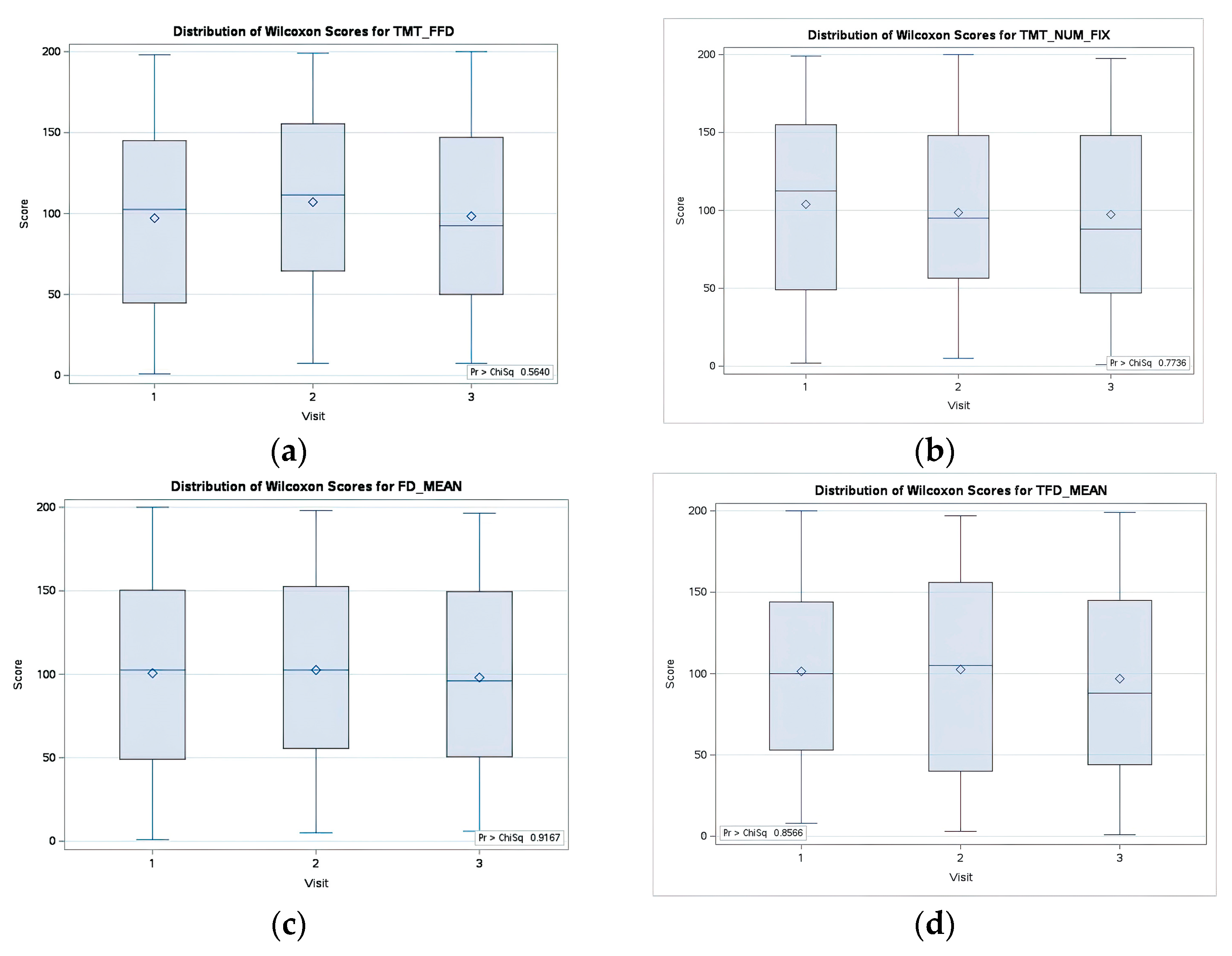
Background and Objectives: Stroke survivors commonly experience cognitive deficits, which significantly impact their quality of life. Integrating modern technologies like eye tracking into cognitive assessments can provide objective and non-intrusive measurements. Materials and Methods: This study aimed to evaluate the cognitive and visual processing capabilities of stroke patients using eye-tracking metrics and psychological evaluations. A cohort of 84 ischemic stroke patients from the N-PEP-12 clinical study was selected for secondary analysis, based on the availability of eye-tracking data collected during a visual search task using an adapted Trail Making Test. Standardized cognitive assessments, including the Montreal Cognitive Assessment (MoCA) and digit span tasks, were also conducted. Results: Correlation analyses revealed some notable relationships between eye-tracking metrics and cognitive measures, such as a positive correlation between Symbol Search performance and the number of fixations. Anxiety levels were found to be positively correlated with first fixation duration, while longer first fixation durations were associated with poorer cognitive performance. However, most correlations were not statistically significant. Nonparametric ANOVA showed no significant differences in fixation metrics across the visits. Conclusions: These findings suggest a complex relationship between cognitive status, gaze fixation behavior, and psychological well-being in stroke patients. Further research with larger sample sizes and analysis of saccadic eye movements is needed to better understand these relationships and inform effective interventions for stroke rehabilitation.
Keywords: eye tracking; ischemic stroke; neuropsychological assessment eye tracking; ischemic stroke; neuropsychological assessment