Review

Cooling the Cochlea: Slowing Down Metabolism May Be a Way of Protecting Hearing from Surgical Trauma

by
Andrew Bell
1,* and
W. Wiktor Jedrzejczak
2,3
1
John Curtin School of Medical Research, The Australian National University, Canberra, ACT 2601, Australia
2
Institute of Physiology and Pathology of Hearing, ul. Mochnackiego 10, 02-042 Warsaw, Poland
3
World Hearing Centre, ul. Mokra 17, 05-830 Kajetany, Poland
*
Author to whom correspondence should be addressed.
Medicina 2023, 59(7), 1187; https://doi.org/10.3390/medicina59071187

Submission received: 24 May 2023 / Revised: 13 June 2023 / Accepted: 20 June 2023 / Published: 22 June 2023
(This article belongs to the Special Issue Metabolic Disorders and Sensorineural Hearing Loss)

Abstract

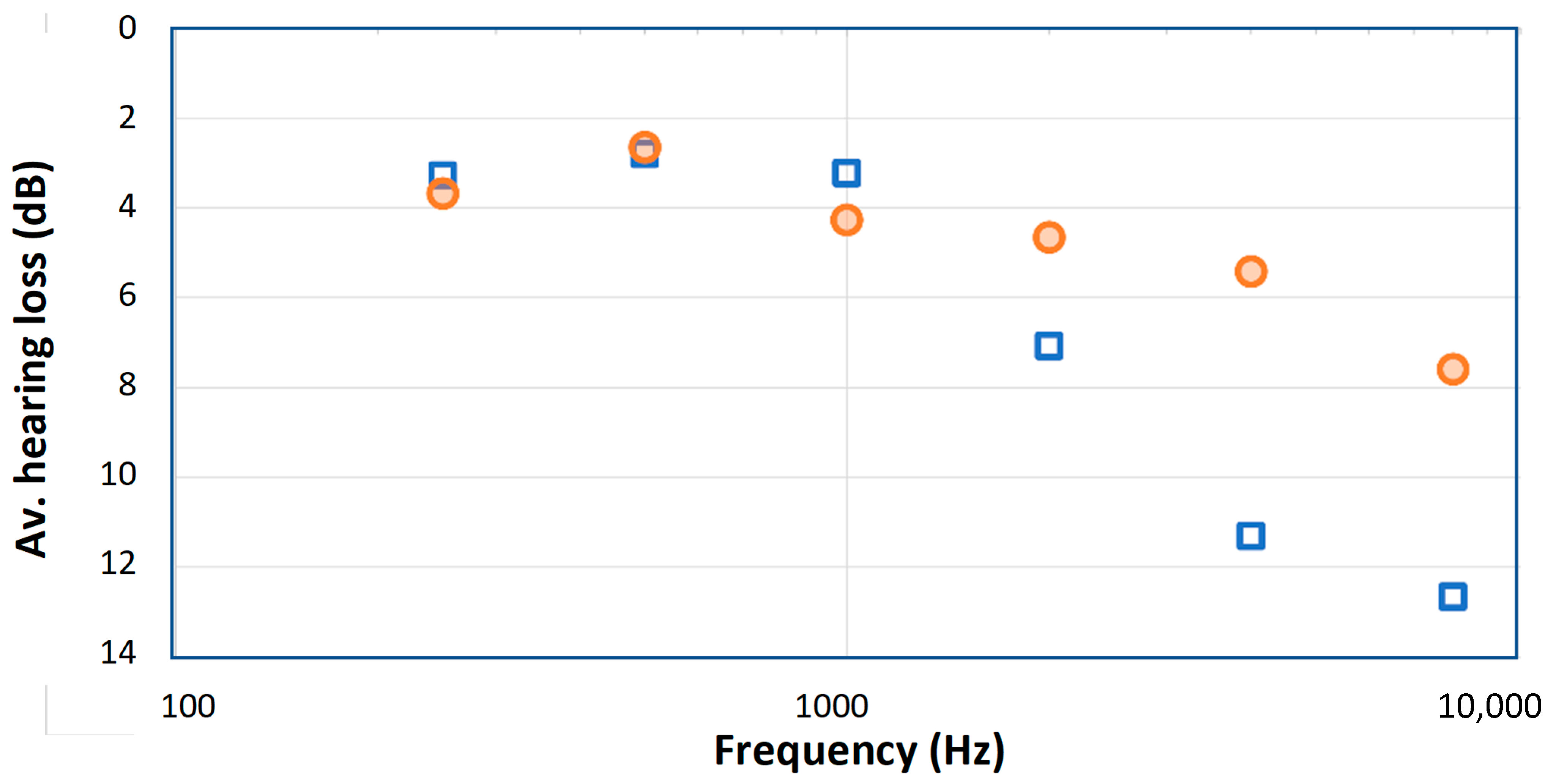
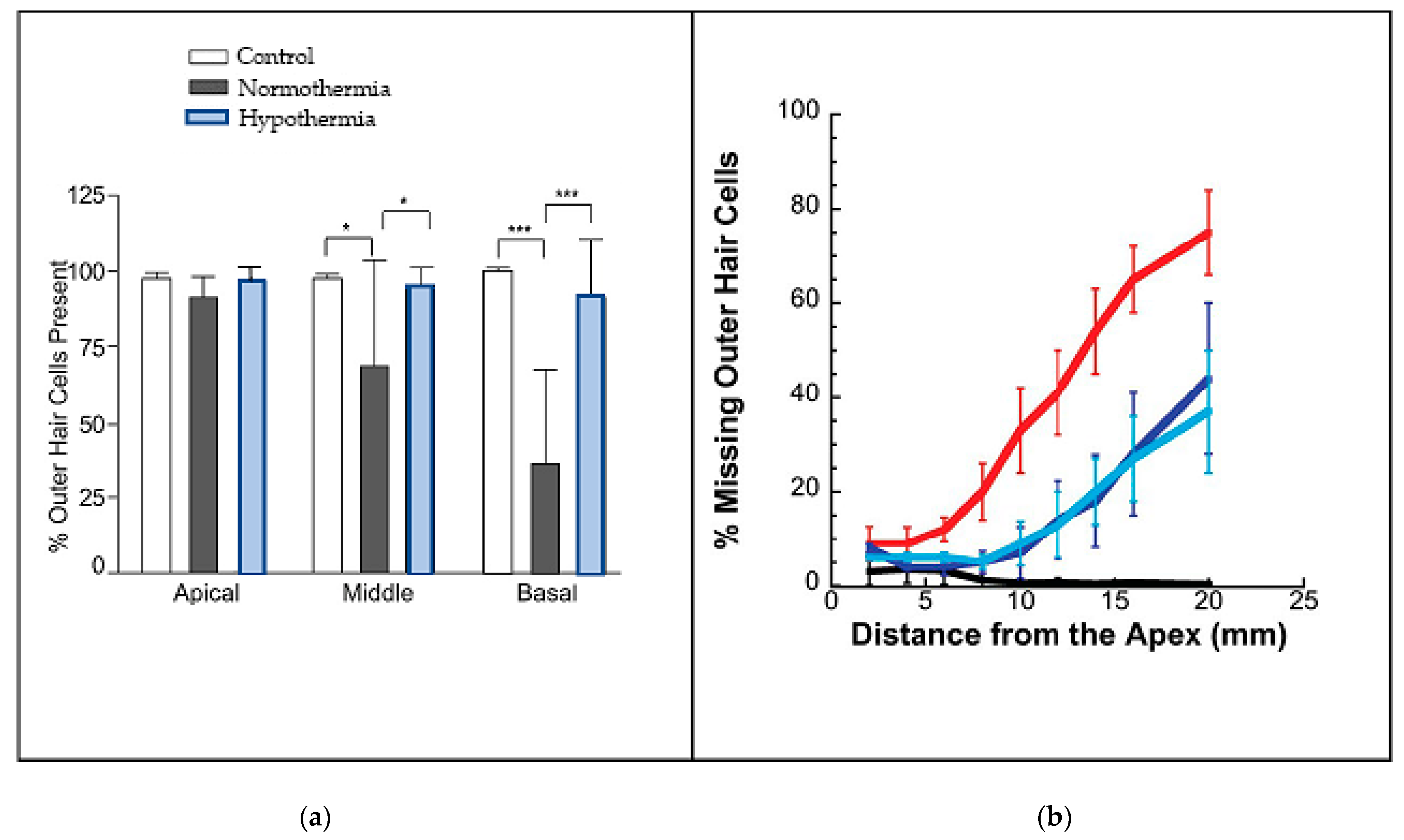
Background and Objectives: This narrative review of the literature explores the effect of body temperature on hearing. In particular, its focus is on extended high frequency (EHF) hearing—the range beyond the standard audiometric limit of 8 kHz. Such high frequencies are the first to be affected by noise-induced hearing loss, and so monitoring them can provide an early warning sign of incipient damage. Materials and Methods: This review builds on a personal literature database of 216 references covering the general topic of EHF hearing; the procedure was to then identify papers related to whole-body or cochlear cooling. A starting point was the paper by Munjal et al. who in 2013 reported changes of up to 15–30 dB in the EHF thresholds of subjects who had undergone cardiopulmonary bypass (CBP) surgery, which typically involves mild to moderate hypothermia—cooling of the blood—to reduce cellular oxygen demand and minimise tissue damage. Results: Reviewing the surrounding literature, we find that although CBP surgery by itself can impair hearing thresholds, lower body and cochlear temperatures in general provide neuroprotective effects. A connection between hearing loss and CBP surgery has been periodically documented, but the mechanism behind it has yet to be conclusively identified. Conclusions: The observations reviewed here tend to confirm the otoprotective effects of cooling. We consider that the high sensitivity of EHF thresholds to temperature is a major factor that has not been sufficiently recognised, although it has important implications for otological research and practice. Two important inferences are that, first, monitoring EHF thresholds might have considerable value in audiology, and, second, that lowering temperature of the cochlea during cochlear implantation might provide substantially better hearing preservation, as some researchers have already suggested.
Keywords: hearing; extended high frequency; temperature hearing; extended high frequency; temperature